MARY PICKFORD : LES VEDETTES DE CINEMA : CINEMAGAZINE : RPPC (1920’s)

Mary Pickford (1892-1979) was a Canadian-American actress and one of the most influential figures in early Hollywood. She was often referred to as “America’s Sweetheart”. She was a pioneer of silent film and a co-founder of the film industry as we know it today. Pickford’s career began in childhood when she performed in theater productions in Canada and the United States. By the early 1900s, she transitioned to film, working with director D.W. Griffith at Biograph Studios. Her delicate beauty and expressive acting quickly made her a fan favorite, setting her apart in an era when exaggerated stage-style performances dominated silent films. During the 1910s and 1920s, Pickford became one of the highest-paid and most beloved actresses in the world. Starring in films such as Rebecca of Sunnybrook Farm (1917), Daddy-Long-Legs (1919), and Pollyanna (1920), she was known for playing wholesome, spirited young women. Her curly hair and signature on-screen innocence became iconic, but she was also a savvy businesswoman who understood the power of her brand. Pickford was not only a star but also a trailblazer in the film industry. In 1919, she co-founded United Artists alongside Charlie Chaplin, Douglas Fairbanks (her then-husband), and director D.W. Griffith. This revolutionary move allowed filmmakers to control their own productions rather than rely on major studios, changing the industry forever. As the film industry transitioned to “talkies,” Pickford retired from acting in the early 1930s, though she continued to produce films. Her contributions earned her an honorary Academy Award in 1976 for her lasting impact on cinema. Mary Pickford’s influence extends beyond her films. She helped shape the star system, paved the way for women in Hollywood, and co-founded the Motion Picture Relief Fund to support struggling actors. She remains an enduring symbol of early Hollywood glamour and innovation. Mary Pickford was born into a working-class family in Toronto, Canada. Her father, John Charles Smith, was an alcoholic who struggled to provide for the family and died from a workplace accident when Mary was just six years old. Her mother, Charlotte Hennessey Smith, was left to raise Mary and her two younger siblings, Lottie and Jack, on her own. To support the family, Charlotte encouraged her children to enter acting, and Mary began performing in theater at a young age. She soon became the family’s primary breadwinner, and her siblings, Lottie Pickford and Jack Pickford, also pursued film careers. Pickford transitioned from theater to film in the early 1900s, quickly rising to fame with her expressive acting and wholesome on-screen persona. By the 1910s and 1920s, she was one of the most recognizable stars in the world, earning the nickname “Queen of the Movies.” She also helped establish the Academy of Motion Picture Arts and Sciences. Mary Pickford was married three times. Pickford’s first marriage was to silent film actor Owen Moore (1911-1920). Her second and most famous marriage was to fellow silent film actor, Douglas Fairbanks (1920-1936). Her third marriage was to actor Charles “Buddy” Rogers (1937-1979). After retiring from acting in the early 1930s, Pickford focused on producing films and philanthropy. She became more reclusive in her later years, struggling with alcoholism and health issues. Today, she is remembered as a pioneering force in cinema history. Pickford is featured on this postcard. She is seated gracefully on a carved wooden stool, exuding elegance and poise. She is dressed in a flowing, light-colored gown with delicate embellishments on the bodice and sheer fabric draping over her arms. Her signature curls frame her face, a defining feature of her “America’s Sweetheart” image. She wears a subtle yet confident expression, her eyes gazing slightly to the side with a soft, introspective quality. Her arms are relaxed, with one hand resting gently on her lap and the other elegantly extended. Her accessories include a bracelet on her wrist and a ring on her finger, adding to her refined look. The backdrop behind her is a richly textured tapestry, possibly depicting a pastoral scene. This postcard was likely produced in the 1920s, during the height of Pickford’s career. It is numbered 86 and is part of a larger collectible series showcasing cinema stars of the era. This vintage postcard is part of a series titled Les Vedettes de Cinéma (translated as The Stars of Cinema), and it was published by Alfred Noyer (Paris,France), in collaboration with United Artists, the film distribution company that Pickford co-founded. The back of the postcard identifies the publisher as Cinémagazine – Edition and states that it was Made in France / Fabriqué en France, indicating its European origin. (SOLD)

BILLIE DOVE: BEAUTIFUL FILM ACTRESS, GIRL FRIEND OF FLORENZ ZIEGFELD AND HOWARD HUGHES

POSTCARD 1  (SOLD)

POSTCARD 1 (CLOSE-UP)  (SOLD)

This image has an empty alt attribute; its file name is billiedove_20210520_0001-1.jpgPOSTCARD 2

This image has an empty alt attribute; its file name is billiedove_20210520_0003.jpgPOSTCARD 2 (CLOSE-UP)

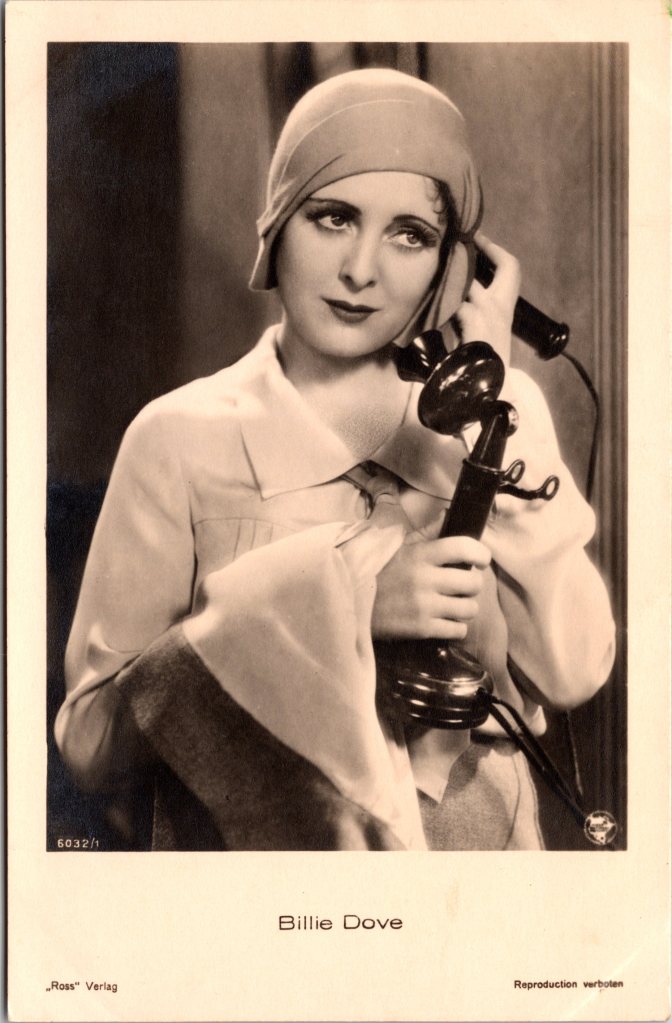
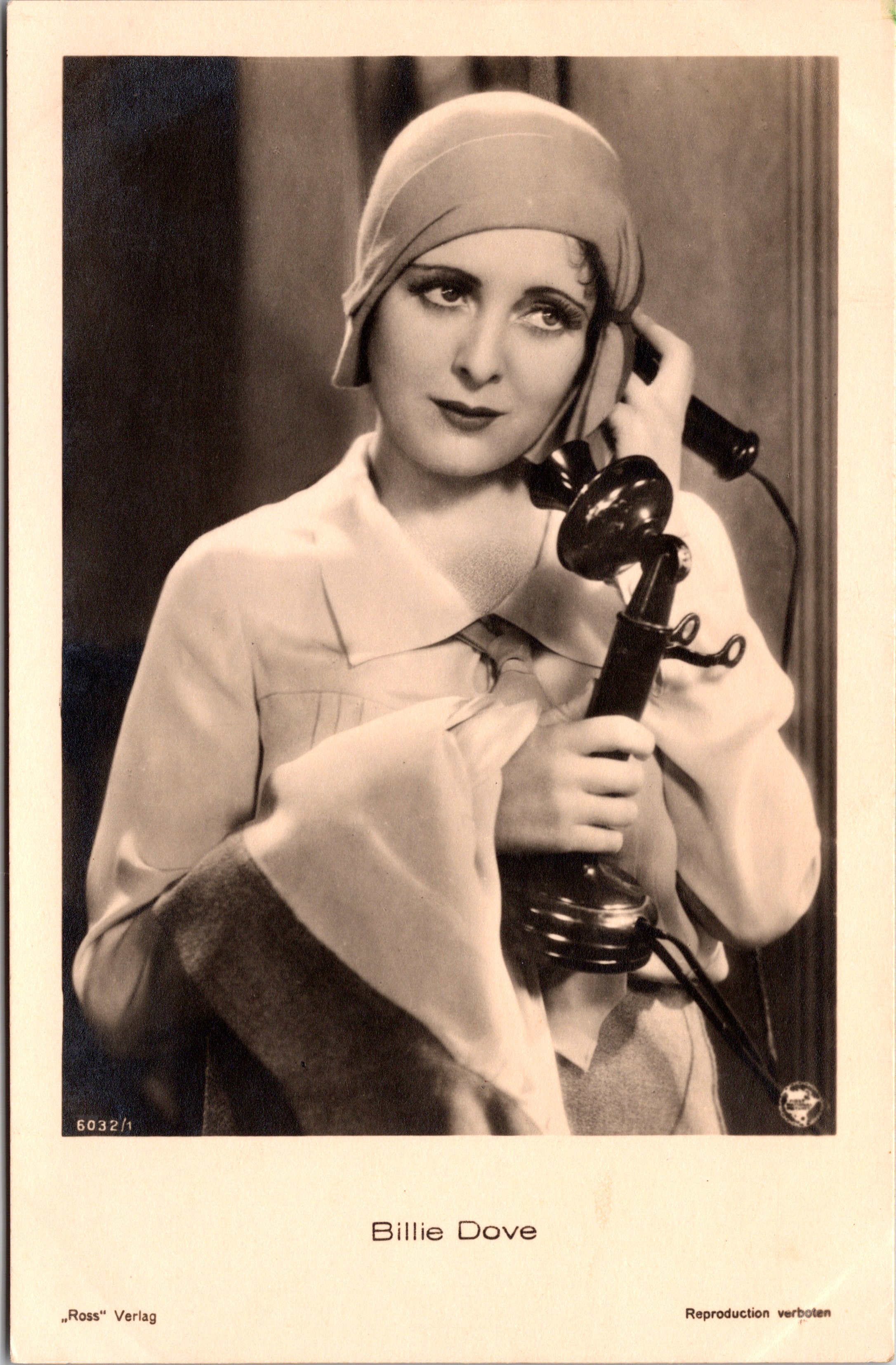
Billie Dove (1903-1997) was an American actress. Her parents were Swiss immigrants. During her teenage years, she worked as a model to support her family. Florenz Ziegfeld hired her as a teenager to appear in the Ziegfeld Follies Revue. She was not a particularly talented dancer or singer, her beauty and acting ability were her major assets. In the early 1920’s she moved to Hollywood and began appearing in silent films. It has been written that Ziegfield’s wife, actress Billie Burke, helped facilitate Dove’s transition to films. Apparently, Burke was trying to separate Dove from her husband because the pair were having an affair. It did not take long for her to become one of the more popular actresses of the 1920’s. Among her better known films was “The Black Pirate” (1926) with Douglas Fairbanks, and “The American Beauty” (1927). Dove was a ravishing beauty and was very photogenic. She married director, Irvin Willat, in 1923. The marriage had a six year duration. She then had a three year romance with Howard Hughes. Dove’s other interests included being a pilot, painter, and poet. After her last film, “Blondie of the Follies” (1932), Dove retired from films. It is thought that she retired because she was distraught about her role in her last film being “trimmed” by her co-star’s (Marion Davis) influential boyfriend (William Randloph Hearst). Hearst was upset because Miss Davis’s acting was overshadowed by Dove’s acting. Mr Hearst owned Cosmopolitan Productions which produced the movie. After retirement, Dove married oil executive Robert Kenaston in 1933 and the couple remained together until Kenaston’s death in 1970. She had a brief third marriage to an architect. It is interesting to note that jazz singer, Billie Holiday, borrowed Billie Dove’s first name when picking out her own stage name. Miss Holiday was an admirer of Miss Dove. The IMDb lists 50 movie credits for Billie Dove between 1921 and 1962.

Postcard 1 was published by “Ross Verlag”, The photographer of Miss Dove’s portrait was Defina of First National Pictures.  (SOLD)

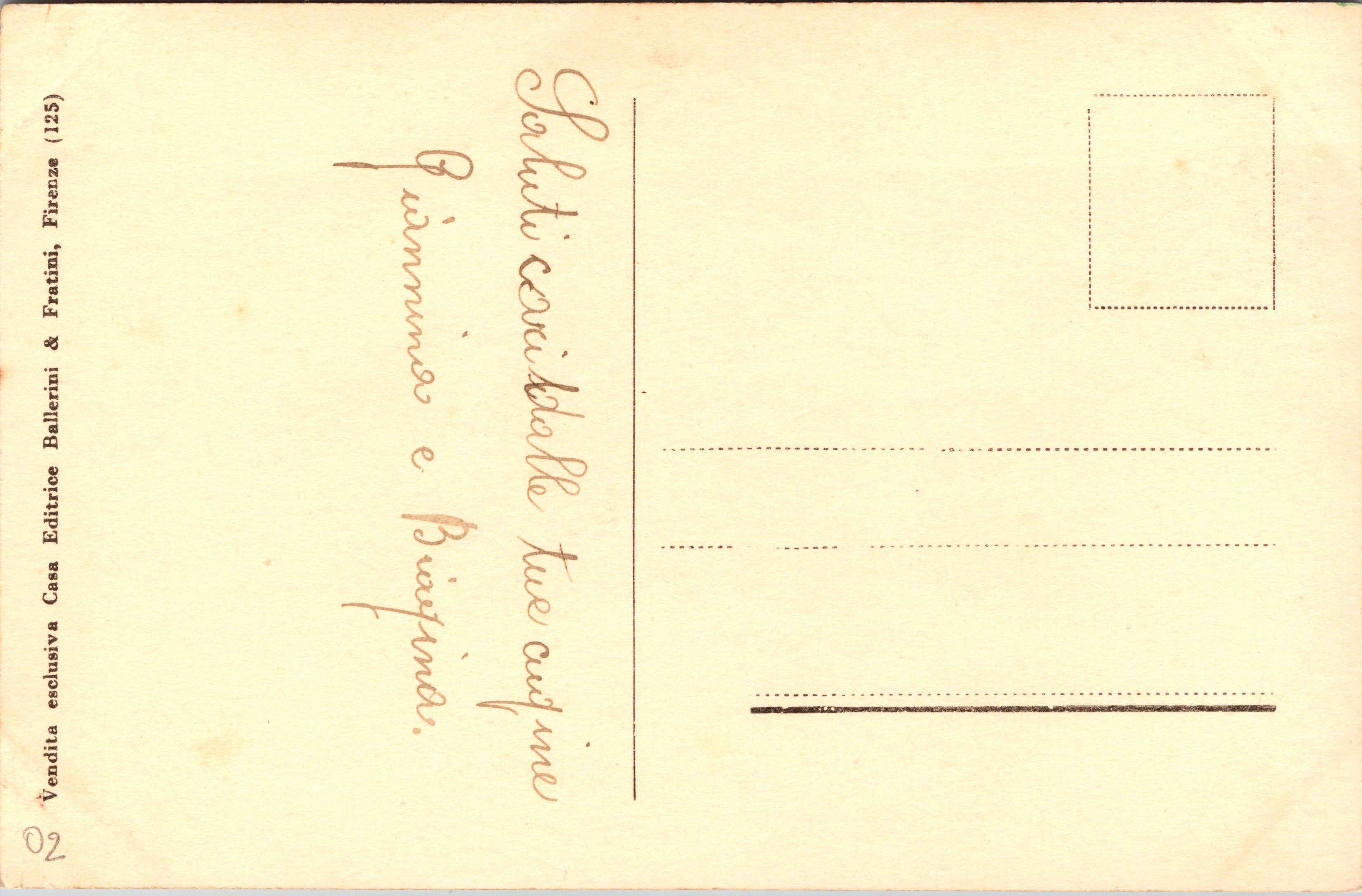
Postcard 2 was also published by “Ross Verlag”.  Billie Dove looks beautiful in this portrait. Note the old style phone she is using. The postcard was sold exclusively by Ballerini & Fratini of Florence, Italy. The firm was known for producing a large number of postcards, including film stars of the 1920’s. I do not know why there were two publishing firms involved in producing this postcard. Perhaps there was a distribution agreement of some kind between the two companies. This vintage postcard is in very good condition (see scans).

Buy this Vintage Real Photo Postcard (includes shipping within the US) #3545

To purchase this item, click on the Pay with PayPal button below

$25.50
Buy this Vintage Real Photo Postcard (includes International shipping outside the US) 3545

To purchase this item, click on the Pay with PayPal button below

$34.50
POSTCARD 1
POSTCARD 2

MINNIE DUPREE: AMERICAN STAGE AND FILM ACTRESS

                                                      Photograph 1
PHOTOGRAPH 2 (SOLD)

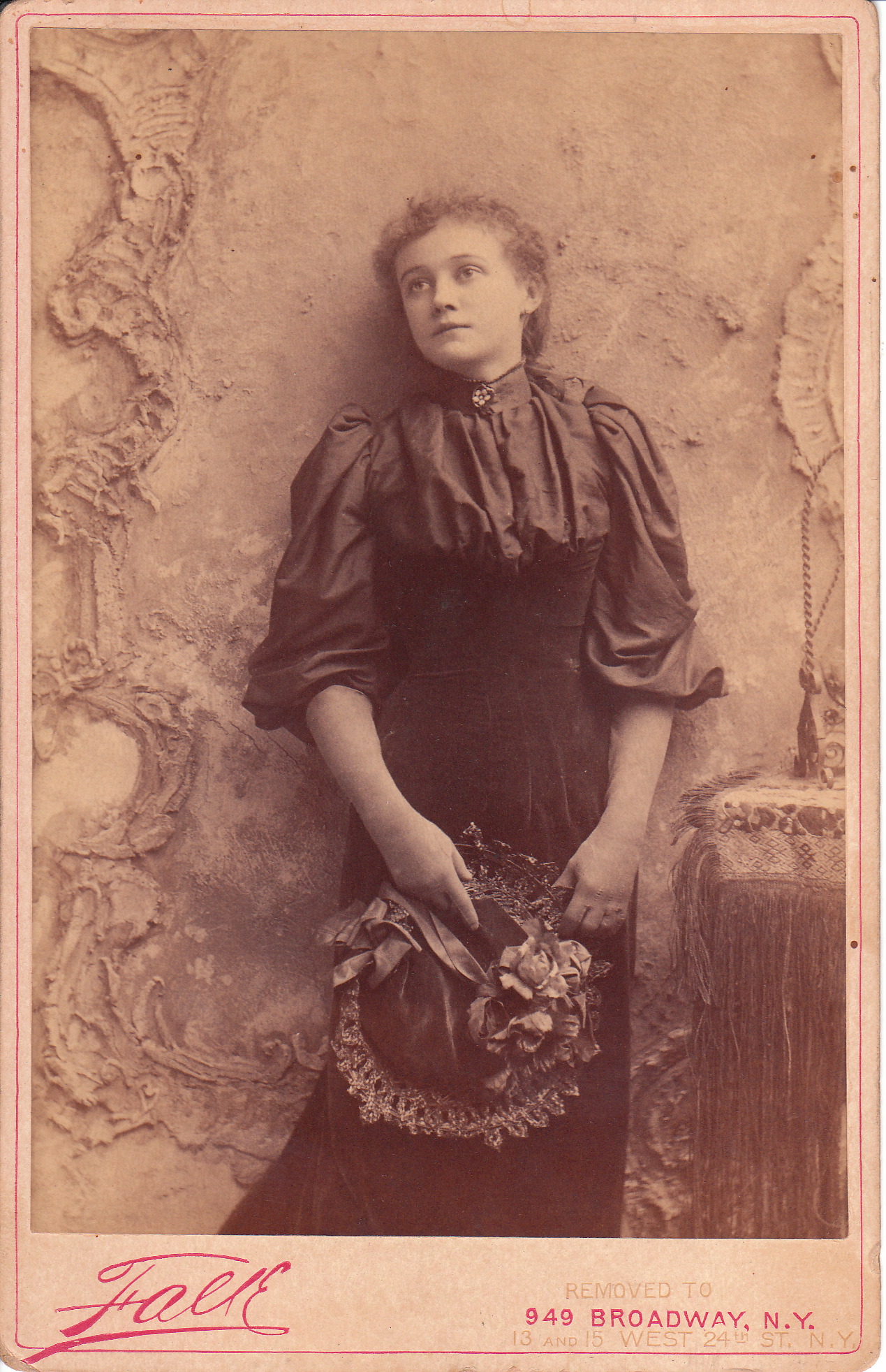
Photograph 1 is a cabinet card portrait of Minnie Dupree (1873-1943). She was an American stage and film actress. She was born in La Crosse, Wisconsin. She made her acting debut in a touring company in 1887. In 1888, she was a sensation in a small role in William Gillette’s New York play. “Held by the Enemy”. This role propelled her into a number  of supporting roles with the some of the leading actors of the day. She finally got a starring role in the 1900 production of “Women and Wine”. Many other leading roles followed as well as a number of notable successes. However, critics agreed that her later career was less successful than her early and middle career. Dupree also made a small number of films including “The Young in Heart” (1938). Costars in this film included Janet Gaynor, Douglas Fairbanks Jr., Billie Burke, and Paulette Goddard. This cabinet card photograph captures Miss Dupree holding her had and looking dreamily away from the camera. The photograph was taken by celebrity photographer, B. J. Falk. Falk’s address is listed as 949 Broadway, New York City. However, there is a light stamp over the Broadway address indicating that the studio had “removed” to 13 & 15 West 34th Street, New York City.  To see other photographs by Falk, click on the category “Photographer: Falk”.

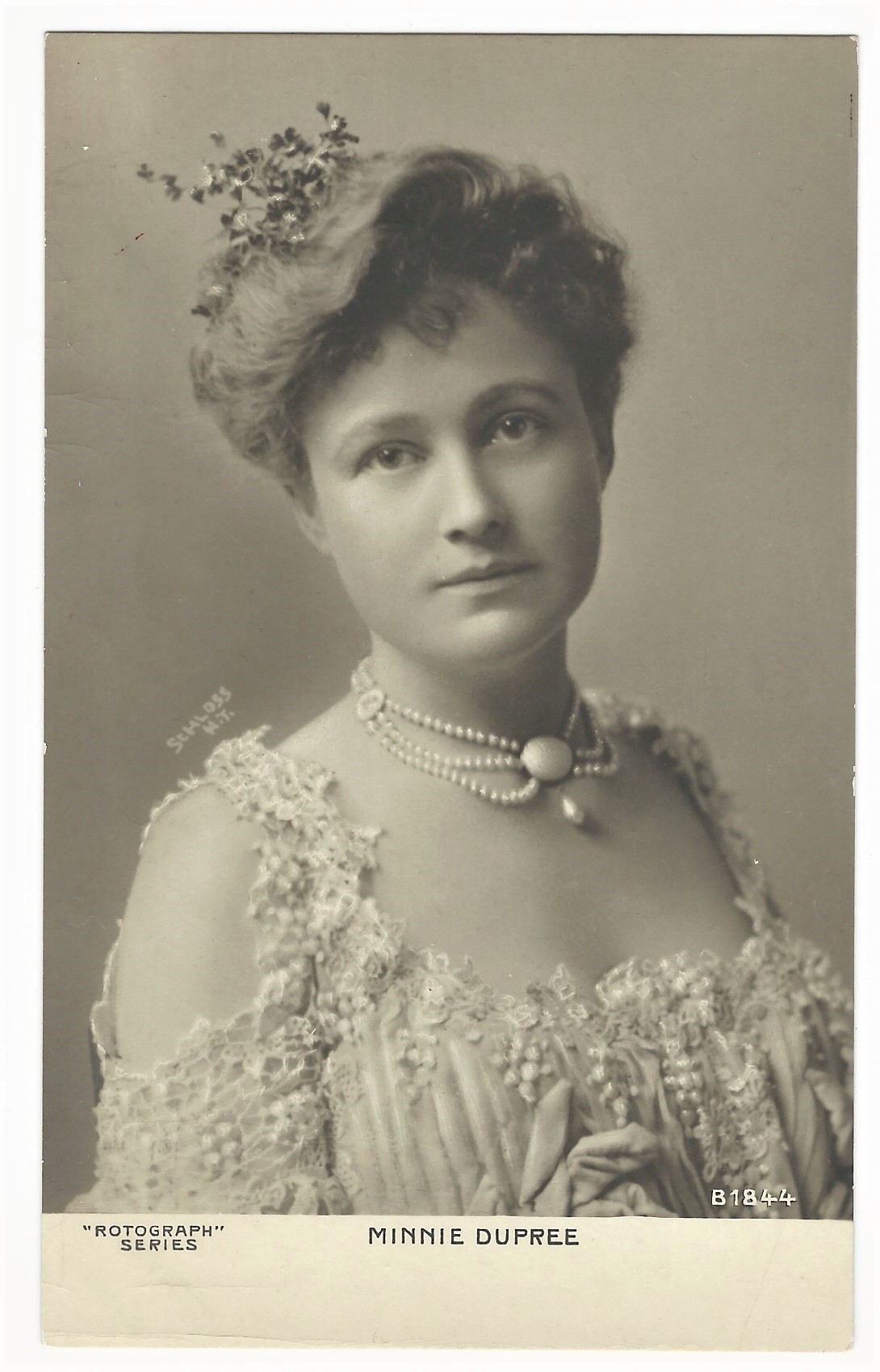
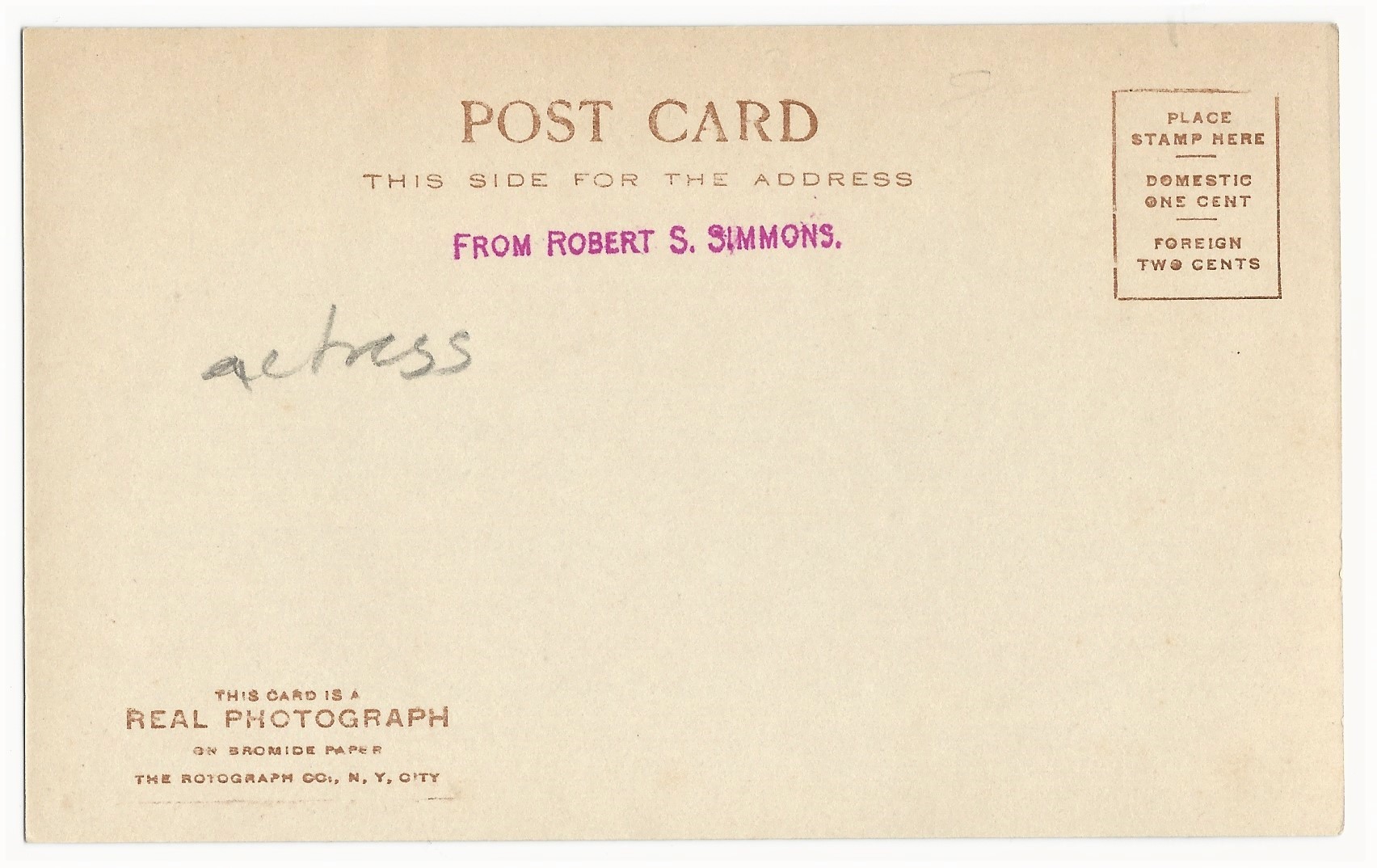
Photograph 2 is a vintage real photo postcard featuring Miss Dupree. The image provides a wonderful close-up view of the actress. She is wearing a fancy dress that is low-cut. Note her pearl necklace. Her hair is styled perfectly, providing a very fresh and clean look. The photographer credited with this fine portrait is celebrity photographer, Jacob Schloss (1856-1938). His studio was located in New York City (Manhattan). He received his education at the Cooper Union in New York City. He graduated in 1872 as an etcher. He joined Benjamin J. Falk’s photography studio and worked there in the mid 1870’s. He left Falk’s employ to open his own studio (54 West 23rd Street) where like Falk, he specialized in theatrical photography. He tended to favor photographing actresses in costume in front of generic studio furnishings. He produced many cabinet card photographs but also was active in the production of magazine images. By the 1890’s he was particularly known for his photographs of beautiful women, much like photographer Jose Maria Mora. Schloss also was an activist for photographers rights. He was very involved in the movement to copyright images. He sued those who used his photographs without crediting or paying him. He was an active participant in national photographer associations and was an worked as a photographer until the 1910’s. The photograph was published by the Rotograph Company as part of the “Rotograph Series” (no.B1844). The postcard has a stamp stating “From Robert S. Simmons”, whom I believe, but can not confirm, was a well known collector of photographs. (SOLD)

POSTCARD 2 (REVERSE) (SOLD)