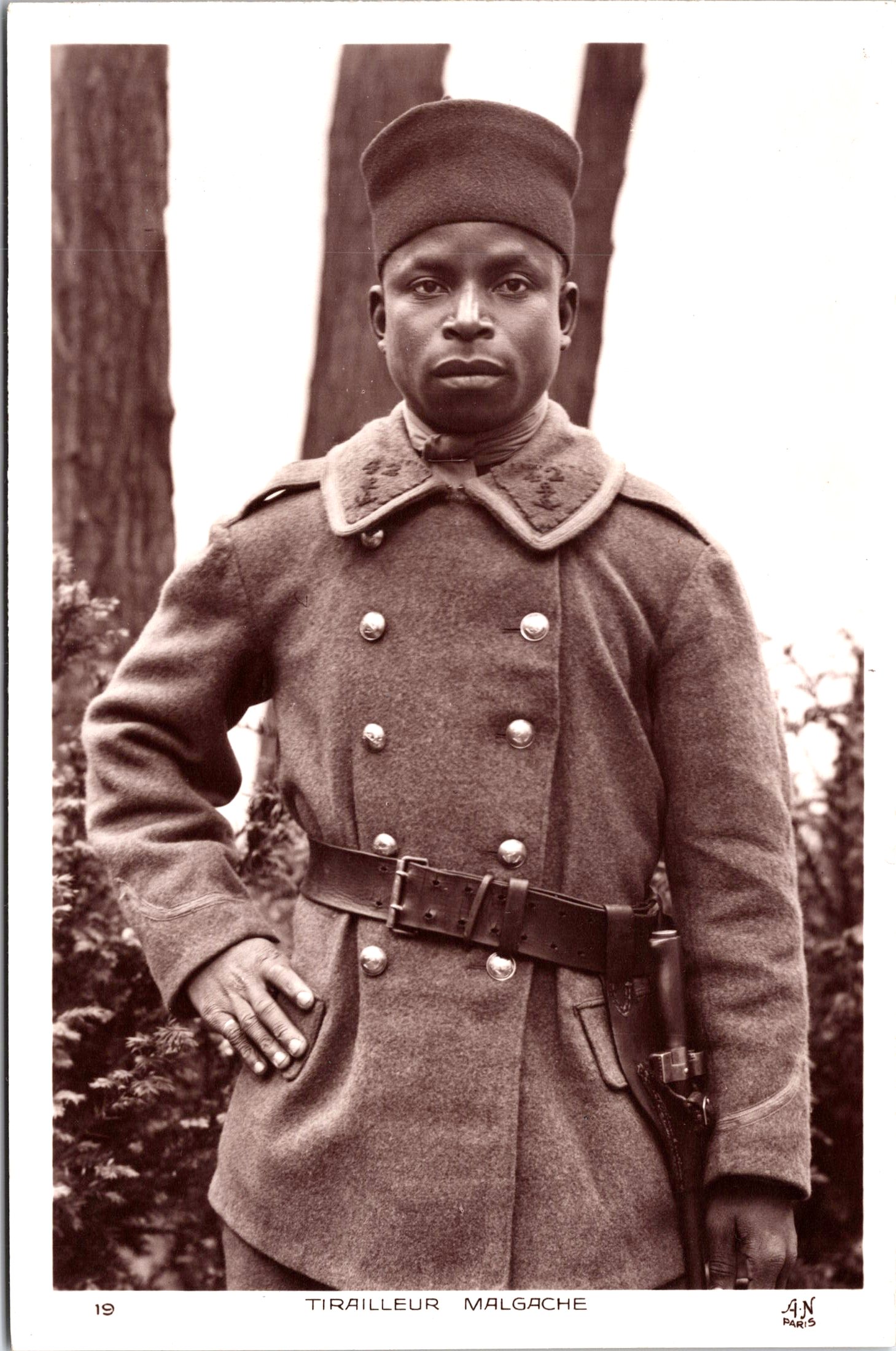
This striking real photo postcard features a Tirailleur Malgache—a Malagasy rifleman serving in the French colonial army. The term “Tirailleur” referred to light infantrymen recruited from various parts of France’s overseas empire, including Madagascar, Senegal, and Indochina. This image captures one of these proud soldiers from Madagascar wearing his heavy wool double-breasted greatcoat, high collar with decorative insignia, and the distinctive kepi-style wool cap characteristic of colonial troops during the First World War and interwar years. The soldier’s right hand rests confidently at his side, while a sidearm in a leather holster—most likely a Lebel or Ruby automatic pistol—is clearly visible at his hip, signifying his rank or specialist role within his regiment. His expression is solemn and dignified, reflecting both the discipline and the sacrifice associated with the Tirailleurs who served France across multiple fronts. The postcard was published by A.N. Paris, a French publisher known for high-quality photographic military and ethnographic studies. (SOLD)

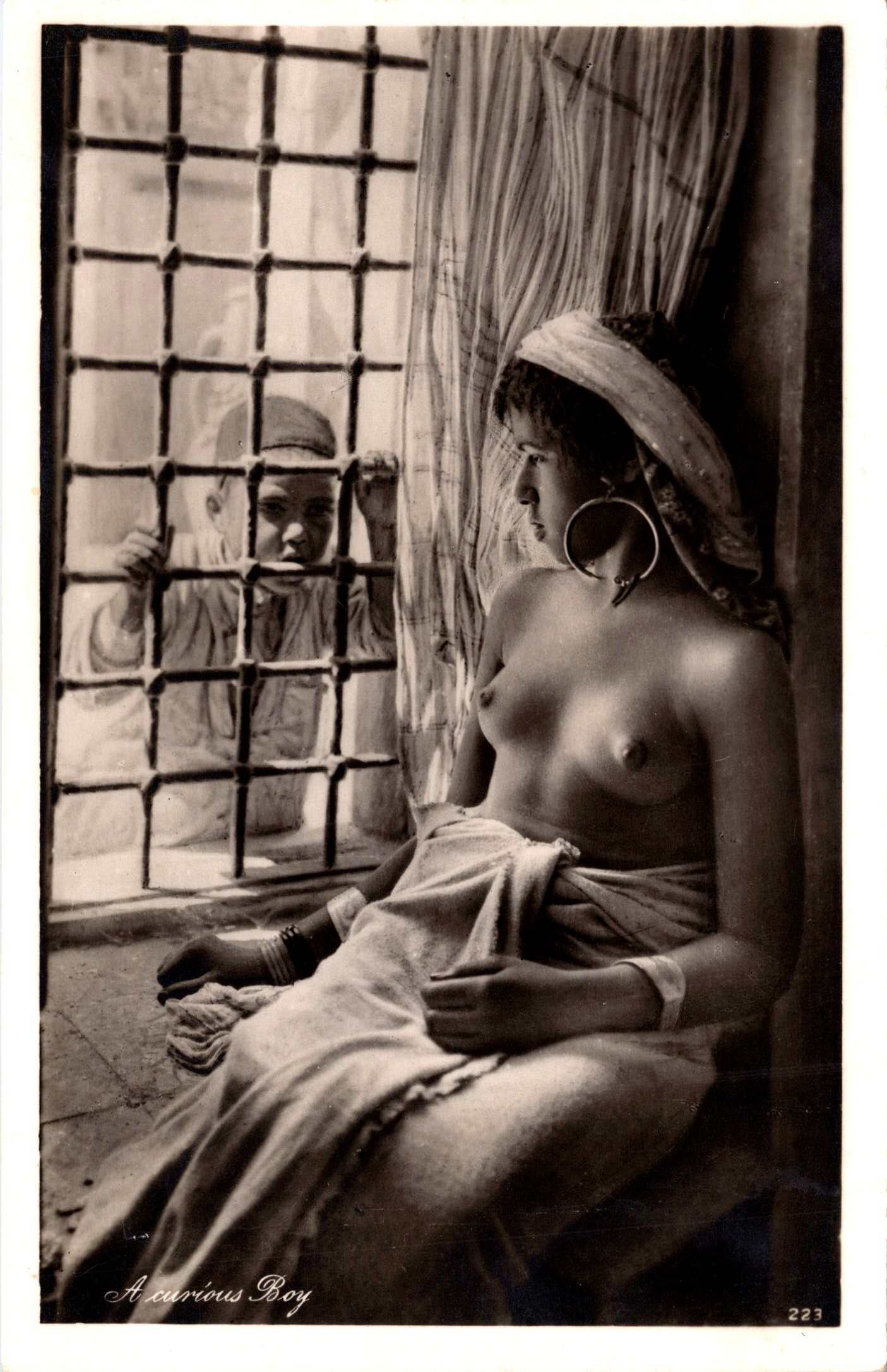
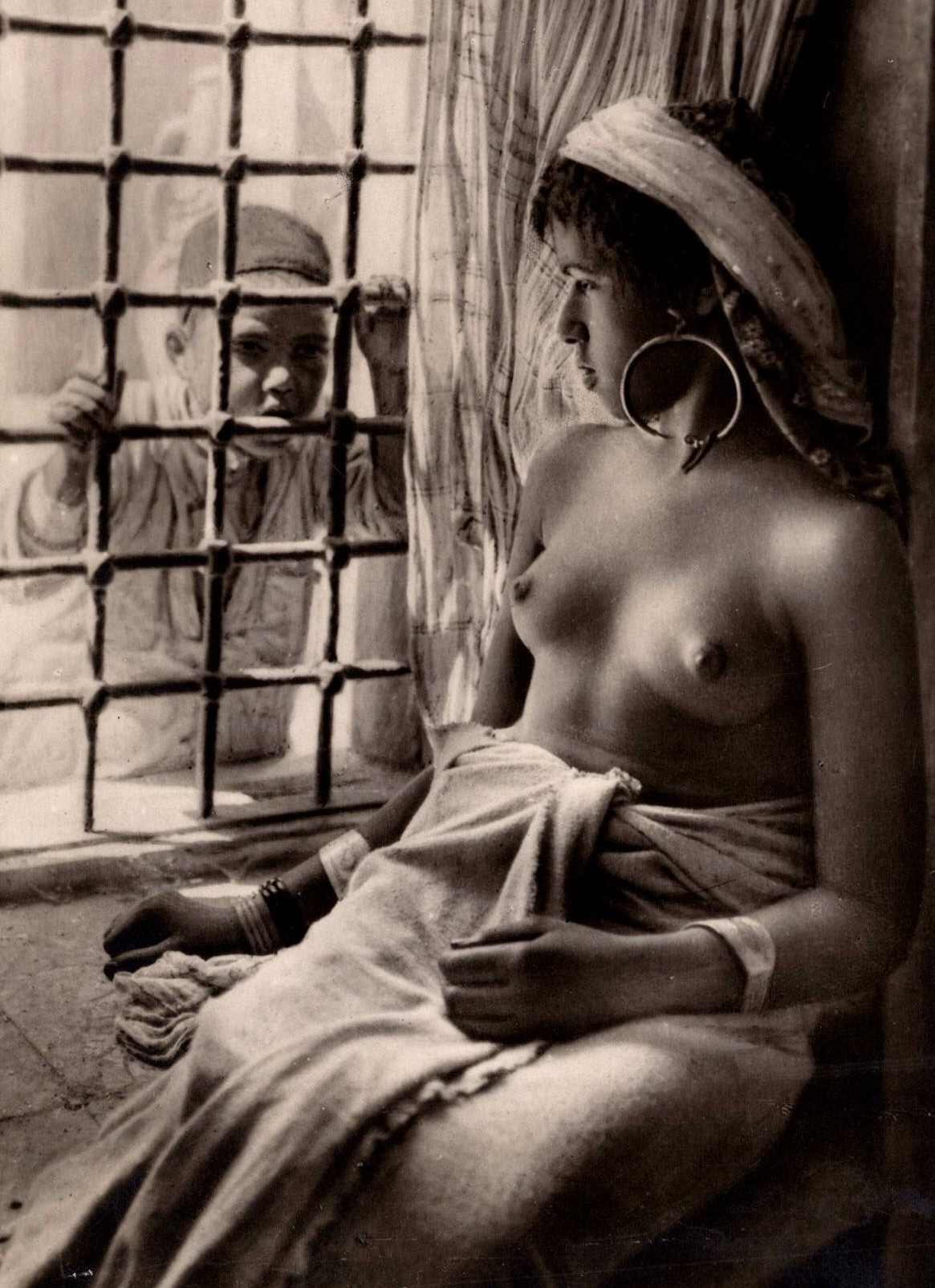
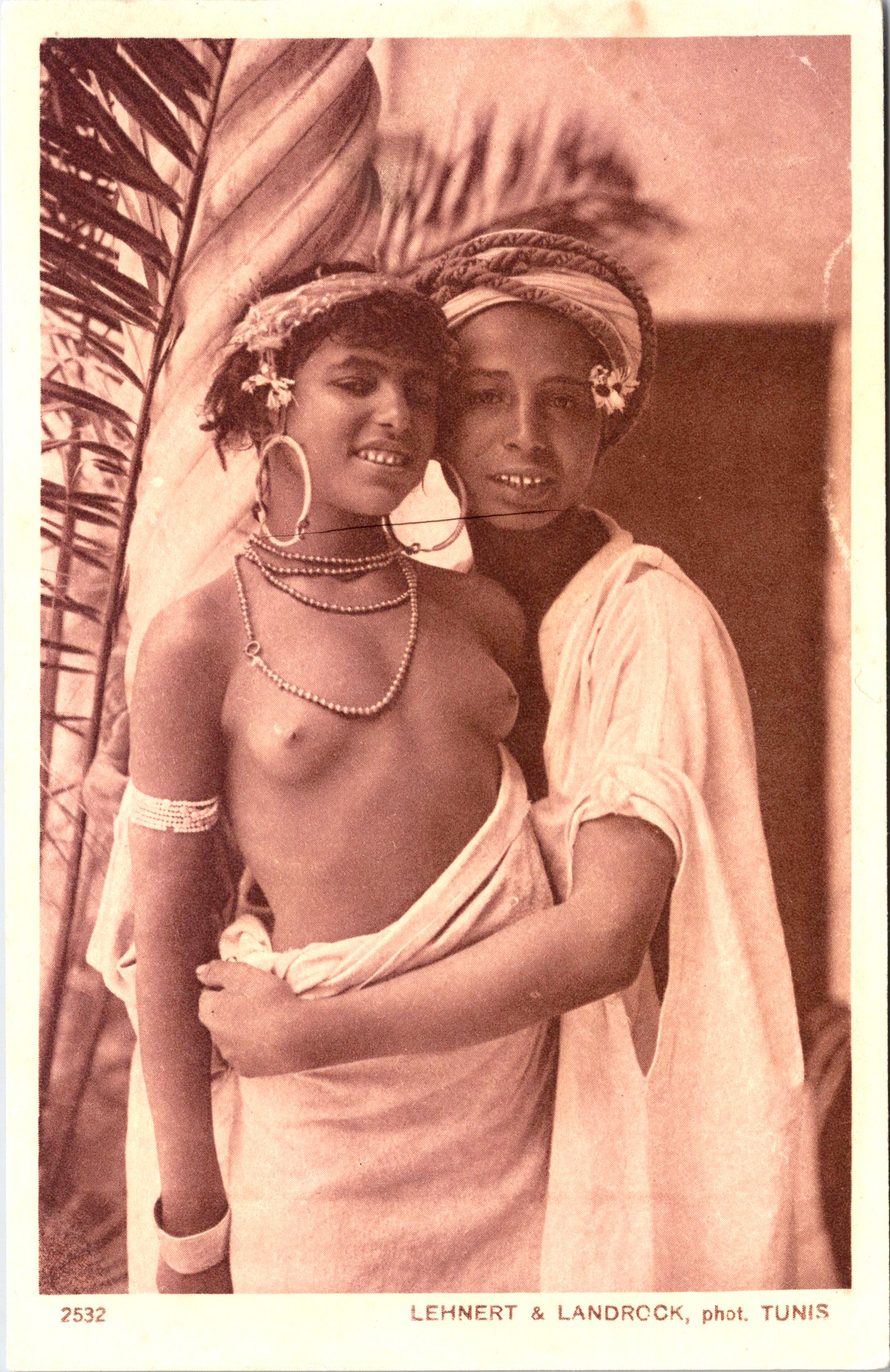
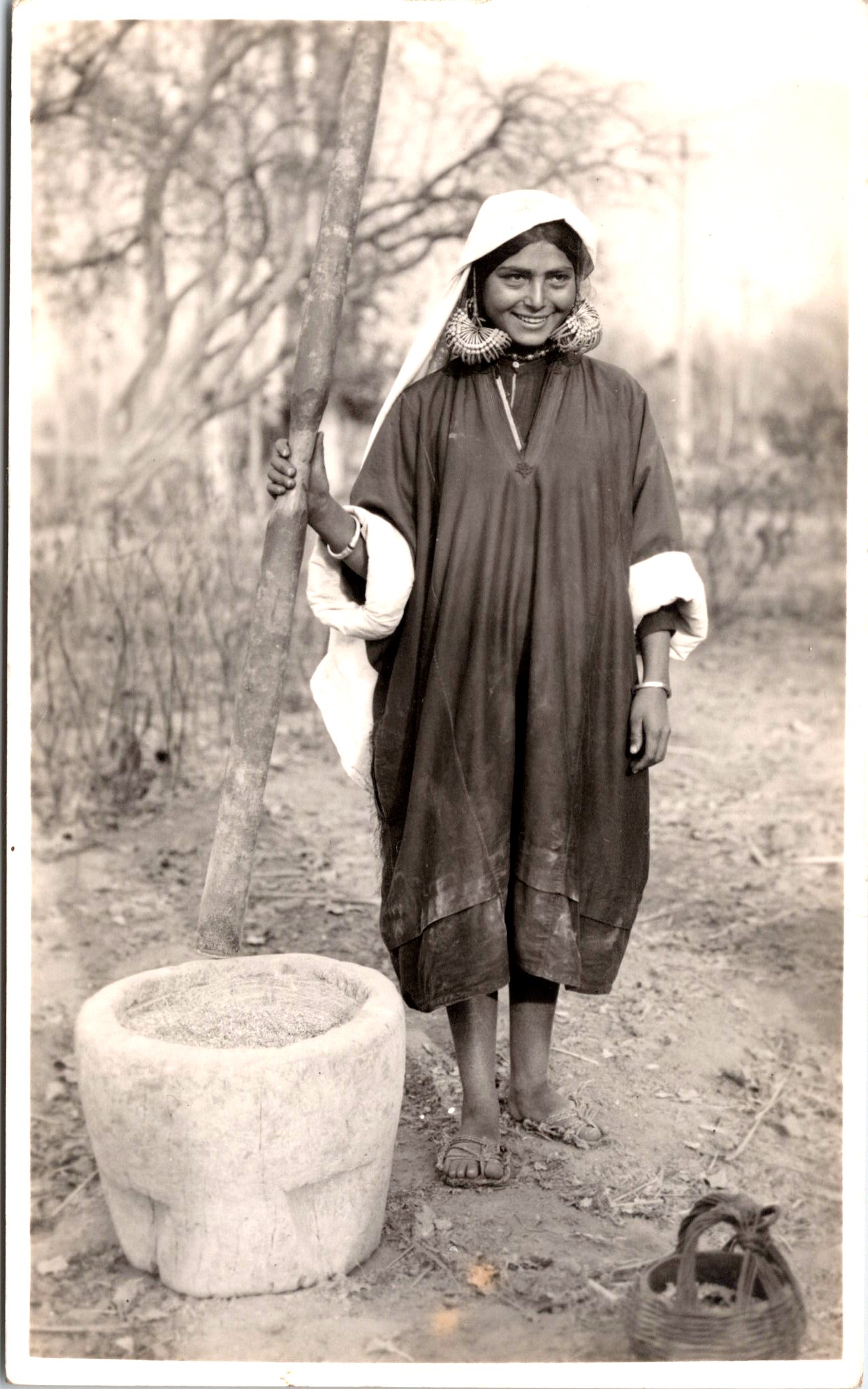




 This vintage postcard features a “Bedouin Beauty” with wonderful smile. Everything she is wearing is interesting. Her traditional dress, the flowers in her hair, and her necklace are all intriguing. This postcard offers some sexual provocativeness which was typically seen in ethnographic postcards from this era. It seems that if women from other cultures, or non white ethnicities, were photographed for postcards, than some nudity was acceptable. Western photographers, postcard publishers, and postcard consumers all appear to have been “suffering” from ethnocentrism. The woman in this photo, as stated earlier, is a Bedouin. Bedouins are a group of nomadic Arab people. Historically, they have inhabited the desert regions in the Arabian Peninsula, North Africa, Iraq, and the Levant. This image was produced by the team of Rudolf Franz Lehnert (1878-1948) & Ernst Heinrich Landrock (1878-1966).
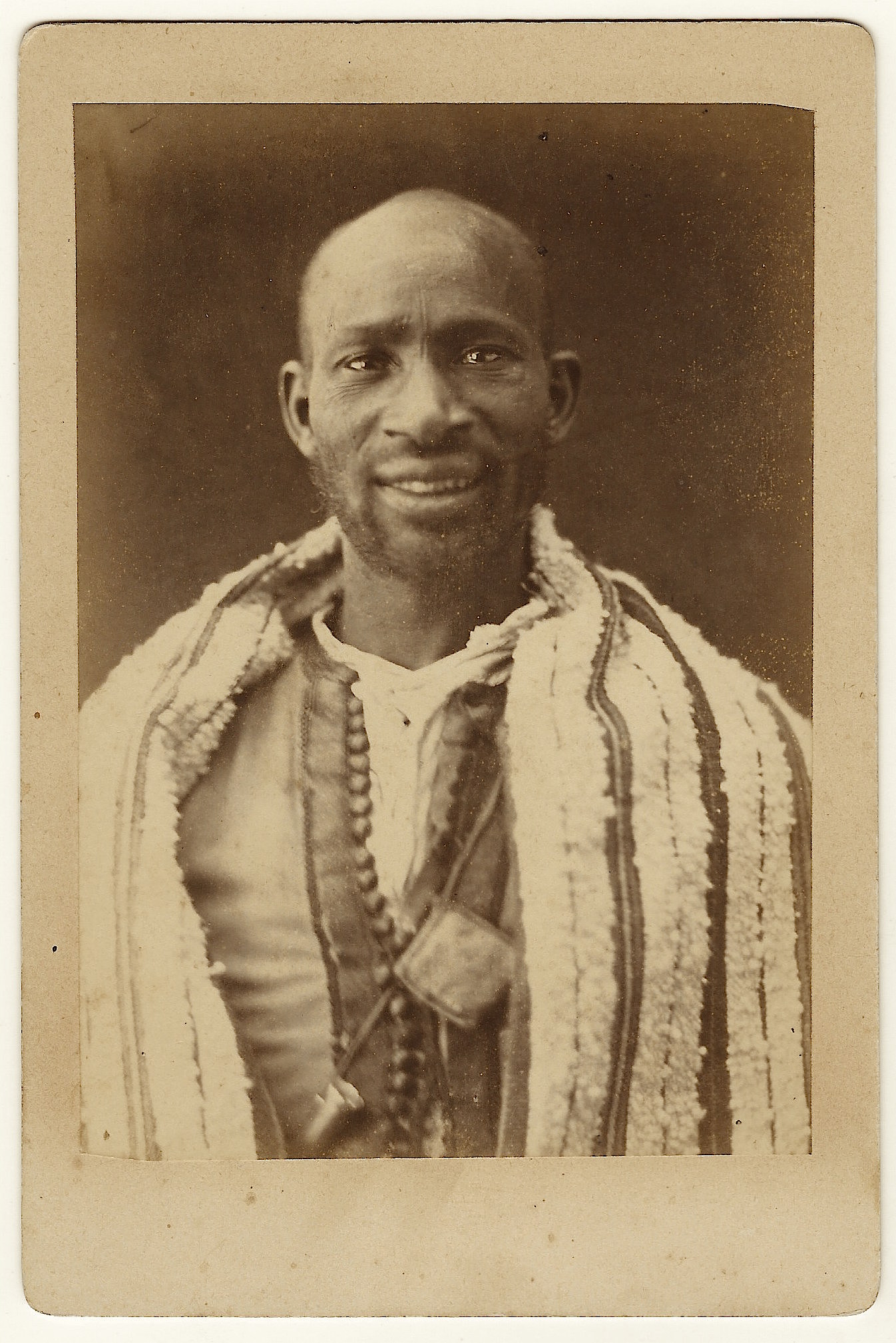
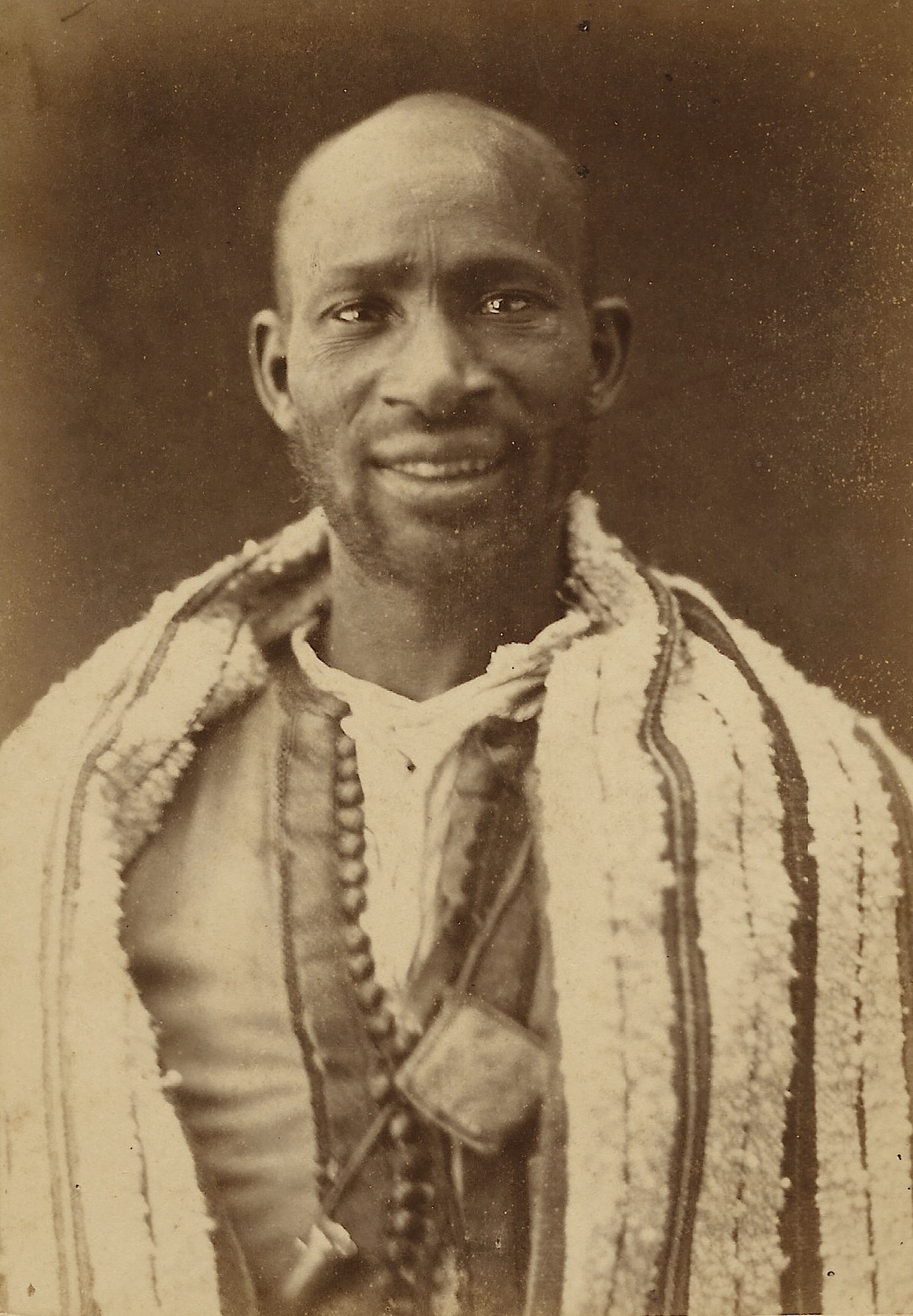 This ethnographic cabinet card features an Algerian man from Bone, Algeria. He is dressed in his culture’s traditional clothing. The preceding demographics are derived from the fact that this photograph was in a collection of images from Bone. The city of Bone is now known as Annaba. It is a port town on the Mediterranean, in northeastern Algeria. It is close to the Tunisian border. Bone was known for its mining. Iron ore was a major export. The city was named Bone while it was under French rule. Algeria received it’s independence in 1962. The man in this photograph has a wonderful smile. I wish I knew more about him. The photographer of this cabinet card is not identified. (SOLD)


 THE CABINET CARD GALLERY