


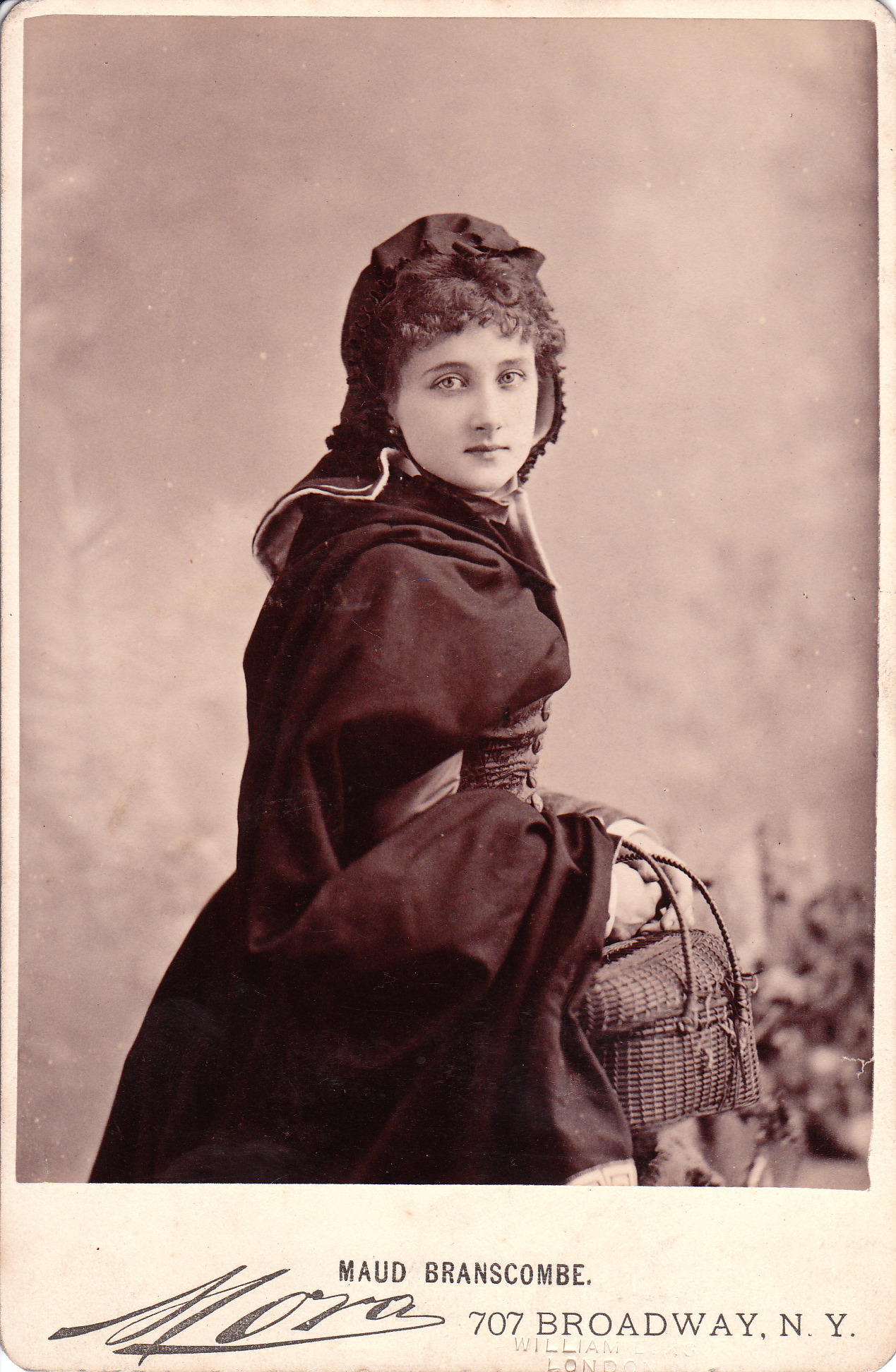
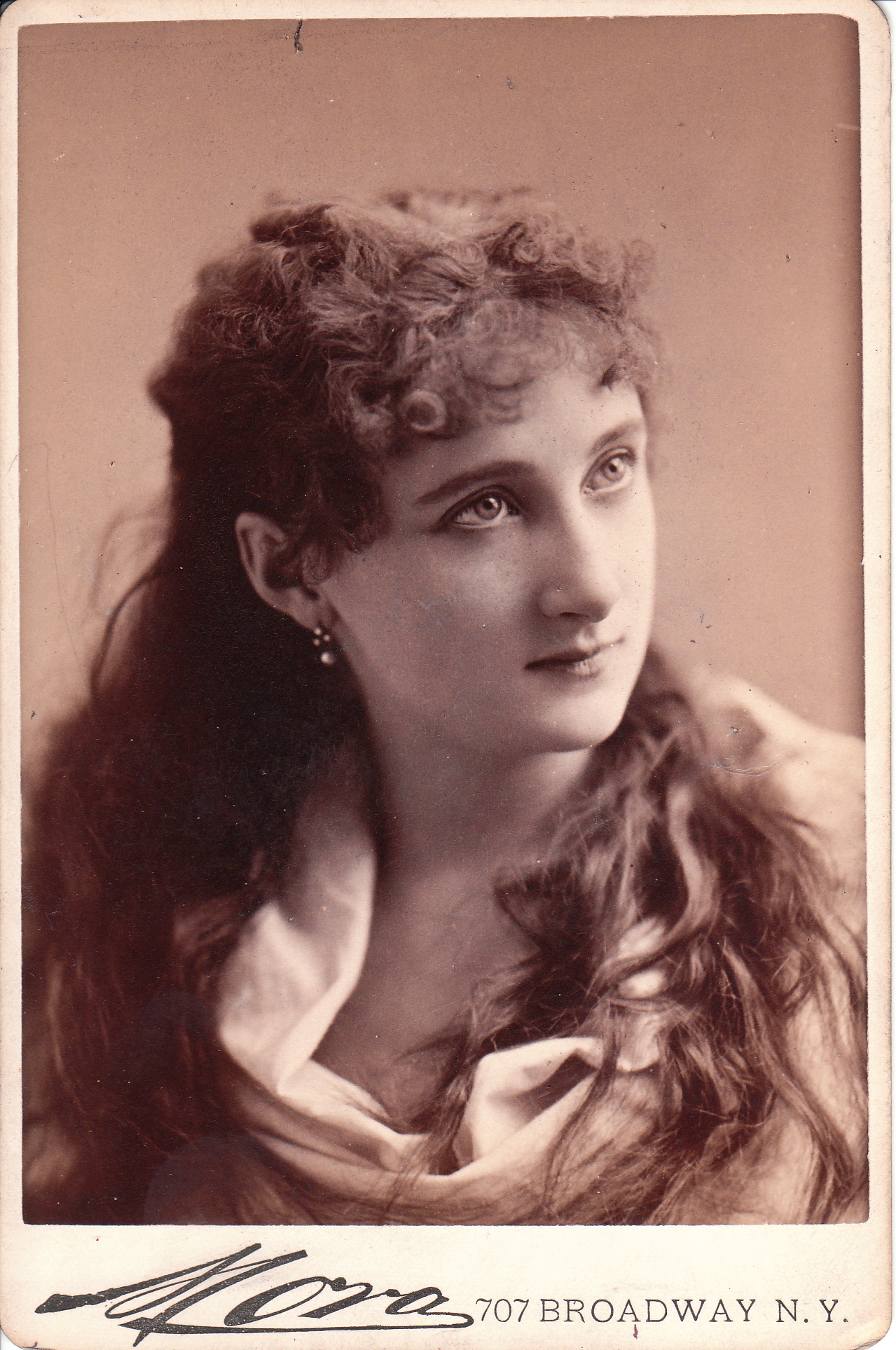

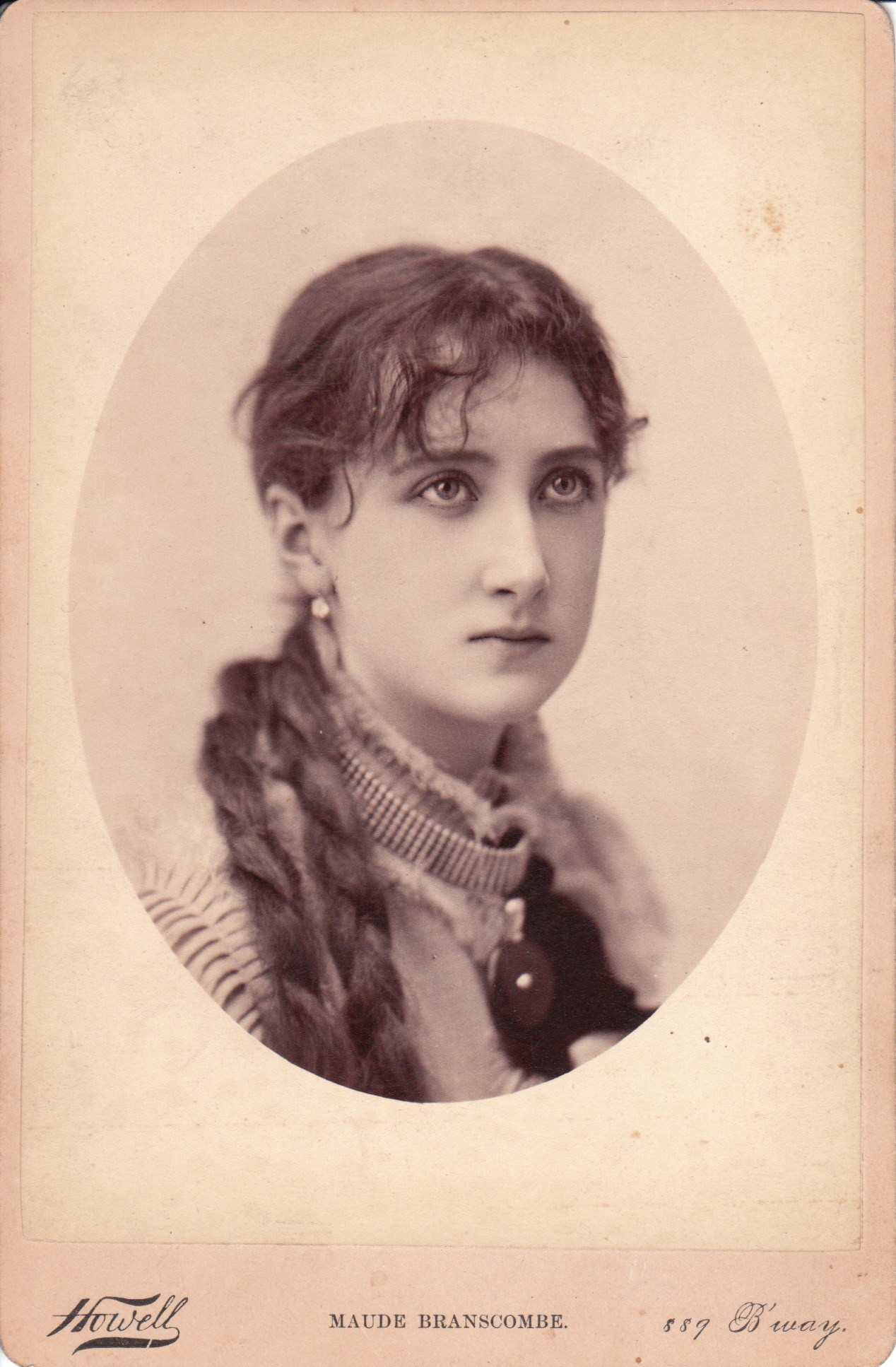


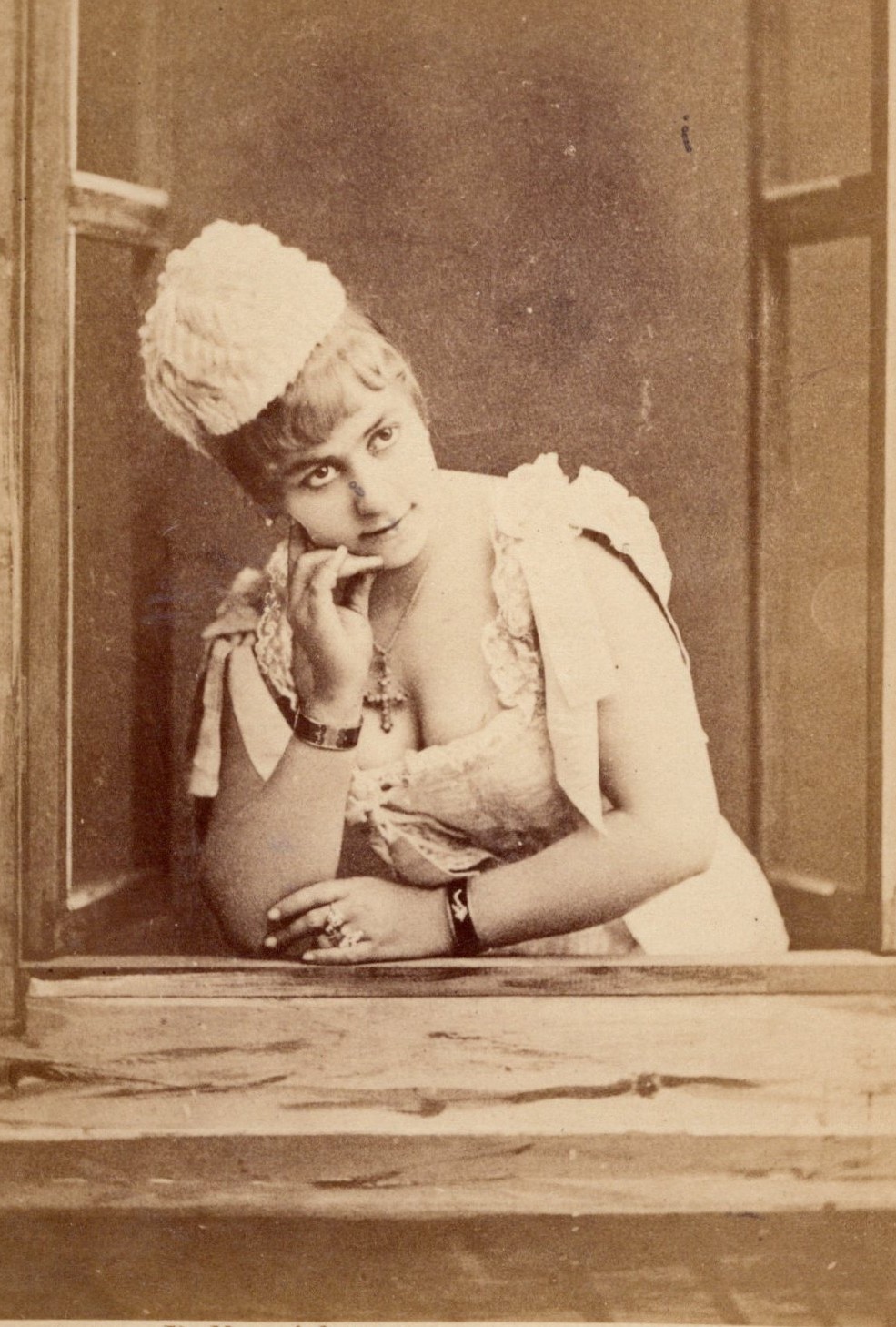
Maude Branscombe was a very popular stage beauty and light opera singer. She was reported to be the most photographed woman of her day. Biographical information about her is sparse and more will be added at a later date. Her first appearance on the New York stage was in 1876 as Cupid in a revival of Ixion at the Eagle Theatre. The portrait at the top was photographed by renowned W & D Downey of London, England.
The second portrait was cropped so the photographer is unknown.
The third portrait (Branscombe is wearing a necklace) is by L. Levin & Son of San Francisco, California.
The fourth cabinet card image was photographed by Sarony. Sarony was a well known celebrity photographer and more of his portraits can be viewed by clicking on the category of “Photographer: Sarony”. Sarony does an excellent job of capturing Branscombe’s beauty and her alluring eyes.
The fifth and sixth, and seventh cabinet card were photographed by another celebrity photographer, Jose Mora, of New York City. Interestingly, the fifth and seventh cabinet card captures Branscombe in the same costume as the second cabinet card. It is likely that the photographer of cabinet card number two, is also Jose Mora. To view other photographs by Mora, click on the category of “Photographer: Mora”.
The eighth cabinet card portrait of Branscombe was photographed by Howell, another New York City photographer with a studio on Broadway. Howell’s close-up photograph captures the actress’s beauty and her wonderful eyes. She is wide eyed and her hair is a bit mussed. These qualities add to the allure of Miss Branscombe.William Roe Howell was born in 1846 in Goshen, New York. He had a passion for drawing and painting and he directed his creative interest into the field of photography as a young adult. He opened a photographic studio in Goshen. In 1863 he moved to New York City where he joined Robert and Henry Johnston at Johnston Brothers Studio at 867 Broadway. In 1866 the firm became Johnston & Howell. In 1867, he became the sole proprietor of the gallery. By 1870, he was gaining much recognition in the field of photography. His great location in New York City gave him access to many fashionable upper class men and women as well as many celebrities. Among his photographic subjects were P. T. Barnum, Buffalo Bill, and Robert E. Lee. He opened a branch studio in Brooklyn. In 1873 he came one of five Americans to be awarded a special grand prized at the Vienna World Fair. He frequently received mention in the photographic journals. He published a book of cabinet cards that received much praise. He became a photographer for West Point, Princeton, and other notable institutions. He won many medals at photography exhibitions. In 1878 he moved his business from 867 to 889 Broadway and opened another studio with a partner (Meyer) at 26 West 14th Street. In 1880 he retired from photography due to health reasons. In 1886 he moved with his family to Washington D.C. intent on opening a photography business there. He then disappeared. He vanished just two weeks before the grand opening of his new studio. He left his wife of 16 years (Fannie Scott) and his five children penniless. His wife stated that Howell was an eccentric man and that he must have got tired of business and family problems “and cut loose from us”. He apparently returned home after a short duration of absence and his business appeared in the 1888 Washington D. C. business directory but not in the 1889 directory. He died of tuberculosis in New York City in 1890. He had been residing at the home of a colleague who ran a photography studio in Harlem. It is believed by some biographers that he had divorced his wife and returned to New York without his family.
The ninth cabinet card is another portrait photographed by Jose Mora. The actress’s costuming detracts from the overall appeal of the photograph. She seems lost in the swirl of her head covering. However, the photographer does an excellent job of highlighting Miss Branscombe’s seductive eyes. The phrase “Maude Branscombe eyes” certainly rivals the phrase “Bette Davis eyes”.
Cabinet card number ten also comes from the studio of Jose Mora. She is well dressed in this portrait. It is not clear if she is dressed for a stage role or if she is attired for a jaunt around town.
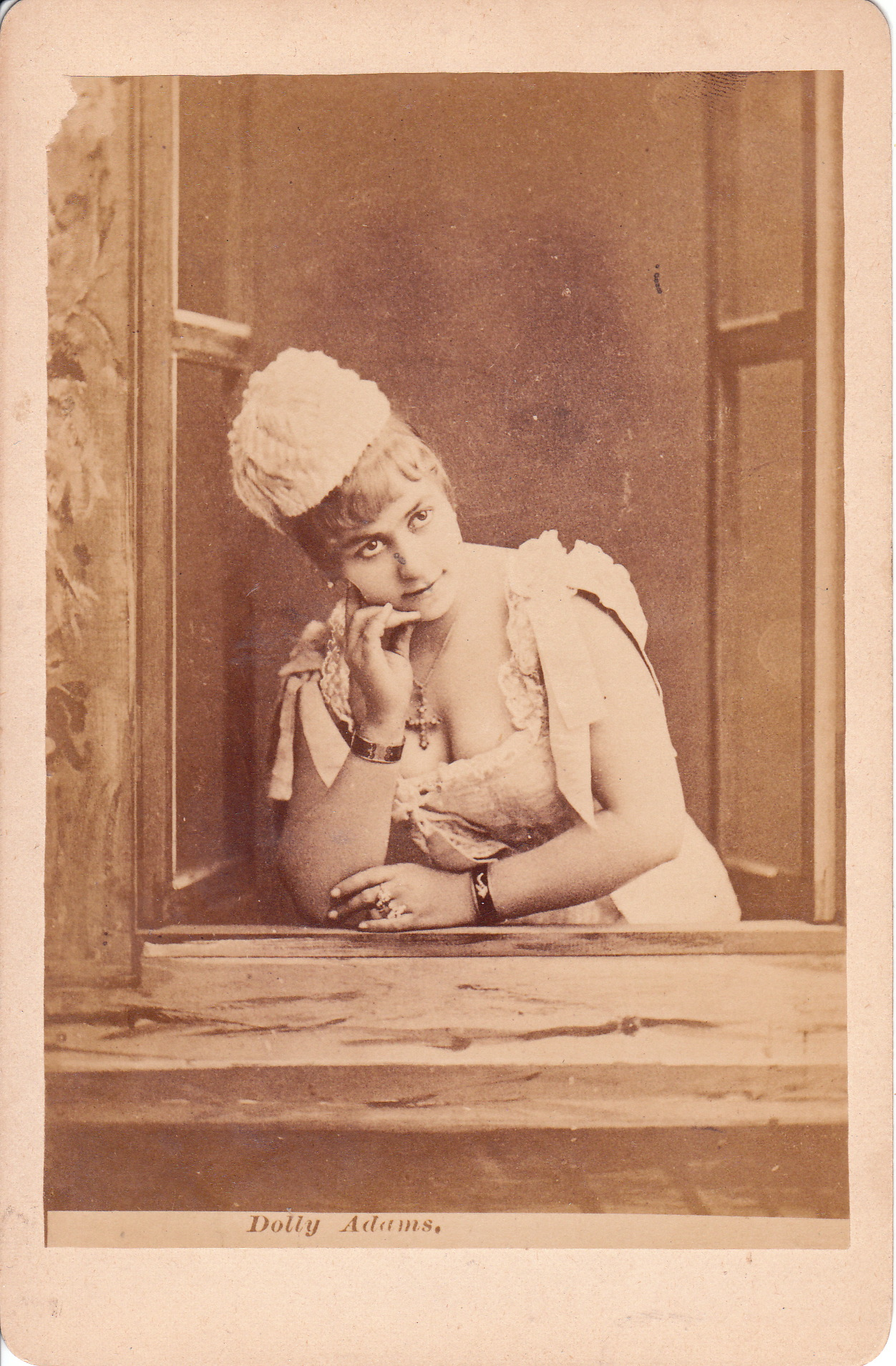


 THE CABINET CARD GALLERY