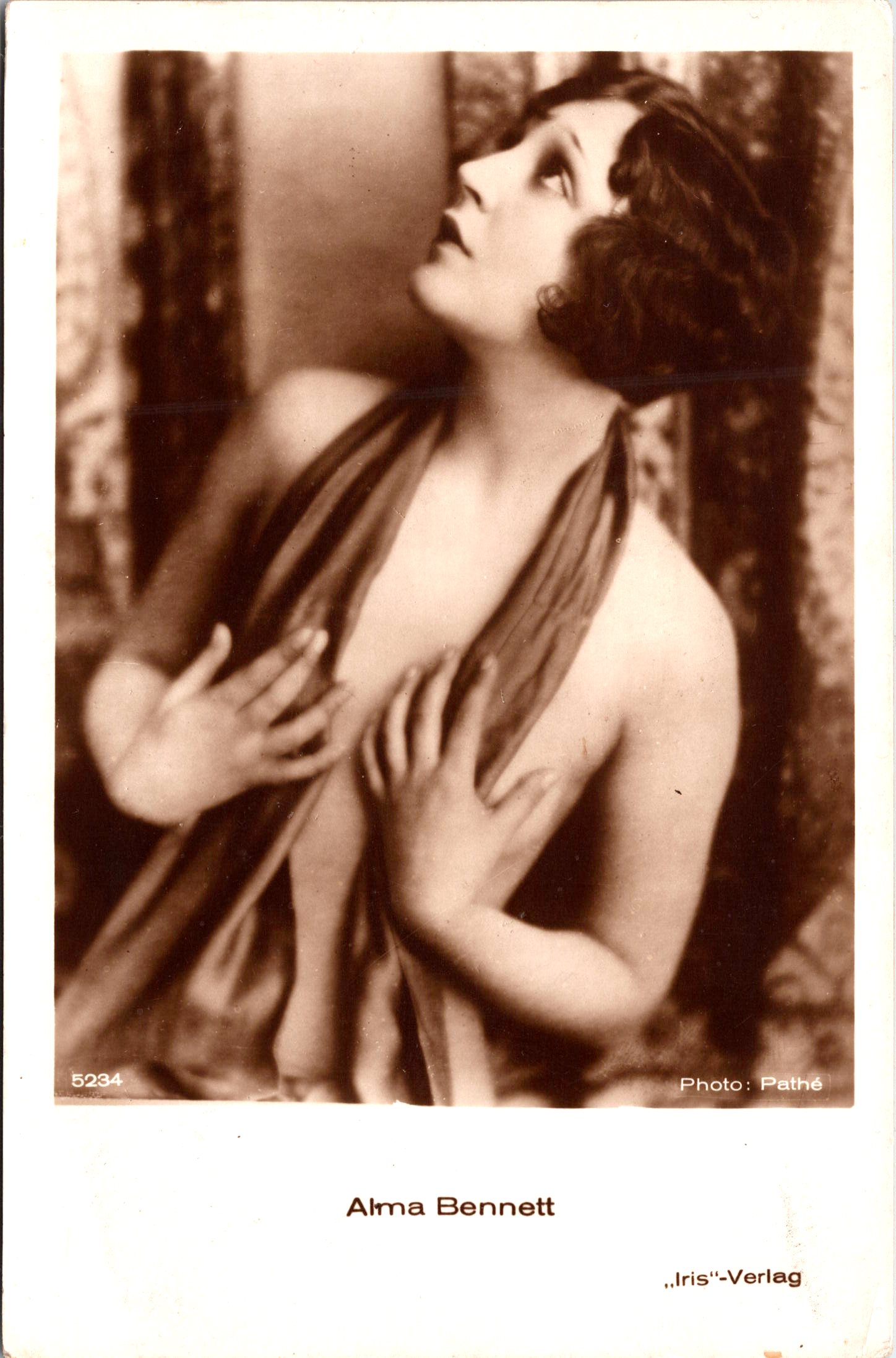
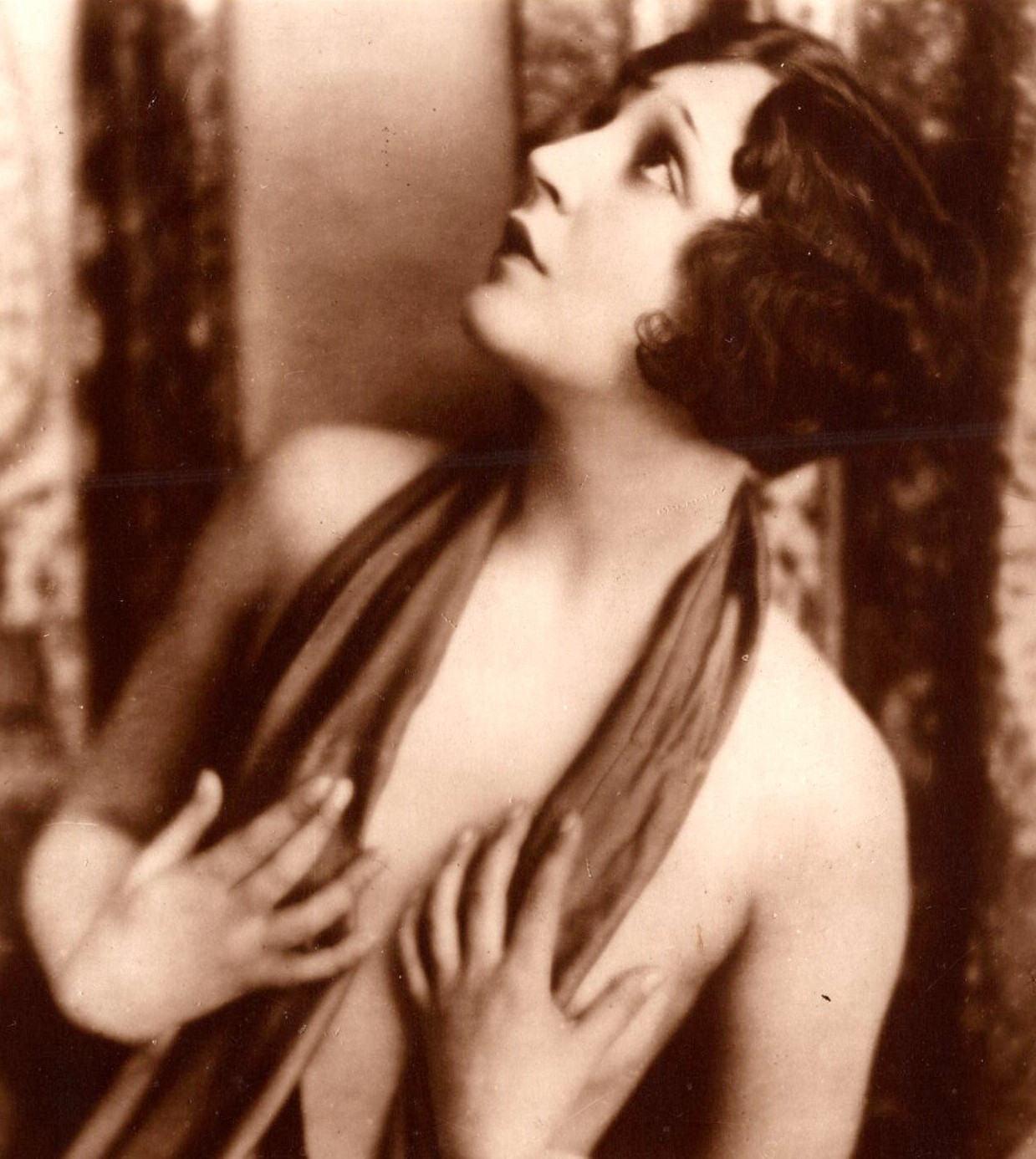
This sepia-toned, real photo postcard features the glamorous silent film actress Alma Bennett (1904-1958) in a striking, risqué pose. Published by Iris Verlag of Austria, this collectible is numbered 5234 and credits the prominent studio Pathé as the photographer—known for its high-quality film stills and star portraits during the silent era. The image captures Bennett draped in a sheer, flowing fabric that barely conceals her chest. With her hands placed carefully to cover herself, the pose is both sensual and elegant—clearly intended to appeal to fans of 1920s starlets and risqué glamour. Her expressive face is tilted upward in a dramatic fashion, with her dark, wavy bob framing large, expressive eyes. Her parted lips and gaze suggest a moment of theatrical longing or awe, characteristic of the silent film aesthetic. This postcard falls squarely into the risqué category due to its suggestive styling and scant coverage, though it retains a refined and artistic tone rather than being overtly provocative. Alma Bennett was an American silent film actress who appeared in over 60 films between 1919 and 1931. Known for her beauty, versatility, and ability to play both dramatic and comedic roles, she became a recognizable face during the peak years of silent cinema. Bennett began her career in Hollywood in the late 1910s, likely transitioning into film from stage or local beauty contests, as was common during the period. Her breakout years came in the 1920s, with notable roles in films such as: “Orphans of the Storm” (1921, uncredited, directed by D.W. Griffith), “The Prairie Pirate” (1925), “A Woman Against the World” (1928), “The Night Flyer” (1928). and “The Arizona Kid” (1930). Alma’s personal life was somewhat tumultuous, mirroring that of many silent-era actresses whose careers were overshadowed by the transition to sound films. She was married to Fred Bennett, though the marriage reportedly ended in divorce. Little is documented about her life after retiring from film around 1931, and she never returned to the screen during the sound era. (SOLD)
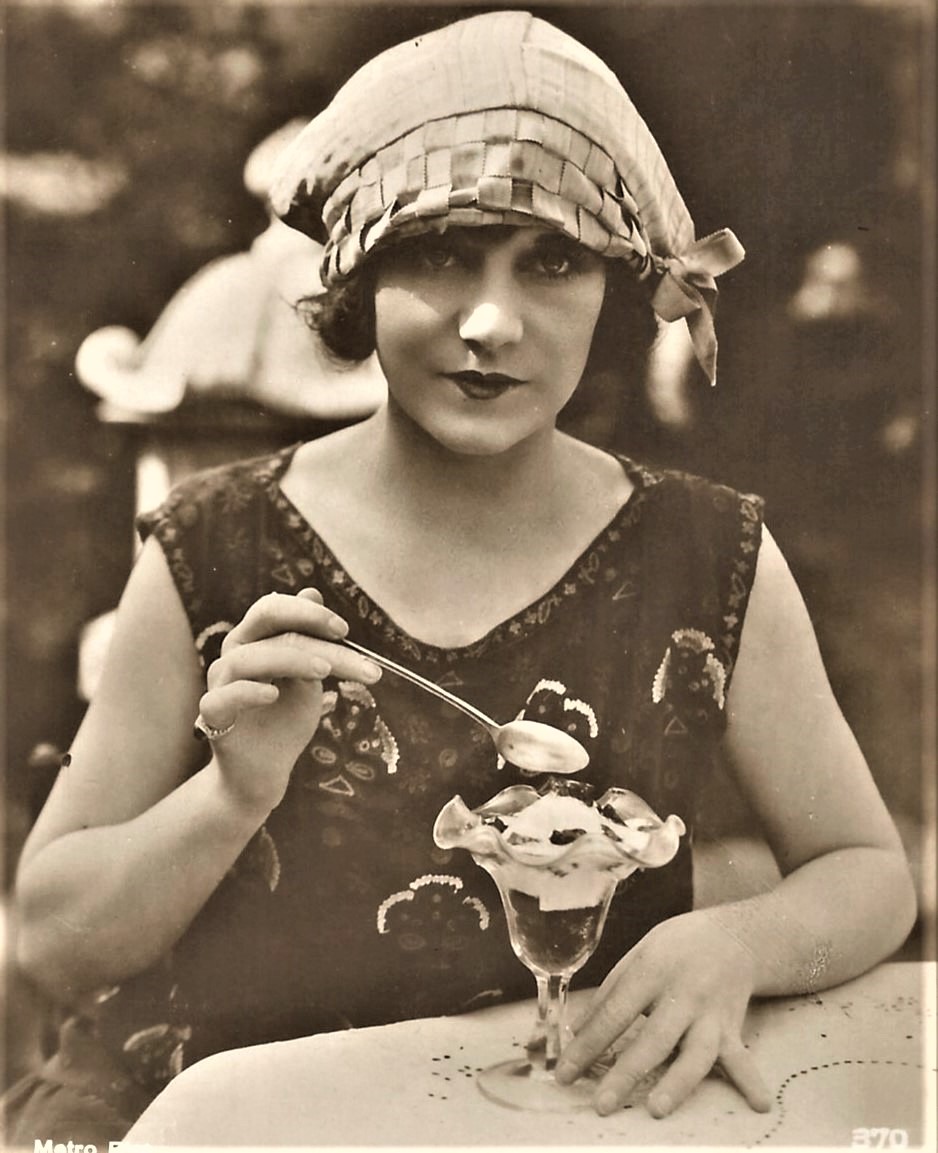
The pretty woman seen in this vintage real photo postcard is American silent film actress, Viola Dana (1897-1987). The photographer captured Miss Dana as she was about to eat something that looks a lot like dessert. Dana hailed from Brooklyn, New York. Her given name was Virginia Flugrath. I understand why she changed her name in the interest of her film career. She had two sisters, and they both became actresses. Their names were Shirley Mason and Edna Flugrath. Dana began performing on the stage at the ripe old age of three years-old. She continued to act in theater but between 1910 and 1912, she made appearances in four films. At age 16, she became an audience favorite in David Belasco’s “Poor Little Rich Girl”. Around this time, she began to perform in vaudeville with famed actor, Dustin Farnum. In the early part of her film career she became a star with Edison Studios. She fell in love with a studio director there, John Hancock Collins. She married him in 1915, at or around the age of eighteen. In 1916, Dana and Collins went to work for Rolfe Photoplays which released their films through Metro Pictures. Tragedy struck when Collins died from influenza during the 1918 flu pandemic. Dana continued acting for Metro through the 1920’s. Over time her popularity faded. Interestingly, one of her roles toward the end of her career, was in Frank Capra’s first film, “That Certain Thing” (1928). She retired in 1929, at about 32 years of age. She had appeared in over one hundred films. Dana, like many other film performers, was a casualty of the transition from silent films to sound films. Her voice was not compatible with the new medium. Dana had more than her share of tragedy in her personal life. After losing her first husband, she began a relationship with Ormer Locklear. He was an aviator and a burgeoning actor. He also was a married man. In 1920, while filming the movie, “The Skywayman”, Locklear was killed when his aircraft crashed. Dana witnessed the accident and did not fly again for 25 years. In 1925, she married Yale football star and actor Maurice “Lefty” Flynn. The marriage ended in divorce in 1929. Her third marriage was to Jimmy Thompson, a professional golfer. The marriage lasted fifteen years and ended in divorce in 1945. During her later years, she volunteered at the Motion Picture & Television Country House and Hospital. She became a resident there in 1979.
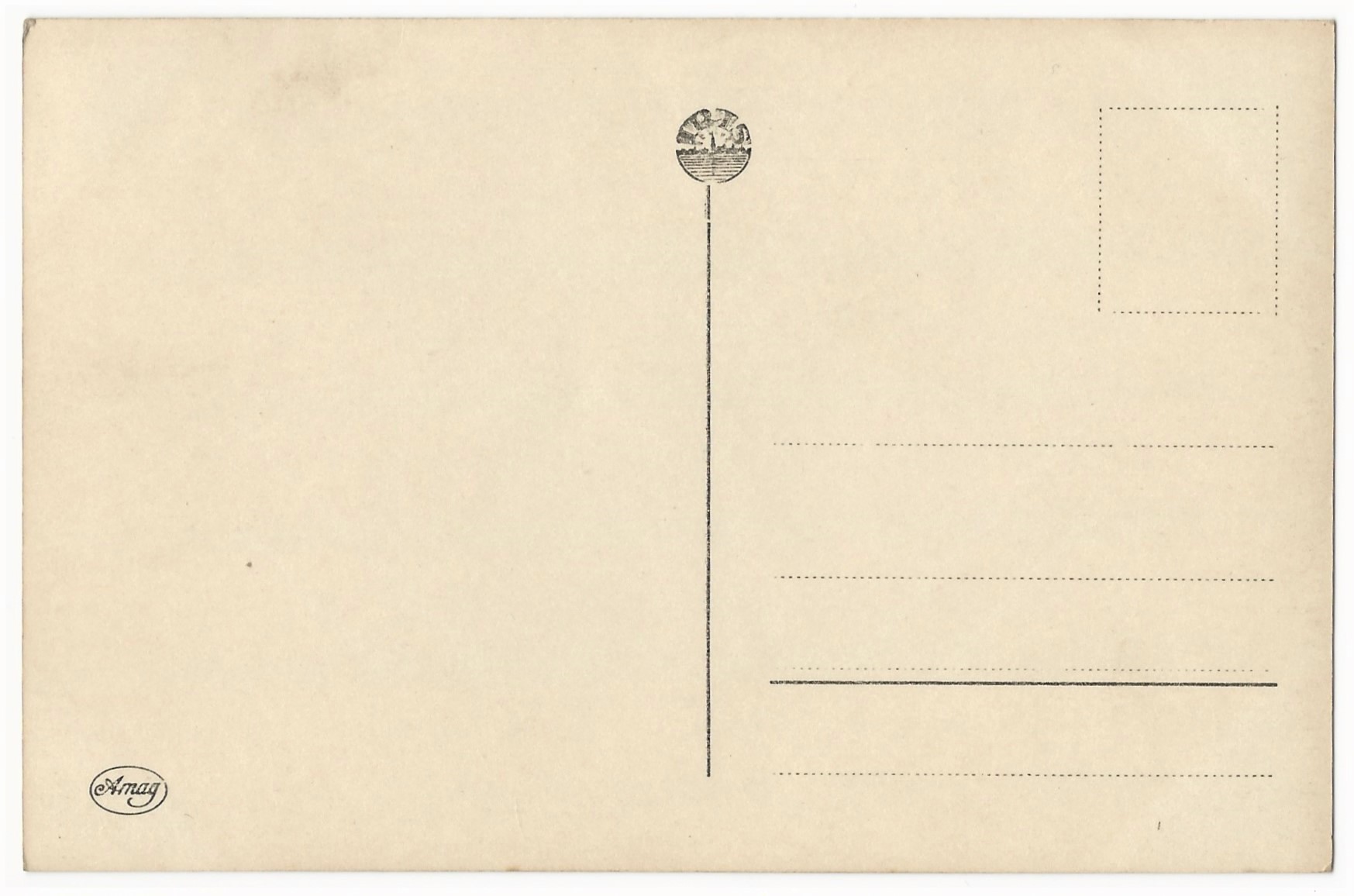
— Postcard 1 was published by Iris Verlag as part of a series (no 370). AMAG, another publishing house is also listed on the card. The bottom left corner of the image has the name “Metro Pictures”, which as stated earlier, was the company responsible for releasing a number of Dana, and her husband Collins, films. (SOLD) –
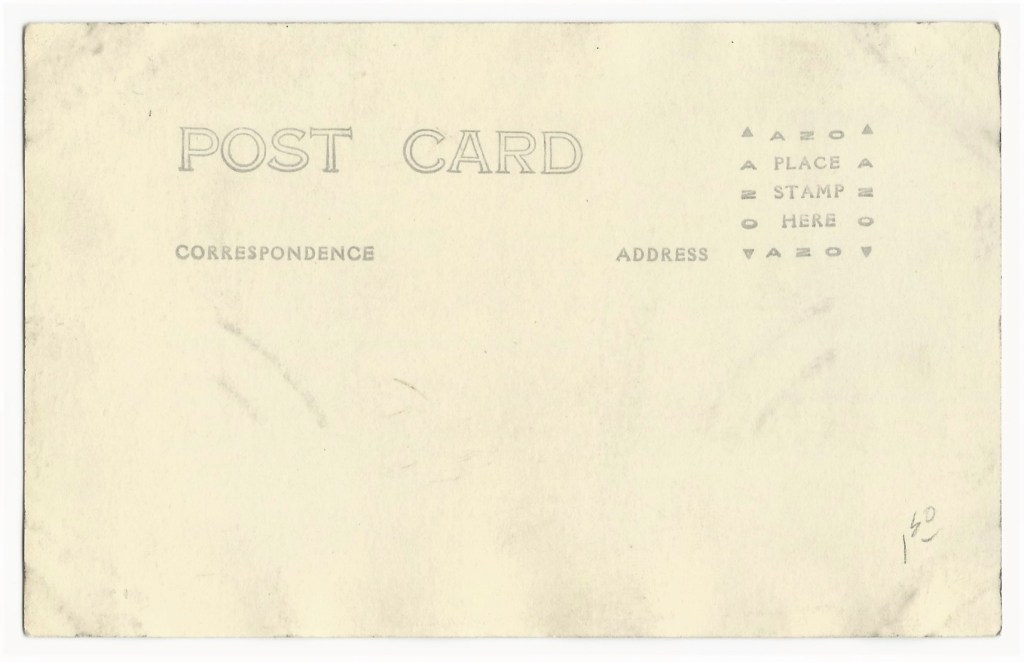
-Postcard 2 was published by the Photo Card Co. of Los Angeles, California. This photo card was likely published in 1929. The AZO stamp box indicates that the postcard itself was made sometime between 1910 and 1930. Miss Dana’s beauty is evident in this image. She has lovely eyes. (SOLD)
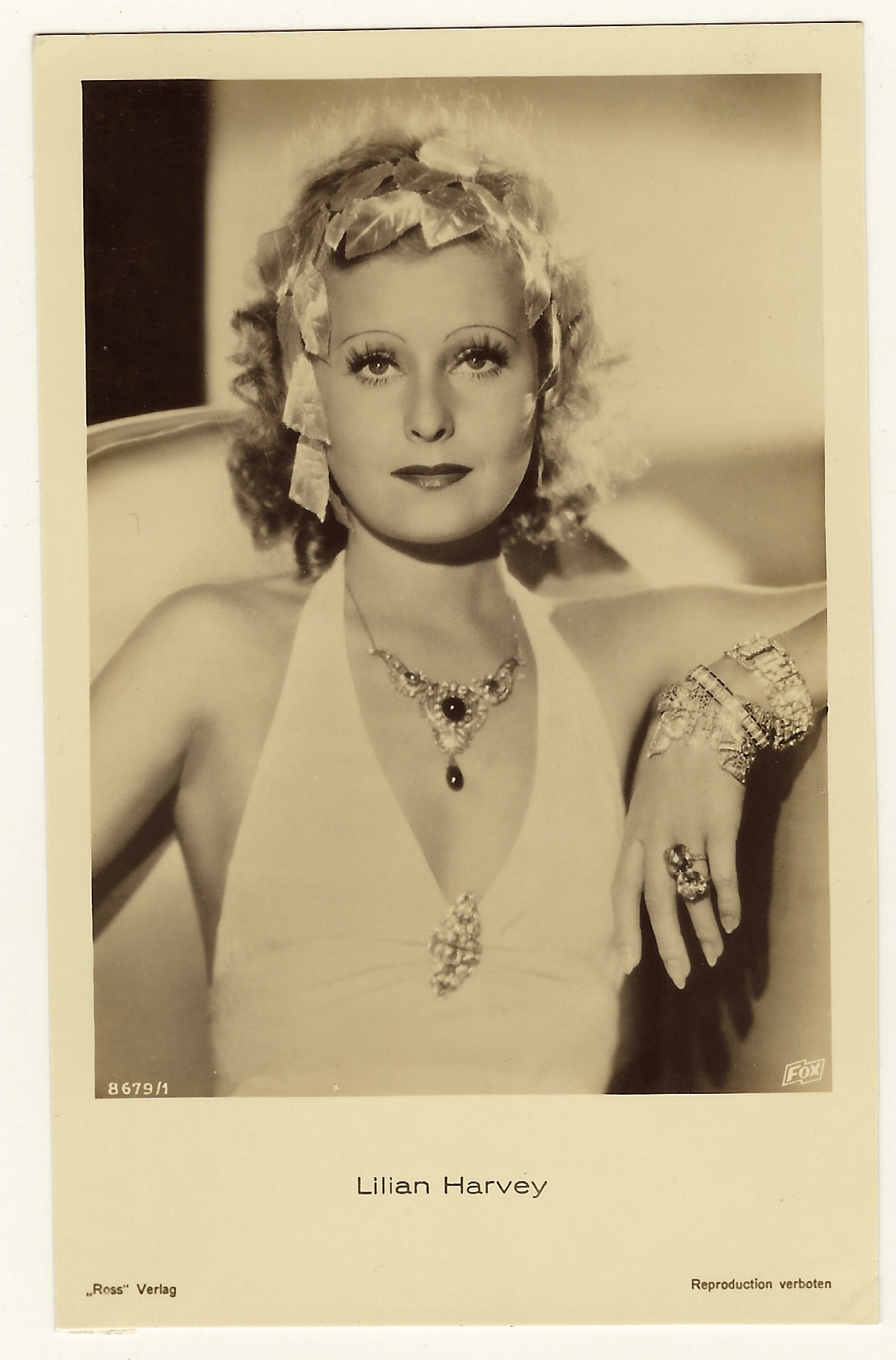
Real photo postcard #1 features Anglo-German actress and singer, Lillian Harvey (1906-1968). Her acting base was in Germany. Harvey was born in Hornsey, England to an English mother and a German father. During World War I her family was “trapped” in Magdeburg, Germany and Harvey was sent to live with her Swiss aunt. After the war she finished school in Berlin and than studied voice and dance at the Berlin State Opera. In 1924 she earned a role as a revue dancer in Vienna. This was followed by her first movie role which was in an Austrian film named “The Curse”. Thereafter, she starred in multiple silent films. Her first leading role was in “The Passion” (1925). Because of her voice training, Harvey was able to make the transition into “talkies”. She and actor Willy Fritsch became the “dream couple” of German movies. The pair acted together in eleven movies. In the 1930’s Harvey’s films appeared in both German and English and she became popular outside of Germany. She went to Hollywood and made four movies for the Fox Film Corporation (this postcard is from that period). In 1935, Harvey returned to Germany. She appeared in several more films and soon she was under the watchful eye of the Gestapo. Harvey had many Jewish friends in the film industry and she was supportive of them. By 1939, Miss Harvey was forced to leave Germany, leaving behind valuable real estate holdings. She went to France where, in 1940, she made two movies for director Jean Boyer. In 1943 she was stripped of her German citizenship because she had performed for French troops. When southern France was occupied by the Nazis in 1942, she emigrated to the United States. During the war she did some theatre acting and also worked as a homeside volunteer nurse. After the war, Harvey relocated to Paris. She went on a world tour as a singer and in 1949 made appearances in West Germany. She spent her retirement on the French Riviera (Antibes) where she had a souvenir shop and raised snails for escargot. Harvey was married one time. Her four year marriage to theater director Hartvig Valeur-Larsen ended in divorce. Eventually she settled down with her female partner Else Pitty Wirth (1907-2007). Interestingly, the two women are buried together in Antibes. The imdb gives Harvey 54 acting credits between 1925 and 1940. Interestingly, Lillian Harvey’s name is mentioned in Quentin Tarantino’s film “Inglorious Bastards” (2009). One of her songs is played on a phonograph and in addition one of the characters in the film mentions liking Harvey’s performance in a film and Joseph Goebbels becomes angry and insists her name never be mentioned in his presence. Click on the link below to hear the Lillian Harvey/Willy Fritsch duet used in the Tarantino movie. The 1936 song is titled “Ich Wollt Ich War Ein Huhn” (I Wish I Was A Chicken). Now would be a good time to discuss this postcard portrait of Miss Harvey. She is looking quite decorated in this photograph. She is wearing a garland of leaves in her hair, a very ornate necklace, a number of large bracelets, two giant rings, and a jeweled clasp on her dress near her cleavage. Note her very notable eye lashes. She is wearing a somewhat provocative dress and it is clear that the aim of the photographer is to emphasize Miss Harvey’s sexiness. The photographer and Miss Harvey succeeded in accomplishing this goal. The postcard was published by the German firm Ross Verlag and was part of a series (no. 8679/1). The postcard credits Fox films. SOLD
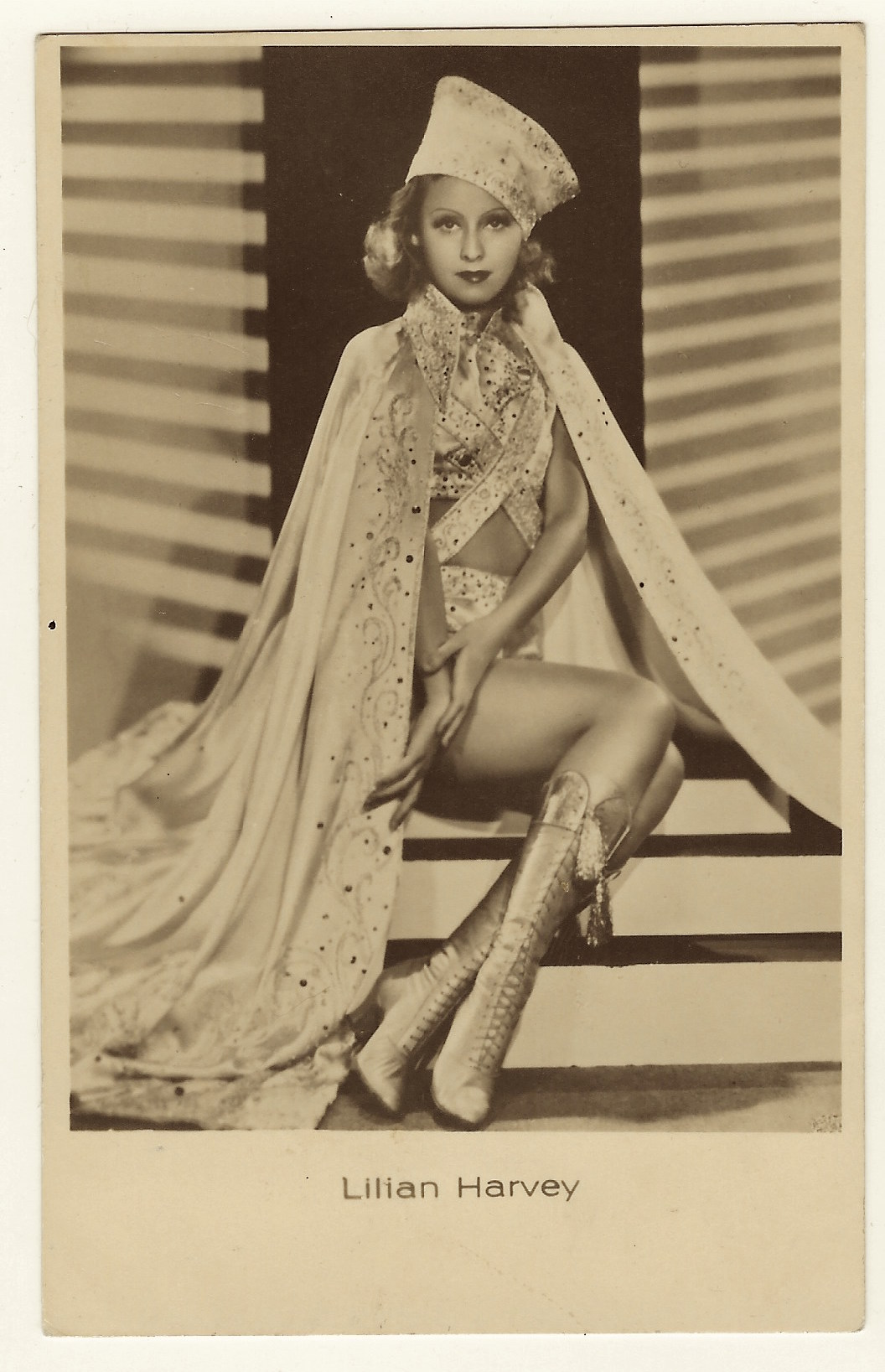
The second postcard (postcard 2) features Miss Harvey in a risque costume. She is showing a “lot of leg” which is quite provocative for her time. It is likely that this image captures her in one of her film roles. The postcard was published by Argenta, which was located in Munich, Bavaria. SOLD
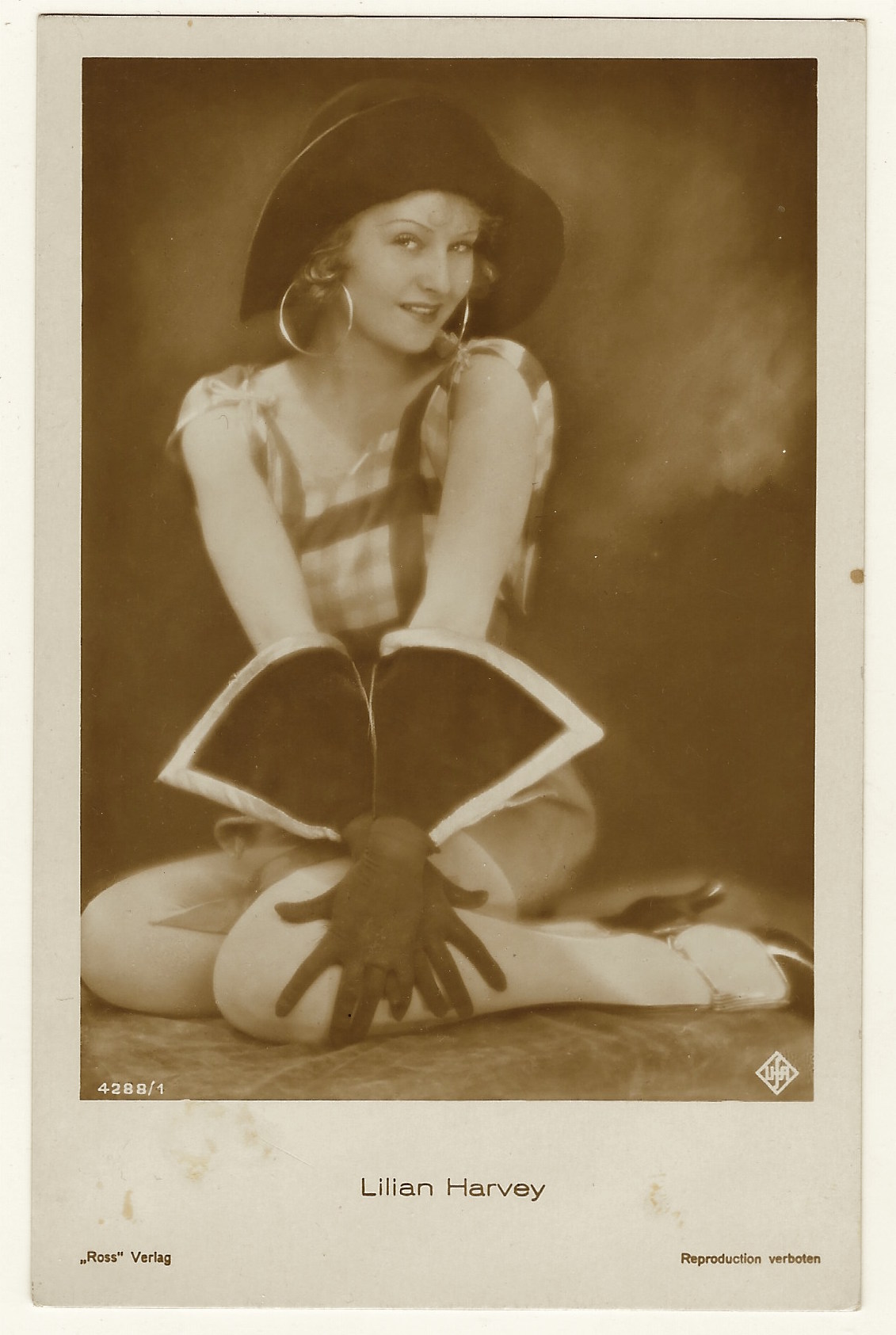
The third postcard (postcard 3) presents Miss Harvey is a sexy pose. Note her dark gloves and large hoop earrings. The postcard was published by Ross Verlag and is part of a series (no. 4288/1). Note the advertising logo for the German film company UFA, located on the bottom right hand corner of the image. (SOLD)
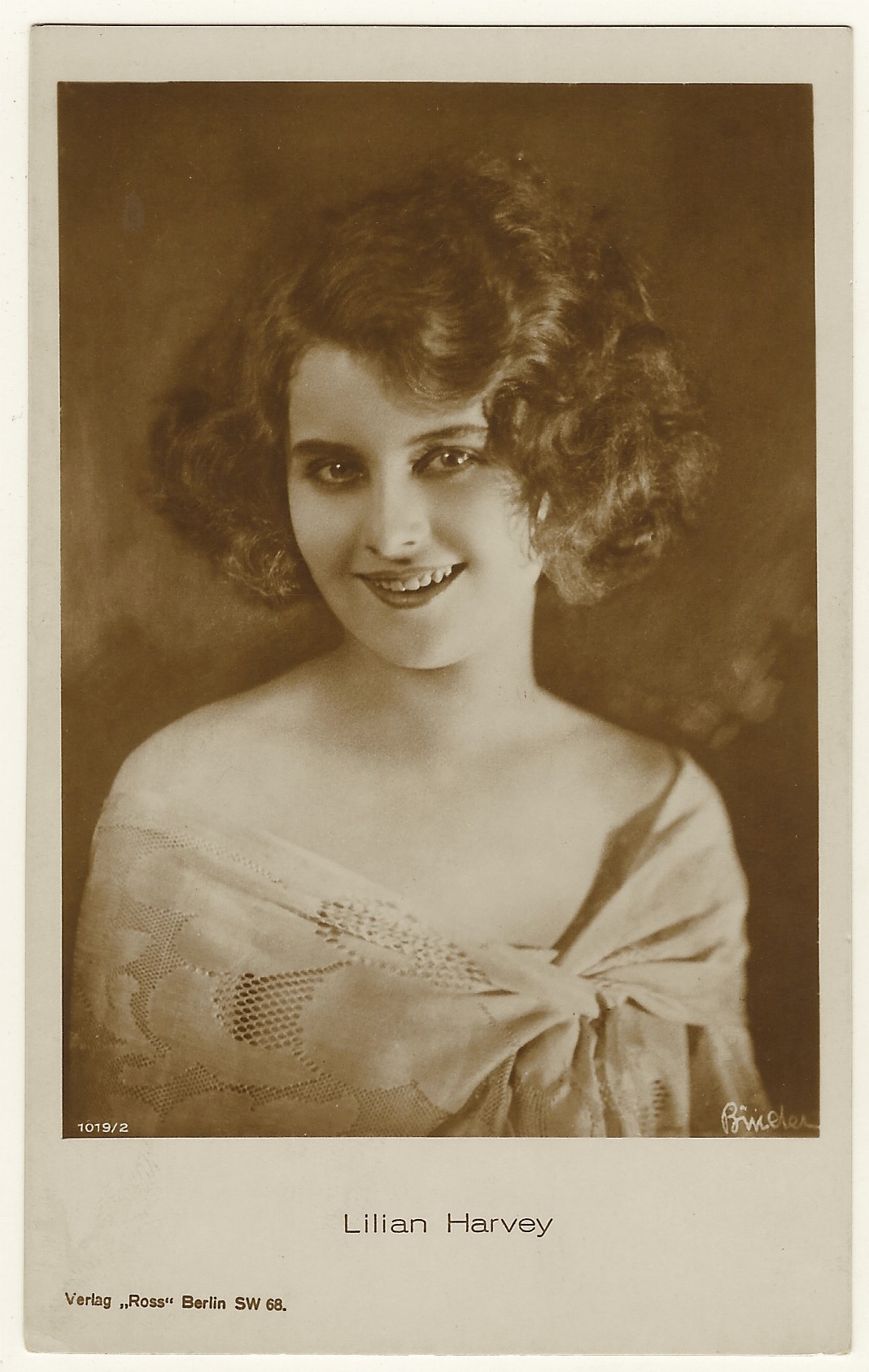
The fourth postcard (postcard 4) showcases Lillian Harvey’s beautiful smile. Miss Harvey’s not quite plunging neckline was clearly aimed to add a bit of a risque element to the photograph. This postcard was published by Ross Verlag (Berlin) and is part of a series (no. 1019/2). This portrait was taken by the talented photographer, Alex Binder. The photographer of this terrific image was Alexander Binder (1888-1929). He had the largest photo studio in Europe during the late 1920’s and the 1930’s. Many of his entertainment star portraits appear on Ross Verlag postards. It is thought that Binder was of Swiss origin. He was of the Jewish faith. He studied engineering but did not complete his studies. From 1908 to 1910 he studied photography at a school in Munich, Germany. After the completion of his photography studies, he went to Berlin and in 1913 opened his first photography studio. Before long, he became one of the premier photographers in Berlin. He primarily focussed on fashion and celebrity photography. Since Berlin was the capital of the European film industry, Binder photographed all the stars of the European film industry including, Lilian Harvey, Conrad Veidt, and Lya De Putti. Many of his images were used in popular film portrait postcards. His photographs could be seen in postcards published by Ross Verlag and Photochemie. Binder died in 1929 but new photo cards bearing his signature continued to be published until 1937.
Buy this original Real Photo Postcard (includes shipping within the US) #2490
To purchase this item, click on the Pay with PayPal button below
$27.50
Buy this original Real Photo Postcard (includes International shipping outside the US) #2490
To purchase this item, click on the Pay with PayPal button below
$35.50
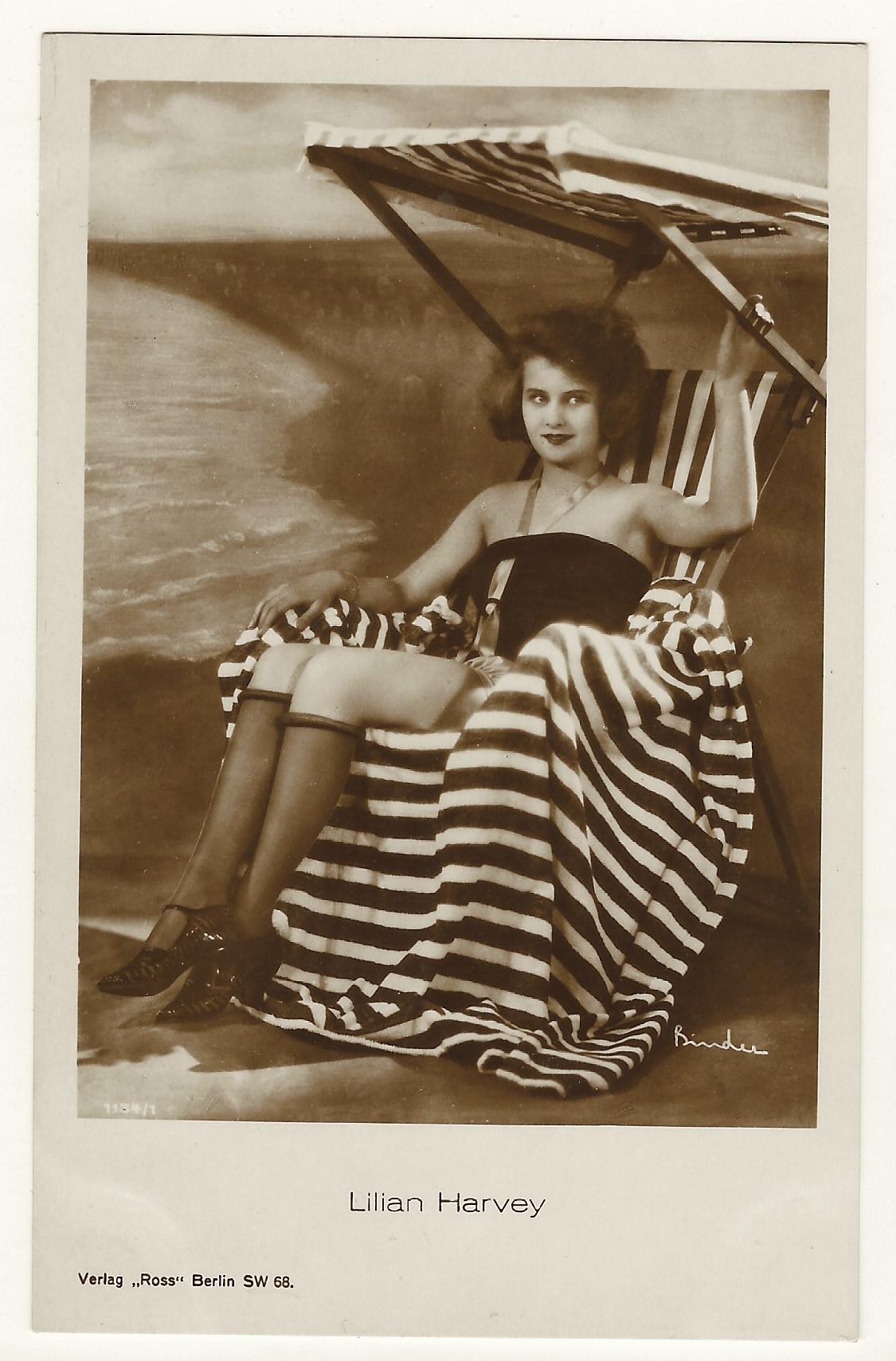
The fifth real photo postcard (postcard 5) features Miss Harvey wearing a bathing suit and sitting in a beach chair. Her shoes and stockings don’t seem very appropriate for the beach so it is a good thing that she is actually in a photographer’s studio and sitting in front of a beach backdrop. Obviously, the mission of the photographer was not to convince viewers that Miss Harvey was at the beach. The intent of photographer Alexander Binder was to present Lilian Harvey in a provocative and sexy pose. Mr. Binder certainly succeeded in accomplishing his goal. This photo postcard was published by Ross Verlag. (SOLD)
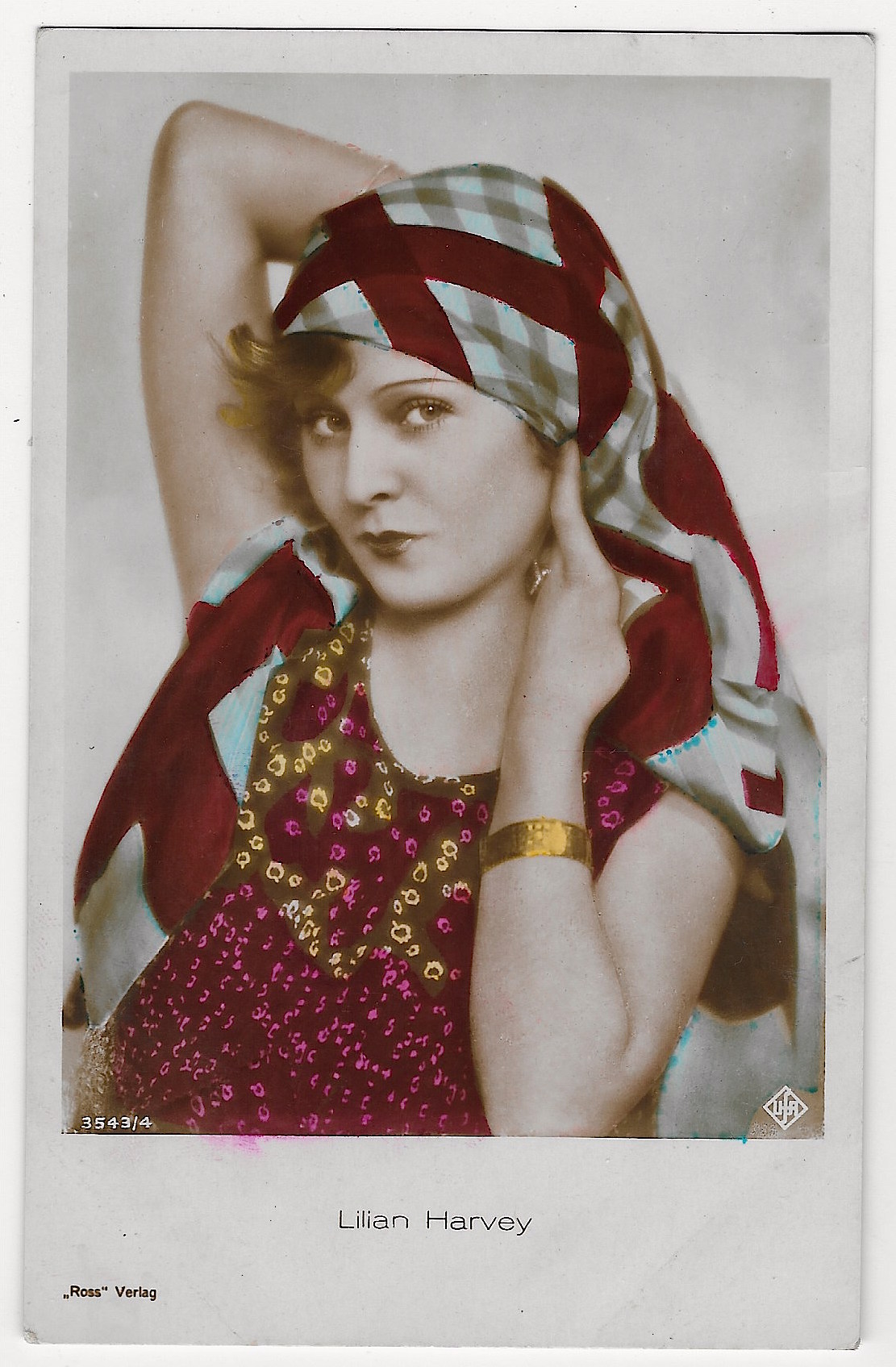
Postcard 6 featuring Miss Harvey, is published by Ross Verlag. The postcard is part of a series (no. 3543/4). She looks fantastic wearing her print dress and plaid long scarf. I’m not convinced the dress and scarf are matching, but her beauty overcomes any mismatch. As in Postcard #3, the logo for the German film company UFA, can be seen on the lower right hand corner of the image. This photo postcard is from the 1930’s and is in very good condition (see scans).
Buy this original Real Photo Postcard (includes shipping within the US) #2488
To purchase this item, click on the Pay with PayPal button below
$35.50
Buy this original Real Photo Postcard (includes International shipping outside the US) #2488
To purchase this item, click on the Pay with PayPal button below #2488
$43.50
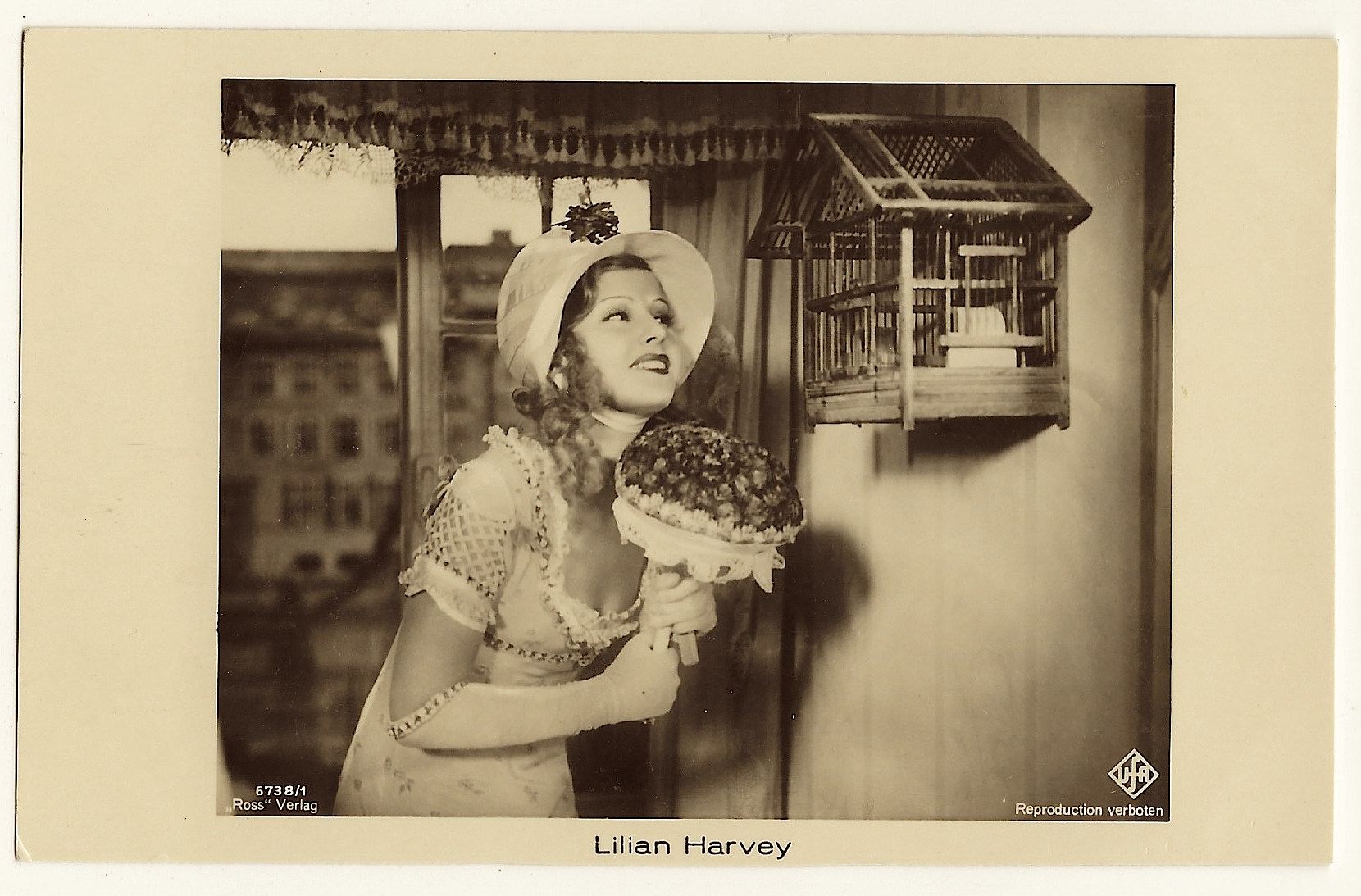
Postcard #7 features Lillian Harvey leaning forward as she looks into a hanging bird cage. The photographer likely chose this pose to inject some sexuality into the image. The pose reveals a small amount of the actress’s cleavage. She is wearing a relatively low-cut dress for this time period. Print on the reverse of the postcard reveals that the photograph of Miss Harvey comes from the film “Congress Dances” (1931). Her costar in the film was Willy Fritsch. The postcard was published by Ross Verlag and is part of a series (no. 6738/1). On the right hand bottom corner of the postcard is the logo for “UFA”, a German film company. This postcard is in excellent condition.
Buy this original Real Photo Postcard (includes shipping within the US) #2520
To purchase this item, click on the Pay with PayPal button below
$28.00
Buy this original Real Photo Postcard (includes International shipping outside the US) #2520
To purchase this item, click on the Pay with PayPal button below
$36.00
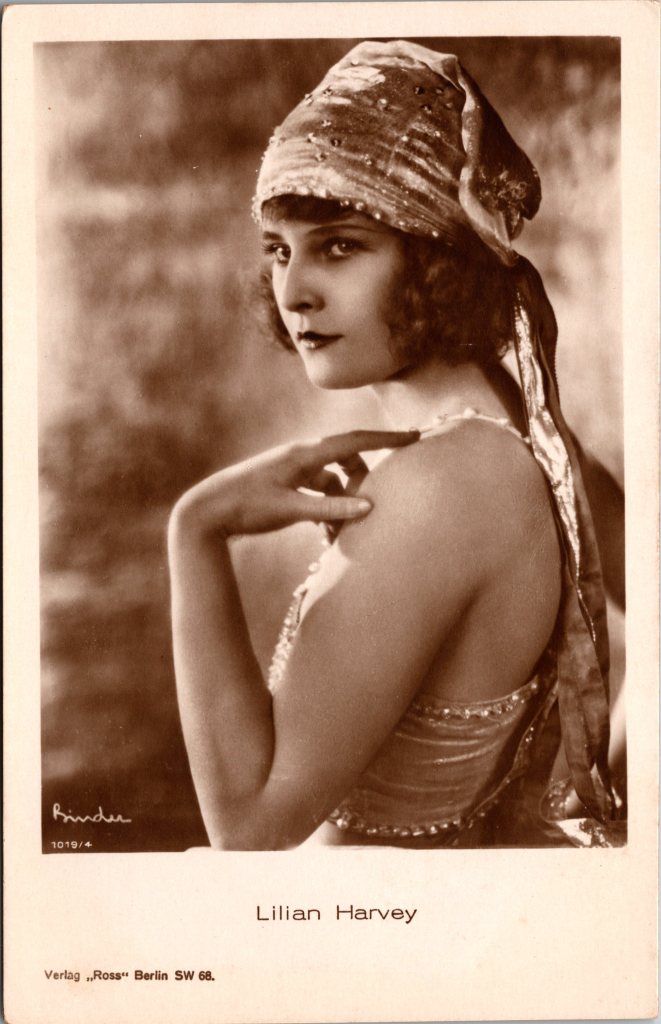
Postcard 8 was photographed by Alexander Binder and published by Ross Verlag as part of a series (no.1019/4). Ballerini & Fratini (Florence, Italy) are credited on the reverse of this postcard. (SOLD)
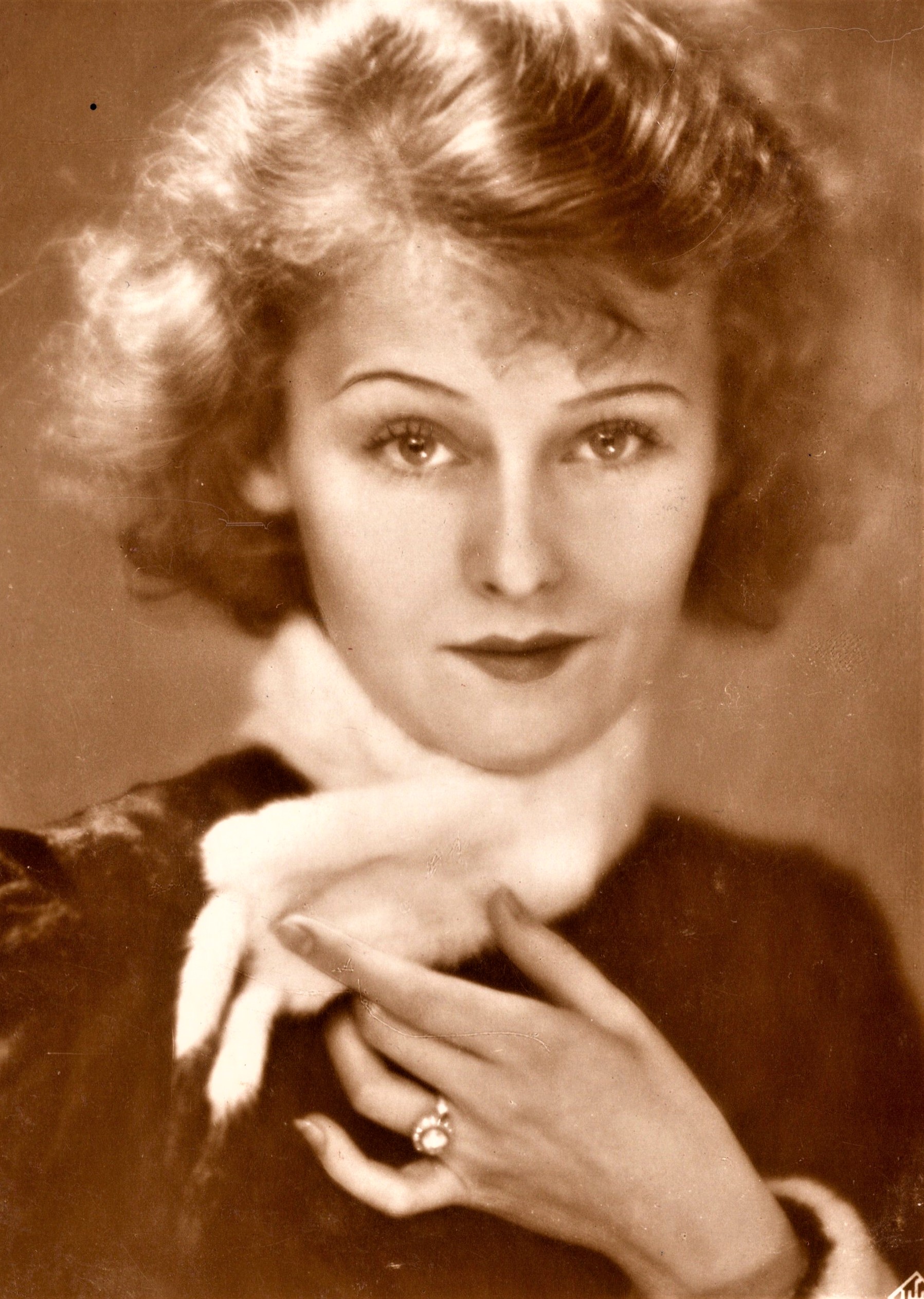
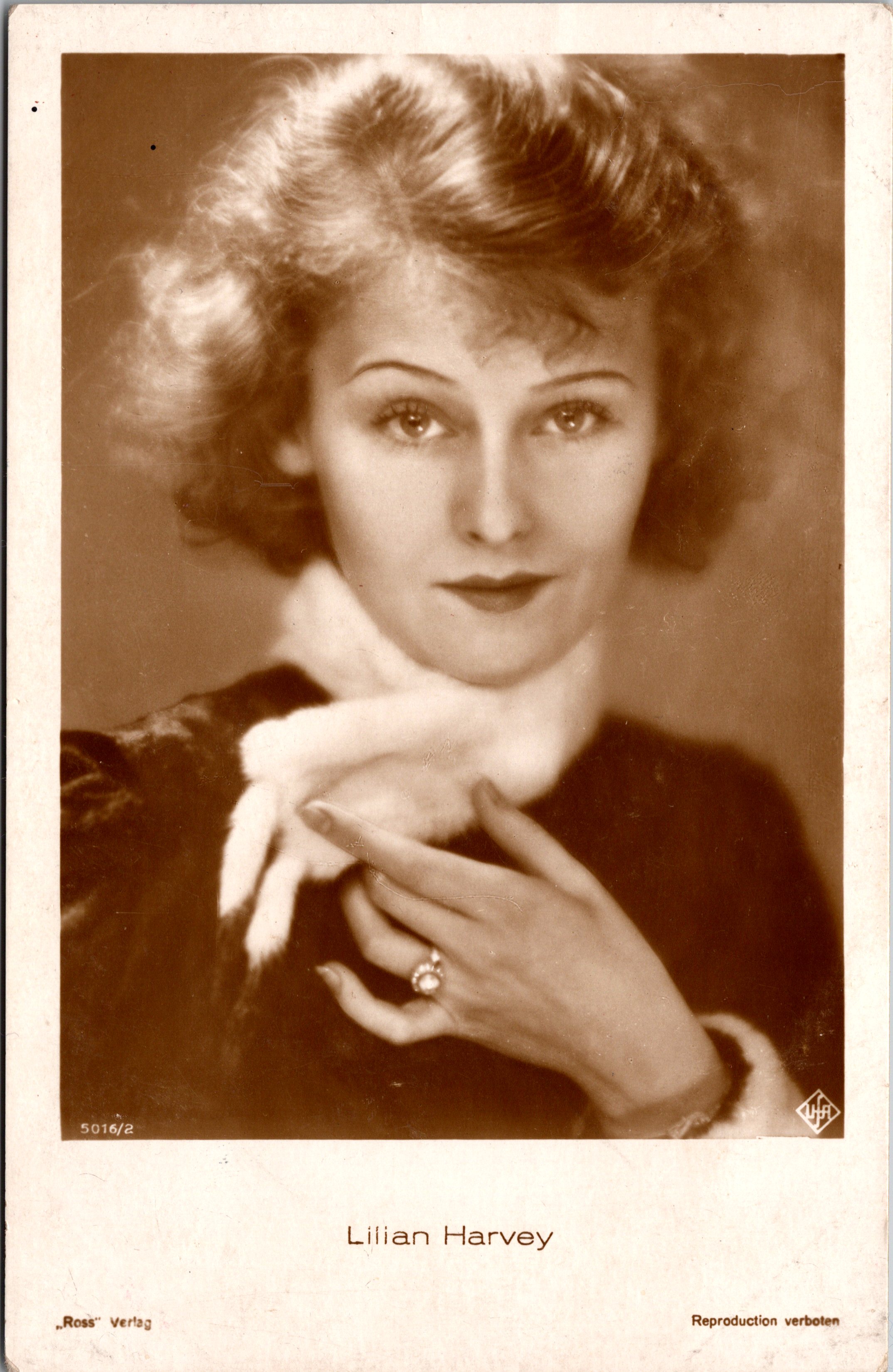
Postcard 9 offers a pretty portrait of Lilian Harvey that was published by Ross Verlag as part of a series (no.5016/2). Note the logo for UFA, the German film company, in the bottom right hand corner of the image. This vintage postcard is in very good conditon (see scans).
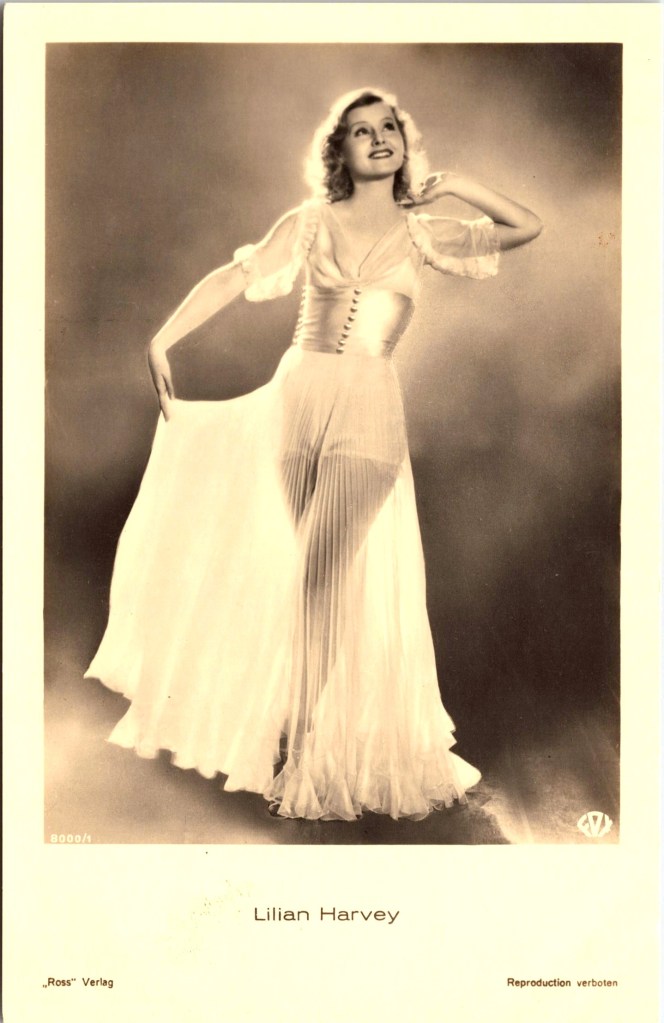
Postcard 10 is meant to be risque. Harvey is wearing a provocative dress and it is clear that the aim of the photographer is to emphasize Miss Harvey’s sexiness. The photographer and Miss Harvey succeeded in accomplishing this goal. This card has the logo of Fox Films. She made four films for the company beginning 1931. Lillian Harvey was a popular postcard model and there are many postcard images of her in existence. However, this particular card is very uncommon and one of the more suggestive photographs of Miss Harvey published on a postcard. This postcard portrait was published by Ross Verlag (Germany) as part of a series (No.8000/1). SOLD
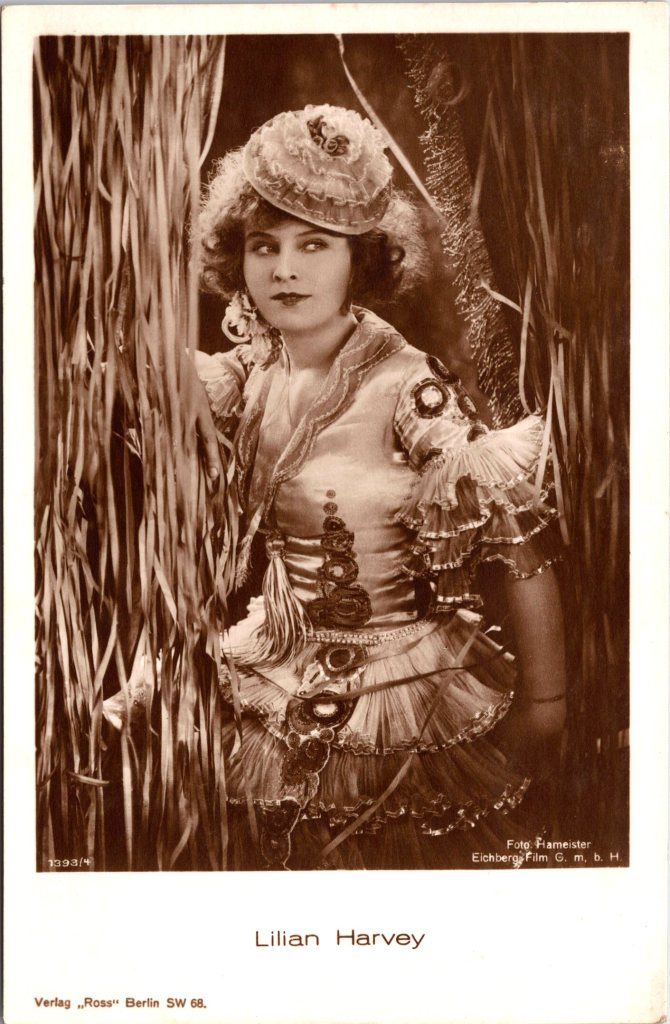
Postcard 11 was published by the German firm Ross Verlag and was part of a series (no. 1393/4). Eichberg Films is credited on the bottom right hand corner of the image. The company was located in Germany. Richard Eichberg was a moderately successful actor who became a director/producr in 1915. (SOLD)
Postcard 12 was published by the German firm Ross Verlag and was part of a series (no. 8679/1). She is posed in a bit of a provocative pose and is smoking a pipe. This postcard portrait was photographed by H. Gartner and published by Ross Verlag as part of a series (no.1529/1). Eichberg Films is credited on this postcard. Richard Eichberg (1888-1952) began his career as an actor but became a succssful film director and producer in the German film industry. He directed 87 films and produced 77 films. (SOLD)
Buy this Real Photo Vintage Postcard (includes shipping within the US) #5112
To purchase this item, click on the Pay with PayPal button below
$15.79
Buy this Vintage Real Photo Postcard (includes International shipping outside the US) #5112
To purchase this item, click on the Pay with PayPal button below
$25.04
POSTCARD 13
POSTCARD 14 (SOLD)
POSTCARD 15 (SOLD)
POSTCARD 16(SOLD)
Postcard 13 was published by Ross Verlag and features Miss Harvey posed in a provocative manner. This postcard has a French stamp and was postmarked in 1929 in Paris, France.(SOLD)
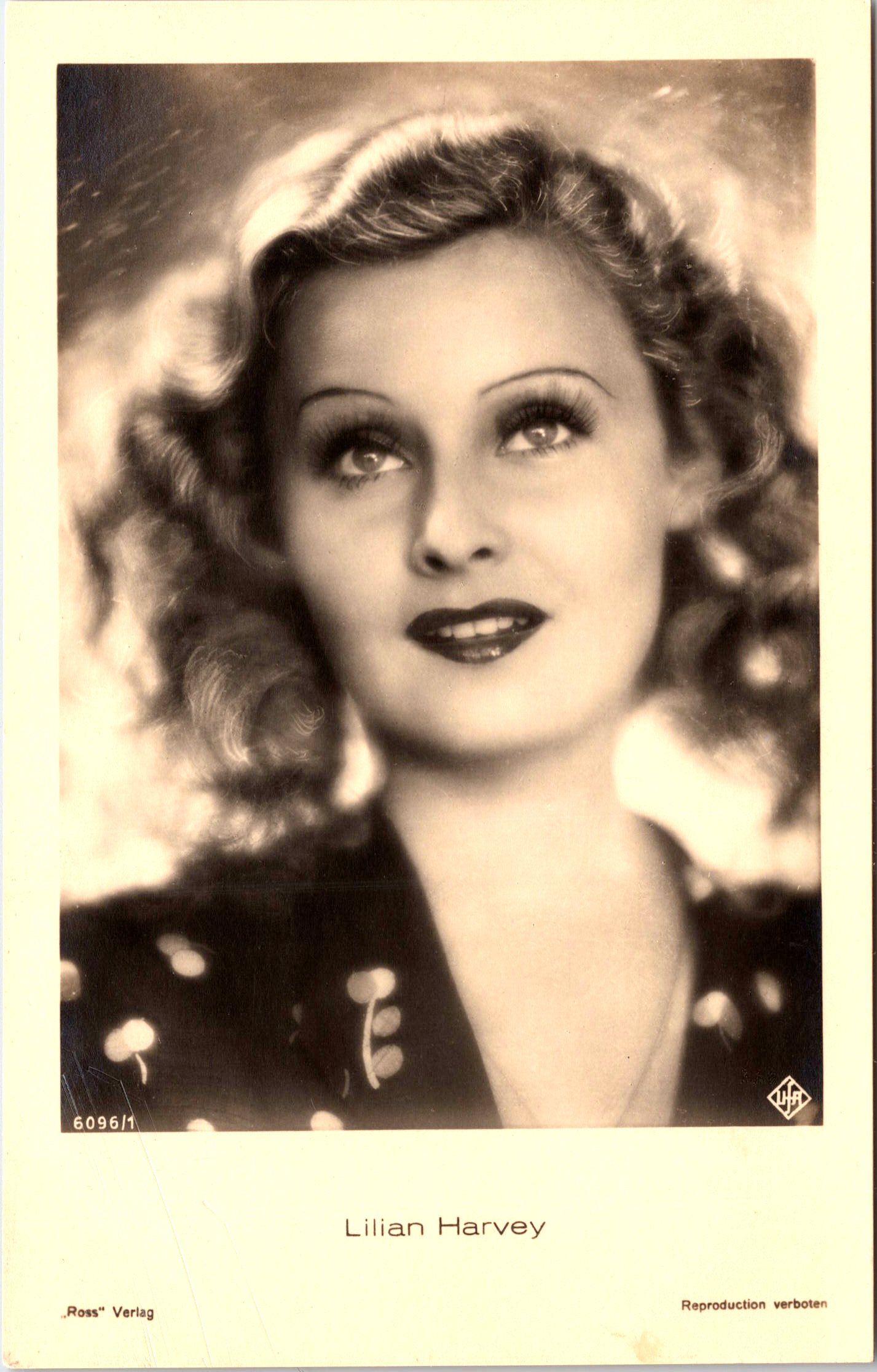
Postcard 14 was published by the German firm Ross Verlag and was part of a series (no. 6096/1). UFA Films is credited on the bottom right hand corner of the image. The company was located in Germany. SOLD
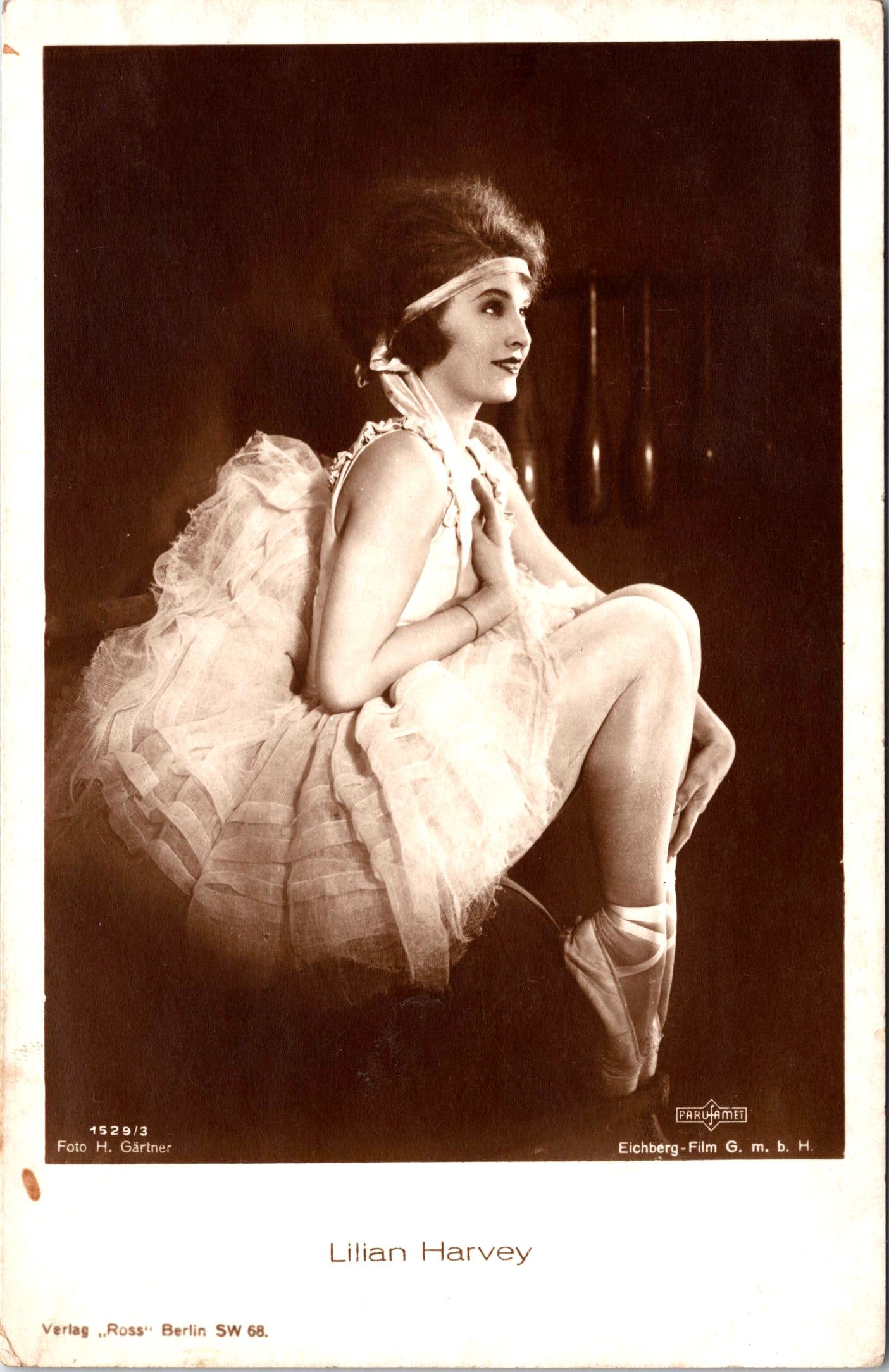
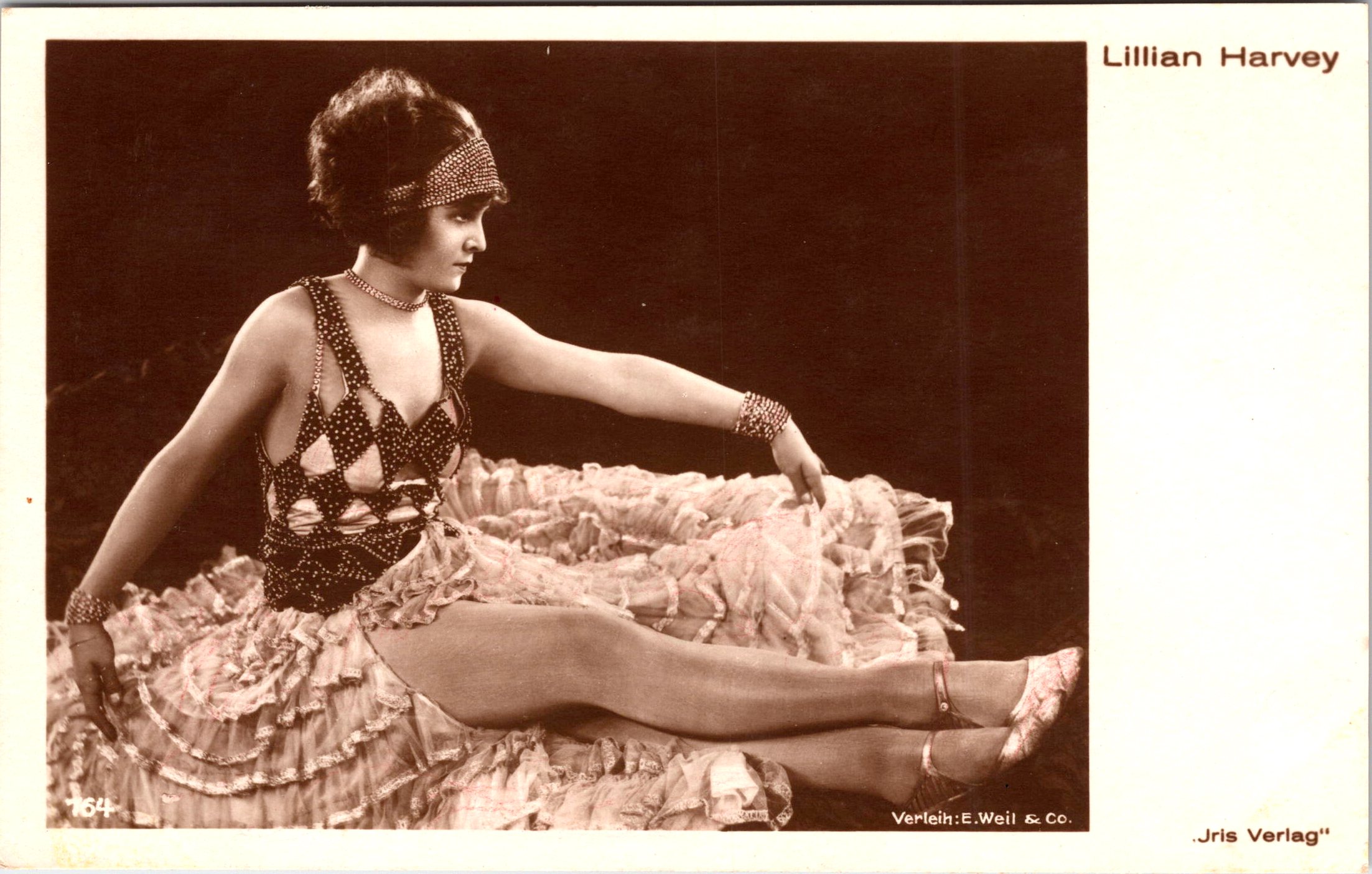
Postcard 15 shows Lillian Harvey wearing a ballerina costume and it is clear that the aim of the photographer is to emphasize Miss Harvey’s sexuality. The photographer and Miss Harvey succeeded in accomplishing this goal. The postcard was published by the Austrian firm Iris Verlag and was part of a series (no.764). Iris Verlag in Vienna was the most important Austrian publisher of film star postcards. The photographer of this portrait was E. Weil & Co. SOLD
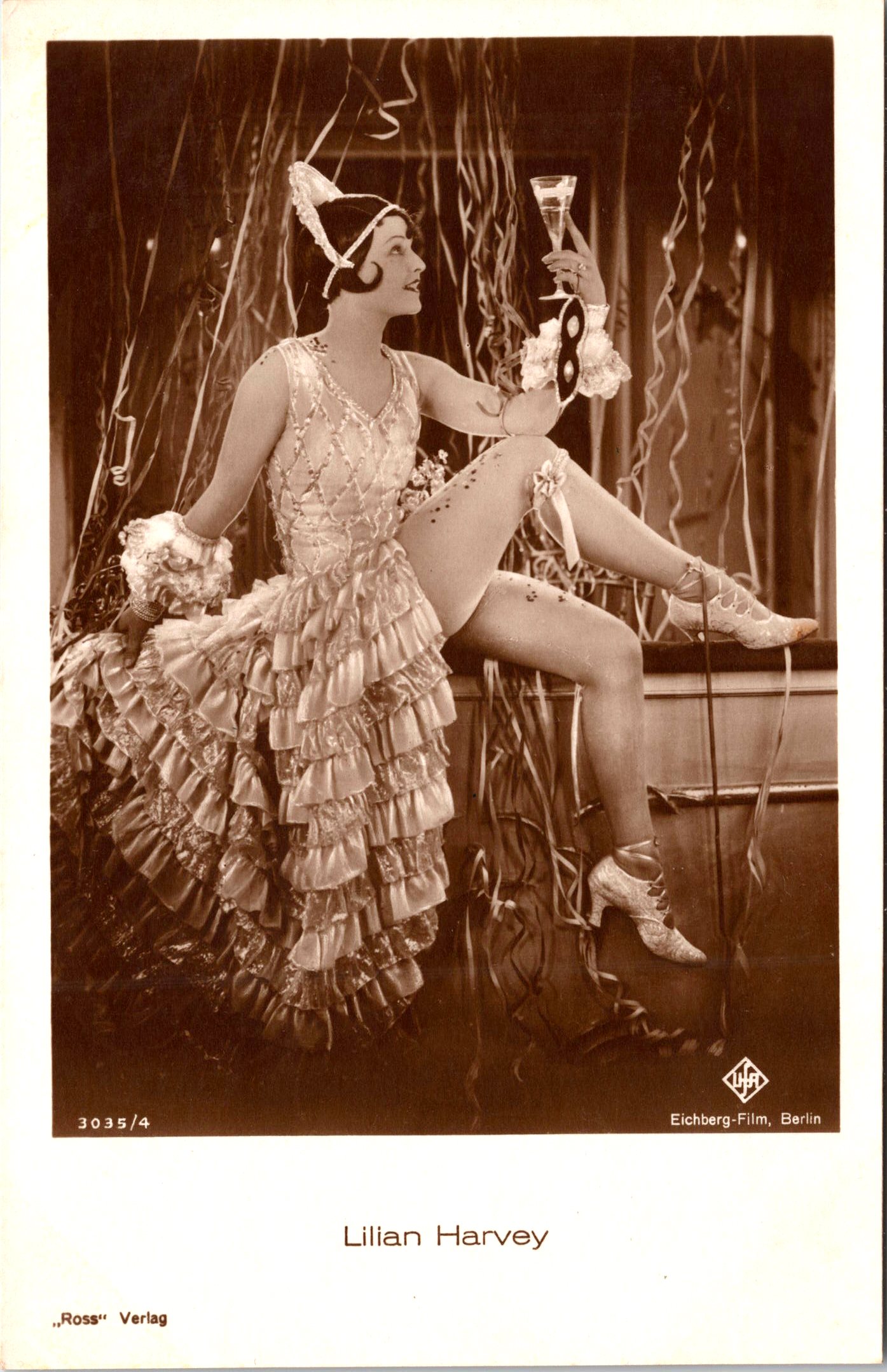
Postcard 16 was published by Ross Verlag. It was part of a series (no.2033/1). The postcard has the logo of “Fanamet” in the lower right hand corner of the image. “Fanamet Films” was an Austrian film distribution company. The logo for “First National Pictures” is located on the bottom left hand corner of the image. First National Pictures was an American motion picture production and distribution company. The company was founded in 1917 as a theater chain. It then began distributing movies and in 1924 it began producing films. In 1929 the company was absorbed by Warner Brothers. (SOLD)
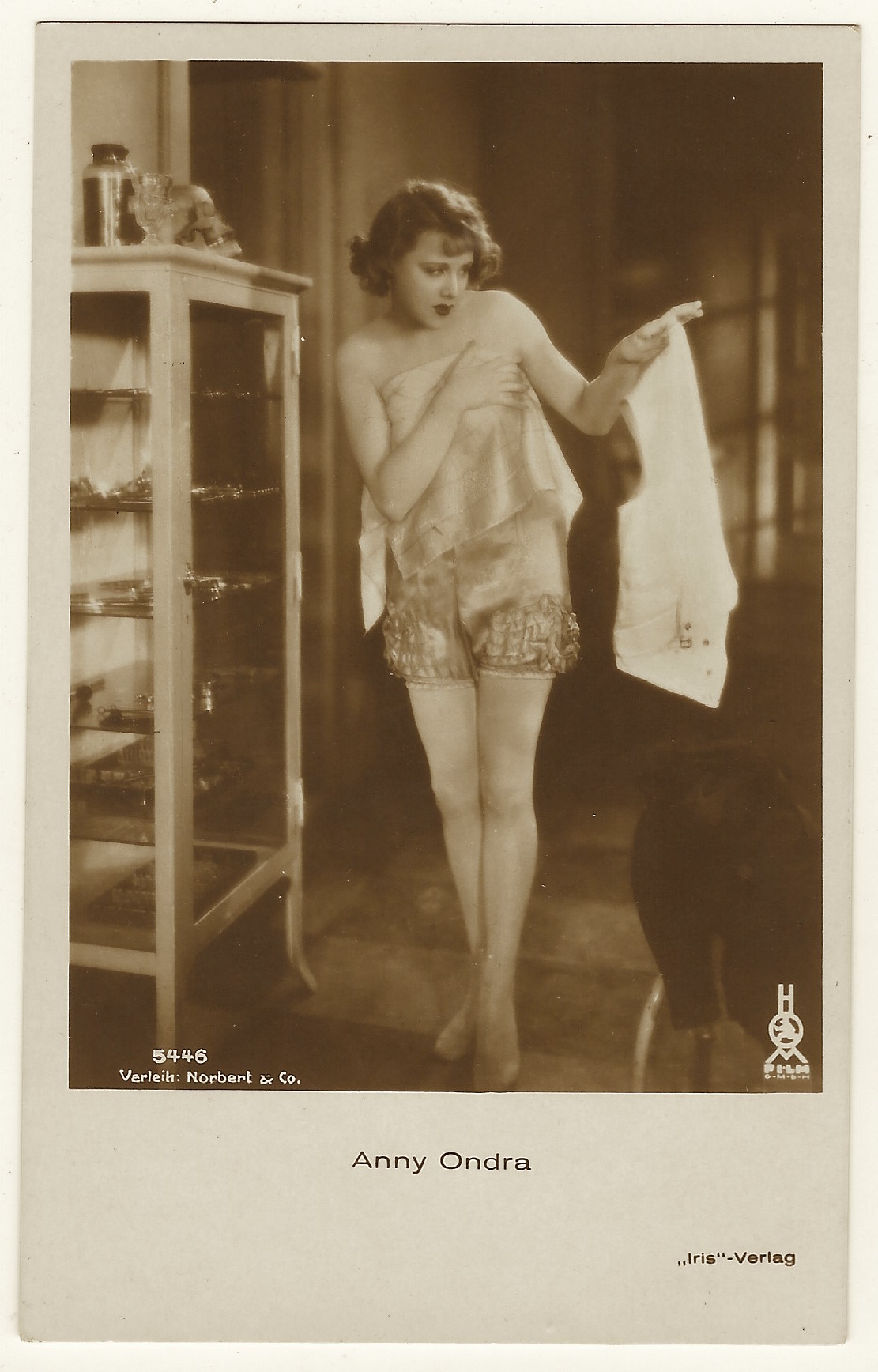
This risque vintage real photo postcard (Postcard 1) features actress Anny Ondra. The postcard was published by Iris Verlag. The photograph is by Verleih Norbert & Co.. The postcard is part of a series (no. 5446). The photo seen on this postcard captures Ondra in a scene from the movie “Blackmail” (1929). This particular postcard is rare. I have searched extensively and have not been able to locate this particular image elsewhere. Anny Ondra (1903-1987) was a Czech film actress. She was born in Tarnow, Galicia, Austria-Hungary (now Poland). She was active in the movie industry between 1914 and 1957. She acted in Czech, Austrian, and German films in the 1920’s. She appeared in some British dramas, most notably, Alfred Hitchcock’s “The Manxman” (1929) and “Blackmail” (1929). The IMDb credits Ondra with over 90 acting credits between 1914 and 1957. She appeared in more than 40 films in the sound era. However, her career in British films was hurt by her thick accent. Check out the youtube video below. In this “test film”, Hitchcock “interviews” Ondra and makes her visibly uncomfortable and embarrassed by asking her very personal questions. She was married to German boxing champion Max Schmeling between 1933 and 1987. Schmeling was the world champion between 1930 and 1932. He is well known for his fights with African American fighter, Joe Lewis. Ondra’s father was a Czech, Austro-Hungarian military officer and she grew up in Tarnow, Pula, and Prague. At the early age of seventeen, she acted in the theater as well as in a film. When her family learned that she had acted in a film, they were extremely angry. In fact, she reported that she was given a beating by her father. Post World War I was a time, for many people, that being an actress was akin to being a prostitute. Ondra began to live with her boyfriend (her debut film’s director) but after some time, the relationship ended because she wanted a family and he wanted nothing to do with marriage. In 1933, after a three year romance, Anny married Max Schmeling. She had been in a film with the boxer (“Knock-Out”, 1935). It was a “happy” marriage and the couple remained together until her death in 1987. Ondra and Schmeling were hot names in Nazi Germany. German fascists tried to exploit them in order to popularize their movement. Schmeling was seen as a German superman while Ondra represented the blonde Aryan type. The two celebrities refused to collaborate. Schmeling turned down honors and even helped hide two Jewish children, saving their lives. However, because of Nazi propoganda, many believed that the couple had collaborated. As a result, Schmeling and Ondra suffered financially for their fictional cooperation with the Nazis. Ondra was portrayed in two modern day movies, “Ring of Passion” (1978) and Joe and Max (2002). (SOLD)
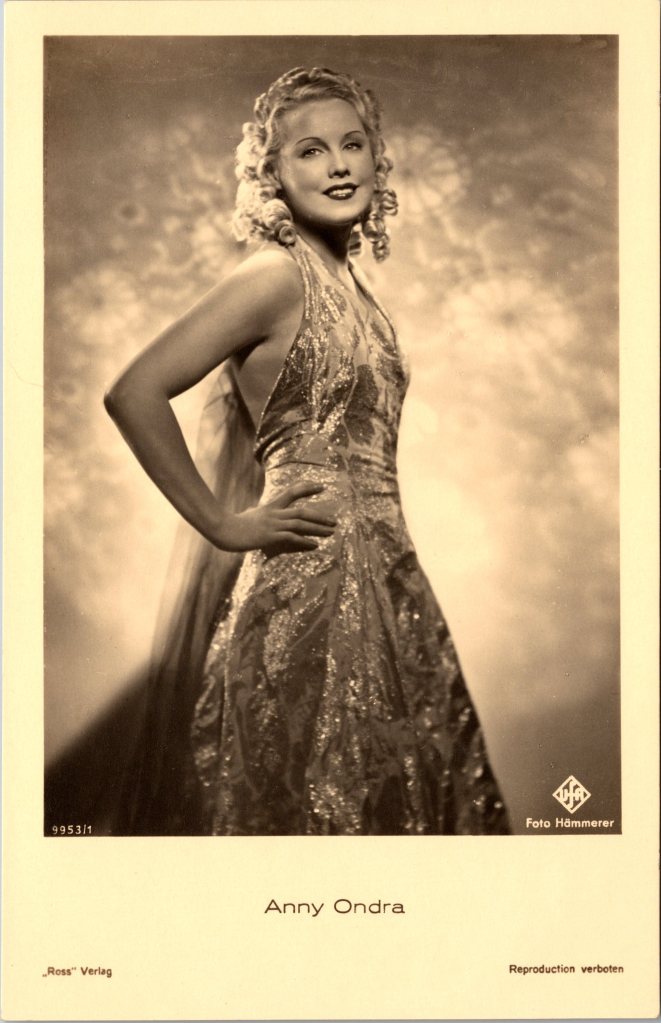
Postcard 2 was published by Ross Verlag. The photograph is from the Hammerer studio. The logo for UFA, a German film company, can be seen in the right hand bottom corner of the image. (SOLD)
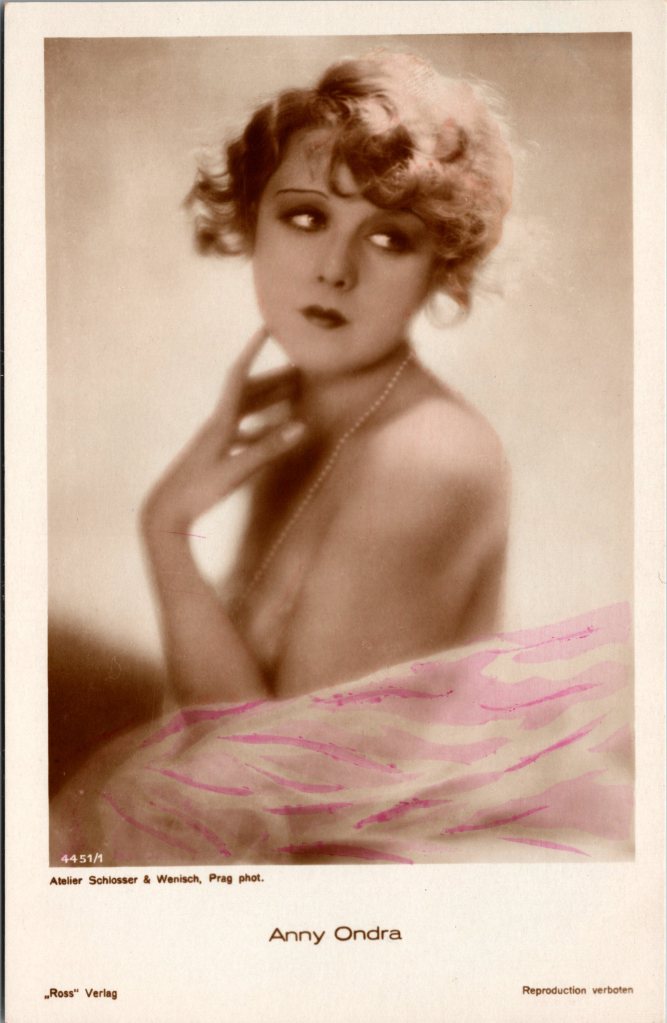
Postcard 3 is risque for it’s time. The postcard was published by Ross Verlag. Ondra’s photograph is from the Schlosser & Wenisch studio. (SOLD)
Postcard 4 is an uncommon vintage real photo postcard is of Dutch origin and was published by Remaco. The photograph shows Anny working in a tailor shop. She is pressing a shirt and smiling while she works. This photo likely captures a scene from one of Ondra’s films. Note the other woman in the photo busy at work on their tailoring tasks. This postcard is in very good condition. See Scans.
Postcard 5
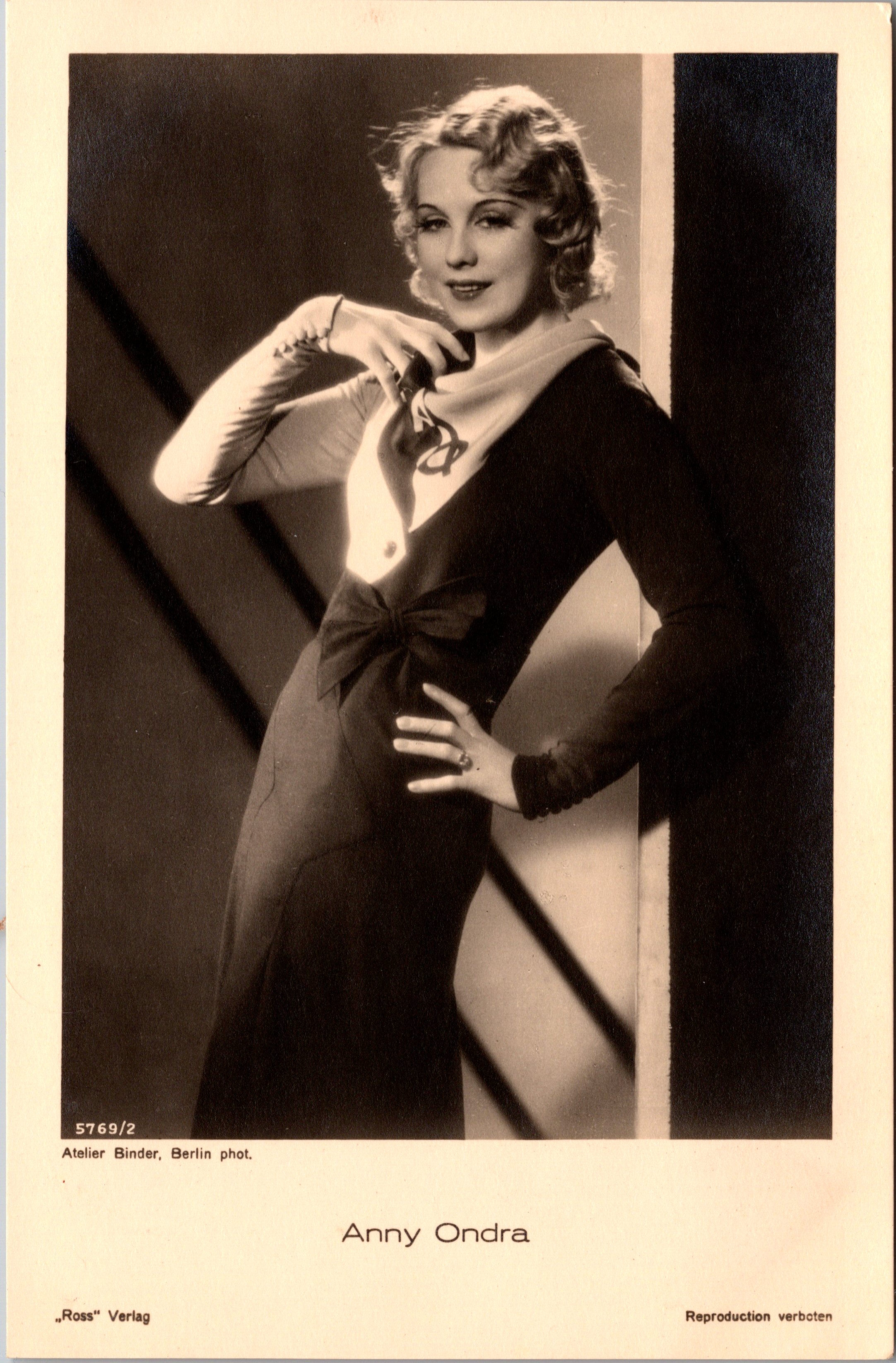
Postcard 5 was published by Ross Verlag. The photograph is by Alexander Binder. The postcard is part of a series (no. 5769/2). (SOLD)
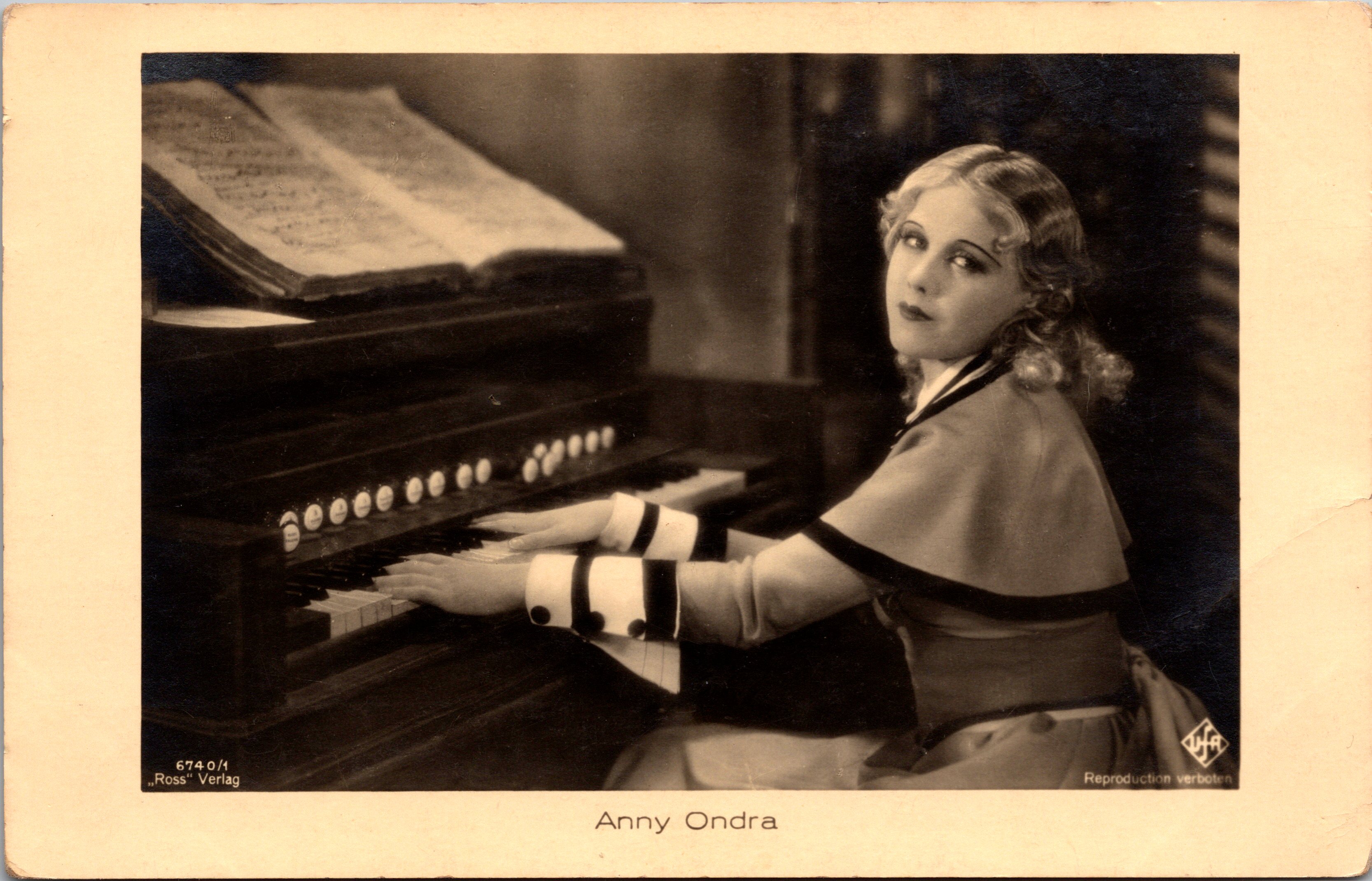
Postcard 6 features Ondra playing the piano. She is displaying a beautiful half smile. The postcard was published by Ross Verlag as part of a series (No.6740/1).The logo for UFA, a German film company, can be seen in the right hand bottom corner of the image. (SOLD)
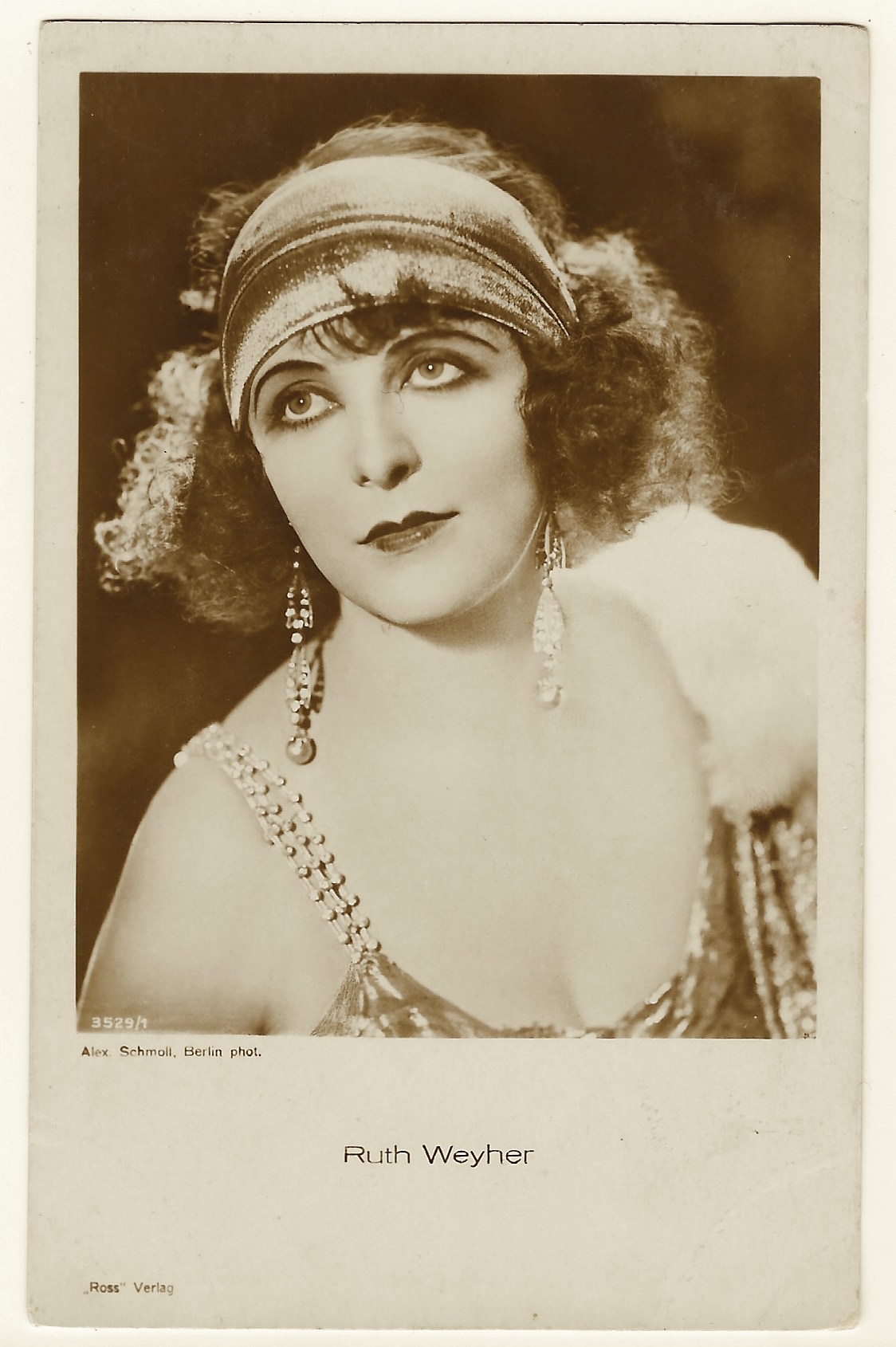
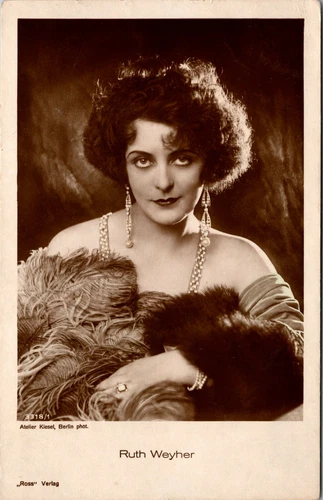
Postcard 1 is a vintage real photo postcard that features German silent film actress, Ruth Weyher (1901-1983). She was born in Neumark, East Prussia, Germany. Weyher grew up in Danzig where she studied painting until she switched to a conservatory to study singing. An illness robbed her of her singing voice and in 1919 she travelled to Berlin where she studied a Max Reinhardt’s theatre school. Reinhardt was a well known director and producer. She appeared in 48 films between 1920 and 1930. She starred in director Georg Wilhelm Pabst’s film “Secrets of the Soul” (1926). She also produced a film in 1929. During her career, Weyher only appeared in a few sound movies and she abandoned acting after marrying publisher Hans Geiselberger in 1932. It is reported that she retired at her husband’s request. The video clip below features Miss Weyher in her appearance in the film “Shadows: A Nightly Hallucination” (1923). The film title translation was done by “google translate”. Weyher’s costar in this film was Austrian stage and film actor Fritz Kortner (1892-1970). A review of this film describes Weyher as “beautiful and passionate”. Ruth Weyher’s appearance in this film can be described as risque or provocative. One of the themes of this film is infidelity. This postcard was published by Ross Verlag and is part of a series (no. 3529/1). The portrait of Miss Weyher was taken by Alex Schmoll, a photographer located in Berlin, Germany. There is Italian print on the reverse of the postcard that roughly translates as “Exclusive sale publisher: Ballerini and Fratini, Firenze (Florence, Italy). A bit of research reveals that the publishing house, Ballerini & Fratini Montespertoli began in Florence in the year 1912.
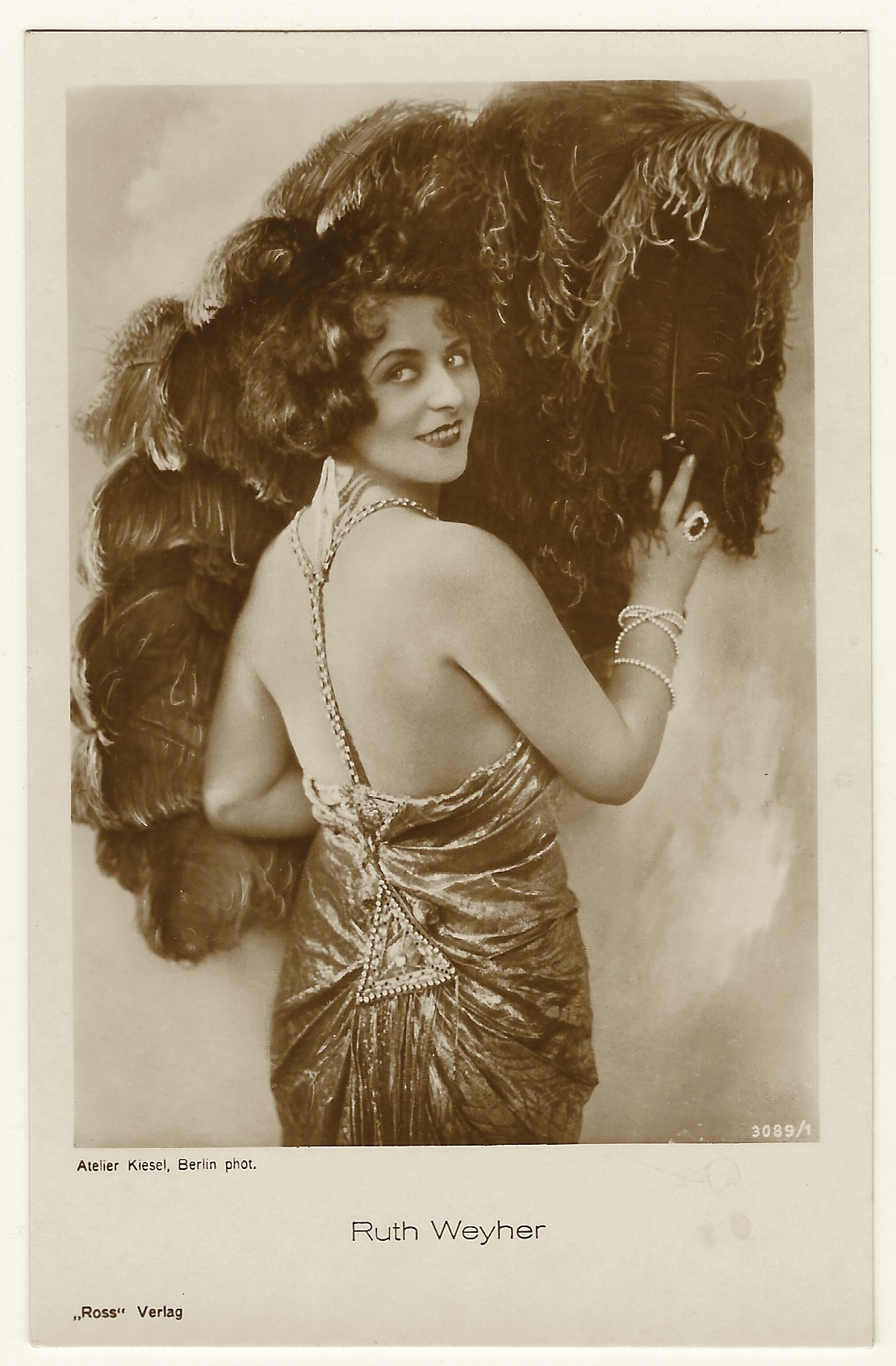
Postcard 2 features Ruth Weyher and was published by Ross Verlag. The postcard is part of a series (no. 3089/1). This portrait of Miss Weyher has her posed in position to display her bare back. She has an engaging smile and holds a large fan of dark feathers. Some may find this image somewhat sexually provocative. The photographer of this photograph is Kiesel of Berlin, Germany. (SOLD)
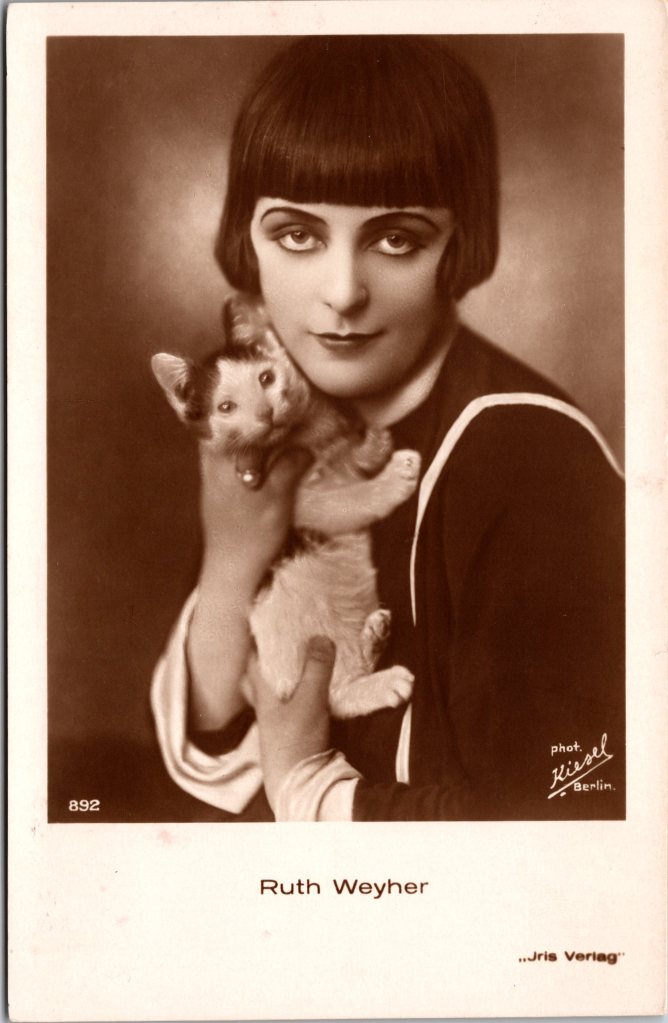
Postcard 3 is a vintage real photo postcard that features Miss Weyher holding an adorable kitten. This postcard was published by Iris Verlag and is part of a series (no. 892). The portrait of Miss Weyher was taken by Kiesell, a photographer located in Berlin, Germany. This postcard has remnants of it’s former scrapbook home on back of card. It is in overall good condition (see scans). (SOLD)
Postcard 4 was published by Ross Verlag and is part of a series (no. 3318/1). The portrait of Miss Weyher was taken by the Kiese studio in Berlin, Germany. (SOLD)
Evelyn Holt (3 October 1908 – 22 February 2001) was a German actress. Her father was a journalist. Her film career began with UFA, a German film company. It did not take long for her to become a film star. She was popular in the 1920’s and early 1930’s. Holt was blond and blue eyed. In 1931 she became a soubrette at the Grosses Schauspielhaus (a popular theatre) in Berlin. Her film career came to an abrupt end when the Nazis’ took power. It was alleged that Holt was half Jewish, and she was banned from films. The ban was based on her being born with a Jewish sounding last name. Holt married Jewish publisher Felix Guggenheim (1904-1976) in 1936. Two years later the couple emigrated to Switzerland, then England, then the United States. She remained in the U.S. and never returned to acting.
Postcard 1 reveals that Evelyn Holt was quite pretty. She looks very confident in this image. Her dress is shiny. Is it silk? This postcard was published by Ross Verlag, a firm located in Berlin. The card was part of a series (no.6509/2). The photographer of this portrait is Walther Jaeger and the photograph was taken in Berlin, Germany. (SOLD)
Postcard 2 was published by Iris Verlag. Iris Verlag in Vienna was the most important Austrian publisher of film star postcards. The logo for “Lux Film” can be seen in the lower left hand corner of the image. The company was an Italian Film distribution and production company. This card is part of a series (no.946). (SOLD)
Postcard 3 was published by Ross Verlag, a firm located in Berlin. The card was part of a series (no.3553/1). The photographer of this portrait is Ernst Schneider and the photograph was taken in Berlin, Germany. He was considered to be one of the most celebrated studio photographers in Berlin during three decades (1900’s, 1910’s, 1920’s). He photographed many celebrities from the world of theater, opera, circuses, and film. He was also one of the most prominent fashion photographers in Berlin. In addition, he was well known for his nude photography, and he published books showcasing his work in this domain. Sometime around 1908 Schneider began working with postcard publishers “Rotophot” and “Neue Photographische Gesellschaft” (NPG). In 1919 he began working with Ross Verlag. The card was postmarked in 1928 in the city of Riga, Latvia. (SOLD)
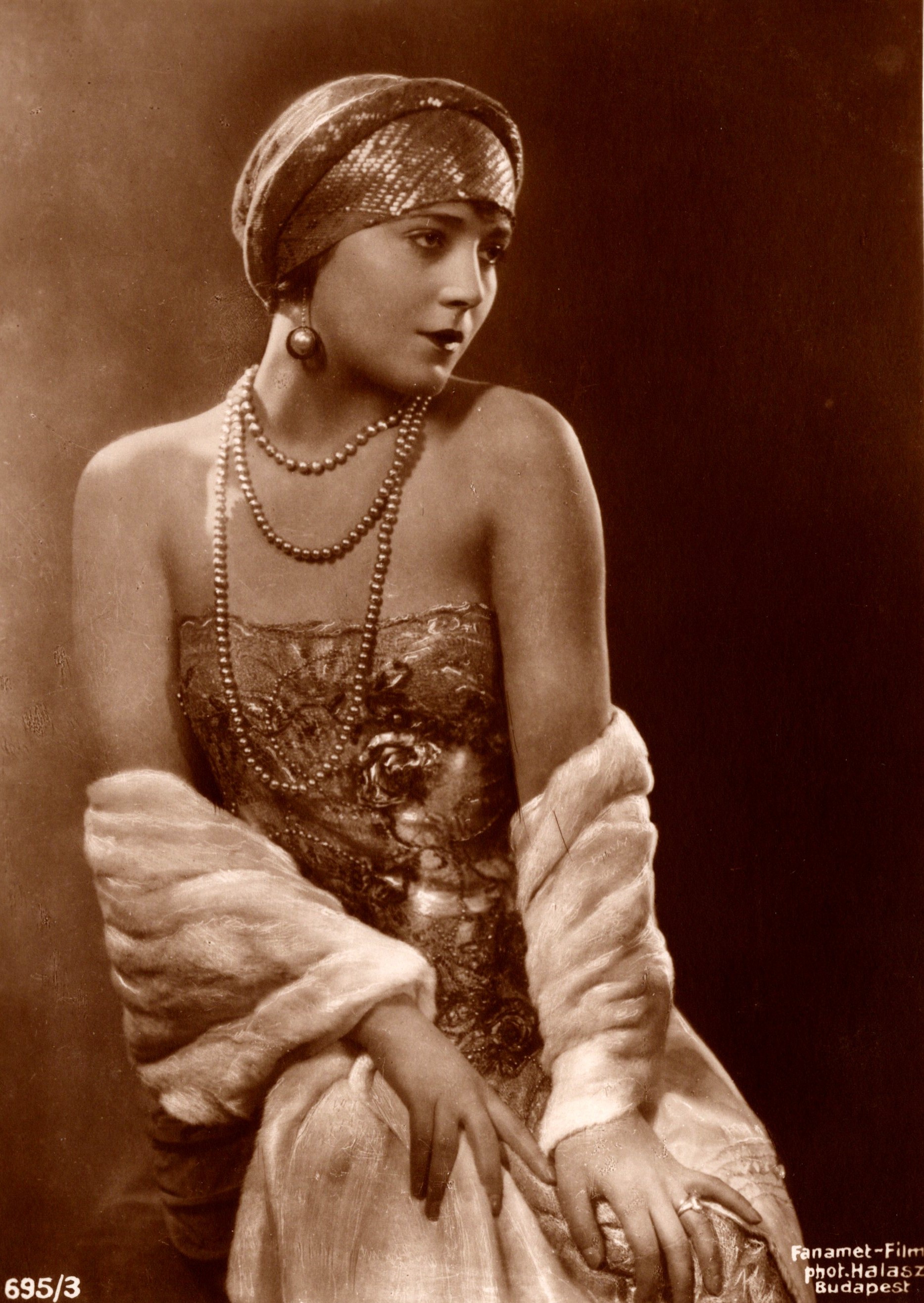
This vintage real photo postcard features beautiful and sensuous actress Miss Vilma Banky (1901-1991). She was born in Hungary but was an American silent film actress. She began her acting career in Budapest and later France, Austria, and Germany. In 1925, Banky was plucked from Europe by Hollywood film producer Samuel Goldwyn. American audiences fell in love with her and she earned the moniker of “The Hungarian Rhapsody”. In a review of her first film, “The Dark Angel” (1925), the New York Times (1925) described Banky as “a young person of rare beauty”. In the mid and late 1920’s she was Goldwyn’s biggest money maker. Some of her most famous roles were in the films “The Eagle” (1925) and the “The Son of the Sheik” (1926). She played romantic roles opposite Ronald Coleman and Rudolph Valentino. The advent of sound films is believed to have short circuited her acting career. Apparently her thick Hungarian accent was unacceptable. However, around the time of the introduction of sound films, it is thought that she had lost her enthusiasm about films and was more interested in settling down with actor Rod La Rocque (1898-1969), whom she married in 1927. Goldwyn gave the bride away and Cecil B. DeMille was the best man. By 1928, she was talking of retirement. In all, she made 24 films of which only eight remain in existence in their complete form. Her filmography begins in 1919 and ends in 1933. After leaving filmdom, she and her husband had a career in real estate and she pursued the sport of golf. The Chicago Tribue (1993) entitled Banky’s obituary “Silent Film Star Makes Dramatic Exit”. It is interesting to note that the article appeared nearly two years after her death. It seems that the press and Hollywood watchers never noticed her death. Apparently she lay sick in bed for the last ten years of her life, at home, and later in a nursing facility, without any visitors. The author of the article asserts “She died the nightmare death of every elderly person, alone, her life unremembered, her passing unlamented”. Banky was upset and angry about being abandoned, that she instructed her attorney to inform no one, including the newspapers, upon her passing. The attorney followed her instructions but when the press eventually learned of her death, the lawyer stated to reporters that Banky had no visitors because none of her friends or family still survived. She left a $600,000 trust fund to her sister’s two children in Hungary. After a difficult search the attorney found the two nieces in rural Hungary “living in peasant squalor”. The women had never met their Aunt and the last letter exchanged with Banky had been thirty years earlier. Banky’s lawyer had his hands full because a German heir hunting company had found them first and got them to sign over twenty percent of their inheritance for a finding-fee. At the time of the articles publication, the lawyer planned to pay off the company with a smaller fee and set up distant banking for the nieces who lived in an area that had no banks. Although after her death, the lawyer turned out to be a committed and wonderful friend to Vilma Banky and her family. This vintage postcard was produced by the Iris Verlag company. Iris Verlag was the most important Austrian publisher of film star postcards. It operated from Vienna during the 1920’s and 1930’s. The postcard is part of a series (no.695/3). The photographer of this portrait of Banky is Halasz of Budapest. The postcard was made for Fanamet-film which was a Austrian film distribution company. (SOLD)
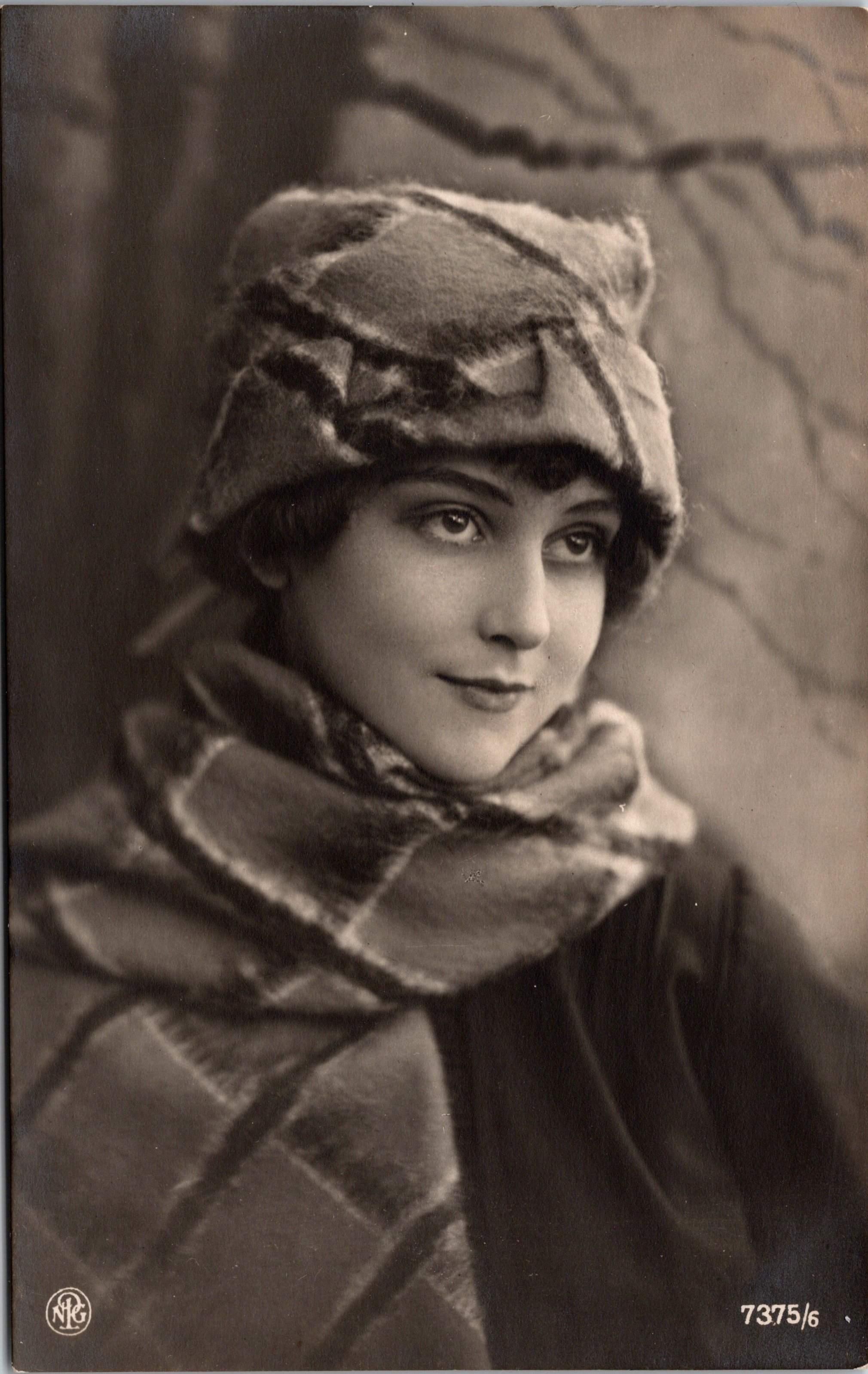
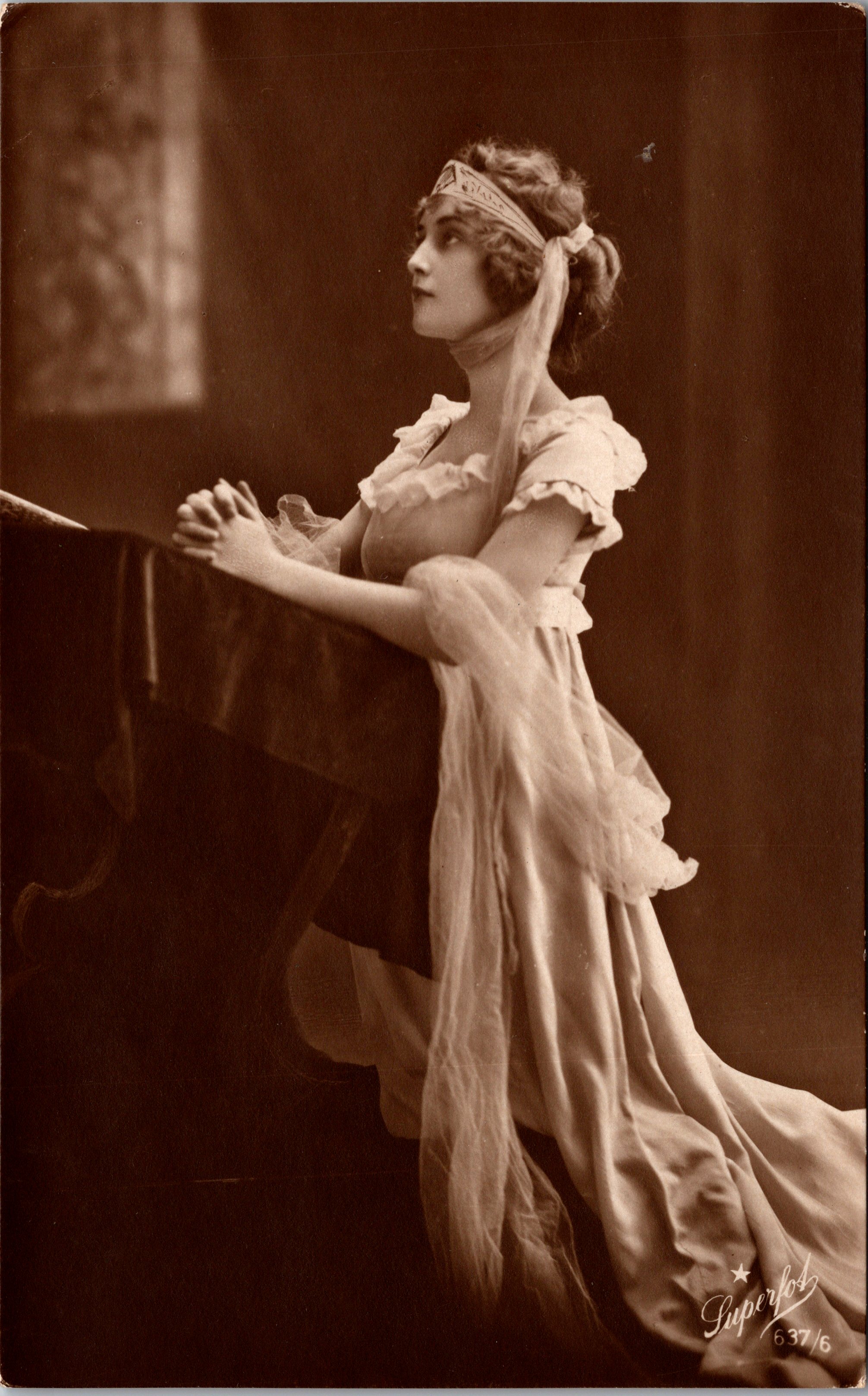
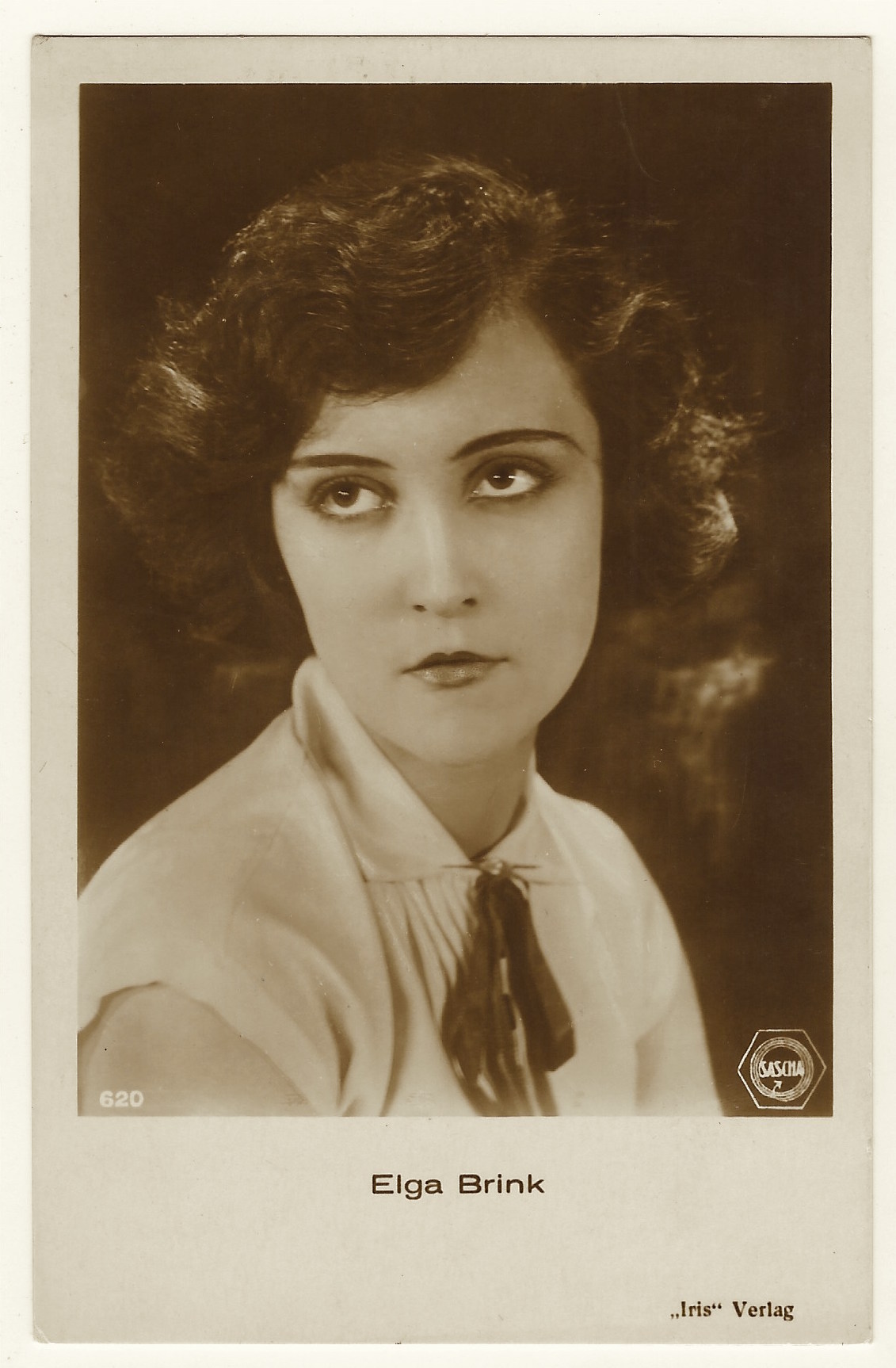
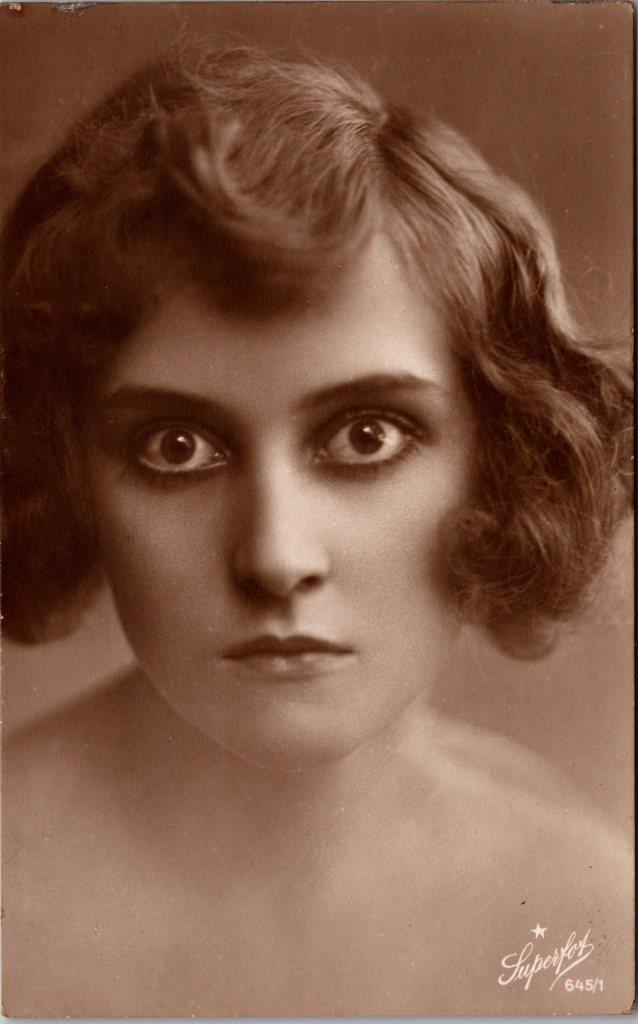
These vintage real photo postcards feature beautiful German film actress Elga Brink. The IMDb reports that she appeared in sixty-nine films between 1922 and 1951. Brink was blonde and slender. She began her career in silent films. She often played supporting roles. She appeared in comedies, science fiction, drama, and even in a sex education film. She was recognized for her roles in “Comedians of Life” (1924), “Love in Intoxication? (1927), and “Marriage in Trouble” (1929). At some point she was married to director Georg Jacoby. After the second world war she mostly did stage work until her retirement from the entertainment world. She then worked as a clerk in a Hamburg law firm.
Postcard 1 was published by NBC as part of a series (No. 7375/6). The stamp box of this postcard has an interesting story. “NBC” (Neue Bromsilber Convention) was a price cartel established in 1909 that continued until the 1930’s. The purpose of the cartel was to ensure that the minimum price charged for postcards was kept at a sufficiently profitable level.This color tinted photo postcard portrait captures the beauty of Elga Brink. She is very expressive in this photograph. She appears quite amused by something. She is bundled up for winter weather. (SOLD)
Postcard 2 was published by Superfot as part of a series (No. 637/6). The stamp box of this postcard states Fotocolore. This photo postcard portrait captures the beauty of Elga Brink. She is very expressive in this photograph. She appears to be looking into the heavens. (SOLD)
Postcard 3 was published by Iris Verlag as part of a series (No. 620). On the bottom right corner of this postcard is the logo for Sascha-Films. The company was the largest Austrian film production company of the silent film and early sound film era. The film company was established in 1910 in Bohemia and in 1912 it moved to Vienna. Sascha remained in business through the 1960’s although it went through many changes of ownership and company names through the decades. (SOLD)
Postcard 4 was published by Superfot as part of a series (No. 645/1). The stamp box of this postcard states Fotocolore. This photo postcard portrait captures the beauty of Elga Brink. She is very expressive in this photograph. She has the appearance of a “deer in the headlights”. This close-up portrait is almost too close for comfort. The card is uncommon or rare. (SOLD)
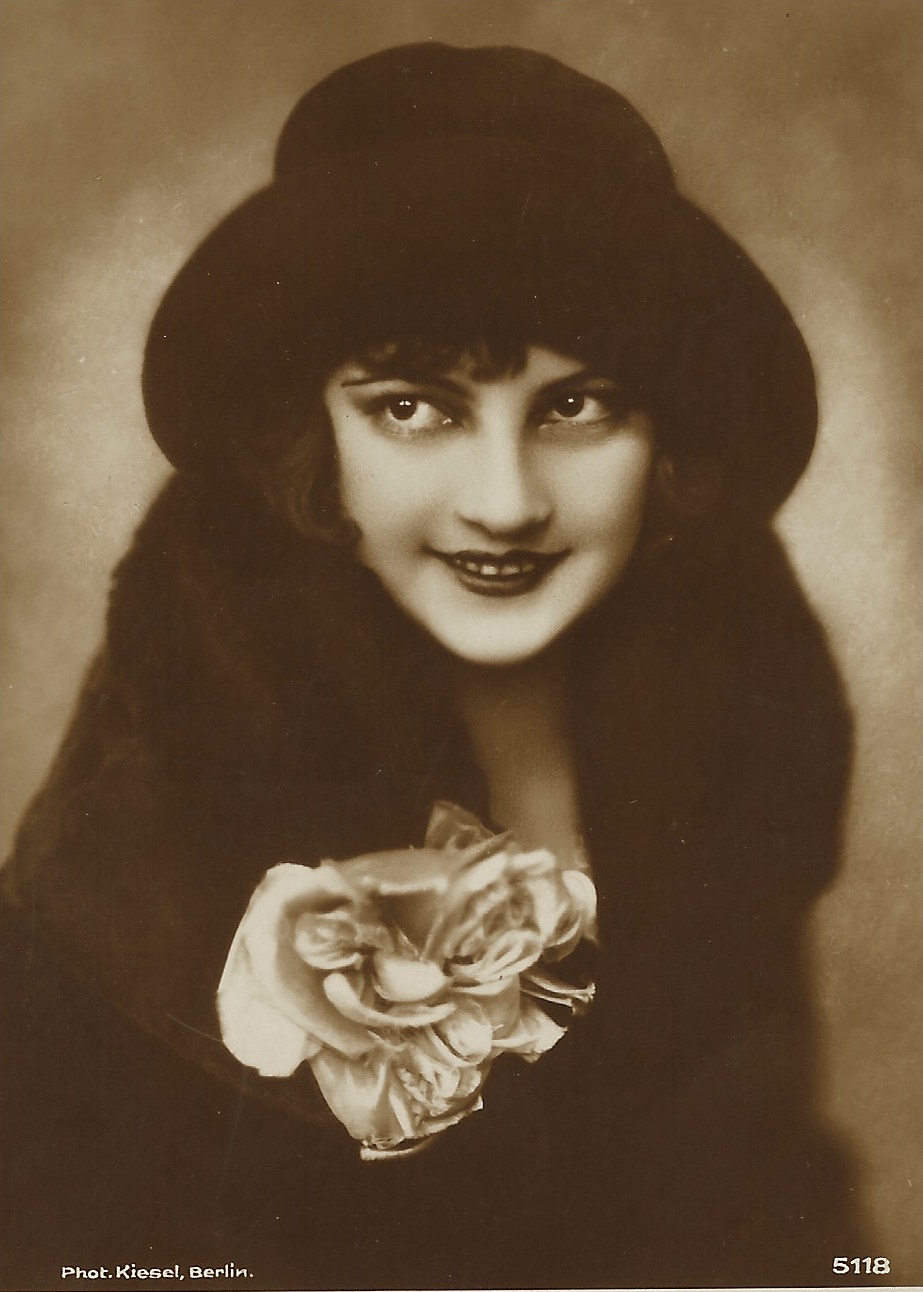
The pretty film actress seen in this vintage real photo postcard (postcard 1) is Ita Rina (1907-1979). Her unusual name is actually a pseudonym. Italina Lida Kravanja was her given name and it’s understandable that she used a shorter and more catchy moniker. Miss Rina was a Slovenian film actress and beauty queen. In the late 1920’s and early 1930’s she was one of the major film stars in Germany and Czechoslovakia. After getting married in 1931 she changed her name to Tamara Dordevic. Rina was a poor student as a child and knew early on that she wanted to be an actress. In 1926 she entered a beauty contest sponsored by a Slovenian magazine and Rina won. She was then slotted to compete in the next level beauty contest but she arrived late and could not participate. No worry though, she was noted by a cinema owner who sent her photograph to German film producer Peter Ostermayer who invited her to Berlin for an audition. In 1927, Rina went to Berlin without her mother’s permission. She took classes in acting and dancing. She made her debut in the film “What Do Children Hide from Their Parents” (1927). After a number of small film roles, she received some attention for her role in the film “Last Supper” (1928). Her breakthrough occurred in the film “Erotikon (Seduction)” (1929) in which she had a starring role. The film was a great success but upset some moral and Christian organizations for it’s eroticism. Some consider her best role to have been in the Czech sound film “Tonka Sibenice” (1930). Rina received an offer from Hollywood but her husband vetoed it and she decided to stay with her husband. However, she continued her film career until the beginning of World War II. Rina’s IMDB filmography asserts that she appeared in 19 films.
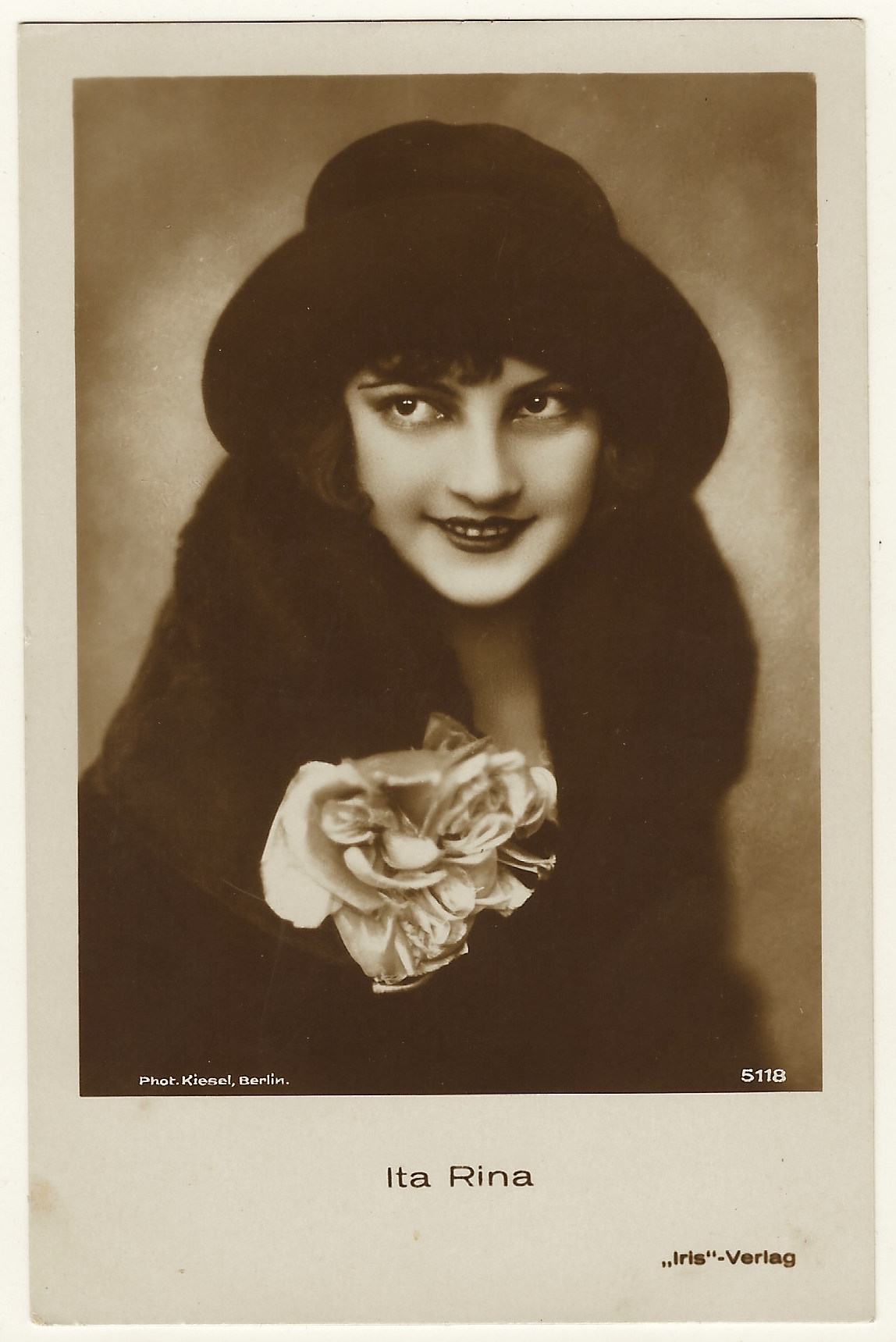
Postcard 1 was produced by Iris Verlag. Iris Verlag was the most important Austrian publisher of film star postcards. It operated from Vienna during the 1920’s and 1930’s. The publishing house Amag (Albrecht & Meister) is listed on the reverse of the card. The postcard is part of a series (no. 5118). The photographer was Kiesel of Berlin. (SOLD)
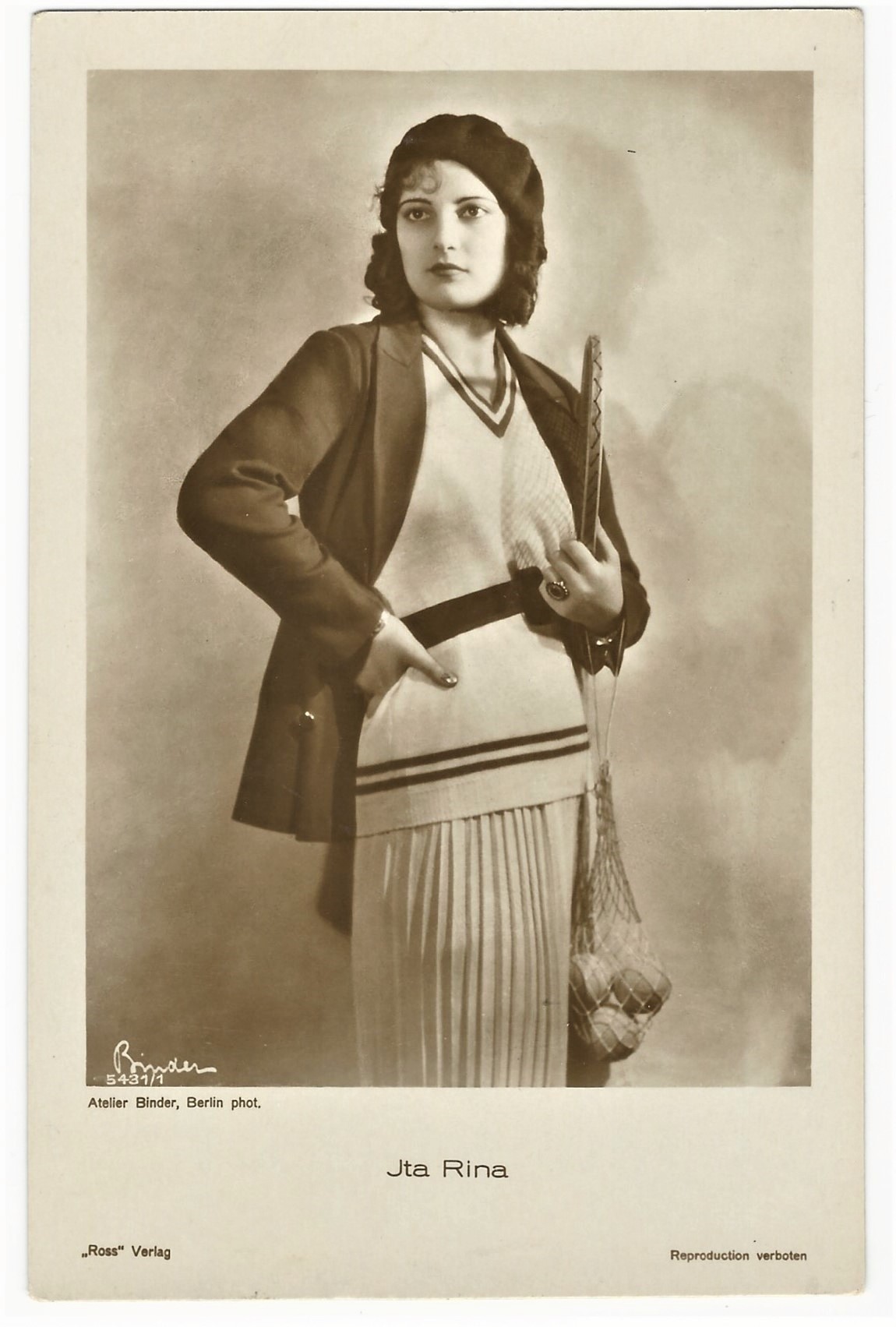
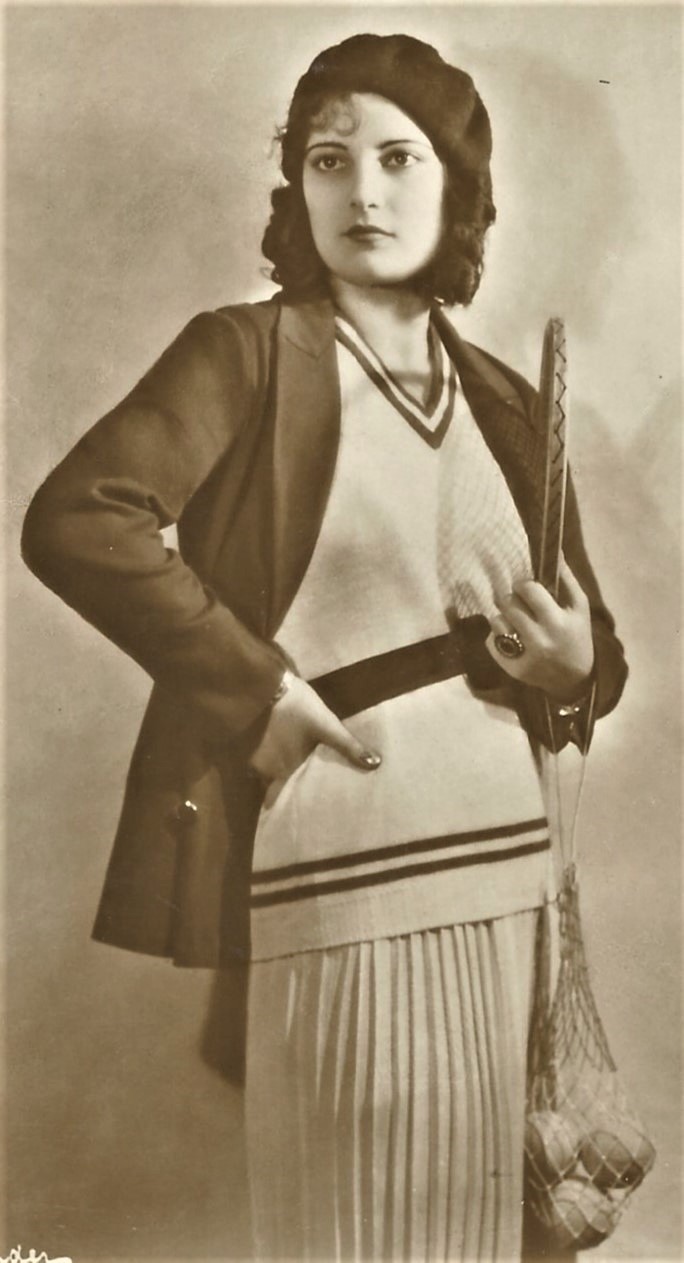
Postcard 2 features Miss Rina ready for a game of tennis. She is carrying a racquet as well as a net bag holding three tennis balls. She is truly a fashionista tennis player. Can you imagine Serena Williams or Maria Sharapova playing tennis in this attire? Postcard 2 was published by Ross Verlag and photographed by theatrical photographer Alexander Binder. Binder’s studio was located in Berlin, Germany. The postcard is part of a series (no.5431/1). The card was postmarked in 1931 and has a stamp from Yugoslavia. (SOLD)
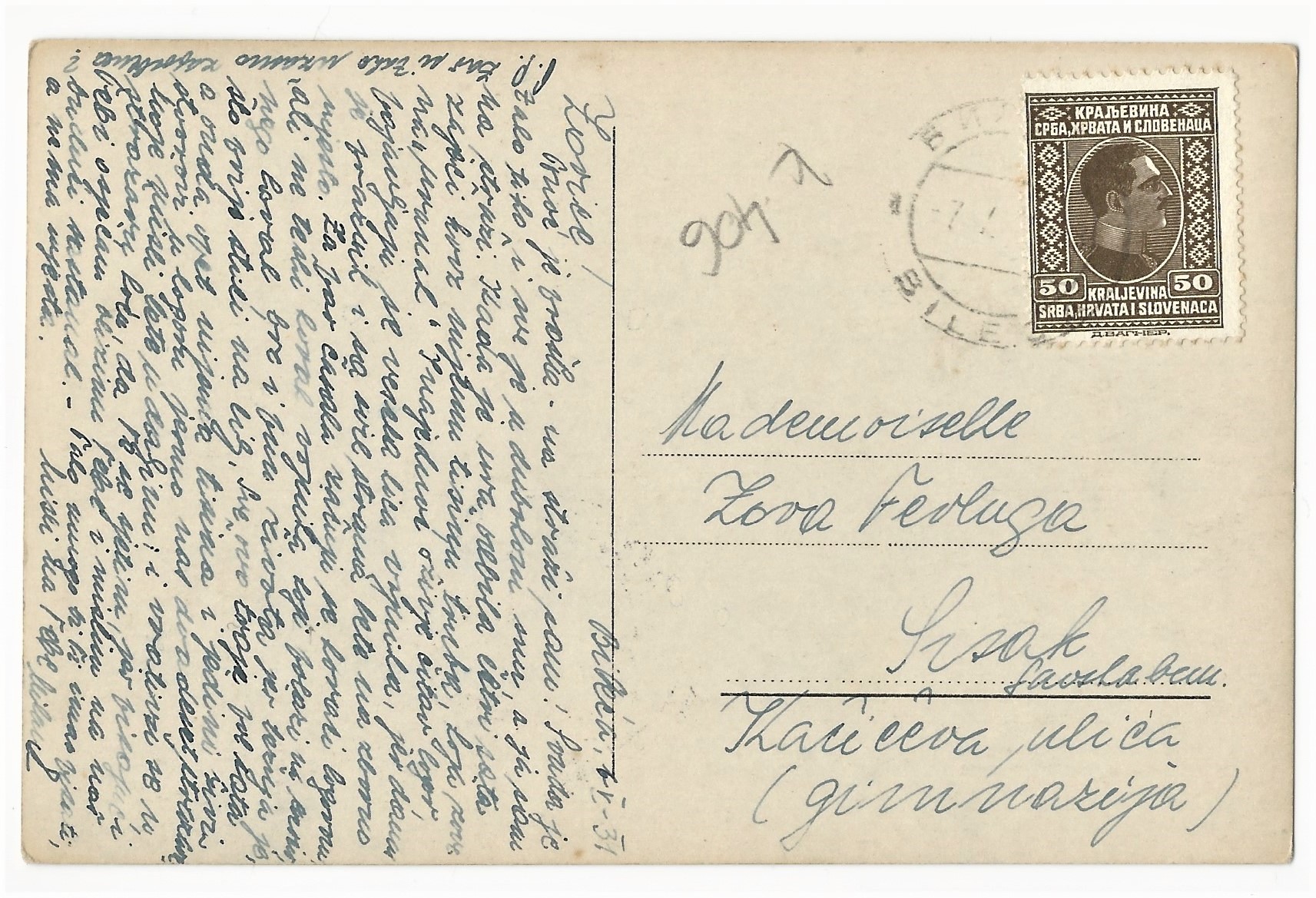
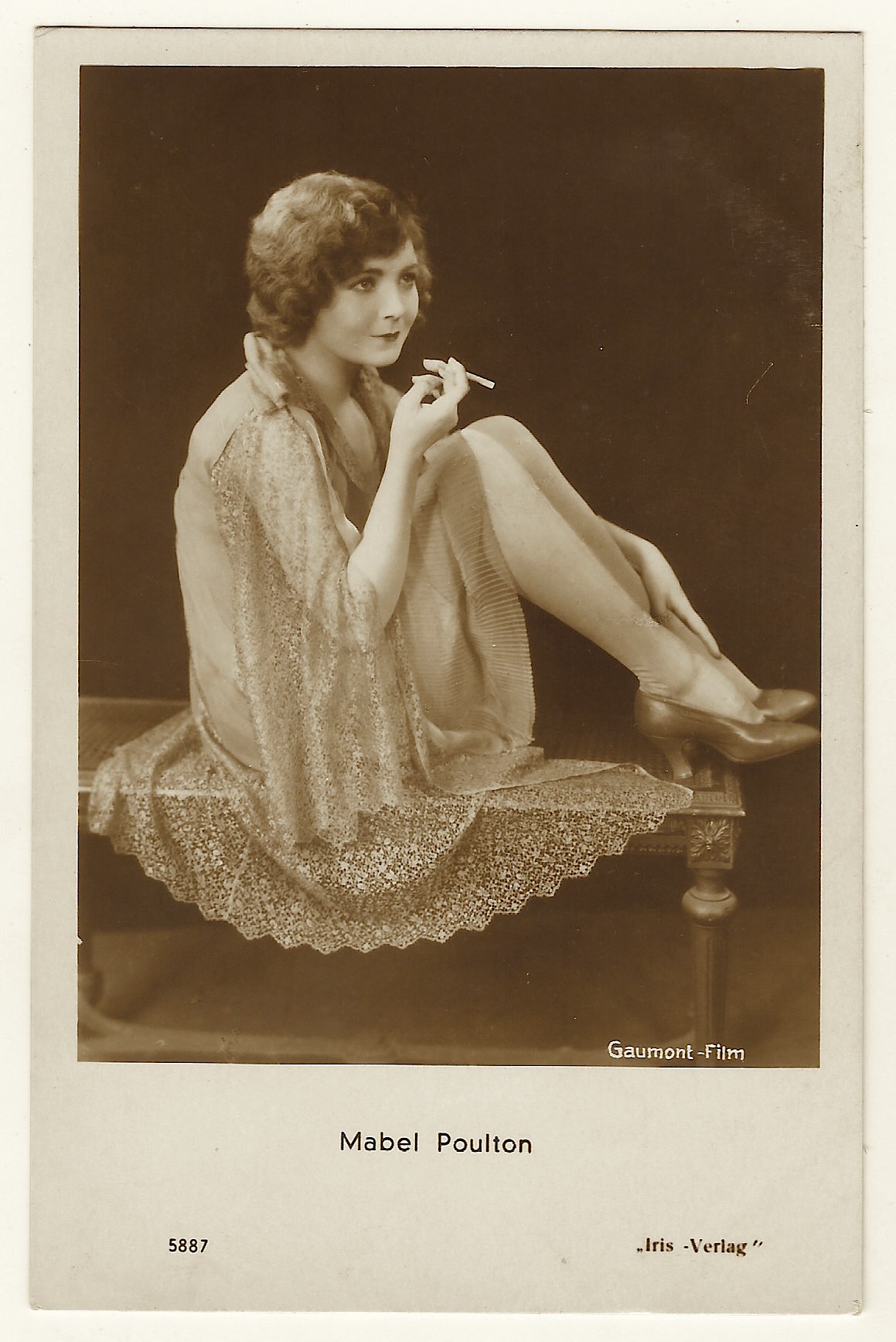
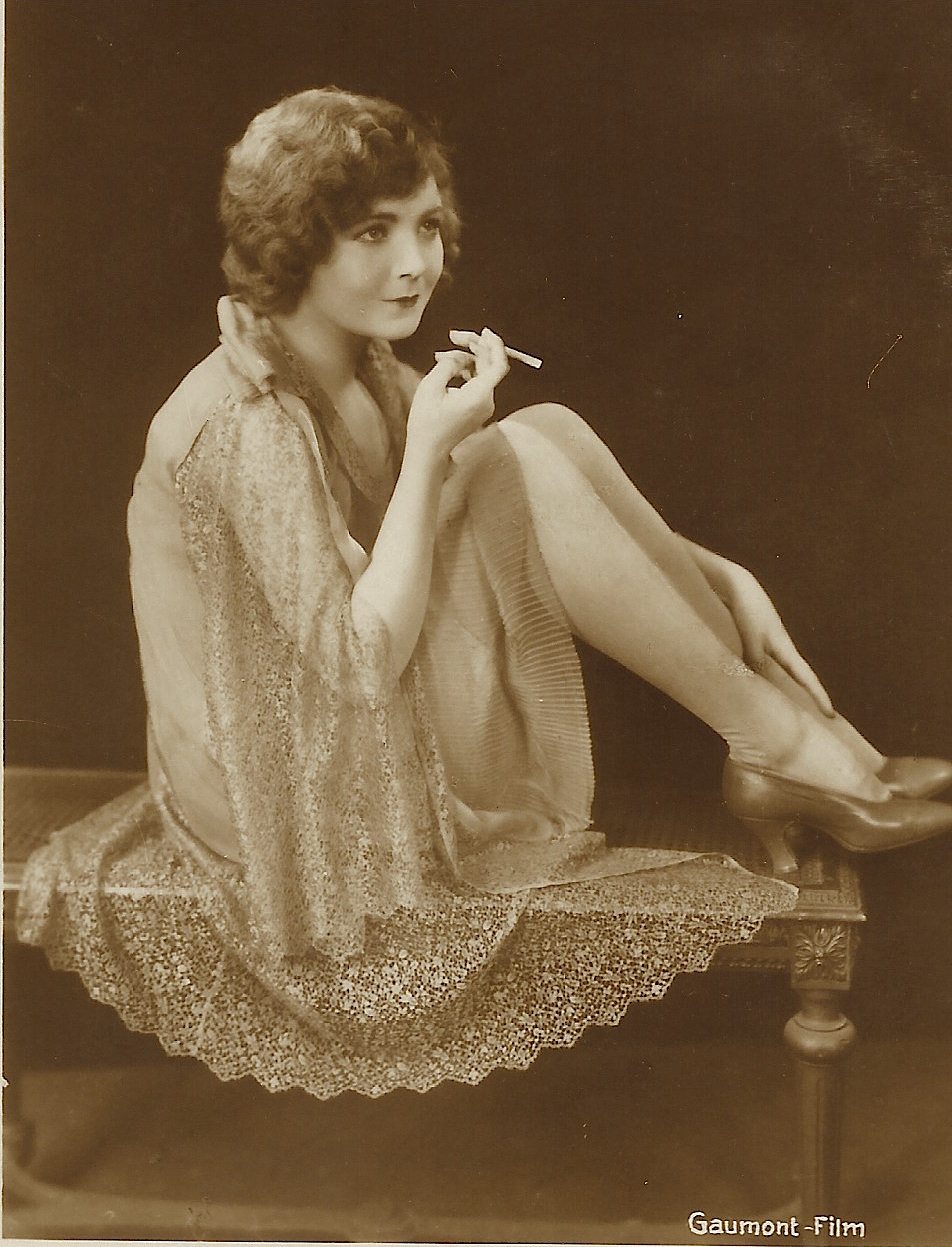
The pretty actress in this risque vintage real photo postcard is Mabel Poulton (1901-1994). She was a popular English film actress during the silent film era. Poulton was born in England. Her family was poor. Her father worked as a “clicker”, someone who cuts patterns for shoes and boots. Her father belonged to a social club and took Mabel to see a play. After the experience, Mabel became determined to become an actress. Before entering films, she worked as a secretary at London’s Alhambra Theatre. While employed at the theatre, she was asked to impersonate actress Lillian Gish, dead on stage. She was Gish’s double in a death scene in the play’s prologue. It was noted that Poulton had theatrical talent. As a result, she was given a screen test and aced it. Her debut role was in “Nothing Else Matters (1920)”. Noted actress Betty Balfour also made her debut in this film. The film was a success. Over the next several years Poulton appeared in many films. She tended to land parts playing feisty and mischievous characters. She was blonde and petite. Poulton became a major celebrity of her time and was noted for her fashion sense. In 1928, she starred in “The Constant Nymph” and was highly acclaimed for her performance. By the end of the 1920’s, she and Betty Balfour were considered Britain’s leading film actresses. It is said that “all good things come to an end”, That was especially true for many successful silent film performers with the arrival of “talking pictures”. Mabel Poulton was one of those victims. Her cockney accent did not fit for the roles she tended to play. An attempted comeback in the mid 1930’s was a failure. Her last significant film appearance was in 1938. She spent her final years working on a script about a young British starlet who gets raped by a film director and due to the trauma, becomes an alcoholic. Sadly, the plot appears to have been autobiographical. In fact, she eventually wrote in the character’s real names. She accused director Thomas Bentley of the crime. The pair had worked together on two films. The first of these films was shot in 1921, when Mabel Poulton was about twenty years old. Poulton was married in 1939 to an oil engineer. The IMDB credits Poulton with 29 film roles between 1920 and 1943. This vintage portrait postcard was published by Iris Verlag/Amag and is part of a series (no. 5887). Iris Verlag was a popular Austrian postcard producer. Amag (Albrecht & Meister) was a publisher located in Berlin. The company took over Aristophot in 1909. Amag ceased production in 1920.The photo was taken while she was working for Gaumont Film. She is scantily dressed (for her time) and smoking a cigarette. This risque vintage postcard is in very good condition. A glance at the reverse of the postcard indicates that it formerly resided in someone’s postcard album. This postcard portrait of Mabel Poulter is uncommon. (SOLD)