PRETTY WOMAN LACED IN ST. LOUIS, MISSOURI (CIVIL WAR HERO PHOTOGRAPHER)

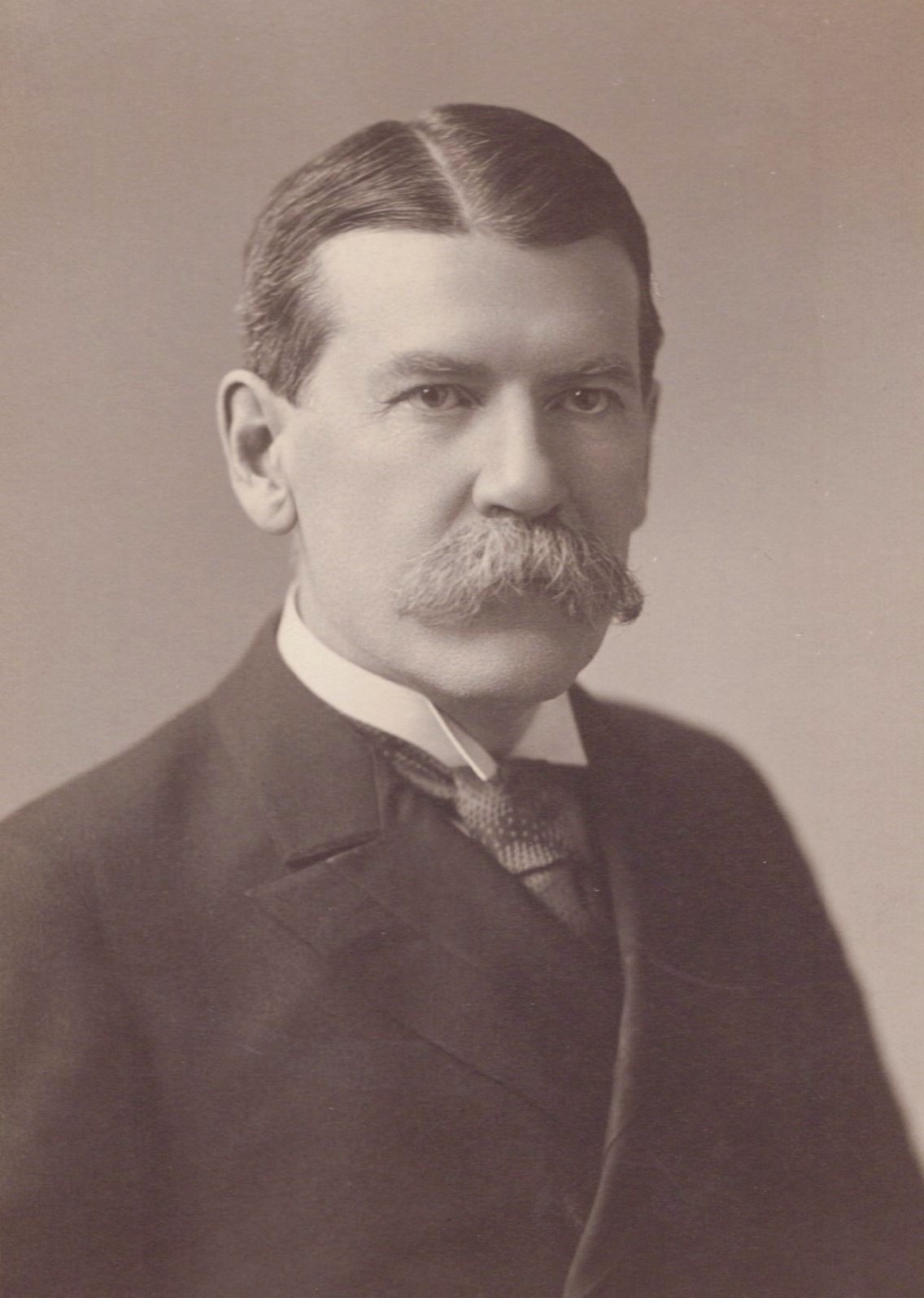
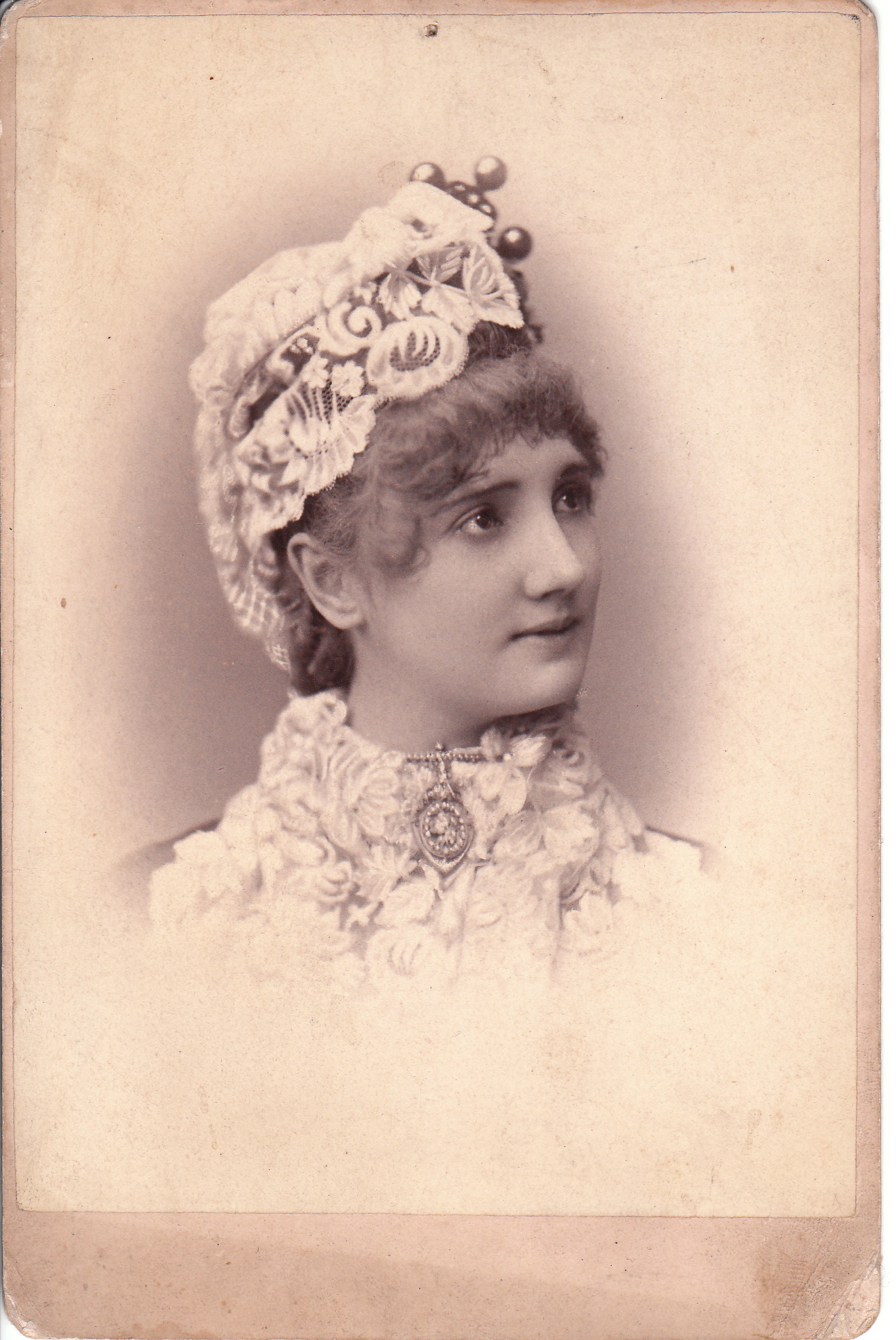
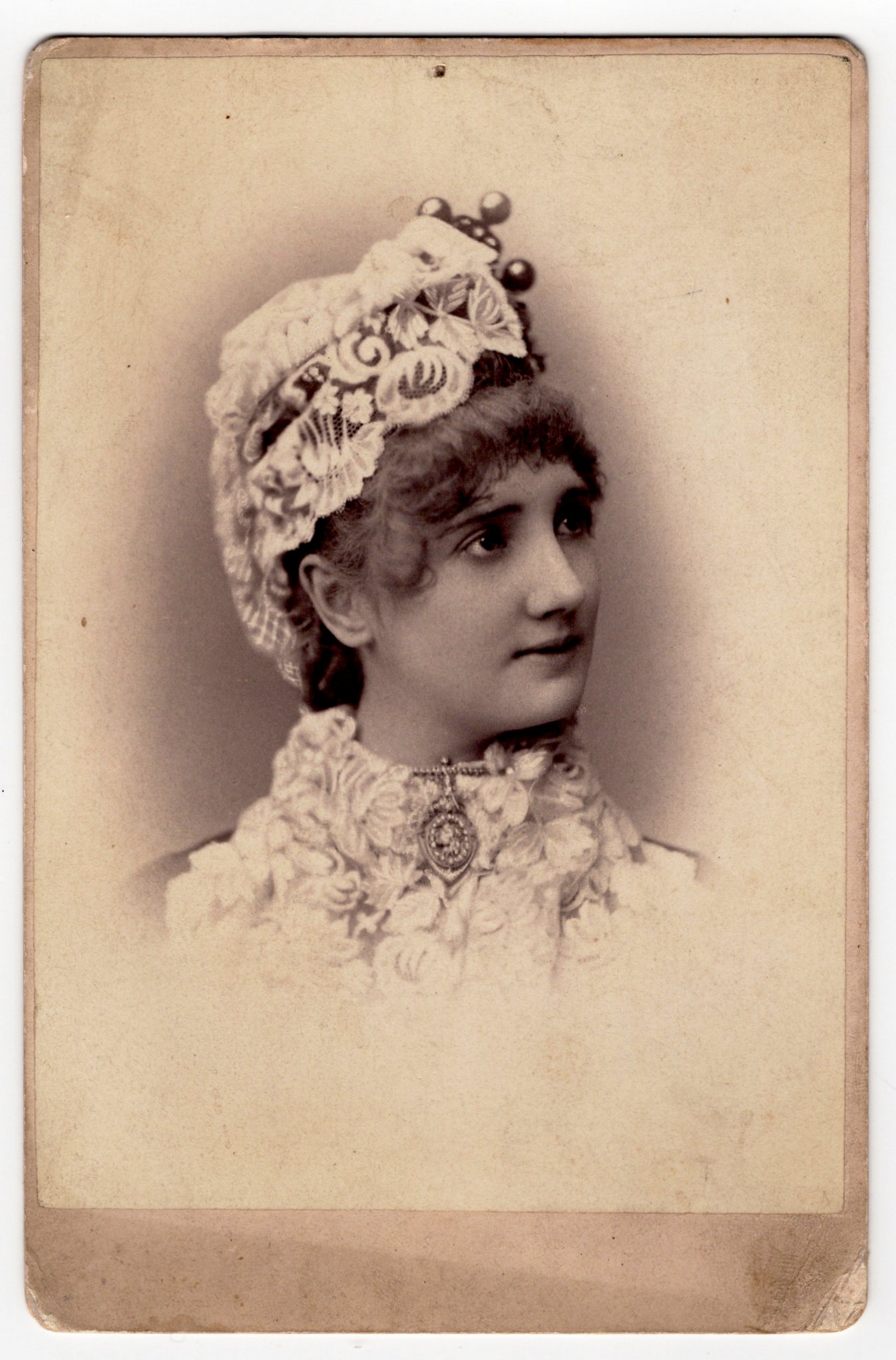
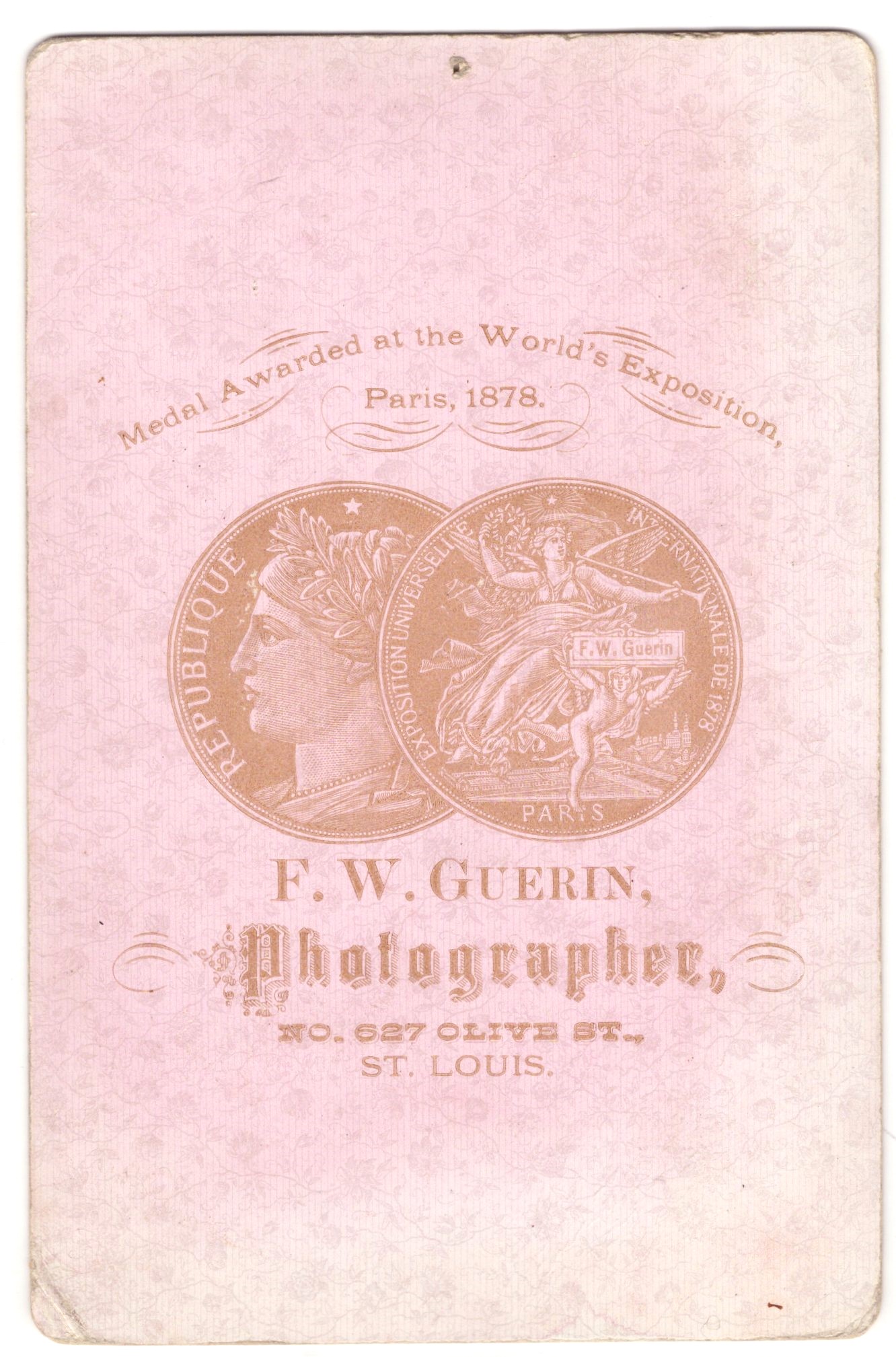
The attractive woman in this cabinet card is adorned with a lace cap and lace collar. Her outfit is a bit unusual but she would look beautiful no matter what she was wearing. The photographer of this image was F. W. Guerin, and his studio was located at 627 Olive Street, St. Louis, Missouri. Guerin received a medal for his work at the World Exposition in Paris (1878) and was similarly honored at the St. Louis Worlds Fair (1904). Fitz W. Guerin (1846-1903) was an excellent photographer but he was also a hero during the American Civil War. He was a recipient of the Congressional Medal of Honor. Guerin was a private in Battery A, 1st Missouri Volunteer Light Artillery. His citation states that along with two of his comrades, he voluntarily took a position aboard the steamer, Cheeseman, in which he took charge of all the guns and ammunition. He took this role while the steamer was unmanageable and under heavy enemy fire. After the war he became an apprentice photographer and later had a successful career photographing the well-to-do citizens of St. Louis. Guerin took many wonderfully posed photographs of beautiful women; he seems to have had an eye for the ladies. This cabinet card has corner wear and a pin hole near the center of it’s top edge. Overall this cabinet card portrait is in good condition (see scans).

6546

Buy this Cabinet Card Photograph (includes shipping within the US) #6546

To purchase this item, click on the Pay with Paypal button below

$30.00
6546

Buy this Vintage Original Cabinet Card (includes International shipping outside the US) #6546

To purchase this item, click on the Pay with Paypal button below

$42.00
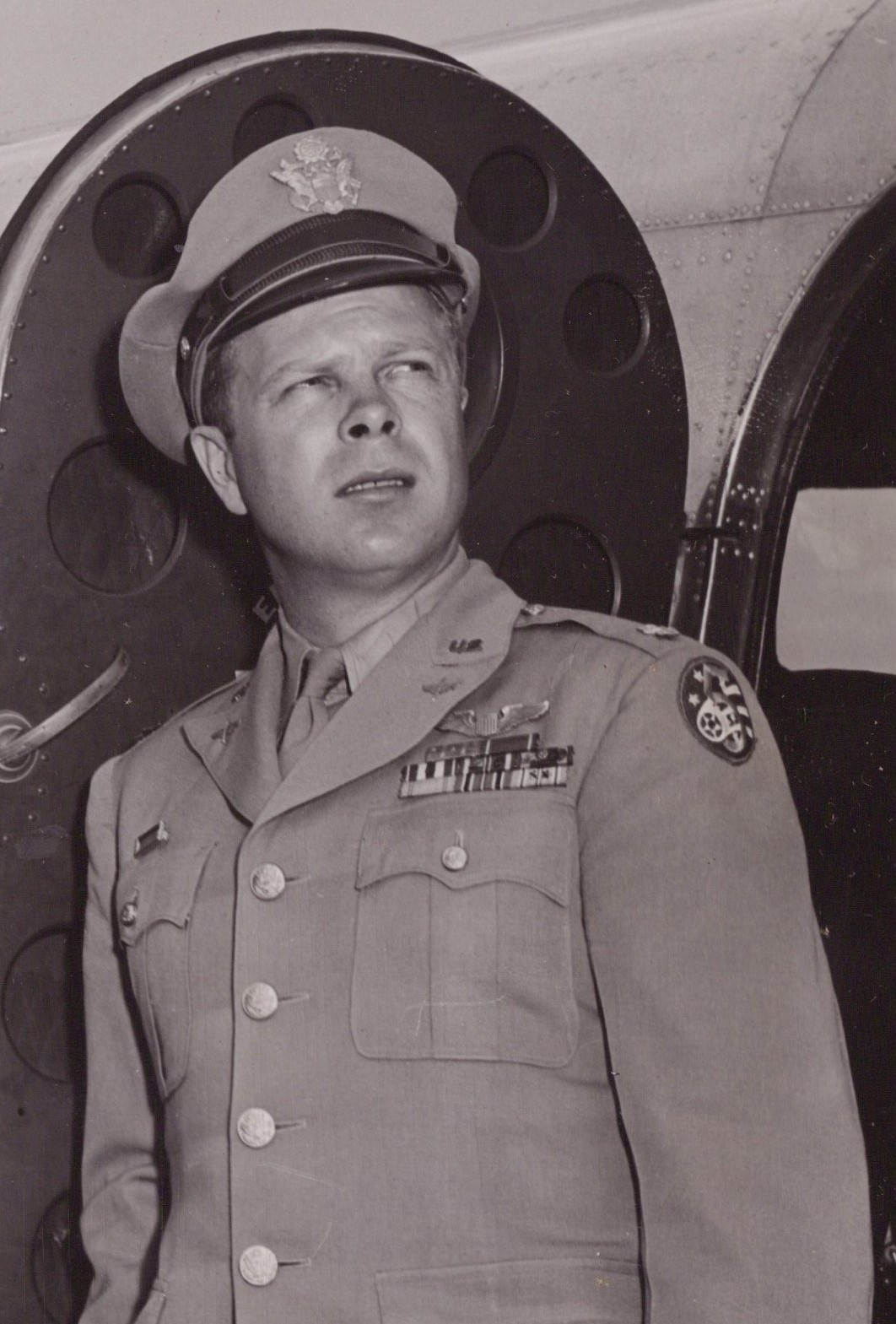
FIGHTER PILOT ACES : WORLD WAR II : TOP GUN : MEDAL OF HONOR : PRESS PHOTO 1945

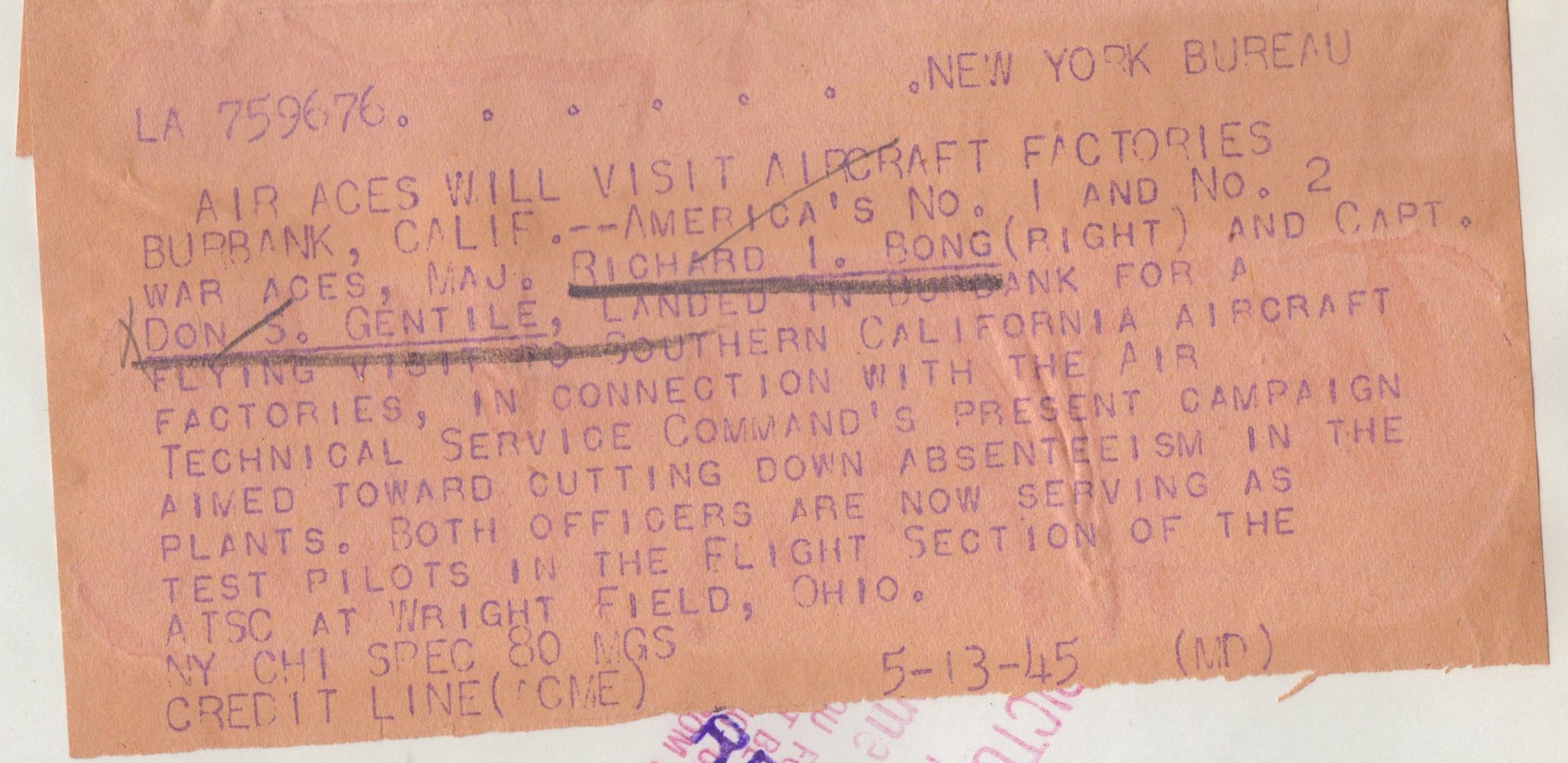
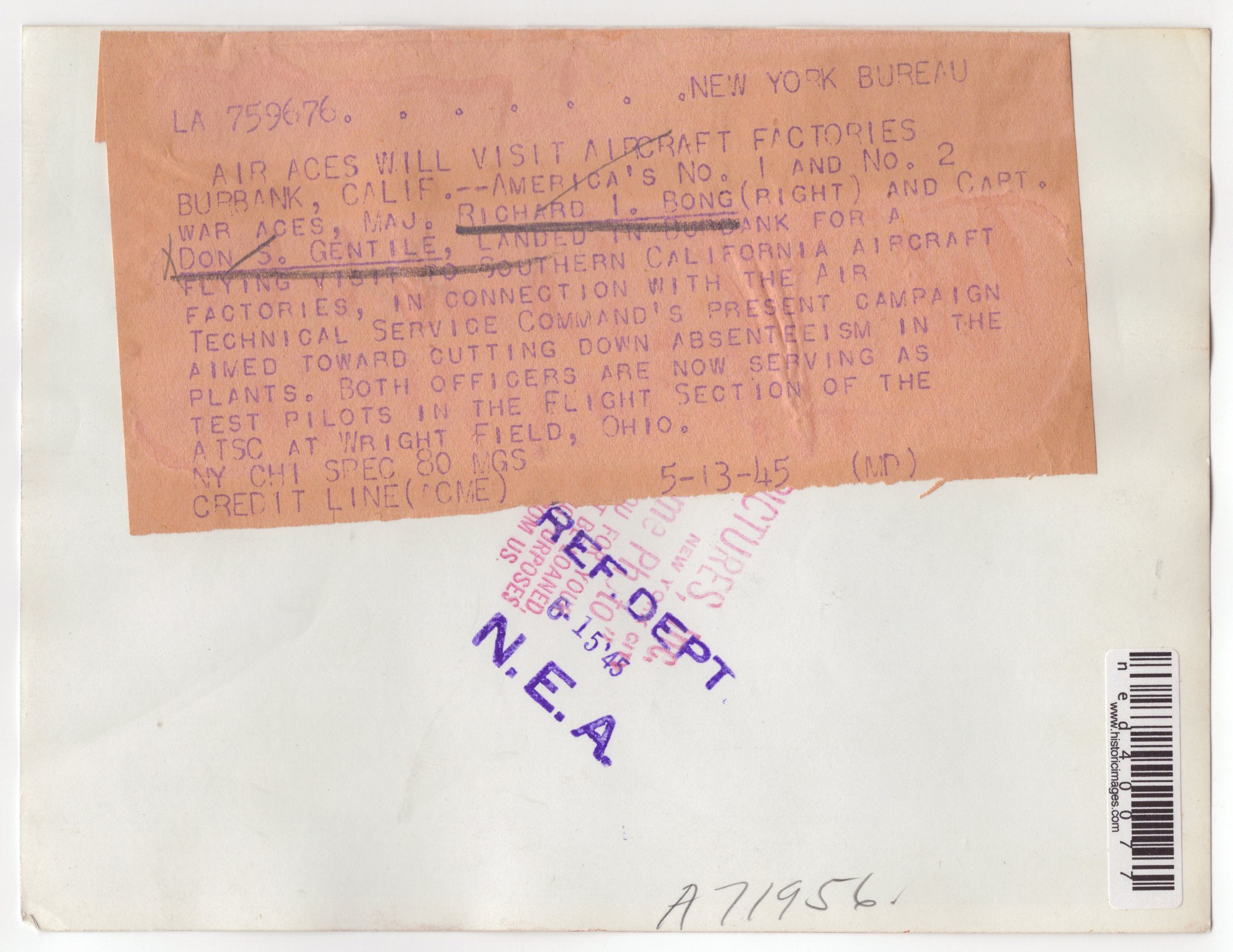
This vintage press photo features two American fighter pilot ACES. They were pilots in World War II and this photograph was taken in 1945 when they were on a mission to visit airplane manufacturing factories in Burbank, California. They were involved in a campaign to reduce worker absenteeism. These pilots were America’s #1 and #2 aces. The pilot on the right side of this photo is Richard Bong (1920-1945) was born in Superior, Wisconsin. His exceptional skill, courage and tenacity earned him the title of America’s “Ace of Aces” during World War II. Bong was fascinated by airplanes from childhood. In fact, he took his first flight at the age of nine. He took a civilian pilot training program directly upon graduation from high school in 1938. He enlisted in the US Army Air Forces in 1941, completed flight training and was commissioned as a second lieutenant. He was assigned to the Pacific Theater and flew primarily P-39 Lightning fighter planes. These planes were renowned for their speed and versatility. Bong quickly showed his unparalleled ability to outmaneuver and outshoot enemy aircraft. He quickly began to tally up a long string of aerial victories. Bong scored his first aerial victory in December, 1942 by dowing a Japanese Zero. By the summer of 1944, he had 40 confirmed kills to make him America’s top fighter pilot. In reaching his top status, he had to face aerial combat, mechanical failures, and navigational difficulties. In December of 1944, after completing 200 combat missions, he was relieved from active duty and sent back to the US. He received many awards, including the Medal of Honor. Bong’s life was tragically cut short when working as a test pilot, he died in a plane crash in August of 1946. Bong was just 24 years old at the time of his death. The second pilot in this photograph, Don Gentile, was born in Piqua, Ohio. Like Bong, his passion for flying began at a young age. He even had his own plane before the war. After Pearl Harbor in 1941, Gentile enlisted in the Canadian Air Force. Lacking a college degree, he was not immediately eligible for the US Army Air Forces. He experienced his first kills while flying for the Canadians. He transferred to the US Army Air Forces in 1941. He demonstrated exceptional marksmanship and aerial combat prowess. His tally of confirmed kills climbed steadily over time until he became a top ace. One of his more famous missions occurred in 1944 when he led a squadron of P-51s against a large formation of Luftwaffe fighters over Germany. During that aerial battle, he personally shot down three enemy aircraft and shared credit for two more. By the time his tour of duty ended, he had a total of 30 confirmed aerial victories. Upon his return to the US, he was active in raising money via supporting war bond sales. Gentile, like his fellow pilot, Bong, died in a tragic plane crash. He was killed while flying a trainer aircraft. SOLD

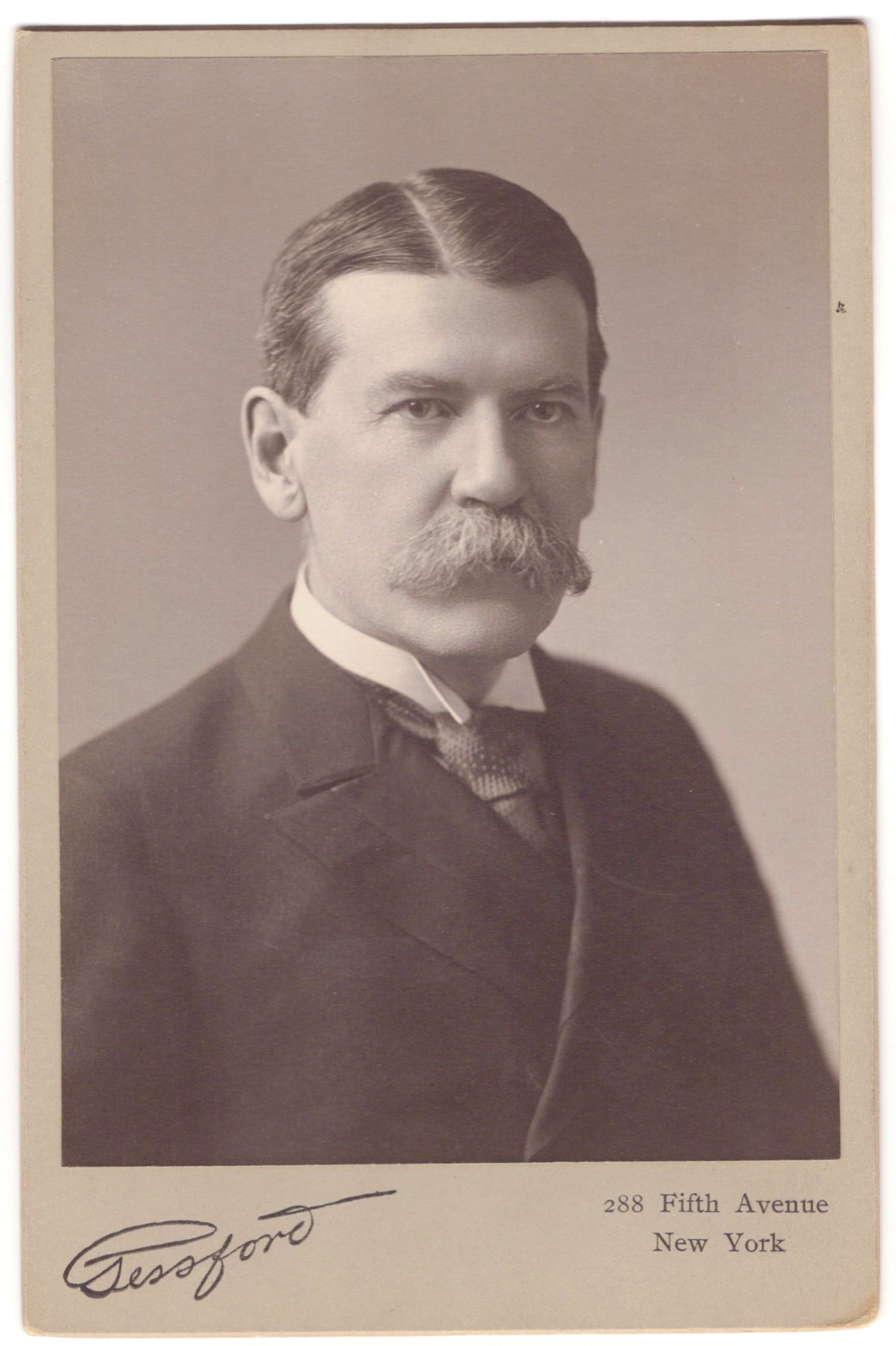
GENERAL HORACE PORTER, CIVIL WAR HERO, PRESIDENTIAL ADVISOR, AND DIPLOMAT

 The subject of the photograph is Horace Porter, who was quite an accomplished man who played an integral part in American history. Horace Porter (1837-1921) is most well known for his activities during the civil war. He served as a Lieutenant Colonel, Ordnance Officer, and Staff Officer in the Union Army. In 1866 he was appointed brevet Brigadier General in the U. S. Army. He was also personal secretary to General and President Ulysses S. Grant and to General William Sherman. Later, he was the Vice President of the Pullman Palace Car Company and the United States ambassador to France (1897-1905). Horace Porter was born in Huntingdon, Pennsylvania. He was the son of David R. Porter who who served as Pennsylvania’s Governor. His cousin, Andrew Porter was a Mexican-American War veteran and Union Army Brigadier General. Horace Porter was educated at Harvard University and graduated from West Point in 1860. He was distinguished in the Battle of Fort Pulaski (Georgia), Chickamauga, the Battle of the Wilderness, and New Market Heights. He received the Medal of Honor for his efforts at Chickamauga. He later wrote a memoir “Campaigning With Grant” (1897). The photographer of this cabinet card portrait is Joseph G. Gessford.  Gessford (1875-1925) operated a prominent New York City studio located at 288 Fifth Avenue. Gessford was best known as a photographer of celebrities and socialites during the first two decades of the twentieth century. He photographed Mark Twain in 1904, and when the author requested gratis copies of the portraits, Gessford famously replied, “I could no more afford to give you these pictures than you can afford to write books for free.” SOLD