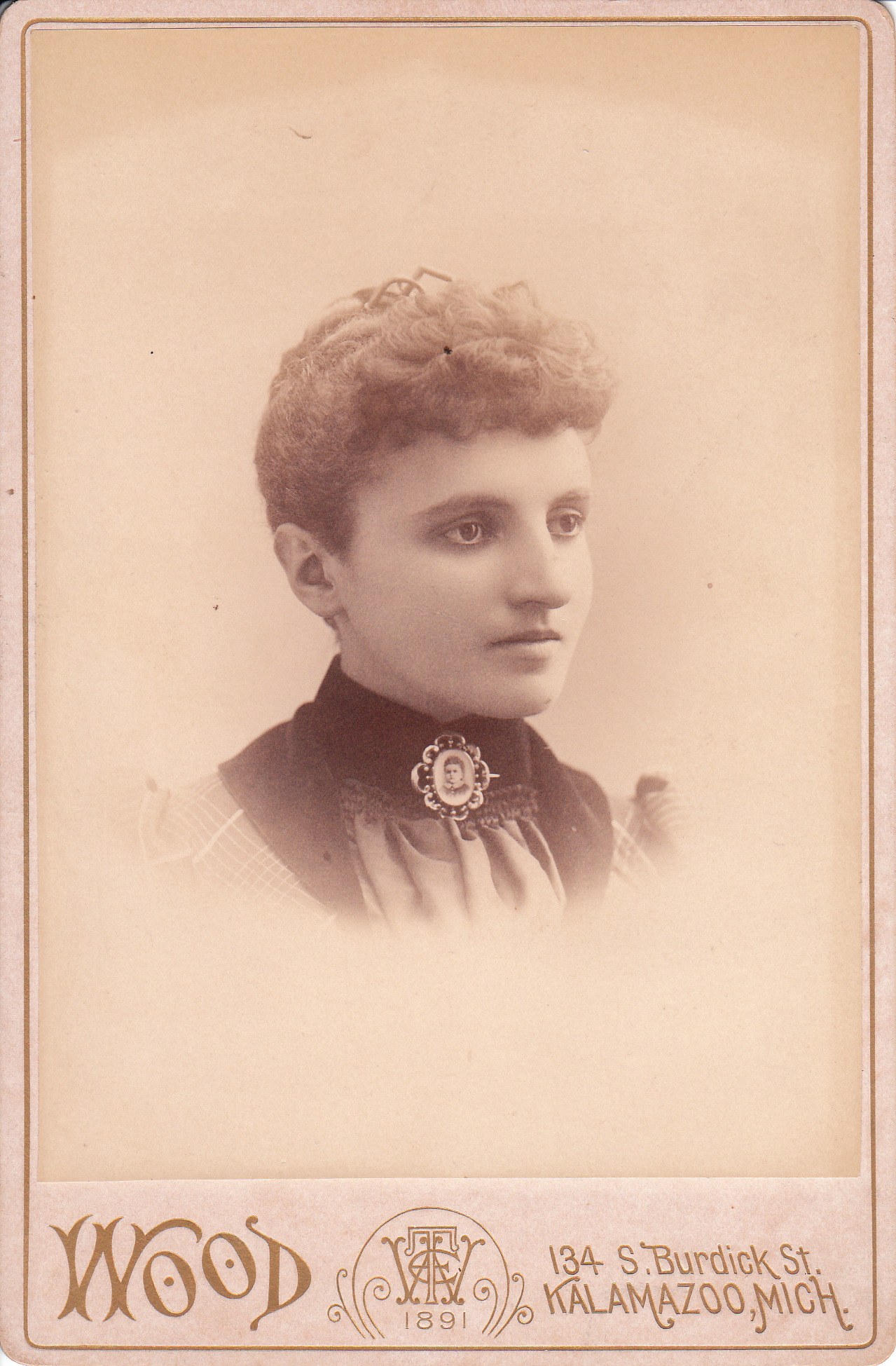
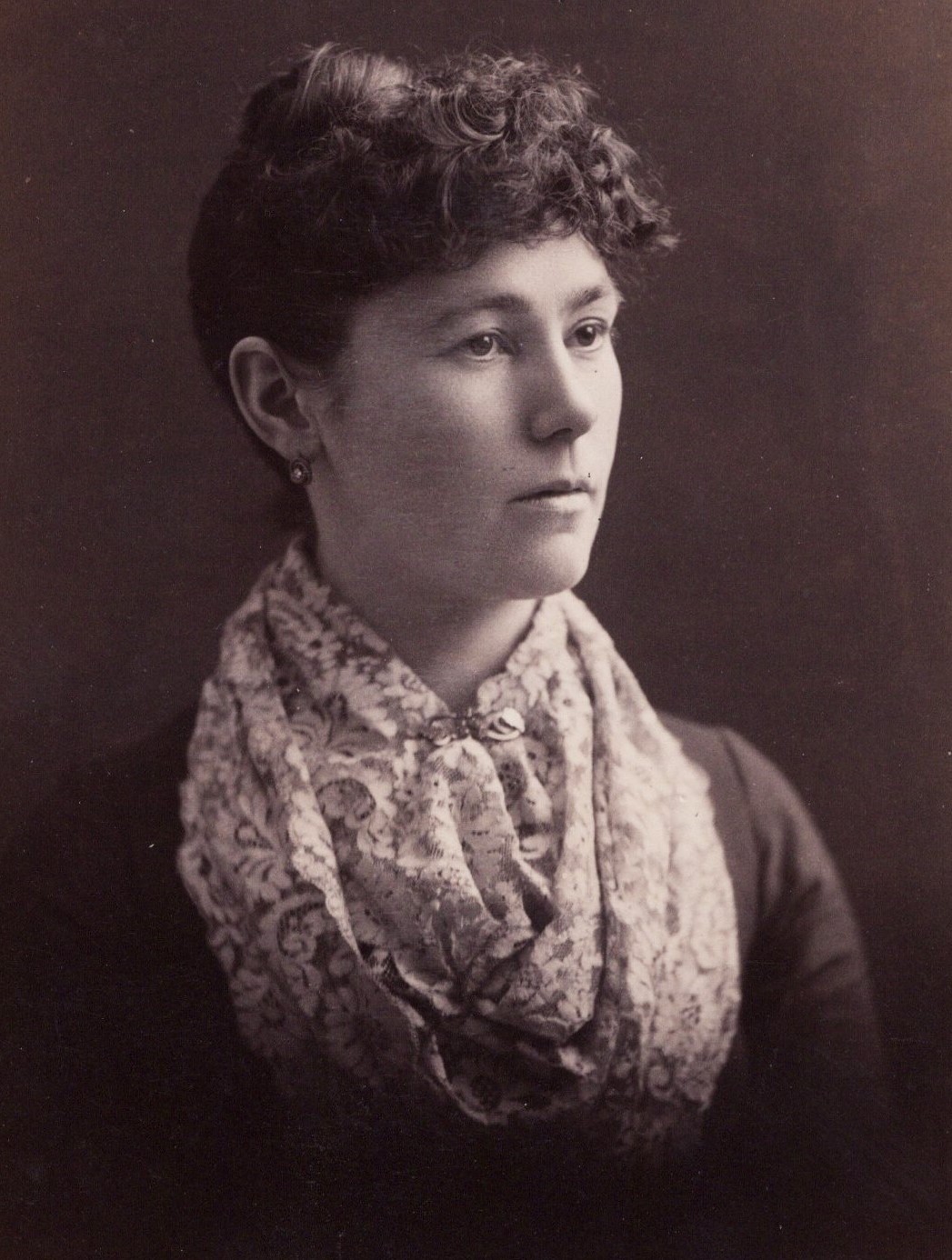
A young woman poses for this cabinet card photograph at the Wood photographic studio in Kalamazoo, Michigan. She is wearing a brooch which may hold a photograph of her daughter, or perhaps, a photo of herself at a younger age. This attractive young woman has curly hair and wonderful eyes. The photographer of this photograph is likely T. E. Wood who is mentioned in photography journals published in 1893 and 1895. This cabinet card has the year 1891 printed on the bottom of the card which is likely the year that this photograph was taken. Check out other photographs by Wood by clicking on the category “Photographer: Wood”. SOLD
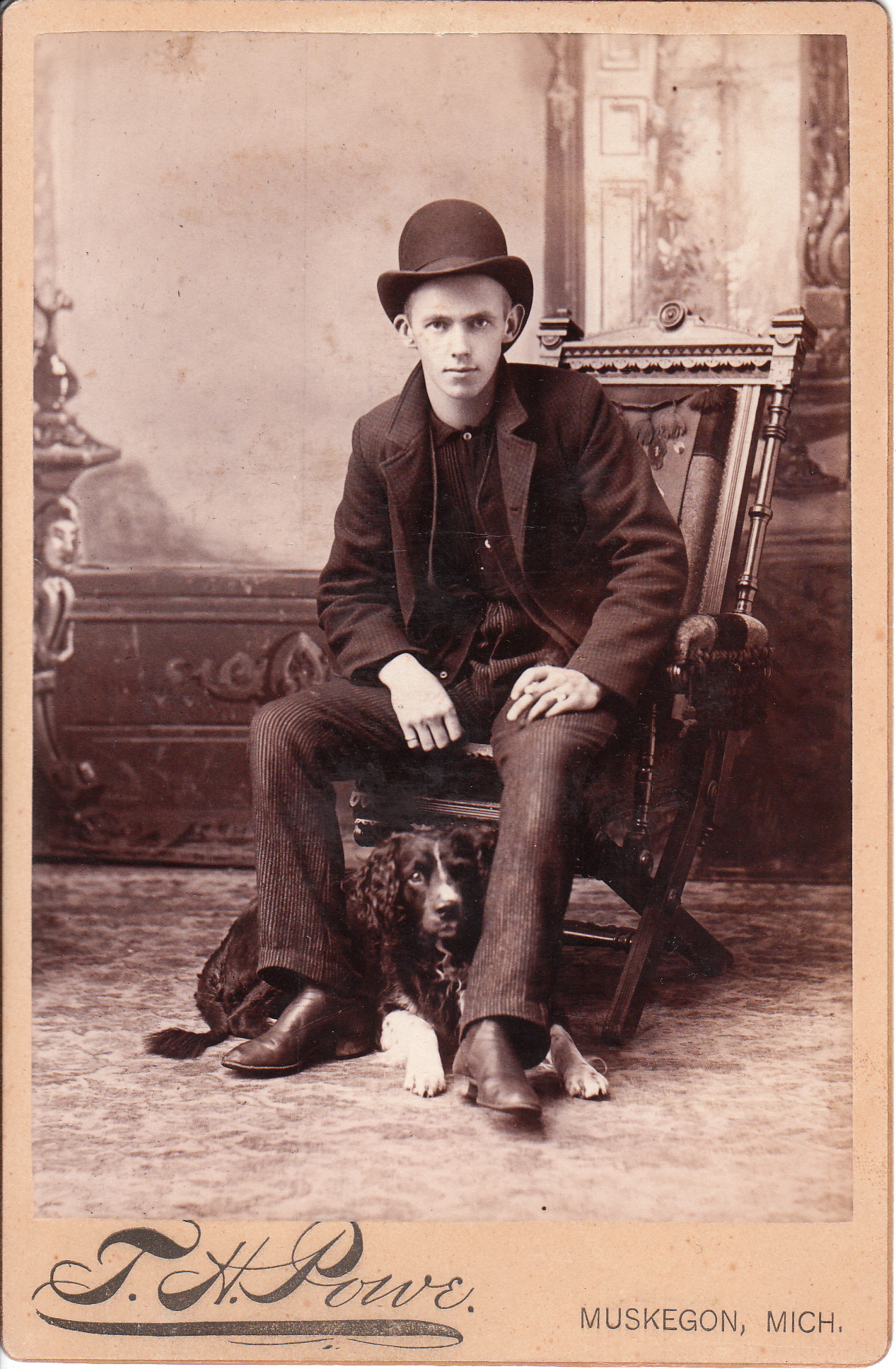
A BOY AND HIS DOG IN MUSKEGON, MICHIGAN
A dapper young man wearing a derby hat, sits for his portrait at the studio of T. Harold Powe, in Muskegon, Michigan. Sitting at the young man’s feet is his loyal dog. The dog appears to be a spaniel. Both the boy and dog are intensely staring at the camera. Photographer Powe was active in his profession between 1880 and 1896. He operated his studio in Muskegon between 1883 and 1885. During his photography career he also worked in other cities and towns including Lansing (Michigan), Omaha (Nebraska), and Milwaukee (Wisconsin). (SOLD)
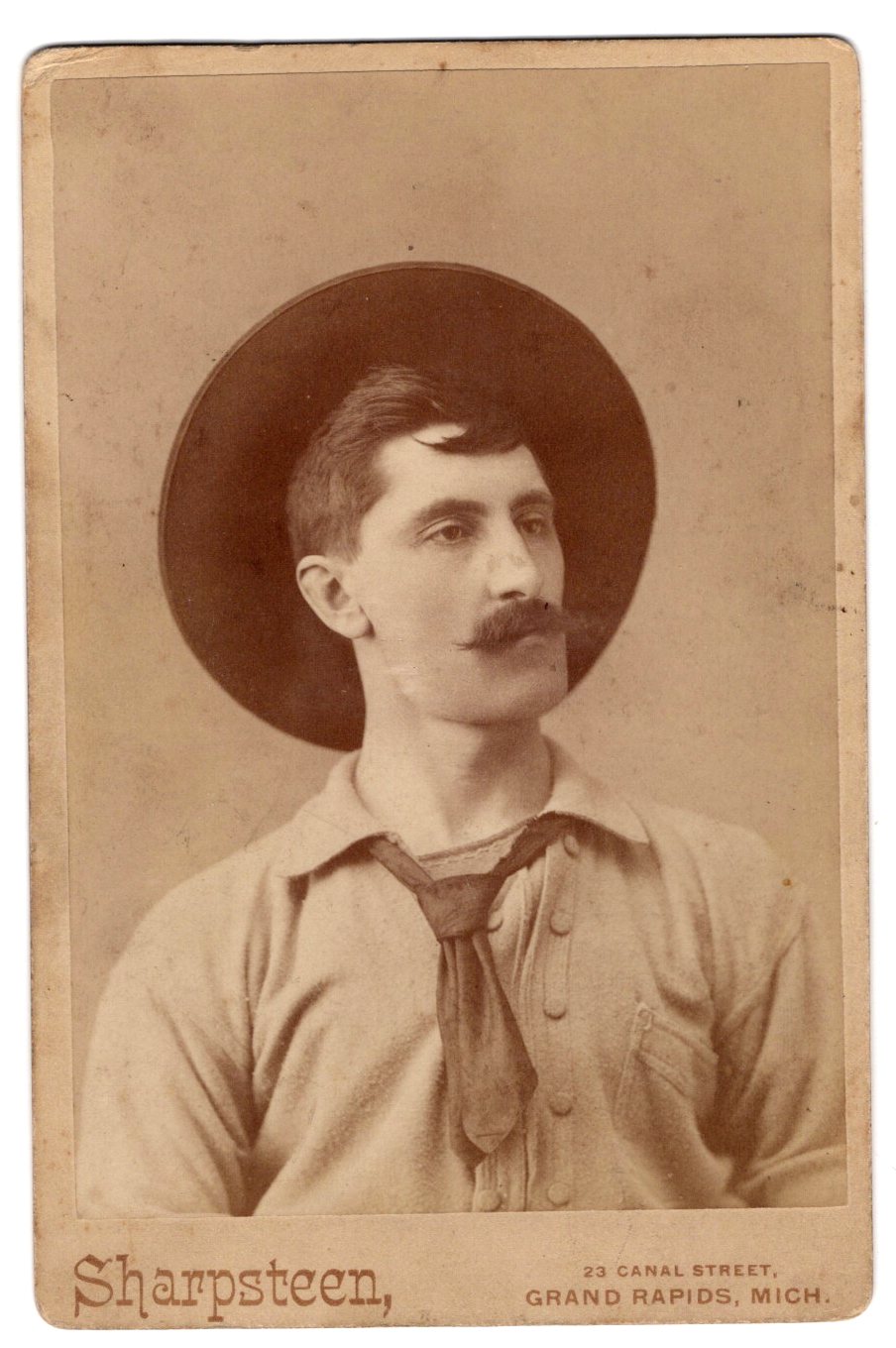
HANDSOME OLD WEST GENTLEMAN : GRAND RAPIDS, MICHIGAN : IDENTIFIED : CABINET CARD
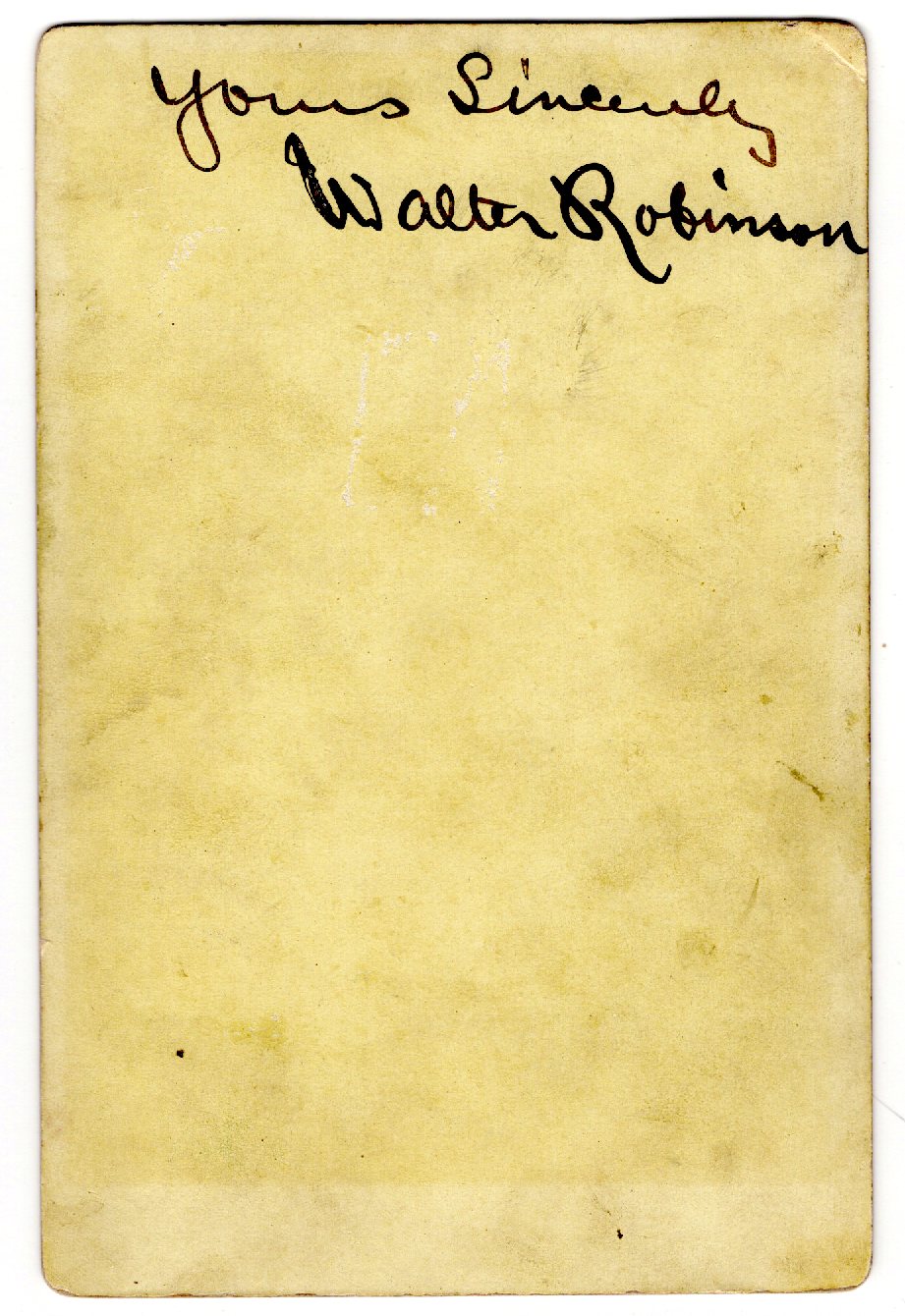
A handsome young man in western clothing, poses for his portrait at the studio of Samuel Sharpsteen, located in Grand Rapids, Michigan. The gentleman in this photograph is identified on the reverse of the image as Walter Robinson. He is dressed in what appears to be old west attire. Note the unusual way that he is wearing his tie. Is he a cowboy? Is he a farmer? Samuel Sharpsteen was born in 1850 near Battle Creek, Michigan. His parents were native New Yorkers who were among the early settlers of Michigan. He was educated in Battle Creek’s public schools and at age 20 left home to apprentice in photography. He then went off to Owosso, Michigan, where he and his older brother opened a gallery. After six months, his brother left the partnership; and Sharpsteen stayed in Owosso until 1882. He also married his wife there. His wife’s name was Nattie Tuttle, and she was from Cleveland, Ohio. His next location was Ionia, Michigan, where he stayed 8 years. An 18 month stint in Detroit was followed by his move to Grand Rapids. His gallery was in Grand Rapids from 1888 until , at least, 1903. His studio moved around a lot. Research located nine different Grand Rapids locations over the years that he was there. In addition, he had a partner in 1890 and their studio was known as Sharpsteen & Andrews. The Bulletin of Photography (1916) announced Sharpsteen’s death. He died in Grand Rapids at age 71. SOLD
LITTLE BOY PUSHING BABY GIRL IN BABY BUGGY IN HART, MICHIGAN


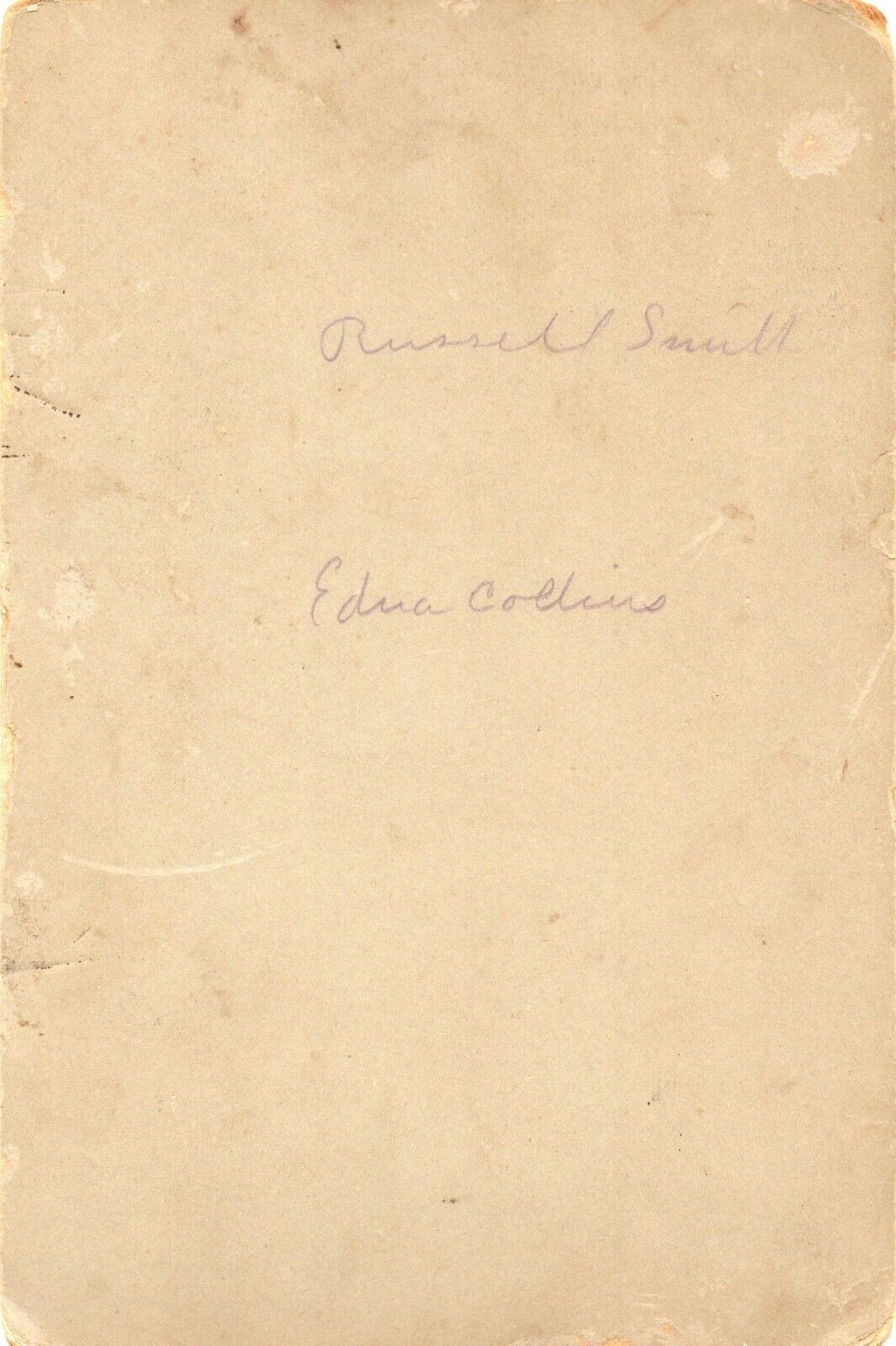
A young Russell Smith pushes an even younger, Edna Collins, in a baby carriage (the kids names are noted on the reverse of the image). The two children are very cute. Russell has flowing long hair and a wonderful cap. Edna looks adorable in her gown and bonnet. The baby buggy is quite ornate. To view other baby buggies, click on the category, “Baby Carriage”. The photographer is Albert G. Tickner and his studio was located in Hart, Michigan. According to the United States census of 1910, Tickner (1872-?) was born in Ohio. At the time of the census, he was a 38 year-old photographer and proprietor of his own business. He was widowed and lived with his four sons (ages spanned between four and fifteen) in Hart, Michigan. Research yielded no information about Russell Smith; but the search for biographical material about Edna Collins was more fruitful. The 1920 census discloses that there was an Edna Collins living in Hart. Edna was twenty years-old and was a public school teacher. She lived with her father (Sodorous) and her mother (Carrie). Her father was a druggist and operated his own store. (SOLD)
FASHIONABLE WOMAN : MONROE, MICHIGAN : CABINET CARD
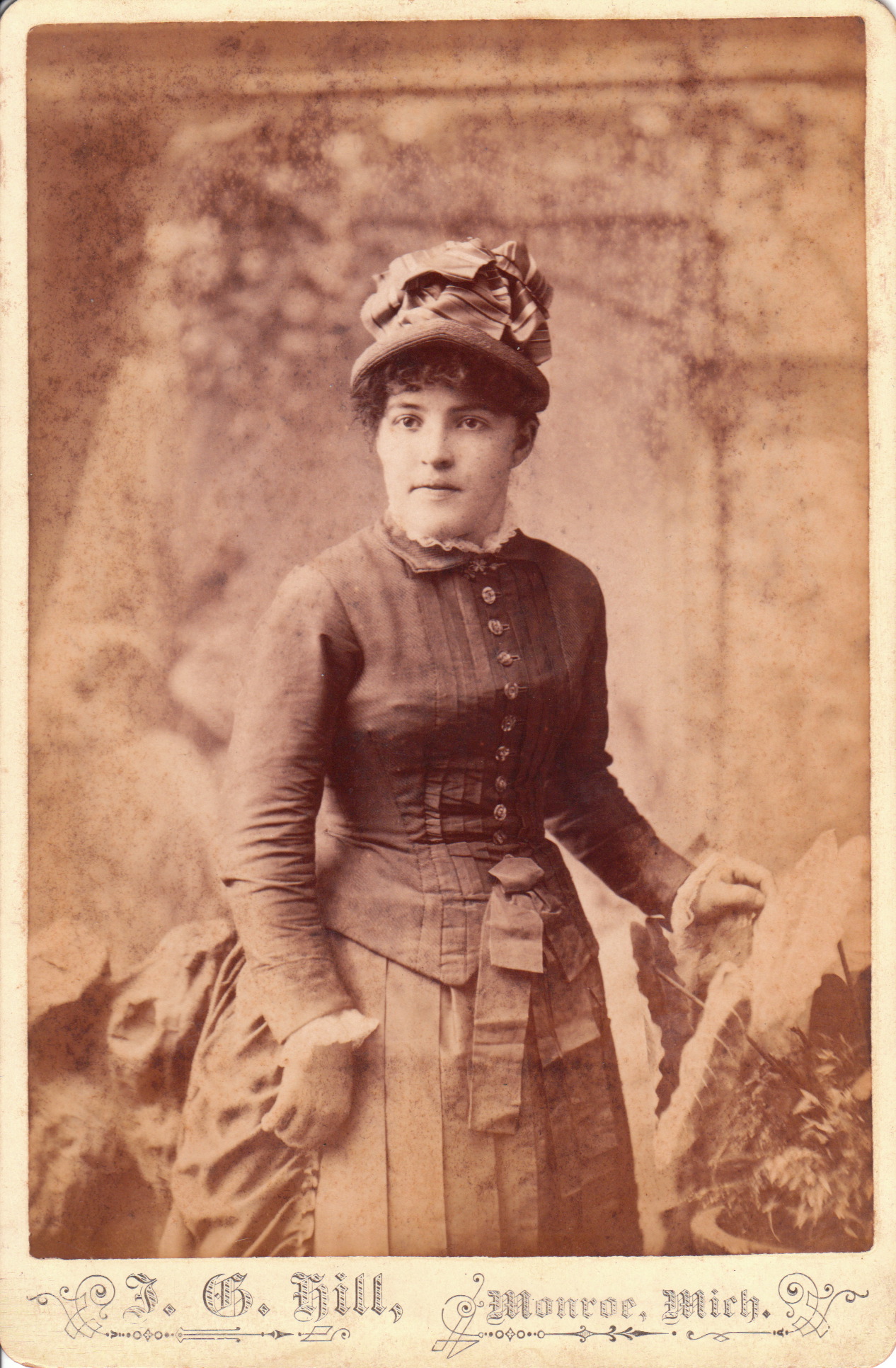
This cabinet card serves as a period fashion photograph. The unidentified woman in this image is wearing a button down dress and a large hat. The photographer is J. G, Hill of Monroe, Michigan. According to the 1880 US census,the thirty year-old Hill (1850-?) was born in Canada and lived in Monroe with his wife Katie Hill (age 24) and their children, Willie (age 2) and Charles (age 10 months). Katie’s 16 year-old brother also lived with the J. G. Hill family. The 1890 Detroit business directory lists Hill and his photography studio, but from that point of time until 1897, Hill clearly relocated, and his studio can be found in the Toledo, Ohio business directory. SOLD
THE DEVEREAUX BROTHERS PHOTOGRAPH A PRETTY YOUNG WOMAN DOWN ON THE BAYOU
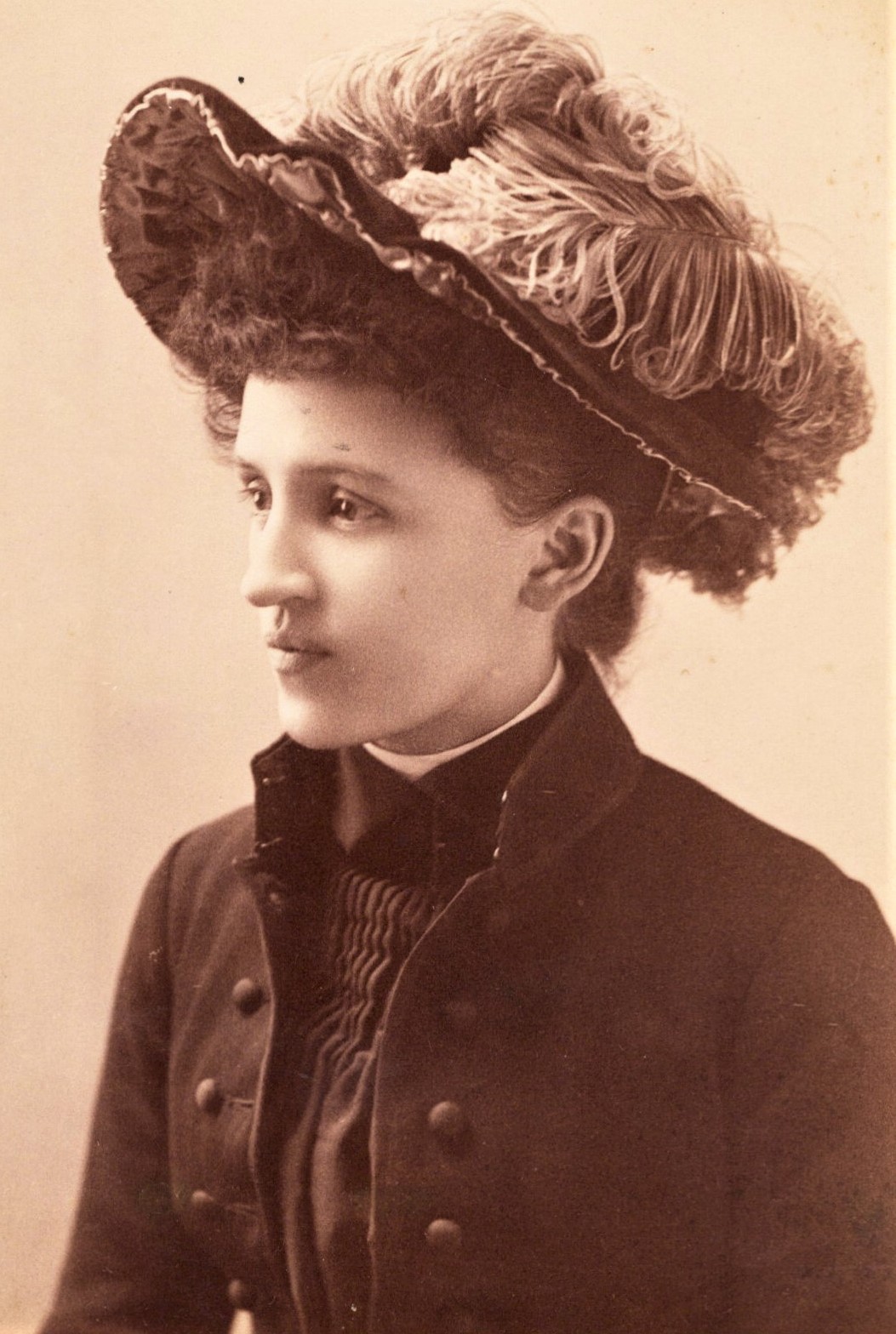
This cabinet card features a portrait of a pretty young woman. She is fashionably dressed and wearing an exquisite hat. Her image was produced by the Devereaux Brothers. Who are the Devereaux Brothers? The Devereaux Brothers sounds like the name of a Cajun band.” Why don’t y’all come down to the Bayou Cafe and hear the Devereaux Brothers play some zydeco.” Research does not support the notion that Morrice, Vernon, Byron and Ashley played in a Lousiana band together when they weren’t producing photographs. In actuality, research reveals that the Devereaux Brothers operated their photography studio in North Lansing, Michigan. SOLD
PORTRAIT OF A WOMAN AND HER LARGE NECKERCHIEF : DETROIT, MICHIGAN : CABINET CARD
This cabinet card portrait features a young attractive woman. She is dressed in an interesting manner. It looks like she is wearing a large neckerchief held in place by a broach, but thats just my best guess. The photographer did an excellent job with the lighting in this photograph. The photographer of this image is C. R. Baker who was located at 35, 37, and 39 Monroe Avenue in Detroit, Michigan. Business directories for Detroit list Charles R. Baker as a photo printer beginning in 1876 and his listing soon changes to photographer and appears in directories through 1919. The Photographic Times (1884) has a “seeking employment” ad placed by Baker. He was searching for a job as a “first class printer and toner”. The 1900 U.S. census reveals that Baker lived with his wife, Sarah, and his 14 year old son Owen. Both Baker and his wife were 40 years old. The couple also appear together in the 1920 census. The census indicates that Charles Baker was born in Massachusetts and worked as a photographer. (SOLD)
ATTRACTIVE YOUNG WOMAN WITH HYPNOTIZING EYES IN DETROIT, MICHIGAN

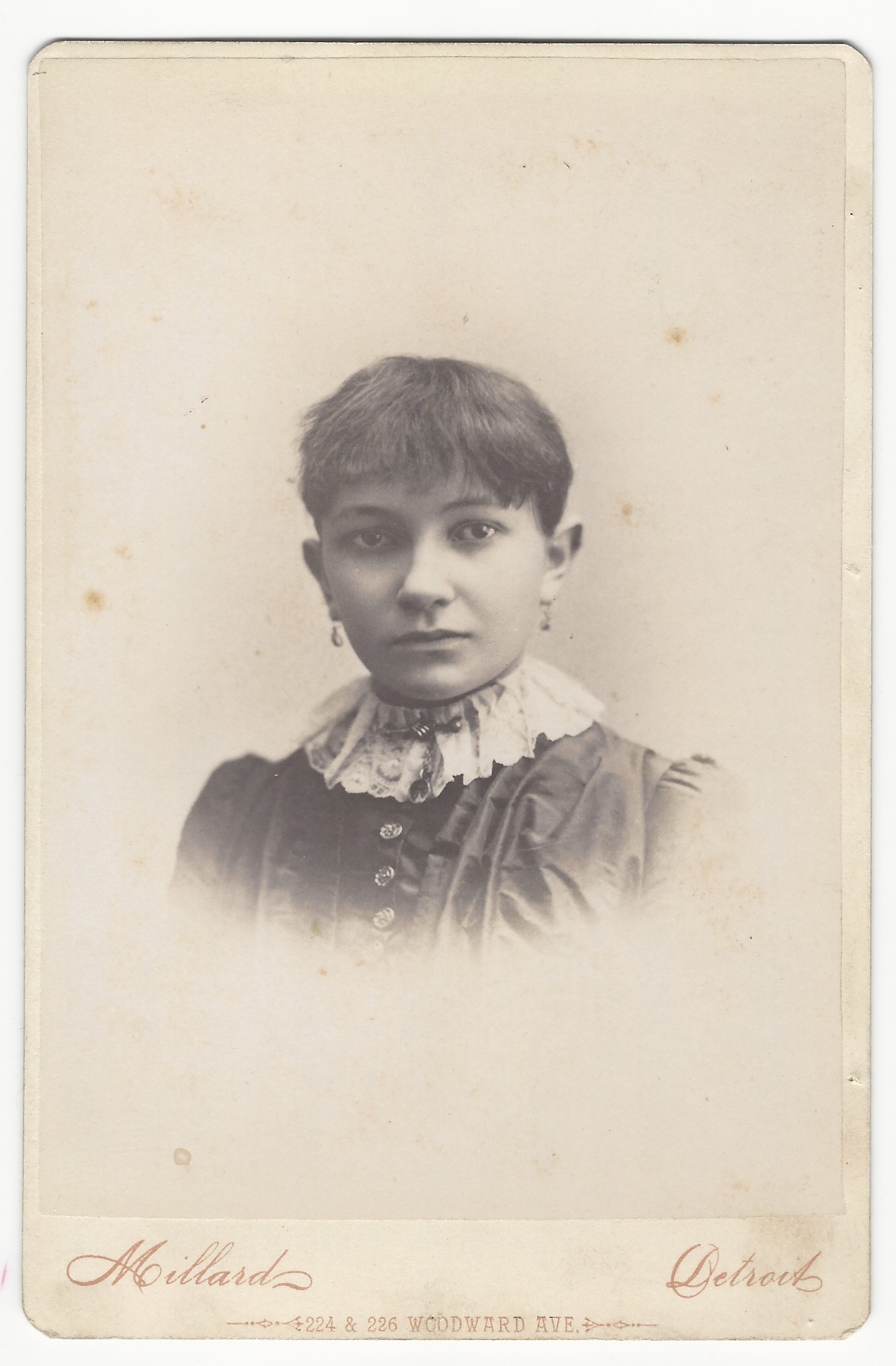
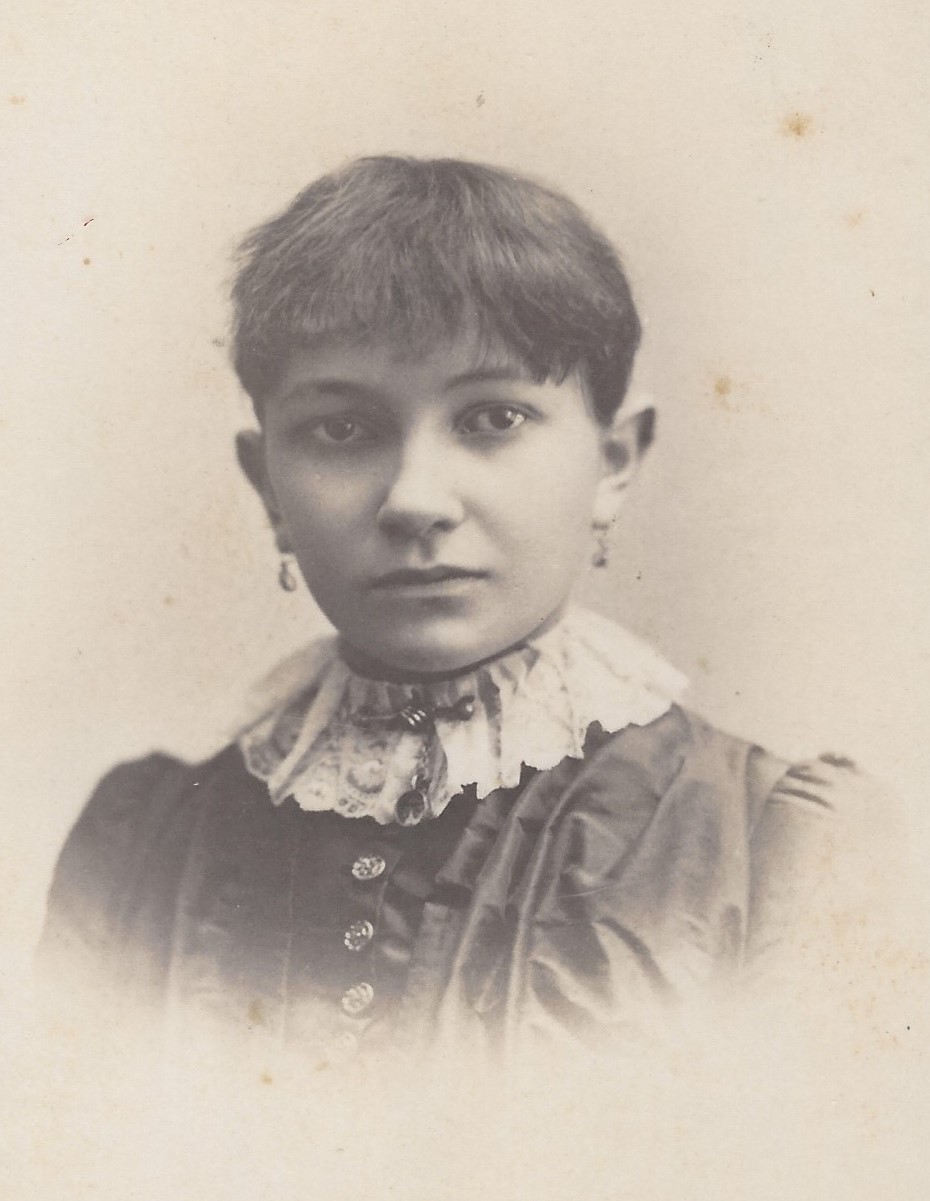
This bust portrait of an attractive short haired young woman is the product of the Millard studio in Detroit, Michigan. The woman is wearing a lace collared dress and earrings. She has magnificent deep hypnotizing eyes. C. A. Millard is mentioned in The Industries of Detroit (1887) as being the proprietor of the oldest photographic studio in Detroit. It is reported that he bought out a Mr. Powelson in 1879 and at the time of the books publication, Millard employed ten to fifteen artists in his studio. An interesting side note concerns Millard’s death in 1891. Frank Scott Clark (1865-1937), a noted backdrop painter, came to Detroit in 1892 to manage Millard’s studio for Millard’s estate. Among his accomplishments, Clark was an extremely talented photographic background specialist. In fact, during his career, he created, made, and set up backgrounds for both Napoleon Sarony and Jose Maria Mora. Not too shabby a resume for Mr Clark. (SOLD)
PRETTY WOMAN IN GRAND RAPIDS MICHIGAN (1890)
This cabinet card features a portrait of an attractive young lady. She is posed with her back toward the camera, a pose which offers a profile view. The photographer of this image is Samuel Sharpsteen of Grand Rapids, Michigan and the photograph was taken in 1890. The previous owner of this cabinet card stated that Sharpsteen was of the Jewish faith, but that is not factually correct. There is a tendency for owners of cabinet cards to see a name that “sounds Jewish” and assume that the bearer of that name, must be Jewish. This kind of logic results in many incorrect identifications of Jewish photographers. It so happens, that Mr. Sharpsteen was of the Methodist faith. Samuel Sharpsteen was born in 1850 near Battle Creek, Michigan. His parents were native New Yorkers who were among the early settlers of Michigan. He was educated in Battle Creek’s public schools and at age 20 left home to apprentice in photography. He then went of Owosso, Michigan, where he and his older brother opened a gallery. After six months, his brother left the partnership; and Sharpsteen stayed in Owosso until 1882. He also married his wife there. His wife’s name was Nattie Tuttle, and she was from Cleveland, Ohio. His next location was Ionia, Michigan, where he stayed 8 years. An 18 month stint in Detroit was followed by his move to Grand Rapids. His gallery was in Grand Rapids from 1888 until , at least, 1903. His studio moved around a lot. Research located nine different Grand Rapids locations over the years that he was there. In addition, he had a partner in 1890 and their studio was known as Sharpsteen & Andrews. The Bulletin of Photography (1916) announced Sharpsteen’s death. He died in Grand Rapids at age 71. This cabinet card photograph is in very good condition (see scans).

Buy this original Cabinet Card Photograph (includes shipping within the US) 2802
To purchase this item, click on the Pay with PayPal button below
$51.50

Buy this original Cabinet Card Photograph (includes International shipping outside the US) 2802
To purchase this item, click on the Pay with PayPal button below
$60.00

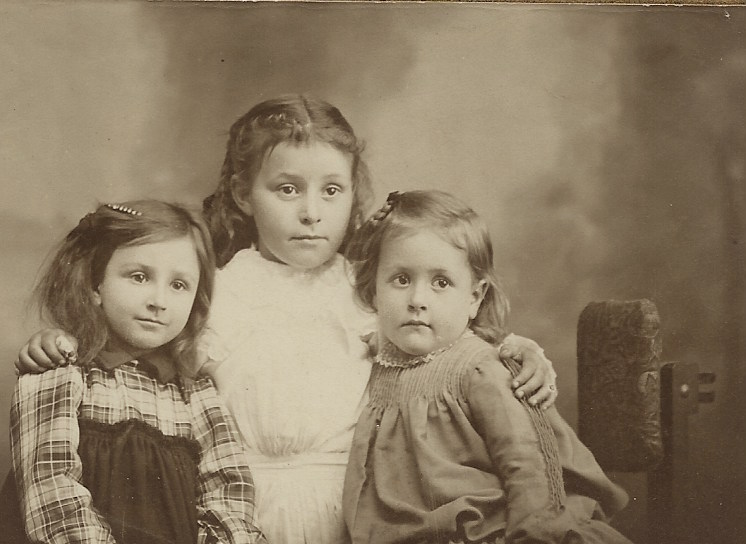
THREE ADORABLE SISTERS IN STANTON, MICHIGAN


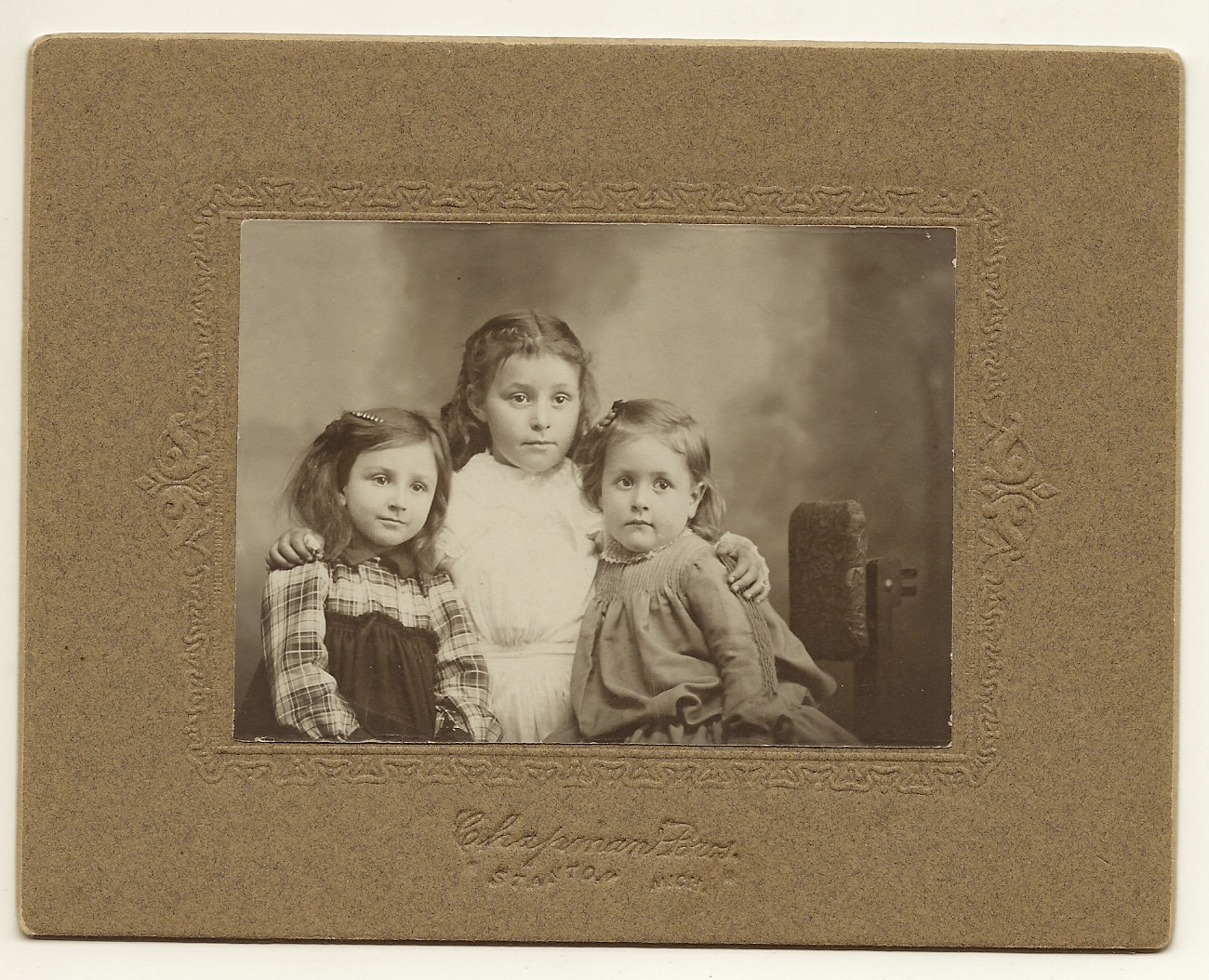
The three girls featured in this vintage photograph are extremely adorable. Whoever dressed the girls for their sitting at the photographer, presumably their mother, outfitted them in very cute clothing. The photographer of this image was Chapman Brothers studio in Stanton, Michigan. Ira O. Chapman (1853-1908) and E. Frank Chapman (1858-1916) were brothers who operated as photographers in Stanton, Michigan. It is unclear which brother is the creator of this cabinet card. At one point in time, the pair conducted business in Stanton as “Chapman Brothers” studio. A portrait of a group of members of the Grand Army of the Republic that was done by the photographer brothers, appears in the Flat River Museum in Greenville, Michigan. The “Directory of Early Michigan Photographers” indicates that Isaac was in business from 1876 through 1877 operating a photo studio known as Jennings & Chapman. He remained in the photography studio trade until at least 1895. He was born in New York. For a time he was the printer and proprietor of “The Stanton Hornet” which was an independent daily newspaper. His photo business was taken over by E. Frank Chapman who conducted business in Stanton between 1896 and 1915. E Frank Chapman’s son, Vern (born in 1892) operated a photo studio in Lake Odessa, Michigan sometime around 1914.