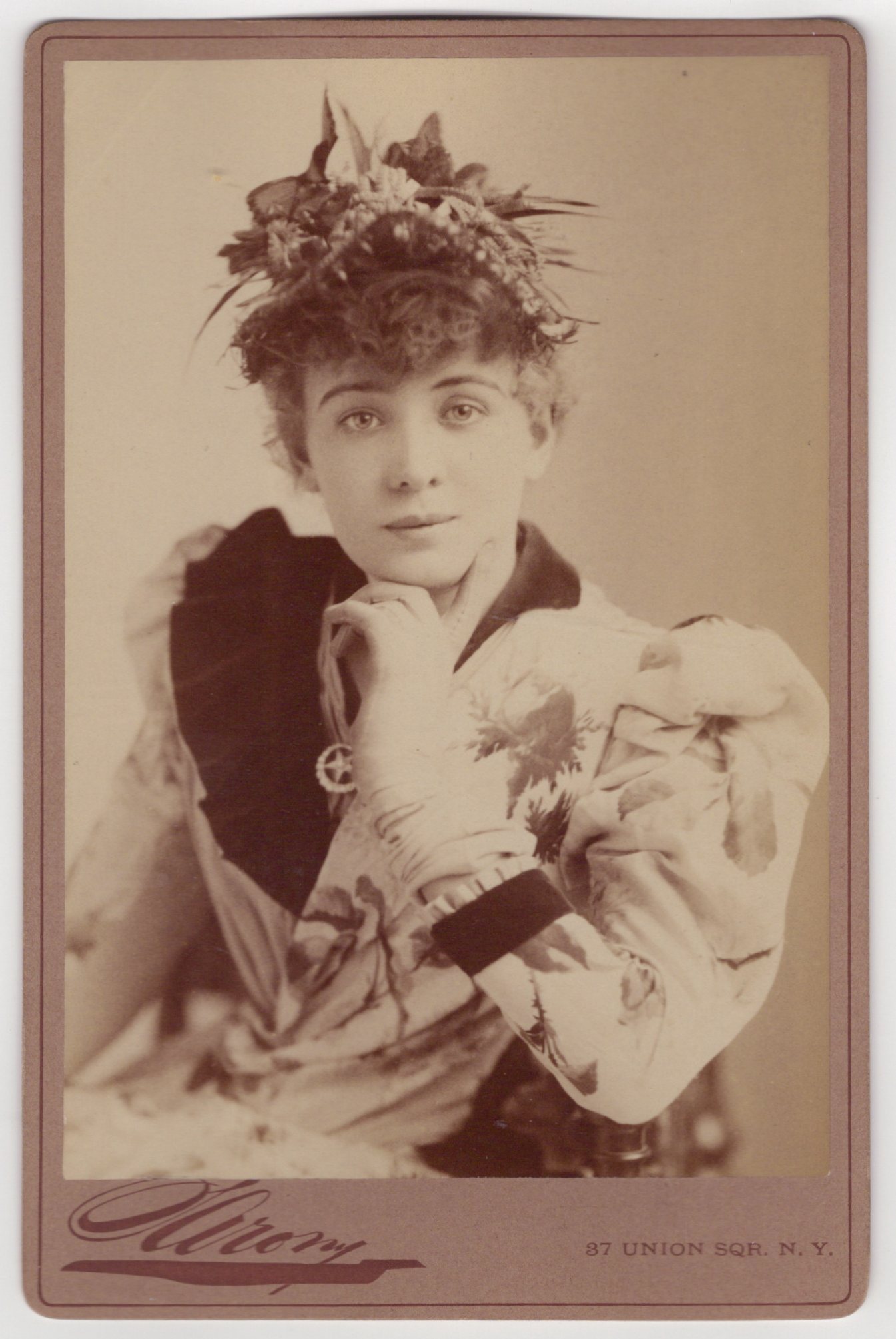
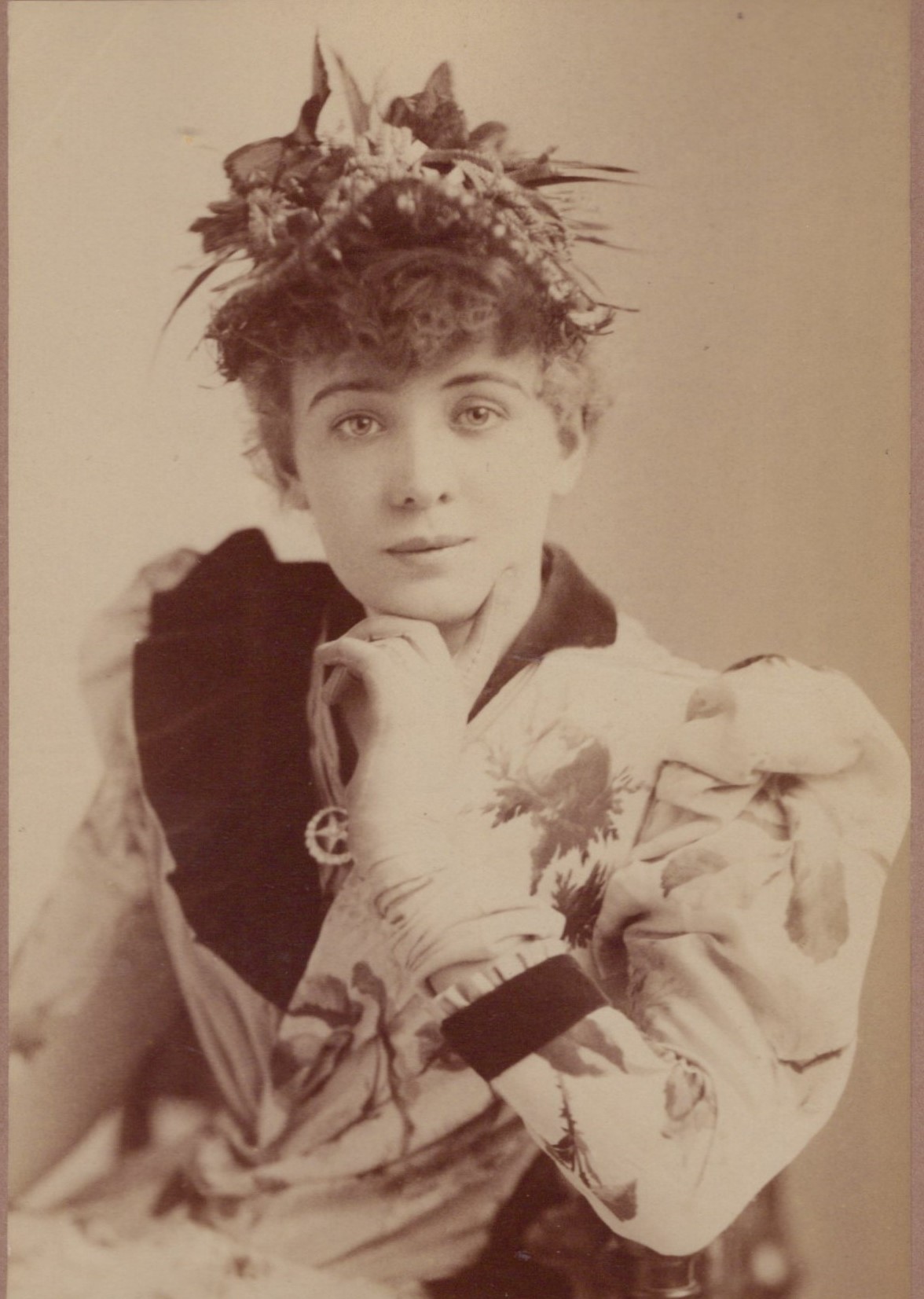
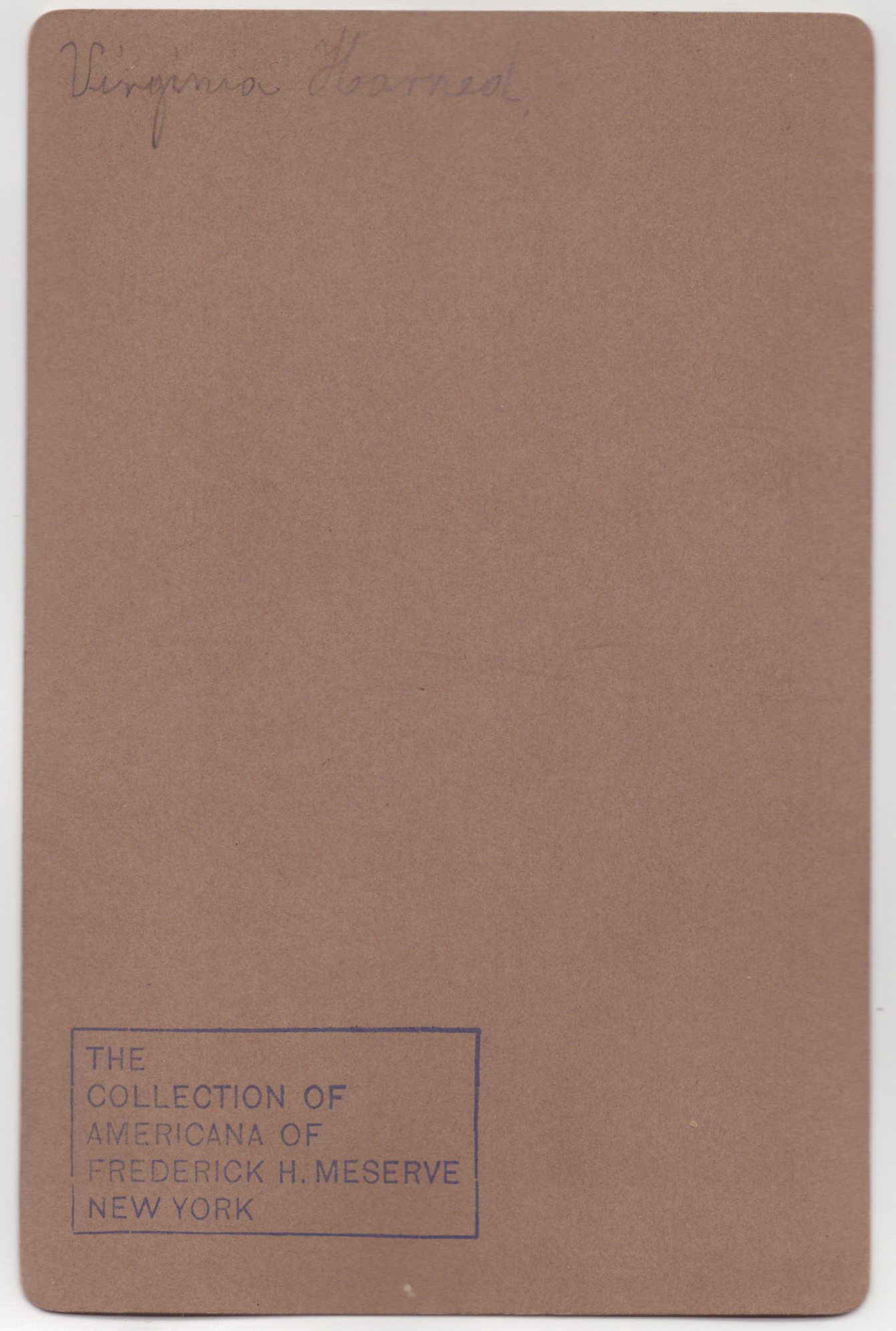
This cabinet card features noted American stage actress, Virginia Harned (1869-1946). She was known for her beauty (said to resemble Sarah Bernhardt), her fashion sense, and her intensity on stage. Harned was audacious. She was associated with creating the new social perception of the modern woman. She is most recognized for playing the title role in the Broadway premiere of “Trilby (1895)”. The IBDb reveals that Harned performed in 21 Broadway plays between 1894 and 1936. Harned was married to two (not at the same time) famous actors. Her second husband was E. H. Sothern who later married actress Julia Marlowe. Her third husband was William Courtenay. During her marriage to Sothern, Harned took a turn at writing and produced several plays. Harned’s portrait seen on this cabinet card was taken by celebrated New York City photographer, Napoleon Sarony. A hand stamp on the reverse of this photograph indicates that the photo was formerly in the collection of Frederick H. Meserve (1865-1962). Meserve was a businessman and a had a large collection of photographs. In 1944 he worked with Carl Sandburg, American poet and biographer, to publish 100 photographs of Abraham Lincoln. Meserve’s collection included 10,000 original Matthew Brady negatives and 75,000 photographs of famous theatrical figures. SOLD
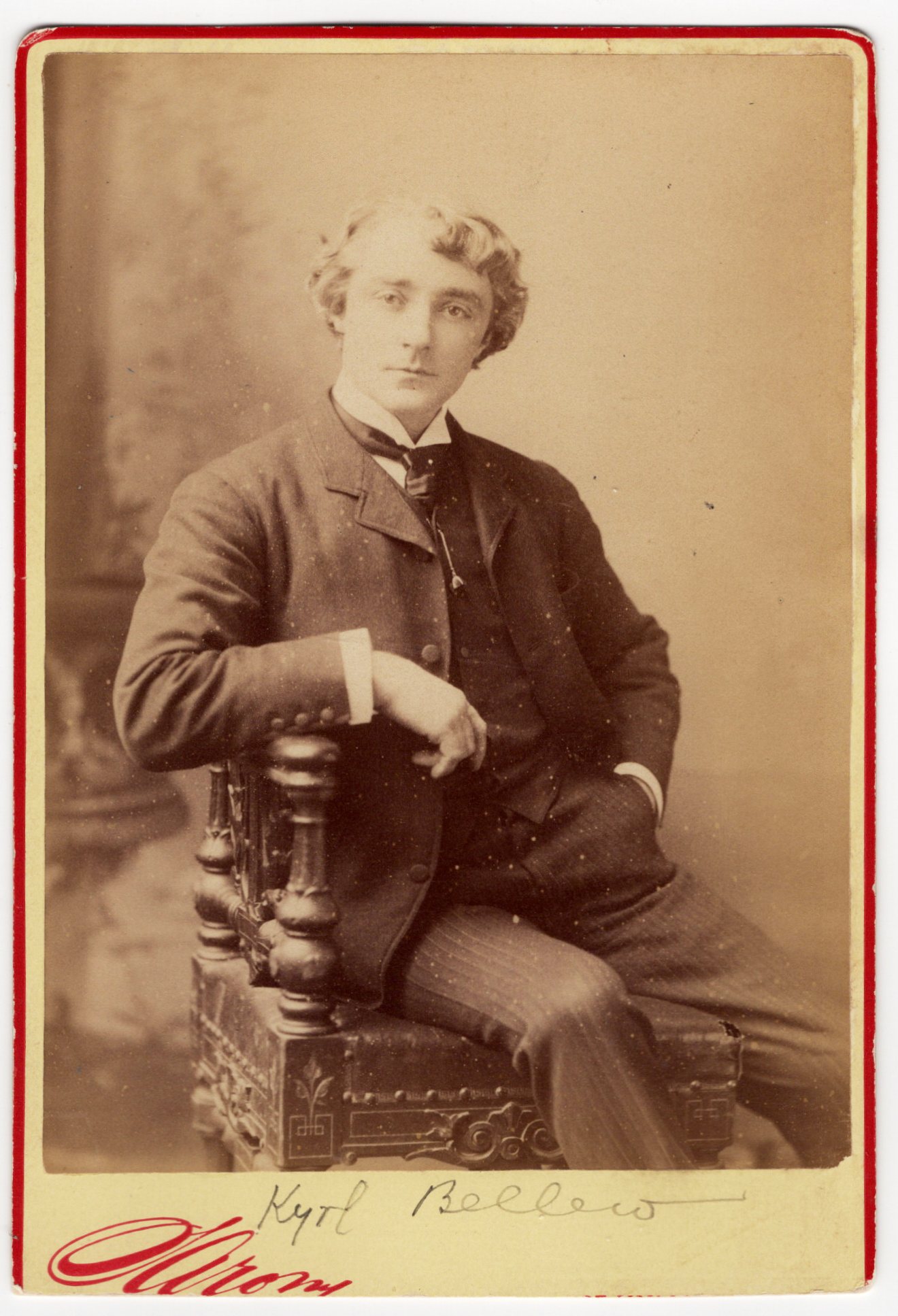
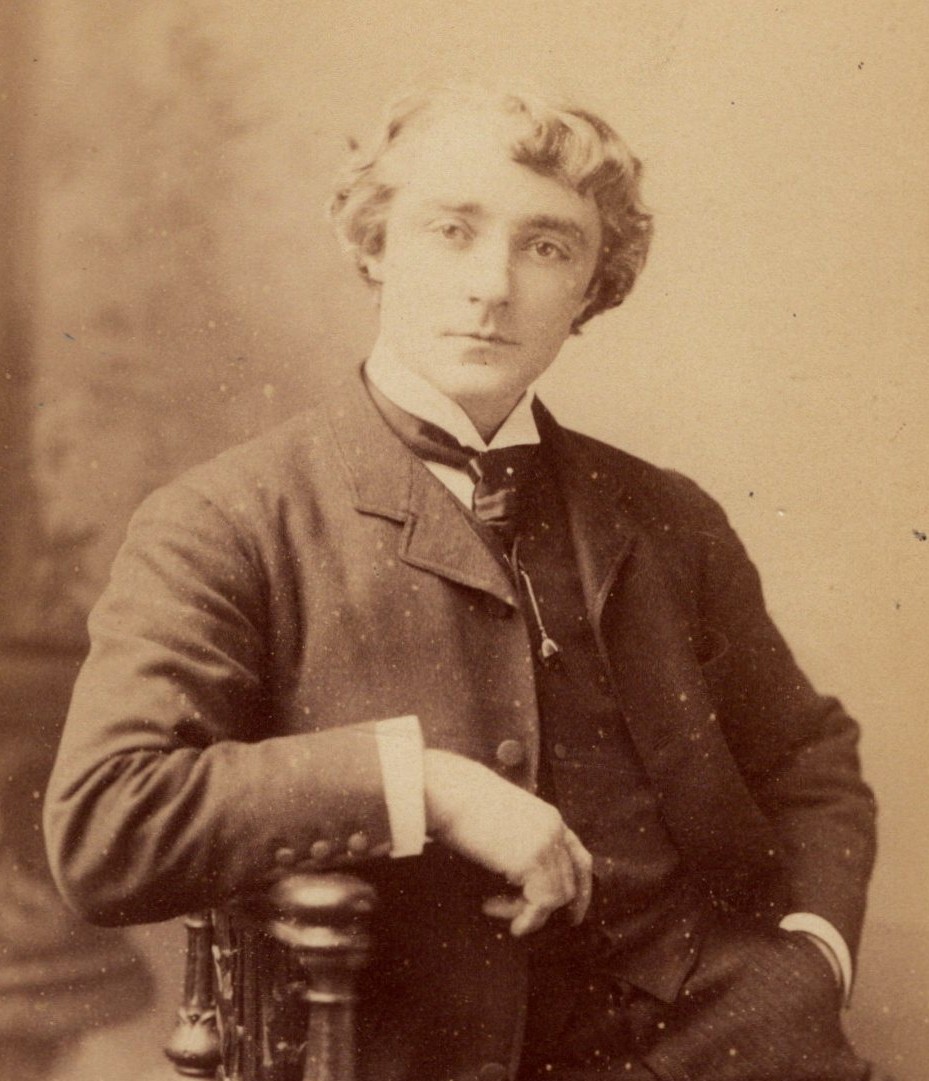
This elegant cabinet card features the distinguished English actor Kyrle Bellew, captured in a poised seated portrait by renowned photographer Napoleon Sarony. Bellew is depicted in a formal dark suit with a high-buttoned waistcoat and a crisply starched white collar. His hair is neatly parted, and his mustache is meticulously groomed, reflecting the refined style of late 19th-century theatrical gentlemen. His expression is composed and introspective, with a subtle intensity in his gaze that hints at the dramatic roles he was known for. Bellew is seated in a carved wooden chair with a high back, its ornate design complementing the dignified atmosphere of the portrait. The studio backdrop is understated, ensuring that the focus remains on the subject’s commanding presence. The cabinet card is printed on slightly thinner stock than typically seen. Napoleon Sarony was located in New York City during the late 1800s. He was known for his finely composed theatrical portraits, capturing many prominent actors of the era with a distinctive clarity and elegance. His photography of celebrities went well beyond the theatrical world. He was a flamboyant man and many of his portraits reflected that trait. Kyrle Bellew (1850-1911) was born in England and was a celebrated stage actor renowned for his romantic leads and Shakespearean roles. He gained fame touring with actress Cora Brown-Potter in the 1880s and 1890s, performing in classic plays across the United States and Australia. Bellew’s career also included ventures into early silent films, notably starring in Adventures of Sherlock Holmes; or, Held for Ransom in 1905. He died in 1911, in Salt Lake City, Utah, while on tour with the play The Mollusc. (SOLD)
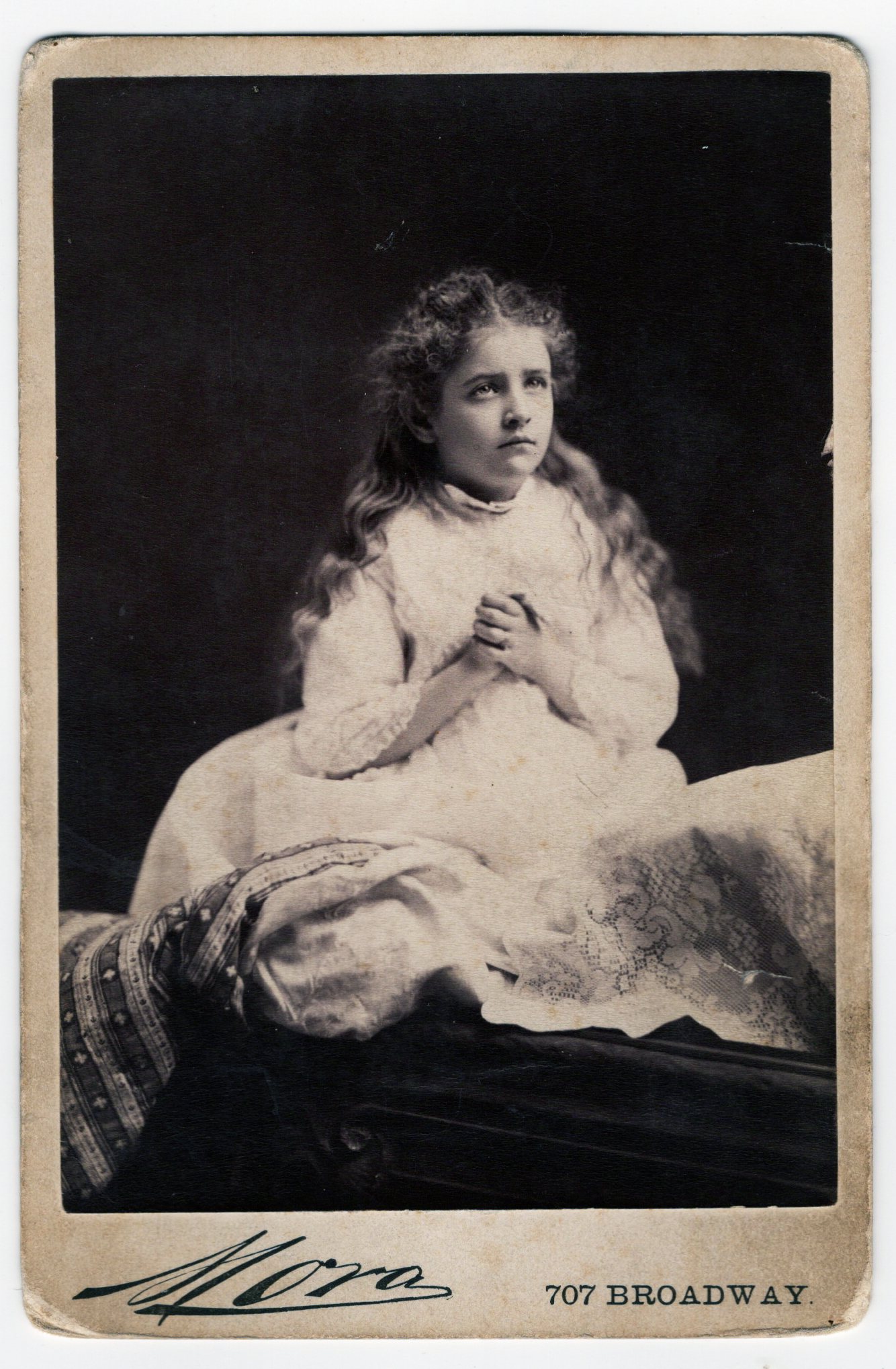
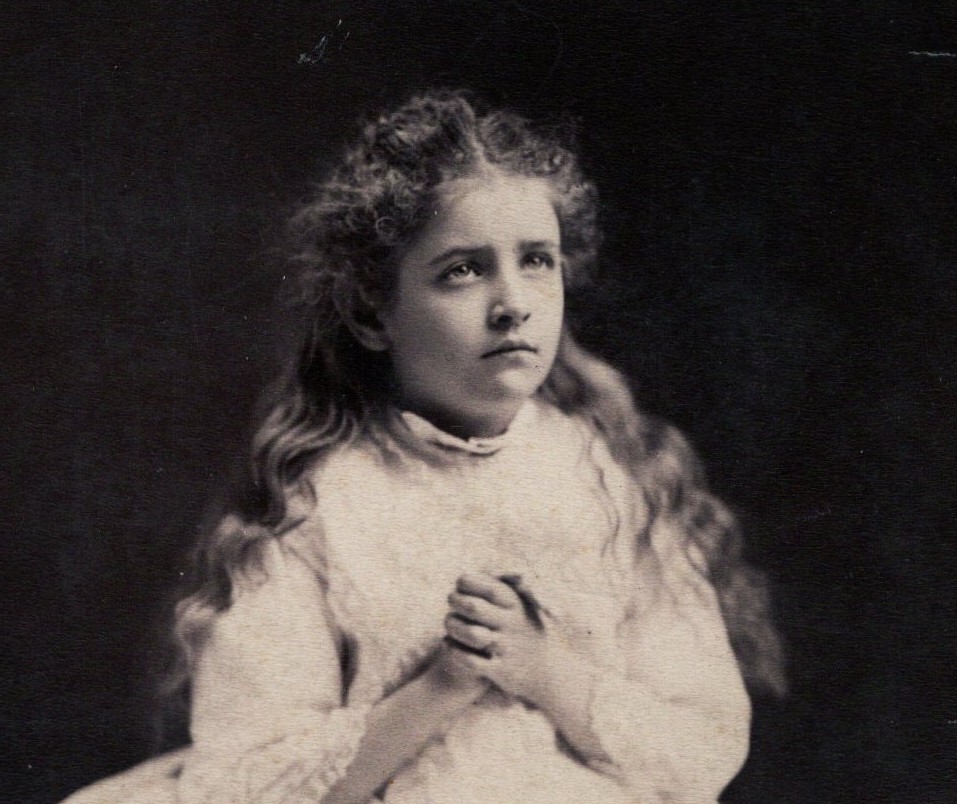
In this striking cabinet card photograph, young Anita Manson sits poised in an elegant white dress, her delicate hands clasped gently together. Her soft curls frame a face of quiet intensity, her large, expressive eyes gazing into the distance with a look that seems both wistful and contemplative. There is a serene grace in her posture, a stillness that suggests innocence yet carries an air of maturity beyond her years. This image is the work of renowned celebrity photographer José Mora, who operated a prestigious studio on Broadway in New York City during the late 19th century. Mora, having secured the exclusive rights to photograph Anita, captured her beauty in at least fifty different poses—each new image eagerly anticipated by an adoring public. It is said that she was first discovered by Napoleon Sarony, another famous photographer of the era, who was captivated by her striking appearance while she was out with her nurse. With permission, he photographed her, thus launching her into the realm of celebrity. Anita Manson was not only a celebrated child model but also an admired figure in private theatricals and entertainment circles. Her portraits, such as this one, were in such high demand that in Boston alone, over 25,000 copies were sold. Her delicate lace-trimmed gown, the rich textures of the draped fabric beside her, and the dramatic lighting of the photograph all contribute to the ethereal quality of her image. She was, as the newspapers of the time declared, a true “child beauty”—a young girl whose face enchanted a generation and whose likeness became one of the most sought-after images of its time. SOLD
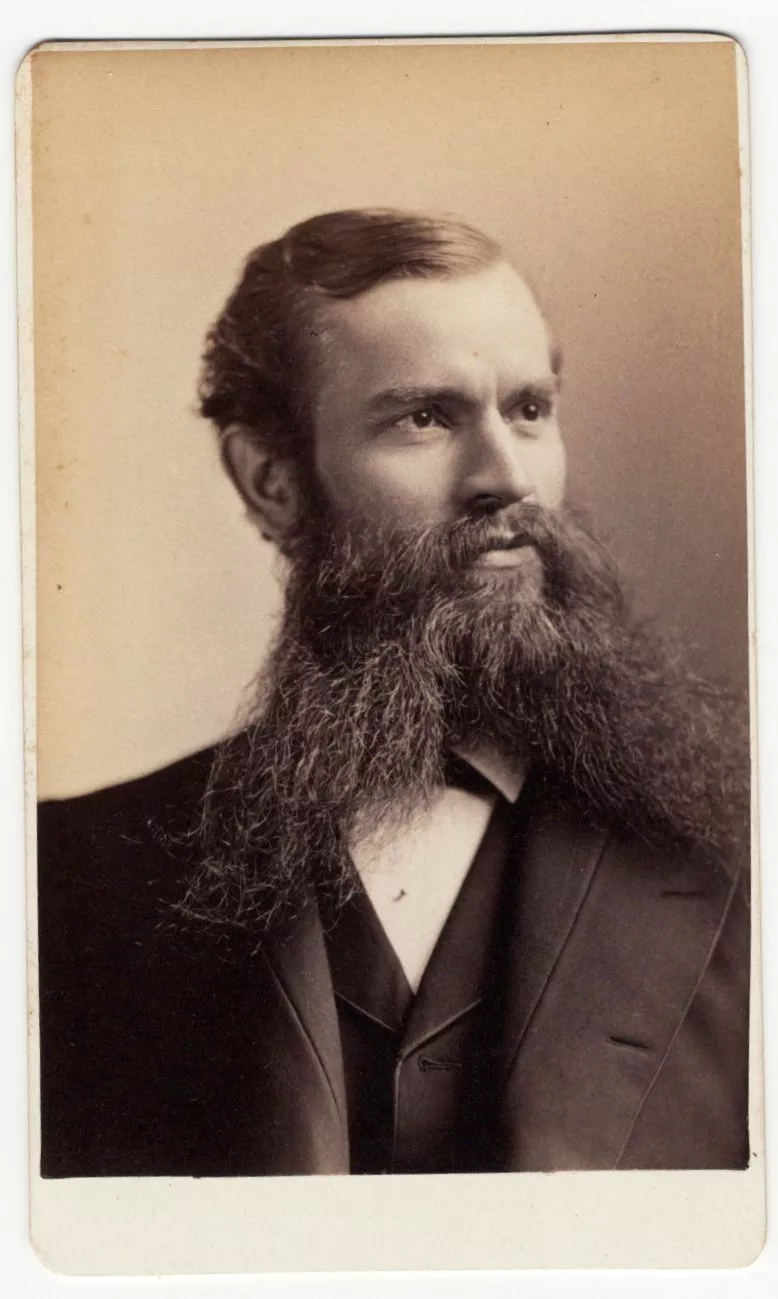
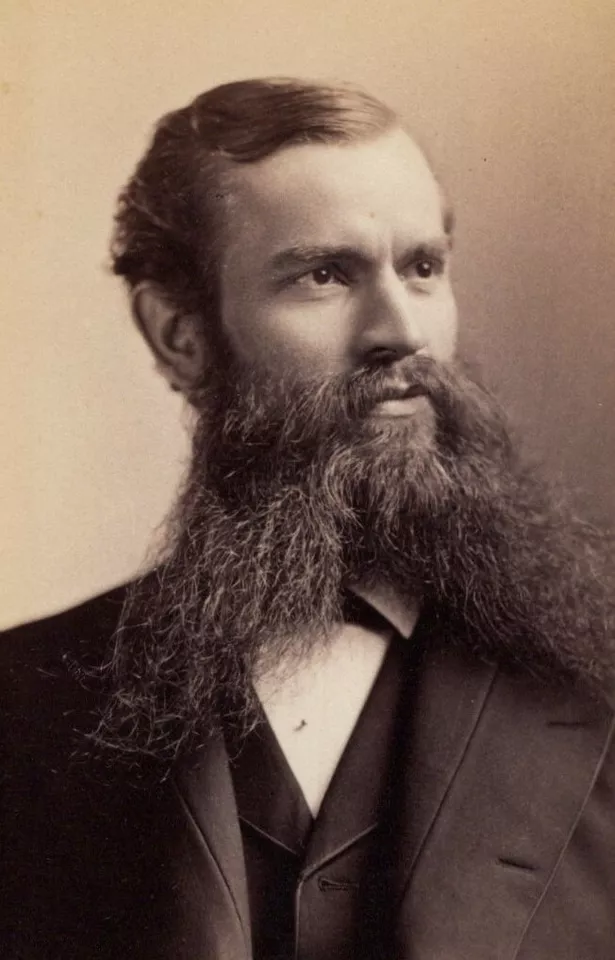
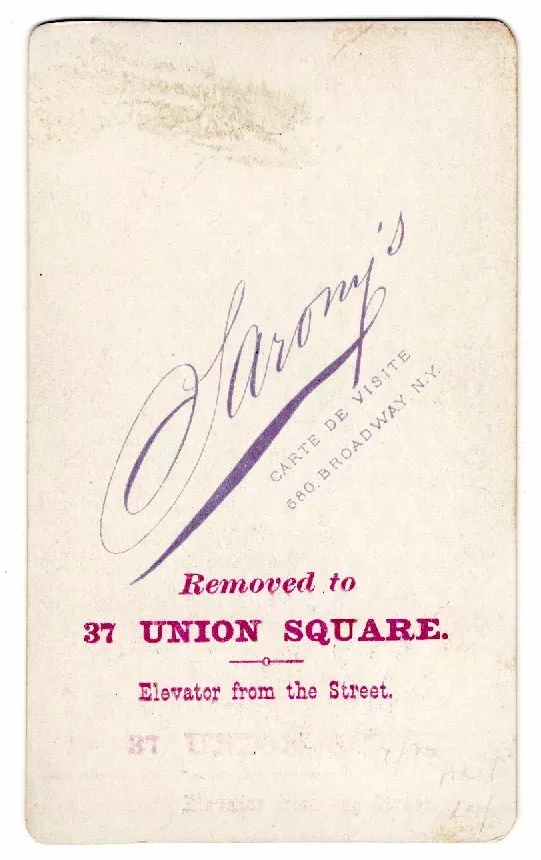
This carte de visite portrait features a handsome well dressed man with a wonderful beard and mustache. The cdv photograph was taken by celebrity photographer Napoleon Sarony. He operated a photo studio in the Union Square area of New York City. He was a famous photographer and was considered very talented and quite eccentric. SOLD
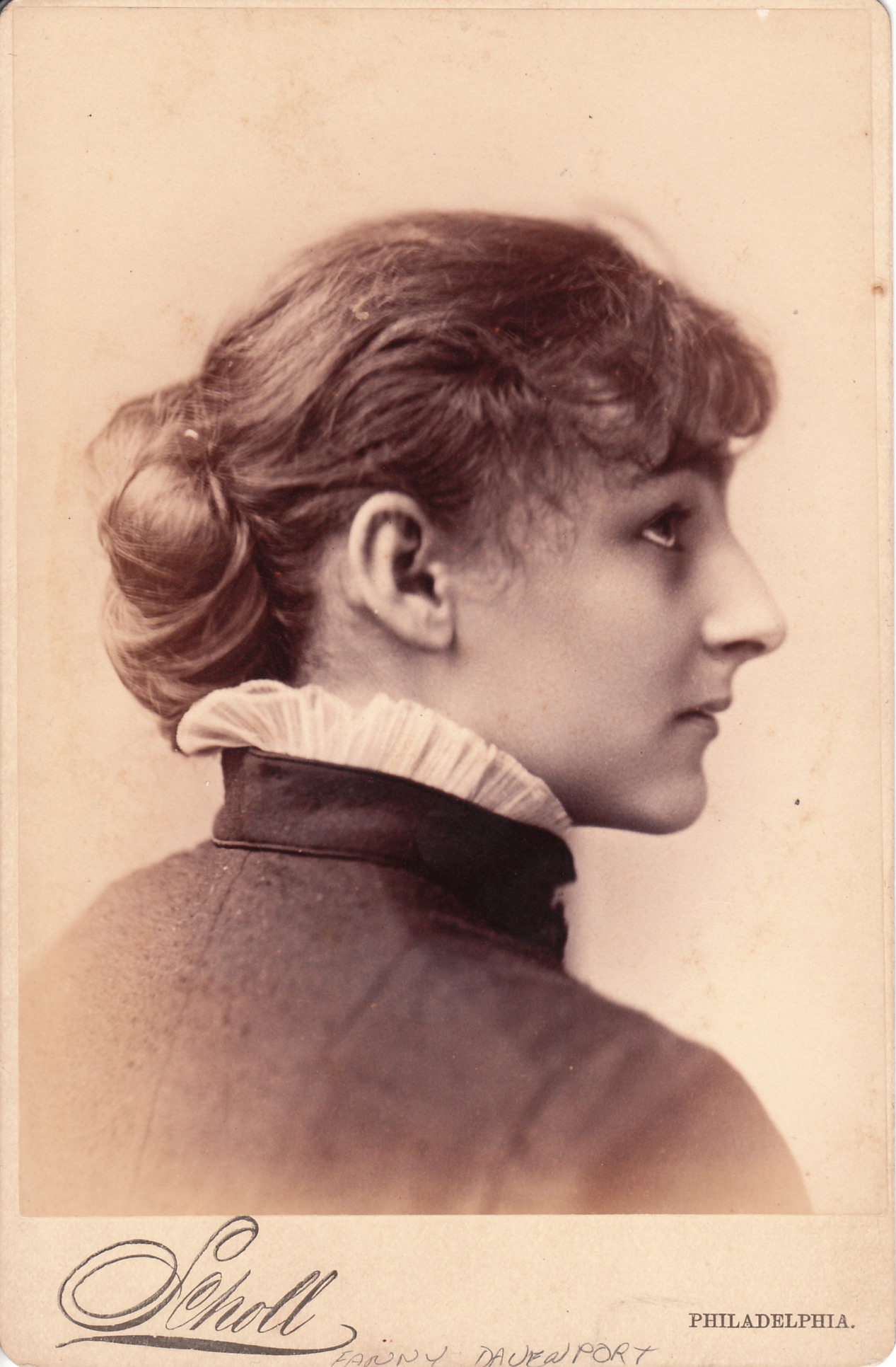
The top Cabinet Card is an image of American stage actress, Fanny Davenport. The photograph is dated February 28, 1880. Miss Davenport (1850-1898) was thirty years of age when she sat for this photograph by Emil Scholl, in Philadelphia, Pennsylvania. He photographed many celebrities and this site has a category that includes a number of his images. To view these images, click on the category “Photographer: Scholl”. Davenport was born in London, England and educated in public schools in Boston, Massachusetts. In 1862 she appeared in ” Faint Heart Never Won Fair Lady” in New York. In 1869 she became a member of the Augustin Daly Theater Company. She later formed her own company. She had great success in “Fedora” (1883) and “Cleopatra” (1890). Fellow actor, Otis Skinner, in a backhanded compliment stated that “Miss Davenport was a handsome woman, her business sense keen and her industry untiring. To these qualities rather than her acting, she owed the late success in which she accumulated a fortune in her productions.”
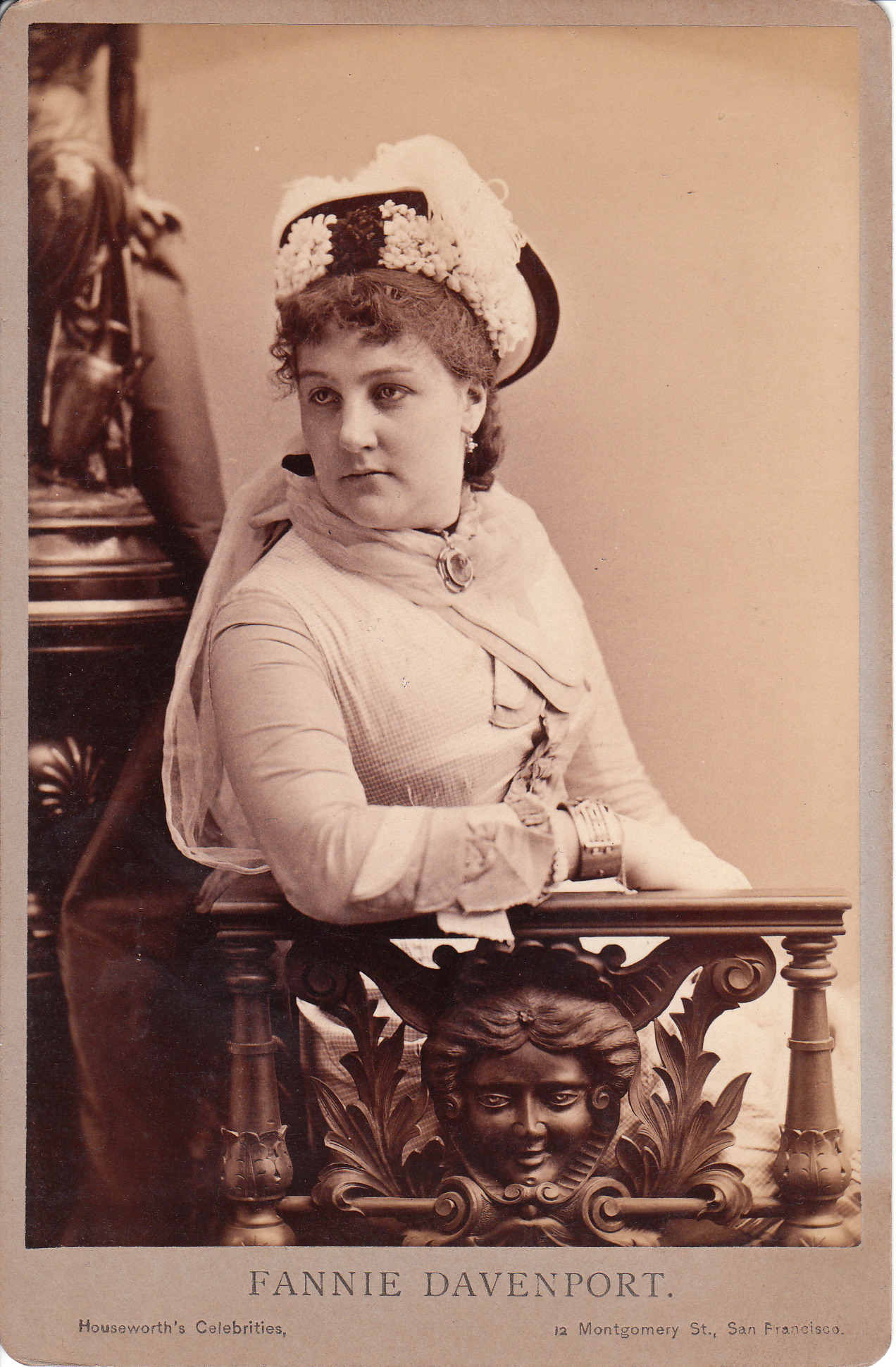
The second photograph features a portrait of Davenport by Thomas Houseworth, whose studio was located in San Francisco, California. This image was part of the “Houseworth Celebrities” series. The series included three thousand titles for different categories, including entertainment and government. Note the carving below the chairs armrest in this photograph. Also take notice of Miss Davenport’s interesting hat. Thomas Houseworth (1828-1915) was an optician, photographer, and photographic publisher. Houseworth and George S. Lawrence came to San Francisco in 1849, during the Gold Rush. They caught gold fever and worked as miners in Calavera and Trinity counties. After two years of mining, they admitted defeat, and returned to San Francisco. In 1855, they partnered in a store that sold optical supplies and other miscellaneous items; but the partners became most well known for their stereographs. In 1859 they sold stereographs from an English company, but they soon contracted with local photographers to acquire and publish a diverse collection of stereos featuring various aspects and scenery of northern California and western Nevada. Later, they began to publish and market stereographs under their own name and by the early 1860’s had built the largest collection of stereographs for sale on the west coast. Lawrence retired in 1868 and the firm became known as Thomas Houseworth and Company. Houseworth hired the most talented photographers he could find. His photographers included Thomas Hart (Transcontinental Railroad Construction), Carleton Watkins (The Sierras’), and Eadweard Muybridge (Yosemite). By the 1870’s Houseworth’s business was failing due to increased competition. He left the field of photography in the 1880’s and went to work as an accountant and an optometrist.
Photograph 3 is a carte de visite portrait of Fanny Davenport (1850-1898) . The photo was taken at the Broadway studio of Napoleon Sarony. This photograph is from circa 1880. Miss Davenport was about thirty years of age when she sat for this photograph by Napoleon Sarony in New York City.
This vintage real photo postcard features acclaimed theater actress, Miss Ellaline Terriss (1871-1971). Ellaline Terriss was a British actress and singer who was active in the late 19th and early 20th centuries. Ellaline was the daughter of leading actor William Terriss. He was murdered in 1897 by a deranged actor. She began her acting career in the 1880s. She was best known for her roles in musical comedies and her performances in popular shows such as “The Shop Girl” (1895) and “The Circus Girl” (1896). Terriss was also a talented singer, and her beautiful voice and charming personality made her a popular figure on the London stage. She was considered one of the leading actresses of her day and was known for her versatility, grace, and style. Throughout her career, Terriss appeared in numerous productions in London and on tour in Britain and the United States. She was also the wife of actor and producer, Seymour Hicks, who was a leading man in his own right. She continued to perform and was a prominent figure in the theatrical world until her retirement in the 1920s. Toward the end of her career, Terriss appeared in silent films and made a successful transition into talkies. This cabinet card portrait was taken by celebrated photographer Napoleon Sarony. He was based in New York City. A hand stamp on the reverse of the photograph identifies Siegel-Cooper Company. This firm was a department store in Chicago, Illinois. The store had it’s own photo studio and one wonders if this photograph was an item for sale within that studio. SOLD
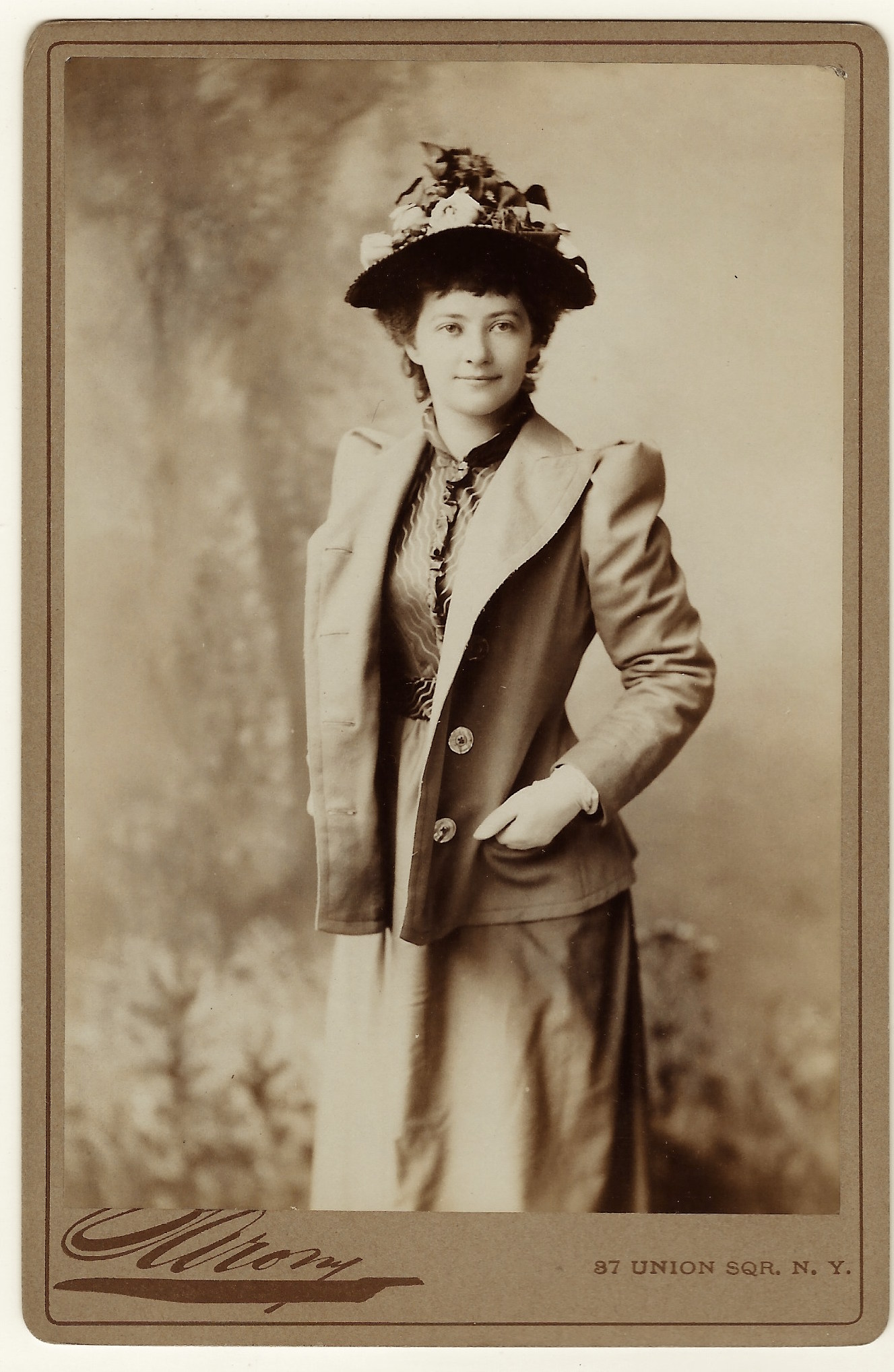
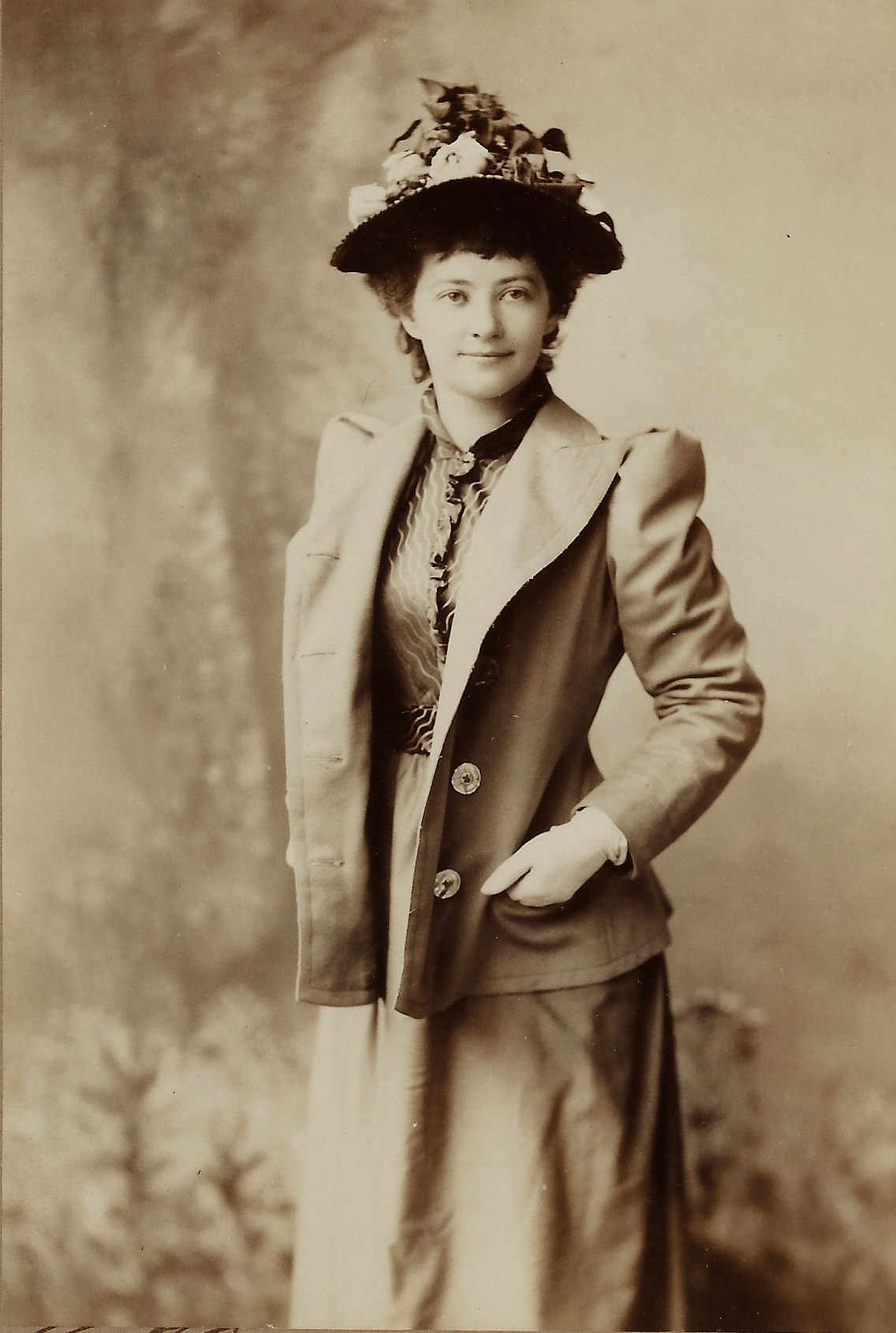
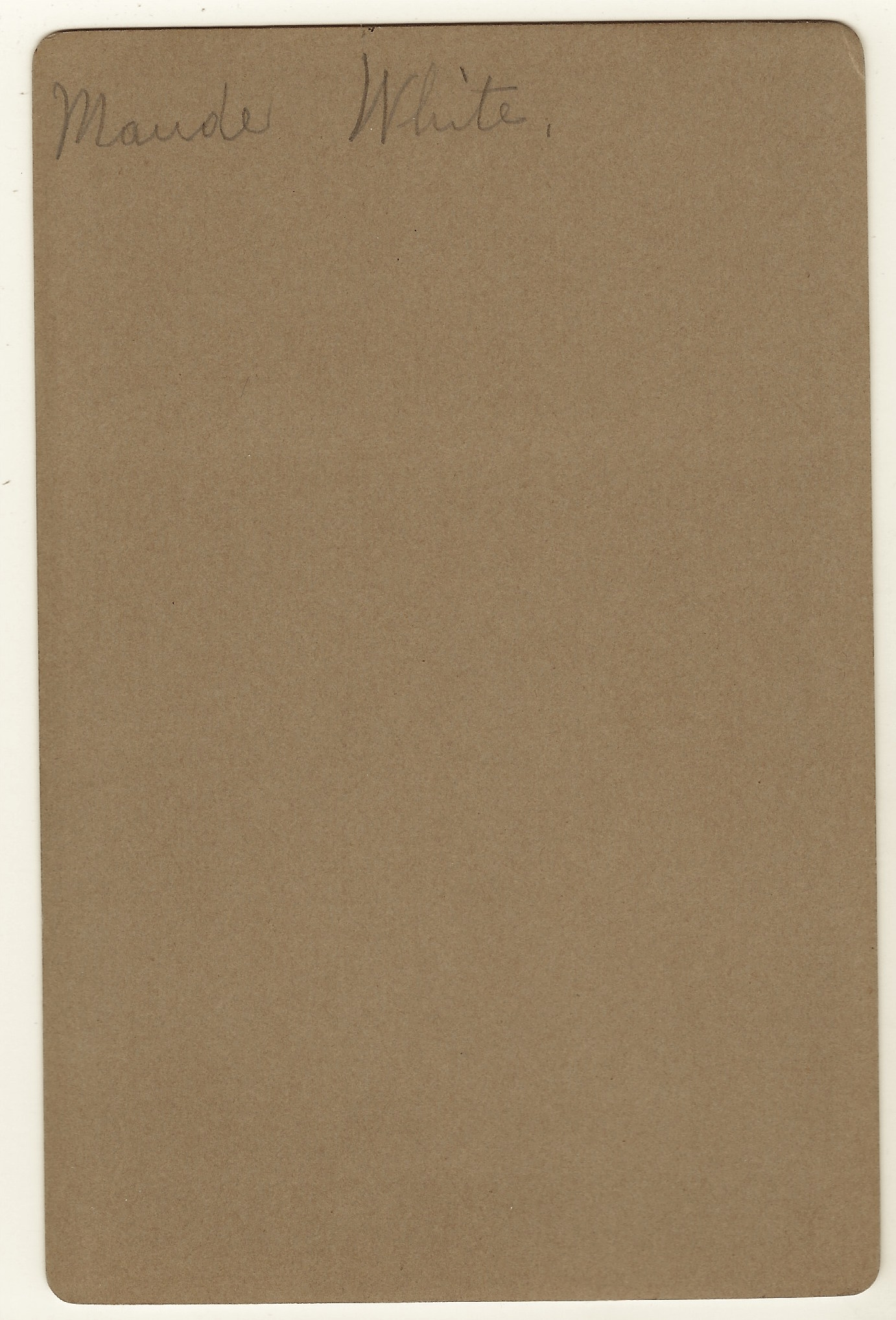
This is an unusual cabinet card portrait for two reasons. First, the pretty young woman who is the subject of this photograph is a New York city actress and certainly does not look the part. She is well dressed, but she is wearing conservative and “boring” attire. Overall, she looks more like the “woman next door” than a Broadway actress. She exudes a sweet and innocent disposition and she has a twinkle in her eyes. She doesn’t give the appearance of a professional actress of that time. Where’s the histrionic flamboyance? Where’s the drama? Secondly, what’s wrong with the photographer, Napoleon Sarony. The fantastic celebrity photographer was not showing his usual bombastic flair when he posed and shot this photograph. Unlike many of his theatrical portraits, there is no fancy clothing or abundance of props in this portrait. The young lady in this image is named Maude White. Her name is written on the reverse of the photograph. However, there is a caveat worth mentioning. I encountered a problem while I was researching Maude White. I discovered that there was also an actress named Maud White who was performing during the same era. This became an issue because, despite the inscription on the back of the cabinet card, I could not be sure if the woman photographed was Maude White or Maud White. I attempted to find other photographs of both actresses but met no success. Due to the fogginess of the identification issue, I decided to research both Maude and Maud. The Internet Broadway Data Base reveals that Maude White appeared in one Broadway production, “The Ruling Power” (1904). However, Maud White made three appearances on Broadway (“Lost-24 Hours”(1895), “A Stranger in a Strange Land” (1899), and “There and Back” (1903). First, I will present some information gleaned from researching Maude. The New York Times (NYT) (1888) published an article about a soon to open play entitled “A Parisian Romance”. The star of the show was Mr Richard Mansfield and the supporting cast included Miss Maude White. The NYT (1888) later reviewed the play and made special mention of Maude. The review described her as “the danceuse (female ballet dancer) of the Opera” and reported that she played her role in a charming, pert, and clever manner. The NYT (1898) announced the soon to open comedy, “A Stranger in a Strange Land”, and that it would include both Mansfield and Maude. An article in the NYT (1900) stated that Maude would appear in Stuart Robson’s company that year. The NYT (1903) heralded the opening of a farcical comedy called “There and Back” and added that Maude would be a principal in the cast. An interesting story about Maude appeared in the NYT in 1905. The issue at hand was plagiarism. Maude had written a playlet called “Locked Out At Three AM” and she complained to the United States circuit court that the author of another play used some of her material. Maude had asked for an injunction and sued for damages. The NYT (1906) stated that Maude would be starring in the play “Nobody’s Fault”. Now lets focus on Maud, rather than Maude. In 1890, Maud was involved in some controversy and it was reported in the NYT. The title of the article was “Fritz Emmet Sobering Up”. Emmet was an established comedian who had a relationship with “John Barleycorn” that had produced many newspaper articles focussing on his drunken behavior. The article stated that there was “a stormy sea” on the stage of the Hammerstein’s Harlem Opera House. Emmet had been drinking heavily for two weeks and creating much drama. His professional and personal life had become badly damaged. In his previous engagement in Philadelphia, Emmet had reached the point that he could no longer perform. The theater had to close the show, and fortunately for the theater, Emmet compensated them for their losses. Next stop was Harlem, but Emmet kept drinking excessively until the dramatic incident occurred on stage. At a Saturday night performance he “murdered his play”. While onstage he made many “Bacchanalian references” and exhibited other inappropriate words and actions.. Emmet’s adult son decided to put an end to his father’s out-of-control behavior. Just as the curtain went down on the last act of the play, Fritz’s son went on the stage where his father and Maud were standing. The son informed Maud that she would have to leave the theater company. Maud objected in a “vigorous manner” spurring the young Mr. Emmet to have her forcibly removed from the theater. Worse yet, he had her confined to a little storm house over the stage door. Basically, she was temporarily kidnapped. Maud cried and screamed “various better words” and even though Fritz tried to intervene, she was imprisoned until the police arrived. The police were called by the younger Mr Emmet and they promptly took Fritz to Manhattan Hospital where he was confined overnight. Maud was released and put in a carriage to go wherever she wanted to go. The story got worse for Fritz. Directly after this incident, his wife of 27 years, sued him for divorce on grounds of infidelity. They ultimately divorced and the settlement was costly for Fritz. Maud continued to perform and the NYT (1891) announced that Maud would be appearing in a play directed by Charles Frohman called “Mr. Wilkinson’s Widows”. That same year, she appeared in a Frohman production entitled “The Solicitor”. The NYT (1892) has an article reporting that Maud appeared in another Frohman production (“The Lost Paradise”). An 1895 NYT article states that maud was appearing with the Robert Hilliard Company in “Lost- 24 Hours” at the Hoyt Theater. The NYT (1897) has an article reporting her appearance in “The Wrong Mr Wright”. Maud received a complimentary review from the NYT (1903) concerning her performance in the role of the “seductive Marie Antoinette” in the play “There and Back”. (SOLD)
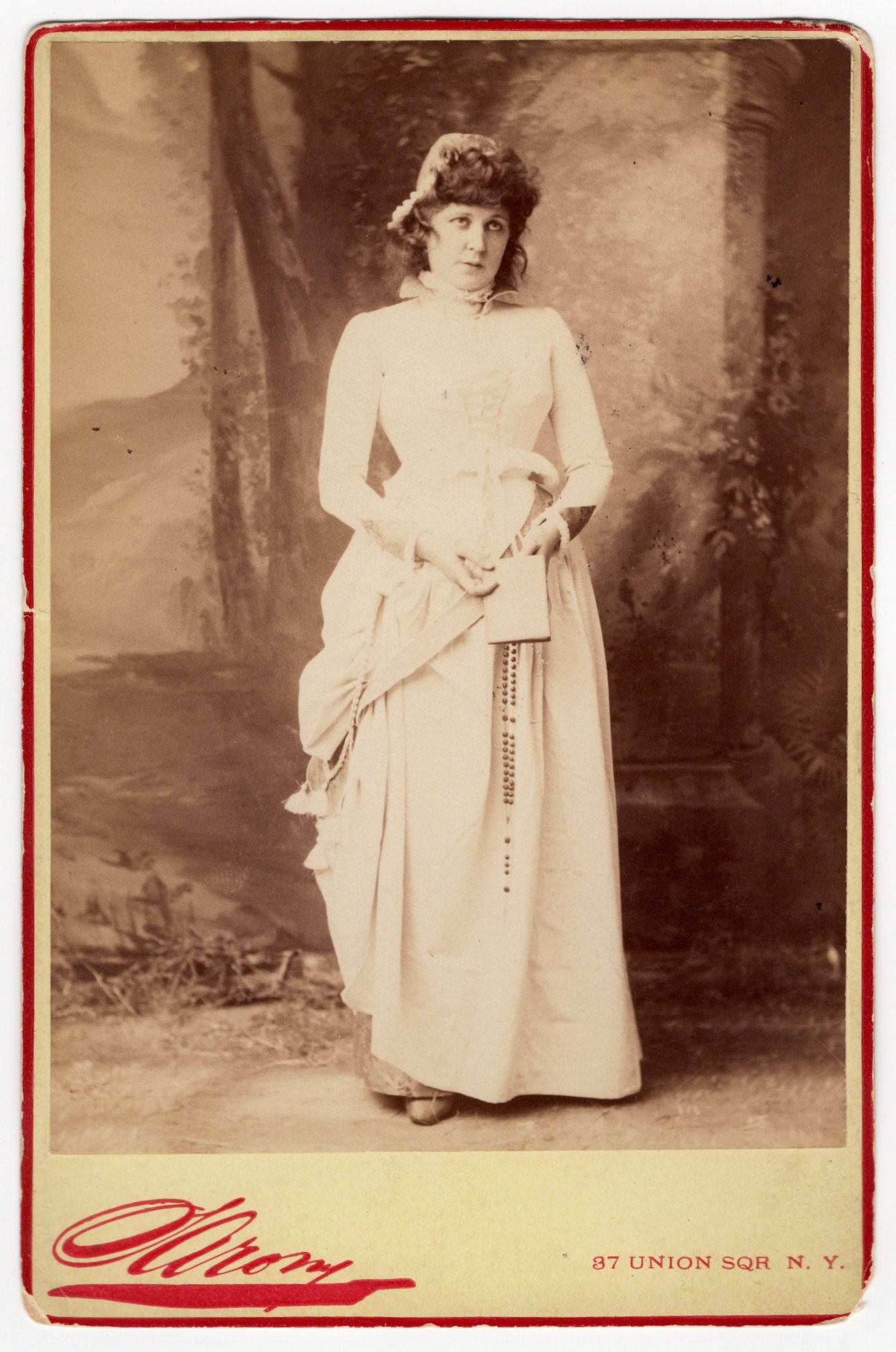
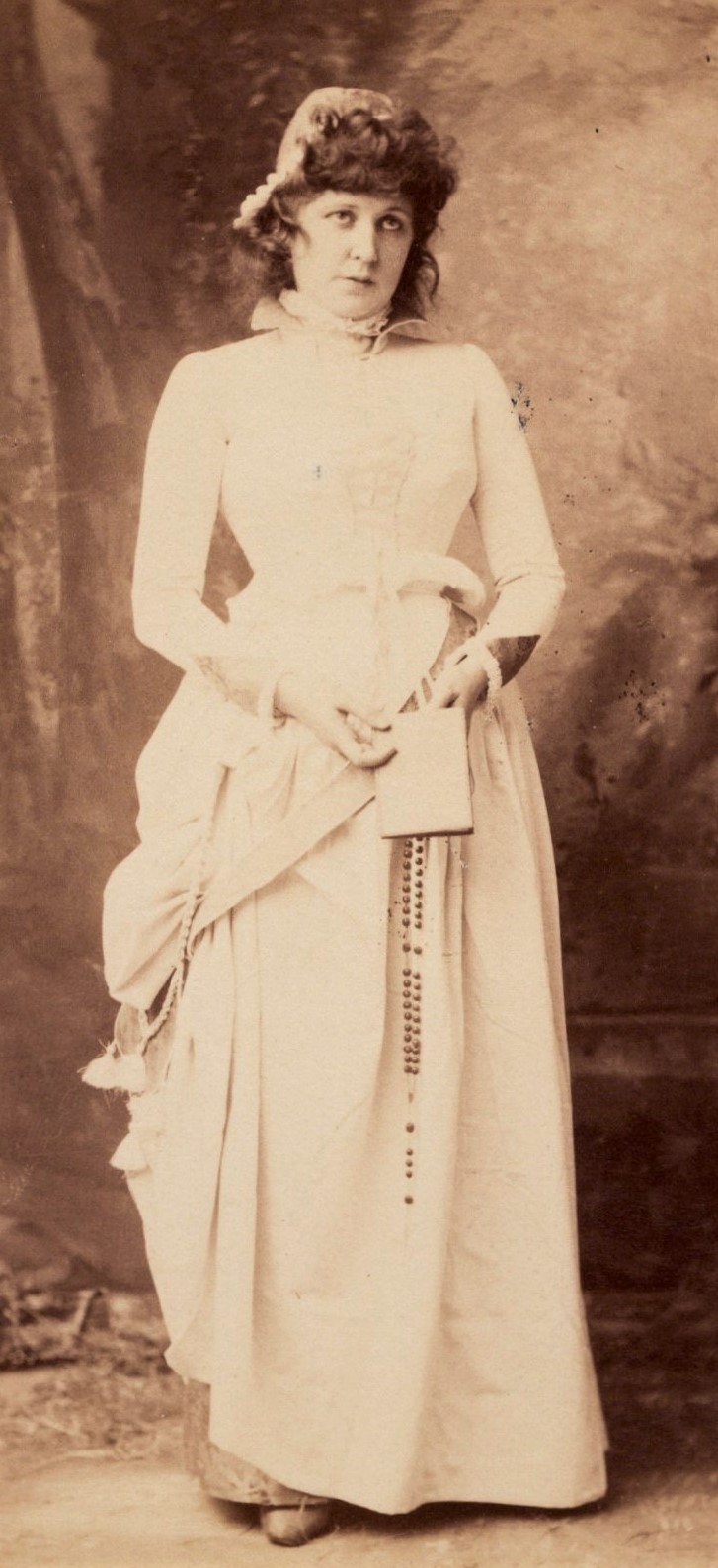
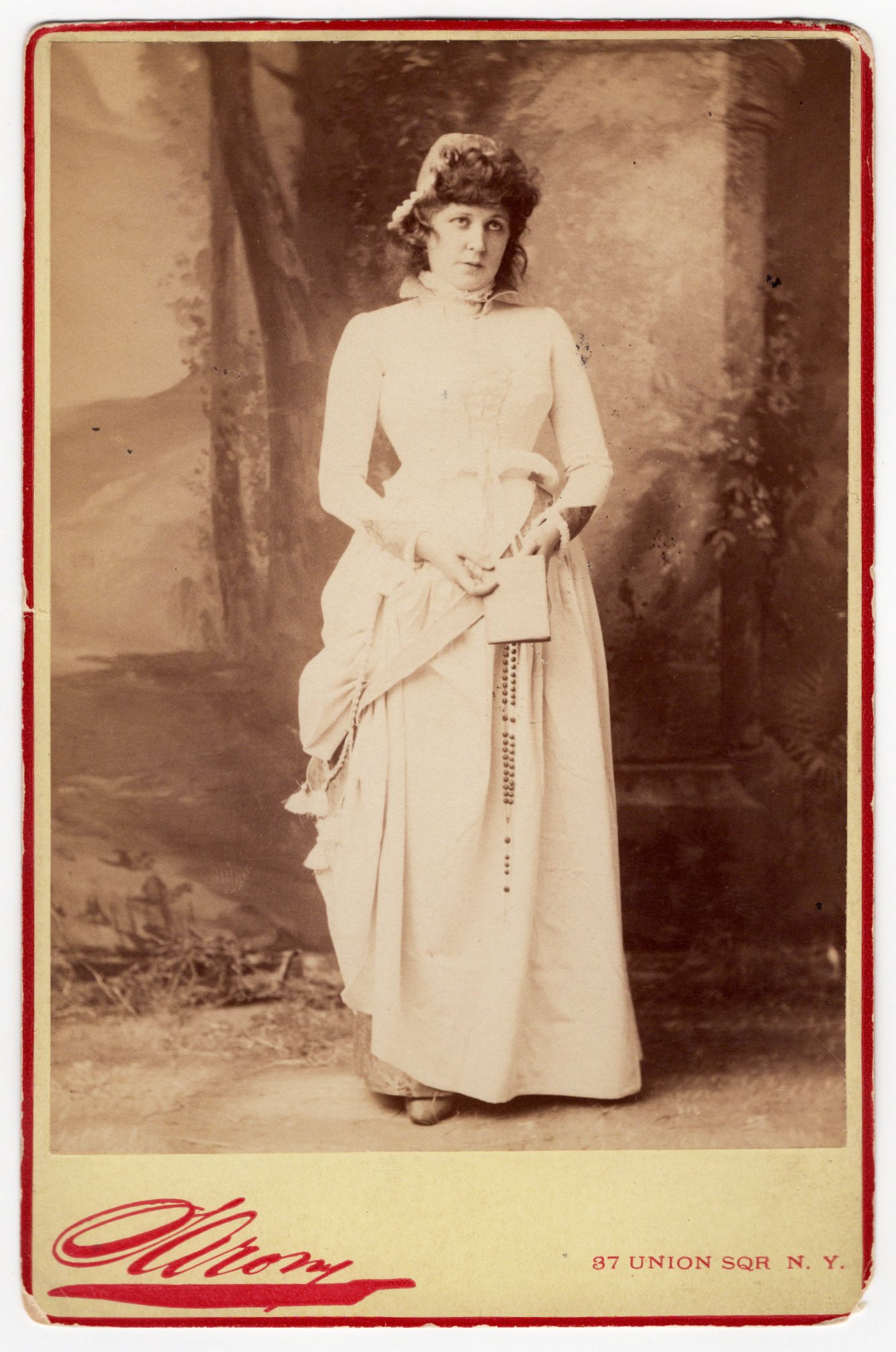
This cabinet card features Marie Wainwright (1853-1923), an American stage actress and singer. She also appeared in three silent films between 1918 and 1920. Most of her fame came from the Victorian stage. She was born in Philadelphia and as educated in Paris, France. She received her acting training in Paris.This photographic portrait is by Napoleon Sarony’s New York City studio. Sarony was a famous celebrity photographer. This image shows Wainwright wearing a white gown and bonnet. A copy of this photograph can be found in Wikipedia’s entry for Wainwright. She is holding a book and rosary beads. This cabinet card portrait has some cornerwear and a slight curl. The photo is on thinner than usual card stock. Overall, this photograph is in good condition (see scans).
Buy this Cabinet Card (includes shipping within the US) #3886
To purchase this item, click on the Pay with PayPal button below
$27.75
Buy this Cabinet Card Photograph (includes International shipping outside the US) 3886
To purchase this item, click on the Pay with PayPal button below
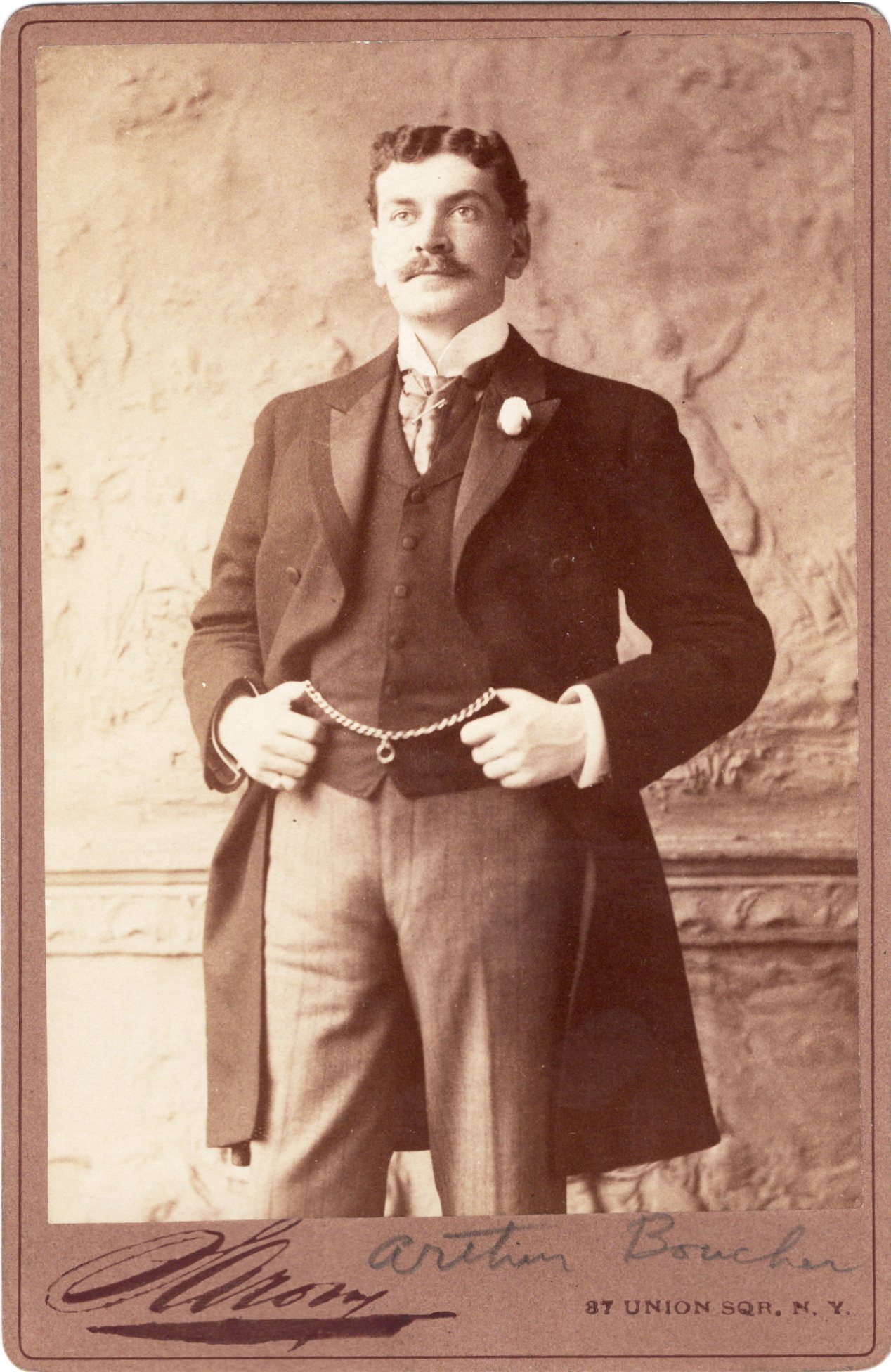
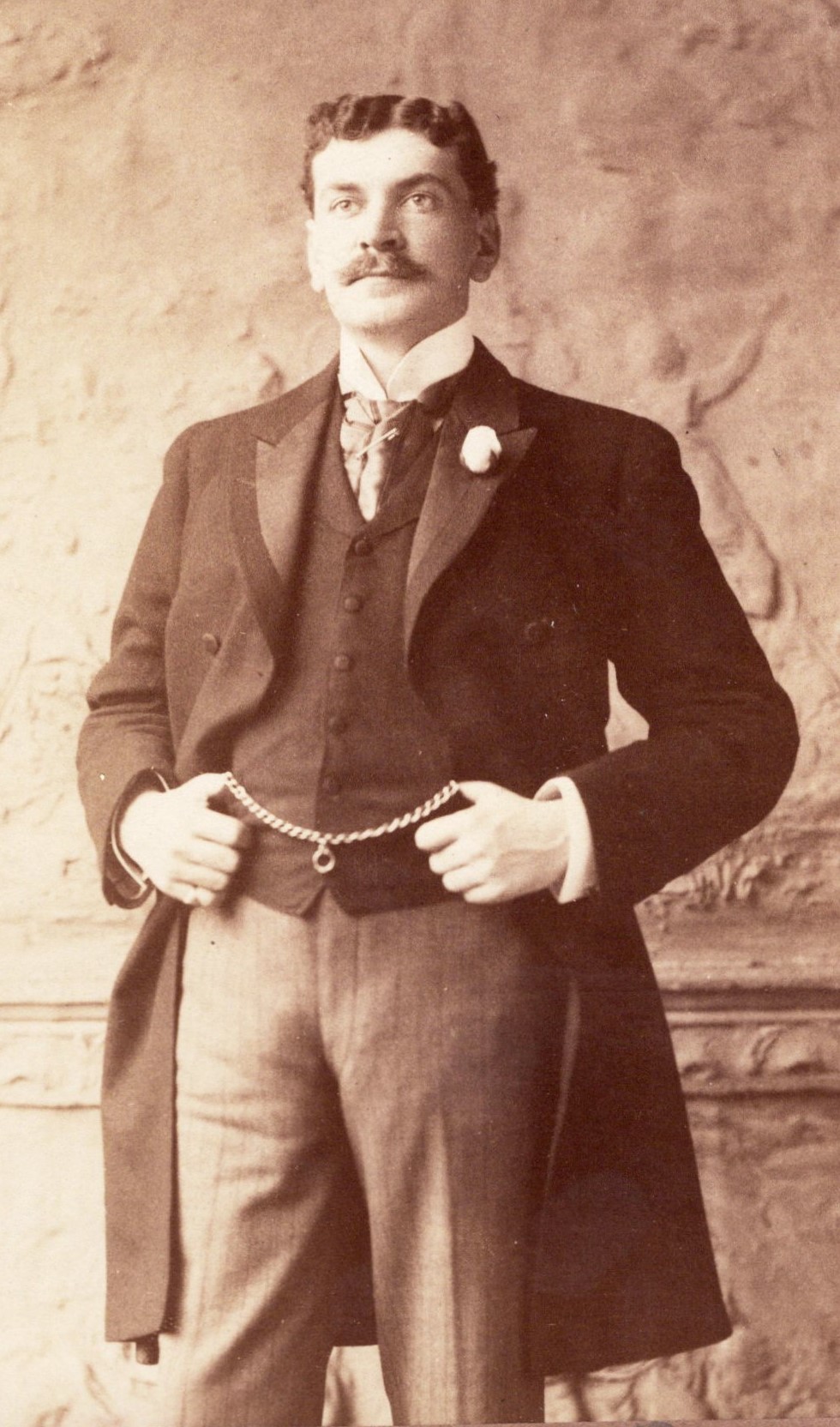
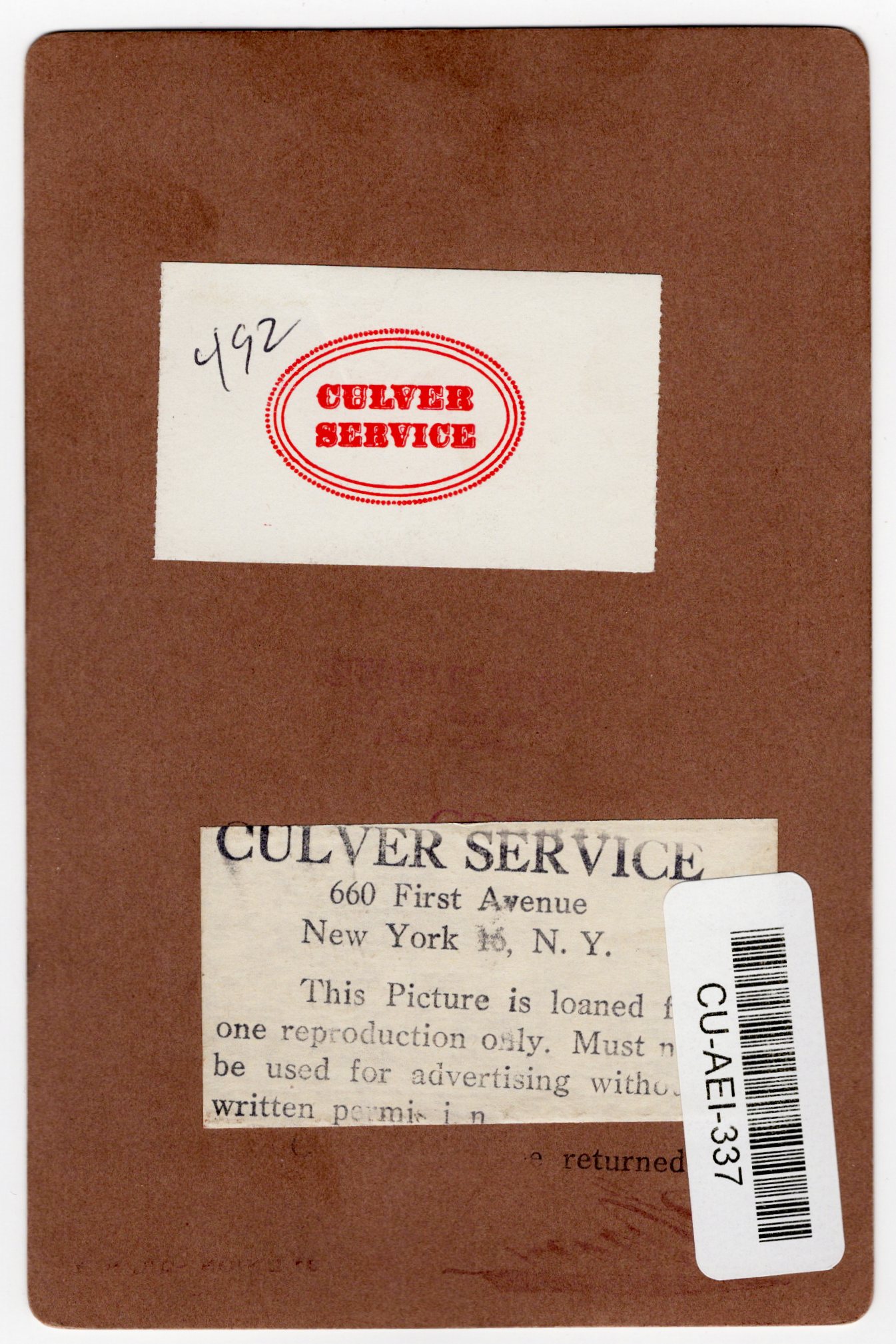
This cabinet card photograph features Rugby star, Arthur Boucher (11870-1948). He certainly looks fit in this portrait by the famous celebrity photographer, Napoleon Sarony. Boucher was a Welsh international rugby union forward and he began playing club rugby for Newport ((1889/90 season). During the next decade, he captained them for three seasons. He was a strong and quick player and he passed well on the run. He was well known for his kicking skills. He kicked several drop goals each season. Boucher was one of the last greal all-round Welsh players before position specialization became the norm. Boucher played for the international Barbarians and became club secretary for the team between 1894 and 1899. Stickers on the reverse of this photograph indicate that the image was once owned by Culver Service. Culver Pictures was a service that collected photographs that for a fee could be used by the media to accompany the stories appearing in their publications. Culver Service was established in 1926. (SOLD)
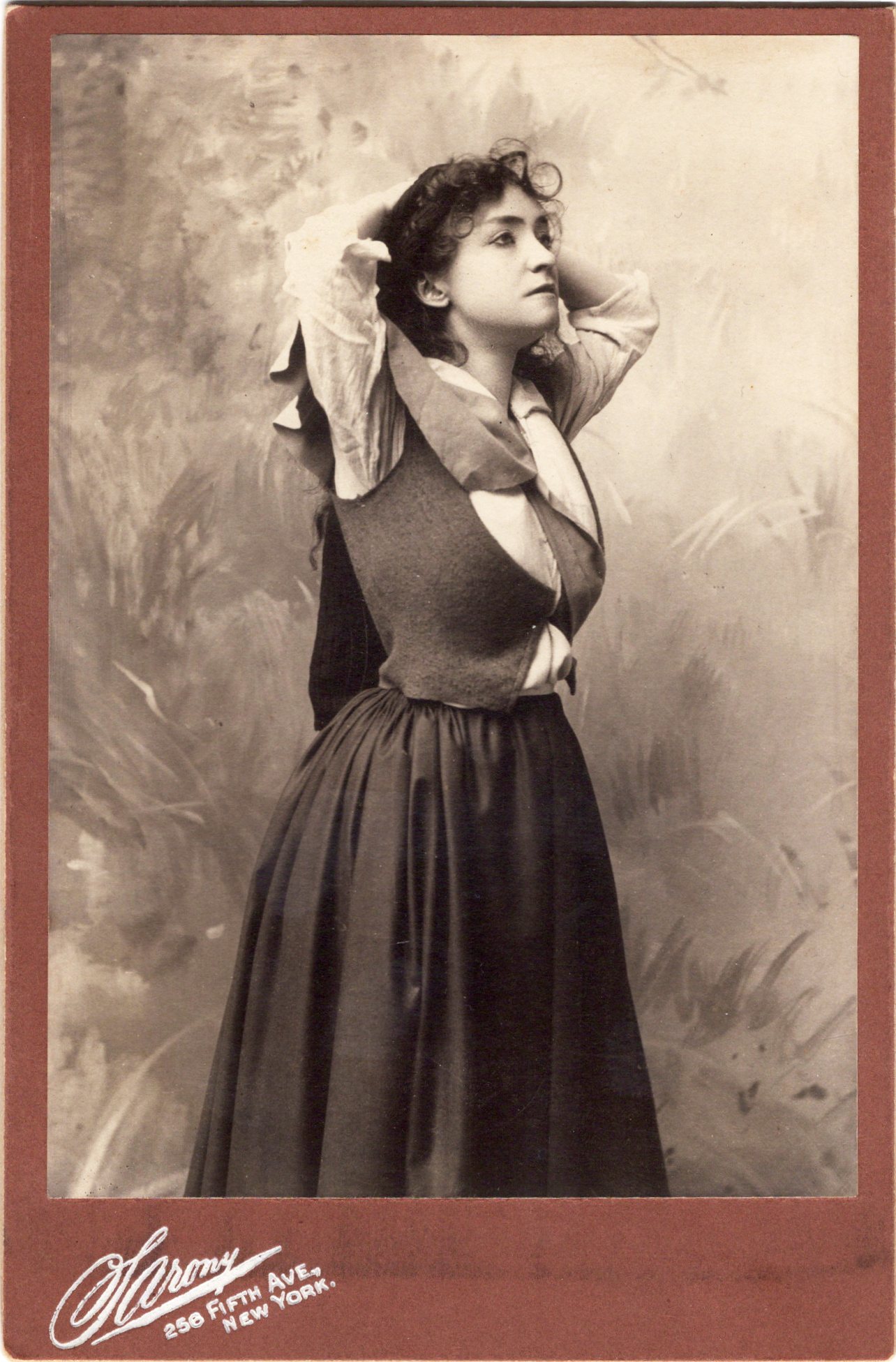
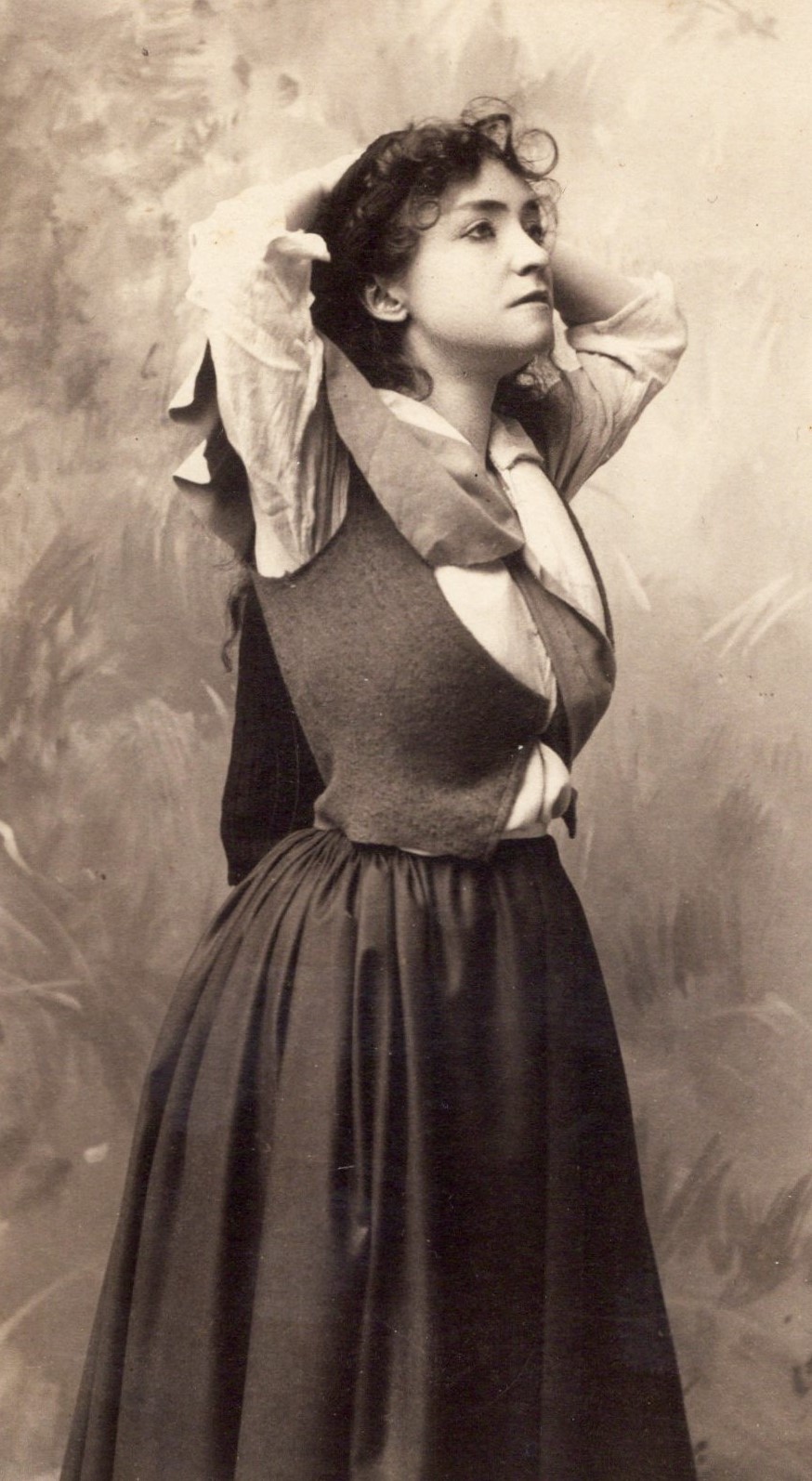
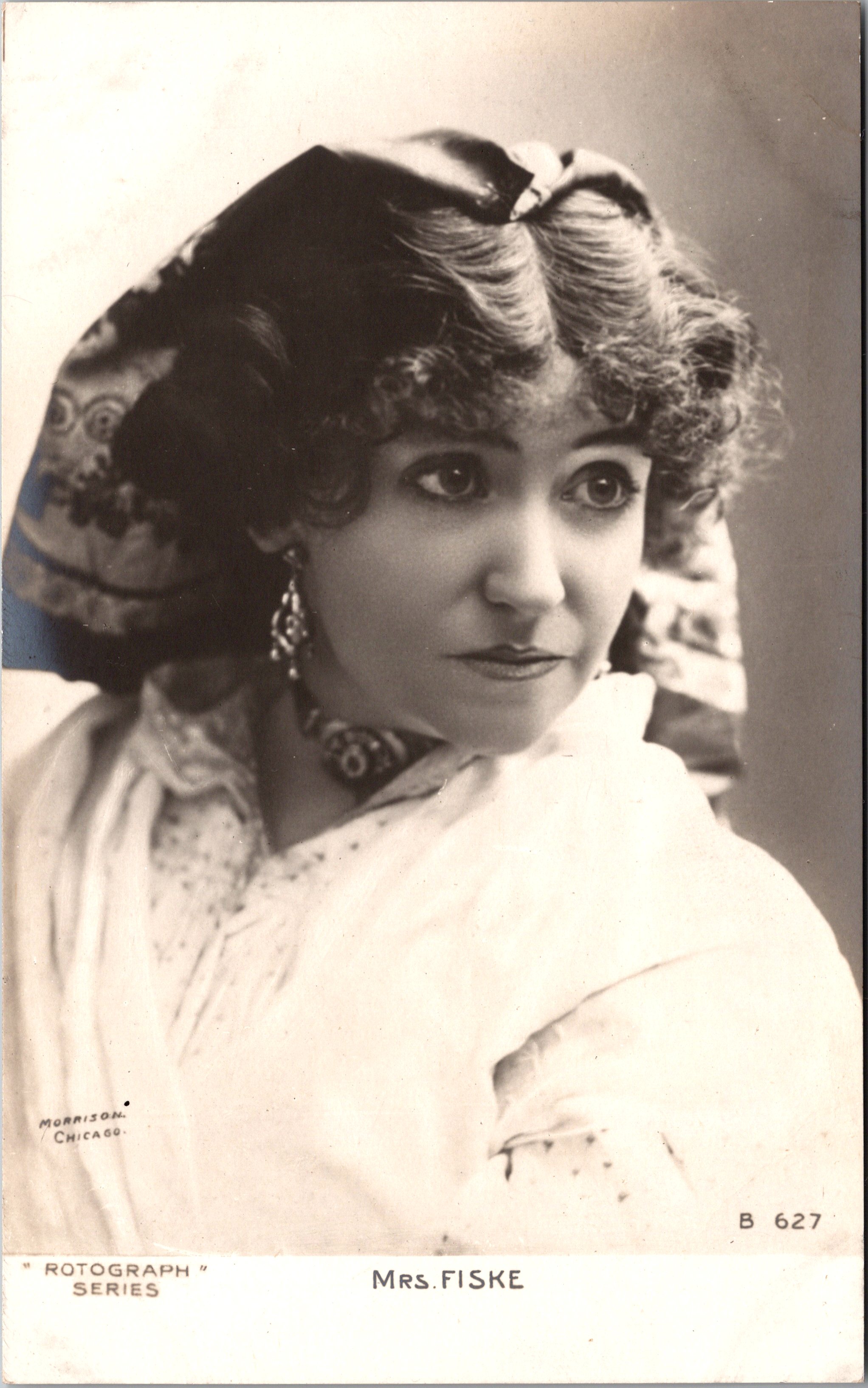
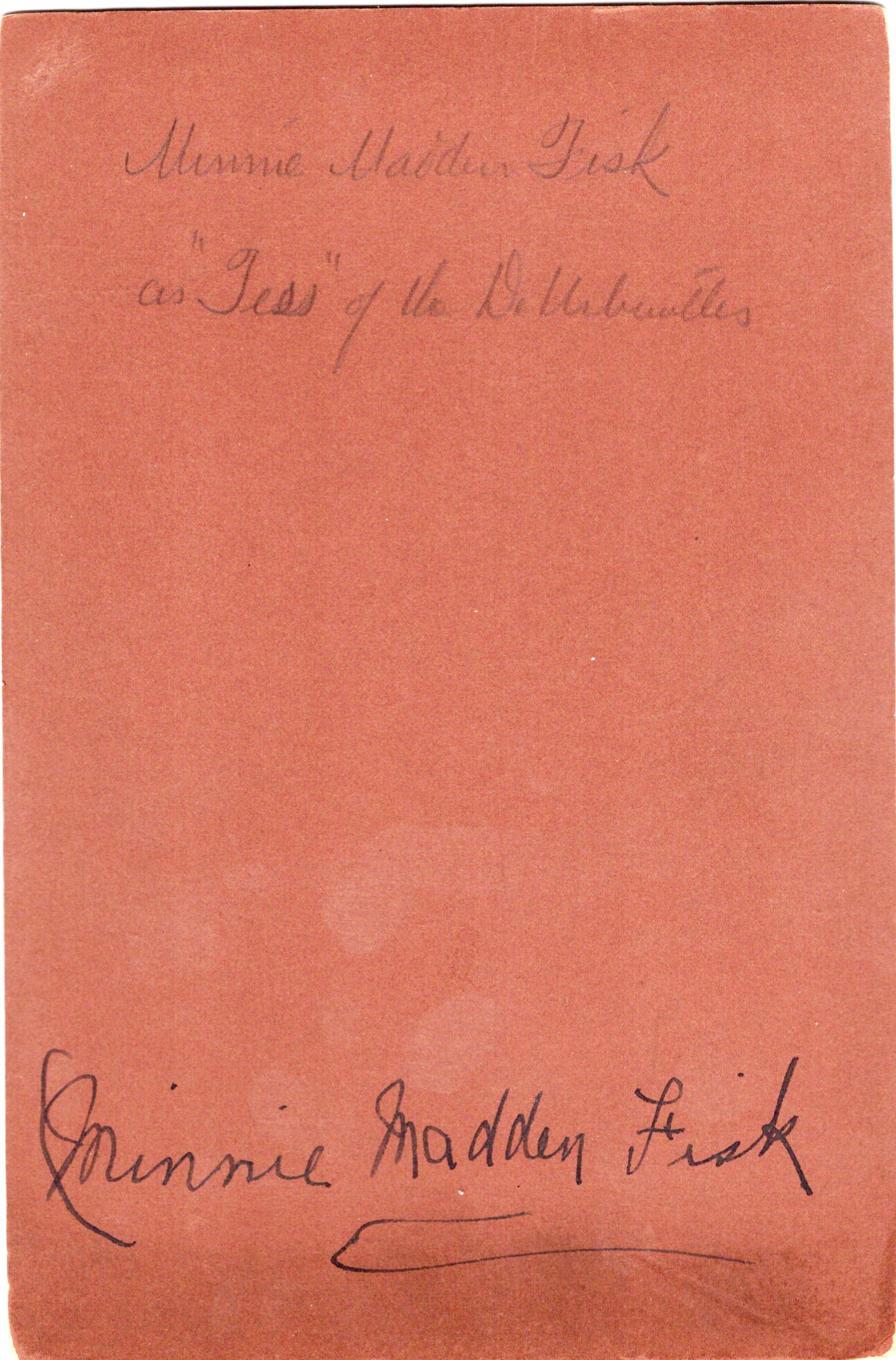
This vintage real photo postcard and this cabinet card features acclaimed theater actress, Minnie Maddern Fiske (1865-1932). When performing, she was often billed as “Mrs. Fiske”. She was one of America’s leading actresses during the late 19th and early 20th centuries. She performed in several Henrik Ibsen plays and is recognized as introducing American audiences to the Norwegian playwright. She was born in New Orleans, Lousiana, to parents that worked in the theater world. Her first professional acting gig was playing a role in a Shakespeare play. She was only three years old. By the age of four, she made her New York debut. Much of her childhood was spent touring with theater companies. At age sixteen, she played leading lady roles. She was recognized for her acting, but also for her beauty and singing voice. In 1890, she married Harrison Grey Fiske, successful playwright and Broadway producer. After takin three years off from acting, she returned to the theater in 1893 as an actor, playwright and director. The IBDb reports that she had 55 Broadway credits, combining her acting, writing, and directing. Among her successes on Broadway were “Tess of the d’Urbervilles (1897), “A Dolls House” (1902), “The Rose” (1905), and “The High Road” (1912). Her Broadway credits spanned from 1871 through 1930. In the mid 1910’s, Mrs Fiske starred in film adaptations of two of her stage successes. Although the films were well received, she believed she was more suited for theater than film. Despite her success in the theater, the talented actress died poverty stricken. Her financial downfall was realted to her battling against a group of producers that organized the Theatrical Trust (or Syndicate). The Syndicate controlled the nation’s best theaters and dictated what plays would appear and which actors would be in the cast. They relegated Mrs Fiske to appear in third rate theaters, churches, and skating rinks. Mrs. Fiske was not to be intimidated. She also was an advocate for animal welfare. She was involved in the activities of the ASPCA and other human leagues. She fought against the fashion craze of decorating hats with bird feathers. Many bird lives were sacrificed, and entire species were nearly wiped out as a result of this fad. She also educated the public about the cruelty involved in trapping animals. Because she was well known, respected and popular, she was able to influence animal reform. Mrs Fiske won a number of humanitarian awards. She was a strict vegetarian and was anti vivisection. During World War II, there was a liberty ship named the “SS Minnie M Fiske”. Minnie Maddern Fiske was a woman born before her time. She was a feisty activist.
Cabinet Card 1 features acclaimed theater actress, Minnie Maddern Fiske (1865-1932). The photograph captures her in her role in “Tess of the d’Urbervilles (1897). Mrs. Fiske’s photograph for this cabinet card was taken by eccentric celebrity photographer, Napoleon Sarony. (SOLD)
Mrs. Fiske’s photograph on Postcard 1 was taken by William Morrison of Chicago, Illinois. The card was published by Rotograph as part of a series (no.B 627). (SOLD)





 THE CABINET CARD GALLERY