

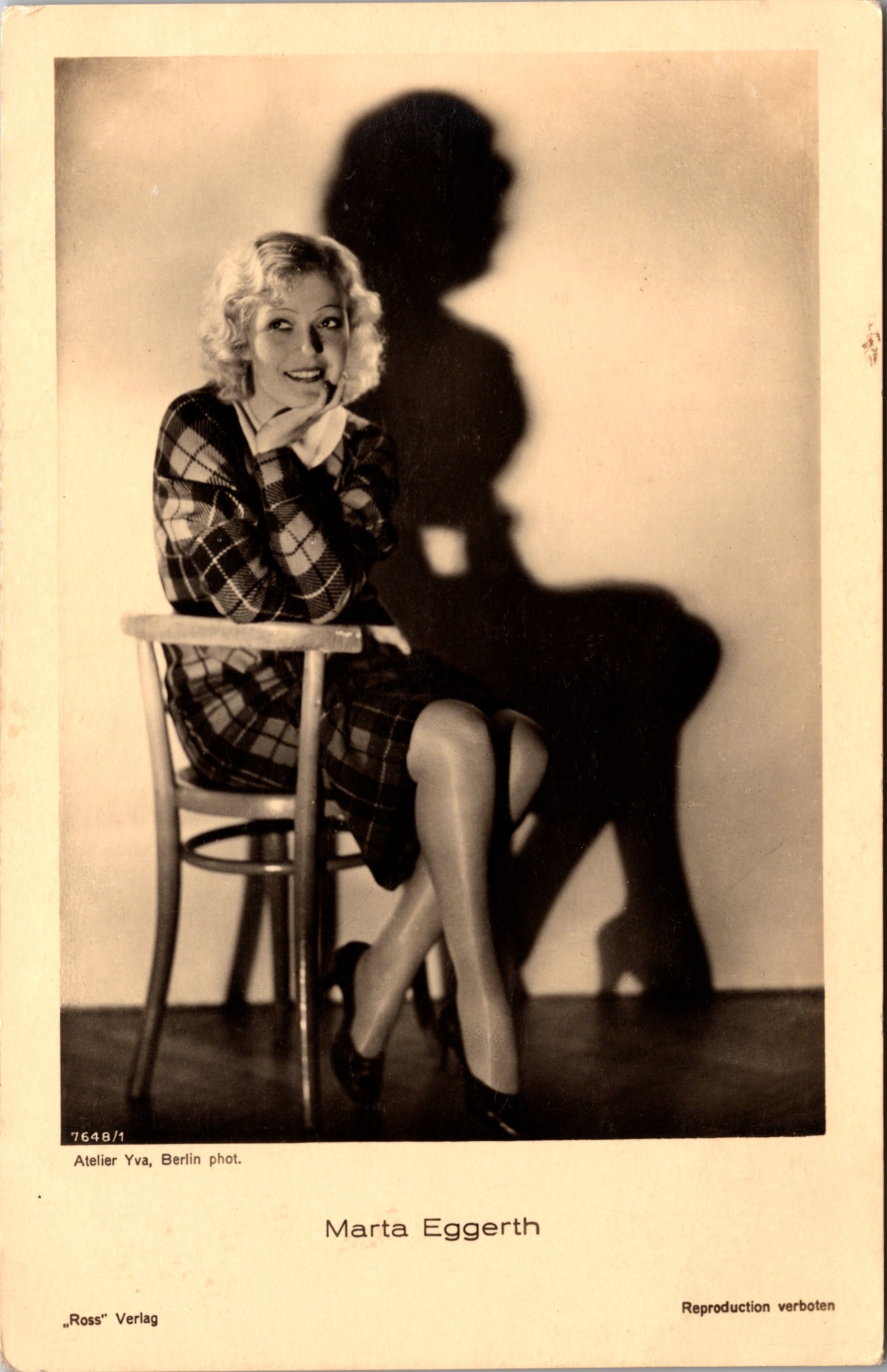
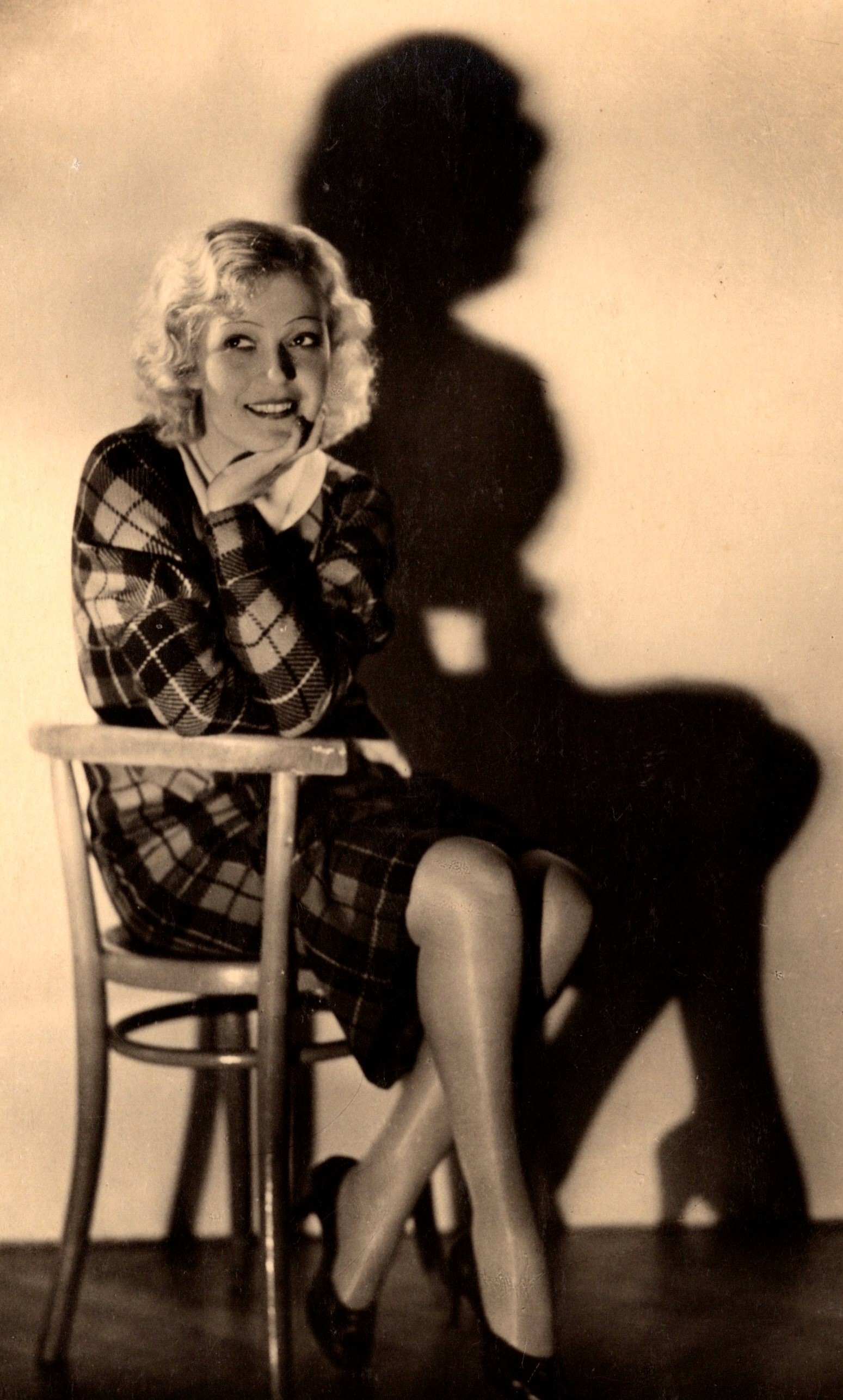
This vintage real photo postcard features Hungarian actress, singer, dancer, and model, Kathe von Nagy (1904-1973). She performed in both German and French films. Her father was a wealthy bank manager. At the age of sixteen, Nagy wanted to get married but her parents did not approve and sent her to a convent near Vienna, Austria. She stayed there 18 months but finished school elsewhere. Nagy wanted to become an author. She moved to Budapest and wrote articles for a magazine. She became interested in acting and enrolled in an acting school near Budapest. Her parents were none to pleased about her career choices and she was encouraged to return home where she worked in her father’s bank and secretly wrote novels. When she was about 22 years old, she moved to Berlin to pursue a career in film and worked for a Hungarian newspaper. She was given a role in a 1927 comedy film and by 1928, she began starring in films and was considered one of Europe’s top up and coming film actresses. She became a highly successful film actress. The IMDb reports that she appeared in 57 films between 1915 and 1952. She basically retired from film during the second world war. The head of the SS., Heinrich Himmler asked Nagy to be the face and body for “sex dolls” provided to German soldiers. The premise was that the use of such dolls would lessen the syphilis problems encountered by many of the soldiers. Nagy refused the offer. This story may be apocryphal. This postcard was published by Ross Verlag as part of a series (no.6085/2). Nagy’s photo was taken by the Yva studio located in Berlin, Germany. The name Yva is a pseudonym. The photographer was actually a woman named Else Ernestine Neulander-Simon (1900-1944). She was a German Jewish photographer and was well known for her “dreamlike, multiple exposed images”. She was a leading Berlin photographer during the Weimar Republic years of Germany. She specialized in fashion, nudes, and portraiture. Later, she became involved in the early days of producing photographs for advertising. Many of her photographs were published in magazines or were shown in international exhibitions. After the Nazis took power, she was forced to work as a radioagrapher (ie x-ray technician). In 1936 she was offered a job by Life Magazine, but her husband convinced her that life for German Jews would improve over time. He did not want to move and start a new life in a country where he did not speak the language. Unfortunately, she complied with his wishes. In 1938, Nazi regulations prohibited her from working as a photographer. In 1942, the Gestapo deported her and her husband to a death camp (probably Majdanek) where they were murdered. SOLD




 THE CABINET CARD GALLERY