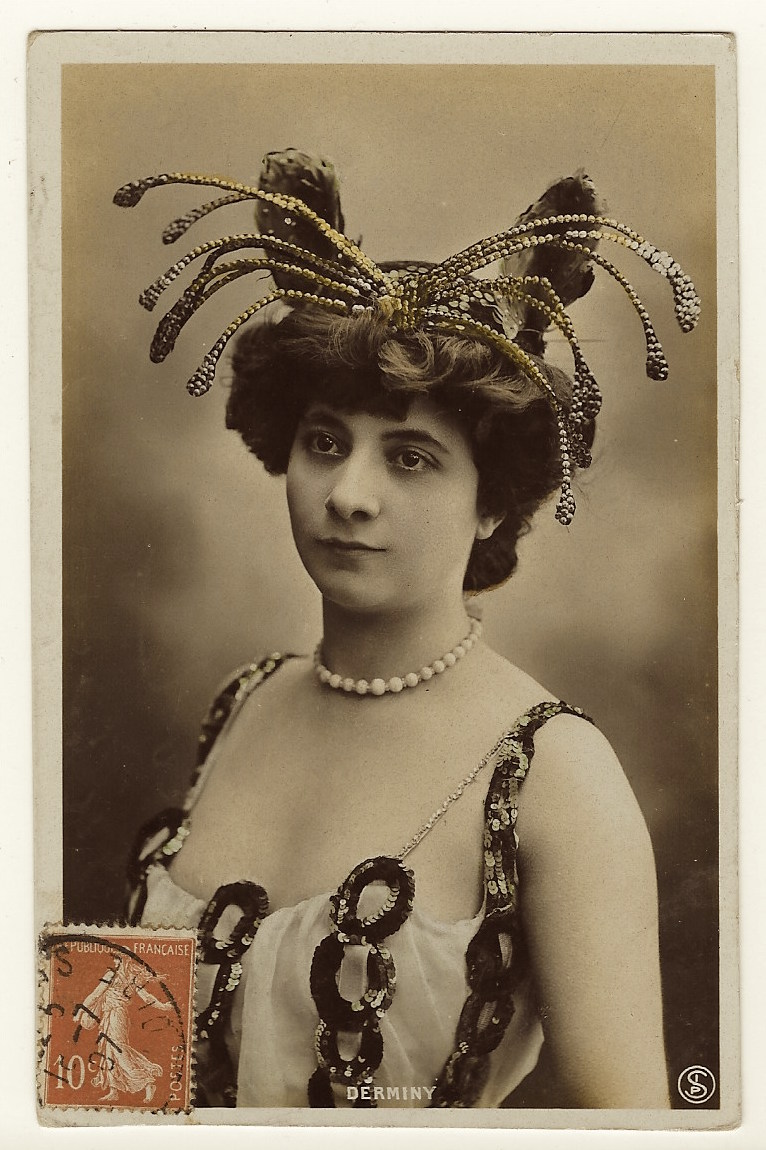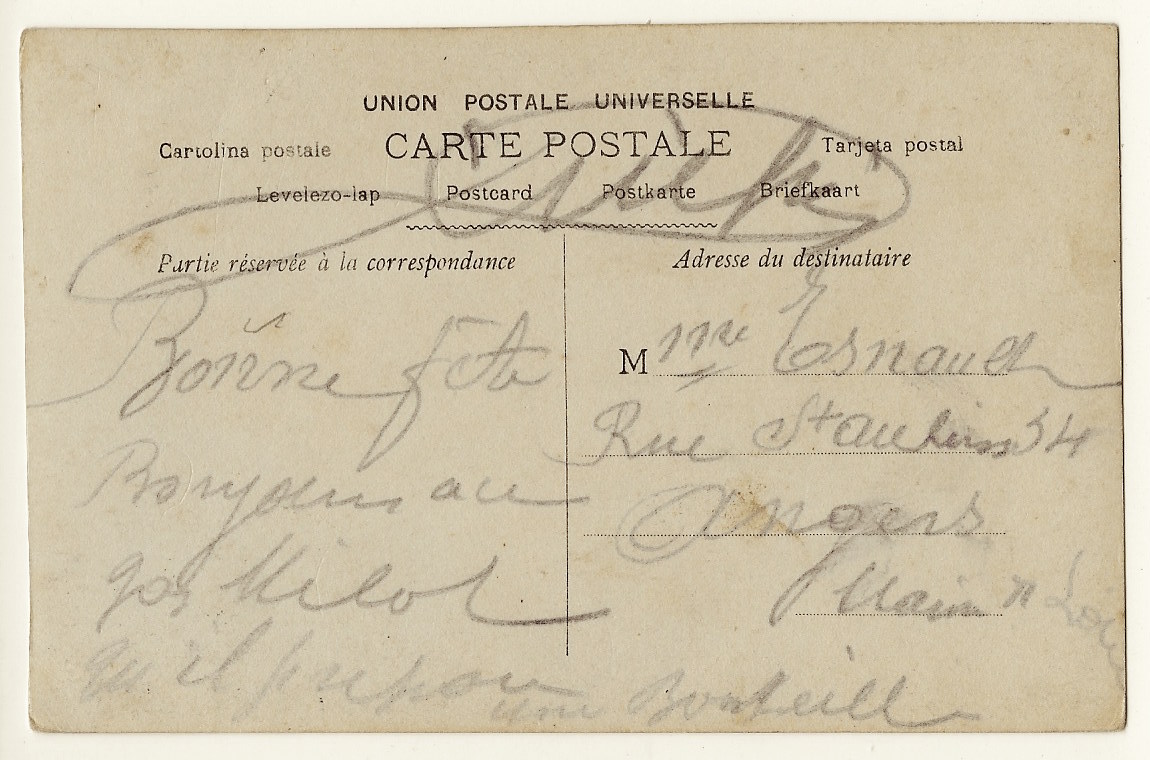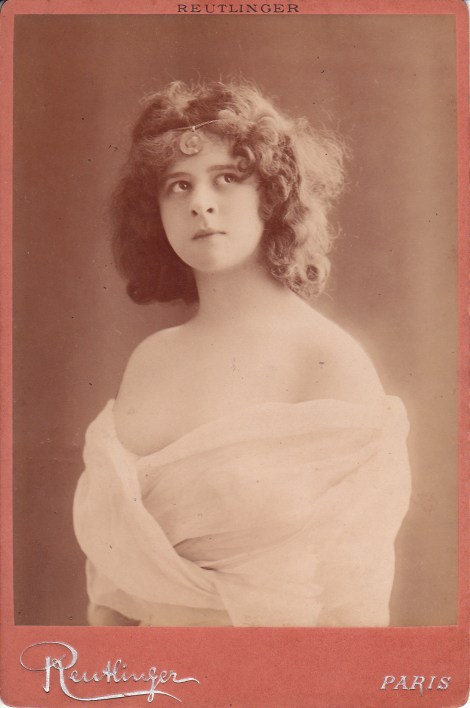
This vintage real photo postcard features a portrait of French stage actress and dancer Mlle. Derminy. I am unsure of her first name but she is listed in a number of sources as Marthe Derminy, who was an early film actress. The two performers may, or may not be, the same individual. Take a look at the headpiece that Mlle Derminy is wearing in this photograph. She looks like she has antennas coming out of the top of her head. It is as if she just walked out of a space ship. She is a pretty woman and is posed in relatively risque fashion. Derminy was photographed by many of the most celebrated photographers of her era. I have seen portraits of her by Reutlinger, Walery, and Stebbins. This postcard portrait was published by Societe Industrielle de Photograpie which was located in Rueil, France. SOLD
THEATER ACTRESS: MARIE LEGAULT
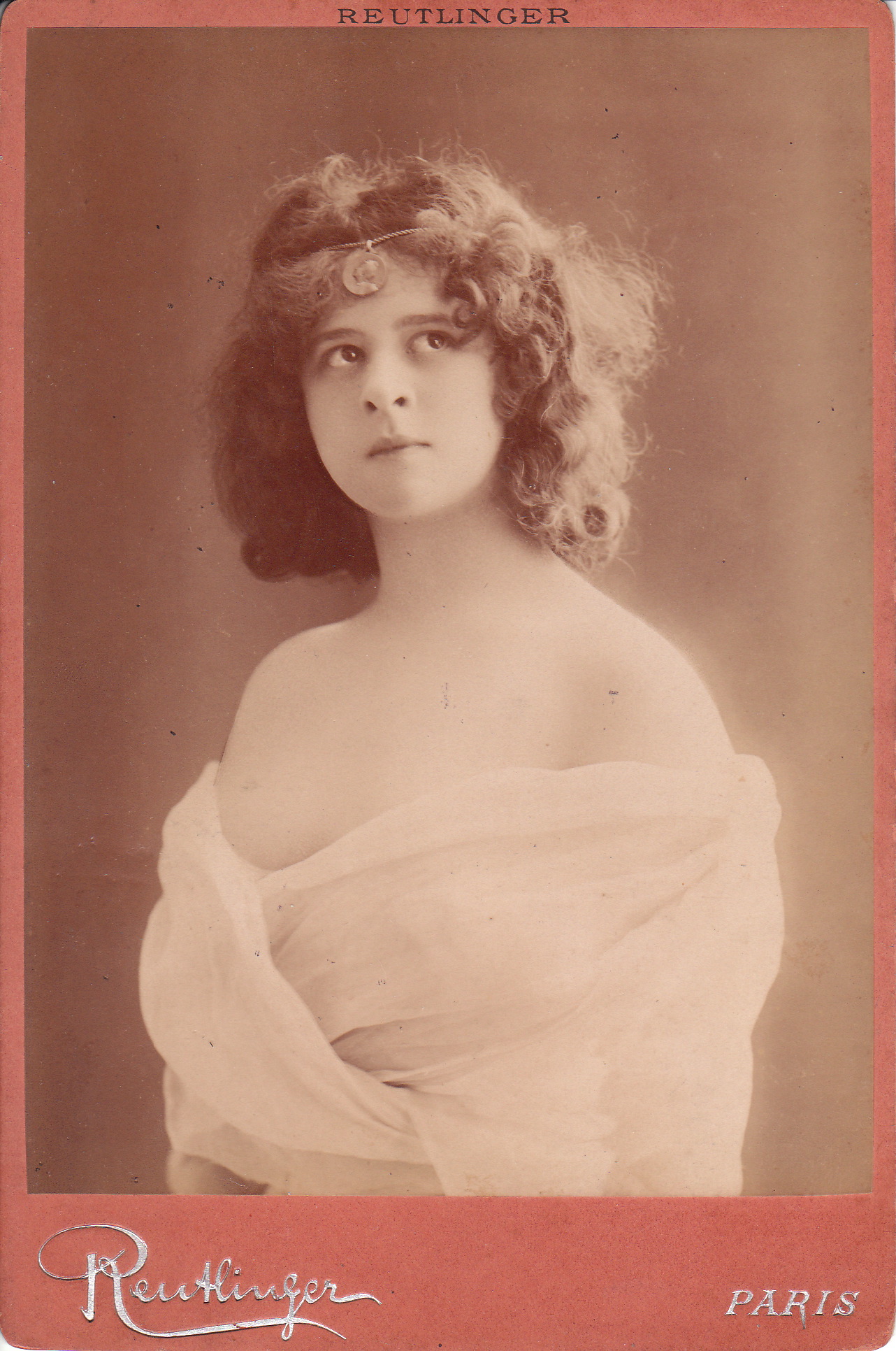
French theater actress, Marie Legault, is the subject of this cabinet card photograph by internationally acclaimed celebrity photographer Charles Reutlinger. This image was produced in Reutlinger’s Paris studio in 1880. To view other Reutlinger photographs, click on the category “Photographer: Reutlinger”. Marie Francoise (Maria) Legault (1858-1905) entered the Paris Conservatory in 1872. That same year she finished second in the comedy competition. She was just fourteen years old at the time. She was awarded a stipend to continue her studies and she won the competition the following year. During her theatrical career she appeared at a number of venues including the Gymnase, the Palais-Royal, the Vaudeville, the Comedie-Francaise, and the Theatre Michel in St. Petersburg. Legault created the role of Roxane in Rostand’s Cyrano de Bergerac (1872) and of Marie Louise in L’Aiglon (1900) with Sarah Bernhard. Her obituary appears in the New York Times (1905).
A YOUNG MAN AND THREE YOUNG WOMAN IN FANCY COSTUMES (STUTTGART, GERMANY)
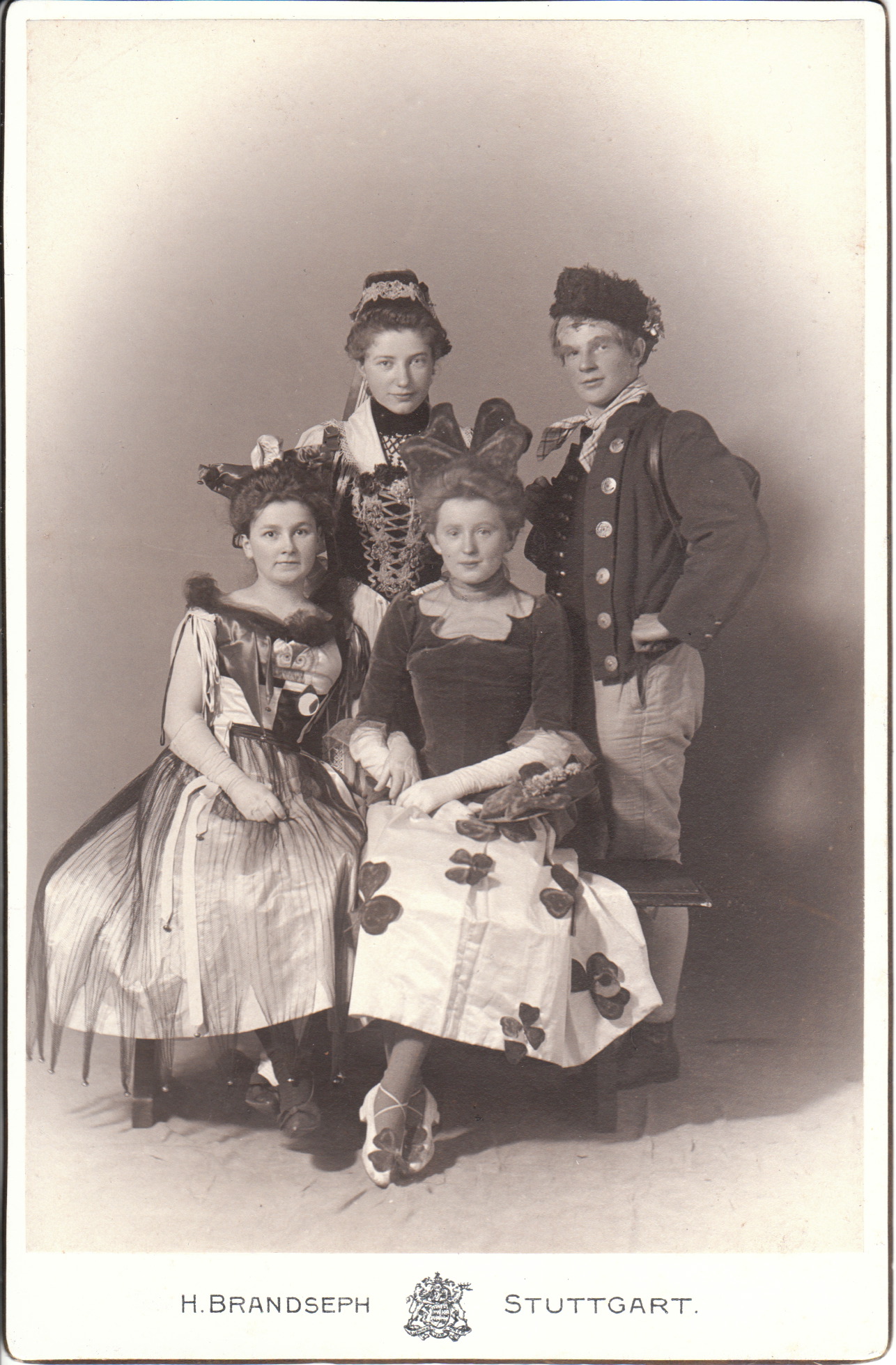
A young man and three young woman dressed in ethnic clothing, or theatrical costumes, pose at the H. Brandseph studio in Stuttgart, Germany. The foursome are attractive, and they appear to be teenagers. Perhaps they are stage performers. Printing on the reverse of the cabinet card reveals that Hermann Brandseph’s Stuttgart studio was located at “Marienstrasse 36”. A telephone number is listed for the studio which demonstrates that this photograph was produced toward the end of the cabinet card era. Hermann was the son of well known German photographer Georg Friedrich Brandseph (1826-1915). Georg was a lithographer, silhouetter, and painter who learned about the daguerreotype process from the celebrated photographer Karl Reutlinger who lived in Stuttgart (to view a number of Reutlinger’s photographs, click on cabinet card gallery category “Photographer: Reutlinger”). Georg opened his own studio there in 1853. In the 1870’s the Brandseph studio was extremely successful. In fact, by 1870, the studio had 40 employees. Georg turned the studio over to his son Hermann (1857-1907) in 1884.
AN ANGEL IN PARIS (PORTRAIT OF A YOUNG GIRL BY CHARLES REUTLINGER)
This cabinet card photograph features a young girl posed to look like a cherub. This angelic child has wings and a whimsical expression. The photographer is Charles Reutlinger who operated a studio in Paris, France. Reutlinger was quite renowned, especially for the many wonderful portraits he produced featuring beautiful European actresses and dancers. To view other photographs by Reutlinger, click on the category “Photographer: Reutlinger”. I can not identify the “T” shaped band-aid looking object on the child’s right shoulder. Hopefully, a cabinet card gallery visitor will leave a comment explaining the mystery object.
ELISE DE VERE: PORTRAIT OF A BEAUTIFUL SOUBRETTE BY REUTLINGER
Elise De Vere was indeed a very pretty woman and her pose in this image can be described as risque. She poses in this cabinet card photograph for famed celebrity photographer, Charles Reutlinger. Reutlinger’s studio was located at 21 Boulevard in Paris, France. The photograph was published in 1899. Small print located at the bottom of the reverse of the card states R. Dechavannes. He may be in fact the actual photographer of the portrait. Perhaps the photograph was published by Reutlinger but not actually photographed by him. The facts concerning the role of Reutlinger and Dechavannes are not clear. To view other photographs by Dechavannes, click on the category “Photographer: Dechavannes”. To view other photographs by Reutlinger, click on the category “Photographer: Reutlinger”. Elise De Vere was an English actress/singer who performed in music halls and operas around 1900. The previous year she had won second place in a beauty contest at the Paris Olympia Theatre. She was described at the contest as a “Chanteuse Excentrique” (Eccentric Singer). Around 1900 she was a stage diva in Europe and America. In 1903-1904 she performed in the Flo Ziegfeld Broadway opera “Red Feather” which played at the Lyrical Theatre and then the Grand Opera Theatre. In announcing De Vere’s arrival in America to play in “Red Feather”, The New York Times (1903) writes that although she was a Parisienne, she spoke excellent English (shouldn’t have been a surprise, she was English). The article added that De Vere had recently learned to sing in German. In a later article, the New York Times (1903) labelled De Vere as a “Soubrette” in the “Red Feather”. A soubrette is a stock character in opera or theatre. A soubrette is frequently a comedic character who is often portrayed as vain, girlish, mischievous, gossipy and light hearted. SOLD