 This cabinet card photograph is a portrait of a ship’s steward. His cap has a patch that identifies him as a steward, indicates his identification number, and displays an anchor. The reverse of the card has an inscription indicating that he worked as a steward on the S. S. George W. Clyde. The photographer or the location of the photographers studio is unknown. The S. S. George W. Clyde was built in Philadelphia in 1872 by William Cramp & Sons. The ship was scrapped in 1926. The ship carried both merchandise and passengers during its existence. It was an early American steamship and records indicated that among its voyages were many that ended in the Port of New York.
STEAMSHIP STEWARD ON THE S. S. GEORGE W. CLYDE

A GIRL AND HER DOG AND HER BIRD IN NEW CASTLE, INDIANA
ir A young girl and her dog are accompanied by a bird in this cabinet card portrait by Huddleston of New Castle, Indiana. The dog appears to be a combination of a spaniel and a retriever and the bird looks like a fancy pigeon. Hopefully, a visitor to this site, may be more informed about ornithology, and can correctly identify the species of the bird in this photograph. The photographer is likely Cephas M. Huddleston (1832- ?) who was born in Indiana. The 1860 census lists him as a farmer living in Union, Indiana. By the 1870 census, he is listed as a photographer. Cephas had seven children. The 1900 census indicates that Huddleston was still a photographer and that is studio was in New Castle, Indiana.
PAULINE MARKHAM: TURN OF THE CENTURY BURLESQUE ACTRESS
 This risque (lots of cleavage shown for this era) cabinet card is a portrait of Pauline Markham (1847-1919), a singer and burlesque dancer during the civil war period in the United States. She was born in England where she made her stage debut as a child. She came to New York and appeared in “Black Crook” and “Pinafore”. She was a member of the Lydia Thompson troupe (British Blondes). After the civil war, she had relations with Northern Generals and Reconstructionists In the 1870’s she formed her own stage company and in 1879 she took her company on a tour of the West during which they performed Gilbert and Sullivan. A member of that troupe was Josephine Marcus, who later married lawman, Wyatt Earp. She retired from the stage in 1889 after breaking her leg. She must have taken the old show business saying of “break a leg” literally. This cabinet card was photographed by Fredricks, of Brooklyn, New York. It is possible that the photographer is Charles DeForest Fredricks (1823-1894) who was an innovative American photographer. Fredricks learned the art of daguerreotypes from the great photographer , Jeremiah Gurney (see category “Photographer: Gurney”). Fredricks worked in South America through the early 1850’s and then he operated out of Charleston, South Carolina; and Paris, France. He was the first photographer to make life-size portraits, which he then hired artists to color them using pastel. He then returned to New York City and rejoined Gurney. In 1854 he developed a new enlarging process and in 1855 he ended his association with Gurney. In the late 1850’s Fredricks ran his studio in Havana, Cuba, and in the 1860’s he opened a studio on Broadway, in New York City. He retired in 1889. Research has not confirmed that Fredricks ever had a studio in Brooklyn, so it is quite uncertain whether the Fredricks who photographed Markham is actually Charles D. Fredricks.
PRETTY WOMAN IN MIDDLEBURY, VERMONT
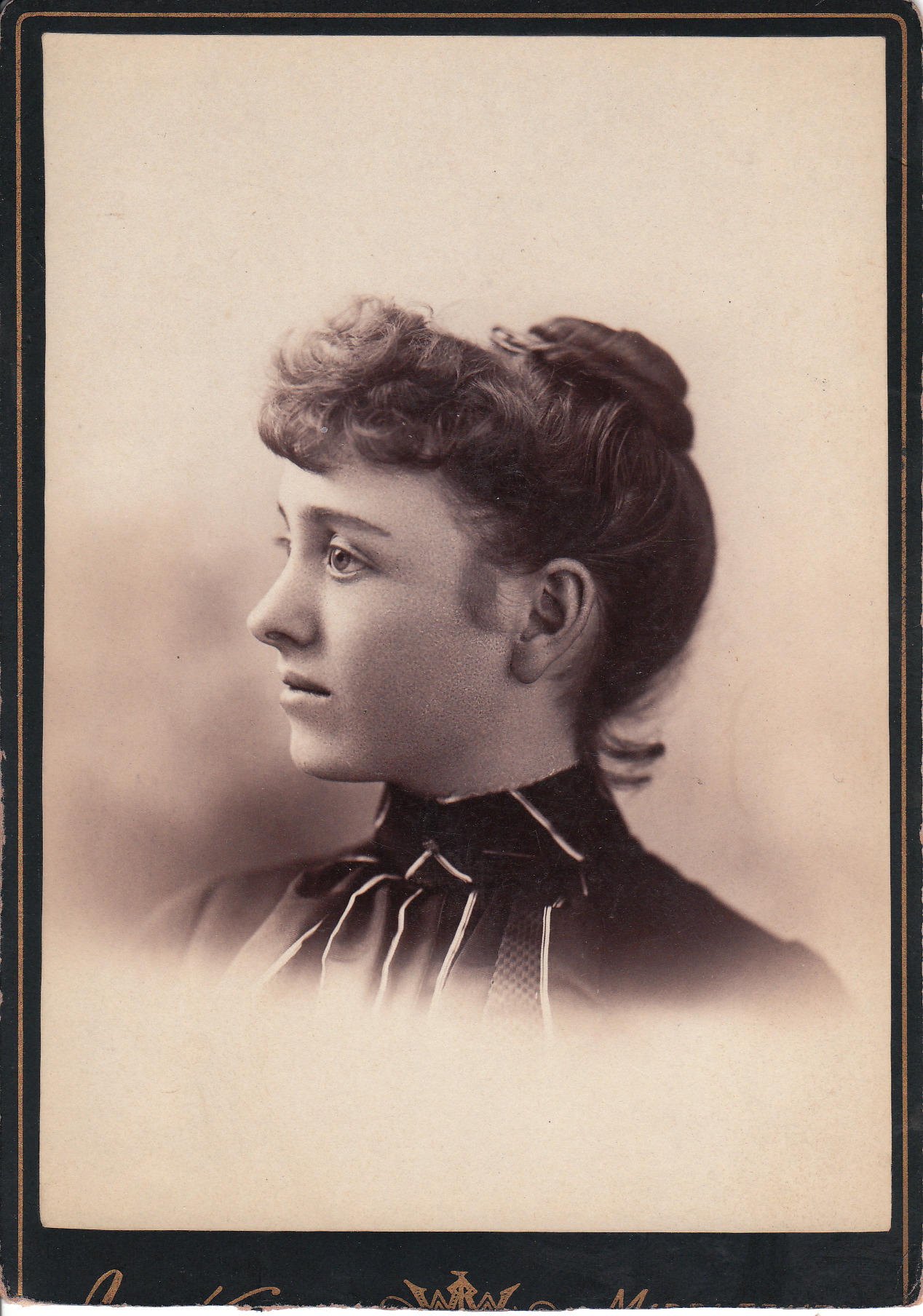 An attractive young woman is the subject for this cabinet card photograph from the studio of W. M. Jackson of Middlebury, Vermont. The studio was located on the Cobb Block of Middlebury. The Bulletin of Photography (1916) reports that Mrs. William M. Jackson of Middlebury sold her studio to A. N. Gove and Worthy Needham of Bristol, Vermont. The photographer of this image is likely the very same William M. Jackson; and perhaps Mrs. Jackson sold the studio in 1916m upon her husbands death. This photograph has been trimmed to fit into a previous owners album or picture frame.
PRETTY WOMAN IN CHICAGO, ILLINOIS
 A pretty woman poses for her portrait at the studio of J. K. Stevens, in Chicago, Illinois. Stevens’s studio was located in the McVickers Theatre Building. To see other portraits by Stevens, click on Cabinet Card Gallery’s category of “Photographer: Stevens”.
PRETTY DANCER PHOTOGRAPHED BY SARONY IN NEW YORK
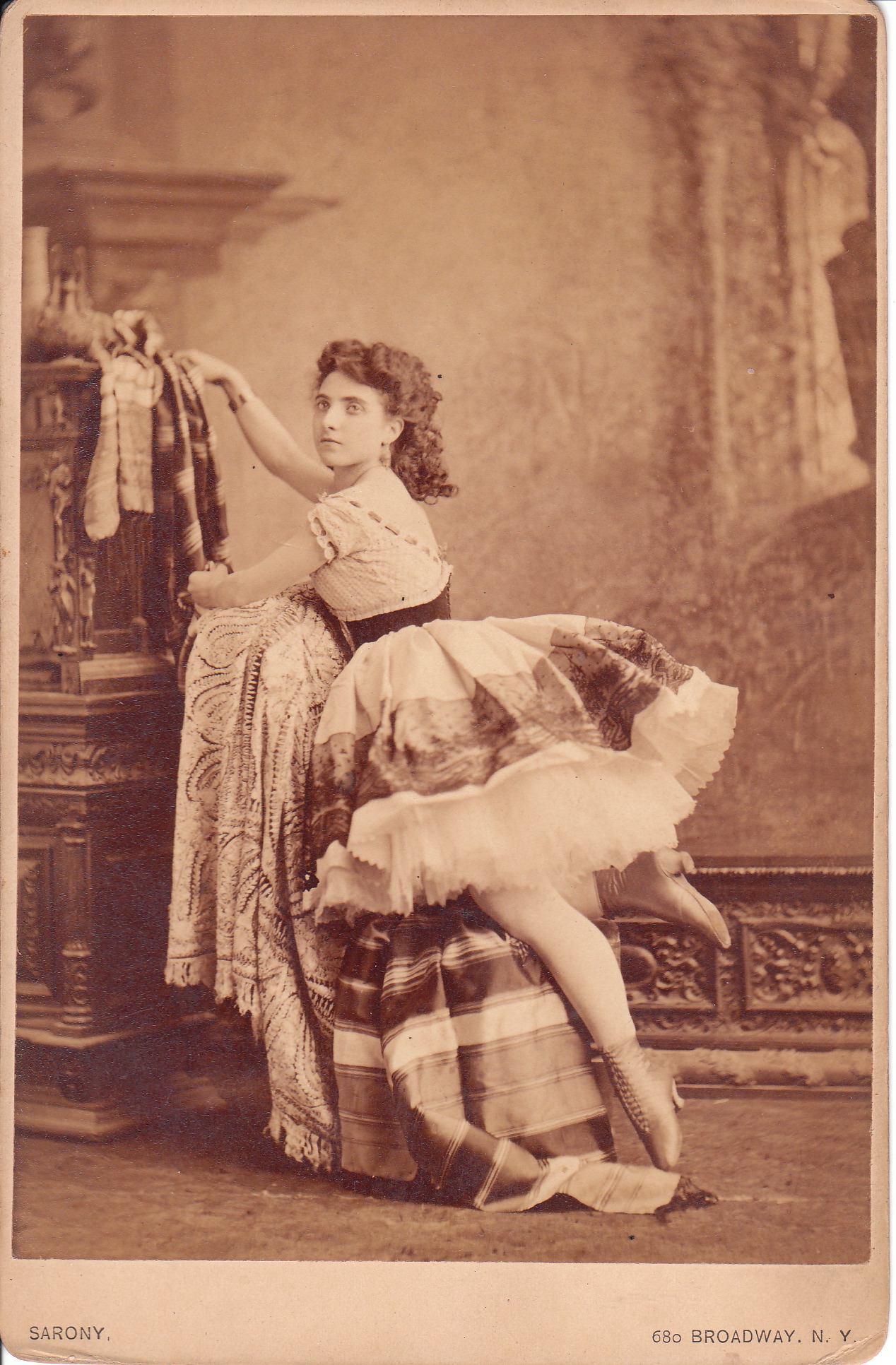
This cabinet card is a photograph of a young dancer/actress photographed by the famous celebrity photographer, Sarony of New York. She seems to be in a dancers pose and costume. The reverse of the card has a handwritten identification of the subject. The name listed is Sara Belle; and preliminary research has revealed nothing about her. In fact, the existence of an actress/dancer by that name has not yet been confirmed. Interestingly, Napoleon Sarony’s daughter was named Belle. In regard to the date of this photograph, Sarony opened his Broadway studio in 1866 and moved to 37 Union Square in New York City in 1871. Therefore this photograph was taken between 1866 and 1871. Perhaps a visitor to this site can shed some light on the identity of the woman in this photograph. Additional images by Sarony can be seen by clicking on the Cabinet Card Gallery’s category of “Photographer: Sarony”.
OLD MAN WITH AN INTERESTING BEARD IN ALLEGAN, MICHIGAN
 An old man poses for his portrait for a photographer named Porter, in Allegan, Michigan. The man is wearing a jacket and has long hair and a wonderful long (but groomed) beard. The gentleman and his beard have earned a spot in the Cabinet Card Gallery’s category, “Beards (Only the Best)”. Click on the category to view the large collection of interesting beards that comprise the category. The photographer of this image, HV M. Porter wrote a letter to The Photo Beacon (1898) proposing a plan regarding how photographers could get better prices for their photographs. Porter advises readers that “the public doesn’t know a poor photograph from a good one, because it is so seldom they see a good one”. Porter goes on to propose the establishment of a board of judges who would give ratings to all photographers based on their submission of twelve photographs. If this plan was in effect, Porter asserts that the higher rated photographers could be paid more money for their work than lower rated photographers. Although Porter’s plan seems viable in theory; what would stop untalented photographers from paying talented photographers for samples that they could submit to the ratings board?
ONE MUSKETEER IN LAUSANNE, SWITZERLAND
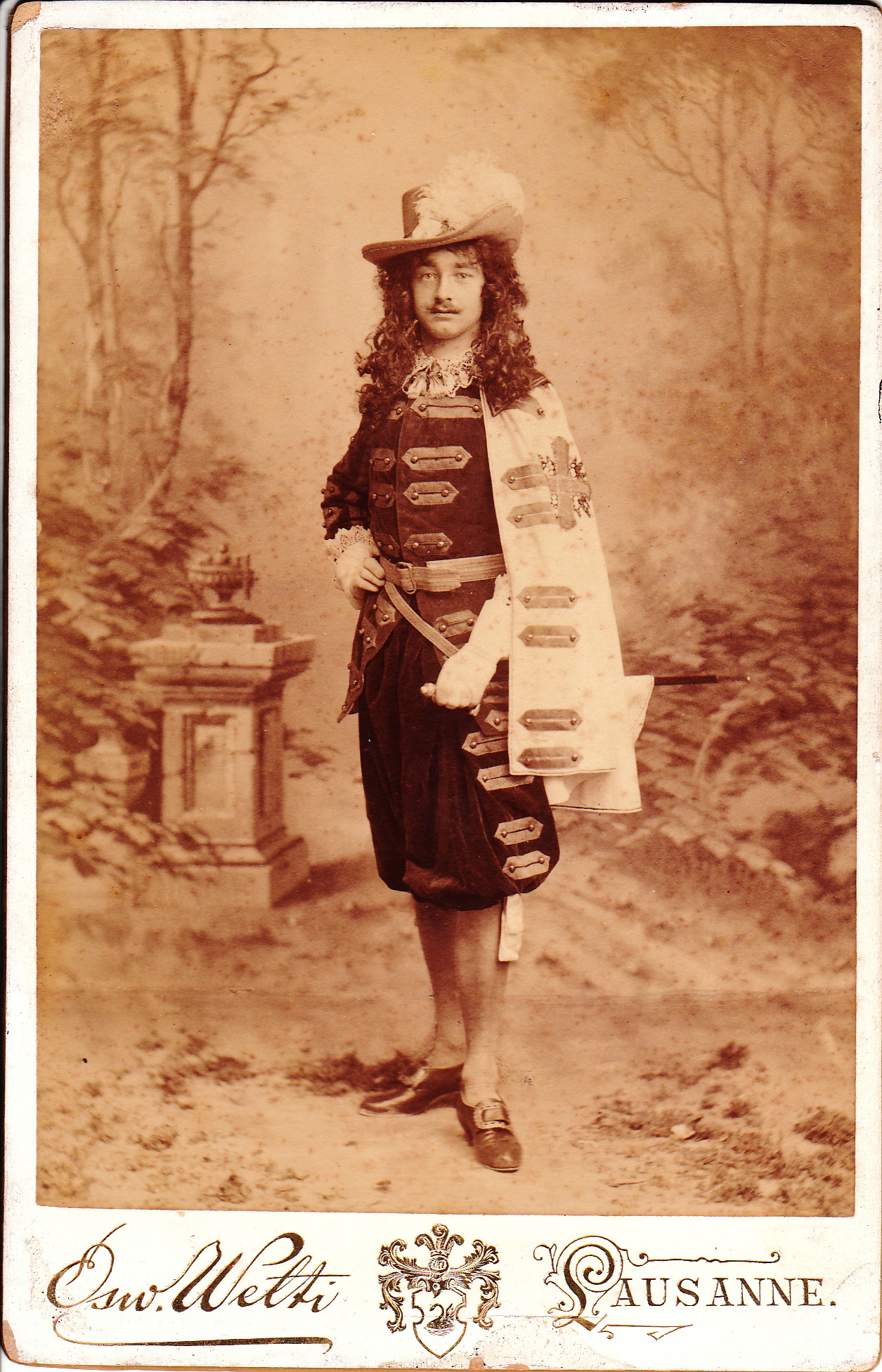
This cabinet card captures an actor in costume. He is dressed like a musketeer. Note those long tresses. It is difficult to decipher the photographers name. It may be Oswald Wetti, but that is just a guess. The photographer’s studio was located in Lausanne, Switzerland. Lausanne is a city in French speaking Switzerland. The city lies on the shore of Lake Geneva.
TURN OF THE CENTURY BAD BOYS: CAUGHT IN THE ACT BY TRAVELING PHOTOGRAPHER

The “bad boys” are in town and they are gathered to play a mean game of cards and enjoy their smokes. Traveling photographer, C. A. Johnson has posed the five men in front of a painted river scene. The guys seem quite natural in this gambling milieu. My guess is, that “they’ve been there, and done that”. Its a bit unusual to see cigarettes in cabinet card photography, but they fit this scene perfectly.
CONFIDENT LITTLE GIRL IN BUFFALO, NEW YORK
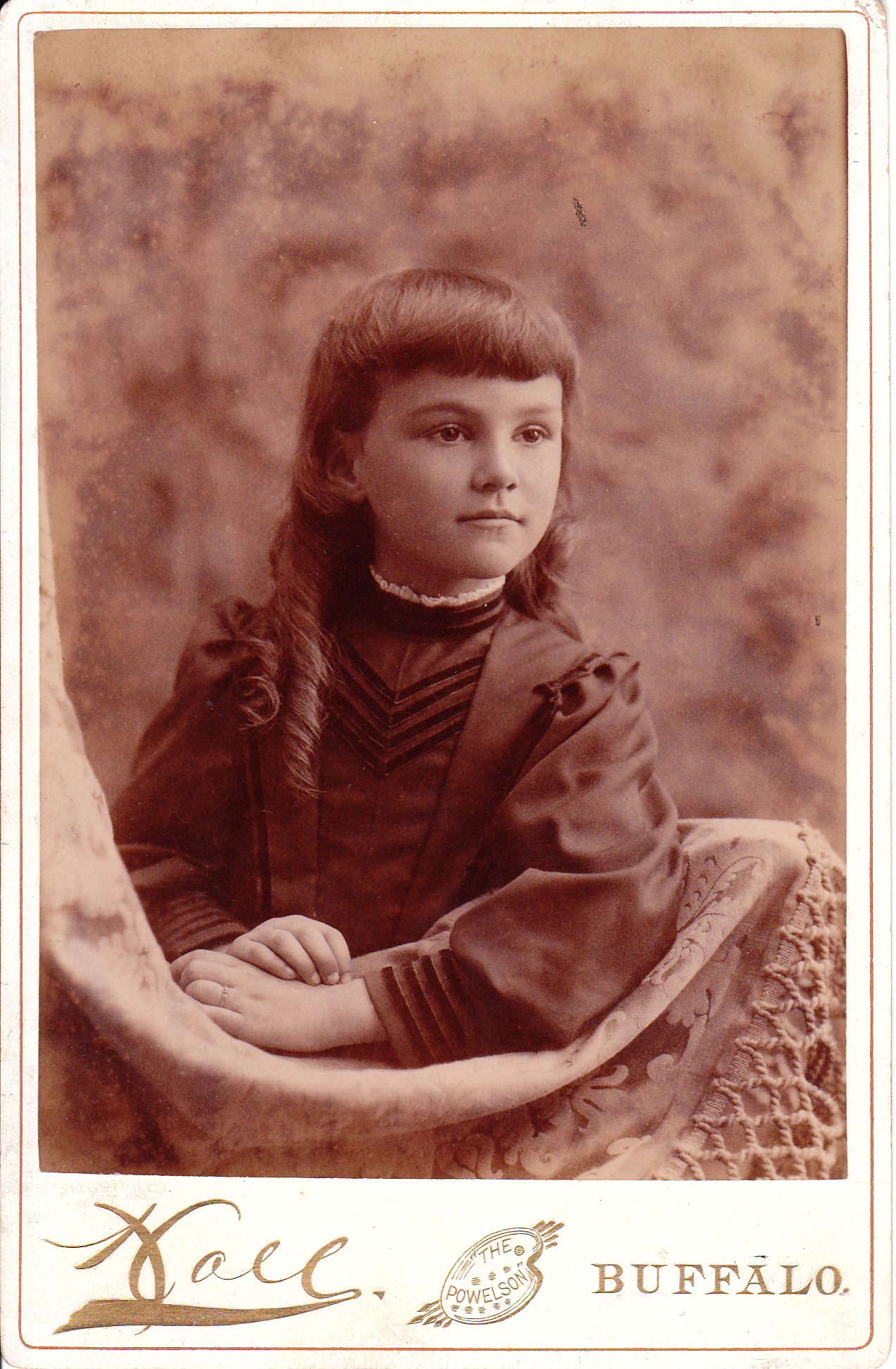 A young girl, with a look of confidence, poses for her portrait at the Hall & Co. studio in Buffalo, New York. The studio was located at 306 Main Street in Buffalo. The front and back of the card mentions the name “Powelson” which appears to be the name of the building that the studio was located in. Benjamin F. Powelson was a pioneer photographer in Buffalo beginning in the 1840’s. E. F. Hall took this photograph between 1889 and 1895. The reverse of this card indicates that Hall won an award in 1889 and research reveals that he opened a new studio in 1895, in another location in Buffalo. Hall was elected an officer in the Buffalo camera club in 1889.


 THE CABINET CARD GALLERY