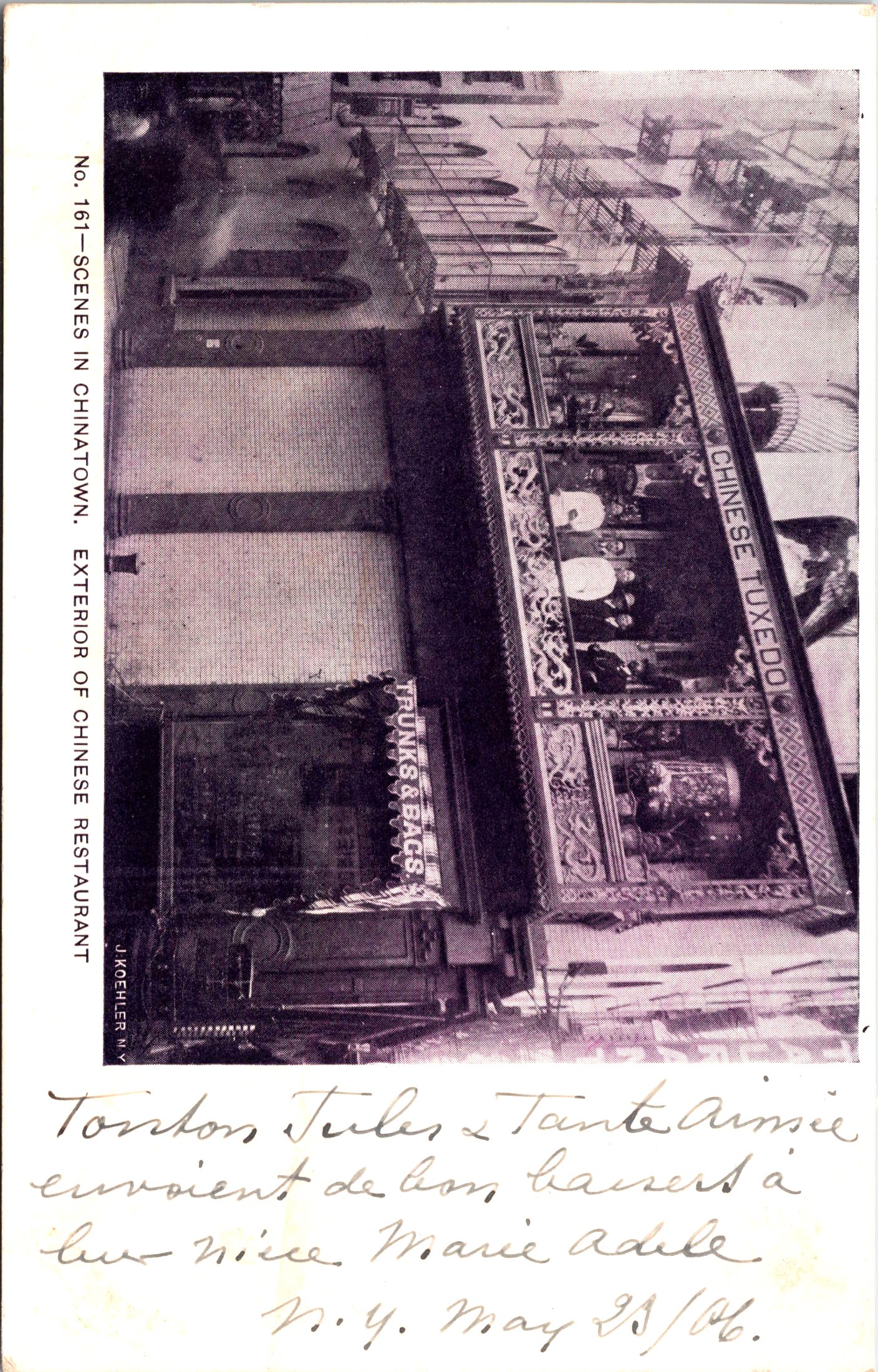
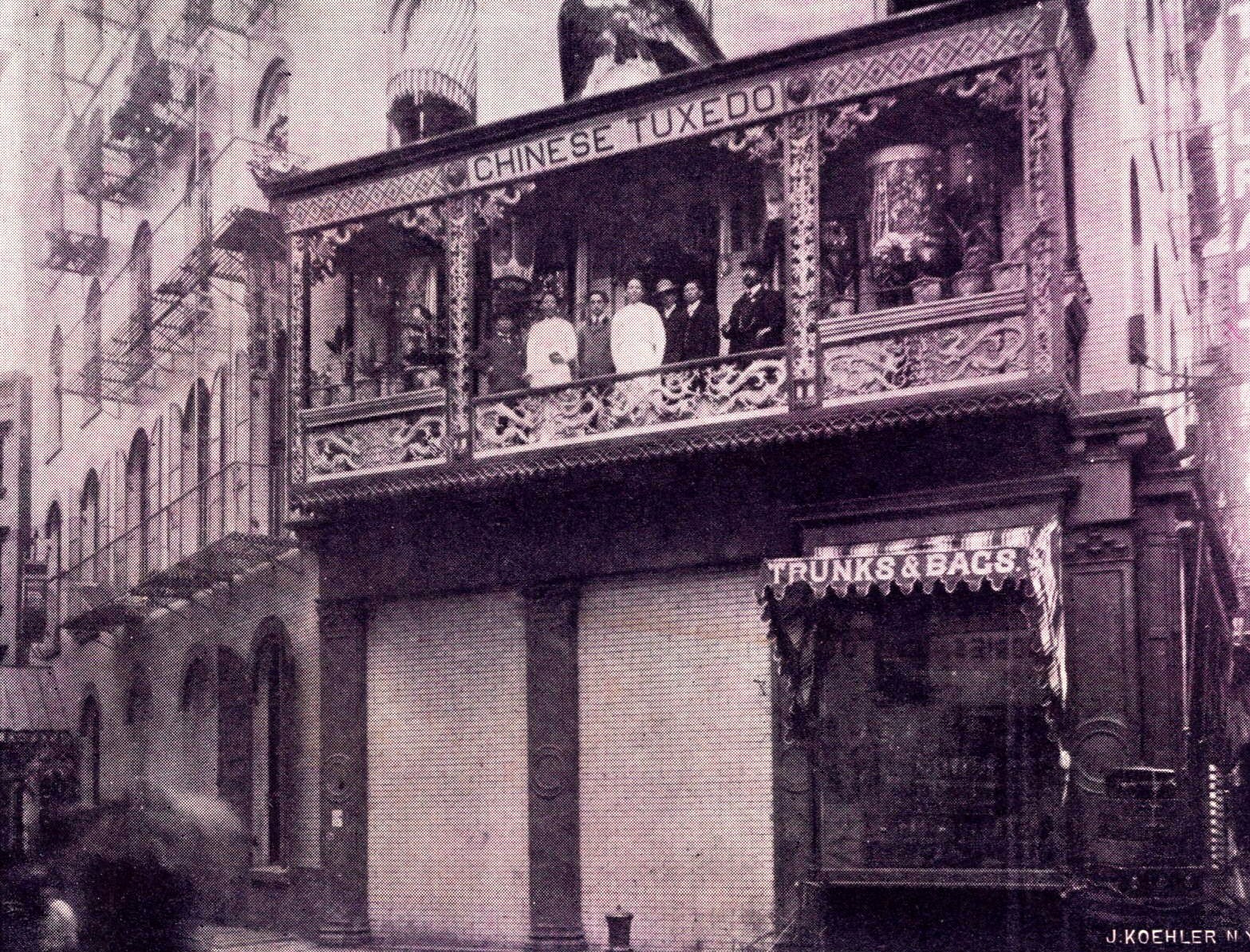
CHINESE TUXEDO RESTAURANT : CHINATOWN : NEW YORK CITY : J. KOEHLER : RPPC 1906

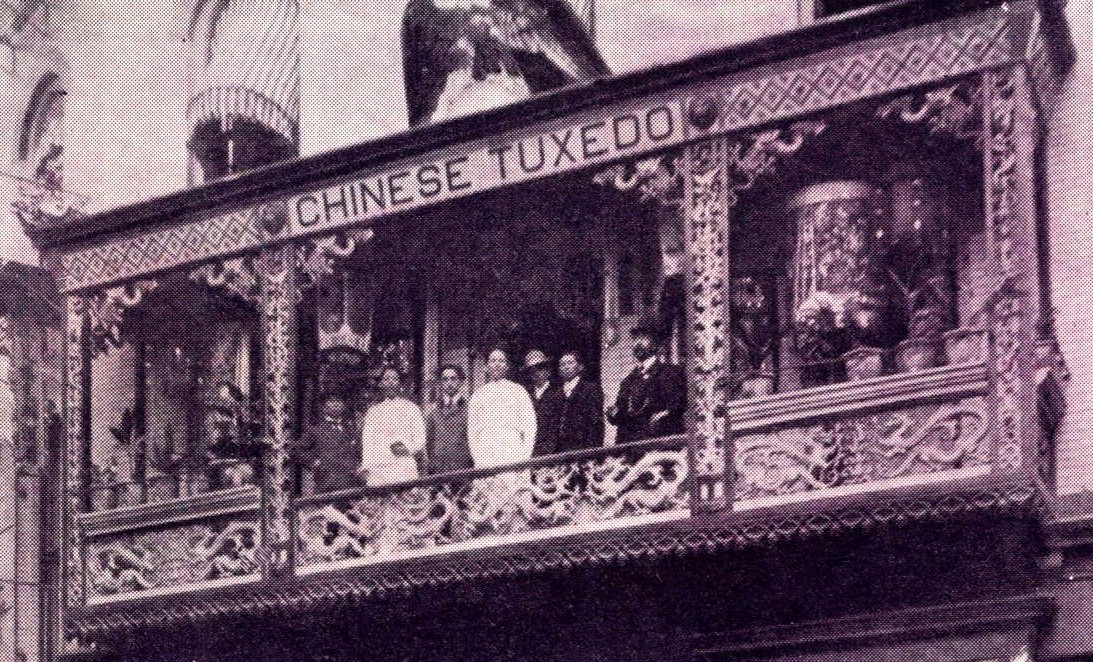
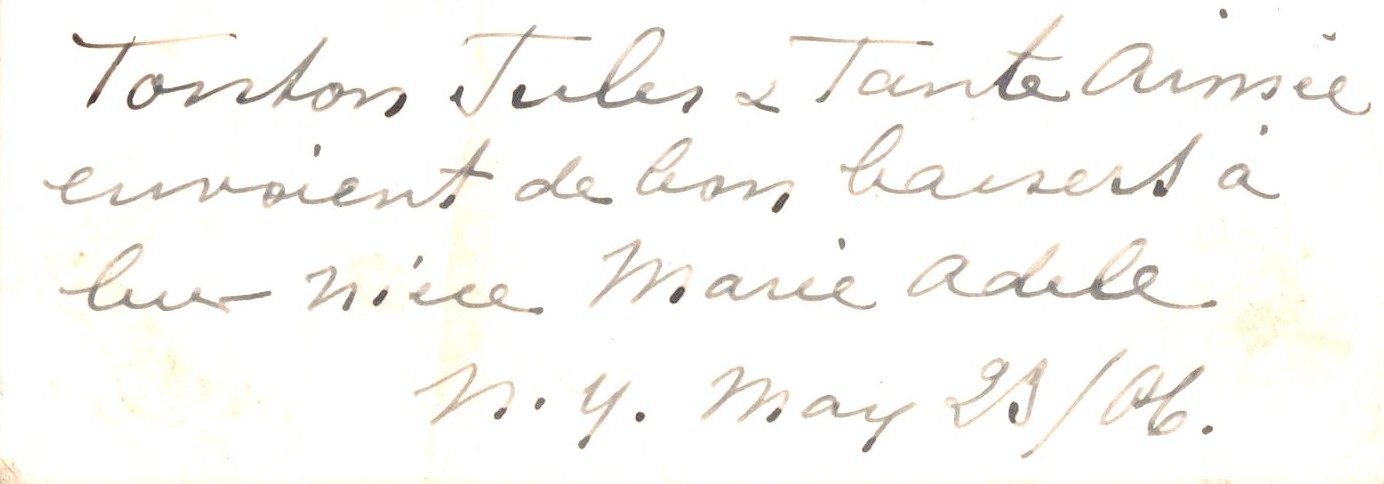
This vintage lithographic postcard features aa view of the Chinese Tuxedo Restaurant in New York City’s Chinatown. Note the people standing on the second floor balcony. They are likely employees of the restaurant. A shop below the restaurant has an awning advertising trunks & bags. Here is some history about the Chinese Tuxedo Restaurant. It opened it’s door in 1904 and was located at 2 Doyers Street. At the time, it was one of several upscale Chinese Restaurants capitalizing on the influx of non-Chinese tourists to Chinatown. The restaurant was decorated with elaborate chandeliers and other “exotic” accessories. The restaurant was well known for its ornate eagle crowned balcony. The restaurant closed it’s doors in the mid 1900’s. The text in the message section of this undivided back postcard states the following, “Uncle Jules & Aunt Aimee send kisses to their niece Marie Adele”. This message is dated 1906. The postcard was published by J. Koehler Publishing Company of New York City. Joseph Koehler (1842-1933) was a New York based lithographer, printer, and stationer active in the late 19th and early 20th century. He was born in France  and was the son of a prominent physician. In fact his father was once Napleon Bonoparte’s personal physician. Koehler came to the US with his family at the age of four. He is credited with the invention of the “greeting card” in 1867. After inventing the greeting card, he built an extensive postcard and calling card business. Most of his cards were printed in Europe until the 1890’s when he established his own steam press operation in New York City. He retired sometime around 1914. A nearly identical card to this listed card can be seen in the collection of the Museum of Chinese in America (MOCA) located in New York City.
MISS VIOLET CAMERON: SCANDALOUS STAGE ACTRESS

CABINET CARD 1

cameron

CABINET CARD 2
V CAMERON 3_0002CABINET CARD 3

CAMERON FRONTCABINET CARD 4 MISS VIOLET CAMERON : SCANDALOUS STAGE ACTRESS : CDV ; AD FOR MINERAL WATER - Picture 1 of 2CARTE de VISITE 1

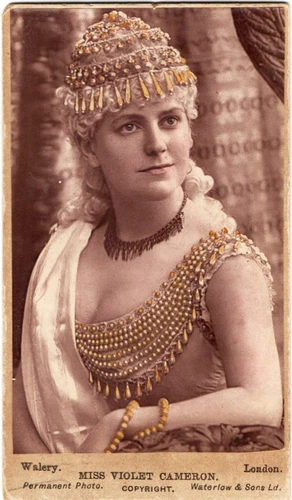
Violet Cameron (1862-1919), was an English stage star. She was the niece of burlesque legend Lydia Thompson. Cameron  began her stage career as a child in 1871. She played several child roles at the Drury Lane Pantomime theatre. As an adult, she played many prominent roles in the most important English theatres. In 1886 she came to America and played in “The Commodore” and “Kenilworth”. In 1893 she had great success in the stage play “Morocco Bound”. She was involved in several scandalous love affairs during her stage career.  

Cabinet Card 1 is a product of Elliot & Fry, a prominent London photography studio.

Cabinet Card 2 was produced at the studio of W & D Downey in London, England.

Cabinet Card 3 is also by Downey. She looks lovely in her ruffly dress and her plunging neckline (relative to the cabinet card era) highlights her necklace. The reverse of the cabinet card has the stamp of Charles Ritzmann of New York City indicating that it was once owned by the esteemed purveyor of theatrical photographs.

Cabinet Card 4 also comes from the Downey studio. Cameron appears to be wearing a wedding dress in this cabinet card portrait. 

The reverse of Carte de Visite 1 has an advertisement for Taunus Mineral Water. The natural sparkling water came from Springs located near Frankfurt, Germany. Miss Cameron’s portrait for this carte de visite was taken by the celebrated Walery studio in London, England.

MISS VIOLET CAMERON : SCANDALOUS STAGE ACTRESS : CDV ; AD FOR MINERAL WATER - Picture 2 of 2

CARTE de VISITE 1

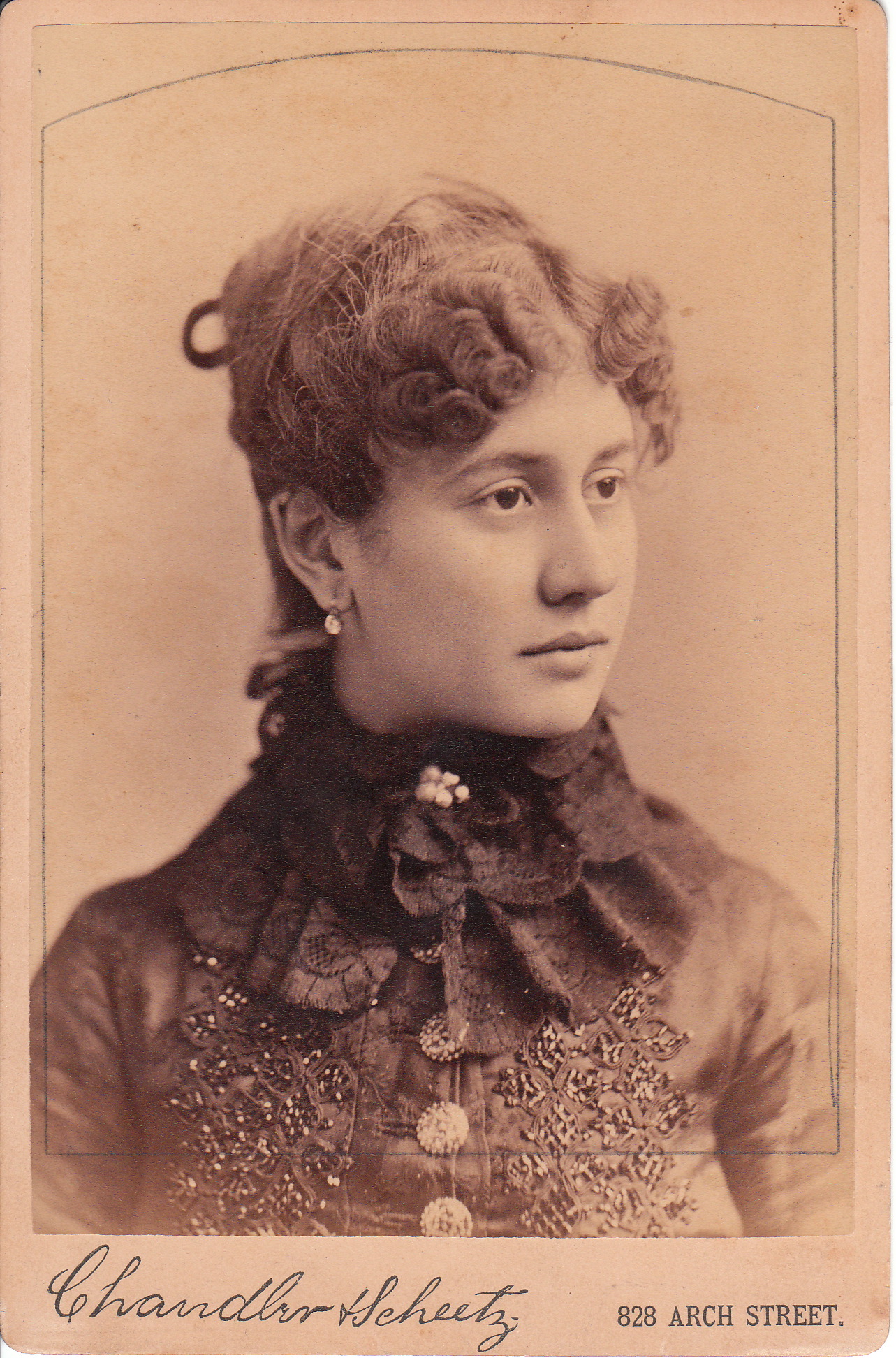
PRETTY WOMAN IN PHILADELPHIA, PENNSYLVANIA (FASHIONABLE TOO!)

PRETTY WOMAN IN PHILADELPHIA : GIRL NEXT DOOR LOOKS : FASHIONABLE : CABINET CARD - Picture 2 of 3

A beautiful woman, fashionably dressed, is the subject of this cabinet card image. She is perfectly posed by the photographer. The studio that took this photograph is Chandler & Scheetz, of Philadelphia, Pennsylvania. To view other images by Chandler and Scheetz, click on the category “Photographer: Chandler & Scheetz.  SOLD

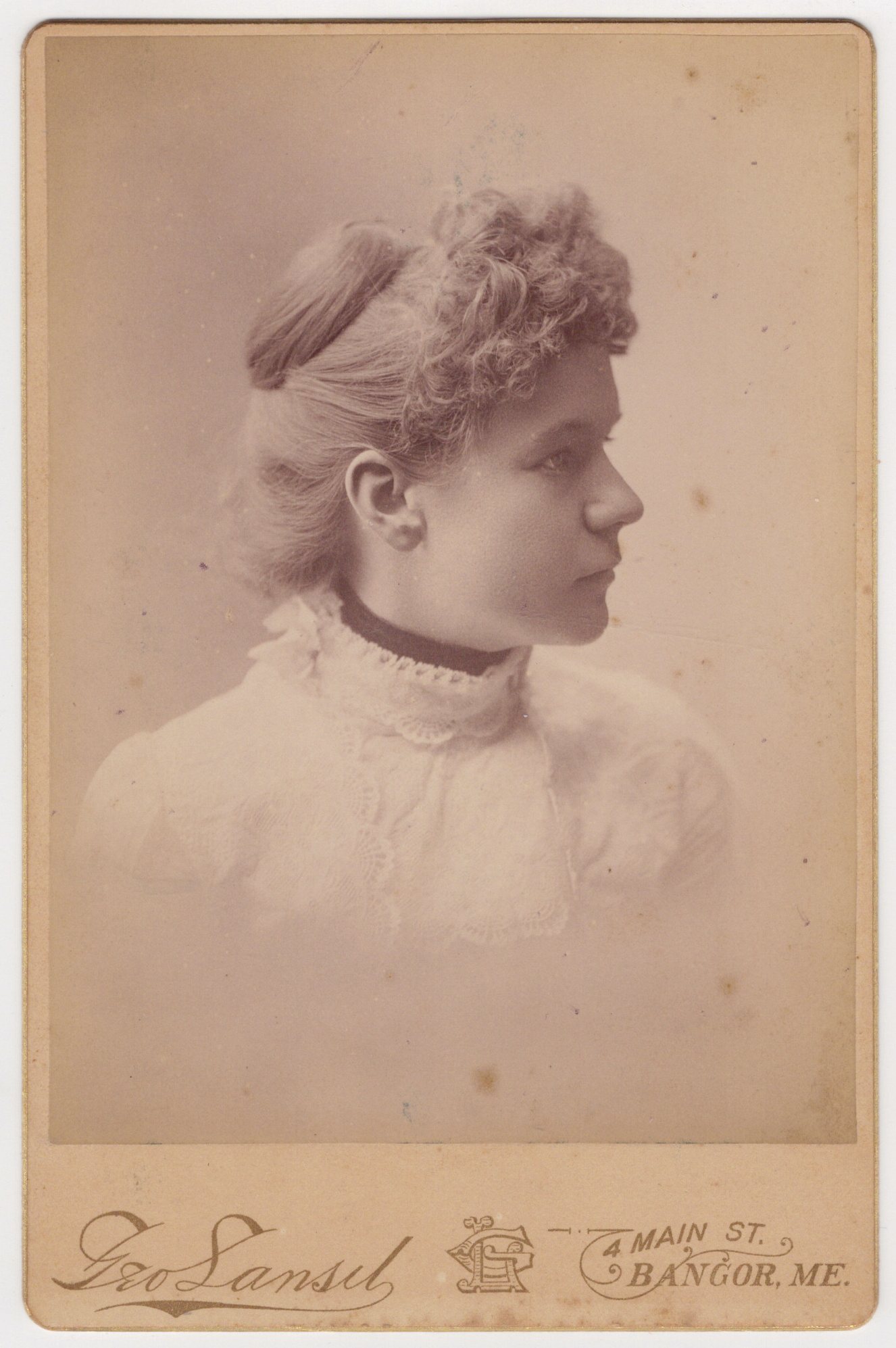
PRETTY YOUNG WOMANWITH BANGS AND A BUN IN BANGOR, MAINE

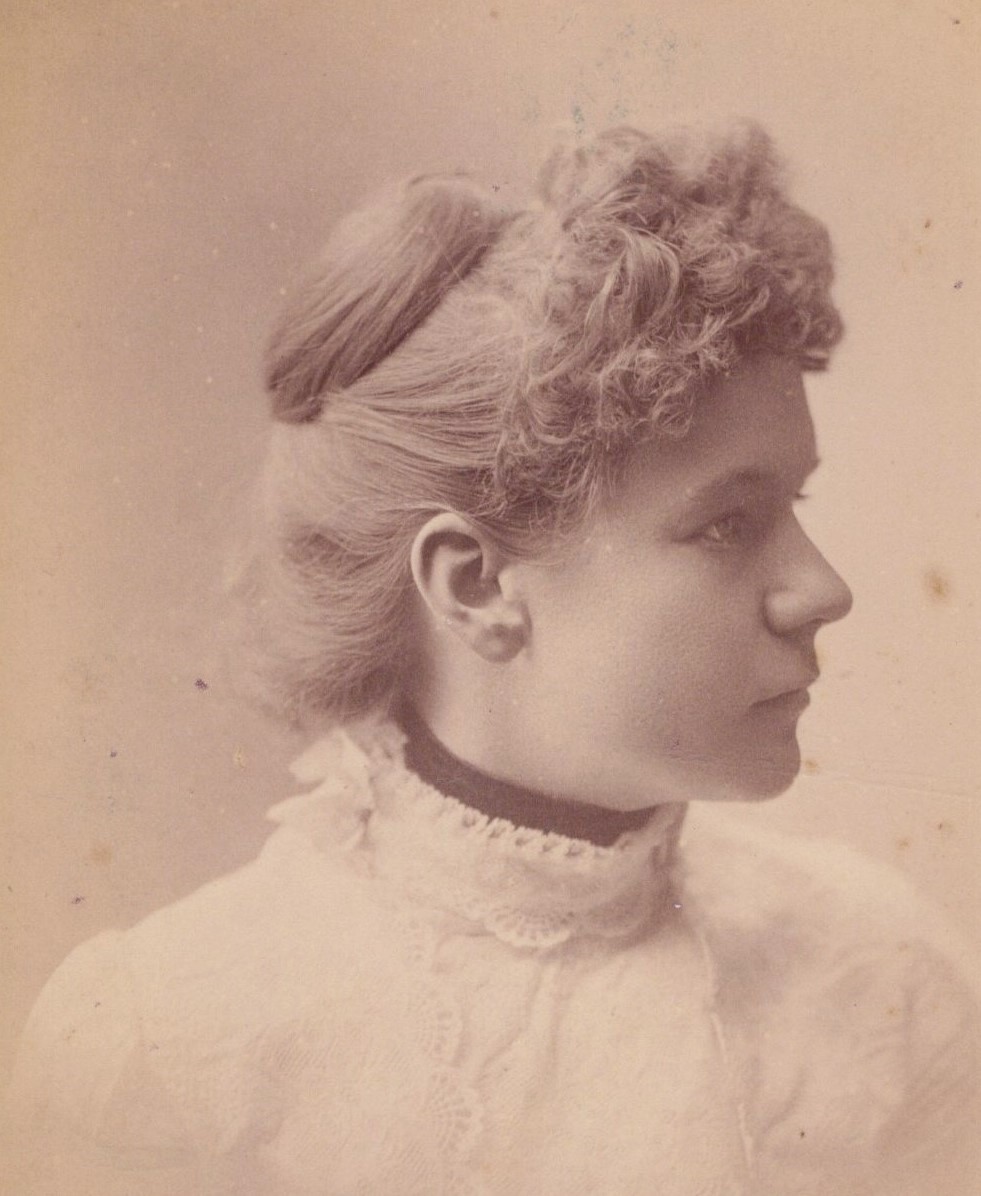
A pretty young woman poses for her portrait at the studio of George Lansil in Bangor, Maine. Her hairstyle can be described as “Bangs and a Bun in Bangor”. She is wearing a lace collar. Research reveals that in the late 1800’s, George Lansil was described as a “painstaking, thorough artist” and one of Bangor’s finest photographers. A Maine native, he became established as a photographer in the early 1860’s. By the mid 1880’s, he was located in his Main Street studio, and had 5 assistants. His studio occupied three floors and was comprised of eight rooms. SOLD

Published in: on April 27, 2025 at 12:00 pm  Leave a Comment  
Tags: , ,

PRETTY WOMAN BARELY WEARING A NEGLIGEE : NUDE : JEAN AGELOU : PARIS : RPPC

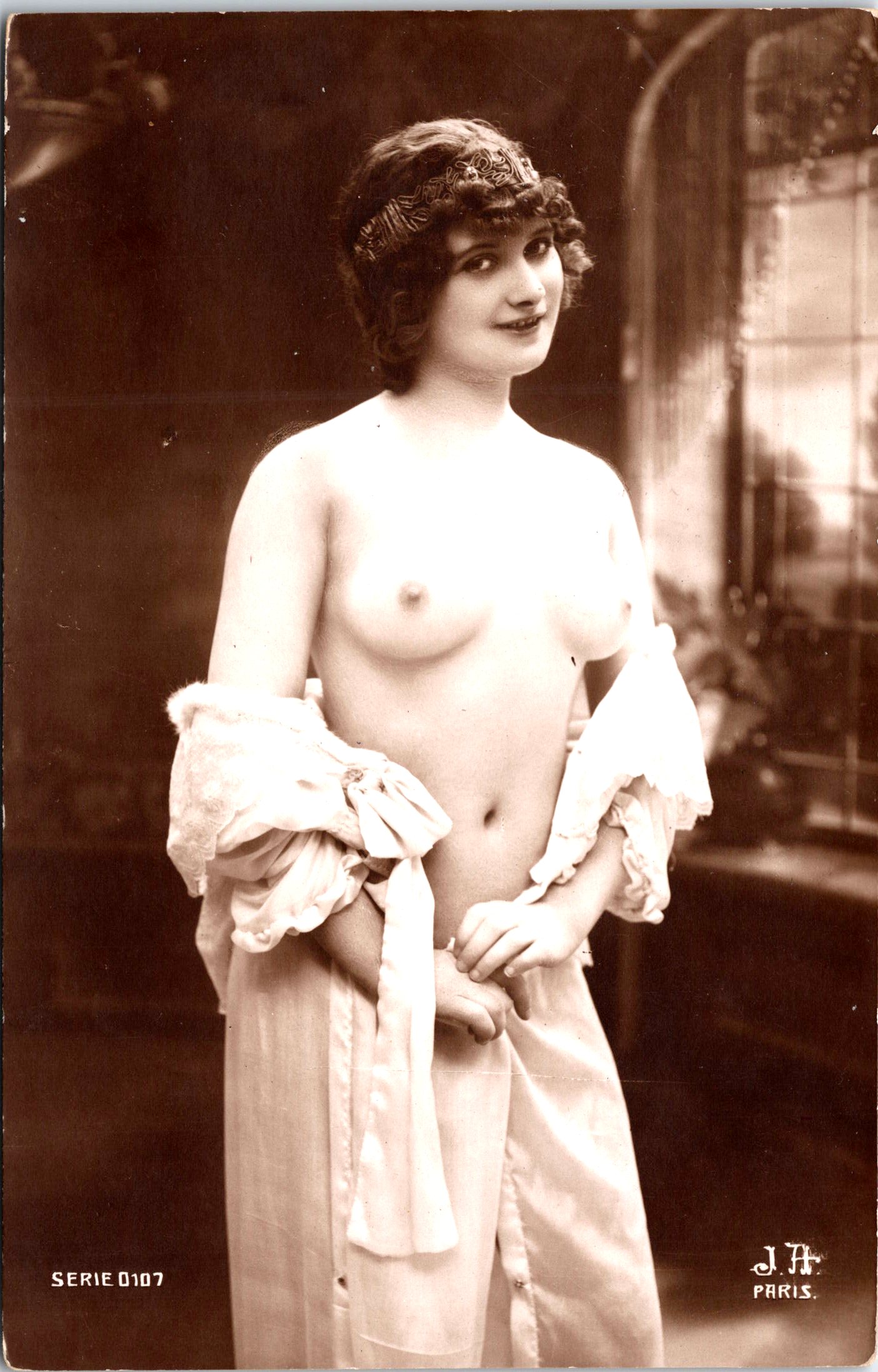
This French vintage nude real photo postcard features a pretty young woman model. Her facial expression can be described as alluring. This photograph is meant to titillate. The young woman is scantily dressed. More of her body is exposed than covered. She is wearing bed clothes, a negligee to be exact. This risque photographic portrait was published by celebrated photographer, Jean Agelou (1878-1921), as part of a series (No.D107). Agelou was a French photographer of the 1910’s and 1920’s who is best known for his erotic and nude photographs. He was born in Egypt and not much is known about his private life. Agelou generally used models between the age of 20 and 24 years-old. Although the 1900’s was the “golden age” of erotic photograph, photographers who took such risque photos had to use discretion. As a result, Agelou signed his work “JA”. In 1908, nudity in photographs was banned in France and photographers had to cover nude women images with strategically placed undergarments or other materials. Nude images had to circulate on the down low. They were sent in the mail inside of envelopes. Jean Agelou died in 1921; the result of a car accident. His brother George, who managed Jean’s business, also was killed in the crash. SOLD

Published in: on April 26, 2025 at 12:00 pm  Comments (1)  
Tags: , ,

PORTRAIT OF AN ADORABLE LITTLE GIRL IN OREGON CITY, OREGON

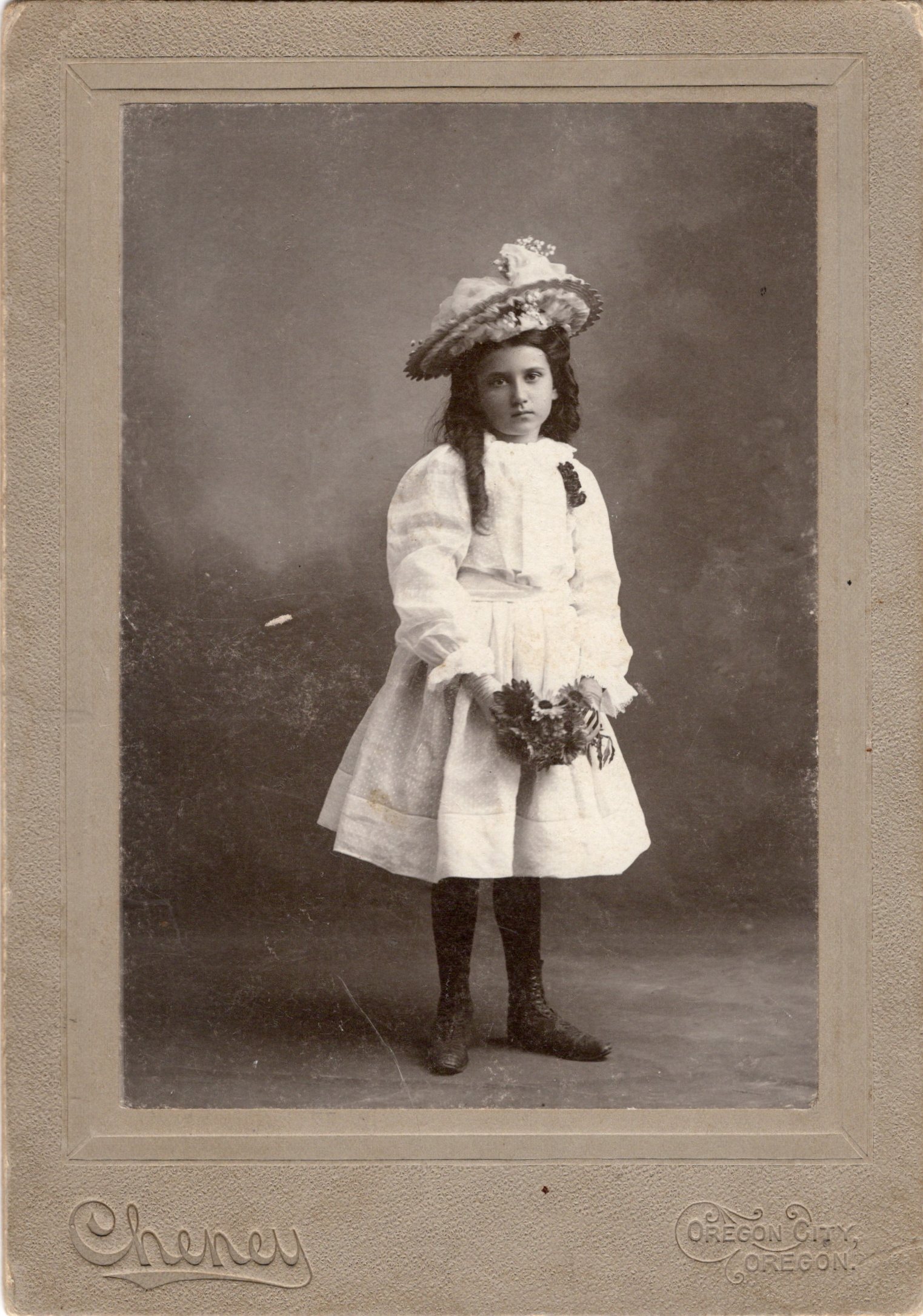
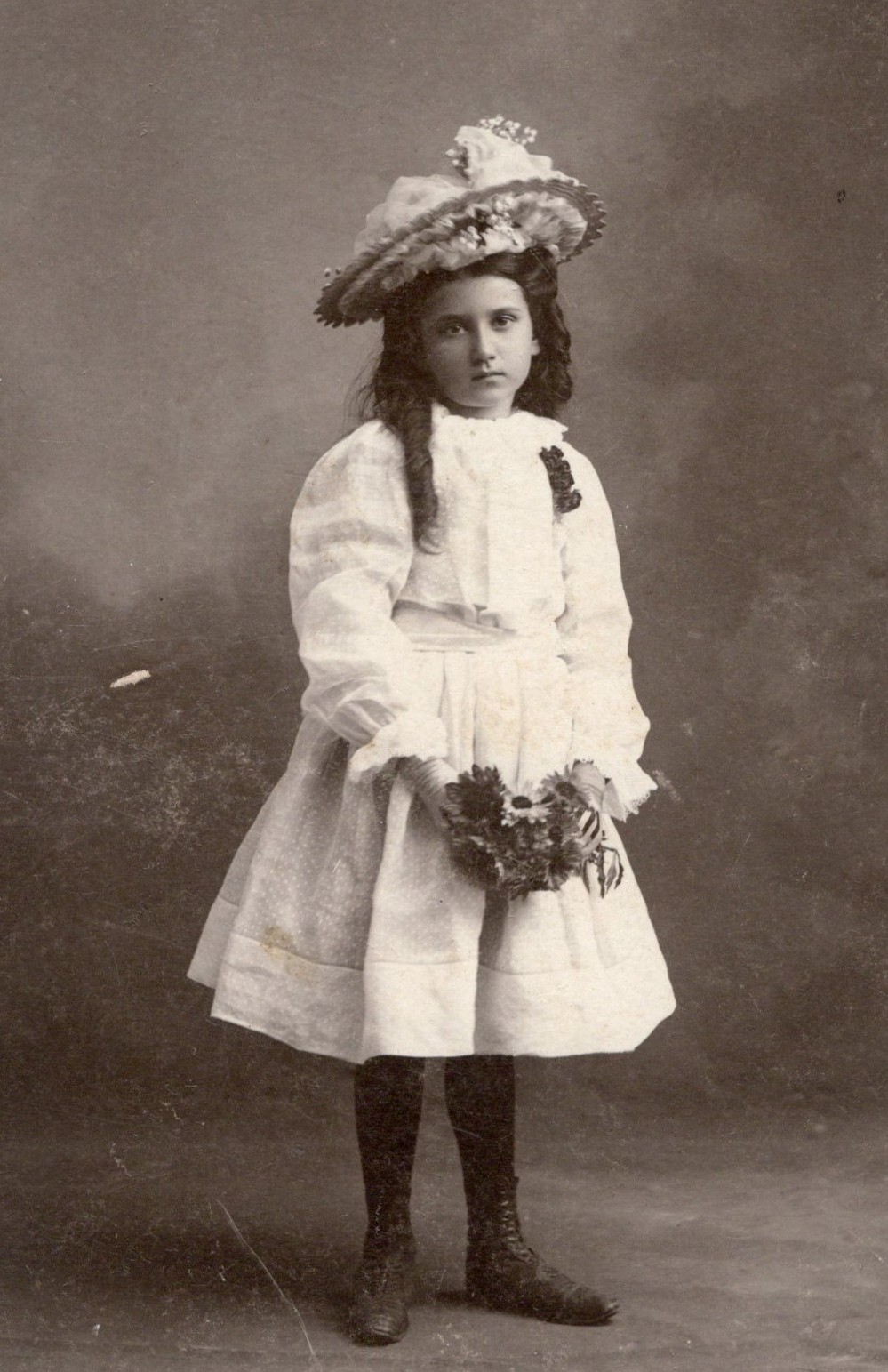
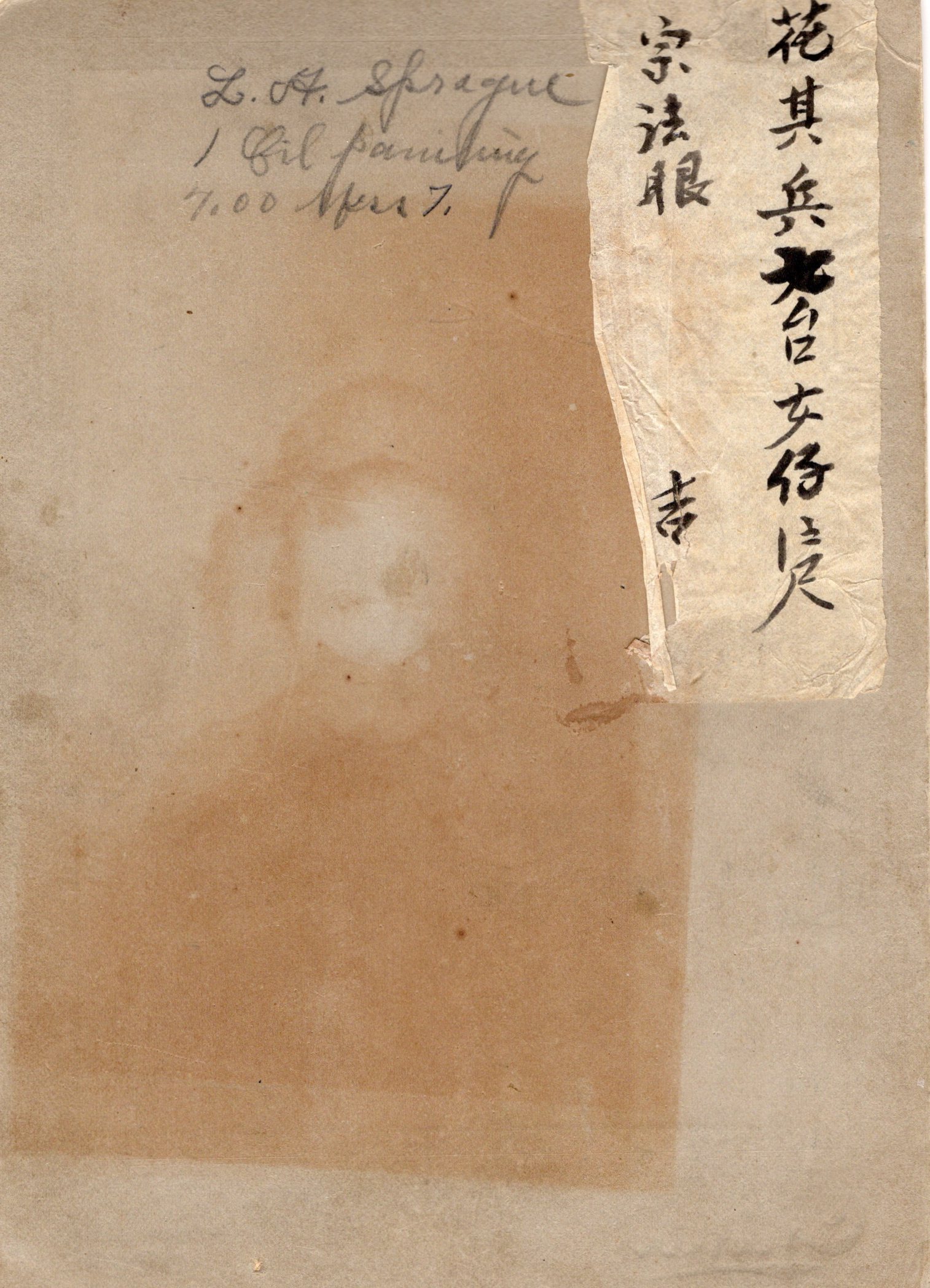
This vintage photograph features an adorable little girl with long hair. She certainly is well dressed. The child is wearing a corsage and is holding a bunch of flowers. Her portrait was taken at the Cheney Studio in Oregon City, Oregon. Interest in photography must have been in the Cheney family genes. The web site “The Art of Historic Photos” reports that at least three siblings in the Cheney family worked as professional photographers. Eston Cheney and his sister Edith both had studios located in Oregon City. Sister Ethel was a partner with Bessie Krumm in a studio at McMinnville, Oregon. Eston operated his studio between 1895 and 1901. Another site, “The Historic Photo Archive” has a different version of the Cheney family history. Eston is reported to be the father of Edith and Ethel Cheney. The reason for there being (Chinese?) writing on the reverse of this photograph, is unknown. SOLD

Published in: on April 25, 2025 at 12:00 pm  Leave a Comment  
Tags: , , , , ,

EDWIN BOOTH : RENOWNED STAGE ACTOR : BY GEORGE ROCKWOOD : UNCOMMON CABINET CARD

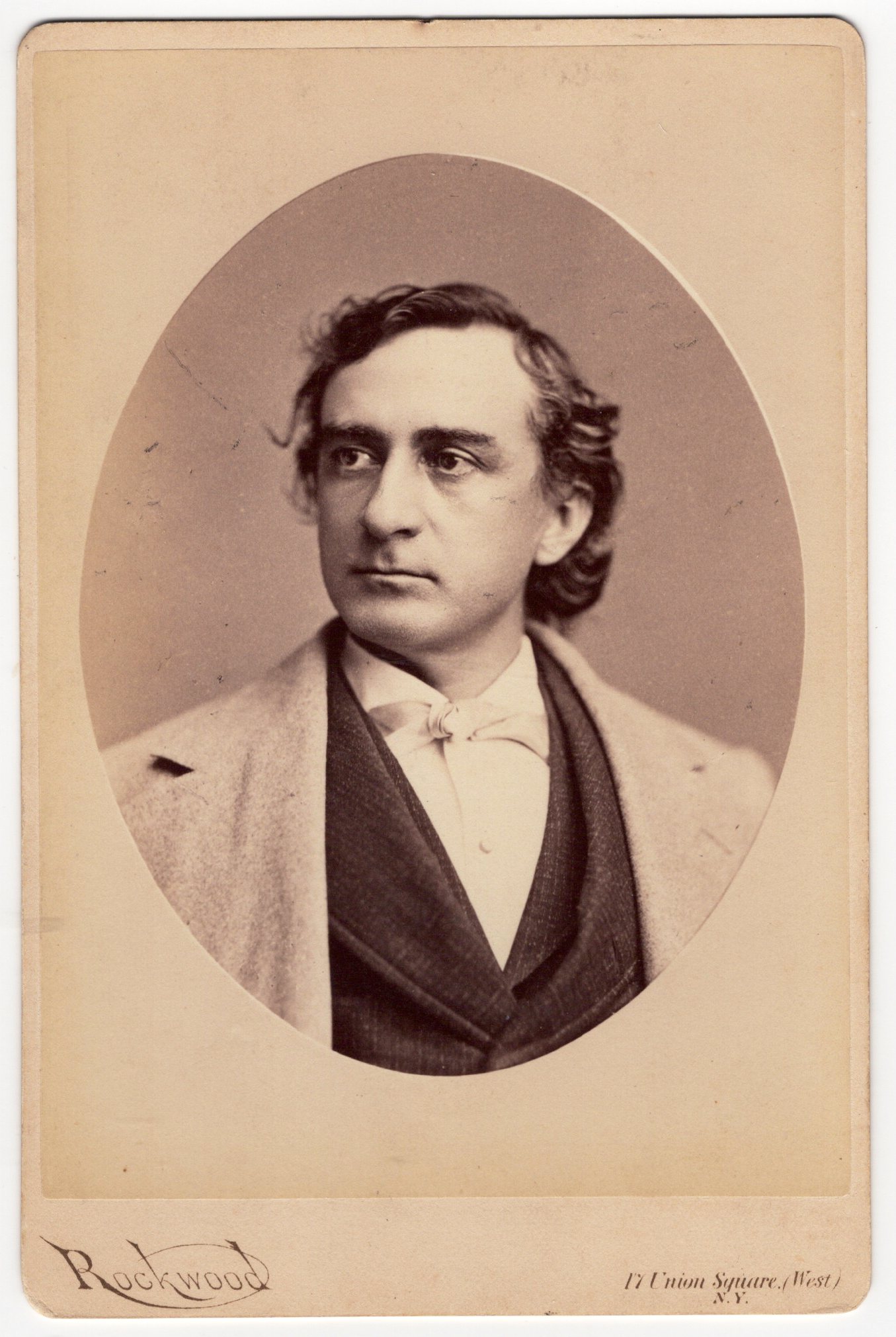
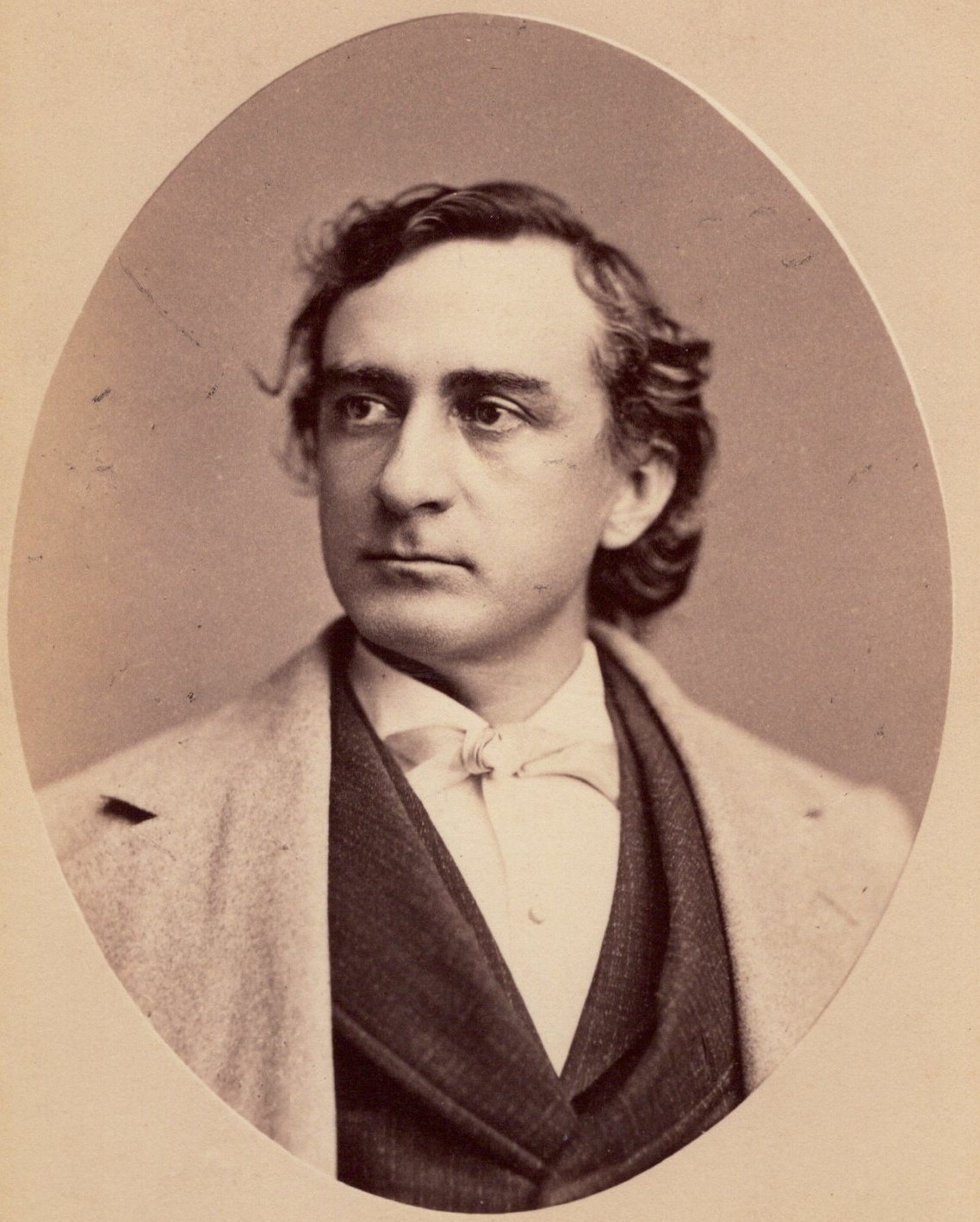
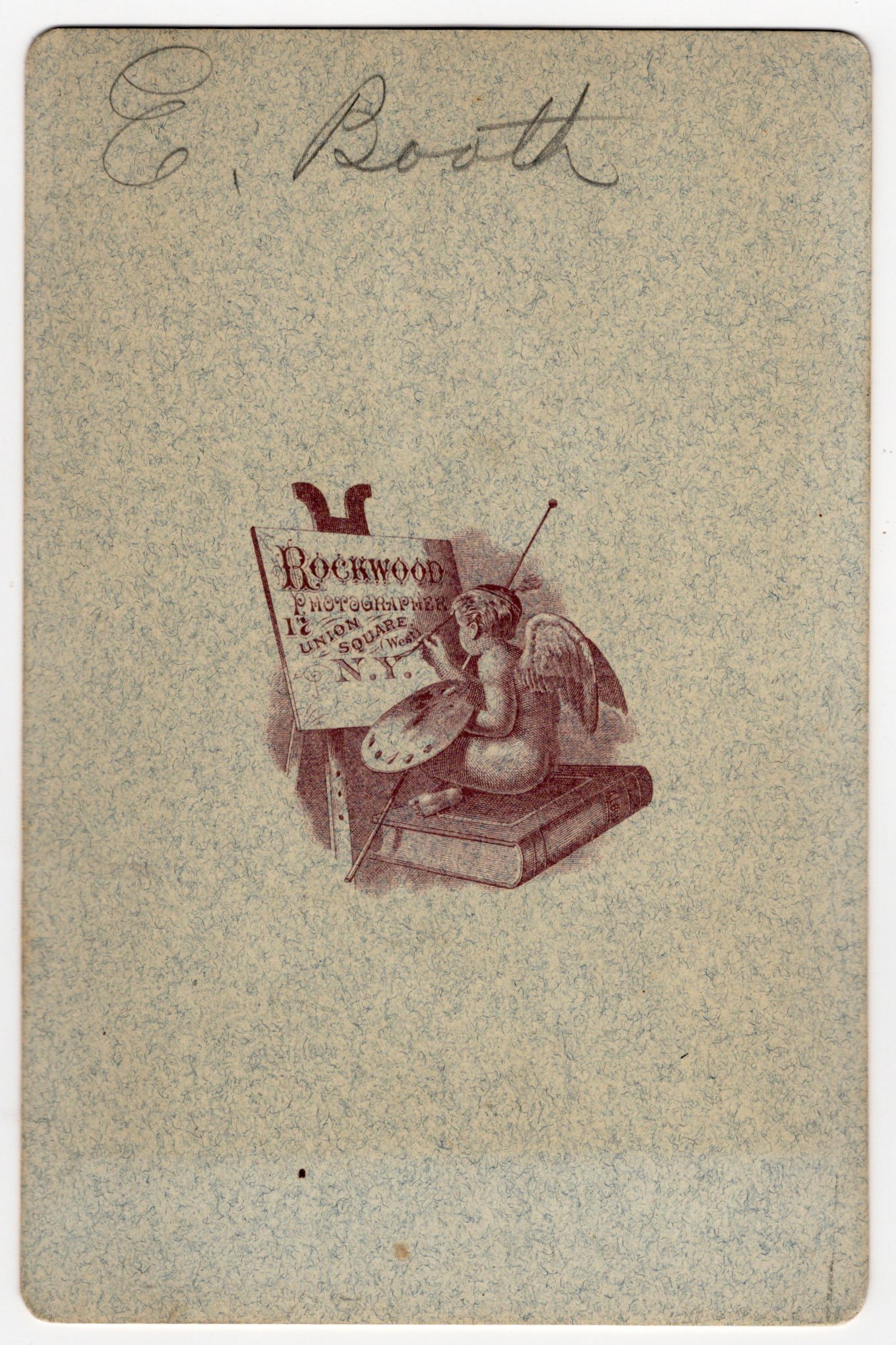
This stunning cabinet card portrait captures Edwin Booth, one of the most celebrated Shakespearean actors of the 19th century. Taken by renowned photographer George G. Rockwood of New York, the image boasts exceptional clarity and sharp detail, making it an outstanding example of 19th-century portrait photography. Booth is dressed in elegant period attire, featuring a high-collared white shirt with a neatly tied bow tie, a dark waistcoat, and a light-colored overcoat draped over his shoulders. His hair, swept back in soft curls, frames his distinguished face, exuding an air of quiet confidence and introspection. His gaze is directed slightly away from the camera, lending a dramatic and contemplative quality to the portrait—a fitting expression for a man known for his deep and emotional performances on stage. The cabinet card is in very good condition, with minimal signs of wear, and the sepia tones remain rich and well-preserved. The reverse of the card is equally impressive, featuring Rockwood’s distinctive studio imprint, which includes a charming illustration of a cherub holding a painter’s palette and brushes, next to an artist’s easel that advertises the Rockwood studio at 17 Union Square (West), New York. Additionally, there is an inscription at the top that reads: “E. Booth,” a reference to the legendary actor. Edwin Booth (1833–1893) was one of the greatest American actors of the 19th century, best known for his Shakespearean roles, particularly Hamlet, which he performed more than 100 times—an unprecedented feat at the time. His extraordinary talent and deep emotional connection to his roles earned him widespread acclaim in both America and Europe. Despite his artistic triumphs, Booth’s life was forever overshadowed by his brother’s infamous act—John Wilkes Booth’s assassination of President Abraham Lincoln in 1865. The tragedy devastated Edwin, who was a staunch Unionist and had publicly opposed his brother’s views. He briefly retired from the stage but later returned, determined to restore his family’s name through his craft. In 1888, he founded The Players Club in New York City, a private social club for actors, which still exists today. The Booth family was a dynasty of performers—Edwin’s father, Junius Brutus Booth, was an acclaimed English actor, and his brothers, John Wilkes Booth and Junius Brutus Booth Jr., also pursued theatrical careers. However, Edwin’s talent and legacy far outshone the rest of his family, cementing his place as one of America’s greatest classical actors. The photographer of Mr. Booth was George Rockwood (1832-1911). He was a renowned photographer whose studio was located in New York City. Rockwood was born in Troy, New York and graduated from college with a PhD, reportedly either from the University of Chicago, or Columbia University. At 21 years of age, he was a newspaper reporter for the Troy Daily Times and at age 23, he was managing editor of the Troy Daily Post. He began working as a photographer in St. Louis and in 1857 opened a studio with his brother Elihu in New York City. He has been credited with bringing CDV’s to America. His obituary in the Washington Post reports that Rockwood photographed  more than 350,000 people. SOLD

MARY PICKFORD : LES VEDETTES DE CINEMA : CINEMAGAZINE : RPPC (1920’s)

Mary Pickford (1892-1979) was a Canadian-American actress and one of the most influential figures in early Hollywood. She was often referred to as “America’s Sweetheart”. She was a pioneer of silent film and a co-founder of the film industry as we know it today. Pickford’s career began in childhood when she performed in theater productions in Canada and the United States. By the early 1900s, she transitioned to film, working with director D.W. Griffith at Biograph Studios. Her delicate beauty and expressive acting quickly made her a fan favorite, setting her apart in an era when exaggerated stage-style performances dominated silent films. During the 1910s and 1920s, Pickford became one of the highest-paid and most beloved actresses in the world. Starring in films such as Rebecca of Sunnybrook Farm (1917), Daddy-Long-Legs (1919), and Pollyanna (1920), she was known for playing wholesome, spirited young women. Her curly hair and signature on-screen innocence became iconic, but she was also a savvy businesswoman who understood the power of her brand. Pickford was not only a star but also a trailblazer in the film industry. In 1919, she co-founded United Artists alongside Charlie Chaplin, Douglas Fairbanks (her then-husband), and director D.W. Griffith. This revolutionary move allowed filmmakers to control their own productions rather than rely on major studios, changing the industry forever. As the film industry transitioned to “talkies,” Pickford retired from acting in the early 1930s, though she continued to produce films. Her contributions earned her an honorary Academy Award in 1976 for her lasting impact on cinema. Mary Pickford’s influence extends beyond her films. She helped shape the star system, paved the way for women in Hollywood, and co-founded the Motion Picture Relief Fund to support struggling actors. She remains an enduring symbol of early Hollywood glamour and innovation. Mary Pickford was born into a working-class family in Toronto, Canada. Her father, John Charles Smith, was an alcoholic who struggled to provide for the family and died from a workplace accident when Mary was just six years old. Her mother, Charlotte Hennessey Smith, was left to raise Mary and her two younger siblings, Lottie and Jack, on her own. To support the family, Charlotte encouraged her children to enter acting, and Mary began performing in theater at a young age. She soon became the family’s primary breadwinner, and her siblings, Lottie Pickford and Jack Pickford, also pursued film careers. Pickford transitioned from theater to film in the early 1900s, quickly rising to fame with her expressive acting and wholesome on-screen persona. By the 1910s and 1920s, she was one of the most recognizable stars in the world, earning the nickname “Queen of the Movies.” She also helped establish the Academy of Motion Picture Arts and Sciences. Mary Pickford was married three times. Pickford’s first marriage was to silent film actor Owen Moore (1911-1920). Her second and most famous marriage was to fellow silent film actor, Douglas Fairbanks (1920-1936). Her third marriage was to actor Charles “Buddy” Rogers (1937-1979). After retiring from acting in the early 1930s, Pickford focused on producing films and philanthropy. She became more reclusive in her later years, struggling with alcoholism and health issues. Today, she is remembered as a pioneering force in cinema history. Pickford is featured on this postcard. She is seated gracefully on a carved wooden stool, exuding elegance and poise. She is dressed in a flowing, light-colored gown with delicate embellishments on the bodice and sheer fabric draping over her arms. Her signature curls frame her face, a defining feature of her “America’s Sweetheart” image. She wears a subtle yet confident expression, her eyes gazing slightly to the side with a soft, introspective quality. Her arms are relaxed, with one hand resting gently on her lap and the other elegantly extended. Her accessories include a bracelet on her wrist and a ring on her finger, adding to her refined look. The backdrop behind her is a richly textured tapestry, possibly depicting a pastoral scene. This postcard was likely produced in the 1920s, during the height of Pickford’s career. It is numbered 86 and is part of a larger collectible series showcasing cinema stars of the era. This vintage postcard is part of a series titled Les Vedettes de Cinéma (translated as The Stars of Cinema), and it was published by Alfred Noyer (Paris,France), in collaboration with United Artists, the film distribution company that Pickford co-founded. The back of the postcard identifies the publisher as Cinémagazine – Edition and states that it was Made in France / Fabriqué en France, indicating its European origin. (SOLD)

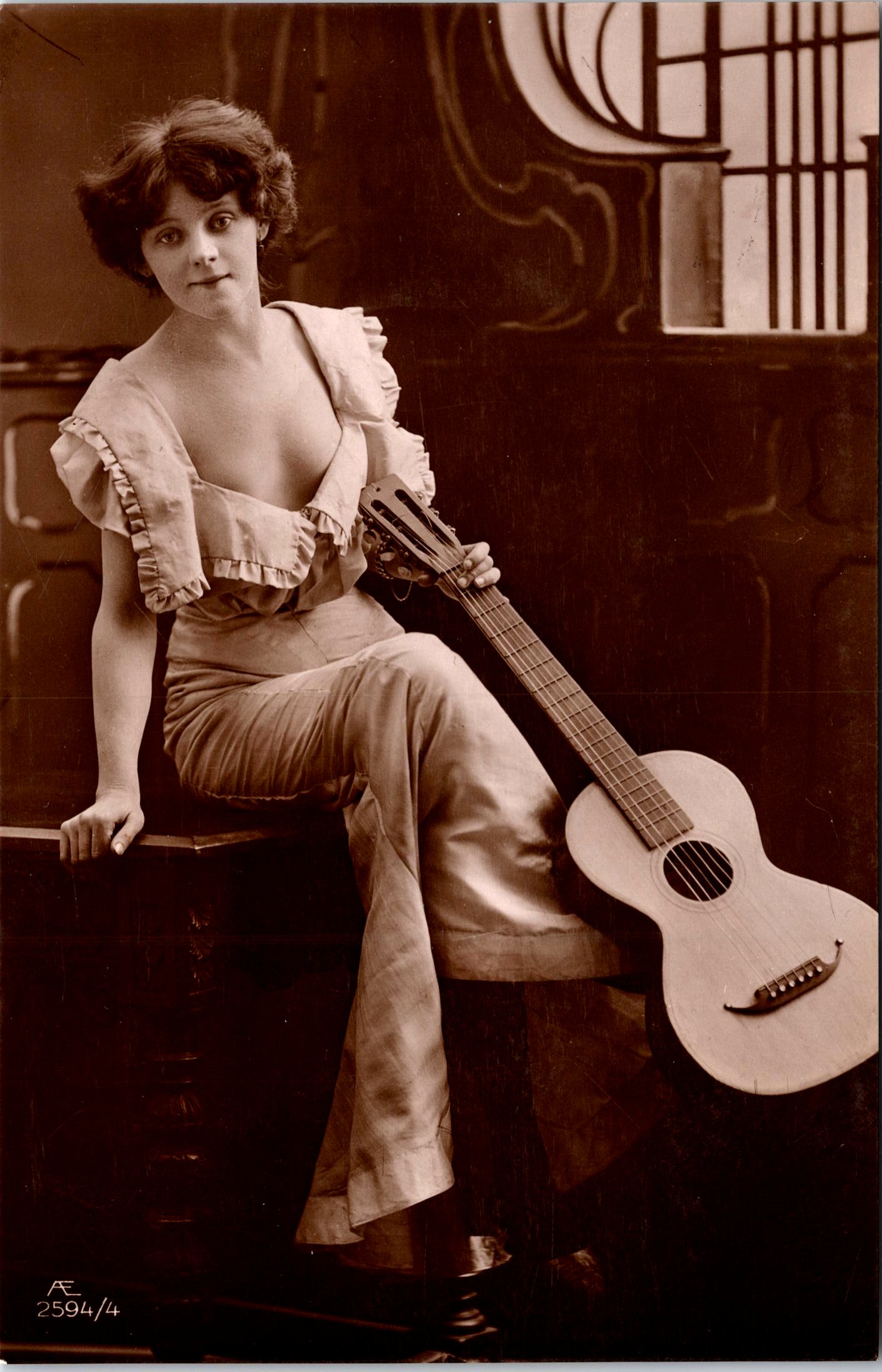
PRETTY YOUNG WOMAN WITH HER GUITAR : RISQUE : VINTAGE RPPC 1914

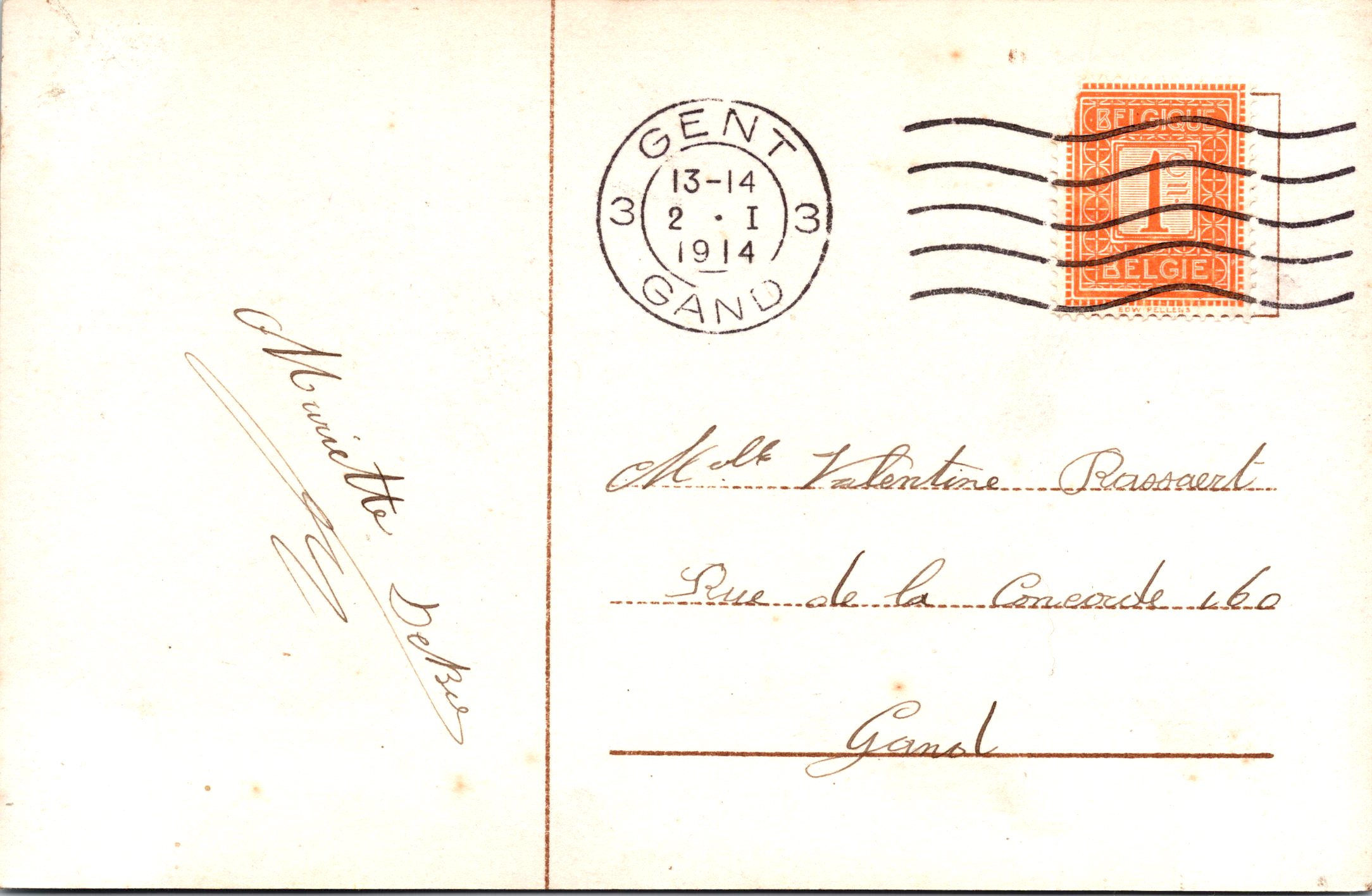
This vintage real photo postcard features a pretty young woman posing with her guitar. Her plunging neckline makes this a risque postcard. The card was published by Adolph Engel (Berlin, Germany) and is part of a series (No.2504/4). SOLD

Published in: on April 22, 2025 at 12:00 pm  Leave a Comment  
Tags: , , ,

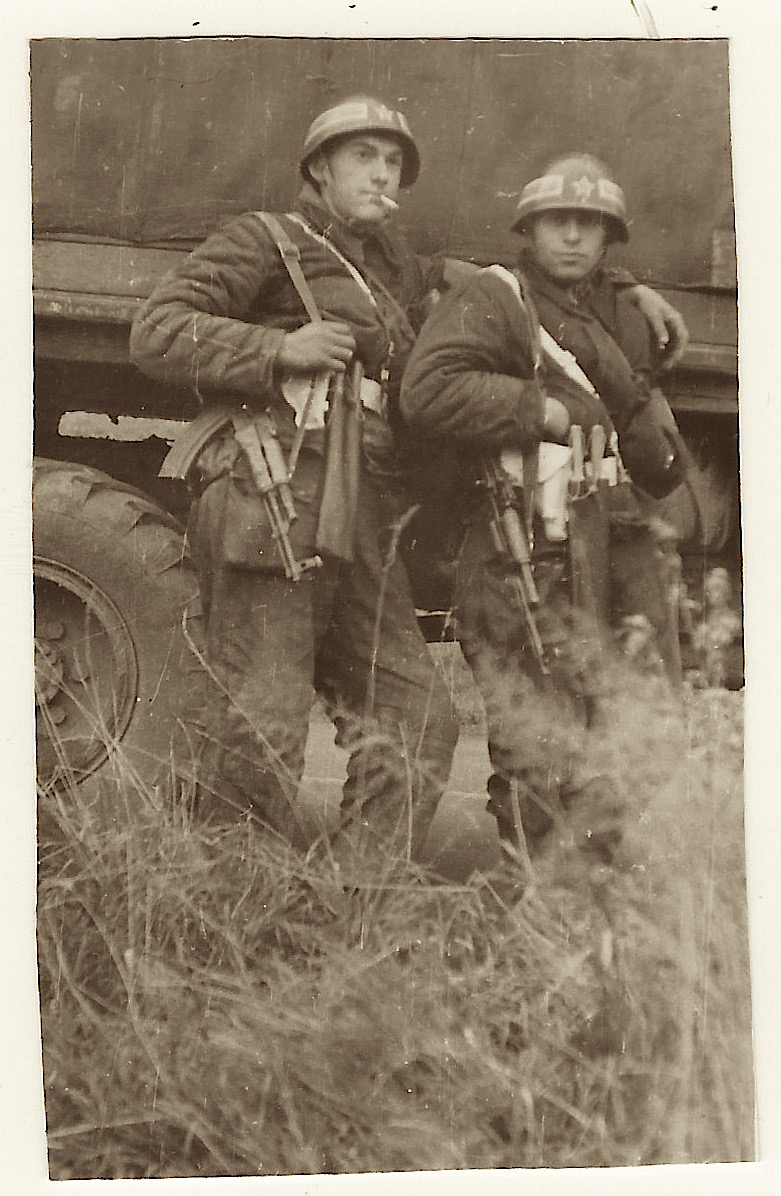
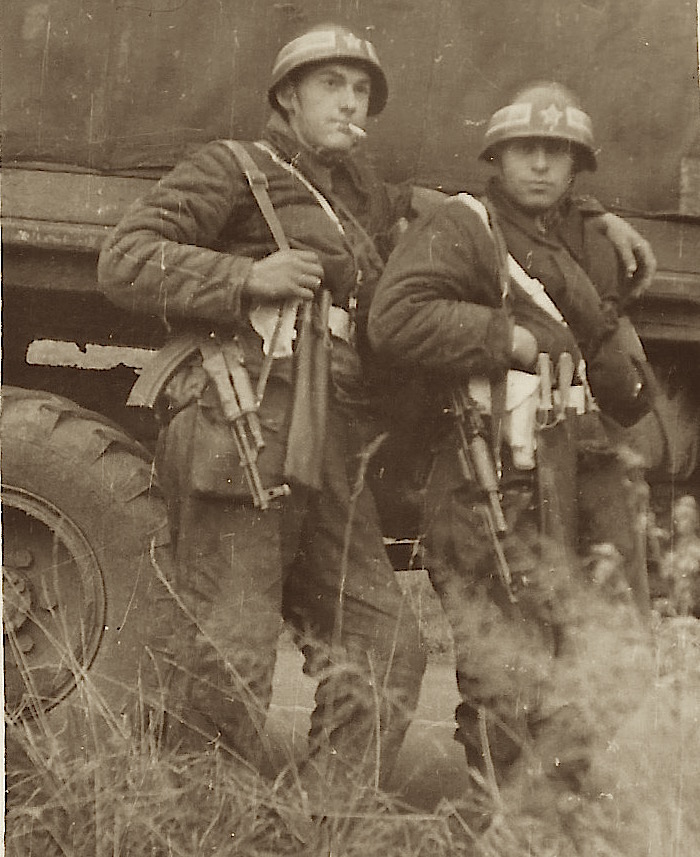
PORTRAIT OF TWO TOUGH LOOKING SOLDIERS (RUSSIAN? WORLD WAR II?)

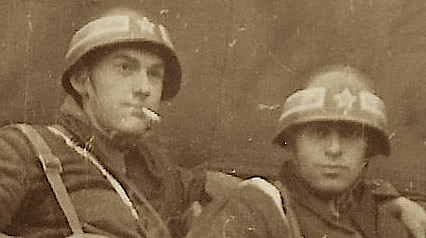
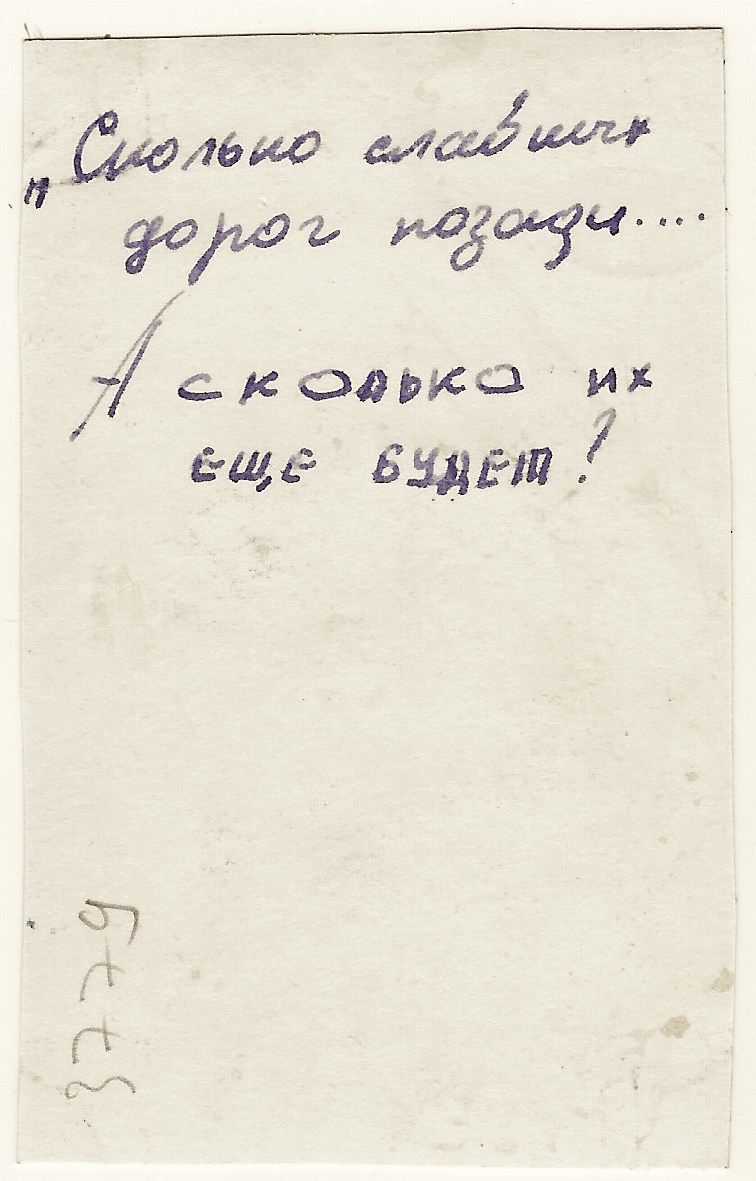
cc stein 5 This photograph is enigmatic. Who are these soldiers? What nation’s army do they serve in? I know that a number of Russian Army helmets have similar stars. What do the rectangular insignias mean that appear on both sides of the helmet’s star? What is the translation of the inscription on the reverse of the photo and what language is it written in? Note the men’s weapons slung over their shoulders.  SOLD
Published in: on April 21, 2025 at 12:00 pm  Comments (1)