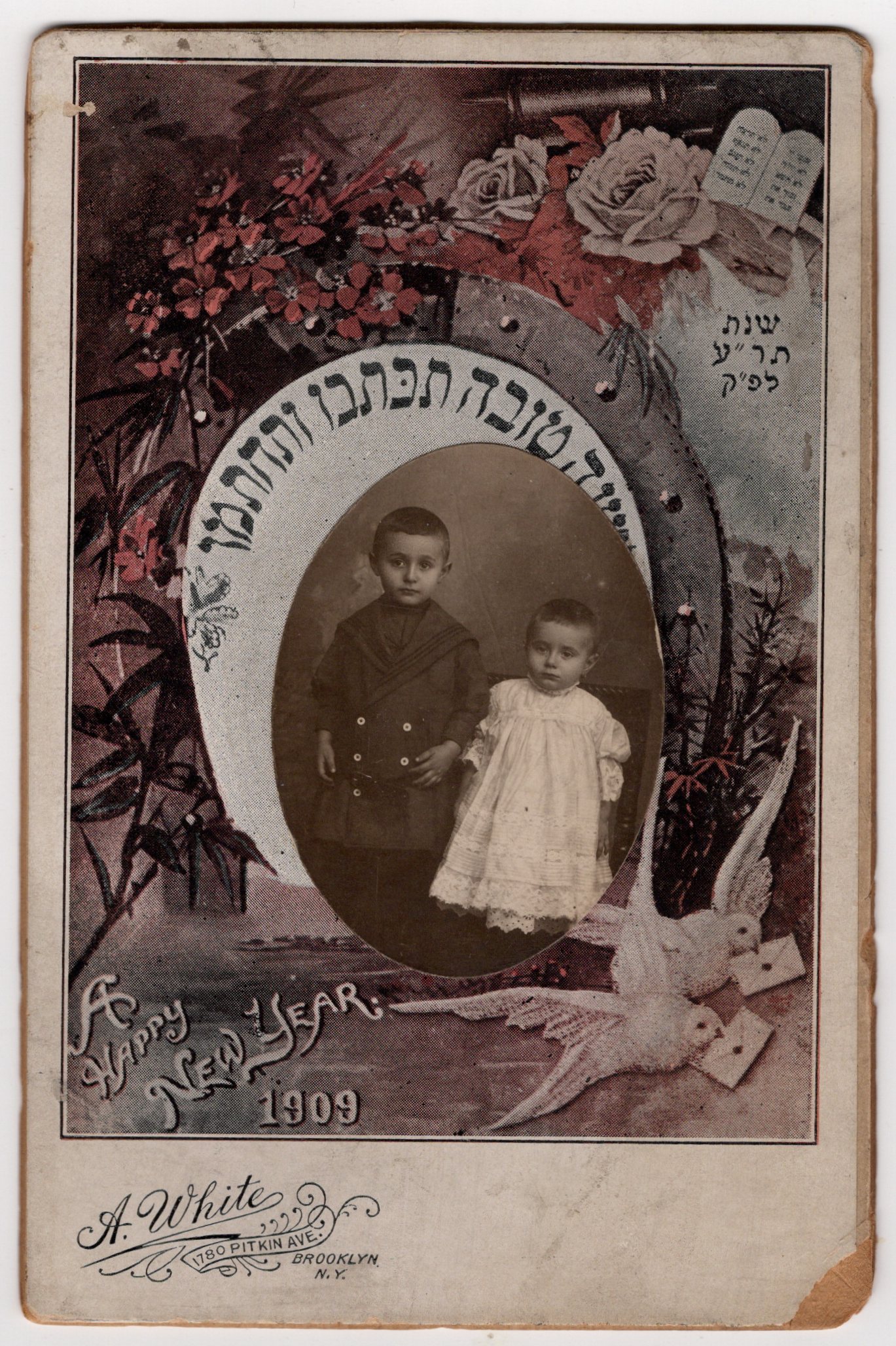
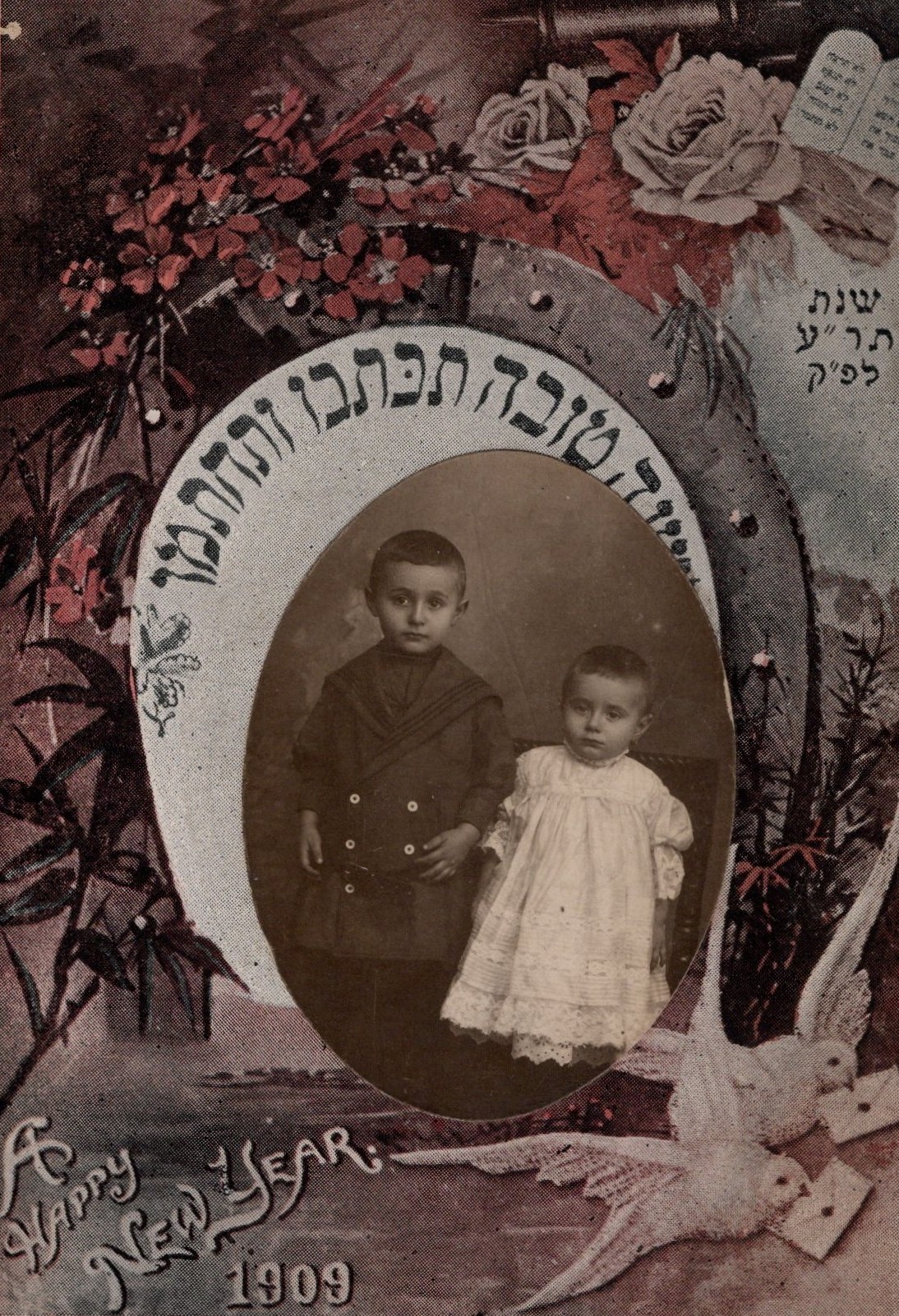
This highly unusual and visually compelling cabinet card combines Jewish holiday imagery, vernacular photography, and early 20th-century printed design into a single remarkable piece of ephemera. Created for the Jewish New Year (Rosh Hashanah) and dated 1909, the card features an oval photographic portrait of two young children mounted into an elaborately printed holiday-themed design filled with symbolic imagery and Hebrew text. The central photograph depicts two solemn yet charming children posed together in formal studio attire. The older child wears a dark double-breasted outfit with sailor-inspired styling, while the younger child is dressed in a delicate white gown with lace trim, reflecting the period practice of dressing very young children in gender-neutral infant clothing. Their direct expressions and careful studio posing create a touching and intimate portrait typical of family photography from the era. Surrounding the oval portrait is an ornate lithographic design incorporating flowers, doves carrying messages, festive motifs, and Hebrew lettering associated with the Jewish New Year. The Hebrew greeting references wishes for a good year, consistent with traditional Rosh Hashanah greeting cards and presentation pieces popular among Jewish immigrant communities in New York during the early 1900s. The design also includes the English phrase “A Happy New Year 1909.” The Hebrew on the card can be translated (from top to bottom) as “year of 5670” and “May you be inscribed and sealed for a good year”. On the Jewish calendar 1909 equates with the year 5670. An important detail of this piece is its construction. The decorative background is not a photographic image, but rather a printed lithographic mount, which explains the visible dot or screen pattern seen throughout the background artwork. The oval portrait is an original period photograph inserted or pasted into the printed design. Because the actual photograph lacks the same dot pattern seen in the surrounding artwork, the piece is an authentic period combination of real photography and commercial holiday printing and not a modern copy or reproduction. The slightly imperfect placement of the oval portrait over a portion of the Hebrew lettering is also consistent with hand-assembled studio work of the era. The mount bears the imprint of A. White, 1780 Pitkin Avenue, Brooklyn, New York, placing the piece within the vibrant Jewish immigrant neighborhoods of early 20th-century Brooklyn. Such custom holiday photographic mounts were produced in relatively small quantities and were often cherished as family keepsakes. Historically, Jewish New Year greeting cards and photo-mount presentations became increasingly popular among Eastern European Jewish immigrant families during the late Victorian and Edwardian eras, particularly in New York City. Institutions and archives documenting Jewish ephemera note the widespread popularity of illustrated Rosh Hashanah cards during this period, especially around 1900–1915. The condition is good overall for this fragile and highly decorative type of piece. The mount shows moderate age wear, including corner rounding, edge wear, small chips, and surface scuffing. There is visible wear at the lower right corner and scattered small abrasions along the edges. The reverse shows age toning, surface marks, and handling wear. The photographic portrait remains clear and well-preserved overall, with pleasing contrast and good detail. Despite age-related wear, the cabinet card retains strong display appeal and remains structurally intact (see scans).
This Cabinet Card is available for purchase at my store, The History Peddler, for $65.00 or best offer.
Interested collectors may view the listing here:


Leave a Reply