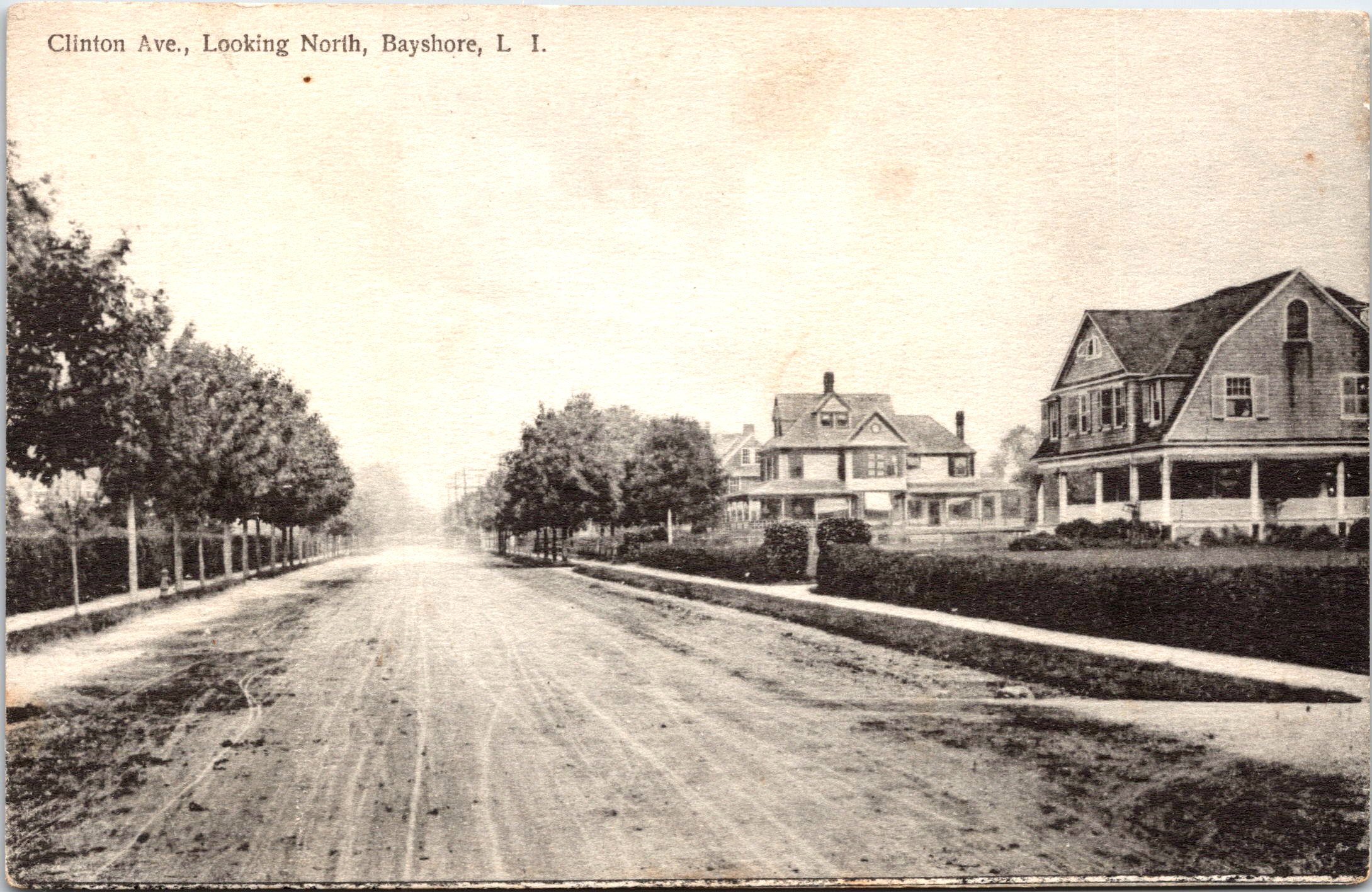
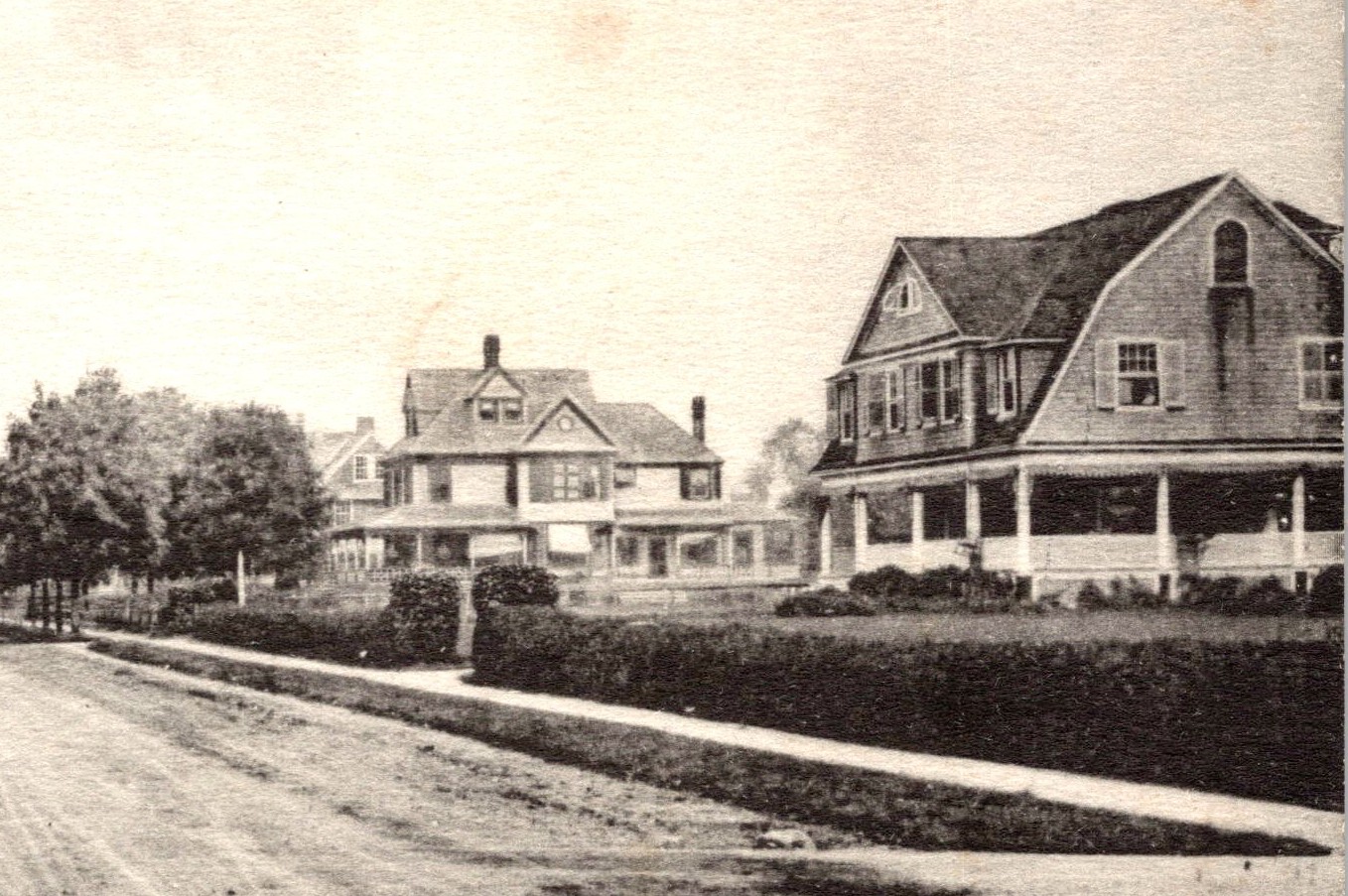
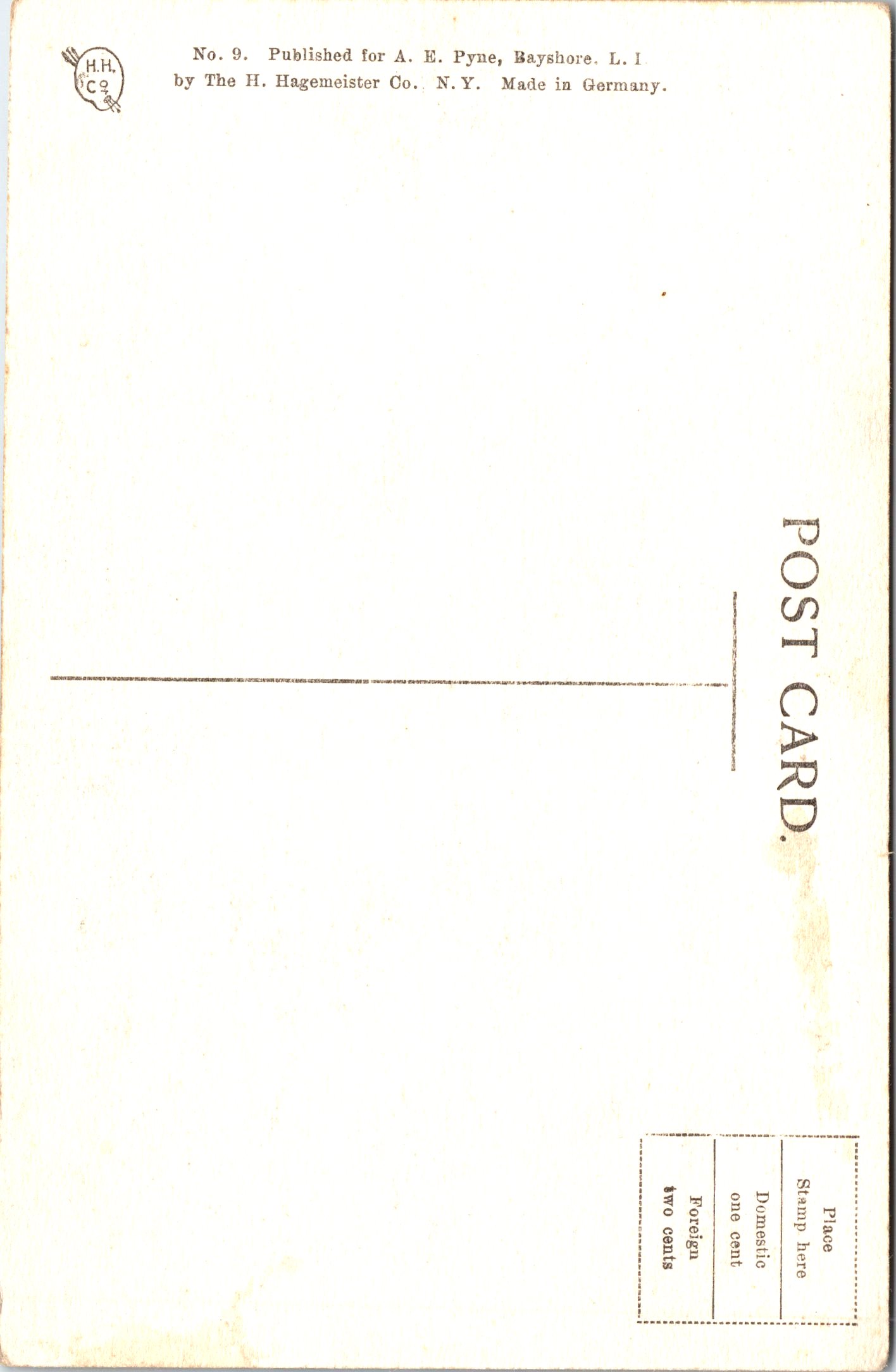
This vintage postcard takes a step back in time with this vintage postcard capturing a picturesque view of Clinton Avenue, looking north, in Bayshore, Long Island, New York. The scene features a tranquil, tree-lined dirt road bordered by charming early 20th-century homes. On the right side of the street, you can see elegant houses with distinctive architectural details, including wrap-around porches and manicured hedges, evoking a sense of small-town serenity from a bygone era. This postcard offers a unique glimpse into the history and charm of Bayshore, where a modern Clinton Avenue still exists today, connecting this nostalgic image to its contemporary counterpart. The reverse side of the postcard provides details about its origins. It was published for A. E. Pyne of Bayshore and printed by The H. Hagemeister Co., based in New York. The card itself, was made in Germany. This postcard is part of a series, noted as No. 9. SOLD
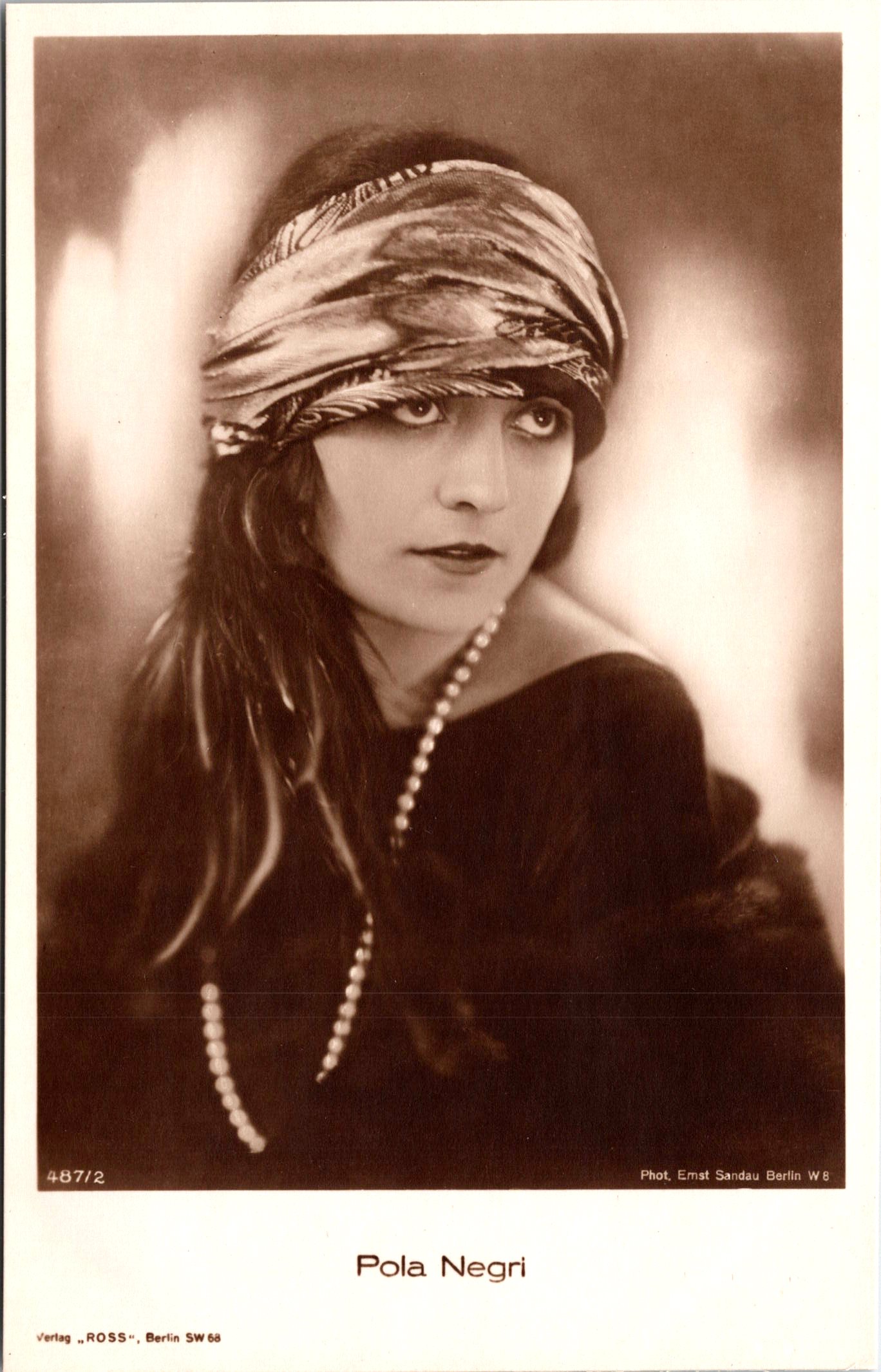
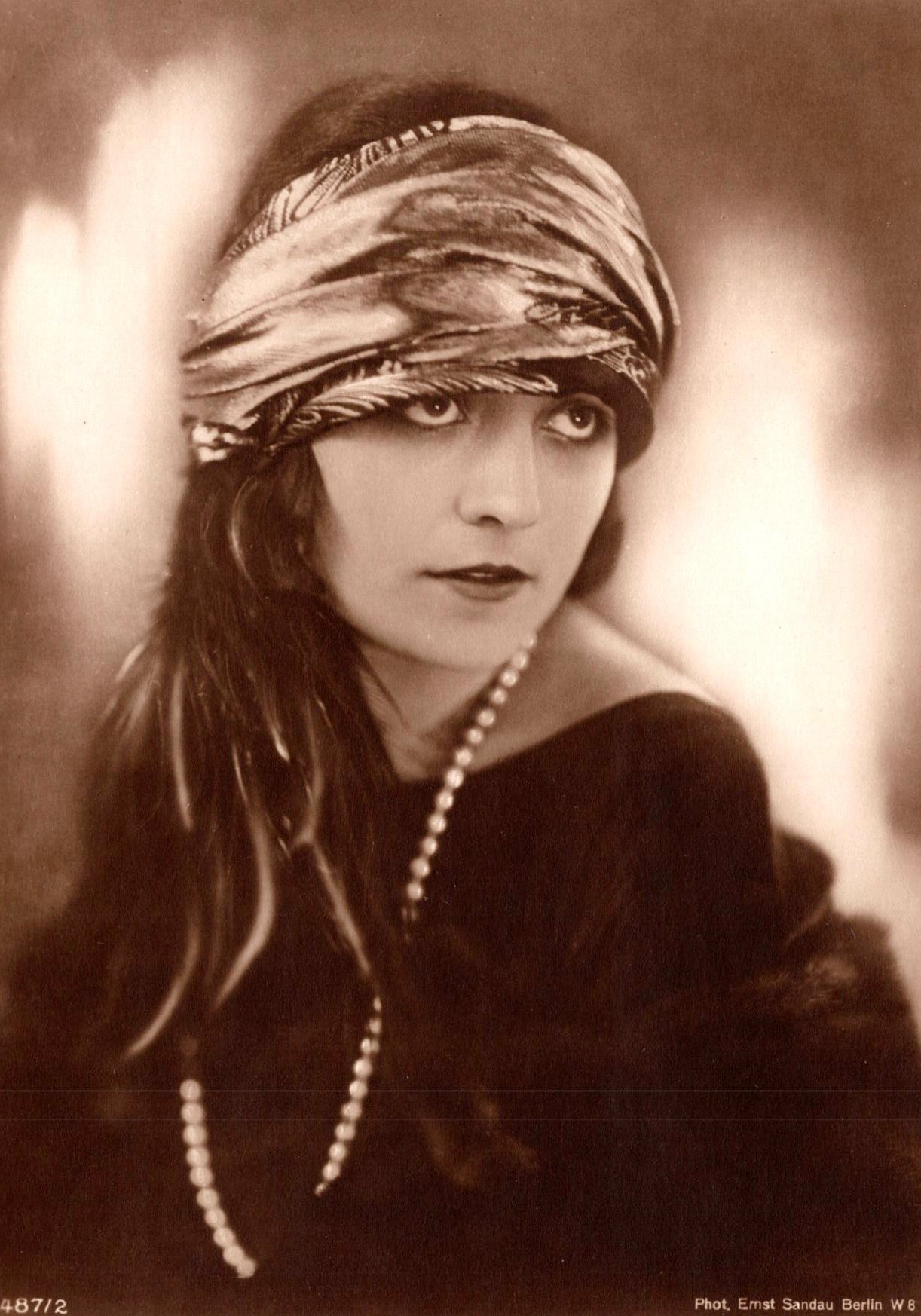
This vintage real photo postcard features internationally acclaimed Polish-born actress and dancer, Pola Negri (1897-1987). Her father was a stage actor. She began her career in the theaters of Poland. In 1917, she made her film debut in the silent film, “Bestia”. She became an established Polish silent film actress. In 1922, Paramount brought her to Hollywood and she became one of the studio’s biggest stars. She appeared in a number of successful films, including “Forbidden Paradise” (1924), “A Woman of the World” (1925), and “The Eagle” (1925). She was known for her dramatic and intense performances, her exotic beauty, and European accent. She became a favorite of American film audiences. Negri’s personal life was often the subject of media attention. She had a high-profile romance with fellow actor Rudolph Valentino, which lasted until his death in 1926. She was also linked to several other Hollywood actors, including Charlie Chaplin and Gary Cooper. Negri’s career began to decline in the late 1920s, as the introduction of sound films made it more difficult for non-native English speakers to succeed in Hollywood. She returned to Europe in the early 1930s, where she continued to work in films and on stage. During World War II, Negri entertained American and British troops stationed in Europe. Negri’s last film appearance was in the 1964 film “The Moon-Spinners,”. She continued to perform on stage until the 1970s, and she also wrote several books about her life and career. Pola Negri died in1987, at the age of 90, in San Antonio, Texas. This vintage postcard was published by Ross Verlag as part of a series (487/2). Negri’s portrait seen on this card was taken by Ernst Sandau (1880-1918). He was born in Sweden and died in Germany. Some believe that he may have been killed in World War I. Sandau operated a studio in Berlin, Germany and was active between 1912 and 1918. His son, Ernst Jr., was also a photographer. SOLD
Postcard 1 features French opera singer and actress, Ellen Baxone (1881-1964). She began her theatrical career as an operetta and comic opera singer in 1901. She began performing at the Moulin-Rouge in 1903. She performed in many stage productions and also in one short film in 1917. She married Ivo Radonich in 1918, although she had a son by him in 1908.. He was an officer in the cavalry of the Montenegrin army and cousin to both the king of Montenegro and the king of Italy. Upon her marriage, she ended her theatrical career. Their marriage lasted about two years. This postcard close-up portrait of Miss Baxone shows her beauty. The photograph was taken by Leopold Reutlinger. He was a well known and talented celebrity photographer who operated out of Paris, France. The postcard is hand colored. The card was published by Misch & Co. as part of a series (no.35). The postcard has a postmark from 1908. SOLD
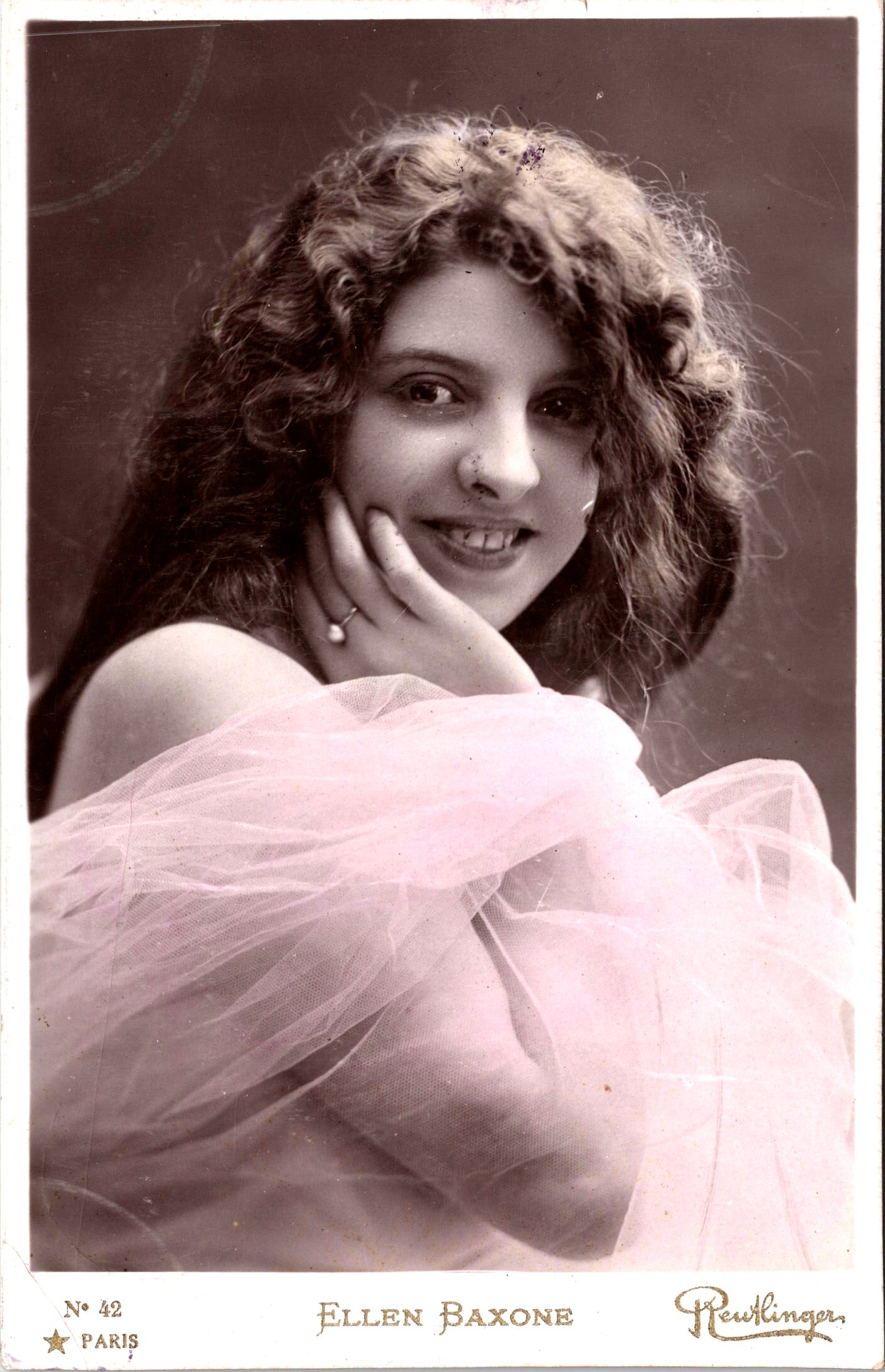
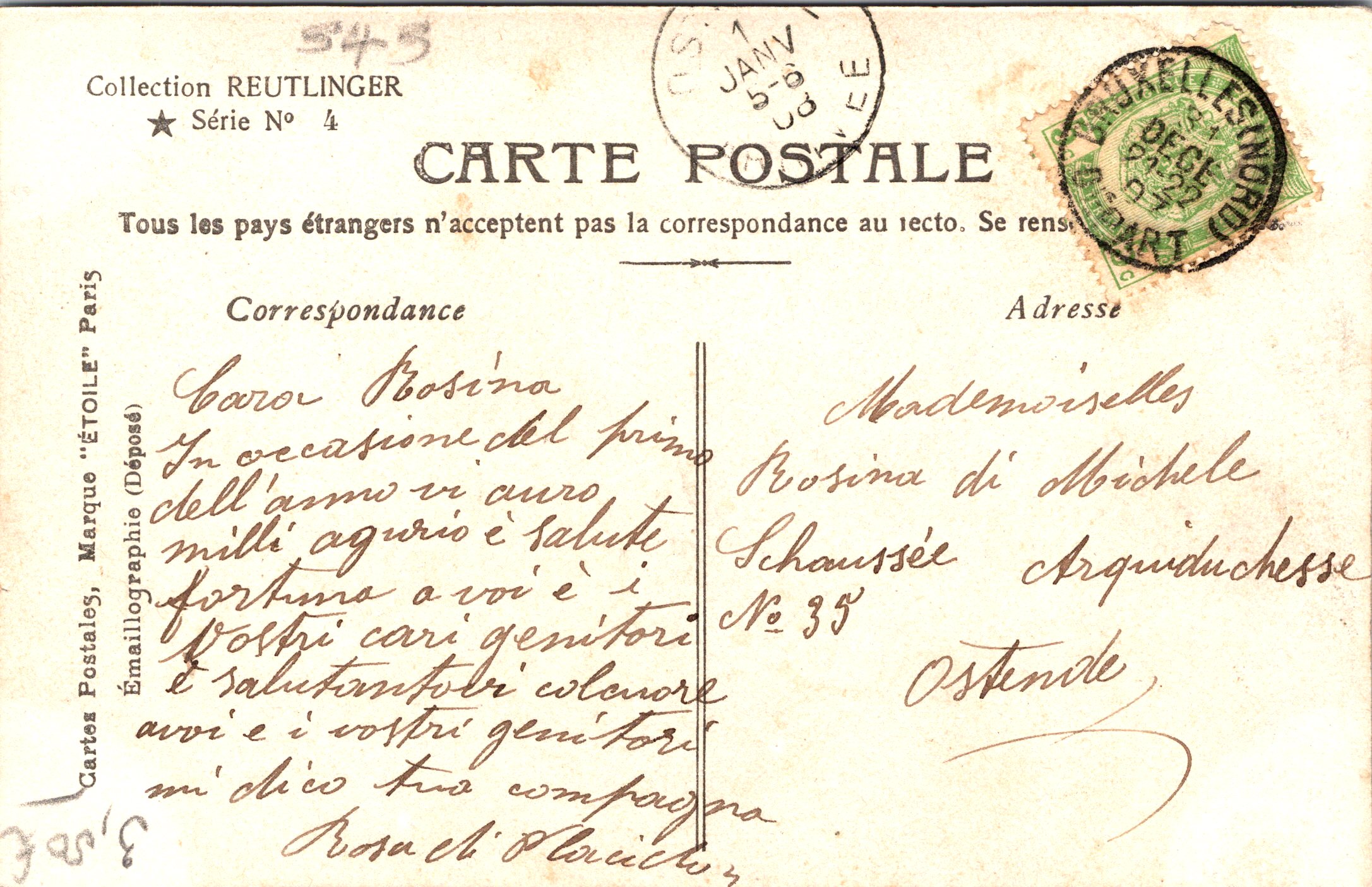
In Postcard 2 , Ellen Baxone is adorned in a luxurious silk gown, exuding the opulence characteristic of the era. Her attire is complemented by delicate accessories, and her hair is styled in the fashionable manner of the early 1900s. Baxone’s expression is poised and serene, reflecting the grace and sophistication that made her a celebrated figure on the stage. This postcard was mailed to a young woman in Ostend, Belgium. Roughly translated, the message states “Dear Rosina, On the occasion of the new year, I wish you a thousand best wishes and good health. Good fortune to you and your dear parents. I warmly greet you and your dear parents. Your classmate who remembers you. Rosa di Barletta. This postcard is part of a series published by Reutlinger, with this particular piece being number 4 in the collection. Reutlinger’s postcards were widely distributed during the Belle Époque period, serving both as collectibles and as a means for fans to connect with their favorite performers. This postcard is a real photo postcard (RPPC), a popular format in the early 20th century that involved developing a photographic image directly onto postcard stock. This image was created by a photographic process called “Emaillographie”. It is interesting that the first five letters of the technique is “Email”. SOLD
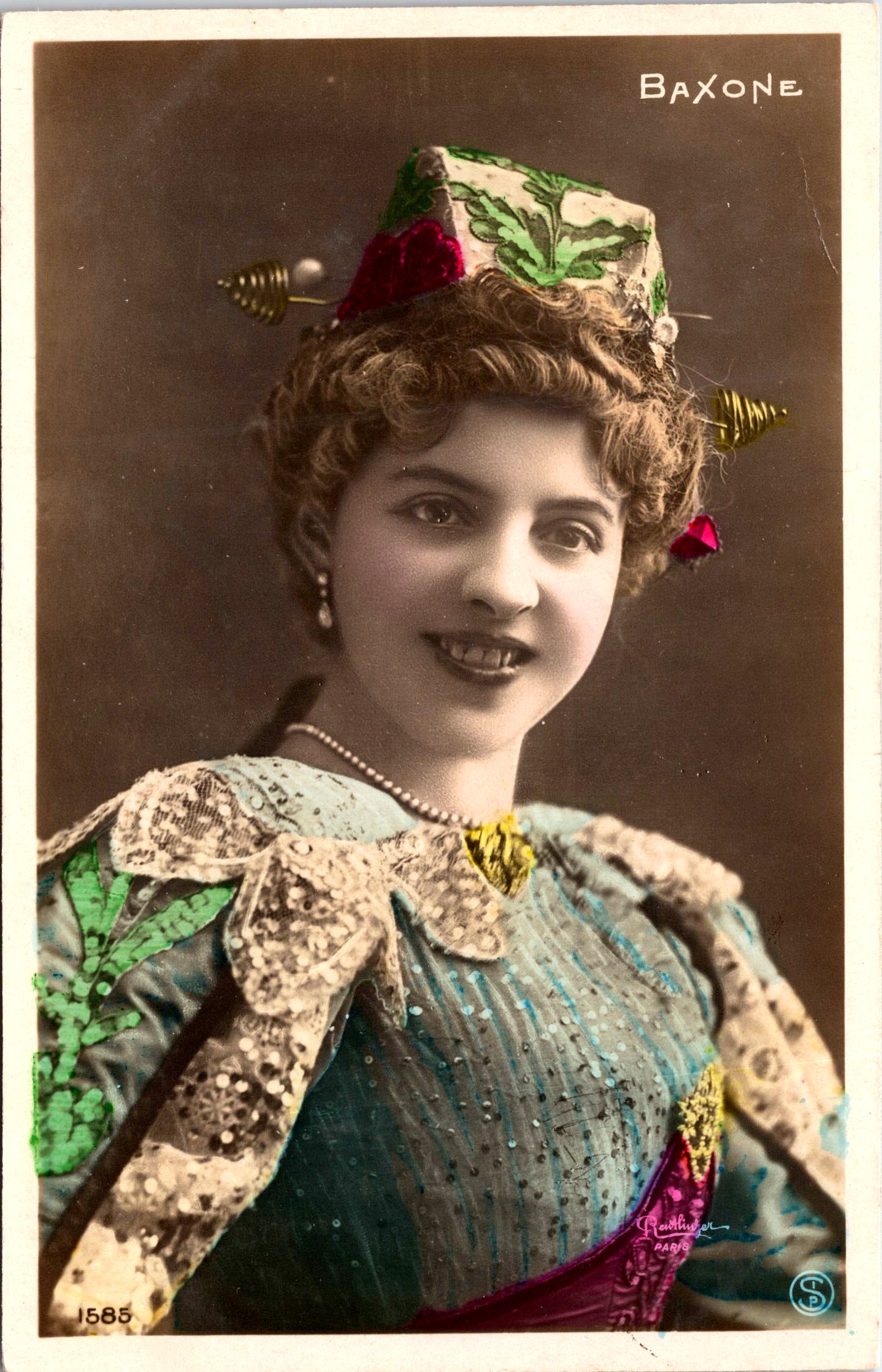
Postcard 3 offers a close-up portrait of Miss Baxone that showcases her beauty. The photograph was taken by Leopold Reutlinger. He was a well known and talented celebrity photographer who operated out of Paris, France. The postcard is hand colored. The card was published by SIP as part of a series (no.1585). The postcard is from circa 1907. SOLD
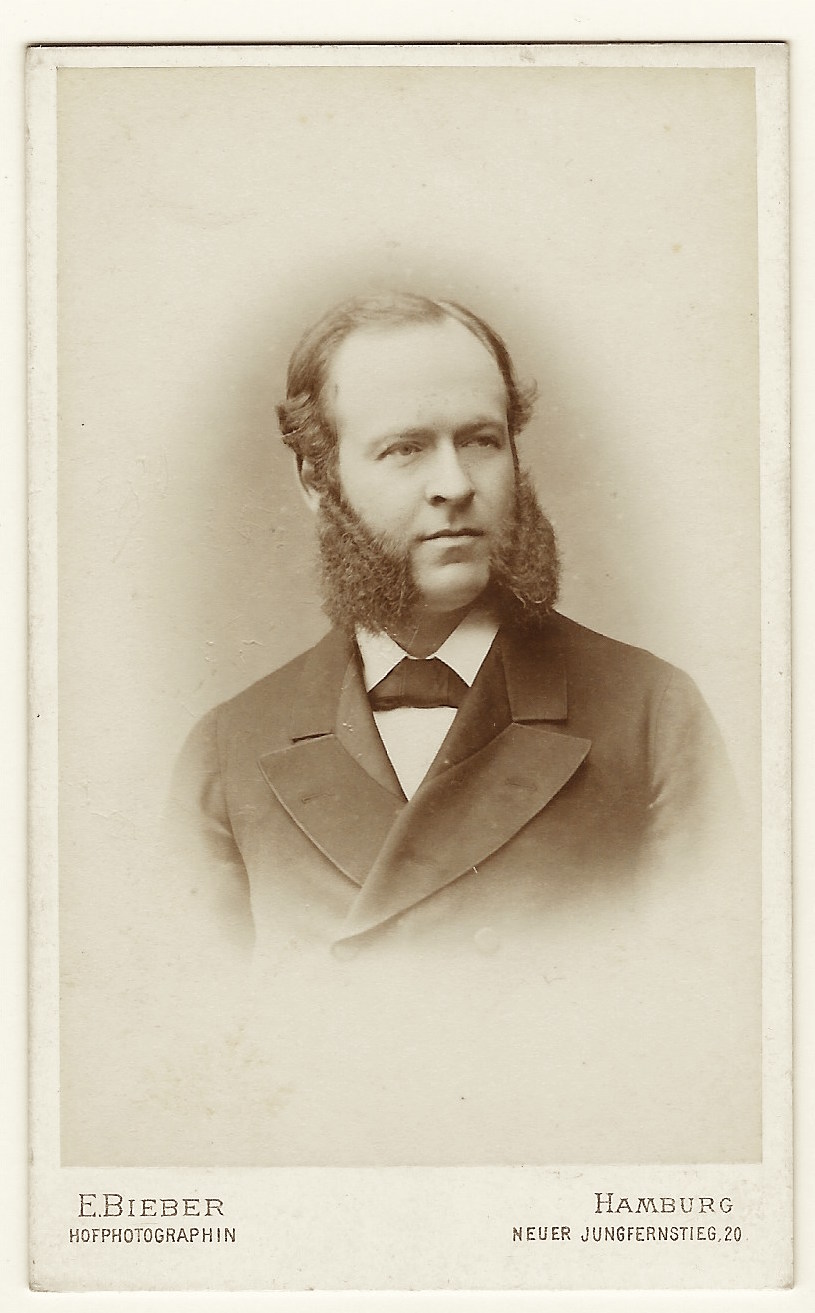
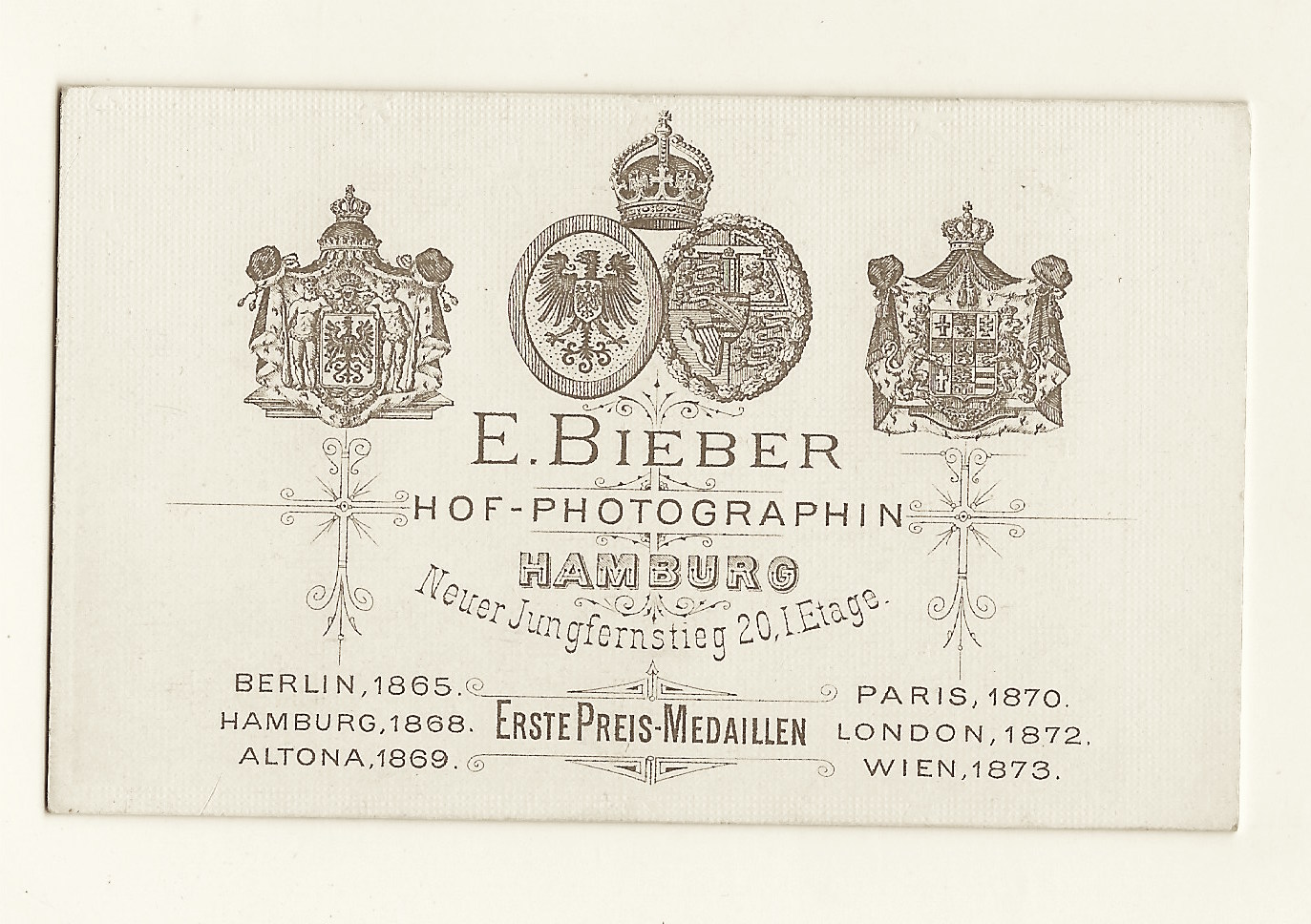
This carte de visite photograph is by celebrated photographer Emilie Bieber. She was a very successful and talented female photographer. Female photographers were uncommon in the cdv era. Bieber is definitely one of my favorite photographers. You may view additional photographs by Miss Bieber by typing her name in the cabinet card gallery’s search box. Bieber had two locations in Germany; Berlin and Hamburg. She ran her Hamburg studio from 1852 through 1872 when she was joined by her nephew, Leonard Berlin-Bieber. Emilie Bieber died in 1884. This cdv portrait features a well dressed gentleman with wonderful mutton chops. He is not wearing an accompanying mustache. Printing on the reverse of the carte de visite brags about the medals won by this studio. Awards were earned from exhibitions in Berlin (1865), Hamburg (1868), Paris (1870), Vienna (1873), as well as other photography competitions. This record of photographic honors informs us that this cdv was produced in 1873 or shortly afterward.
This carte de visite portrait is available for purchase at my store, The History Peddler, for $25.00 or best offer
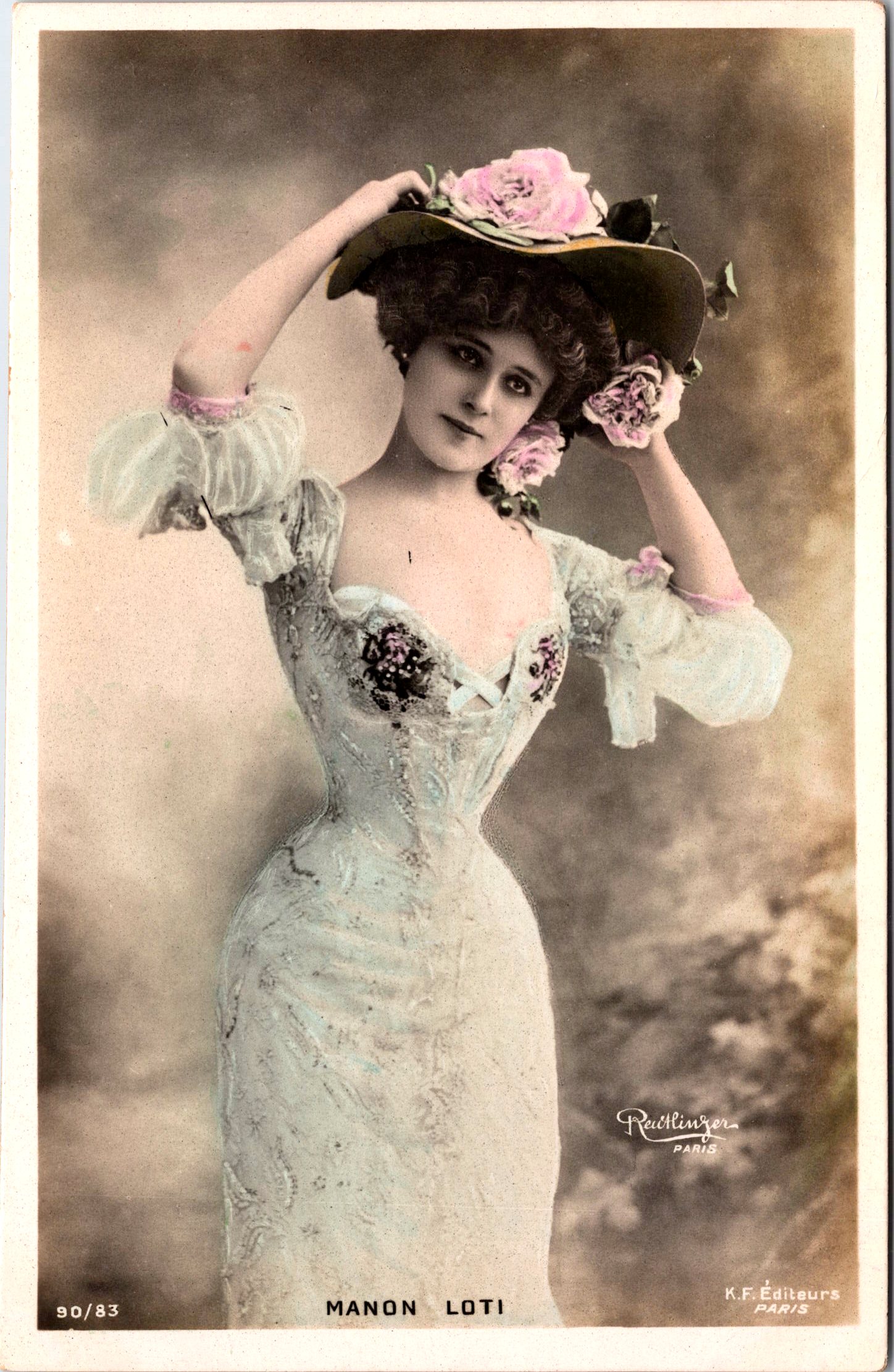
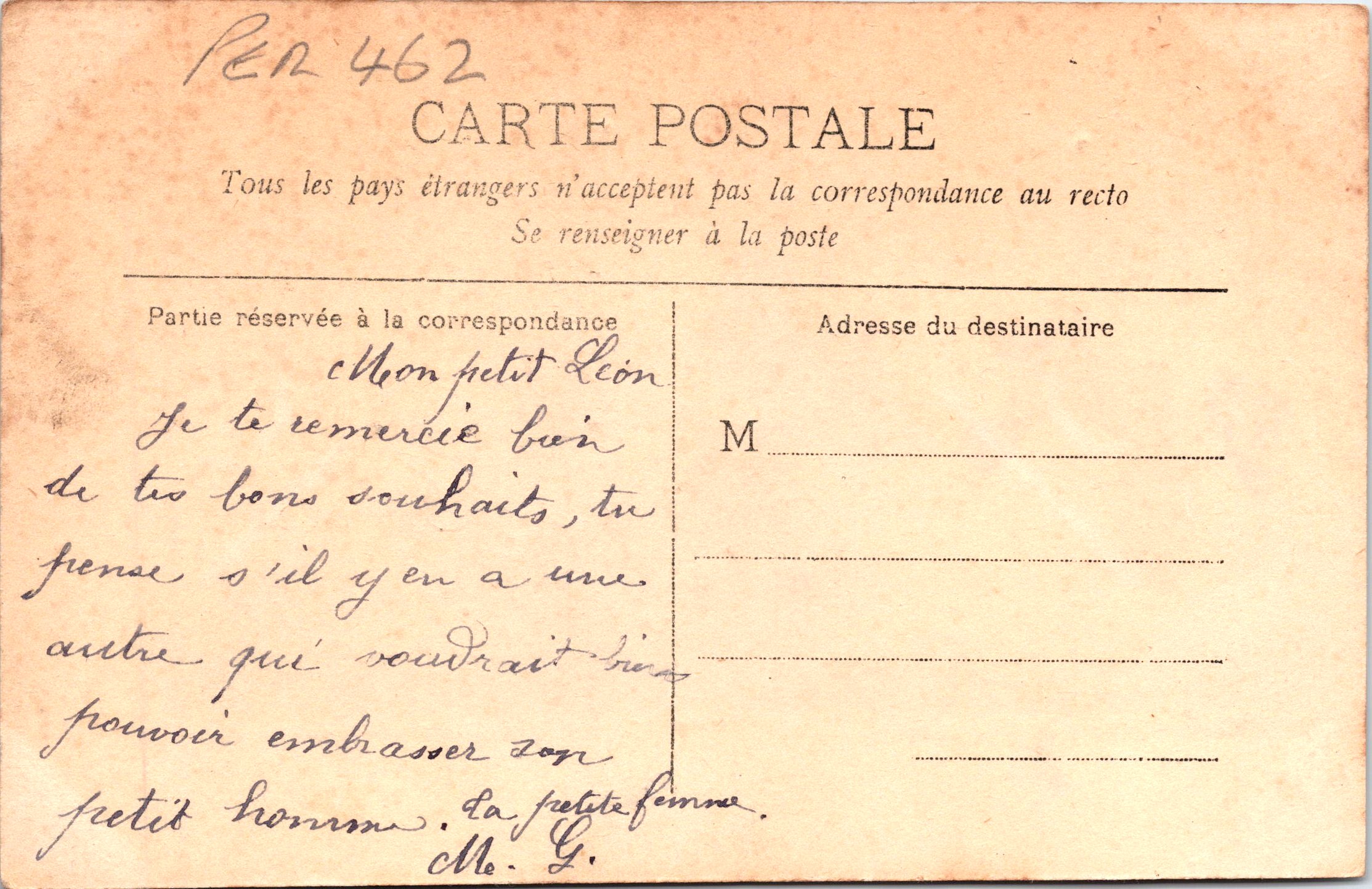
This exquisite, hand-tinted real photo postcard features the French performer Manon Loti, posed in a delicate, form-fitting gown adorned with embroidered florals and sheer puffed sleeves. She adjusts her wide-brimmed hat, which is lavishly decorated with large pink roses. With her sculpted hairstyle, porcelain complexion, and elegant stance, she embodies the essence of Belle Époque glamour. Photographed by the celebrated Parisian studio Reutlinger, the card is part of a numbered series and marked 90/83 in the lower left corner. The studio’s name, Reutlinger – Paris, appears in the lower right quadrant of the image, and beneath that is the publisher’s mark: K.F. Éditeurs, Paris, a known postcard publisher that frequently issued hand-colored celebrity cards in collaboration with leading photography studios. The message on the reverse of the postcard reads “My little Léon, I thank you very much for your kind wishes. Do you think there is another girl who would want so much to kiss her little man? Your little woman. Mlle G.” This personal note, possibly flirtatious or romantic in tone, adds a charming touch of period sentimentality to the card. In regard to the photographer, Léopold Reutlinger was one of the most important Parisian photographers of the late 19th and early 20th centuries. His studio specialized in portraits of actresses, dancers, and singers, many of whom became stars of the Belle Époque. His work was frequently reproduced in elegant photographic postcards like this one. The publisher of this postcard, K.F. Éditeurs (Paris), a well-known postcard publishing firm active in the early 1900s, recognized for producing tinted postcards, particularly featuring Parisian stage performers. They collaborated with top-tier studios such as Reutlinger and Waléry. (SOLD)