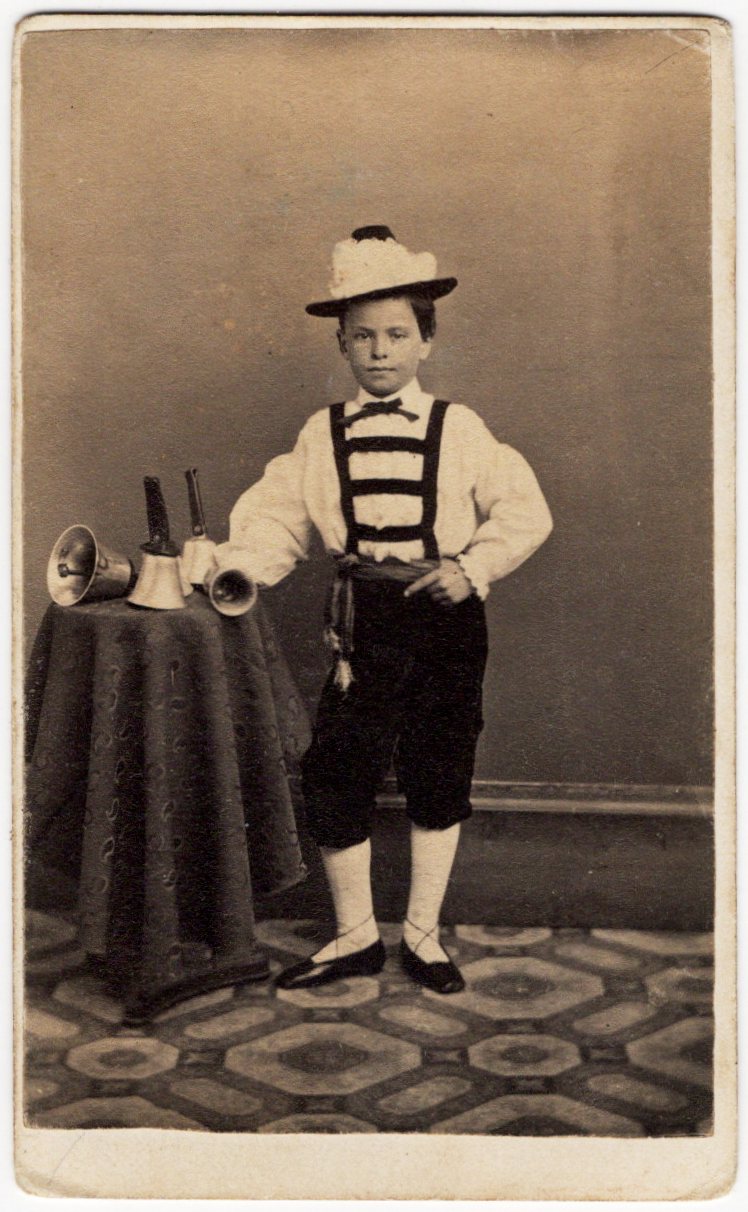
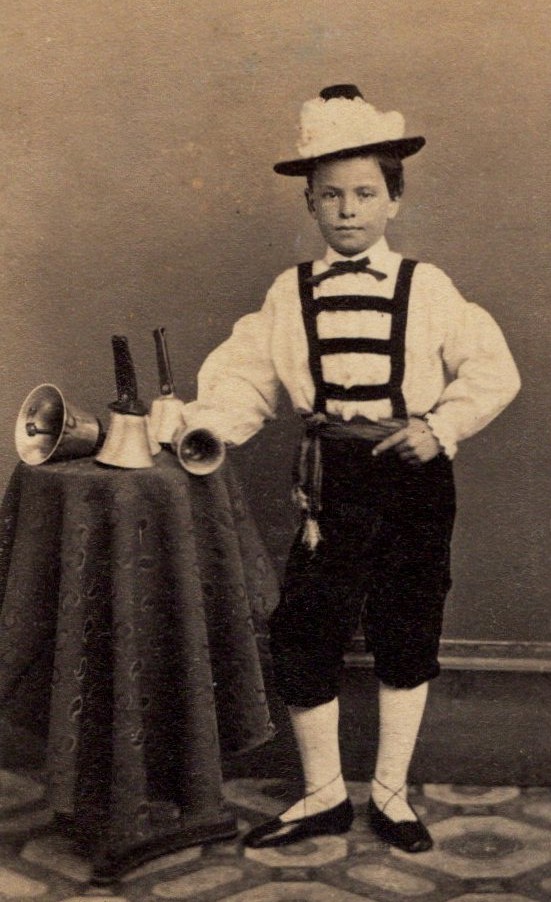
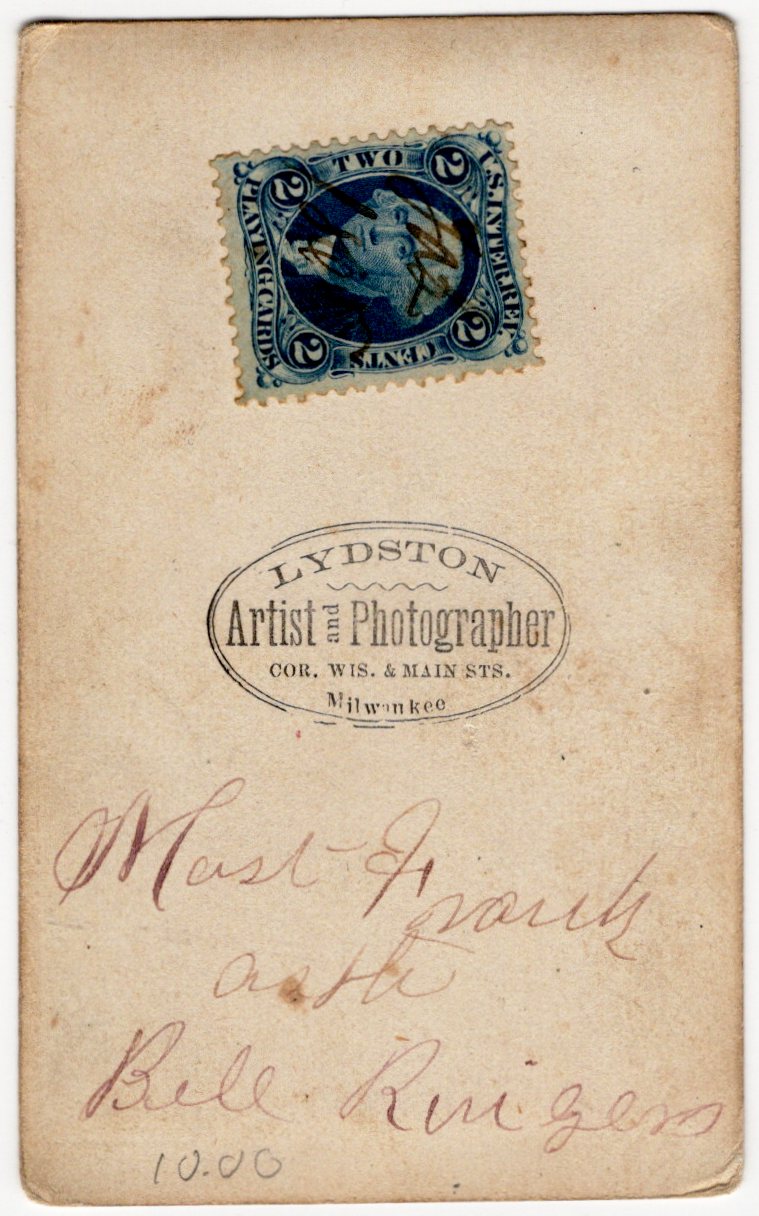
This striking carte de visite (CDV) from the Civil War era features a young boy dressed in what appears to be a theatrical or performance costume. He stands confidently beside a small round table covered with a patterned cloth. On the table rest three handbells—two upright and one resting on its side—suggesting that this boy may have been a musical performer, possibly part of a bell-ringing act or children’s concert troupe. The boy’s outfit is wonderfully detailed: he wears short dark trousers with knee-length stockings, a fitted white shirt trimmed with contrasting bands, a waist sash with tasseled fringe, and a broad-brimmed hat adorned with a ribbon and decorative element. His expression is serious—perhaps the proud composure of a child posing formally in costume for a professional portrait. The patterned studio flooring and plain backdrop are typical of 1860s studio photography, and the composition—carefully arranged with props—shows the artistry of a practiced photographer. On the back of the photo is the stamp and imprint of Lydston, Artist and Photographer, located at the corner of Wisconsin and Main Streets, Milwaukee, Wisconsin. This identifies the image as the work of E. H. Lydston, a known mid-19th century photographer active in Milwaukee during the 1860s. Lydston’s name appears in local directories between about 1863 and 1868, placing this CDV squarely in the Civil War tax-stamp period. An inscription written in period ink reads “Master Frank as the Bell Ringer.” The handwriting is somewhat ambiguous, but this likely identifies the sitter as Frank, photographed in costume for a performance or masquerade, perhaps portraying a “bell ringer.” Affixed to the back is a blue 2-cent U.S. Internal Revenue “Playing Cards” stamp, canceled by pen. The full printed title on the stamp reads “U.S. Inter. Rev. / Playing Cards / Two Cents.” From 1864 to 1866, the U.S. government required photographers to place revenue stamps on photographic materials (such as ambrotypes, tintypes, and cartes de visite) to help fund the Civil War. The amount of tax depended on the sale price of the photograph—two cents for photographs sold between 25 and 50 cents, which fits this example perfectly. The use of a Playing Cards stamp (rather than one specifically marked “Photograph”) was common when other types were in short supply. This type of stamp is collectible in its own right among philatelists and Civil War-era photo collectors.This cdv photograph dates back to circa 1865–1866, during the Civil War revenue tax period. (SOLD)


Leave a Reply