
SILENT FILM ADVERTISING POSTCARD : “THE BROKEN COIN” : FRANCIS FORD & GRACE CUNARD

This vintage lithographic postcard advertises the American adventure-mystery silent film, “The Broken Coin”. The film was released by Universal Motion Pictures in 1915 and it was part of a 22 episode serial. The “Broken Coin” was the first chapter in the series which included thirty reels over 15 weeks. The film starred Francis Ford and Grace Cunard. The film was directed by Francis Ford and Grace Cunard was one of the two writers of the screenplay. Francis Ford (1881-1953) was an early American film actor, writer, and director. He was the older brother and mentor of film director John Ford. Francis Ford is reported by IMDb to have appeared in 495 acting roles, directed 180 films, and wrote 31 different screenplays. Grace Cunard (1893-1967) was an American actress, screenwriter and film director. She starred in over a hundred films during the silent film era. She cowrote at least 44 of these film and directed at least 8 of them. Cunard also edited many of her films. It is unfortunate to note that no copies of the “Broken Coin” series appear to have survived. This vintage postcard is an excellent purveyor of American silent film history. 

Published in: on September 25, 2025 at 12:00 pm  Leave a Comment  
Tags: , , , ,

ALMA BENNETT : RISQUÉ 1920s RPPC OF SILENT FILM ACTRESS : PATHE : IRIS VERLAG

This sepia-toned, real photo postcard features the glamorous silent film actress Alma Bennett (1904-1958) in a striking, risqué pose. Published by Iris Verlag of Austria, this collectible is numbered 5234 and credits the prominent studio Pathé as the photographer—known for its high-quality film stills and star portraits during the silent era. The image captures Bennett draped in a sheer, flowing fabric that barely conceals her chest. With her hands placed carefully to cover herself, the pose is both sensual and elegant—clearly intended to appeal to fans of 1920s starlets and risqué glamour. Her expressive face is tilted upward in a dramatic fashion, with her dark, wavy bob framing large, expressive eyes. Her parted lips and gaze suggest a moment of theatrical longing or awe, characteristic of the silent film aesthetic. This postcard falls squarely into the risqué category due to its suggestive styling and scant coverage, though it retains a refined and artistic tone rather than being overtly provocative. Alma Bennett was an American silent film actress who appeared in over 60 films between 1919 and 1931. Known for her beauty, versatility, and ability to play both dramatic and comedic roles, she became a recognizable face during the peak years of silent cinema. Bennett began her career in Hollywood in the late 1910s, likely transitioning into film from stage or local beauty contests, as was common during the period. Her breakout years came in the 1920s, with notable roles in films such as: “Orphans of the Storm” (1921, uncredited, directed by D.W. Griffith), “The Prairie Pirate” (1925), “A Woman Against the World” (1928), “The Night Flyer” (1928). and “The Arizona Kid” (1930).  Alma’s personal life was somewhat tumultuous, mirroring that of many silent-era actresses whose careers were overshadowed by the transition to sound films. She was married to Fred Bennett, though the marriage reportedly ended in divorce. Little is documented about her life after retiring from film around 1931, and she never returned to the screen during the sound era. (SOLD)

RENEE ADOREE : HOLLYWOOD SILENT & “TALKIE” FILM STAR : TRAGIC DEATH AT 35

POSTCARD 1

POSTCARD 2

POSTCARD 3 (SOLD)

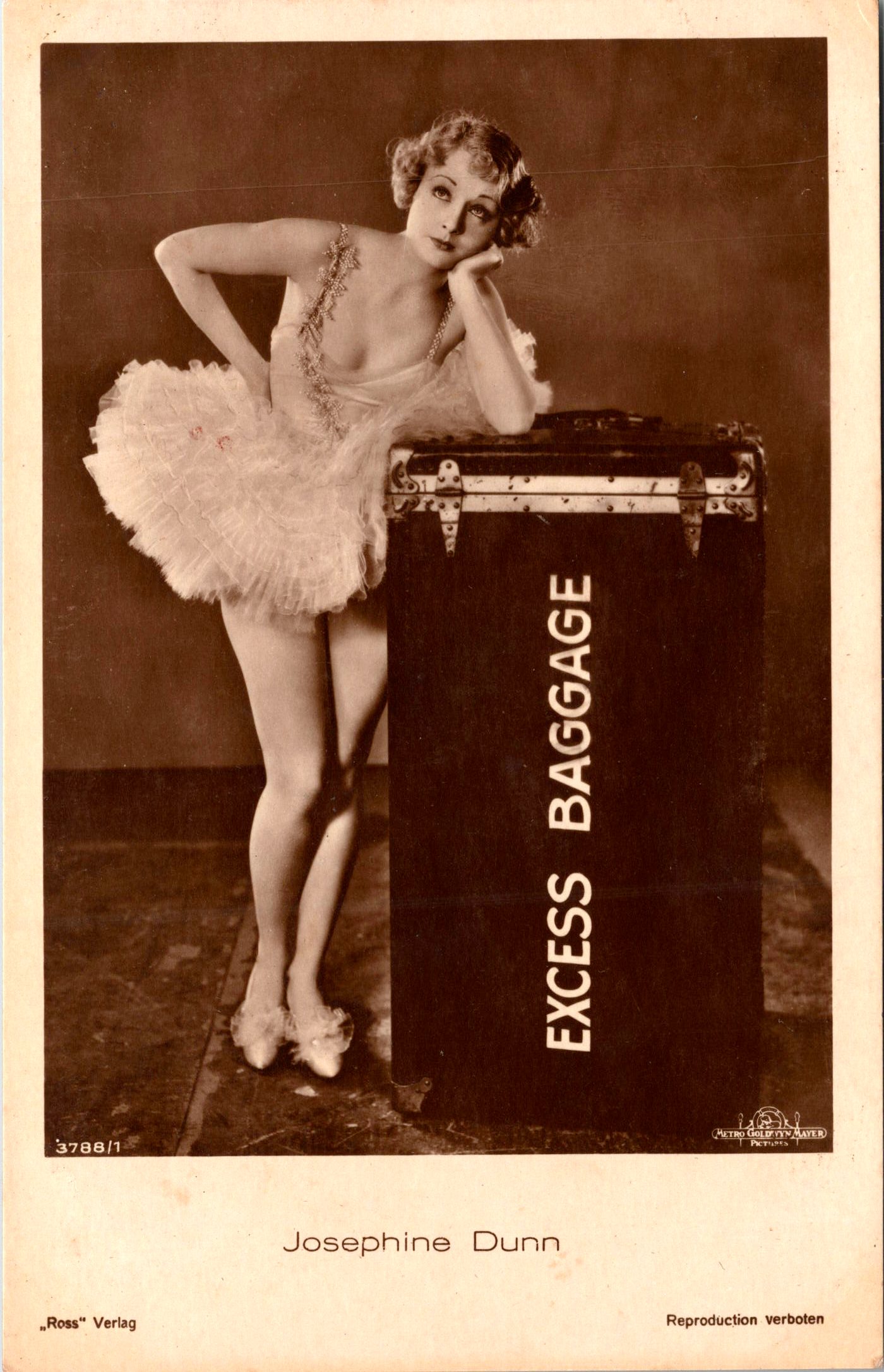
These vintage real photo postcards feature French stage and film actress, Renee Adoree (1898-1933). She also appeared in silent movies produced by Hollywood in the 1910’s. Her most well known film was the melodramatic romance and war epic, “The Big Parade”. She played the love interest of John Gilbert. Renee’s parents were circus artists. She would perform with them at times. She was a dancer, acrobat artist, and bareback rider. She perfomed throughout Europe. She made her movie debut in 1918. In 1919, she went to New York City and played in a vaudeville-style musical. Several other stage appearances followed. In 1920, she began to perform in movies again. In total, Renee performed with John Gilbert nine times. She appeared with actor Ramon Novarro four times. In a 1928 Howard Hughes film, “The Mating Call”, Renee had a brief scene in which she swam in the nude. This act created much controversy. Renee’s personal life included two marriages and two divorces between 1921 and 1929. Renee, unlike many other actresses of her time, was successful in making the transition to sound film. She appeared in four “talkies” before her early death. In all, by the end of 1920, Renee had appeared in forty-five films. The IBDb reports that she appeared in two Broadway productions, both occurred in 1919, It was in 1930 that Renee was diagnosed with tuberculosis. Despite her doctor’s advice, she continued her participation in the filming of a movie. After completing the movie, she was rushed to an Arizona sanitorium. She was flat on her back for two years during her recovery. Post discharge, Renee’s health began to deteriorate until she died in 1933. She was only about 35 years old at the time of her death.

Postcard 1 features Renee in a risque pose. She is dressed quite provocatively. This postcard was published by “Ross Verlag” as part of a series (No.4350/1). Note sticker on reverse of card. This vintage postcard is in overall good condition. (see scans).

Postcard 2   features Renee standing in front of a horse. She is holding the horse’s harness. Apparently, she liked animals and possessed a sense of humor. She had a dog named “Useless”, and a cat named “Worthless”. The logo for MGM can be seen in the lower right hand corner of the image. She was under contract with MGM from 1930 until her death. This postcard was published by “Europe” as part of a series (No.395). This postcard is in very good condition (see scans).

Postcard 3 offers a view of Renee that illustrates her beauty. She is fashionable and her attire includes a jacket with a fur collar. The card features a logo for MGM in its lower right corner. The card was published by Ross Verlag and is part of a series (No.3794/1). SOLD

Buy this Vintage Real Photo Postcard (includes shipping within the US) #5137

To purchase this item, click on the Pay with PayPal button below

$22.00

Buy this Vintage Real Photo Postcard (includes International shipping outside the US) #5137

To purchase this item, click on the Pay with PayPal button below

$32.00

Buy this Vintage Real Photo Postcard (includes shipping within the US) #5299

To purchase this item, click on the Pay with PayPal button below

$19.00

Buy this Vintage Real Photo Postcard (includes International shipping outside the US) #5299

To purchase this item, click on the Pay with PayPal button below

$29.00

POSTCARD 1

POSTCARD 2

VIRGINIA HARNED :PORTRAIT OF A THEATRE ACTRESS : NAPOLEON SARONY : CABINET CARD

This cabinet card features noted American stage actress, Virginia Harned (1869-1946). She was known for her beauty (said to resemble Sarah Bernhardt), her fashion sense, and her intensity on stage. Harned was audacious. She was associated with creating the new social perception of the modern woman. She is most recognized for playing the title role in the Broadway premiere of “Trilby (1895)”. The IBDb reveals that Harned performed in 21 Broadway plays between 1894 and 1936. Harned was married to two (not at the same time) famous actors. Her second husband was E. H. Sothern who later married actress Julia Marlowe. Her third husband was William Courtenay. During her marriage to Sothern, Harned took a turn at writing and produced several plays. Harned’s portrait seen on this cabinet card was taken by celebrated New York City photographer, Napoleon Sarony. A hand stamp on the reverse of this photograph indicates that the photo was formerly in the collection of Frederick H. Meserve (1865-1962). Meserve was a businessman and a had a large collection of photographs. In 1944 he worked with Carl Sandburg, American poet and biographer, to publish 100 photographs of Abraham Lincoln. Meserve’s collection included 10,000 original Matthew Brady negatives and 75,000 photographs of famous theatrical figures. SOLD

MADAME LE GAI : PANTOMIMIST : VAUDEVILLE : PIN-UP : HOLLYWOOD PHOTO 1918

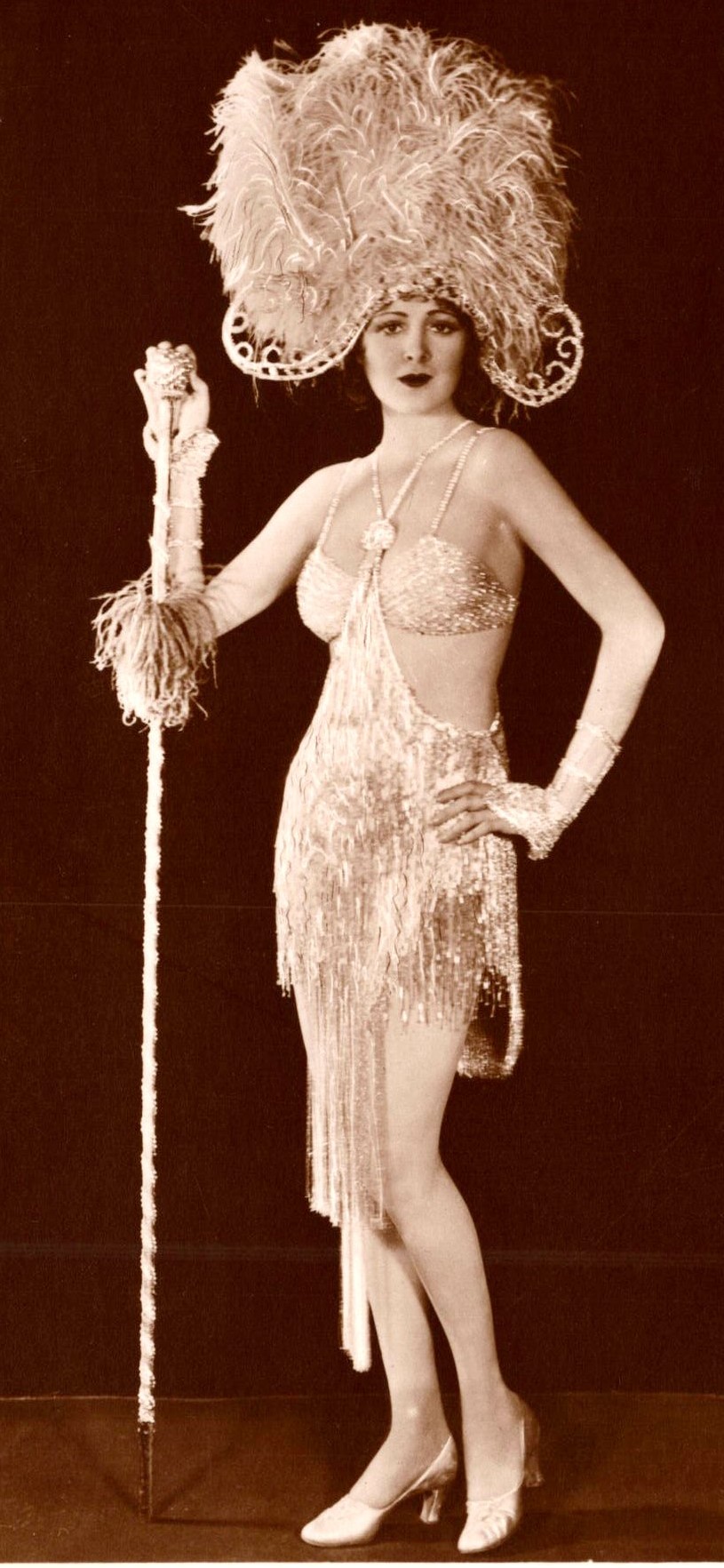
This is a stunning and rare sepia-tone glamour portrait of a woman identified as Mme Le Gai, described on the reverse as a “Pantomimist” and “Vaudevillian.” Believed to date from around 1918, this photograph showcases an elegant, mysterious woman in elaborate costume—perhaps a stage or cabaret performer—gazing confidently into the camera. She wears a richly adorned hat with plumes, a beaded glove-like bracelet, and a delicately embroidered gown with satin and lace textures. Her theatrical pose and sensual expression make this image a prime example of early Hollywood pin-up photography, though its style is also heavily influenced by European cabaret traditions. The handwritten inscription on the back appears to read: “Mme Le Gai / Pantomimist / Vaudevillian.” There is some ambiguity—“Mme” could stand for Madame or Mademoiselle, and the surname may also be interpreted as Le Gai or Le Gaï. The elegant script suggests a deliberate stage name, possibly borrowed from the famed Parisian pantomime houses of the same name. “Le Gai” (French for “the merry” or “joyful”) was also used in naming French performance venues such as Le Théâtre Gai or variations like Le Gai Paris. This connection strengthens the possibility that the subject either performed in or took inspiration from these Parisian theatrical traditions. Though solid biographical confirmation of Mme Le Gai has not yet been found, the visual evidence, style, and inscription point to her role as a vaudeville-era pantomime performer, likely active in the United States or France around World War I. Her alluring presence and costume are consistent with the kind of studio portraiture used for performer promotion, possibly circulated as publicity or collectible pin-up material during the silent film and vaudeville boom.  (SOLD)

MISS ALEX: PARISIAN ENTERTAINER : PHOTOGRAPHED BY LUCIEN WALERY (1903)

This vintage real photo postcard was mailed in 1903 and features Miss Alex, a lesser known actress or dancer of the Belle Epoque era. She was quite pretty. Many entertainers such as Miss Alex, were more or less prostitutes or “kept women”. Certainly, not all of these women were involved in such a lifestyle, and it is unknown how Miss Alex supported herself. The “Ambassadeurs”, a Paris music hall, is printed on the top right hand corner of the front of the postcard. Miss Alex was probably part of the Ambassadeur’s company of entertainers. This portrait postcard was photographed by Lucien Walery. He was a celebrated Paris photographer known for his portraits of artists and cabaret dancers from the city’s music halls. He is very well known for his portraits of Mata Hari and Josephine Baker. Walery did a lot of work in the genre of nude/erotic photography. He photographed the beautiful women of Paris between the early 1900’s and the 1920’s. This “risque” postcard is part of the Etoile 11 series.  SOLD 

ANITA PAGE w/ CAT : SILENT FILM STAR : MGM : ROSS VERLAG : RPPC 1920s

This sepia-toned publicity postcard features Anita Page (1910-2008), an iconic silent and early sound film actress, posing with a tabby cat. She cradles the cat gently in her lap, both arms encircling it protectively. The cat appears calm, eyes half-closed in contentment or sleep, nestled into Page’s arms. Anita is styled with soft, sculpted blonde curls typical of late 1920s-early 1930s glamour. She wears a tailored dress or top with a broad, satin-trimmed collar and decorative slashes on the cuffs, along with a double-stranded pearl necklace and a bracelet on one wrist. Her expression is wistful—perhaps intentionally melancholy or dreamy—a popular aesthetic in studio portraits of the era. Her makeup emphasizes the eyes with dark liner and curved brows, enhancing her expressive gaze. The presence of the cat lends the portrait an intimate and slightly whimsical tone, softening the glamorous studio setting and humanizing the star. It was not uncommon for stars to be photographed with animals to add charm or relatability. The publisher of this postcard is Ross Verlag, a German company based in Berlin. The card is identified as (No.6247/1). The circular logo in the bottom right corner of the card belongs to Metro-Goldwyn-Mayer (MGM), the major Hollywood studio with which Anita Page was under contract. The message on the reverse of the card is written in Czech (or possibly Slovak). A rough translation reads: “Your devoted, Wishes you everything good – Your dear Miloš,  I send you this card for memory. The card is dated 1929. Anita Page was a major screen star in the late 1920s and early 1930s, often called “the girl with the most beautiful face in Hollywood.” She rose to fame starring alongside Joan Crawford in Our Dancing Daughters (1928) and appeared in The Broadway Melody (1929), which won the Academy Award for Best Picture. She retired young in the 1930s but returned sporadically to the screen in later years. She was one of the last surviving stars of the silent film era.  (SOLD)

JOAN FONTAINE : FILM AND THEATER STAR : SIBLING RIVALRY SURVIVOR

This vintage real photo postcard features a lovely portrait of Joan Fontaine (1917-2013). She was a British-American actress known for her starring roles during the Golden Age of Hollywood. She acted in more than 50 films and her career had a five decade duration. Fontaine’s older sister was the actress Olivia de Haviland, and the pair had a rivalry well covered by the press. In 1942, the sisters were both nominated for the Academy Awards “Best Actress” title. Joan won and reportedly rejected her sister’s congratulations. In commenting about their rivalry, Fontaine stated that she had both married and won an Oscar before her sister, and that she had little doubt that “if I die first, she’ll undoubtedly be livid because I beat her to it!”. Their competitive relationship began early. At the age of nine, sister Olivia wrote a will in which she stated, “I bequeath all my beauty to my younger sister Joan, since she has none”. Joan’s film career began in 1935. She was working for RKO pictures. Her first major role was in the film, “The Man Who Found Himself (1937). Also in 1937, she appeared alongside Fred Astaire in “A Damsel in Distress”. She followed that appearance with the female lead in “Gunga Din” (1939). The film was based on the work of Rudyard Kipling and it was an exciting adventure film. Some contemporary critics compare it to “Raiders of the Lost Ark” (1981). I recently viewed “Gunga Din” and it was an exciting film, but it unfortunately glorified colonialism. In 1940 Joan’s career was propelled by her appearance in Alfred Hitchcock’s “Rebecca”. This role resulted in an Academy Award nomination for “Best Actress”. In 1941 she won the “Best Actress” award for her appearance in Hitchcock’s “Suspicion”. In 1943 she received her third “Best Actress” nomination. Much of her acting in the 1940’s involved drama films. During the war, she worked on a limited basis as a nurse’s aide. In 1946, Fontaine established her own film company with her husband, William Dozier. The company was named Rampart Productions and she appeared in a number of the company’s films. In the early 1950’s her film career began to dwindle. She then took her talent to stage, radio, and television roles. She appeared in two Broadway theater productions (1955 and 1970). Her final film appearance was in 1966. She continued to act until 1994. Now, for some biographical facts. Fontaine was born in Tokyo, Japan, to English parents. Her father was an English professor and later became a patent attorney. Her mother was a stage actress until she moved with her husband to Tokyo. Her mom did return to the stage after her daughters became successful in the 1940’s. Fontaine’s parents separated in 1914, when Joan was just two years-old. It seems that Fontaine’s father enjoyed intimate relationships with some of the geishas of Tokyo. Joan’s mother decided to move with her two daughters to the United States on the advice of a doctor. Joan was a “sickly” child and a change of climate was advised. The family settled in California and Joan’s health normalized. Joan was married and divorced four times. Her first two marriages were to actors, the third was to a producer/writer, and the fourth to the golf editor at “Sports Illustrated”. She had personal relationships with Harry Belafonte and Presidential candidate, Adlai Stevenson. Fontaine was a citizen of both the United States and Great Britain. She had a pilot’s license, was an expert rider, and was an accomplished interior decorator and chef. In fact, she excelled at too many things to mention in this description. This vintage portrait postcard was published by Soberanas as part of a series (no.21). SOLD

Published in: on August 5, 2025 at 12:00 pm  Leave a Comment  
Tags: , ,

CHARLOTTE LEWIS : PRETTY ACTRESS : HEADSHOT & RESUME : ROMAN POLANSKI ACCUSER

This photograph features English film and television actress, Charlotte Lewis (1967-). Her mother is Irish/English while her father was half Chilean and half Iraqi. Lewis’s film debut was in Roman Polanski’s film “Pirates (1986)”. During that same year she played the female lead in “The Golden Child” with Eddie Murphy. Many film roles followed. In 1993, Lewis appeared  on the cover and inside Playboy magazine. In 2010, Lewis and her attorney Gloria Allred (famed women’s rights attorney), accused Roman Polanski of sexual assault. The incident allegedly occurred while Lewis was working with him on “Pirates”. Lewis was just sixteen years old at the time. A news article was published that brought up information from an interview she had given that appeared to contradict Lewis’s testimony. The controversy appeared again in 2024 when Lewis lost a defamation case she had filed against Polanski. Polanski is a convicted sex offender and is alleged to be a serial sexual predator. The IMDb reports that Lewis has 30 film credits between 1978 and 2019. This photograph was sent to a casting director, or some other film decision maker, to ask for consideration for an acting role in the production. The letterhead of Greene & Associates is on the resume. The firm is a talent agency in Los Angeles representing Lewis.  SOLD

EDITH STOREY : AMERICAN SILENT FILM ACTRESS

This vintage real photo postcard features American silent film actress, Edith Storey (1892-1967). She was born in New York City and began acting when she was still a child. Her first film was “The Two Brothers” (1908). By 1913, she had appeared in 75 films and between 1908 and 1921 she performed in nearly 150 films. She performed in many Westerns and was noted for her excellent horseback riding skills. She also did her own stunts. She worked for Vitagraph Studios (New York) for the majority of her career. Storey also acted on stage and was noted for acting in a number of male impersonation roles. She appeared in two Broadway plays. The first was in 1903 and the second was in 1904. She retired at the age of 29 in the year of 1921. During the Spanish Flu Epidemic, Storey drove an ambulance in New York City for the National League for Women’s Service. It is also reported that she worked as a hospital night nurse at the height of the epidemic. After retiring she served almost 30 years as village clerk for Asharoken, Long Island. She died at the age of 75 in Northport, Long Island, New York. Within the message on the this postcard, Daisy (the sender) tells Lucille (the recipient) that Edith Storey is her favorite movie actress. A caption on the front of this card states that Storey has brown eyes and dark brown hair. This postcard was published by Kraus Mfg. Co. of New York.  (SOLD)