
CABINETCARD 6CABINET CARD 7 (SOLD)



CABINET CARD 12

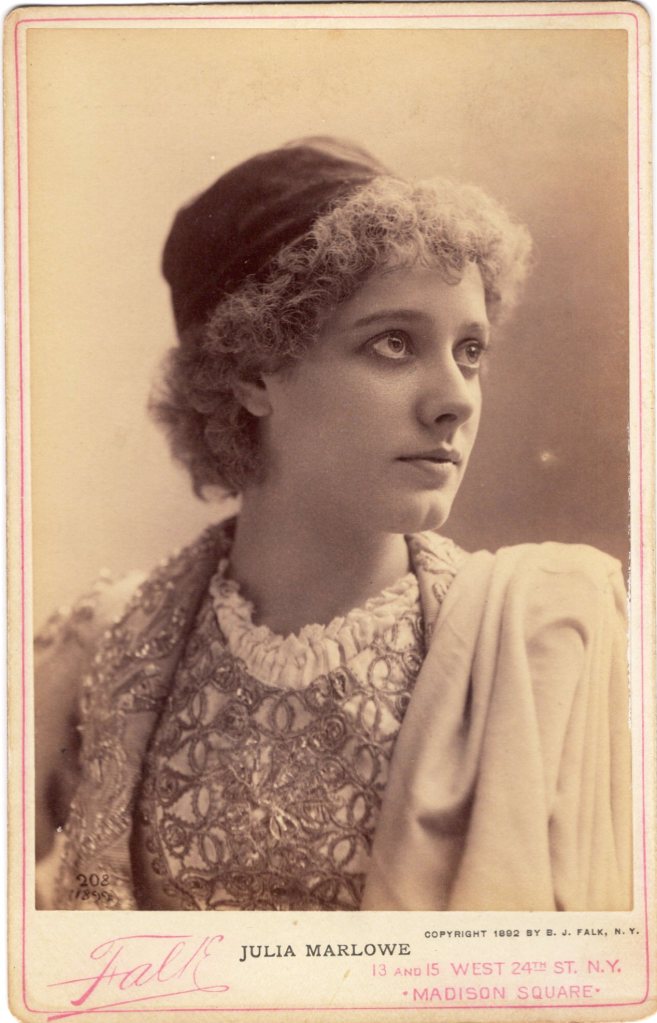
CABINET CARD 14 (SOLD)
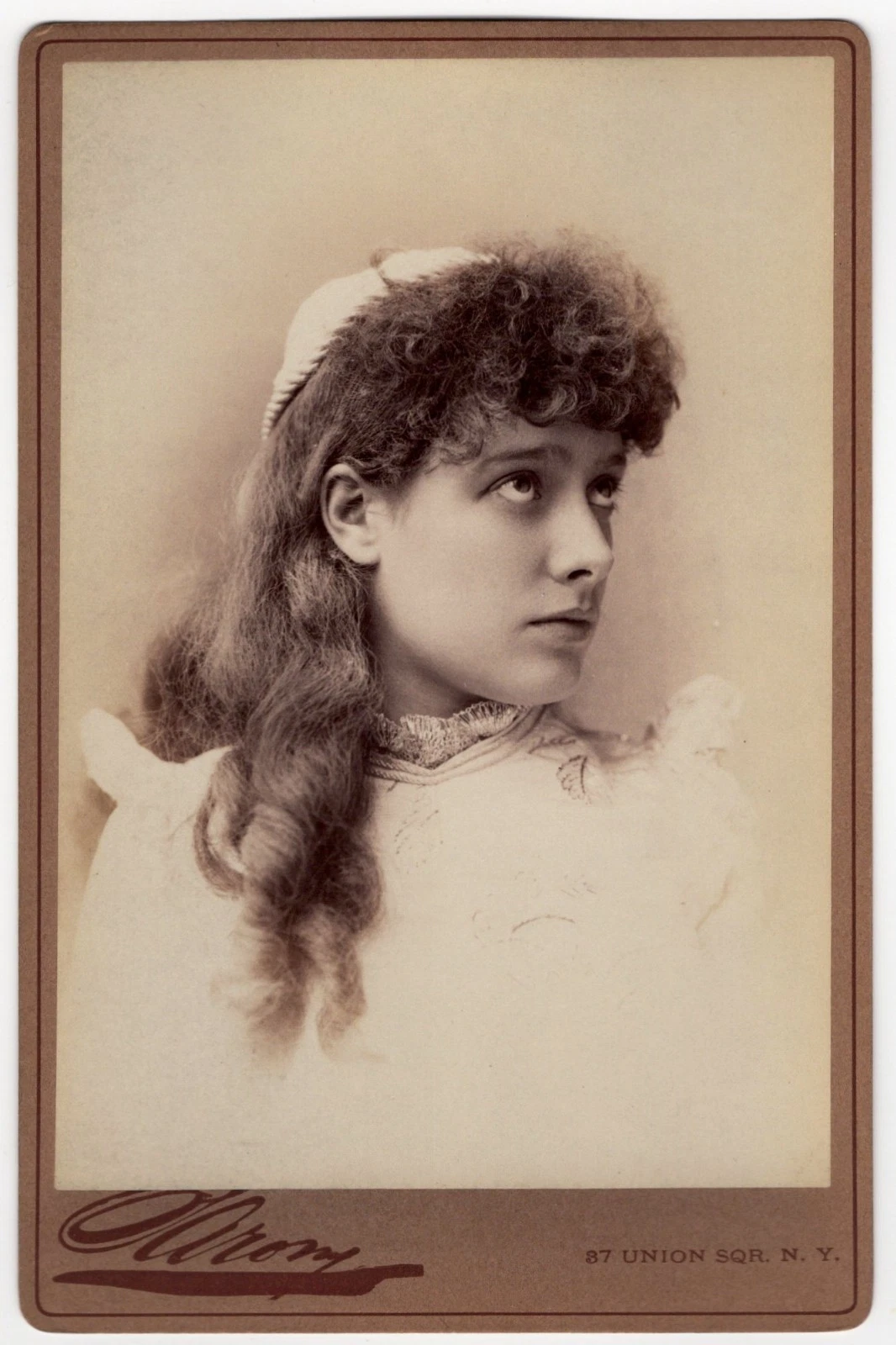
CABINET CARD 15 (SOLD)
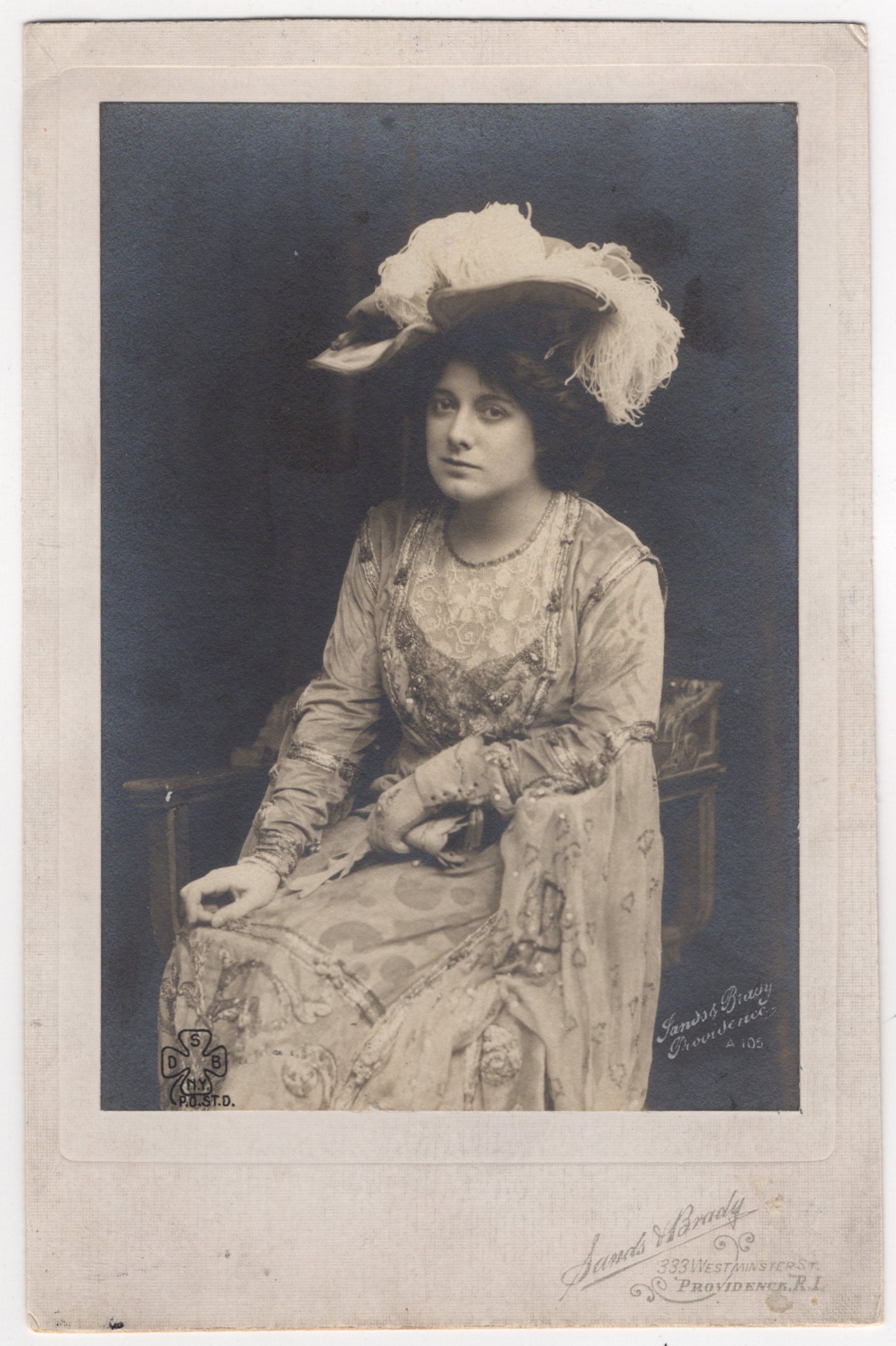
VINTAGE PHOTOGRAPH 16 (SOLD)
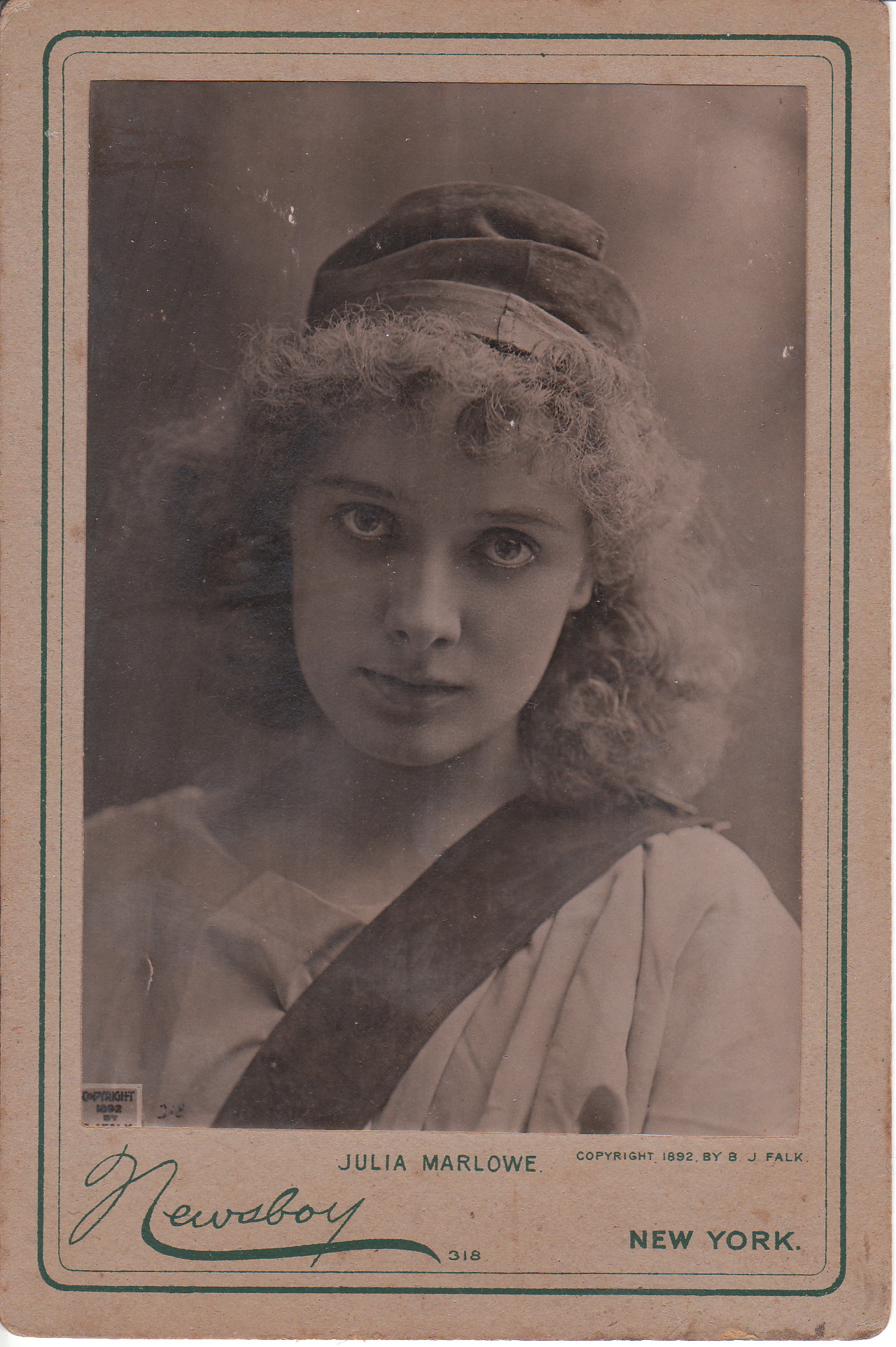
Julia Marlowe (1865-1950) was born in England and as a young child moved to the United States with her family. In her early teens she began her theatrical career with a juvenile opera company. She began playing Shakespeare in her home town of Cincinnati, Ohio. She made her Broadway debut in 1895 and by the end of her career, had appeared in more than 70 Broadway productions. Her first husband was actor, Robert Tabor. Their marriage lasted six years. In 1904 she appeared in “When Knighthood was in Flower”. Great success in this play brought her financial independence. Earlier, in 1903, she appeared in ‘The Cavalier” and “Ingomar”. The New York Sun wrote about her performance in “Ingomar”; “There is not a woman player in America or in England that is – attractively considered- fit to unlace her shoe”. In 1904 she began a partnership with actor E. H. Sothern. They toured the United States performing various plays of Shakespeare. They were managed by Charles Frohman and later, the Shubert brothers. They were considered to be among the major Shakespearian actors of the day. In 1906, Marlowe played in “Jeanne d’Arc” and also as Salome in “John the Baptist”. Later, Sothern and Marlowe played in London but were not terrific box office successes there. In 1911 Marlowe and Sothern married each other. In 1920 and 1921, they made eleven phonograph recordings for the Victor Company. The top Cabinet Card was produced by Newsboy as a premium for their tobacco products. The photographer was Falk and the image is from 1892.
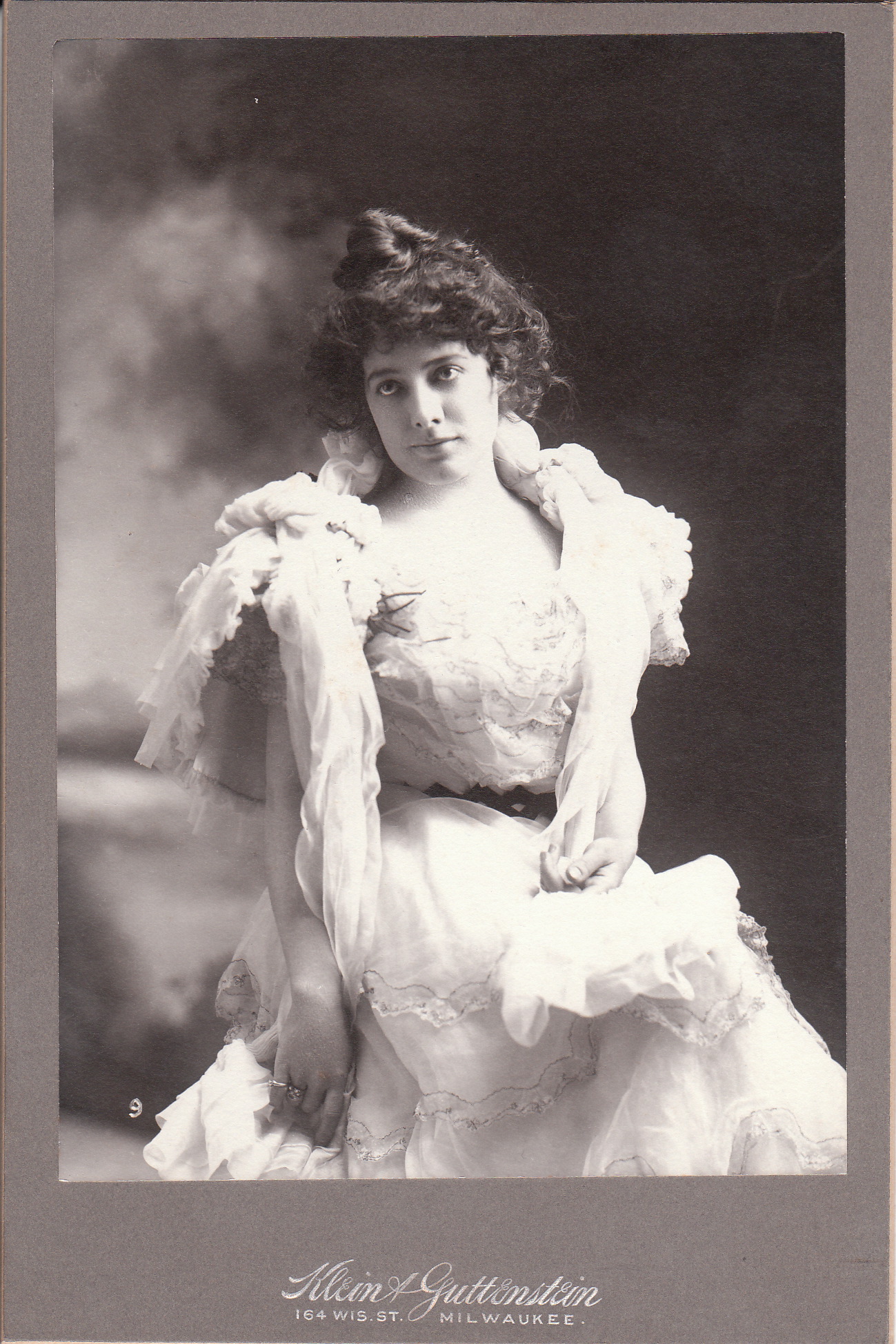
The second portrait of Julia Marlowe has a notation on the reverse of the card stating “Julia Marlowe Tabor”. Therefore, this photograph was likely taken during the time of her marriage to Tabor (1894-1900). The photographic studio that produced this portrait is Klein & Guttenstein of 164 Wisconsin Street, in Milwaukee, Wisconsin. Klein and Guttenstein were leading photographers of their time. Wilson’s Photographic Magazine (1902) reveals that the two men were very active in the Photographers Association of Wisconsin and other photography organizations. The photographers were considered part of a network of photographers skilled at producing publicity images of theatrical and vaudeville stars to be used in national magazines and other publications. The New York Public Library has a collection of portraits of actress Blanche Bates; produced by Klein & Guttenstein. The University of Pennsylvania Library has one of Klein & Guttenstein’s portraits of Julia Marlowe. (SOLD)
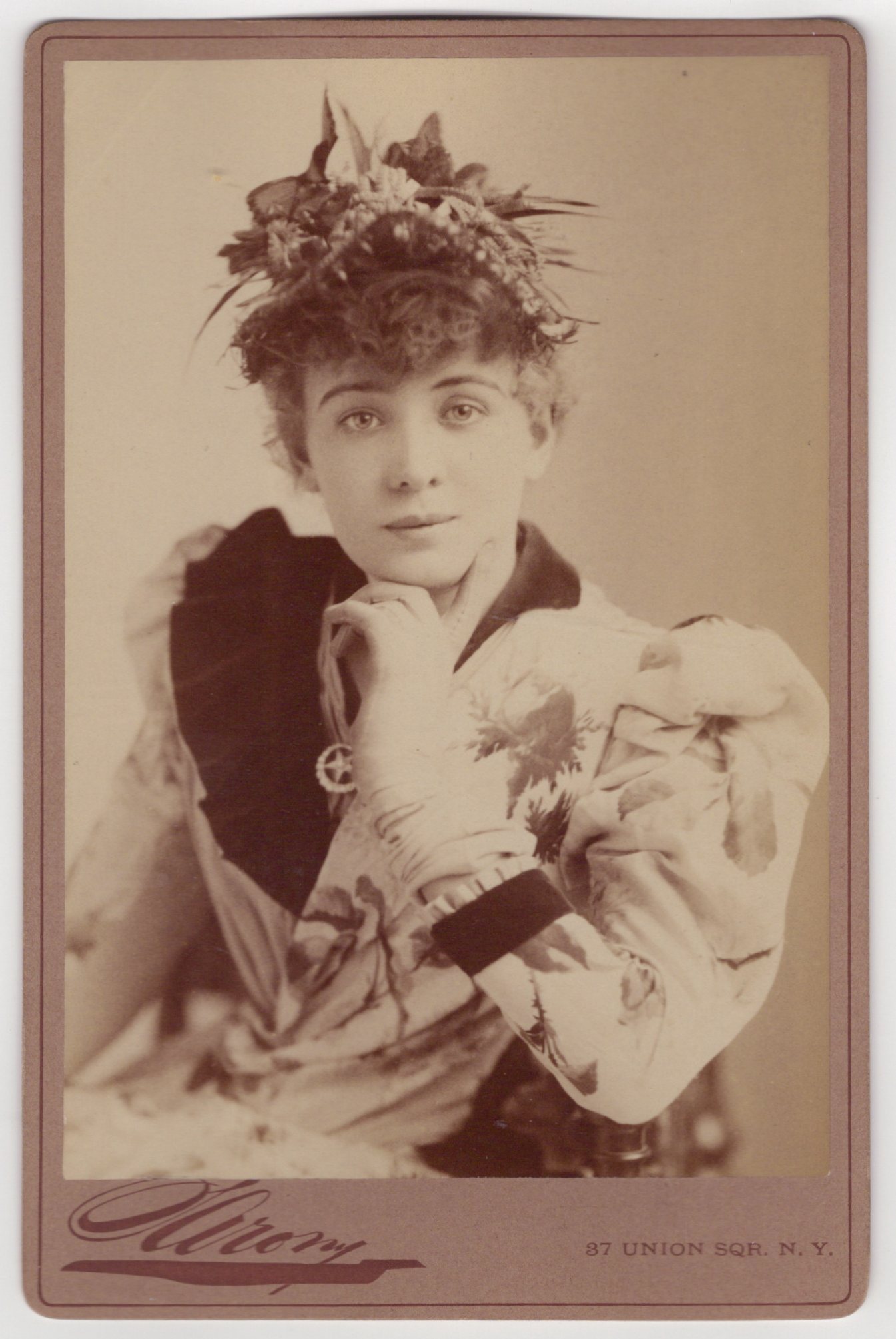
The third portrait of Julia Marlowe in the cabinet card gallery collection is photographed by Sarony, the famed celebrity photographer located in New York City. This cabinet card is signed by the actress and dated 1890. Additonal photographs by Sarony can be viewed by clicking on the category “Photographers: Sarony”. SOLD
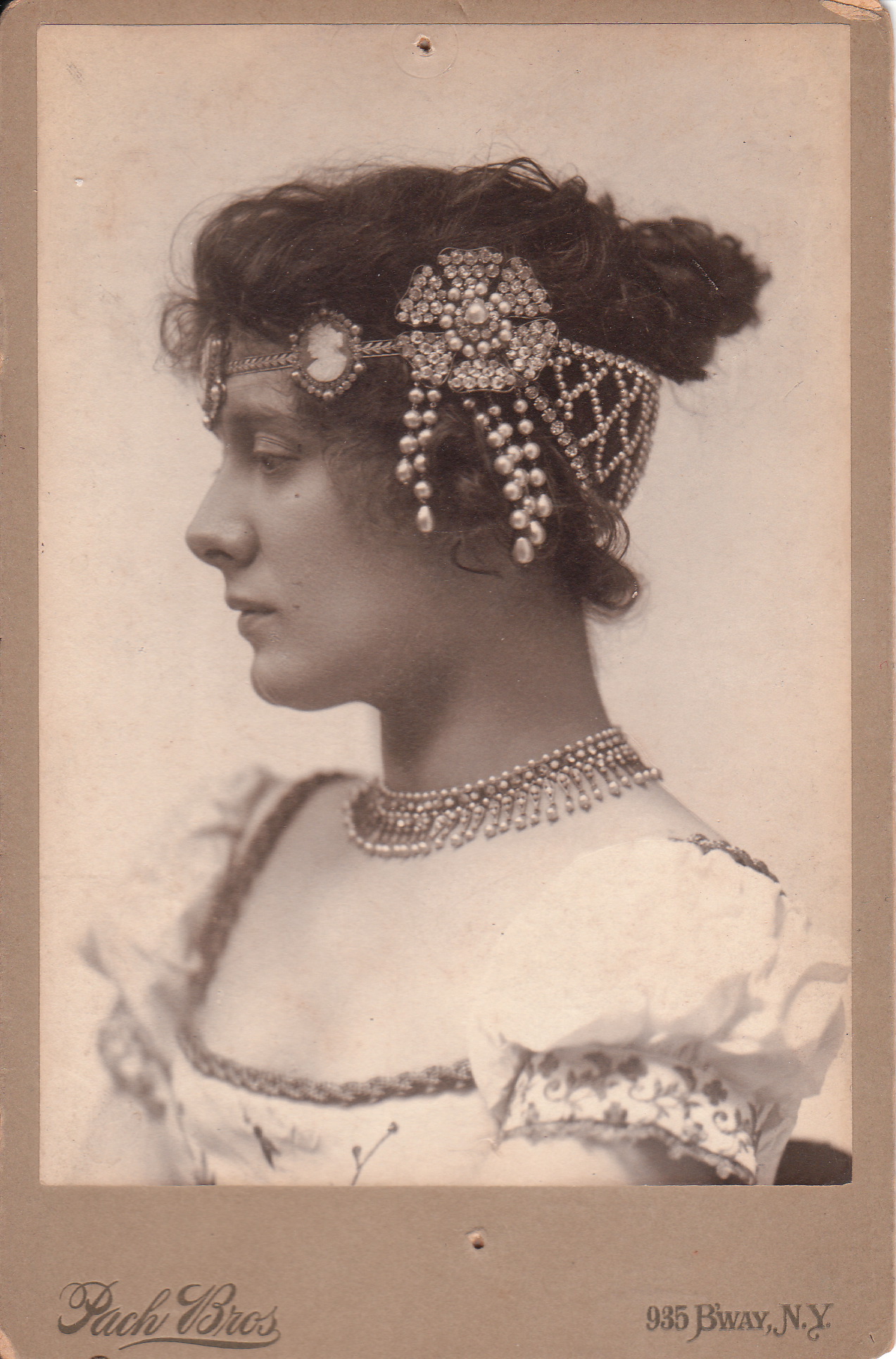
The fourth portrait of Miss Marlow features her in role in the production of “Countess Veleska”. The play was adapted for a German work, “The Tall Prussian”, by Rudolph Stratz. The play opened in New York in 1898 at the Knickerbocker Theatre. The review in the New York Times (1898) stated that the “drama was made wholly interesting by the personal charm and sincerity of Miss Marlowe”. In a sarcastic tone, the reviewer comments about Marlowe’s co star, Bassett Roe. The reviewer states that Roe has only two qualities of the man he was playing, “height and good looks”. The reviewer continues his scathing description of Roe; “The only time he actually warmed up was when he accidentally set his hair on fire. Even then he would have let it burn if Miss Marlowe had not gone to his rescue.” The photographic studio that produced the “Countess Veleska” cabinet card was Pach Brothers of New York City. Pach Brothers were photographers known for their photographs of celebrities of their era. To see additional photographs by the Pach Brothers, click on this site’s category of “Photographers: Pach Brothers”.
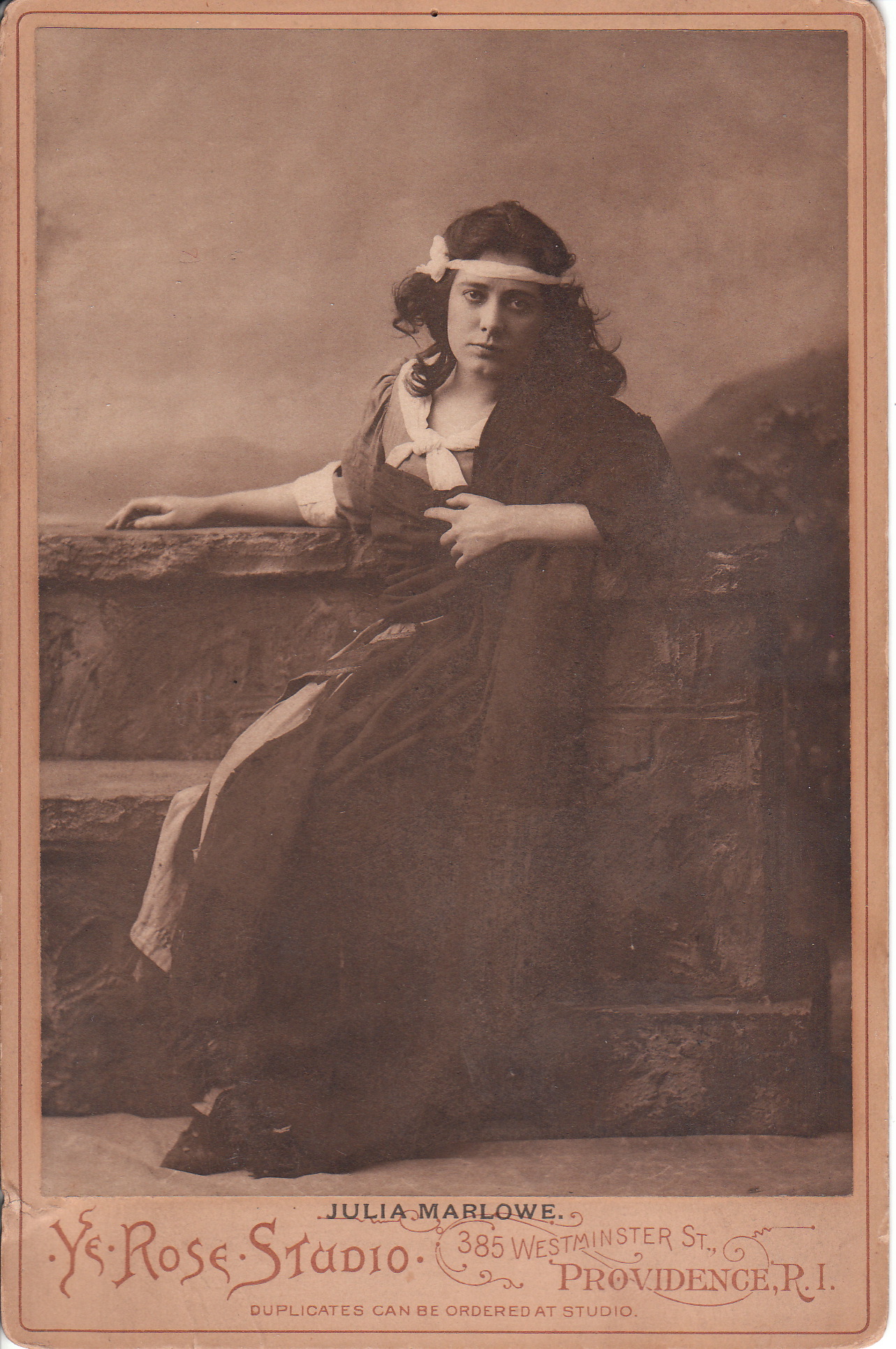
The fifth portrait of Julia Marlowe appears to be a photograph of the actress in costume for an unknown stage production. The image was photographed by Ye Rose Studio of Providence, Rhode Island. The reverse of the card indicated that the studio was opened in 1886. The studio was located in the Conrad building in downtown Providence. The building still exists. Other photographs by the Ye Rose Studio can be viewed by clicking on the category “Photographer: Ye Rose”.
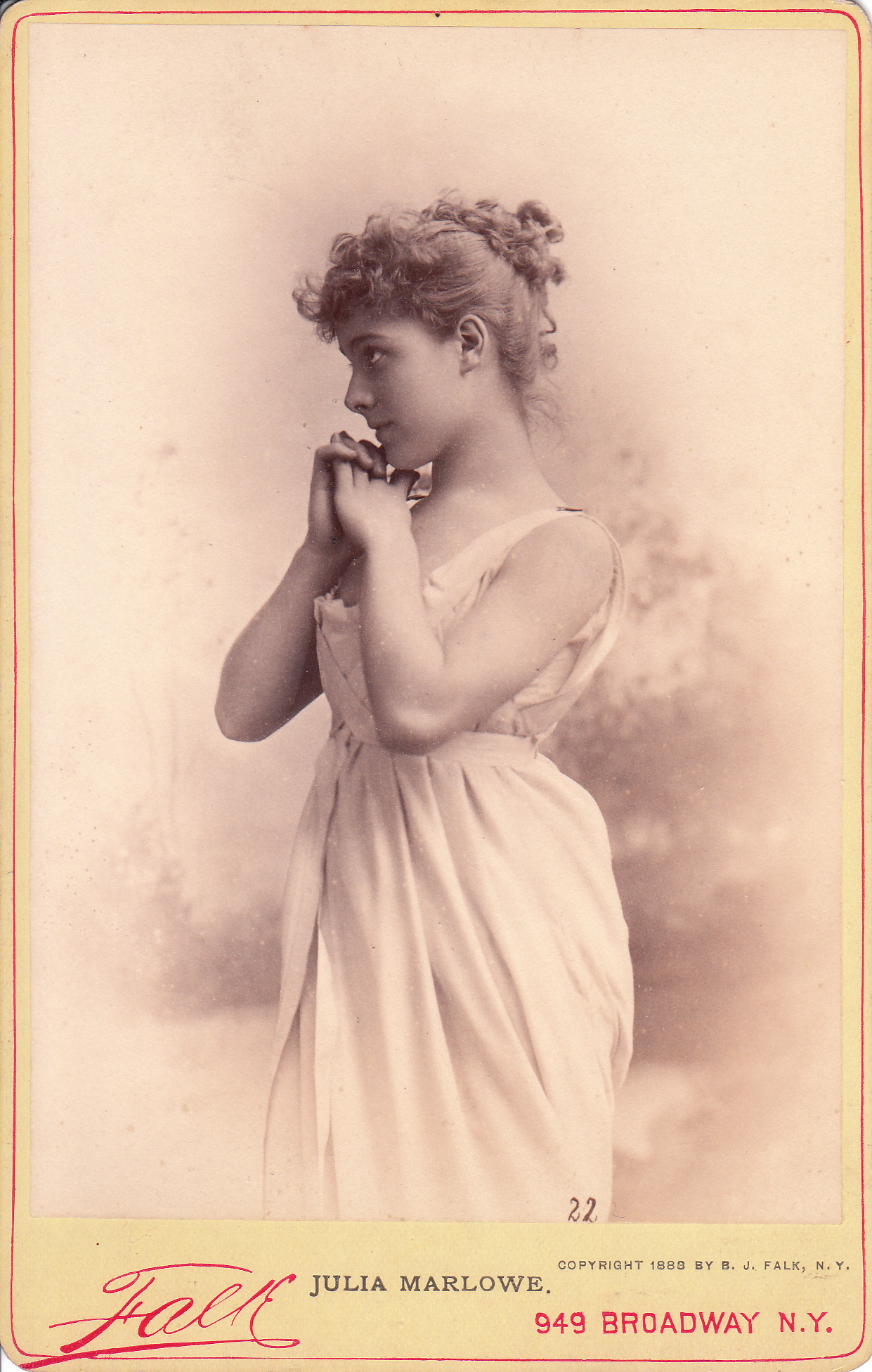
Portrait number six is an excellent example of the beauty of Julia Marlowe. This image, from 1888, captures Ms. Marlowe at the young age of twenty-three. The photographer of this portrait was B. J. Falk, a celebrity photographer located in New York City, New York. To view other photographs by Falk, click on the category “Photographer: Falk”.
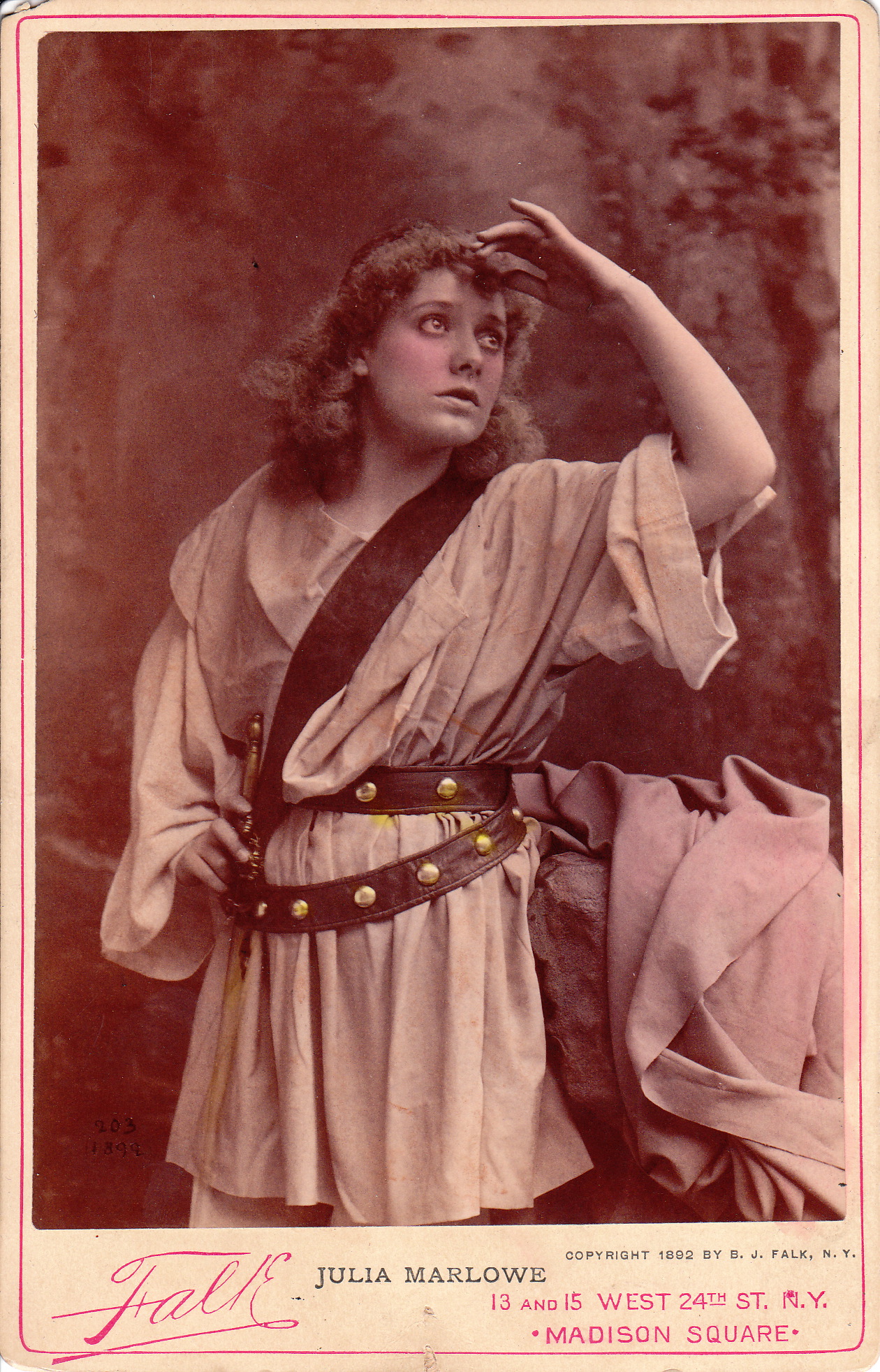
The seventh portrait is another example of a B. J. Falk image. The photograph features a costumed Julia Marlowe in the production of “Cymbeline“. Cymbeline is a play by William Shakespeare that was based on legends about the early Celtic British King, Cunobelinus. The play deals with themes that include innocence and jealousy. Ms. Marlowe plays Imogen, the King’s daughter. Her expression in the photograph shows fear and concern as she looks at someone or something in the distance. Her left hand shades her eyes while her right hand clutches her belted dagger. A stamp on the reverse of this cabinet card reveals that it was formerly owned by Culver Pictures of New York City, New York. Culver Pictures has been collecting photographs and illustrations from the 19th and first half of the 20th century, since 1926. These pictures are used in books, films, and other forms of media. At the time that this cabinet card was stamped by the company, Culver Pictures was located in New York City. (SOLD)
Portrait number eight is a close-up photograph of Miss Marlowe. The photographer of this cabinet card is the studio of Rose & Sands whose gallery was located in Providence, Rhode Island. Note that photograph number five also came from the Rose studio, but at that time, the gallery was called, the Ye Rose studio. The Wilson’s Photographic Magazine (1899) reports that Rose and Sands were the proprietors of Ye Rose. A humorous headline in a photography magazine stated “Providence Provides for All, And Rose Provides for Providence”. Print on the reverse of this cabinet card reveals that the Rose & Sands studio was opened in 1886 and that it specialized in “High Class Portraits from Cabinet to Life Size”. Also of interest, like photograph number seven, there is a stamp on the reverse of the photograph with the name “Culver Pictures Inc”.
Photograph number nine features the beautiful Miss Marlowe displaying a mischievous smile. Note her engaging large eyes. She is wearing a somewhat revealing dress (for the cabinet card era) and has a wonderful hat atop her head. This cabinet card photograph was published in 1888 by Benjamin Falk of New York City. The image is marked with the number sixty-nine.
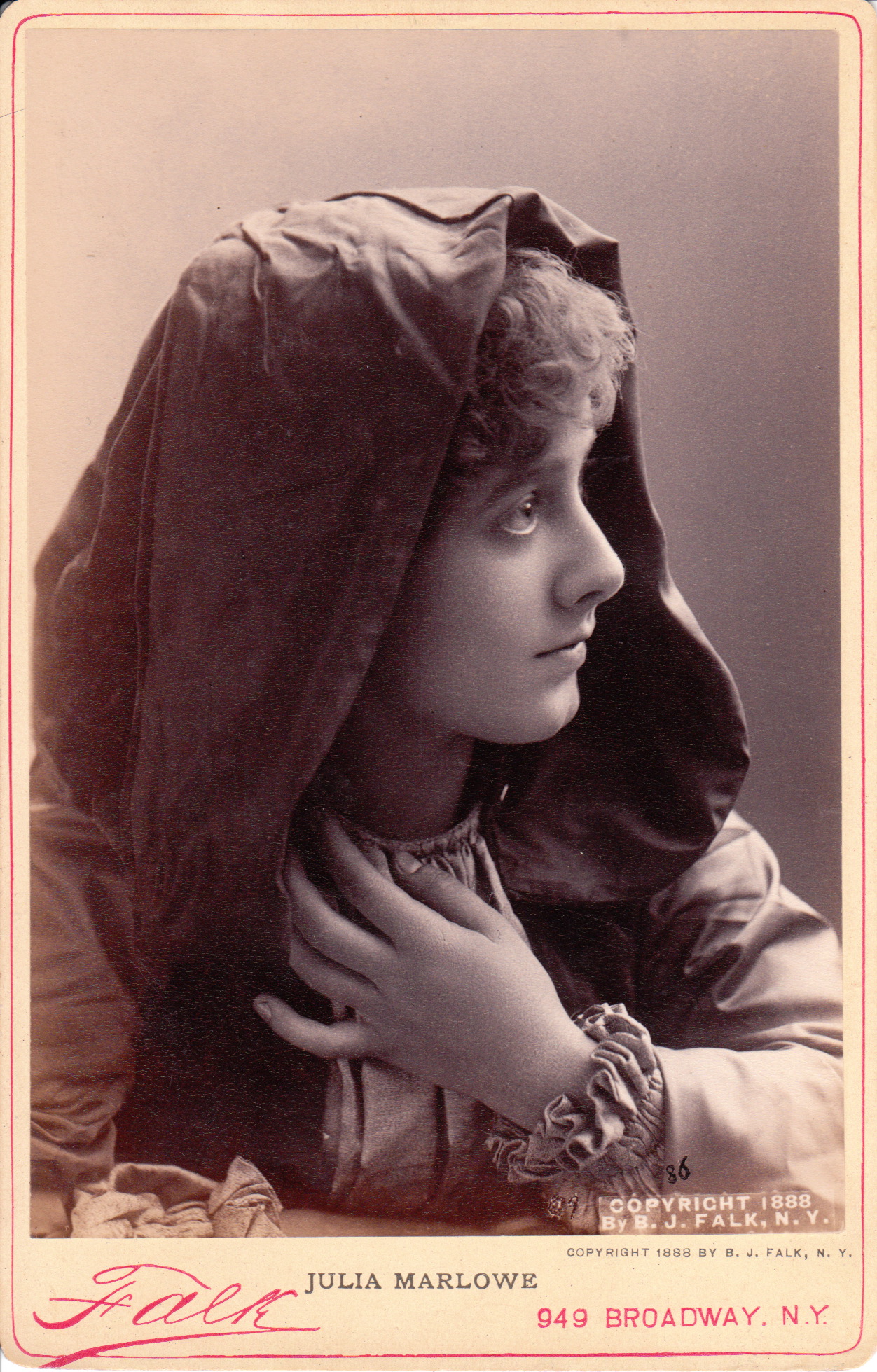
Portrait number ten is a closeup of Julia Marlowe with her head covered, but with her pretty face very visible. She is likely in costume for this photograph. The photograph is taken by B. J. Falk of New York City and has a copyright date of 1888. The cabinet card is marked number “86”.
The eleventh photograph captures Miss Marlowe staring hypnotically at a flower. Someone, has written below her name that the image features her in the role of Parthenia in the production of “Ingomar”. The New York Times (1904) reviews the play and Miss Marlowe’s performance on opening night at the Empire Theater in New York City. The newspaper reports that Frederick Halm’s play was “impossibly romantic and deliciously sentimental piece of old-fashioned theatrics. Tyrone Power played Ingomar and he was described as “vigourous and picturesque” but the article added that his voice was “not at its best”. The review pointed out that Marlowe’s appearance in this play was to be her last appearance as an independent star before joining E. H. Sothern’s Shakespearean repertory. In regard to Marlowe’s acting in this play, it was written that she played a “dear little prig – adorably dear” (prig can be defined as smug or arrogant) and she presented “a masterpiece of harmonious, modulated, and sustained acting”. The 1904 performance of Julia Marlowe in “Ingomar” marked a return performance for this accomplished actress. The New York Times (1888) wrote a very positive review of the opening night performance in Washington D.C.. The appreciative audience included three Supreme Court Justices and a number of members of the Chinese Embassy. This cabinet card was produced by the previously mentioned Ye Rose Studio of Providence, Rhode Island and it likely dates back to her 1888 performance in the role.
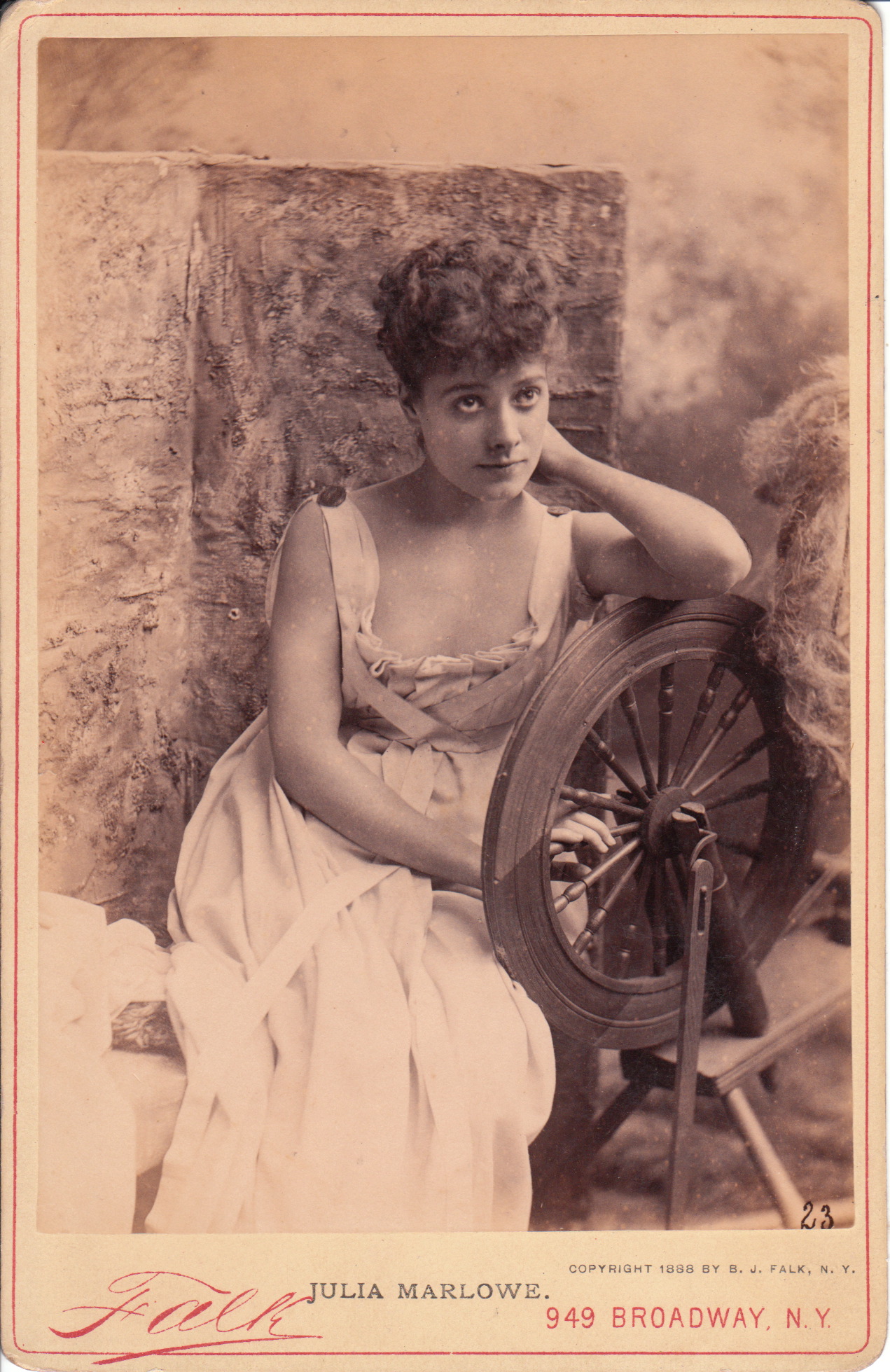
The twelfth cabinet card was produced by Benjamin Falk of New York City. He posed Miss Marlowe next to a spinning wheel. Her low cut dress makes this image a bit risque for the cabinet card era. If Falk or Miss Marlowe thought that looking up at the camera would create a “fetching appearance”, I would contend that their efforts failed. Rather than “fetching”, she appears dazed. The actress was a beautiful woman and provocativeness was not necessary to enhance her image. This photograph was produced in 1888 and was part of a series (#23).
Cabinet Card number thirteen is part of a series that includes Cabinet Card number ten. Both cards were photographed by Benjamin Falk and have a copyright date of 1888. Both portraits are close-ups but this one is captures Marlowe looking at the camera while number ten offers a profile view. Falk really captured the actresses eyes. Her eyes are beautiful and they are haunting at the same time. This photograph is marked number number 83 of the series.
Cabinet Card fourteen features another beautiful portrait of Julia Marlowe. This photograph was taken by Benjamin Falk and was copyrighted in 1892. This cabinet card is uncommon, possibly rare. (SOLD)
Cabinet Card 15 was photographed by Napoleon Sarony, the famed celebrity photographer located in New York City. (SOLD)
Vintage Photograph 16 shows a seated pretty young woman—Julia Marlowe—posing in a studio setting. This photograph is printed on a thin paper stock and then mounted to a heavier card. This was a common production method, and the piece appears exactly as manufactured. I have seen this same image as a postcard. Marlowe wears an elaborate Edwardian dress with ornate embroidery, beadwork, and lace detailing. Her gown has layered textures and patterns, and she rests one hand on her lap while the other lightly touches the chair. She wears a large, dramatic hat trimmed with tall, soft plumes that sweep upward and to the side. Her expression is calm and direct, looking slightly toward the camera with a composed, almost introspective gaze. The background is a simple dark studio backdrop that highlights her figure and outfit. The photographer is identified as the Sands & Brady studio in Providence, Rhode Island. In the lower left corner of the image is a distinct publisher’s mark: a four-leaf-clover-shaped logo with letters in each quadrant. The clover has three letters in it, S., D., and P.. The fourth quadrant indicates that the publisher was located in New York. (SOLD)

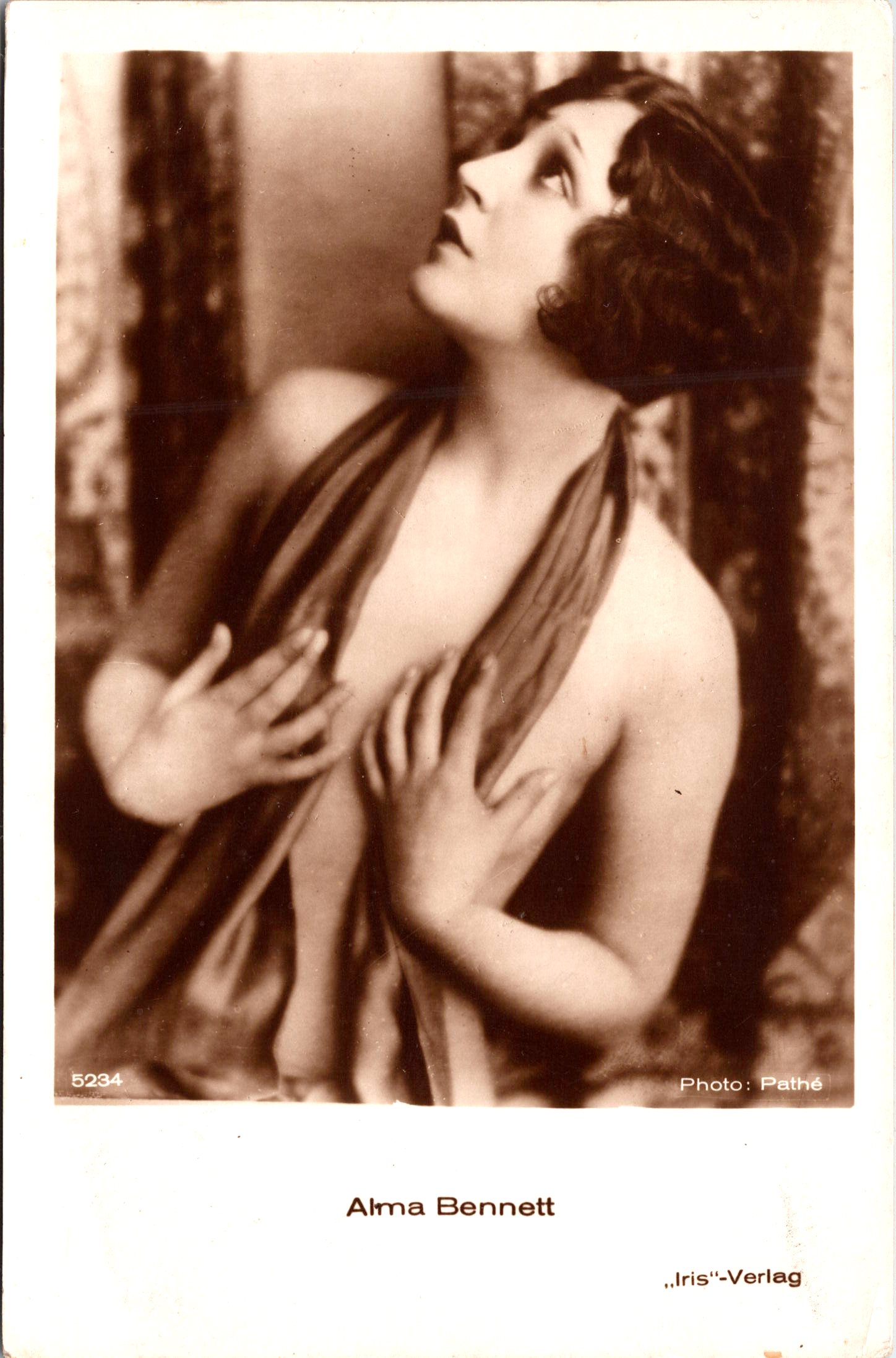


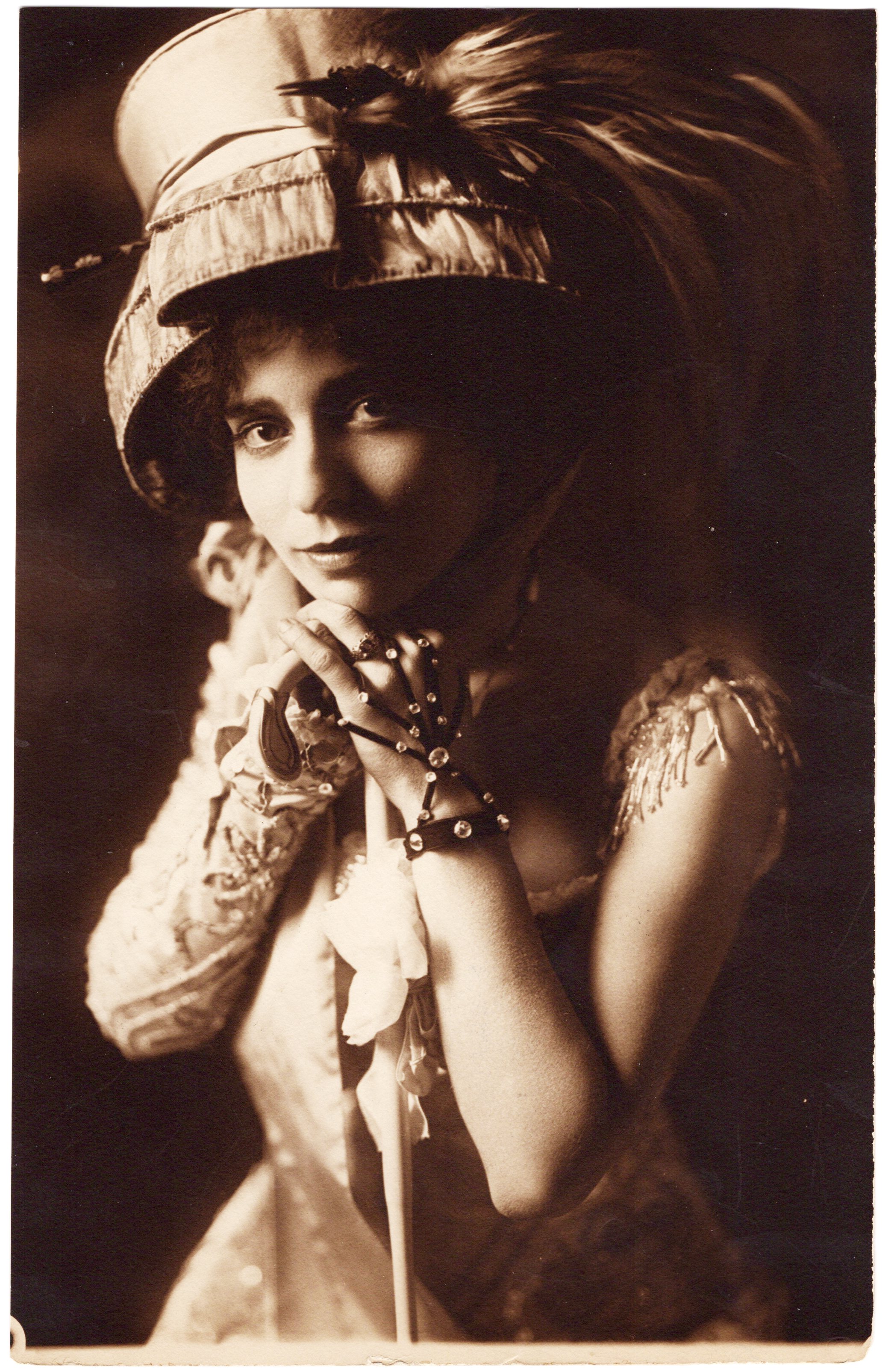
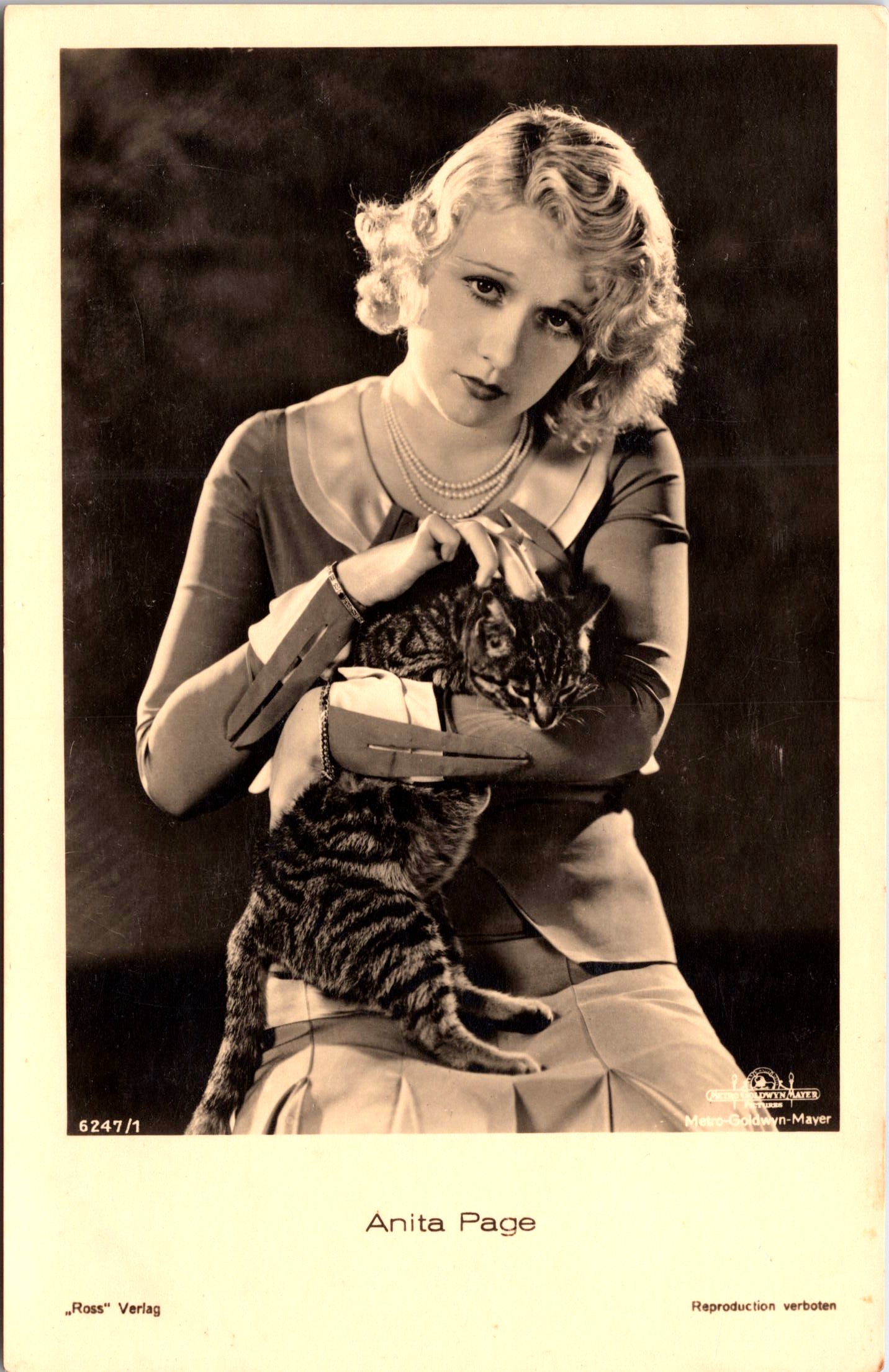

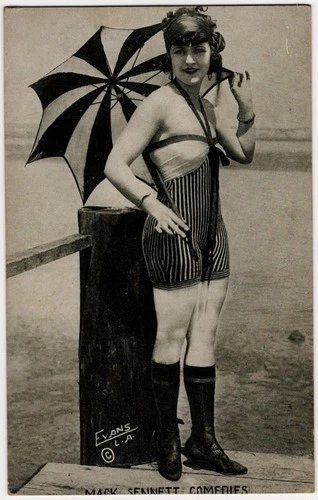 ARCADE CARD 1 (SOLD)
 POSTCARD 1



 THE CABINET CARD GALLERY