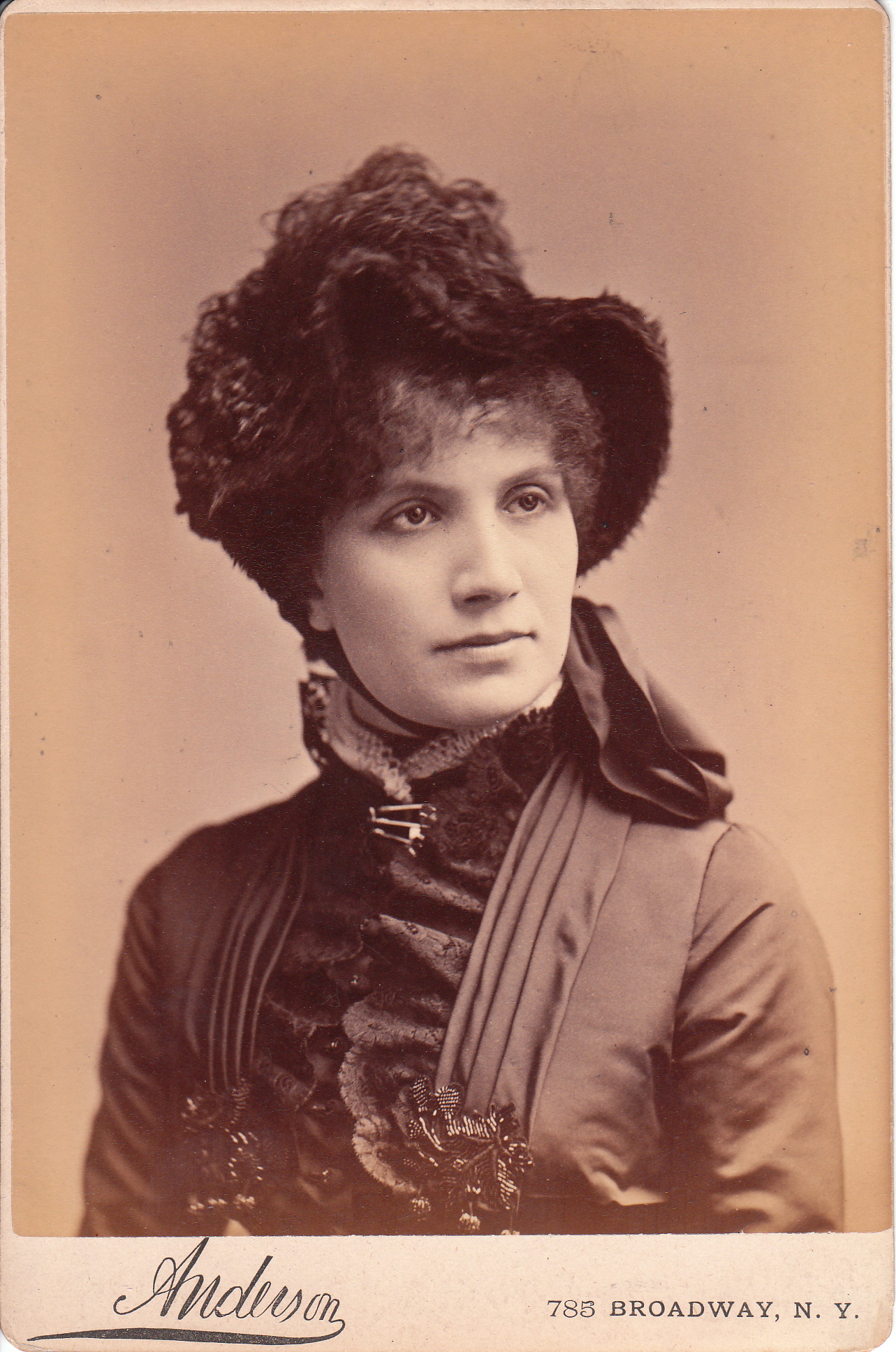
 A young woman poses for her portrait at the studio of Anderson, in New York City. She is beautifully dressed and extremely attractive. Unfortunately, she is unidentified. It is likely that a woman with such great beauty and poise, photographed by celebrity photographer, D. H. Anderson; is an actress. There is a name written on the reverse of the cabinet card. The handwriting is not clearly legible but it appears to say “Marjorcni”. Research has yielded no relevant information pertaining to identifying this image. Assistance in identifying the person in this photograph would be appreciated. The knowledgeable and helpful visitors to the cabinet card gallery have solved a number of similar mysteries in the past.
PRETTY AND UNIDENTIFIED ACTRESS POSES ON BROADWAY

ANNIE ROBE: THEATRE ACTRESS KNOWN FOR HER BEAUTY
 Annie Robe, stage actress, is the subject of this cabinet card portrait by celebrity photographer, Sarony. Sarony’s studio was located in New York City. Robe was known for her beauty, and this photograph confirms that she was quite attractive. Note her cape and matching handbag. It is possible that the “handbag” is actually a hat. Hopefully, one of Cabinet Card Gallery’s fashion experts will resolve the confusion with one of consistently informative comments. Annie Robe was the leading lady of Wallack’s Theatre for several seasons. Initial research yielded little biographical information. One article reports that she was English. The New York Times (1887) describes her work in “Harbor Lights” as commendable.
LIZZIE BURTON: STAGE ACTRESS (NOT ELIZABETH TAYLOR BURTON)
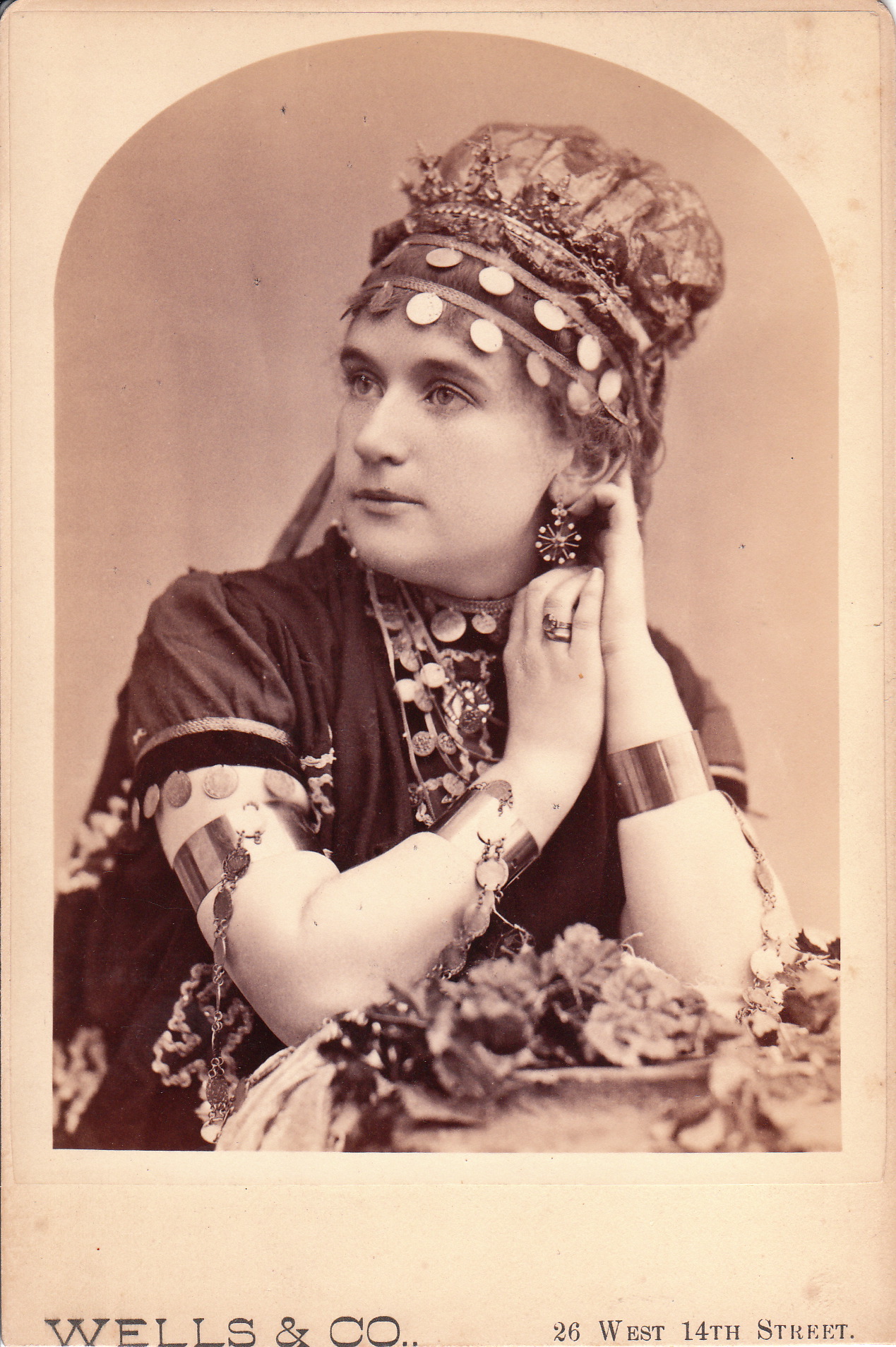 This cabinet card features actress, Lizzie Burton. Research yielded little information about her and the search was hampered because references to Elizabeth Taylor Burton kept surfacing. The few articles about Lizzie Burton that were found, seem to indicate that she was a minor comic opera actress. She appeared with the Boston Ideal Opera Company which existed between 1879 and 1904. A review of “The Musketeer”, which appeared in tNew York Times (1885), offered praise for her performance in a minor role. The “Musketeer”, Varney’s comic opera, had been performed at New York’s Fifth Avenue Theatre. This cabinet card was published by Wells & Co., a New York City photographic studio.
PROVOCATIVE WOMAN ON A FAINTING COUCH IN CHICAGO, ILLINOIS
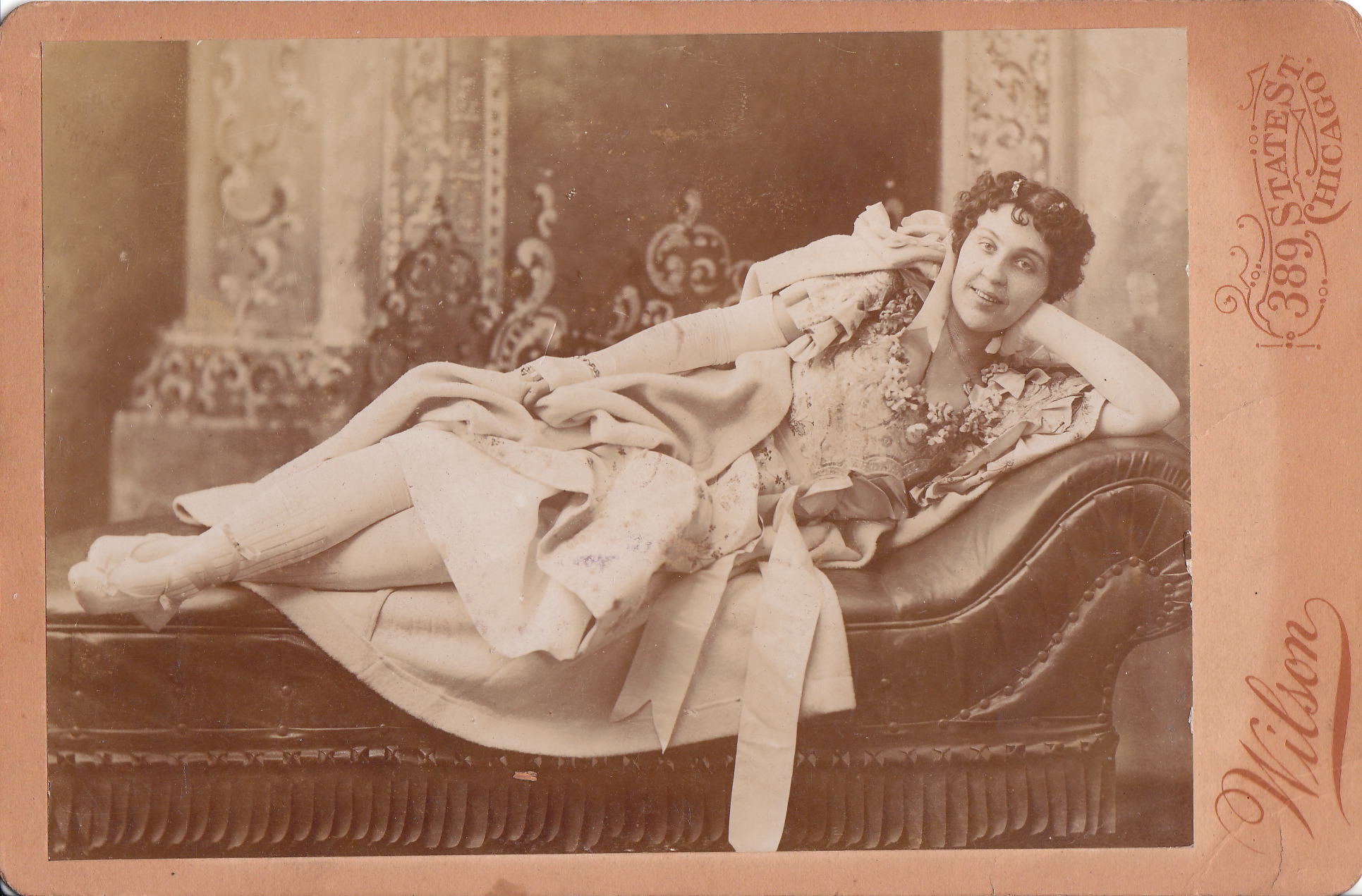 This cabinet card features a young smiling woman lying on a fainting couch. This image is quite risque for its time. The style and folds of the woman’s dress, her exposed feet, her smile and her body language all contribute to the provocativeness of this image. Fainting couches were popular in the 19th century and used predominately by woman. They are couches with a back that is traditionally raised at one end. There are two major theories as to why these type of couches became popular. The first theory was that some women wore their corsets so tight, that they restricted blood flow; causing fainting. This theory has pretty much been debunked. A second theory was that the couch was popular because many women of that time suffered from “female hysteria”. This medical condition caused symptoms that included faintness, nervousness, and insomnia. The illness was treated by “pelvic massage”. The couch was a great setting for hysterical woman to receive the treatment from visiting physicians and midwives. This female psychiatric illness sounds very much like an anxiety attack, and Xanax and Ativan seem to have replaced “pelvic massage” on a fainting couch. The photographer of this cabinet card was J. B. Wilson of Chicago, Illinois. To view other photographs by Wilson, click on the category “Photographer: Wilson (JB)”. The subject of this photograph may have been an actress.
RISQUE PORTRAIT OF AN ALLURING WOMAN IN NEW YORK CITY, NEW YORK BY JOSE MORA (ACTRESS JEFFREYS-LEWIS?)
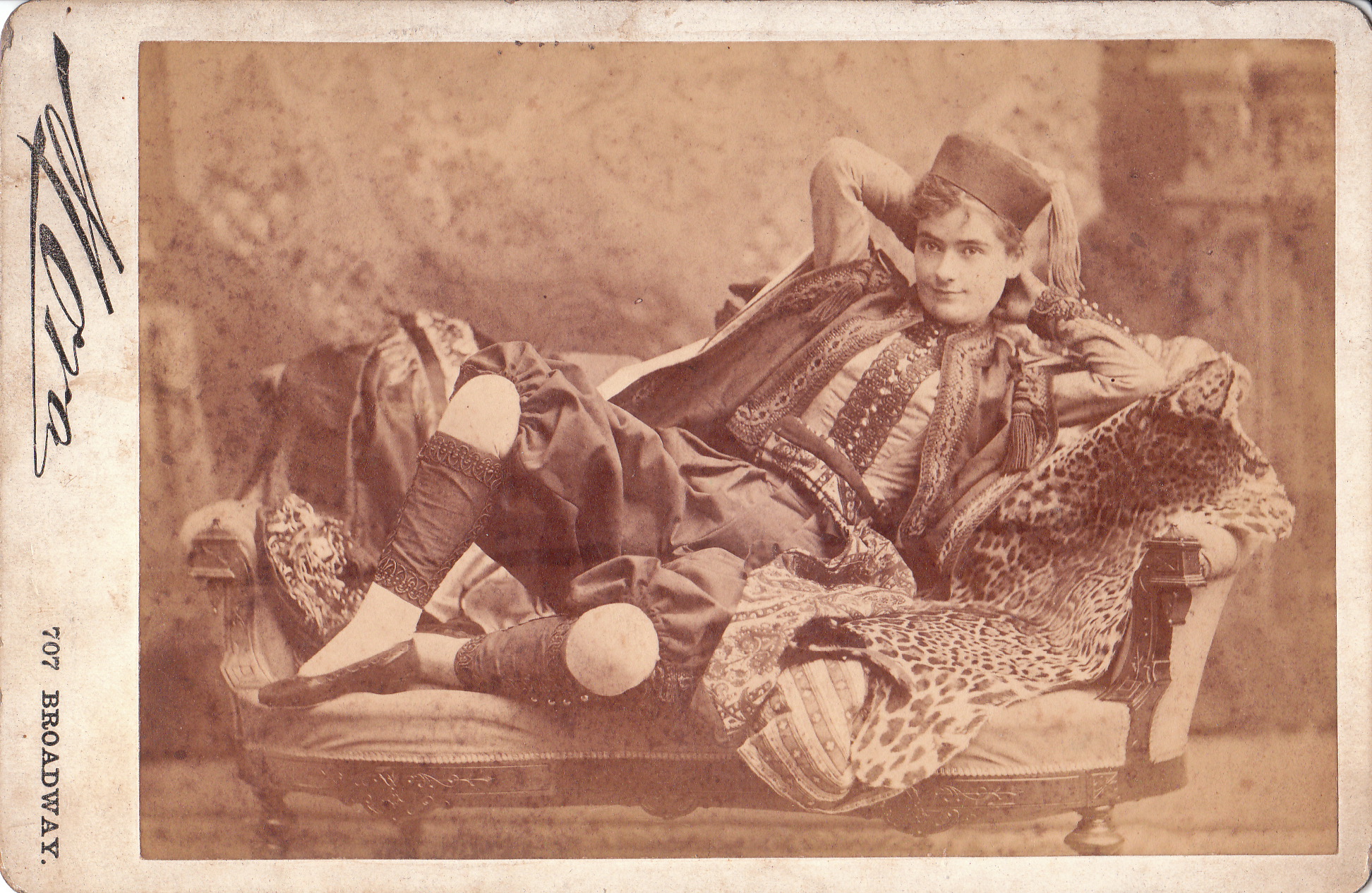 This cabinet card features an alluring woman lying on a divan in a very provocative pose. Note the leopard skin on the divan. This woman is likely an actress. She appears to be dressed like she is part of a harem. Rather than an actress, she may be a member of a circus act. The photographer is the famous celebrity photographer, Jose Mora. This image is risque for the time that it was made. To view other photographs by Mora, click on the category “Photographer: Mora”. ADDENDUM: An informed visitor to the cabinet card gallery has identified the subject of this cabinet card as being actress Jeffreys-Lewis. See the comment below to learn the interesting details.
PORTRAIT OF AN UNIDENTIFIED ACTRESS
 This pretty woman sat for this cabinet card portrait in the New York City studio of celebrity photographer, B. J. Falk. The photograph is a bit risque for its time. The young woman is showing her bare arms and her shoulder is also exposed. To increase the sexual tension in this photograph, the actress is projecting a “come hither look”. To view other photographs by Falk, click on the category “Photographer: Falk”.
JULIA NEILSON (1861-1957): BRITISH STAGE STAR
 Julia Neilson (1868-1957) was an English actress remembered for her numerous performances as Lady Blakeney in “The Scarlet Pimpernell” and for her roles in many tragedies and historical romances. In addition, she is also known for her portrayal of Rosalind in “As You Like It”. She became noticed after acting in a series of plays by W. S. Gilbert in 1888. She then joined the company of Herbert Beerbohm Tree, where she remained for five years. She married actor, Fred Terry and their daughter became a well known actress, Phyllis Neilson-Terry. From 1900 through 1930, Neilson and her husband became noted producers of plays. The photographer of this cabinet card was W. & D. Downey of London, England. To view other p;hotographs by the Downey studio, click on the category “Photographer: Downey”. This cabinet card captures Ms Neilson in her role as “Drusilla Ives” in “The Dancing Girl”. The photograph was taken in 1891.
MINNIE DUPREE: AMERICAN STAGE AND FILM ACTRESS
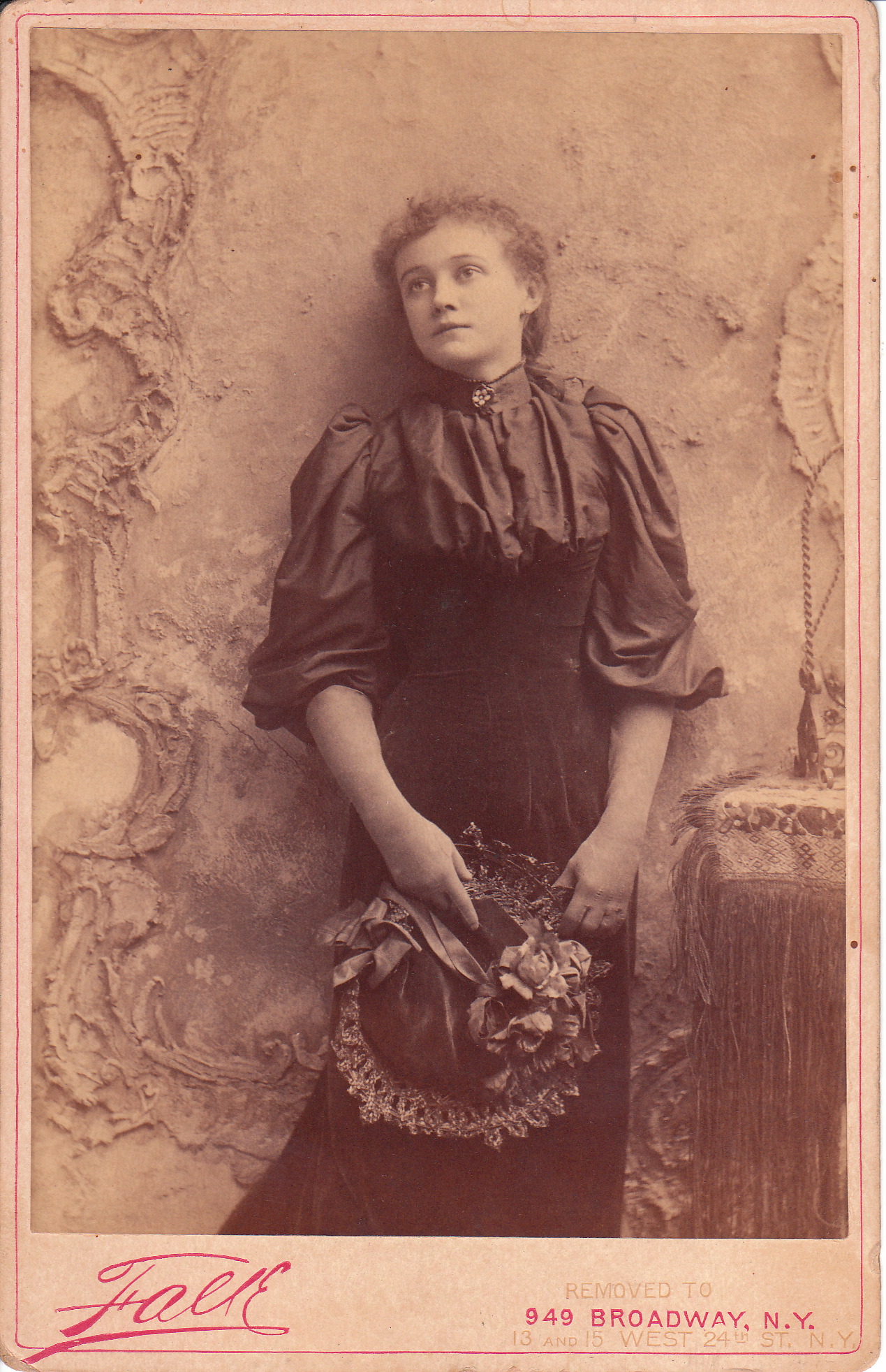
Photograph 1
Photograph 1 is a cabinet card portrait of Minnie Dupree (1873-1943). She was an American stage and film actress. She was born in La Crosse, Wisconsin. She made her acting debut in a touring company in 1887. In 1888, she was a sensation in a small role in William Gillette’s New York play. “Held by the Enemy”. This role propelled her into a number of supporting roles with the some of the leading actors of the day. She finally got a starring role in the 1900 production of “Women and Wine”. Many other leading roles followed as well as a number of notable successes. However, critics agreed that her later career was less successful than her early and middle career. Dupree also made a small number of films including “The Young in Heart” (1938). Costars in this film included Janet Gaynor, Douglas Fairbanks Jr., Billie Burke, and Paulette Goddard. This cabinet card photograph captures Miss Dupree holding her had and looking dreamily away from the camera. The photograph was taken by celebrity photographer, B. J. Falk. Falk’s address is listed as 949 Broadway, New York City. However, there is a light stamp over the Broadway address indicating that the studio had “removed” to 13 & 15 West 34th Street, New York City. To see other photographs by Falk, click on the category “Photographer: Falk”.
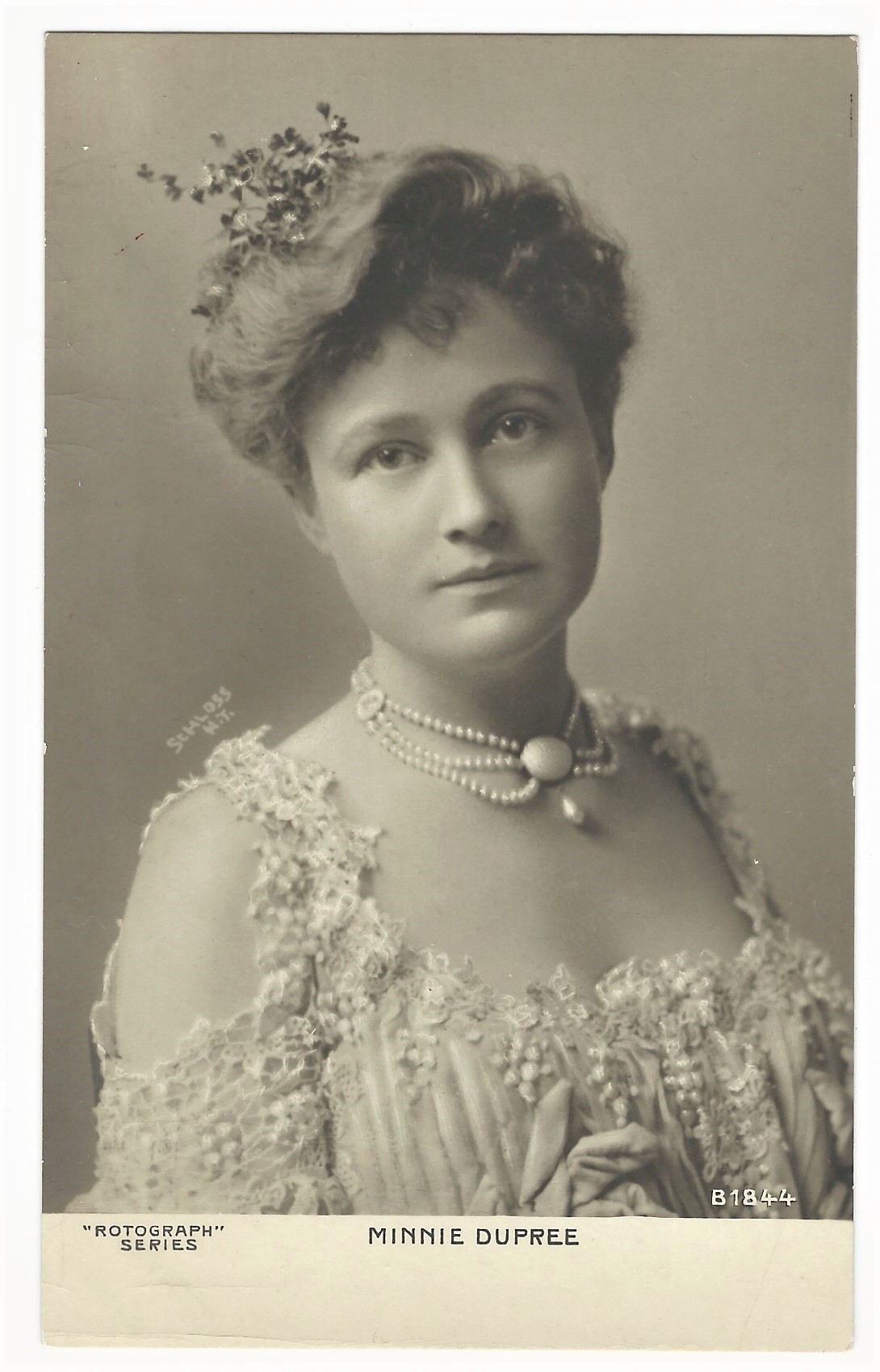
Photograph 2 is a vintage real photo postcard featuring Miss Dupree. The image provides a wonderful close-up view of the actress. She is wearing a fancy dress that is low-cut. Note her pearl necklace. Her hair is styled perfectly, providing a very fresh and clean look. The photographer credited with this fine portrait is celebrity photographer, Jacob Schloss (1856-1938). His studio was located in New York City (Manhattan). He received his education at the Cooper Union in New York City. He graduated in 1872 as an etcher. He joined Benjamin J. Falk’s photography studio and worked there in the mid 1870’s. He left Falk’s employ to open his own studio (54 West 23rd Street) where like Falk, he specialized in theatrical photography. He tended to favor photographing actresses in costume in front of generic studio furnishings. He produced many cabinet card photographs but also was active in the production of magazine images. By the 1890’s he was particularly known for his photographs of beautiful women, much like photographer Jose Maria Mora. Schloss also was an activist for photographers rights. He was very involved in the movement to copyright images. He sued those who used his photographs without crediting or paying him. He was an active participant in national photographer associations and was an worked as a photographer until the 1910’s. The photograph was published by the Rotograph Company as part of the “Rotograph Series” (no.B1844). The postcard has a stamp stating “From Robert S. Simmons”, whom I believe, but can not confirm, was a well known collector of photographs. (SOLD)
MISS JANE COOMBS: EARLY AMERICAN THEATRE ACTRESS
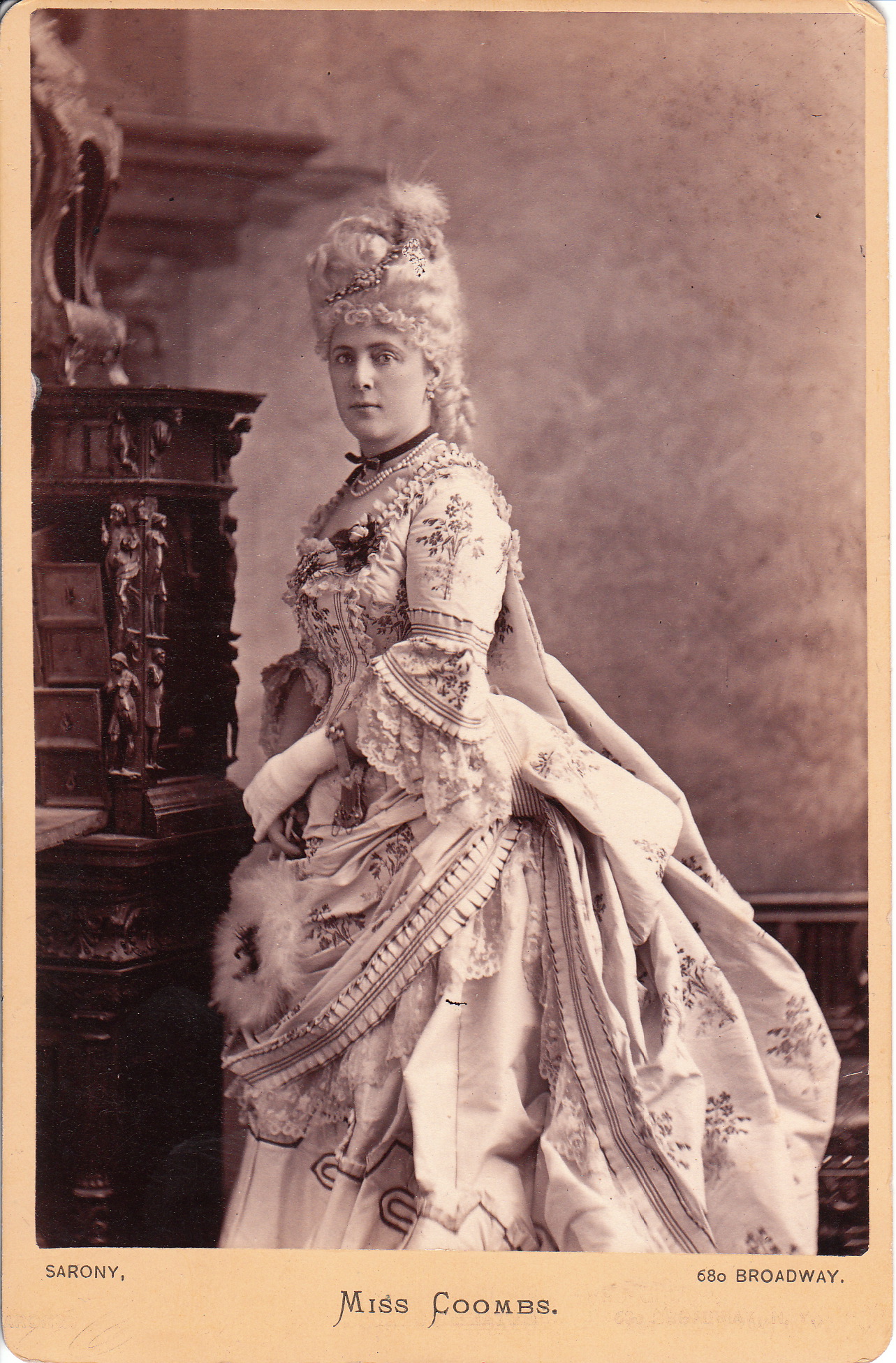 Jane Coombs (1842-?) was an American actress who made a sensational debut during the 1855-1856 theatre season. She starred opposite Edwin Forrest at New York’s Broadway Theatre. In 1861 she starred in a production at the Haymarket Theatre in London, England. The New York Times (1864) describes a graceful tribute to “the charming actress”. The Nebraska State Journal (1894) published a very insulting article about the actress. The article reports that a man stole large packages with Miss Coombs name printed on them, from a hotel baggage room. Apparently, he was hoping to find diamonds in the packages. Upon opening the packages he found two thousand billboard portraits of Miss Coombs. The journal concludes that “Anybody who has had the doubtful pleasure of beholding Miss Coombs, will sympathize with the thief, and decide that in this case, his punishment was greater than his crime”. The author of this article, may be gifted with a sense of humor, but his description of Jane Coombs, at age 52, is certainly quite cruel. She certainly does not look unattractive in this cabinet card portrait by Napoleon Sarony. Sarony was a famed celebrity photographer in New York. Other images by Sarony can be viewed by clicking on the category “Photographers: Sarony”.
VERNONA JARBEAU: THEATRE ACTRESS
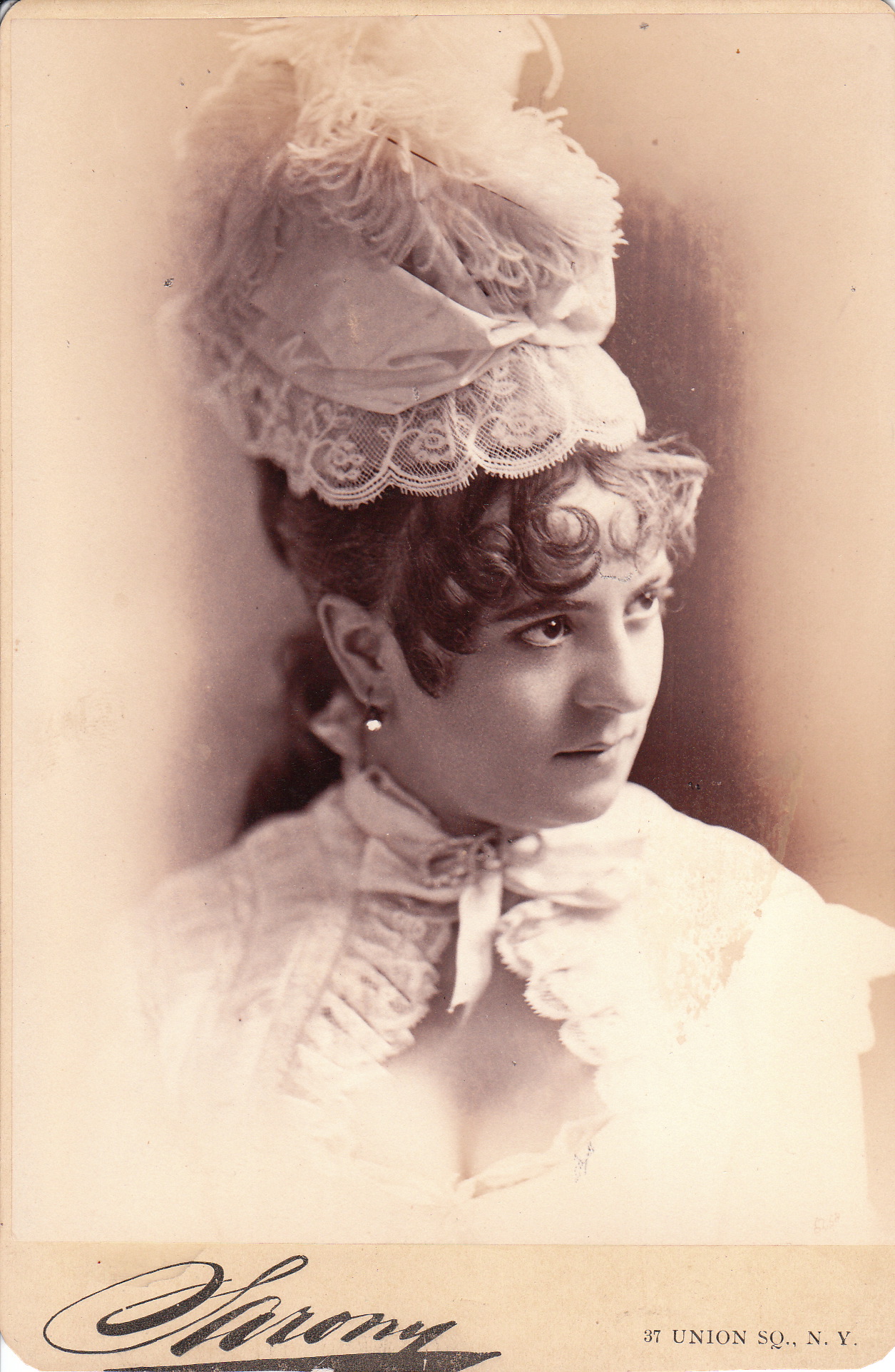
This cabinet card is a portrait of theatre actress, Vernona Jarbeau. Jarbeau often played comedienne roles. Performing Arts (1887) reported on the success of one of her performances. The writer states that 3,000 people crowded into Philadelphia’s Academy of Music to hear the Duff Opera Company perform Von Suppe’s “A Trip to Africa”. The cast was described as “strong” and included Lillian Russell (see her photographs in Cabinet Card Gallery), and Jarbeau. The article states that Jarbeau was the hit of opera when she performed a song in French. The audience applauded and laughed as loud as they possibly could, despite the fact that very few in the audience could understand what she was singing. This cabinet card image was photographed by celebrity photographer, Sarony. To view other photographs by Sarony, click on the category “Photographer: Sarony”.


