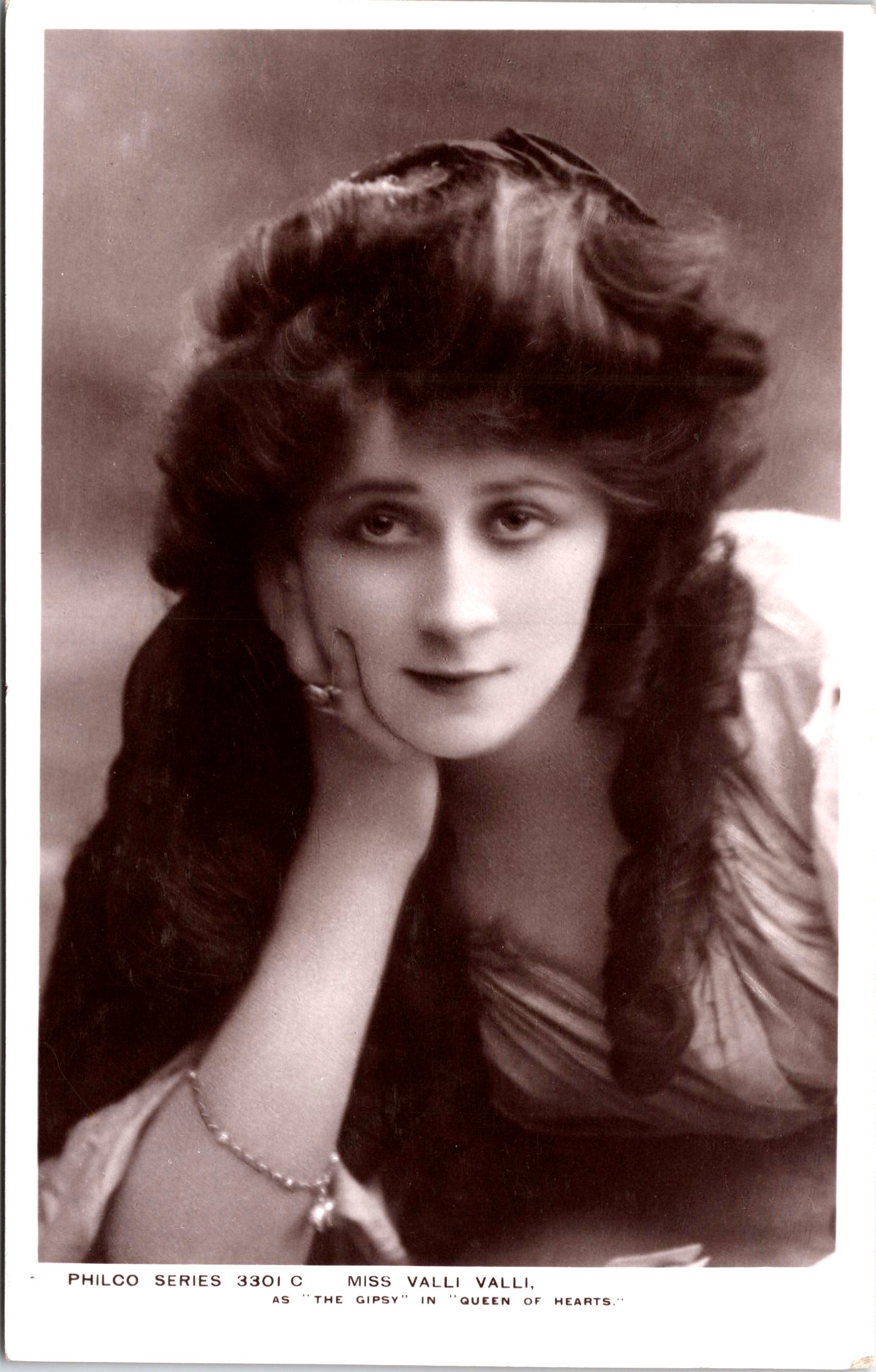
These vintage real photo postcards feature British beauty and actress, Valli Valli (1882-1927). She was a British musical comedy actress and a silent film performer. She was born in Berlin but spent most of her life in England. Her sisters, Lulu and Ida Valli were both actresses. Her father was a merchant. She was educated in London and Paris. She made her stage debut in London at the age of twelve. At thirteen years of age she had a successful run in the musical comedy “Morocco Bound” in Berlin. The next year she performed at London’s Drury Lane Theatre in a pantomime version of Cinderella. As an adult, Valli was a beautiful woman. She performed mostly on the English stage but did tour the United States a number of times. These plays include “The Dollar Princess” and her final New York City performance in “Miss Millions” (1919). In all, she appeared in seven Broadway plays between 1905 and 1920. Valli appeared in four films during 1915 and 1916. These films included “The Turmoil” which was an adaptation of a Booth Tarkington novel. In 1917, she married Louis Dreyfus, head of a music publishing house, and later, a theatrical producer. Valli died from tuberculosis at the young age of forty-five.
Postcard 1 captures Valli, in a pensive, or possibly, dejected mood. The card was published by Rotary Photo as part of a series (No.1760G). Miss Valli was photographed by the Bassano studio. (SOLD)
Postcard 2 features Valli, in a pensive or imploring mood, identical to the mood she exhibits in postcard 1. This card was published by Rotary Photo as part of a series (No.11415A). (SOLD)
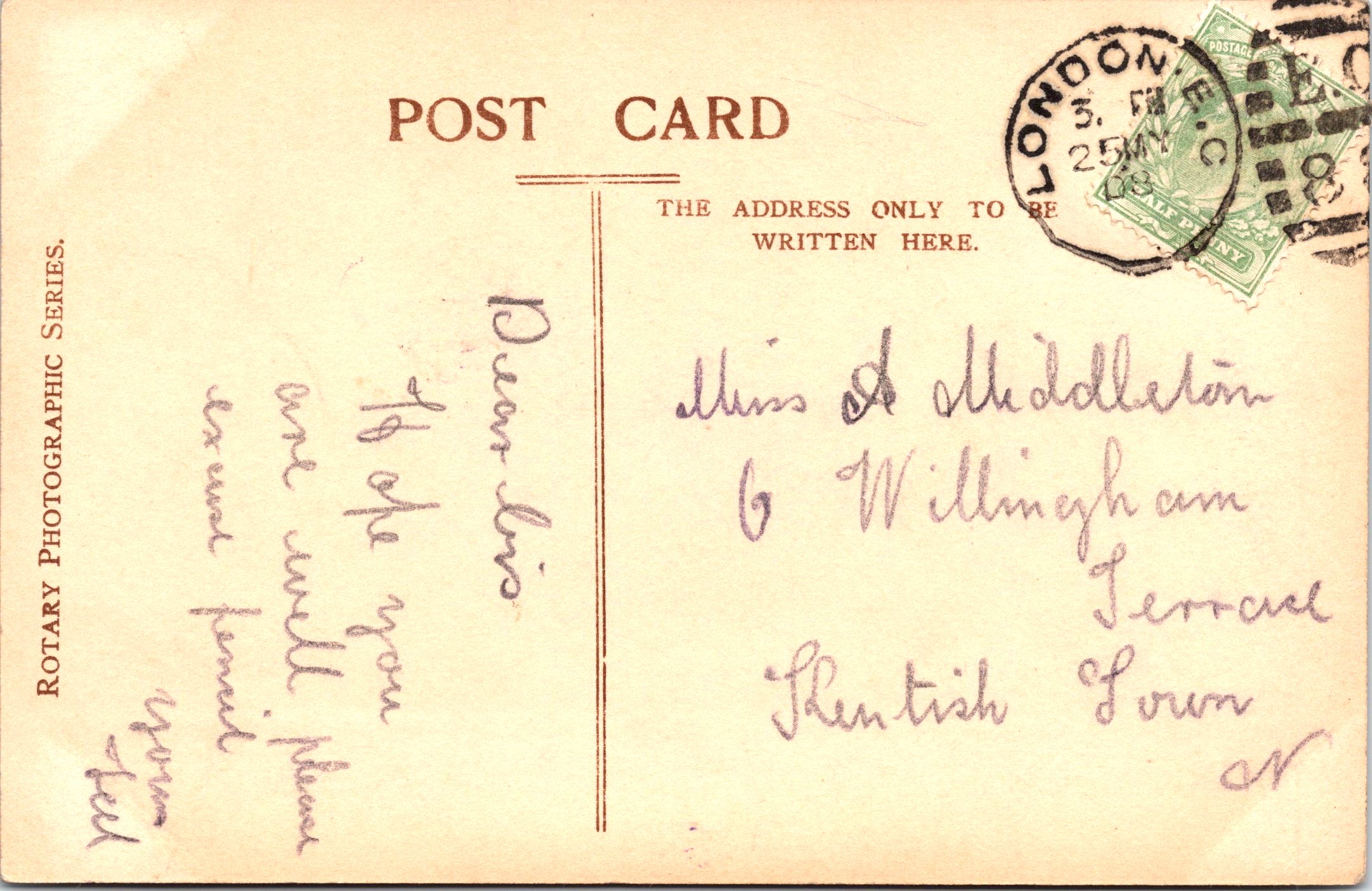
Postcard 3 captures Valli in her role as “The Gipsy” in “Queen of Hearts” . The card was published by Rotary Photo as part of a series (No.11415A). (SOLD)
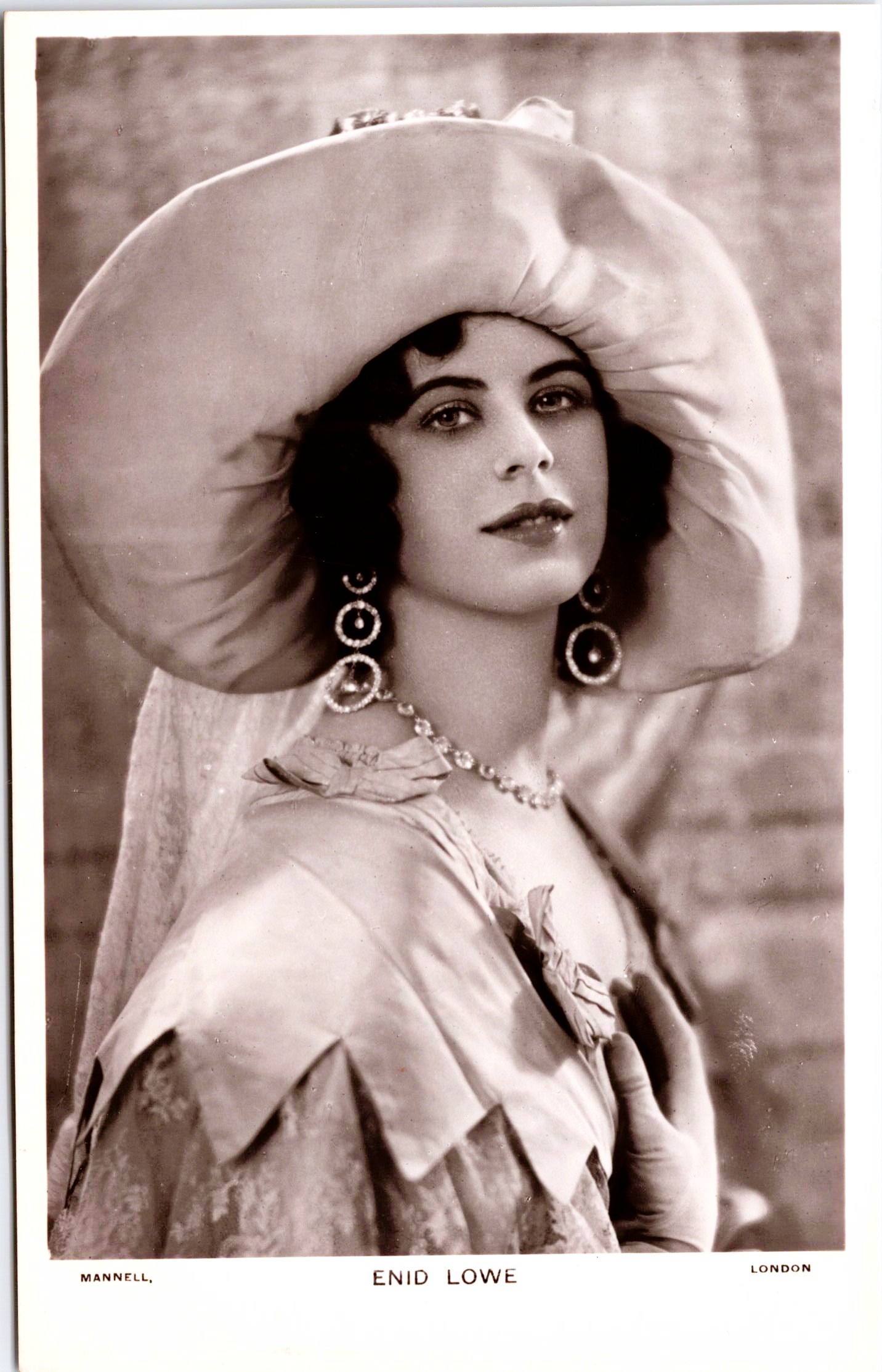
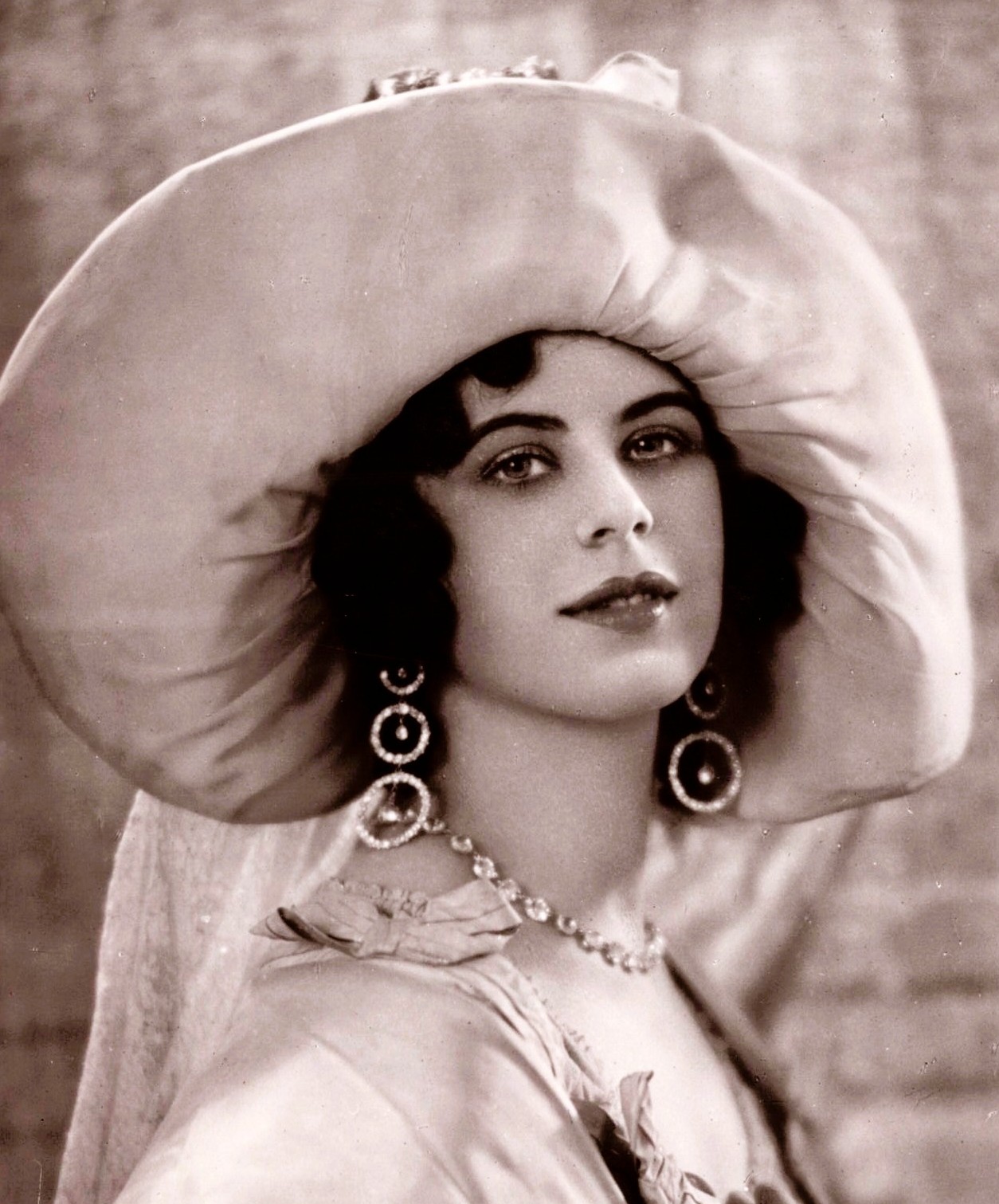
The photo postcard features Enid Lowe (1908-1994) in an elegant and theatrical pose. She was a British actress known for her work in television and theater, with notable appearances in productions such as “BBC Sunday-Night Theatre” (1950), “Educated Evans” (1957), and “Loot” (1970). In 1941, she performed in the musical “London Rhapsody” at The London Palladium. This postcard is a testament to Enid Lowe’s beauty. She is dressed in period-style attire. Her outfit includes a lavish gown with a soft, flowing texture, possibly made of silk or satin, adorned with delicate lace and ribbon details. The bodice has a gentle scalloped trim, and she wears long gloves, adding to the refinement of her look. Her accessories are striking—she wears an elaborate wide-brimmed hat with a voluminous, gathered crown, likely made of soft fabric. Her jewelry is ornate, consisting of large, dangling earrings with multiple tiers and a matching necklace of pearl-like beads. These accessories enhance the regal and theatrical nature of the portrait. Enid Lowe’s facial expression is poised and slightly enigmatic. Her dark, wavy hair is styled in an elegant, vintage fashion, framing her face beautifully. Her eyes, accentuated with dark makeup, have a confident and alluring gaze, and her lips are slightly parted, conveying a subtle yet engaging expression. The soft lighting highlights her delicate features, giving her a luminous and almost ethereal appearance. The photographer of this image, George Mannell, was based in London and was active in the early 20th century. He specialized in theatrical and celebrity portrait photography, producing high-quality postcards featuring actors and actresses of the time. His work captured the glamour and artistry of stage performers, often presenting them in elaborate costumes and dramatic poses to appeal to both fans and collectors. His work often appeared in publications such as the Picturegoer series, a popular British postcard collection featuring film stars and entertainers. SOLD
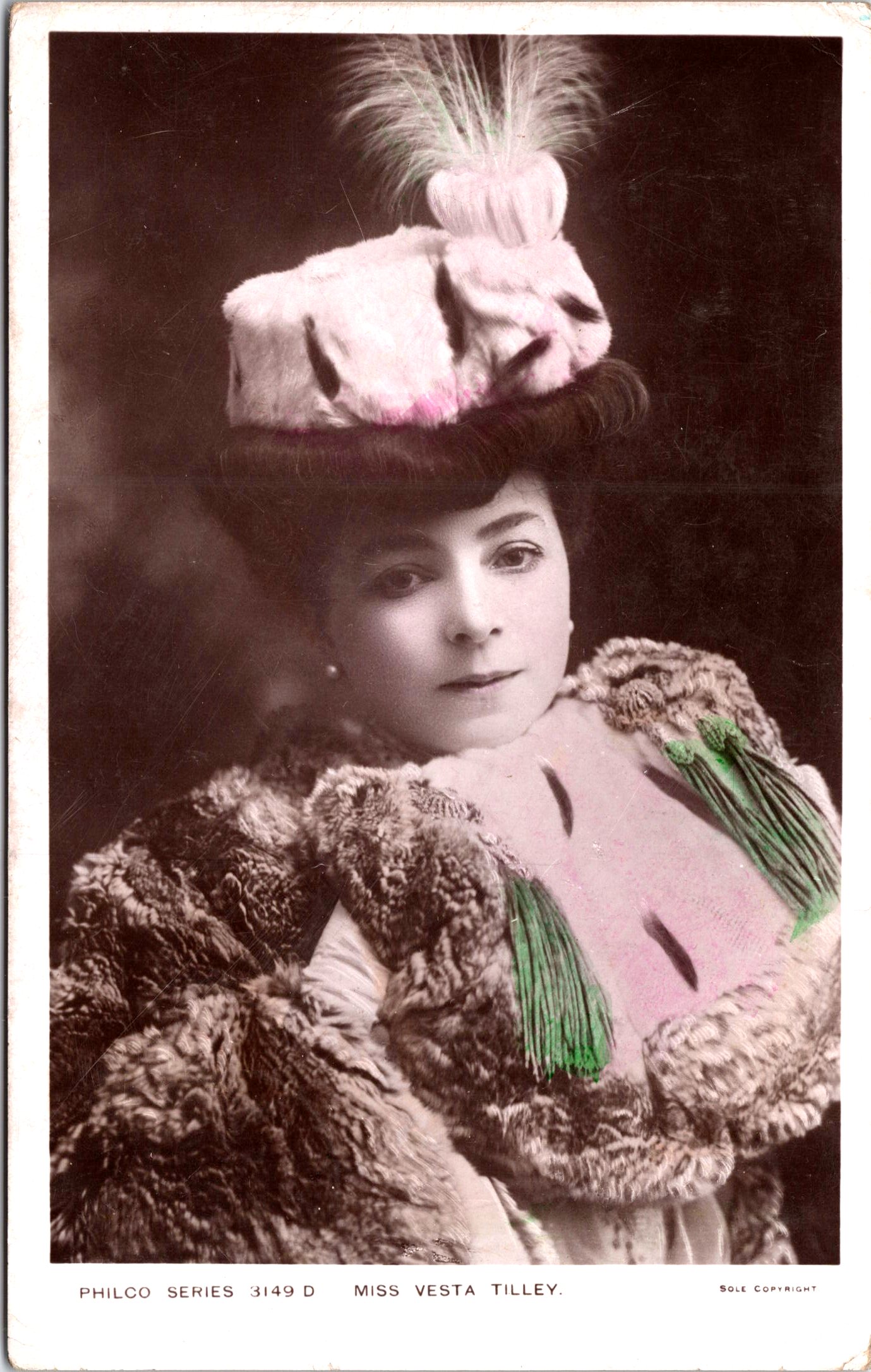
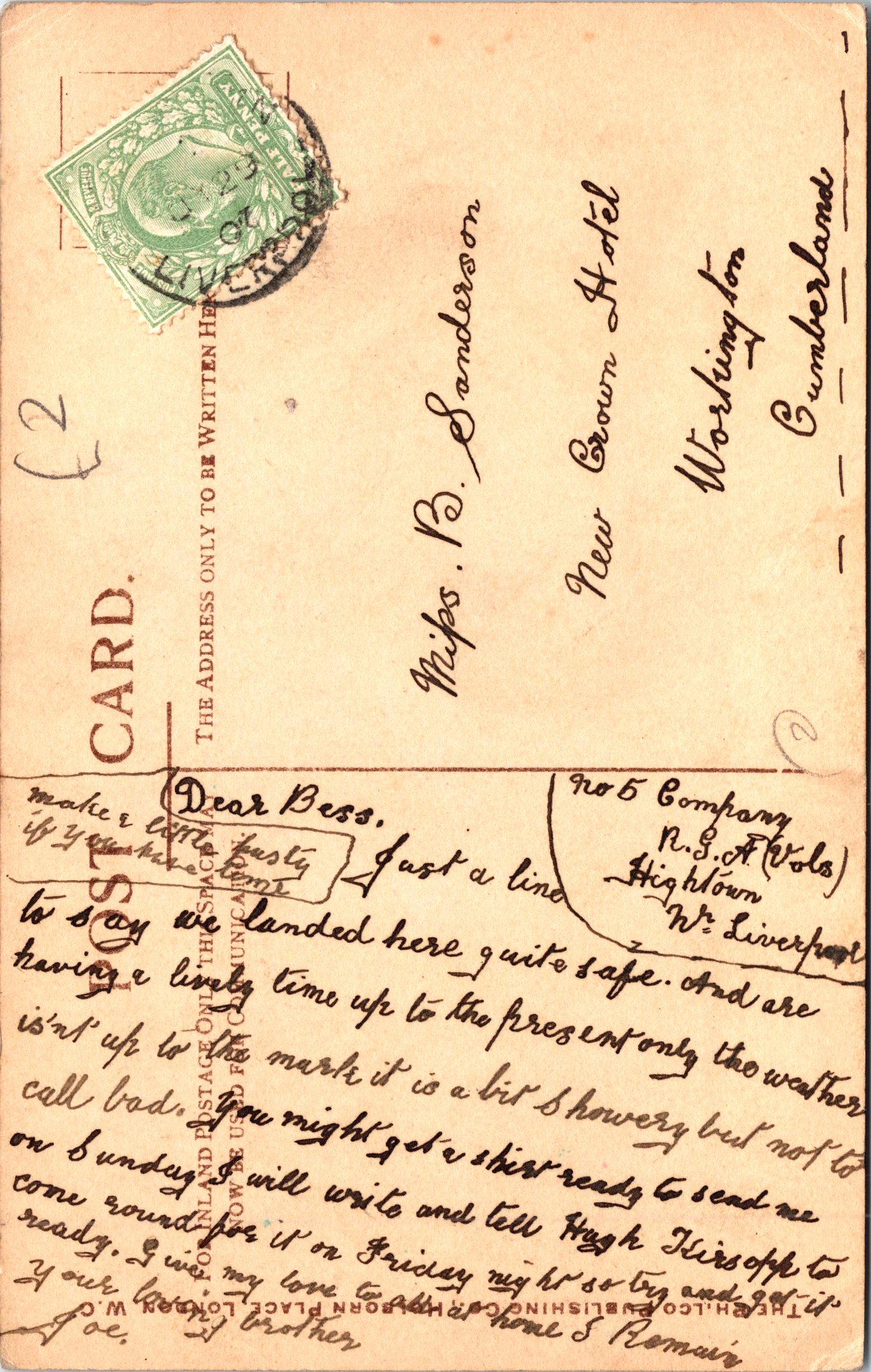
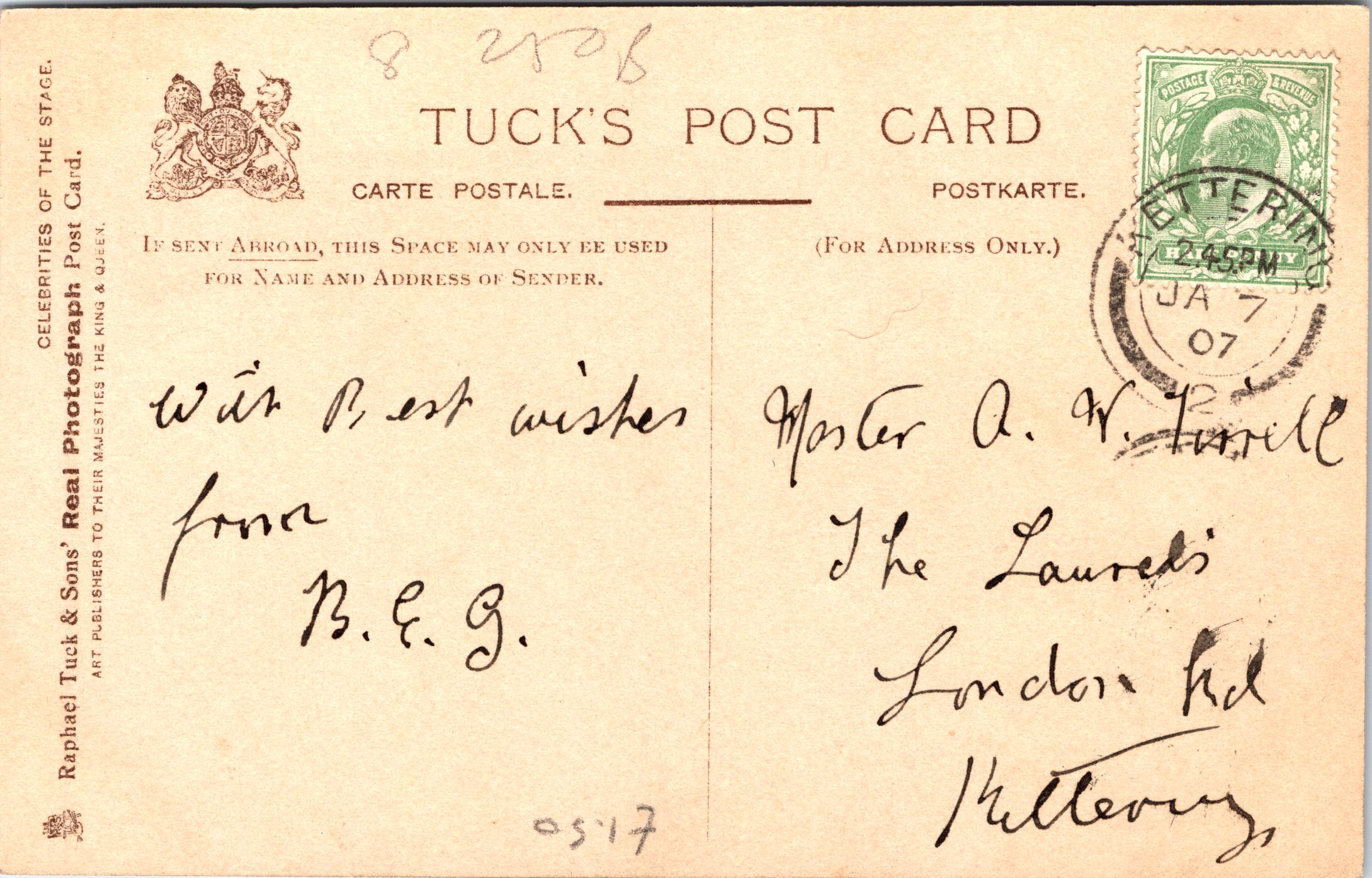
Vesta Tilly (1858-1952) was one of the most beloved and influential performers of the British music hall era. She was a groundbreaking male impersonator who captivated audiences for decades with her wit, charm, and powerful stage presence. Born into modest beginnings, she rose to become a symbol of British patriotism and a pioneer for women on the stage. Tilly was born in Worcester, England. She was the second of thirteen children born to Henry Powles, a self-employed musician and fiddler, and Matilda Powles. Her father, deeply involved in local musical performances, recognized Matilda’s precocious talent at an early age and began showcasing her on stage by the time she was just three years old. The Powles family moved to London when Matilda was a child, in pursuit of more lucrative theatrical opportunities. With her father acting as her manager, she began performing under the stage name “Little Tilly” in pantomimes and variety shows. Matilda’s first male impersonation was at the tender age of six. By her teenage years, she had taken the stage name Vesta Tilly, inspired by the Roman goddess of the hearth (Vesta) and a common nickname (Tilly). Her success as a “principal boy” in pantomime was soon eclipsed by her signature act: portraying men with startling authenticity and satirical flair. What set Tilly apart was her command of the stage and her uncanny ability to adopt male gestures, mannerisms, and vocal inflections. She didn’t just mimic men—she portrayed them with intelligence, humor, and often, social critique. She frequently played dapper young men, military officers, or swells (wealthy young men), sometimes poking fun at political figures or addressing social issues. She became one of the most highly paid and respected performers in the British music hall scene during the late Victorian and Edwardian periods. Her stage appearances were so convincing that many audience members did not initially realize she was a woman. Vesta Tilly’s career spannedover four decades, and she performed in countless popular songs and sketches. Some of her most iconic performances included: “Following in Father’s Footsteps”, “Burlington Berlie”, and “The Boy in the Gallery”. She was particularly popular among working-class audiences and soldiers. During World War I, Tilly took on a new patriotic role, performing in uniform to recruit young men to the military. She was so effective that she earned the nickname “England’s Greatest Recruiting Sergeant.” In 1890, Vesta Tilly married Walter de Frece, a theatrical impresario and songwriter. Their relationship was both romantic and professional—Walter became her manager and guided much of her career. He was instrumental in helping shape her brand and ensuring her continued success on the music hall circuit. After World War I, Walter was knighted and later became a Member of Parliament. This new political role brought Vesta into a more socially prominent world, and she gradually withdrew from the stage. Vesta Tilly gave her final performance in 1920 at the London Coliseum. Her retirement was widely publicized and emotional for her devoted fan base. After stepping away from the stage, she became Lady de Frece, supporting her husband’s political ambitions and engaging in charity work. The couple eventually moved to Monte Carlo, where they lived a quieter life. Walter de Frece died in 1935, and Vesta lived on until 1952. The postcard’s image shows Tilley in a fur-trimmed coat, accessorized with a hat adorned with feathers. The card has been hand-tinted, with touches of pink on her costume and hat and green on the tassels. The following is a transcription of the letter: “Dear Bess, Just a line to say we landed here quite safe. And are having a lovely time up to the present, only the weather isn’t up to the mark, it is a bit showery but not too bad. You might get a skirt ready to send me on Sunday. Will write and tell Hugh this aft to come round for it on Friday night so try and get it ready.Give my love to [all at home]. Joe” (Writer’s details also appear: No. 5 Company R.S. of Vols, Hightown, Nr. Liverpool.)This postcard was published by Philco as part of a series (No.3149D). (SOLD)
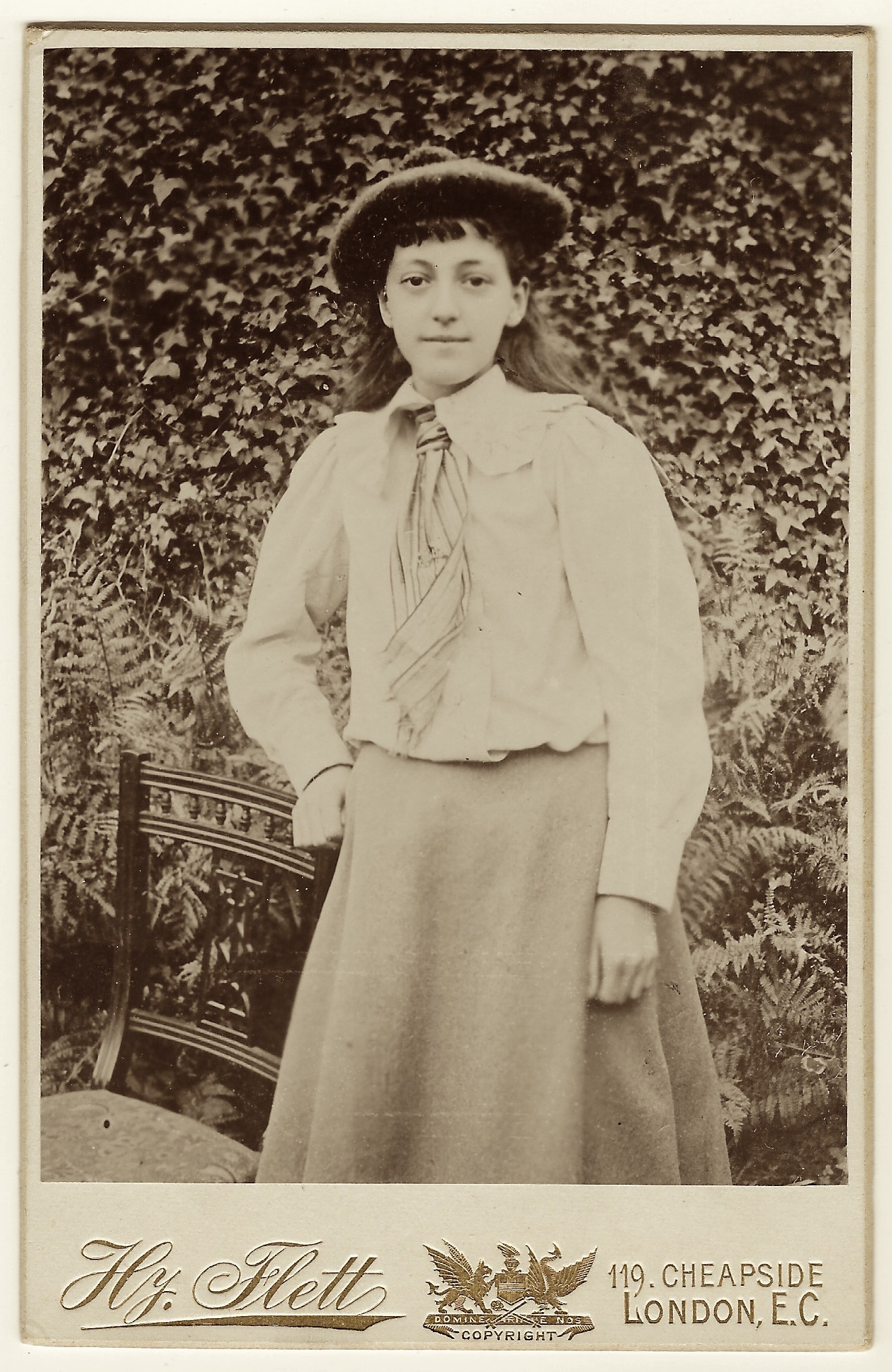
This cabinet card portrait features a sweet looking teenage girl dressed in what today we might call, a “preppy look”. Perhaps she is a student. Be sure to note her scarf and hat. The girl’s eyes are wide open and she appears to be suppressing a smile. The photographer’s camera captured the girl in an outdoor setting. The photographer was Hy. Flett who operated a studio in London. Interestingly, the studio was located at 119 Cheapside. This image is actually the second cabinet card in the “Cabinet Card Gallery” from a studio on Cheapside. Research revealed that Cheapside is the name of a street in the city of London. The name Cheapside is derived from the term “marketplace”. Henry Flett (1872-1948) was born in St. Leonards in Sussex. He operated two London studios. The Cheapside studio existed between 1897 and 1940. His second studio was located at 103 Newgate Street (1903-1909). He partnered with Arthur Frame Stevens in the 1930’s. SOLD
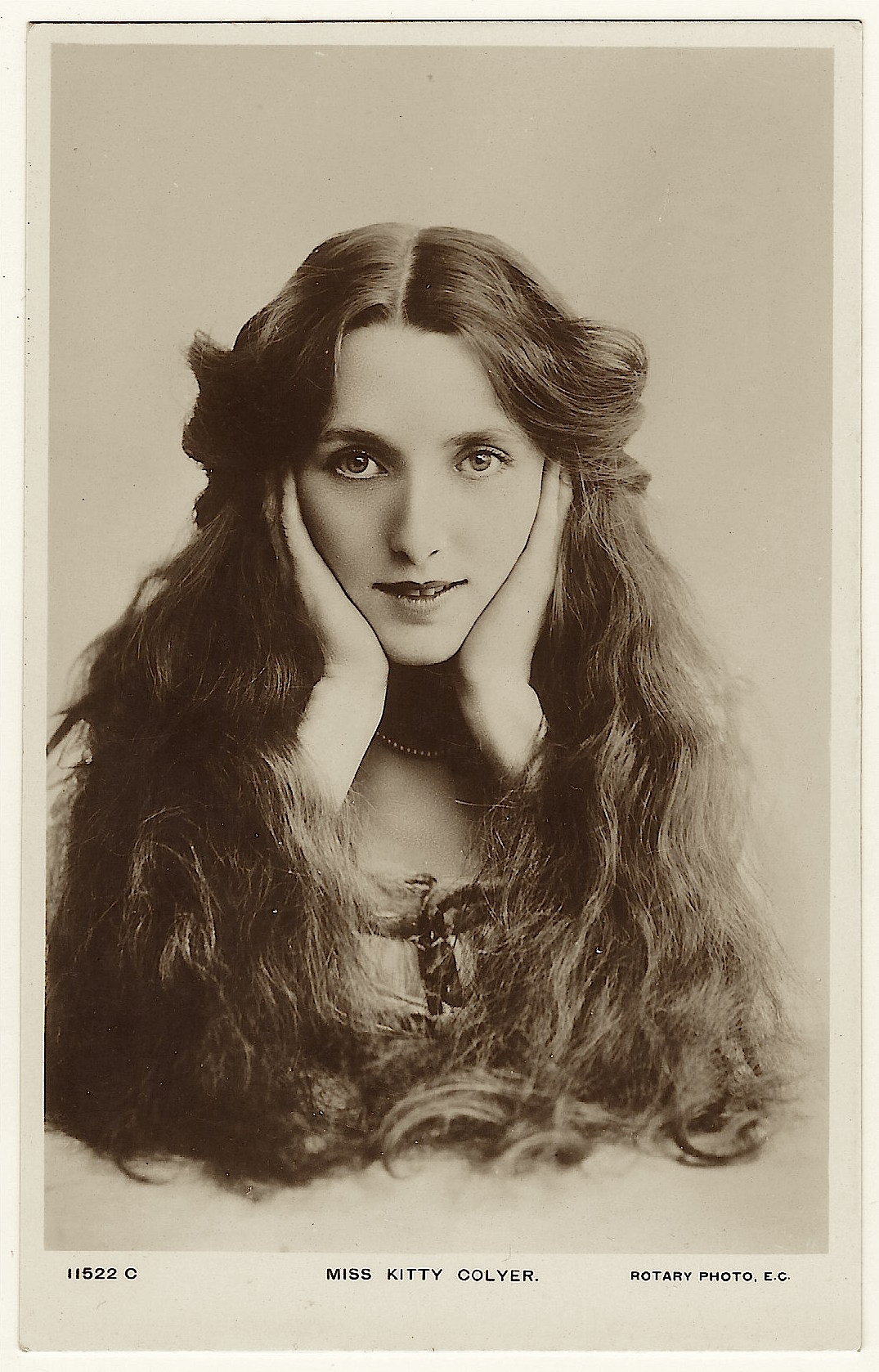
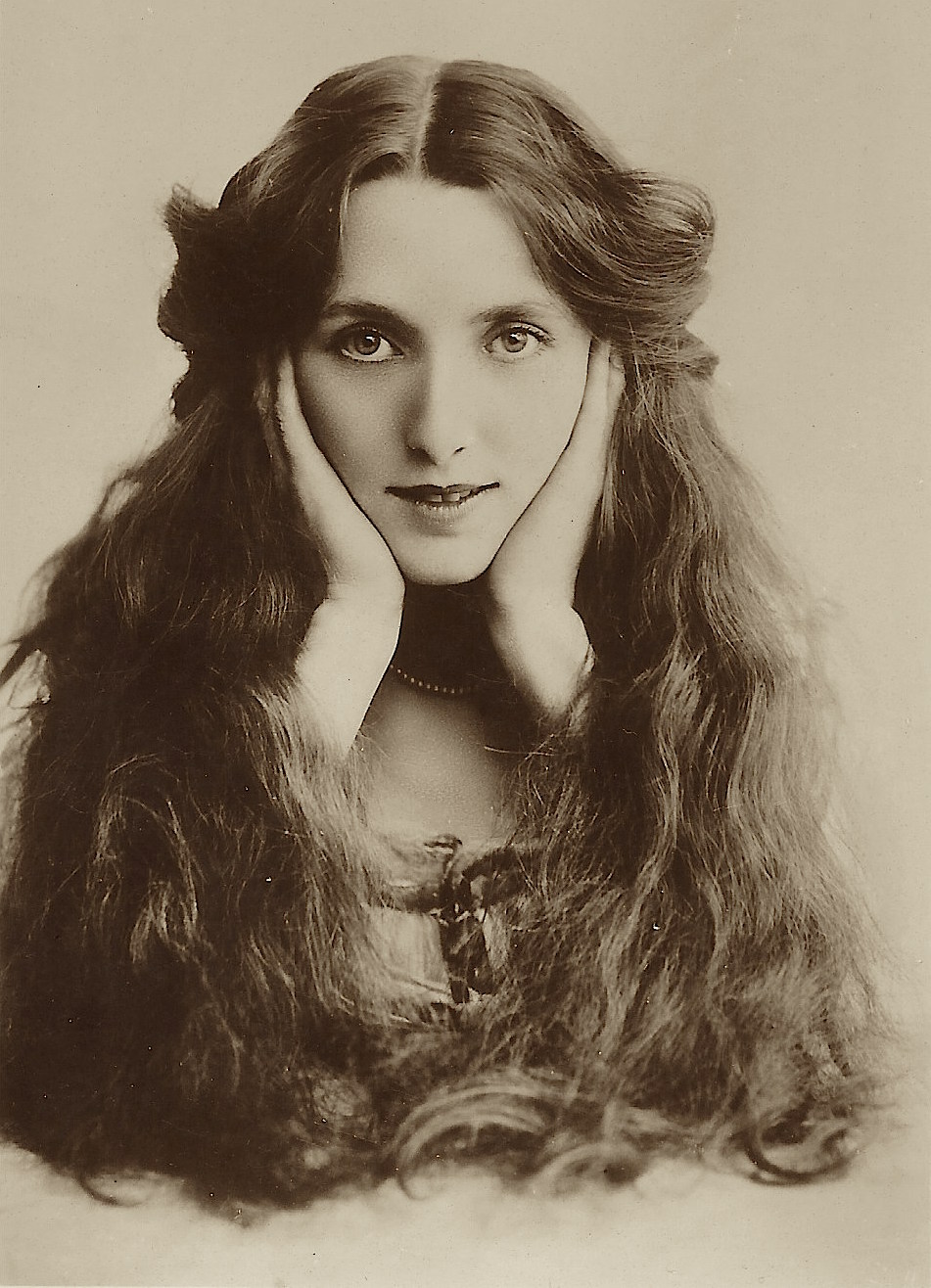
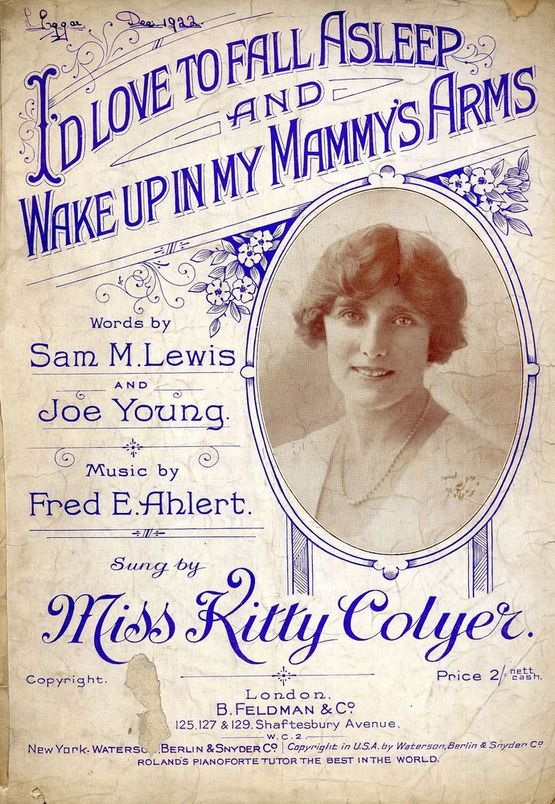
The pretty actress seen in this vintage real photo postcard, is Miss Kitty Colyer (1897-?). Here are some biographical facts that I discovered in preliminary research about the English actress. She started her career at age eleven. In addition to being an actress, she was also a dancer. She has also been described as a music hall singer and a comedian. Her dance routines were varied but her favorites were acrobatic, toe, buck, and national dancing. She performed primarily in the 1920’s. She played the role of Cinderella in “Cinderella” (1920). As the roaring twenties came to a close, her career fizzled out and she left the entertainment business. A review of Miss Colyer can be found in John Culme’s “Footlight Notes” (website). A writer from “The Era” (1911) wrote “Miss Kitty Colyer’s sensational dancing reaches its climax in some very energetic handsprings and her lissomness and activity are quite irresistible in her rendering of “By the Light of the Silvery Moon”. Look below to see an example of sheet music (1920) featuring Kitty Colyer. Now, back to the vintage postcard. It was published by Rotary Photo and is part of the Rotary Photographic Series (no. 11522 C). The photographer is unknown. SOLD
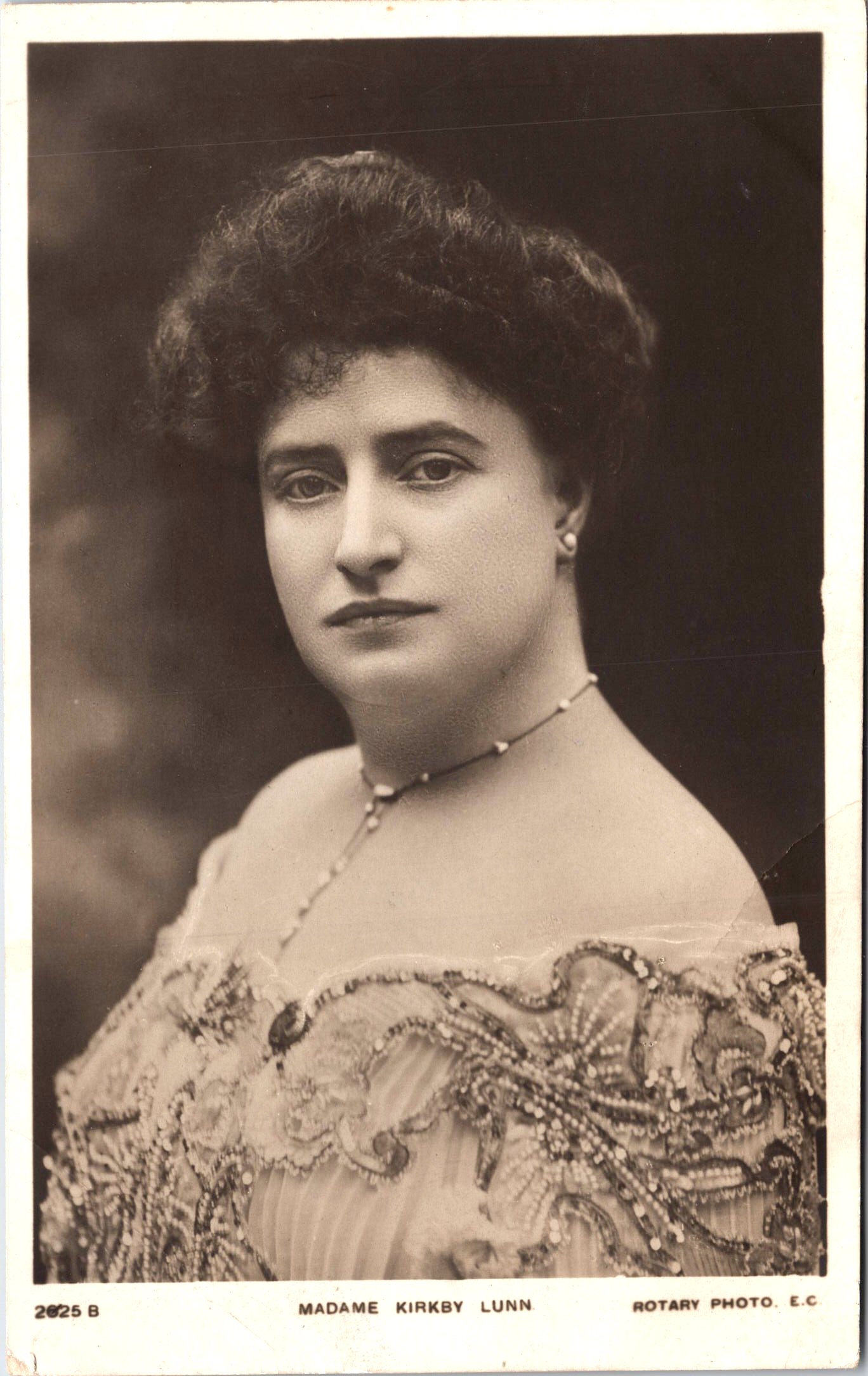
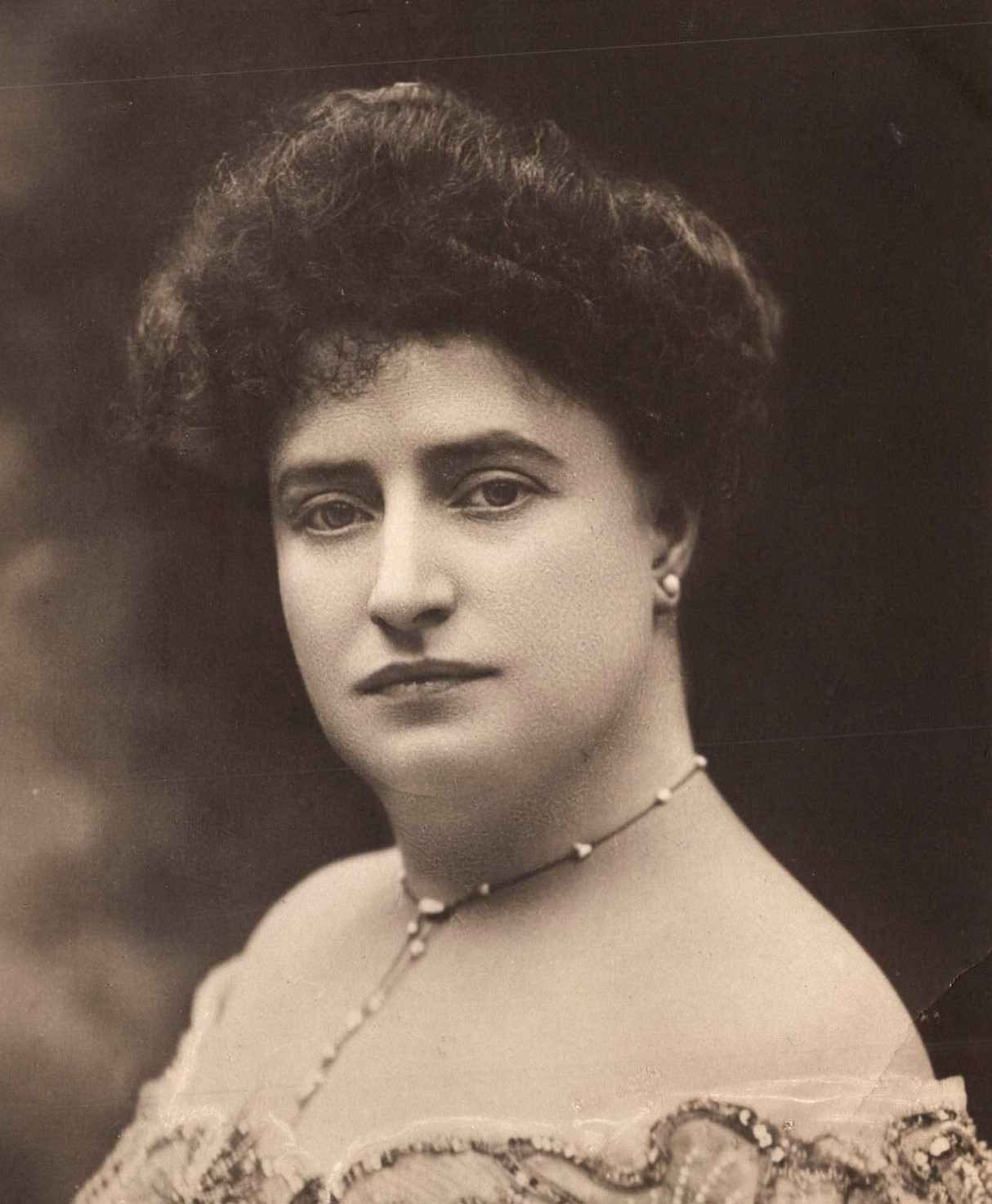
This vintage real photo postcard features English mezzo soprano, Louise Kirkby Lunn (1873-1930). She appeared in many French and Italian operas. She was best known for singing operas by Richard Wagner. She had many appearances at the Royal Opera House, Convent Garden as well as at the Metropolitan Opera in New York City. This postcard was published by Rotary Photo as part of a series (No.2025B) The card was produced around 1905. SOLD
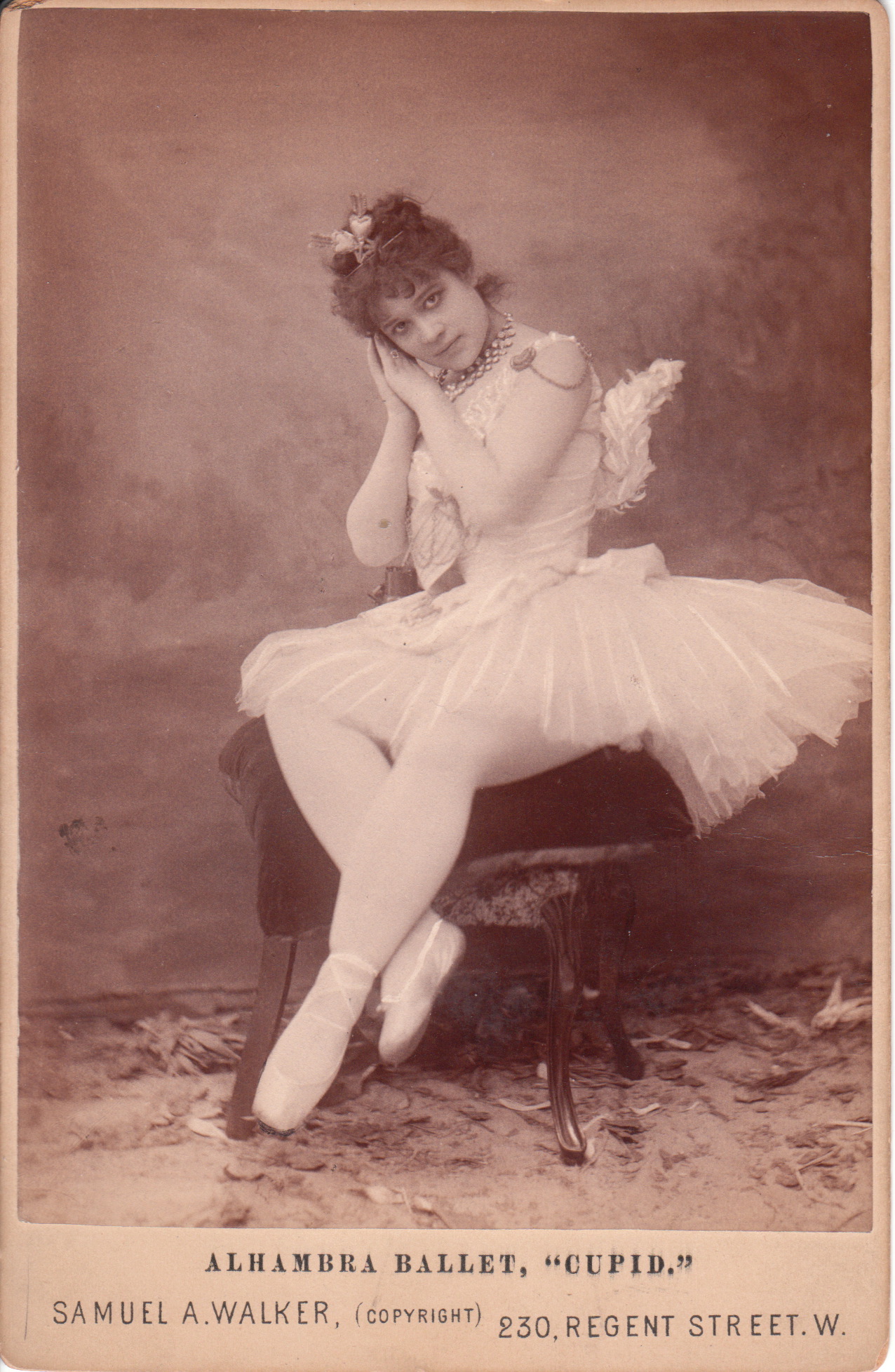
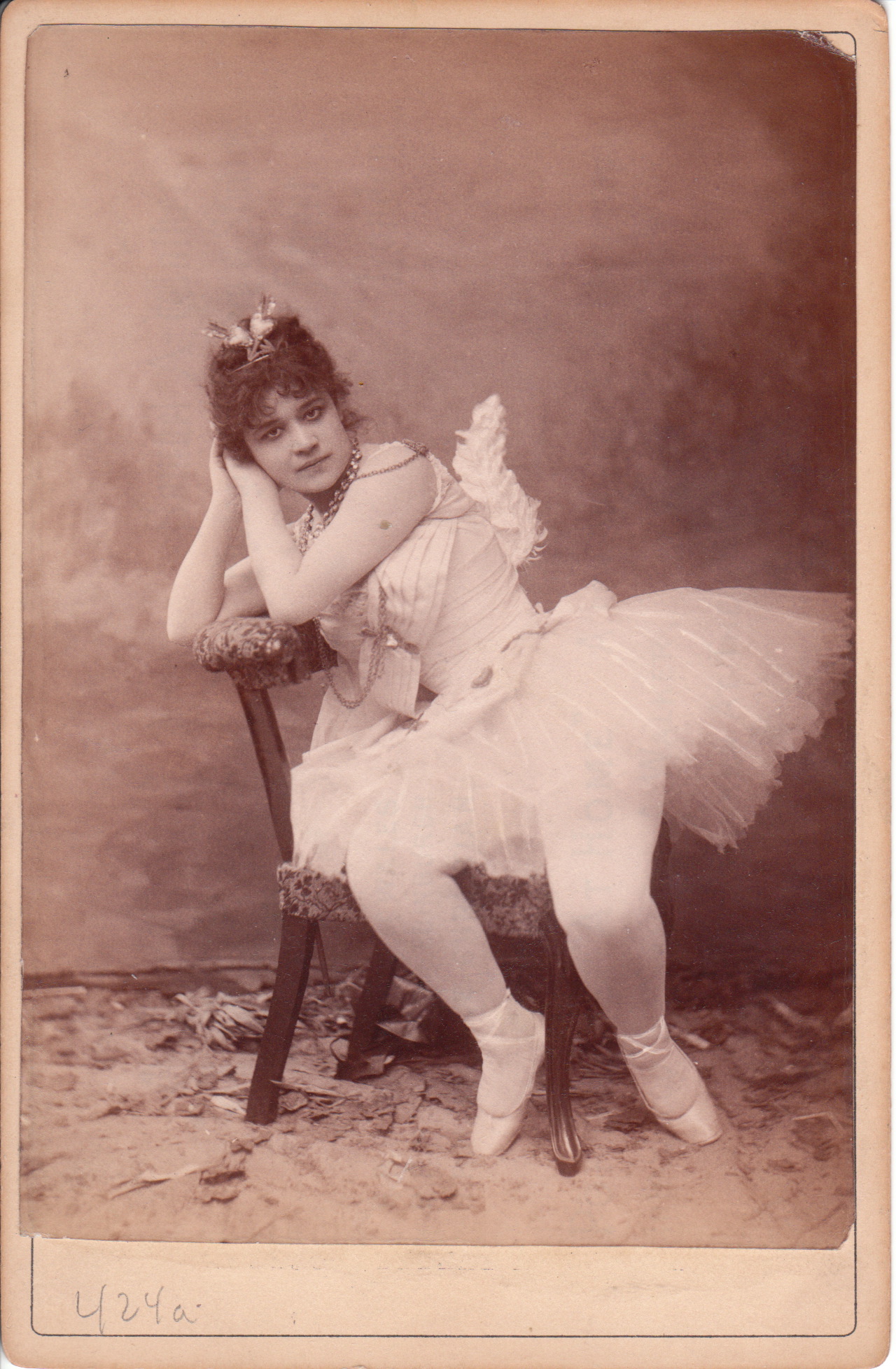
This cabinet card is quite unusual in that it has photographic images on both sides of the card. A very pretty ballet dancer is from the Alhambra Ballet production of Cupid is pictured in each image. In one photograph her legs are crossed while in the second photograph her legs are open and her undergarment is visible through her transparent tutu. The cabinet card is risque for it’s era. The Alhambra was a theatre in London, England. It was opened in 1854 as “The Royal Panopticon”. A circus ring was added and it was reopened in 1858 as the Alhambra. The theatre stage hosted music hall acts, aerial acts, ballet, light opera, and other events. The theatre was closed and demolished in 1936. This cabinet card features a dancer from the ballet, Cupid which opened at the Alhambra on 5/24/1886. The principal dancer in this production was Emma Bessone, and research reveals that the ballerina in this image is likely Emma Bessone. She was an Italian dancer who trained at La Scala and became prima ballerina for both the Maryinsky and Bolshoi companies in Russia. The photographer of this cabinet card was Samuel A. Walker whose studio was located in London. SOLD
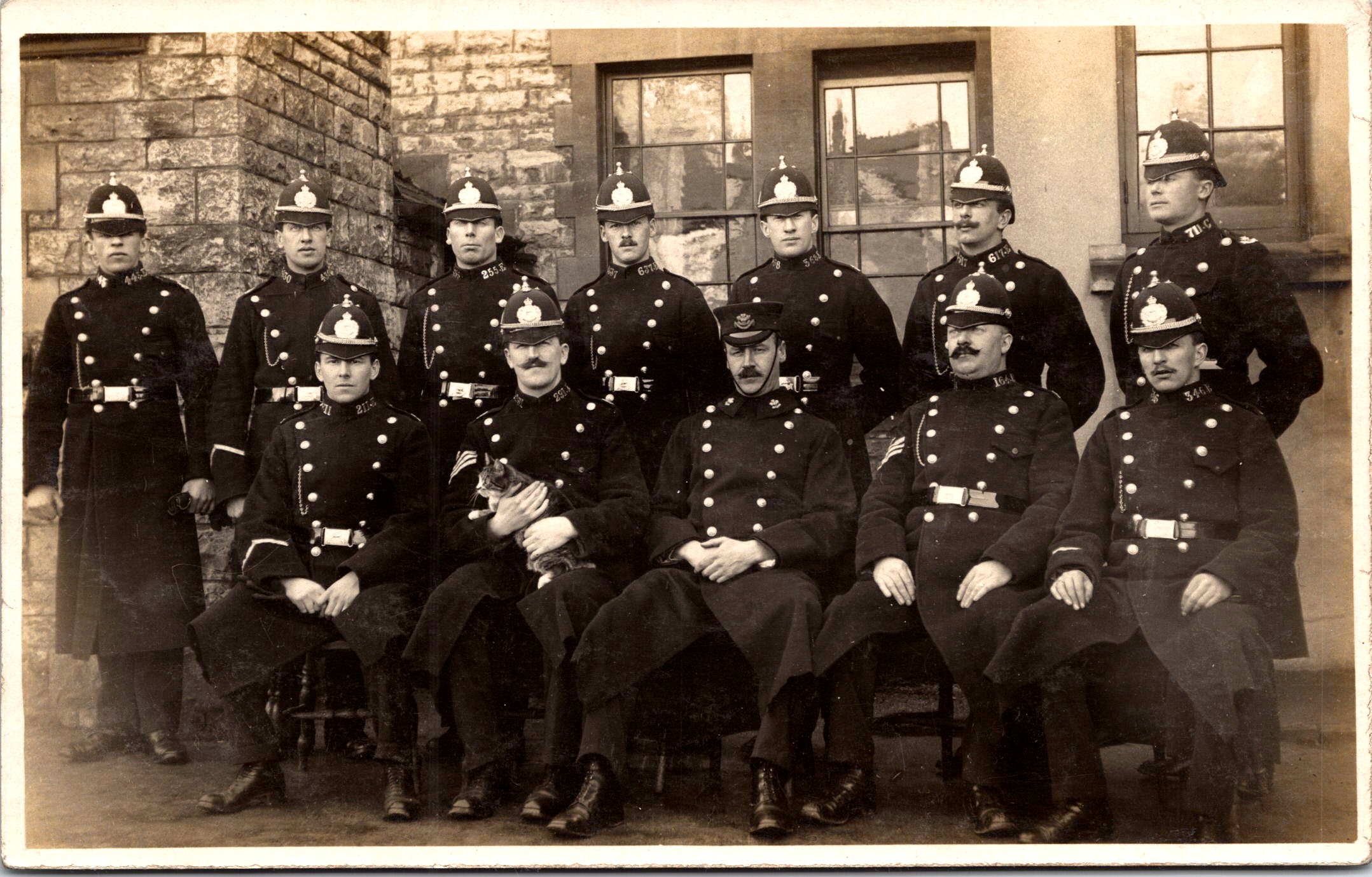
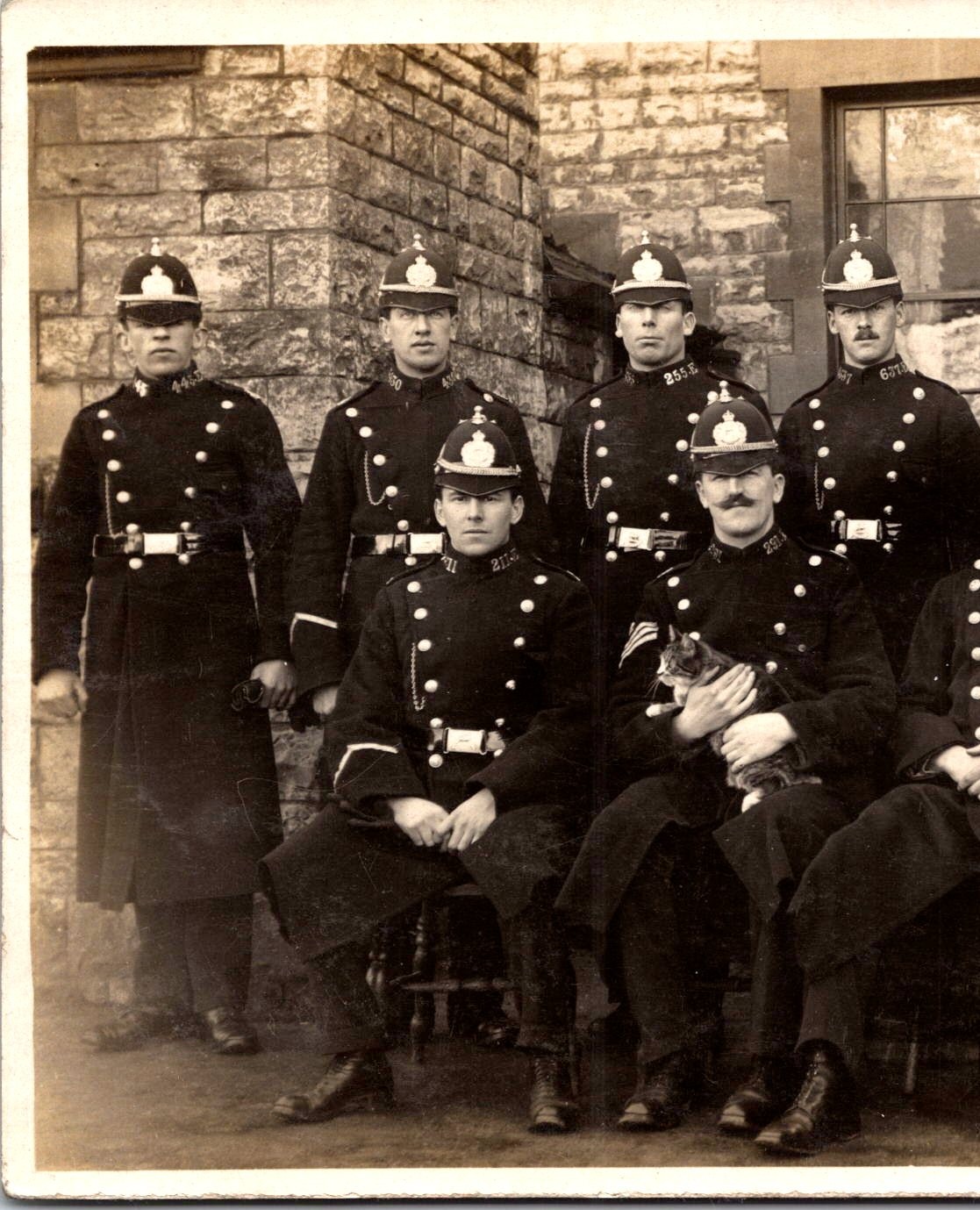
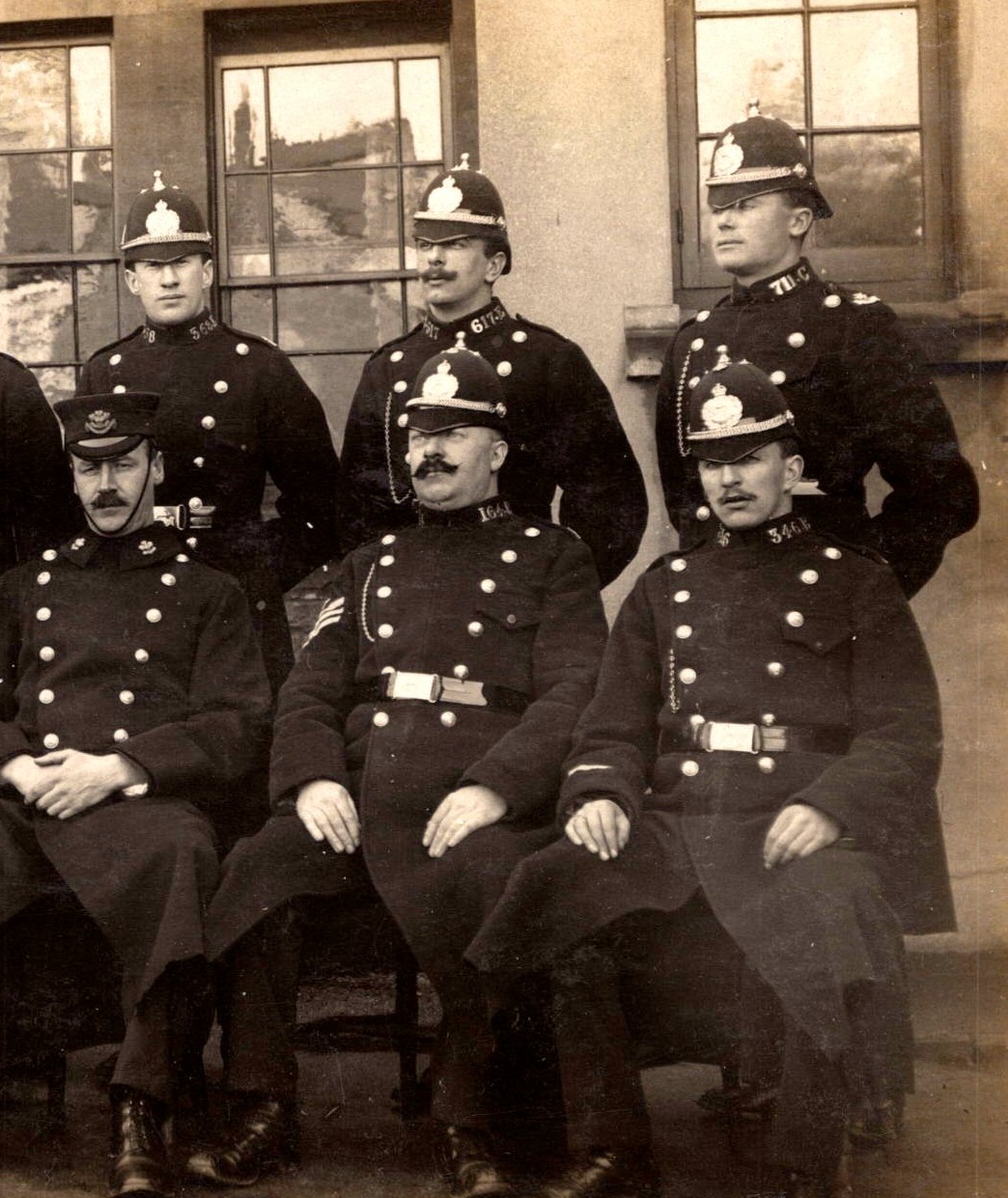
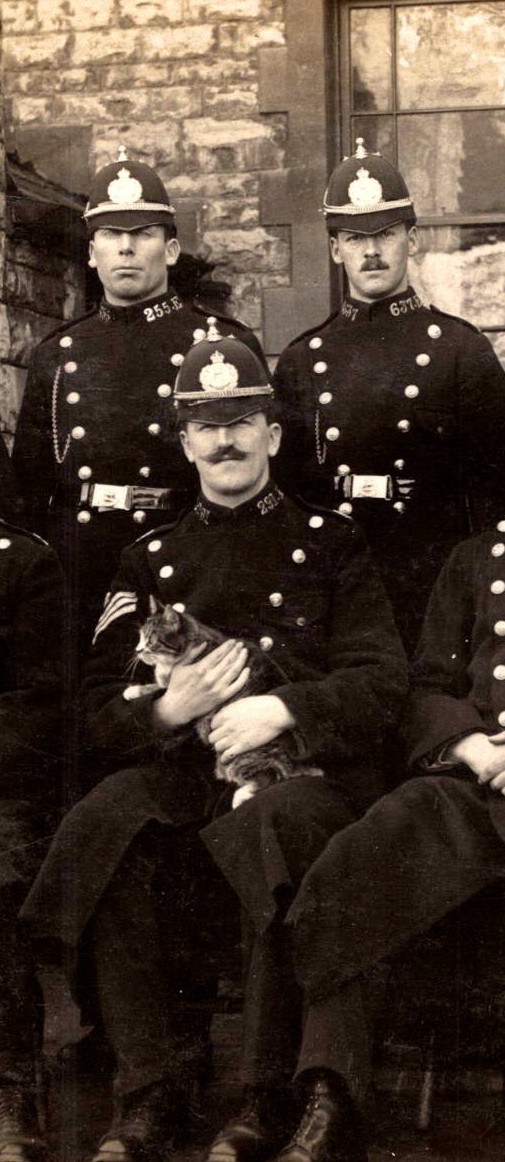
This striking antique real photo postcard captures a formal group portrait of twelve British police officers, likely taken in the early 1900s during the Edwardian era. Dressed in full uniform, the men are arranged in two neat rows, seven standing in back and five seated in front—outside what appears to be a stone police station or municipal building. Their uniforms are traditional for the period, featuring double-breasted tunics with shiny metal buttons, high collars marked with identification numbers, and the iconic custodian helmets adorned with royal insignias. Adding a subtle touch of hierarchy to the scene, one officer seated in the middle wears a peaked cap instead of a helmet, suggesting he may have held a higher rank, possibly an inspector. A few of the officers also display chevrons on their sleeves, denoting the rank of sergeant. One especially charming detail that sets this postcard apart is the presence of a cat, calmly perched in the arms of one of the seated sergeants—an unusual and endearing addition to an otherwise formal composition. SOLD
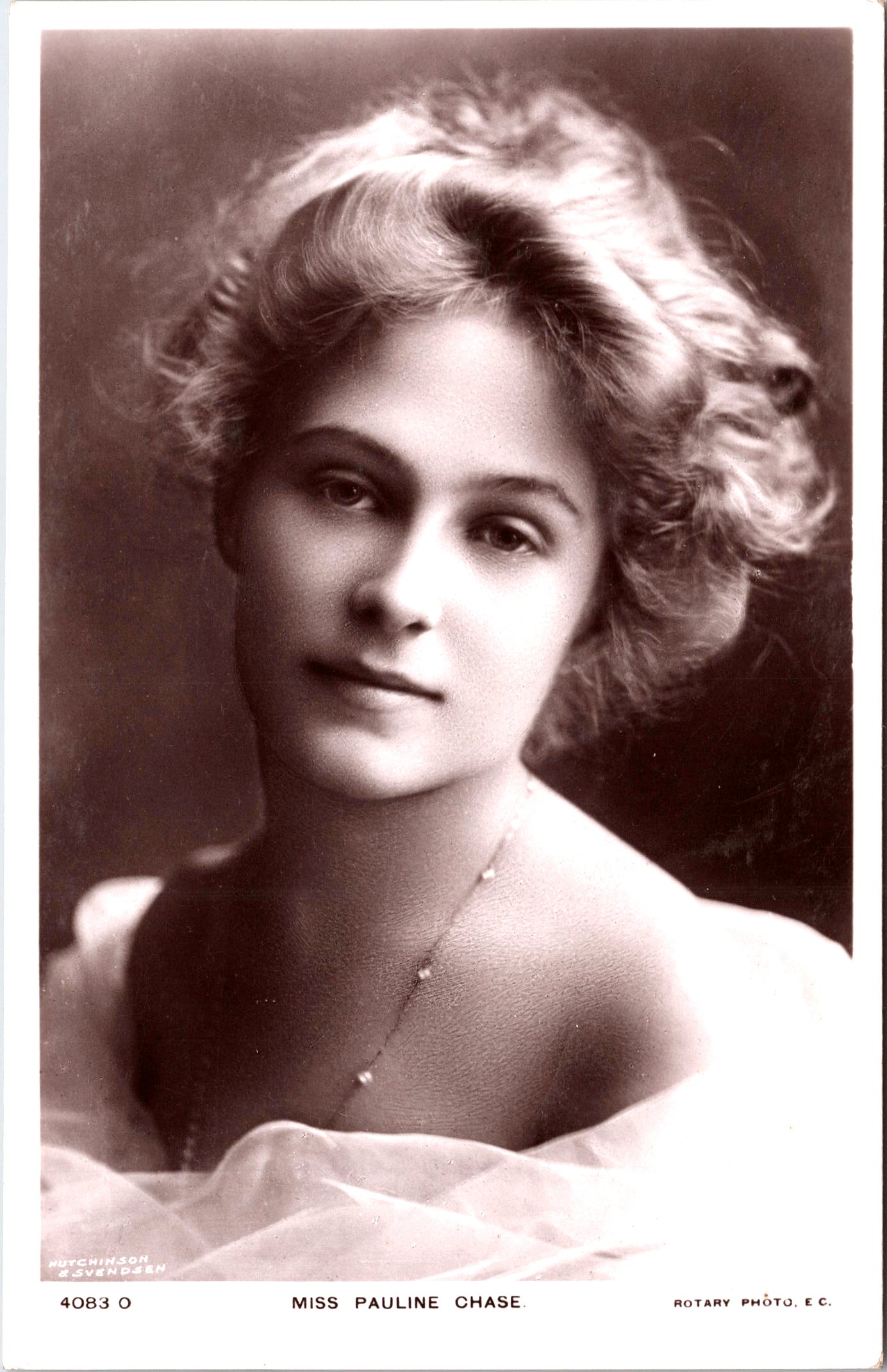
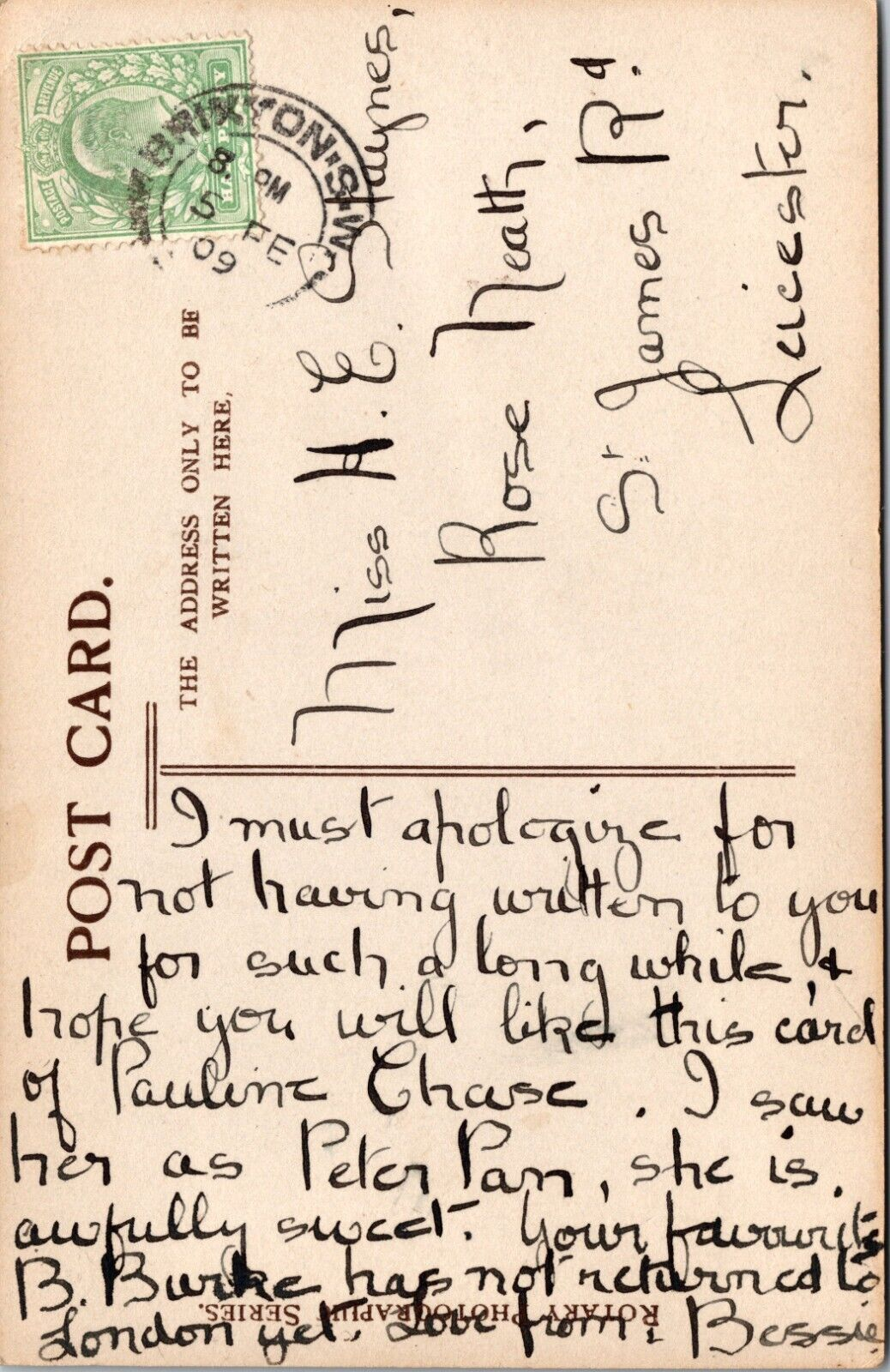
This vintage real photo Postcard 1 features pretty American actress and dancer, Pauline Chase (1885-1962). She was a regular performer both in the United States and the United Kingdom. She is especially known for her extended starring role in the British production of “Peter Pan, The Boy Who Wouldn’t Grow Up”. Her nickname was the “Pocket Venus of New York”. She was born in Washington D.C. and attended school in New York. She began acting when she was just fifteen years old. In 1901, producer, Charles Frohman recruited her to play in the London production of “The Girl From Up There”. She was just 15 years old. Upon her return to the US, she created a sensation as the “Pink Pajama Girl” in “The Liberty Belles”. She played one of the “lost boys” in the debut of Peter Pan (1904) in London. In 1906 she was chosen by producer, Charles Frohman, and playwright, J. M. Barrie, to play the title role in the production (1906-1913). This role brought her much fame and financial security. While in England, over the years, Chase developed quite a following. Charles Frohman had become her friend and mentor. Chase was a social beauty with many influential friends and admirers. She was a member of the socially elite and lived an extravagant life style. In 1913, Chase retired from the stage to marry a banker. The pair had three children. In 1916, Chase came out of retirement to play in her one and only movie appearance. There are 52 portraits of Chase in the National Portrait Gallery. The film “The Real Thing At Last” was a satirical film, based on MacBeth, written by Barrie. This postcard has a 1907 postmark. The card was published by Rotary Photo as part of a series (No.4083O). Miss Chase’s photograph was taken by the Hutchinson & Svendsen studio. (SOLD)
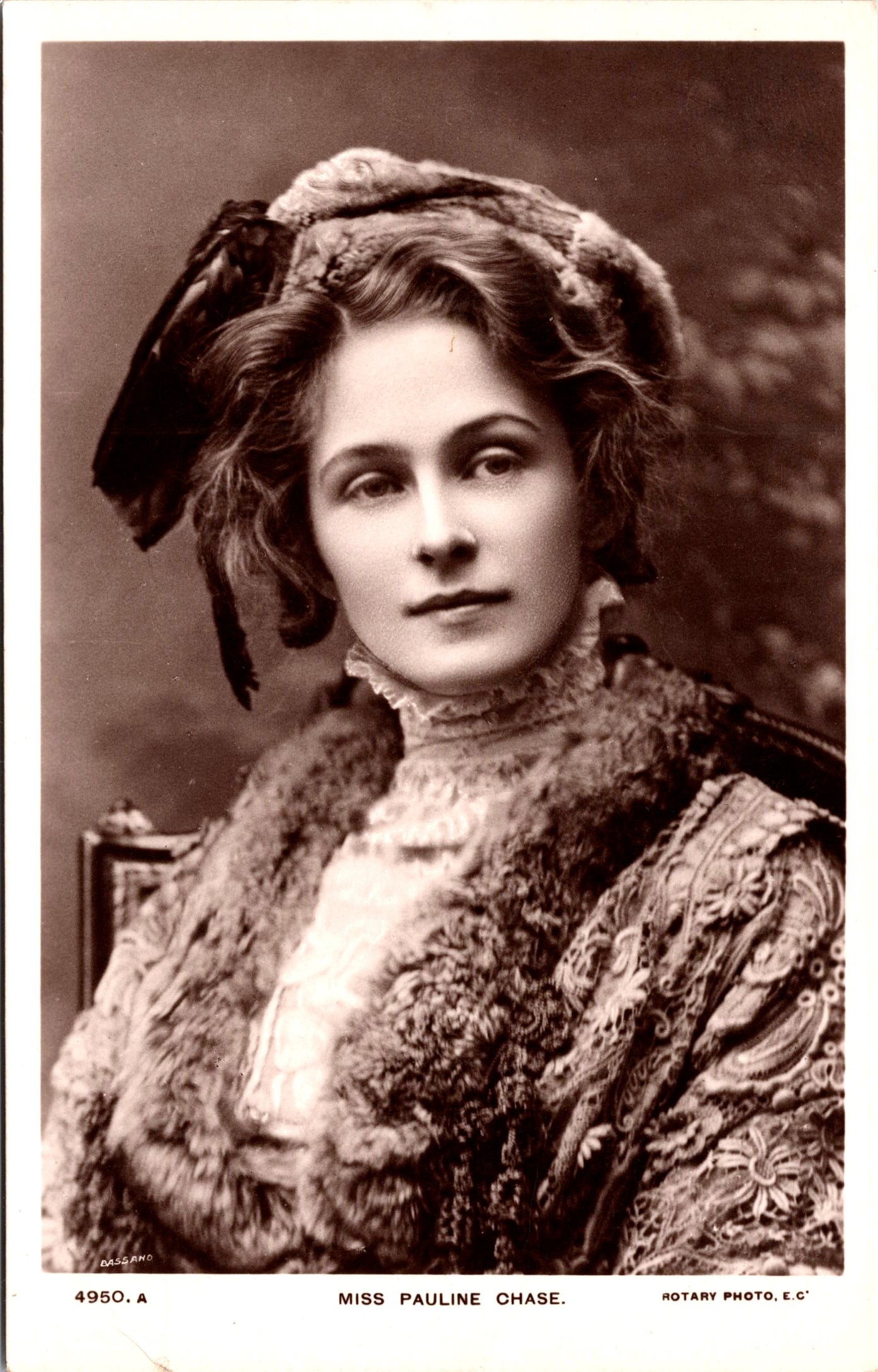
Postcard 2 was published by Rotary Photo as part of a series (No.4950A). Miss Chase’s photograph was taken by Alexander Bassano. (SOLD)
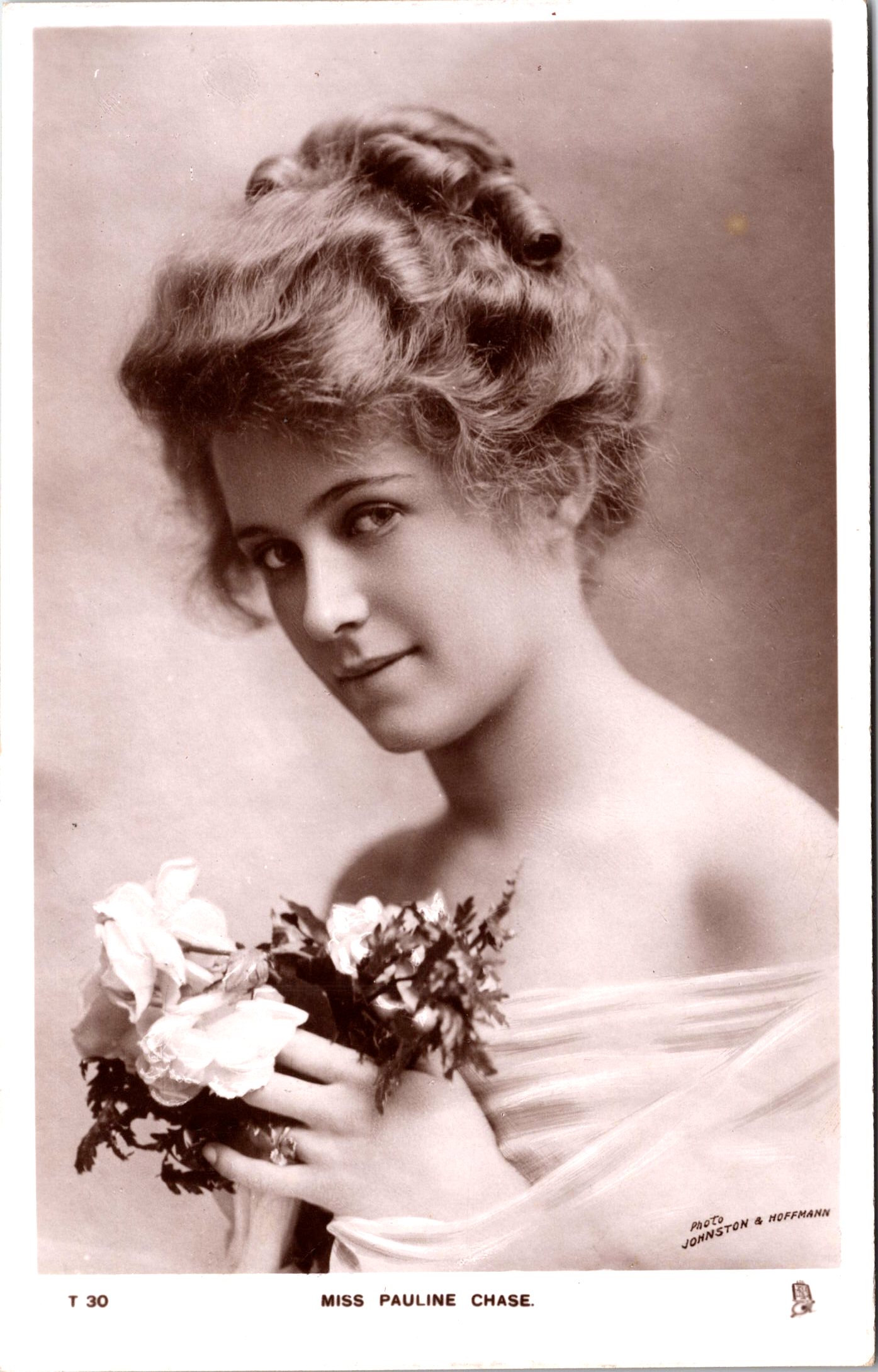
Postcard 3 has a 1907 postmark. The card was published by Raphael Tuck & Sons as part of a series (No.T30). Miss Chase’s photograph was taken by the Johnston & Hoffmann studio. (SOLD)
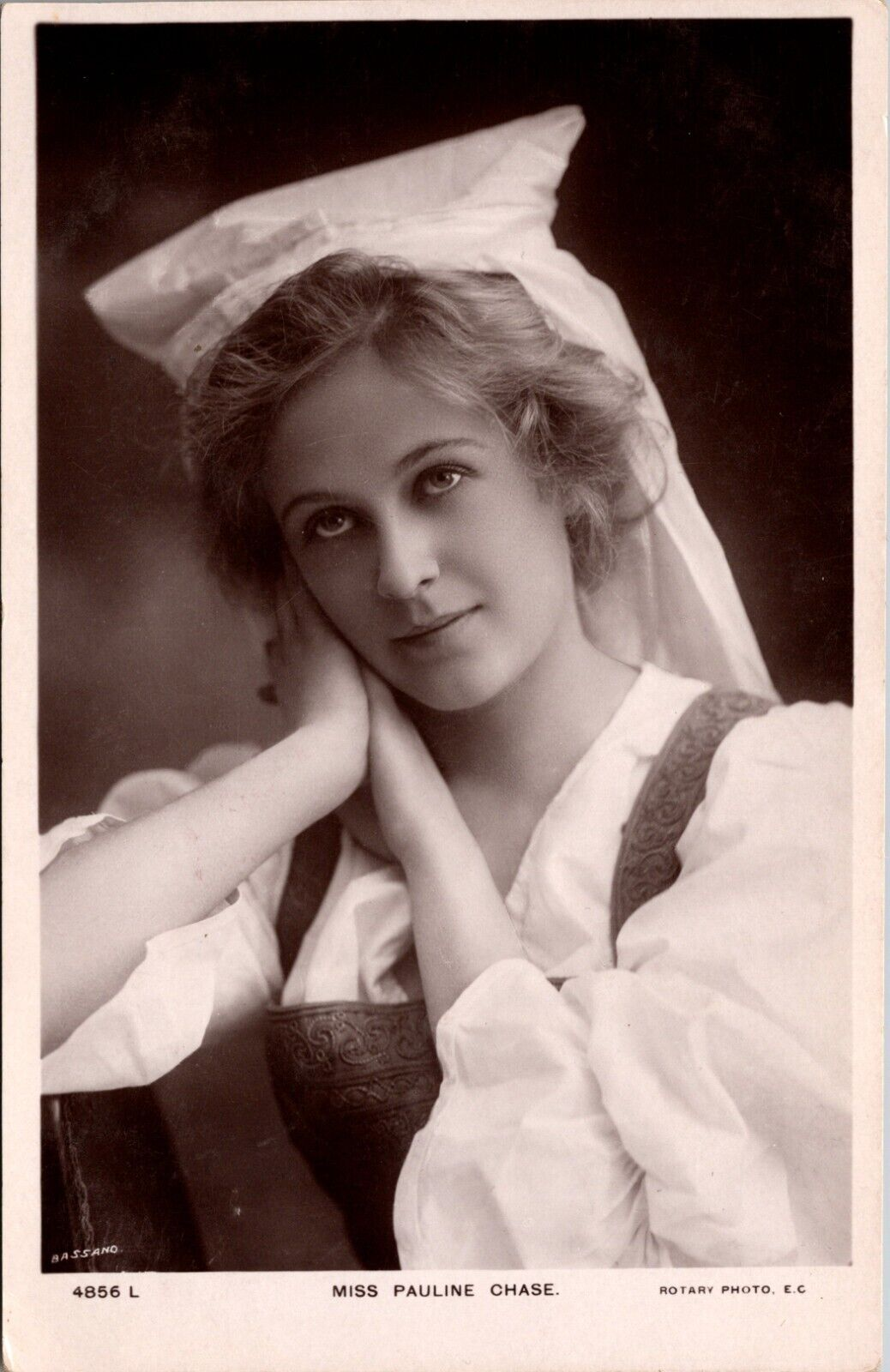
Postcard 4 features Chase wearing an interesting lace hat and she has a sweet, pure, and innocent appearance. This postcard was published circa 1909, the date of the cards postmark. The card was published by Rotary Photo as part of a series (No.4856L). Miss Chase’s photograph was taken by the Bassano studio. (SOLD)
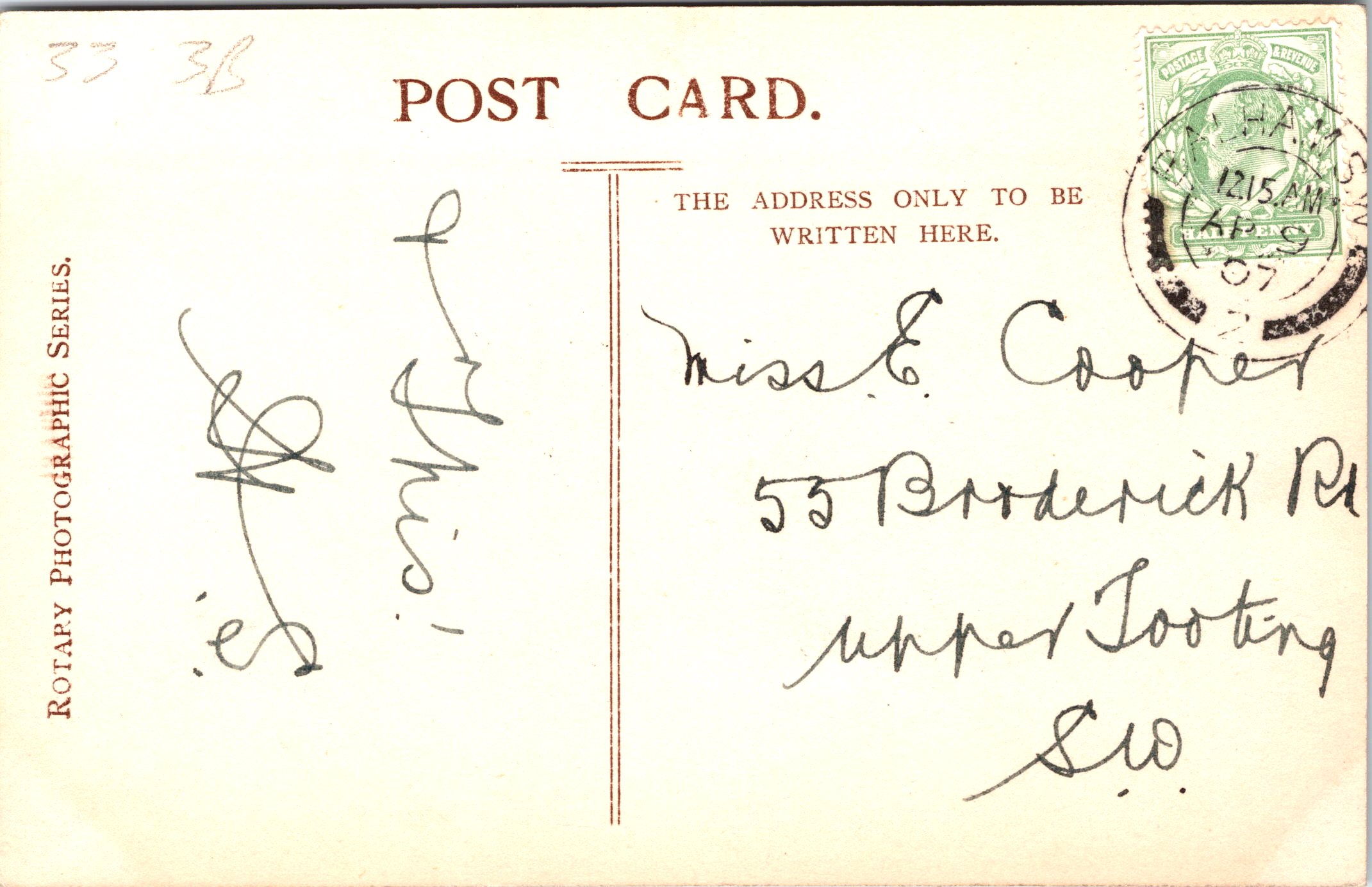
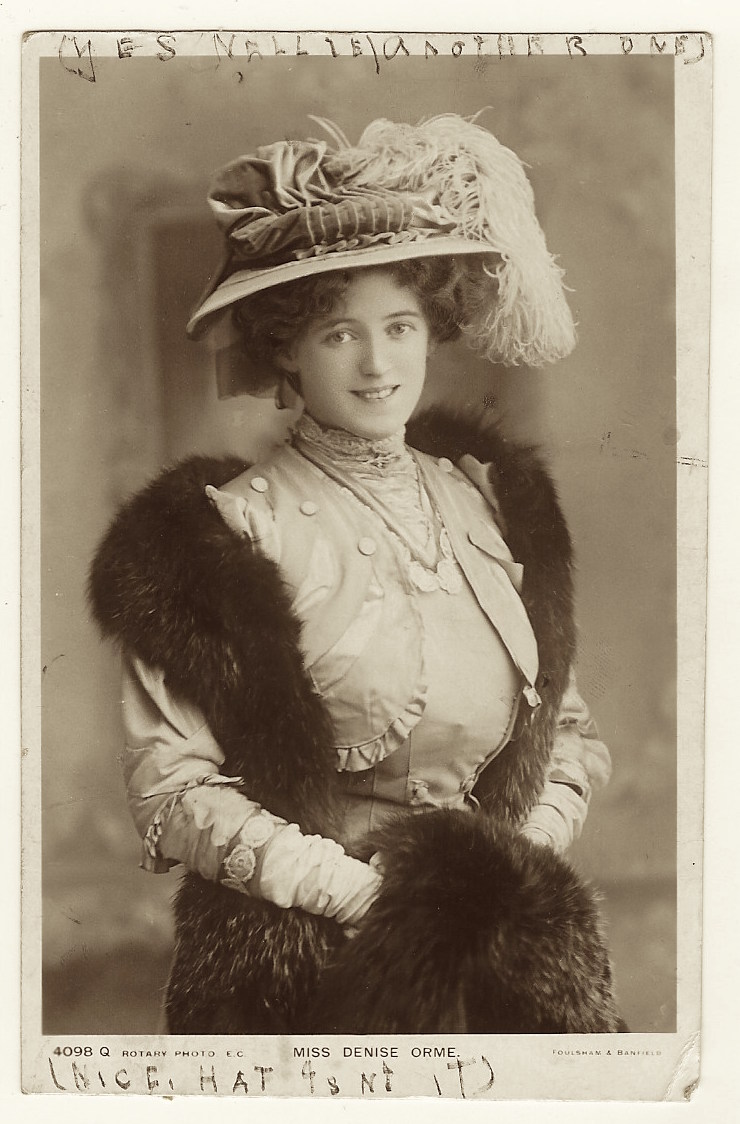
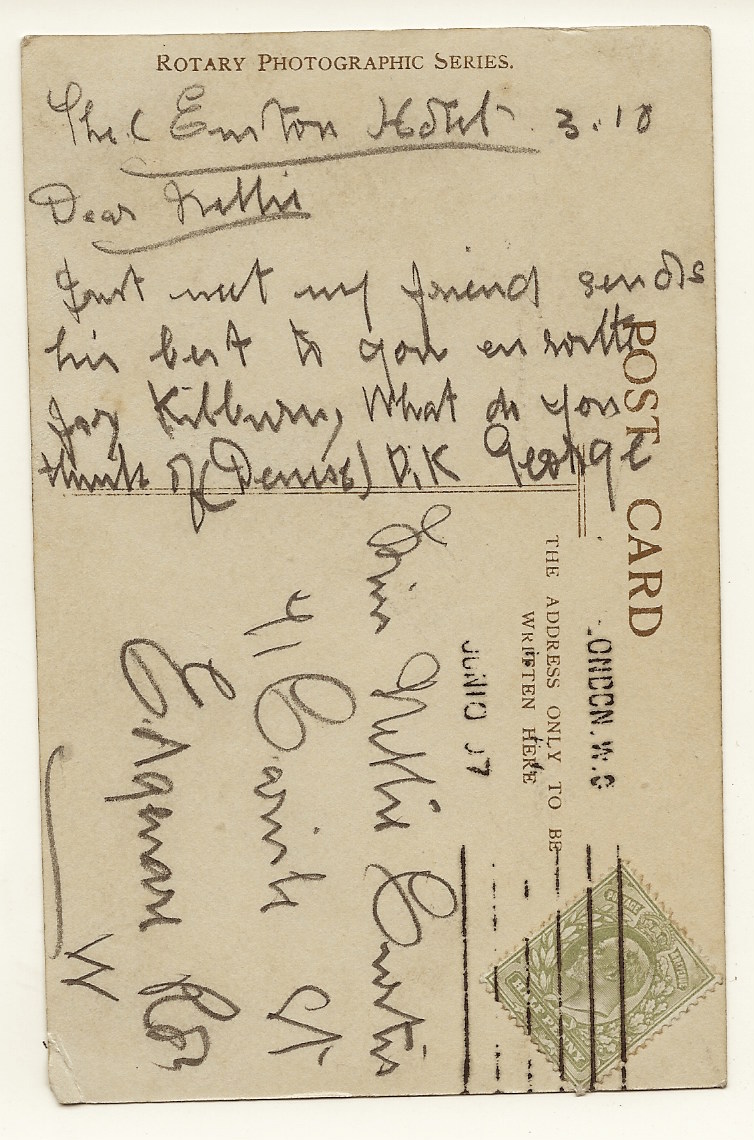
Postcard 1 features stage actress Miss Denise Orme. She is very attractive and beautifully dressed. She is wearing a fur stole and and fur muffs. She has a lovely hat and wonderful smile. Miss Orme’s given name was Jessie Smither, and was later known as Duchess of Leinster. Denise Orme (1885-1960) was an English music hall singer, actress and musician who was a regular performeer at the Alhambra and Gaiety Theatres in London during the early years of the twentieth century. Her mother was a professor of music. She trained for her theatrical career at the Royal Academy of Music and the Royal College of Music. Her stage debut was in 1906 in the chorus at Daly’s Theatre in London. Later that same year she appeared in the title role of “See See” at the Prince of Wales Theatre. In 1906 she participated in gramophone recordings of Gilbert and Sullivan’s “The Mikado”. Her marital history reveals that she had a predilection to choosing husbands that were “rich and famous”. She was married to an English Baron, A Danish millionaire, and an Irish duke. She was the maternal grandmother of Aga Khan IV.who is the current Imam of Nizari Ismailism which is a denomination of of Ismailism within Shia Islam with 15 million adherents. He is also a British business magnate. Miss Orme’s photographic portrait was taken by the Foulsham and Banfield Studio. Foulsham & Banfield were well known celebrity photographers. Frank Foulsham and A. C. Banfield operated a studio in the 1900’s through the 1920’s. The postcard was published by Rotary Photo and is part of the Rotary Photographic Series (#4098 Q). The postcard has a postmark from London, England, and dated 1907. The postmark date reveals that this portrait of Miss Orme was taken at the beginning of her stage career. In the message section of the postcard, the sender asks the receiver, “What do you think of Denise?”. In addition, the sender asserts on the front of the postcard “Nice hat, isn’t it?”. I have to agree; not only is Miss Orme lovely, so is her hat…….
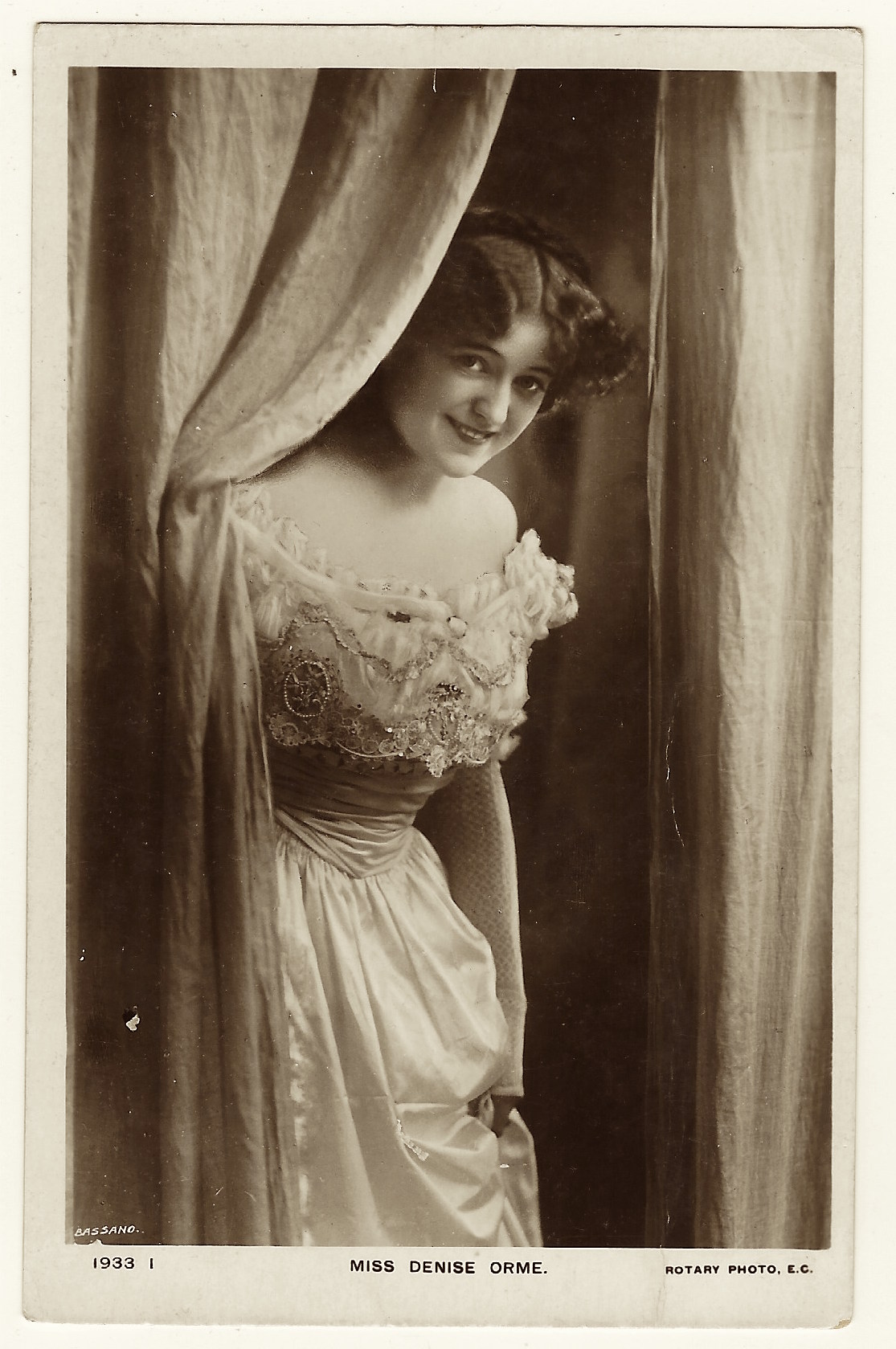
Postcard 2 shows the beautiful and well dressed Miss Orme peeking out from behind a curtain. The photographer is Alexander Bassano (1829-1913) who was a leading royal and high society photographer located in London. This postcard, like the first was published by Rotary Photo and is part of the Rotary Photographic Series (no. 1933 I).
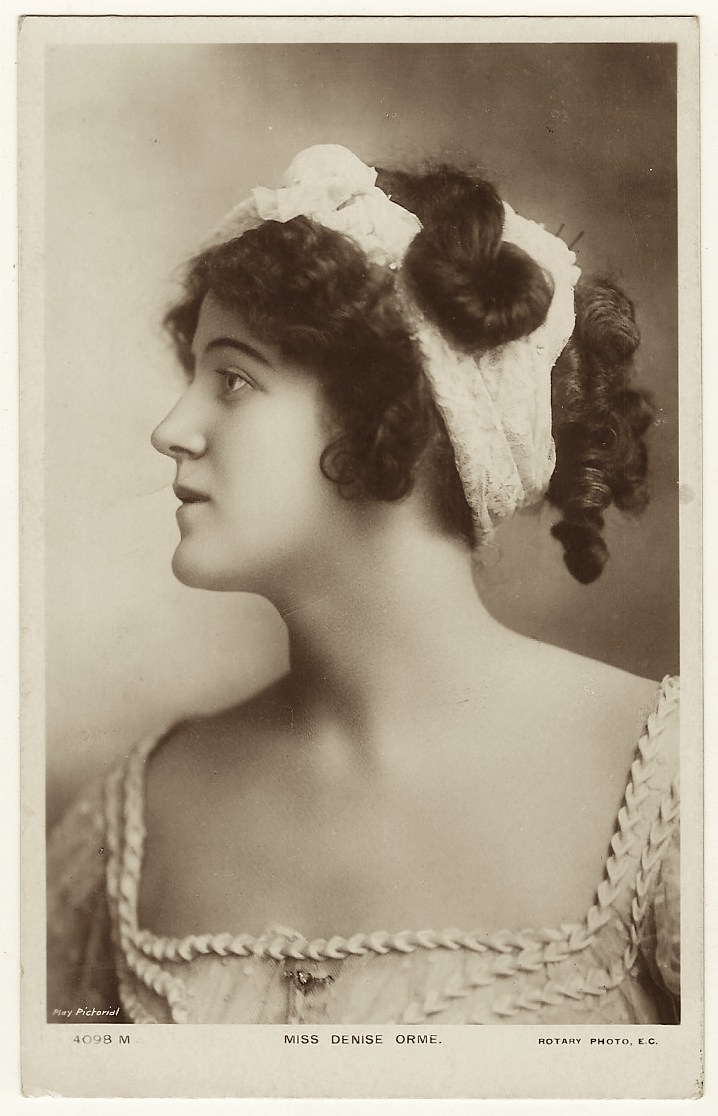
Postcard 3 presents a close-up profile view of this stunningly pretty young actress. Like the first two photo postcards, this one is also published by the Rotary Photo company and is part of the Rotary Photographic Series (no. 4098 M). The photograph was taken by “Play Pictorial” which was an English theatre magazine published in London between 1902 and 1939. The publication provided a pictorial presentation of West End theatrical productions with each issue focusing on just one play. (SOLD)
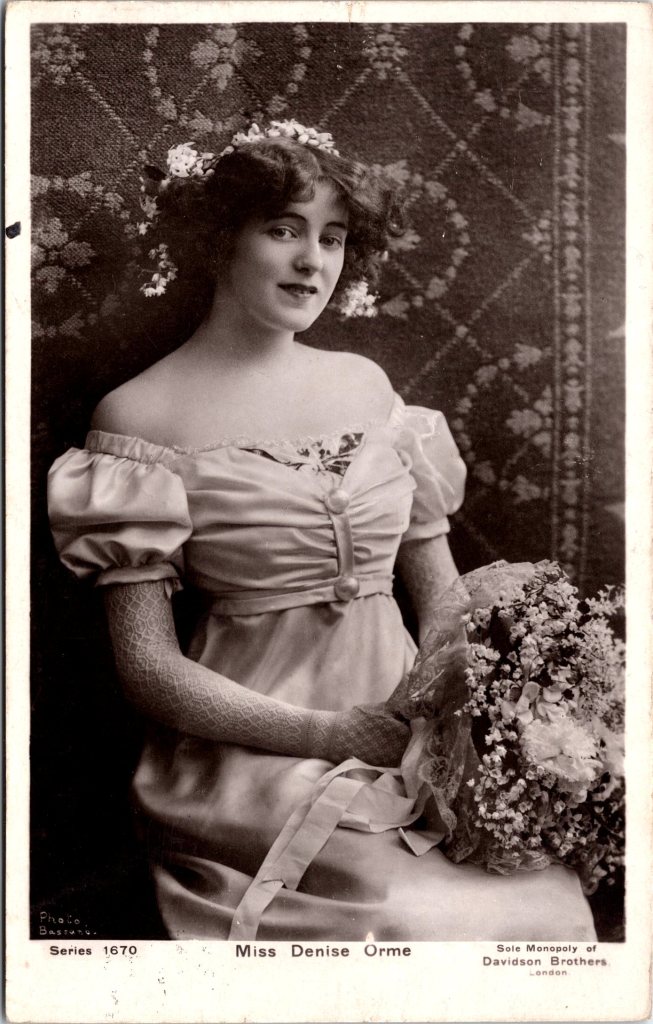
Postcard 4 presents a close-up profile view of this stunningly pretty young actress. It is published by the Davidson Brothers and is part of the Real Photographic Series (no.1670). The photograph was taken by Alexander Bassano. Bassano (1829 –1913) was a leading royal and high society photographer in Victorian London. (SOLD)






 THE CABINET CARD GALLERY