NEW YORK MILITARY ACADEMY : CORNWALL ON HUDSON, NY : DONALD TRUMP ALMA MATER

POSTCARD 1 (SOLD)

POSTCARD 2 (SOLD)

These vintage postcards feature the New York Military Academy (NYMA). Donald Trump is the most famous  alumni of the school though many other “big names” are alumni. Trump was there for five years starting the fall of 1959. It is reported widely that his father sent him there while he was in the seventh grade because he needed a more disciplined and focused setting than the Queens, N.Y. private school he was then attending. NYMA was a college preparatory school located in the rural town of Cornwall, New York (60 miles north of New York City). The school  was one of the oldest military schools in the United States. In 2015, the school filed for bankruptcy protection. It was later bought by a Chinese owned foundation.

Postcard 1 is from circa 1909. It was published by the Hugh C. Leighton Company of Portland, Maine. The firm predominately published postcards of New England. They printed some cards in Maine but most, like this one, were manufactured in Frankfurt, Germany. In 1909, the firm merged with Valentine and Sons. (SOLD)

Postcard 2 is an undivided back postcard is from circa 1906. It was published by Barton & Spooner (Cornwall-on-Hudson, New York).  (SOLD)

Postcard 2

CARL SCHURZ ; CIVIL WAR GENERAL & SENATOR : WARREN’S, BOSTON : CABINET CARD

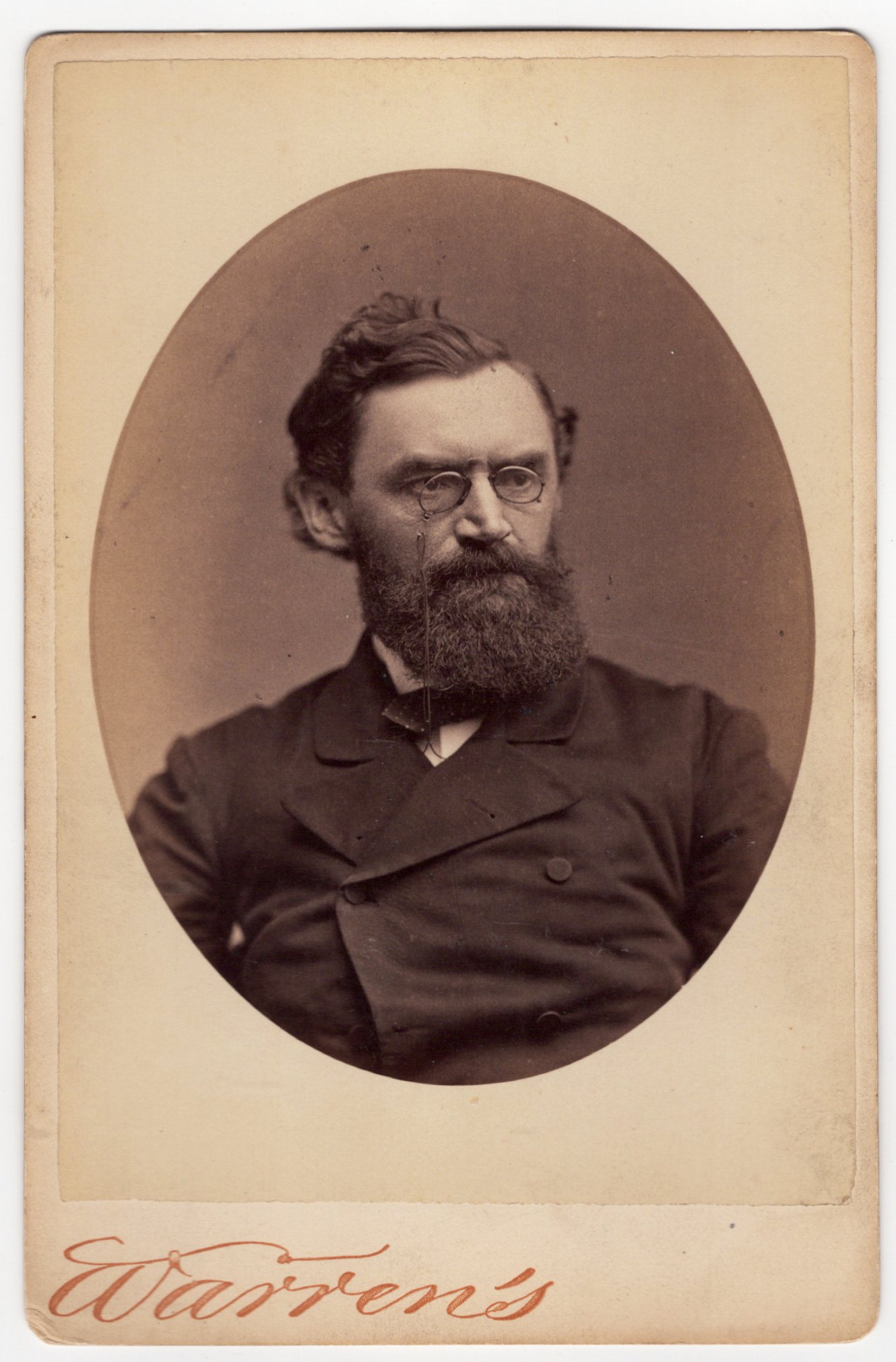
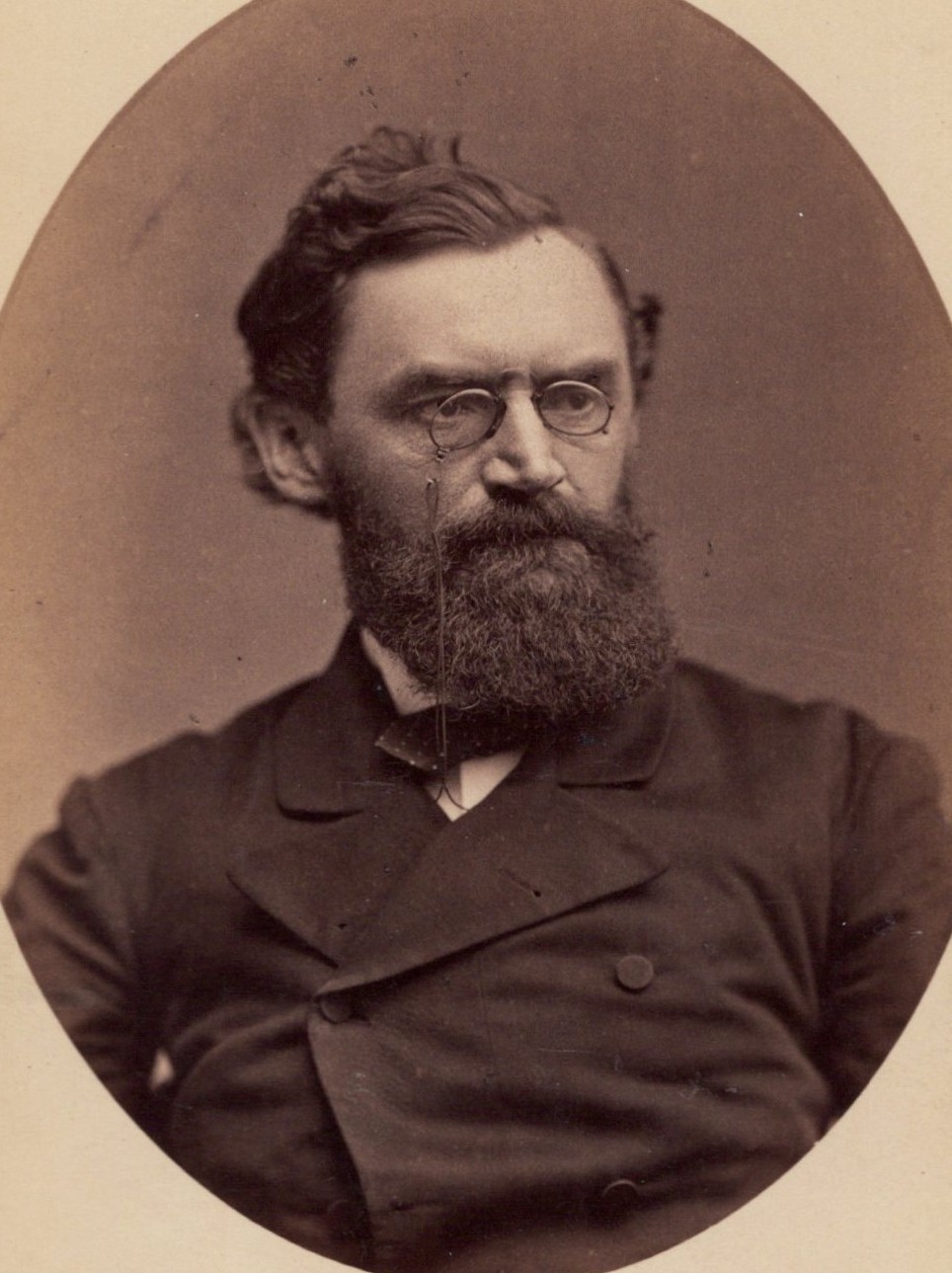
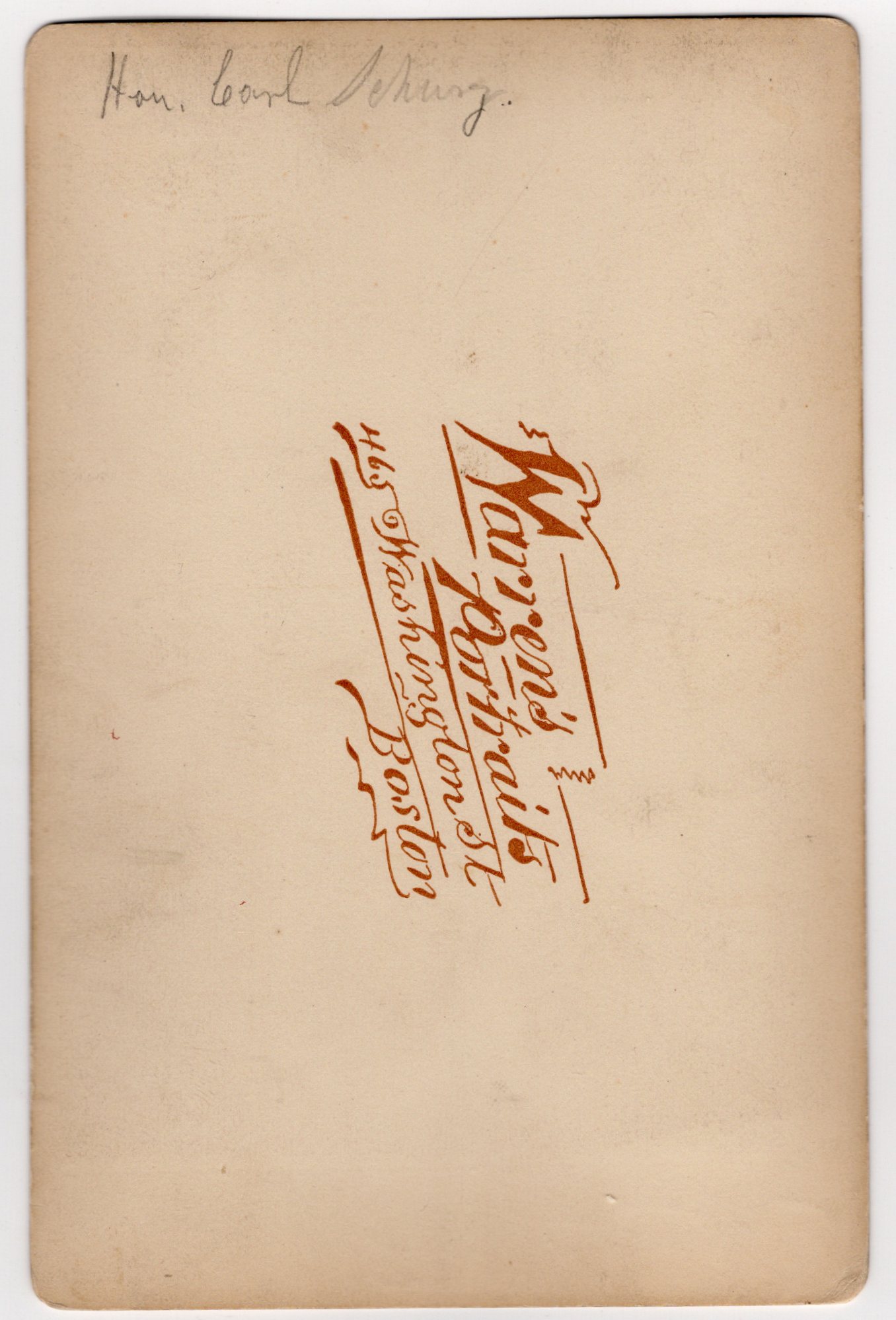
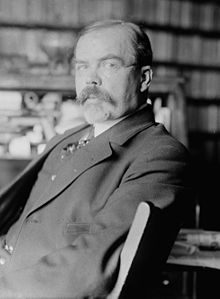
This striking 19th-century cabinet card features The Honorable Carl Schurz (1829-1906), a distinguished Civil War general, U.S. Senator, and reform-minded statesman. The photograph was taken at Warren’s Portraits, a prestigious Boston studio located at 465 Washington Street and renowned for its elegant images of notable figures during the late 1800s. In this formal portrait, Schurz is captured in a three-quarter view, seated in a dark, double-breasted coat with a subtle bow tie at his collar. His thick, well-kept beard and wavy hair give him a scholarly yet commanding presence. He gazes slightly to his left, a monocle suspended at his eye—projecting a look of intellectual rigor and seriousness. The background is a simple studio gradient, helping focus all attention on Schurz’s intense expression and refined appearance. On the reverse, the card is elegantly marked with the Warren’s Portraits logo. In pencil is written: “Hon. Carl Schurz,” affirming the identity of the sitter. Carl Schurz was born in Liblar, Prussia (modern-day Germany) in 1829. A revolutionary in his youth, he fought in the 1848 German uprisings, which ultimately failed, forcing him to flee Europe. He emigrated to the United States in 1852, where he quickly became involved in politics and the anti-slavery movement. During the American Civil War, Schurz was appointed brigadier general of Union volunteers by President Lincoln in 1862. He eventually rose to the rank of major general. Though courageous and respected, his battlefield performance received mixed reviews. He fought in key engagements including: the Second Battle of Bull Run (1862), the Battle of Chancellorsville (1863),  and the Battle of Gettysburg (1863), where his XI Corps was flanked on the first day. While he was not a professional military man, Schurz’s service was notable for his efforts to advocate for German-American troops and his commitment to the Union cause. He did not have prior military experience in Europe before serving in the U.S. Army. After the war, Schurz enjoyed a long and prominent career in politics. He served as a U.S. Senator from Missouri (1869–1875) and later as Secretary of the Interior under President Rutherford B. Hayes (1877–1881). A staunch advocate of civil service reform and anti-corruption measures, he became one of the leading voices of the Liberal Republican movement. This cabinet card was produced by Warren’s Portraits, one of Boston’s most prominent photography studios in the 19th century. Operated by William Shaw Warren, the studio specialized in elegant, high-quality portraits and was especially known for photographing celebrities, politicians, military figures, and distinguished members of Boston society. Warren’s operated primarily during the 1860s through the 1890s. Warren’s images often feature clean studio backdrops, strong lighting, and detailed retouching, emphasizing refinement and dignity—qualities clearly present in this cabinet card of Carl Schurz. (SOLD)

CROWN PRINCE WILHELM AND PRINCESS CECILIE OF GERMANY (PRESS PHOTO)

wilhelm

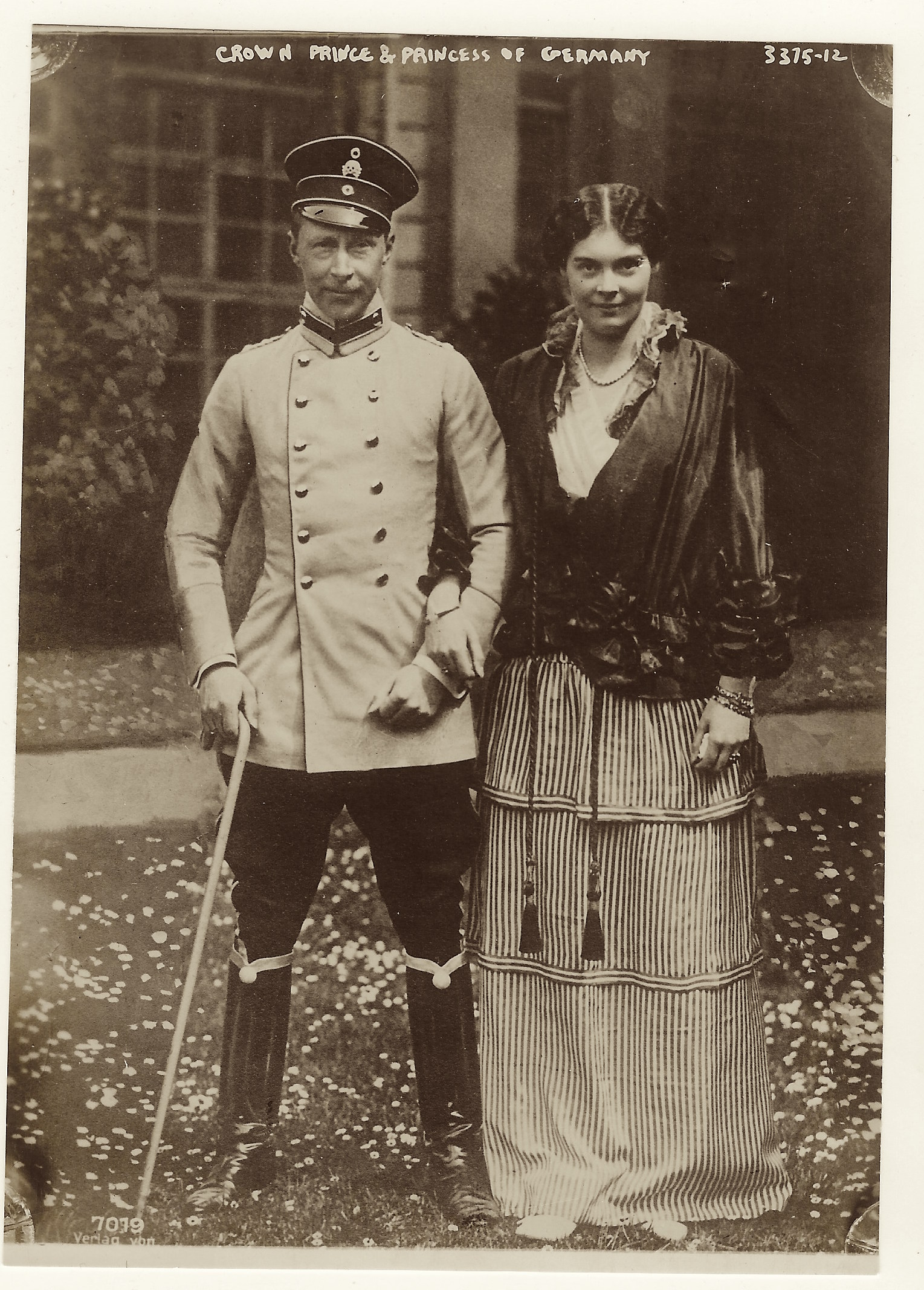
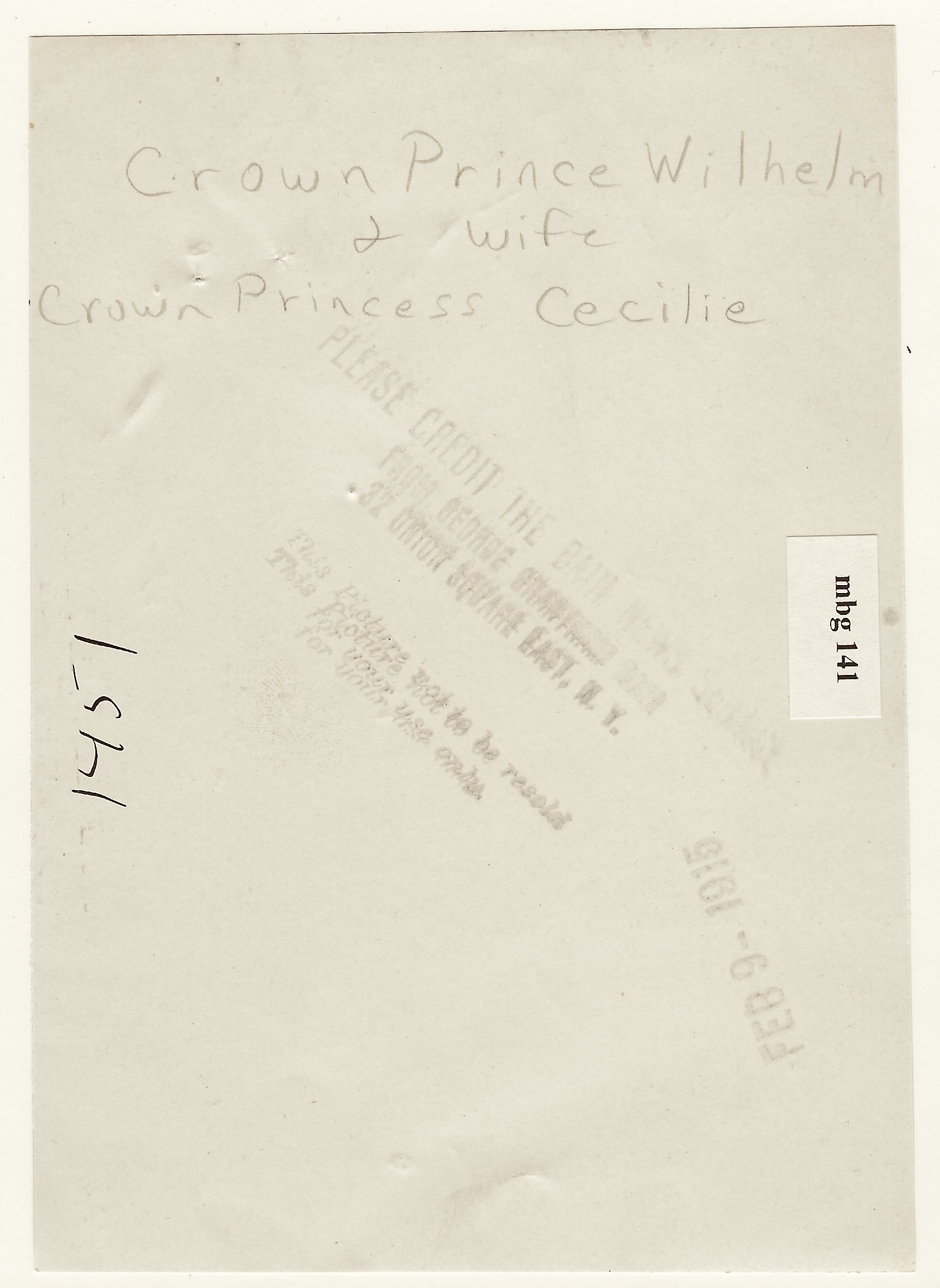
This vintage press photograph features Crown Prince Wilhelm and his wife, Crown Princess Cecilie. The photo was taken by George Grantham Bain in 1915 and it likely appeared in a number of newspapers.Some readers may be wondering about these Royals. Who are these people? Prince Wilhelm (1882-1951) was the last Crown Prince of Prussia and the German Empire. He married Duchess Cecilie of Mecklenburg-Schwerin (1886-1954) in 1905. The pair’s marriage wasn’t rock solid. The Crown Prince had affairs with both American opera singer Geraldine Farrar and dancer Mata Hari. The photographer of this photograph was a pioneer news photographer. George Grantham Bain (1865-1944) was a New York City photographer known as “the father of photographic news”. He was a chemistry graduate of St Louis University and also received a law degree there. He then became a reporter for two St. Louis newspapers in succession and one of his assignments was Washington DC correspondent. He then worked for United Press International and in 1898 started the Bain News Service. Forty thousand of Bain’s glass negatives are in the collection of the Library of Congress. This vintage press photo was published by the Bain News Service.  SOLD
220px-Ggbain                                                 Photo of George Grantham Bain

wilhelm 1

PORTRAIT OF JIHAN SADAT – DAUGHTER OF THE LATE EGYPTIAN PRESIDENT – ANWAR SADAT

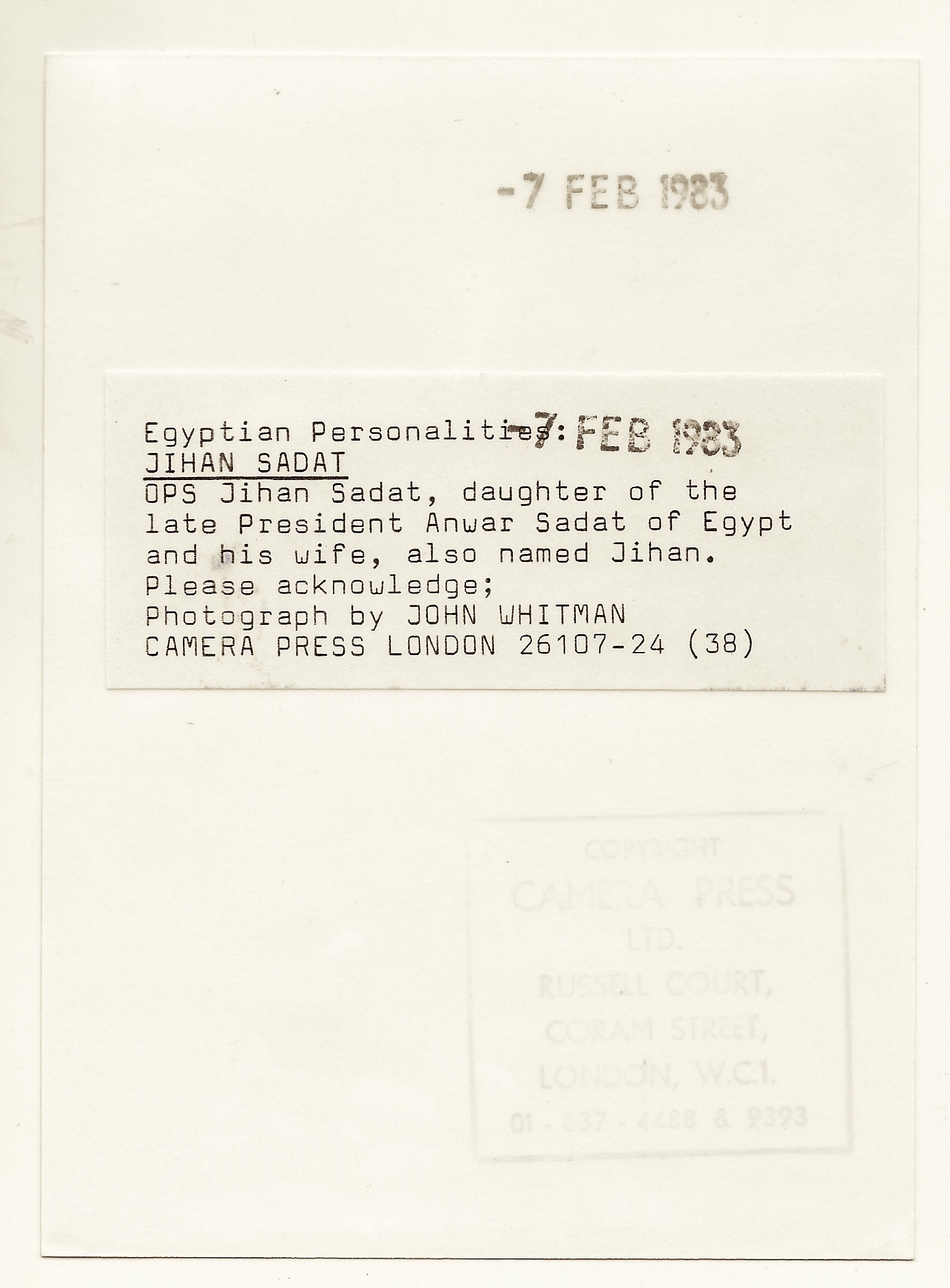
This press photo features Jihan (Jehan) Sadat. She is the daughter of the late Egyptian President, Anwar Sadat (1918-1981). He was the third President of Egypt and served from 1970 to 1981. He was assassinated while in office. He negotiated a peace treaty with Israel’s Menachem Begin and the two shared the Nobel Peace prize. This photograph was taken by John Whitman of Camera Press, located in London, England. It was taken in 1983.  SOLD

PRESIDENT JAMES A GARFIELD : CABINET CARD PORTRAIT

This uncommon cabinet card features a photographic portrait of the 20th President of the United States, James Garfield (1831-1881). He was elected in 1880 after previously serving nine terms in the House of Representatives. Two hundred days into his Presidency, he was assassinated. He was the last log cabin President. He was very anti corruption and improved the image of the Presidency post reconstruction. He was born in Ohio and lost his father when he was two years old. He grew up and worked driving canal boat teams. He earned enough money to attend and graduate from Williams College in Massachusetts. He then went to work as a professor at Western Reserve Eclectic Institute. He was a classics professor. After a year of teaching, he was made President of the college. IN 1859 he was elected to the Ohio Senate. He was in the Republican party. During the time of secession, he proposed the seceding states be coerced back into the Union. He joined the Union side in the Civil War he led a brigade to victory over the Condederate troops at a battle at Middle Creek, Kentucky. By the time Garfield was 31, he became a Brigadier General. He was late promoted to Major General. In 1862 Garfield was elected to Congress. After serving for 18 years he became the leading Republican in the House.  In 1880 he unsuccessfully supported John Sherman for the Presidential nomination. Ironically, after 36 ballots, Garfield recieved the nomination. It was a close election but Garfield defeated the Democrat, General Winfield Scott Hancock. In 1881, Garfield while at a railroad station, Garfield was assassinated by an attorney who was vengeful because he had failed to obtain a consular post from the Garfield administration. Garfield hung on to life for weeks until he finally succumbed to his wounds. SOLD

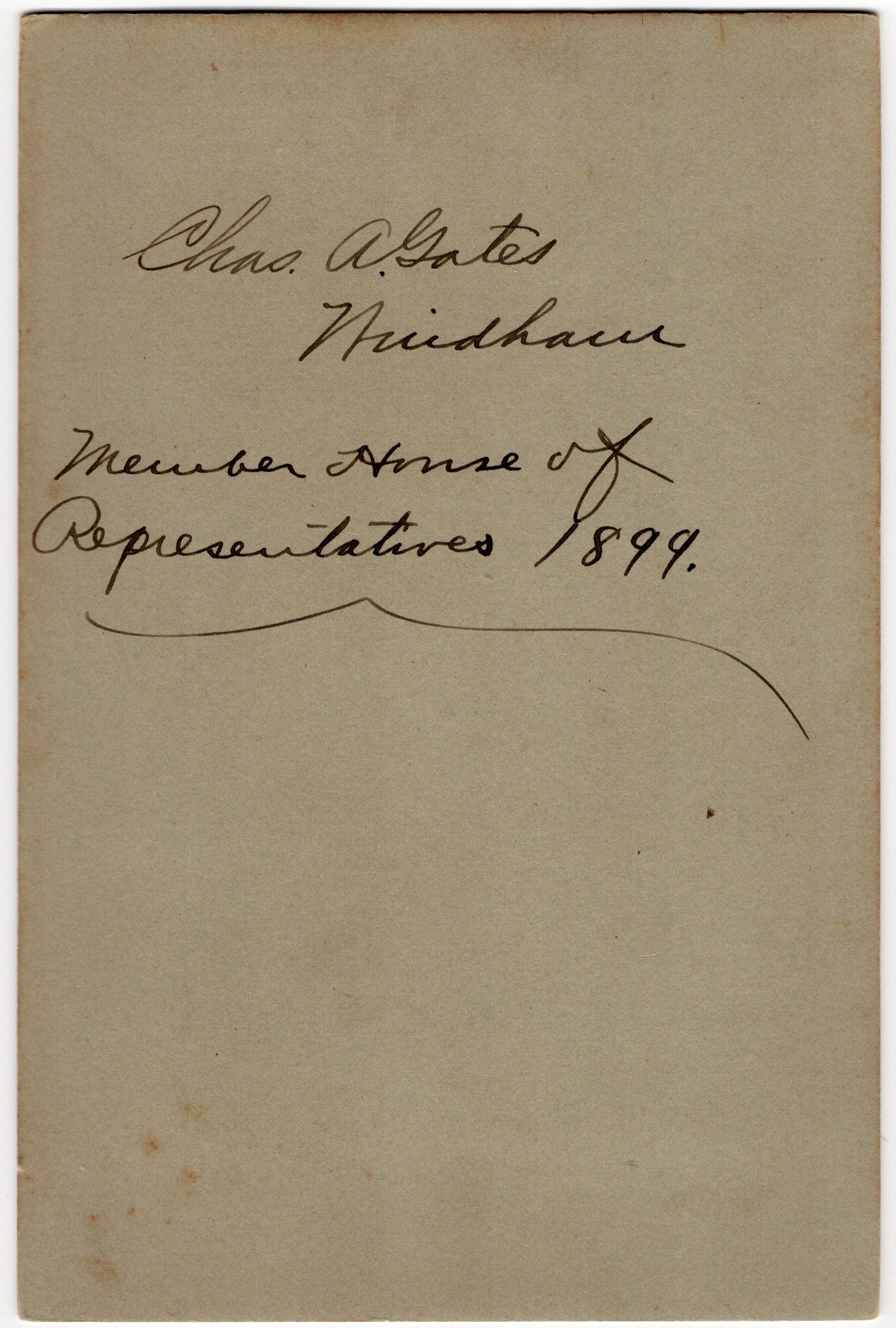
PORTRAIT OF THE GOVERNOR OF NEW HAMPSHIRE : CHARLES A GATES : CABINET CARD : 1899

This vintage cabinet card features American politician, Charles Winslow Gates (1856-1927). Gates served in the Vermont House of Representatives (1899-1900), the Vermont Senate (1901-1902),  as the state Highway Commissioner, and as the 55th governor of Vermont (1915-1917). He was a progressive Republican governor. In 1916, Gates ran for the US Senate, but lost the election. Gates was born in Vermont. Upon graduation from St. Johnsbury Academy (1880), he became a teacher and then a principal at Franklin Academy until 1884. He than purchased an managed a store while maintaining his farm. He married in 1890. He became a Director of the Enosburg Falls Savings Bank and founded the Franklin Telephone Company in 1895. This cabinet card portrait is in very good condition (see scans).

Buy this Cabinet Card Photograph (includes shipping within the US) #6539

To purchase this item, click on the Pay with Paypal button below

$48.00

Buy this Vintage Original Cabinet Card (includes International shipping outside the US) #6539

To purchase this item, click on the Pay with Paypal button below

$60.00

MRS PRESIDENT FRANCES CLEVELAND : TRADE CARD : ADVERTISING “THE BEST BREWING COMPANY” (IMAGE 1) and CABINET CARD PORTRAIT OF THE YOUNGEST FIRST LADY IN US HISTORY : BY C. M. BELL (IMAGE 2)

IMAGE 1

MRS PRESIDENT FRANCES CLEVELAND :YOUNGEST FIRST LADY :BY C M BELL : CABINET CARD 1 of 3IMAGE 2

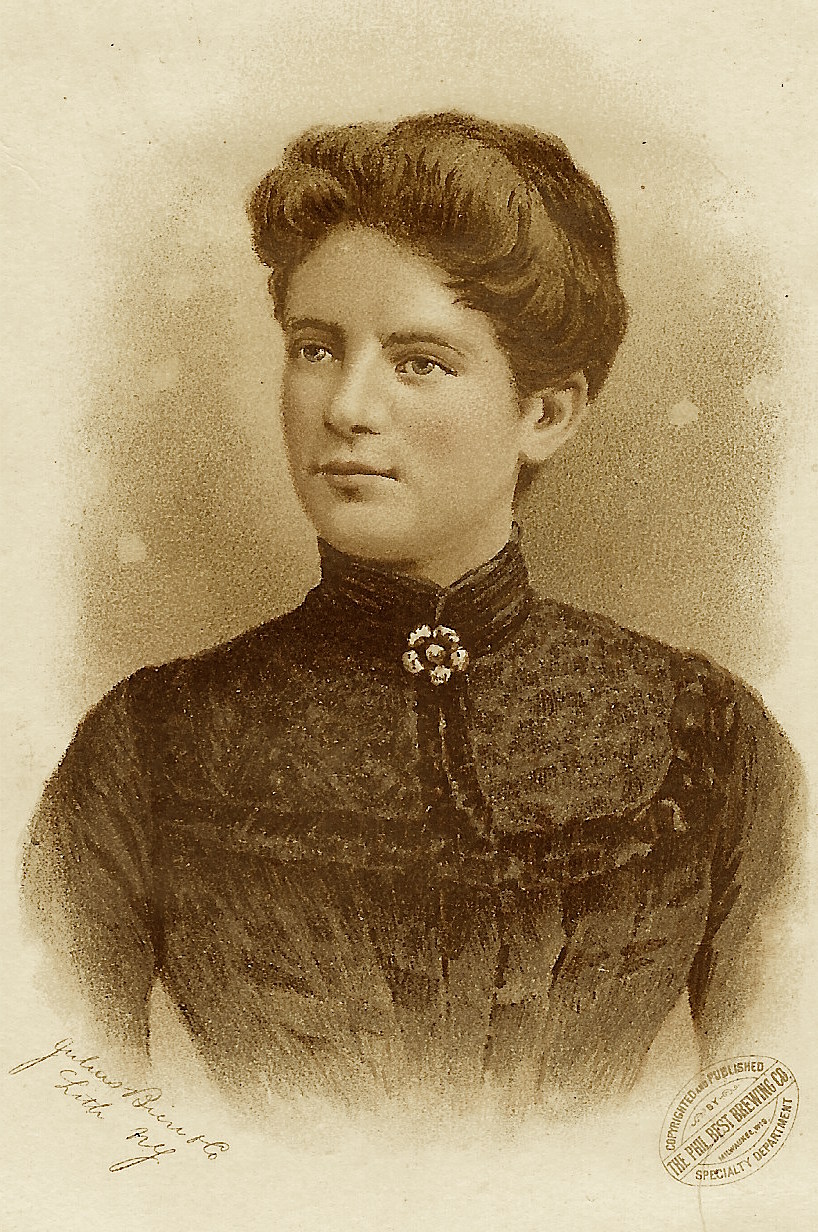
Meet “Mrs President Cleveland”. In the era of Grover Cleveland’s Presidencies, wives were just extensions of their husbands and their names, were at times, irrelevant. Mrs President Cleveland was actually Frances Cleveland (1864-1947). Grover Cleveland served two terms as President. He was the 22nd and 24th President and the only President to serve non consecutive terms. He began his terms in 1885 and 1893. Enough about Grover, there is plenty to say about Frances. She was born in Buffalo, New York. Her given first name was “Frank”, but she feminized it later. She was named after an uncle. Her father was an attorney and was a close friend of Grover Cleveland. Cleveland met Frances when she was a baby and he was twenty-seven years old. He watched Frances grow up and showed a caring interest in her. When Frances lost her father in a carriage accident, she was only eleven years-old. Cleveland became the administrator of her father’s estate and this position put him in more contact with her. While Frances was in college, Cleveland developed romantic feeling toward her and in 1885, he proposed to her. At age 21, she was the youngest wife of a President. Frances received much attention from the newspapers and magazines of the time. Her wedding was widely covered. John Phillip Sousa led the Marine band at her wedding. Throughout her husband’s terms, many American women imitated her hairstyle and her fashion taste. The Women’s Christian Temperance Union was very critical of the way Frances dressed. They did not appreciate her baring her shoulders and wearing low cut dresses. They prepared a petition of protest which the first lady ignored. Grover and Frances had five children, three daughters and two sons. She was first first lady to give birth while her husband was President. Her first born, Ruth, died at age twelve of diphtheria. The “Baby Ruth” candy bar was named after her. Grover Cleveland died in 1908. About four years later, Frances married a professor of archaeology at her alma mater, Wells College. When World War I started, she joined the pro-war National Security League and became an officer of the organization. She created much controversy with the league when she claimed that a large segment of the American population was unassimilated and preventing the country from working together efficiently. Adding to the stir was that she recommended that school children should be psychologically indoctrinated to be in favor of the war. All this self initiated commotion caused her to resign in 1919. Frances Cleveland was no friend of the Women’s Suffrage movement. She cemented the disfavor of the movement when she said that “women weren’t yet intelligent enough to vote”. In 1913, she was elected as vice president of the “New Jersey Association Opposed to Woman’s Suffrage”. On a more politically correct note, during the Great Depression she led the “Needlework Guild of America’s clothing drive for the poor. Immediately after her wedding, the facial image of Mrs Cleveland began appearing in advertising aimed at selling various products such as sewing kits, cigars, and women’s perfume. Frances was a perfect model for companies looking to advertise. She was young, pretty, and vivacious.

Image 1 is an example of one form of advertising employing Mrs Cleveland’s image to sell products, was trade cards, such as the one seen above. This trade card aims to sell “The ‘Best’ Tonic” which was produced by “The Philadelphia Best Brewing Company”. Advertising on this trade card declares that the brewing company will send a 19″ x 25″ portrait of Frances Cleveland to customers that send in twelve coupons from their “Best Tonic”product.  This trade card was printed by the Julius Bien (1826-1909) Lithograph Company of New York. This vintage trade card is in good condition (see scans).   (SOLD)

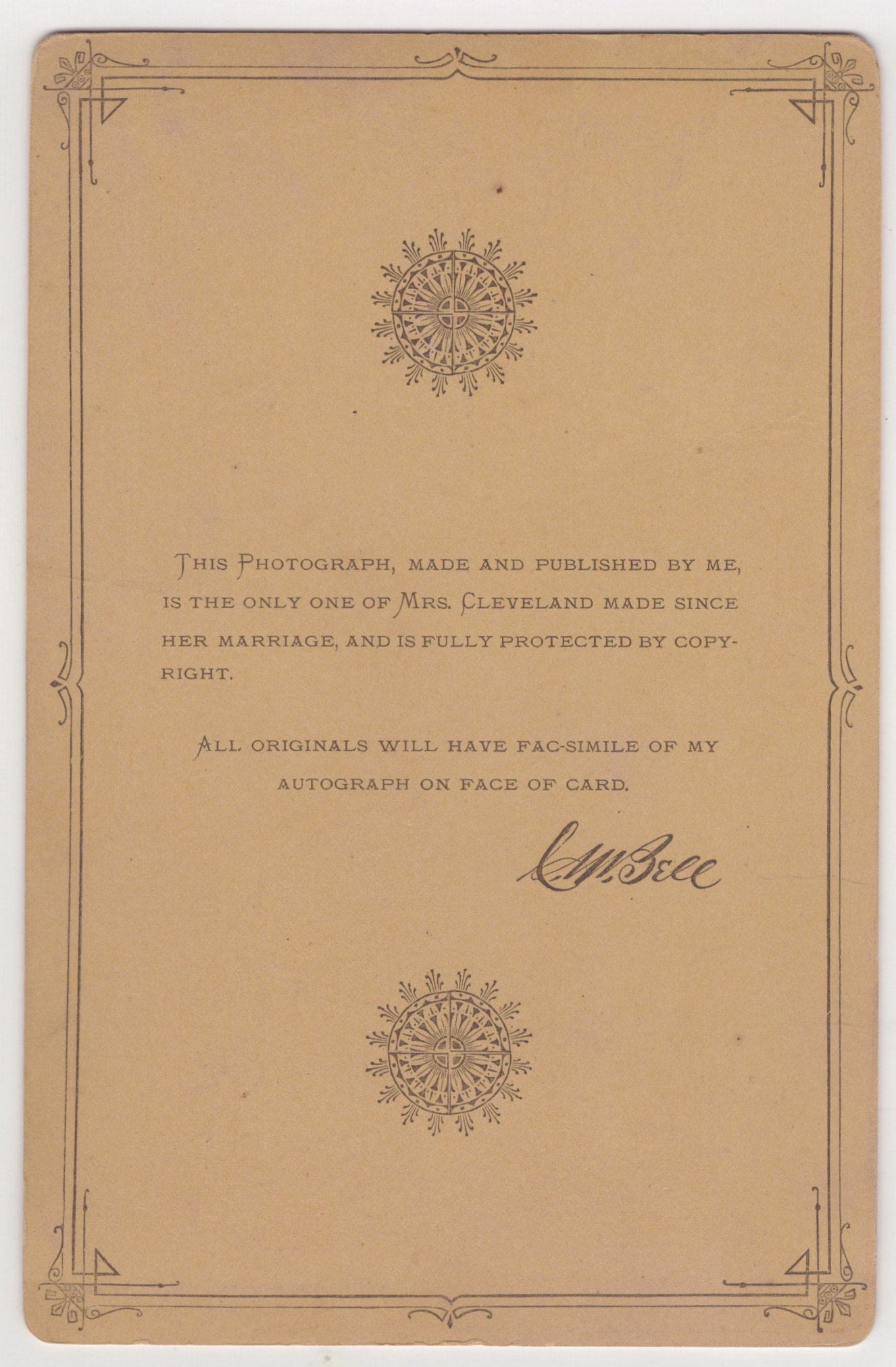
Image 2 is a cabinet card photographed by C. M. Bell.  Charles Milton Bell (1848-1893) was an accomplished man. He was the youngest member of a family of photographers that operated a studio in Washington DC from around 1860 until 1874. He established his own studio on Pennsylvania Avenue in 1873. He quickly became one of the most successful photographers in the city. He was noted for his portraits of Native Americans as well as political figures and celebrities. His subjects included President Chester Arthur, Chief Yellow Bull, and Helen Keller. His photographs can be found in many prestigious institutions including The Library of Congress, Harvard University, Dartmouth University, and the Smithsonian. Bell is also known for his photographs of President Garfield’s assassin, Charles J. Guiteau. He was the only photographer authorized by Guiteau and the Government to take photographs of Guiteau and other people playing roles in his trial. Bell also took medical photographs relating to the assassination and assassin. This cabinet card has a message from C. M. Bell. It is signed with a fascimile autograph.  (SOLD)
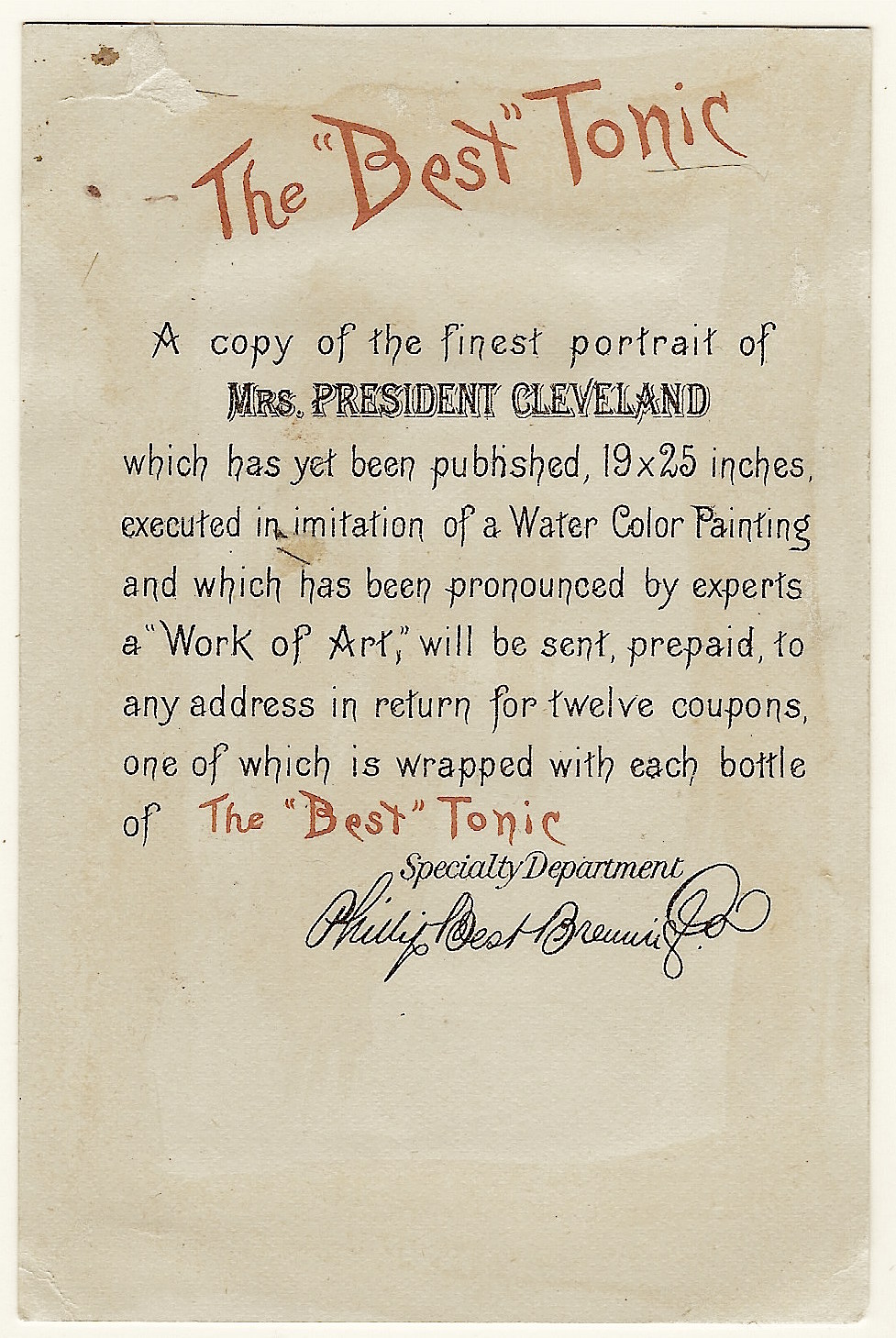
IMAGE 1 (REVERSE)

IMAGE 2 (REVERSE)

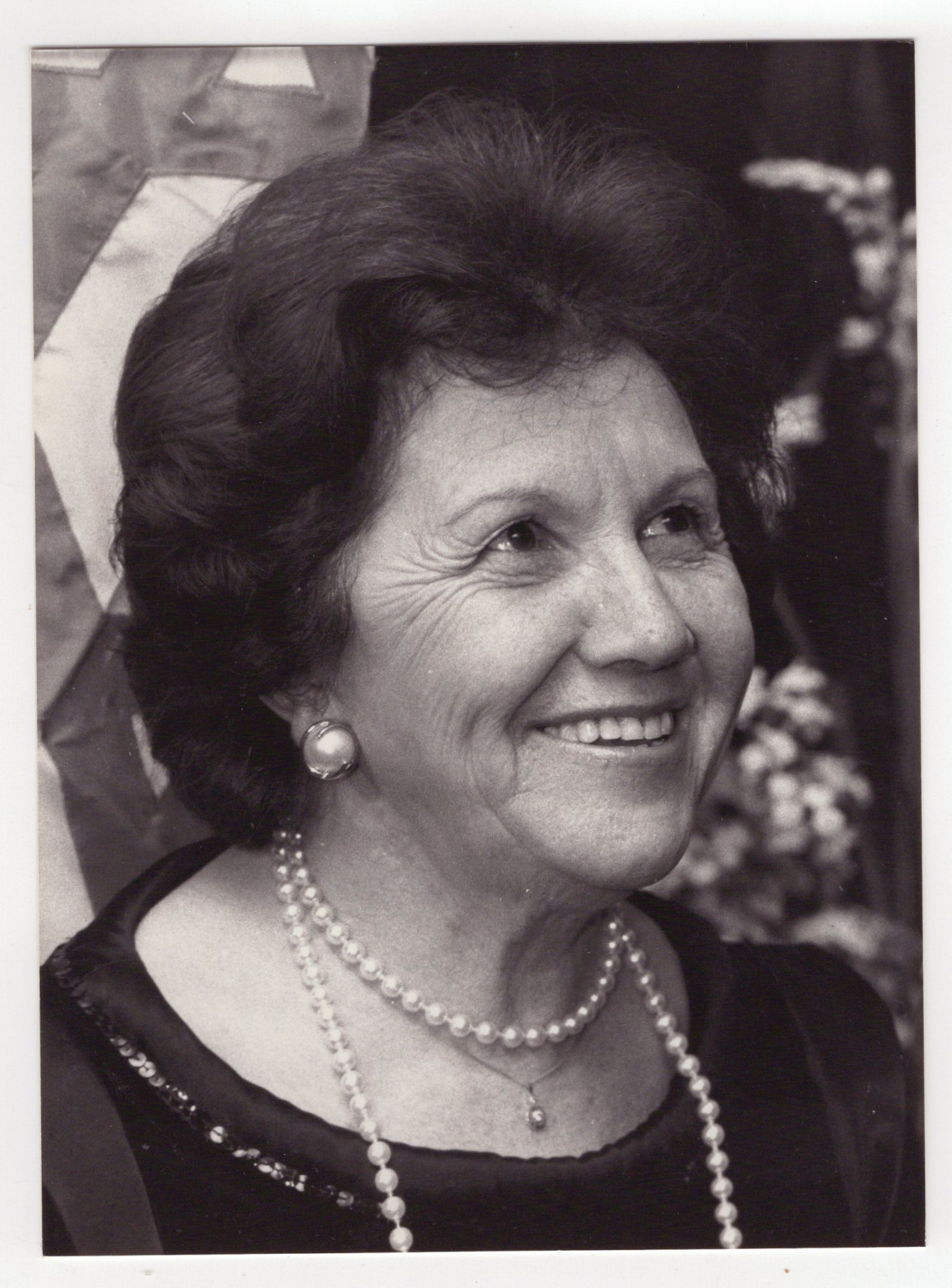
SHOSHONA SHAMIR : WIFE OF FORMER ISRAELI PRIME MINISTER : PRESS PHOTO (1984)

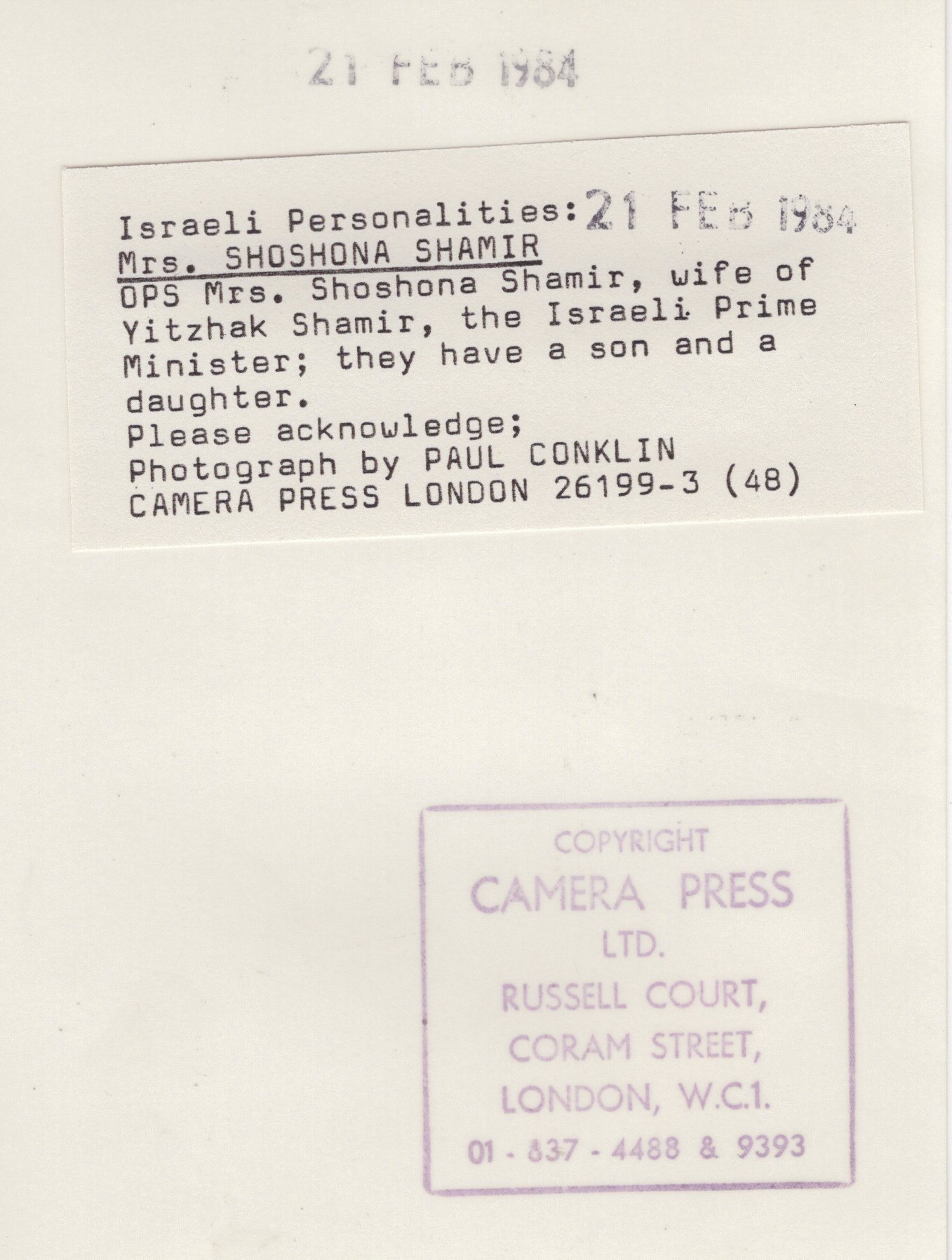
This vintage press photo features Shoshona Shamir, wife of the former Prime Minister of Israel, Yitzhak Shamir (1915-2012). Yitzhak Shamir served two terms as Prime Minister (1983-1984, 1986-1992).This press photo was taken by photographer, Paul Conklin for Camera Press (London, England). The photo was taken in 1984. The photograph measures abour 4 3/4 x 6 3/8 inches. On the reverse of the photo is an ink stamp from Camera Press. SOLD

Published in: on May 24, 2024 at 12:00 pm  Leave a Comment  
Tags: , , , , ,

ELLA RUSSELL : AMERICAN OPERA STAR : RPPC

Postcard 1 (SOLD)

Postcard 2 (SOLD)

Ella Russell (1864-1935) was an American opera star. She was born in Cleveland, Ohio but spent much of her life in England. She was 33 years-old when she made her American debut. She had already appeared in Europe. During her career, she sang a command performance in front of England’s Queen Victoria.

Photo Postcard 1 was published by Frederick Hartmann. His postcard publishing company was headquartered in London. He was active in the UK between 1902 and 1909. It is thought that he produced the first divided back card in the world. His postcards were printed in Saxony (Germany) because of the country’s advanced printing industry. He produced view cards from all over England and imported glamour cards from the European continent. He was the English distributor for Trenkler & Company postcards. In 1907, Hartmann partnered with Christian Linck. The business went bankrupt that same year (1907).  (SOLD)

Postcard 2 was published by J. Beagle as part of a series (No.410). The publishing company was headquartered in London. (SOLD)

Postcard 2

LILLIAN RUSSELL: CELEBRATED AMERICAN ACTRESS AND SINGER

russell_0002CABINET CARD 1

CABINET CARD 2   (SOLD)

CABINET CARD 3  (SOLD)

LIL RUSSSELL_0002CABINET CARD 4

MISSLILLIAN_0002
 CABINET CARD 5

RPPC 6 (SOLD)

RPPC 7 (SOLD)

RPPC 8(SOLD)

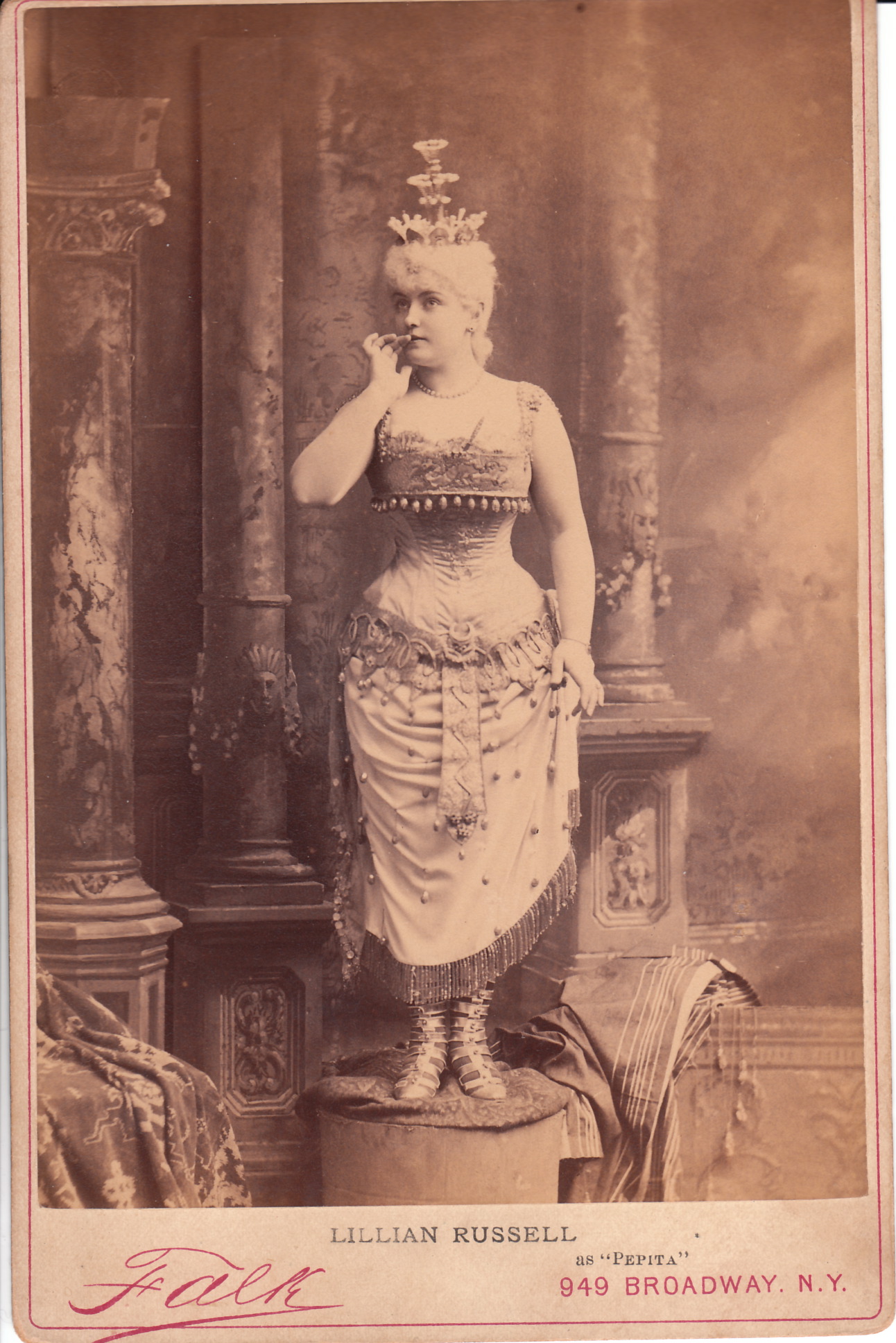
Lillian Russell (1860-1922) is pictured in the Cabinet Card 1 photograph by famed New York celebrity photographer, Falk. Lillian Russell is captured in costume as she appeared in “Pepita” (1886). Russell was a very famous American actress and singer who was known for her beauty, style, voice and stage presence. Her theater career began with roles in comic operas including the work of Gilbert and Sullivan. She married composer Edward Solomon in 1884 and two years later, he was arrested for bigamy.  She performed in New York and elsewhere in starring roles in comic opera and musical theatre. In 1904 she switched to dramatic roles due to voice problems. She later also appeared in vaudeville. She retired from the stage in 1919. She later wrote newspaper columns, advocated for women suffrage, and was a popular lecturer.  She married four times and her longest marriage was to Diamond Jim Brady who supported her extravagant lifestyle for four decades. It is interesting to note that the New York Times (4/2/1886) reported that during the performance of “Pepita”, an opera by her husband, Edward Solomon; there were obvious signs of marital discord observed on stage. The newspaper blamed issues revolving around Russell’s interfering mother, as well as, issues pertaining to Russell’s sudden prosperity. The newspaper article correctly predicted that there would soon be a divorce.

Cabinet card 2 is also photographed by Falk. This photograph provides a close-up image of Lillian Russell and is a testimonial to her beauty.(SOLD)

Cabinet card 3 was published by Newsboy and used by the tobacco company as a premium (#340). The photographer was Falk and the image was copyrighted in 1893. To view a collection cabinet cards by Falk; click on the category “Photographer: Falk”. (SOLD)

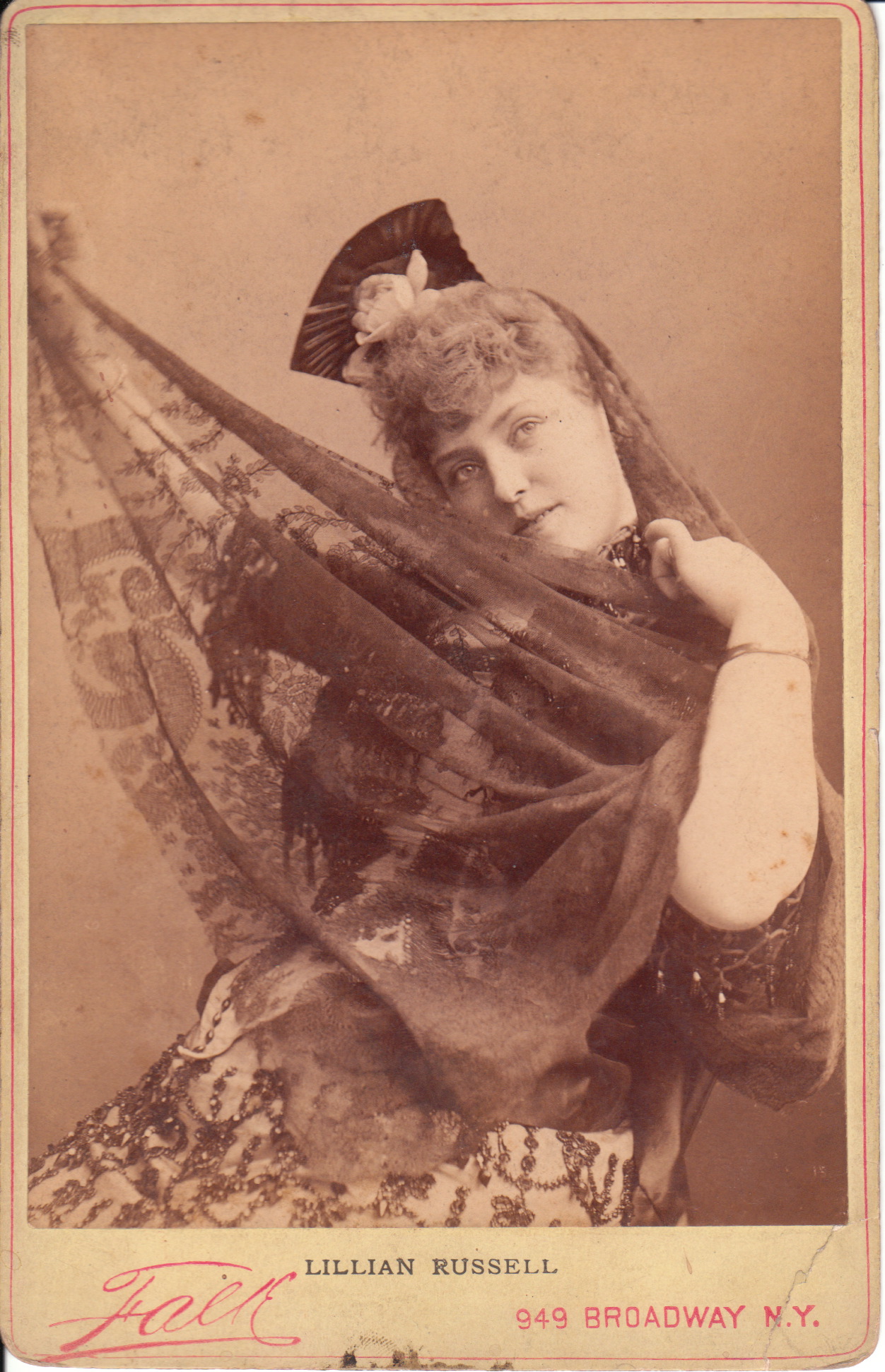
Cabinet card 4 is another image produced by B. J. Falk. Miss Russell is in costume and is posed provocatively partially behind sheer lace.

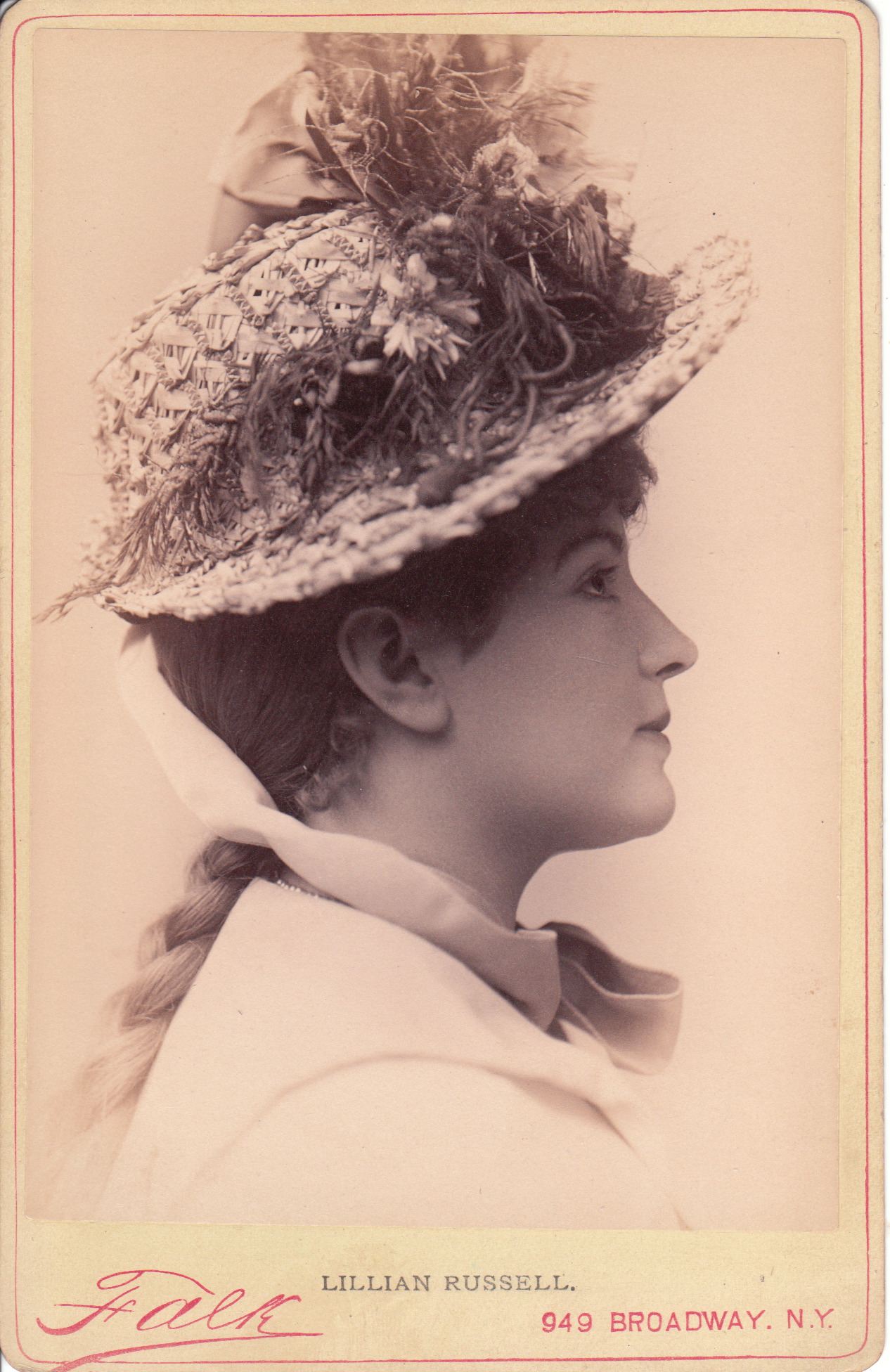
Cabinet card 5, also by Falk, provides a terrific profile portrait of the beautiful Miss Russell.

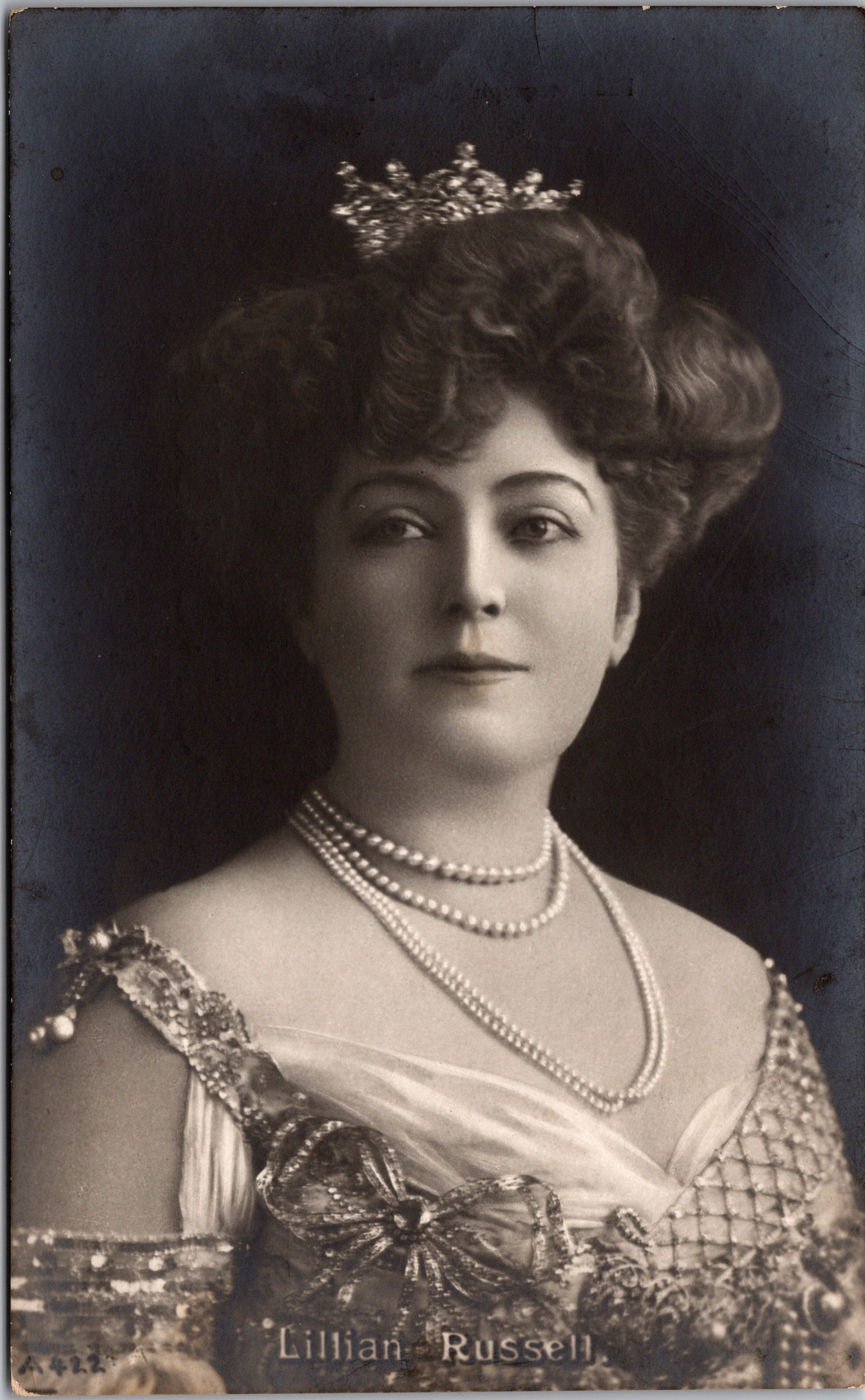
Lillian Russell is pictured in this vintage real photo postcard (RPPC 6). This undivided back postcard was published in 1907 or earlier. (SOLD)

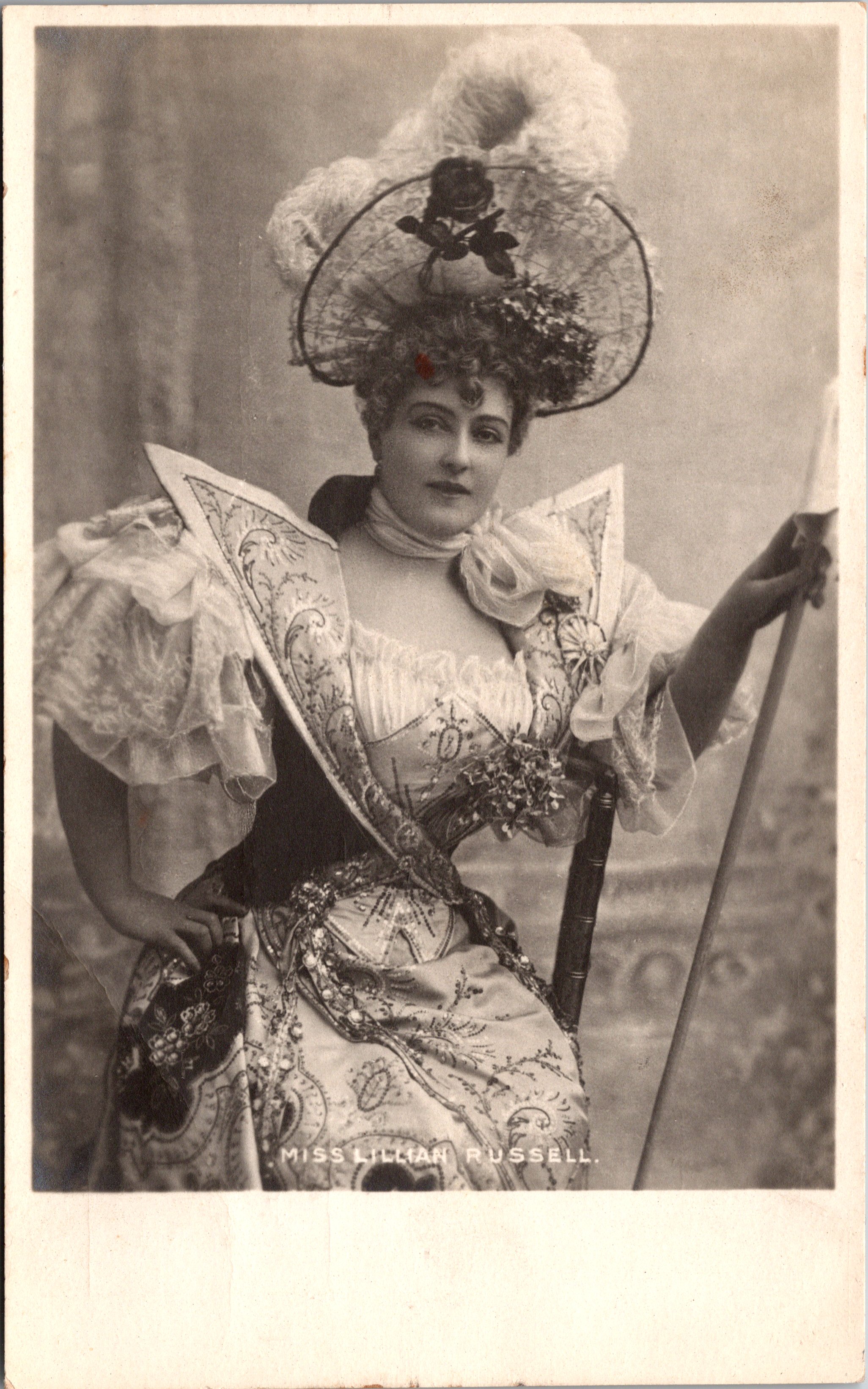
RPPC 7 is an undivided back postcard portrait of Miss Russell. She is in costume. The publisher of this card is Pascalis, Moss & Company. The firm was London based and ceased publishing postcards in 1902. At that time Charles H. Pascalis (c1877-?) left the company and the firm changed it’s name to Henry Moss & Company. (SOLD)

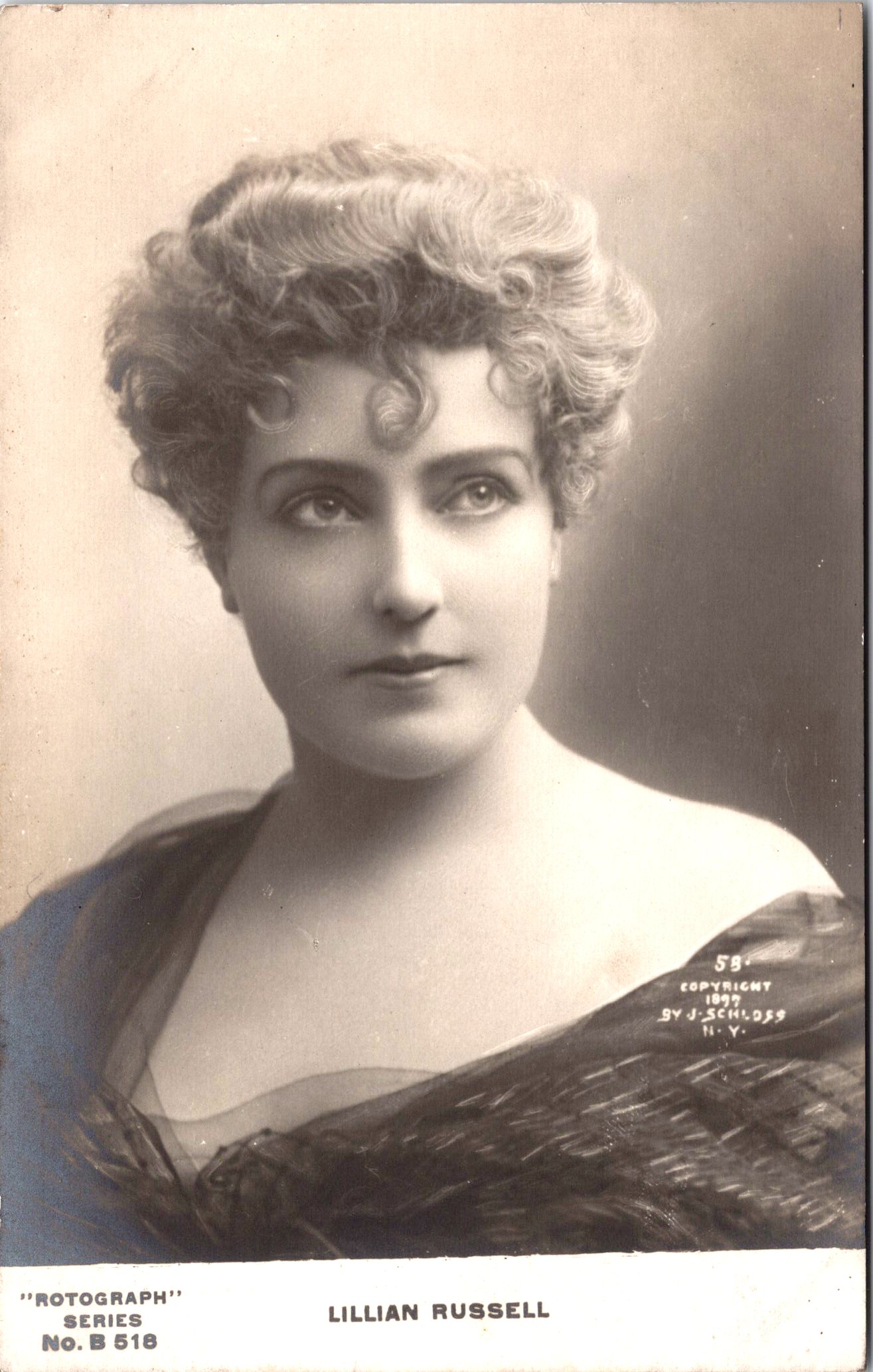
RPPC 8 is risque in terms of the “plunging” neckline of Russell’s dress. This vintage postcard was published by Rotograph as part of a series (No.B518) Miss Russell’s photograph was taken by Jacob Schloss in 1899. (SOLD)