THE HONORABLE LORD ASHBOURNE: CHANCELLOR OF IRELAND AND FATHER OF THE WOULD BE ASSASSIN OF MUSSOLINI (CAB CARD)

ashbourne

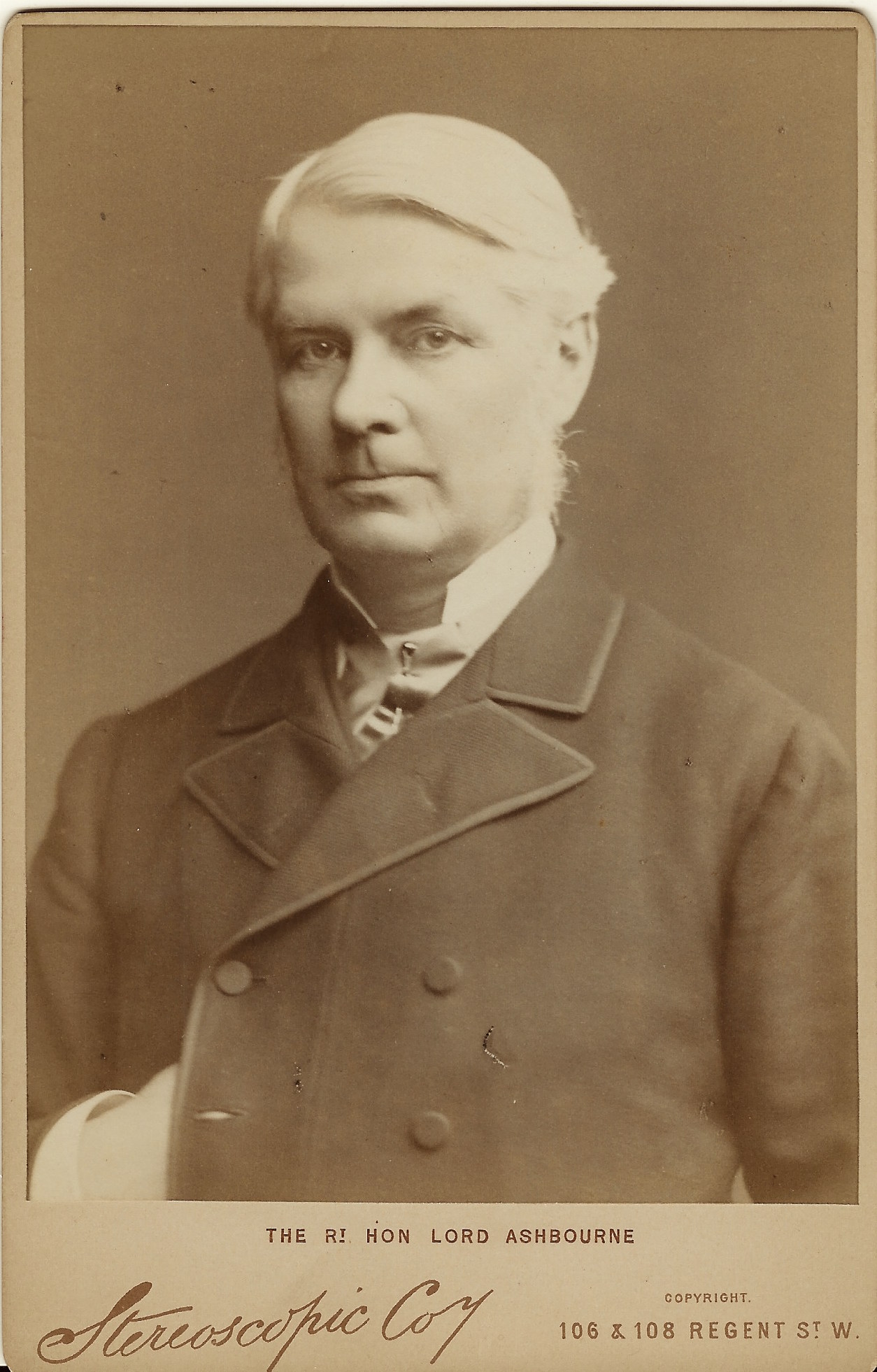
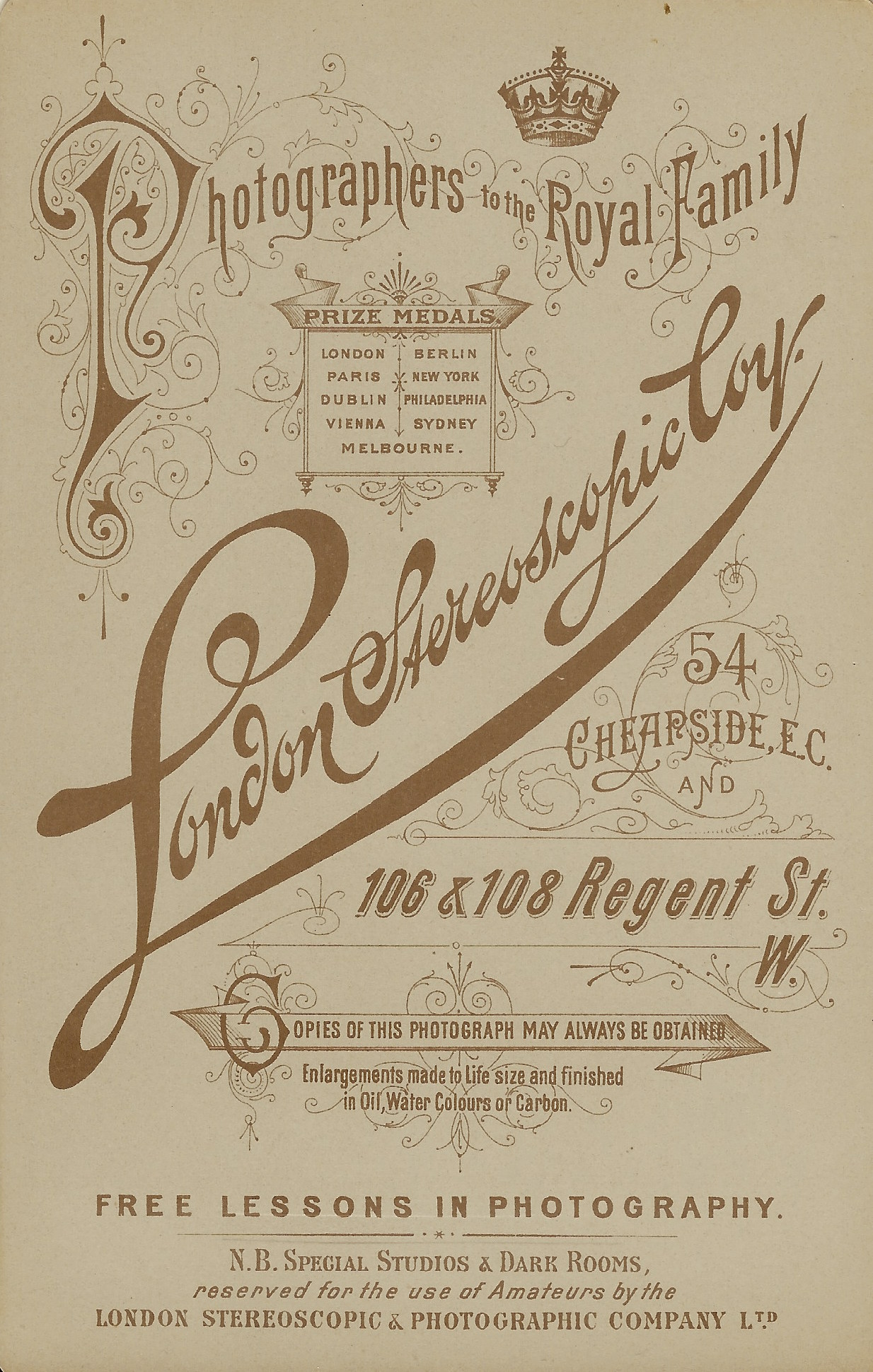
The London Stereoscopic Company produced this cabinet card portrait of the Honorable Lord Ashbourne. The title Lord Ashbourne was created in 1886 for Edward Gibson (1837-1913), the Lord Chancellor of Ireland. Gibson was appointed Ireland’s attorney general in 1877. His daughter, the honorable Violet Gibson (1876-1956) is known for her attempted assassination of Italy’s Benito Mussolini in 1926. She shot him three times while he sat in a car but merely lightly wounded him. After nearly being lynched by a mob, she was deported to England where she spent the rest of her life in a mental institution. An image of the verso of this cabinet card can be found below. The advertising reveals that the London Stereoscopic studio was photographer used by Britain’s royal family. It is also stated that the studio has won medals for photography in many cities throughout the world. It is also interesting to note that the advertising advises customers that free photography lessons, studios, and darkrooms were available to their clients. To view other images by the London Stereoscopic studio, click on the category “Photographer: London Stereoscopic”.

ashbourne 1

KATE SHIPPEN ROOSEVELT: PORTRAIT OF A PRETTY HIGH SOCIETY WOMAN BY CELEBRATED PHOTOGRAPHER NAPOLEON SARONY

shippen

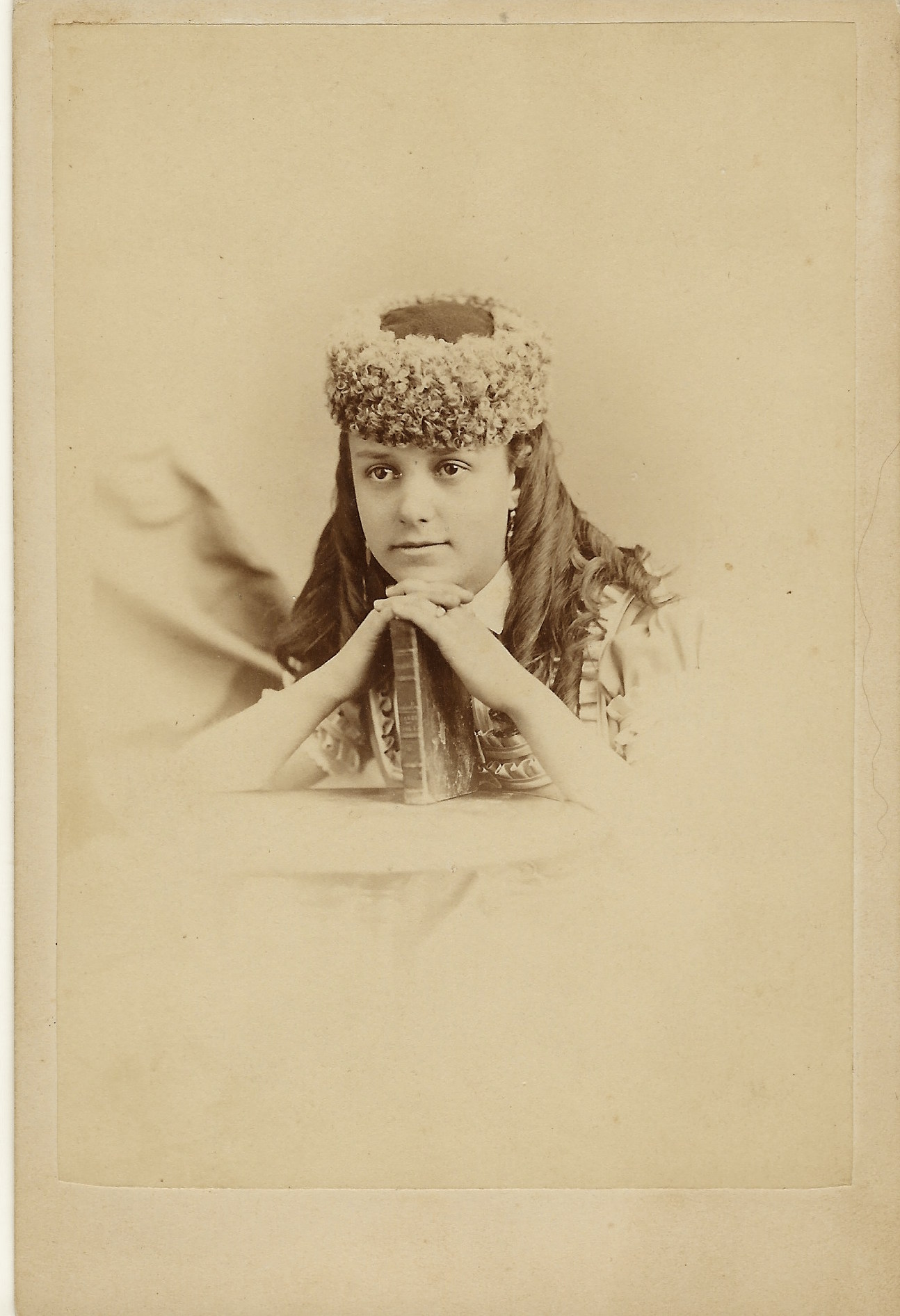
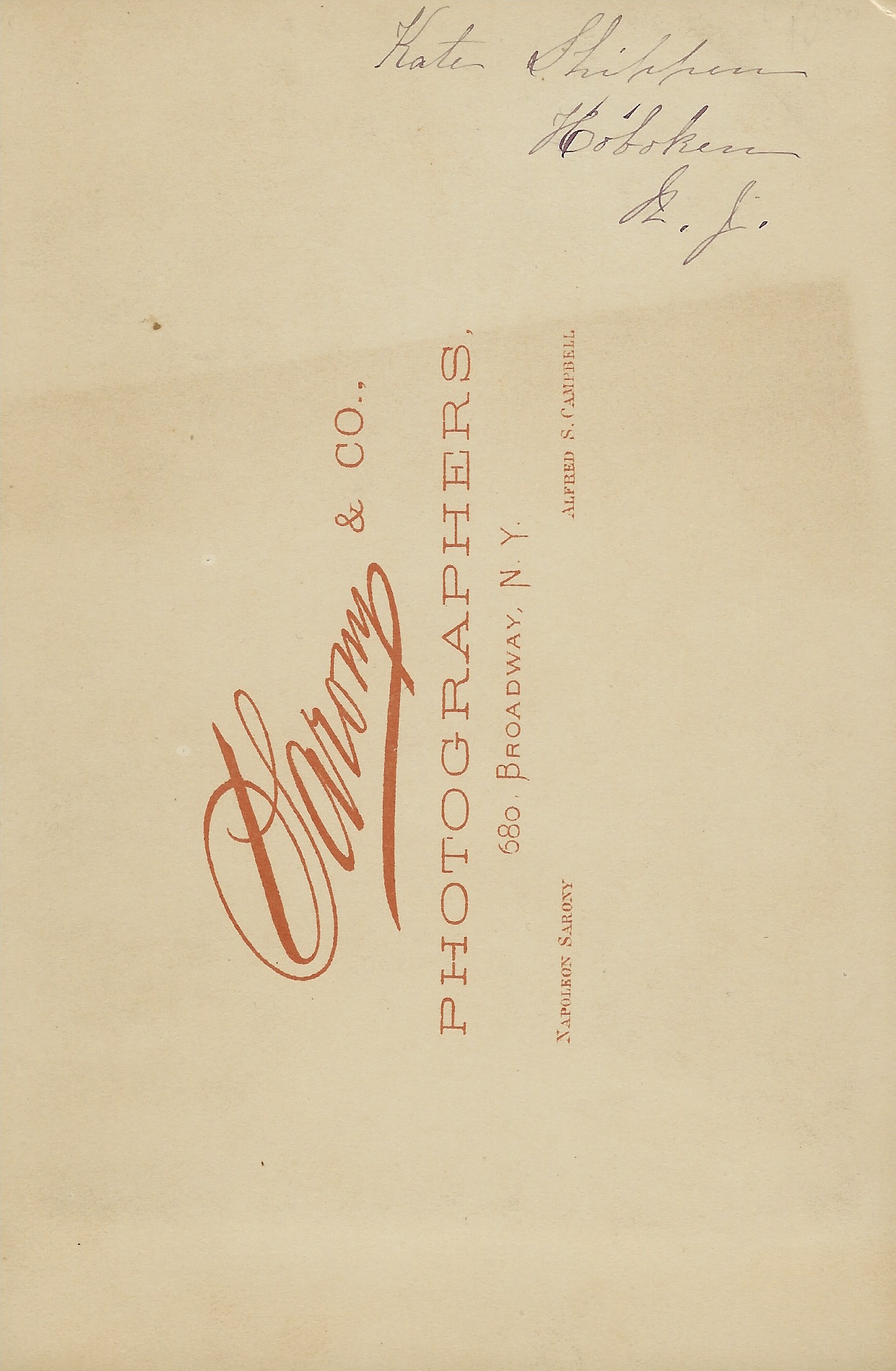
It is not infrequent that a cabinet card presents an interesting mystery. This cabinet card, by celebrity photographer Napoleon Sarony of New York City, conjures  up some fascinating questions. Is the woman in this photograph a member of one of America’s most famous political families? It is likely that the pretty woman with the dreamy gaze seen in this photo is a Roosevelt. Let me tell you a little about Kate Shippen Roosevelt (1855-1925). In 1883, Kate Shippen Roosevelt (1855-1925) was married to Hilborne Roosevelt who was a world famous organ maker. He had factories in New York City, Philadelphia, and Baltimore. His company made some of the finest and largest pipe organs in the world. He designed the first electric organ and he was a first cousin to President Theodore Roosevelt. Kate was the daughter of William W. Shippen who was the president of the Hoboken Land and Improvement Company and Hoboken Ferry Company. It is not a surprise that their wedding was called by the New York Times (1883) the event of the season. An article in Town Topic Journal of  Society (1883) announces that Kate Shippen Roosevelt would be performing a monologue and that she was one of the “best amateurs” engaged in such performances. Kate was also a well known women’s suffrage critic. She called suffragettes “soapbox militants”. Hillborne Roosevelt died in 1886 at age 37. He left his widow and three year-old daughter quite wealthy and they continued to be part of high society in New York City.  I believe that that the woman in this image is Kate Shippen Roosevelt because  1) the inscription on the reverse of the image is supportive (see below), 2) Mrs. Roosevelt was a member of society and Sarony was a society photographer, and 3) My research was unsuccessful to find another celebrity sharing the name “Kate Shippen”.  Unfortunately, I could not find a photo to confirm or disconfirm that the subject of this cabinet card portrait was Mrs. Roosevelt. The bottom image is the gravestone of Kate Shippen Roosevelt which is located at Green-Wood Cemetery in Brooklyn, New York.   SOLD
shippen 2


CHARLES HENRY PARKHURST: CLERGYMAN, SOCIAL REFORMER, CROOKED POLITICIAN’S AND CORRUPT POLICEMAN’S NIGHTMARE (1892)


parkhurst

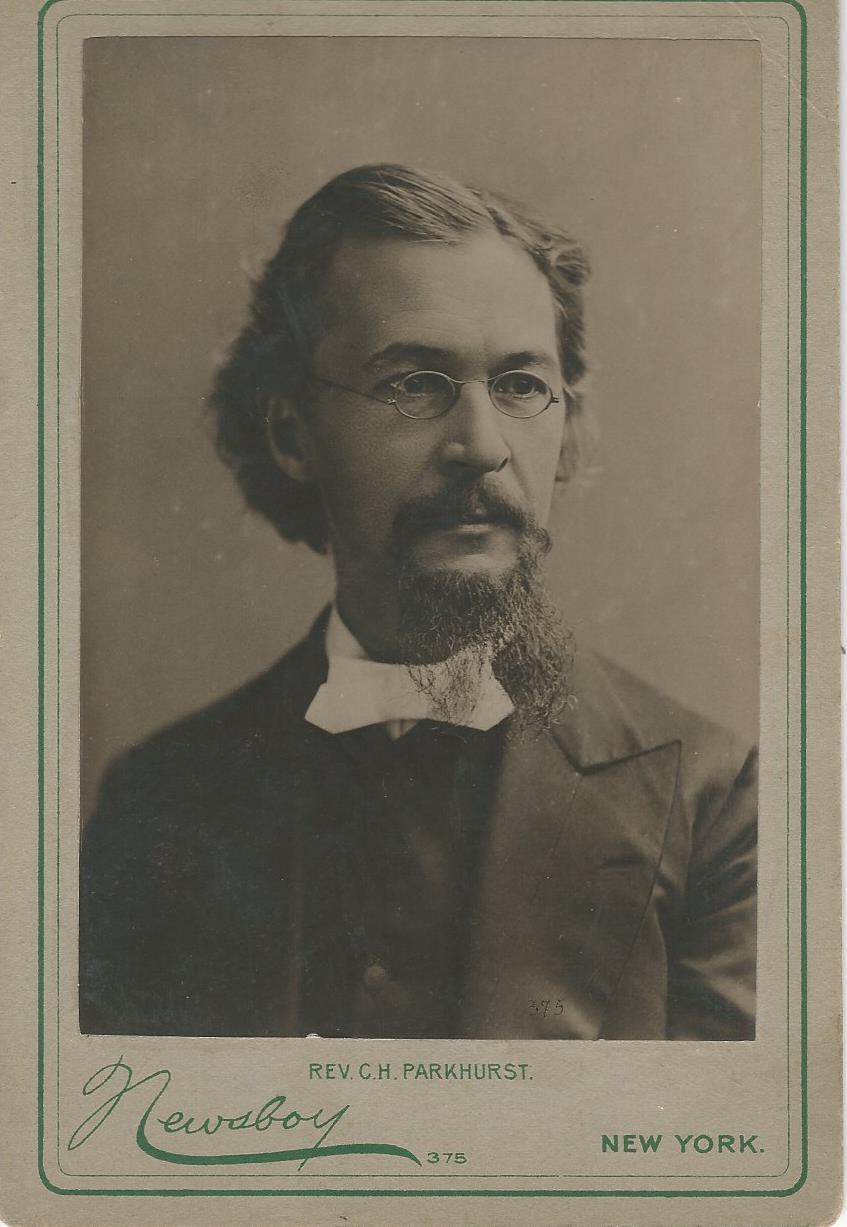
Charles Henry Parkhurst (1842-1933) is the subject of these Cabinet Card photographs which are published by Newsboy. Photographer Napoleon Sarony has the 1892 copyright for the top photograph. The second photograph is marked “375” and is part of Newsboy’s tobacco premium series. Parkhurst was a clergyman and social reformer. He was a presbyterian minister and from 1874 until 1880, he was a pastor in Lenox, Massachusetts. He then became the pastor for Madison Square Presbyterian Church in New York City (1880-1919). During the year of this photograph, Parkhurst began giving tough sermons attacking the political corruption in the New York City government. This led to the exposure of the corruption in Tammany Hall and subsequent social and political reform. He had a special concern about the problem of prostitution in New York City’s tenderloin section. He hired private detectives to investigate the houses of ill repute and their police protection. Concerning the police, he said “while we fight iniquity they shield or patronize it; while we try to convert criminals, they manufacture them”. He took his concerns and investigative results to court on these matters. He was President of the New York Society for the Prevention of Crime and published numerous magazine articles and books. Parkhurst died tragically; while sleep walking he fell off the second story porch of his home.

US SUPREME COURT JUDGE, US SENATOR, AND CIVIL WAR COLONEL: MEET STANLEY MATTHEWS

JUDGE MATTHEWS_0009

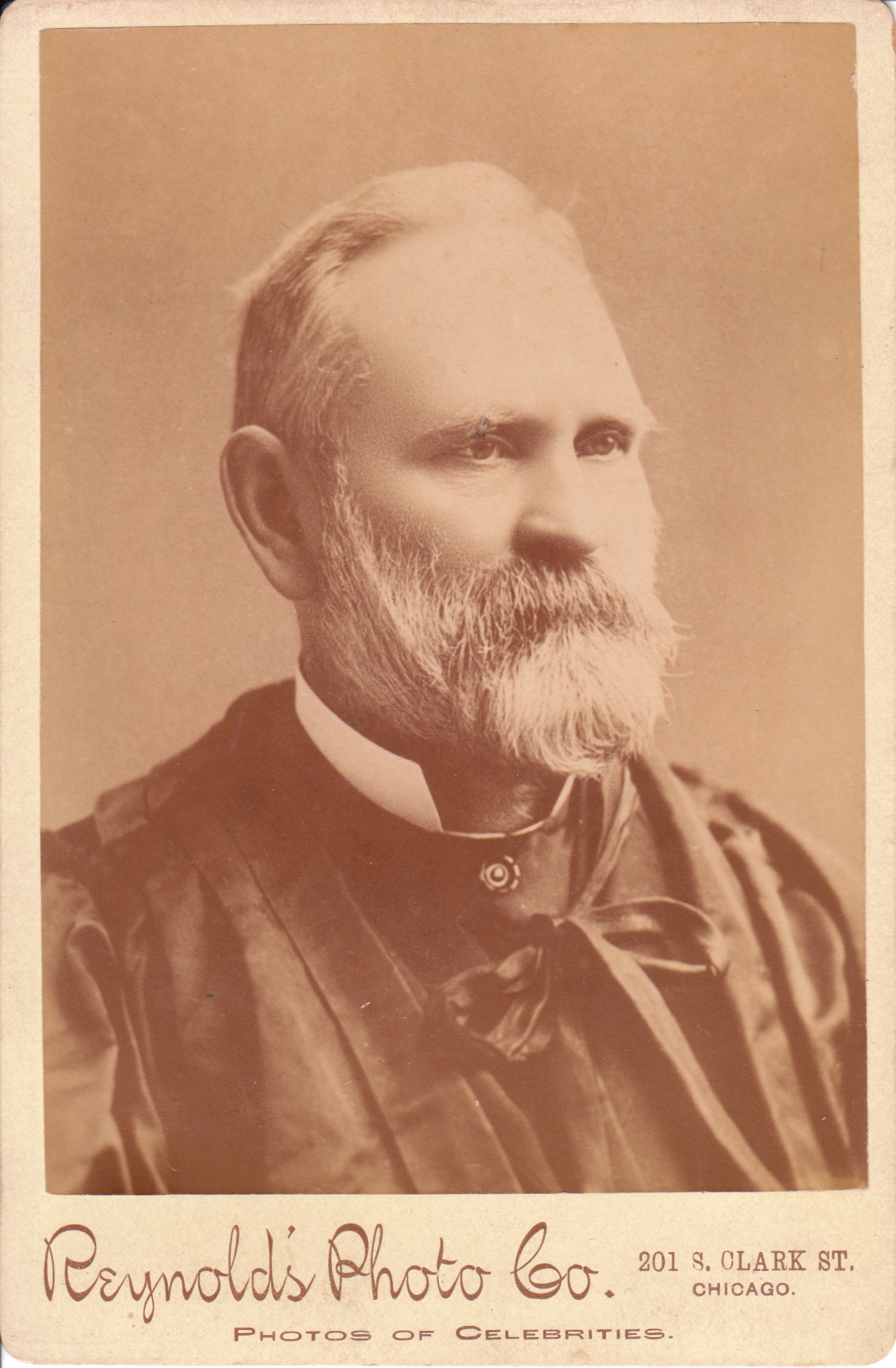
This cabinet card portrait features Stanley Matthews (1824-1889).  This image was produced by the Reynolds Photo Company of Chicago, Illinois, and shows Matthews wearing his judicial robe.  The photograph was part of the “Photo of Celebrities” series. Matthews served as a Supreme Court Justice from 1881 until his death. He was appointed by President James Garfield. At the time of his appointment he was a United States Senator from Ohio. Matthews was born in Cincinnati, Ohio. He attended Kenyon College and then practiced law in Ohio, and later on, in Tennessee. He was the editor of the Cincinnati Herald for two years. He served in the Ohio State senate and then became a US Attorney until 1861 when he resigned to become a Lieutenant Colonel in the 23rd Ohio Infantry. At the time that Matthews was appointed a Supreme Court Justice, his nomination passed Congress by just one vote. As a judge in the nation’s highest court, he wrote the decision in the Yick Wo vs. Hopkins case. Politicians in San Francisco had passed a law asserting that laundries could not be operated in wooden buildings without a special permit. This permit would be required in addition to the other permits already required. This new law  had much impact considering that ninety-five percent of the city’s laundries were in wooden buildings. Two thirds of these laundries were owned by Chinese businessmen. When the new permits were issued, all non Chinese owners received permits and all Chinese owners were denied the permits. Yik Wo continued to operate his laundry without the permit and was convicted, fined, and later jailed for refusing to pay the fine. His case rose up the hierarchy of courts until it reached the Supreme Court. In his decision, Matthews wrote that the permit statute was discriminatory and that the Chinese laundry owners were entitled to equal protection under the fourteenth amendment of constitution.

JOSIAH BENNETT: STATE SENATOR FROM MASSACHUSETTS

josiah bennet_0001

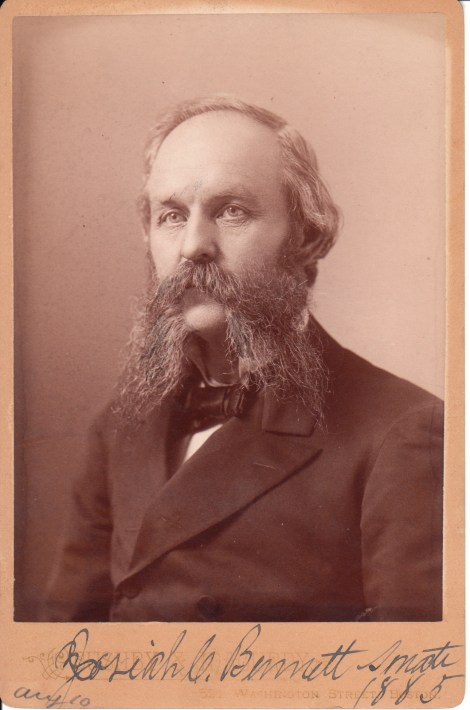
This cabinet card features a portrait of Massachusetts Senator Josiah Bennett. His mustache is very notable and earns him a spot in the cabinet card gallery category “Mustaches (Only the Best)”. Be sure to check out the collection of extraordinary mustaches. This portrait was taken in 1885 by the Bushby & Macurdy studio located on Washington Street in Boston. Asa Bushby was born in South Danvers, Massachusetts in 1834. He was a self taught portrait painter and after returning from the Civil War, he became a photographer. He opened a studio in Peabody, and then moved to Lynn, and later to Boston, Massachusetts. At some point in his career, he partnered with George W. Macurdy. He is listed in the 1889 Boston business directory.  At the end of the 1880’s he moved to Tacoma, Washington and died there in 1897. Civil war buffs may be interested to know that Asa Bushby served in the 1st Regiment Massachusetts Heavy Artillery (company D). He entered, and later left the regiment as a private.  To view more photographs by Bushby & Macurdy, click on the category “Photographer: Bushby & Macurdy”. Josiah Bennett served as a state senator. He was served on a committee that addressed state prison issues. Hopefully, further research will yield more information about Mr. Bennett.

RUFUS B. COWING: NEW YORK CITY JUDGE AND WALL STREET LAWYER

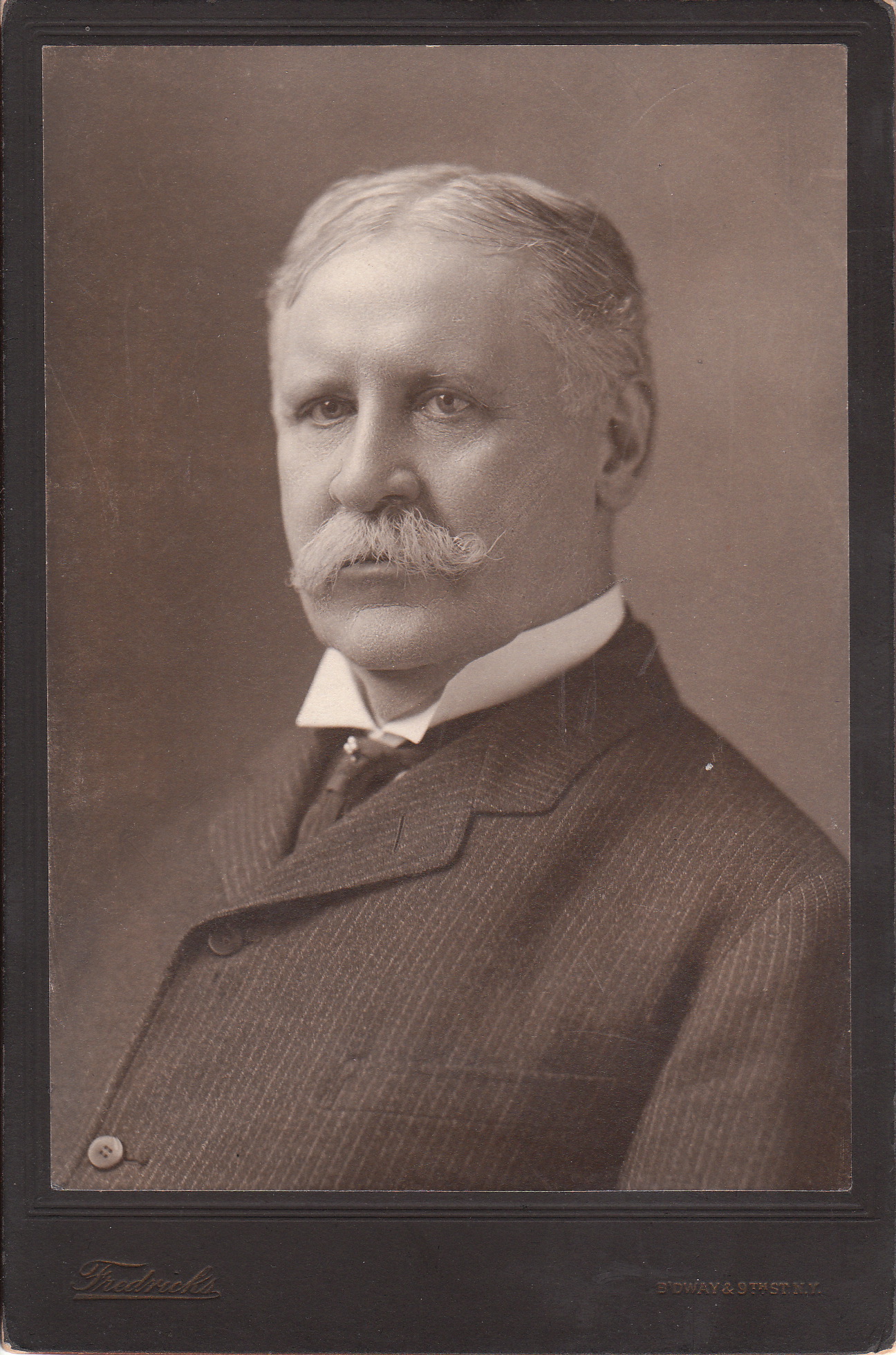
This cabinet card portrait features Rufus Billings Cowing, New York City Judge and Wall Street lawyer. The photograph was published  by Fredricks whose studio was located at Broadway and Ninth Street in New York City, New York. The New York Times (1906) reported Judge Cowing’s retirement from the bench of the Court of General Sessions. He had served for 28 years and had been involved in some sensational criminal and political corruption cases. His career was intertwined with the history of New York City. After leaving the courts, he entered private practice by joining his son’s firm on Wall Street. Cowing was born in Jamestown, New York in 1840. Cowing’s father died when Cowing was just 5 years old. At age 12, he came to New York City where he attended boarding school until he entered the Polytechnic Institute in Brooklyn from which he graduated in 1861. Next, he clerked at a bank for a short while and then decided to enter a law career. He worked for and studied at a New York City law firm for about two years and then entered Harvard University’s Law School, graduating in 1865. He practiced law in New York City and got involved in politics. He had an unsuccessful run for an assembly seat in 1875. He ran as a Republican in a heavily Democratic district and nearly won. Cowing was married twice and had children from both unions. He was married to Hester Tugnot (1866) and Marie Ling (1901). Cowing died in 1920. Charles DeForest Fredricks, the photographer of this image, was a well known New York City photographer who was known to have photographed many celebrities during his career.

PRESIDENT THEODORE ROOSEVELT AND MRS. ROOSEVELT (SOUVENIR OF VISIT- 1902)

This cabinet card features President Theodore Roosevelt (1858-1919) and first lady, Edith Roosevelt (1861-1948). Roosevelt was the 26th President of the United States and served between 1901 and 1909. He was truly a remarkable man. Among the titles that could describe him are; athlete, naturalist, explorer, hunter, author, cowboy, soldier, father, cowboy, and politician. He had a wide range of interests and achievements. As president, Roosevelt was a leader of the progressive movement, was a successful “trust-buster”, created an active government conservation effort, helped develop the Panama Canal, and negotiated a settlement to the Russo-Japanese War (won the Nobel Peace Prize). He was well known for his international relations policy characterized by the slogan, “speak softly and carry a big stick”. Roosevelt’s political career included holding positions as a New York State Assemblyman, member of the Civil Service Commission, New York City Police Commissioner, Assistant Secretary of the Navy, Governor of New York, and Vice President under William Mckinley. Upon Mckinley’s assassination, Roosevelt became the President of the United States. Roosevelt was a busy and productive man. Despite all the aforementioned activities, he also had a military career. He led a regiment of soldiers during the Spanish American War. He helped form a unit called “The Rough Riders”. The Rough Riders included an interesting combination of soldiers, including many cowboys, and many ivy leaguers. The unit was very successful and fought valiantly during the war. Pictured alongside Roosevelt on this cabinet card is his first lady, Edith Roosevelt. She was Roosevelt’s second wife; his first wife had died. Interestingly, Edith and Teddy were childhood friends and playmates. In fact they were next door neighbors while growing up in New York City. She was best friends with Roosevelt’s sister and even attended Roosevelt’s first wedding. Edith Kermit Carow and Theodore Roosevelt had five children. The caption on this cabinet card raises some interesting questions. This cabinet card was given out, or sold, as a souvenir. What event or place used the photograph as a memento? What is the significance of the year 1902? Perhaps a visitor to this site will have some knowledge they can share to address these questions.   (SOLD)

CHARLES J. FOLGER: SECRETARY OF THE TREASURY UNDER PRESIDENT CHESTER ARTHUR

UThis cabinet card features Charles James Folger (1818-1884) who was an American lawyer and politician. He served as Secretary of the Treasury under President Chester Arthur. Folger was born in Nantucket, Massachusetts but lived most of his life in Geneva, New York. He attended Hobart College. His political career includes judgeships and some terms in the New York State Senate (1862-1869). While in the state senate, he served four years as President Pro Tempore. In 1869 he left state government after being appointed by President Ulysses Grant as the Assistant U.S. Treasurer. In 1870, he became a judge of the New York Court of Appeals and eventually became the Chief Judge. H eft the judgeship in 1881  to serve as Secretary of the Treasury, and during that tenure, he ran for Governor in New York against future U.S. President, Grover Cleveland. Folger had many accomplishments and he has just added a new honor to his legacy. Folger’s wonderful muttonchops, qualifies him to join the facial hair elite in the category of “Beards (Only the Best)”. Click on the category to view unusual styles of facial hair. This portrait was photographed by Falk, a well known New York City, celebrity photographer. To view other photographs by Falk, click on the category “Photographer: Falk”. A stamp on the reverse of  this cabinet card reveals that it was formerly owned by Culver Pictures of New York City, New York. Culver Pictures has been collecting photographs and illustrations from the 19th and first half of the 20th century, since 1926. These pictures are used in books, films, and other forms of media. At the time that this cabinet card was stamped by the company, Culver Pictures was located in New York City.

FINNISH PHOTOGRAPHER KARL EMIL STAHLBERG’S MYSTERY PORTRAIT OF PENSIVE GENTLEMAN (HELSINKI, 1894)

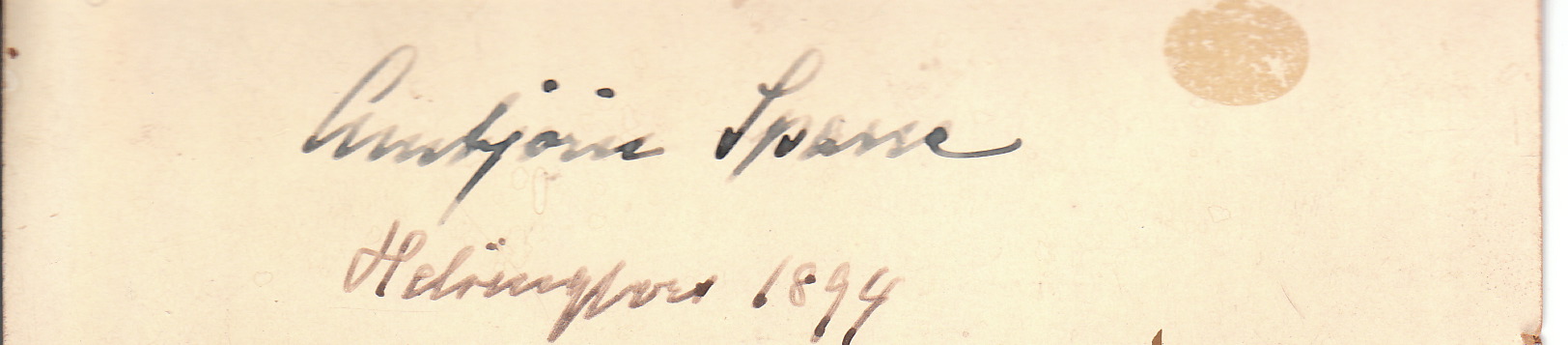
The Cabinet Card Gallery needs help identifying the gentleman in this photograph. The pensive man in this image was photographed by Karl Emil Stahlberg (1862-1919) in Helsinki, Finland. The cabinet card is exceptionally large, 5 1/2″ x 8 1/2″ and was photographed in 1894. .  Stahlberg was a Finnish photographer and engineer. Stahlberg was a man for all seasons. In 1904 he opened Finland’s first film theatre. He was also the nations first film producer. He initially specialized in short documentaries. He later produced Finlands’s first fictional film and hired painter Louis Sparre to direct the film. Stahlberg was the cousin of Finland’s first President, Kaarlo Juho Stahlberg. The reverse of this cabinet card may offer clues as to the identity of the gentleman pictured in the photograph. In pencil on the back of the card is the inscription “Greve  (unclear word) Sparre”. There is a second inscription on the reverse of the card; and a copy of this inscription is provided above. Is the subject Louis Sparre or one of his relatives?  Any help in identifying  the subject of this photograph would be appreciated.          UPDATE:       Thanks to the cabinet card gallery’s vast research department (in other words, the sites visitors), the gentleman in this photograph appears to have been identified. Check out the comment section to see how a visitor identified the gentleman in less than 24 hours time after the photograph was posted. The gentleman is not just a gentleman; he is also a Swedish Count. Ambjorn Pehr Sparre (1828-1921) was the son of Pehr Sparre, a Colonel and author. Ambjorn Pehr Sparre was the father of artist Louis Sparre.  He participated in Parliament, headed a bank note paper mill, and between 1855 and 1871, established a printing house which printed stamps for the national post office. He is associated with the first Swedish hydrogen balloon ascent. He was an inventor whose work was done in the areas of security paper, weapons, bicycles, flying machines, underwater vehicles as well as a number of other areas.

LORD WILLIAM CAVENDISH-BENTINCK, 6TH DUKE OF PORTLAND (1857-1943)

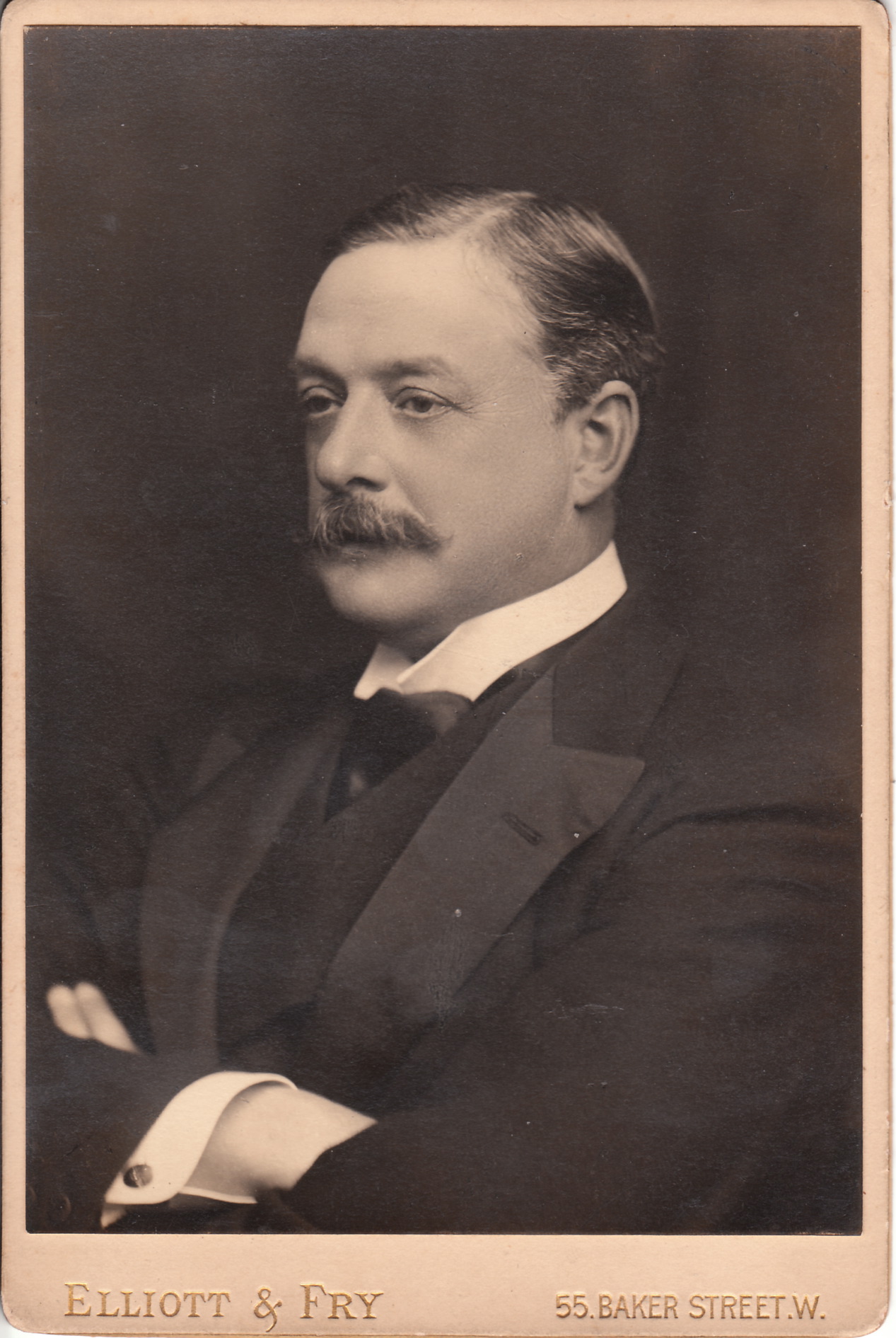
Lord William Cavendish-Bentinck was the 6th Duke of Portland and was a conservative British politician. He held office as Master of the Horse under Lord Salisbury (1886-1892 and 1895-1902) and under Arthur Balfour (1902-1905). From 1898 until 1939 he served  as Lord Lieutenant of Nottinghamshire. At the coronation of King George VI he carried the crown of Queen Elizabeth. He was also known for owing a stable of Thoroughbred race horses which included some well known and successful horses. The photographic studio that produced this Cabinet Card is Elliott & Fry of London, England.  This Victorian photographic studio and photographic film manufacturer was founded in 1863 by Joseph John Elliott and Clarence Edmund Fry. For an entire century the studio took and published images of leading Victorian luminaries from the fields of science, public service, art, politics as well as celebrities of the day. Famous Edwardian photographer working for the studio included Francis Henry Hart and Alfred James Philpott. Most of the early negatives from this studio were destroyed in the bombing of London during World War II. The surviving negatives are held by Great Britain’s  National Portrait Gallery.