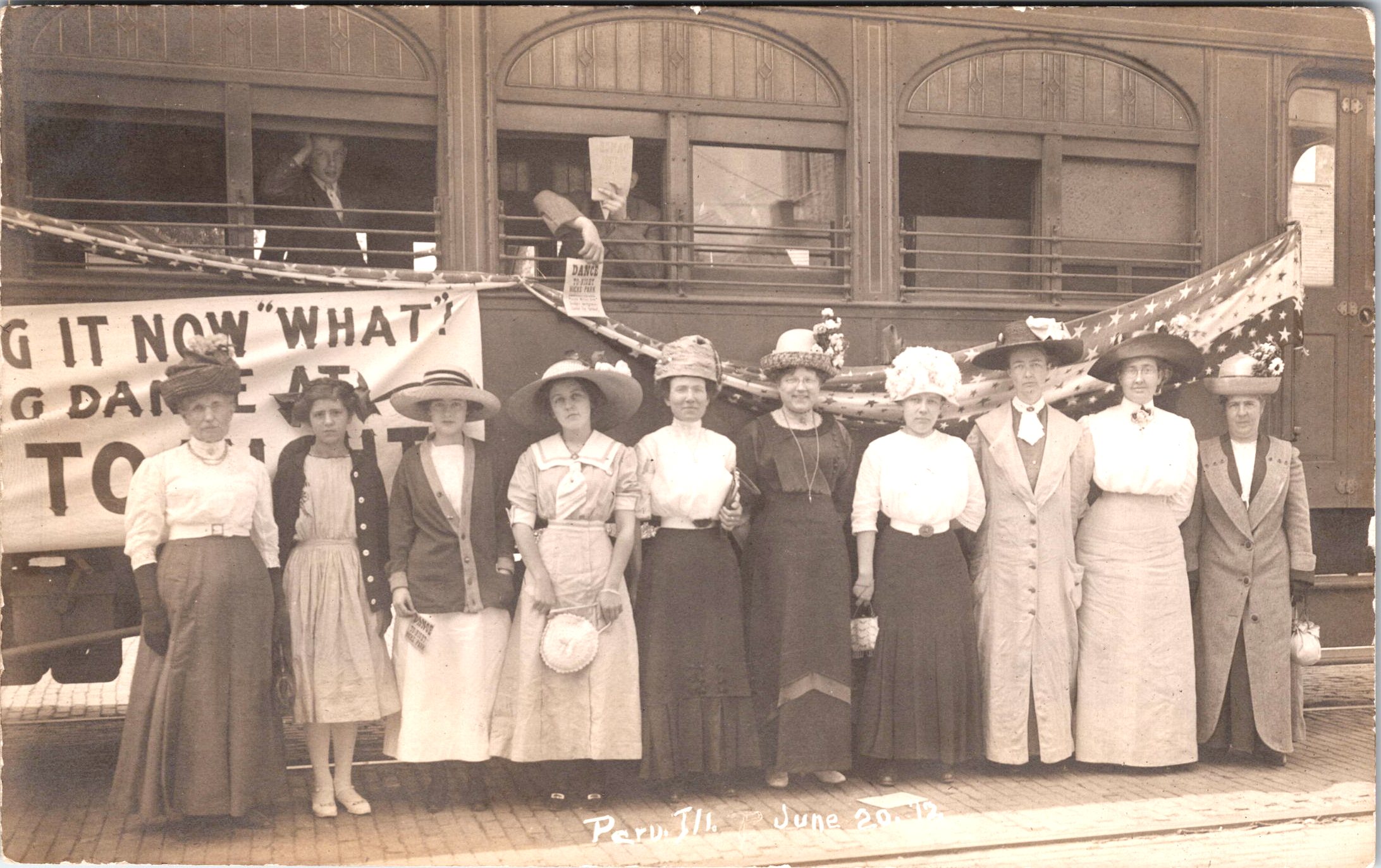
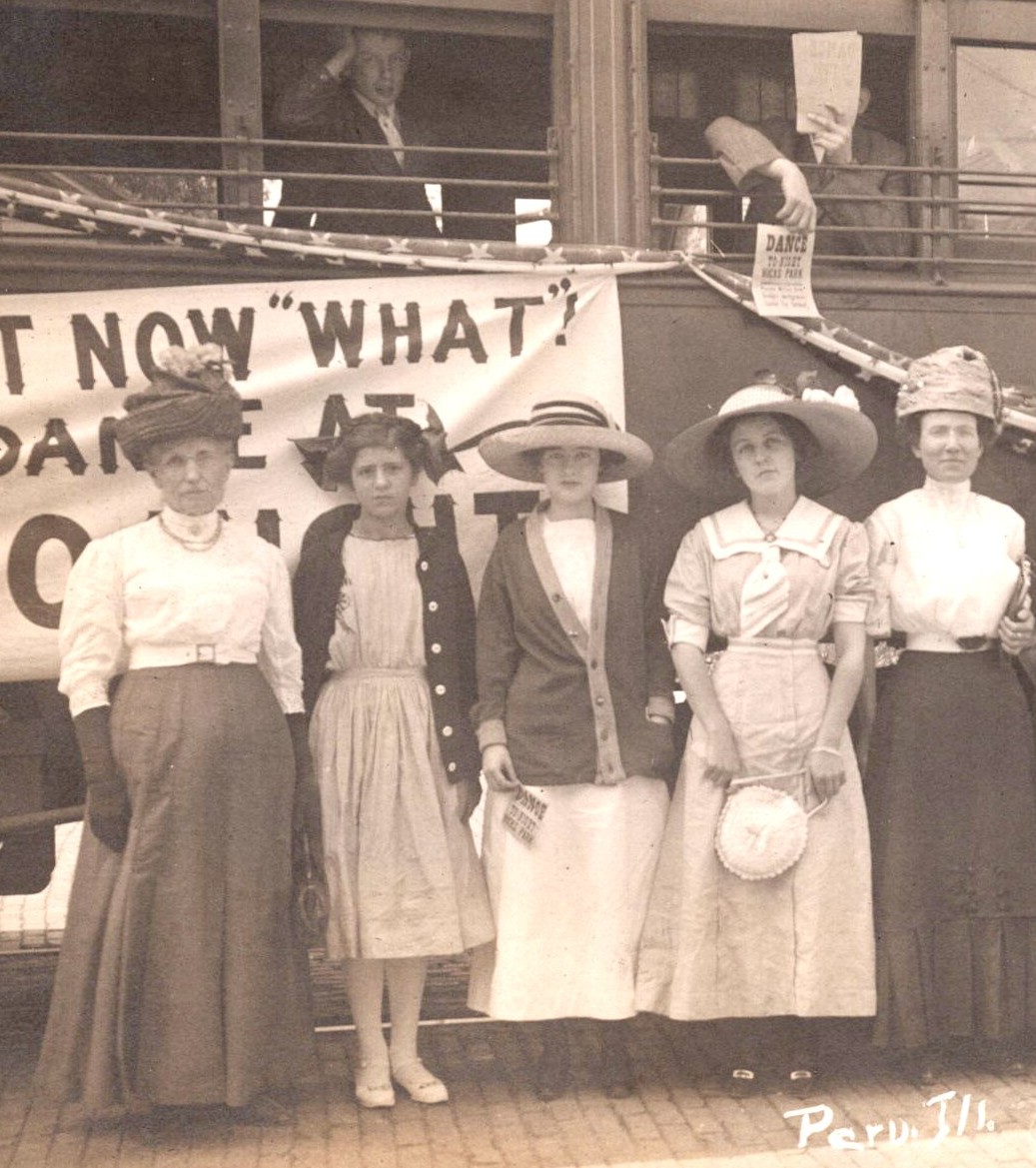
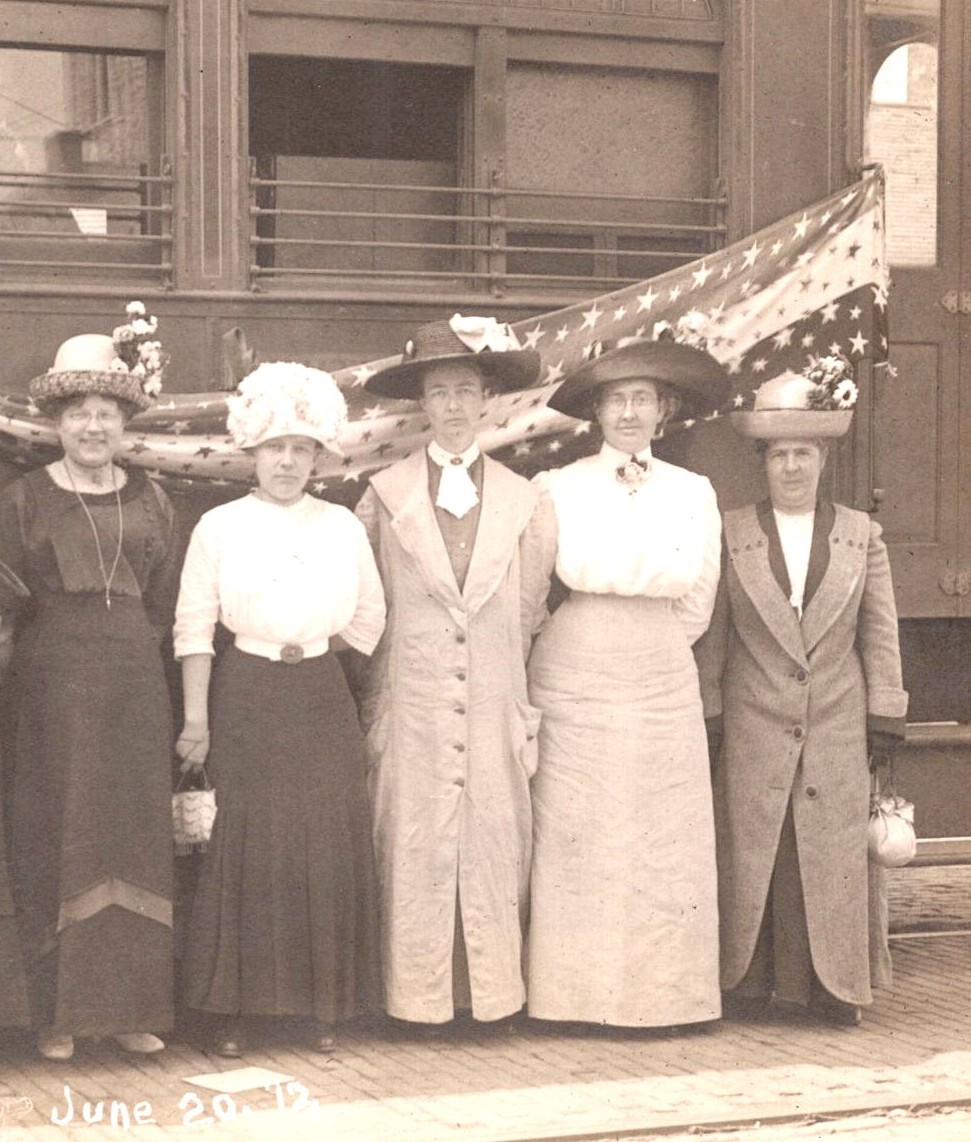
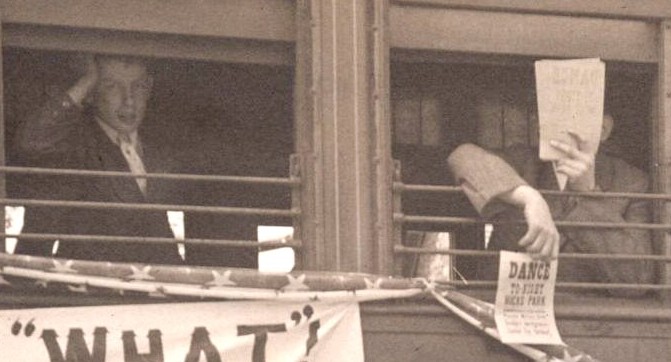
This original real photo postcard (RPPC) captures a wonderful street-scene moment in Peru, Illinois, dated in white script “June 20, 1912.” The image shows a line of well-dressed women posing in front of a decorated railcar, each wearing distinctive Edwardian-era hats, gloves, skirts, and jackets typical of the early 1910s. Their clothing reflects the transitional fashion just on the cusp of the WWI era—wide-brim hats, tailored skirts, puffed sleeves, and light summer fabrics. Some of the women hold small handbags or parasols. Behind them, men peer out from the open windows of the train car, adding a sense of liveliness and curiosity to the scene. One man salutes the camera; another hides behind a sheet of paper, giving the photograph an unexpectedly humorous human touch. A large banner hangs across the car, promoting what appears to be a dance or social event, and a patriotic American flag drapes along the side, suggesting a festive or community gathering. Another man holds a handbill announcing a dance at “Nicks Park”. The festive bunting and patriotic decorations hint at a local celebration, possibly connected to a summer social, excursion, or holiday event. The handwritten date (1912) anchors the postcard firmly in the pre-war Edwardian period, and the setting—an outdoor rail platform with the ornate wooden passenger car—captures small-town American life with charm and authenticity.The verso features a standard divided-back postcard layout, typical of 1907–1914 production, with no writing or postmark. (SOLD)

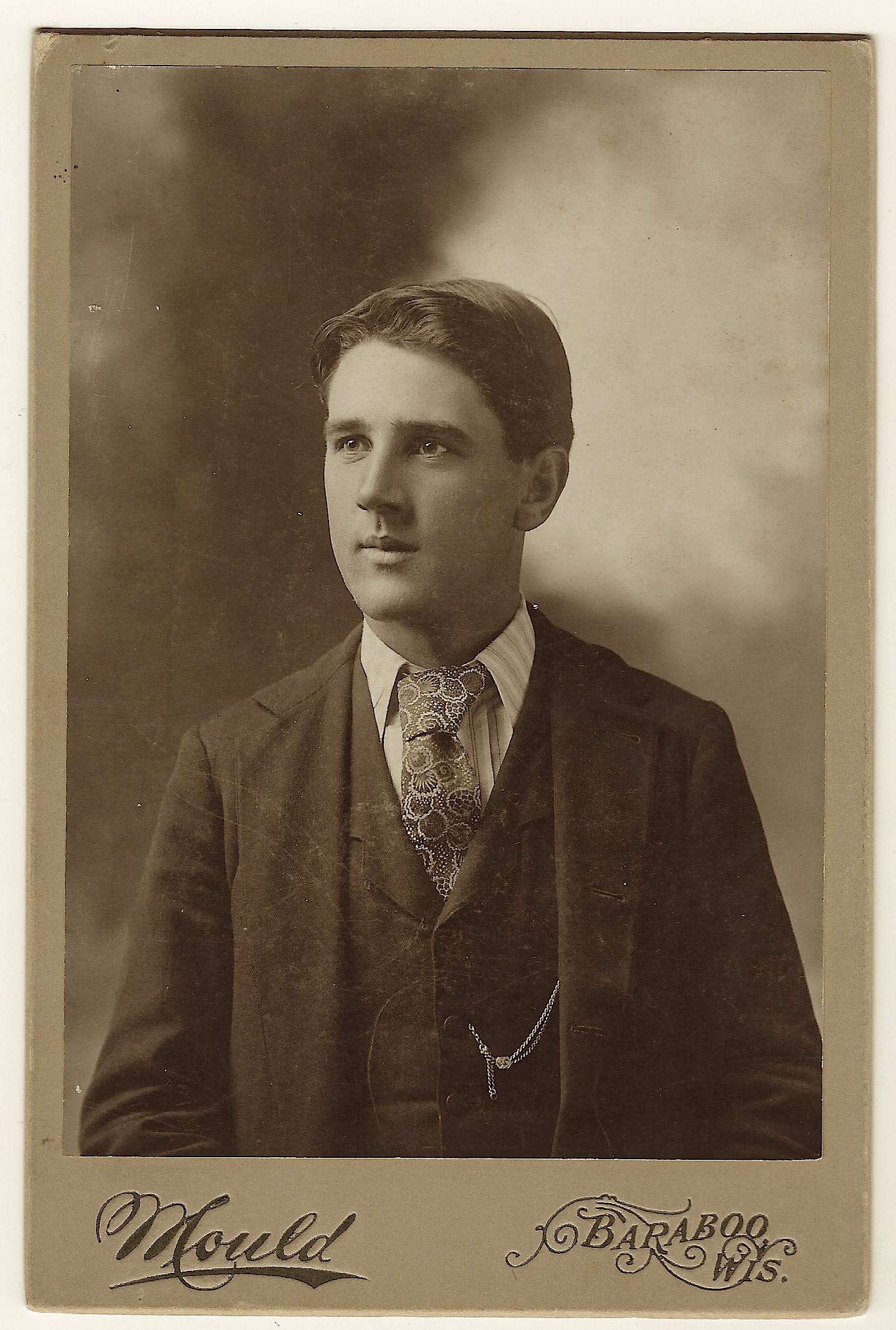
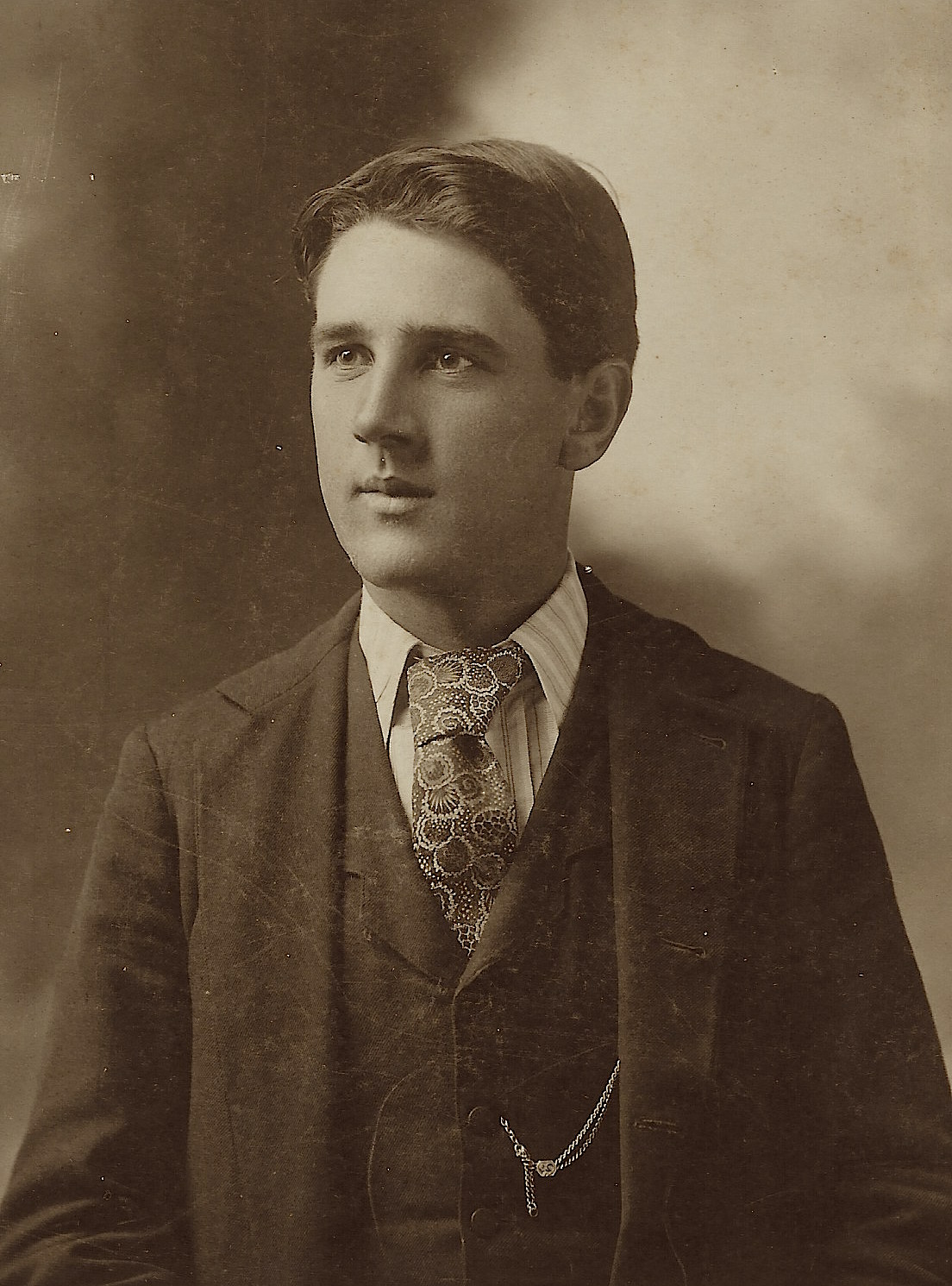 The handsome young man in this photograph is named Howard Briscoe. His name is inscribed on the reverse of this cabinet card photo. Briscoe lived in Baraboo, Wisconsin. He lived there all, or most of his life. Briscoe was born in 1878. His father was a miller by trade, Briscoe’s wife was named Julia Simon Briscoe. Howard Briscoe worked as a carpenter for a railroad company. The photographer of this image, Mr. Mould, is mentioned in a number of photographic journals. He placed an ad for his studio in a book about Sauk County, Wisconsin (1891). The Photographic Times (1898) reports on his appointment to a lobbying committee of the Photographers Association of Wisconsin. The Encyclopedia Dubuque (1911) reveals that Sim Mould operated a photographic studio at 107 Main Street in Dubuque, Iowa. The cabinet card gallery has other photographs by Mould, Place his name in the search box to view these other images. The town of Baraboo is situated on the Baraboo river. The town was settled by Abe Wood and originally called Adams. In 1852 it was renamed Baraboo. In the town’s early history it became the home of several sawmills. In the nineteenth century the town served as the headquarters of several circuses, including Ringling Brothers. Baraboo became known as “Circus City”. SOLD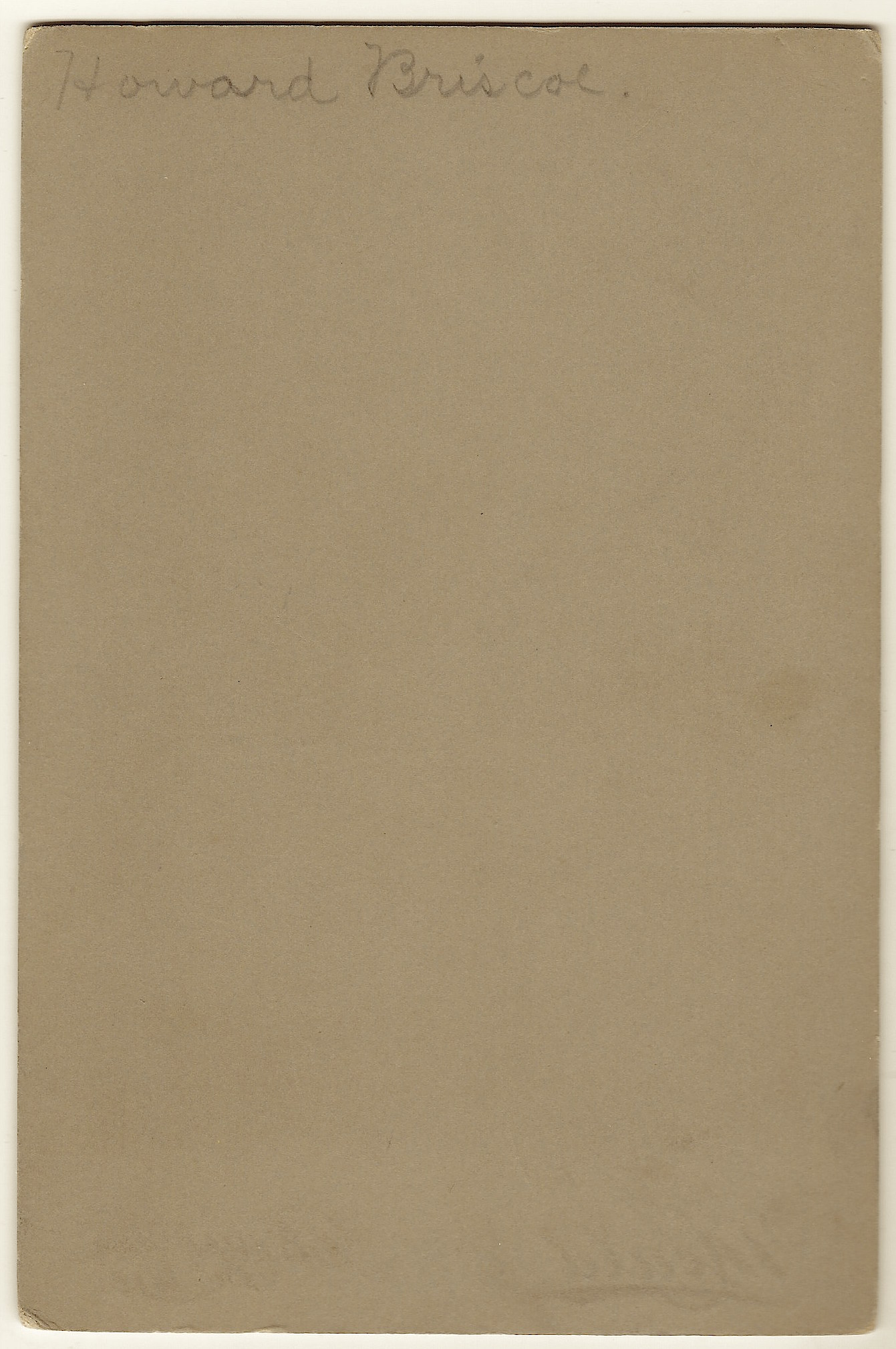






 THE CABINET CARD GALLERY