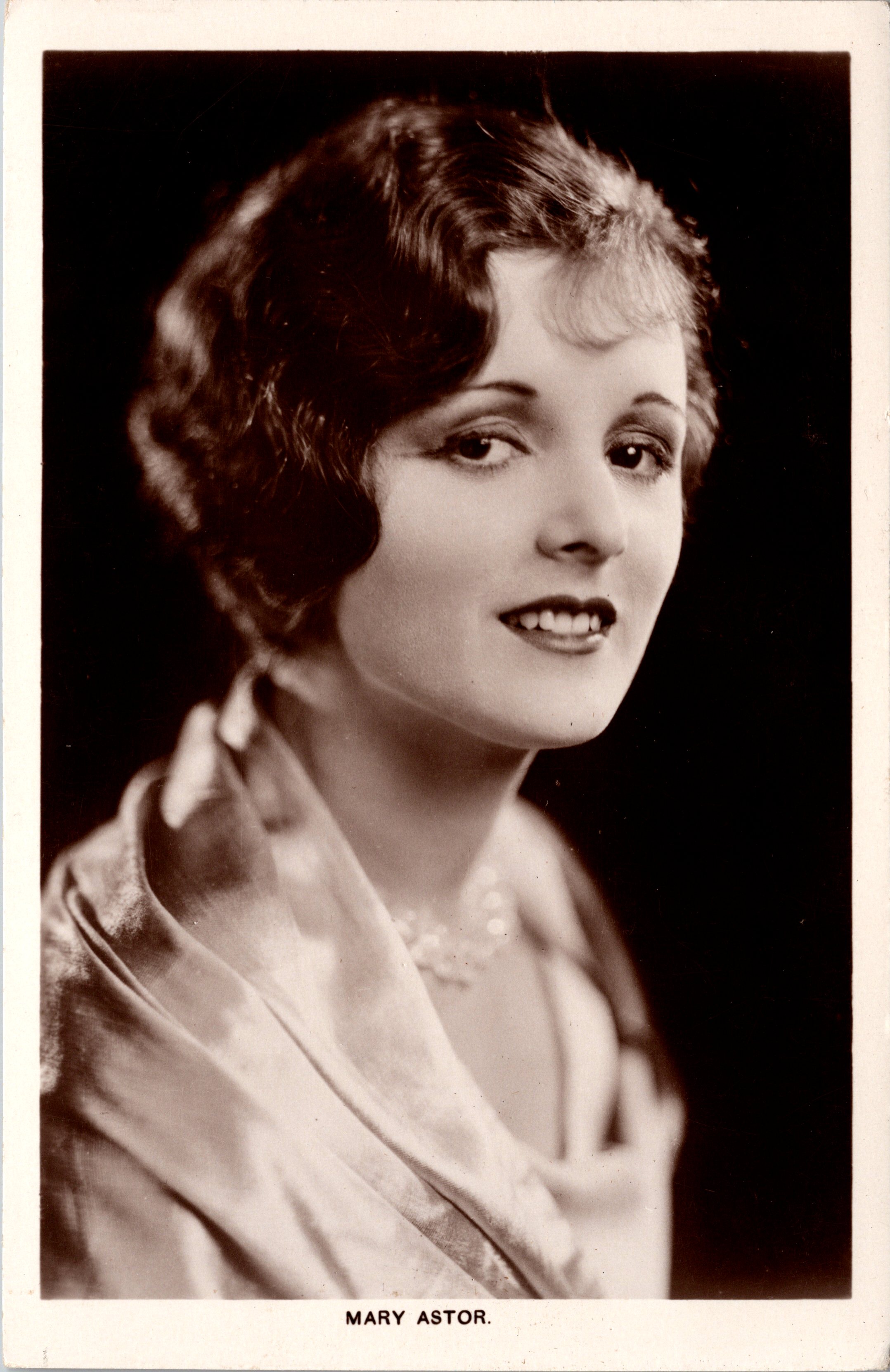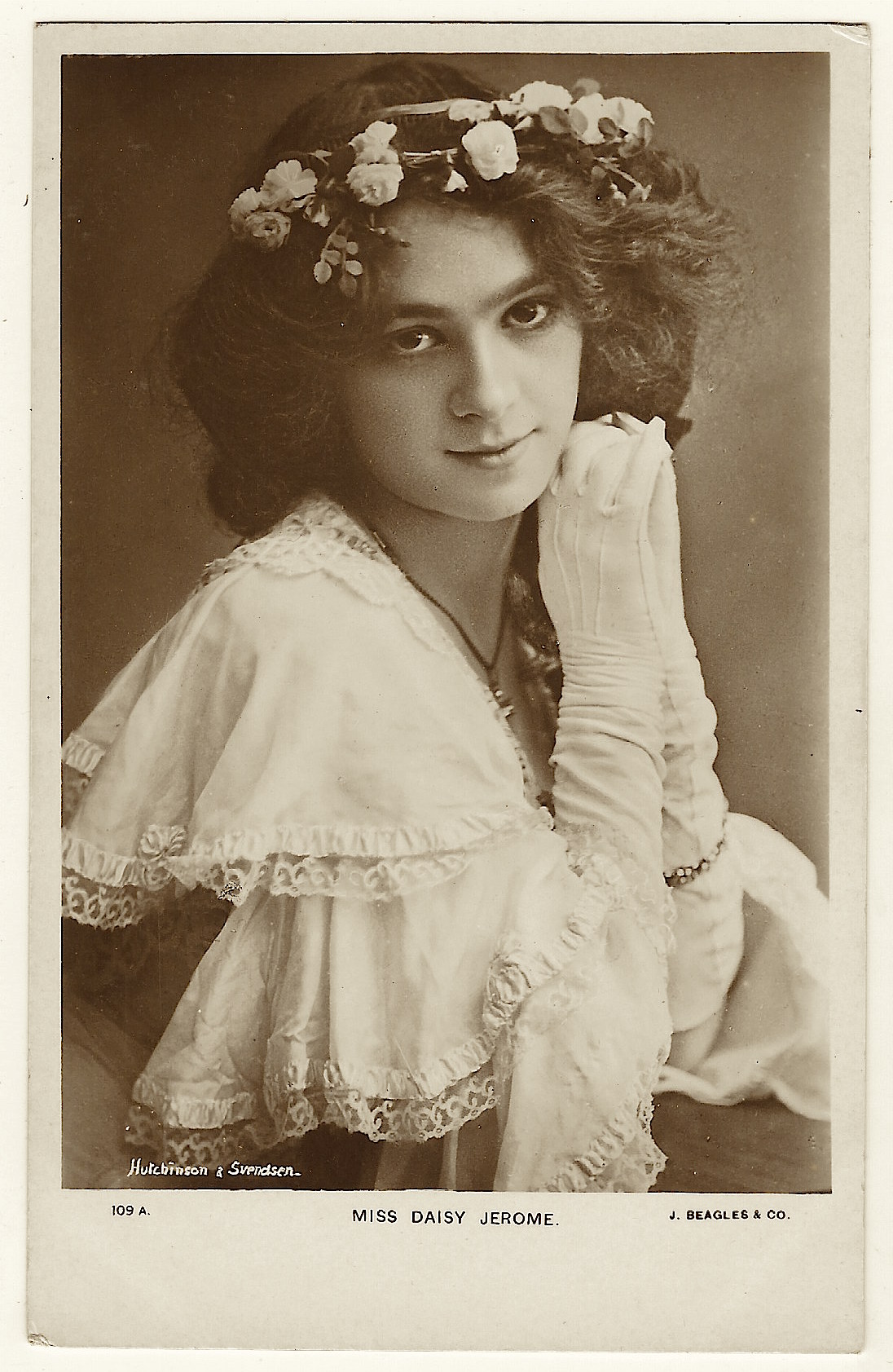
DAISY JEROME : SCANDALOUS STAGE ACTRESS WHO WAS VIEWED AS RAUCOUS, VULGAR, AND “AN ACQUIRED TASTE”

POSTCARD 1 (SOLD)

POSTCARD 2

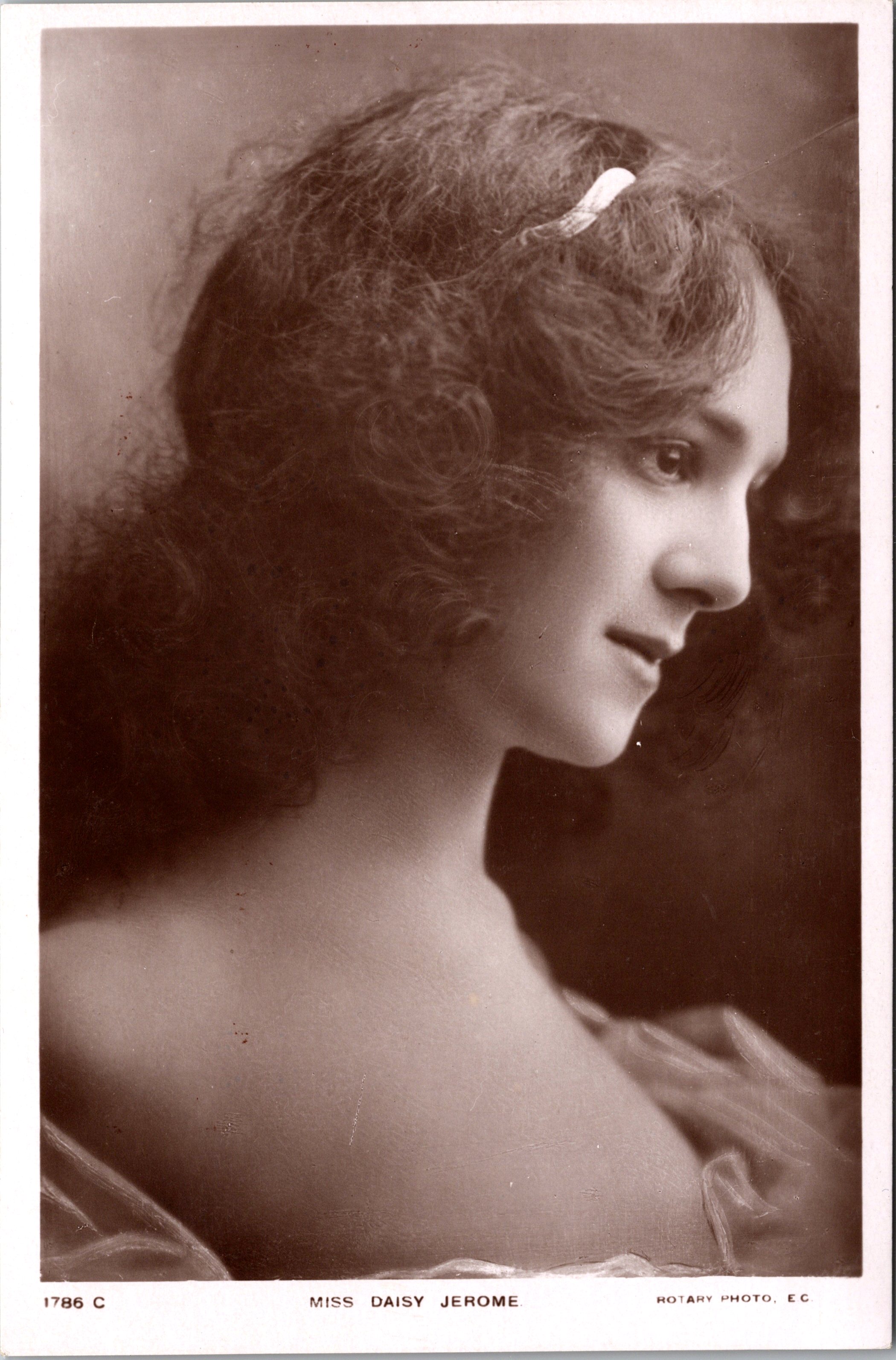
This rare vintage real photo postcard features the red headed actress that electrified the Australian stage. She was noted for her famous wicked wink. The life and times of Daisy Jerome can best be described as scandalous. She arrived in Australia in 1913 for a three year stage tour.  Feminism was rising in the western world. Suffragettes were marching for the right to vote. Women were smoking, driving, wearing less conservative fashion, and even dancing the tango with it’s sexual overtones. She arrived in Adelaide adorned with an excess of jewelry. She was born in America but raised in England. Her place of birth was New York and she was born Daisy Witkowski in 1886. Daisy reported that she was raised in a multilingual household that had been visited by Presidents Lincoln, McKinley, and Roosevelt. After experiencing financial problems, her father moved the family to England. Money was needed and Daisy followed her sister onto the stage. She played the Palace and toured with companies that gave her a chance to do comedic singing and pantomime. Her performances were considered to be amusing and irreverent. She was a comedienne. Her humor has been described as “vibrant” and “wicked”. Daisy was described as “feisty”, “cunning”, and “independent”. She was small and dainty and had compelling eyes and an expressive face. Her performances had a risque tone and she had a hoarse, sensual voice. She could toe dance and wooden shoe dance, but was most known as a mimic and comnic singer. After a year of marriage, she deserted her first husband to live with another man. In 1910, she took a journalist to court for libel. The reporter had accused her of performing encores when audiences had not requested them. She claimed that her professional reputation had been damaged. The court case was a circus. The defense ridiculed one of her songs which caused her to break into tears in the witness chair. She won the case but was barely compensated. When she began her tour of Australia, she was recognized as raucous, vulgar and “an acquired taste”. She quickly charmed those that were hesitant to appreciate her and she soon received a warm welcome and a complimentary nickname, “The Electric Spark”. Her carrot red hair became the subject of much debate. She claimed it was her natural color but most people were not believers of her claim. One day, an Australian comedian told her that a gentleman had taken offence to her hair. The comedian said that the offended man would visit her that night. The comedian then informed the local fire chief that there was great risk of fire during Daisy’s time on stage. The worried fireman came to the theatre and when he saw Daisy’s red hair, he realized he had been a victim of a joke. He kept the joke going when he said that he agreed there was risk of fire and he ordered the scenery to be fireproofed immediately. During Daisy Jerome’s era, there was a bias against redheads. They were considered to be hot tempered and sexually wild and uninhibited. Her theater/music hall background only magnified some people’s negative view of Daisy. After completing her touring contract in Australia, she signed another one. This time she performed on a vaudeville stage which allowed her to showcase her bawdy songs. In 1914 she sang a feminist style song called “The Press, the Pulpit, and the Petticoat”. This song argued that women were more powerful and influential than the media and the church. Daisy was a woman who had unconventional ideas. She would not restrained by political correctness. She stated in a 1914 interview that “I refuse to regulate my acts to accepted rules of conduct”. Despite her views, she remained popular with Australian audiences. She left Australia in 1916 and returned in 1922 for another successful tour. Later, she was involved in another court case which this time involved her suing her maid over missing jewels. With the arrival and subsequent popularity of films, Daisy Jerome faded out of the public’s focus. Two photo portraits of Daisy Jerome can be found in England’s National Portrait Gallery.
 
Postcard 1 was published by J. Beagles & Co. of London, England as part of a series (No. 109 A). The company was started by John Beagles (1844-1909). The company produced a variety of postcards including an extensive catalog of celebrity (stage and screen) portrait postcards. After Beagle’s death, the business continued under it’s original name until it closed in 1939.Miss Jerome’s portrait was taken by the Hutchinson & Svendsen studio. The National Portrait Gallery asserts that this pair of photographers were active in London between 1905 and 1906. This vintage photo postcard is in excellent condition (see scans). This postcard portrait of Daisy Jerome is absolutely beautiful and very uncommon.  (SOLD)                                     
Postcard 2 was published by Rotary Photo (England) as part of a series (No. 1786 C). This vintage photo postcard is in good condition (see scans). 
5172_0001-1

Buy this Vintage Real Photo Postcard (includes International shipping outside the US) #5172

To purchase this item, click on the Pay with PayPal button below

$22.00
5172_0001-2

Buy this Vintage Real Photo Postcard (includes International shipping outside the US) #5172

To purchase this item, click on the Pay with PayPal button below

$32.00

POSTCARD 1
POSTCARD 2

MARY ASTOR : PRETTY FILM, TELEVISION, AND STAGE ACTRESS : TRAUMATIZED BY FAMILY

POSTCARD 1

POSTCARD 2

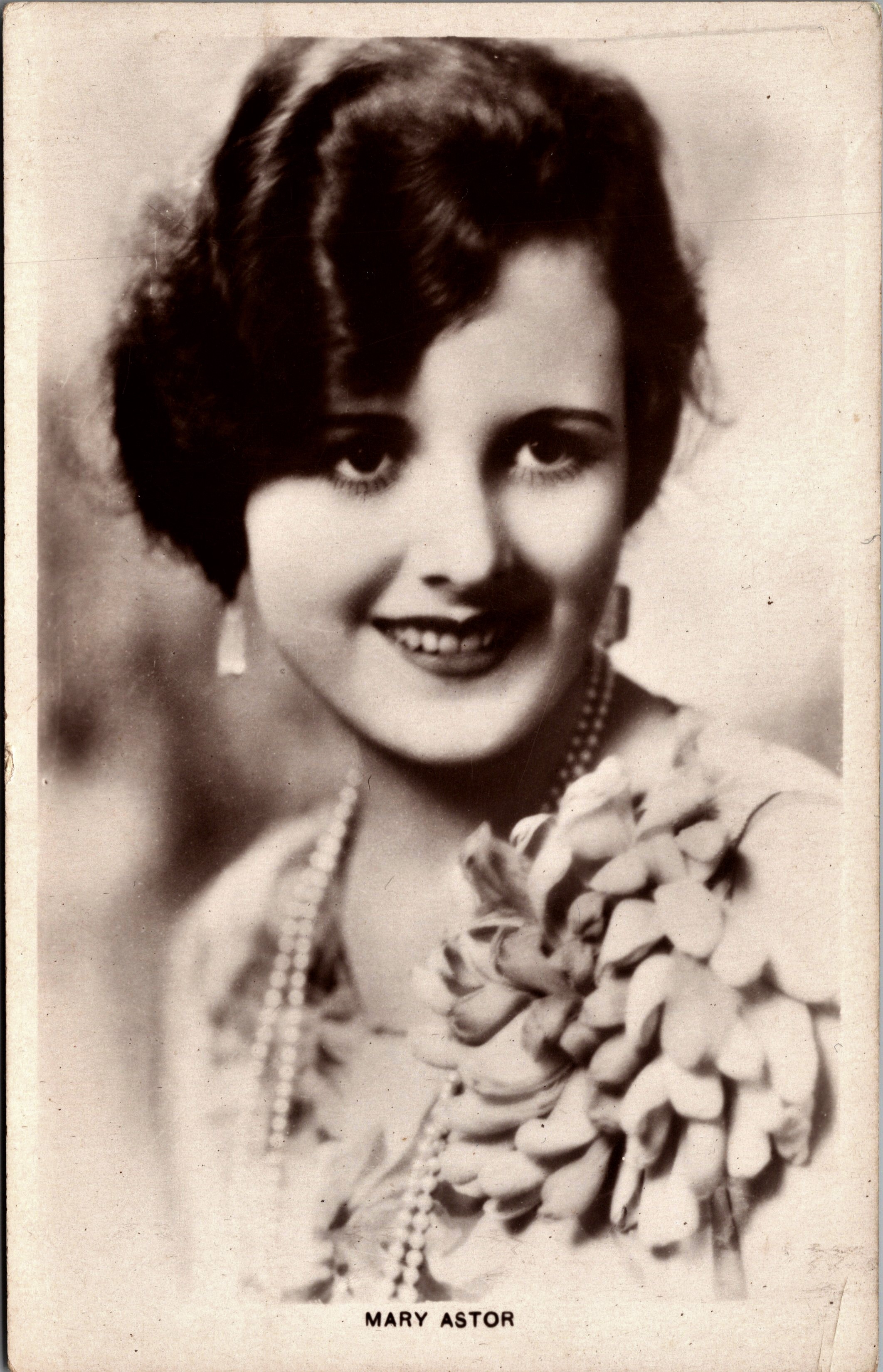
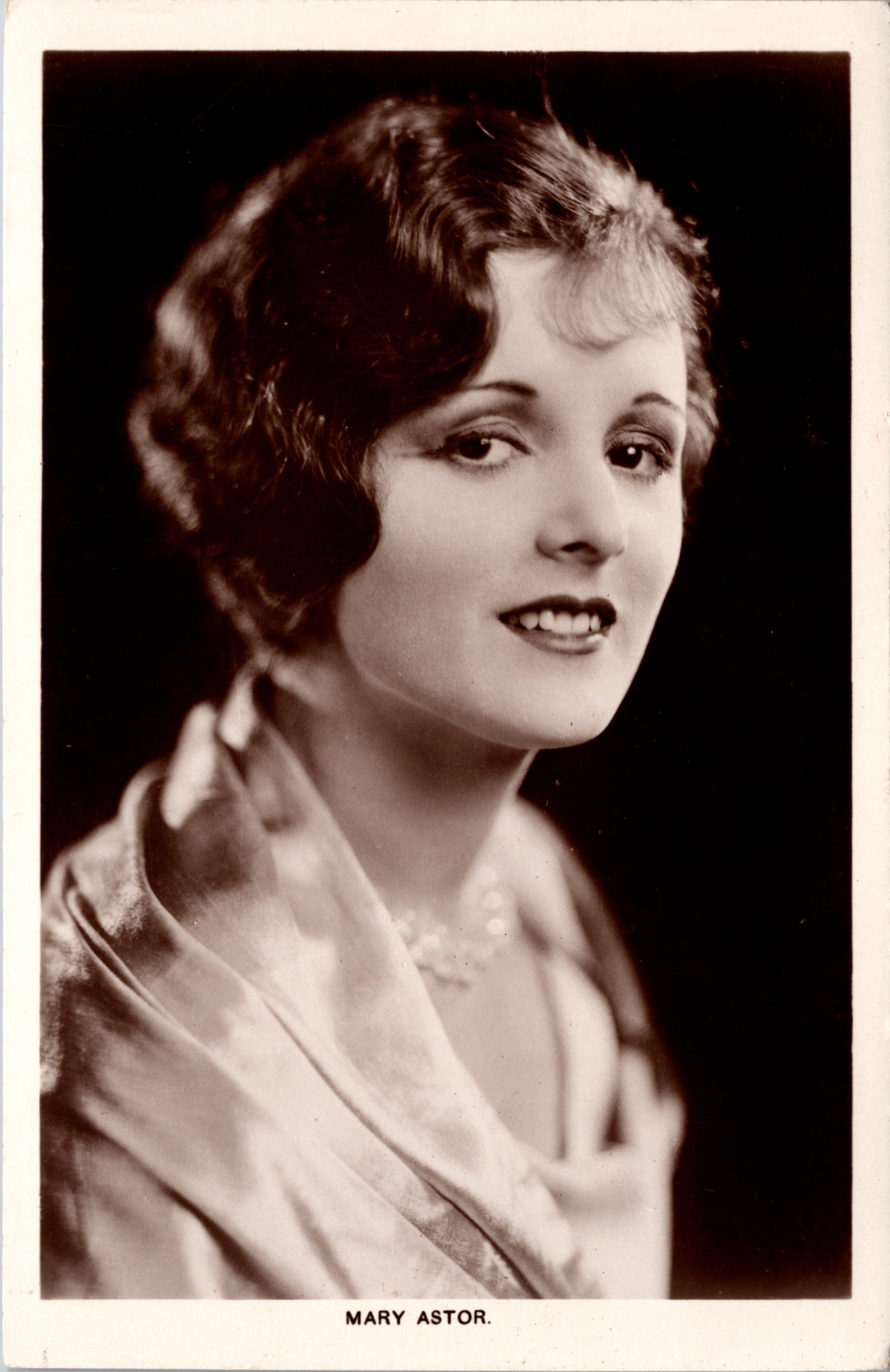
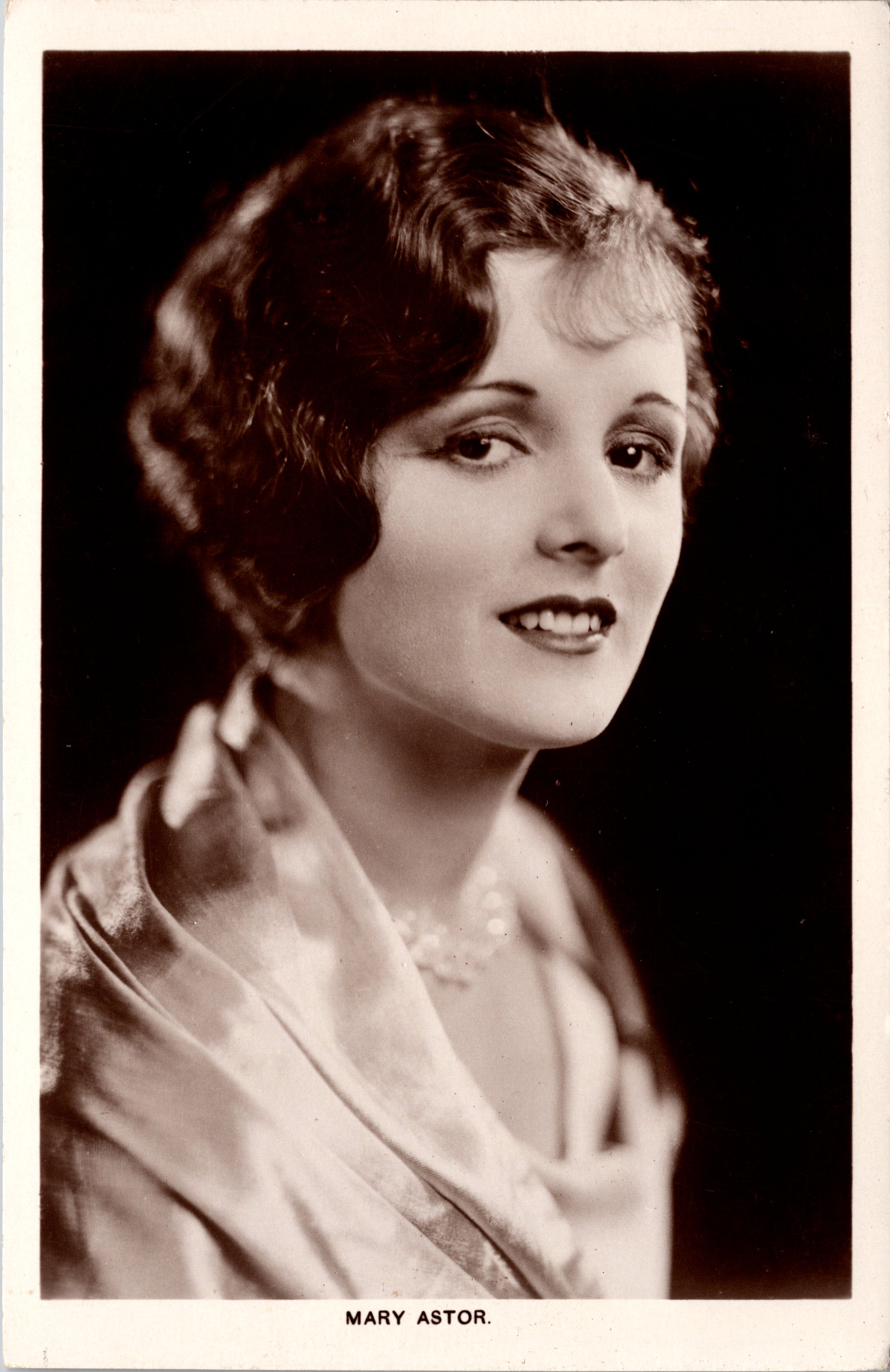
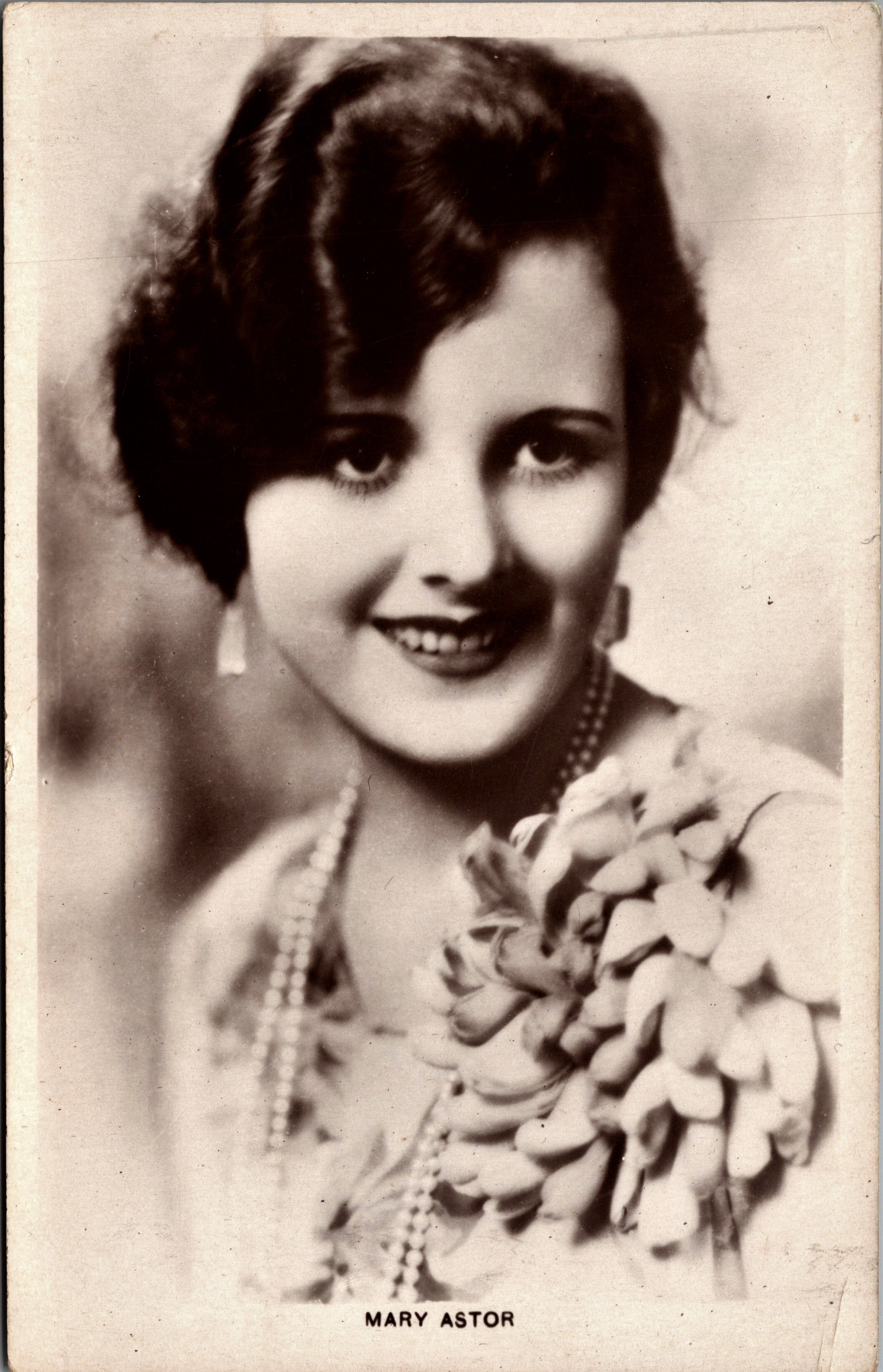
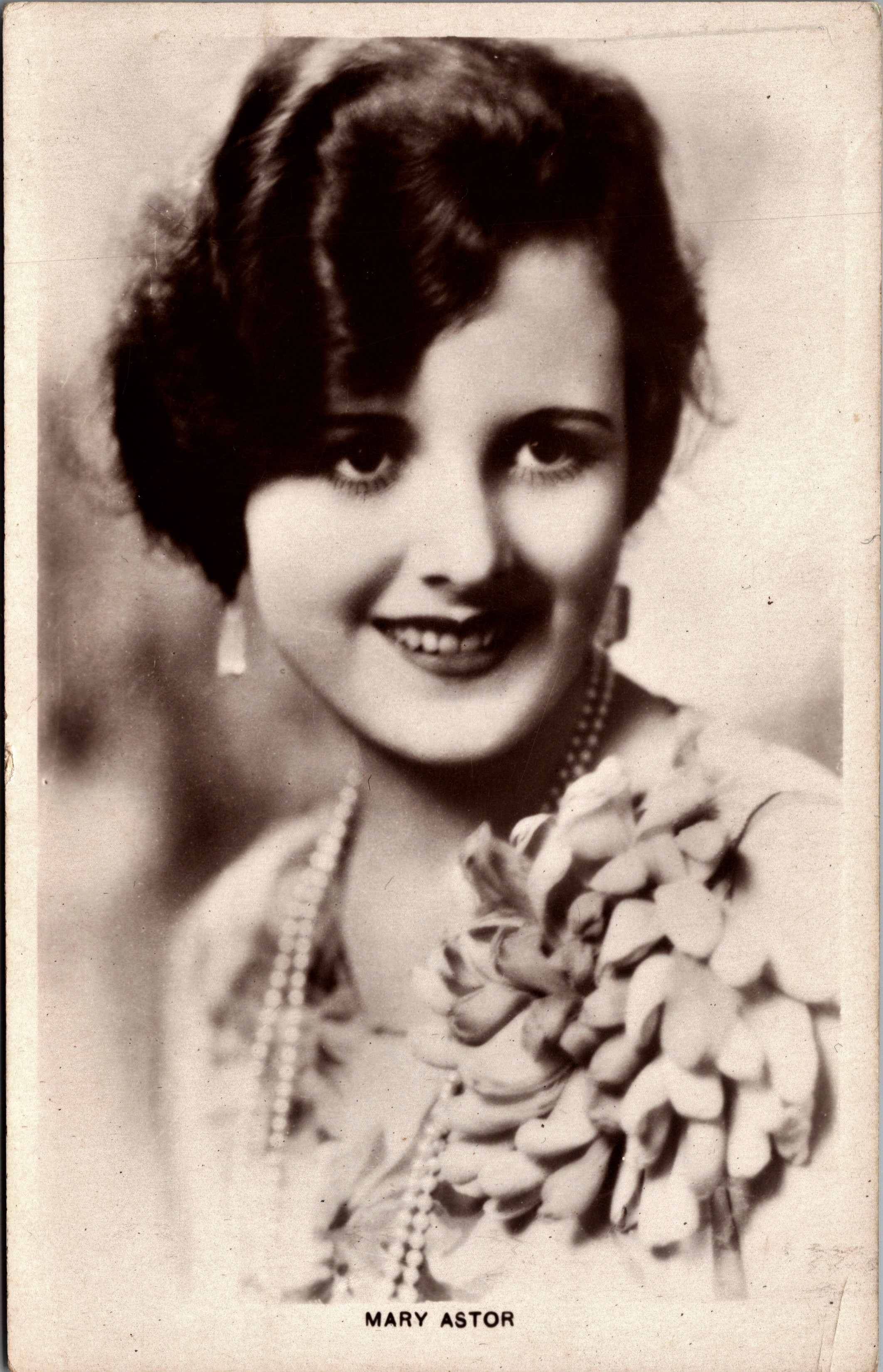
This vintage real photo postcard features American film, stage, and television actress and musician, Mary Astor (1906-1987). She played many memorable roles but she is most associated with her performance in “The Maltese Falcon” (1941). Astor also wrote five novels and an autobiography. She began her film career as a teenager by appearing in silent movies during the early 1920’s. Her career continued with the introduction of “talkies”. In 1936, Astor’s career was almost ruined by a scandal in which she had an affair with playwright George Kaufman. A custody fight with her ex-husband stigmatized her as being an adulterous wife. She managed to overcome the poor PR and in 1941, won an Academy Award fo Best Supporting Actress in “The Great Lie”.  Astor was born in Quincy, Illinois. Her father was a German teacher and her mother taught drama and elocution. Astor was home schooled by her father who also taught her the piano. In 1919, she sent her photo to a beauty contest in Motion Picture Magazine. She was chosen as a semi finalist. When she was fifteen, she and her family moved to Chicago where she took drama lessons and performed on the stage. She and her family moved to New York City so she could act in motion pictures. A Manhattan photographer asked Astor to pose for him and the resulting photographs led her to be signed by Paramount pictures. In 1921, at age fourteen, she made her film debut. In 1923, she and her family moved to Hollywood. During the filming of one movie, the underage actress was wooed off set by the significantly older actor, John Barrymore. She became a “WAMPAS Baby Star” in 1926. In Hollywood, her controlling parents kept her a virtual prisoner and lived lavishly off her earnings. They gave her a five dollar a week allowance while she was earning 2500 dollars a week. Her father was emotionally and physically abusive. She did not gain control of her salary until she was 26 years old. However, this resulted in her parents suing her for financial support.  In 1928 she married film director Kenneth Hawkes. In 1928, he was killed in a plane crash while filming sequences for a movie. After Astor appeared in a few more movies, she suffered a nervous breakdown related to the loss of her husband. She married the doctor who treated her for her psychiatric illness. By 1933, she had a child, and was seeking a divorce. Her personal life was coming apart at the seams. That is when the aforementioned scandal occurred. She continued to appear in films during the 1930’s but had entered the early stages of alcoholism. By 1949, she entered a sanitarium for alcoholics. In 1951, she experienced her third suicide attempt. Astor’s filmography credits her with 155 film appearances between 1921 and 1964. The IMDb reports that she appeared in two Broadway plays between 1945 and 1954. Astor was a very successful performer but was plagued by problems in her personal life.

Postcard 1 was published by Picturegoer as part of a series (no.240b). The firm was located in London, England. This postcard is in very good condition (see scans). 

Postcard 2 was published by Picturegoer as part of a series (no.240a). The firm was located in London, England. This postcard is in very good condition (see scans). 
Buy this Vintage Real Photo Postcard (includes shipping within the US) #3903

To purchase this item, click on the Pay with PayPal button below

$15.75

Buy this Vintage Real Photo Postcard (includes International shipping outside the US) #3903

To purchase this item, click on the Pay with PayPal button below

$25.00

mary-astor-240a_0001-1

Buy this Vintage Real Photo Postcard (includes shipping within the US) #5171

To purchase this item, click on the Pay with PayPal button below

$14.00

mary-astor-240a_0001-2
Buy this Vintage Real Photo Postcard (includes International shipping outside the US) #5171

To purchase this item, click on the Pay with PayPal button below

$24.00

Postcard 1

Postcard 2

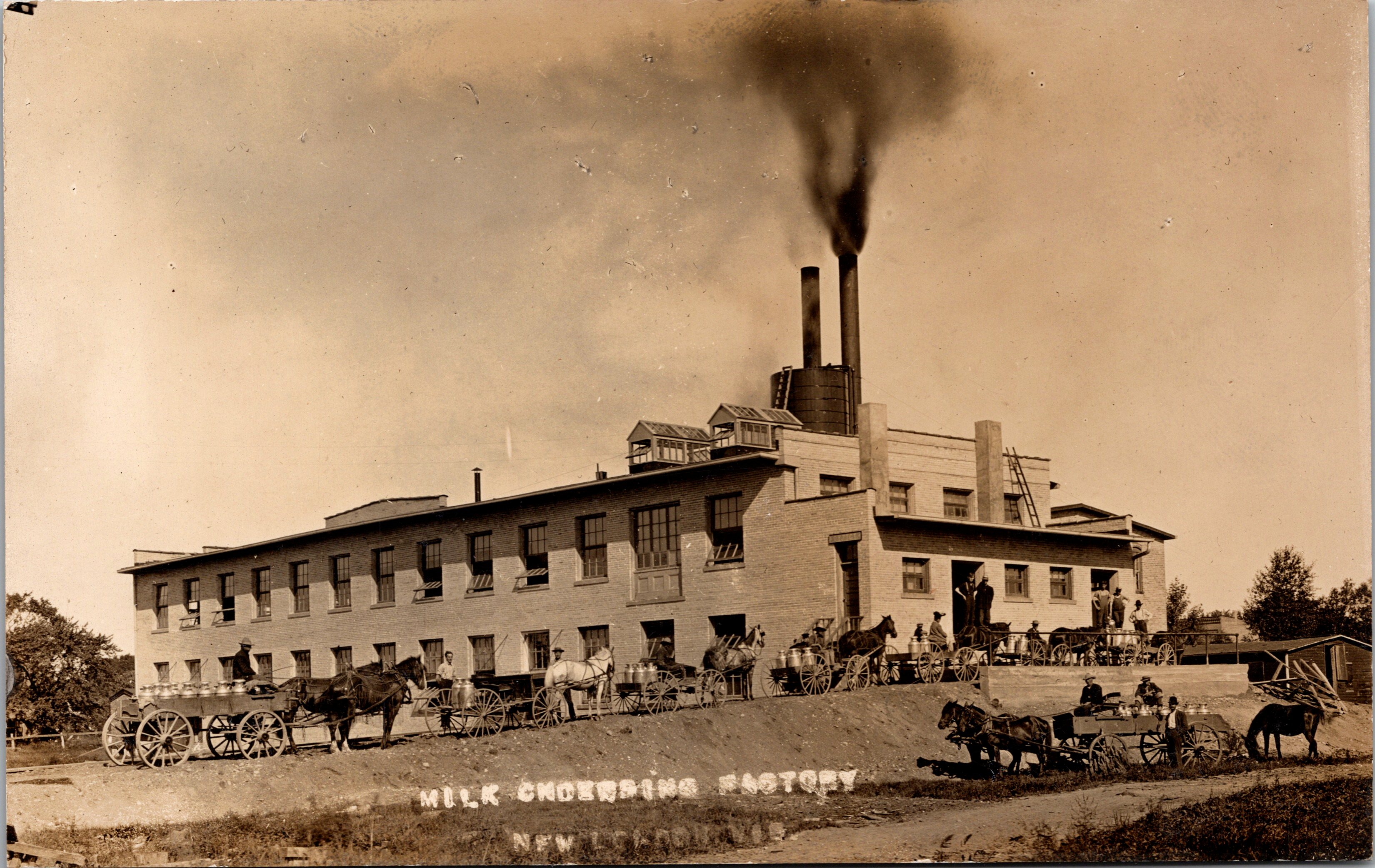
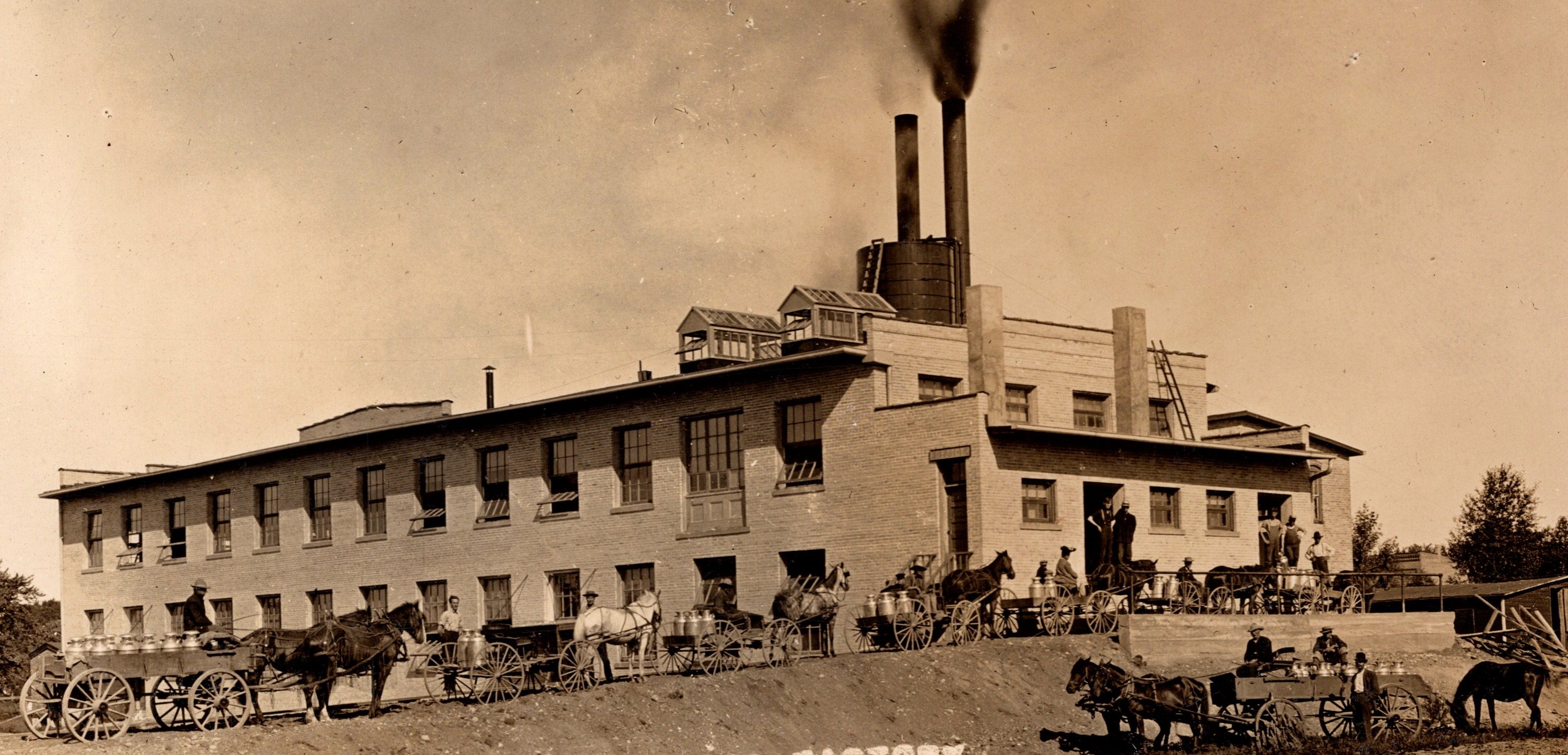
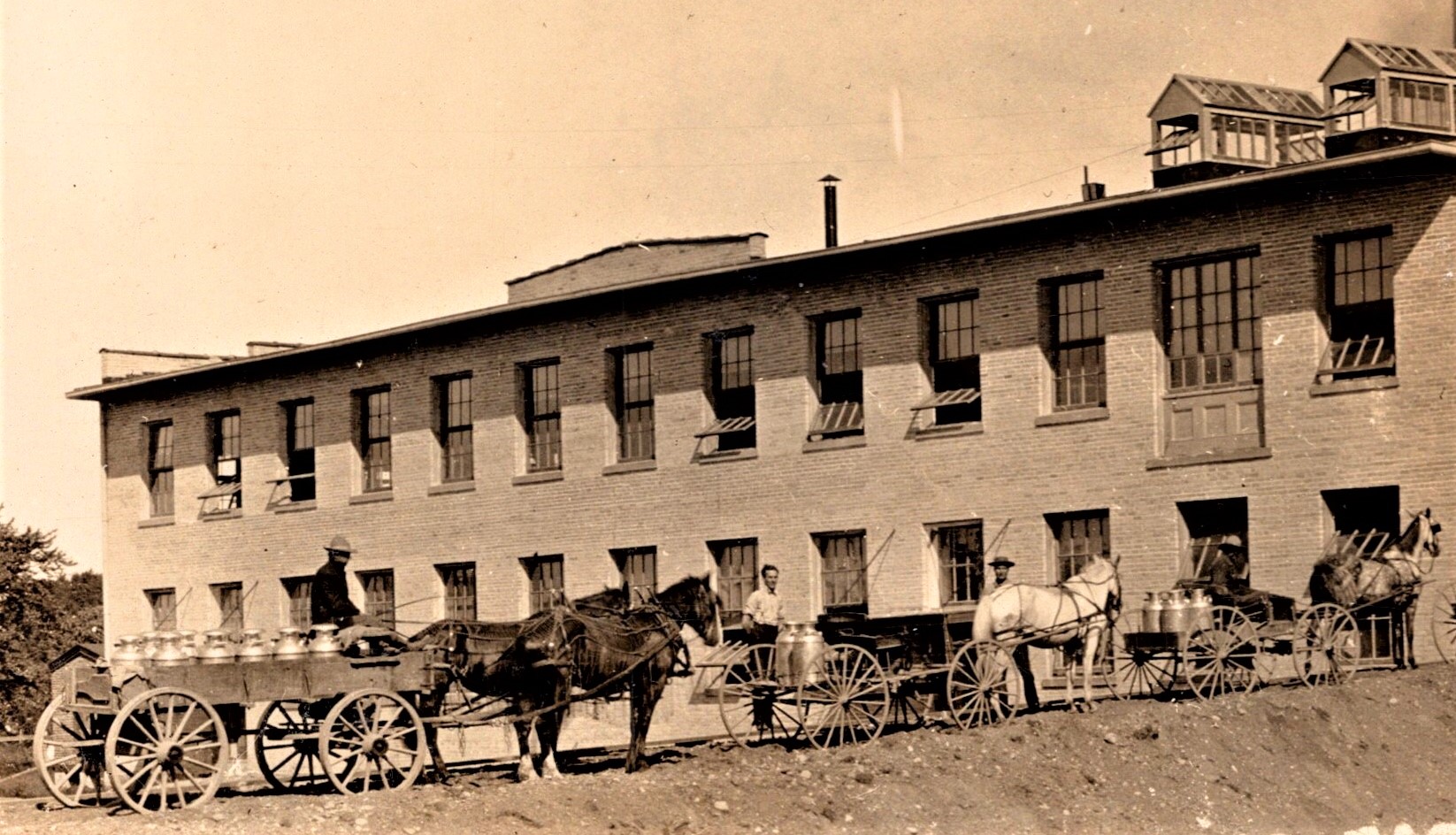
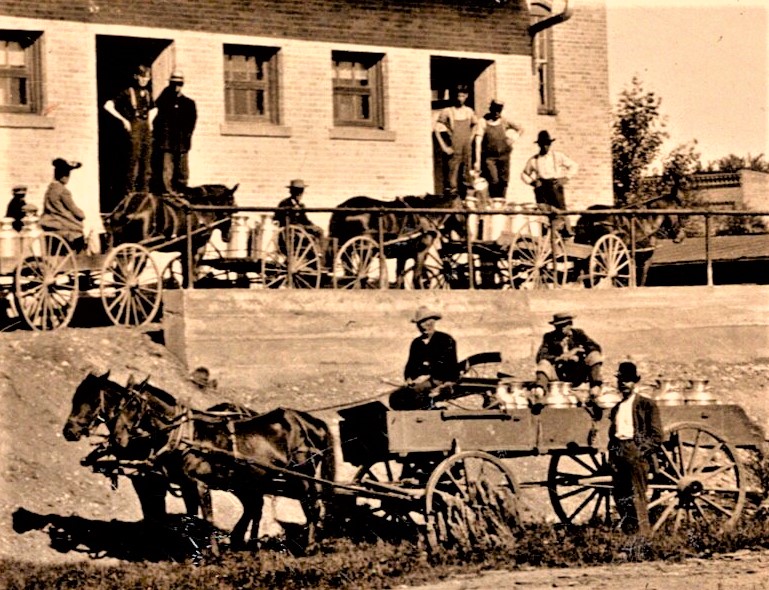
A MILK CONDENSING FACTORY : NEW LONDON, WISCONSIN : DELIVERY WAGONS & HORSES

This vintage real photo postcard fetures a Milk Condensing Factory in New London, Wisconsin. Note the lined up horse drawn wagons holding large milk containers. This card was published by the McClellan studio, located in New London. This postcard is in very good condition (see scans).

milk-1-1

Buy this Vintage Real Photo Postcard (includes shipping within the US) #5168

To purchase this item, click on the Pay with PayPal button below

$22.00

milk-1-2

Buy this Vintage Real Photo Postcard (includes International shipping outside the US) #5168

To purchase this item, click on the Pay with PayPal button below

$32.00

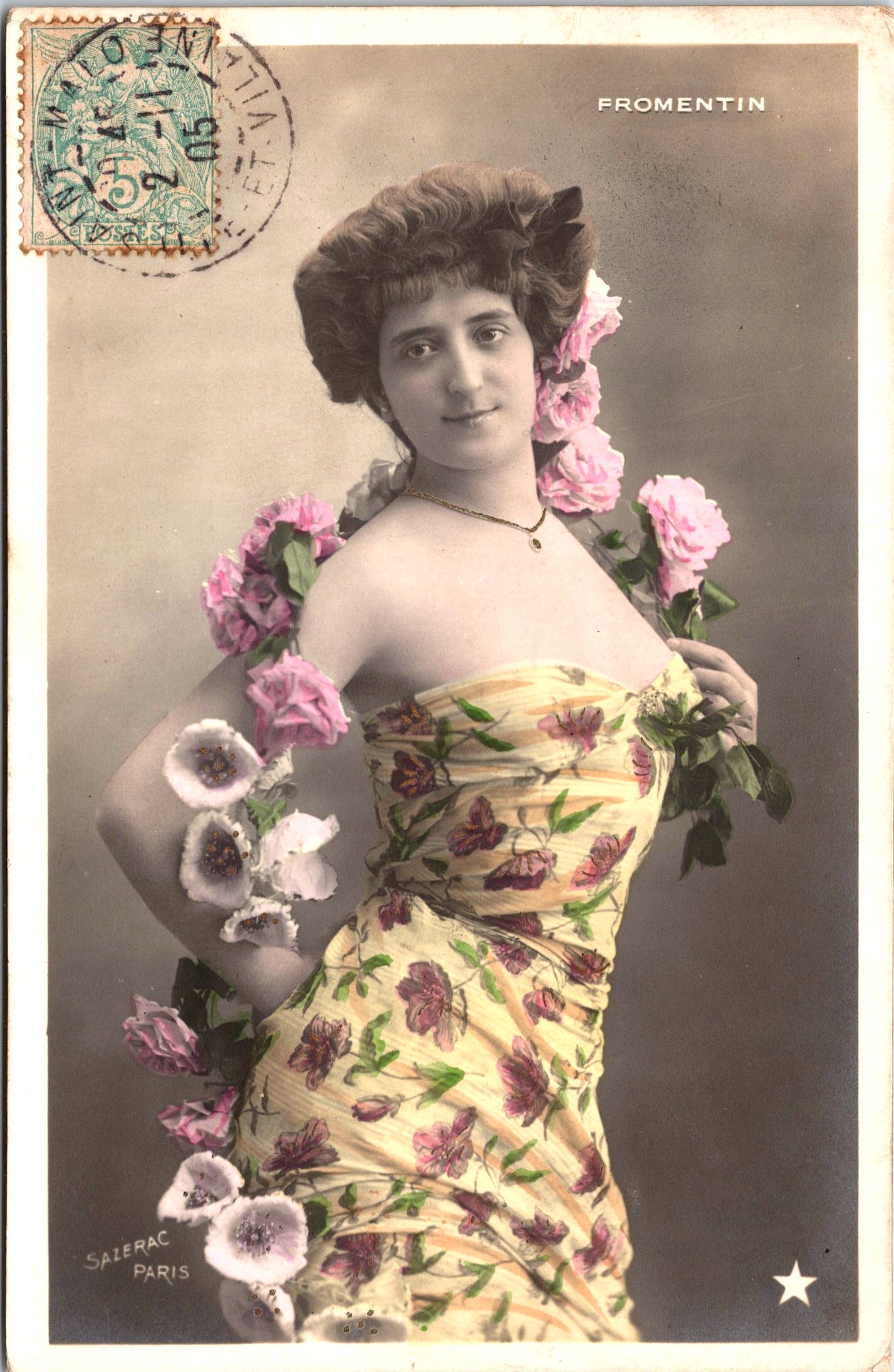
FROMENTIN : PRETTY FRENCH PERFORMER : RISQUE : SAZERAC : PIPROT : PARIS : RPPC

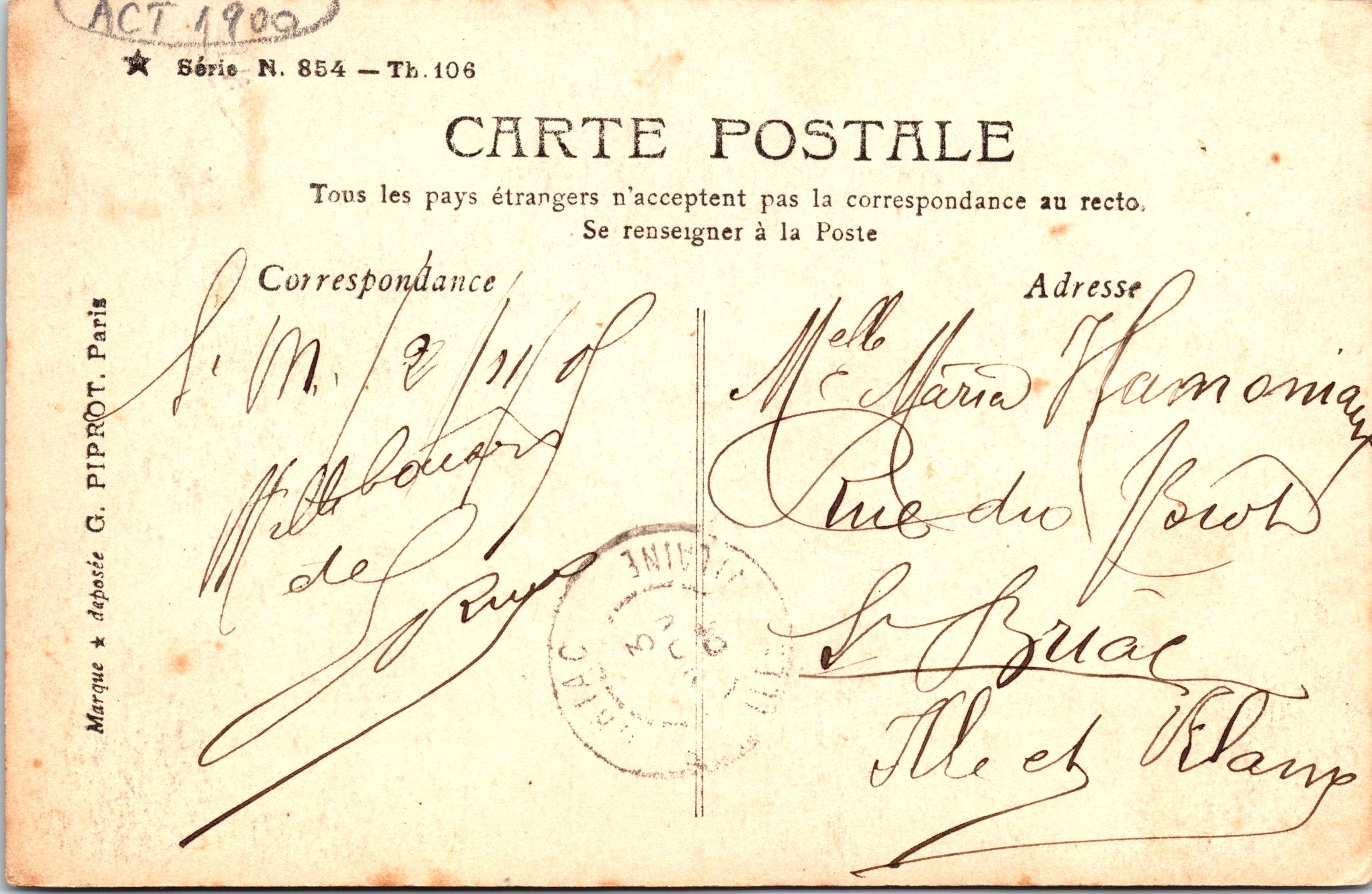
This risque vintage real photo postcard features a fashionable performer named Fromentin.  The card is color tinted. She has a string of flowers wrapped around her shoulders and her dress is a flower pattern. The combination is a nice touch. “The Theatre” (1882) states that Fromentin, among others, present grace and beauty difficult to match. Fromentin was photographed by Sazerac. He was a photographer well known for his portraits of the showgirls of Paris. The publisher of this postcard, was Monsieur G. Piprot, of “Etoille” or “Star” publishing in Paris. The card is part of a series (No.854). The postcard has a postmark from 1905.  SOLD

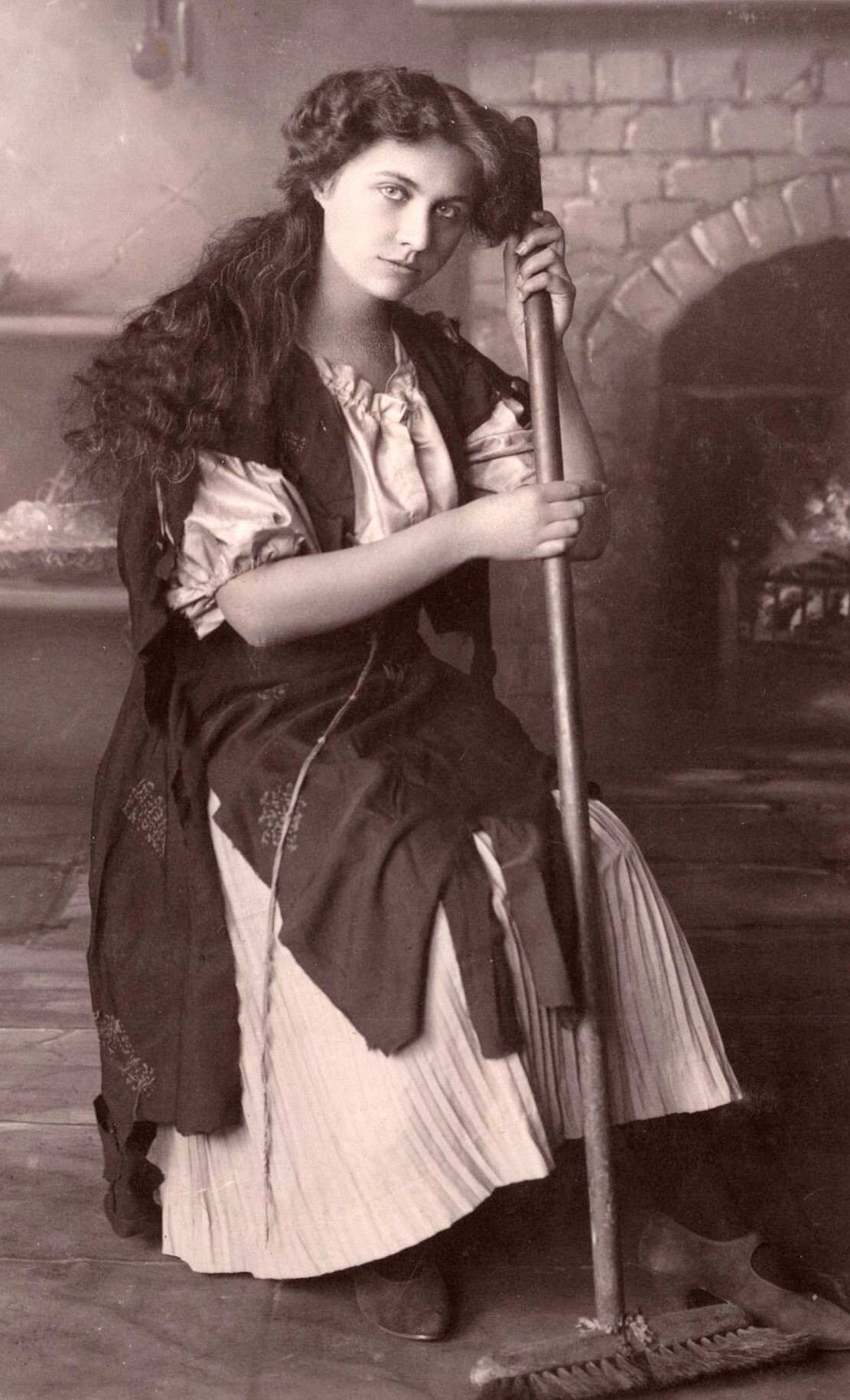
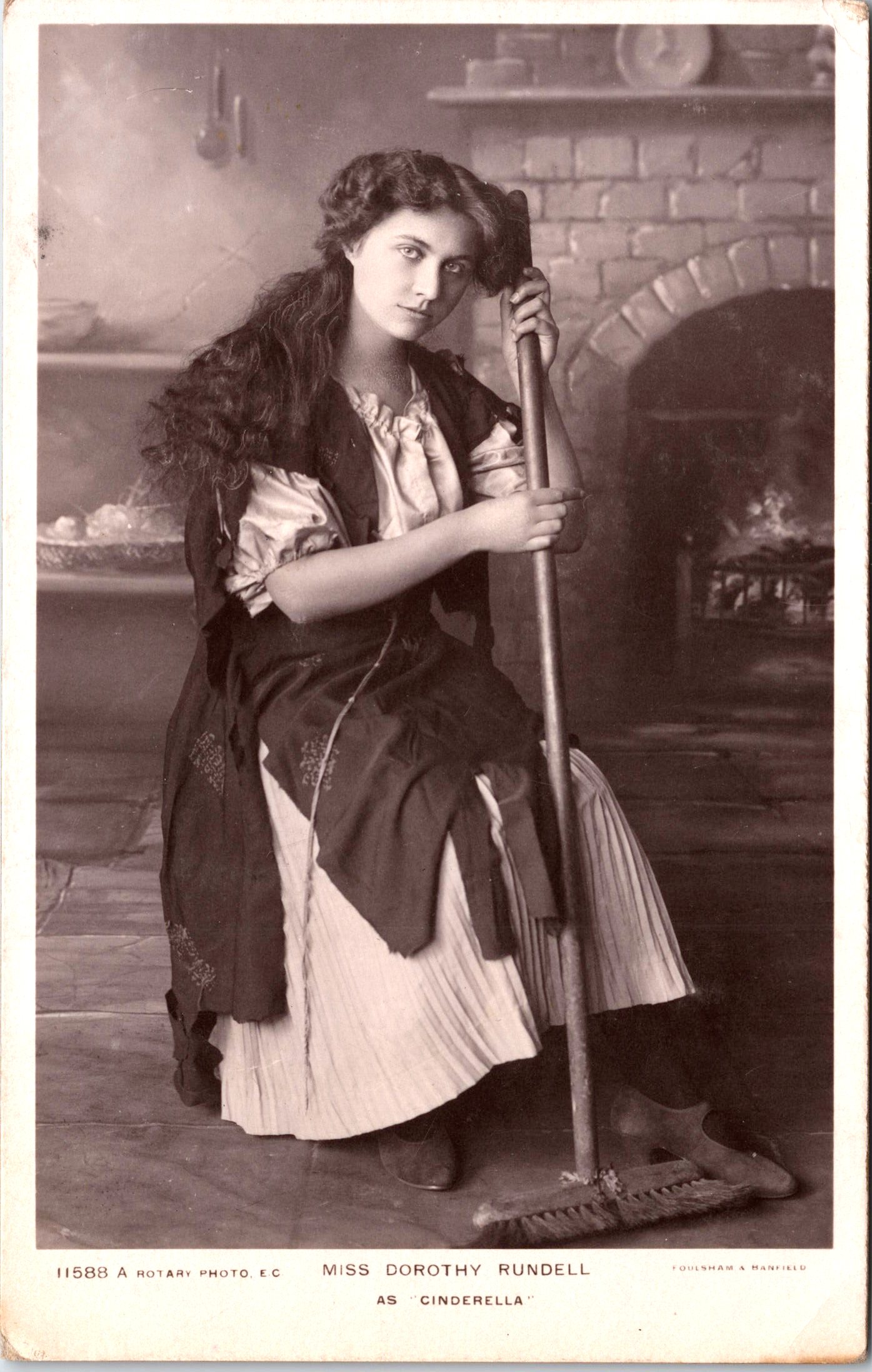
MISS DOROTHY RUNDELL AS CINDERELLA : IN COSTUME : ROTARY PHOTO : RPPC

This vintage real photo postcard features actress Dorothy Rundell in costume for her role as Cinderella. She is holding a broom and has a look of despondency. Rundell was a sitter for six portraits in the collection of England’s National Portrait Gallery. In 1913, Rundell appeared in  “This Way Madam! at London’s Queens Theatre. A World War I website presents an article about Captain Leopold Profeit. The author mentions that in 1915, about nine months after he enlisted into the army, Profeit married Dorothy Rundell. She was 26 years old, nine years younger than Captain Profeit. In 1917, less than two years after the nuptials, Profeit was killed at the Battle of Dorian fighting against the Bulgarians. A review in the “Tatler” (1917) reports that Dorothy replaced Doris Keane in the London production of “Romance”. The reviewer wrote that Dorothy “won all hearts by her personal charm, and delicate sensibility”.  This postcard was published by Rotary Photo as part of a series (No.11588 A). The photo of Miss Rundell was taken by the Foulsham & Banfield studio.  Frank Foulsham and A. C. Banfield operated a studio from the 1900’s through the 1920’s and were well known celebrity photographers. SOLD

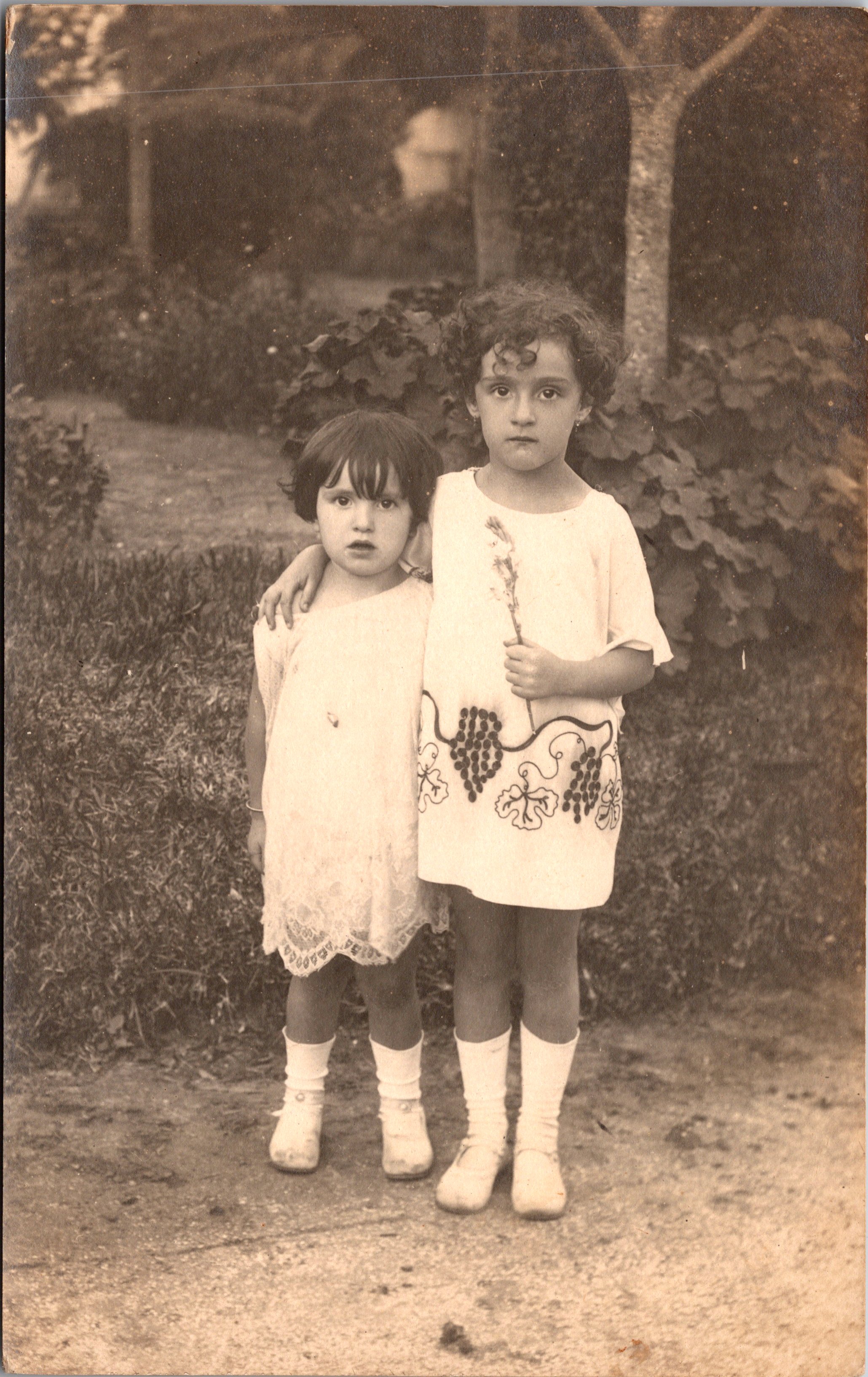
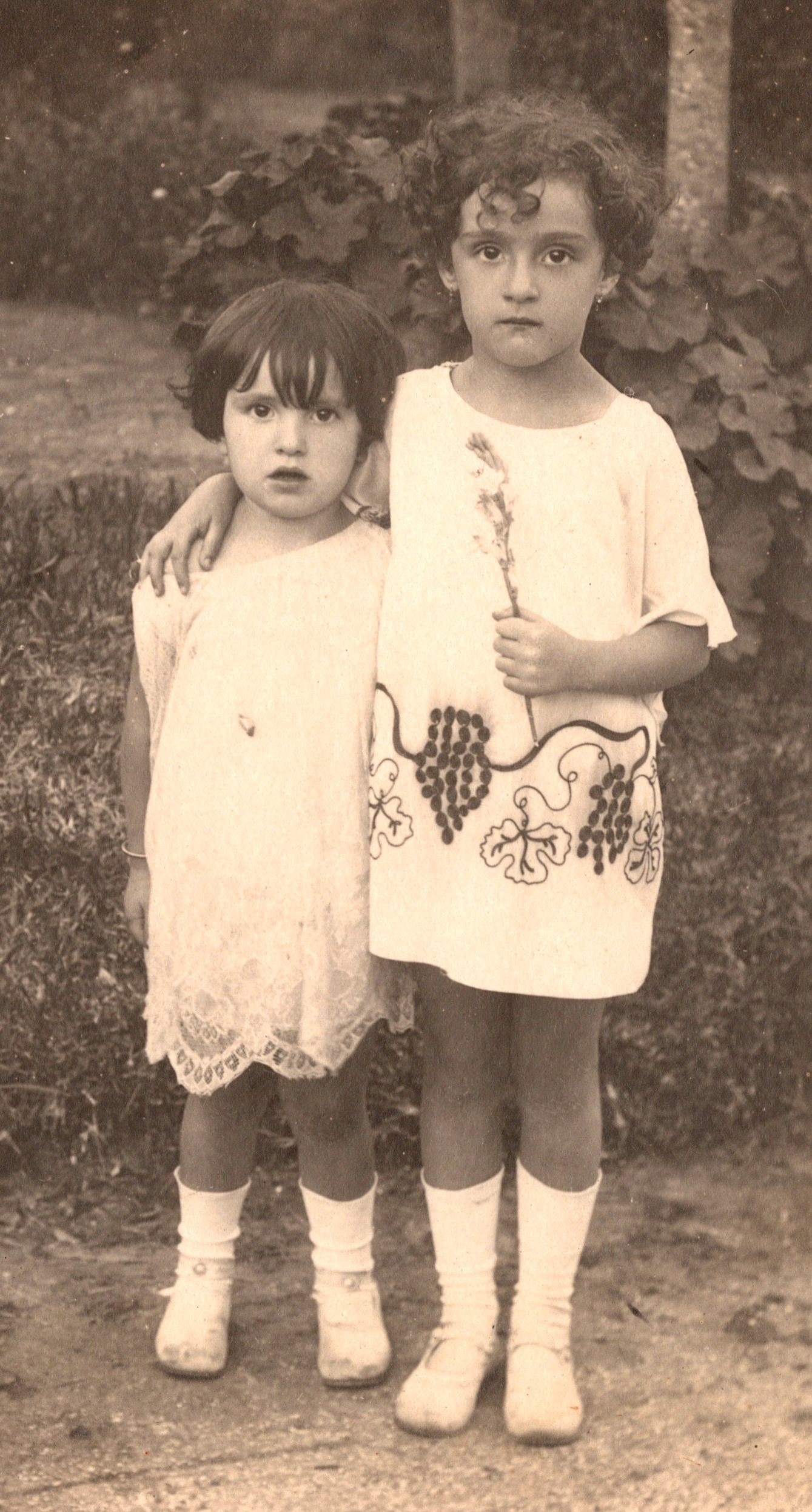
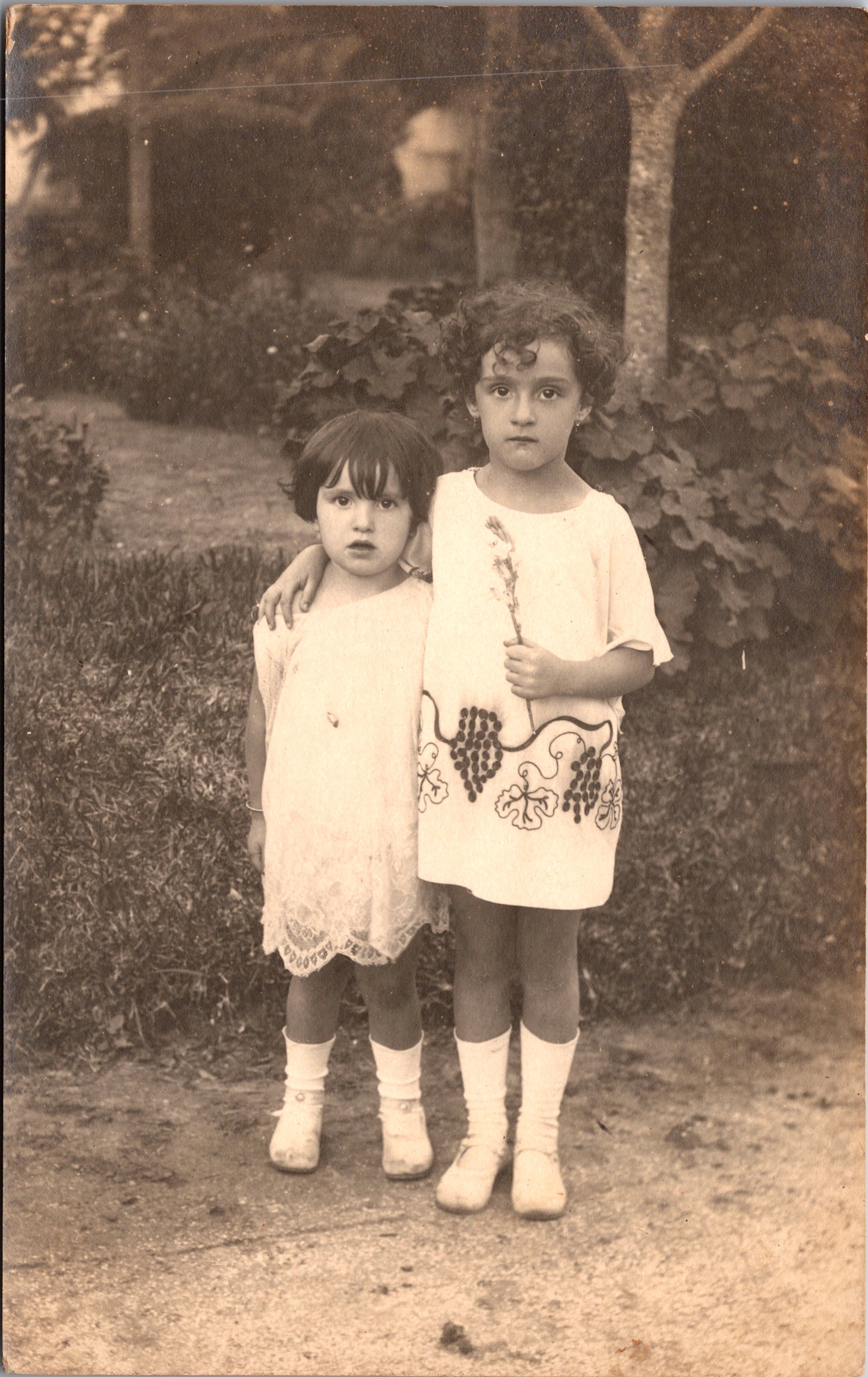
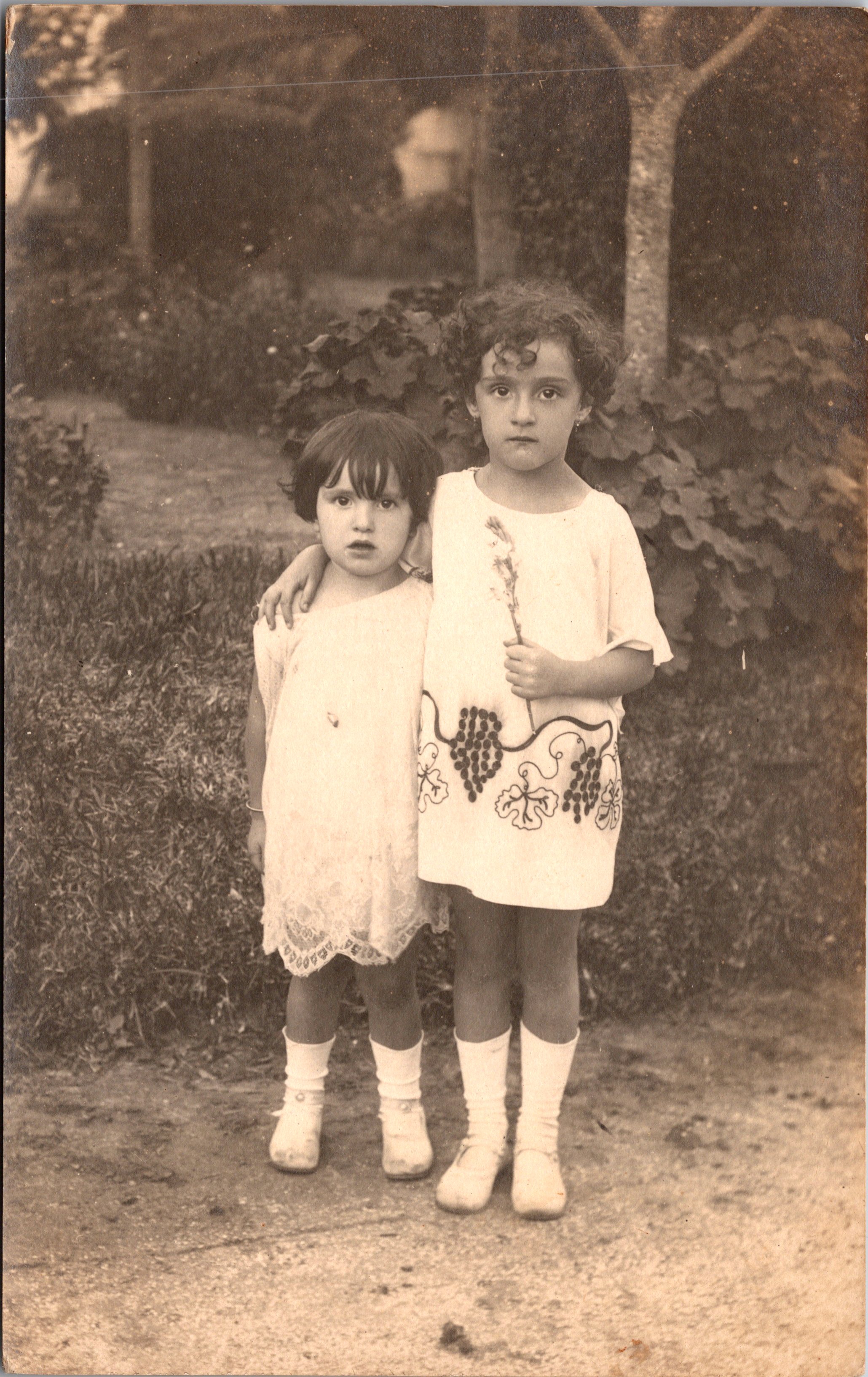
TWO YOUNG AND ADORABLE SISTERS : GARDEN GIRLS : RPPC

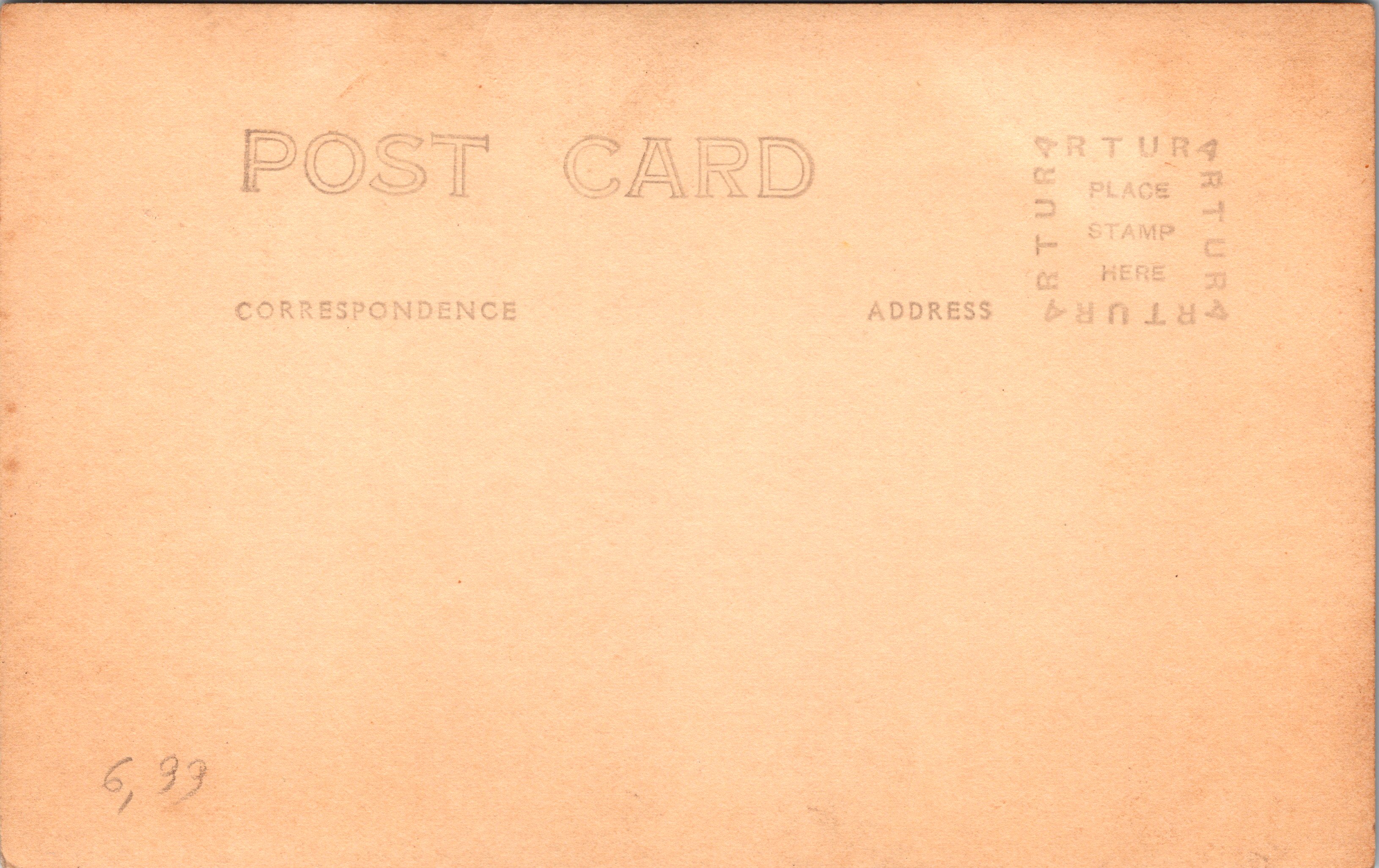
This vintage undivided real photo postcard features an adorable pair of young sisters. The older girl has her arm protectively around the younger girl’s shoulder. The “Artura” stamp box indicates that this photo card was published sometime between 1908 and 1924. This lovely postcard is in very good condition (see scans). 

Buy this Real Photo Vintage Postcard (includes shipping within the US) #5170

To purchase this item, click on the Pay with PayPal button below

$18.70

Buy this Vintage Real Photo Postcard (includes International shipping outside the US) #5170

To purchase this item, click on the Pay with PayPal button below

$28.70

Published in: on January 1, 2024 at 12:00 pm  Leave a Comment  
Tags: ,

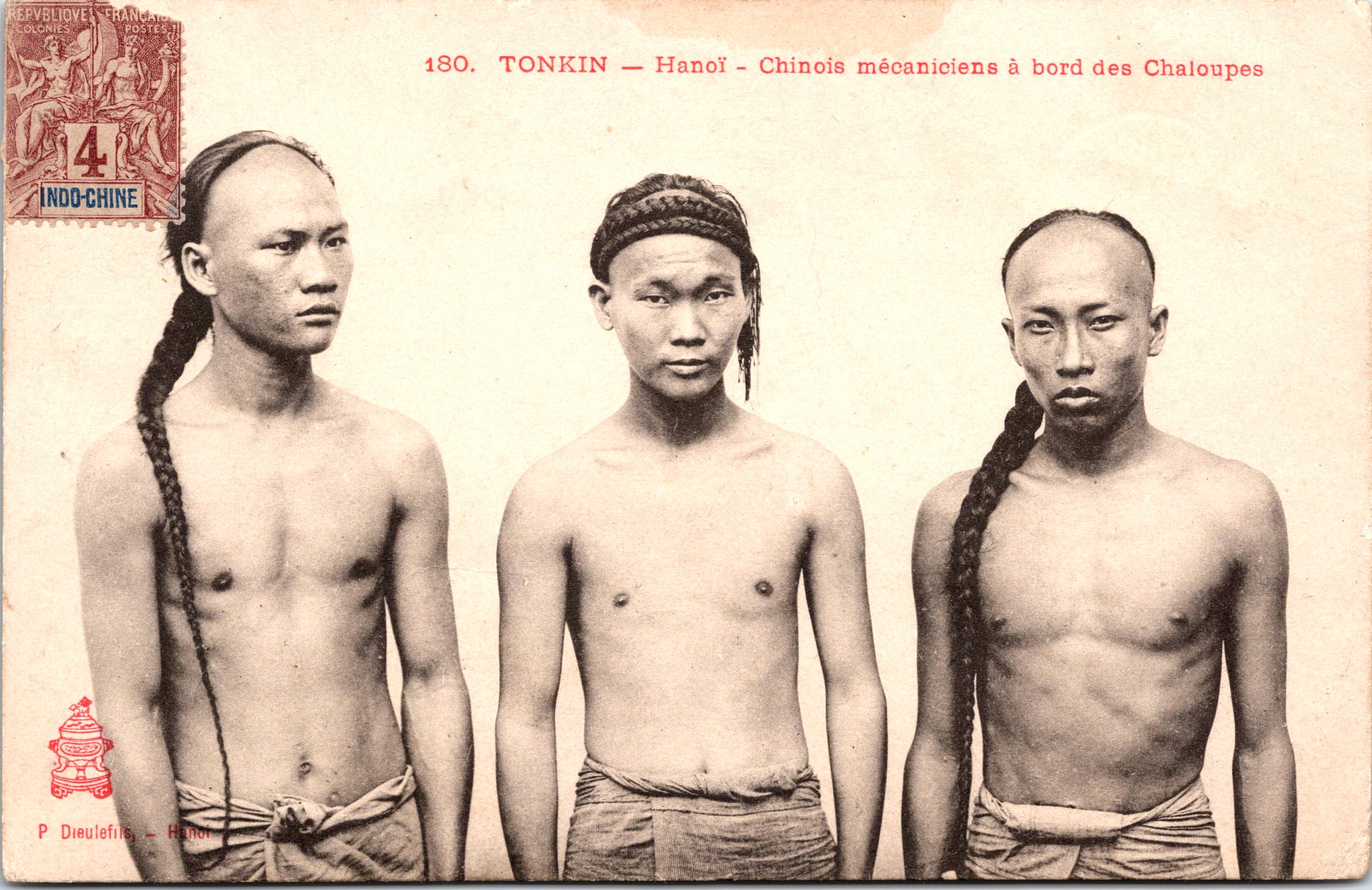
TONKIN : CHINESE MECHANICS ON BOARD THE BOATS : HANOI : VIETNAM : RPPC : 1908

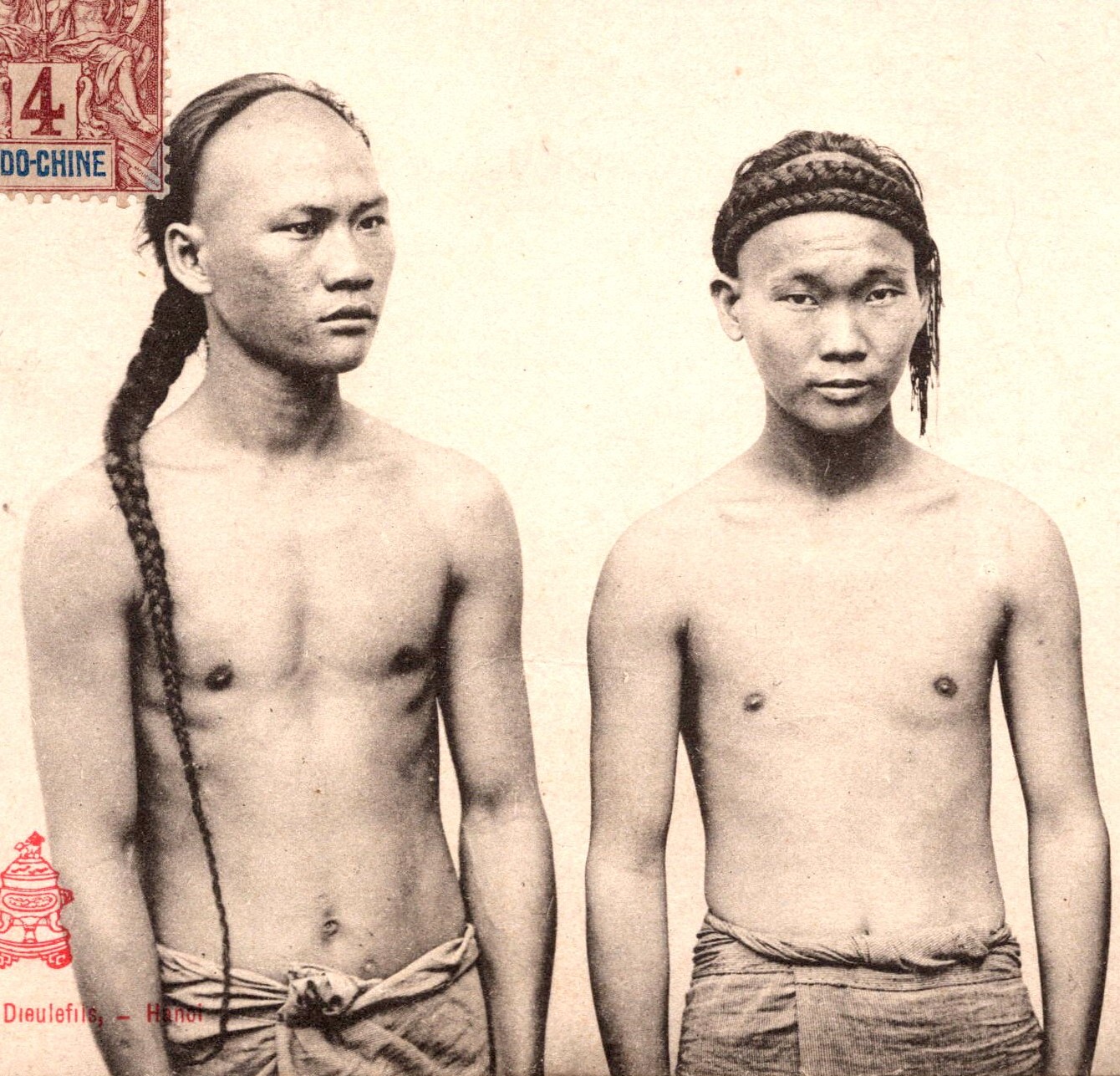
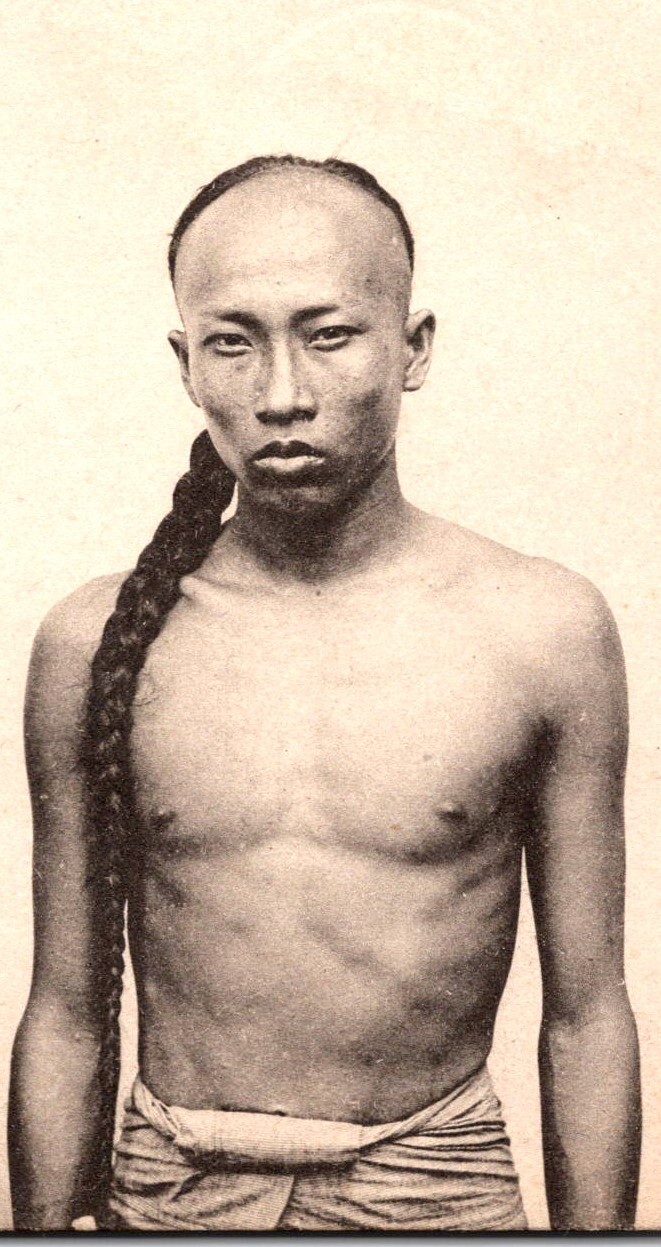
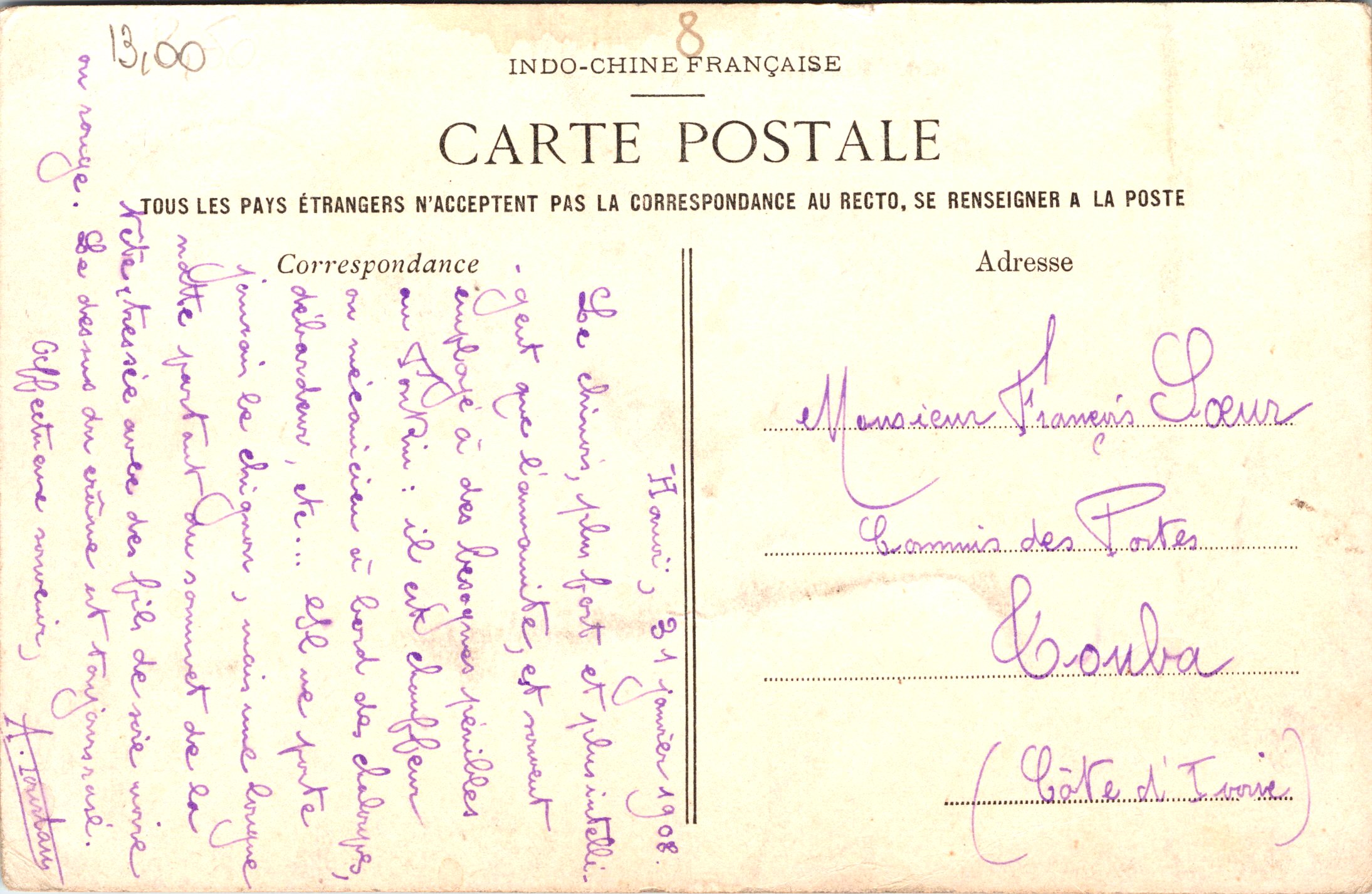
This vintage real photo postcard features three bare chested Chinese men. Translating the caption reveals that the men are “Chinese mechanics aboard the boats”. This postcard is part of a series of Tonkin cards (#180). The publisher of this postcard is P. Dieulefils. He operated a studio in the city of Hanoi. Pierre Dieulefils was the first established professional photographer in Hanoi. In addition, he was a postcard editor and explorer. He had an excellent reputation as a photographer throughout Europe and Indochina. He won many medals at Universal Exhibitions. It is estimated that he produced approximately five thousand photos and postcards and he is considered one of the greatest photographers of the region. His photographic expeditions included such locales as Vietnam, China, and Cambodia. The card has an Indo-China stamp.  (SOLD)

LINA CAVALIERI :ITALIAN OPERA STAR : STAGE BEAUTY :PORTRAIT BY REUTLINGER : 1906

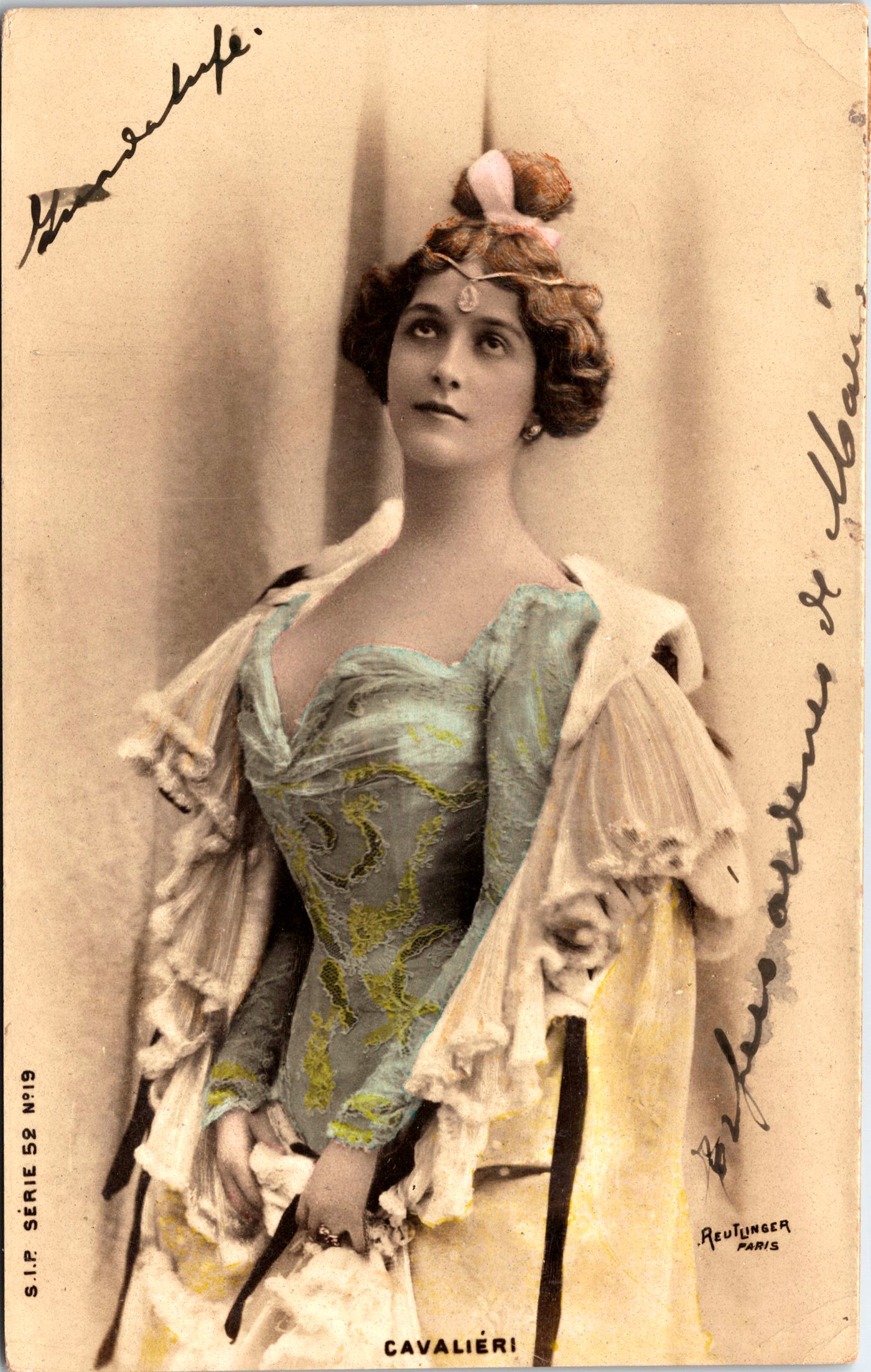
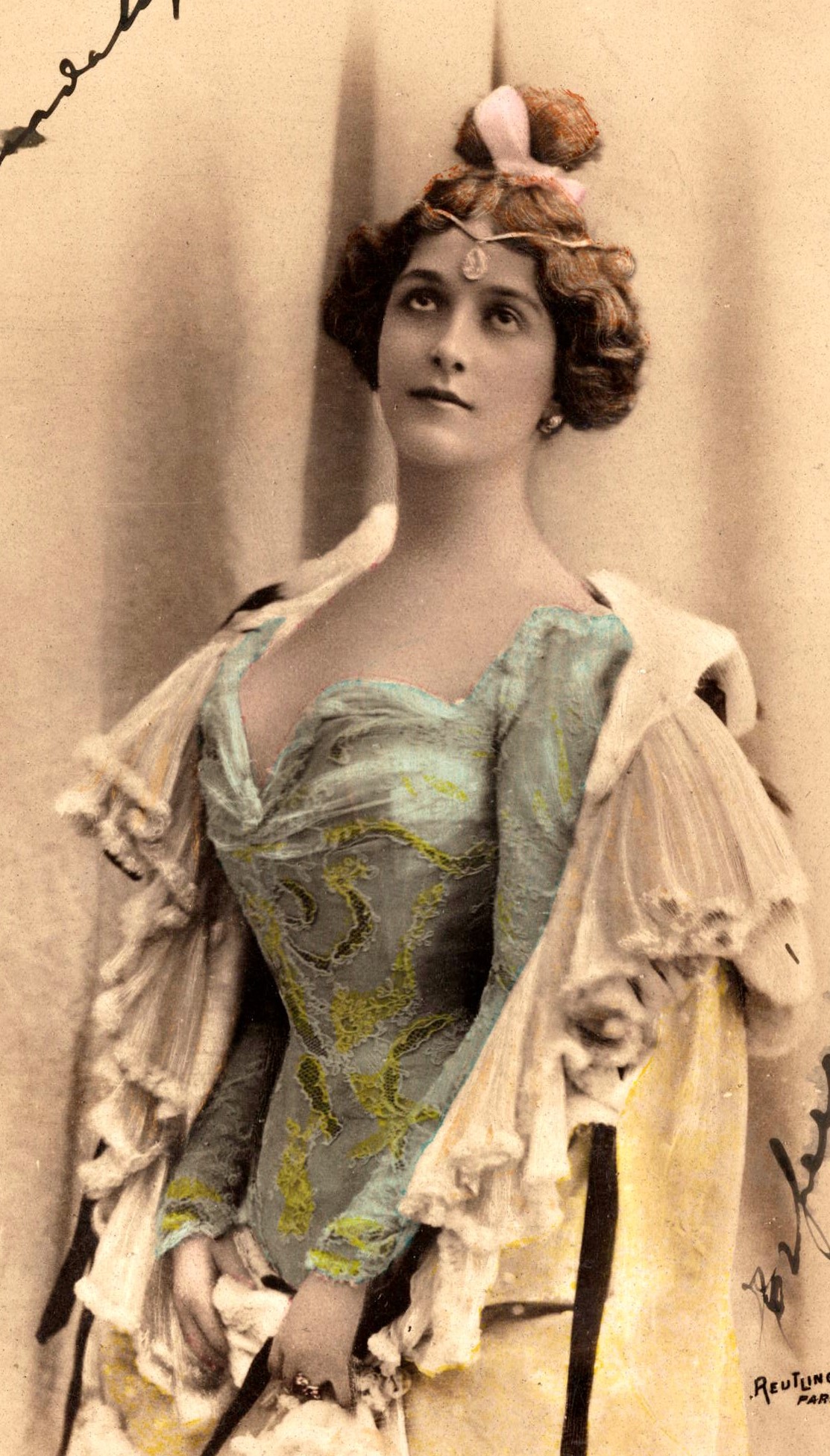
Lina Cavalieri was an Italian operatic soprano and renowned beauty who captivated audiences in the late 19th and early 20th centuries. Born on Christmas day in1874, in Viterbo, Italy, as Natalina Cavalieri, she would go on to become one of the most celebrated and iconic sopranos of her time. Cavalieri’s journey into the world of opera began at a young age when her exceptional vocal talent was discovered. She received formal training in Milan, where she honed her skills and developed a remarkable voice. Her operatic debut occurred in 1892 at the Teatro Vittorio Emanuele in Turin, and she quickly gained recognition for her powerful and expressive singing. In addition to her vocal prowess, Lina Cavalieri was known for her striking beauty, and she was often referred to as the “World’s Most Beautiful Woman.” Her enchanting looks and captivating stage presence helped elevate her status beyond the opera world. As her fame grew, she became a sought-after performer in major opera houses across Europe, including La Scala in Milan and the Metropolitan Opera House in New York City. Cavalieri’s repertoire included a wide range of operas, and she was particularly acclaimed for her performances in works by composers such as Giuseppe Verdi and Giacomo Puccini. Her ability to convey emotion through her singing and her charismatic stage presence endeared her to audiences worldwide. Beyond her operatic career, Lina Cavalieri ventured into the world of acting and appeared in several silent films. Her beauty made her a natural fit for the burgeoning film industry, and she transitioned seamlessly between the stage and screen. Despite her success, Cavalieri faced personal challenges, including a tumultuous love life and financial difficulties. She had an affair with a Russian Prince and was married multiple times. Her marriages were often short-lived. Tragically, Lina Cavalieri’s life was cut short when she perished in an allied bombing run over Florence, Italy. She was killed running from her house to a bomb shelter. Her legacy lives on through recordings of her performances, photographs, and the enduring image of the “World’s Most Beautiful Woman” who left an indelible mark on the world of opera and entertainment. Cavalieri’s photograph seen on this hand tinted postcard was taken by Leopold Reutlinger. The postcard has a 1906 postmark from Mexico. The card was published by SIP as part of a series (No. 52/19). SOLD

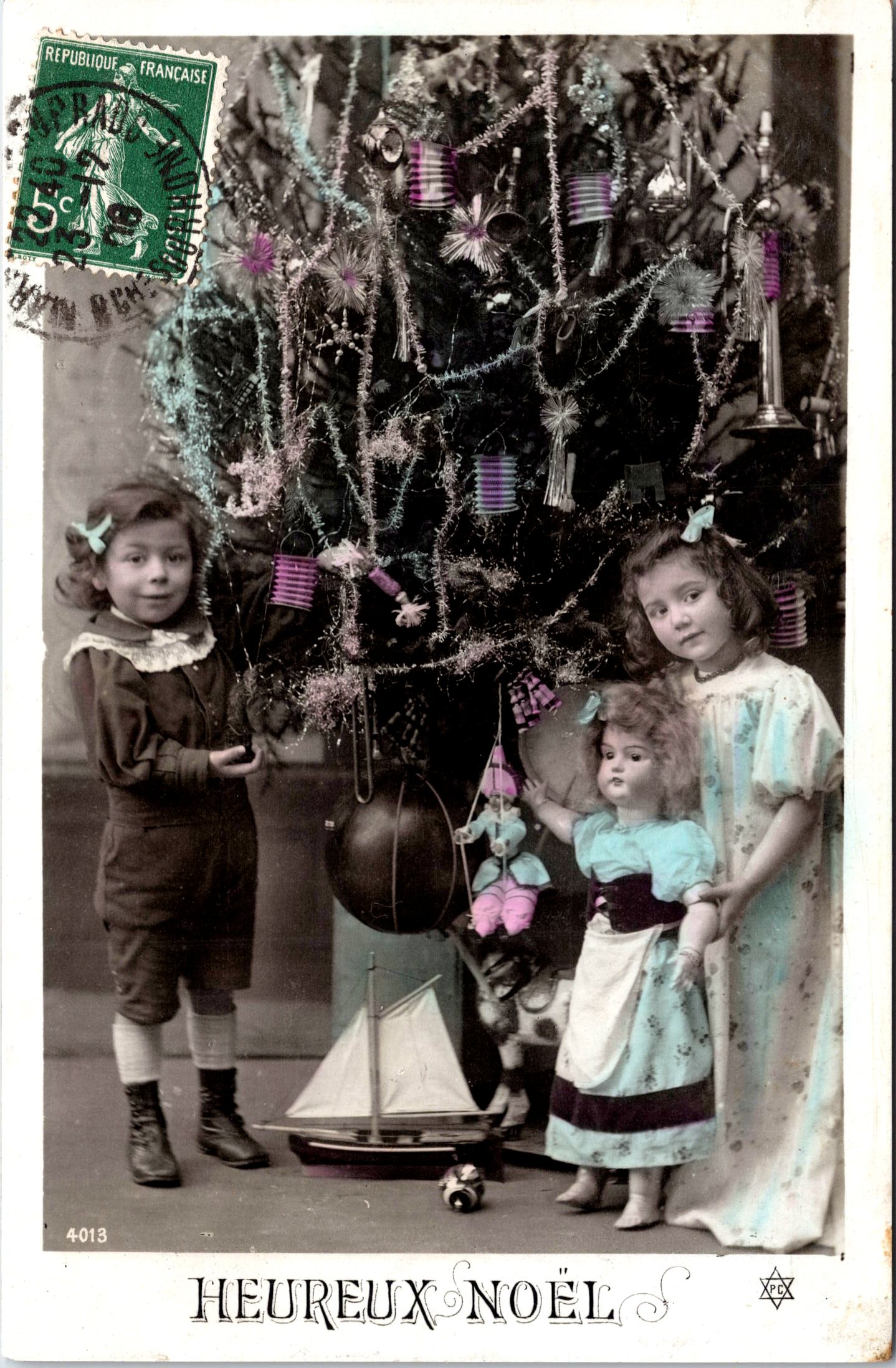
CHRISTMAS POSTCARD : ADORABLE CHILDREN, LARGE DOLL, AND A TOY BOAT UNDER A VERY DECORATED XMAS TREE : RPPC 1908

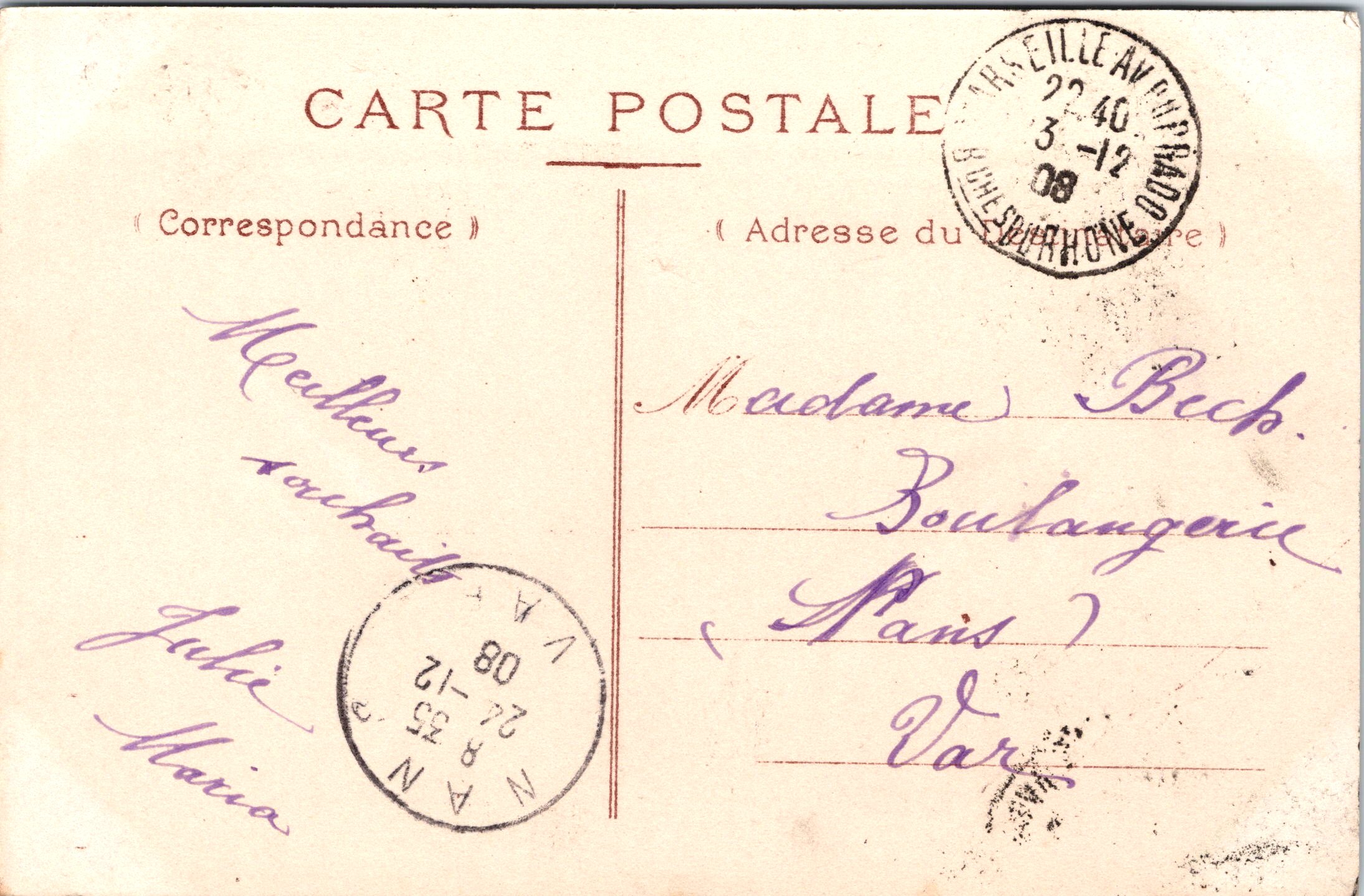
The caption under the photograph on this holiday greeting real photo postcard wishes the recipient a “Happy Christmas”. Two adorable children are standing under a copiously decorated Xmas tree. The kids are accompanied by a large doll and a toy sail boat. This French postcard has a French stamp affixed to the front of the card. The card has a 1908 postmark. The postcard was published by PC as part of a series (No.4013) and is in very good condition (see scans). SOLD

Published in: on December 25, 2023 at 12:00 pm  Leave a Comment  
Tags: , , , ,

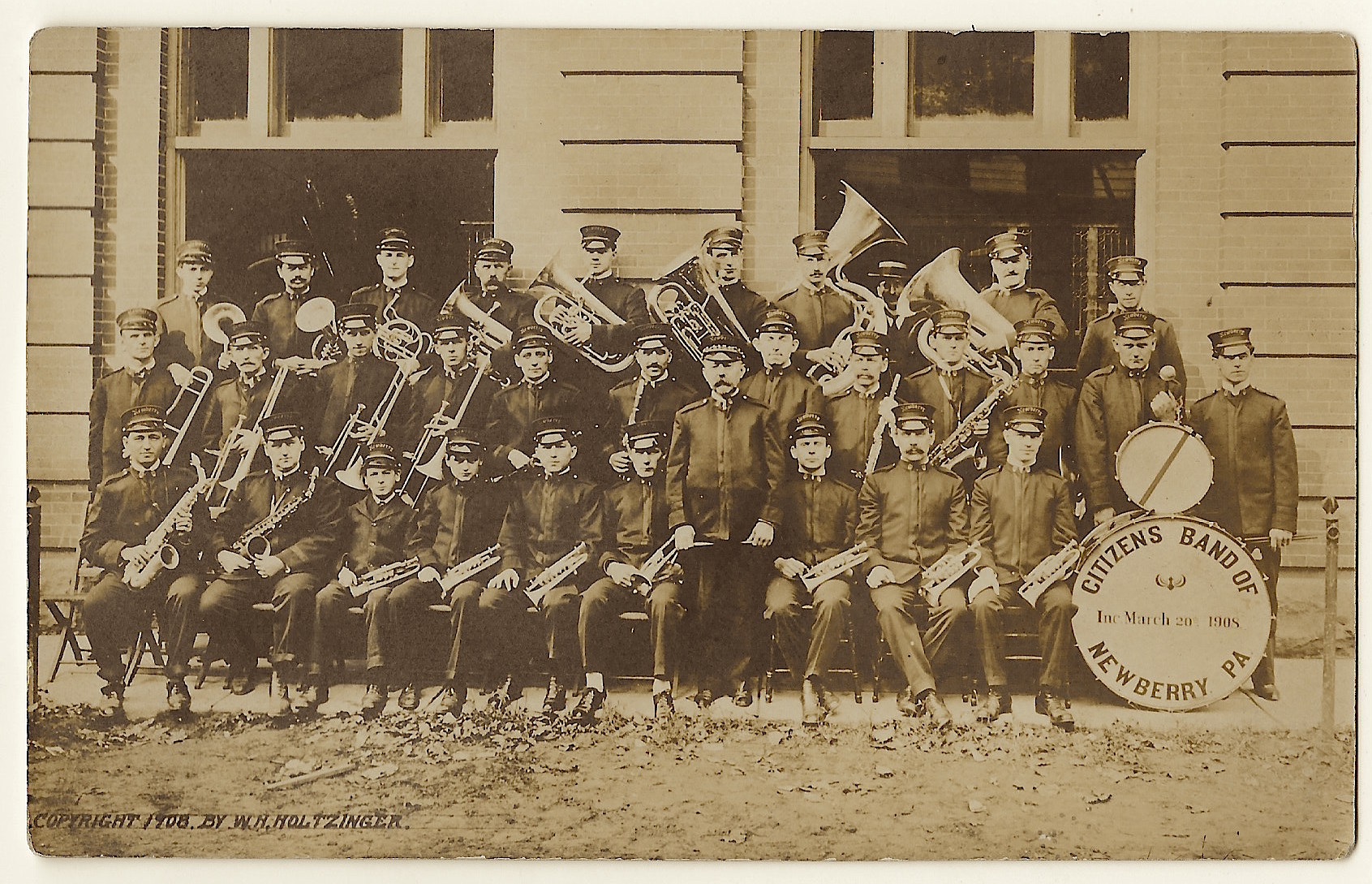
PORTRAIT OF THE CITIZENS BAND OF NEWBERRY, PENNSYLVANIA

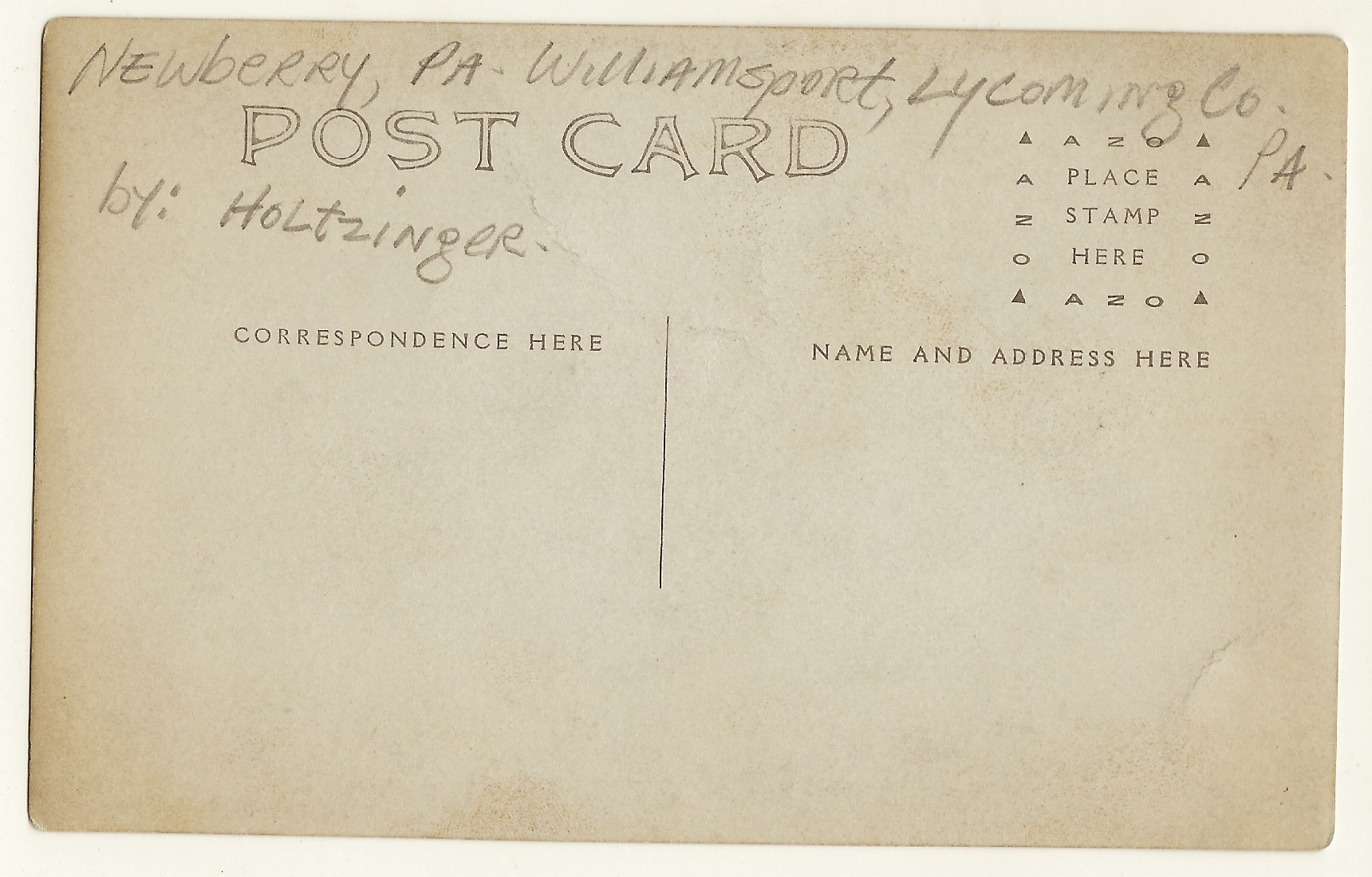
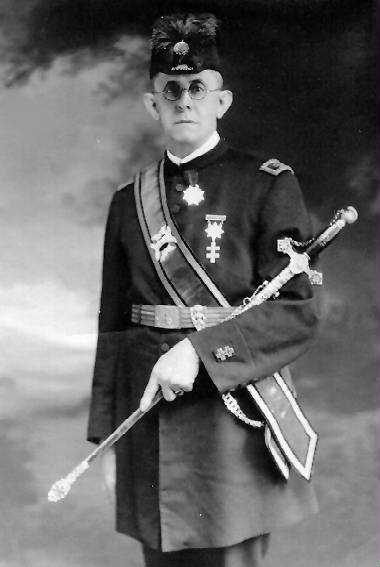
This vintage real photo postcard features a group portrait of the Citizens Band of Newberry, Pennsylvania. The community band members are all wearing full uniforms. This photograph was taken circa 1908. Newberry township is in Lycoming County, Pennsylvania. Newberry is a section of the town of Williamsport which is in central Pennsylvania. Williiamsport has been the home of the Little League World Series since 1947. The photographer of this band portrait is William Henry Holtzinger (1869-1933). Census data as well as Williamsport business directories indicate Holtzinger was a photographer as early as 1898, and as late as 1932. He died of chronic myocarditis in 1933. Two photographs of Mr Holtzinger can be seen below.  (SOLD)

William Holtzinger in his Knights of Malta uniform

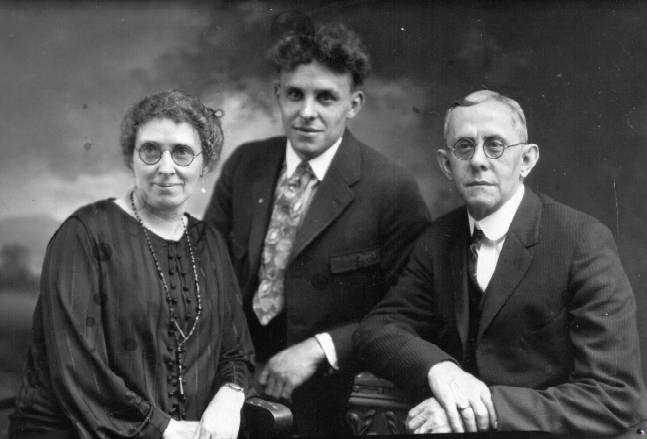
                        Portrait of William Holtzinger, Lucy Long Holtinger (wife), and  Arthur Jacob Holtzinger (son)