
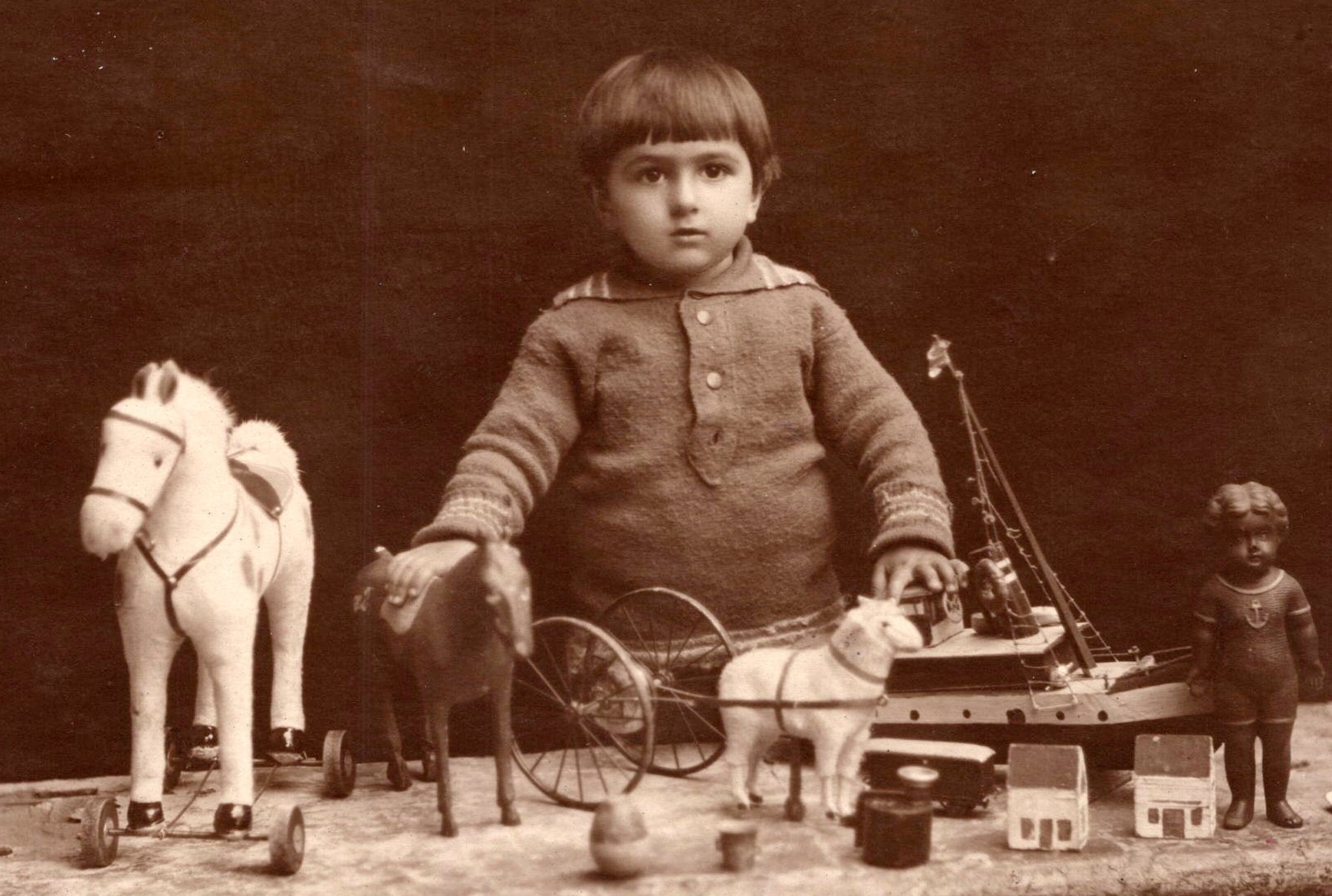
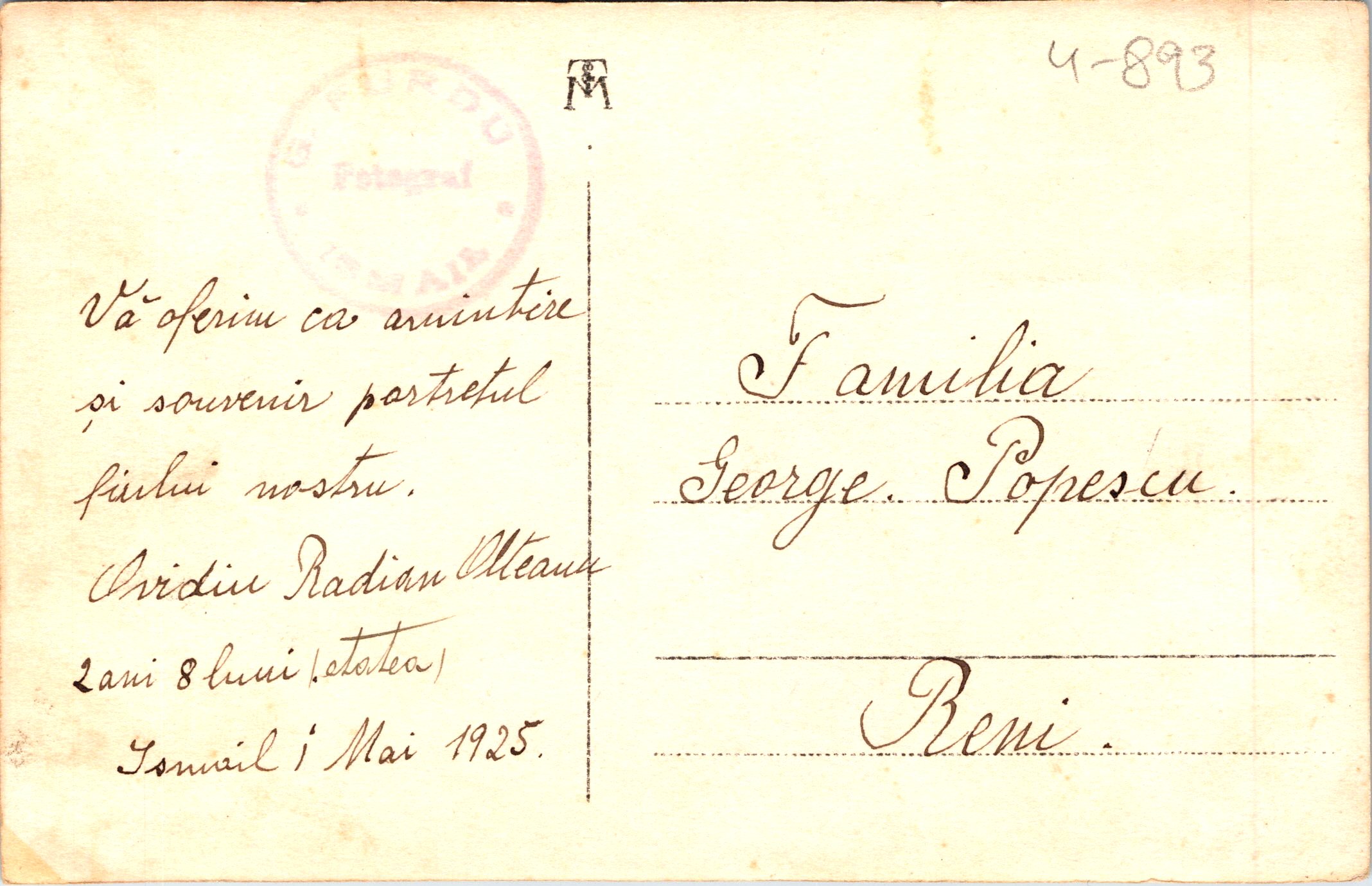
This evocative real photo postcard, written and dated 1925, presents a beautifully staged studio portrait of a very young child posed behind an elaborate miniature world of toys—an image that feels both intimate and faintly theatrical, as was common in European children’s portraiture of the interwar period. Spread carefully across the tabletop in front of the child is an impressive assortment of early 20th-century toys, each rendered with remarkable clarity. On the left stands a wooden pull horse on wheels, its form sturdy and utilitarian, likely hand-painted. Nearby is a small toy donkey or horse mounted on a simple wheeled frame. At center is a miniature cart with large spoked wheels, suggesting rural life and transport—imagery deeply familiar to Eastern European households of the era. To the right appears a toy goat or sheep, delicately harnessed, positioned near a detailed model boat complete with mast and rigging—an ambitious and unusual toy that adds narrative complexity to the scene. Also visible are tiny toy houses, a small lidded container or barrel, and a painted doll figure standing upright at the far right, dressed in what appears to be a sailor-style outfit. Collectively, these objects create a miniature village or imagined world, emphasizing themes of childhood, play, and aspiration. The child—identified in the message as two years and eight months old—stares directly at the camera with a solemn, almost uncanny composure, heightening the emotional impact of the image. The photograph is warm-toned and evenly exposed, suggesting professional studio work rather than a casual snapshot. This postcard is not only visually compelling but also richly documented, with a handwritten message on the reverse that firmly anchors it in time and place. The following is the English translation of the message on this postcard: “We offer you, as a keepsake and souvenir, the portrait of our son. Ovidiu Radian (Mleanu) 2 years and 8 months old Ismail, May 1, 1925.” The postcard is addressed to a family in Romania. The card originated from Ismail, a particularly important location historically. In 1925, Ismail was located in Basarabia, a region that at the time was part of Greater Romania (1918–1940). Today, Ismail is located in modern-day Ukraine. The postcard is in very good antique condition for a 1925 real photo postcard. The image remains strong with nice tonal depth. Light surface/handling wear consistent with age. The reverse shows expected age toning and a faint circular postal marking, along with the handwritten message. There is only minor corner/edge wear (see scans).
This cabinet card is available for purchase at The History Peddler for $68.00 or best offer
Interested collectors may view the listing here:
https://www.ebay.com/itm/336367805876



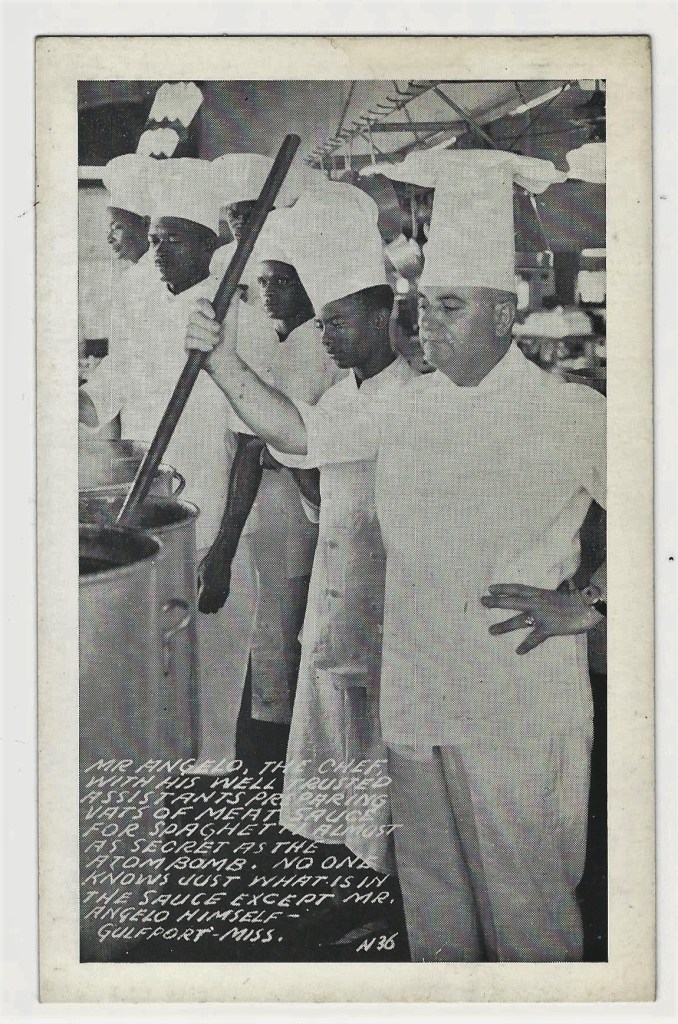
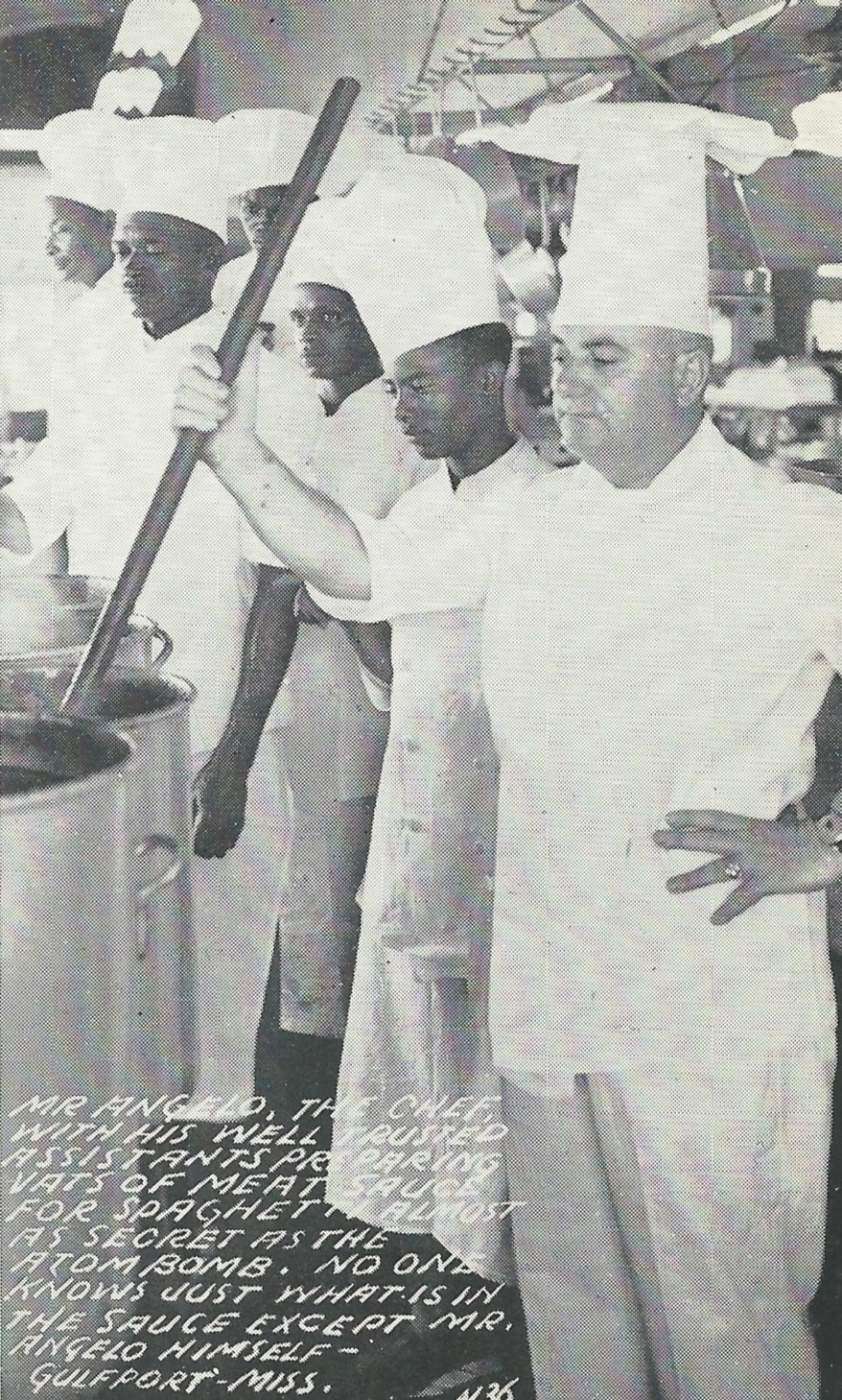 This vintage real photo postcard provides an inside peek at Mr. Angelo Xidis and five of his “well trusted” assistants preparing vats of meat sauce for his restaurant’s famous spaghetti. In fact, the recipe is described as “almost as secret as the atom bomb”. Chef Xidis was Greek. Xidis’s specialty was spaghetti and meatballs. A sign on the roof stated “Foods – We Feed the People”. His restaurant was built with steel tiles and glass. The building had live oak trees growing through the roof. Hurricane Camille destroyed the restaurant in 1969. The restaurant was rebuilt and remained in business until 1985. The restaurant was located in Gulfport, Mississippi and faced the Gulf of Mexico. The postcard was published by the Gulfport Printing Co. and is part of a series (No.N36). Mention of the atomic bomb means that the postcard was published likely between 1945 and the early 1950’s. SOLD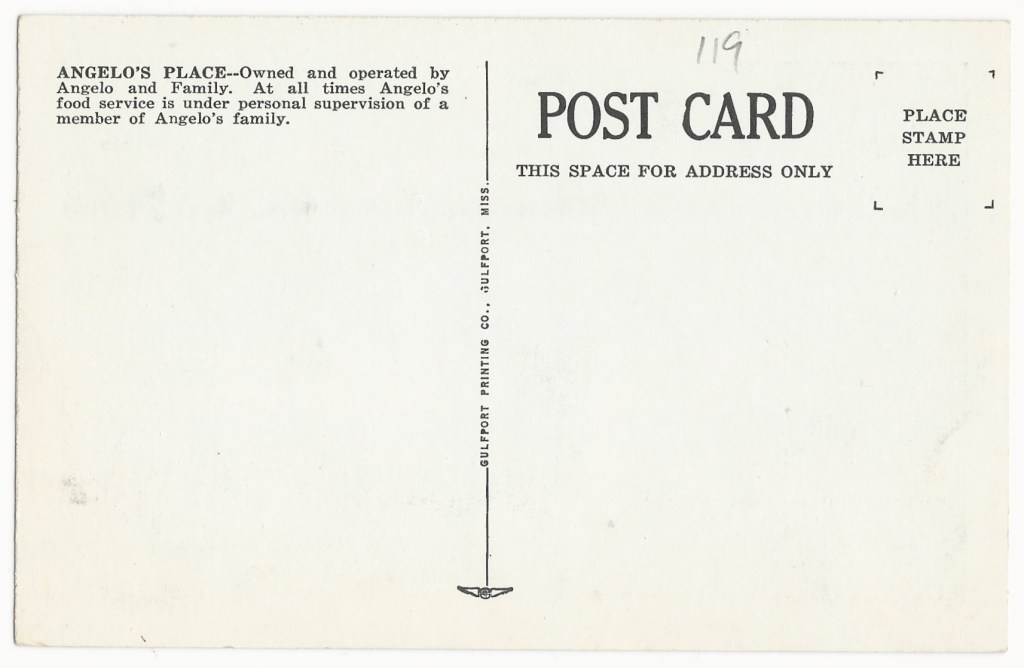




 THE CABINET CARD GALLERY