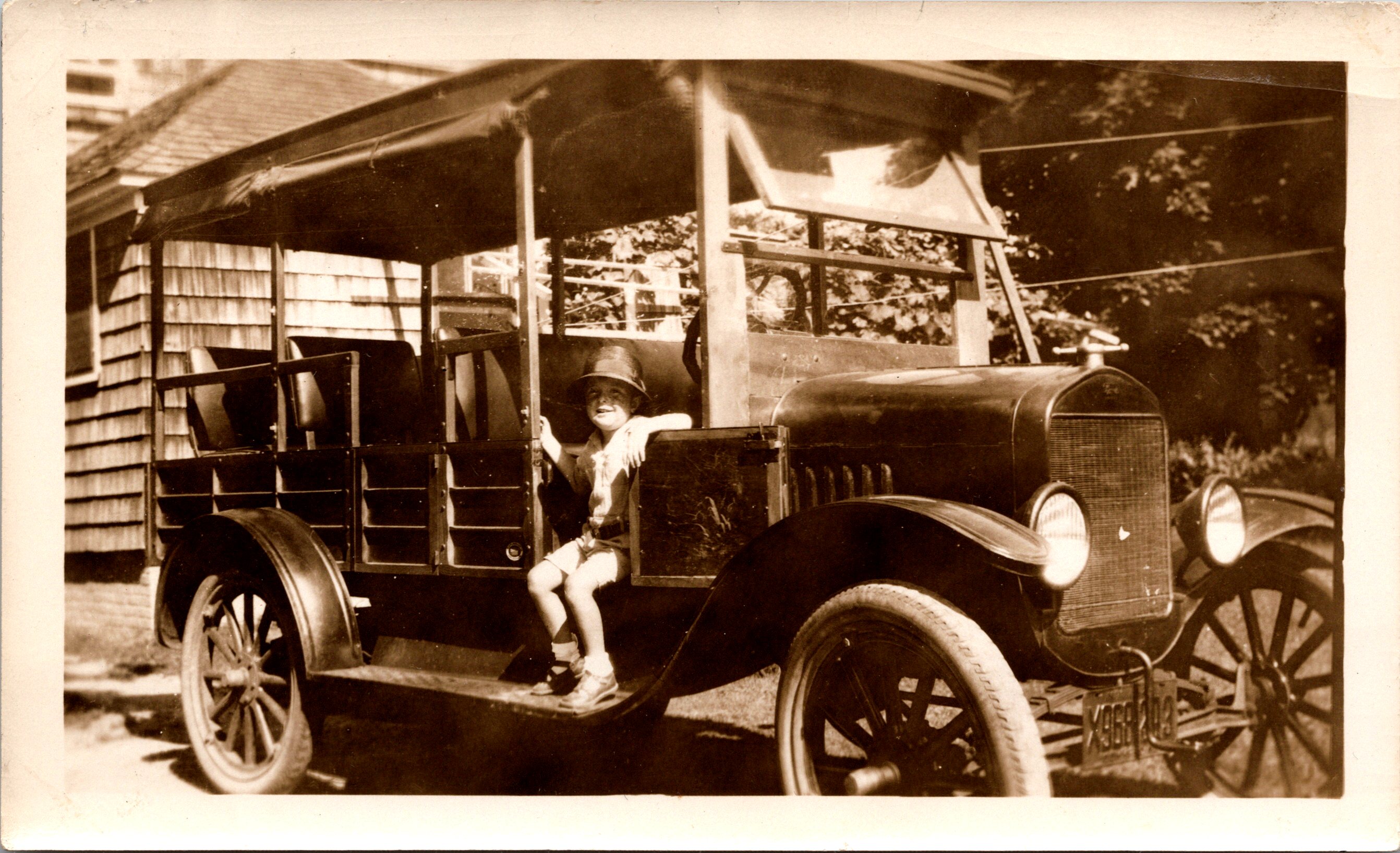
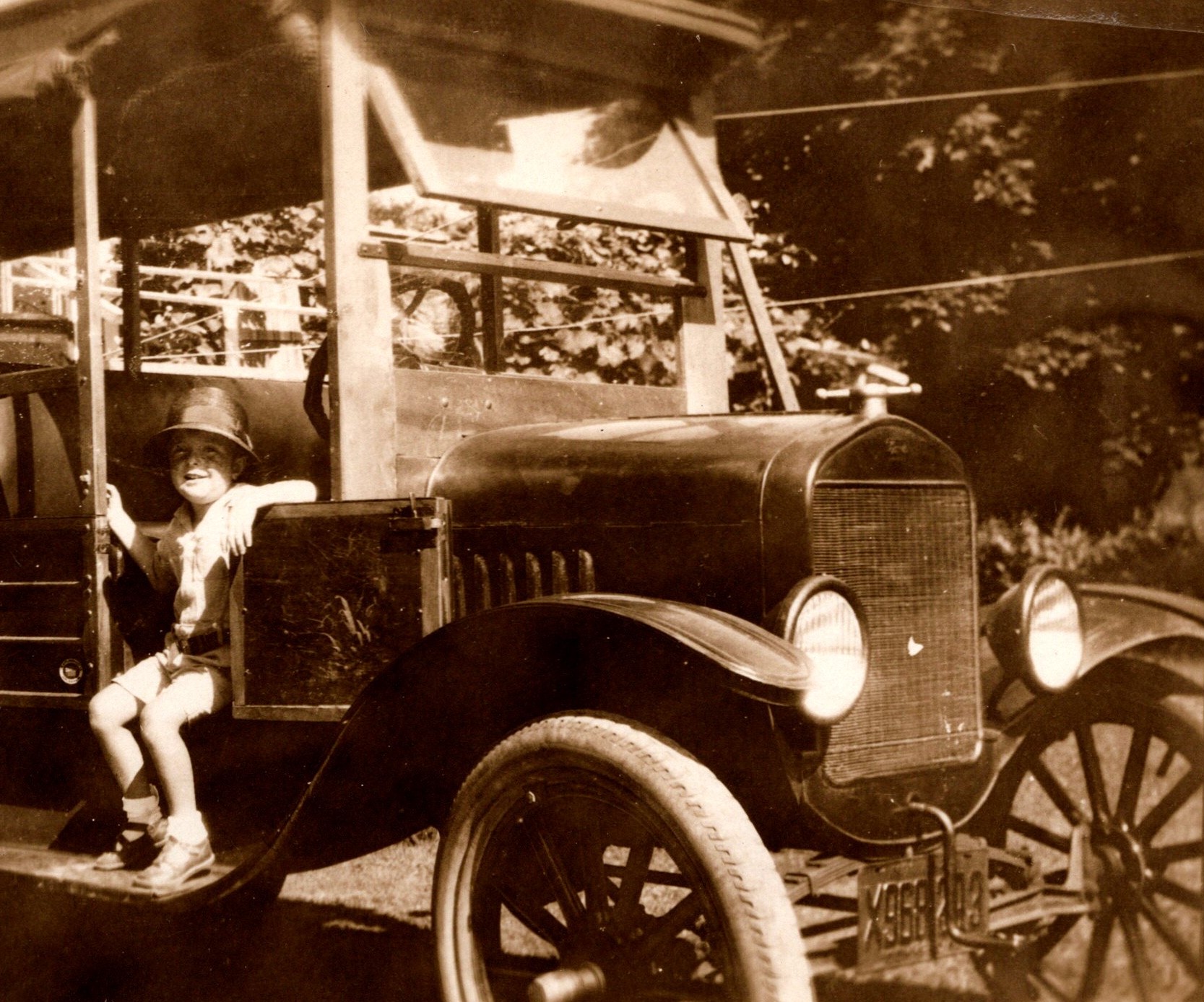
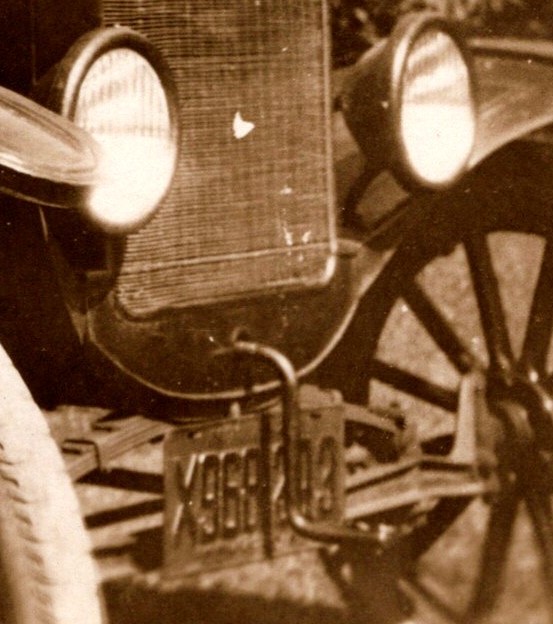
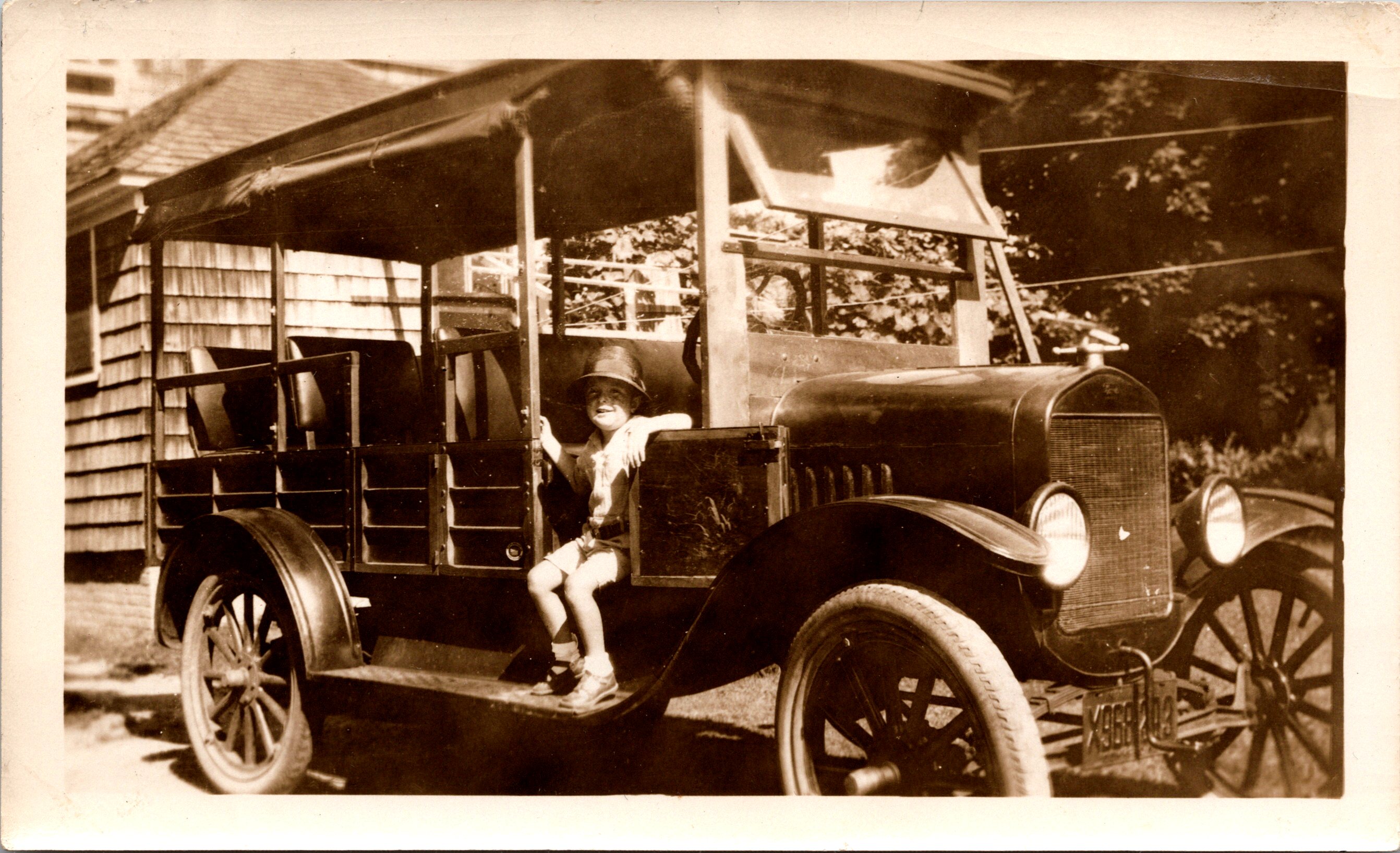
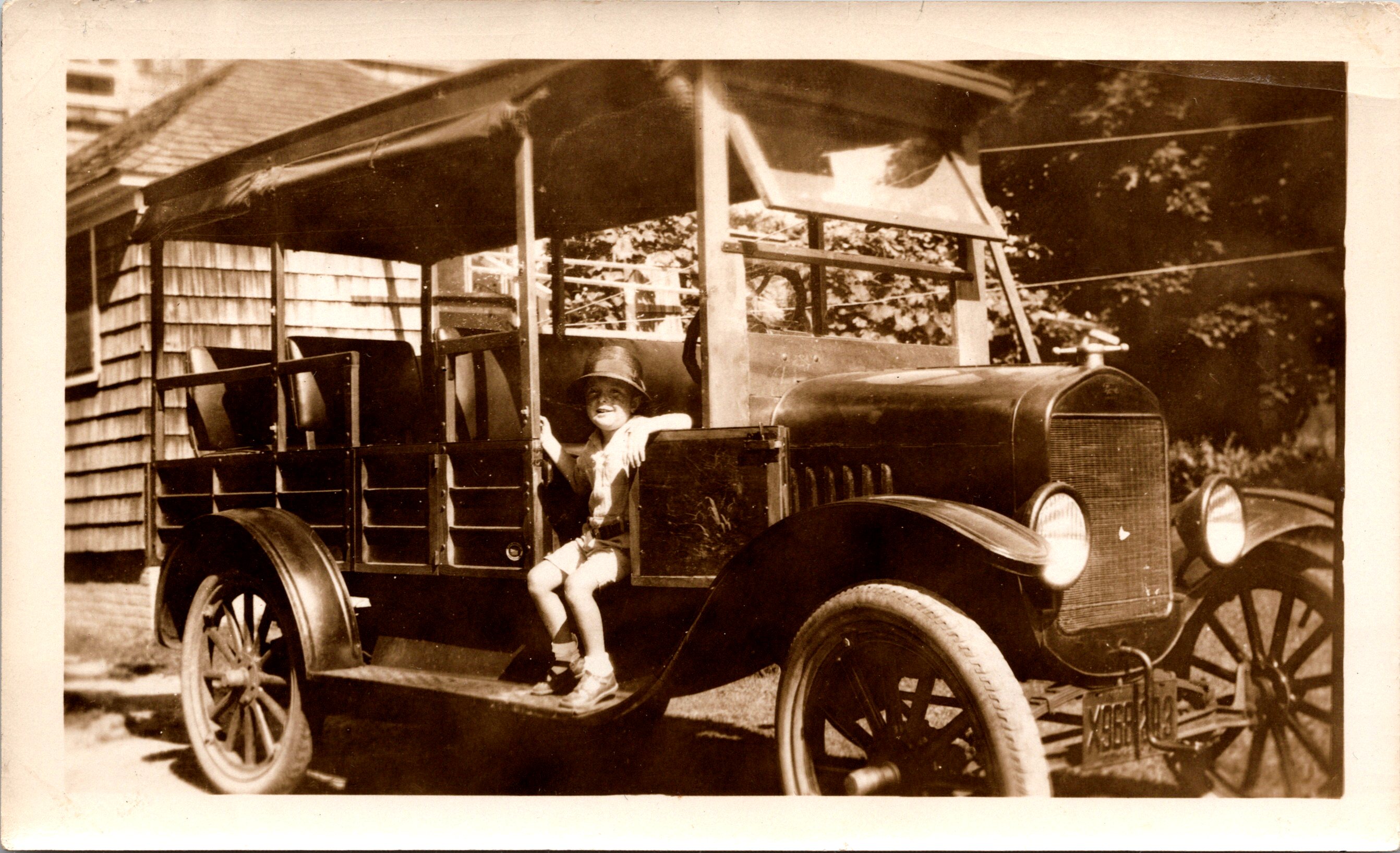
This vintage photograph features an antique bus. A young boy is sitting on the floorboards with his feet resting on the sideboards of the vehicle. Note the bus’s thin tires, bug eye headlights, and the open windshield. Even more noteworthy is the crank starter seen below the bus’s front grill. The vehicles license plate is also visitble in this photograph. The photo measures about 4..50 x 3.75 inches and is in very good condition (see scans).
Buy this Vintage Snapshot (includes shipping within the US) #5160
To purchase this item, click on the Pay with PayPal button below
$28.00
Buy this Vintage Snapshot (includes international shipping outside the US) #5160
To purchase this item, click on the Pay with PayPal button below
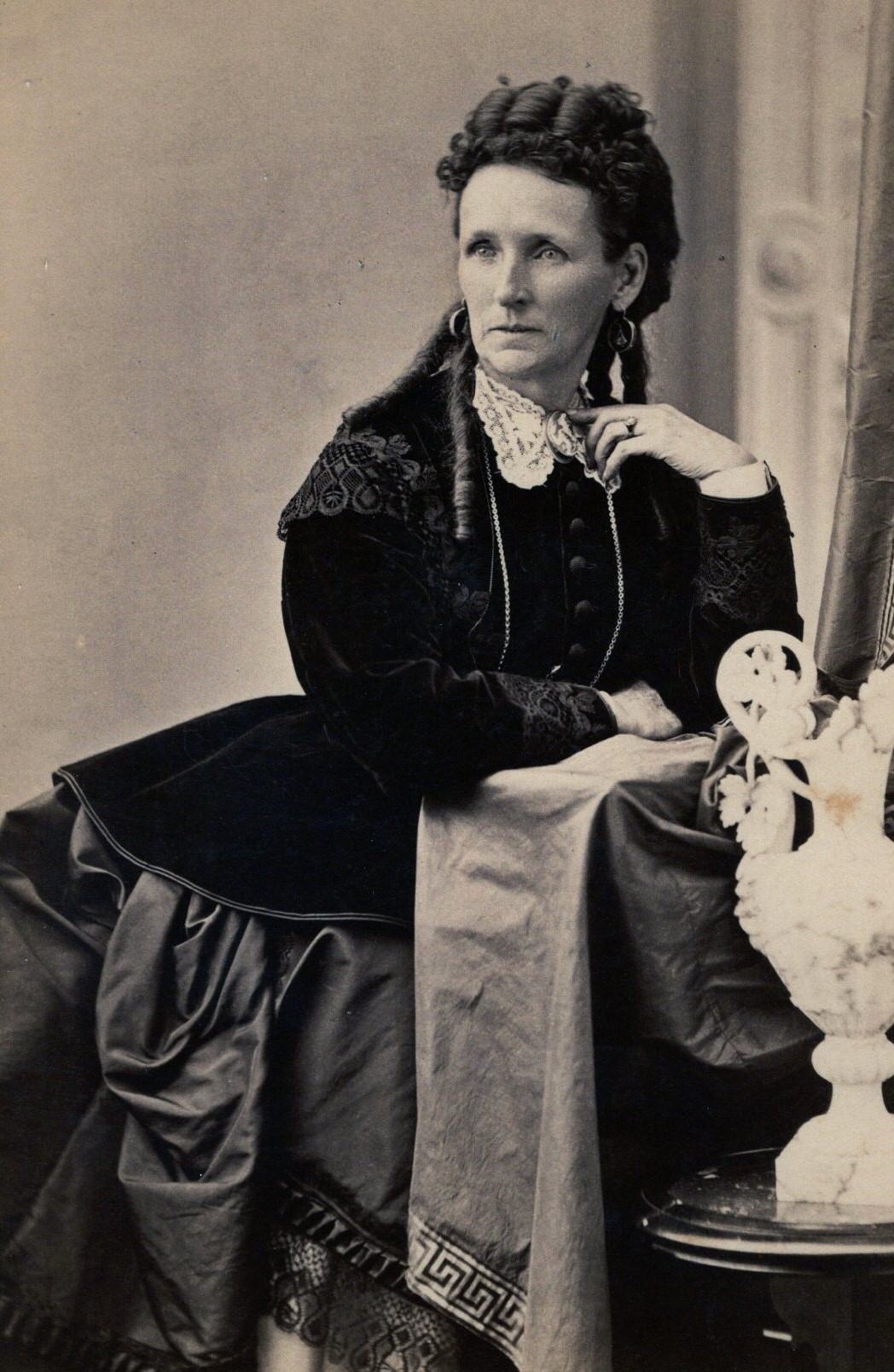
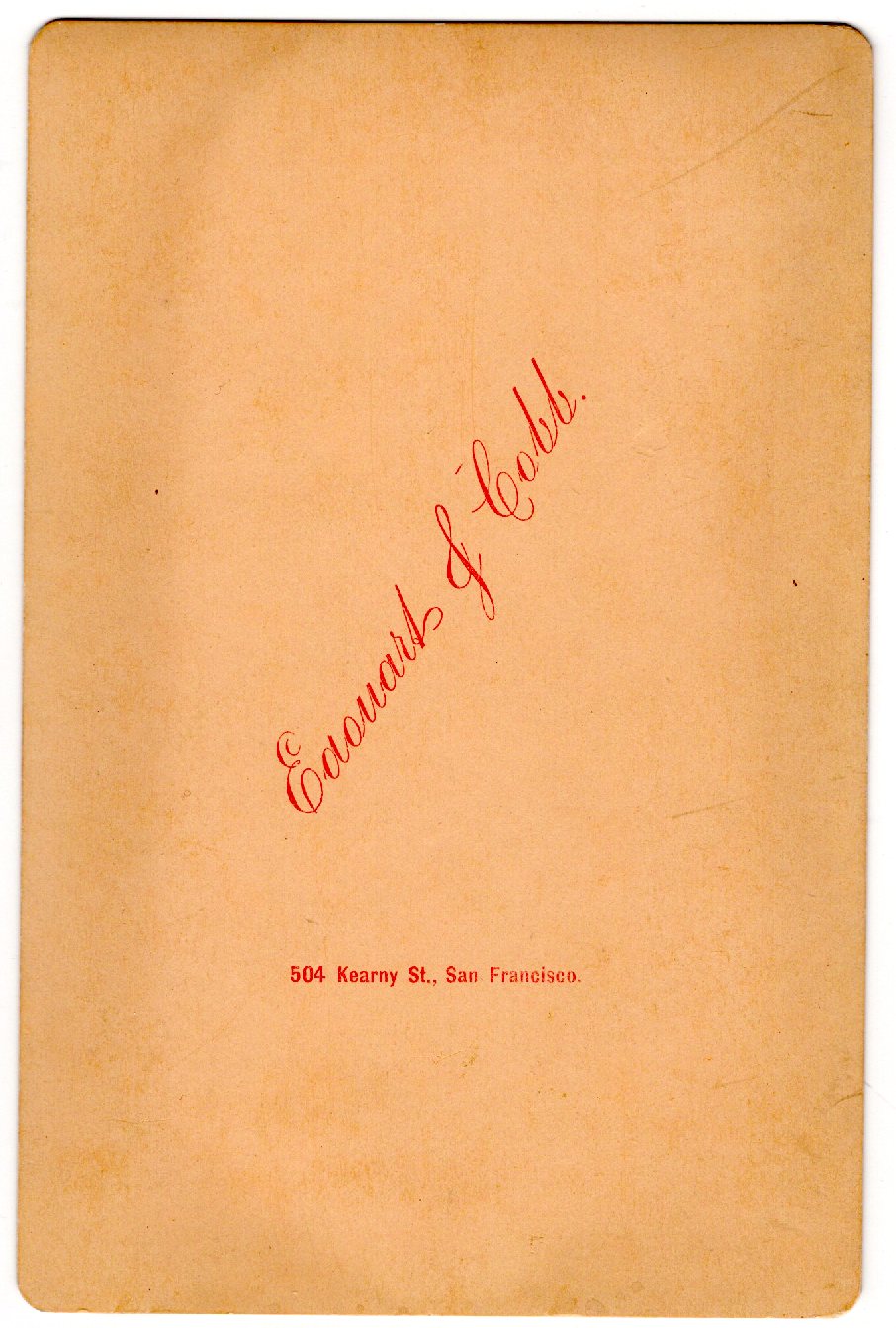
A beautifully dressed elegant lady poses for her portrait in San Francisco, California. She has long tight ringlet curls. A family of four could live under her tent-like dress. This cabinet card was produced by the studio of Edouart & Cobb. Edouart (1818-1892) was born in England and was the son of the famed silhouetist, Auguste Edouart. He was educated in England and between 1848 and 1850, he was a painter and daguerreotypist in New York City. He arrived in San Francisco in 1852 and worked as a landscape artist. By 1860, he opened a photographic studio where he was known for his watercolor photographs. In 1869 he joined David Cobb (1841-?) in a partnership in a photographic studio. The studio was located at 504 Kearny Street in San Francisco. Their partnership lasted until 1881. Cobb was active in San Francisco between 1863 and 1865, as well as between 1869 and 1889. In 1866 he worked in Grass Valley California. This is an early cabinet card. SOLD
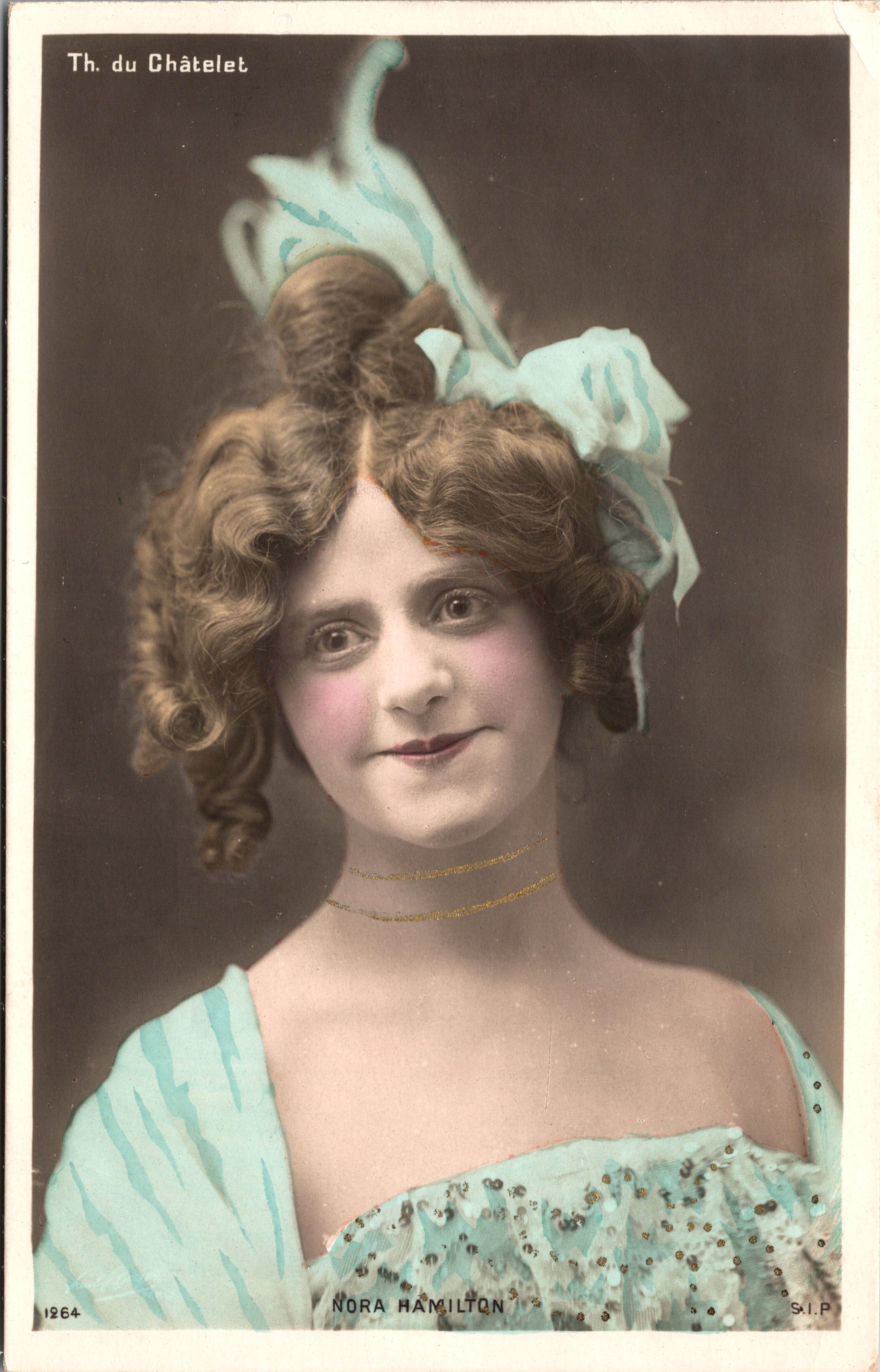
This uncommon vintage real photo postcard features Nora Hamilton. She was a stage performer. Very little biographical information about Miss Hamilton could be found during my preliminary research. There was an actress by the same name who acted on Broadway during the era that this postcard was published. Nora Hamilton appeared in two plays; “The Merry Widow and the Devil” (1908) and “Miss Jack” (1911). The caption in the top left hand corner of the image provides the name of a French theatre named Theatre du Chatelet. Hamilton performed there. The theatre was built on the site of a small castle in about 1861. It was located in Paris, France. This postcard is color tinted. The card was published by S.I.P. and was part of a series (No.1264). This portrait postcard is in very good condition (see scans).
Buy this Real Photo Vintage Postcard (includes shipping within the US) #5153
To purchase this item, click on the Pay with PayPal button below
$22.00
Buy this Vintage Real Photo Postcard (includes International shipping outside the US) #5153
To purchase this item, click on the Pay with PayPal button below
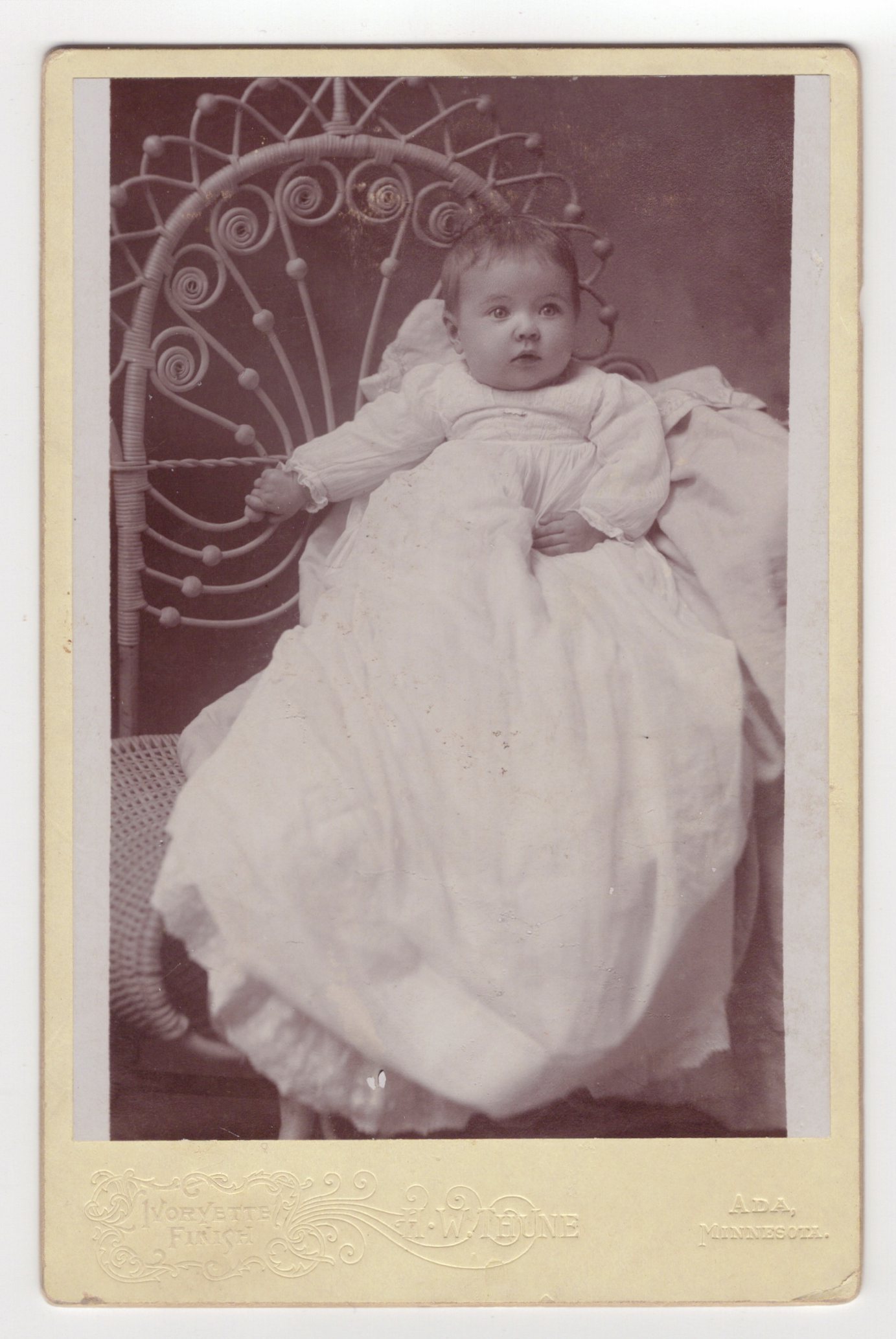
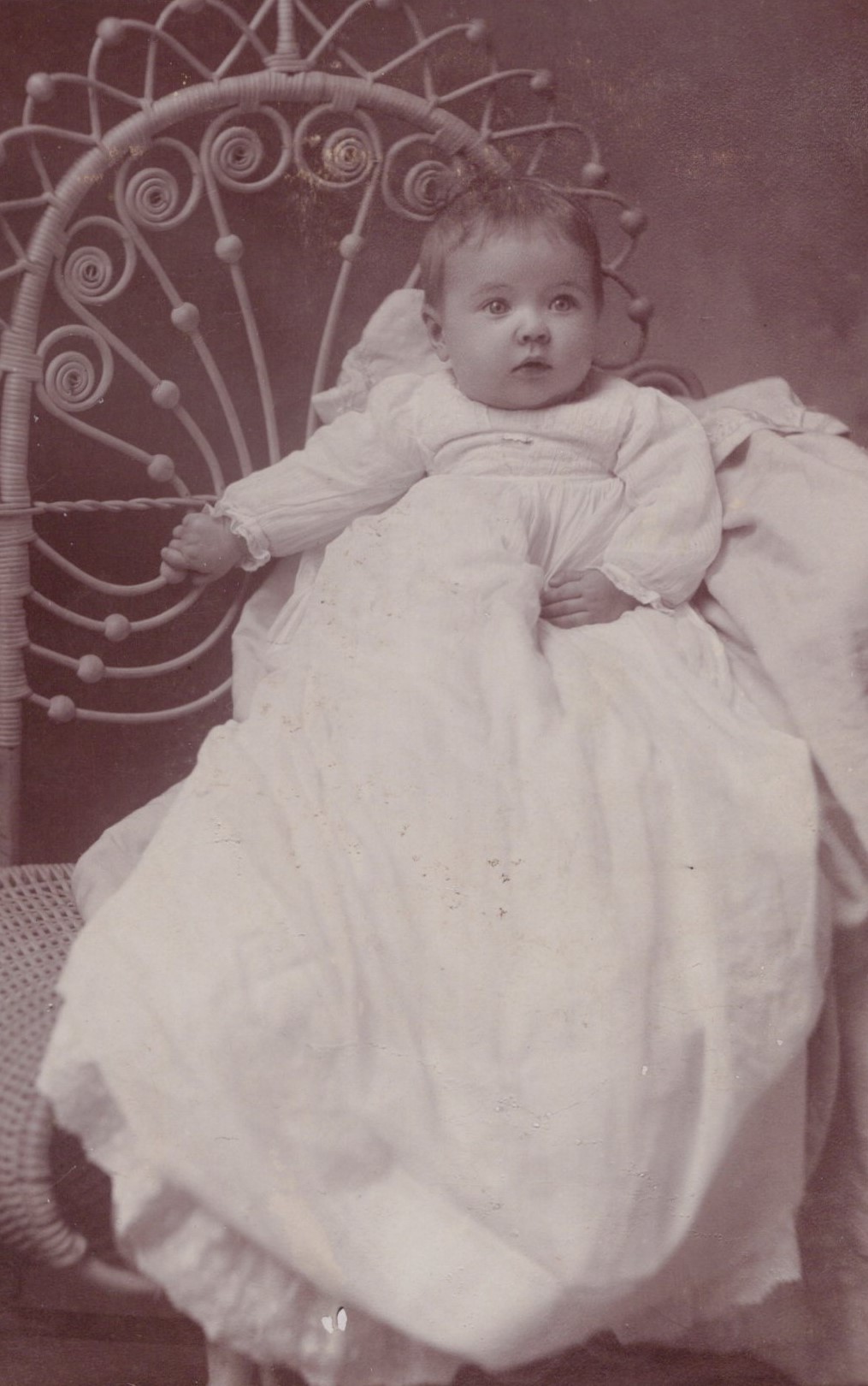
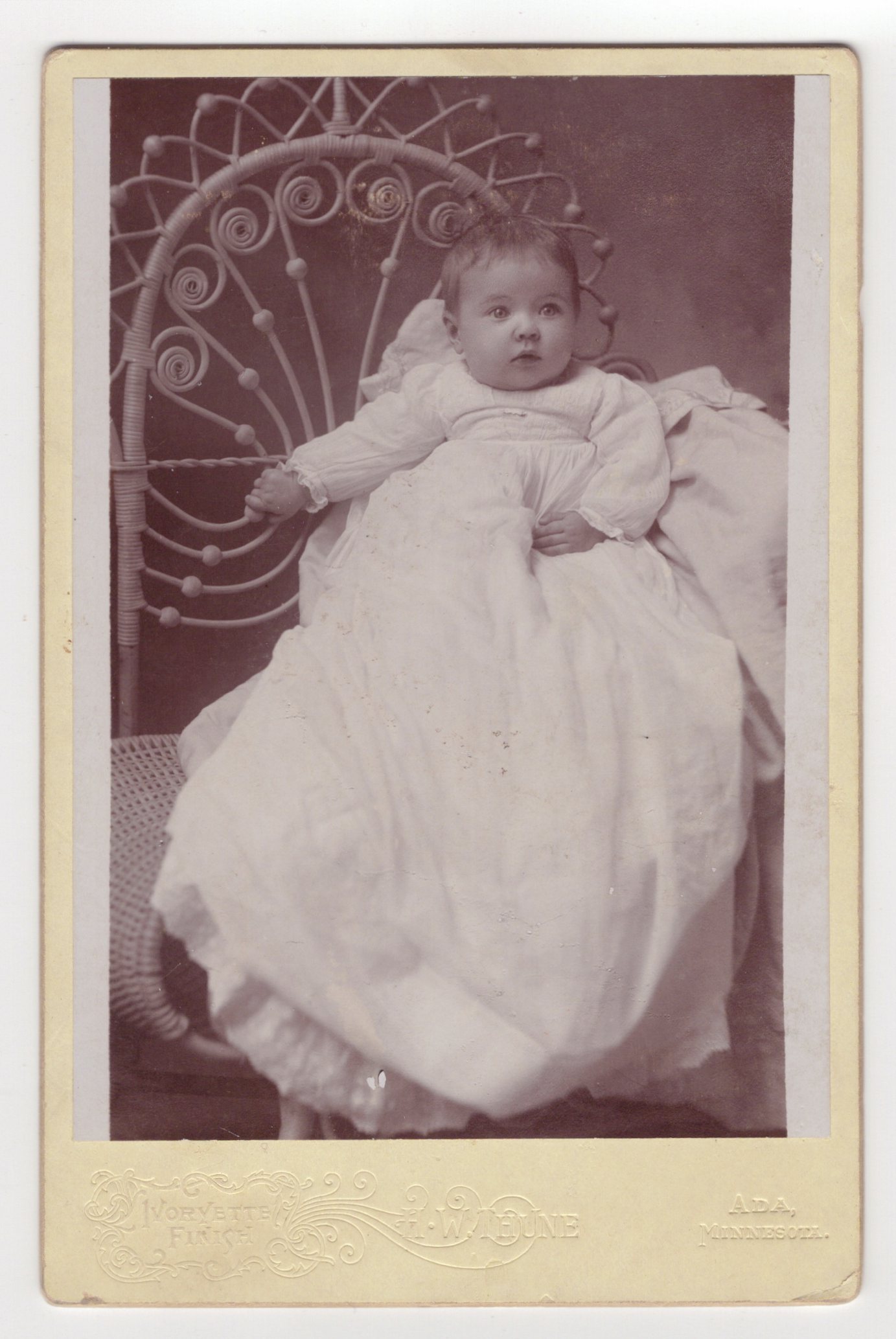
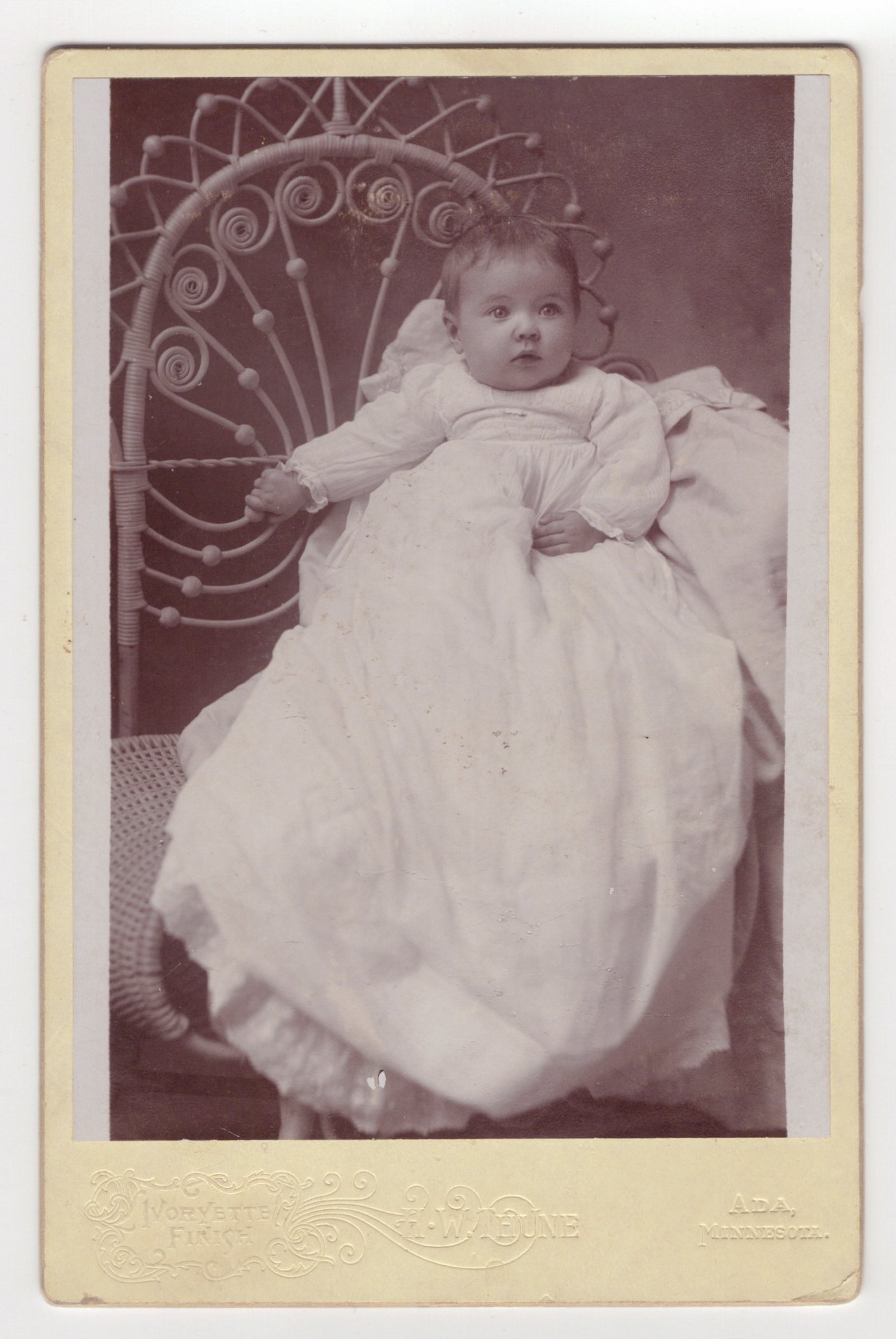
This cabinet card captures a very cute baby posing on a wicker chair. The baby is wearing a long gown and has a terrific sweet facial expression. The photographer is Halvor William Thune (1857-1932). He was born in Iowa of Norwegian native parents. He opened a gallery in Ada, Minnesota in 1883 and Thune still operated the gallery in the 1920’s. He was civically active and held a number of county and village offices including Mayor of Ada and Chief of the Fire Department. Thune also found time to operate his farm. This cabinet card has excellent clarity and is in good condition (see scans).
Buy this Cabinet Card Photograph (includes shipping within the US) #5609
To purchase this item, click on the Pay with PayPal button below
$24.00
Buy this Vintage Original Cabinet Card (includes International shipping outside the US) #5609
To purchase this item, click on the Pay with PayPal button below
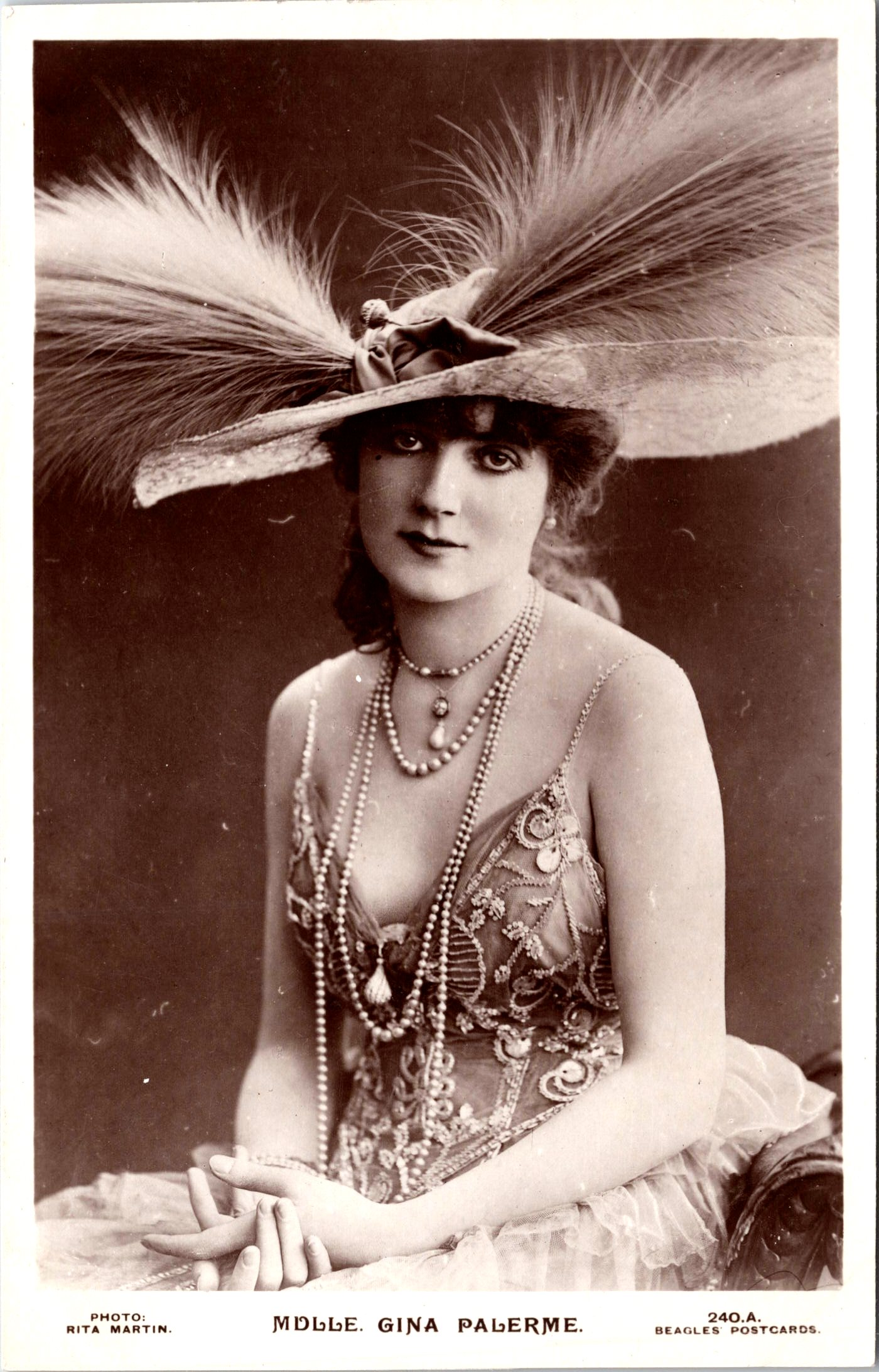
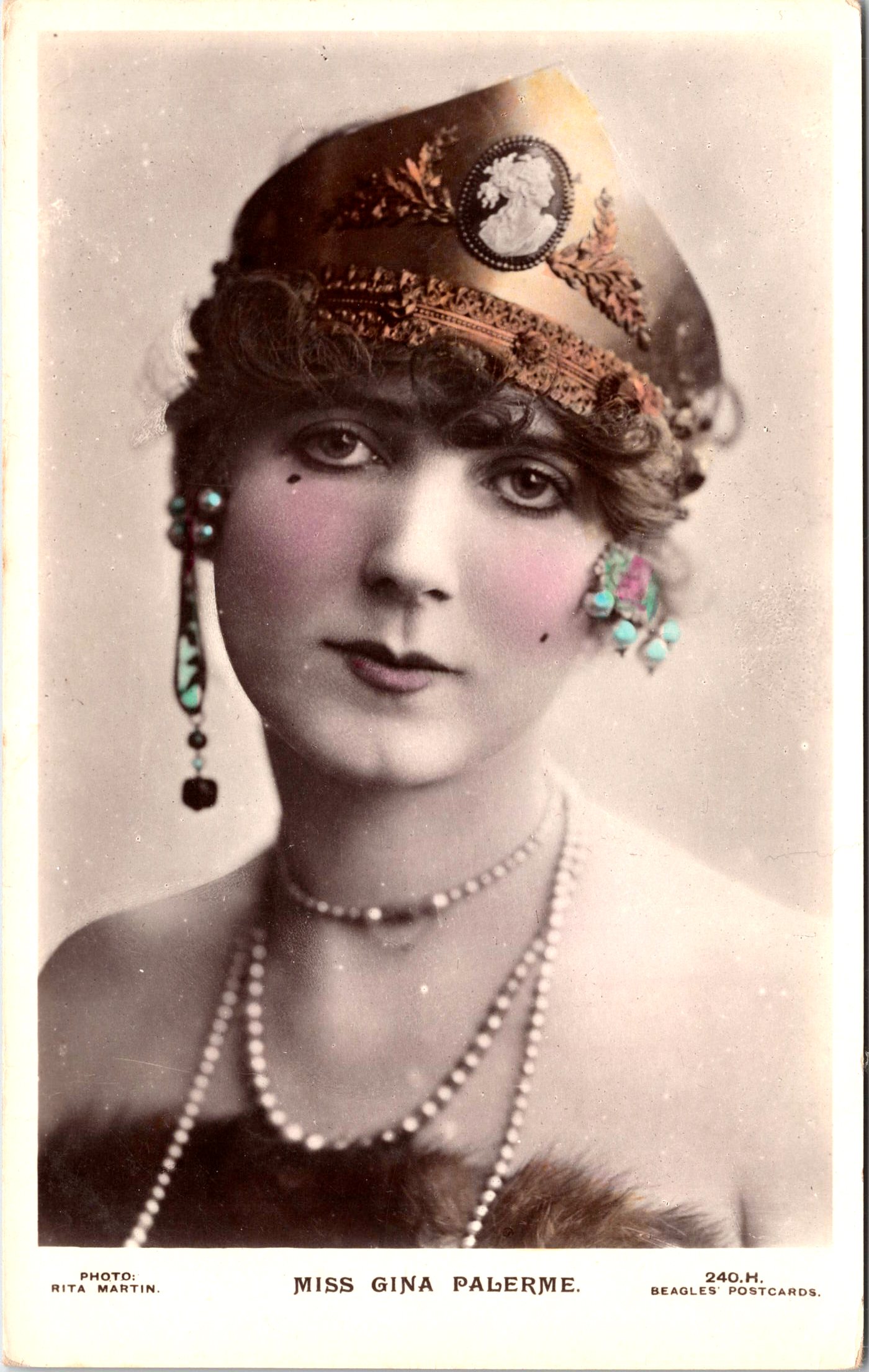
These vintage real photo postcards feature a portrait of French actress and dancer, Gina Palerme (1885-1977). She was an active performer between 1909 and 1929. She began her theater career in 1909 in France. An English impresario brought her to London in 1910. Her debut was in “The Quaker Girl” at the Adelphi Theater. This performance was followed by many more stage roles in West-end productions. Photographer, Cecil Beaton, wrote that she was glamorous and that “her off-stage appearances were as sensational as her stage escapades”. She returned to France in 1919 and starred in silent films. Her final screen appearance was in 1925. Her post film career was comprised of working in French cabarets, including Moulin Rouge. She also did revue work in the United States. The New York Times (1929) announced that French revue actress, Gina Palerme, from the Moulin Rouge in Paris, “arrived in America to appear in a new revue under the Shubert management. It was reported that Palerme spoke English well and this was her first trip to America. J. J. Shubert “discovered” her after hearing her sing at the Moulin Rouge. He offered her a six month contract to come to New York. There was also an option that offered her a three year contract upon finishing her Revue performances, to appear in “talkies”. Palerme was very pretty, as is apparent in these postcard photographs.
In Postcard 1, Palerme looks glamourous and her portrait can be seen as risque. Her ornate dress is low cut. This postcard was published by J. Beagles & Co. as part of a series (No.240A). Palerme’s photograph was taken by celebrity photographer, Rita Martin. Female photographers were uncommon during this era. (SOLD)
Postcard 2 was published by J. Beagles & Co. as part of a series (No.240H). This card is part of the same series as Postcard 1. Rita Martin is the photographer who took both this portrait and the photo in Postcard 1. Note the golden color of Palerme’s hat. The color tinter clearly was a artist. Unlike many color tinters, this one believed in subtlety. (SOLD)
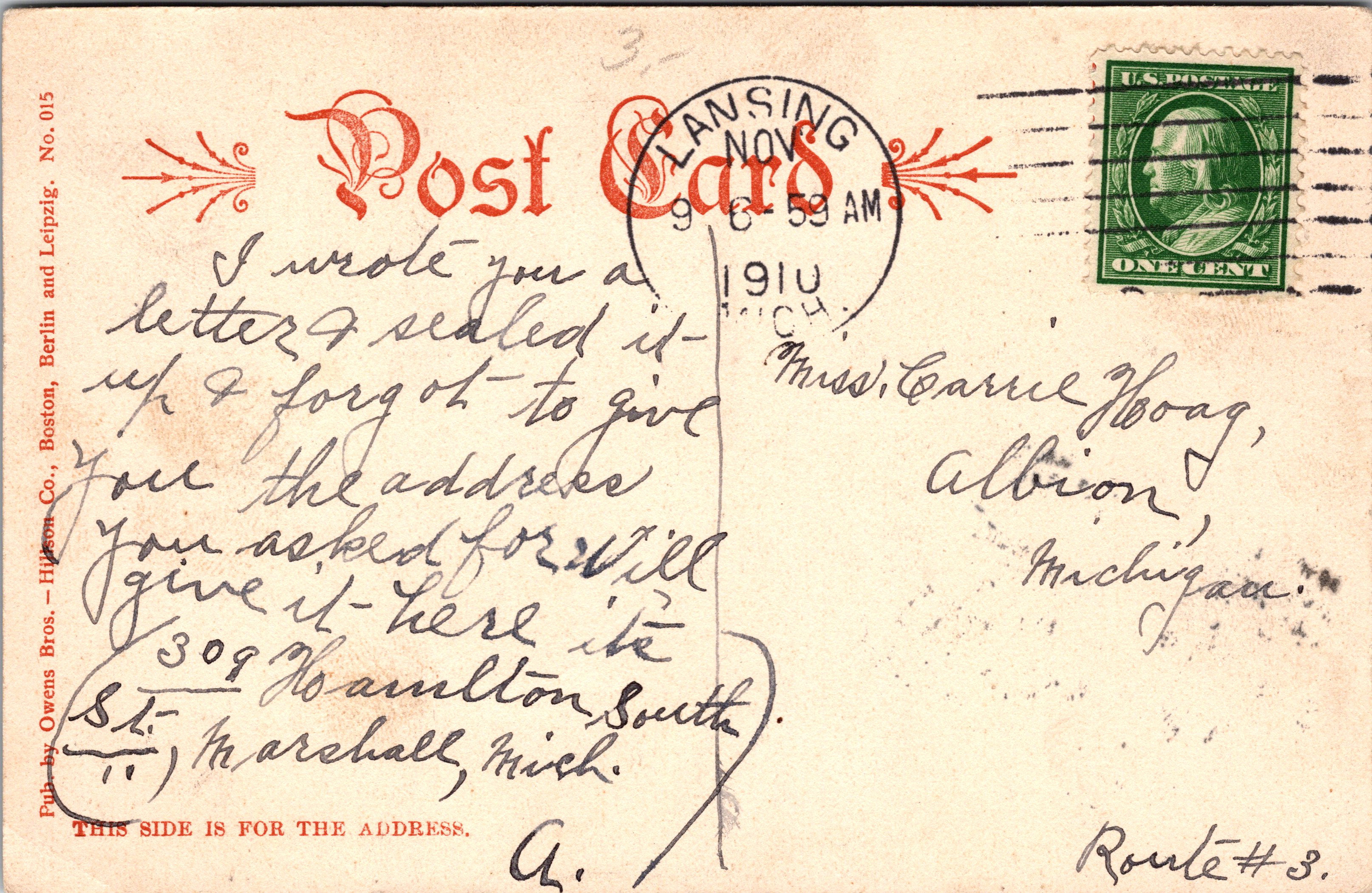
This vintage real photo postcard features musical comedy actress, Paula Edwards. The performer’s name appeared in several theatrical publications. A 1902 article in “The Theatre” magazine presents a review of a show in which Edwards appeared. She performed in “The Showgirl” at Wallack’s theater in New York. The show was a musical comedy and the reviewer hated it. Here are some examples of the reviewer’s comments. He stated that the humor was as heavy as a church sermon. He added “the alleged comedians are not funny”, “the singers can’t sing”, and the director should put on his spectacles and look at the ballet. Finally, the ascerbic reviewer stated the the plot is “as thin as boardinghouse soup”. In regard to Paula Edwards, the writer declares that she helped “reconcile the audience to a very stupid evening”. This vintage postcard was published by Owens Bros. – Hilson Company (Boston, Massachusetts). The card was part of a series (No.015). The postcard was postmarked in Lansing, Michigan in 1910. This vintage photo postcard is in fair condition (see scans). (SOLD)
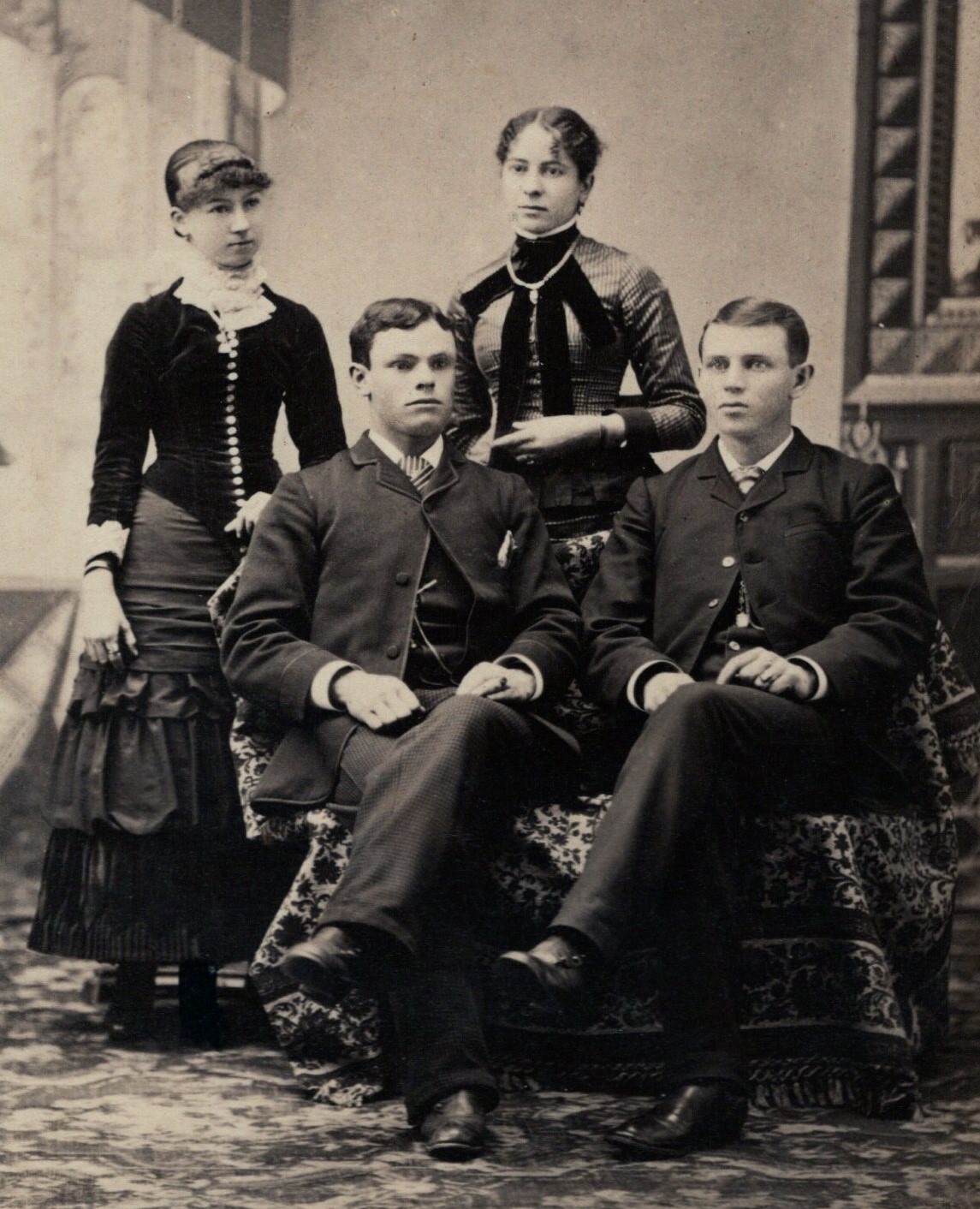
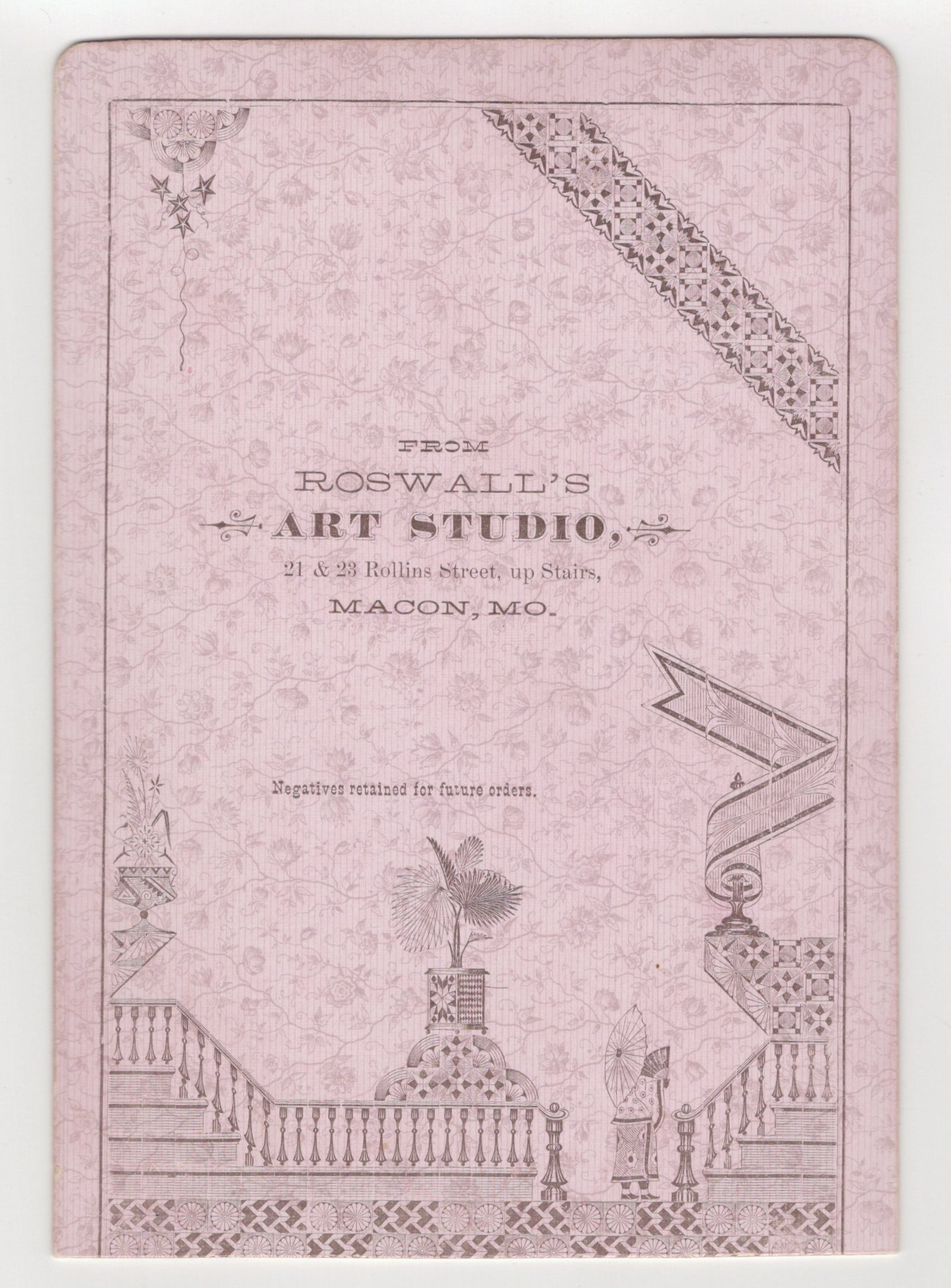
This cabinet card features two young gentlemen and two young ladies posing for their portrait at Roswall’s Art Studio, in Macon, Missouri. The exact address of the studio was 21 & 23 Rollins Street. The young adults in this photograph may be from the same family, or may be just friends. These four individuals are very well dressed, leading one to believe that they likely come from families of means. It is interesting to note that the girl on the left appears somewhat separated from the other three subjects. The separation my reflect how she felt psychologically about her place in the foursome. However, her position in the photograph may be simply the result of the photographer not wanting to leave too much space on the left side of the image. The photographer, Lars J. A. Roswall, was reported by the Photographic Times (1884) to be a part of a group that held a patent relating to an apparatus for cleaning photographs. The bottom border of this photograph has been trimmed. The card has a slight curl. Overall, this cabinet card portrait is in good condition (see scans). (SOLD)
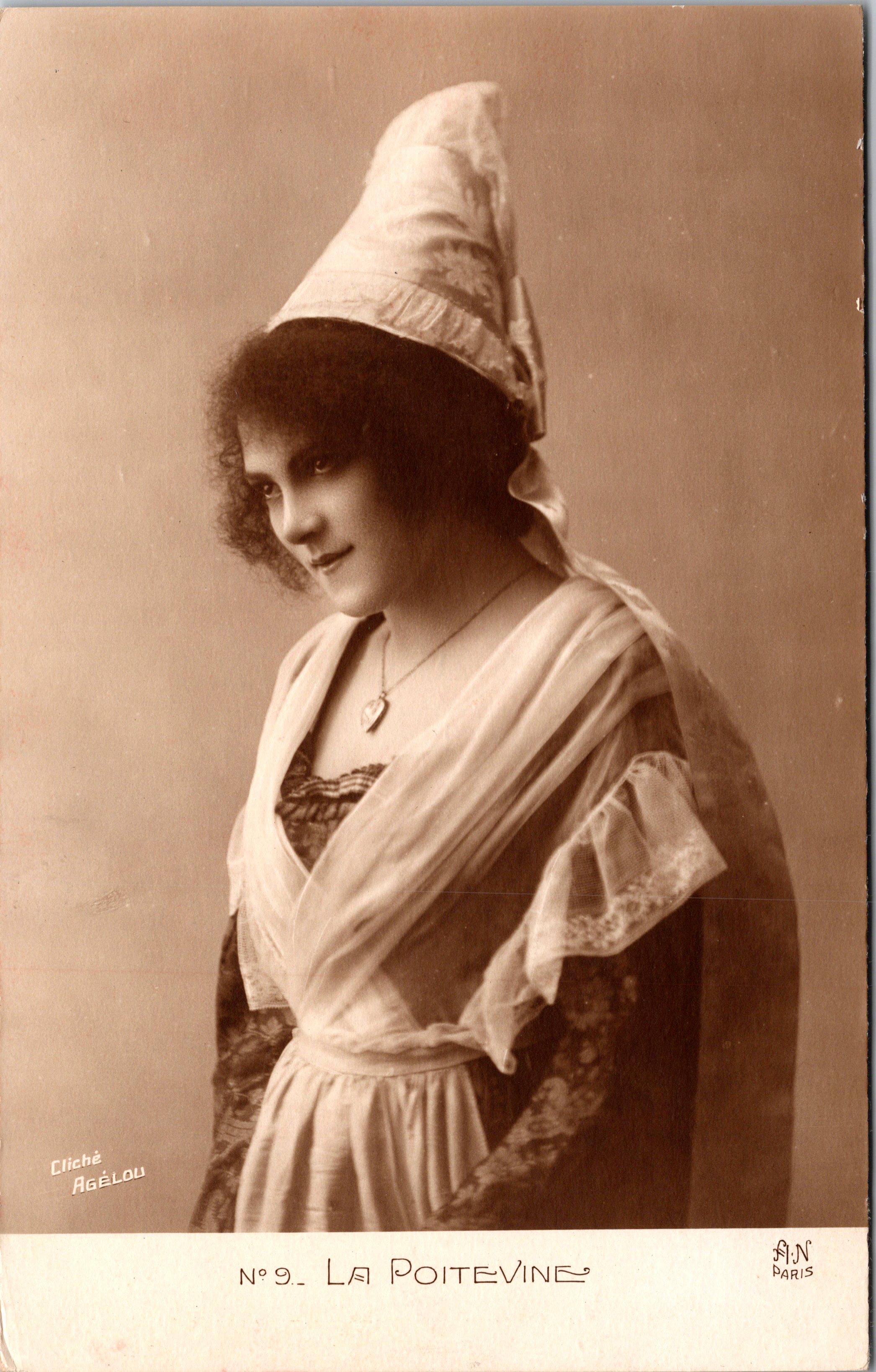
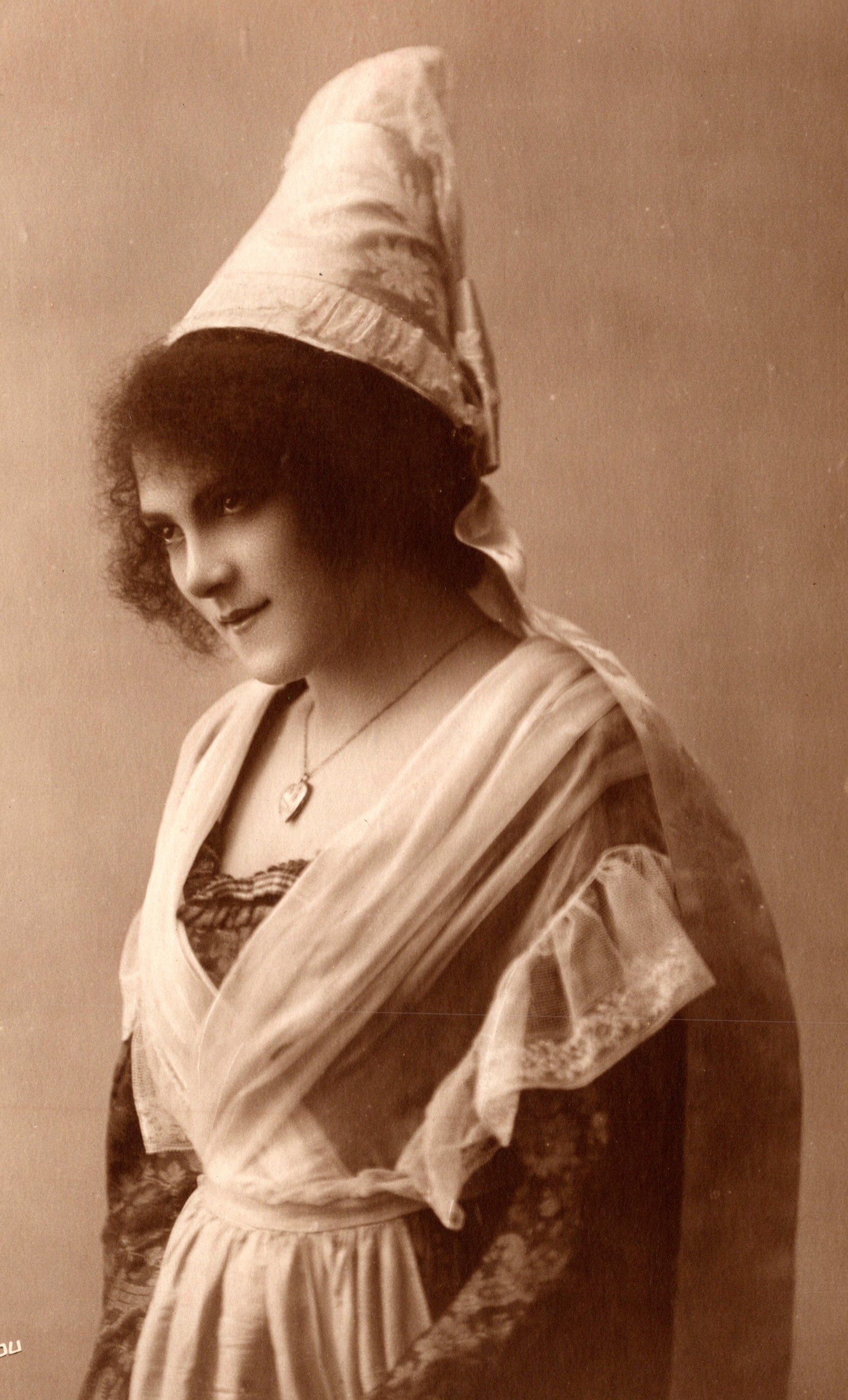
This vintage real photo postcard is part of a series named “Les Plus Belles Femmes de France” (The Most Beautiful Women of France). This series is about the Provinces of France, and the model for this image represents La Poitevine. Note that the woman in this photograph is wearing a pretty smile. This postcard is no.9 in the series. There were a number of different series published. The Province series was one of the more popular series. The models in this series represent different French Provinces and wear traditional clothing from that particular area of the country. This postcard was published by well known photographer Alfred Noyer. The celebrated photographer supervised a large photo studio in Paris. The Noyer Studio operated from 1910 until the 1940’s. Many of the postcards he produced of women were nudes or risque images.The photographer of this postcard portrait is Jean Agelou (1878-1921). Agelou was a French photographer of the 1910’s and 1920’s who is best known for his erotic and nude photographs. He was born in Egypt and not much is known about his private life. Agelou generally used models between the age of 20 and 24 years-old. He had a favorite model. Her name was “Fernande” and in addition to modeling, she was Agelou’s lover. Although the 1900’s was the “golden age” of erotic photograph, photographers who took such risque photos had to use discretion. As a result, Agelou signed his work “JA”. In 1908, nudity in photographs was banned in France and photographers had to cover nude women images with strategically placed undergarments or other materials. Nude images had to circulate on the down low. They were sent in the mail inside of envelopes. Fernande remained popular and her erotic photographs were enjoyed by soldiers on both sides during World War I. Jean Agelou died in 1921; the result of a car accident. His brother George, who managed Jean’s business, also was killed in the crash. (SOLD)
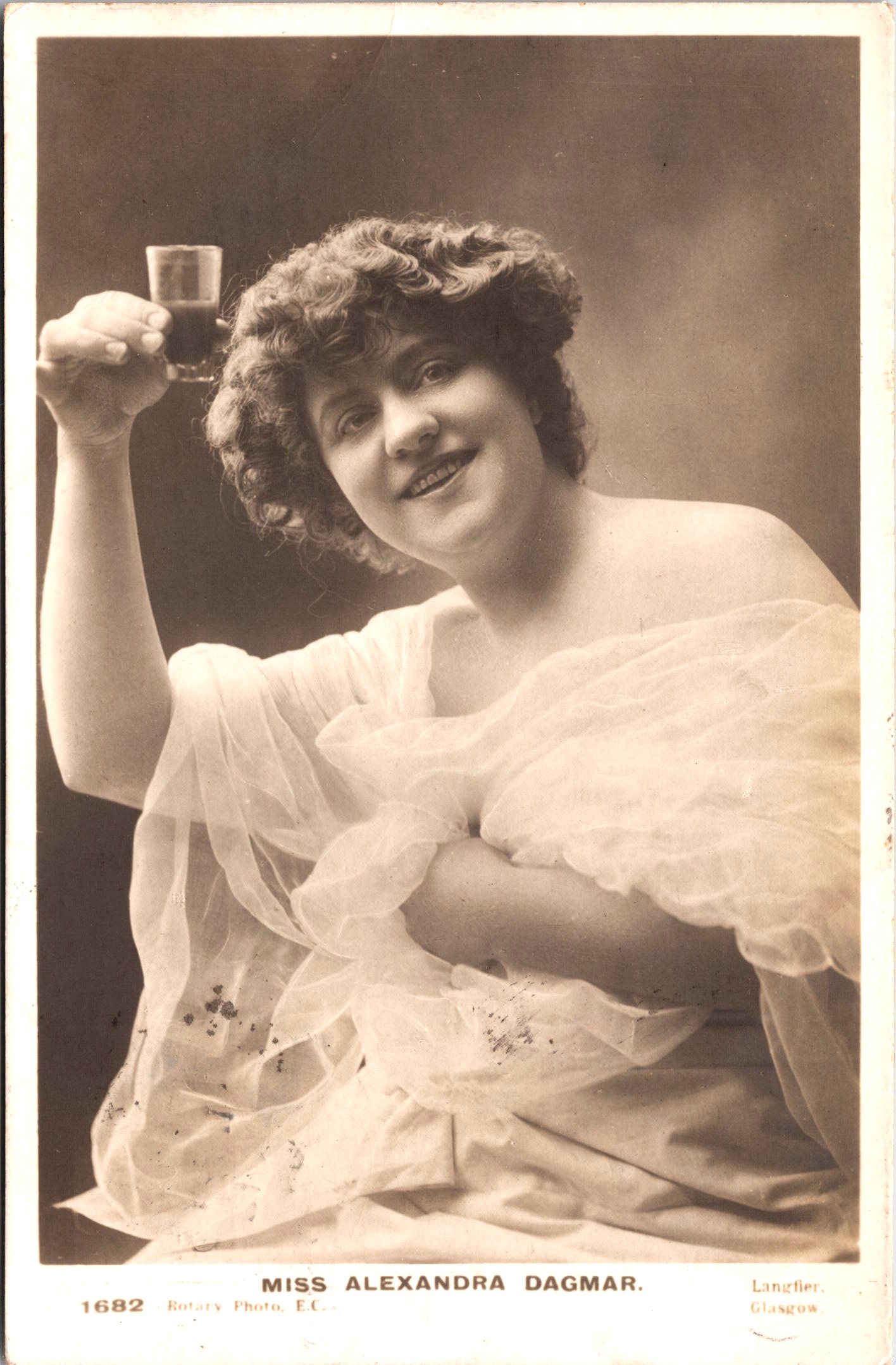
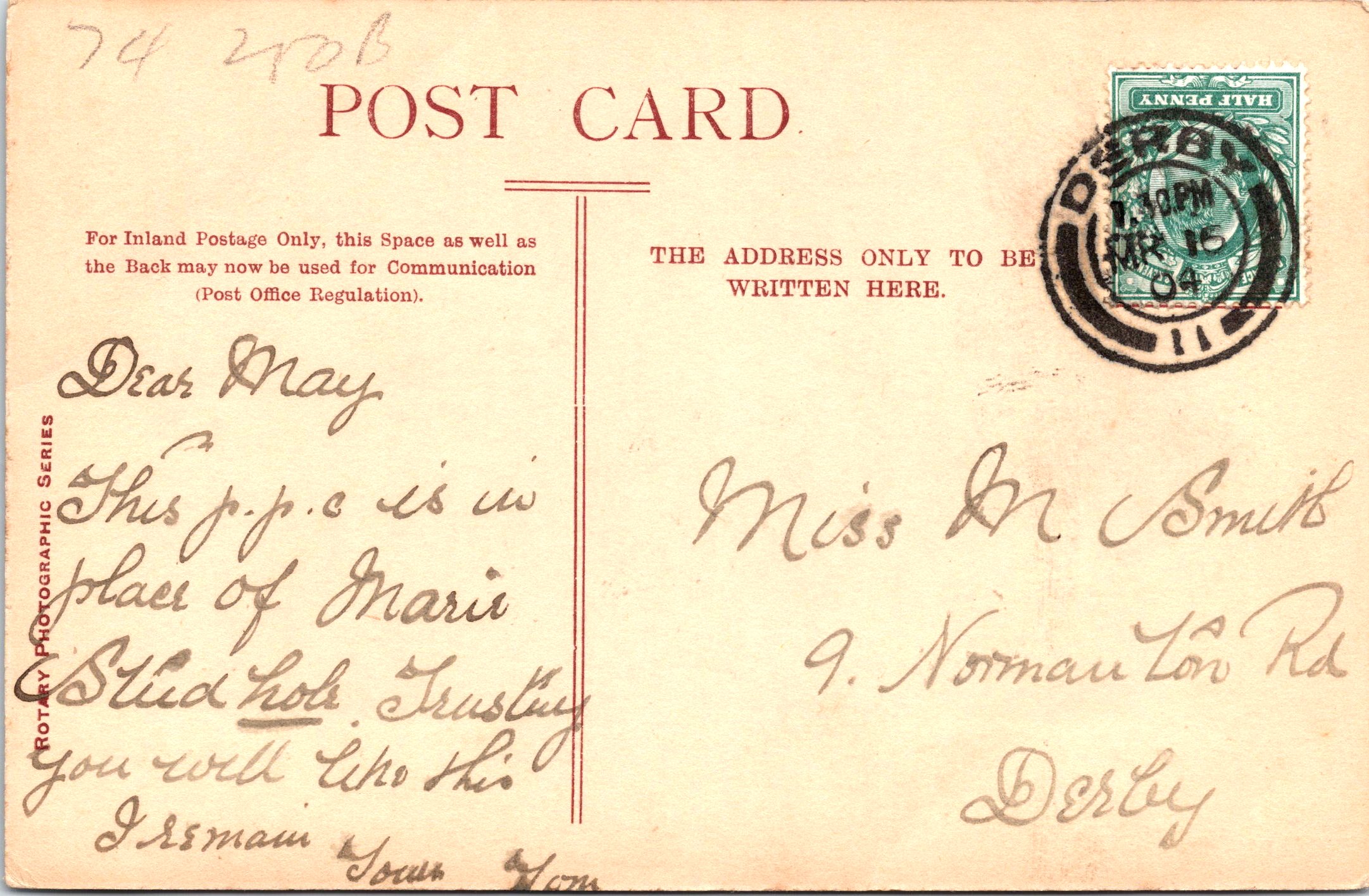
This vintage real photo postcard features music hall vocalist and pantomime performer, Alexandra Dagmar (1868-1940). Dagmar appears to be making a toast in the postcard’s photo. She was born in Polar, England to Danish born parents. Her father was a ship chandler (seller of ship supplies and equipment), and later a wholesale provision merchant. Dagmar came to the public’s attention at the Grand National Amphitheatre in London. where she appeared in “Richard III”. She subsequently toured the United States where she met Edmond DeCelle (1854-1920), a tenor, who she married in New York (1888).The pair appeared together in both the United States and Great Britain for a few years until Dagmar resumed her solo career. She retired upon the onset of the First World War and she and her family made the US her home. She died in Mobile, Alabama at about 72 years of age. This postcard was published by Rotary Photo as part of a series (No.1682). The photo on this card was taken by the Langfer studio which was located in Glasgow, Scotland. This postcard was postmarked in Derby in 1904. (SOLD)
This vintage real photo postcard features a barber giving a man a haircut. The gentleman having his hair cut is sitting in an old time barber chair and is smoking a cigarette or cigar. The barber is performing his work in a tent rather than in a barber shop. Note the canvas walls and the tent poles. I would love to know the story that goes along with this image. This postcard has a Cyko stamp box indicating that it dates back to sometime between 1904 and the 1920’s. (SOLD)