This cabinet card portrait is unusual. The typical props seen in cabinet cards are items like fences, walls, rocks, windows, books, and a number of other common objects. The five young women seen in this cabinet card are holding unusual props. Each is holding a toy cat of different sizes. The cats seem to be cut-outs. The women show a familial resemblance and are likelyssisters. They are all clad in similar long dresses. The photograph was taken at the gallery of D. Cramer. David Cramer’s photography business was located in Carey, Ohio. Cramer was born in 1854. He married Elva C. Cramer in 1882. The only mention, I could find of his occupation as a photographer, was in the 1900 US census. By 1910, the US census listed him as a painter. Note the artwork on the reverse of this photograph. The drawing is beautiful and it is related to the words, “Columbian Cabinet”, printed on the middle bottom of the front of the cabinet card. In the 19th century, Columbia was viewed as a goddess-like female “national personification” of both the United States and the concept of Liberty. Sometimes the figure was called “Lady Columbia” or “Miss Columbia”. SOLD
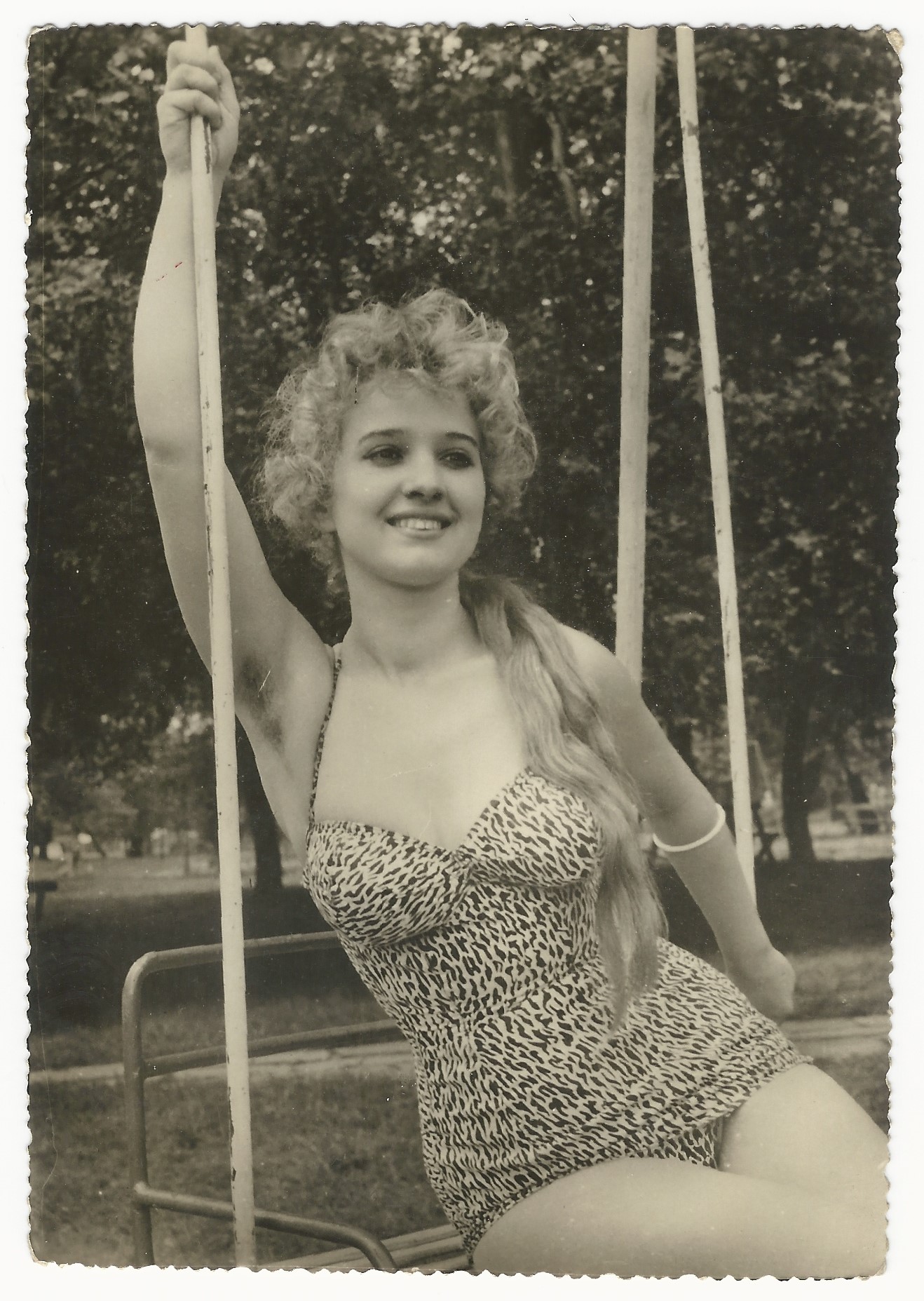
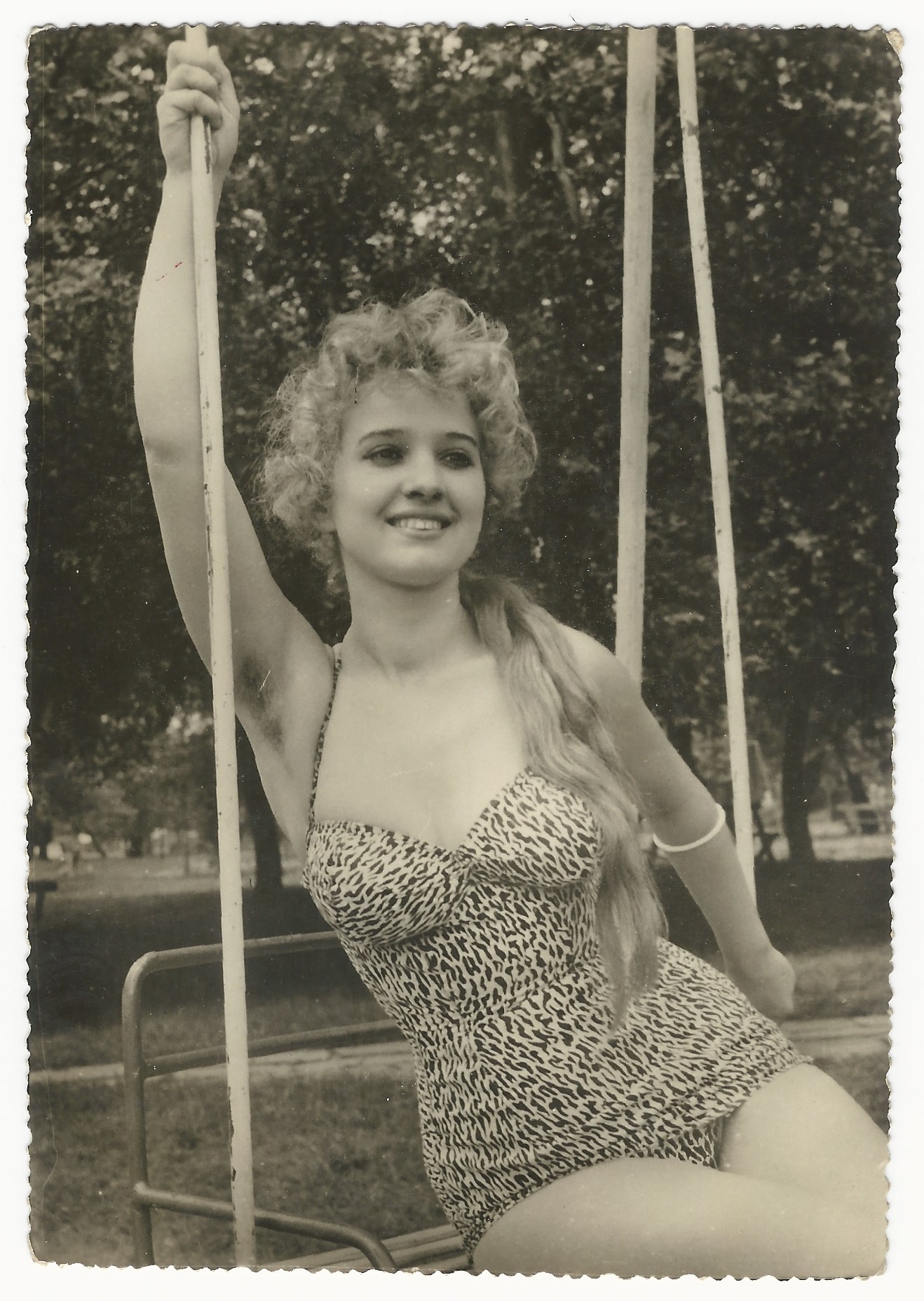
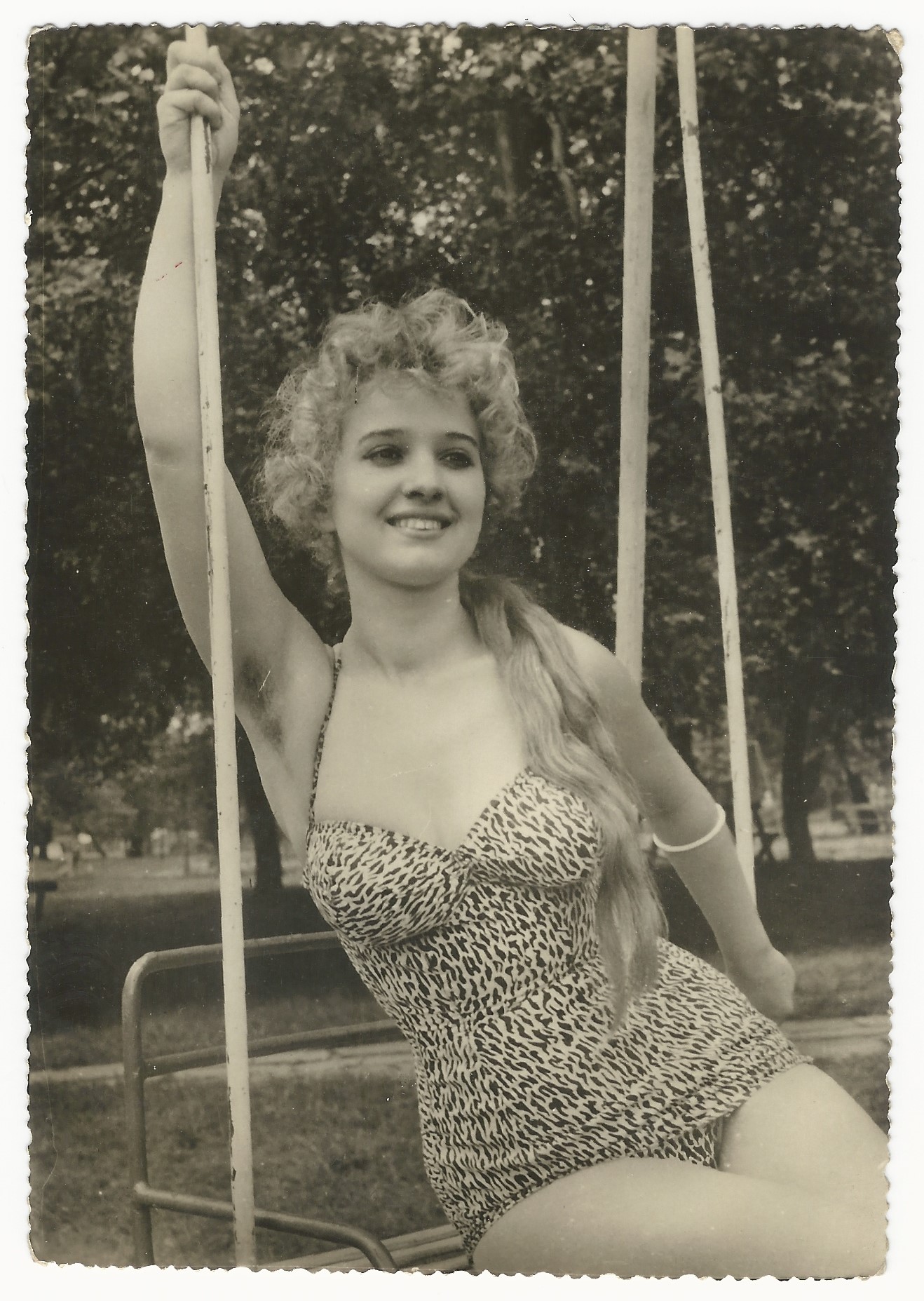
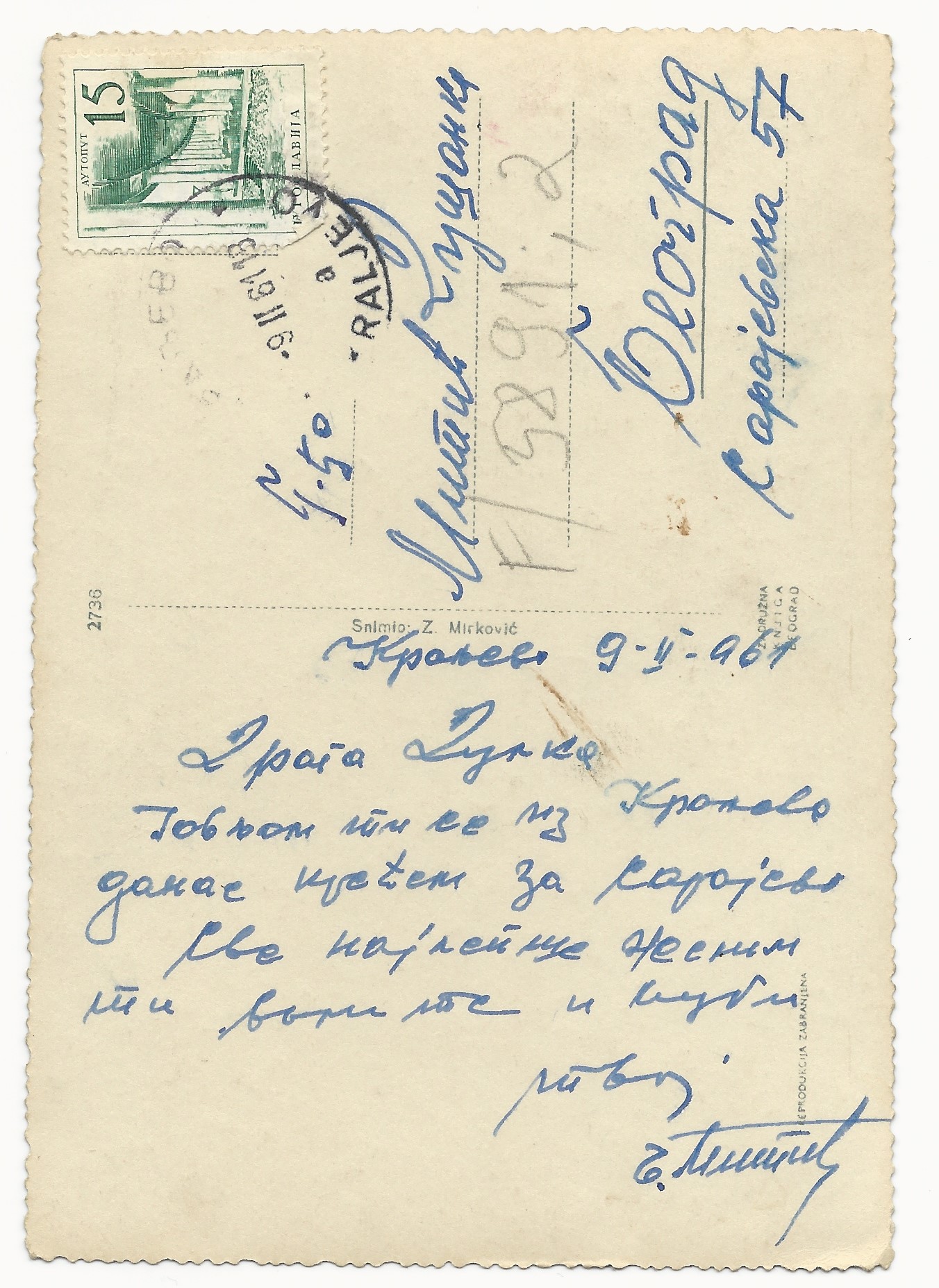
This vintage real photo postcard features a pretty young woman sitting on a swing. She appears to be in a park. She possesses a beautiful smile. The photographer is Z. Mirkovic. This postcard was mailed in 1961. The card was postmarked in Kraljevo, Serbia. The city is the second to largest municipality in Serbia by area. Belgrade is the largest. This postcard measures about 4″ x 5 3/4″ and is in very good condition (see scans).
Buy this original Vintage Real Photo Postcard (includes shipping within the US) #3240
To purchase this item, click on the Pay with PayPal button below
23.50 $
Buy this Cabinet Card Photograph (includes International shipping outside the US) 3240
To purchase this item, click on the Pay with PayPal button below
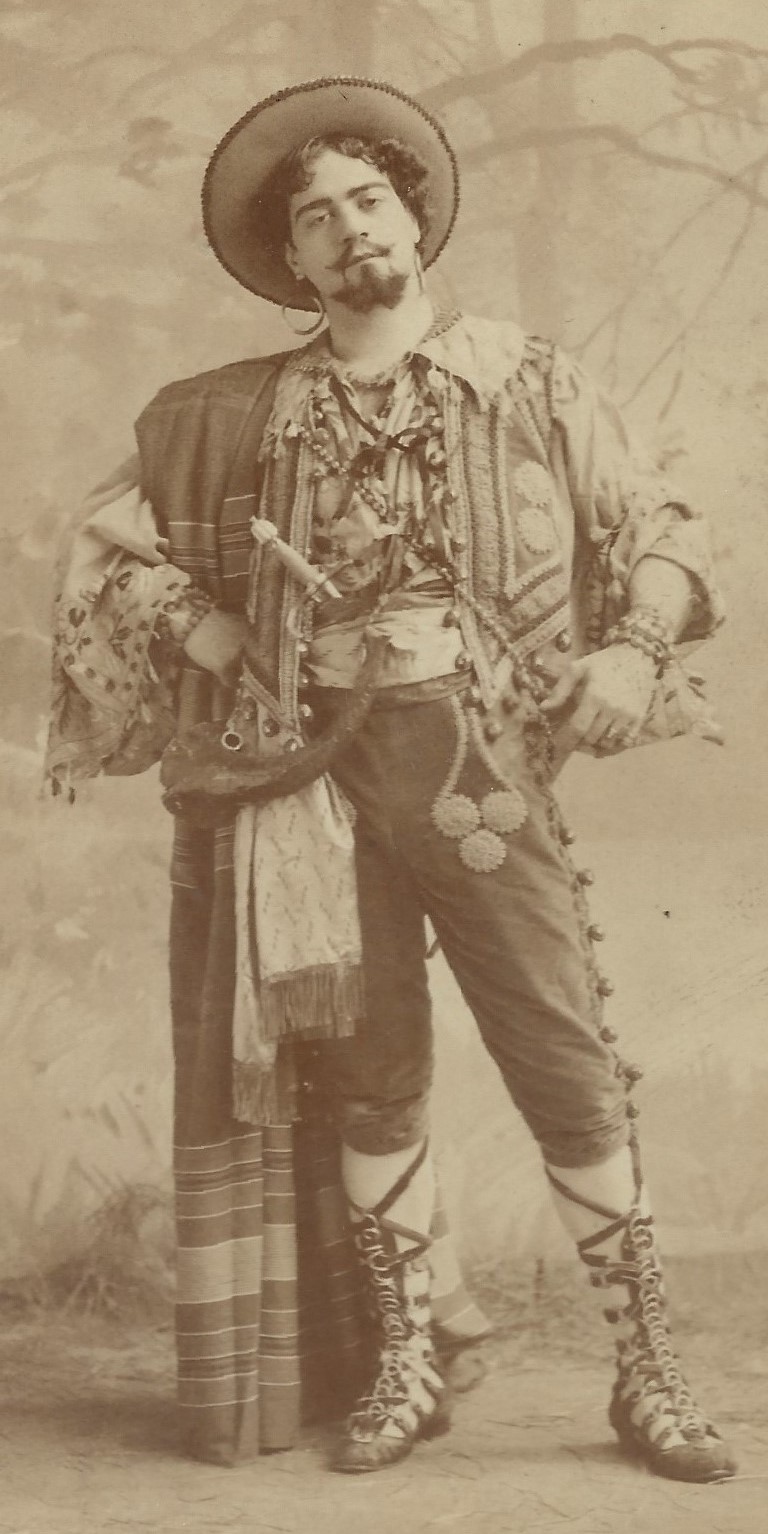
This cabinet card portrait features stage performer, Alessandro Alexander Salvini (1861-1896). The photographer of this image is the famed celebrity photographer Napoleon Sarony. The eccentric and talented Mr Sarony, operated a studio in New York City. Sarony photographed a large number of actors and actresses appearing in New York theater. Alexander Salvini, as he was known in America, was born in Italy. His father, Tomasso Salvini was an esteemed tragedian actor. His grandfather also appeared on the stage. Alexander wanted to become an actor too, but his father steered him toward a different career. Alexander decided to become a sailor and after several voyages decided to switch careers. He enrolled in school to become a civil engineer. After receiving his degree in 1881, he came to America with an actor friend. Alexander’s intent was to find a job with a railroad, but instead, he spent a year traveling with his friend, assisting him, learning fencing and English. In 1882, he went to New York City to begin an acting career. He made his debut that same year, appearing in a play with actress Clara Morris. When Salvini’s father heard about his son’s success, he responded with an unsupportive cable stating “How dare you, sir, go on the stage without my permission”. Remember, the younger Salvini was 21 years old at the time of his debut. He replied to his father that he didn’t ask his father’s permission, because he knew his request would be denied. After his debut, Salvini hit the road with a traveling theater company and remained touring for two years. In 1885, Tomasso Salvini arrived in America for a tour. He hired Alexander as the stage manager and part-time actor. After traveling with his father’s company, Alexander started his own theater company. In 1886 he appeared in a series of plays at the Union Square Theater. His father returned to America in 1889 and Alexander joined his tour. When the tour ended, he went with is father to Italy. After a brief vacation, Alexander returned to America with a large amount of his father’s wardrobe which had been accumulated over many years. He also brought swords and armor from hid dad’s collection. Alexander and his company launched a new American tour and Salvini played a number of roles including Shakespearian parts. In the early 1890’s he married Maude Dixon, the leading lady in his company. Alexander had roles in two Broadway plays, “Partners” (1888) and “A Child of Naples” (1890). He is very well known for his role in “The Three Musketeers”. In 1896, he became ill with “organic trouble” and after four months of being bed bound, he died. A Sarony cabinet card portrait of Alexander Salvini can be found in the Museum of the City of New York. This cabinet card portrait comes from the collection of Brown Brothers. The firm was the first stock photo agency. It was established in 1904. It built an archive of over one million photographs and negatives. This cabinet card is in good condition (see scans)
Buy this original Cabinet Card Photograph (includes shipping within the US) #3239
To purchase this item, click on the Pay with PayPal button below
50.00 $
Buy this Cabinet Card Photograph (includes International shipping outside the US) 3239
To purchase this item, click on the Pay with PayPal button below
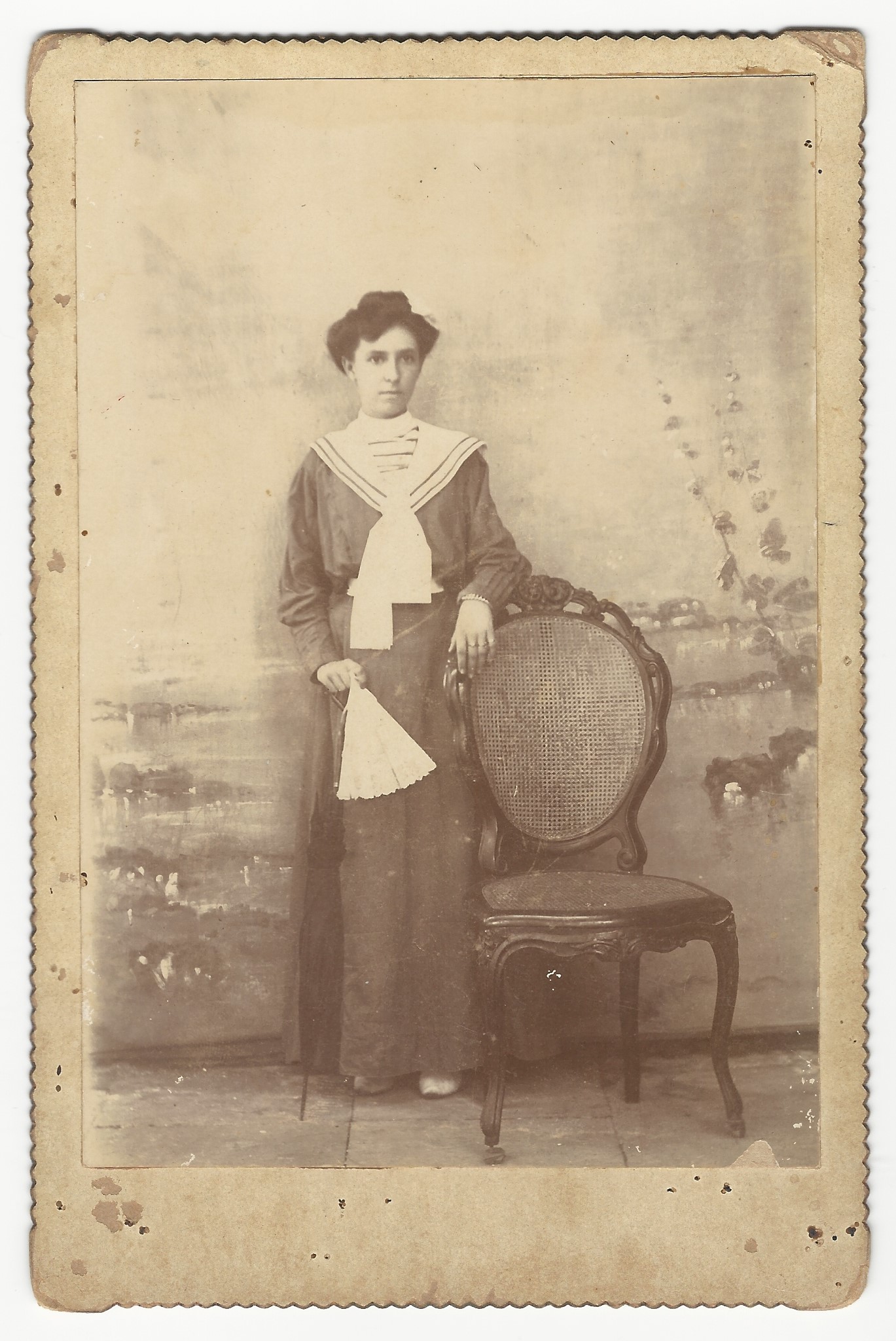
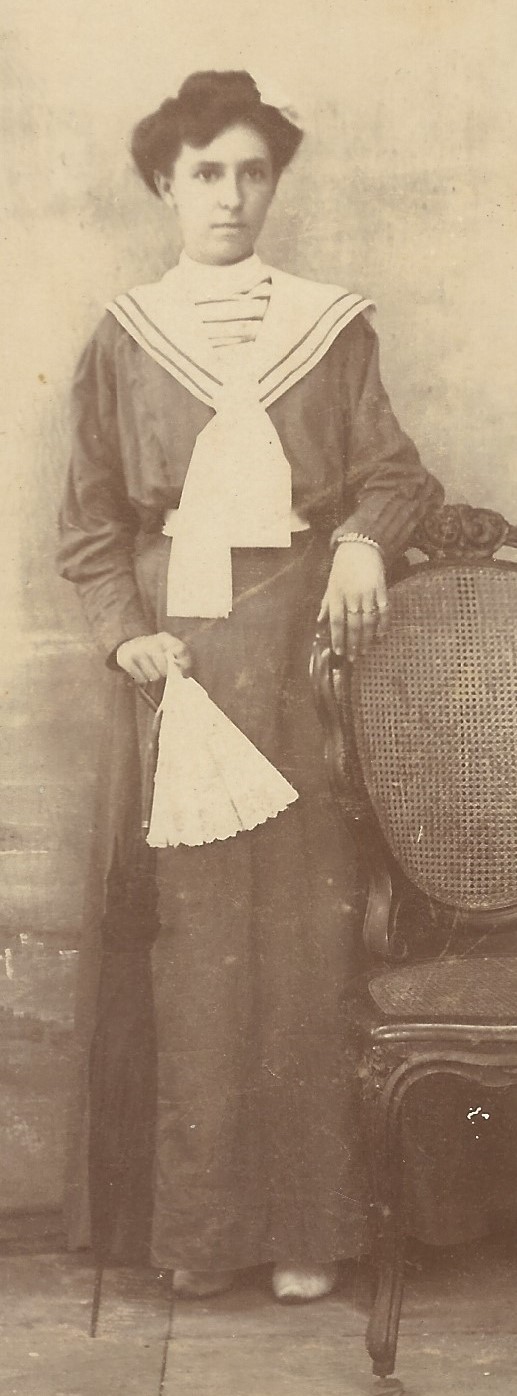
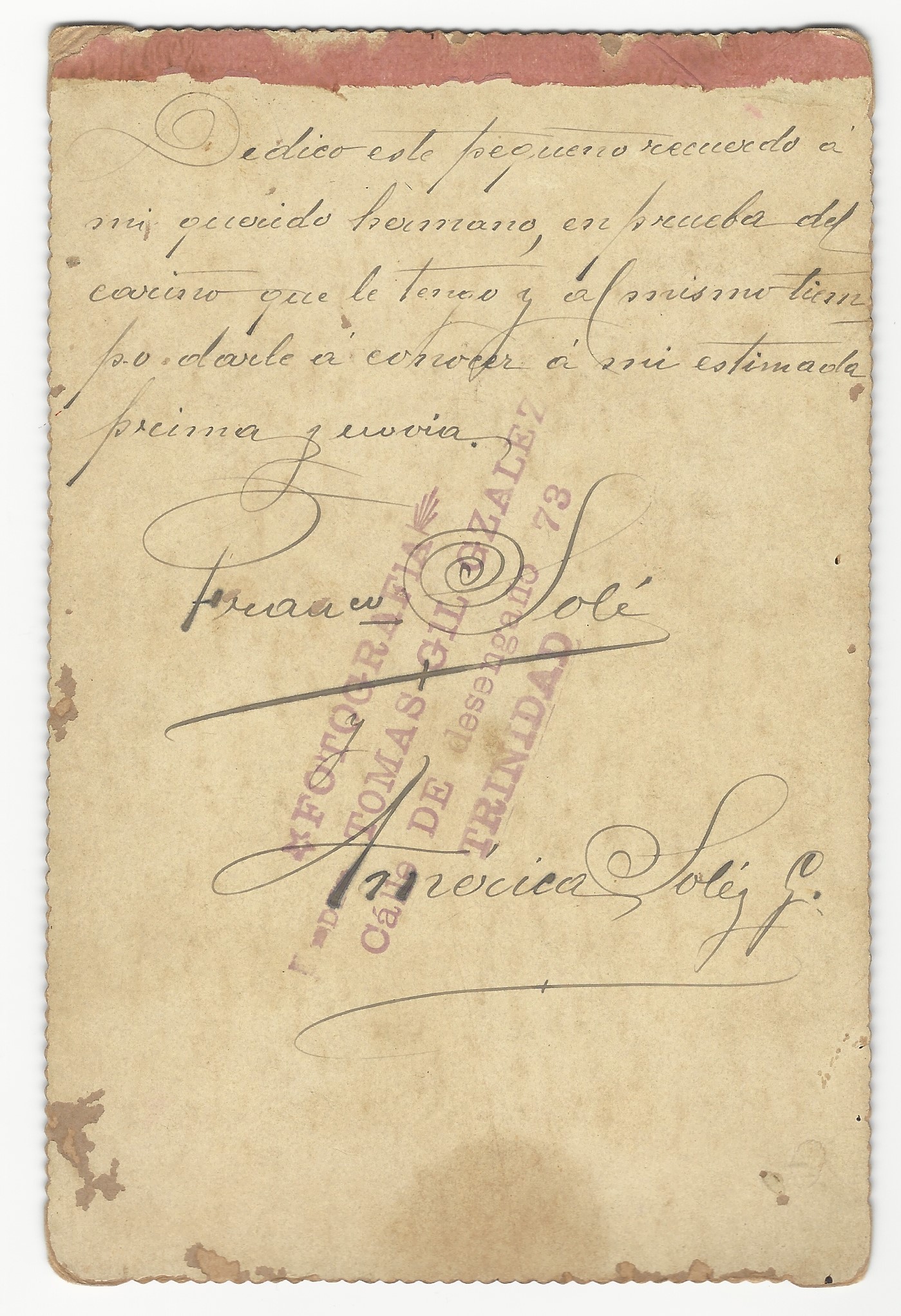
This cabinet card portrait of a young to middle aged woman was taken at a photographic studio located in Trinidad, Cuba. She poses next to generic chair and in front of a poorly painted backdrop. She holds a small hand fan. The photographers name, according to a stamp on the reverse of the image, is Tomas Gil Gzalez. The street address of his studio was Calle De Desengano 73. Interestingly, “Desengano” translated to English means disillusionment or disenchantment. Most of us, at some time in our lives, have found our way to Disillusionment Street. SOLD
This vintage real photo postcard features the Swedish actress Jngeborg Ronnblad (1873-1915). If you can pronounce her first name, please accept my congratulations. If you are Swedish, you are not eligible for this challenge. Miss Ronnblad is quite pretty and fashionable. Her dress and hair (or wig) are covered with roses. Note that she is wearing two large rings. I wonder if she is dressed in a costume from one of her films. Just below her name in the top right corner, are the words “i Lifvets dal”. The translation of these Swedish words is “In the Valley of Life”. Could this be a film title? Ronnblad was born in Sweden. Her parents ran a theater society. Her husband was Swedish actor, Hugo Ronnblad. She worked a an actress, at least between 1888 and 1895. The publisher of this postcard was Paul Heckscher. The card is part of a series (no2011).This publishing house specialized in art reproductions, artist signed cards, black and white views, and hand colored real photos. The company was headquartered in Stockholm, Sweden. The Paul Heckscher publishing company operated between 1900 and 1917. Their postcards were printed in England. This vintage postcard portrait is in very good condition (see scans),
Buy this original Vintage Real Photo Postcard (includes shipping within the US) #3222
To purchase this item, click on the Pay with PayPal button below
25.50 $
Buy this Cabinet Card Photograph (includes International shipping outside the US) 3222
To purchase this item, click on the Pay with PayPal button below
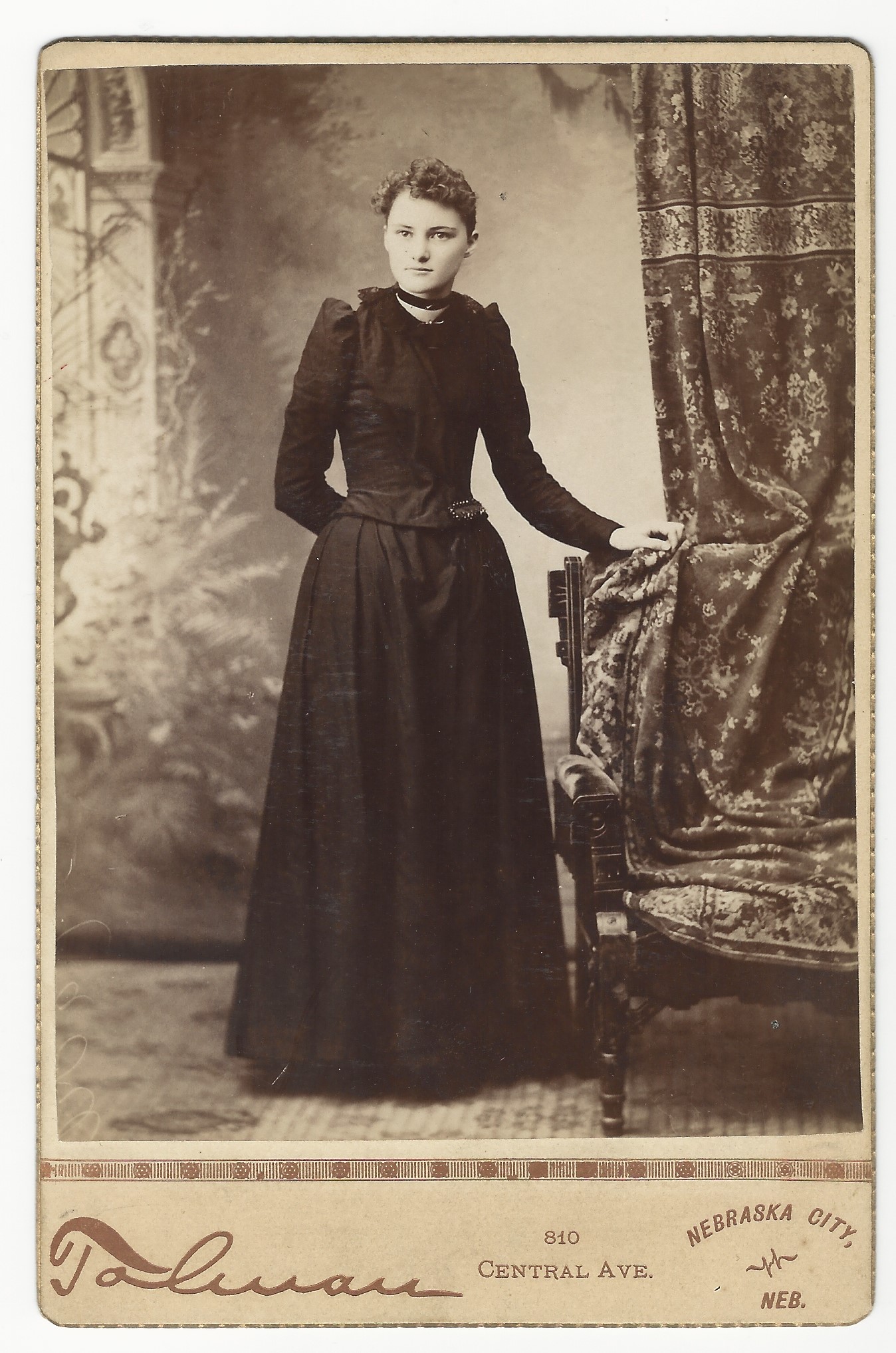
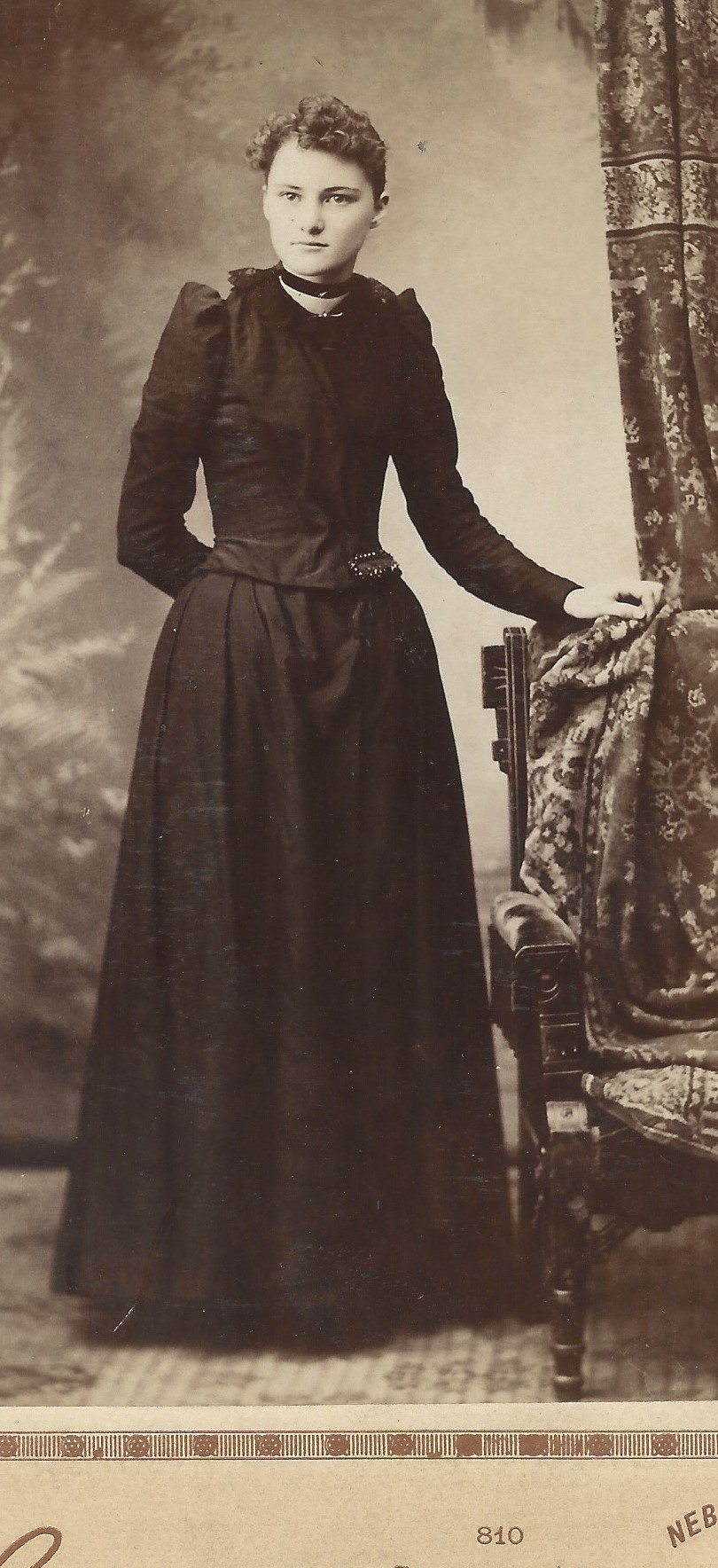
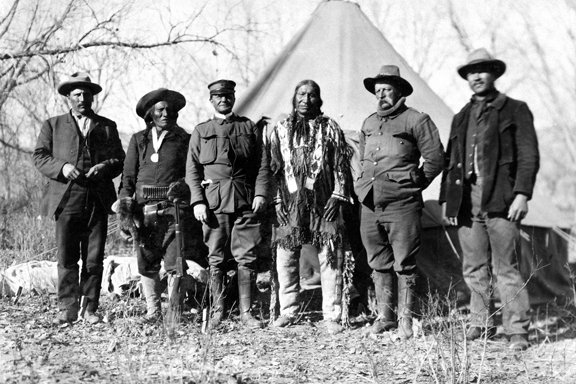
A young woman poses for her portrait at the Tolman studio in Nebraska City, Nebraska. She is likely in her teenage years. She is wearing a wide black band around her neck. Is the band jewelry? Is it part of her dress? Does the black collar band represent something (ie mourning)? I hope some of the visitors to the Cabinet Card Gallery will express their opinion about the band. The photographer of this image is Thomas W. Tolman. One source states that he was from Fort Dodge, Iowa and that he is listed in the 1882 Glenwood (Iowa) business directory (1882) as a photographer. Later, he was listed in the 1890 Nebraska City business directory. An article in the Gillette News Record (Wyoming) presents some interesting information about Mr. Tolman. He was hired by Collier’s Magazine to document a group of White River Utes migration from the Uintah reservation in Utah. They were heading north and their trip took them through Gillette. They were leaving the reservation because of a federal mandate that reclaimed some of the land on the reservation for homesteading and mining. A group of about 400 men, women, and children started the journey in 1906. Their destination was unclear. It was thought they may have been heading to Montana, or South Dakota. When they arrived near Gillette, they camped about 50 miles north of the city. This was the locale where they were photographed by Tolman. Along their travels, there were rumors of violence attributed to the this group of Native Americans. These rumors were unfounded. The New York Times condemned the journalists who reported the “fake news” about this group of Utes. Unfortunately, the complaints came from citizens who wanted the group rounded up and the US Cavalry was called to intercept them. Tolman photographed the group of Utes, both before and after the arrival of the US troops. A compromise was made and the migrating Native Americans agreed to go to Fort Meade, South Dakota with the cavalry escort. In exchange, the Utes were promised an opportunity to go to Washington D.C. to express their feelings about the Government’s “land grab”. In fact, Ute leaders did go to the nation’s capital where they met with President Theodore Roosevelt and hi head of the Bureau of Indian Affairs. The US did not change it’s policies. The Utes stayed at Fort Meade for about six months and than leased land from the Sioux for about a year. In 1908, the group returned to their reservation in Utah. The photos appeared in Collier’s Magazine. The article was headlined “The Unquiet Ute”. An example of one of the photographs in the series can be found below. It is not included in the sale of this cabinet card. It is impressive that Tolman was able to take well regarded photos without the comfort and resources of his studio. SOLD
A PHOTOGRAPH BY TOLMAN FROM “THE UNQUIET UTE COLLECTION”
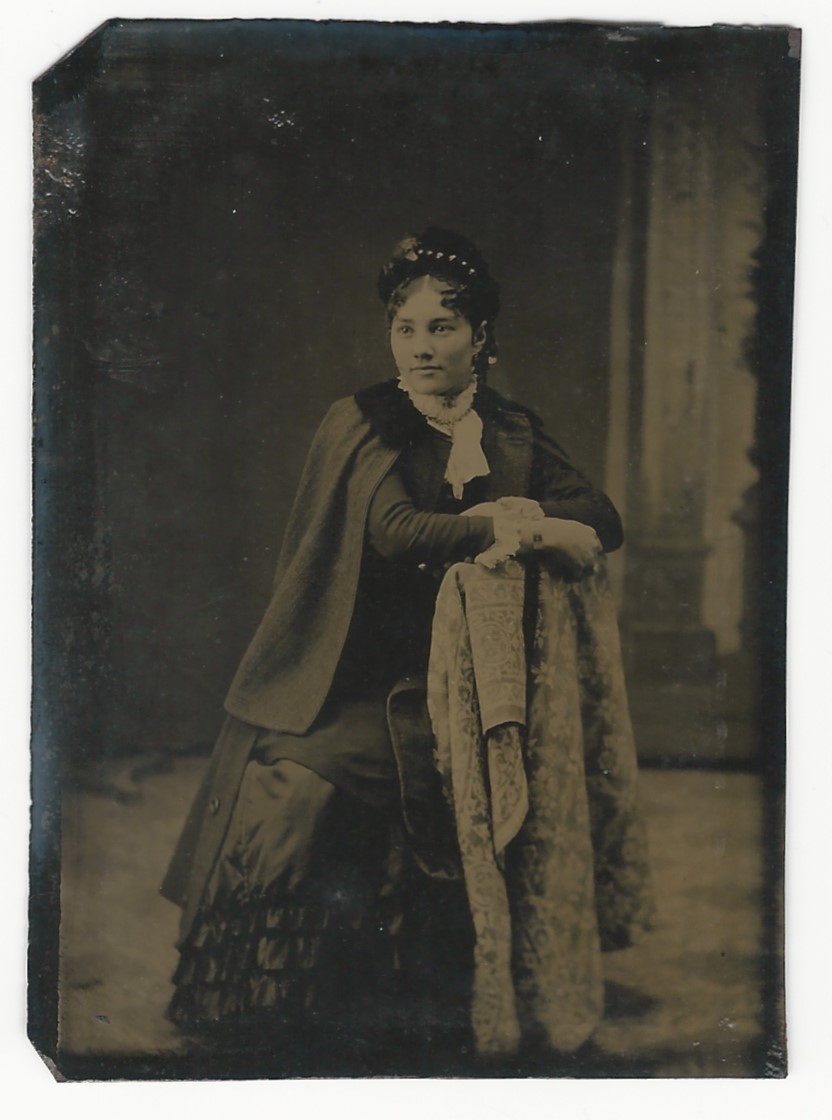
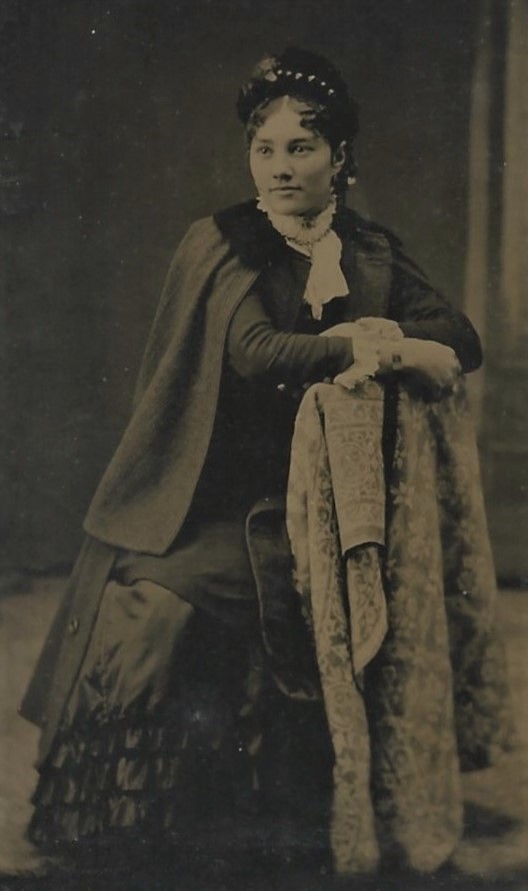
This tintype photograph features a well-dressed and pretty young woman. She appears to be dressed for winter. She is wearing a dark heavy dress and a cape. She looks very pleasant and has a lovely smile. Tintypes were popular in the 1860’s and 1870’s. Over time, they were replaced by Carte de Visites and Cabinet Cards. This lovely tintype portrait measures about 2 1/2″ x 3 3/8″ and is in excellent condition (see scans). (SOLD)
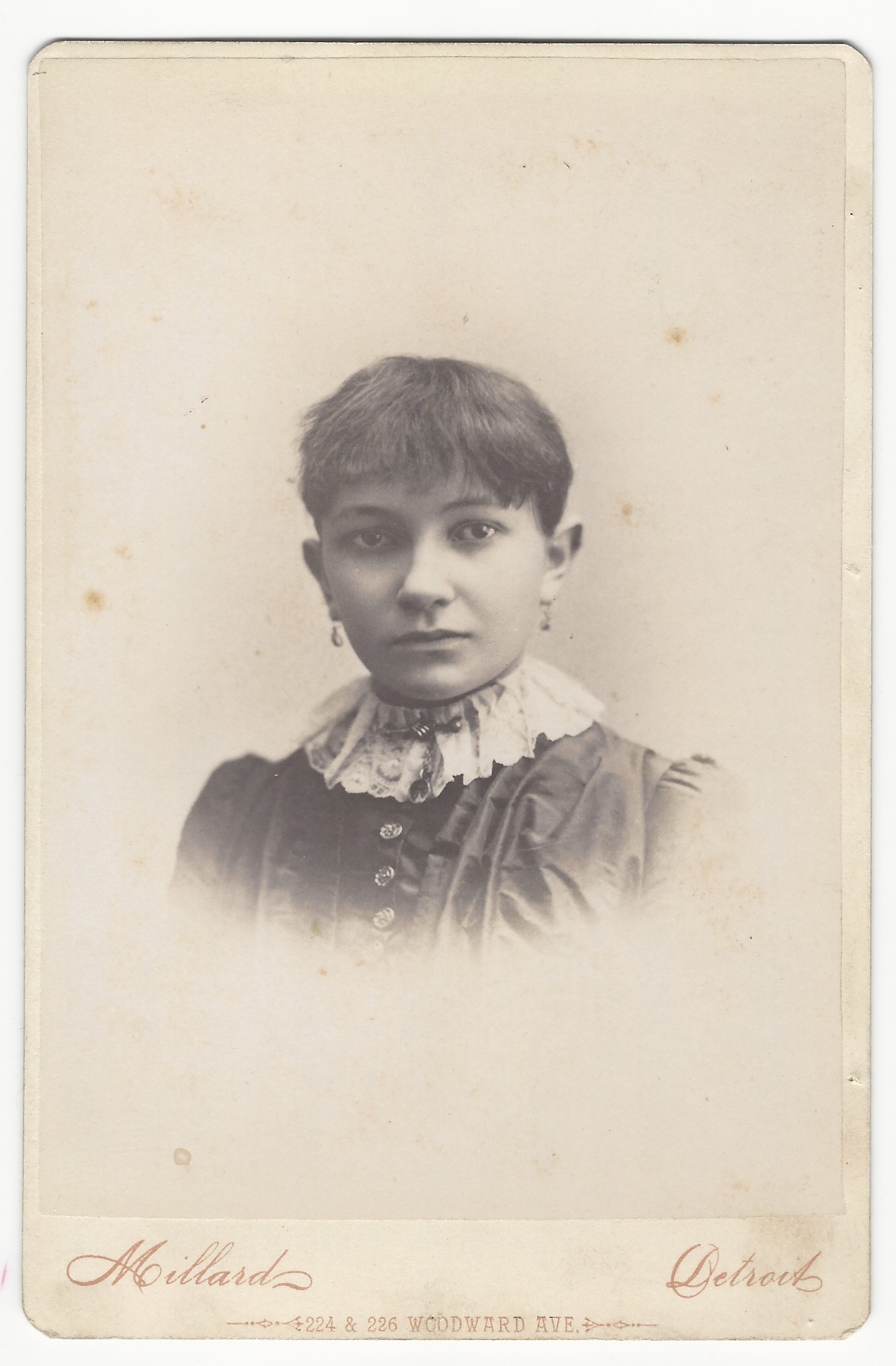
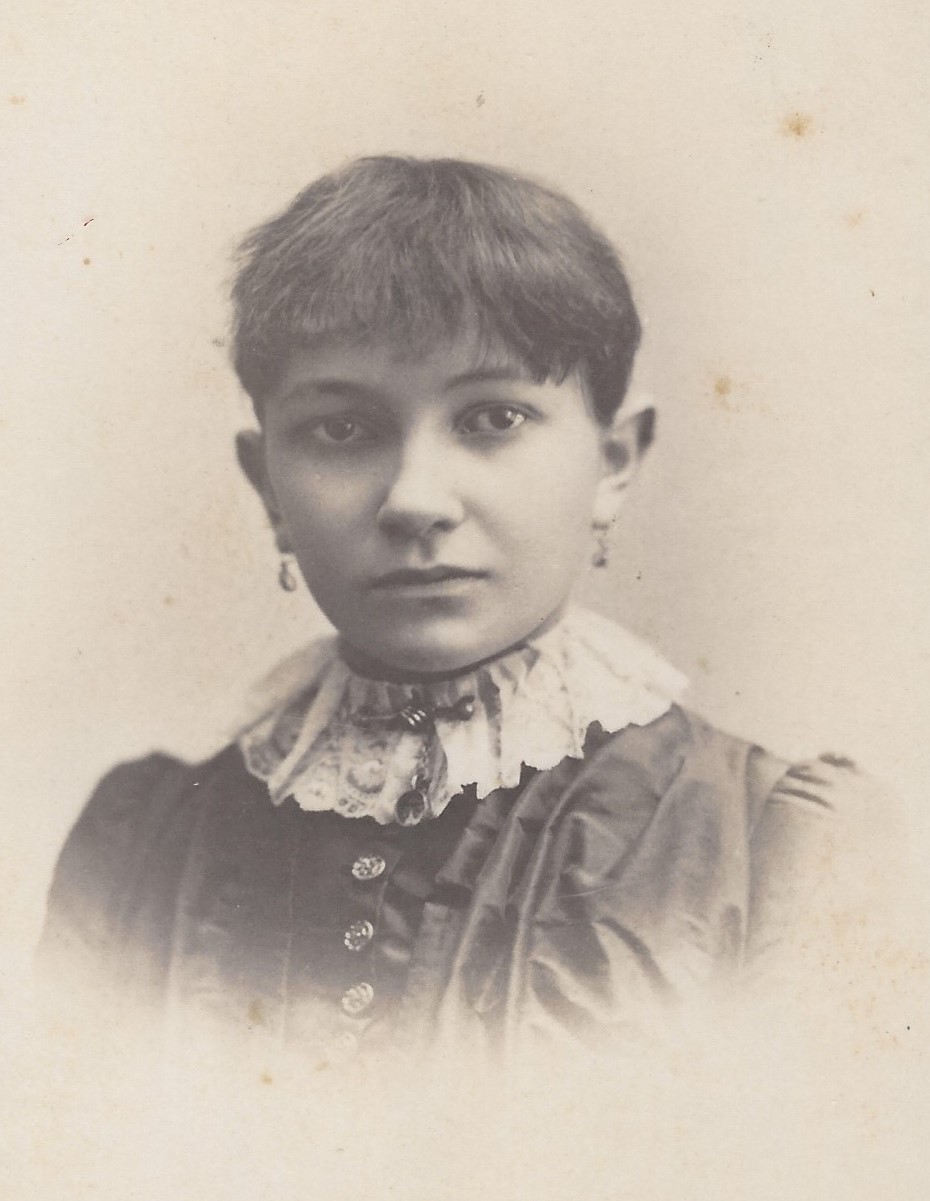
This bust portrait of an attractive short haired young woman is the product of the Millard studio in Detroit, Michigan. The woman is wearing a lace collared dress and earrings. She has magnificent deep hypnotizing eyes. C. A. Millard is mentioned in The Industries of Detroit (1887) as being the proprietor of the oldest photographic studio in Detroit. It is reported that he bought out a Mr. Powelson in 1879 and at the time of the books publication, Millard employed ten to fifteen artists in his studio. An interesting side note concerns Millard’s death in 1891. Frank Scott Clark (1865-1937), a noted backdrop painter, came to Detroit in 1892 to manage Millard’s studio for Millard’s estate. Among his accomplishments, Clark was an extremely talented photographic background specialist. In fact, during his career, he created, made, and set up backgrounds for both Napoleon Sarony and Jose Maria Mora. Not too shabby a resume for Mr Clark. (SOLD)
This vintage real photo postcard features a firetruck with four uniformed firemen on board. This is a great looking truck. Note the starting crank, the fire bell, the lantern, and the bug eye headlights. The truck is parked in front of the fire station’s garage, Another garage can be seen in the photo, and that garage houses a fire hose on wheels. The location of this firehouse is unidentified. The AZO stamp box on the reverse of this postcard indicates that it was published sometime between 1904 and 1918. SOLD
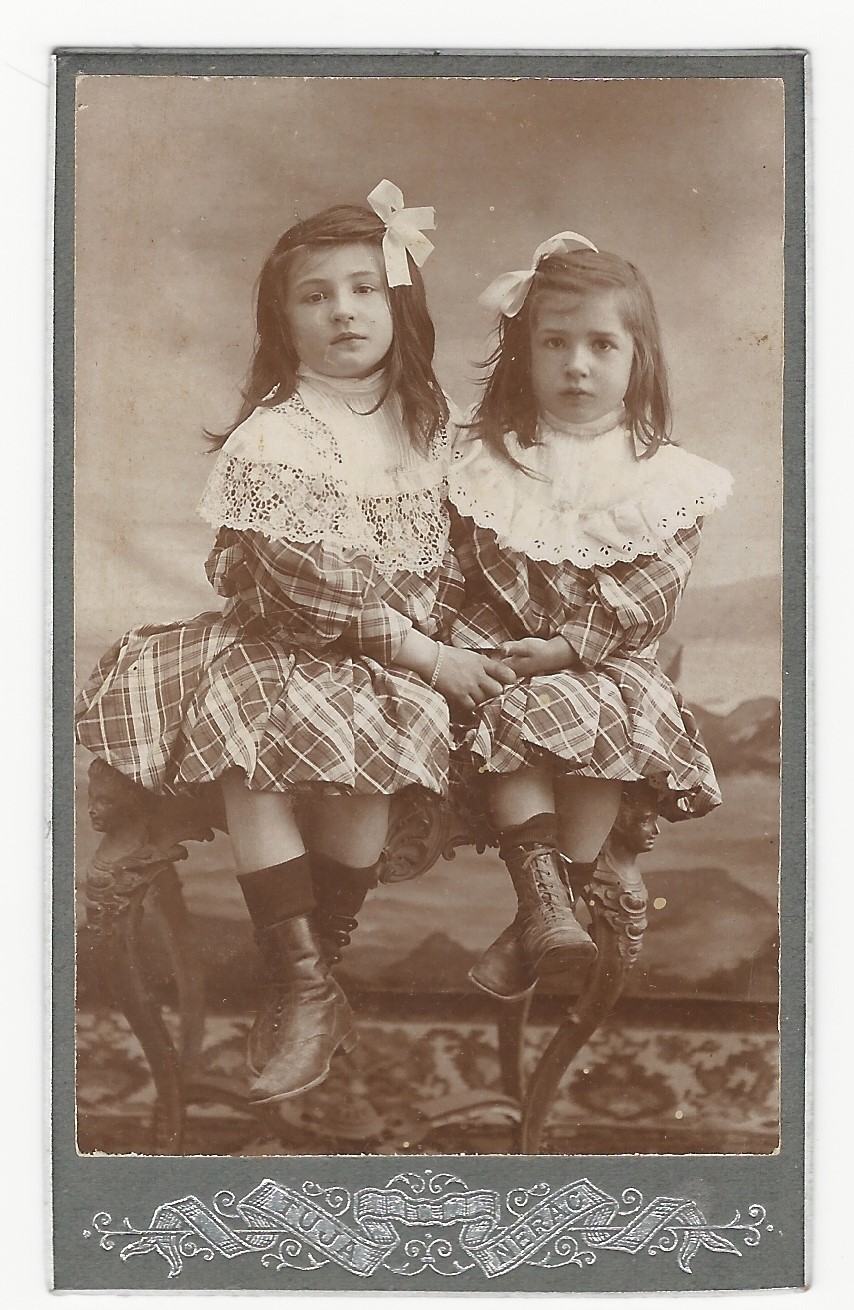
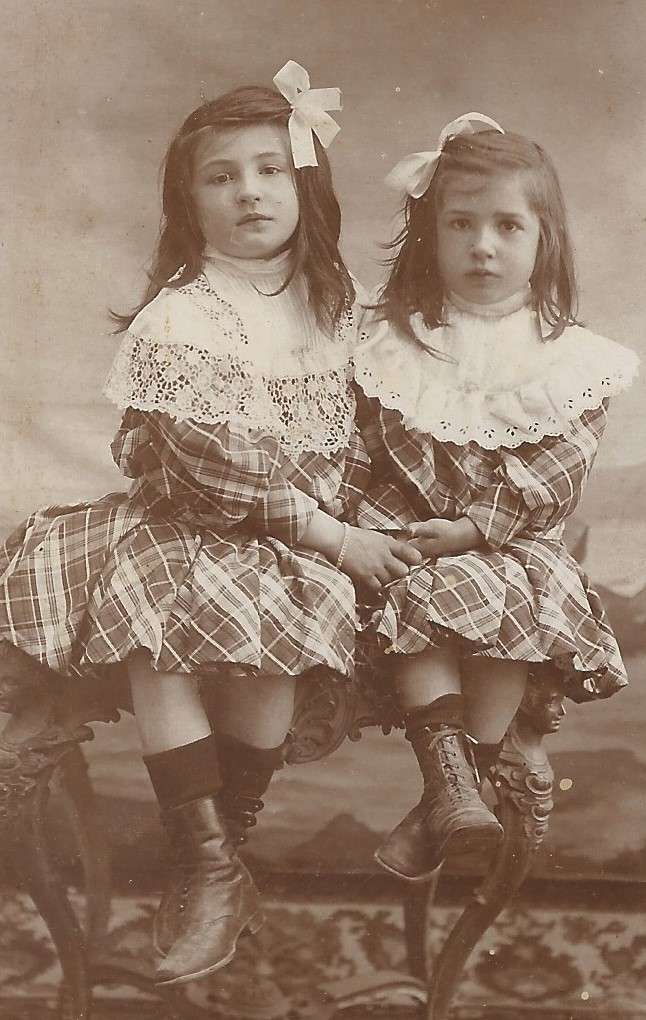
This carte de visite photograph features two adorable sisters sitting on a studio bench in Nerac, France. The two girls are wearing identical dresses, both accessorized with lace. The children are also wearing hair bows. Interestingly, one child is wearing the bow on the left side of her head while the second child’s bow is on the right side of her head. I suppose this was the work of the photographer who was intent on creating symmetry in this image. Take note of the ornate carvings on the legs of the bench. This photograph was taken at the Tuja studio. As stated earlier, the studio was located in Nerac, France. Nerac is located in southwestern France. This carte de visite photograph is in excellent condition (see scans).
Buy this Carte de Visite Photograph (includes shipping within the US) #3211
To purchase this item, click on the Pay with PayPal button below
37.50 $
Buy this Carte de Visite Photograph (includes International shipping outside the US) #3211
To purchase this item, click on the Pay with PayPal button below

















 THE CABINET CARD GALLERY