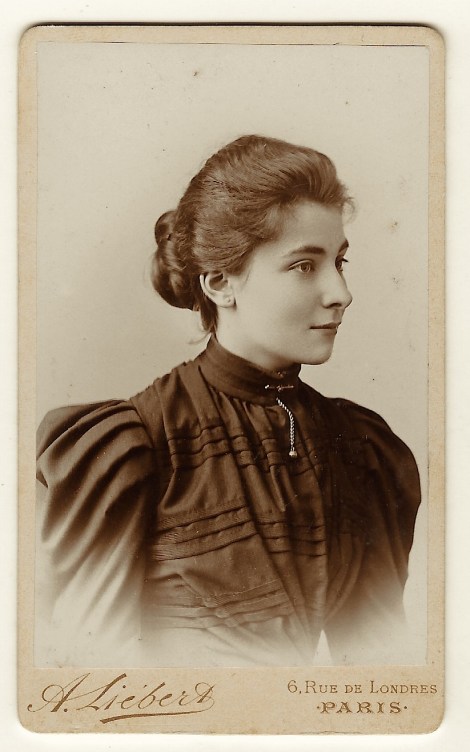
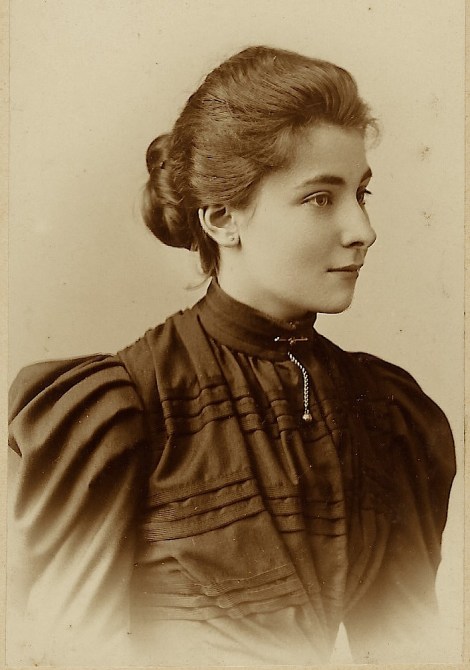
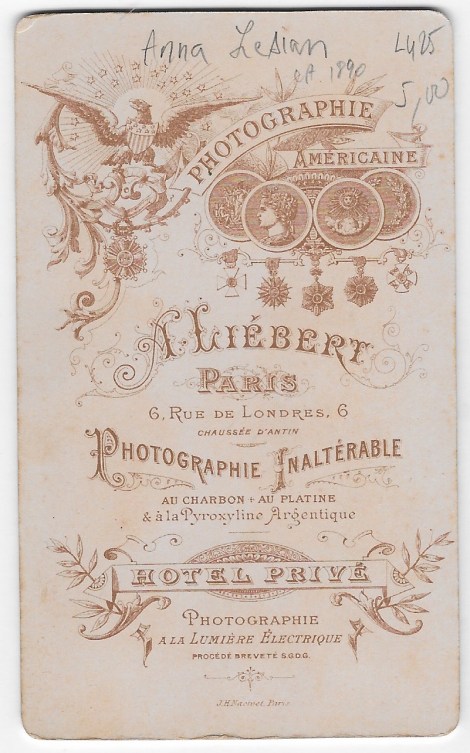
 The pretty young woman seen in this carte de visite portrait, is named Anna Lesian. An inscription on the reverse of the cdv reveals her name and the year (1890) that the photograph was taken. The photo was taken at the studio of A. Liebert, in Paris, France. The Getty Museum, located in Los Angeles, California, as well as other fine museums, have photographs in their collections by Paris photographer, Alphonse J. Liebert (1827-1913). Many of his Parisian subjects were actresses. Perhaps Miss Lesian is one of those actresses. Mr. Liebert has an interesting story. He was a photographer in Nevada City, California (1857-1862), and later, operated in Paris (1863-1890’s). He was born in France. He became an officer in the French Navy. He left the navy in 1848 to study daguerreotypy. He must have reenlisted in the navy because In 1851, he arrived in San Francisco, as a Lieutenant on a French ship. This was a time when there was much excitement about Gold mining. As a result, there was a mass desertion of the ship’s crew. The sailors joined the rush for gold. Liebert had in mind, his own venture. He and two partners decided to take on the project of refurbishing a steamship. They sought investors and hired workers to transform the ship. However, due to the partners inexperience, the venture failed. Liebert than tried gold mining but met little success. In 1857 he opened a photo gallery in Nevada City. He lost thousands of dollars after a fire in 1858. In 1859 Liebert ridiculed a former photography pupil of his, named Louis Celarie, in the press. This started a bitter professional feud. Soon after, Liebert announced that he had won a medal at the state fair. Unfortunately, there was no evidence to confirm this claim. The competition between Liebert and Celarie was fierce. Each offered special promotions to best the other. By 1861, Liebert triumphed, evidenced by the sale of Celarie’s studio. About a year later, Liebert sold his photo gallery. By 1863, he had returned to France and opened a gallery specializing in tintypes. Liebert closely identified with his photography experience in America, and as a result, he named his Paris gallery “Photographie Americaine”. That very name can be seen on the reverse of this CDV. Liebert began to write photography articles and books, and ultimately, invented a prototype solar camera. In 1867, Liebert had a problem with the law. He was sentence to two months in prison and levied a fine of 200 francs. He was charged for the intent to distribute banned post mortem photographs. These were not photos of some random person. Instead, they were images of Emperor Maximillian, who had been executed in Mexico. Liebert ultimately did exhibit these photos. Liebert was becoming more and more successful. His photo gallery was so lavish that a reviewer for the British Journal of Photography wrote that it was “worthy of the smiles of the ‘God of Light’, and a repository for some of the best productions of the photographic art”. In 1879, Liebert’s gallery was the first studio to utilize electric light. By 1880, he was considered to have the most impressive photo studio in Paris. This carte de visite portrait has excellent clarity and is in very good condition (see scans). (SOLD)




 A young child and dog pose for their portrait at the photo studio of Dietrich and White in Chemnitz, Germany. On the reverse of the cdv, photographer White is further identified as “Joh Carl White”. Chemnitz is a city in eastern Germany. To be more exact, it is located in Saxony.
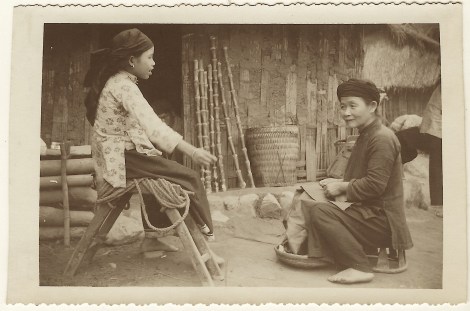
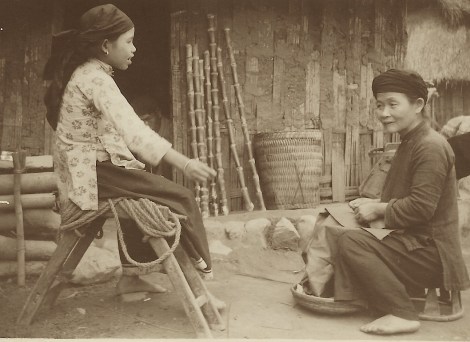 This vintage real photo scalloped postcard features two woman chatting as they are working in their village. The woman sitting on the “step ladder” may be as young as preteen. Note some of the objects in the photograph. Piled wood, a wicker basket, bamboo sticks, and a bowl are all visible. Both woman are barefoot. The former owner of this photo postcard reports that the photograph was taken in Pays Tai. This area is located in the northwest of Vietnam. The people in this region are comprised of many different ethnic groups. In 1950 Tai Country’s regime went from a feudal system to an autonomous government, known as the “Tai Federation”. When the Republic of Vietnam was created in 1954, the Tai Federation ended. This vintage postcard is in very good condition (see scans).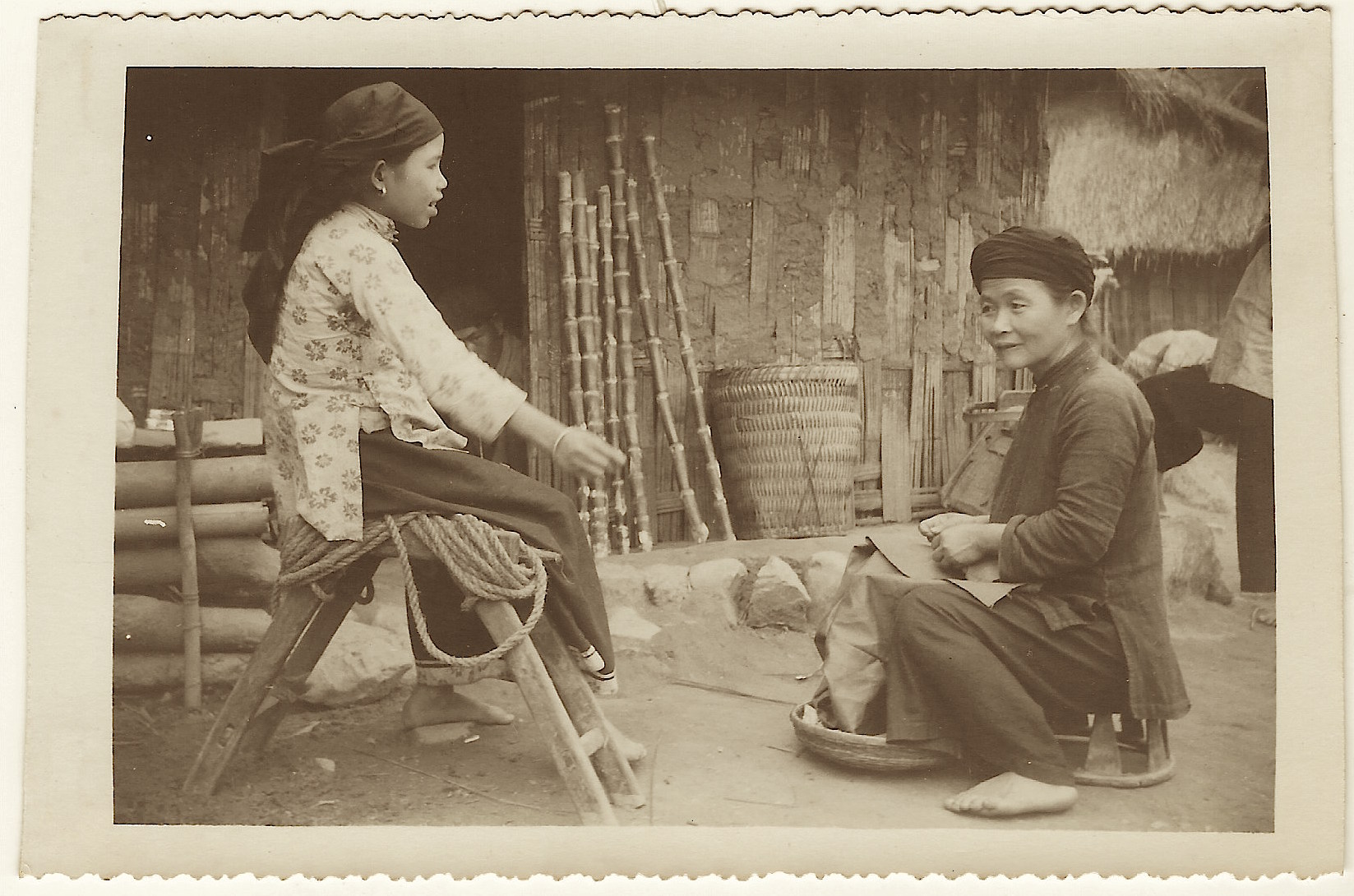




 This vintage real photo postcard features theatre actress, Hilda Guiver. She had an active acting career between 1905 and 1917. She sat for one portrait that can be found in the National Portrait Gallery of Great Britain. Interestingly, the portrait owned by the National Portrait Gallery is the very same one as seen in this postcard image. The photographer of this photograph is Percy Guttenberg of Manchester, England. The photo was taken in about 1905. Alexander Percy Guttenberg (1870-?) came from a family that produced a number of photographers. His father, Marcus Guttenberg (1828-1891) began as a daguerreotypist in Hungary, Prussia, Poland and Germany before starting a photography business in England (1851). One source reports that he established 24 studios in England but settled in the Manchester area. Percy, like his father, was also very successful. In fact, there are fourteen of his photographs in England’s National Portrait Gallery. Percy was famous for his work photographing actors and actresses. Finding information about Miss Guiver took some effort. I did learn that she appeared in “Cinderella (1906)” at The Kings Theatre in London. Actress, Ethel Ward, also was part of the cast. Hilda Guiver is also known for her starring in “The House that Jack Built (1916)”. This patriotic show was popular during World War I. The play was written in the tradition of English pantomime so the role of the principal boy needed to be played by a woman. Hilda Guiver took on that role with great swagger and dash. Dressed as a handsome naval officer, she sang patriotic songs and received “enthusiastic reviews”. Guiver was a natural for the role as she was considered one of London’s leading principal boys. SOLD


 THE CABINET CARD GALLERY