

The gentleman featured in this cabinet card is clearly a member of a band. He is wearing a band uniform and holding his trombone. Note his cap and bow tie. The studio which produced this image was Babb’s Ground Floor Gallery in Shelbyville, Illinois. James A. Babb (1855-?) and Jacob P. Babb (1857-1908) were the proprietors of Babb’s photographic studio. James was a native of Missouri and worked on a farm until 1879 when he came to Sullivan, Illinois and worked in a photographic gallery. He then returned to Missouri (Jefferson City) and worked for a photographer named S. Winans. He then moved to Shelbyville where he worked several years in the grocery business until he and his brother Jacob, established a Photography business. James Babb married Miss Mollie E. Oliver of Shelbyville. Jacob Babb was also a Missouri native and started his work life as a farmer. At age twenty-four he began working in the lumber industry and in 1883 he began a career in photography with the same S. Winans previously mentioned. His next job change occurred when he partnered with his brother in the Shelbyville gallery. In 1887 Jacob married Miss Anna Sampson of Shelbyville. The major source of information concerning the Babb brothers was the “Illinois Genealogy Trails” section on Shelby County. SOLD


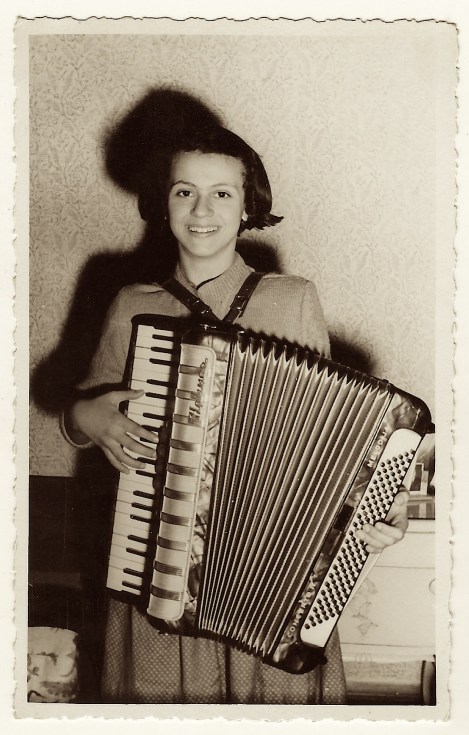
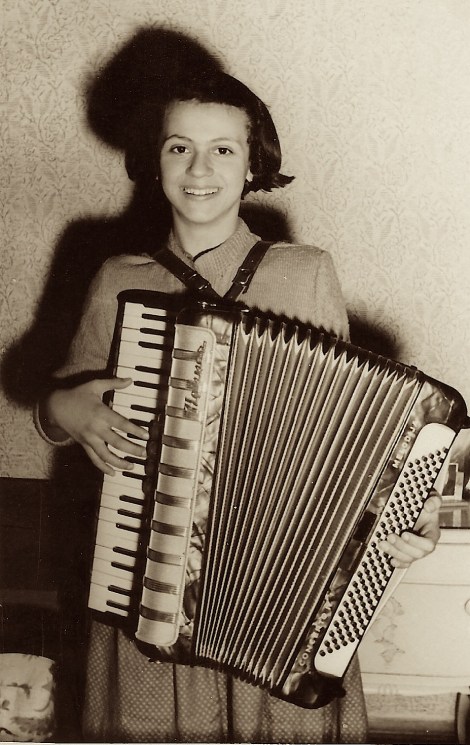 This vintage photograph features a pretty teenage girl and her accordion. She has bright eyes and a lovely smile. She is casting a shadow on the wall behind her. The shadow enhances the photograph by providing interesting contrast. Hopefully, a visitor to the Cabinet Card Gallery, will be able to identify the Maker and Model of this musical instrument, and leave an informative comment. I can identify the words “Concerto”, “Melodija”, and possibly “Hohner”, on the instrument, This photo of this lovely musician and her accordion, was found in Serbia. I can not decipher the inscription on the reverse of the photograph. The scallop edged photograph measures about 5 1/4″ x 3 1/4″ and is in very good condition (see scans).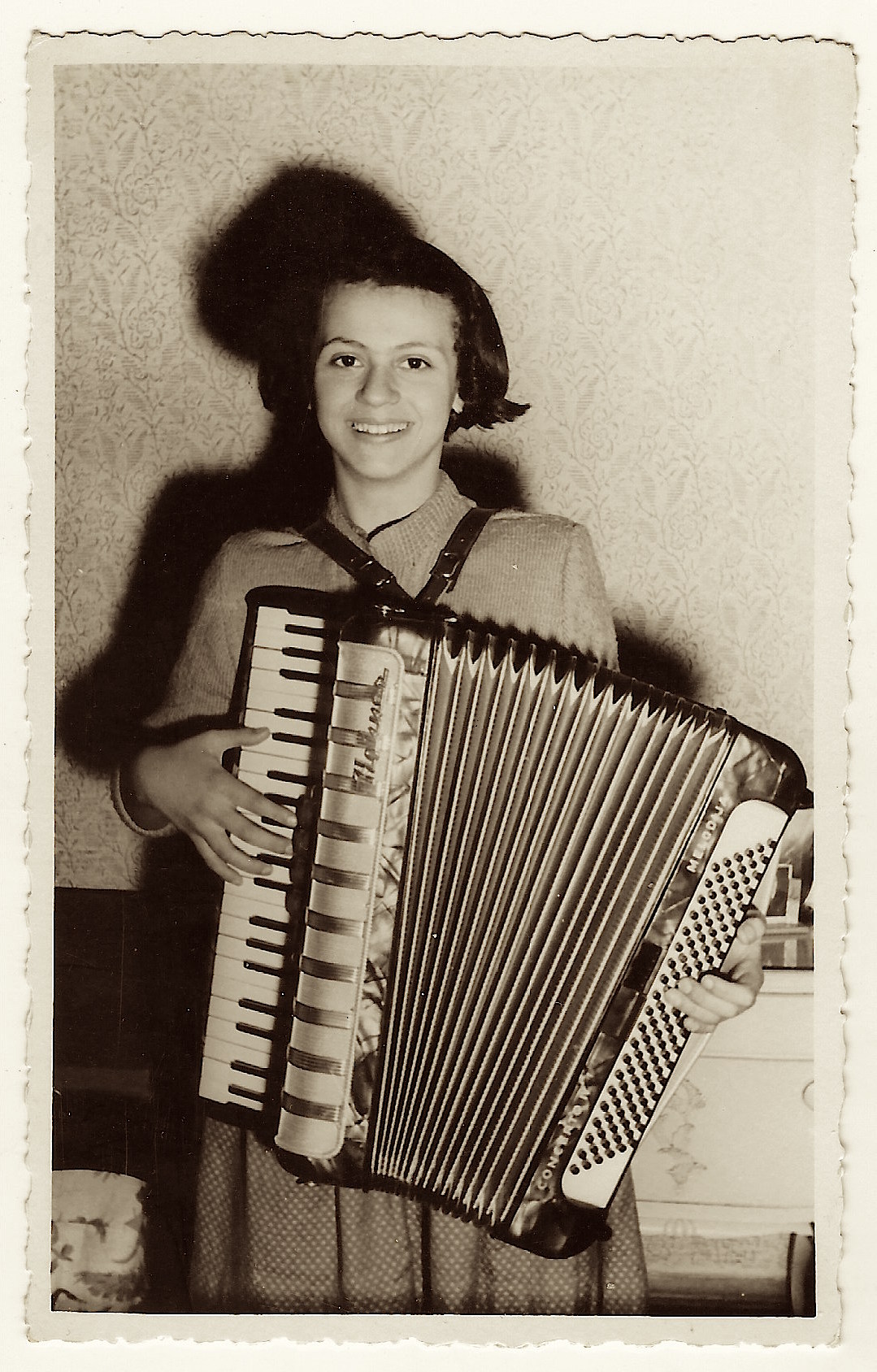



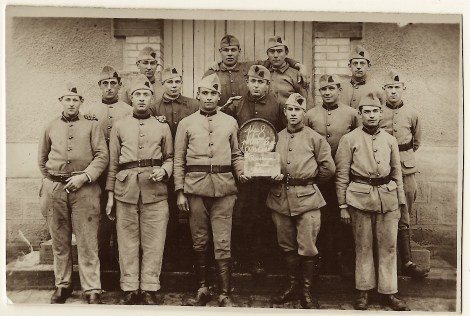
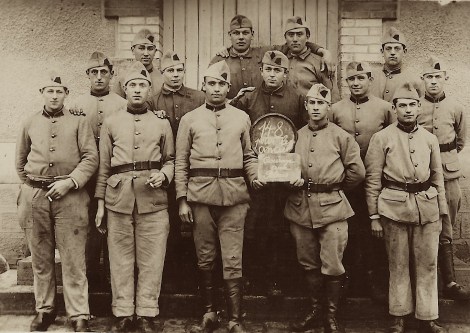 This vintage real photo postcard features a group of World War I era French soldiers. Two men in the front row are holding a sign. The men are part of the 148th regiment (?). The text on the sign is related to a French military slogan that states “Honneur aux anciens, courage aux bleus”. This roughly translates to “honor to the old soldiers, courage for the rookies”. In French, “bleu” means “rookie”. The slogan refers to the historical fact that in the late 1700’s, rookies wore blue uniforms, while more veteran soldiers wore white uniforms. This vintage postcard has excellent clarity and is in very good condition.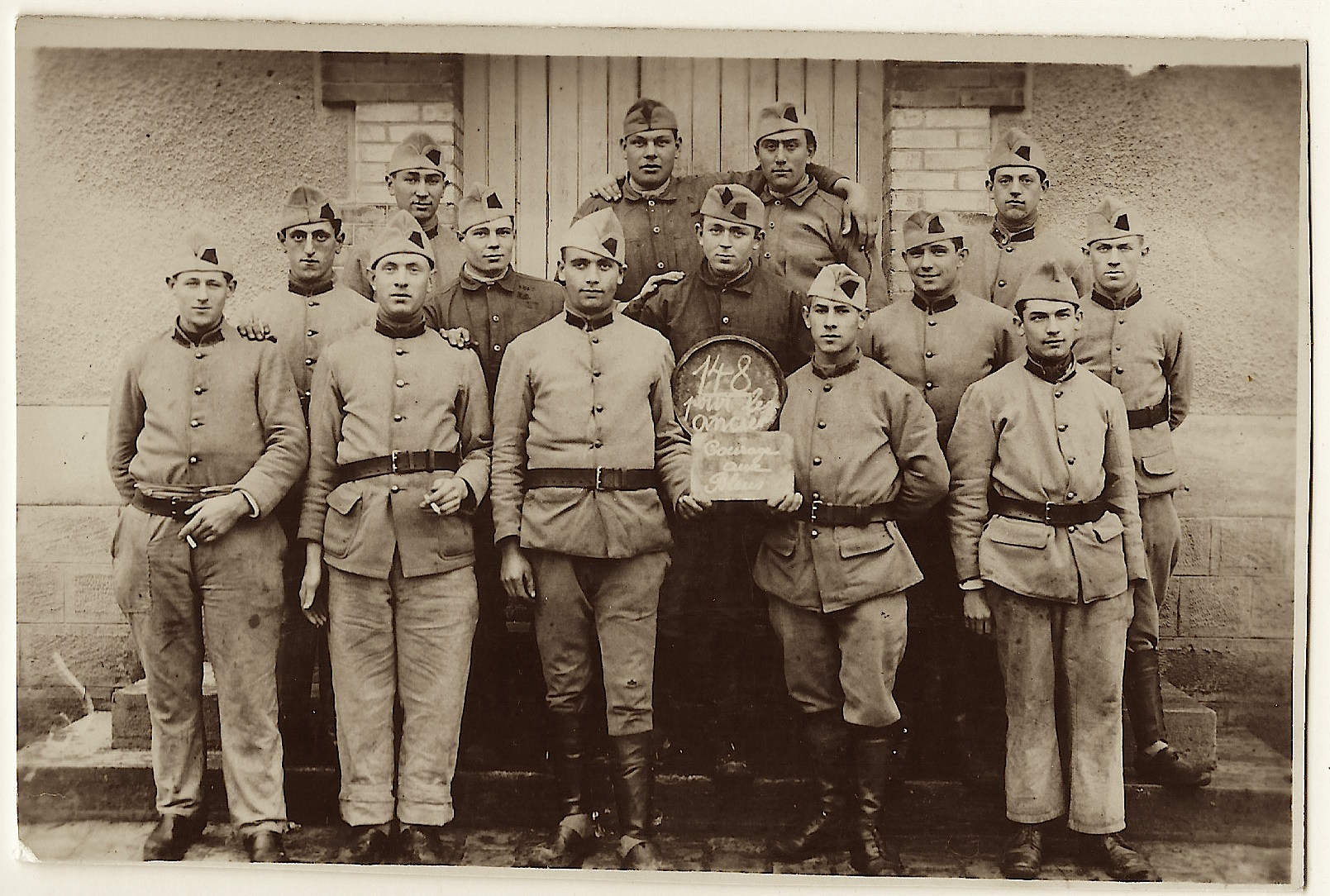

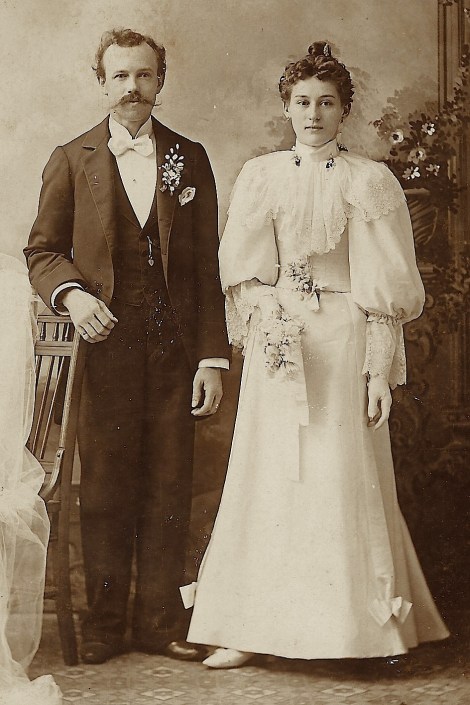
 A pretty bride and her husband pose for their wedding portrait. She is holding a large bouquet of flowers and wearing flowers on her veil. The young bride seems very happy. She is displaying a wide smile, while the groom has a more serious countenance. This vintage real photo postcard is unused. The postcard comes from a collector in Belgium and is in very good condition (see scans).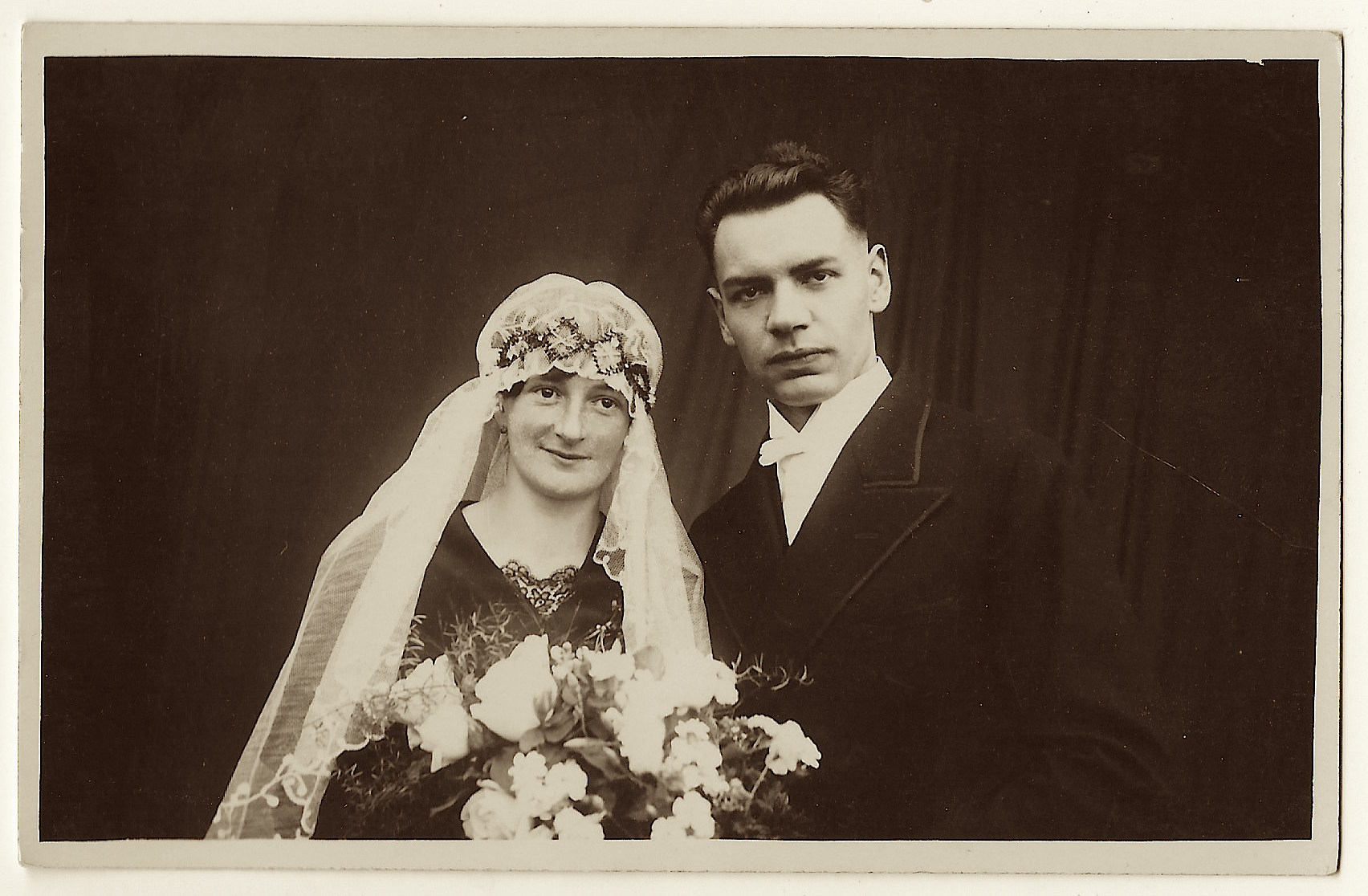
 This vintage photograph was taken by photographer Al Stein of Mount Vernon, New York. The image features three nicely young dressed girls who are likely sisters. They are adorable and have engaging smiles. This photo measures 4 3/4″ x 3 3/4″ and is in good condition (see scans). Note the white mark near the youngest girls right elbow and the crease by the second to youngest girl’s hair bow. These issues are barely noticeable but they exist. The photo is priced consistent with it’s condition.

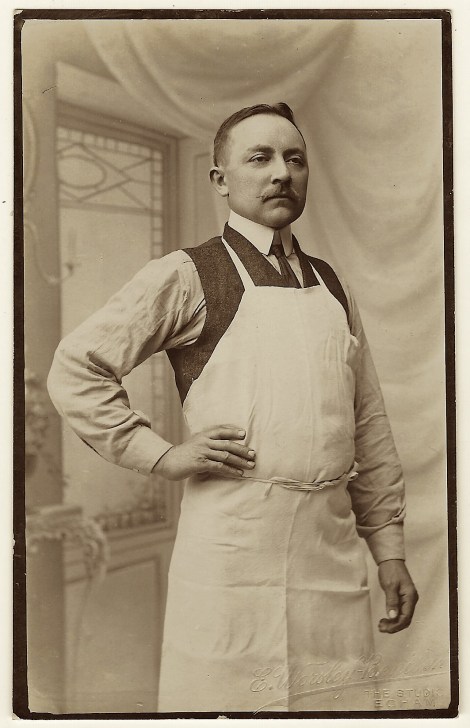
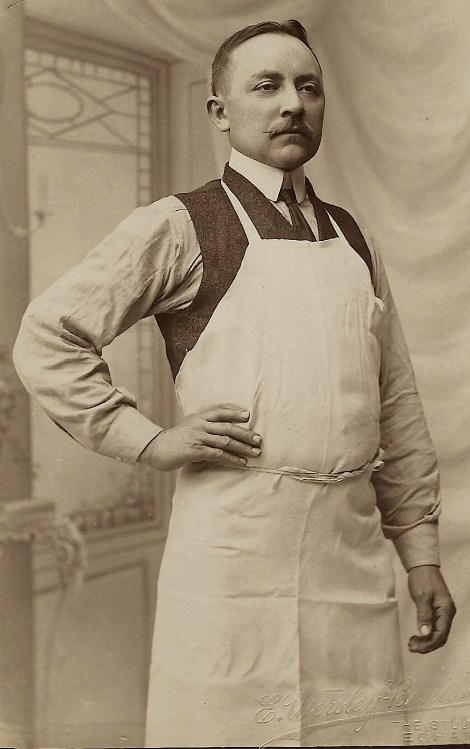 This vintage real photo postcard is quite unique. The photograph features a gentleman wearing a long apron. He is obviously dressed for work but for what kind of work? Is he a butcher, baker, or candlestick maker? Perhaps he is a physician or possibly a photographer? He is dressed well, wearing a nice vest and neck tie. He looks quite intense as he poses for his portrait at the E Worsely-Benison studio in Egham, England.
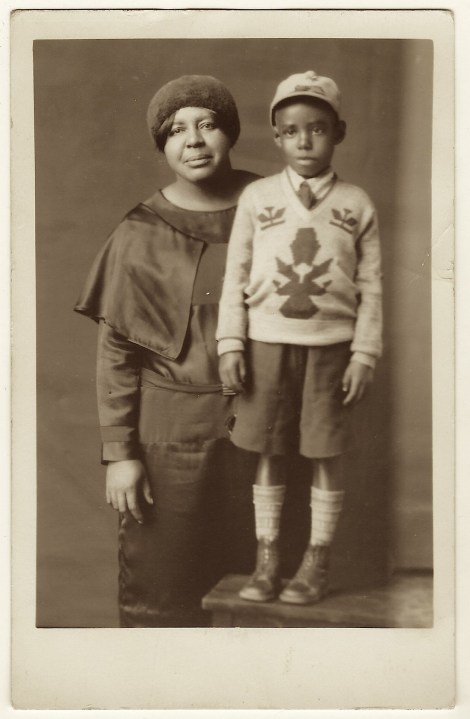
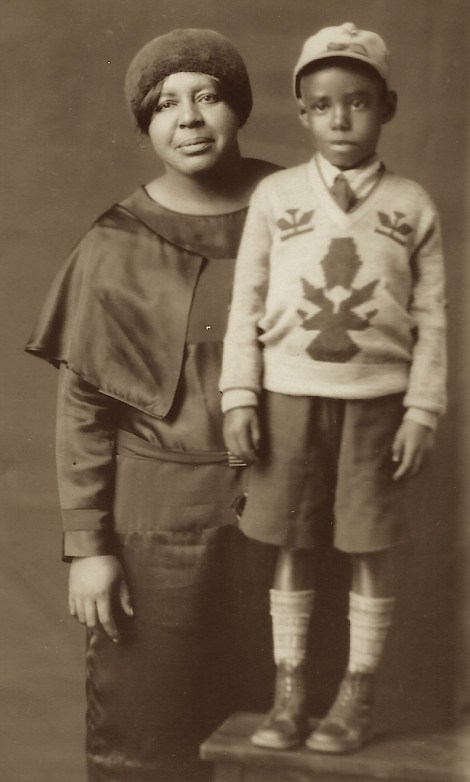 This vintage real photo postcard features an African American mother posing proudly next to her adorable and well dressed young son. He is wearing an adorable outfit, probably his sunday best. The AZO stamp box indicates that the postcard was published between 1926 and 1940.


 THE CABINET CARD GALLERY