PORTRAIT OF A FASHIONABLE YOUNG WOMAN (THE BUTTON LADY)

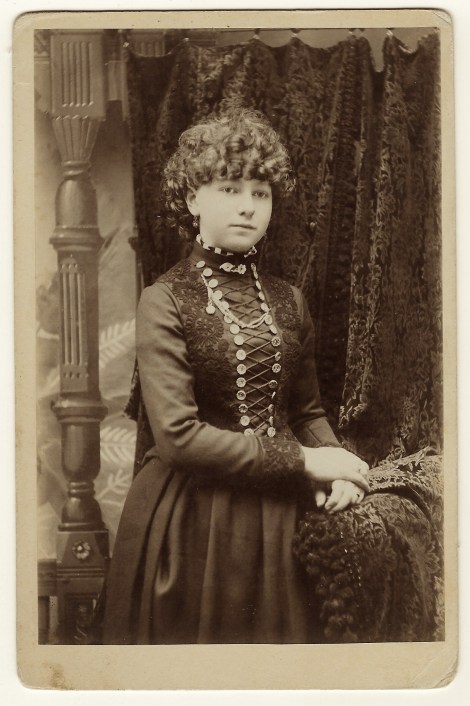
This cabinet card portrait features a well dressed young woman. She appears to be in her late teenage years. Her dress is adorned with an abundance of buttons as well as webbing and lace . She apparently liked jewelry as she is wearing a collar pin, a pin on her dress, and a couple of rings. She has very curly hair which she wears high on her head. She is displaying a half smile. The name of the photographer and the location of the studio are not listed on the photograph. This relatively close-up photograph has nice clarity and an unusual and interesting staging.   SOLD

Published in: on May 17, 2017 at 1:30 pm  Leave a Comment  

PORTRAIT OF AN ADORABLE LITTLE GIRL ON A SWING IN DEADWOOD, DAKOTA TERRITORY


This cabinet card portrait features an adorable little girl sitting on a swing. The child is smartly dressed and her outfit includes a necklace, earrings, and a hairband. The bale of hay in the background is consistent with the location of the studio where the photograph was taken. The Pollock and Duganne studio was located in Deadwood, Dakota. The date that the photograph was taken was before Dakota became two states.The Dakota Territory was established in 1861. The territory was divided into North and South Dakota in 1889 which informs us that this image was produced sometime before that date. The town of Deadwood was located in South Dakota. It was named after the dead trees found in a local gulch. The birth of the town of Deadwood was illegitimate. It was built in the 1870’s on land that had been granted to Native Americans in an 1868 treaty with the Lakota tribe. In 1874, Colonel George Custer led an expedition into the Black Hills and announced the discovery of gold there. This resulted in the Black Hills Gold Rush and the lawless town of Deadwood quickly grew to five thousand people. Prostitution, gambling, and the opium trade flourished. Murder was common and one of the town’s murder victims was Wild Bill Hickok. In 1876 the town was struck by a small pox epidemic and in 1879 there was a major fire destroying more than 300 buildings. When panning for gold was replaced by deep mining, the town became more peaceful. Little information was found about the photographers of this image. Albert Pollock (1840-1899) came to the Black Hills in 1877 and his studio was established as early as 1879. He retired to ranching in 1886. No biographical data could be located about Mr Duganne.

SOLD

Published in: on May 11, 2017 at 3:44 pm  Leave a Comment  
Tags: , , ,

HENNY PORTEN: MAJOR GERMAN FILM ACTRESS WITH ADMIRABLE PRINCIPLES (RESISTED THE NAZI GOVERNMENT)


Henny Porten (1890-1960) is the subject of this real photo postcard. Porten was a German actress and film producer of the silent era. She was Germany’s first major film star and appeared in more than 170 films produced between 1906 and 1955. Along with Asta Nielsen and Pola Negri, she was one of the three most popular German actresses. Her father was a film director and her sister was an actress/screenwriter. She began her film career without any stage experience which was an unusual phenomenon for German actresses. Porten was not well known outside of Germany. A large number of her early films were directed by her husband, Curt Stark. Stark died during World War I (1916) while serving on the Eastern Front. In 1921 she remarried a Jewish man named Wilhelm von Kaufmann. When the Nazis took power, she received much pressure to divorce her husband. She refused to comply and her career plummeted. She was denied a visa to emigrate. Her career blossomed again after World War II. The photograph of Miss Porten seen on this postcard is by the Becker & Maass studio of Berlin, Germany. The photographers were well known for portrait and fashion photography in the first decades of the twentieth century. They photographed dozens of German film stars for magazines and postcards. You can view more of this studios photographs by clicking on the category “Photographer: Becker & Maass”.  The postcard is published by Rotophot which began publishing “RPH” postcards in 1916. There were three different series: Buhnen-Sterne (stage star), Film Sterne (film star), and Film Sterne (displayed scenes). This postcard is from the Film Sterne series and was no. 216/3. The film star series ran from number 61 through number 224. The front of the Film Sterne cards included the name of the film studio represented. This card advertises Messter-Films of Berlin. These postcards were continued by the Ross Verlag company who’s origins can be traced back to the earlier Rotophot postcard company. The You Tube clip below presents Henny Porten in some scenes from “24 Hours from the Life of a Woman” (1931).


PORTRAIT OF AN UNIDENTIFIED BEAUTIFUL FASHIONISTA (ADDENDUM: IDENTIFIED AS ACTRESS MAY FORTESCUE)

fashionista

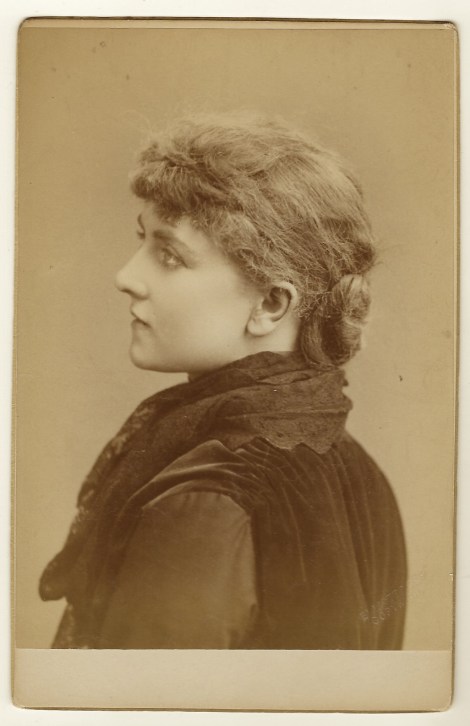
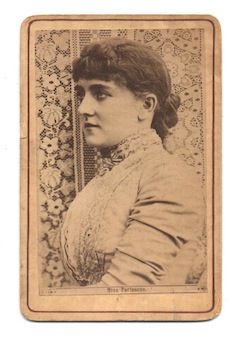
This cabinet card portrait features a pretty fashionista photographed by an unknown studio. Perhaps this young lady is a theater actress. This image is consistent with the work of Napoleon Sarony, Jose Mora, and other New York City celebrity photographers. The photograph presents a profile view of this attractive woman. ADDENDUM: Someone has identified the woman in this photograph as actress May Fortescue. See the images below of Miss Fortescue and see if you agree with the identification. I definitely agree. May Fortescue (1859-1950) was an actress, singer and actor/manager during the Victorian era. She was a protegee of playwright W. S. Gilbert. At age 22 she was a member of the D’Oyly Carte Opera Company for two years. She left the stage after becoming engaged to an English “Lord”. Friends talked her fiancee out of marrying the actress and he broke off the engagement. Fortescue sued him for “breach of promise” and was awarded ten thousand pounds. After her break-up, she returned to the stage and appeared in many leading roles. She acted until 1926.   (SOLD)

fashionista-1

fortescue_may_4-2                    fortescue_may_6-3-2

Published in: on May 9, 2017 at 8:02 am  Leave a Comment  
Tags: ,

PORTRAIT OF A WELL DRESSED MAN TAKEN IN A RAILROAD PHOTO CAR BY A CIVIL WAR VETERAN KNOWN TO BE “ECCENTRIC IN HIS HABITS”

A well dressed man poses for this cabinet card portrait taken by photographer J. B. Shane in a railroad photo car. The gentleman is dressed in his fancy clothes. He is wearing a suit with a vest and a pocket watch. He is also wearing a wide brim hat and is holding an umbrella.The photographer of this image is Captain James Boucher Shane (1840-1913). He earned the rank of captain in the Civil War where he served with distinction in the 16th Kentucky Infantry (Company D). He entered the Union Army as a Sergeant and mustered out as a First Lieutenant. After the war, he was promoted to Captain. It is my hypotheses that he suffered from Post Traumatic Stress Disorder from his experiences in the war. My reasons for diagnosing him 104 years after his death will become apparent later in this story. After the war Capt. Shane moved his family to Abilene, Kansas. He tried his hand at a number of businesses including farming, In 1878, he moved to Lawrence, Kansas and operated a photo studio from a railroad car as well as studios in the town of Lawrence. In 1902 he was convicted of murder and was sent to the state penitentiary until his parole in 1912. Shane’s daughter, Juno Belle Shane, operated the studio after Shane went to prison. Her husband, Herbert Thompson eventually took over the business and renamed it to the Thompson studio.  The gallery continued to do business until 1953. A collection of Shane’s and Thompson’s papers and photographs are kept by the University of Kansas libraries. I was curious about the details of Shane’s crime and further research found details about his offense. The Journal of the Annual Encampment of the Grand Army of the Republic (1911) has a brief article about J. B. Shane. The journal explains that the Kansas Department of the GAR had proposed and passed a resolution to appeal to the Kansas Governor (W. R. Stubbs) to get Shane out of jail. The appeal was based on the fact that Shane was not allowed to testify on his own behalf during his trial. The appeal states that if he had been allowed to testify, charges would have been lowered to manslaughter, which had a shorter prison term than murder. He would have had to serve a maximum term of ten years for the lower charge. The appeal also explained the details of Shane’s crime. The article states that after the war, Shane had bad fortune in his photography business and became “eccentric in his habits”. It seems that the young boys in the town made sport of harassing Capt. Shane. They would annoy him by putting graffiti on his building and throwing sticks into his studio. The appeal declares that Shane was “a man of irritable temper” and reports that one day the boys threw sticks into his studio and Shane reacted by fatally shooting one of them. This occurred before the invention of the term “PTSD”, but rest assured that such a condition existed among the veterans of the civil war. It is likely that Capt. Shane was a victim of this disorder.  (SOLD)

A WOMAN AND TWO COWS POSE FOR THEIR PORTRAIT IN A PASTURE

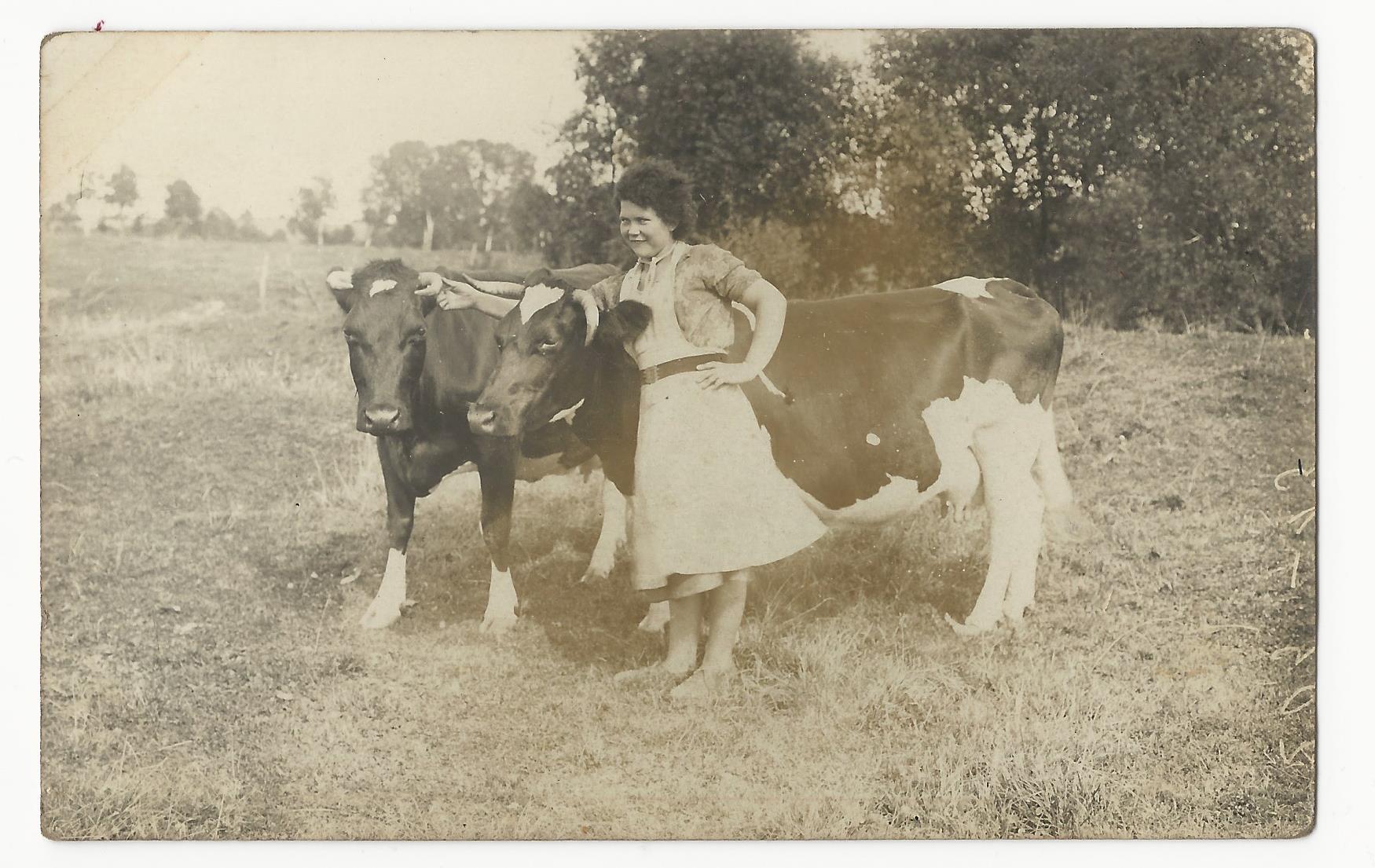
This vintage real photo postcard features a stout woman posing with two cows. The woman is wearing a wide smile. One might say that she is in a state of udder delight. This bovine aficionado seems a bit young to have gone to pasture. A postcard like this one would likely fall in the “rare” category. Over the many years I have collected real photo postcards, I have yet to see one like it. SOLD

Published in: on May 1, 2017 at 12:00 pm  Comments (8)  
Tags:

PORTRAIT OF AN ATTRACTIVE FAMILY WEARING WINTER CLOTHING

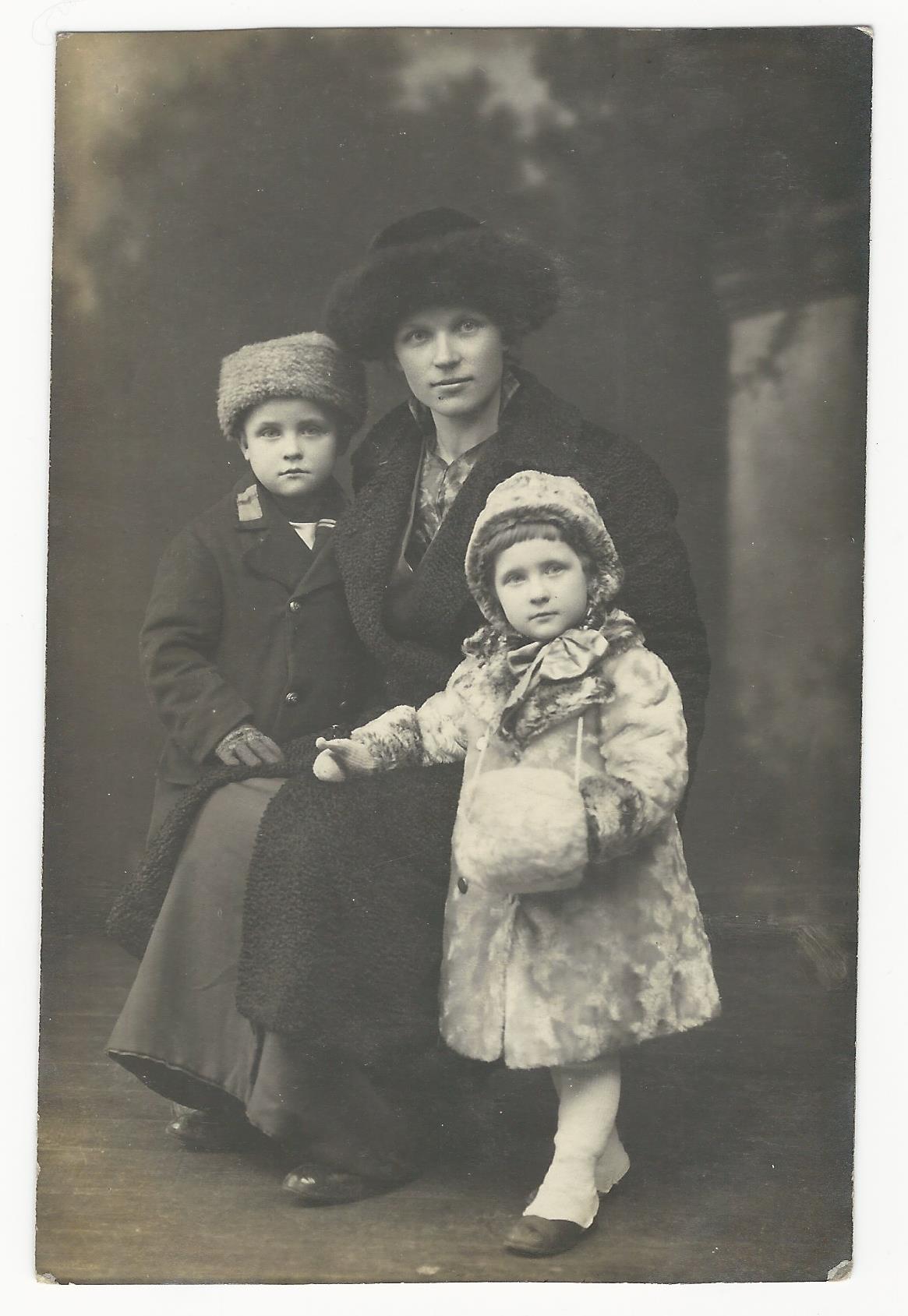
This vintage real photo postcard captures a mother and her two young children posing for their portrait at an unidentified photo studio. The whole family appears quite apprehensive about having their photograph taken. The trio are dressed for winter. All three are wearing winter coats and hats. The older child is wearing gloves and the youngest child is wearing a muff. This image features a  truly attractive family.

Published in: on April 30, 2017 at 2:26 pm  Leave a Comment  

THREE BRITISH SOLDIERS IN CAWNPORE, INDIA (SITE OF HORRIFIC MASSACRES IN THE INDIAN REBELLION)

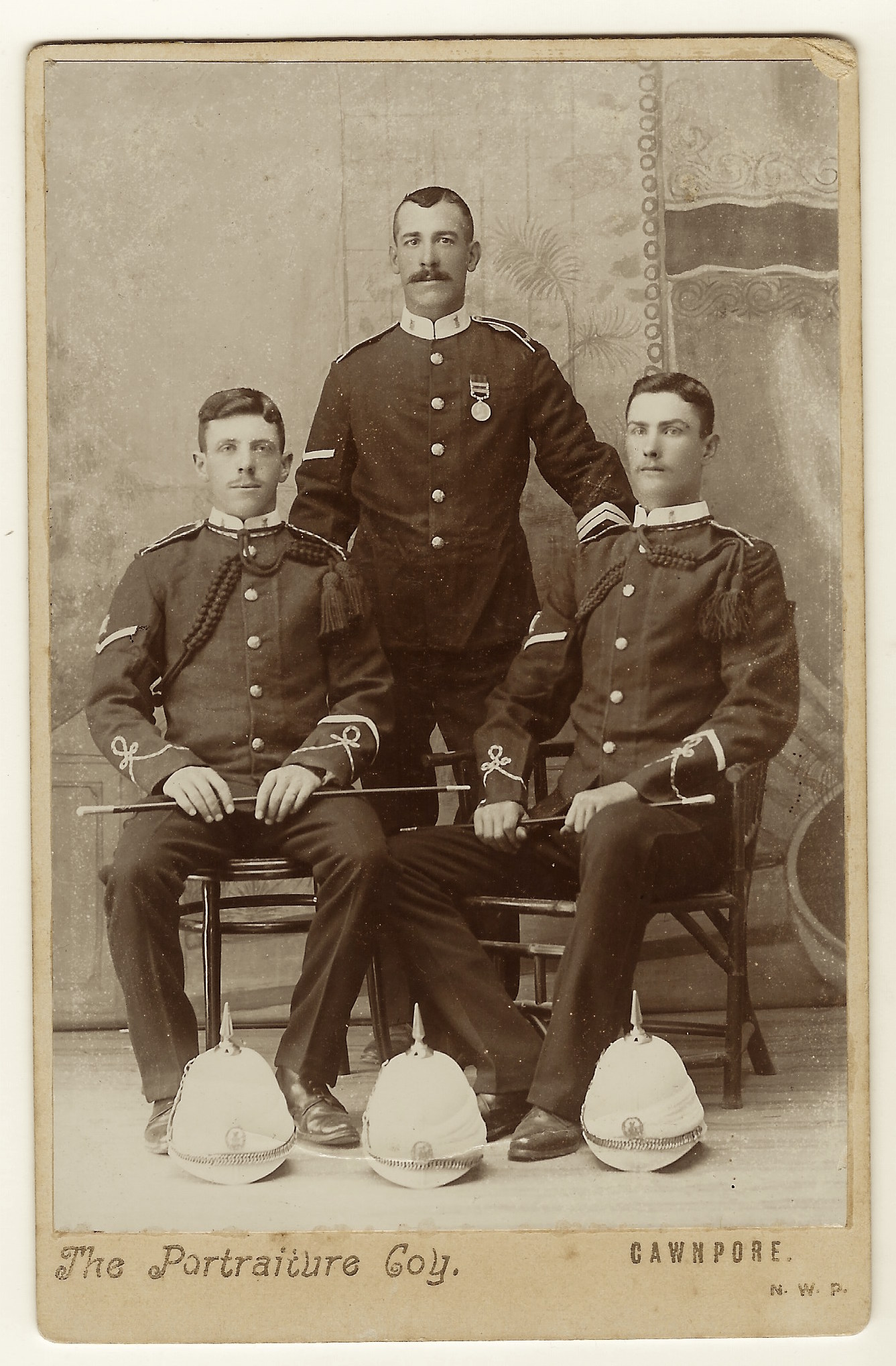
This cabinet card portrait captures three British soldier posing for their portrait at a photo gallery in Cawnpore, India. The three men are in uniform and the standing soldier is wearing a medal on his chest. The two seated soldiers are holding batons. Note the sun helmets on the floor in front of the trio of soldiers. The photograph was taken at “The Portraiture Coy” located in Cawnpore (now Kanpur), a historic city in the relationship between India and Britain. An important battle in the Indian Rebellion (First War of Independence) of 1857 was the Siege of Cawnpore. Cawnpore was the site of a major garrison of the East India Company forces. There were 900 British (including civilians) in Cawnpore as well as a large number of Sepoy troops (Indian infantry). Tensions mounted between the British and the Sepoy troopers until the Sepoys joined the war against the East India Company. The British came under siege for three weeks until the British surrendered in return for safe passage to safety. The evacuation was fraught with problems and in the end, the Sepoys fired upon the departing British. The result was a massacre which included the killing of 120 captured British women and children. East India Company forces from Allahabad marched to Cawnpore and recaptured the city. Company troops retaliated for the massacre by massacring captured local civilians and Sepoys. The soldiers in this photograph arrived in India more than twenty years after the massacres occurred in Cawnpore. However, they were likely very aware of the historic events that happened in Cawnpore.   SOLD

Published in: on April 27, 2017 at 6:25 pm  Comments (1)  
Tags: , , , ,

STUDIO PHOTOGRAPH OF A VERY HAPPY BABY (VINTAGE REAL PHOTO POSTCARD)

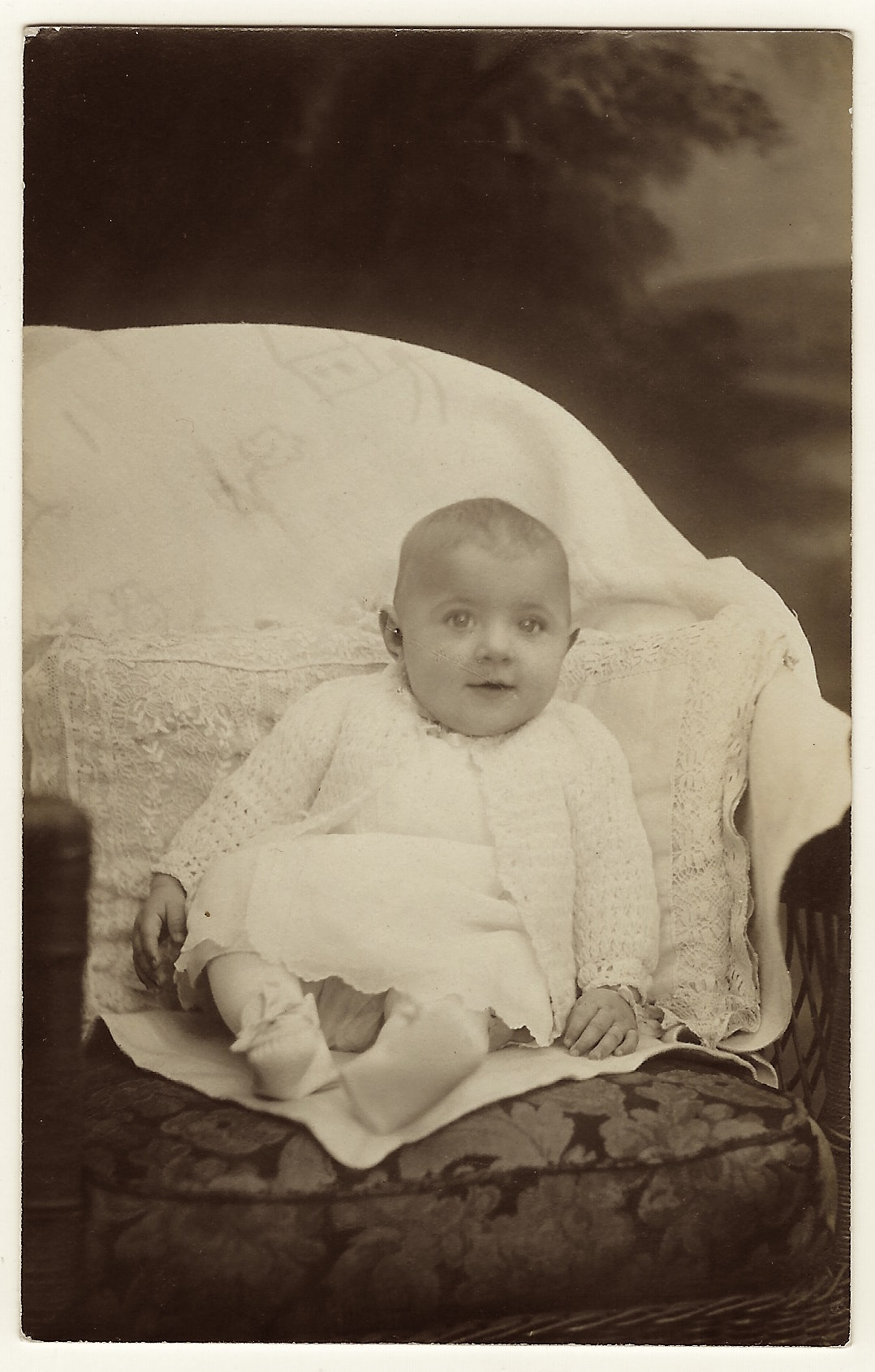
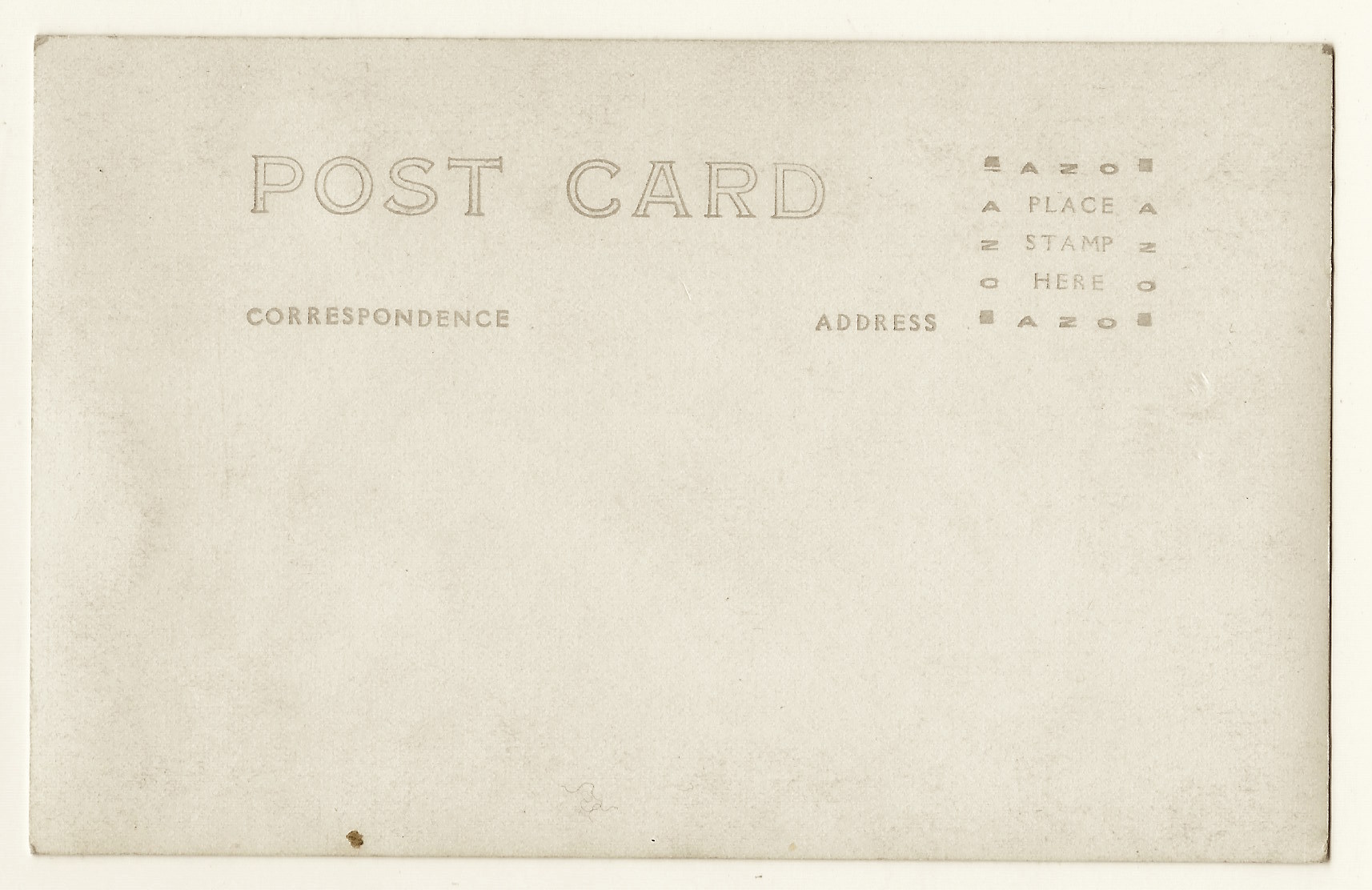
This image is special because it features a baby with a wonderful smile and happy demeanor. It is a rare occurrence to find a portrait of a baby with such a great smile. The photograph was taken at a studio and was used to produce this vintage real photo postcard. The baby is dressed in white and looks so adorable wearing a white sweater and little booties. The baby is sitting on a chair that is covered by a lace light blanket. I am unsure how the baby is safely held in the chair. There is no evidence of a hidden mother’s hands or a device to hold the baby safely in place. A studio backdrop can be seen in the background. The AZO stamp box on the reverse of the image indicates that the postcard was produced sometime between 1924 and 1949

Published in: on April 16, 2017 at 12:00 pm  Leave a Comment  
Tags: , , ,

PORTRAIT OF A PRETTY LITTLE GIRL WEARING A CONFIRMATION GOWN IN DIJON, FRANCE

french confirm 2

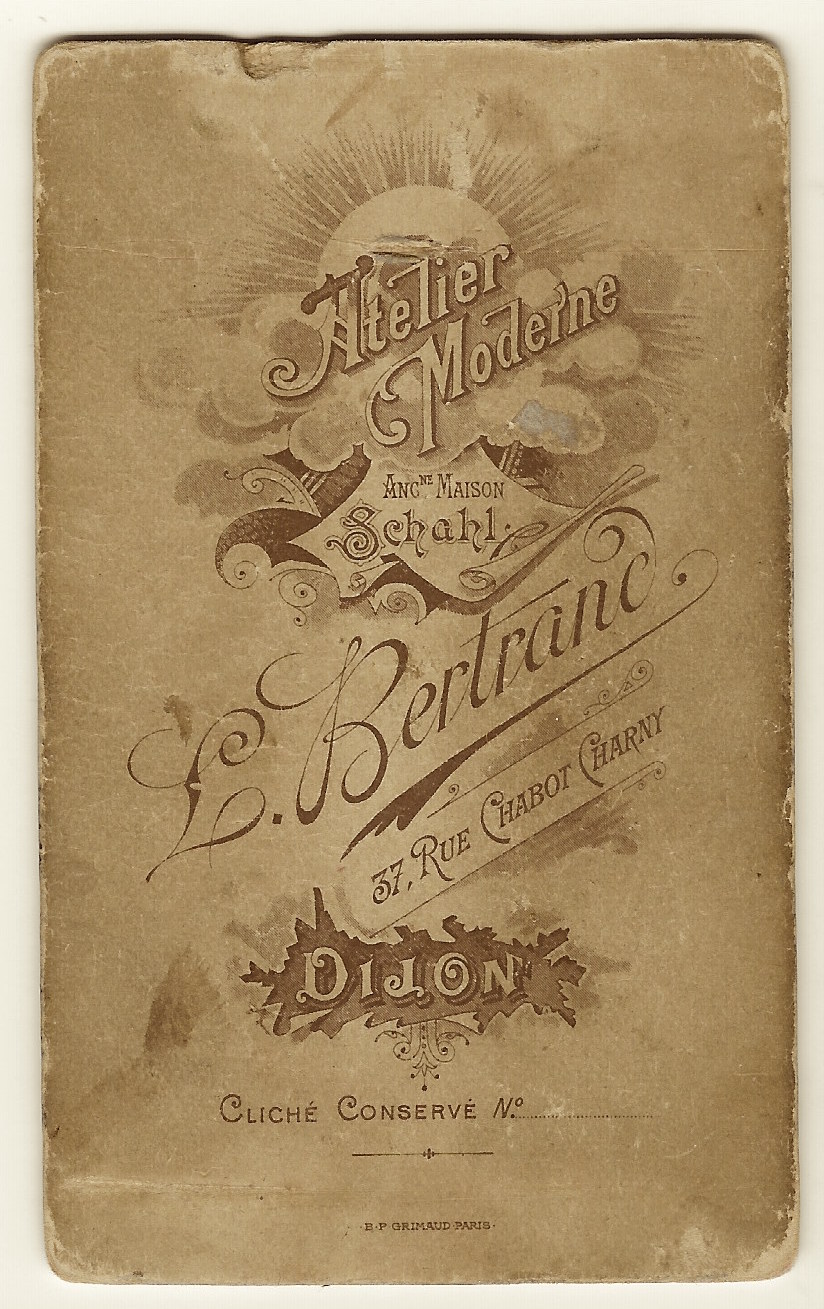
This cartes de visite portrait features a pretty young girl wearing her confirmation gown and holding a cross on a chain and bible. She is wearing white gloves and a necklace with a pendant. It appears that she has a small purse hanging from the front of her dress. This cdv photograph was taken by L. Bertrand at his studio in Dijon, France. Dijon is the capital city of the Burgundy region in eastern France. This area is one of the leading wine producing regions in France.   (SOLD)

Published in: on April 15, 2017 at 12:00 pm  Comments (2)  
Tags: , , ,