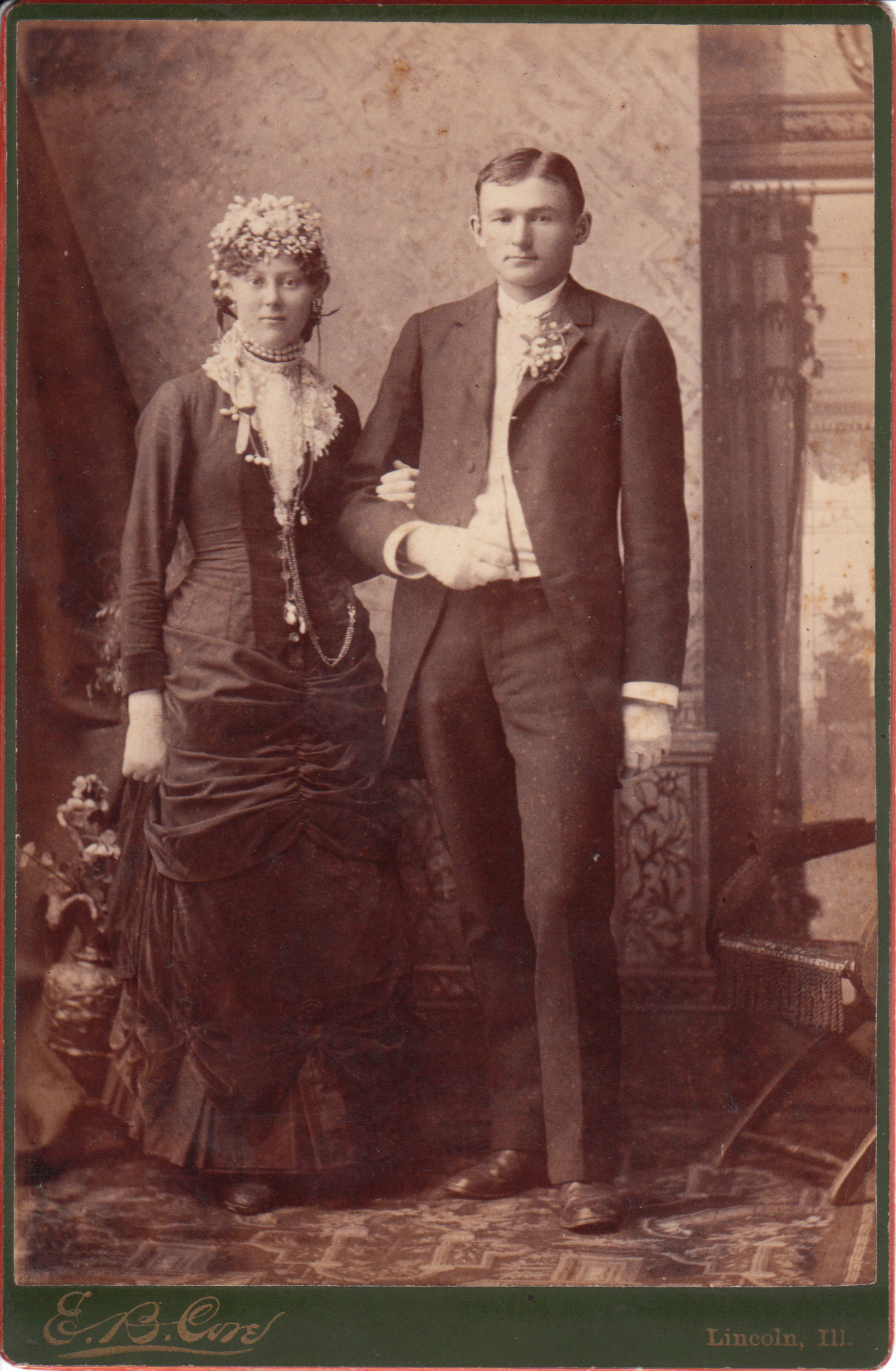
 A couple pose for their wedding portrait in Lincoln, Illinois. The photographer is E. B. Core. The bride is wearing a dark wedding dress and the groom is wearing a corsage. The story behind how Lincoln, Illinois received its name is quite interesting. The town is the only town named for Lincoln before he became President of the United States. He worked as an attorney in the town between 1847 and 1859. The town was named Lincoln in 1853 and during the ceremony, Abe Lincoln christened the town by pouring watermelon juice on the ground. When it was originally proposed to name the town after Lincoln, Mr Lincoln stated that he was against the idea and that in his experience, “Nothing bearing the name of Lincoln ever amounted to much”.
WEDDING COUPLE IN LINCOLN, ILLINOIS (WHO SAID “NOTHING BEARING THE NAME LINCOLN EVER AMOUNTED TO MUCH”?)

HANDSOME AND WELL DRESSED YOUNG GENTLEMAN IN BANGOR, MAINE
 Chalmers studio in Bangor, Maine produced this photograph of a formally dressed and handsome young man. The reverse of the photograph has the subject’s name and a few more details listed. The fellows name is C. L. (possibly G. L.) Surall of the University of Maine, class of 1899. This image is likely a graduation picture.
TWO YOUNG WOMEN HOLDING HANDS IN HUDSON, NEW YORK
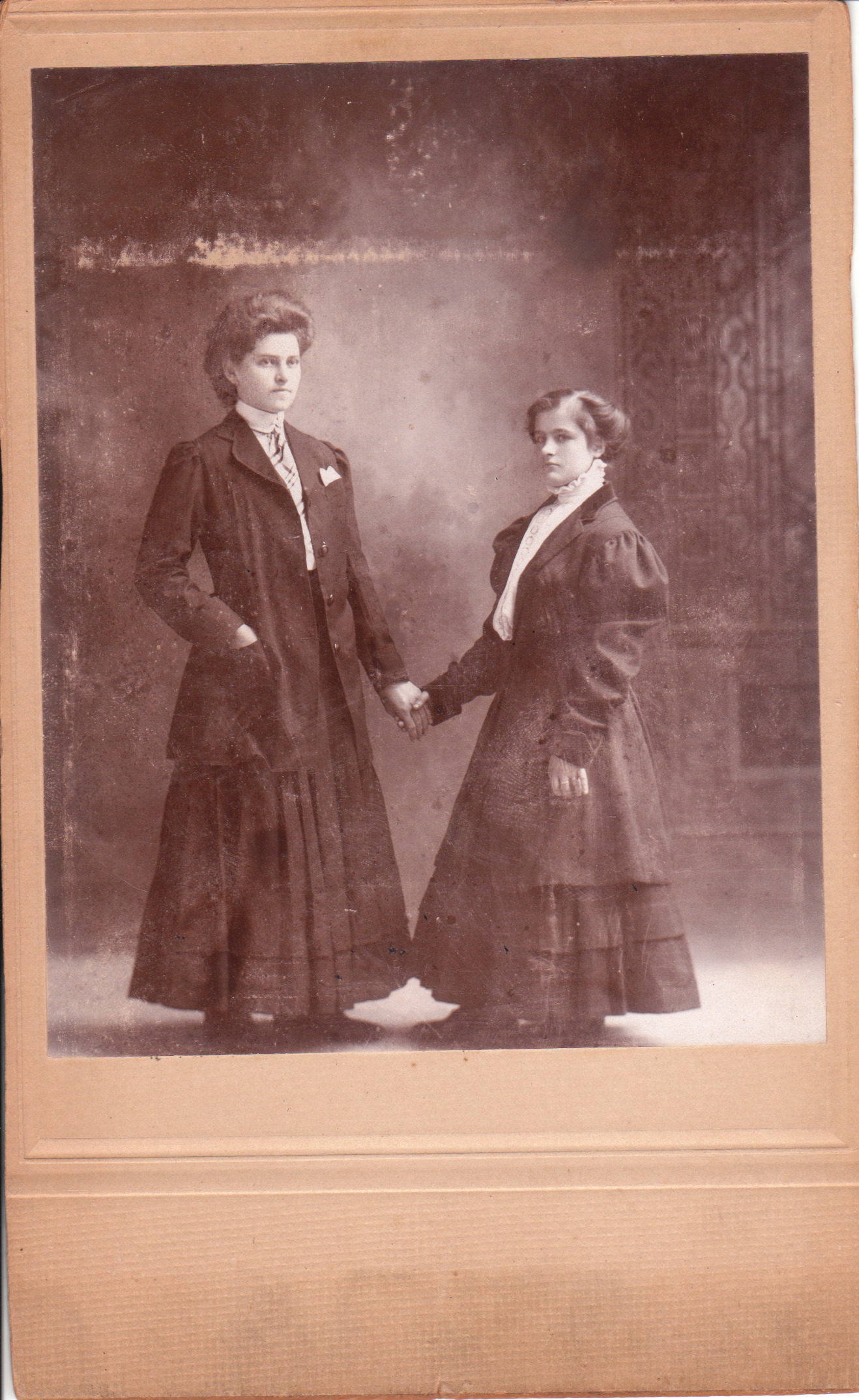 This curious photograph features two young women holding hands. The photographer is Sullivan Brothers of Hudson, New York. To view other photographs by the Sulllivan Brothers, click on the category “Photographer: Sullivan Brothers”.
KNIGHTS OF THE TEMPLAR MEMBER IN SAN FRANCISCO, CALIFORNIA
 The previous owner of this photograph asserted that the subject of this image is dressed in the uniform of the “Knights of the Templar”. Note the gentleman’s sword , gloves, belt, sash, and feathered hat. The Knights of the Templar was a fraternal group that originated shortly after the first crusade. To view other photographs of members of this organization, enter “templar” on this sites search box. This image was produced by Rieman & Company which was located in San Francisco. The photograph is larger than a cabinet card. It measures 5″x8″. Advertising on the reverse of the card includes the quote “Rieman’s Babies” and “When Others Fail, Try Rieman”. These boastful statements refer to Rieman’s general photographic prowess as well as his special talent for the difficult task of photographing babies. To view other photographs by Rieman and to learn more about him, click on cabinet card gallery’s category “Photographer: Rieman”.
STYLISH COUPLE IN BROOKLYN, NEW YORK
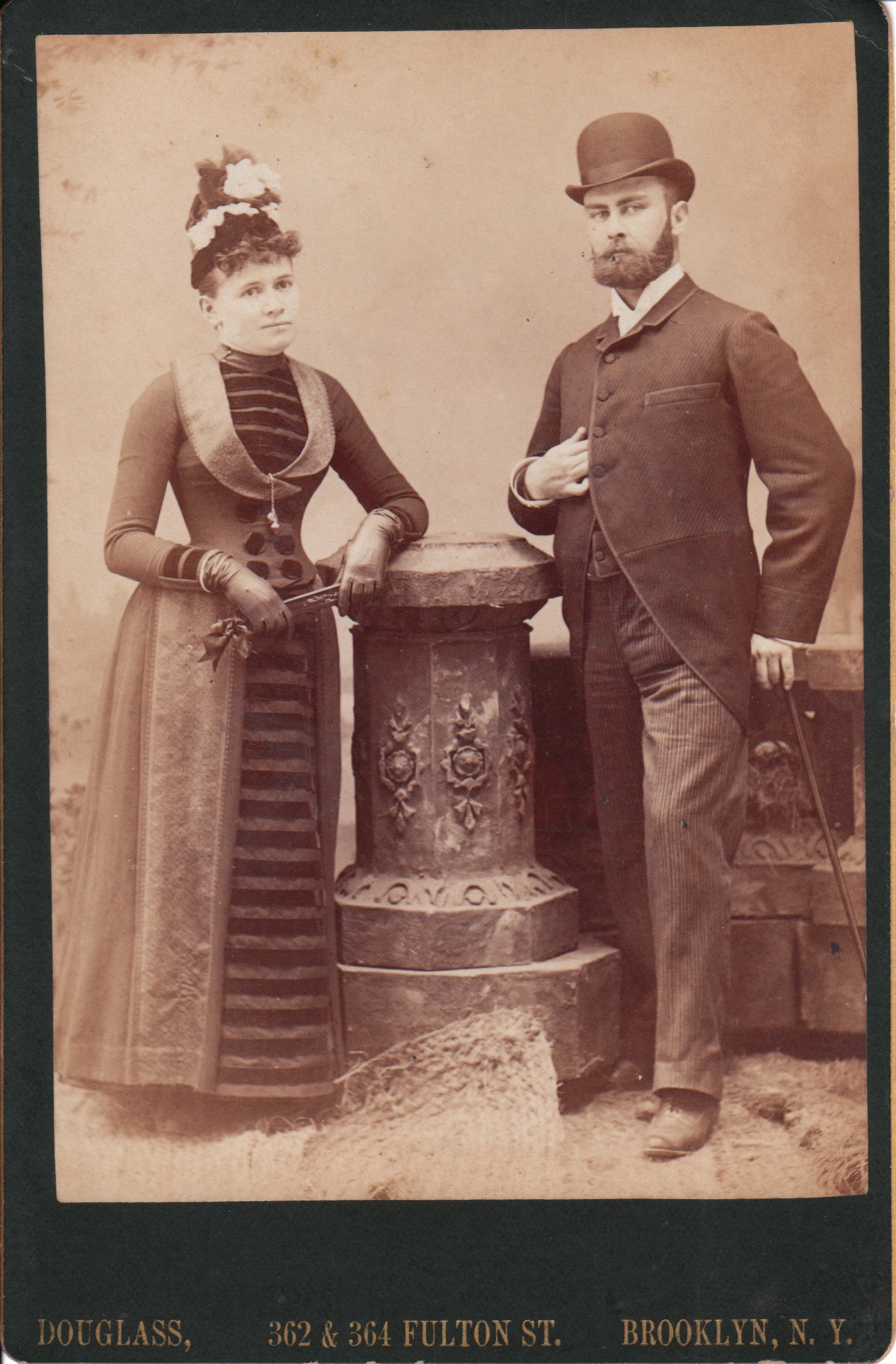 A stylish couple pose for their portrait at the Douglass studio in Brooklyn, New York. Both subjects are wearing wonderful hats. He is holding a walking stick. She appears to be holding a fan in her gloved hands.
“THE ENTERTAINER”: A BANJO PLAYER IN WALTON, NEW YORK
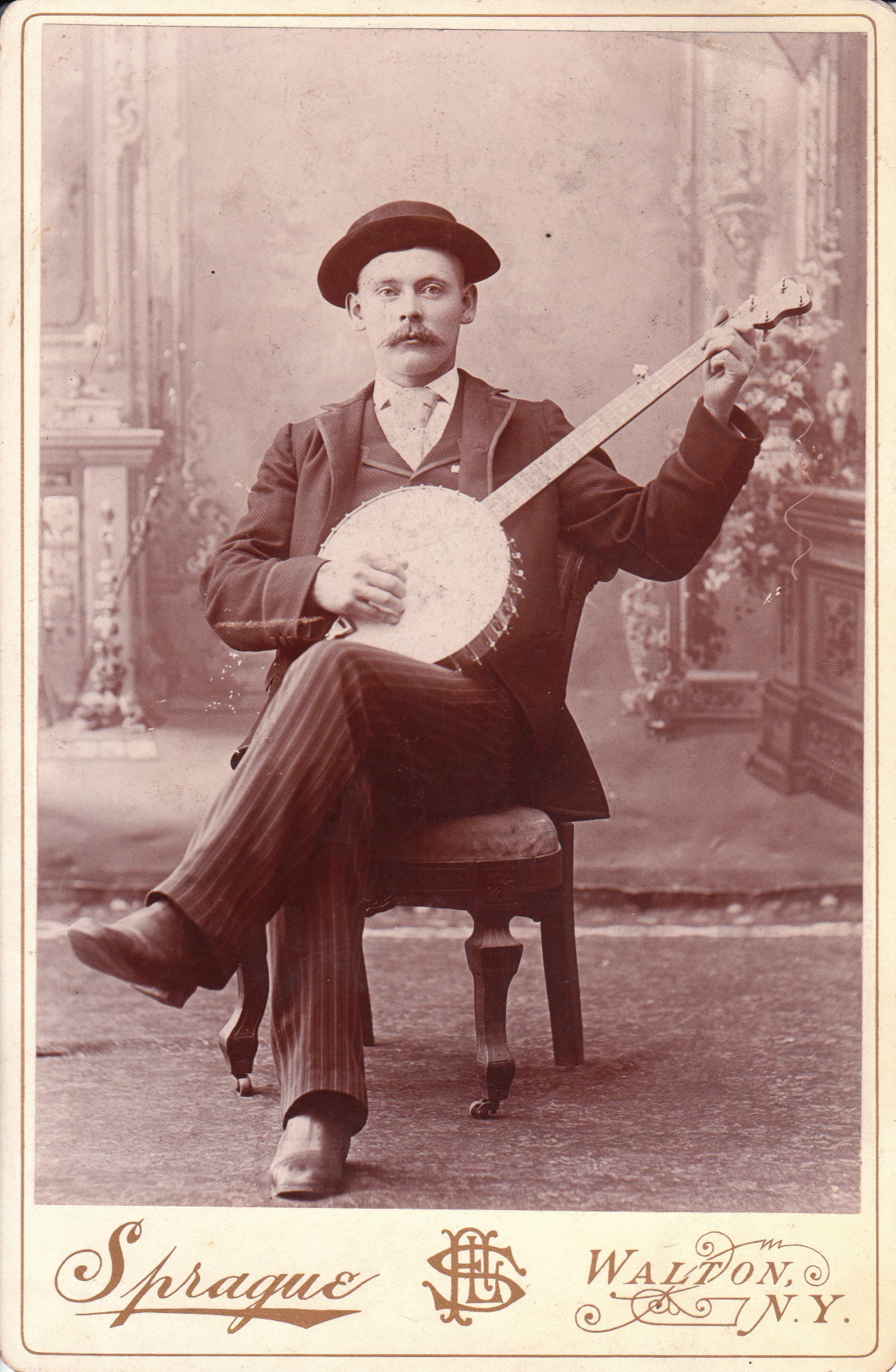 A spiffy gentleman wearing striped pants, and with a banjo on his knee, poses at the Sprague studio in Walton, New York. He looks relatively comfortable in his “entertainer pose”. It appears that he actually is a banjo player and not just holding a studio prop. Note his terrific hat.
PORTRAIT OF A CONTEMPLATIVE TEENAGE GIRL IN NEW YORK CITY (PHOTOGRAPH BY PACH)
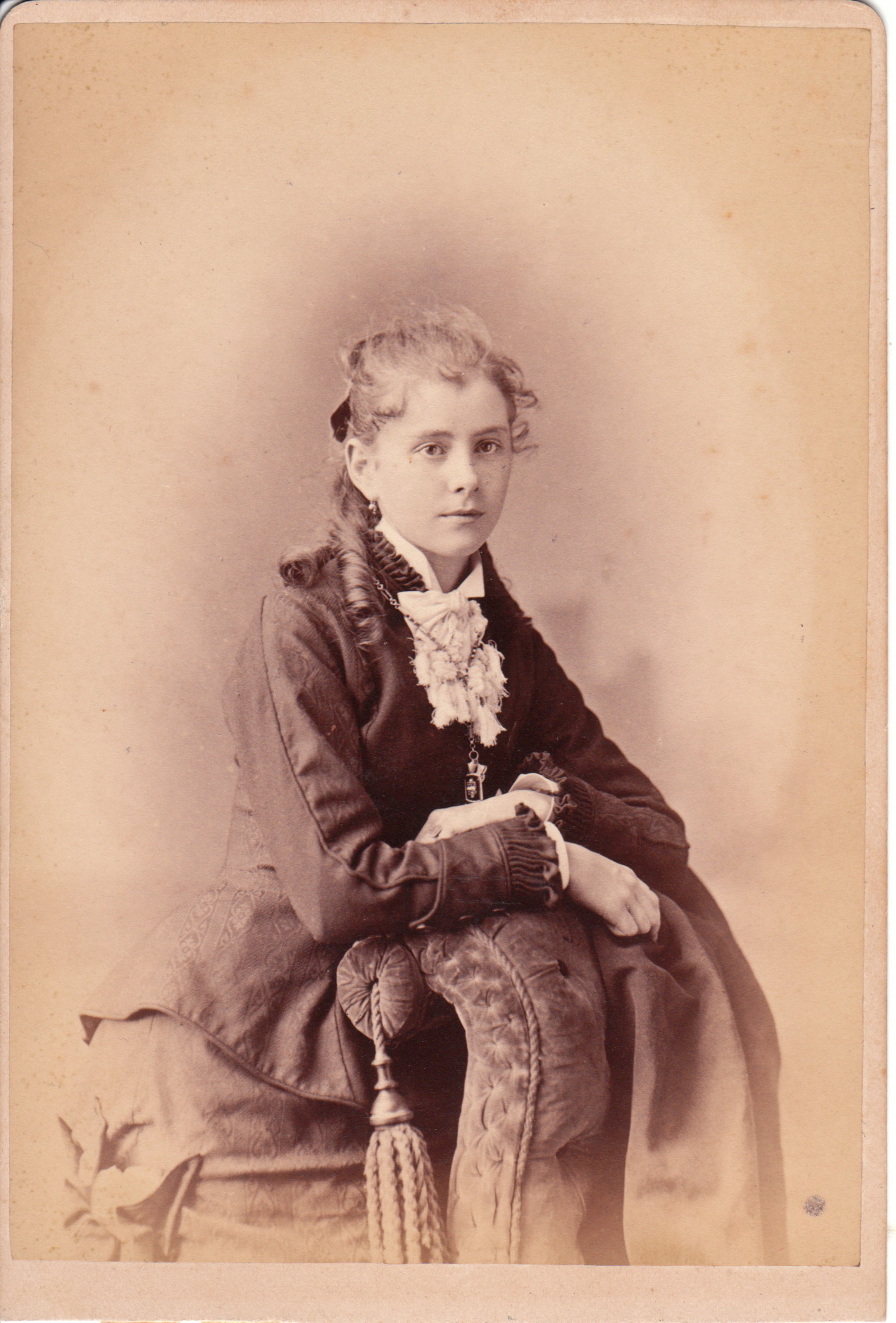 The teenage girl featured in this cabinet card photograph appears to be deep in thought. She looks quite delicate. The contemplative teenager is well dressed and very poised. The photographer, G. W. Pach, has done an excellent job of posing his subject and produced an admirable artistic photograph. Pach, whose studio was located at 841 Broadway in New York City, is a celebrated photographer of his time. This cabinet card is likely from the earlier part of the cabinet card era. To learn more about the photographer and to view more of his images by, click on the category “Photographer: Pach Brothers”.
DELLA FOX: AMERICAN STAGE ACTRESS (IMAGES FROM 1893 and 1894)
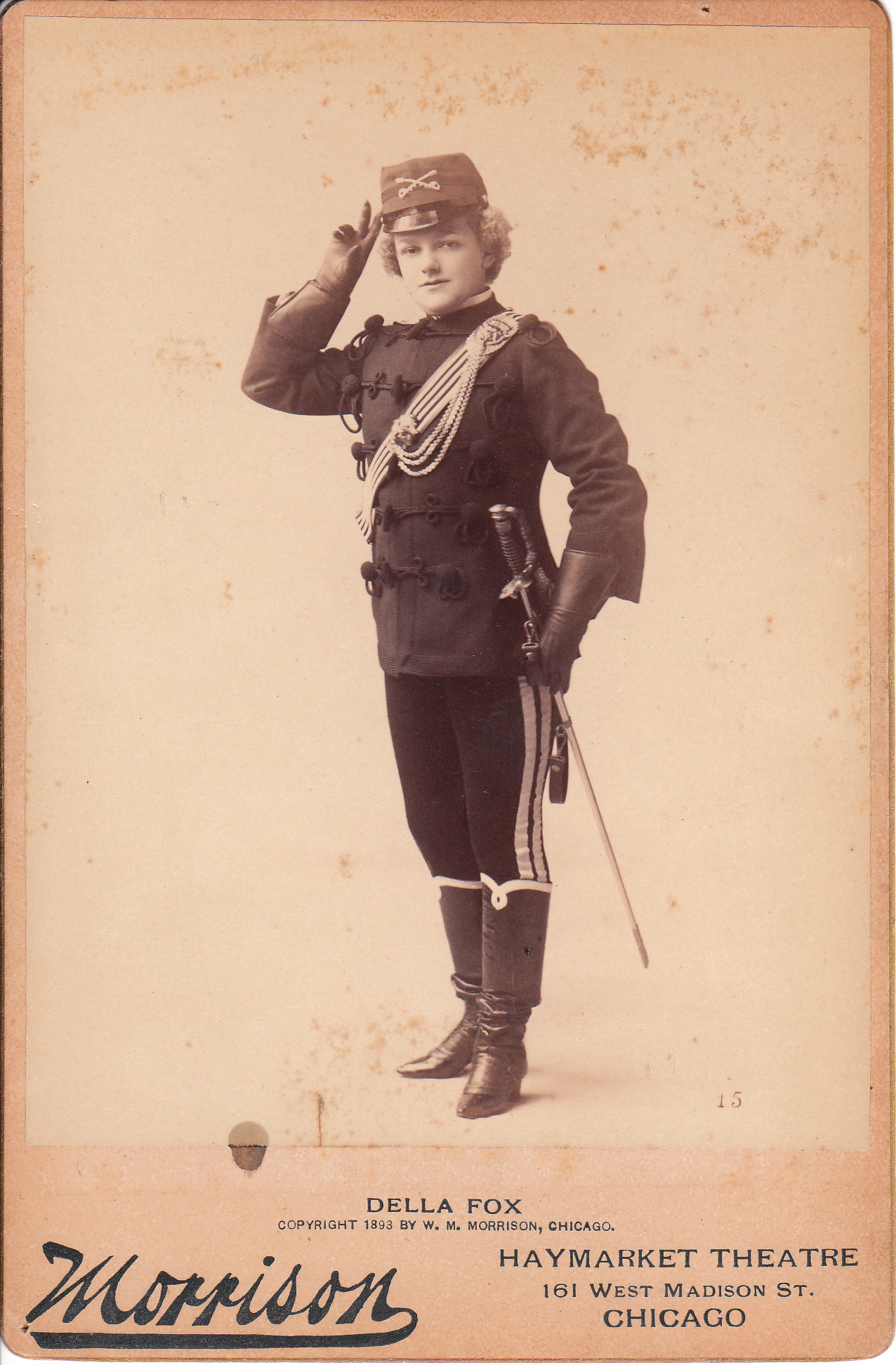
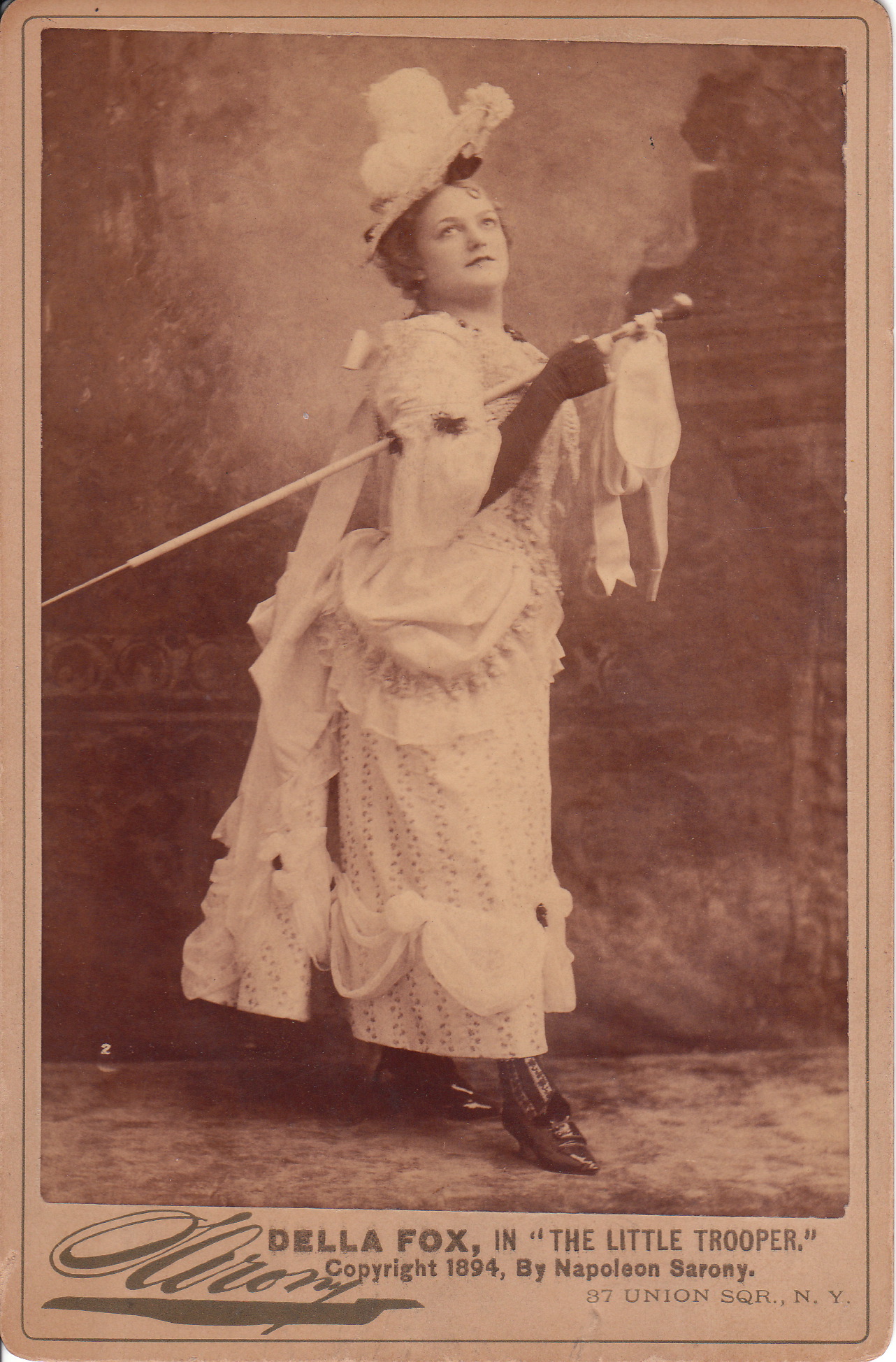
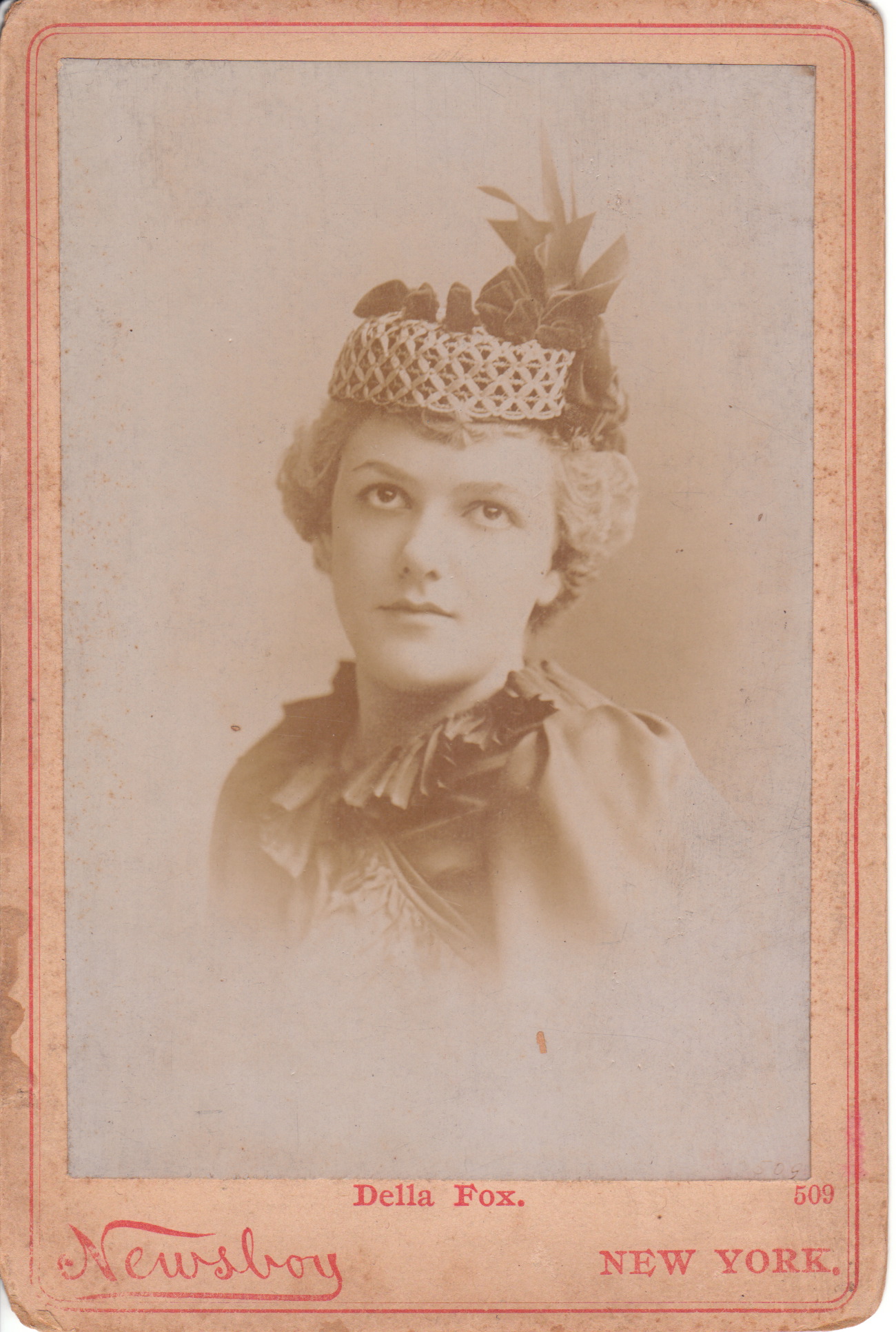
These cabinet cards feature American stage actress, Della Fox (1870-1913). In the top photograph, she is wearing a military costume for a play that she was appearing in. The photograph is copyrighted in 1893. She began her acting career as a child and became a well known musical comedy actress. Her popularity peaked in the 1890’s when she appeared in several musical with De Wolf Hopper. She also toured with her own theatre company. Her life was plagued with personal problems including alcohol and drug abuse, and mental breakdowns requiring institutionalization. This cabinet card portrait was photographed by Morrison who is known for his portraits of theatre stars and other celebrities. Morrison operated out of the Haymarket Theatre builiding in Chicago, Illinois. Please click on the category “Photographer: Morrison” for more information about Morrison and to view other photographs by his studio. The second photograph captures Della Fox in costume for the play “The Little Trooper”. The play was by William Furst (1852-1917) and appeared at the Empire Theatre in New York City. The photograph is the work of Napoleon Sarony, famed celebrity photographer of New York City. The reverse of the cabinet card indicates that the photograph was taken on December 25th, 1894. To view other photographs by Sarony, click on Cabinet Card Gallery’s category of “Photographer: Sarony”. The third photograph of Miss Fox was produced by Newsboy as a premium to be given away with their tobacco products. It is number 509 of a series. To view other Newsboy photographs, click on the category “Photographer: Newsboy”.
ESTELLE CLAYTON: STAGE ACTRESS


Estelle Clayton (1867-1917) is seen in the first and second Cabinet cards. She was a prominent actress as well as a librettist in the late 1800’s. In one of her roles, she starred in “Fayette” with E H Sothern. Clayton was the sister of actress Isabelle Evesson. In 1908, the two sister actresses filed suit against New York City for allegedly diverting land away from earlier generations of their family. In 1917 she died in New York City of heart failure. The photographer of both of these Cabinet cards is Sarony of New York City. The third cabinet card portrait of Clayton was produced by Newsboy as a premium for tobacco products. It is number 47 of a series. The barefoot Miss Clayton is in quite the risque pose in this image.
“AMERICA FOREVER”: PATRIOTIC TEN YEAR OLD IN DAYTON, OHIO SUPPORTS AMERICAN SOLDIERS AND SAILORS DURING THE SPANISH AMERICAN WAR
 A ten year-old boy named Horace H. Justice Jr. poses proudly in a sailor suit at the studio of Anderson & Hartshorn in Dayton, Ohio. Horace’s naval cap displays the name “Dewey” rather than the more typical ship name. Admiral George Dewey (1837-1917) was a US naval officer best known for his victory at the Battle of Manila Bay during the Spanish American War. He came home to the United States and was received as a conquering war hero. Young Horace is clearly paying tribute to Admiral Dewey. The Spanish American War era was a time marked by a escalation of patriotism in the United States and this image provides an illustration of this nationalistic fervor. It is also possible that Horace’s father may have served with Admiral Dewey and that Horace Jr. is emulating Horace Sr.. Initial research found a Horace J. Justice living in Dayton. The 1900 US census reveals that Justice was married to Mattie Justice 1885) and at the time of the census, they had a twelve year old son also named Horace. Horace Justice Sr. is mentioned in many Dayton city directories from 1871 through 1909. He worked many years as a travelling salesman. It could not be established that Horace Sr. was in the armed forces. It appears that Horace Jr was born in 1888 and died in 1948. Information was also found about the photographers. Photographer James Otto Hartshorn was a leading Dayton photographer. He was born in Ohio in 1869. A Dayton history book reveals that he was “deprived” of his parents when he was thirteen years-old and forced to live with various friends. He worked on a farm until he turned eighteen and and then moved to Dayton and for a short time worked in a cotton batting factory. In 1888 he became employed in a photography studio where he learned to become a very skilled photographer. In 1891 he married Ella M. Huesman of Dayton. In 1894 Hartshorn partnered with Charles F. Anderson and opened up the studio that produced the portrait of Horace Justice Jr..


 THE CABINET CARD GALLERY