PROUD COUPLE AND A DIPLOMA IN VAN WERT, OHIO

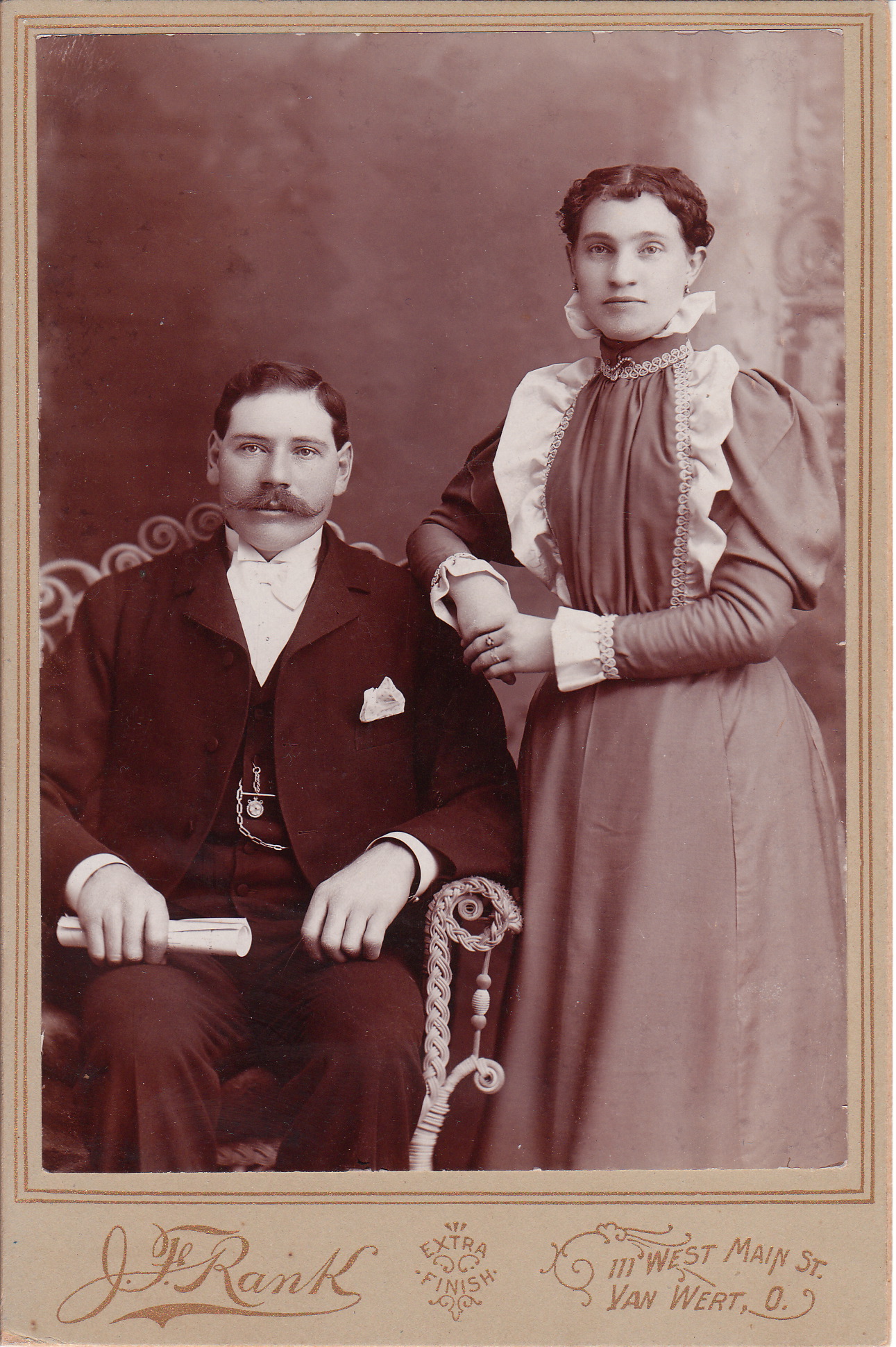
A young couple poses for their portrait in this cabinet card photographed by J. F. Rank of Van Wert, Ohio. The man in the image is holding a rolled document that appears to be a diploma. He is dressed in formal clothing which suggests that the portrait may be a graduation picture. He has a fine handle bar mustache and is wearing a pocket watch. The woman in this picture is nicely dressed and well adorned with jewelry. Jeremiah F. Rank (1847-1913) was born in Shelby, Ohio. He learned the trade of photography from I. S. Hartsock in Van Wert, Ohio, in 1872. After being trained, he quickly bought Hartsock’s studio and operated the business until 1892 when he sold the gallery. After traveling around the United States for two years, he opened galleries in Schuyler and Lincoln, Nebraska. He eventually returned to Van Wert and opened another studio there. In 1874, Rank was married to Mary I. McBride of Oskaloosa, Iowa. To view other photographs by this photographer, click on the category “Photographer: Rank”.

JENNIE JOYCE: TROUBLED STAGE STAR PHOTOGRAPHED BY FALK FOR NEWSBOY

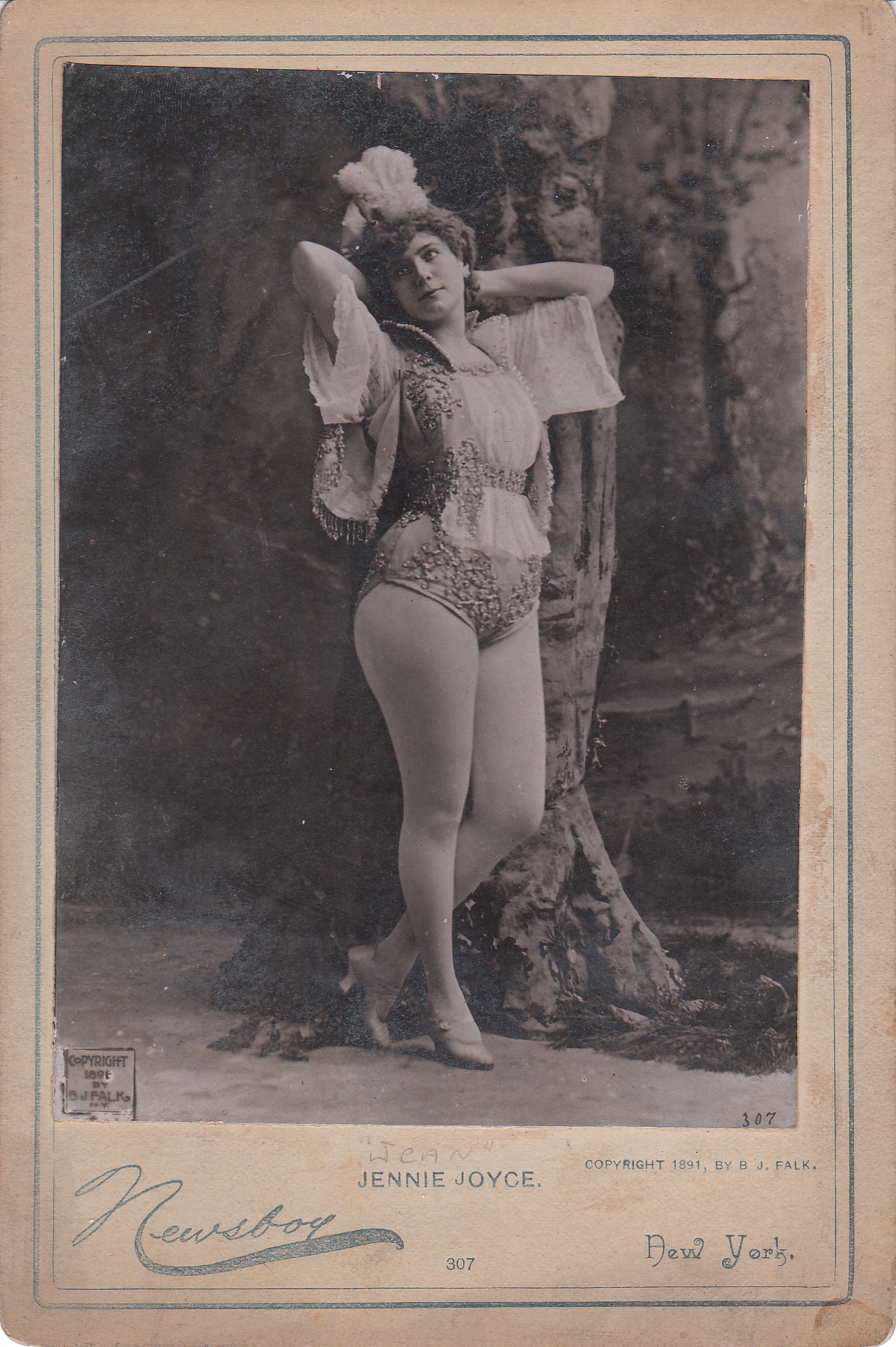
This photograph, by celebrity photographer B. J. Falk, features stage star Jennie Joyce. She was photographed for the Newsboy tobacco company and the image was used as a premium to reward purchasers for buying Newsboy products. The image has a copyright date of 1891 and is number 307 in the Newsboy series. This photograph is risque for its era. Miss Joyce is showing much of her nearly bare legs and is exhibiting a sexually provocative pose. The New York Times (1892) published an article reporting that Jennie Joyce was sued by her husband for divorce. John E. Stanley’s request for a divorce was uncontested. The newspaper described Jennie Joyce as a variety actress and singer. An 1899 article in the same newspaper reported a story about problems in the marriage of Joyce and sportsman Phil Daly Jr..  Daly had told Joyce that he would be out all night but according to plan, returned home at two in the morning only to find his wife with another man (Phillip Wood). Daly fired a number of shots at Wood but missed. Daly’s parting shot was to file for divorce and end his five year marriage. The bad publicity caused by Joyce’s marital problems cause her to speculate in another 1899 Times article that she planned to leave the United States to perform pantomime in London until the fallout from her divorce had diminished. An additional conflict was in the news when the New York Times (1901) printed a story about Joyce successfully suing theatre manager, Alexander Hashim for unpaid salary. Jennie Joyce was clearly  a gossip magnet for the press and she provided  them with a lot of material.   SOLD

LADY AND A BANJO

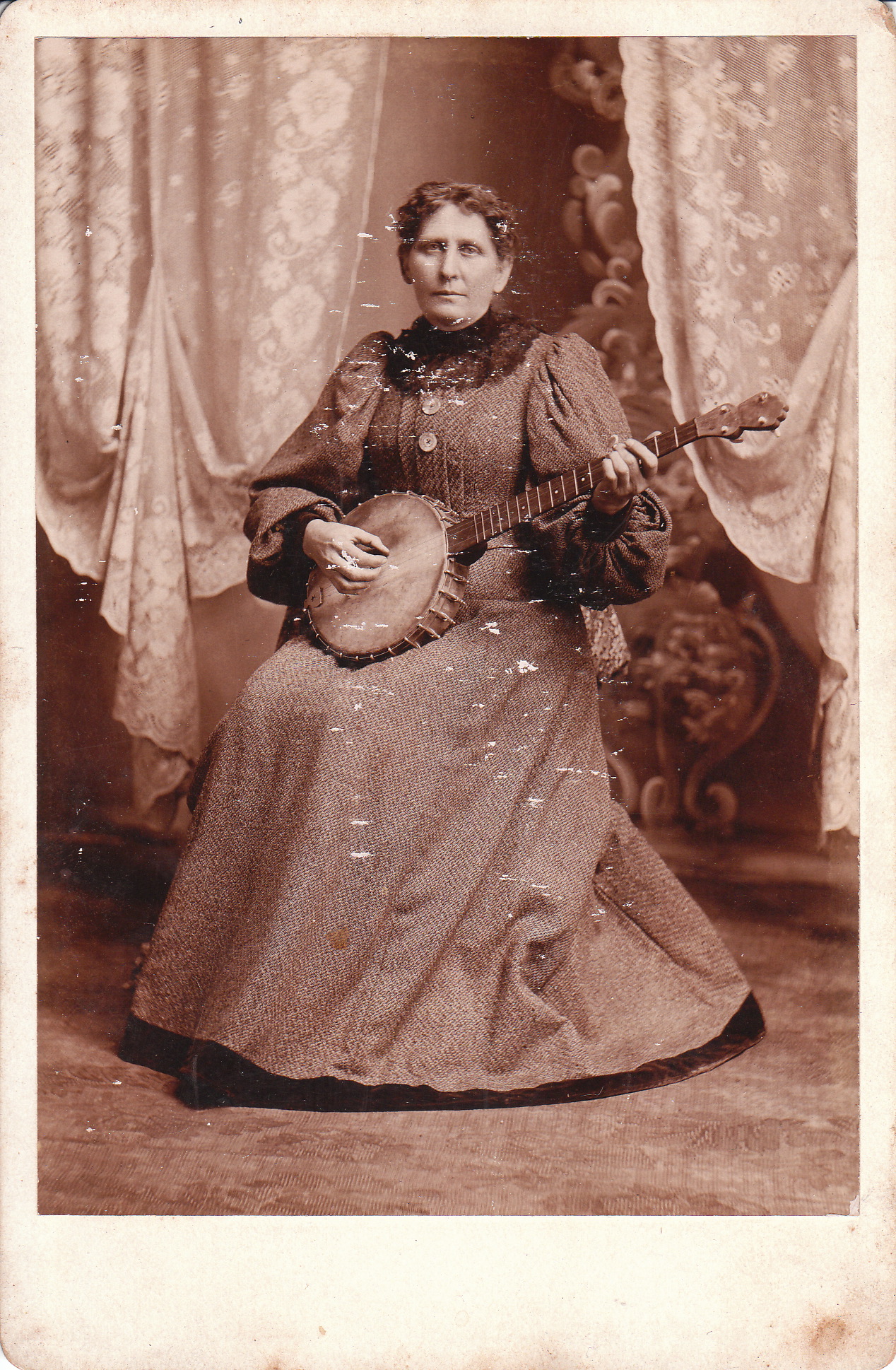
A lady and her banjo are the subject of this cabinet card portrait. She is posed as if she is performing. She sits with the banjo on her knees and curtains draped behind her. Although the photograph is marred by age, it is still a spectacular image because it captures the role music played in home entertainment at the turn of the nineteenth century. The performer and the photographer are unidentified.  SOLD

Published in: on April 4, 2012 at 12:01 am  Leave a Comment  
Tags: ,

NICELY DRESSED BIKE RIDER IN LAKE ODESSA, MICHIGAN

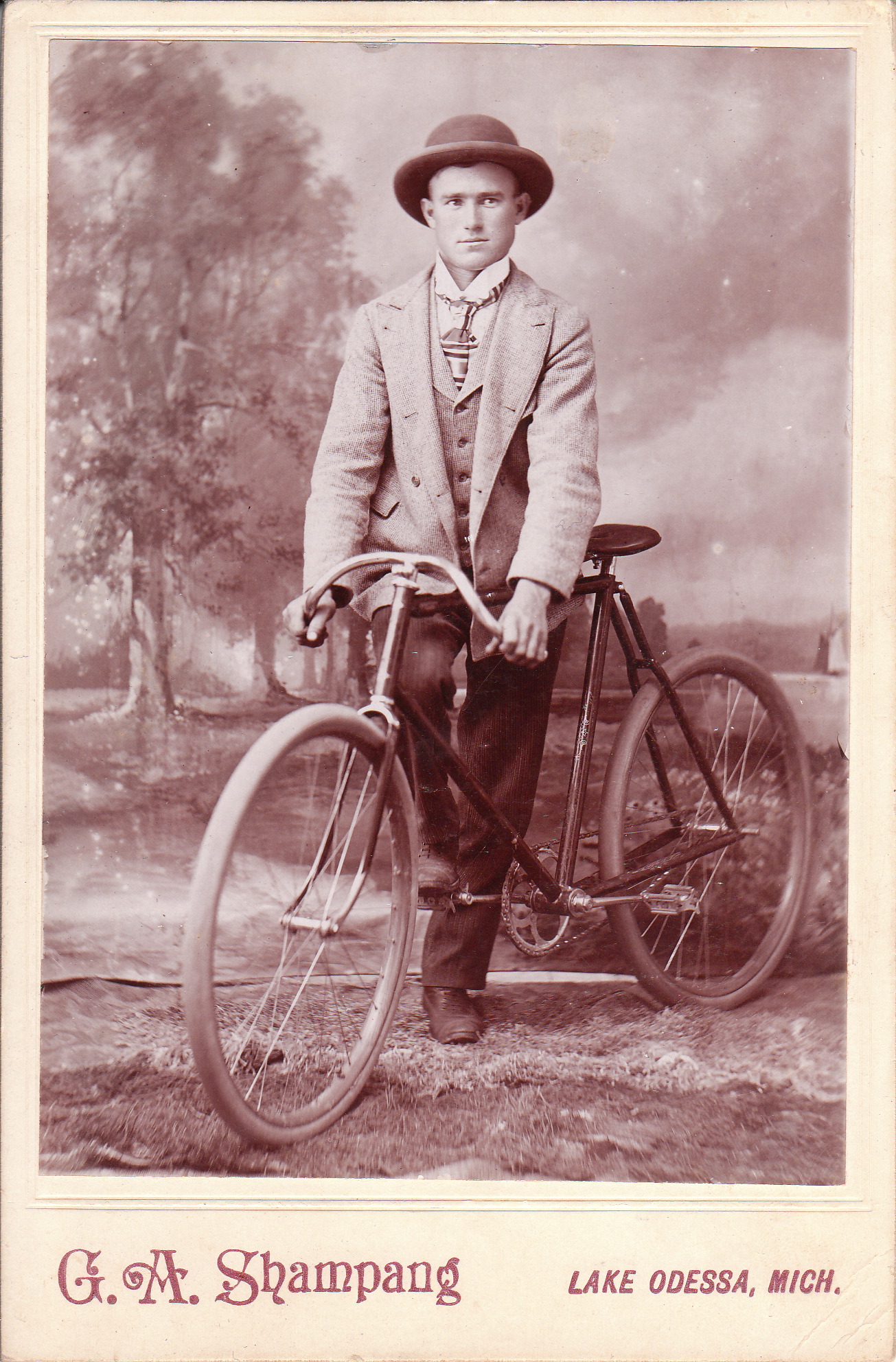
A young man poses holding a bicycle at the studio of G. A. Shampang in Lake Odessa, Michigan.  The good looking man is dressed in what is probably his finest clothing. Take note of where the backdrop screen reaches the floor. The photographer was a bit careless and did not take notice or action to insure the backdrop touched the floor properly to promote a more credible background. Oops! G. A. Shampang located in Lake Odessa in the late 1890’s. According to an ad in the Lake Odessa Wave, the studio was located above the Lake Odessa Savings Bank on the corner of Fourth Avenue and Second Street. In late 1898 Shampang took on Mr. Mead as a partner, forming Shampang & Mead. Something apparently went wrong with the partnership because Shampang bought back Mead’s shares in the business after just three months of  joint ownership. Shampang operated the gallery until about 1910. In 1911 he moved to California and later on, moved to Saginaw, Oregon where he owned an oil station. In 1931 he succumbed to a stroke. His wife, Ada Ema Rozell, survived him. To learn more about Shampang, visit the web site for the Ionia County Genealogical Society.  SOLD

Published in: on March 28, 2012 at 12:01 am  Leave a Comment  
Tags: , , , ,

CONCHITA GELABERT: BEAUTIFUL OPERA STAR IN PARIS, FRANCE

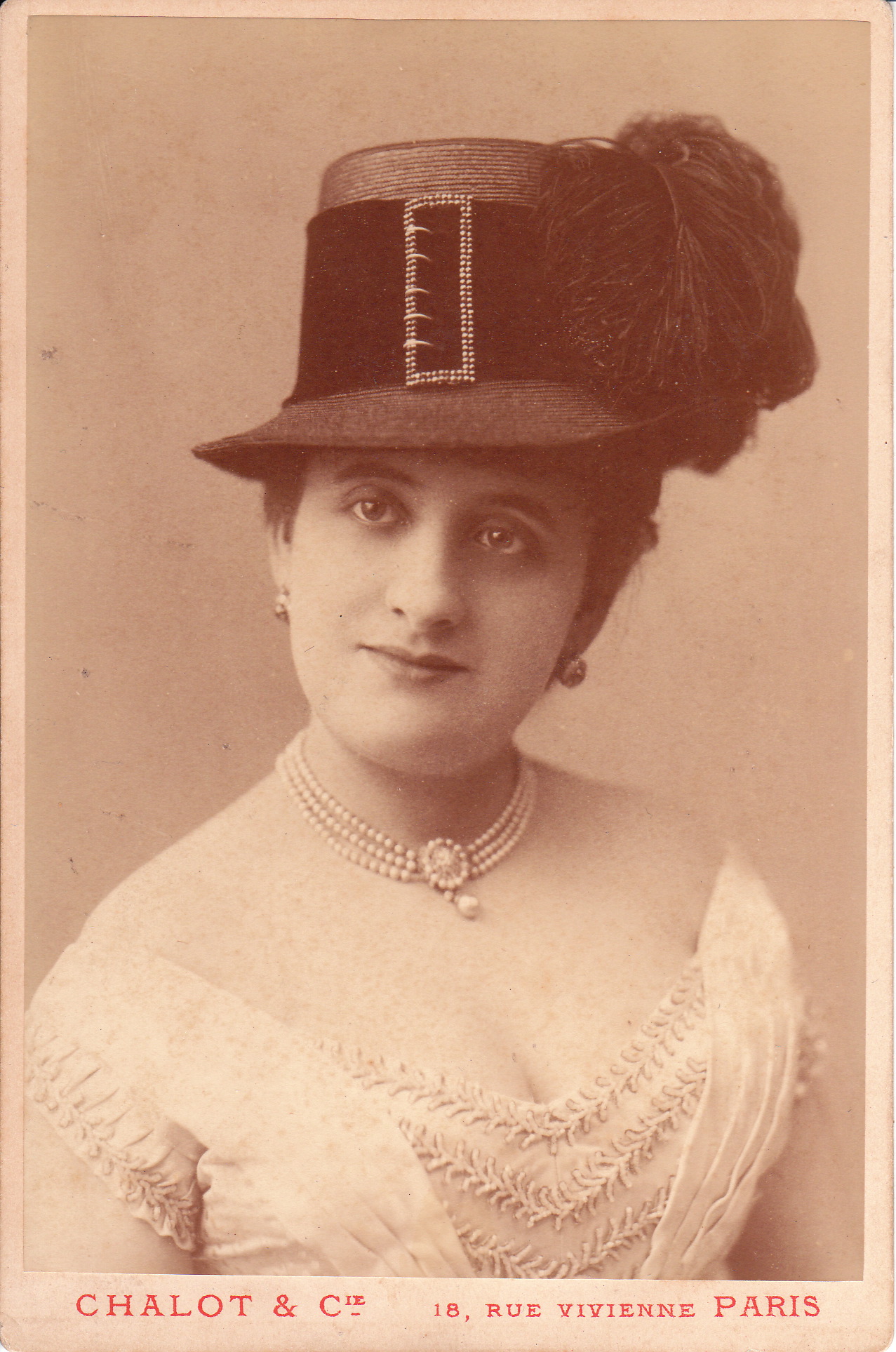
This cabinet card features the lovely Conchita Gelabert, soprano and operetta actress. Marie “Conchita” Gelabert was born in Madrid in 1857 and died in Paris in 1922. She was educated in the Paris Conservatory of Music. An article in the New York Times (1922) announced her death. She was described as a “Spanish Comic Opera singer. who for many years was one of the most celebrated of Paris stars”. The article states that Gelabert “died today alone and forgotten”. Apparently, she had left the stage in 1890 and went into seclusion for the rest of her life. The cause of her abandoning her career and becoming an isolate, was an unhappy love affair. The article credits Gelabert with creating many roles, including “The Beautiful Person”and “The Grand Mogul”. This portrait was photographed by Chalot and Company of Paris, France. Ms. Gelabert is a stage beauty with eyes and an expression that can best be described as playful. She is wearing an interesting hat and well adorned with jewelry. Her dress is a bit risque but by Paris standards, this is a tame photograph.  The photographer of this image, Isadore Alphonse Chalot was one of the subjects of an article appearing in the American Journal of Photography (1890). The article was entitled “Photographers in Paris- Their Studios and Workshops”.  SOLD

FOUR SIBLINGS AND THEIR TOYS IN STEINHEIM, GERMANY

A sister and three brothers pose for their portrait at the Lammersen studio in Steinheim, Westphalia, Germany. The young girl is holding a doll with bows in its hair; which is the same way that the young girl wears her hair. One of the boys is playing with blocks while another boy is holding a book. The photographer of this image, F. Lammersen,  took the photographs for an article appearing in the Strand Magazine (1898). The article was entitled “The Most Wonderful Hedge in the World” and was about  the work of a railway guard at the Steinheim station. The railroad employee used his spare time to artistically clip hedges into wonderful sculptures and Lammersen’s camera provided many illustrations of the talented gardeners creative work.

Published in: on March 26, 2012 at 12:01 am  Leave a Comment  
Tags: , , , ,

EXCEPTIONALLY BEAUTIFUL WOMAN FROM DARMSTADT, GERMANY

The woman in this photograph is absolutely beautiful. She is also elegant and stylish. She is wearing a pretty boa and hat. The photographer of this image is Hofmann & Company. The studio was located in Darmstadt, Germany. Darmstadt is in the city of Hesse, which is a little south of  Frankfurt. An inscription on the reverse of the photograph has the subject’s name and the date of the photograph. The name of  this pretty fraulein is illegible but it is clear that the photograph was taken in 1905.

Published in: on March 24, 2012 at 12:01 am  Comments (1)  
Tags: , , , ,

A LOVELY YOUNG LADY AND HER HAT

A lovely young lady is featured in this photographic portrait. She is beautifully dressed and is wearing a hat that is nicely adorned with flowers. The name of the photographer and his location are unknown.   SOLD

Published in: on March 21, 2012 at 12:01 am  Leave a Comment  
Tags:

PRETTY ACTRESS TRYING TO GET LUCKY IN PHILADELPHIA, PENNSYLVANIA

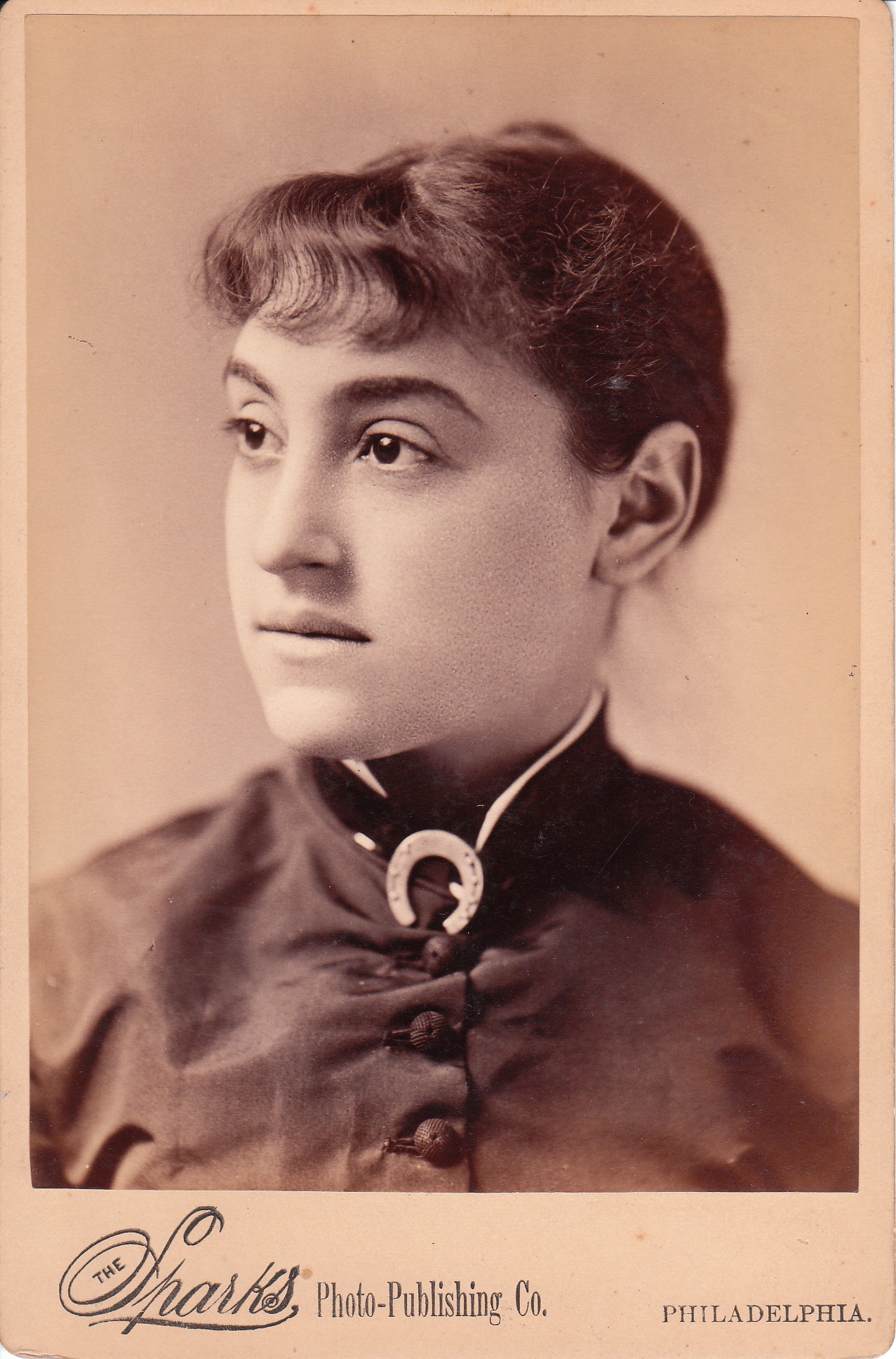
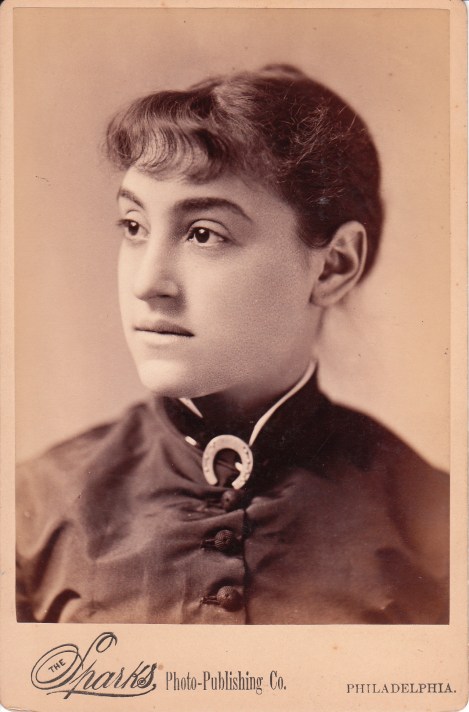
A beautiful young actress poses for her portrait at The Sparks studio in Philadelphia, Pennsylvania. She is wearing a horseshoe broach which probably was supposed to bring her good luck. This actress’s name was Marion Elmore. She was born in 1860 in a tent in Sandhurst, Australia. Her parent were English and they were in Australia because they were hoping to hit it big in the Gold Rush. Elmore began her acting career at age three. She played in Rip Van Winkle with touring American actor, Joseph Jefferson. In the 1870’s she was a member of Lydia Thompson’s famous burlesque troupe. “The Blondes” performed a risque mix of songs, dance and comedy. They also were very well known for showing a great deal of leg in their revealing costumes. She came to the United States in 1878 with the troupe but soon went off on her own as an actress and vaudeville performer. Her first starring role was in Chispa (1883). This play was poorly reviewed. The “Virtual Dime Museum” quotes the journal “Music and Drama” which wrote that the play “was dramatic rubbish, and that it does not fit Marion Elmore any better than her straw hat, which was continually falling off”. The New York Times (1882)  also lambasted the play. The critic had mixed feelings about Miss Elmore, but stressed her negatives. He blamed actress Maggie Miller for perpetuating a type of actress that he found abhorrent. These actresses were seen as stock actresses who rose to “money making dignity” by performing in troupes like Lydia Thompson’s Blondes. He described Elmore as a “vivacious exponent of the high art of leg burlesque”. The critic asserts that the craze surrounding Lydia Thompson, and other similar troupes, was one of the worst stupidities of the stage” and that he was pleased that the popularity of this type of entertainment had become “extinct”. On the positive side, the critic enjoyed Elmore’s sense of humor and her “brightness”.  One fortuitous outcome of her acting in Chispa was that she fell in love with, and in 1884, married her co star, Frank Losee. Another actress in Chispa was Lina Merville. Her portrait can be found in the Cabinet Card Gallery via the search box. As Elmore’s career continued, she acted in many plays in the New York area. She was active through the 1890’s and the early twentieth century. She died at age ninety in 1950. To view other photographs of actresses by Sparks, click on the category “Photographer: Sparks Photo Publishing Co.”.
SALVATION ARMY COUPLE IN UNIFORM: (INVENTOR OF THE LETTERED TEE SHIRT)

PHOTO 1

PHOTO 2   (SOLD)

The top Cabinet Card is an image of two Salvation Army workers photographed by Suddard of Fall River, Massachusetts. The young couple are both in uniform; he has a tambourine and she is holding a trumpet. It is interesting to note that he is wearing a late 1800’s version of an embossed tee shirt. His shirt’s lettering states “NO CROSS NO CROWN”. A present day, non religious  meaning of this saying would be “no pain, no gain”.  The motto on the shirt was a widely used expression and an early user of the phrase was William Penn, the founder of the Quaker colong of Pennsylvania. The second photograph, also by Suddard, shows the same couple in a different studio setting. Once again, the couple is attired in a salvation army uniform. The gentleman is wearing a different style uniform than he wore in the top photograph. In the bottom photograph, the woman has taken possession of the tambourine and the man is holding papers. These two cabinet cards were purchased more than two years apart and I am fairly certain that they were purchased from different sellers. Amazingly, these images have ended up together again.  A third cabinet card image by Suddard can be found  elsewhere in the Cabinet Gallery. It can be accessed by clicking the category “Photographers: Suddard”.