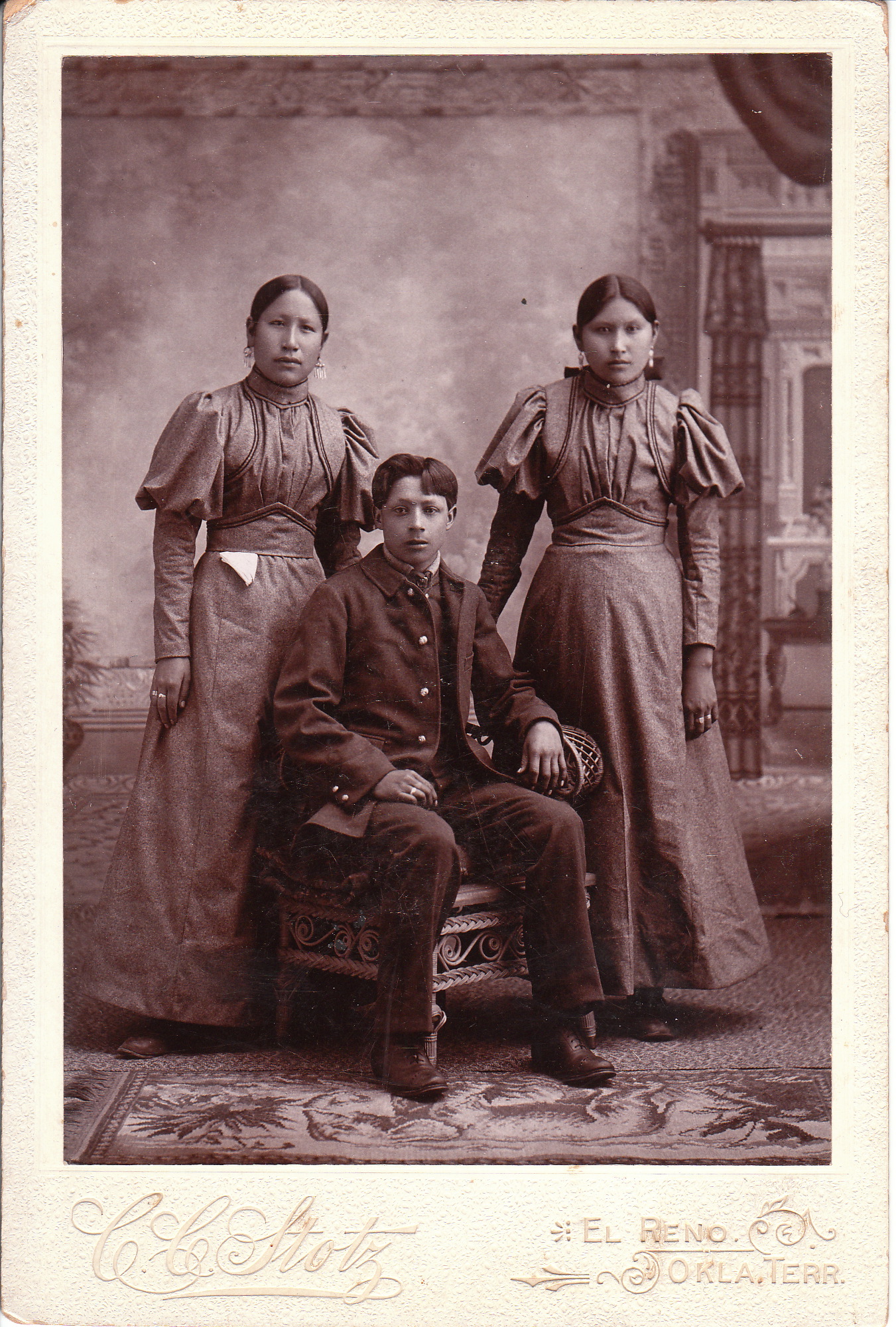
This cabinet card is chock full of history. The photograph features three young Native Americans posing for their portrait at the studio of Christopher Charles Stotz (1851-1932), in El Reno, Oklahoma Territory. The subjects of this image are likely siblings. The young women are wearing identical dresses and are adorned with rings and beautiful earrings. The specific Indian tribe that these three young people represent, is unknown. Oklahoma was the home of many Indian Tribes including Pawnee, Creek, Apache, Arapaho, Choctaw, and others. Many tribes were relocated there from other states. As mentioned earlier, the photographer of this cabinet card is C. C. Stotz and his studio was located in El Reno, Oklahoma Territory. Oklahoma became a state in 1907 which means that this photograph was taken before that year. El Reno is located in central Oklahoma, about 25 miles from Oklahoma City. Fort Reno was built in 1874 and it’s first commander was Civil War hero, General Philip Sheridan. Sheridan named the fort after his friend, General Jesse L. Reno, who was killed in the Civil War. The fort was near the Cheyenne-Arapaho reservation. One of the fort’s missions was to “protect” the “Five Civilized Tribes”. This group was comprised of the Cherokee, Chickasaw, Choctaw, Creek, and Seminole tribes. Employing the term “civilized tribe” was evidence of the special prejudice held against the tribes not among the designated five civilized tribes. Tribes described as civilized were tribes that had adopted many of the customs and values that were held by European-Americans at the time. Who was C. C. Stotz? Stotz was born in Columbia, Pennsylvania. He established a studio in El Reno in 1889; the same year El Reno was founded. Therefore, this photograph was taken between 1889 (El Reno founded) and 1907 (Oklahoma statehood). During the 1880’s and 1890’s, he made field and studio photographs of Southern Plains Indians. Stotz is an acclaimed early photographer of Native American’s and Native American life.
UNIDENTIFIED ACTRESS WEARING A RAIN SLICKER HAT IN NEW YORK CITY
This cabinet card features a pretty young actress wearing, what appears to be, a rain slicker hat. The photograph is a bit risque for its time. The actress’s neckline may not be plunging, but it leaves a lot uncovered. She was photographed at the studio of celebrity photographer, D. H. Anderson, in New York City.
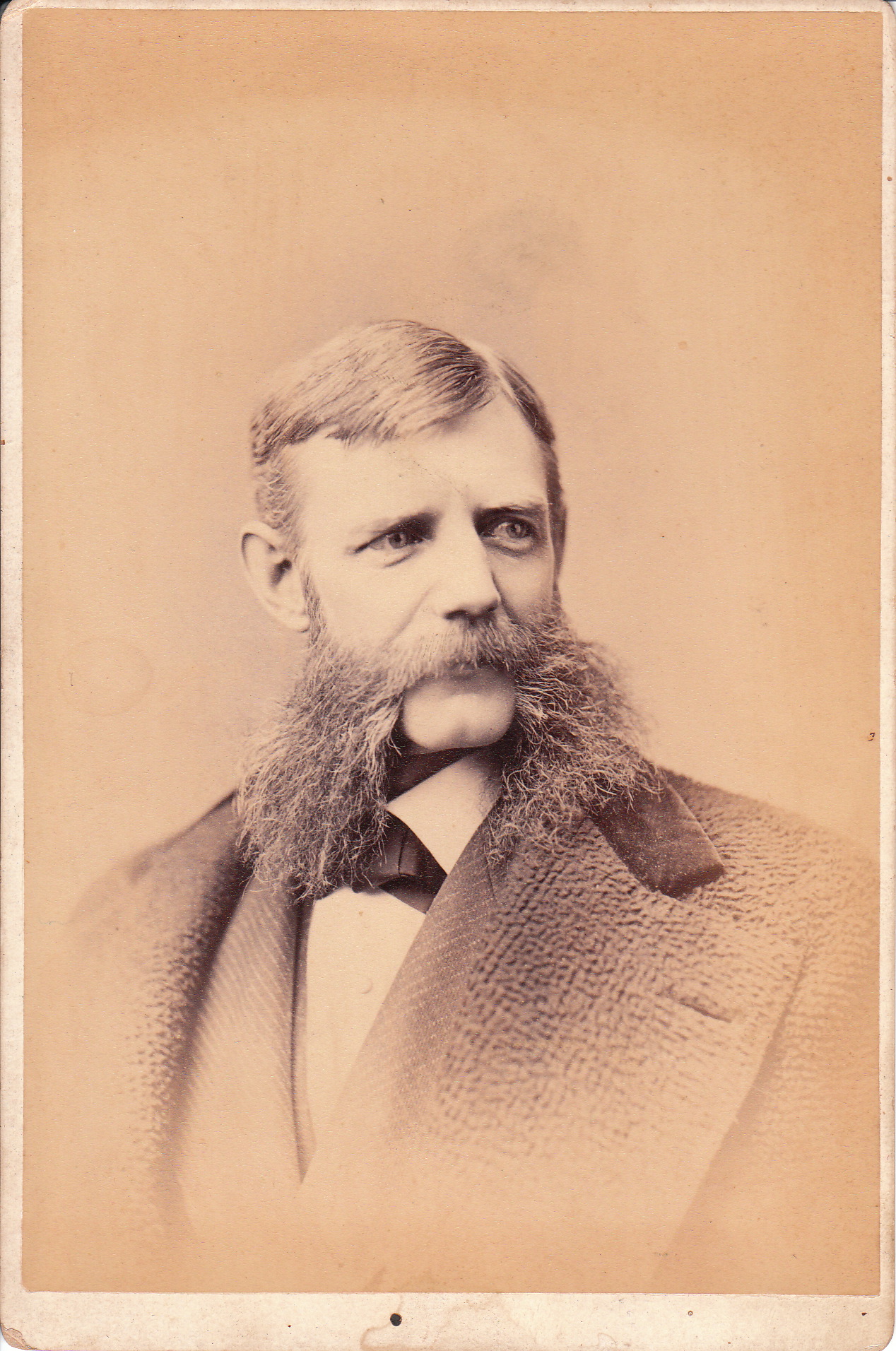
PORTRAIT OF A MAN WITH A NOTABLE MUSTACHE (BY SARONY OF NEW YORK)
Any aficionado of cabinet card photography knows that “they don’t make mustaches like they used to”. Men wore mustaches that were styled as if they were a work of art. The gentleman photographed in this cabinet card, has one of those terrific mustaches. His mustache is bushy in the middle and becomes radically bushy at its ends. To view other interesting mustaches, click on Cabinet Card Gallery’s category, “Mustaches (Only the Best). The gentleman in this image was photographed by Sarony, a highly respected celebrity photographer. Sarony’s studio was located at 680 Broadway in New York City, New York. To view more of Sarony’s photographs, click on Photographer: Sarony”.The subject of this photograph may have been an actor, or some other celebrated man of his time. There is no documentation available concerning the subject’s actual identity. SOLD
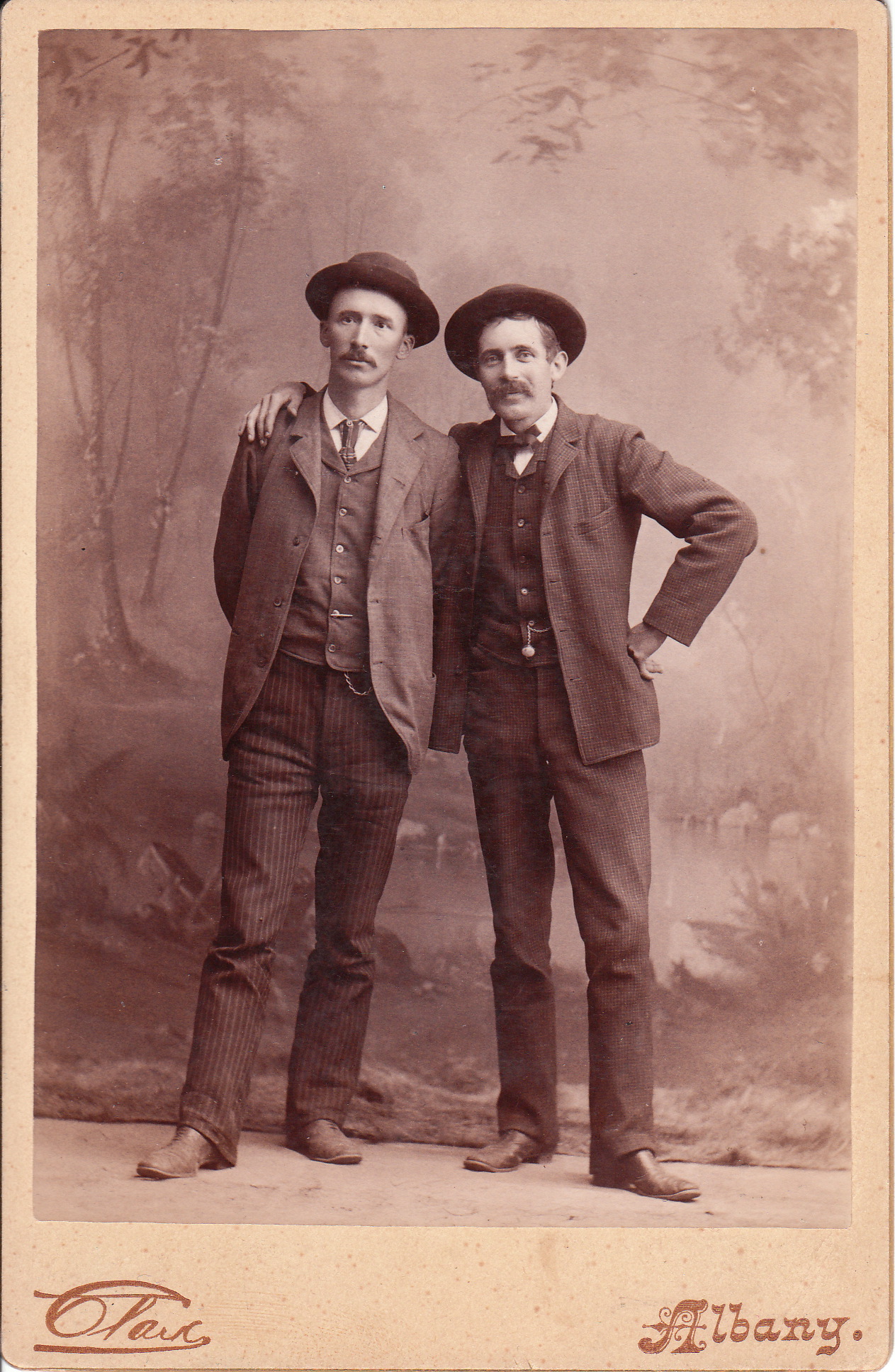
TWO FRIENDLY GUYS IN ALBANY, NEW YORK
Two men pose together at the Clark studio in Albany. It is not clear which state Albany is located in, but the most likely answer is New York. L. Wilson Clark was a photographer in Albany, New York. He may be the photographer that produced this cabinet card. The two fellows in this image seem to be well acquainted. The man on the right has a big smile, while the gentleman on the left, seems rather uncomfortable with his friend’s intimacy. The men are wearing suits with neckties and wonderful hats. Their clothing does not seem to be of the finest quality.
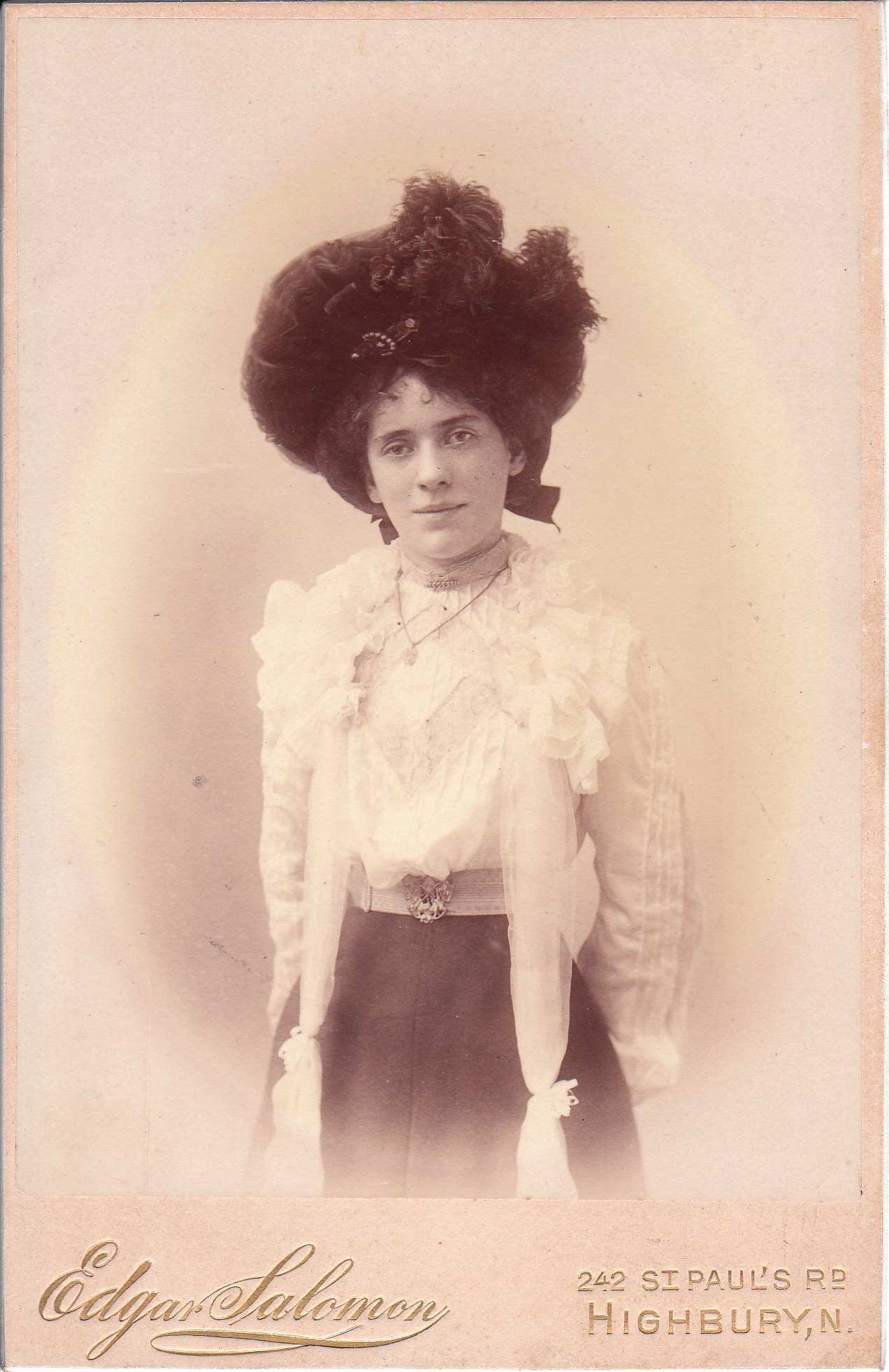
EIGHTEEN YEAR OLD GIRL IS A FUNKY DRESSER IN 1902 LONDON, ENGLAND
An internet dictionary defines funky as ” modern and stylish in an unconventional or striking way”. The pretty young lady in this cabinet card photograph is certainly dressed in a funky manner. She has a great smile and is remarkably well poised as she stands before the camera. Her scarf appears to be made of a fine fabric, and seems to be tied at the ends by ribbons. She is wearing an interesting belt with a decorative buckle. She is also wearing a terrific hat. Note her necklace and the brooch at her collar. A pencilled notation on the reverse of the cabinet card indicates that the young woman in the image is eighteen years of age and that the photograph was taken in 1902. The photographer was Edgar Salomon. He had a studio in two English cities; Highbury and London.
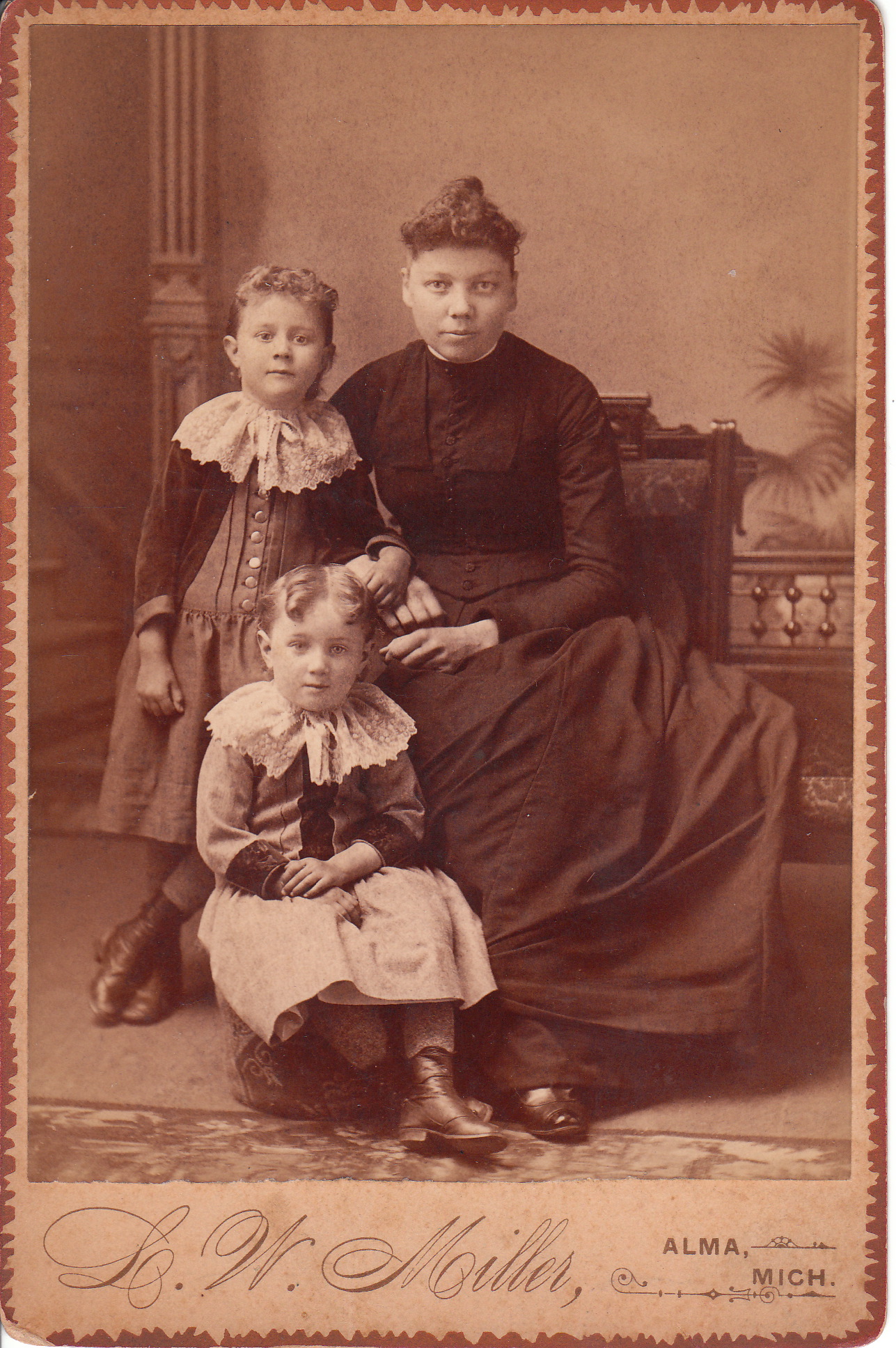
A MOTHER AND TWO DAUGHTERS IN ALMA, MICHIGAN
L. W. Miller is the photographer of this family portrait in Alma, Michigan. Two curly haired sisters, wearing lace collars and boots, pose with their mother. The girls couldn’t resist smiling for the photographer while their mother kept her lips pursed and maintained a blank stare. The girls father is notably absent from this image.
INTERESTING COUPLE IN A SALVATION ARMY TYPE UNIFORM
This photograph presents a bit of a mystery. What organization does this couple represent? Their uniforms appear to be salvation army garb. However, many salvation army workers wore the letter “S” on their collar while this couple has the letter “F” on their collars. Many salvation army members wore a collar badge with “Salvation Army” written on it. The gentleman in this image doesn’t appear to be wearing such a badge, but the woman may have one, but it is unreadable. The individuals each have a bar on their shoulders which may indicate a higher than basic rank. Note the wire rim glasses that the gentleman is wearing and the magazine that he is holding. The reverse of the photograph has the name Swanson written on it. The photographer who produced this image is James E. Purdy.The reverse of the photograph indicates that Purdy was the successor to Hastings, the former operator of the studio. Purdy’s studio was located at 146 Tremont Street, in Boston, Massachusetts. He operated his studio in Boston between 1896 and 1930. He was a popular photographer in Boston. He was considered to be in the same caliber as the celebrated photographer, Chickering (to view photographs by Chickering, click on cabinet card gallery’s category “Photographer: Chickering”). One of the many famous people he photographed was Winston Churchill, who was in Boston (1900) lecturing about the Boer War. This is not the same Winston Churchill who so ably led Great Britain.
ATTRACTIVE AND FASHIONABLE COUPLE IN ANVERS (ANTWERP), BELGIUM
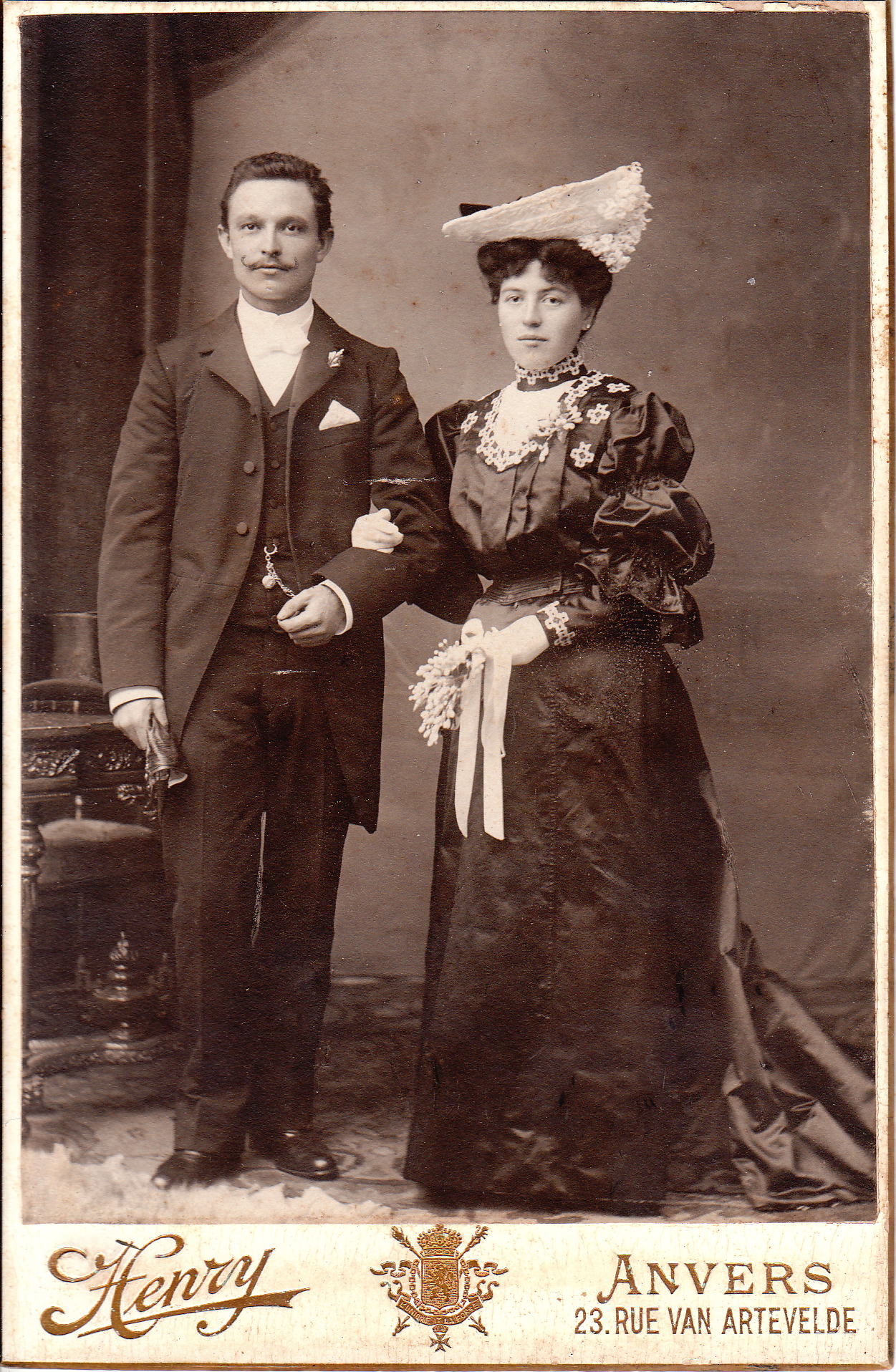
A very attractive and fashionable couple pose for their portrait at the Henry studio in Anvers, Belgium. The gentleman appears to be holding gloves. His top hat is visible on the table behind him. The lovely lady is wearing a beautiful dress and a fancy hat. She is also wearing white gloves and holding a bouquet of flowers. This image may be a wedding photograph. The backstamp of the cabinet card indicates that the photographer, Henry, was the winner of a photography medal at the World Exposition in 1894. Anvers, the home of Henry’s studio, was a port and financial center in northern Belgium. The city is located on the Scheldt river and was a center for the diamond industry. Anvers was also the home of the first stock exchange (1460). Anvers is the french name for Antwerp.
PORTRAIT OF AN ADORABLE BABY IN DETROIT, MICHIGAN
This cabinet card features a portrait of a cute, but skeptical baby, sitting on a fur covered chair. The child is wearing a sweater over a gown, and is propped on a chair. The baby is clenching a toy in his/her right hand. The photograph was produced at the Detroit Art Gallery. The proprietors were listed as Dubbs, Lee & Company. Preliminary research yielded no additional information about the studio.
A cute baby
PORTRAIT OF A BEFUDDLED GRANDFATHER AND YOUNG GRANDCHILD IN JAMESTOWN
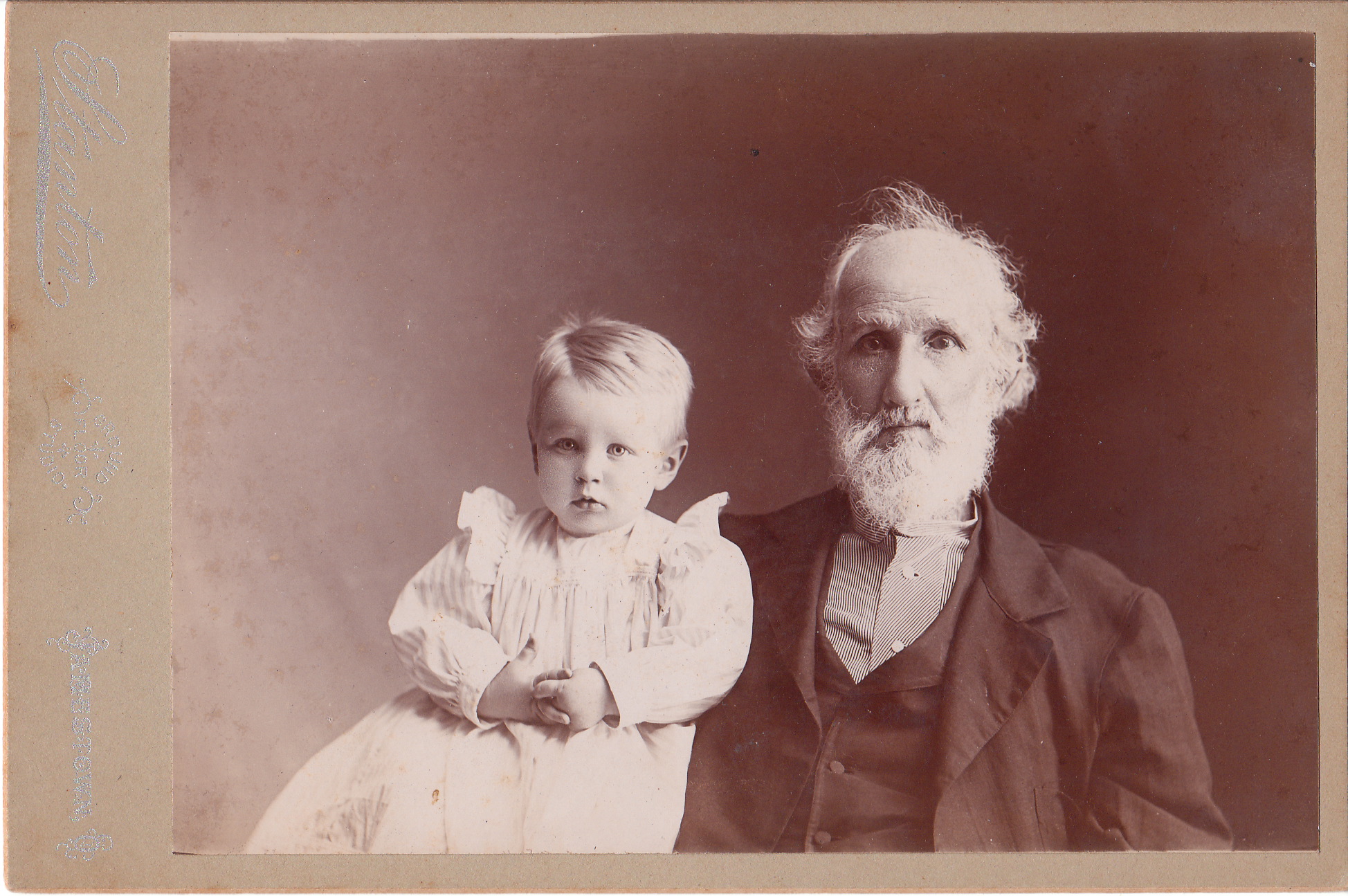
This photograph is likely a portrait of a grandfather and grandchild. “Generation Skipping” family photographs were not at all unusual during the era of cabinet card photography. The white haired and bearded grandfather seems to have forgotten to attend to his grooming before sitting for this image. The old man and his grandchild both appear to be quite befuddled by their session with the photographer. This image was produced by the Stanton studio in Jamestown. There are a number of towns named Jamestown in the United States. It has been impossible, so far, to identify the state in which Stanton’s studio was located.