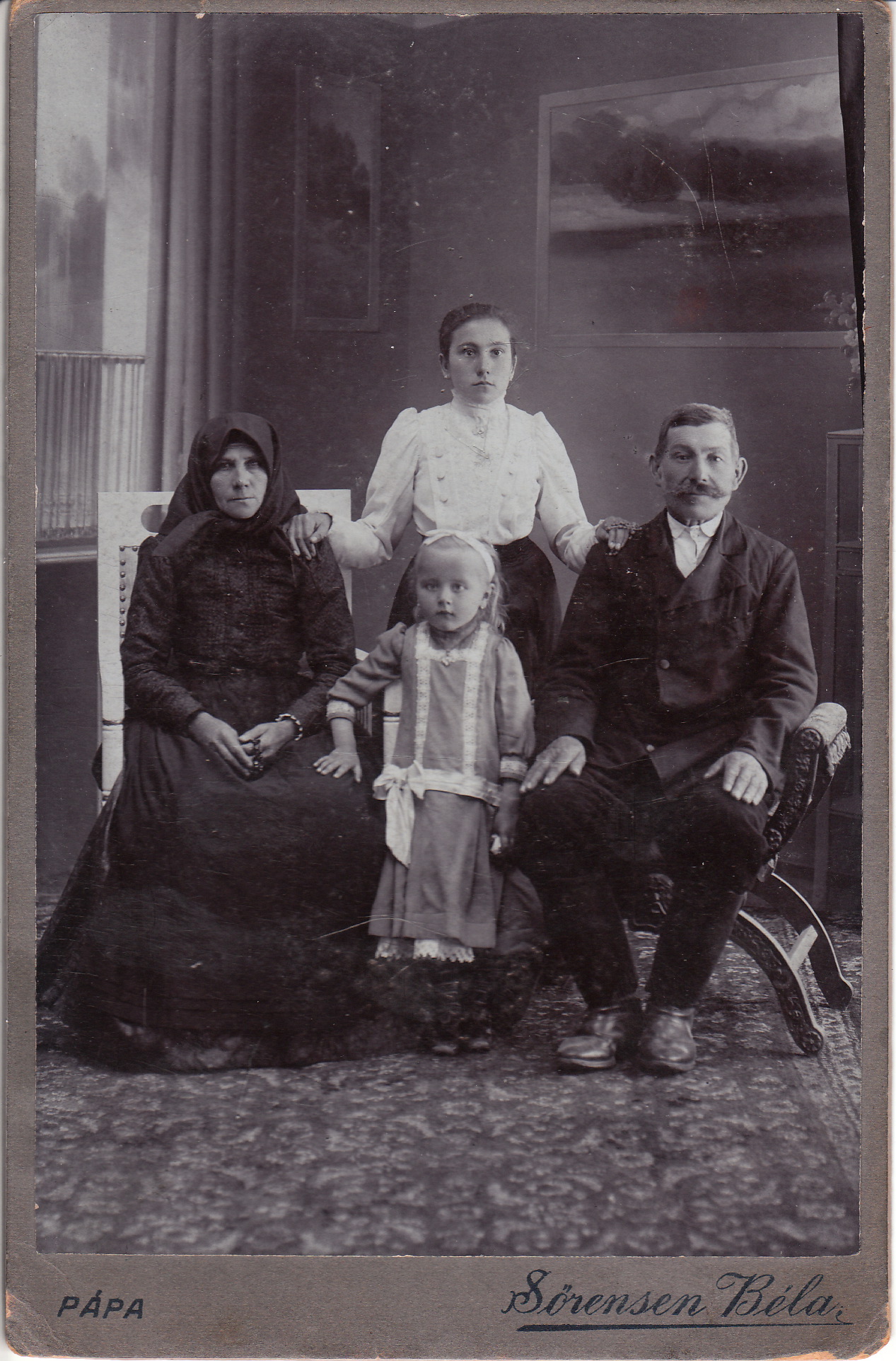
 This family portrait cabinet card was photographed by Sorensen Bela in the city of Papa, Hungary. Due to the age of the seated man and woman, it is difficult to determine the family constellation. Is this a photograph of parents with two daughters? Perhaps its a photograph of a set of parents, their daughter, and their granddaughter? The community of Papa is a historical town in northeast Hungary. The town is noted for its baroque architecture and for being the center of the reformed faith in Transdanubia. In addition, Papa was the third to largest Jewish community in 19th century Hungary.
FAMILY PORTRAIT IN PAPA, HUNGARY

FASHIONABLE FAMILY OF FOUR IN LIVERPOOL, ENGLAND
 This Cabinet Card was produced by the Electric Light & Daylight Studios of Richard Brown in Liverpool, England. This well dressed family of four poses for their portrait. Both father and son are wearing suits with exposed watch chains. Mom is wearing a beautiful dress and the daughter is adorned with a necklace. Research indicates that advertising one’s studio as “Electric Light & Daylight” was a method of informing people that the studio was capable of evening hour photography.
MELLVILLE: ANGELIC LOOKING CHILD IN THE TERRIBLE TWO’S IN LAWRENCE, MASSACHUSETTS (1892)
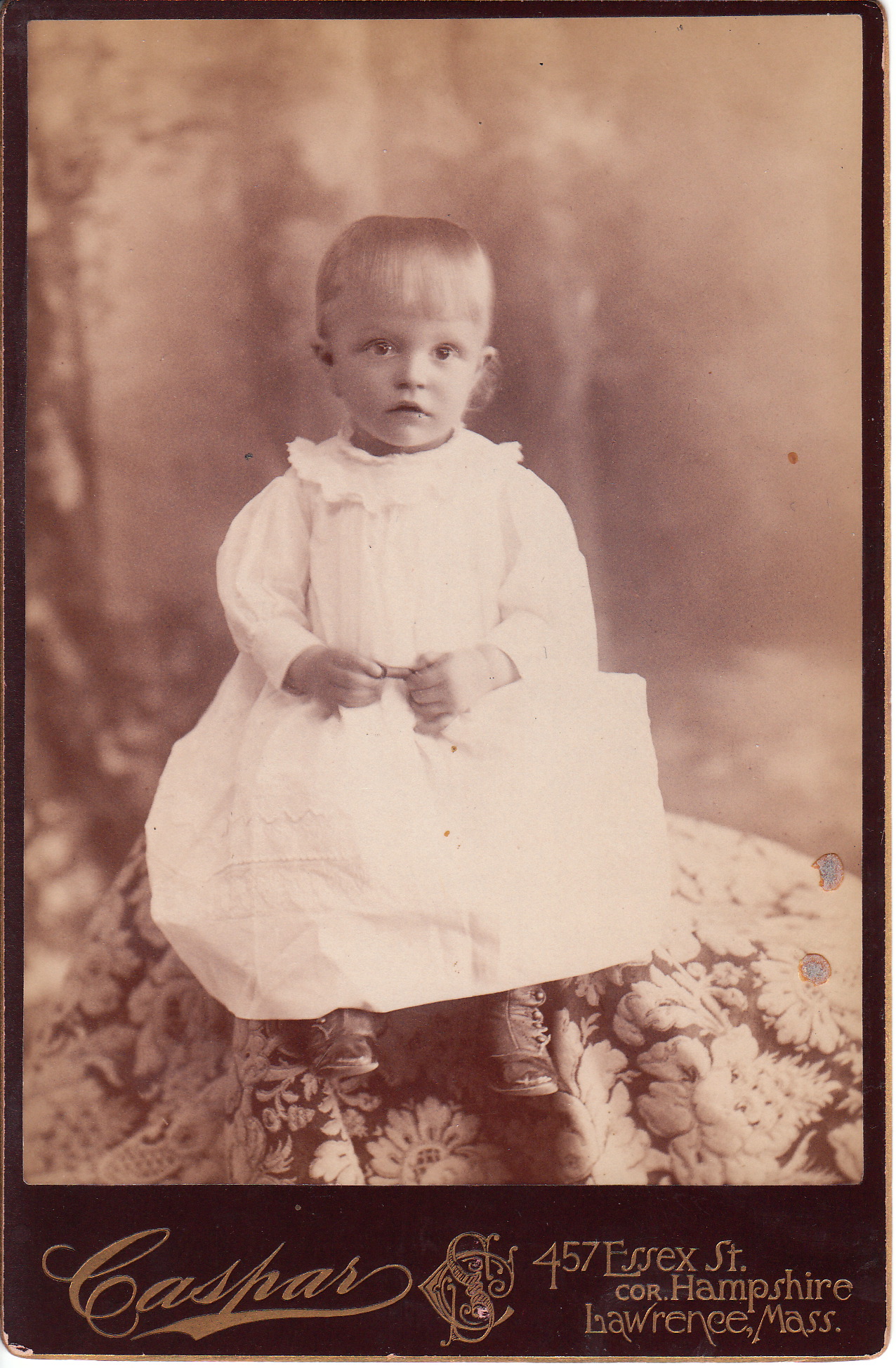 Mellville is a very cute child who was photographed at the Caspar Studio in Lawrence, Massachusetts. According to writing on the reverse of the card, Mellville was two years and two months of age, at the time of the photograph in 1892. The child could not possibly look sweeter despite being ensconced in the “terrible two’s”. Mellville is a boy’s name whose popularity peaked around 1880 and then steadily declined until near extinction.
ETHNIC COUPLE IN INDIA, DRESSED IN CULTURAL AND PERIOD CLOTHING AND PHOTOGRAPHED BY EARLY PHOTOGRAPHER G. W. LAURIE
 This cabinet card is a portrait of an Indian couple posing in the studio of G. W. Lawrie, a well known Scottish photographer who worked in Lucknow, India in the 1880’s and 1890’s. The front of the cabinet card advertises that he also had studios in Naini Tal, and Mussoorie, India. The gentleman in the photograph is wearing a sash and holding an umbrella. Is that a pocket watch on his coat? Note his hat; what is this type of hat called? The woman in the photograph has her head and upper body covered by her clothing. Hopefully, a visitor to this site can illuminate the details of this couples ethnic clothing.
TWO KIDS, A GOAT, AND A CARRIAGE: FORMULA FOR FUN AND A TERRIFIC PHOTOGRAPH
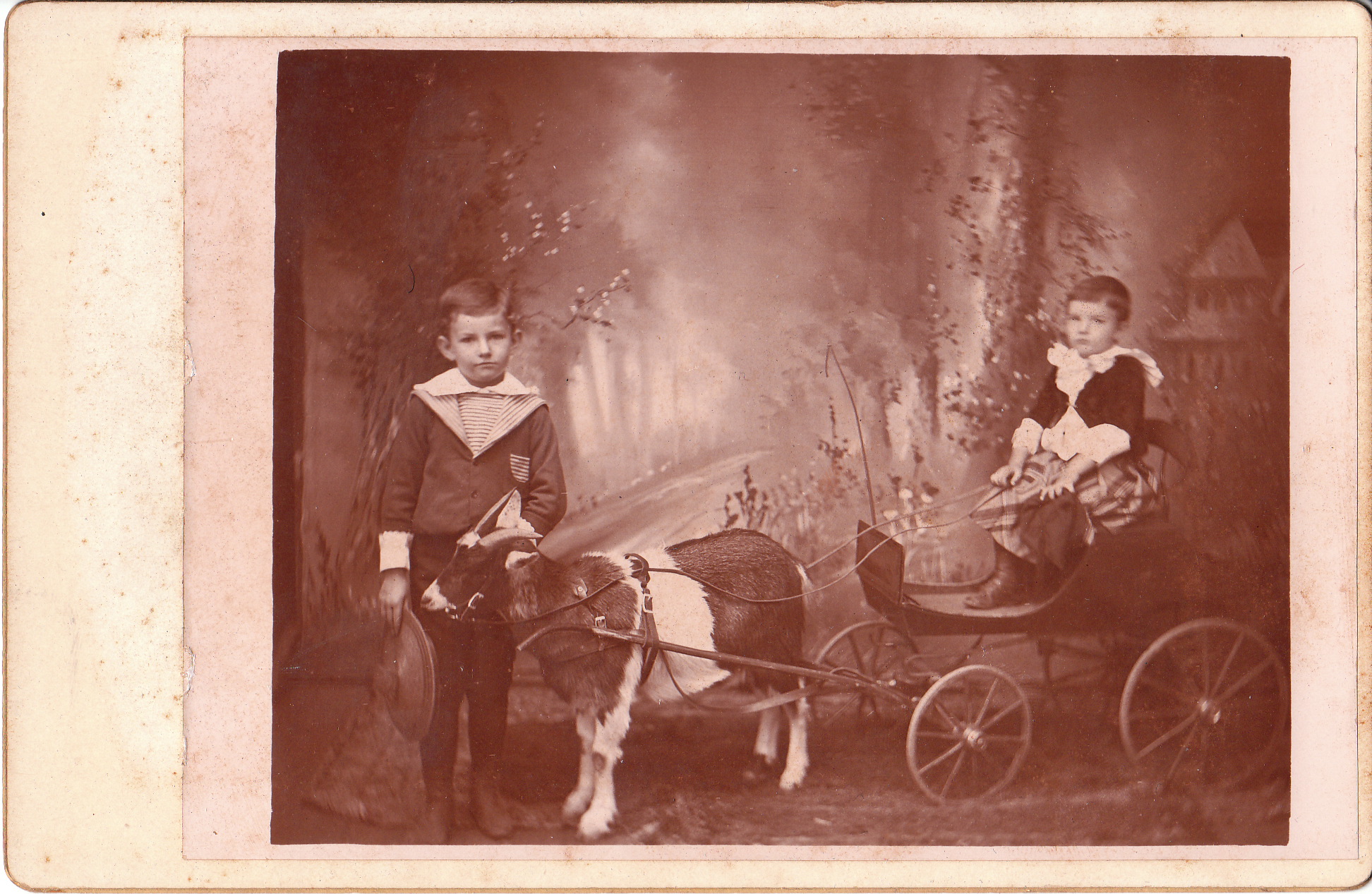 Two children pose for a cabinet card photograph in a studio with fun props. The older child stands next to a goat that is harnessed to a small carriage. The youngest child sits in the buggy and holds the reins. This is an unusual cabinet card. More commonly photographs of goats are seen on cdv’s or photo postcards and the goats are generally harnessed to carts, rather than carriages. The photographer is J. J. Burnett of North Carolina.
THREE CHILDREN IN READING, PENNSYLVANIA AND TWO OF THE BIGGEST BOW TIES IN AMERICA
 Three children pose for this cabinet card photograph by Strunk of Reading, Pennsylvania. The boys are wearing the largest bow ties in America. Are they bow ties or are they scarves, that is the question? The kids are very cute in their fancy outfits. The photographer is John D. Strunk (1856- ?). There are records of his working as a photographer from 1888 until 1910. To view other photographs by Strunk, click on the category “Photographer: Strunk”.
LINDA DEITZ: STAGE ACTRESS INSULTED BY THE NEW YORK TIMES (1879)
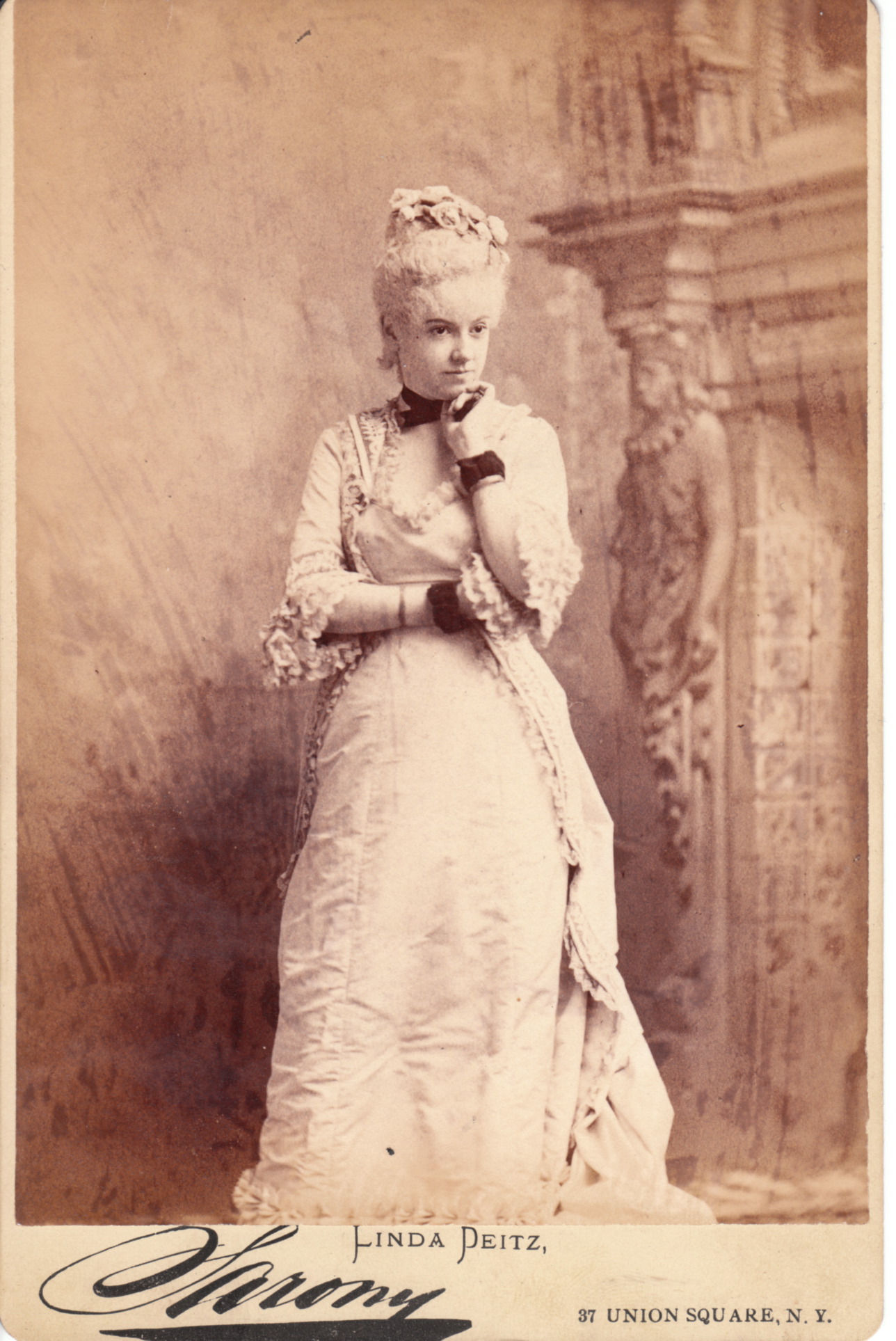 Linda Deitz poses for this cabinet card portrait by famed celebrity photographer, Sarony of New York City. Deitz was a well known American actress in the 1870’s and 1880’s. She was photographed a great deal but her theatrical career was of only about ten years duration. She made her stage debut replacing actress Fanny Davenport in a production at Daly’s 5th Avenue Theatre. View Ms Davenport’s cabinet card image under the category of Actresses located on this site. In 1879 a theatre column in the New York Times announced that Deitz was being cast as a leading lady. The critic reported that the decision “does not strike us as very happy”. The article goes on to describe her as a respectful actress within a limited range of parts but “she can scarcely hope to fulfill worth the severe duties of a leading lady”. Later that year, Linda Deitz left New York to join the Hare and Kendal theatre company at St. James Theatre in London. Deitz died in 1920.
THE INTENSE GAZE OF NELLIE HUTCHINS IN MIDDLETOWN, CONNECTICUT
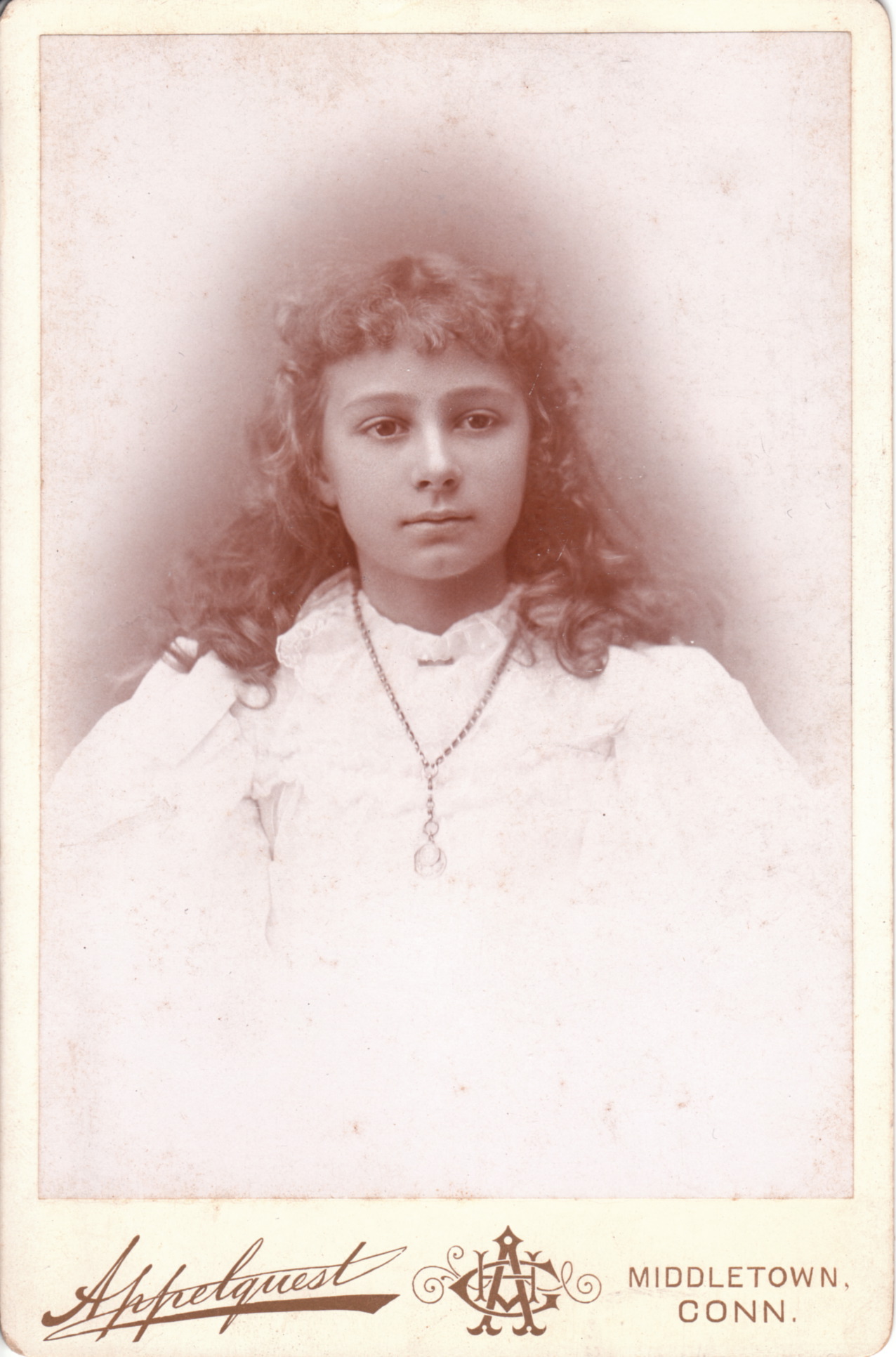 This Cabinet Card is the image of Nellie Hutchins and she is photographed by Appelquest of Middletown, Connecticut. Nellie has great eyes. Her staring eyes speak paragraphs. What do her expressive eyes say to you? Your comments are appreciated.
NAVAL OFFICER IN SHANGHAI (PHOTOGRAPHED BY AH FONG)
 A naval officer, wearing his dress white uniform, poses for his portrait at the studio of Ah Fong. Fong had photographic studios in both Shanghai and Wei-Hai-Wei. Ah Fong was active in photography in the 1860’s through the 1880’s and beyond. In 1937, he published a photo album entitled “The Sino-Japanese Hostilities”. Fong was a Chinese photographer trained by western photographer around Canton. He later opened his own studio and it operrated through World War II. His photographs of Nanjing in 1937 documented for the West the “Rape of Nanking” and Japanese denials were shown to be lies. The dates cited in this description come from research and some of them are likely inaccurate unless Fong lived an extremely long life. In regard to the pictured officer, no identifying information of the officer is available but perhaps a visitor to the site will recognize his uniform and leave a comment.
BIZARRE FACIAL HAIR IN PROVIDENCE, RHODE ISLAND
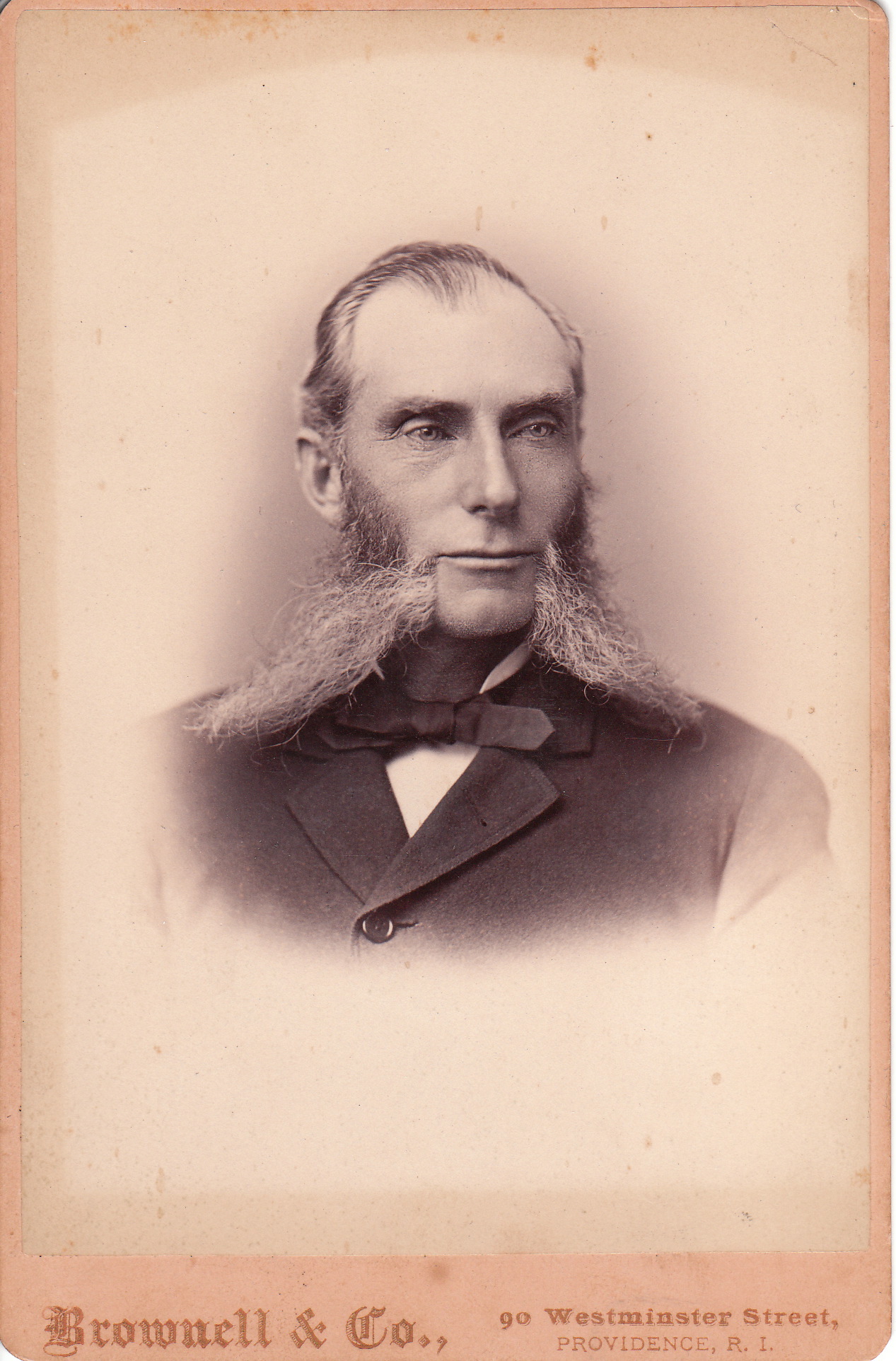 The gentleman photographed for this cabinet card wears his beard in a most unusual style. His place in the Cabinet Card Gallery’s category of “Beards (Only the Best)” is well deserved. The photographer of this portrait is Alexander C. Brownell of Providence, Rhode Island. Brownell’s death notice appeared in a 1916 photographic magazine. The article stated that Brownell died in New York City of “hardening of the arteries” but that his health had been less than robust for the previous 30 years due to his accidentally poisoning himself thirty years earlier while experimenting with chemicals to be used for zinc etchings.


 THE CABINET CARD GALLERY