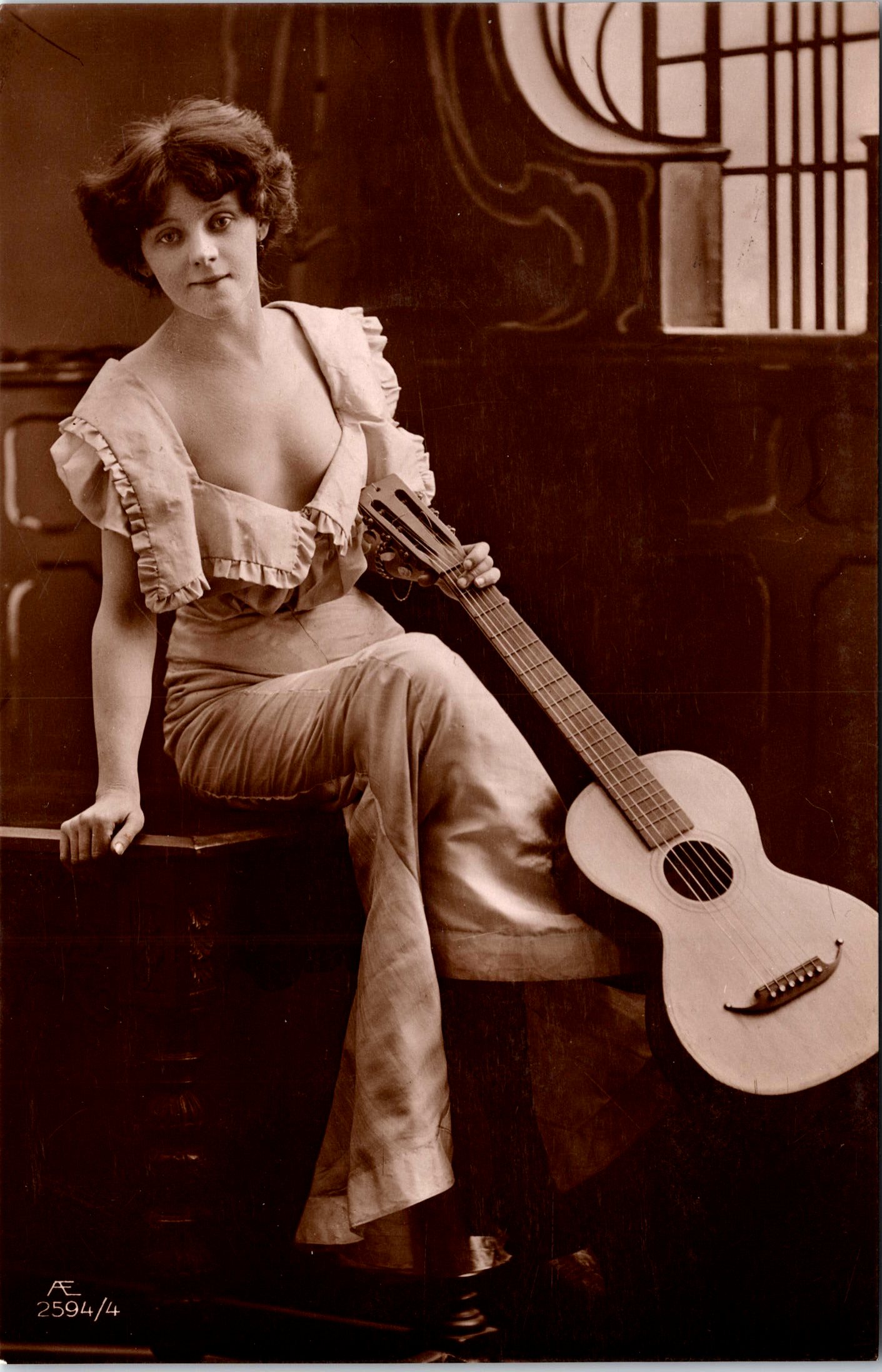
This vintage real photo postcard features a pretty young woman posing with her guitar. Her plunging neckline makes this a risque postcard. The card was published by Adolph Engel (Berlin, Germany) and is part of a series (No.2504/4). SOLD
This vintage real photo postcard features a pretty young woman posing with her guitar. Her plunging neckline makes this a risque postcard. The card was published by Adolph Engel (Berlin, Germany) and is part of a series (No.2504/4). SOLD

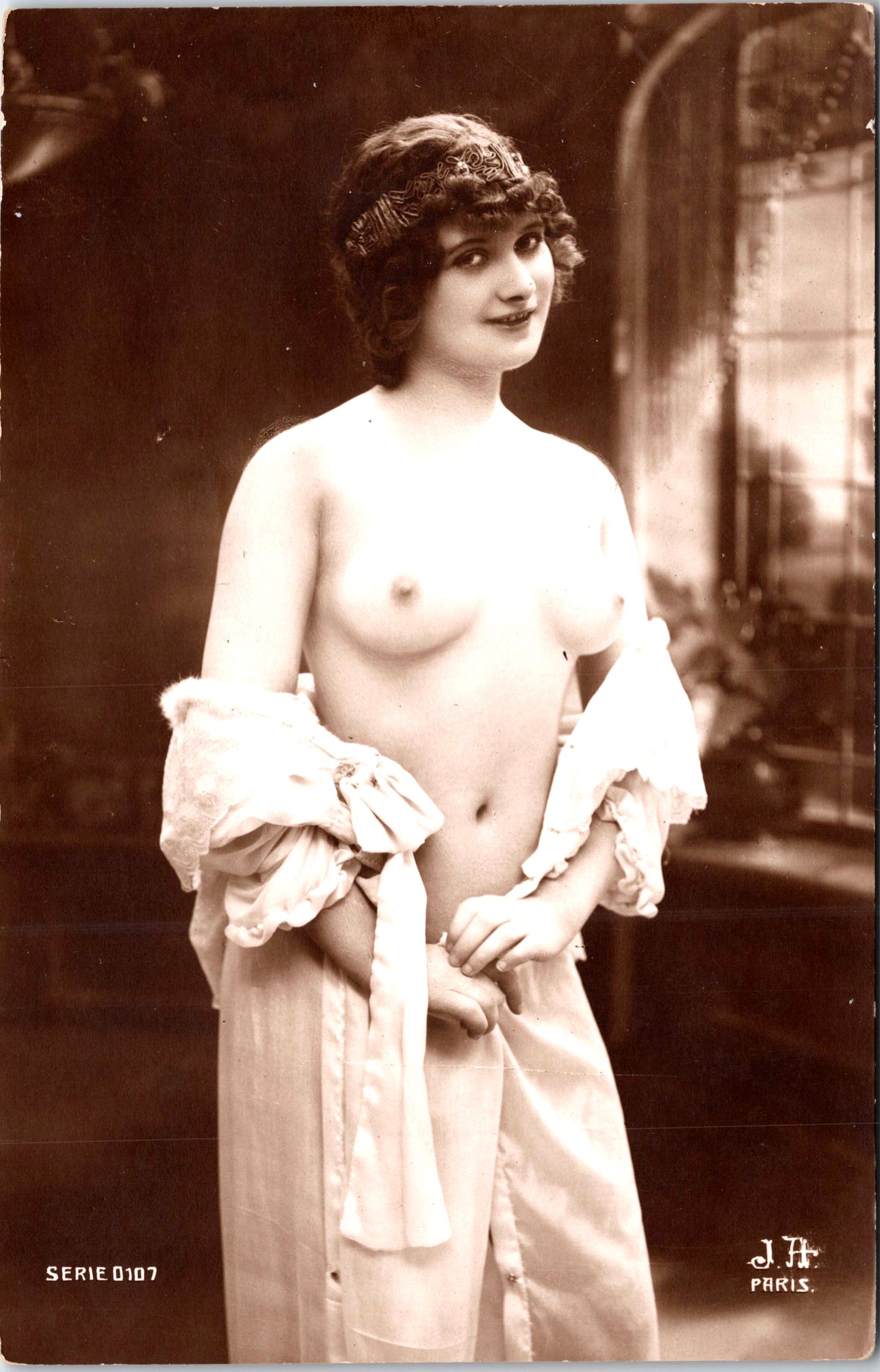
This French vintage nude real photo postcard features a pretty young woman model Her facial expression can be described as alluring. This photograph is meant to titillate. The young woman is scantily dressed. More of her body is exposed than covered. She is wearing bed clothes, a negligee to be exact. This risque photographic portrait was published by celebrated photographer, Jean Agelou (1878-1921), as part of a series (No.D107). Agelou was a French photographer of the 1910’s and 1920’s who is best known for his erotic and nude photographs. He was born in Egypt and not much is known about his private life. Agelou generally used models between the age of 20 and 24 years-old. Although the 1900’s was the “golden age” of erotic photograph, photographers who took such risque photos had to use discretion. As a result, Agelou signed his work “JA”. In 1908, nudity in photographs was banned in France and photographers had to cover nude women images with strategically placed undergarments or other materials. Nude images had to circulate on the down low. They were sent in the mail inside of envelopes. Jean Agelou died in 1921; the result of a car accident. His brother George, who managed Jean’s business, also was killed in the crash. SOLD

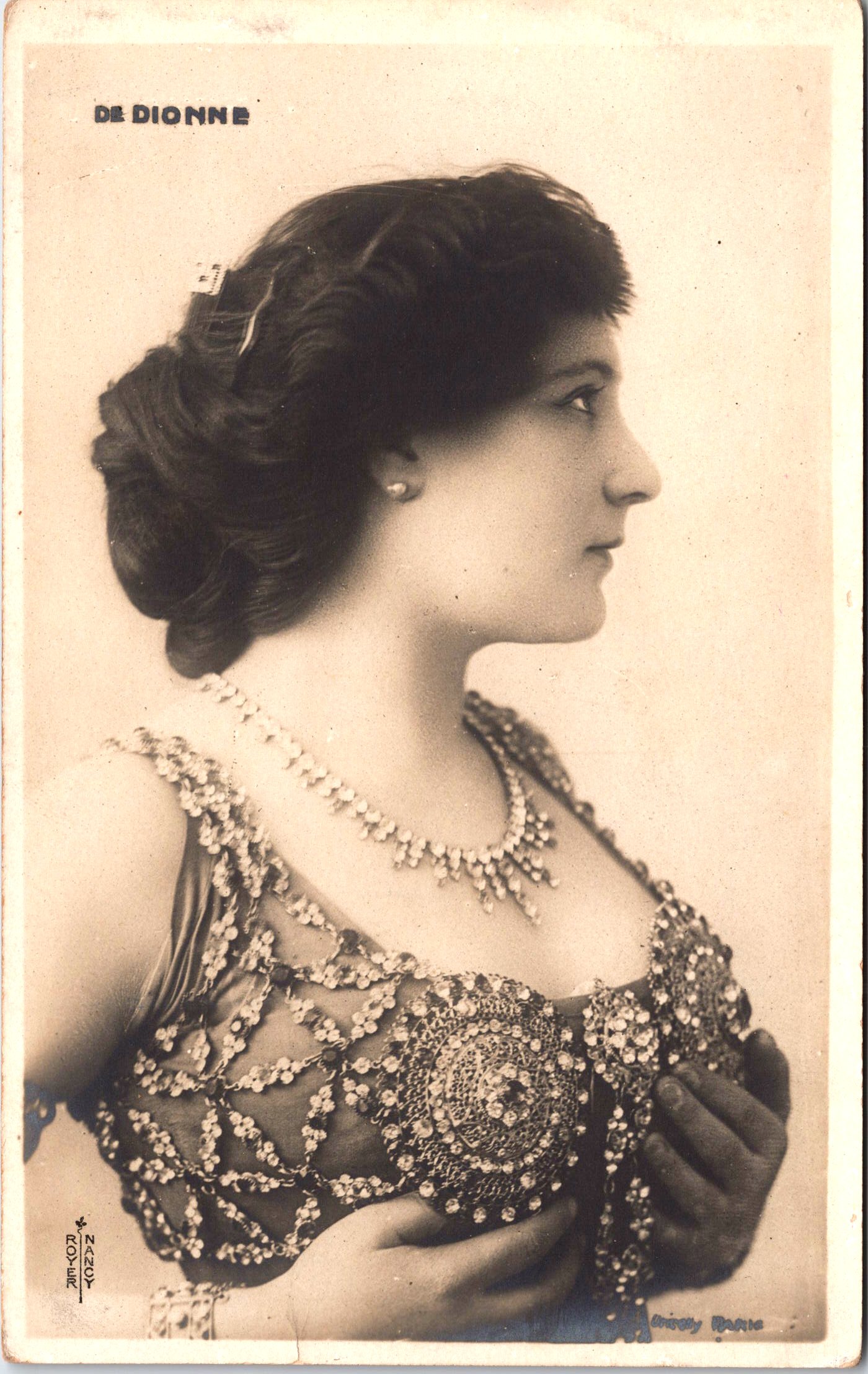
This uncommon color tinted vintage real photo postcard features pretty and buxom French performer, De Dionne. Some research is required to learn biographical information about her. I found another postcard of this performer and the caption revealed that she had performed at the Theatre du Chatelet in Paris. This postcard was published by Royer. The firm was located in Nancy, France. The photographer of De Dionne’s photo seen on this card was J. Oricelly (Paris). SOLD
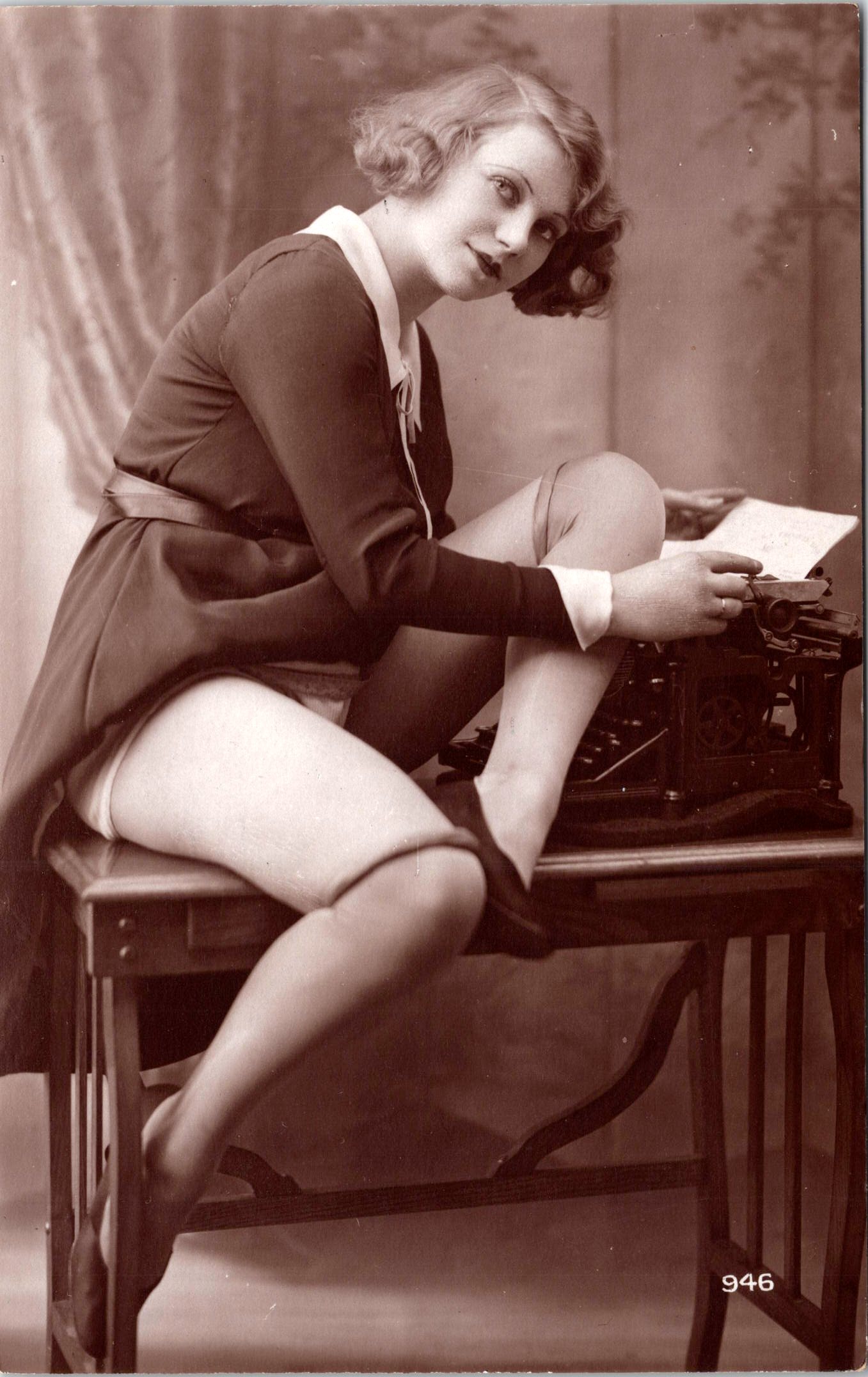
This original real photo postcard (RPPC) features a risqué French flapper secretary in a provocative pose atop her wooden desk, an old-fashioned typewriter at her fingertips. Dressed in a short, dark dress with a white collar and cuffs, her outfit flutters open to reveal her stockings, garter, and lacy undergarments, making this a bold, flirtatious workplace fantasy from the 1920s or early 1930s. Her wavy bobbed hair, softly curled, frames her face, giving her that quintessential Roaring Twenties allure. Her sultry gaze and playful smirk suggest she’s in on the joke, making eye contact as she teasingly holds a piece of paper while perched suggestively on the desk. A product of its time, this image glorifies the “sexy secretary” trope, something that today would be seen as wildly inappropriate in the #MeToo era. Back then, however, this pin-up style was considered both cheeky and glamorous. (SOLD)
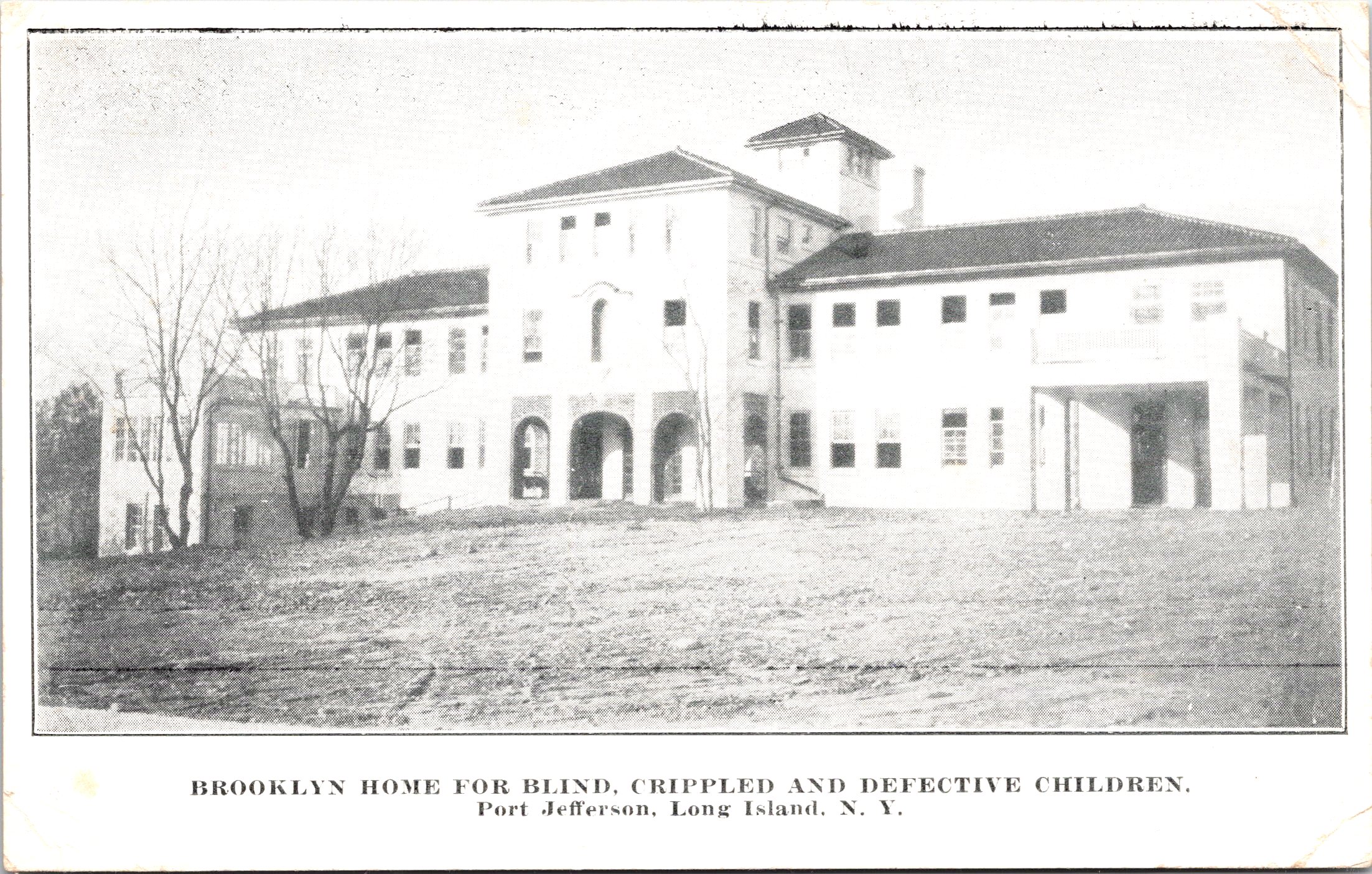
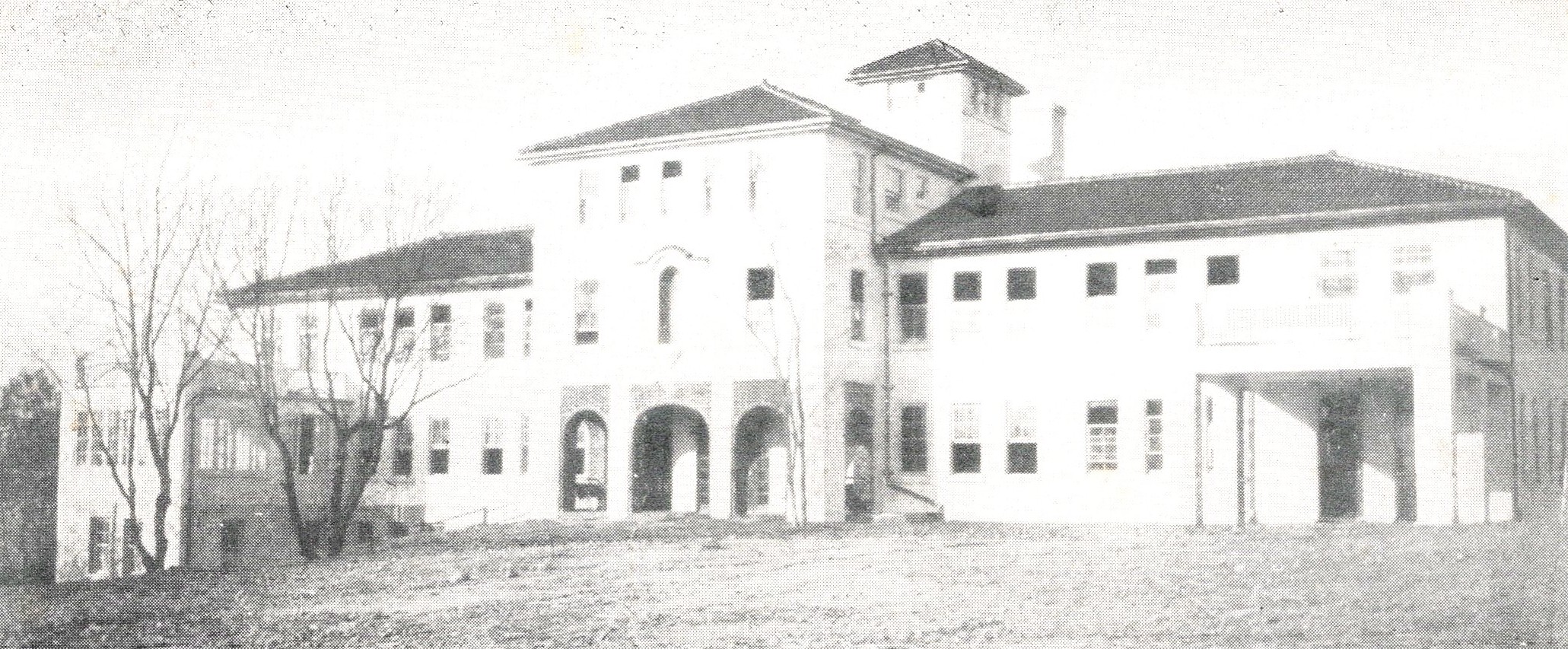
This vintage lithographic postcard features the Brooklyn Home For Blind, Crippled And Defective Children, located in Port Jefferson, Long Island, New York. Although by today’s standards, the name of the hospital is politically incorrect, the institution did important therapeutic work. The hospital is known today as St. Charles Hospital. Here is some history. In 1907, a group of 27 homeless children with disabilities went by train from Brooklyn, New York, to Port Jefferson. They entered into the care of four French Sisters from the Order of the Daughters of Wisdom. That same year, the Brooklyn Home for handicapped children was established. Its mission was to provide support, care, education, and medical and surgical treatment of blind and handicapped children. By 1910, a building was constructed to house 250 children. The facility was dedicated to and named as St. Charles Hospital. The hospital became regionally renowned for its great success in helping disabled children. Breakthroughs in treating polio attracted national media attention. In 1915, the hospital once again expanded and in 1921 the hospital acquired ten adjoining acres. Expansion has continued over time. Today the hospital is a full service, general hospital and regional rehabilitation center. This unused postcard was published by L. H. V. Reynolds & Company (New York). SOLD
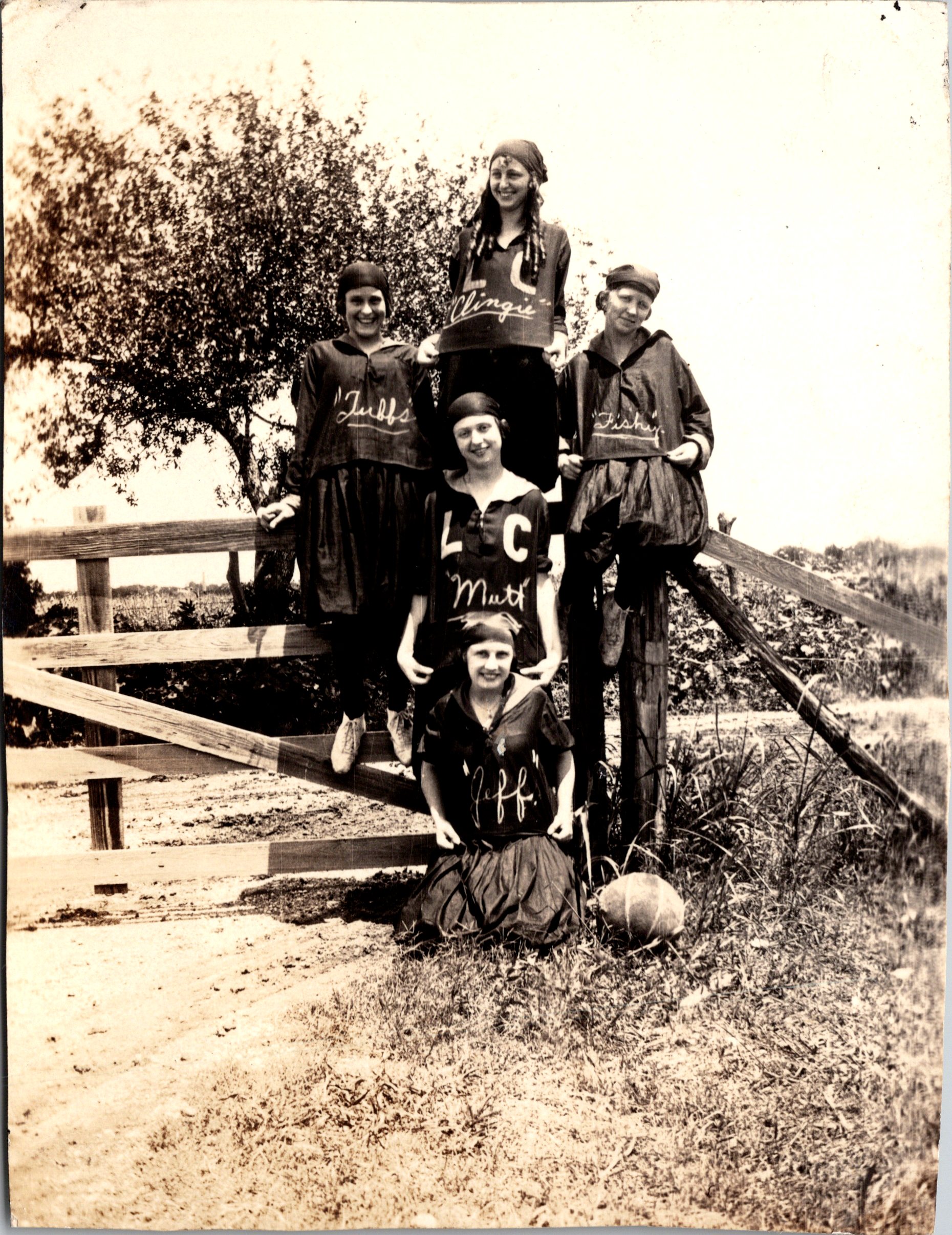
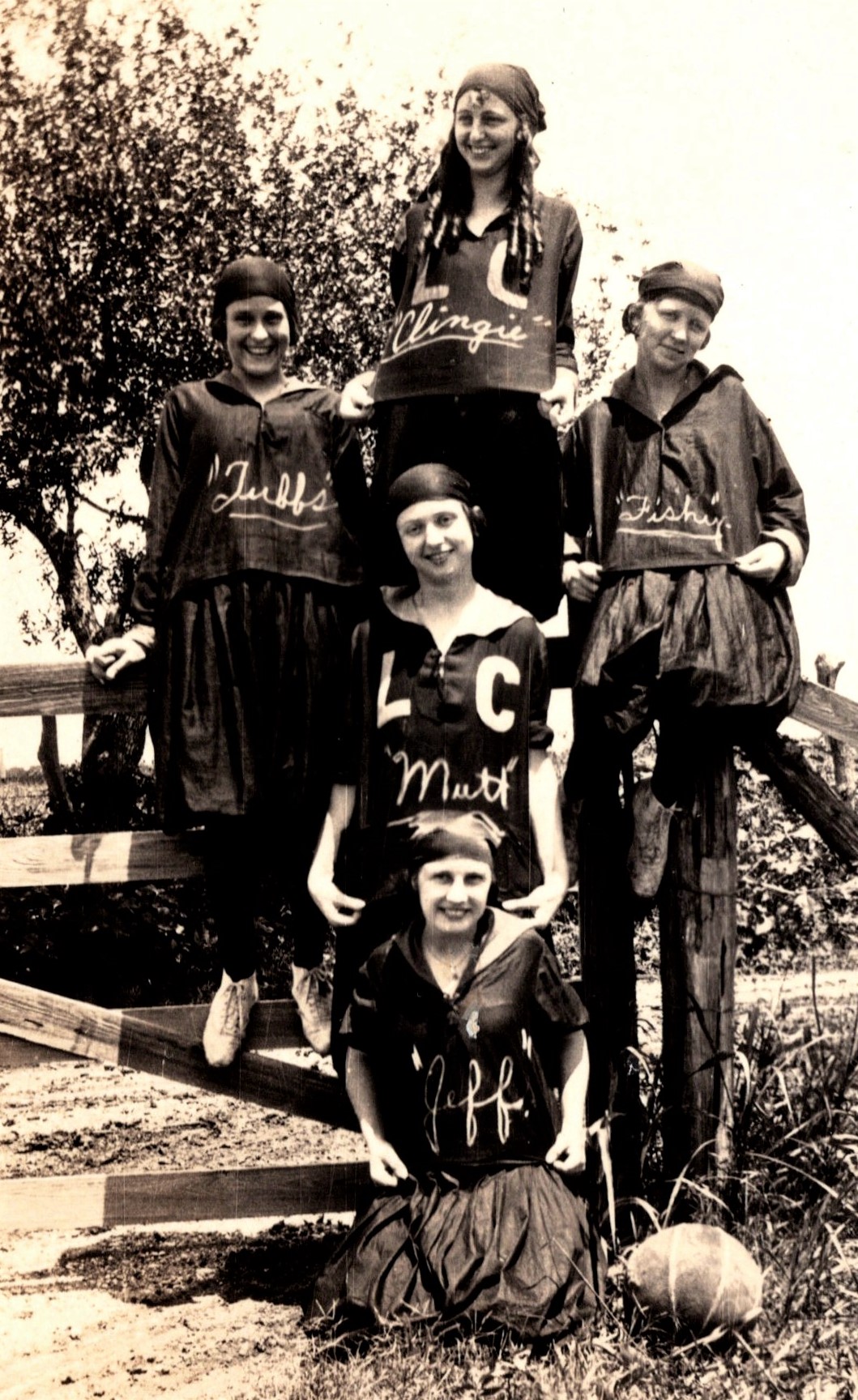
This vintage real photo postcard features the women’s basketball team from Lutheran College. There were, and are, many Lutheran Colleges in the United States and it is unclear which campus these girls attended. The girls seen on this postcard are charming. The five team members seen in this image are all wearing shirts that bear their nicknames. The girls monikers are Mutt and Jeff, Fishy, Clingie, and regrettably, Tubbs. I am unsure of the veracity of Tubbs because the handwriting is difficult to decipher. Note the basketball on the ground in front of the girls. This postcard has been trimmed. SOLD
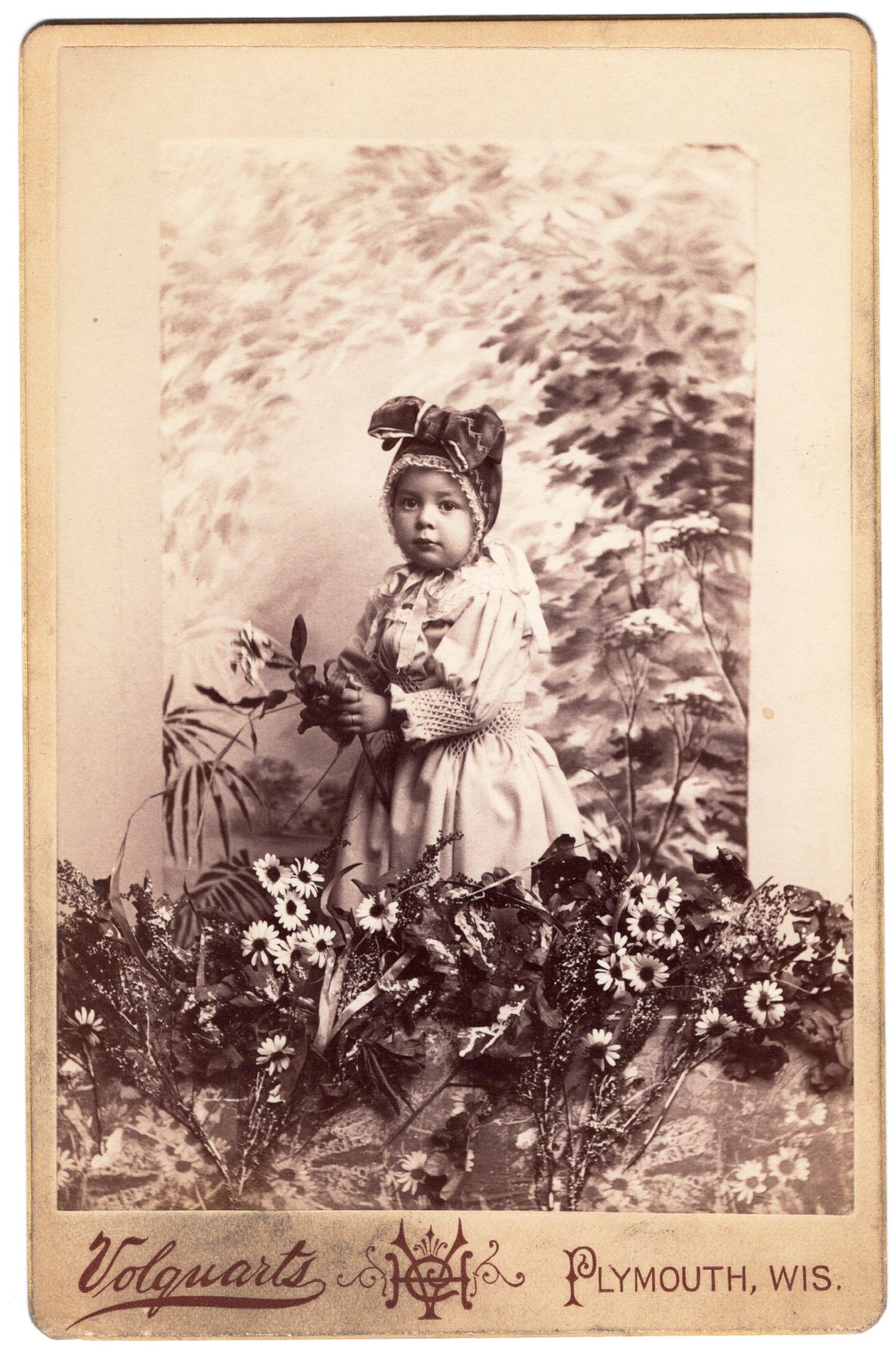
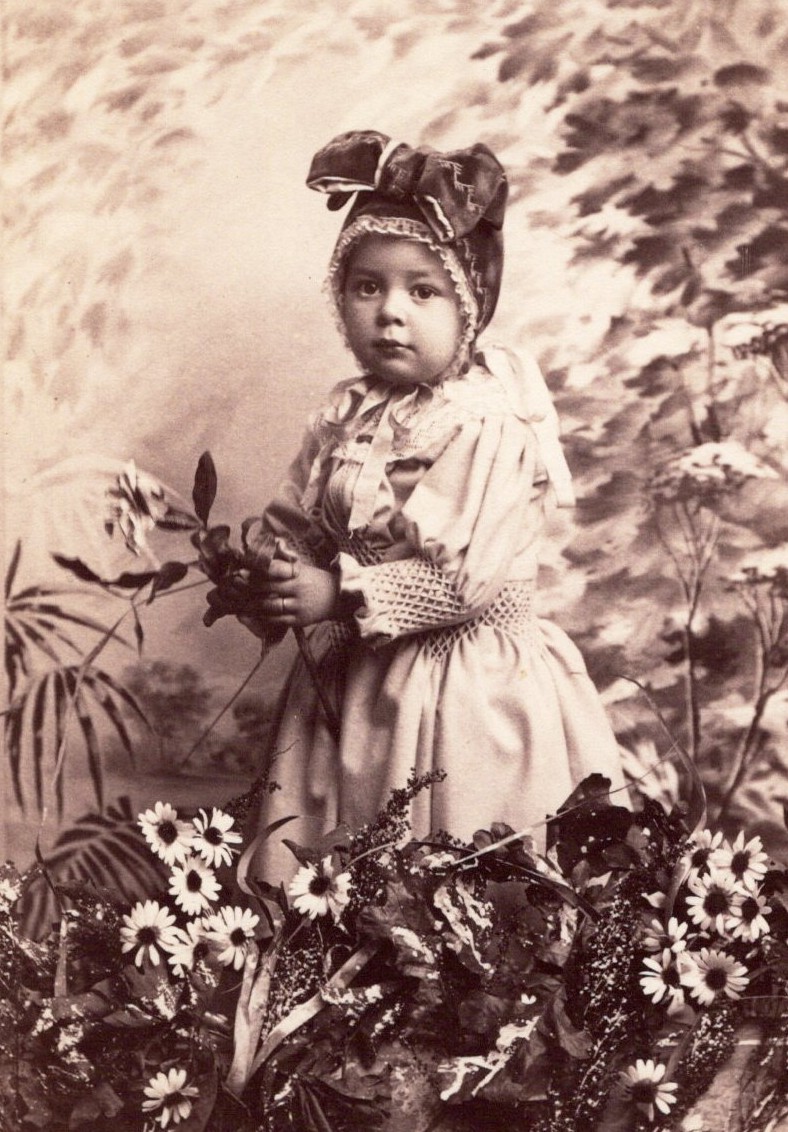
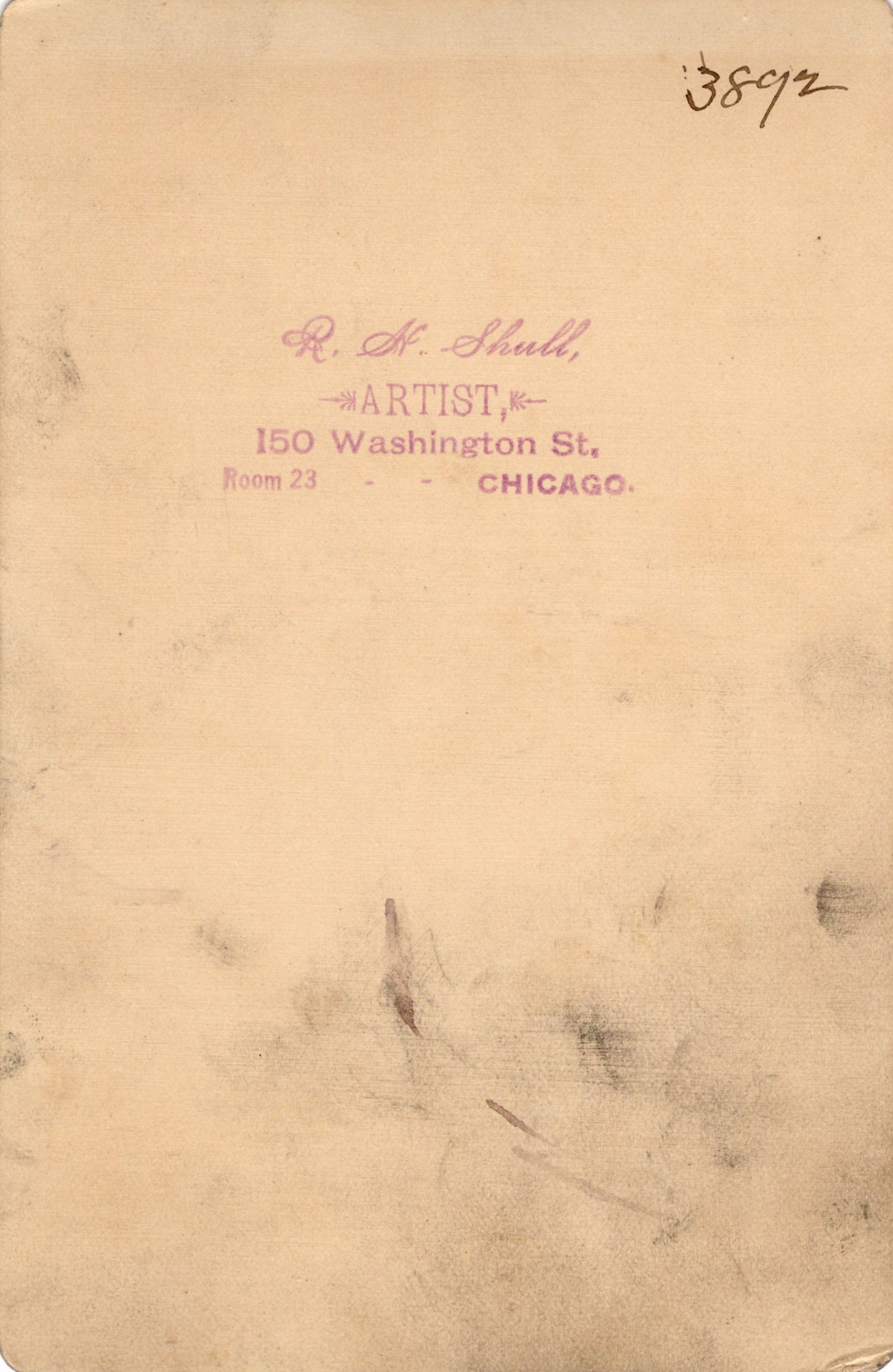
This cabinet card features a young child dressed in an elaborate outfit, including a lace trimmed dress and a distinctive bonnet-style hat adorned with a large, voluminous bow on the top. The child is standing amidst an arrangement of flowers, holding some in their hands. The background is a painted studio backdrop, designed to resemble a natural outdoor setting with trees and foliage. Although there is a photographer’s name below the image (Volquarts, Plymouth, Wisconsin), it is more likely that the photographer of this image is R. Shull of Chicago, Illinois. Shull’s advertising stamp can be seen on the reverse of this photograph. SOLD


This vintage real photo postcard features a serious young boy wearing a wide brimmed hat. He doesn’t seem very happy to be spending his time at a photo studio. This card has a Cyko stamp box indicating that the photo ws taken sometime between 1904 and 1920. SOLD

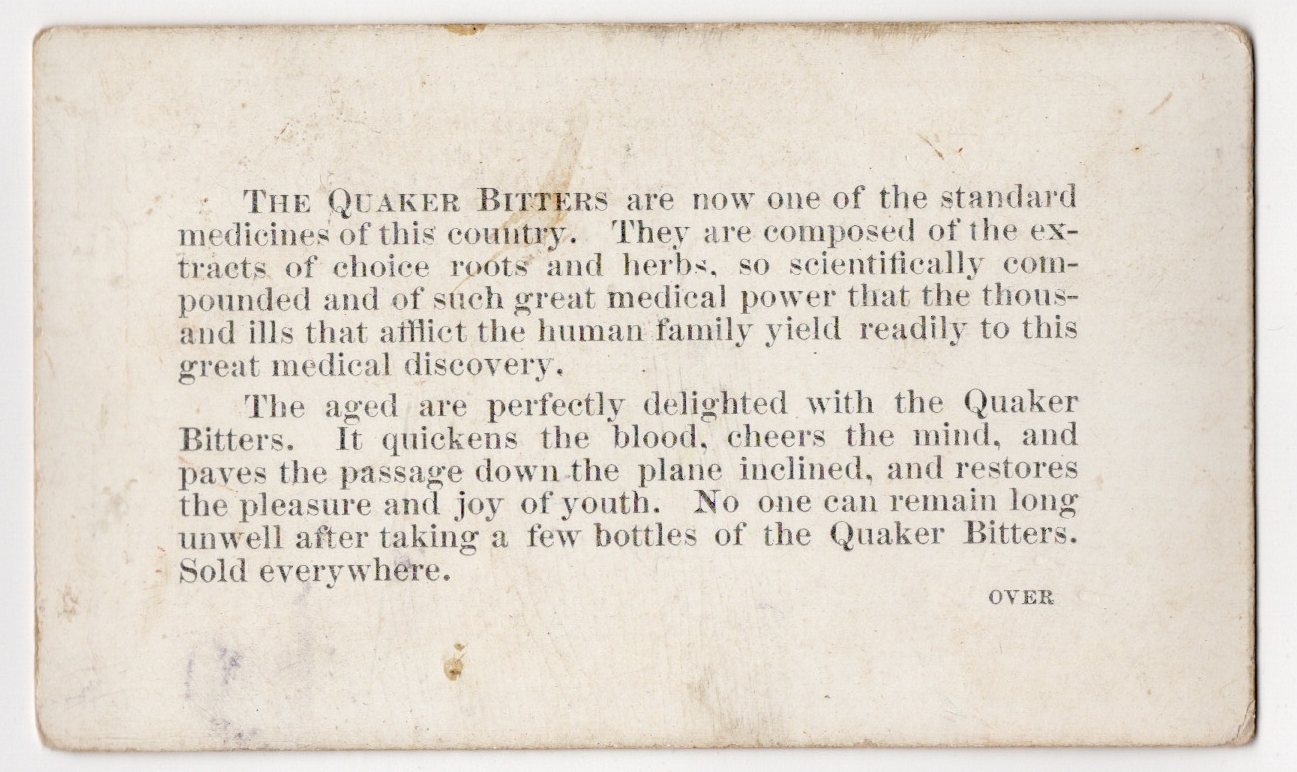
This rare Carte de Visite portrait features Dr. Henry Sanborn Flint. He was a prominent figure in Providence, Rhode Island, during the late 19th century. Initially, he and his brother Ezra H. Flint established Flint & Co. in 1864, focusing on furniture and housewares. By 1876, Henry had transitioned into medicine, becoming a physician and taking over the production of Old Dr. Warren’s Herb & Root Bitters, which he rebranded as Dr. H.S. Flint & Co. Quaker Bitters. Dr. Flint’s Quaker Bitters was marketed as a comprehensive remedy for various ailments, including digestive issues, liver complaints, and general debility. This product was like snake oil. The bitters were advertise on the reverse of the card as having such great medical power that “the thousand ills that afflict the human family yield readily to this great medical discovery”. The product’s packaging often featured a Quaker figure, symbolizing purity and trustworthiness. SOLD
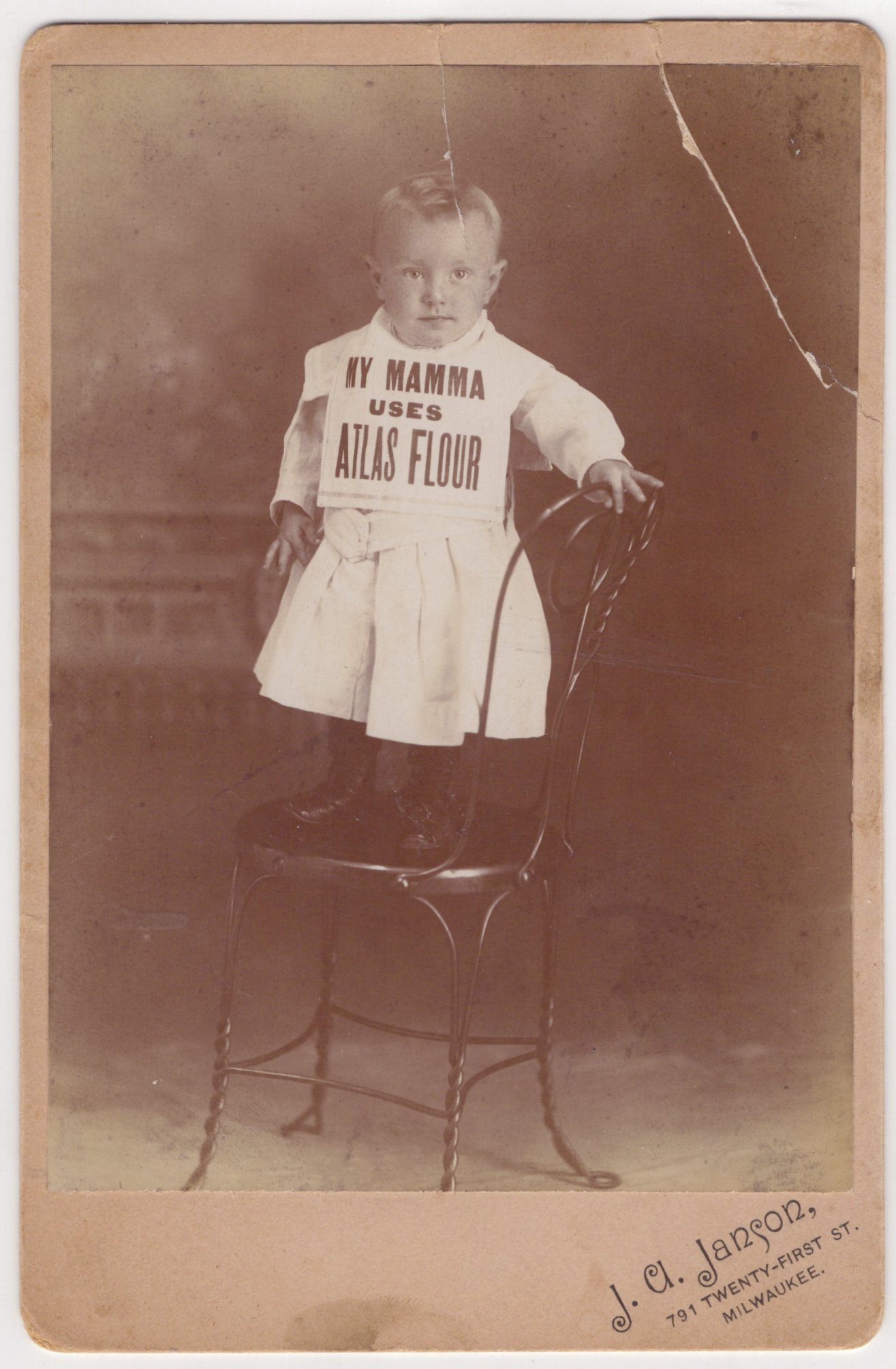
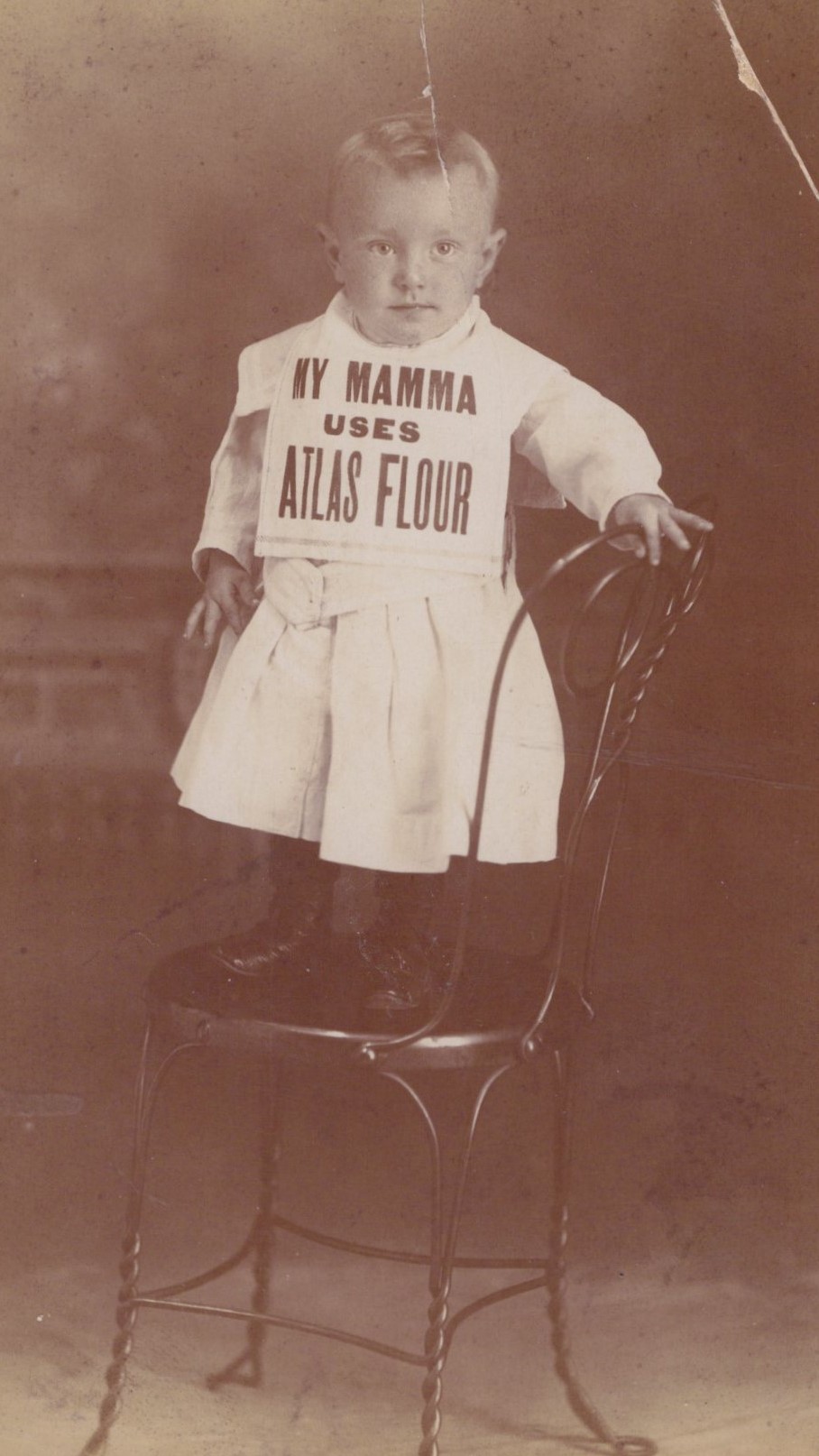
This advertising cabinet card features a little boy on a metal chair wearing a bib imprinted “MY MAMMA USES ATLAS FLOUR”. Atlas Flour was manufactured by B. Stern & Sons (Milwaukee, Wisconsin). The card’s photograph was taken by J. A. Janson in his studio also located in Milwaukee. This cabinet card, along with similar examples, was likely produced as part of a local promotion for the flour. It is likely that photos were of children of the company’s employees or other city residents. SOLD
 | bmarshphd on NORTHPORT, LONG ISLAND, NEW YO… |
 | Libby Bryant on NORTHPORT, LONG ISLAND, NEW YO… |
 | rangerdon on BEALLSVILLE, PENNSYLVANIA : ST… |
| bmarshphd on ELEANOR GAINES : LUBIN SILENT… |
 | phantomfamous0cbbe9d… on ELEANOR GAINES : LUBIN SILENT… |
 THE CABINET CARD GALLERY