A LITTLE GIRL SHORT IN STATURE, BUT LONG ON NAMES: “MISS EVA EMMA ELLA FERBER” IN CINCINNATI, OHIO

According to a notation on the reverse of this photograph, the little girl featured in this cabinet card photograph is named “Miss Eva, Emma, Ella, Ferber”. Perhaps Mr. and Mrs. Ferber were very indecisive people and couldn’t pick a single  name for their daughter. Possibly, the three names that made the final cut were Eva,Emma and Ella; and when the couple couldn’t come to an agreement; they decided to give their daughter all three of the names. The girl with many names, has curly locks and big brown eyes, and is quite adorable. She is sitting on a stone wall beside a statue of a small dog (pug). A search of the U. S. census may have uncovered some biographical information about Miss Ferber. The 1920 census lists a young woman named Eva E. Ferber, age 24,  who lived with her parents in Cincinnati. Her father’s name was Charles and he was employed as an inspector for the Chamber of Commerce. Her mother’s name was Ella (one of the name’s assigned to Eva). The census reported that Eva was employed as a bookkeeper in a clothing store. Her parents were listed as being born in Ohio, but of German heritage. Data from other census reports indicated that Eva had an older brother named Charles and that her   father had once worked as a carriage trimmer.  The photographer of this image is Herman Mueller. To view other photographs by Mueller, click on the category “Photographer: Mueller”. Mueller was born in Germany in 1833. He came to the United States with his wife, Mathilda, and his daughters Maria and Alfrieda. Both of the daughters became photographers and assisted him in the gallery he established in Cincinnati. He was active there from about 1886 until at least 1905. This cabinet card photo is in fair condition. Note a few small scratches evident on the image (see scans).

This cabinet card is available for purchase at The History Peddler for $45.65 or Best Offer.   

Interested collectors may view the listing here:

https://www.ebay.com/itm/236200681262

Published in: on December 13, 2025 at 12:00 pm  Leave a Comment  
Tags: , , , ,

JULIA MARLOWE: ESTEEMED AMERICAN STAGE ACTRESS

CABINET CARD 1

   CABINET CARD 2   (SOLD)

CABINET CARD 3  (SOLD)

CABINET CARD 4

CABINET CARD 5

CABINETCARD 6CABINET CARD 7   (SOLD)

CABINET CARD 8

CABINET CARD 9

MARLOW8

CABINET CARD 10

MARLOWE IN INGAMAR_0003
SPIN MARLOWE_0002

CABINET CARD 11

CABINET CARD 12

BRANSCOMBE

CABINET CARD 13

This image has an empty alt attribute; its file name is julia-marlowe-falk.jpg

CABINET CARD 14   (SOLD)

JULIA MARLOWE: ESTEEMED STAGE ACTRESS : SARONY : CABINET CARD PORTRAIT  c1890 - Picture 1 of 3

CABINET CARD 15 (SOLD)

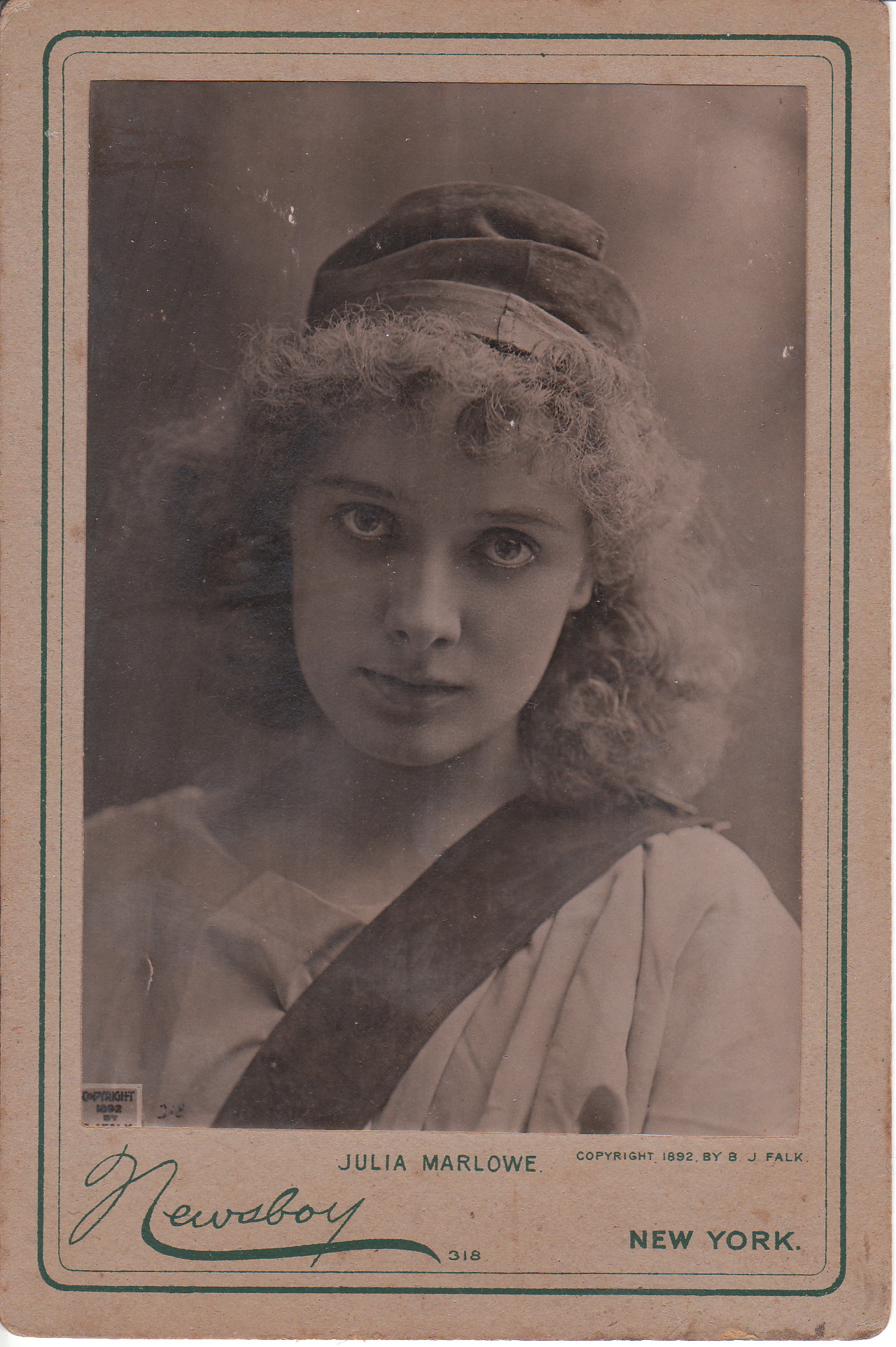
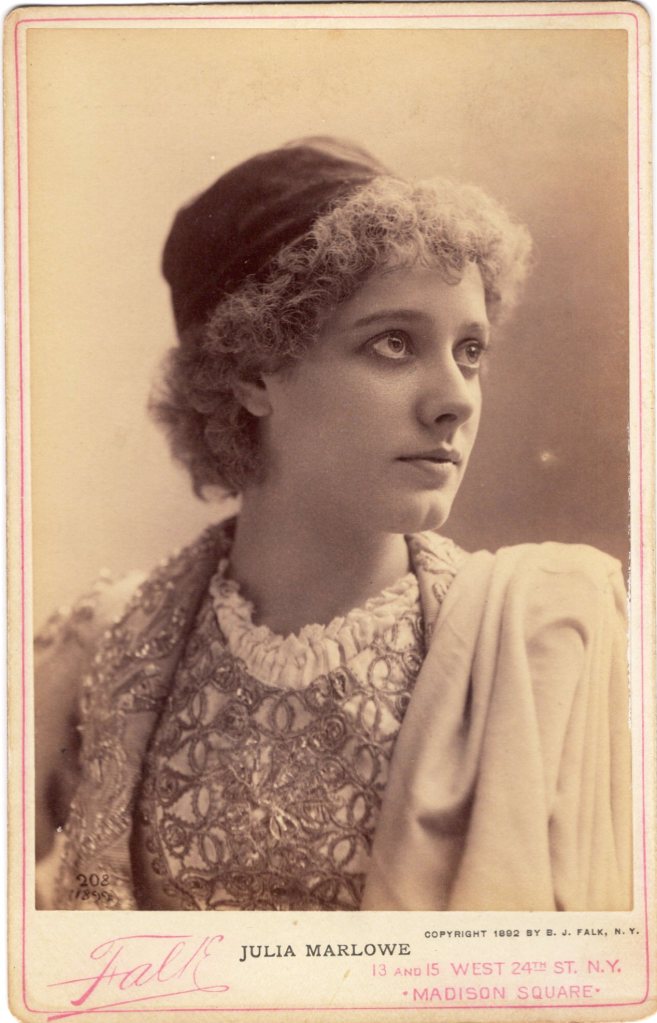
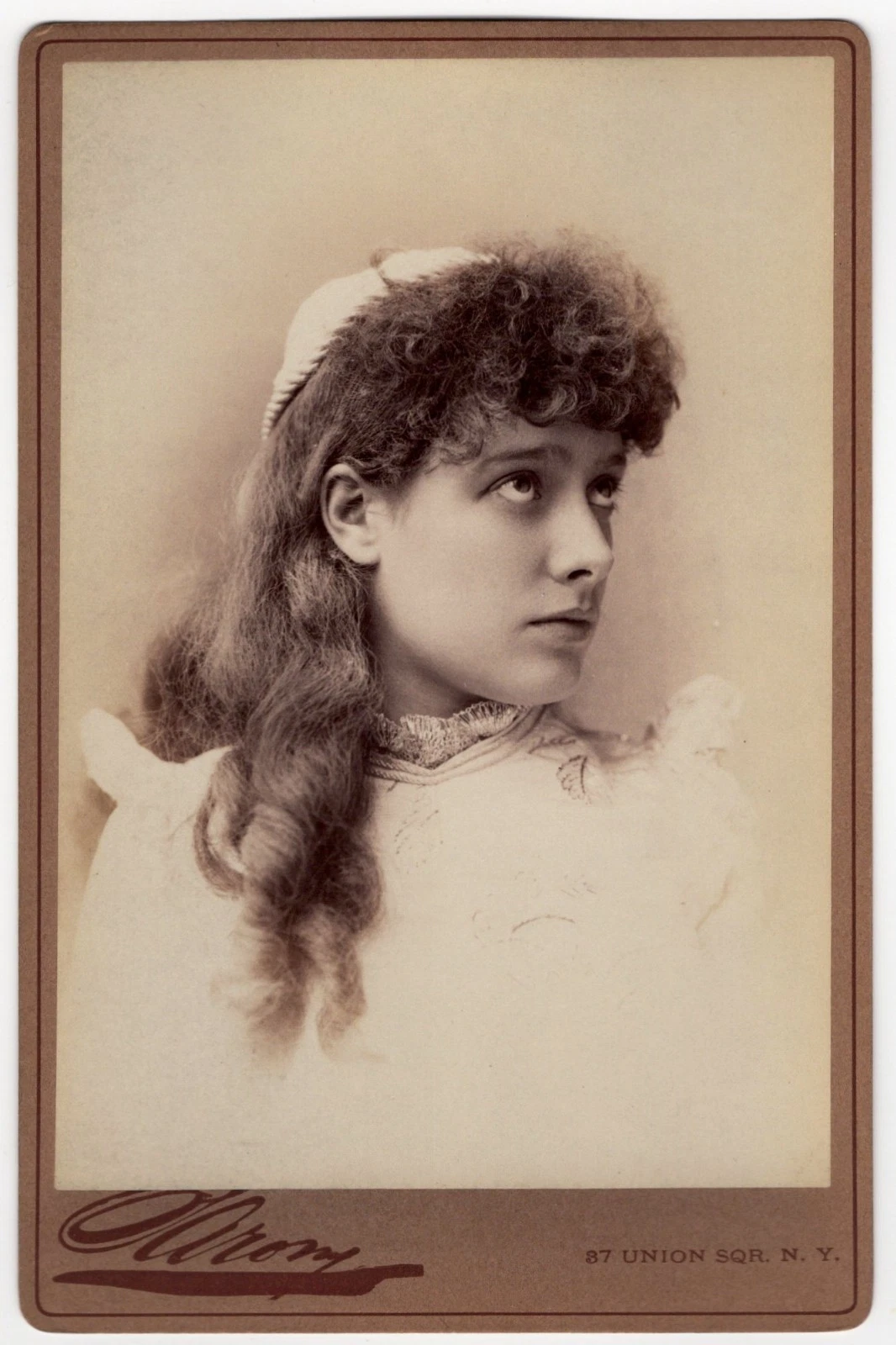
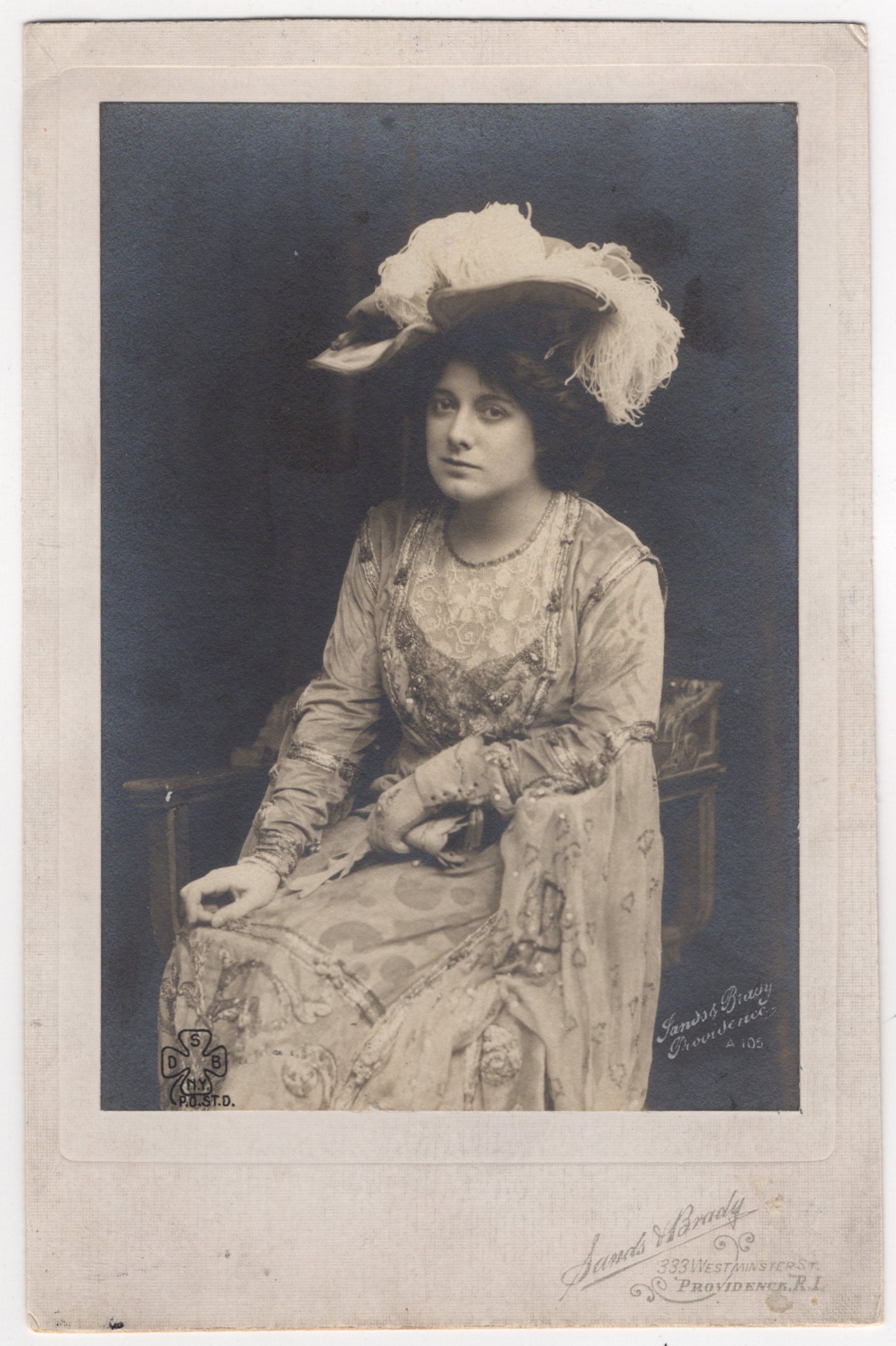
Julia Marlowe (1865-1950) was born in England and as a young child moved to the United States with her family. In her early teens she began her theatrical career with a juvenile opera company. She began playing Shakespeare in her home town of Cincinnati, Ohio. She made her Broadway debut in 1895 and by the end of her career, had appeared in more than 70 Broadway productions. Her first husband was actor, Robert Tabor. Their marriage lasted six years. In 1904 she appeared in “When Knighthood was in Flower”. Great success in this play brought her financial independence. Earlier, in 1903, she appeared in ‘The Cavalier” and “Ingomar”. The New York Sun wrote about her performance in “Ingomar”; “There is not a woman player in America or in England that is – attractively considered- fit to unlace her shoe”. In 1904 she began a partnership with actor E. H. Sothern. They toured the United States performing various plays of Shakespeare. They were managed by Charles Frohman and later, the Shubert brothers. They were considered to be among the major Shakespearian actors of the day. In 1906, Marlowe played in “Jeanne d’Arc” and also as Salome in “John the Baptist”. Later, Sothern and Marlowe played in London but were not terrific box office successes there. In 1911 Marlowe and Sothern married each other. In 1920 and 1921, they made eleven phonograph recordings for the Victor Company. The top Cabinet Card was produced by Newsboy as a premium for their tobacco products. The photographer was Falk and the image is from 1892.

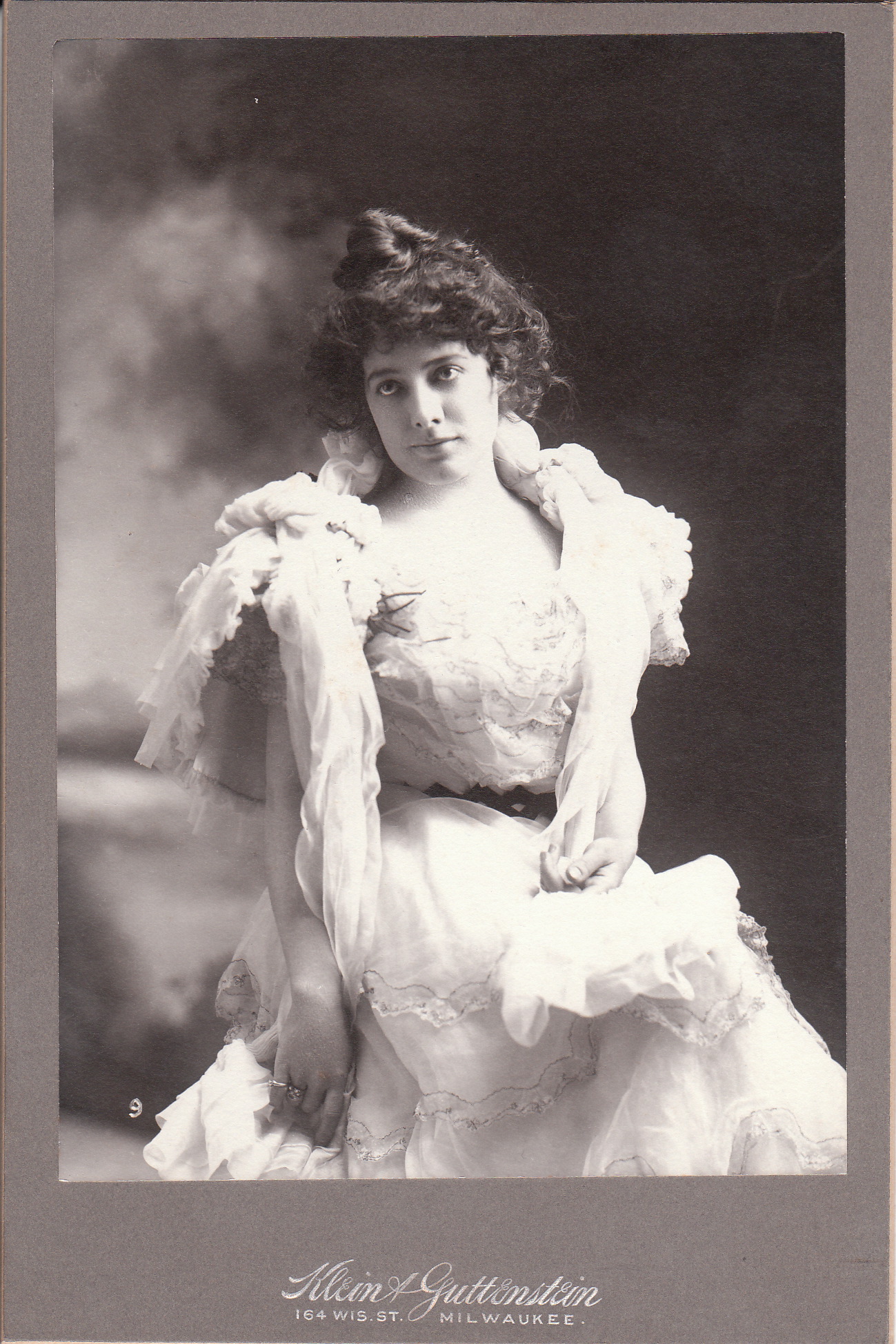
The second portrait of Julia Marlowe has a notation on the reverse of the card stating “Julia Marlowe Tabor”. Therefore, this photograph was likely taken during the time of her marriage to Tabor (1894-1900). The photographic studio that produced this portrait is  Klein & Guttenstein of 164 Wisconsin Street, in Milwaukee,  Wisconsin.  Klein and Guttenstein were leading photographers of their time. Wilson’s Photographic Magazine (1902) reveals that the two men  were very active in the Photographers Association of Wisconsin and other photography organizations. The photographers were considered part of a network of photographers skilled at producing publicity images of theatrical and vaudeville stars to be used in national magazines and other publications. The New York Public Library has a collection of portraits of actress Blanche Bates; produced by Klein & Guttenstein. The University of Pennsylvania Library has one of Klein & Guttenstein’s portraits of Julia Marlowe.  (SOLD)
The third portrait of Julia Marlowe in the cabinet card gallery collection is photographed by Sarony, the famed celebrity photographer located in New York City.  This cabinet card is signed by the actress and dated 1890. Additonal photographs by Sarony can be viewed by clicking on the category “Photographers: Sarony”.  SOLD

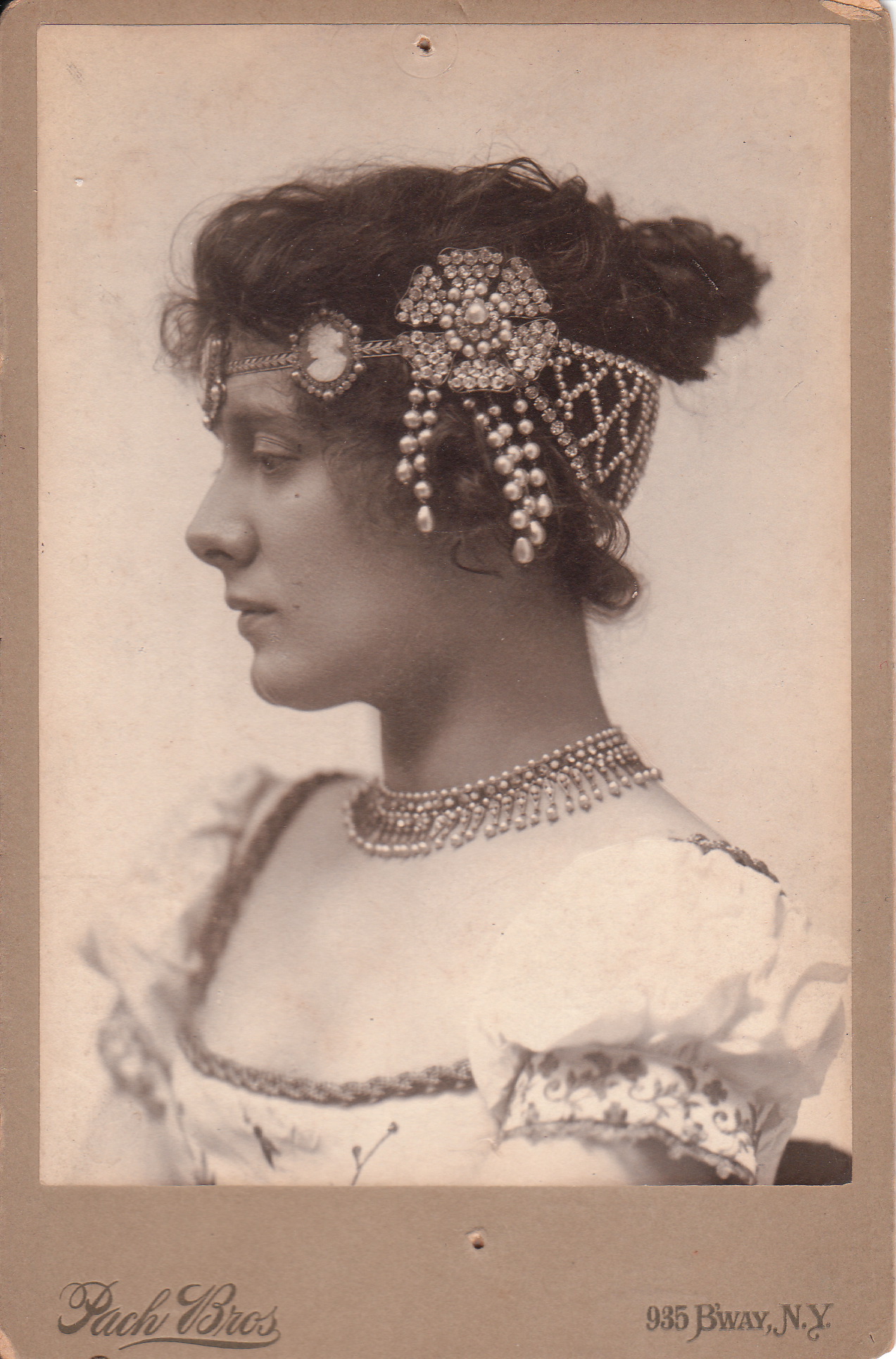
The fourth portrait of Miss Marlow features her in role in the production of “Countess Veleska”. The play was adapted for a German work, “The Tall Prussian”, by Rudolph Stratz. The play opened in New York in 1898 at the Knickerbocker Theatre. The review in the New York Times (1898) stated that the “drama was made wholly interesting by the personal charm and sincerity of Miss Marlowe”. In a sarcastic tone, the reviewer comments about Marlowe’s co star, Bassett Roe. The reviewer states that Roe has only two qualities of the man he was playing, “height and good looks”. The reviewer continues his scathing description of Roe; “The only time he actually warmed up was when he accidentally set his hair on fire. Even then he would have let it burn if Miss Marlowe had not gone to his rescue.” The photographic studio that produced the “Countess Veleska” cabinet card was Pach Brothers of New York City. Pach Brothers were photographers known for their photographs of celebrities of their era. To see additional photographs by the Pach Brothers, click on this site’s category of “Photographers: Pach Brothers”.

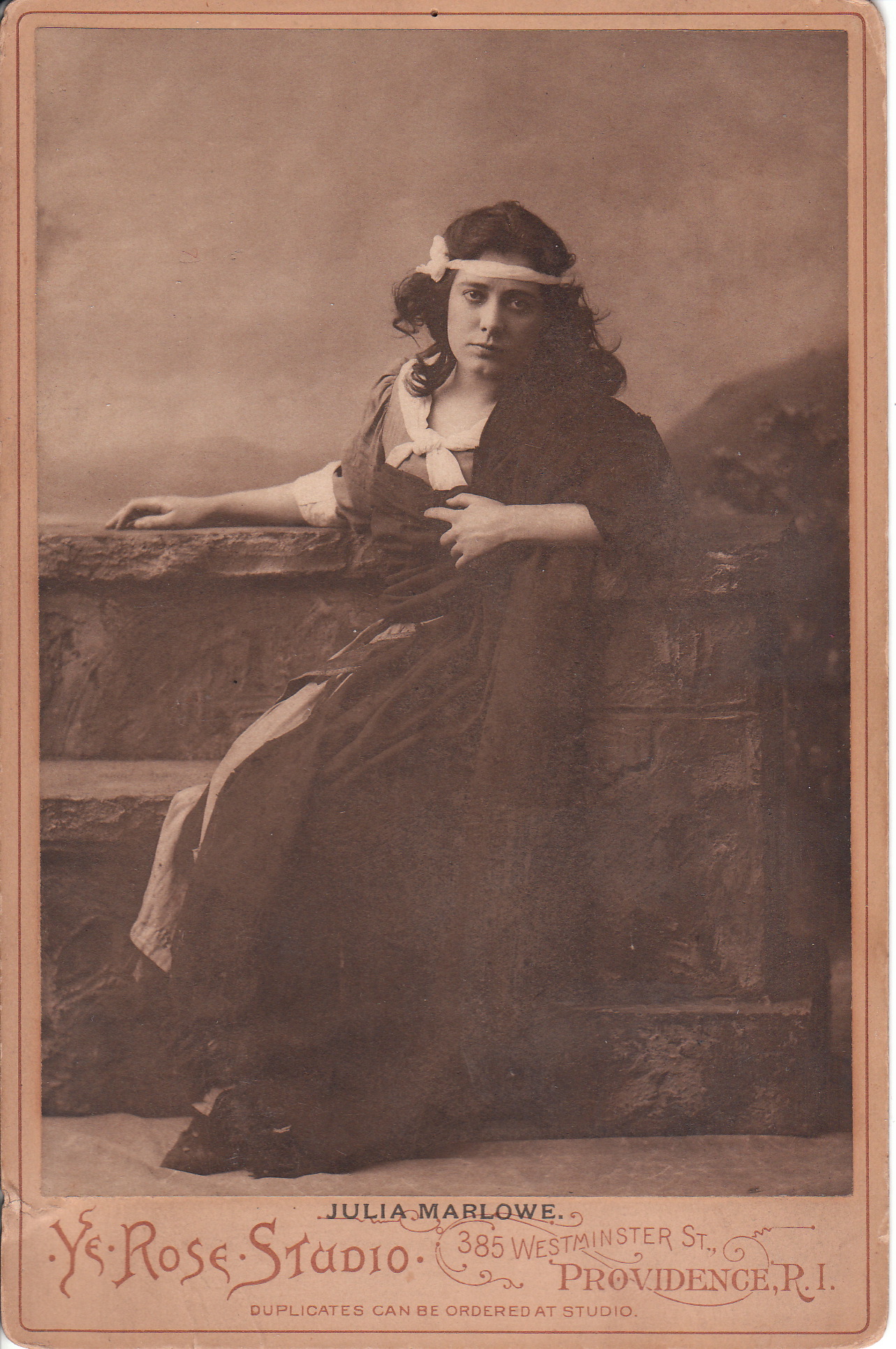
The fifth portrait of Julia Marlowe appears to be a photograph of the actress in costume for an unknown stage production. The image was photographed by Ye Rose Studio of Providence, Rhode Island. The reverse of the card indicated that the studio was opened in 1886. The studio was located in the Conrad building in downtown Providence. The building still exists. Other photographs by the Ye Rose Studio can be viewed by clicking on the category “Photographer: Ye Rose”.

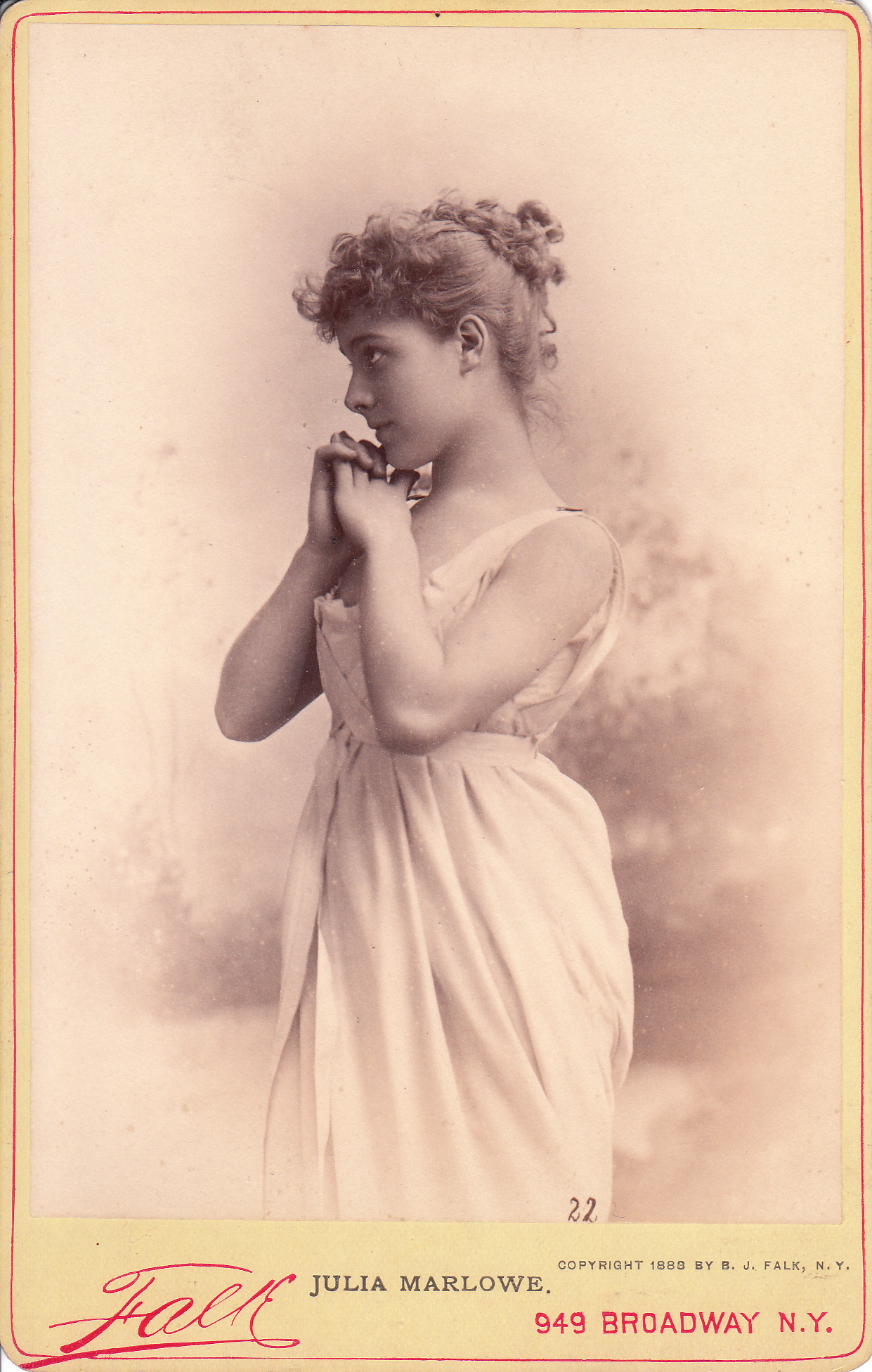
Portrait number six is an excellent example of the beauty of Julia Marlowe. This image, from 1888, captures Ms. Marlowe at the young age of twenty-three. The photographer of this portrait was B. J. Falk, a celebrity photographer located in New York City, New York. To view other photographs by Falk, click on the category “Photographer: Falk”.

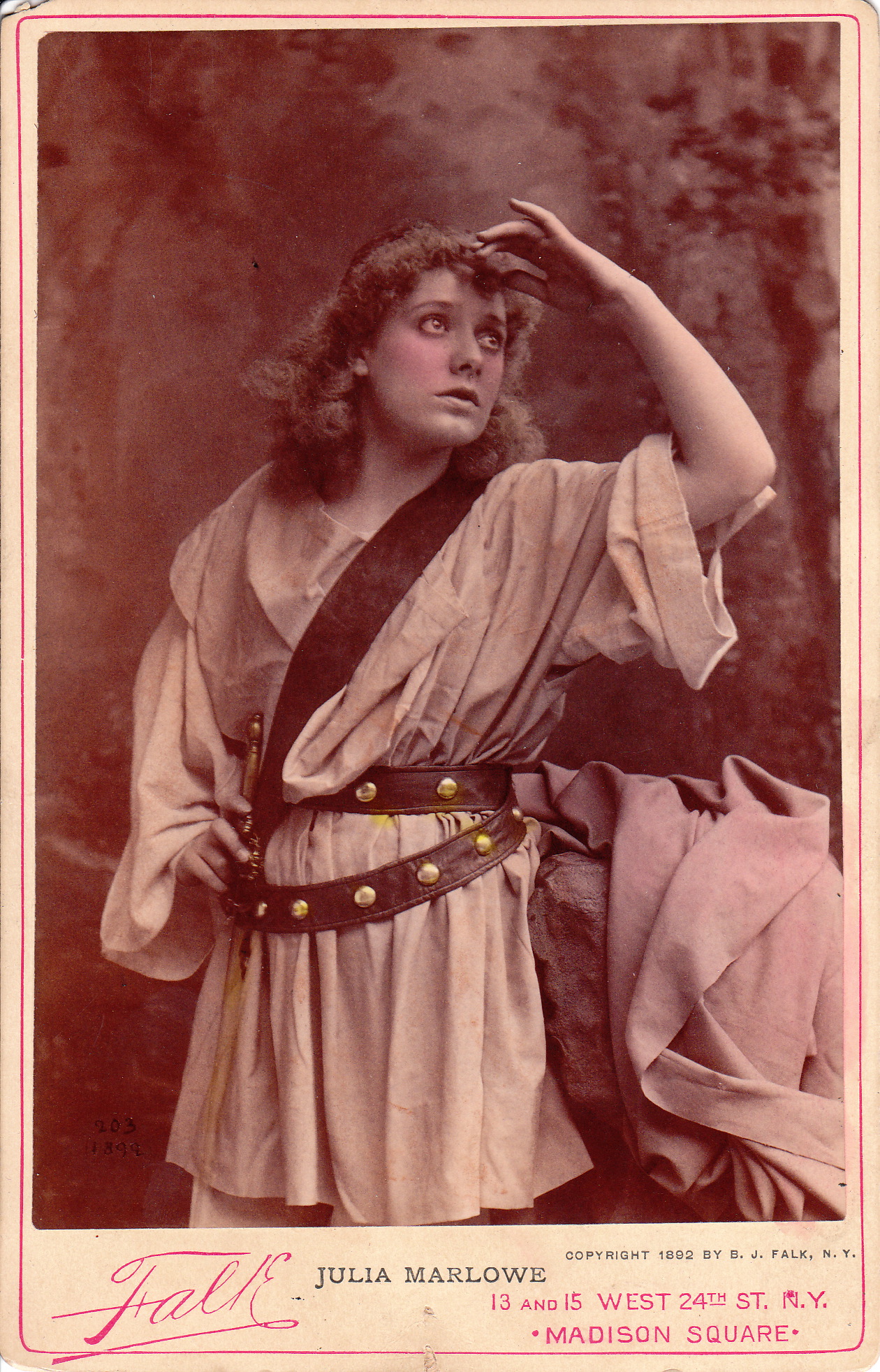
The seventh portrait is another example of a B. J. Falk image. The photograph features a costumed Julia Marlowe in the production of “Cymbeline“. Cymbeline is a play by William Shakespeare that was based on legends about the early Celtic British King,  Cunobelinus. The play deals with themes that include innocence and jealousy. Ms. Marlowe plays Imogen, the King’s daughter. Her expression in the photograph shows fear and concern as she looks at someone or something in the distance. Her left hand shades her eyes while her right hand clutches her belted dagger. A stamp on the reverse of  this cabinet card reveals that it was formerly owned by Culver Pictures of New York City, New York. Culver Pictures has been collecting photographs and illustrations from the 19th and first half of the 20th century, since 1926. These pictures are used in books, films, and other forms of media. At the time that this cabinet card was stamped by the company, Culver Pictures was located in New York City.  (SOLD)

Portrait number eight is a close-up photograph of Miss Marlowe. The photographer of this cabinet card is the studio of Rose & Sands whose gallery was located in Providence, Rhode Island. Note that photograph number five also came from the Rose studio, but at that time, the gallery was called, the Ye Rose studio. The Wilson’s Photographic Magazine (1899) reports that Rose and Sands were the proprietors of Ye Rose. A humorous headline in a photography magazine stated “Providence Provides for All, And Rose Provides for Providence”.  Print on the reverse of this cabinet card reveals that the Rose & Sands studio was opened in 1886 and that it specialized in “High Class Portraits from Cabinet to Life Size”. Also of interest, like photograph number seven, there is a stamp on the reverse of the photograph with the name “Culver Pictures Inc”.

Photograph number nine features the beautiful Miss Marlowe displaying a mischievous smile. Note her engaging large eyes. She is wearing a somewhat revealing dress (for the cabinet card era) and has a wonderful hat atop her head. This cabinet card photograph was published in 1888 by Benjamin Falk of New York City.  The image is marked with the number sixty-nine.

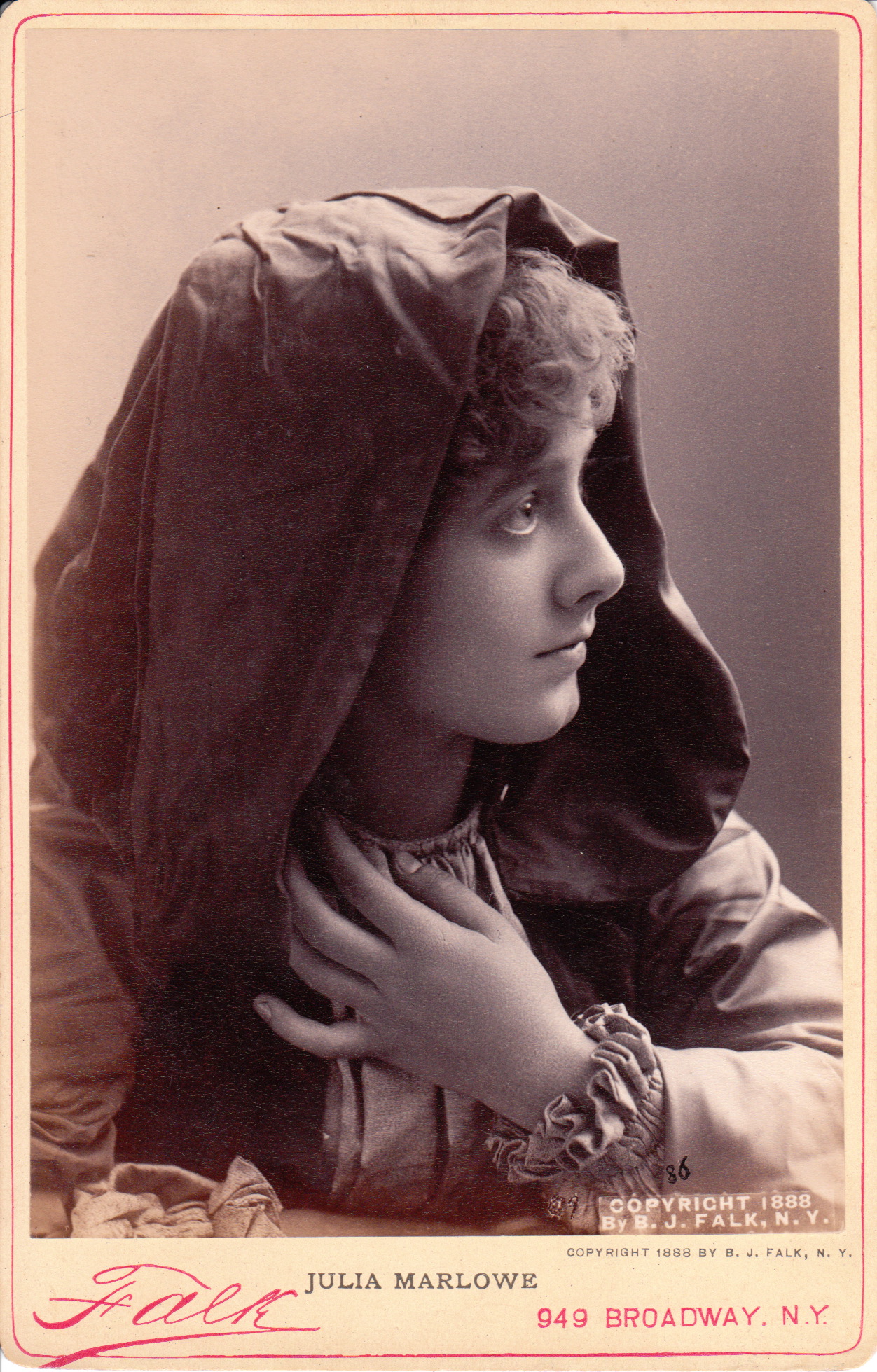
Portrait number ten is a closeup of Julia Marlowe with her head covered, but with her pretty face very visible. She is likely in costume for this photograph. The photograph is taken by B. J. Falk of New York City and has a copyright date of 1888. The cabinet card is marked number “86”.

The eleventh photograph captures Miss Marlowe staring hypnotically at a flower. Someone, has written below her name that the image features her in the role of Parthenia in the production of “Ingomar”.  The New York Times (1904) reviews the play and Miss Marlowe’s performance on opening night at the Empire Theater in New York City. The newspaper reports that Frederick Halm’s play was “impossibly romantic and deliciously sentimental piece of old-fashioned theatrics. Tyrone Power played Ingomar and he was described as “vigourous and picturesque” but the article added that his voice was “not at its best”. The review pointed out that Marlowe’s appearance in this play was to be her last appearance as an independent star before joining E. H. Sothern’s Shakespearean repertory. In regard to Marlowe’s acting in this play, it was written that she played a “dear little prig – adorably dear” (prig can be defined as smug or arrogant) and she presented “a masterpiece of harmonious, modulated, and sustained acting”. The 1904 performance of Julia Marlowe in “Ingomar” marked a return performance for this accomplished actress. The New York Times (1888) wrote a very positive review of the opening night performance in Washington D.C.. The appreciative audience included three Supreme Court Justices and a number of members of the Chinese Embassy. This cabinet card was produced by the previously mentioned Ye Rose Studio of Providence, Rhode Island and it likely dates back to her 1888 performance in the role.

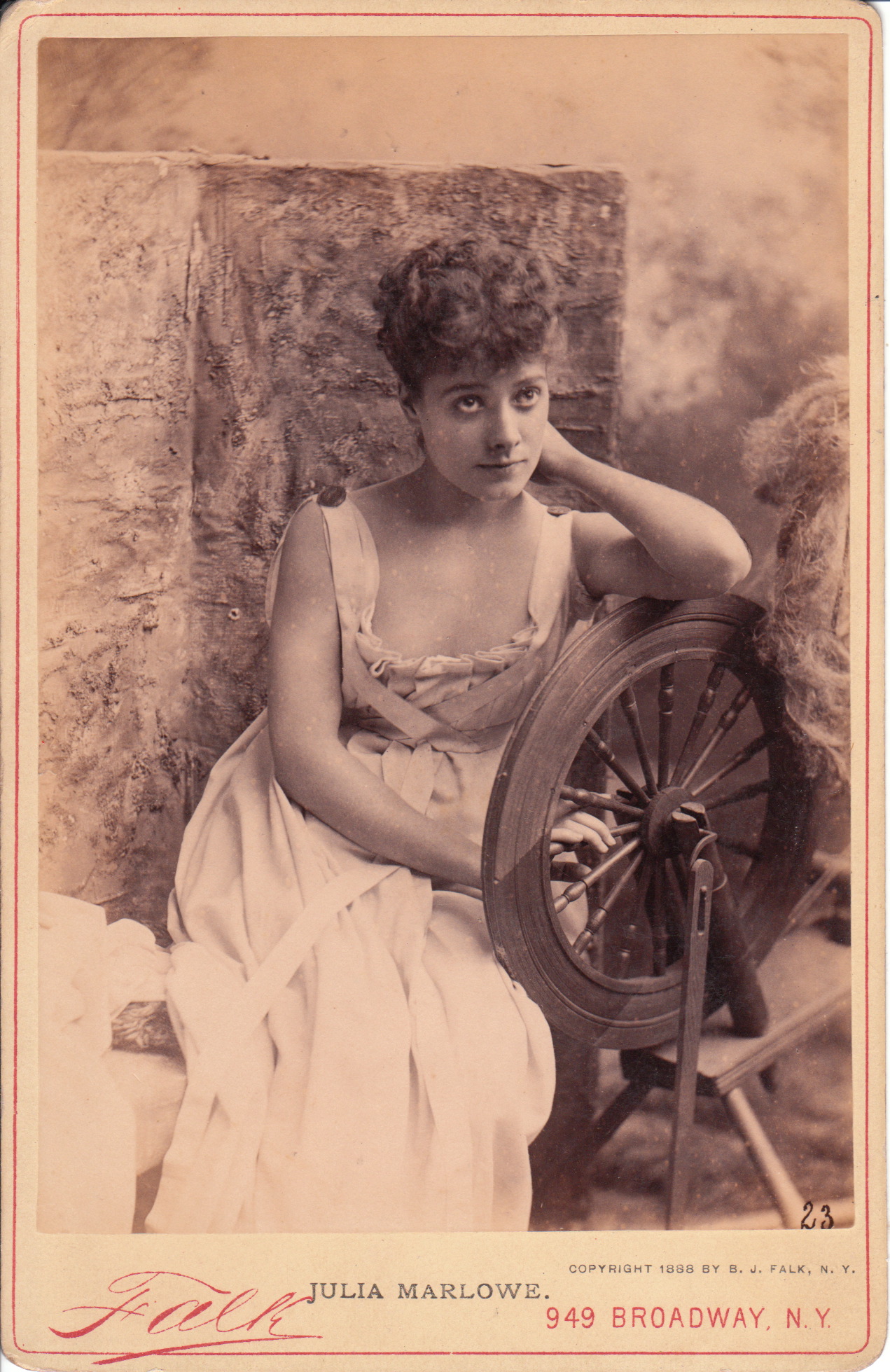
The twelfth cabinet card was produced by Benjamin Falk of New York City. He posed Miss Marlowe next to a spinning wheel. Her low cut dress makes this image a bit risque for the cabinet card era. If Falk or Miss Marlowe thought that looking up at the camera would create a “fetching appearance”, I would contend that their efforts failed. Rather than “fetching”, she appears dazed. The actress was a beautiful woman and provocativeness was not necessary to enhance her image. This photograph was produced in 1888 and was part of a series (#23).

Cabinet Card number thirteen is part of a series that includes Cabinet Card number ten. Both cards were photographed by Benjamin  Falk and have a copyright date of 1888. Both portraits are close-ups but this one is captures Marlowe looking at the camera while number ten offers a profile view. Falk really captured the actresses eyes. Her eyes are beautiful and they are haunting at the same time. This photograph is marked number number 83 of the series.

Cabinet Card fourteen features another beautiful portrait of Julia Marlowe. This photograph was taken by Benjamin Falk and was copyrighted in 1892. This cabinet card is uncommon, possibly rare.  (SOLD)
Cabinet Card 15 was photographed by Napoleon Sarony, the famed celebrity photographer located in New York City.  (SOLD)
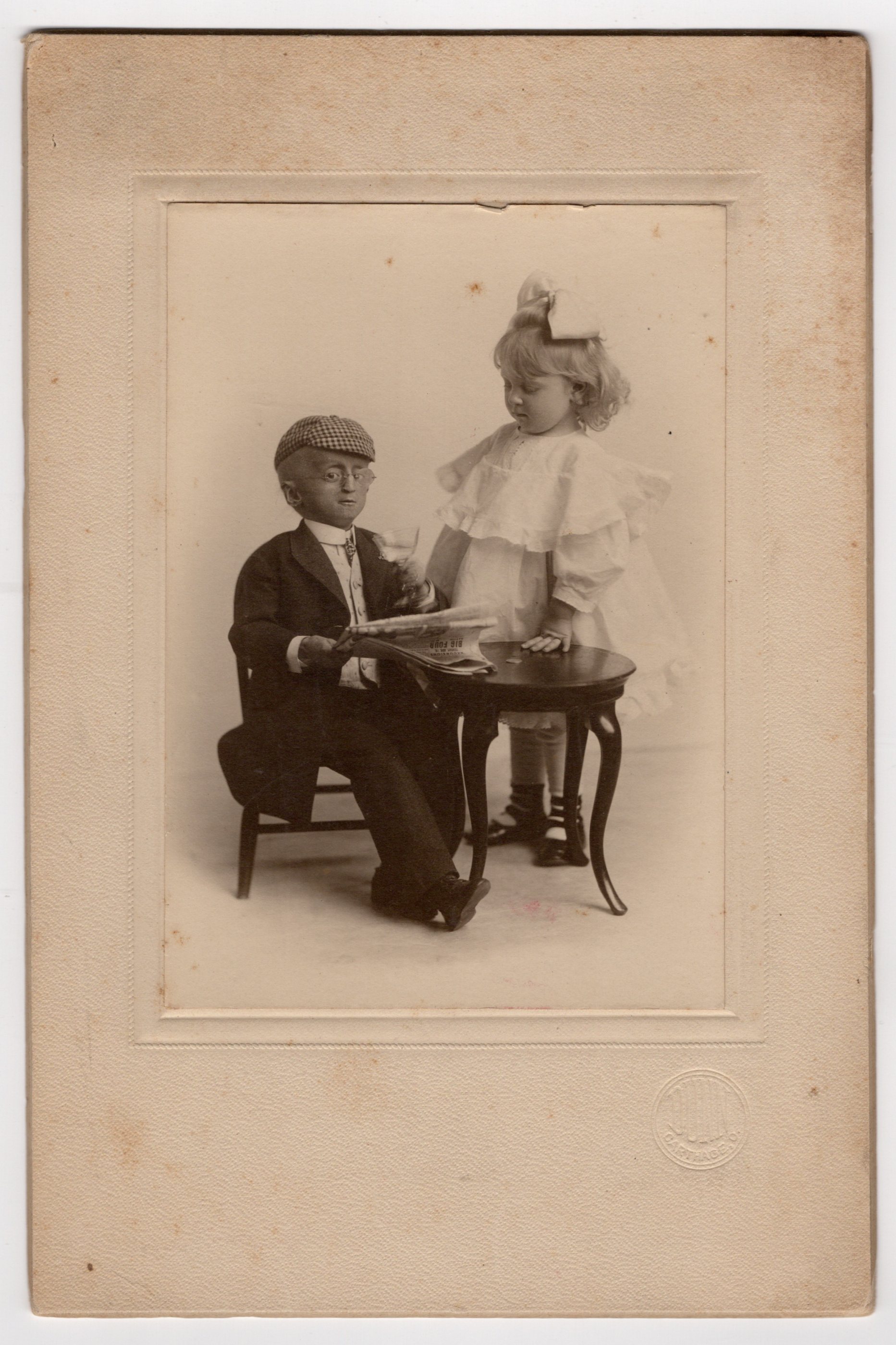
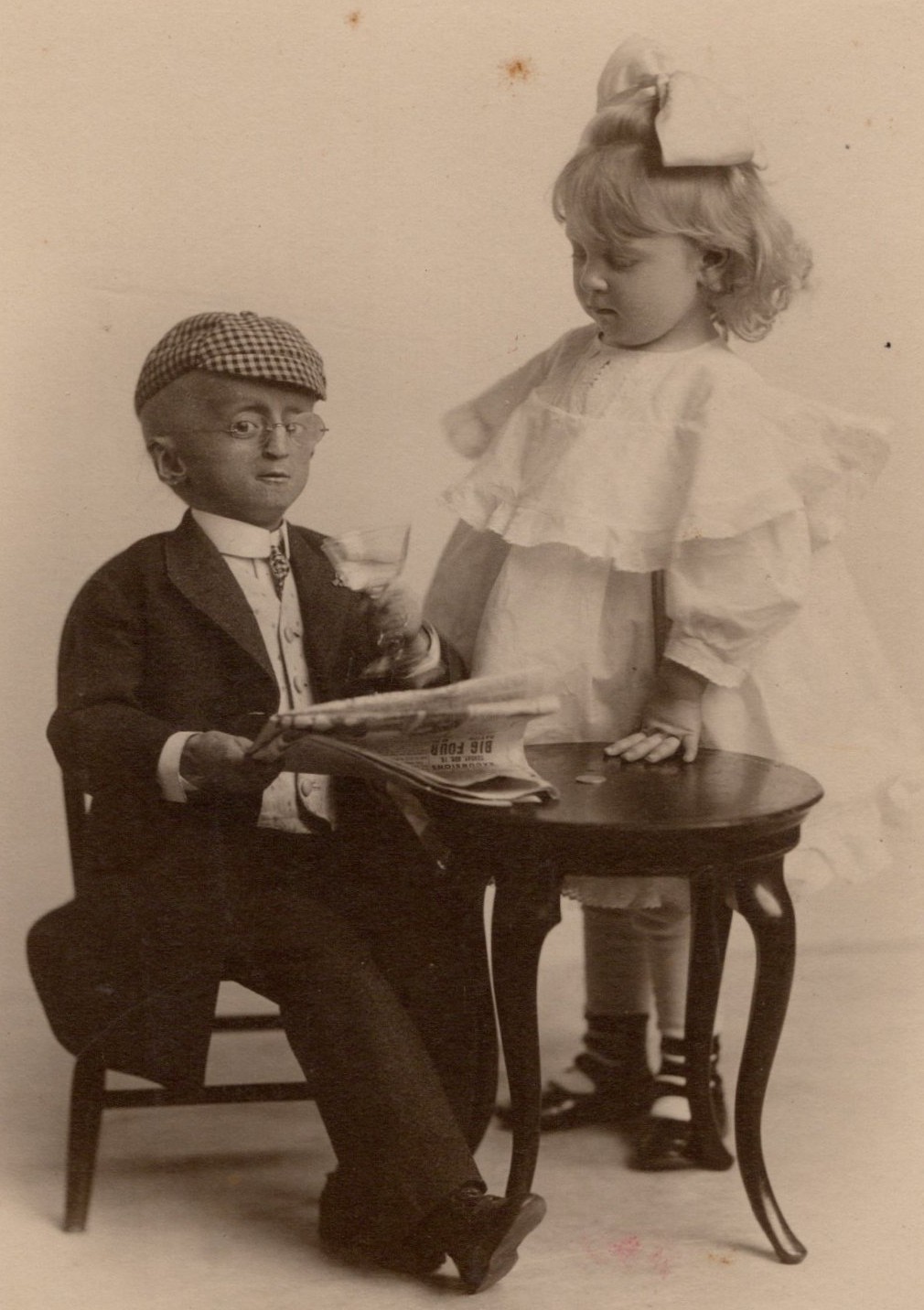
RARE PHOTO OF MIDGET MAN & WOMAN SEATED AT TABLE WITH DRINK & NEWSPAPER : c 1900

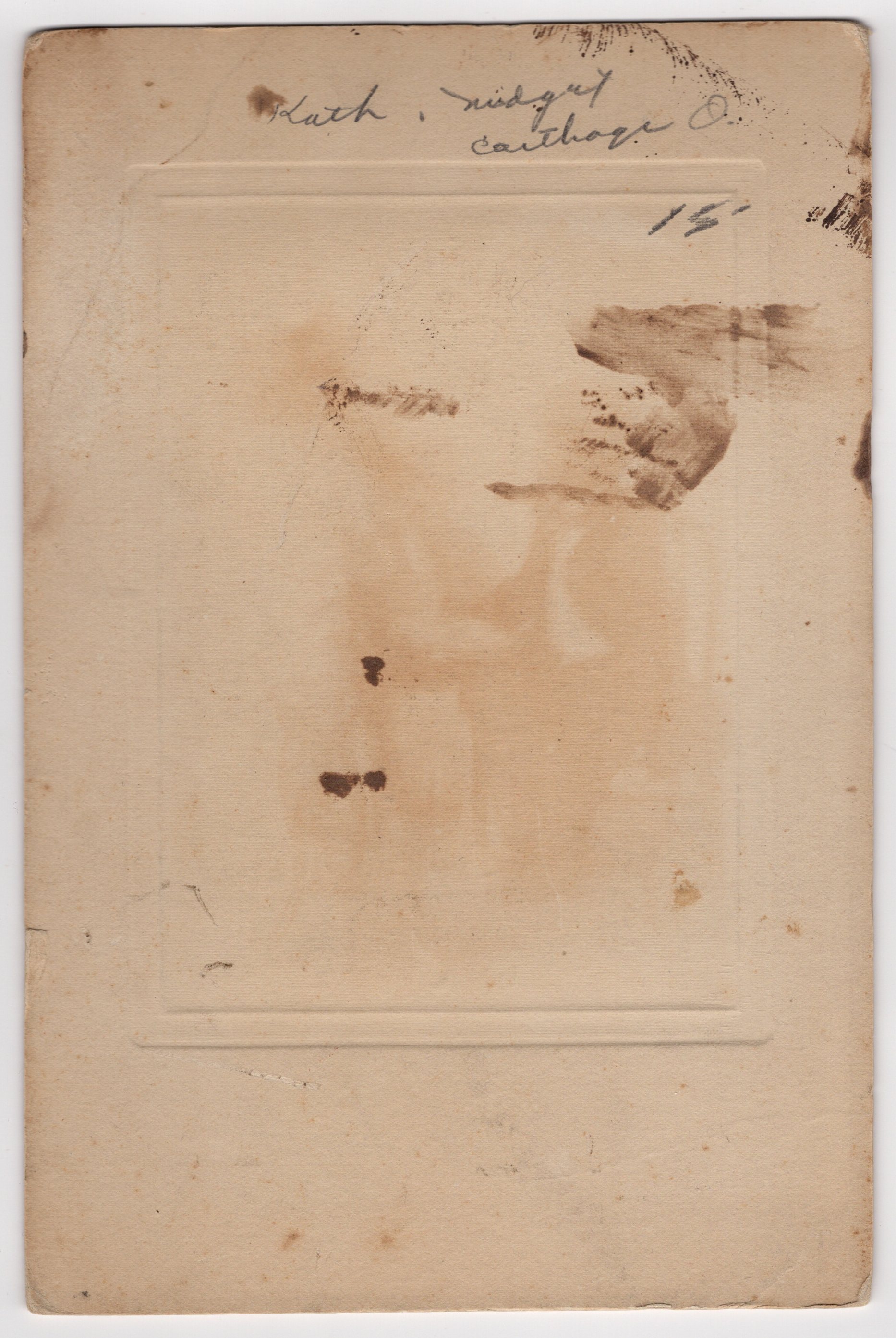
This vintage cabinet card features a formal indoor studio portrait of a well-dressed man seated at a table with a young woman beside him. The photograph, likely taken in the 1890s or early 1900s, comes from the Dunn studio in Carthage, Ohio, a historically independent village that was later annexed into Cincinnati. The man in the photo appears to be in his late middle years. He wears a smart three-piece suit, an unusual flat-topped cap, and wire-rim glasses. He is captured holding a stemmed glass—possibly filled with wine or another beverage—in one hand, while his other hand rests on a folded newspaper. The expression on his face is dignified and contemplative. Standing beside him is a young female, dressed in a formal white or light-colored dress with puffed sleeves and a ribbon at the waist. Her hairstyle and attire match fashion trends of the late Victorian or early Edwardian period. Her smaller physical stature raises the question: is she a child, or is she an adult woman with dwarfism (historically referred to by the now-outdated term “midget”)? Her mature facial features and posture lean toward the latter possibility, though this cannot be confirmed with certainty. The back of the card has handwritten ink notations that appear to read: “Ruth, midget, Carthage O.” This further supports the interpretation that the subject may be an adult woman of short stature. The photographer’s stamp can be seen in the lower right corner of the front of the card. SOLD

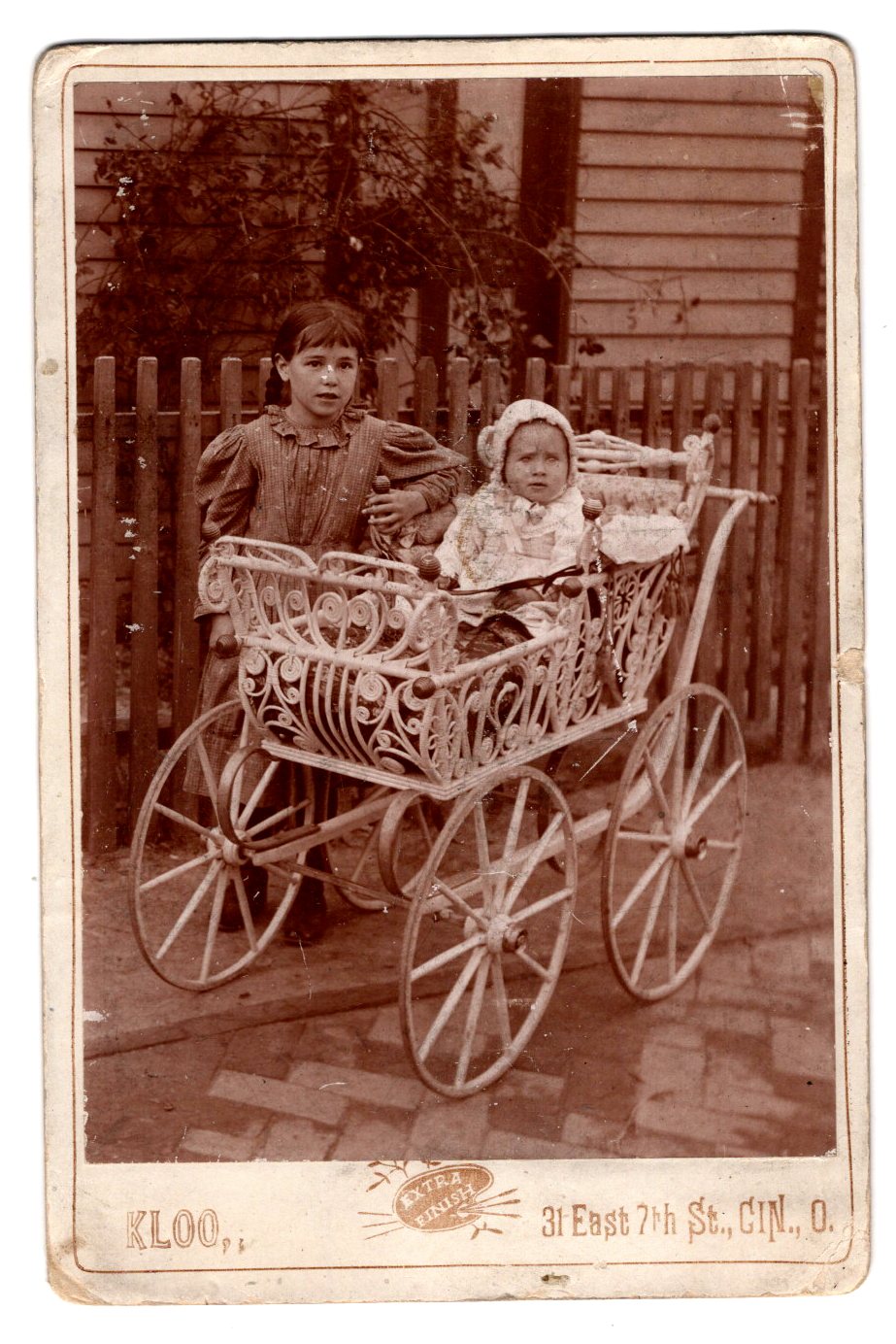
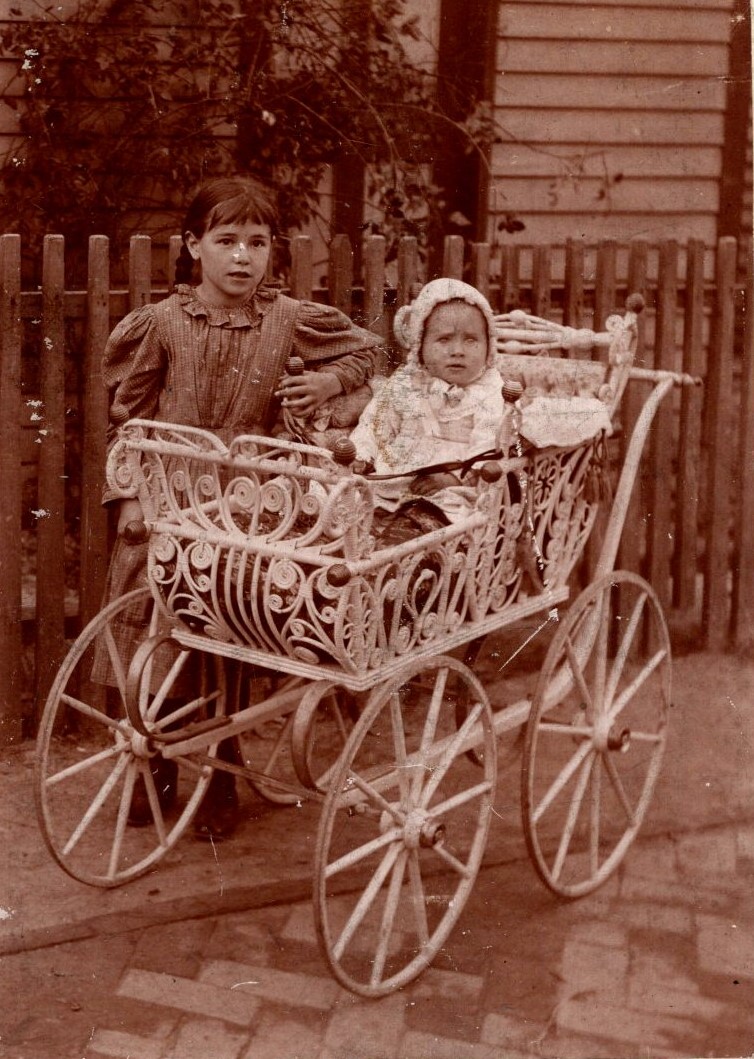
ANTIQUE BABY CARRIAGE WITH BABY AND SISTER IN CINCINNATI, OHIO

This cabinet card features a school age girl minding a bundled up baby in a large fine bentwood and wicker baby carriage. The carriage is on a brick lane and in the background is a fenced clapboard house. The older child is wearing a fine dress with mutton sleeves and the baby is clothed in a gown and cute cap. The photographer is  Kloo, of Cincinnati, Ohio. The photographer may be Carl H. Kloo ,who, according to a photography journal (1906) was a photographer in Covington, Kentucky . SOLD

Published in: on March 22, 2025 at 12:39 pm  Leave a Comment  
Tags: , , , , , , , ,

PRETTY YOUNG WOMAN : RENSLER’S STUDIO : CINCINNATI, OHIO: MABELE FISHWICK : RPPC

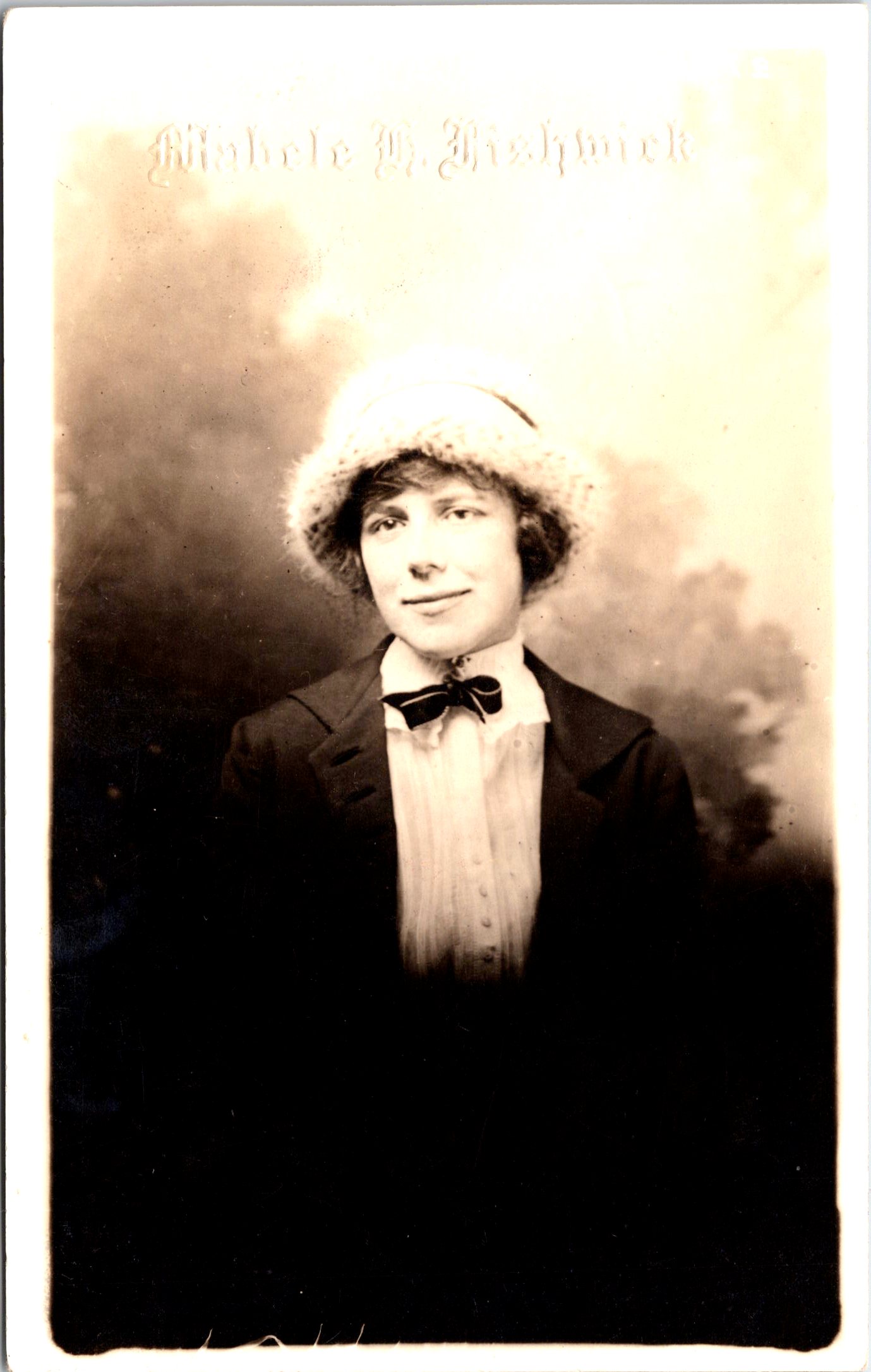
This vintage real photo postcard features a studio portrait of a pretty young woman  wearing an adorable hat. The woman’s name is embossed above her image on the card. Her name was “Mabele Fishwick”. The 1900 US census reveals that Mabele was 15 years-old, born in 1884, and lived with her parents and 13 year-old brother in Cincinnati. In 1908 she married Clarence H. Hinsdale. The couple’s marriage ended in divorce. She married again in 1922 to Hewett Griggs Robertson. During World War I, Mabele worked with the Red Cross and then went to Washington DC to work for the government (Civilian Personel Army Ordnance”. During that time, Mabele was on a flight from Washington DC to Dayton, Ohio. Due to gale force winds, the plane, carrying nine passengers, had to make an emergency landing in a farmer’s field. In an interview with a reporter, Mabele said that pilots needed to be more careful where they choose to land. She explained that the Pennsylvania farmer who owned the field, charged the pilot $250.00 for “parking priviliges” and charged each occupant of the plane 50 cents for walking across his property. Mabele’s portrait was taken by Rensler’s studio, located in Cincinnati, Ohio. The advertising on the reverse of the postcard indicates that the studio had more than one location in Cincinnati as well as a location in Cleveland, Ohio. According to one historical Cincinnati blog, Rensler’s was one of the few photo studios in Cincinnati that accepted African American clients. The studio operated for 83 years and shut down in 1989. I have seen a number of photographs by this studio and many are excellent. The AZO stamp box on this card indicates that the postcard dates back to between 1918 and 1930.  (SOLD)

THE BRADFORD BELTING COMPANY : (1907) CALENDAR : CINCINNATI, OHIO

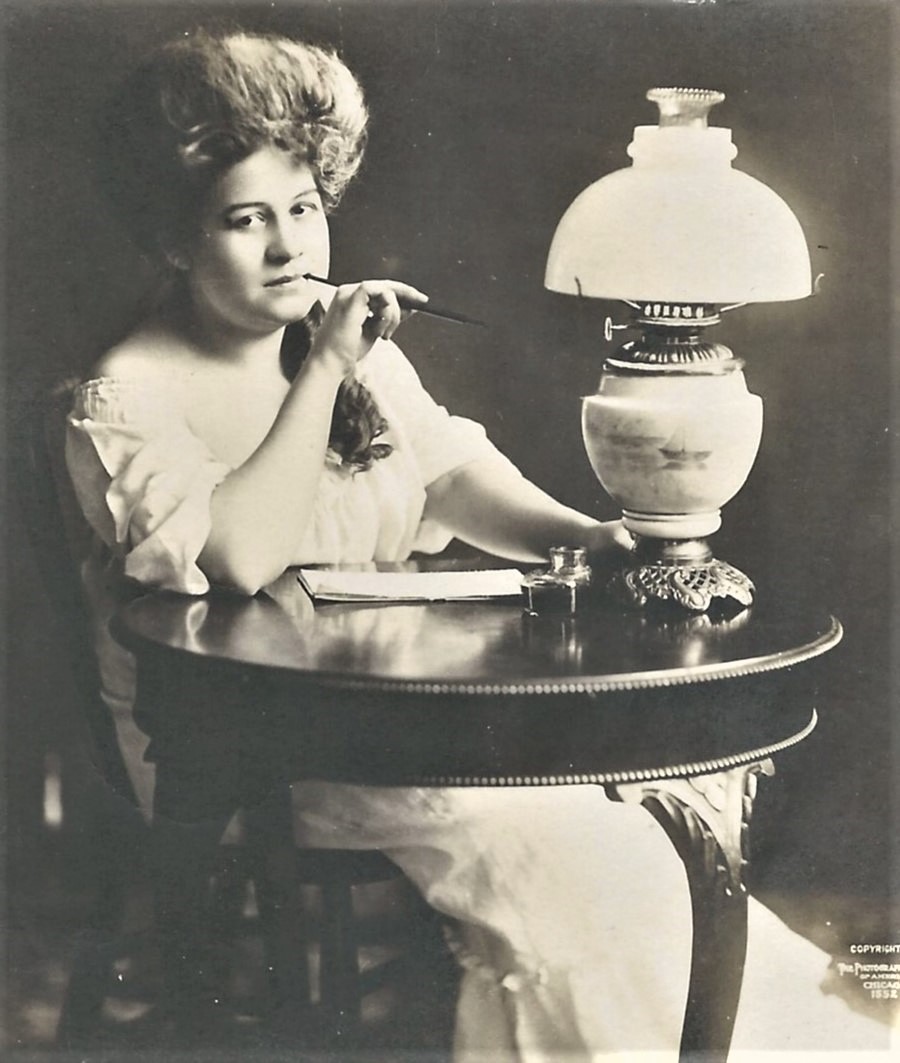
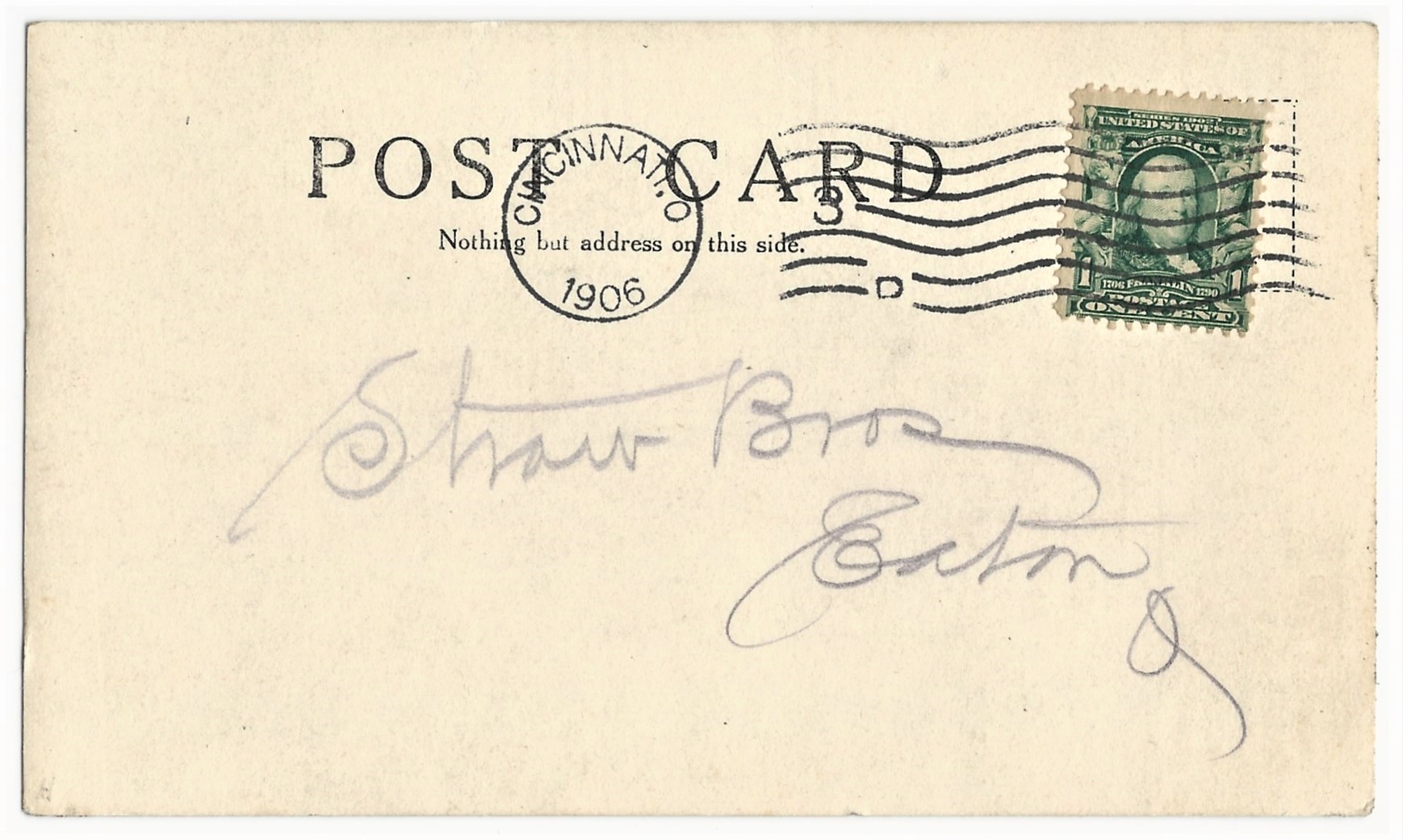
This vintage real photo advertising postcard served as a New Year’s greeting card. The postcard provided a January, 1907 calendar and provided wishes for a happy and prosperous new year. The postcard advertised the Bradford Belting Company as the manufacturer of “Monarch Leather Belts and Cement”. In addition, the postcard hawks “monarch belt dressing” which came in stick or liquid form. The card has a Cincinnati postmark from the year 1906. The addressee on the card, presumably one of Bradford’s customers, is the firm, Straw Brothers which was located in Easton, Ohio. Preliminary research yielded little information about the Bradford company. The Motor Way (1907) reports that Pope Motors built a business car (open delivery wagon) for Bradford. The photograph on this advertising postcard features a pretty woman writing a letter by lamplight. Using female models to sell products in male dominated industries or areas of interest, is a practice that continues today. The card was published by the Photographic Company of America, located in Chicago, Illinois It is numbered 1552. This vintage postcard is in very good condition (see scans).

Buy this Vintage Real Photo Postcard (includes shipping within the US) #3149

To purchase this item, click on the Pay with PayPal button below

$25.50

Buy this Vintage Real Photo Postcard (includes International shipping outside the US) #3149

To purchase this item, click on the Pay with PayPal button below

$34.00

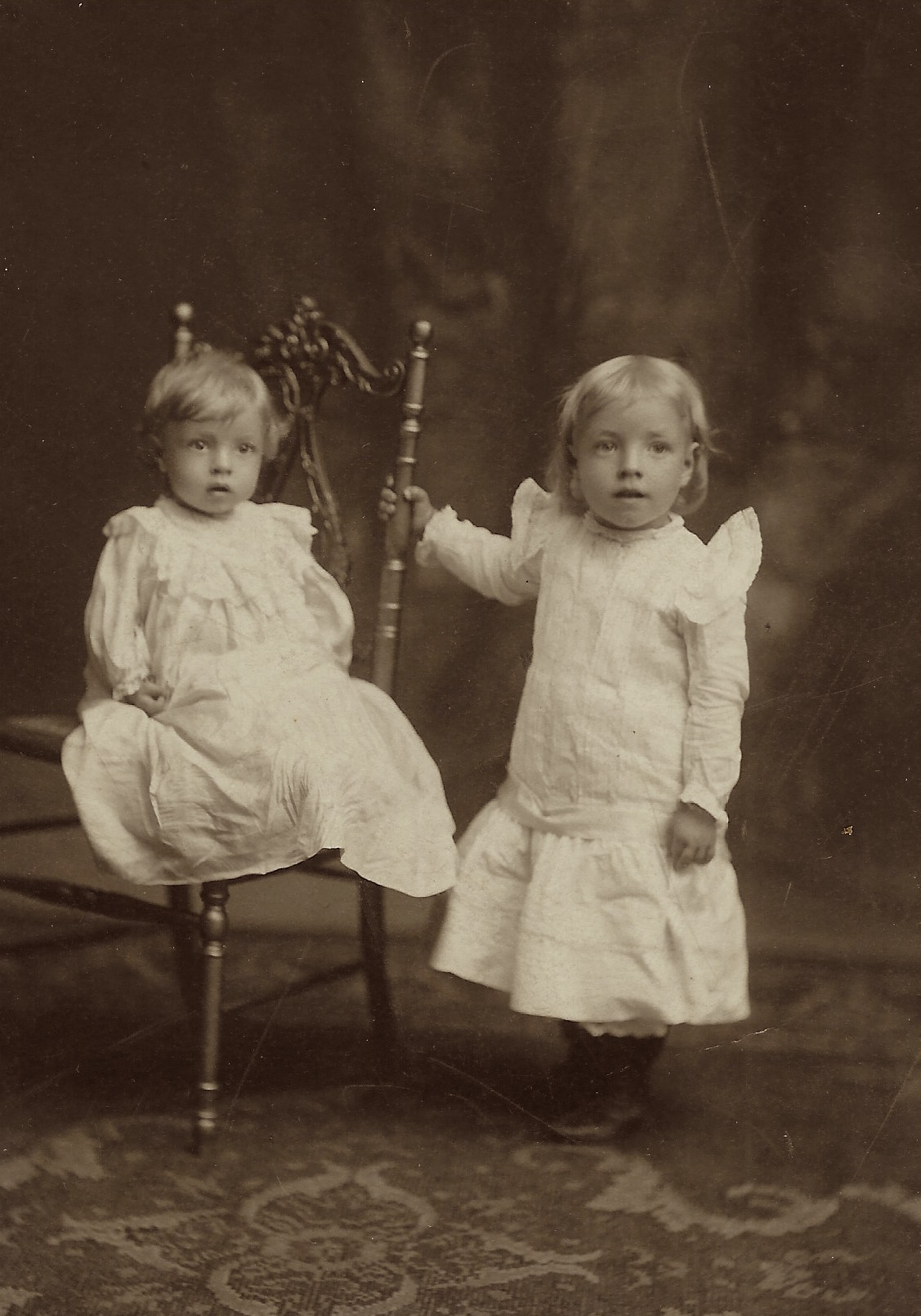
TWO ADORABLE AND PHOTOGENIC YOUNG CHILDREN IN CINCINNATI, OHIO

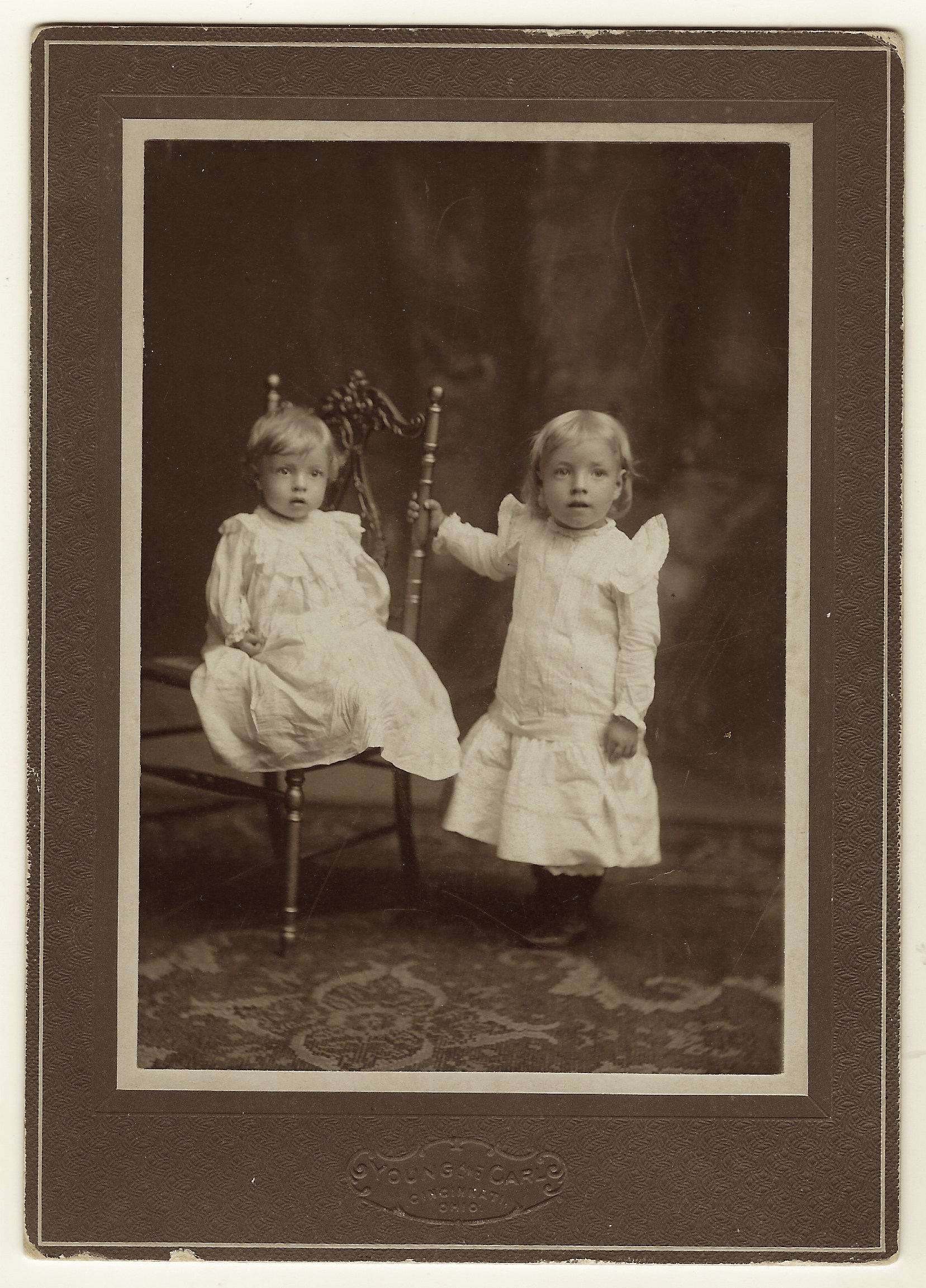
This vintage photograph features two very adorable young siblings (sisters?) posing for their photograph at the Young & Carl studio in Cincinnati, Ohio. Both children are extremely photogenic. Young & Carl operated their Cincinnati studio between 1895 and 1915. This photograph measures about 5 1/4 ” x 7 1/4″.

Published in: on November 1, 2017 at 12:00 pm  Leave a Comment  
Tags:

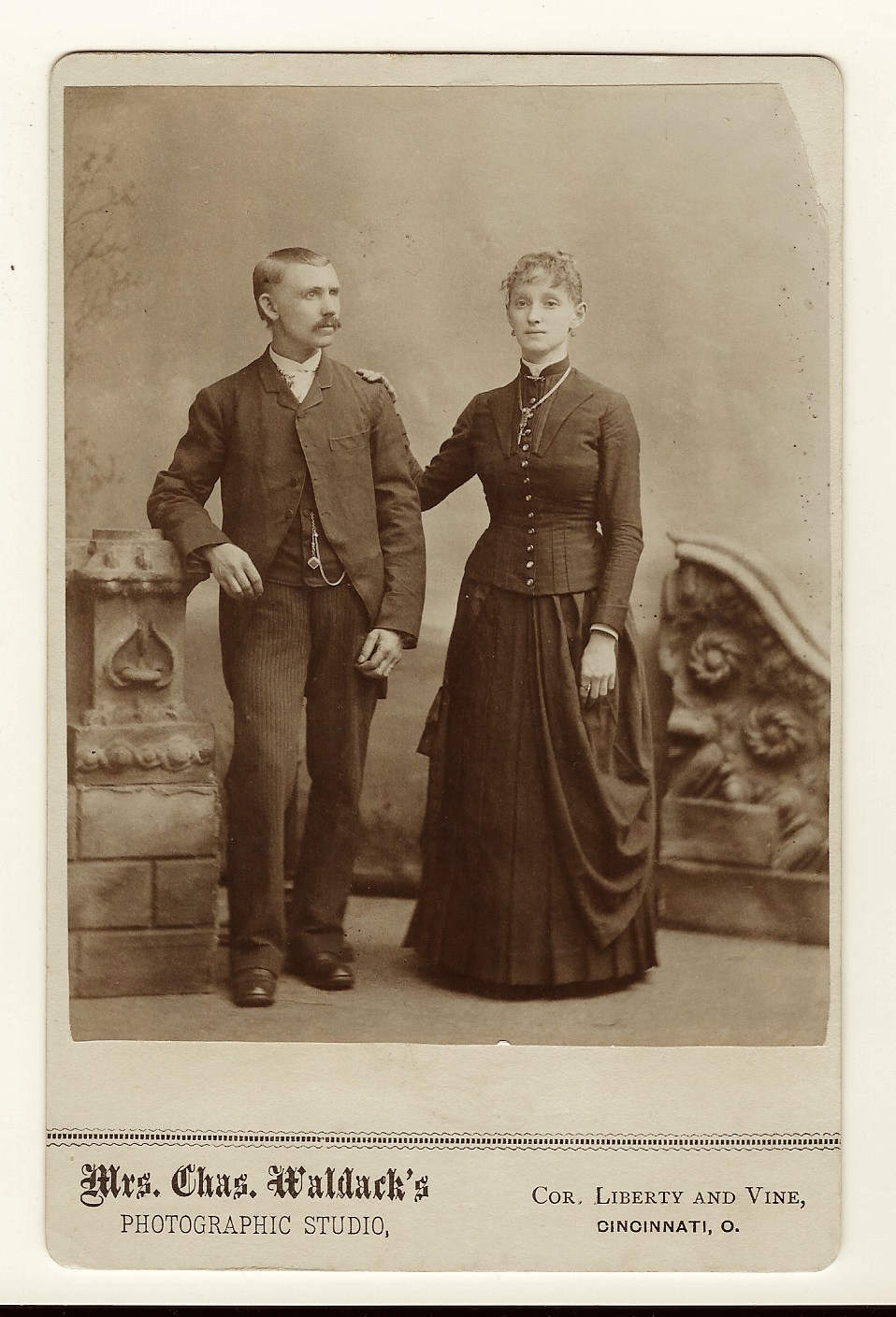
LOVELY COUPLE IN CINCINNATI, OHIO (PHOTOGRAPHED BY EARLY FEMALE PHOTOGRAPHER)

waldack

A nicely dressed couple pose for their portrait at the studio of Mrs. Charles Waldack (Mary Tanner) in Cincinnati, Ohio. The gentleman’s pocket watch chain can be seen under his jacket and the woman is wearing a collar pin and necklace. The woman is displaying affection by resting her hand on the man’s shoulder. The photographer, Mary Waldack was born about 1849 in Harford County, Kentucky. Although Mary was quite talented, her husband garnered the most attention. Charles Waldack was born in 1828 in Ghent, Belgium. In 1866 he became well known for using magnesium and gunpowder to make the first underground photographs in America. He took these photographs at Mammoth Cave in Kentucky. The pictures were published as stereo cards by E. and H.T Anthony of New York. Charles pursued his photographic career in Cincinnati from 1854 until 1881. In addition, he contributed many articles to photographic literature. In 1881 he took a trip to his native Belgium. He left his wife in charge of his studio. He died a brief time later and Mrs. Waldack managed the business until at least 1893. Mary Waldack is a member of a small group of pioneering women photographers. To view other images by early female photographers click on the category “Female Photographers”.  SOLD

Published in: on October 13, 2015 at 12:00 pm  Comments (2)  
Tags: , , , ,

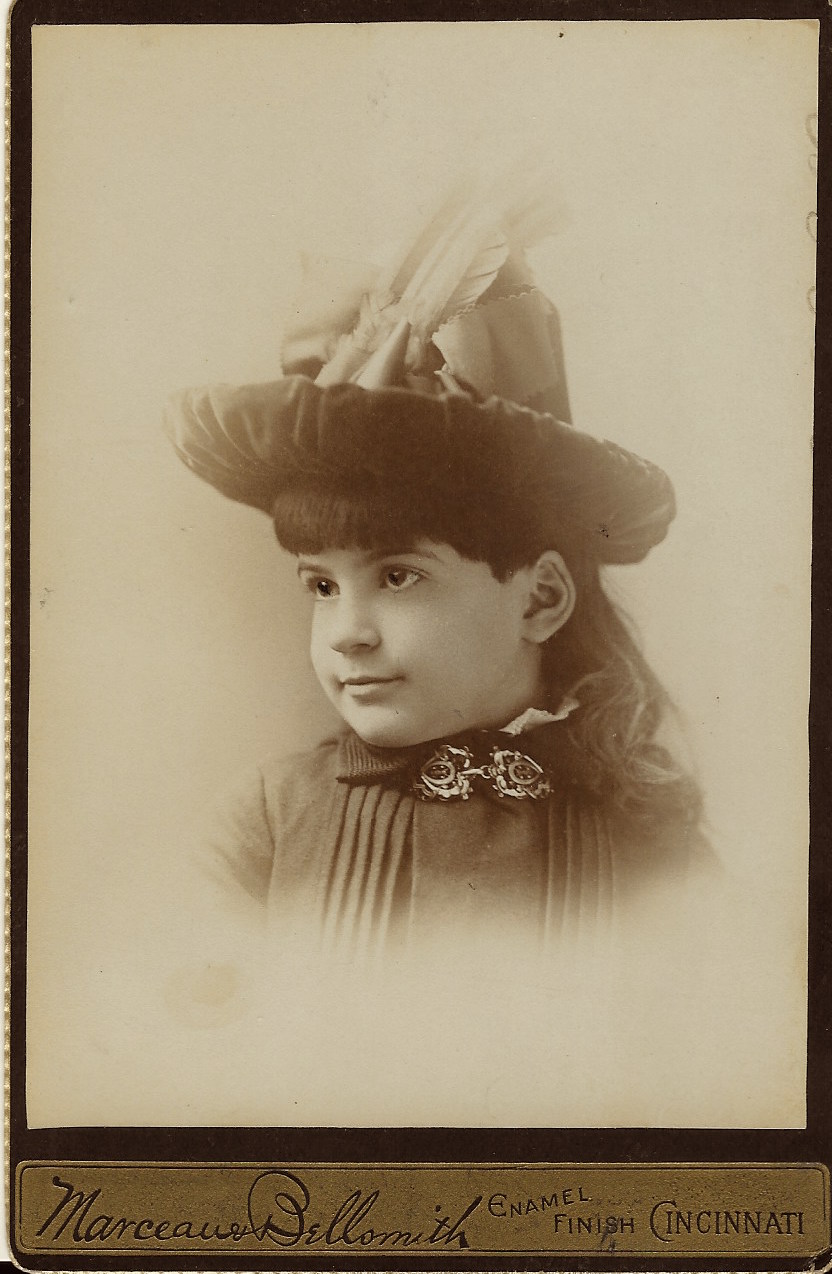
CUTE LITTLE GIRL IN CINCINATI, OHIO (PHOTOGRAPH BY MARCEAU)

cute girl

A little girl dressed in big girl clothing looks adorable as she posed in the Marceau & Bellsmith studio in Cincinnati, Ohio. The child is wearing an elaborate hat and a large collar pin. She is also wearing a very cute expression which includes a half smile. Colonel Theodore C. Marceau (1859-1922) operated a studio at 285 Fifth Avenue in New York City. The studio was known for producing many celebrity portraits. Marceau was also known for pioneering the creation of national chains of photographic studios in the 1880’s. He became nationally known at the ripe young age of twenty-two when he served as a US government phot0grapher in Santiago, Chile. He was part of an 1882 expedition that recorded the movement of Venus. Later, he served on the staff of Governor Foraker of Ohio, then Governor Markham of California. After leaving public service he lived in Cincinnati (1885-1886) and executed a business strategy that he repeated several times over the years. He would capitalize and build photographic studios, take on a talented local photographers as a partner, build the business, and then sell it to his partner. His first venture took place in Cincinnati and his partner was Randolph “Ralph” P. Bellsmith. The pair produced the photograph seen above. Marceau eventually had branches in Indianapolis, San Francisco, and Boston. His partner in San Francisco was Frederick Bushnell who later built his own chain of studios on the west coast. In 1891 Marceau married a widow named Amanda Fiske and their marriage had a deleterious effect on Marceau’s finances and emotional well being. The marriage was of short duration and Marceau took on his wife’s debts and was rewarded by her habitual infidelity. Marceau took custody of his son and became embroiled in publicity generating divorce proceedings that lasted four years. In 1900 Marceau made New York City his primary operation. For about ten years he ran the Otto Sarony and the Marceau Studios out of New York. Using the Sarony name caused Marceau to fight Jonathan Burrow (purchaser of the Napoleon Sarony Studio) in court. Marceau was described as a skilled raconteur and he became very active in the photography world in New York. In 1905 he cofounded the Professional Photographers Society of New York with Pirie McDonald. Marceau, MacDonald, and B. J. Falk organized the Copyright League to give photographers stronger rights protection of their work. Marceau was quite successful financially. He employed profits from his studios to buy a large amount of New York City real estate. His name appeared in New York’s “Blue Book”. His estate was worth millions of dollars upon his death. His son, a Yale trained lawyer, took over the operation of his father’s studio after his father died but he sold it in 1922. To view the work of Marceau’s Cincinnati partner and to learn more about him, click on the category “Photographer: Bellsmith”.   SOLD 

EMMA LORAINE: STAGE ACTRESS POSES ON BROADWAY IN NEW YORK CITY

Emma Loraine appears to have been a minor stage star. The New York Times (1879) reported that Wallack’s Theatre production of “Our Girls” included Ms. Loraine in the cast. Also in the cast was Maurice Barrymore. The New York Times (1881) has a story about the Wallach company going on tour because their new theatre was under construction. The company was planning to perform “She Stoops to Conquer” and “The School for Scandal” while on tour. Performing as part of the touring company was Osmond Tearle, Rose Coghlan, and Emma Lorraine. The cabinet card gallery has images of both Tearle and Coghlan that can be viewed by typing each of their names in the search box. Their names must be searched separately. Both cabinet card portraits of Loraine were photographed by celebrity photographer, D. H. Anderson of New York City. To view other images by Anderson, click on the category “Photographer: Anderson (New York)”. An article in the Photographic Times and American Photographer (1883) describes Anderson’s studio at 785 Broadway in New York City. The location was formerly the studio operated by famed photographer, Mathew Brady. Anderson is considered a pioneer in early photography. He made his first pictures (daguerreotypes) in Paducah, Kentucky in 1855. He later worked in Cincinnati (Ohio), Dayton (Ohio), New Orleans (Louisiana), Louisville (Kentucky), and various other cities. He finally settled for awhile in Richmond, Virginia in 1865. In 1881, he sold his studio and moved to New York City. The previously cited article described a “composition group” portrait that Anderson was working on during the magazine writers visit to his studio. The photograph was described as measuring eleven feet by fourteen feet and picturing the 7th Regiment posing in their new armory. The image included over a thousand soldiers.