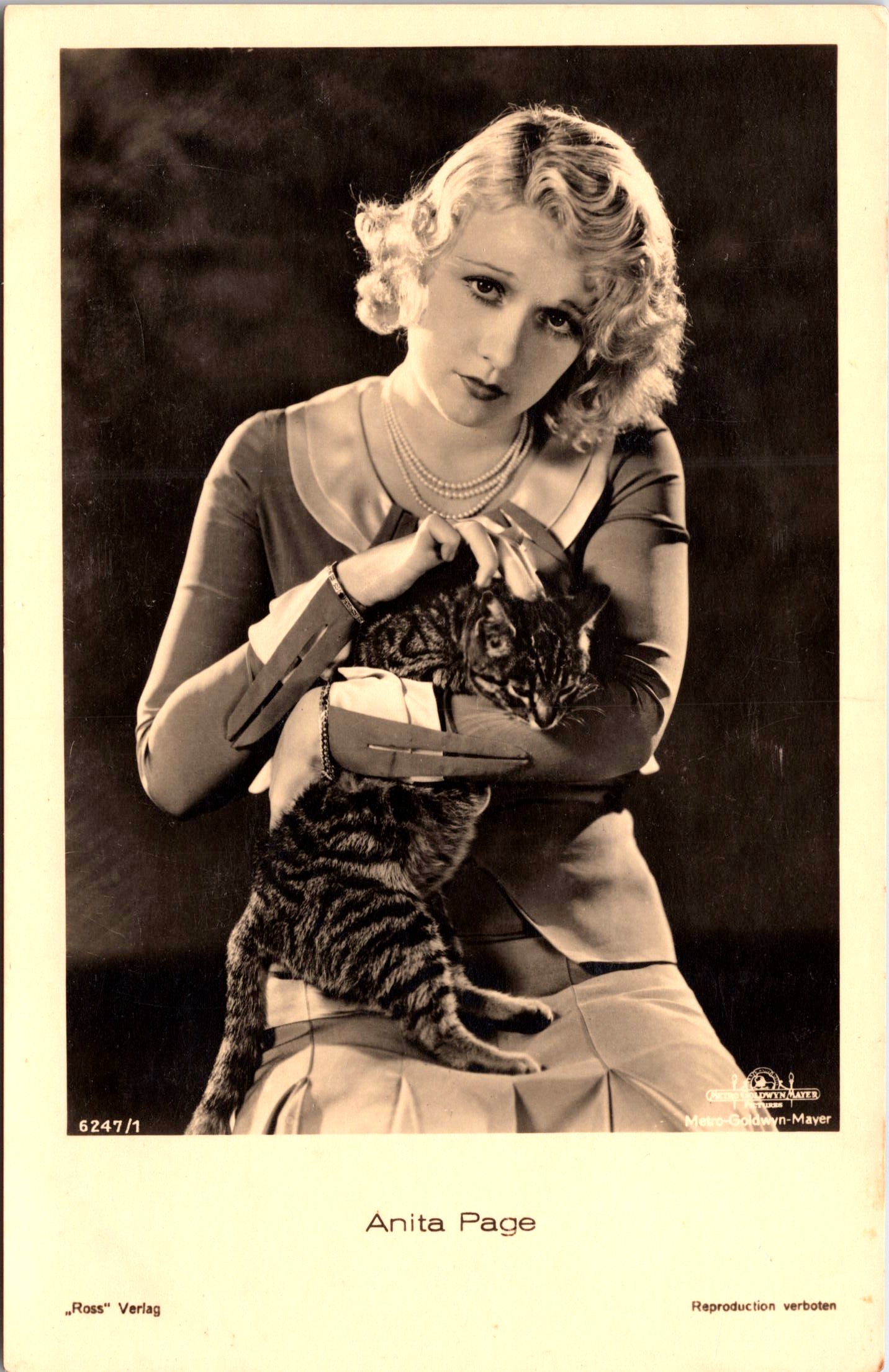
ANITA PAGE w/ CAT : SILENT FILM STAR : MGM : ROSS VERLAG : RPPC 1920s

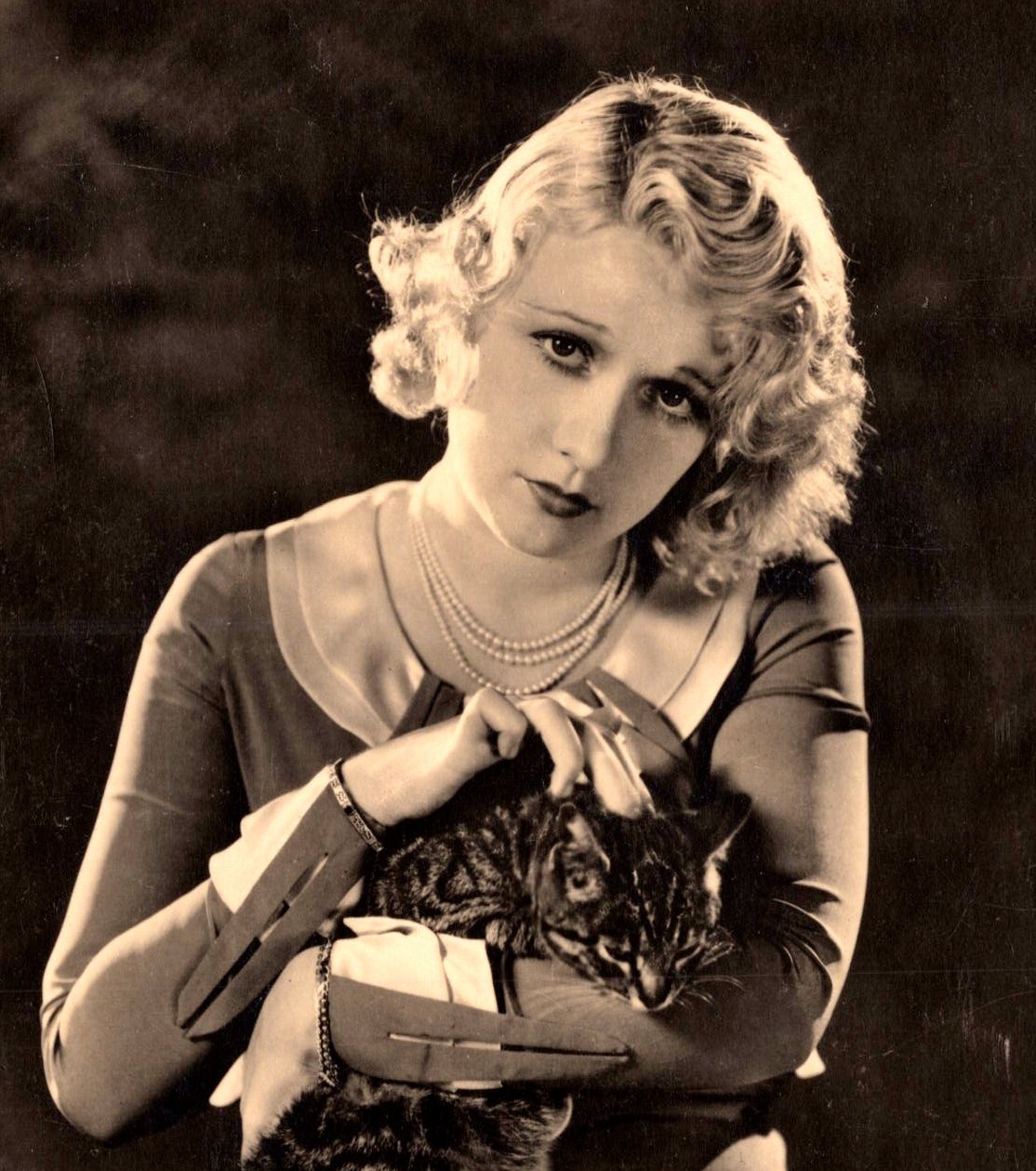
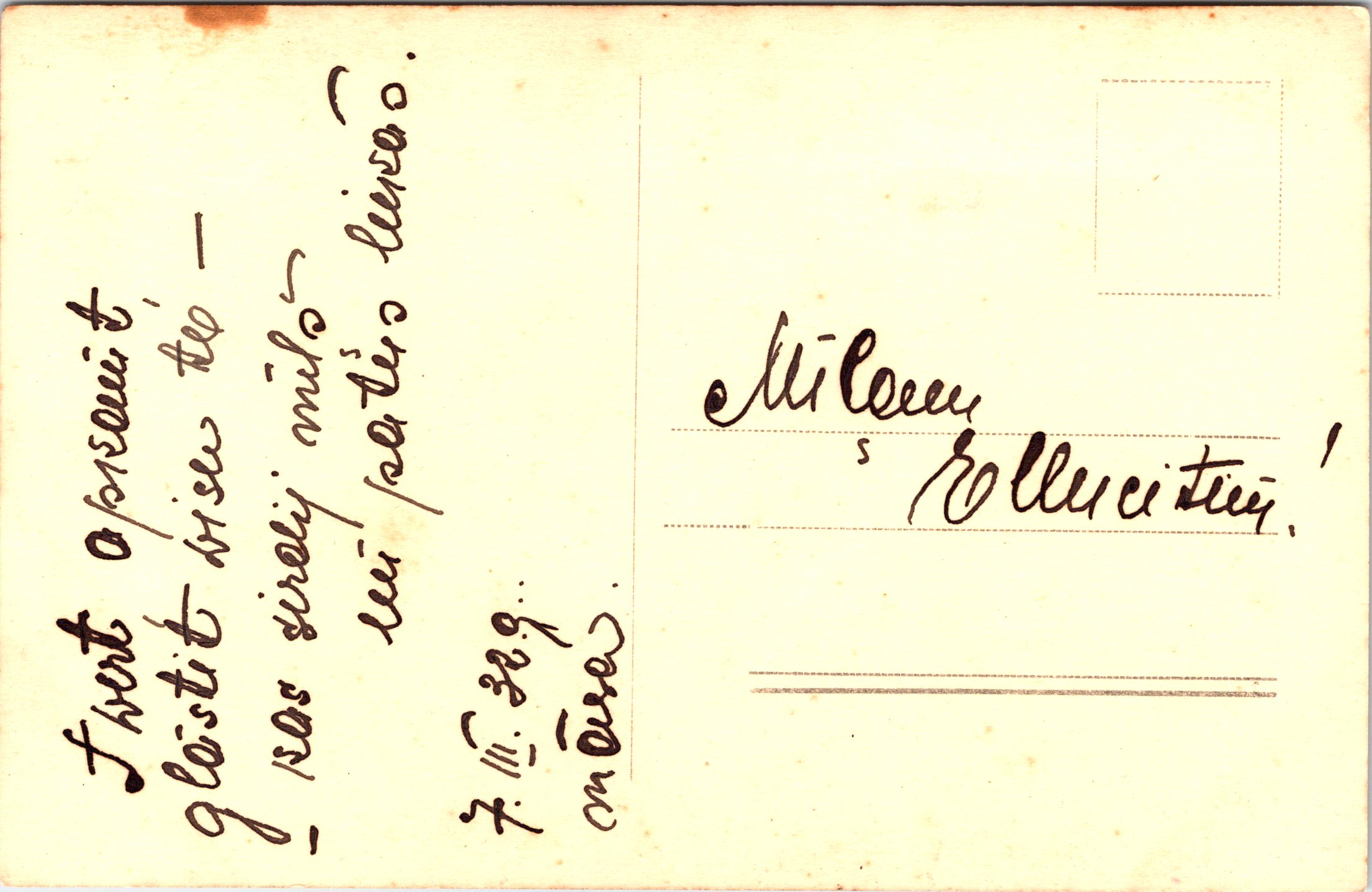
This sepia-toned publicity postcard features Anita Page (1910-2008), an iconic silent and early sound film actress, posing with a tabby cat. She cradles the cat gently in her lap, both arms encircling it protectively. The cat appears calm, eyes half-closed in contentment or sleep, nestled into Page’s arms. Anita is styled with soft, sculpted blonde curls typical of late 1920s-early 1930s glamour. She wears a tailored dress or top with a broad, satin-trimmed collar and decorative slashes on the cuffs, along with a double-stranded pearl necklace and a bracelet on one wrist. Her expression is wistful—perhaps intentionally melancholy or dreamy—a popular aesthetic in studio portraits of the era. Her makeup emphasizes the eyes with dark liner and curved brows, enhancing her expressive gaze. The presence of the cat lends the portrait an intimate and slightly whimsical tone, softening the glamorous studio setting and humanizing the star. It was not uncommon for stars to be photographed with animals to add charm or relatability. The publisher of this postcard is Ross Verlag, a German company based in Berlin. The card is identified as (No.6247/1). The circular logo in the bottom right corner of the card belongs to Metro-Goldwyn-Mayer (MGM), the major Hollywood studio with which Anita Page was under contract. The message on the reverse of the card is written in Czech (or possibly Slovak). A rough translation reads: “Your devoted, Wishes you everything good – Your dear Miloš,  I send you this card for memory. The card is dated 1929. Anita Page was a major screen star in the late 1920s and early 1930s, often called “the girl with the most beautiful face in Hollywood.” She rose to fame starring alongside Joan Crawford in Our Dancing Daughters (1928) and appeared in The Broadway Melody (1929), which won the Academy Award for Best Picture. She retired young in the 1930s but returned sporadically to the screen in later years. She was one of the last surviving stars of the silent film era.  (SOLD)
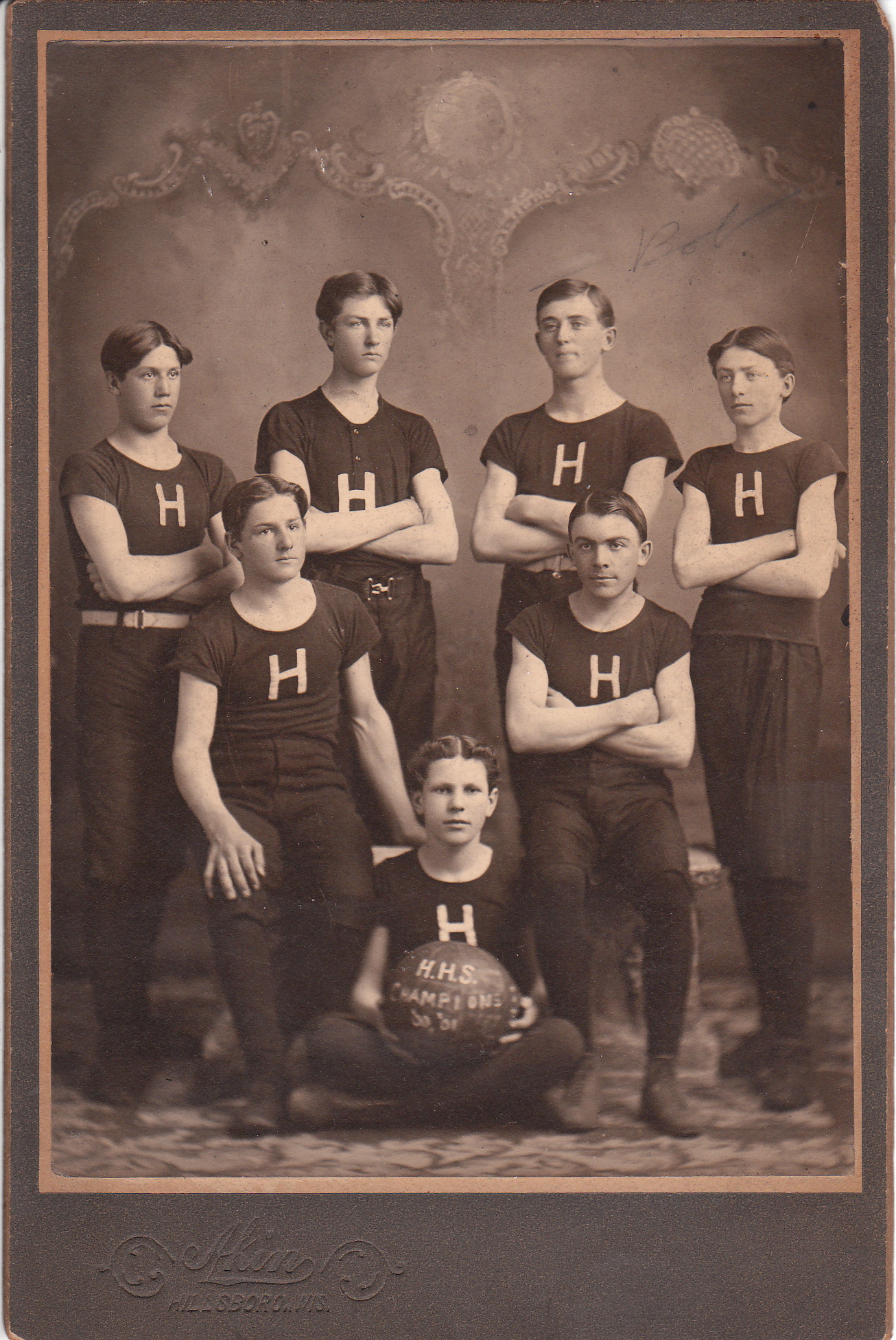
THE CHAMPIONSHIP SEASON: HILLSBORO WISCONSIN HIGH SCHOOL BASKETBALL TEAM (1900-1901)

This photograph features the Hillsboro High School  basketball team. The team proudly poses with a trophy basketball marking their championship season of 1900-1901. The name “Bob” is written above the second boy to the left in the back row. Could any of these boy been future Wisconsin Badger basketball players? It is certainly a possibility that one of these guys may have played college basketball with the Badgers. The Wisconsin Badger basketball program played their first game in 1899. In 1906-1907 season they won their first share of a Big Ten championship.The likely photographer of this image is Earle D. Akin. The town of Hillsboro was named for early settler Valentia Hill and his brothers. They arrived in the area beginning  in 1850. Many of the earliest settlers were of German descent. They were followed by many Czech settlers and in fact, Hillsboro was known as the “Czech Capital of Wisconsin”. When the town was settled, it did not take much time for a saw mill to arrive, followed by stores , a blacksmith, a hotel, and a school, as well as a grist mill established  along the Barabee River. In the 1880’s dairy farms and a creamery began business in Hillsboro.

Published in: on April 23, 2012 at 12:01 am  Leave a Comment  
Tags: , , , , , , , ,

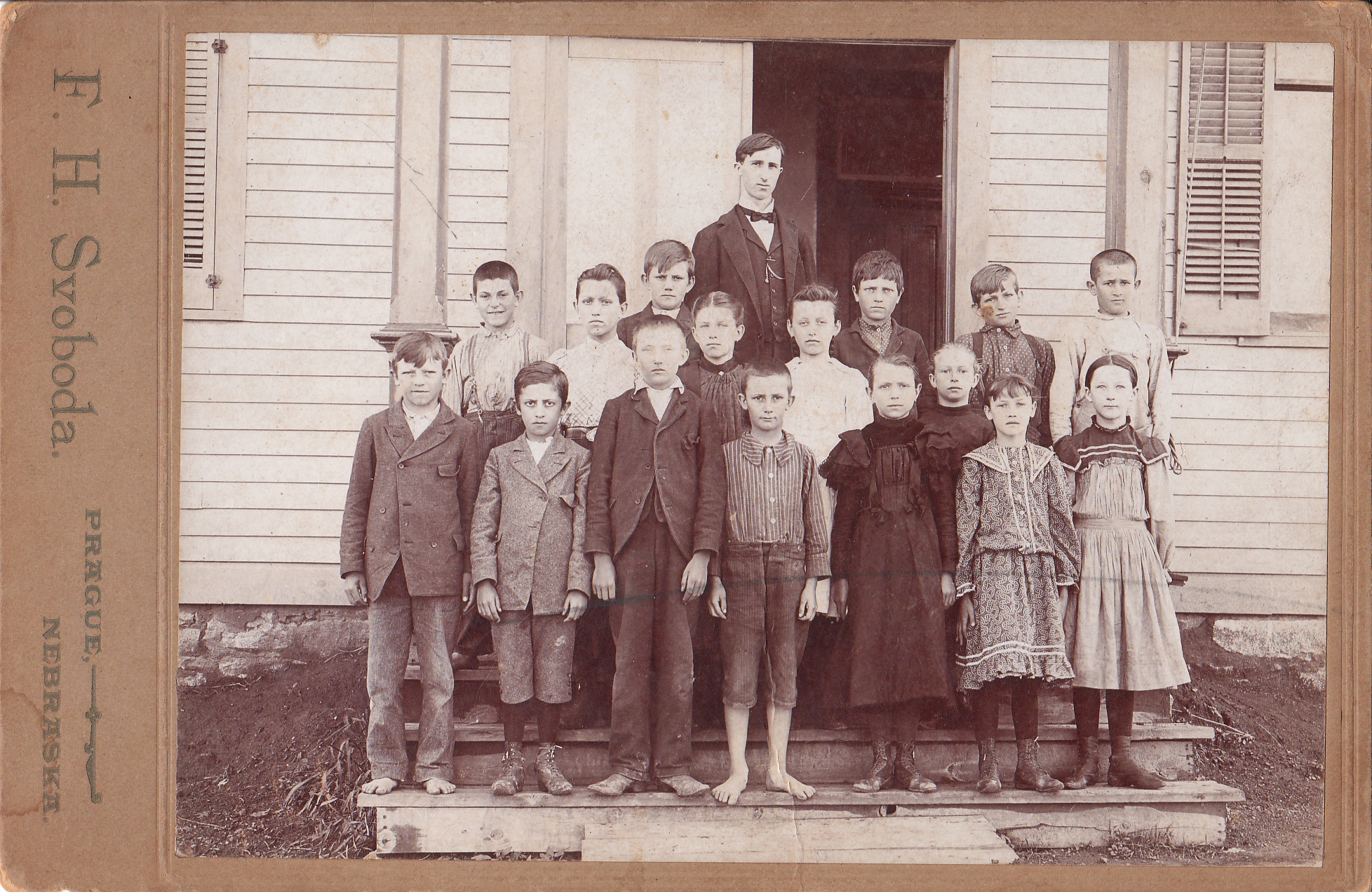
CLASS PHOTO IN FRONT OF RURAL SCHOOLHOUSE IN PRAGUE, NEBRASKA

This cabinet card offers a glimpse back into historical times of the American education system. This image dates back before “teaching for the test” was standard policy for many school districts. Sixteen children are posed in front of their schoolhouse. Their young teacher stands behind his class. The children seem to have dressed nicely for “picture day”,  but at least a couple of the boys are barefoot. F. H.Svoboda was the photographer of this image and his studio was located in Prague, Nebraska. At one time, Svoboda published the first, and only,  Czech juvenile magazine in Nebraska. He was a school teacher and later engaged in photography. In 1909, he began to publish the Schuyler Messenger, which existed until 1920. The Messenger was a weekly newspaper in Schuyler, Nebraska. The town of Prague has an interesting history. Its early inhabitants included many Czech settlers who arrived in America seeking prosperity during the 1880’s. In 1887, the town was built to support a newly established railroad station. The town was built by the Lincoln Land Company and became a thriving community catering to the agricultural economy of the area. The largest business in the town was a lumberyard. The town’s name, Prague, is named after the capital city of Czechoslovakia.