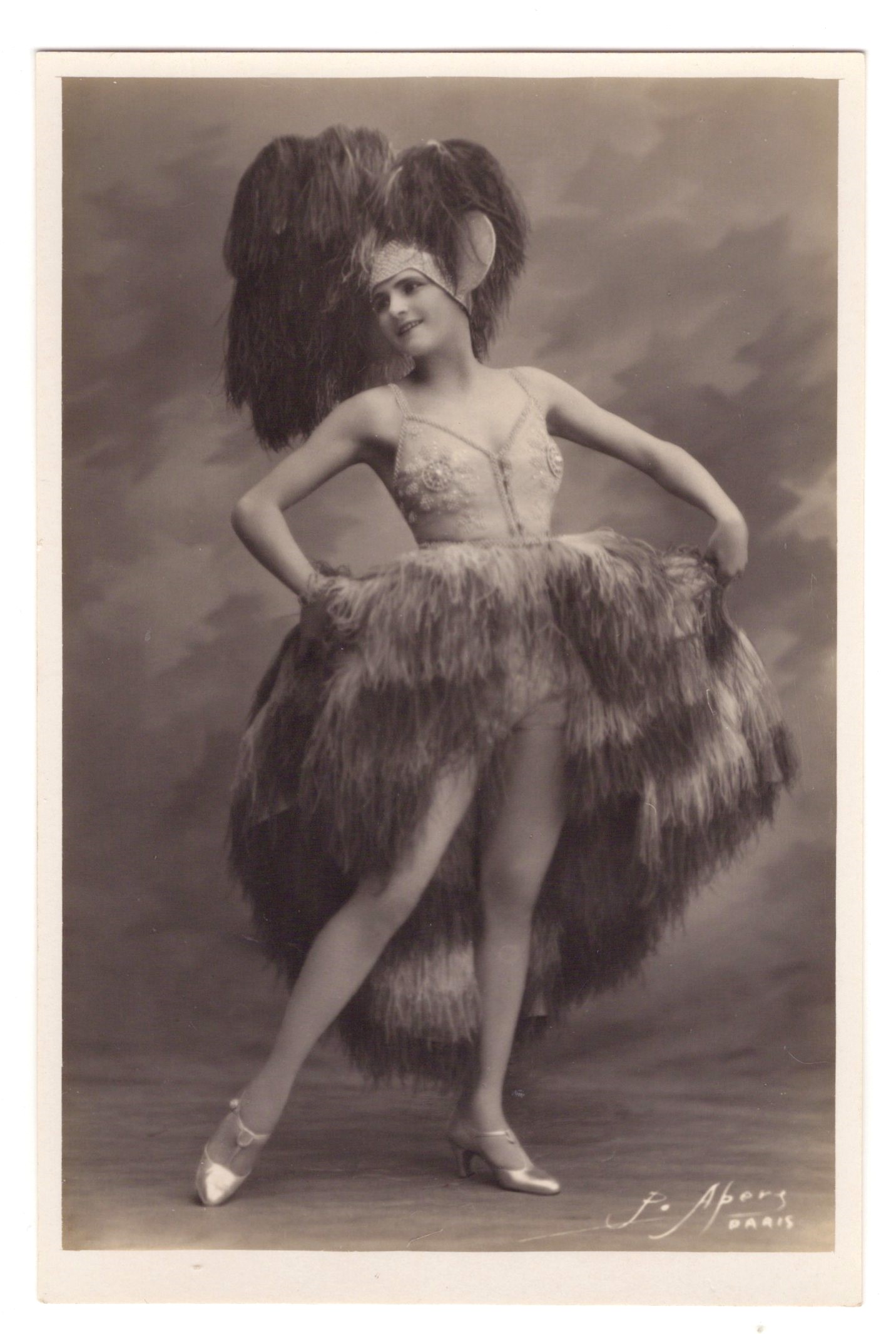
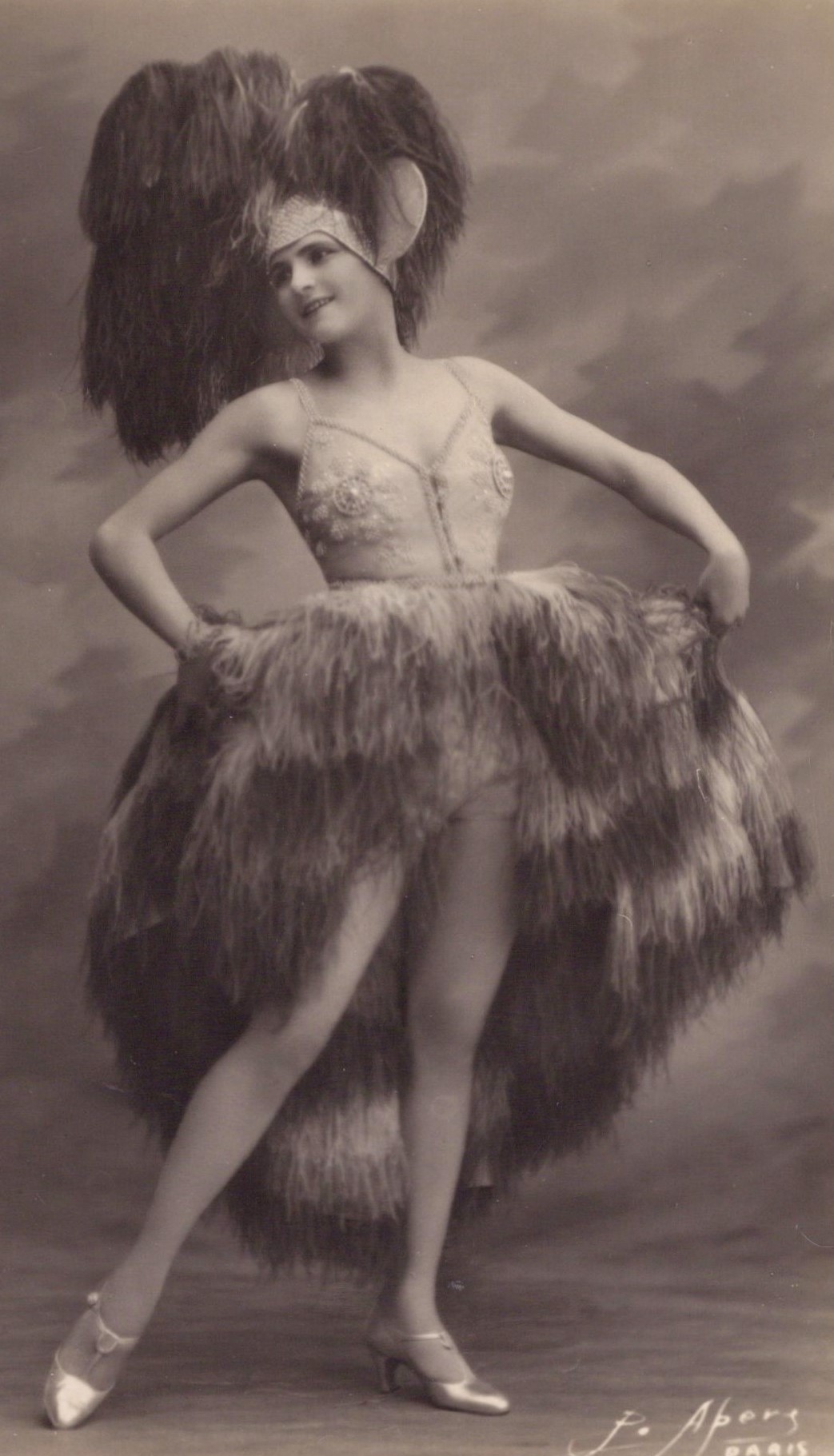
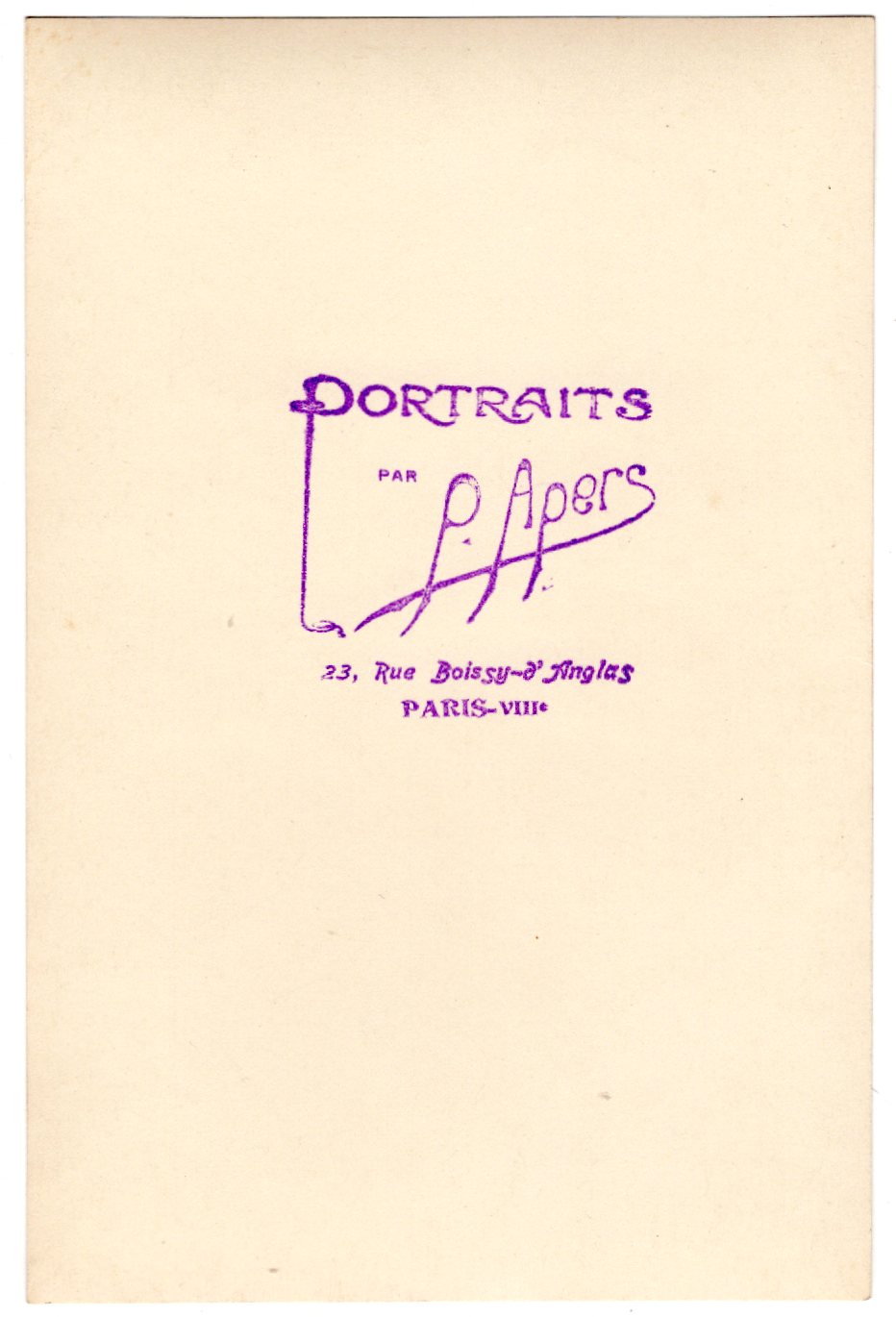
This vintage photograph features a pretty young dancer wearing a magnificent costume. I believe her hat and skirt are made of feathers. Her lithe body is accompanied by a winsome smile. This beautiful photograph comes from the Paris studio of Pierre Apers. He was a talented French photographer active in the 1920’s and 1930’s. His studio was in Paris and he specialized in portraiture. He is known for his photographs of French theatre and film stars. Some of his work is in the collection of the Bibliotech Francais in Paris. The reverse of the photograph has an ink stamp providing the address of Aper’s studio. SOLD
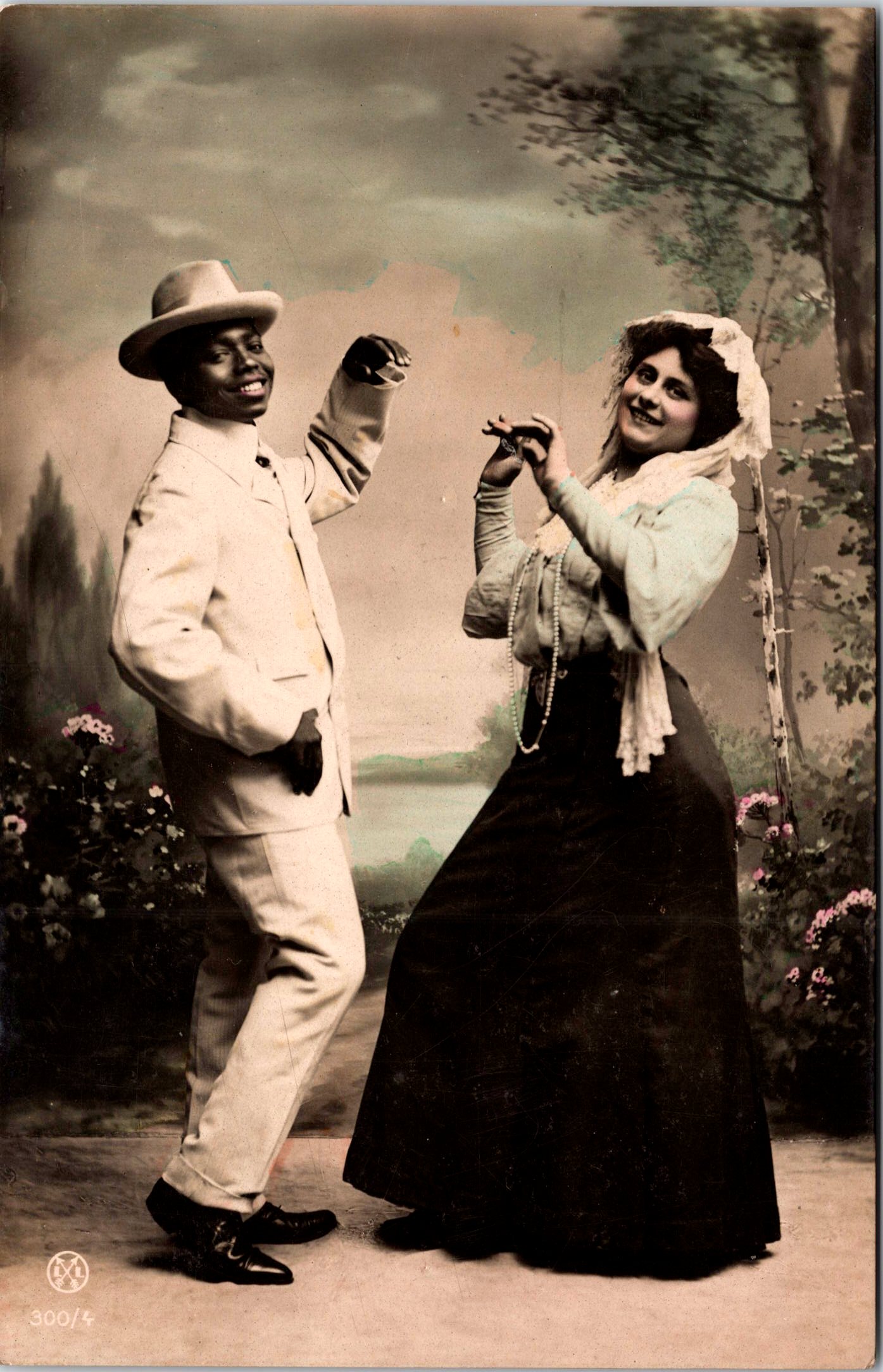
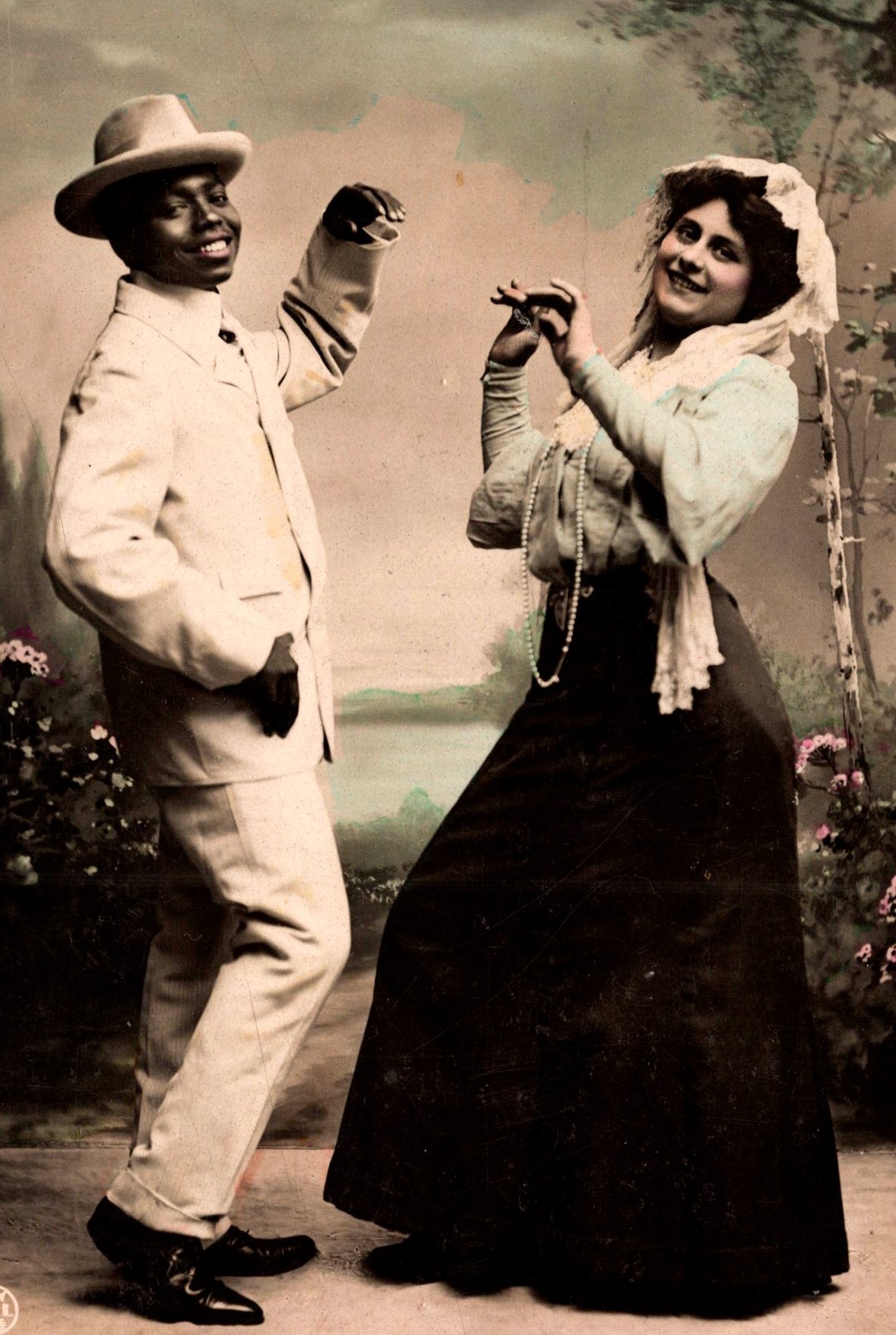
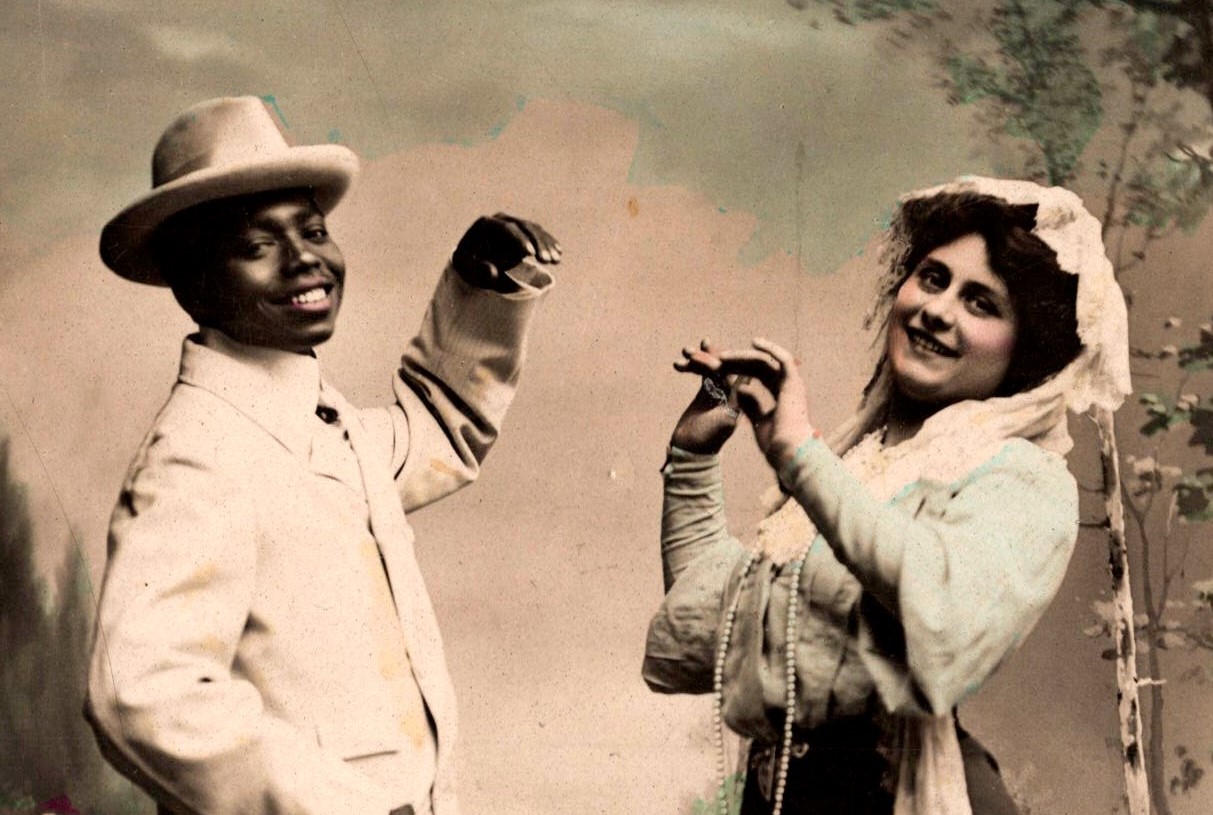
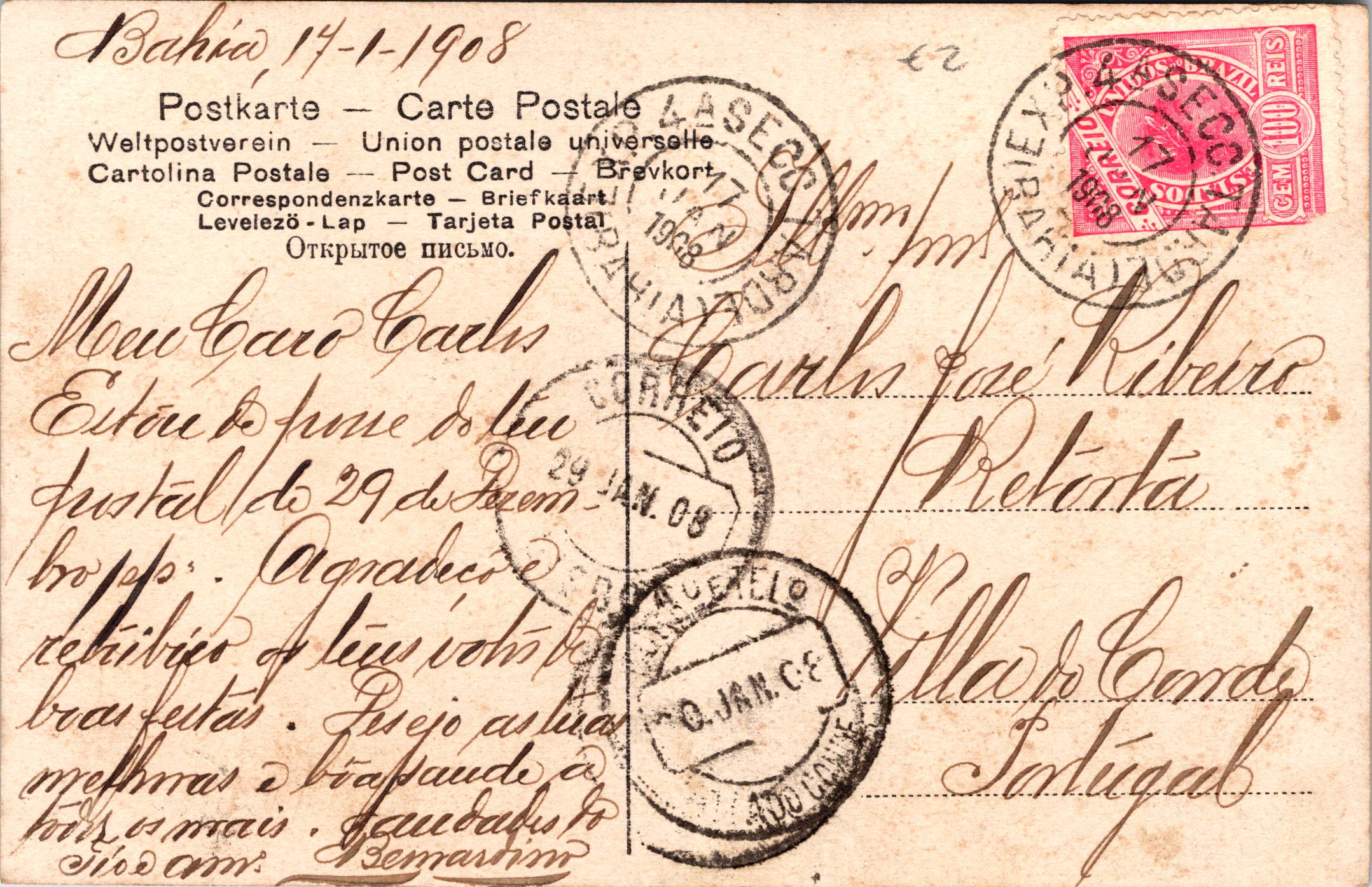
This vintage real photo postcard features an attractive dance couple. It appears that the dancers are from Brazil (judging by the postmark). The male dancer is wearing a very cool white suit while the woman is wearing traditional clothing. Both of the dancers are flashing beautiful smiles. This postcard was published by L. Langebartels. The firm was located in Berlin, Germany and also was a supplier of photographic paper and plates. The card was postmarked in 1908 in Bahia, Brazil. Bahia is in northeastern Brazil. Interestingly, the city’s annual carnaval celebration is known to bring together flamboyantly costumed dancers with samba and axe music for a massive “street party”. Could the couple seen in this postcard be carnaval dancing? SOLD
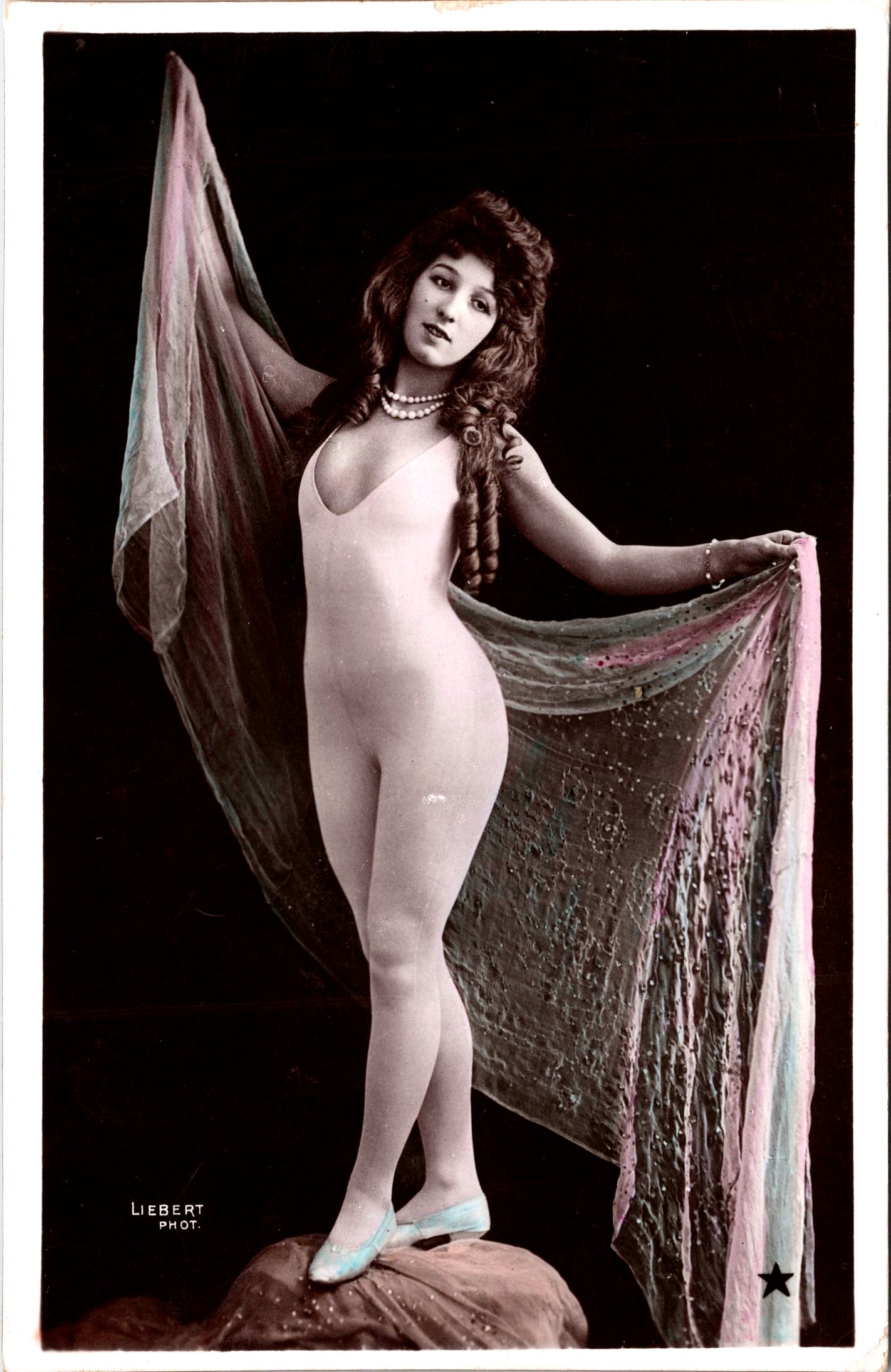
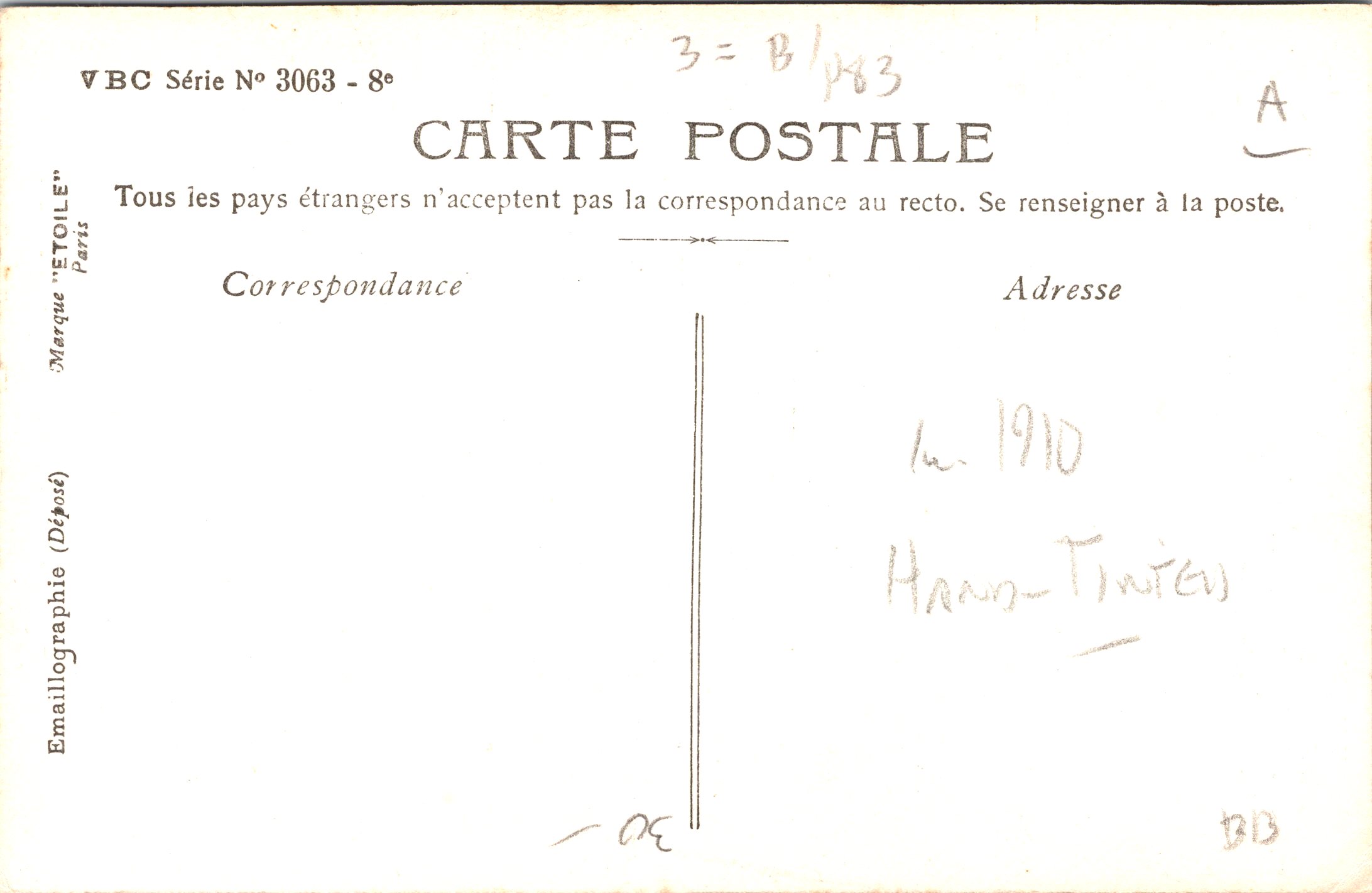
This vintage real photo postcard features an unidentified pretty performer. She is posed like a dancer. This is a risque postcard. She is wearing a flesh colored body suit and is posed in a provocative manner. The model on this card was likely a minor player based on the fact that she is not named on the postcard. This photo was taken at the studio of A. Liebert, in Paris, France. The Getty Museum, located in Los Angeles, California, as well as other fine museums, have photographs in their collections by Paris photographer, Alphonse J. Liebert (1827-1913). Many of his Parisian subjects were actresses. Perhaps Miss Lesian is one of those actresses. Mr. Liebert has an interesting story. He was a photographer in Nevada City, California (1857-1862), and later, operated in Paris (1863-1890’s). He was born in France. He became an officer in the French Navy. He left the navy in 1848 to study daguerreotypy. He must have reenlisted in the navy because In 1851, he arrived in San Francisco, as a Lieutenant on a French ship. This was a time when there was much excitement about Gold mining. As a result, there was a mass desertion of the ship’s crew. The sailors joined the rush for gold. Liebert had in mind, his own venture. He and two partners decided to take on the project of refurbishing a steamship. They sought investors and hired workers to transform the ship. However, due to the partners inexperience, the venture failed. Liebert than tried gold mining but met little success. In 1857 he opened a photo gallery in Nevada City. He lost thousands of dollars after a fire in 1858. In 1859 Liebert ridiculed a former photography pupil of his, named Louis Celarie, in the press. This started a bitter professional feud. Soon after, Liebert announced that he had won a medal at the state fair. Unfortunately, there was no evidence to confirm this claim. The competition between Liebert and Celarie was fierce. Each offered special promotions to best the other. By 1861, Liebert triumphed, evidenced by the sale of Celarie’s studio. About a year later, Liebert sold his photo gallery. By 1863, he had returned to France and opened a gallery specializing in tintypes. Liebert closely identified with his photography experience in America, and as a result, he named his Paris gallery “Photographie Americaine”. Liebert began to write photography articles and books, and ultimately, invented a prototype solar camera. In 1867, Liebert had a problem with the law. He was sentenced to two months in prison and levied a fine of 200 francs. He was charged for the intent to distribute banned post mortem photographs. These were not photos of some random person. Instead, they were images of Emperor Maximillian, who had been executed in Mexico. Liebert ultimately did exhibit these photos. Liebert was becoming more and more successful. His photo gallery was so lavish that a reviewer for the British Journal of Photography wrote that it was “worthy of the smiles of the ‘God of Light’, and a repository for some of the best productions of the photographic art”. In 1879, Liebert’s gallery was the first studio to utilize electric light. By 1880, he was considered to have the most impressive photo studio in Paris. . The card was published by Star or Etoille Publishing (Paris). This postcard image was created by a process called “emaillographie”. It is interesting to note that the first five letter of the process are “email”. This postcard was part of the V B C series (No.3063). SOLD
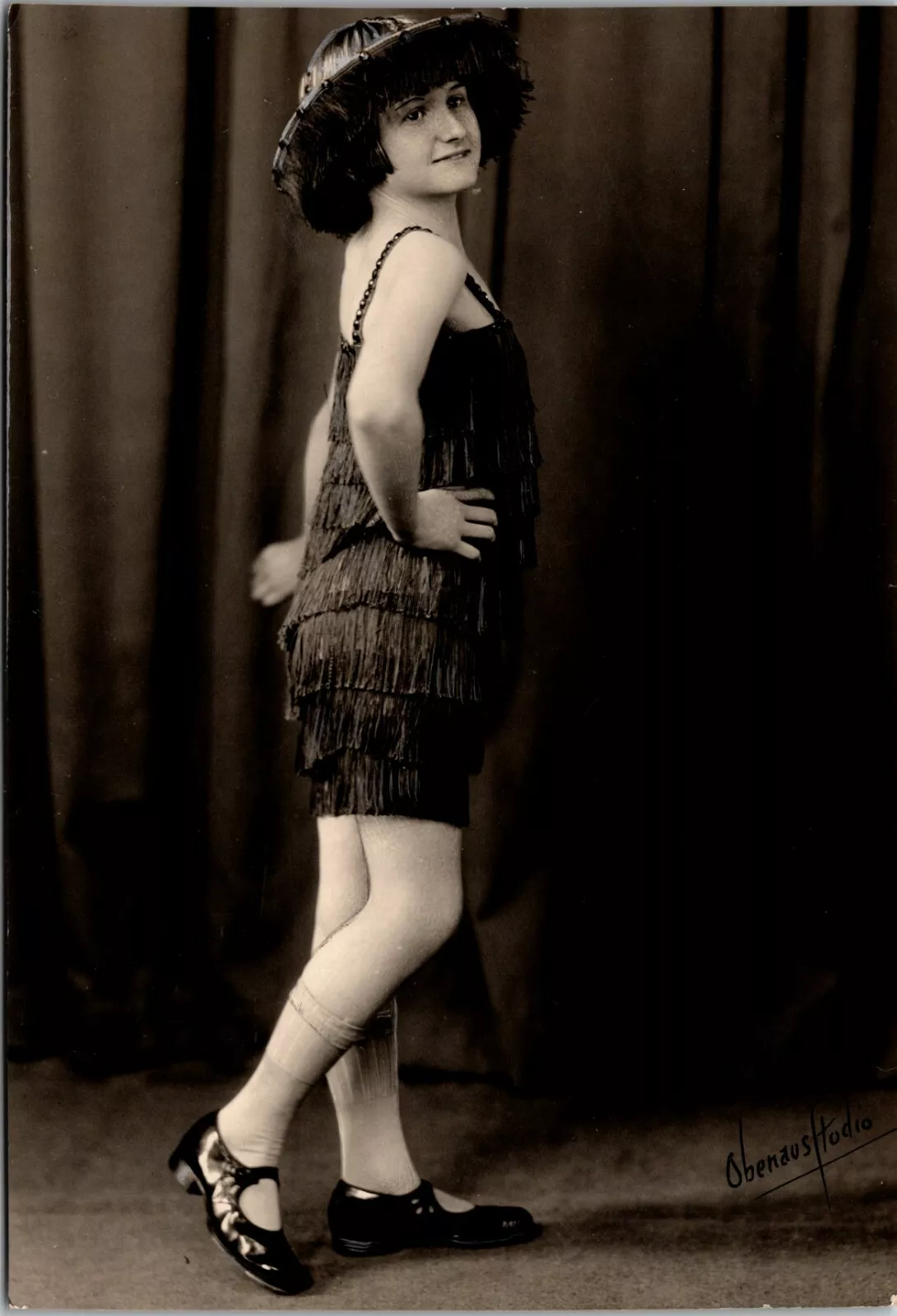
This vintage photograph features a teenage dancer on stage. Her flapper dance costume fits the times. She was performing in 1926, during the Jazz Age. The photograph is signed in the lower right hand corner. It is signed, “Obenaus Studio”. Research reveals that there was an Obenhaus studio operating in the the 1920’s in three locations in upstate New York (Albany, Troy, and Schenectady). The studio has a photograph in the Library of Congress. The photograph is entitled “Miss Yonkers, 1924” and it shows a young woman wearing a bathing suit and Miss Yonkers sash. She is seated on a small table and has her feet raised and her hands behind her head. Interestingly, she is wearing the same cutesy expression as the dancer in this photograph. SOLD
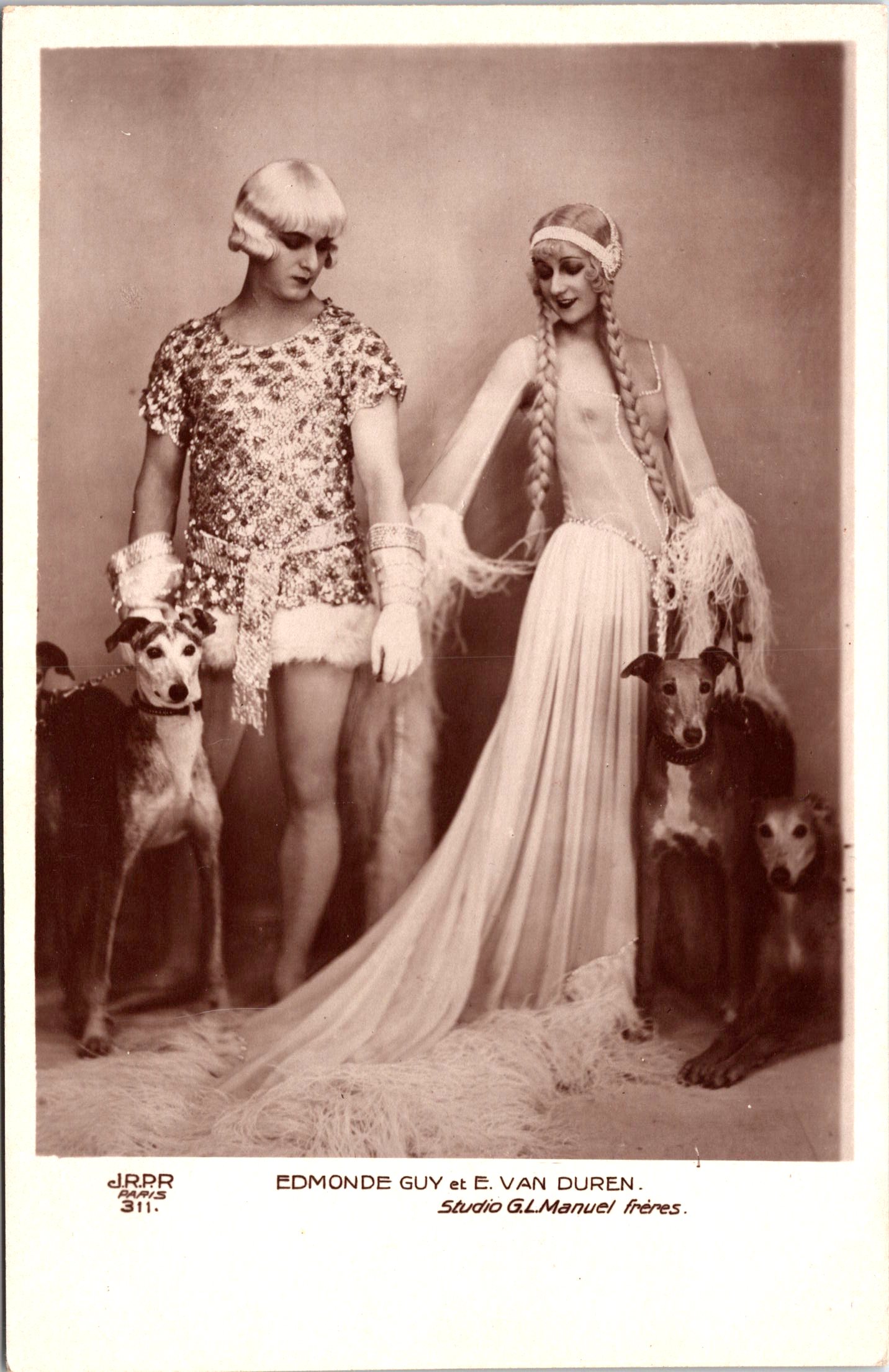
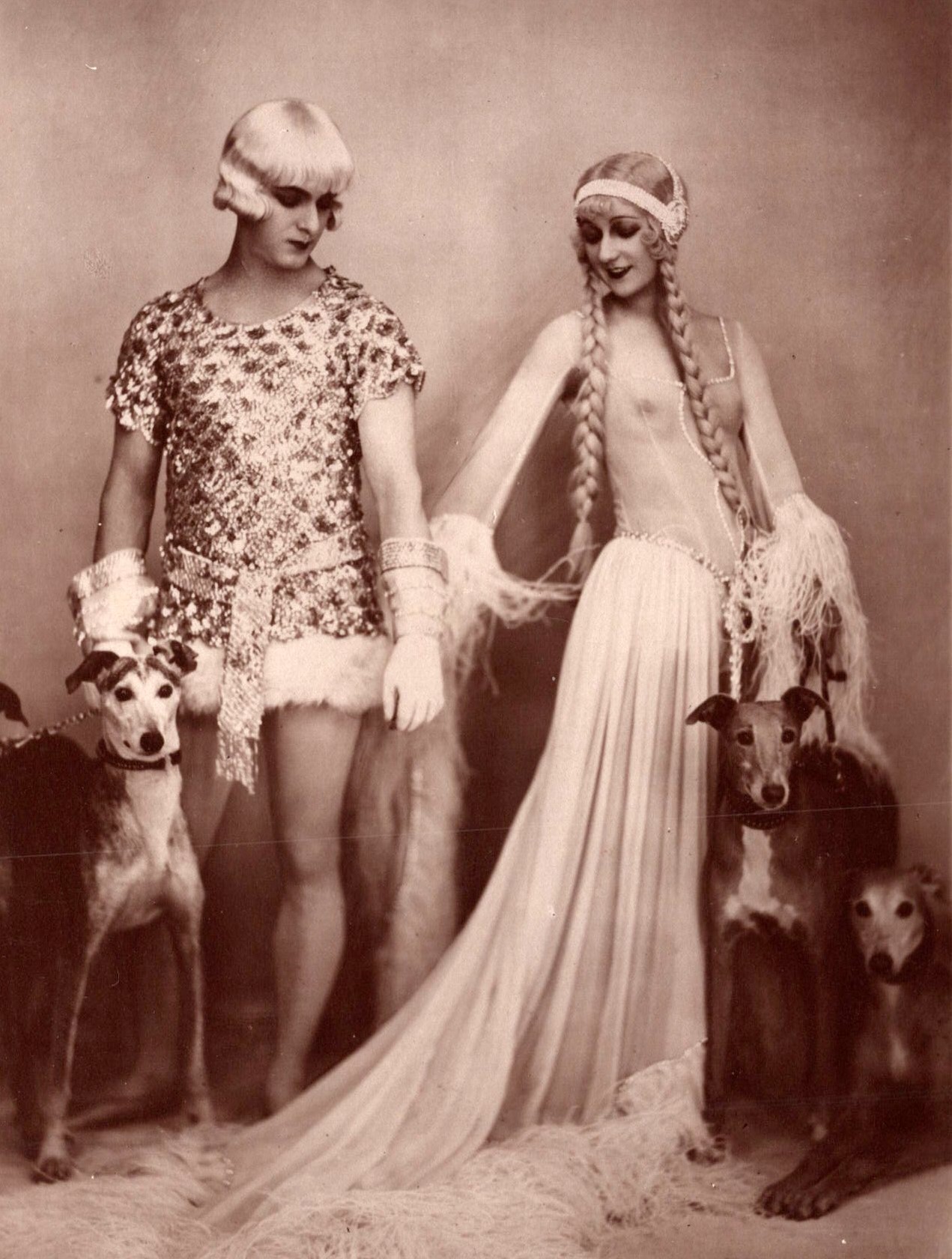
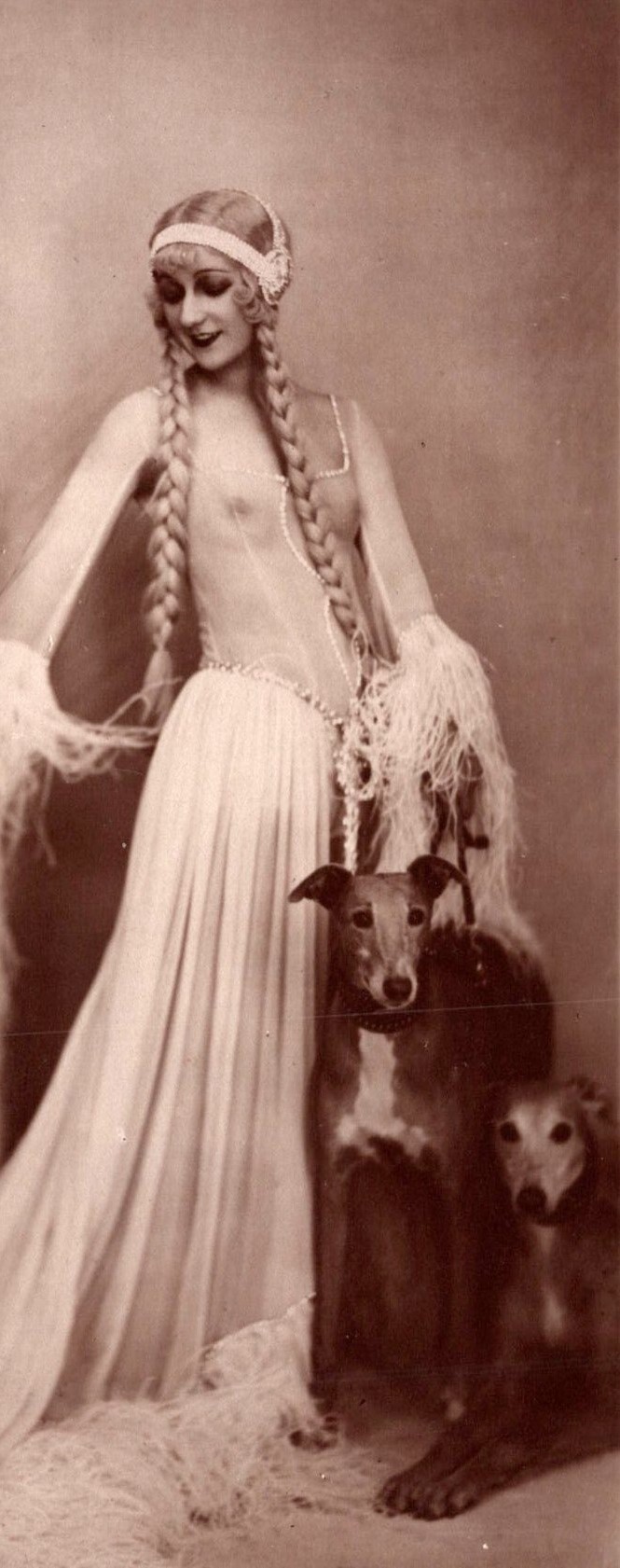
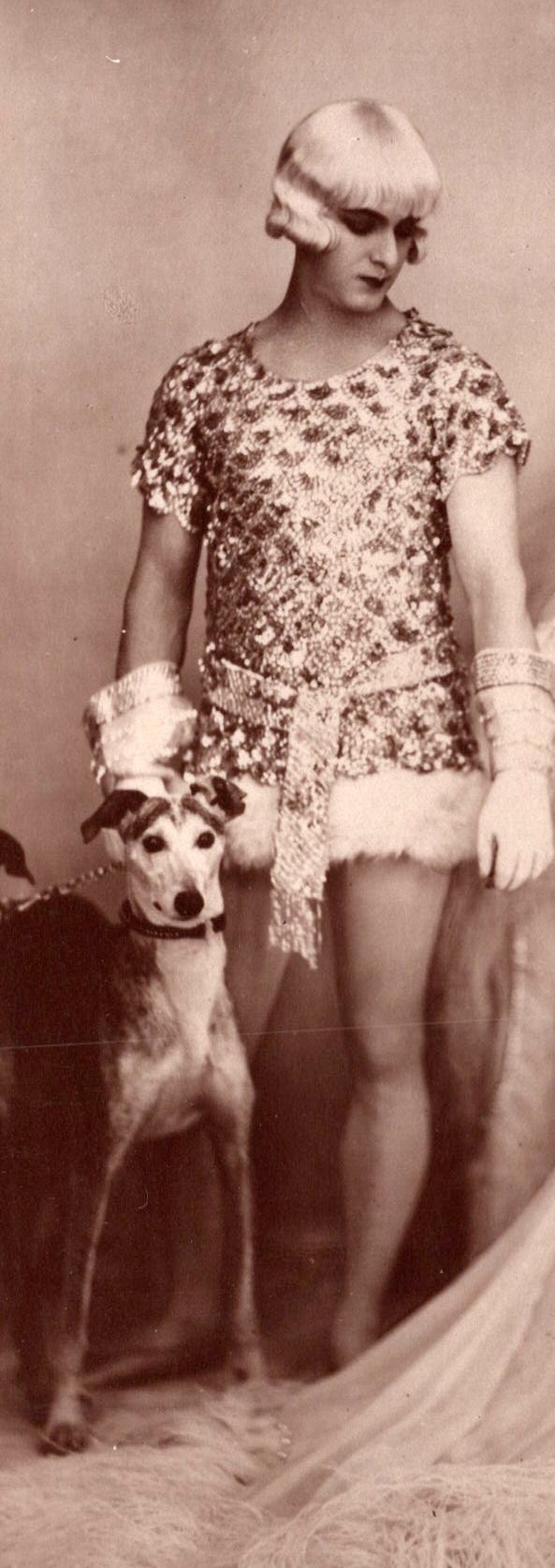
This rare risque vintage real photo postcard features famous European dance partners, Edmonde Guy (1903-1951) and Ernst Van Duren (?-1930). The pair are flanked by three regal looking greyhounds. If you look closely, you will see the dogs are leashed. Edmonde Guy was a French dancer and film actress. She also was a model for paintings by Dutch artist, Kees Van Dongen. In 1921 she and Van Duren formed a dance partnership. They performed both in Europe and the United States. In 1926, they were hired by Florenz Ziegfeld for his “Palm Beach Follies”. Guy and Van Duren were famous for their daring outfits and erotic performances. Evidence of their “steamy” work can be seen via this postcard image. Guy is wearing a sheer top, but she is virtually topless. Not much is known about Van Duren. One newspaper reported that he was Hungarian but his family was originally from the Netherlands. Besides being a dancer, he also acted. His first film role was in a French silent film in 1923. He played minor roles in a few films but his break out role was in a circus film called “Manege” (1928). He then starred in a film with Edmonde Guy, with the title “Princesse Mandane” (1928). In 1930, Van Duren committed suicide. There were rumors his self destruction was caused by the end of his relationship with Edmonde. However, some writers believe his suicide was related to his relationship with American dancer, Jack Forrest. This French postcard was published by J.R.P.R. and the photographer of the two dancers was G. L. Manuel Bros. SOLD
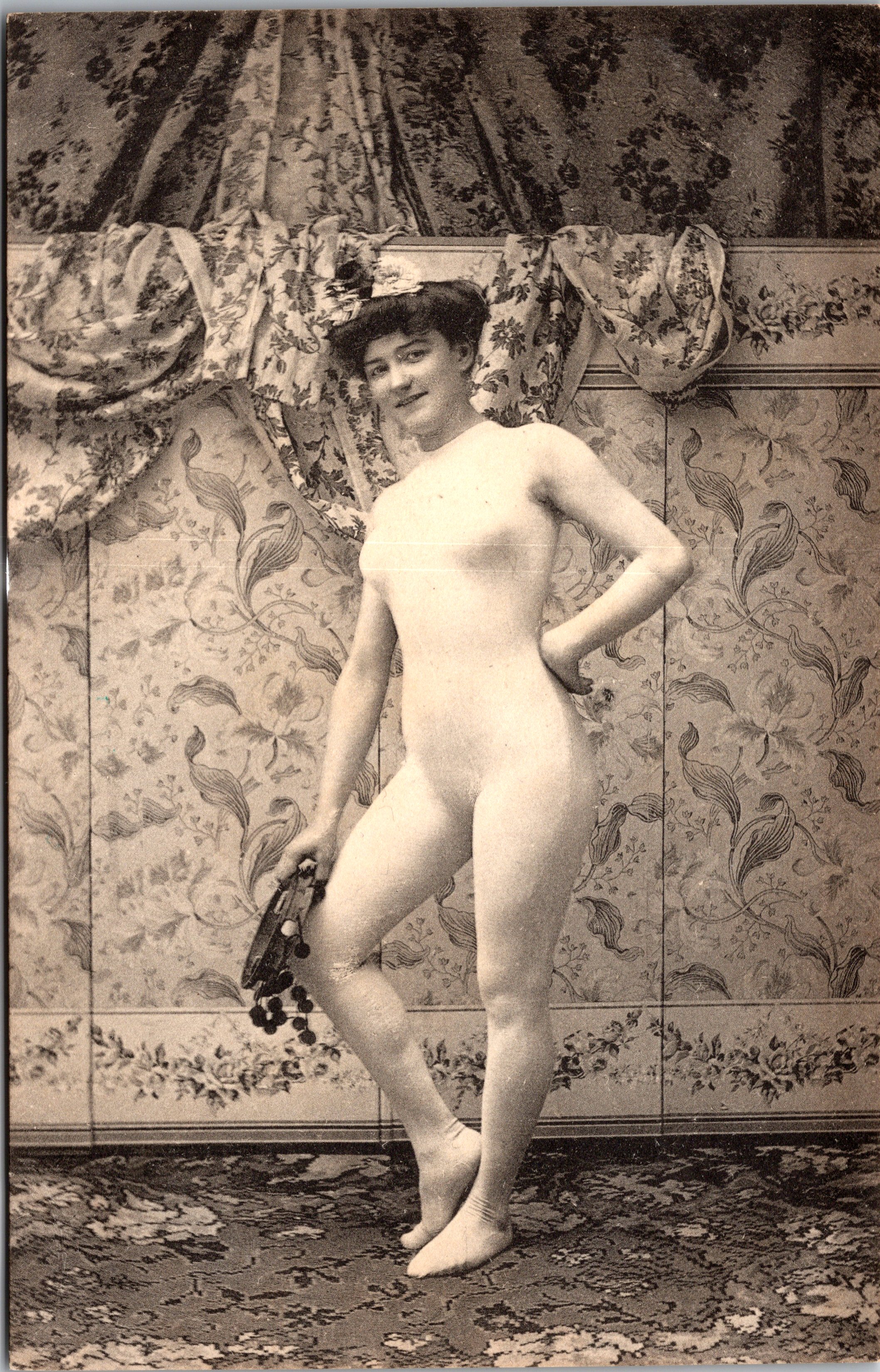
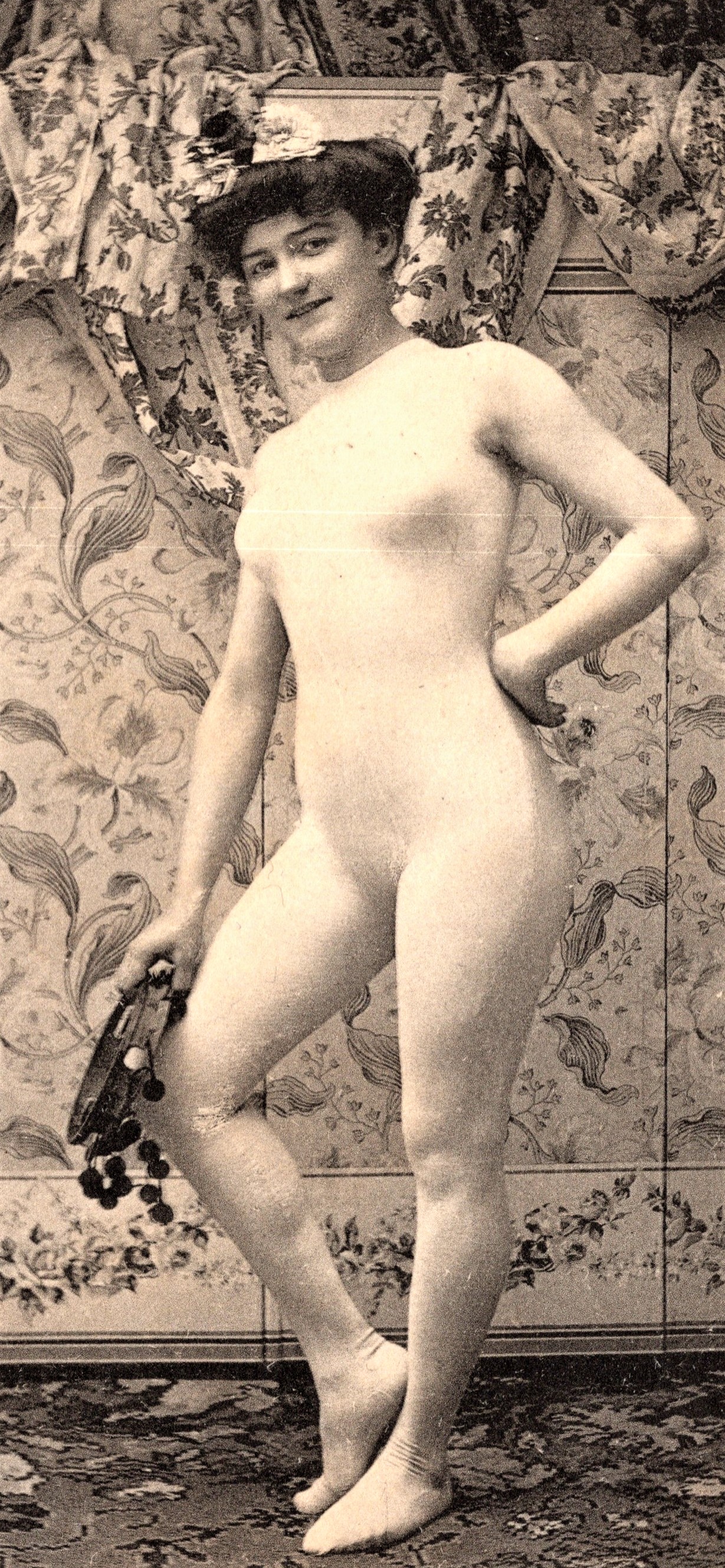
This vintage real photo postcard features a pretty young dancer dressed in a risque body suit. The costume aims to give the appearance of nudity. The performer is holding a tambourine. The publisher of the postcard is unidentified. The reverse of this postcard shows some wear but the front of the card is in excellent condition. The postcard is in overall Good Condition (See Scans). SOLD
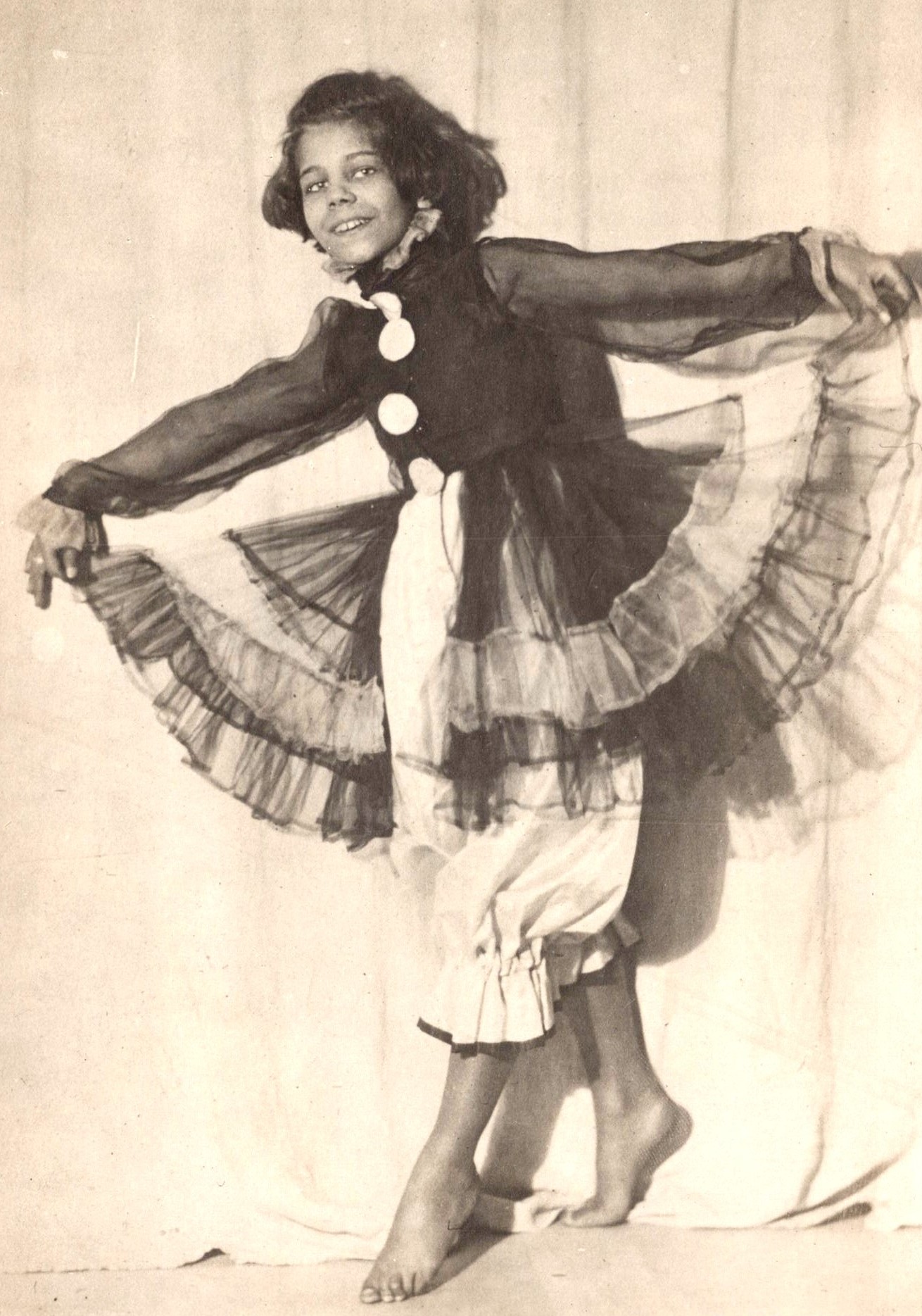
This vintage real photo postcard features a Black Woman in her dance costume. She is an unusual costume and she is lifting her skirt in a risque manner. The woman has a pretty smile. SOLD
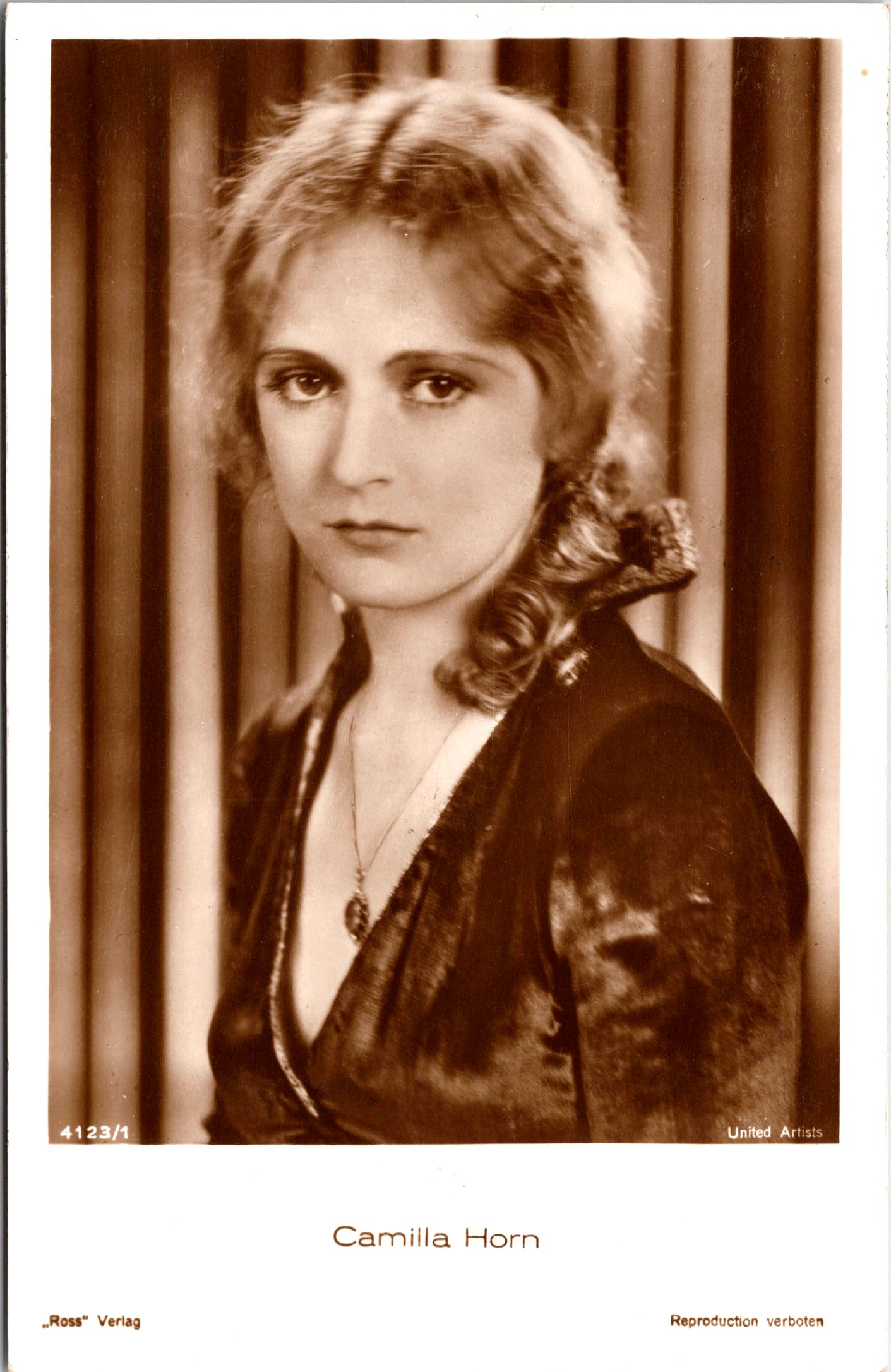
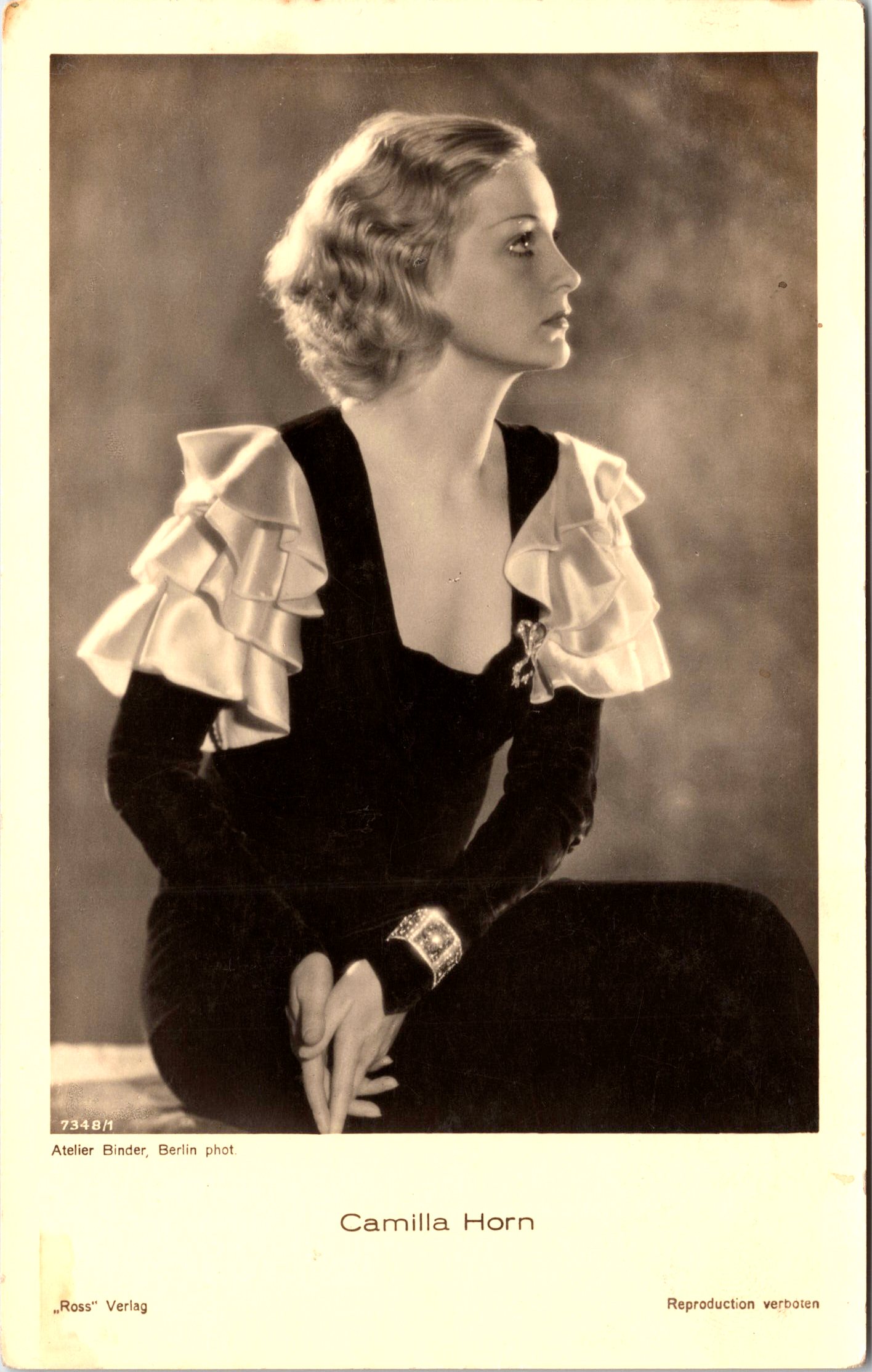
These vintage real photo postcards feature German dancer and film star of the silent and sound era, Camilla Horn (1903-1996). She also was an internationally known actress, starring in several Hollywood films of the late 1920’s as well as a few British and Italian productions. Her father was a civil servant working in the Railroad Industry. She was born in Germany and educated in Germany and Switzerland. Horn was educated to work as a dressmaker. She went to Berlin where she trained as an actress and dancer. She next became a cabaret dancer. In 1925, she worked as an extra in a German film. Her big break came in 1926 after she replaced Lillian Gist in the UFA production of “Faust”. In 1928 she left for Hollywood where she played opposite John Barrymore in “Tempest” and “Eternal Love”. She became romantically involved with film director, Joseph Schenck. She returned to Europe (upon the advent of sound film) and in the 1930’s got in trouble with the Nazis and was prosecuted for an alleged financial offense. During the war years, she was too outspoken against the Nazis. The regime investigated her. She tried to escape unsuccessfully to Switzerland. Thereafter, she kept a low profile. After the war, she was convicted by a British tribunal and sentenced for three months of jail due to some minor offenses. It was also reported that post war, she worked as an interpreter for occupying American forces. Horn was a screen star from 1930 until her retirement in 1953. Horn was married four times during her life. Interestingly, in about 1972 Bruce Springsteen wrote a song about her. Camilla Horn was quite beautiful. She had blonde hair, slanting brown eyes and classical features.
Postcard 1 was published by Ross Verlag as part of a series (No.4123/1). The logo for “United Artists” can be seen in the lower right hand corner of Horn’s image. This postcard has a 1930 postmark. (SOLD)
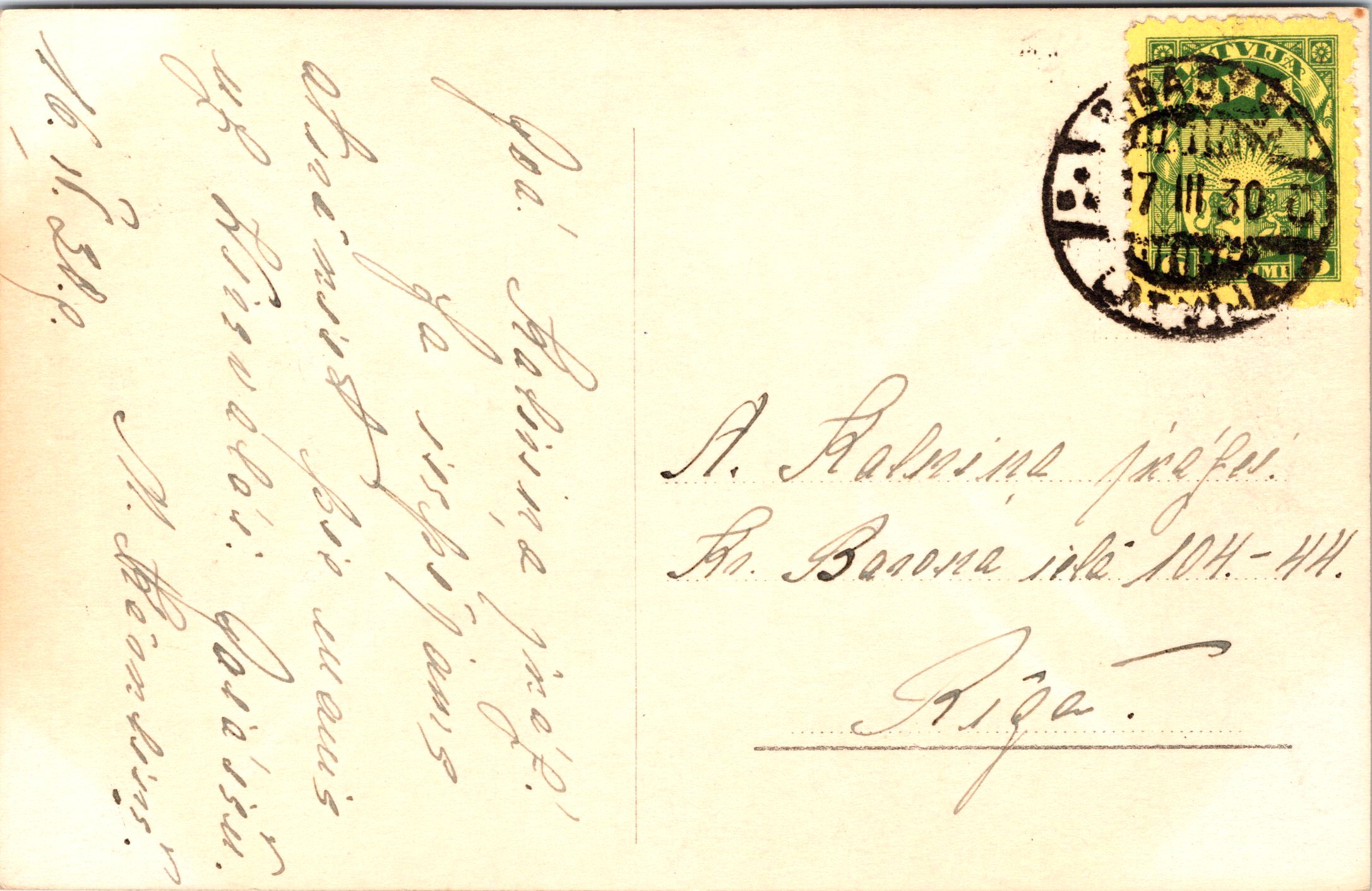
Postcard 2 was published by Ross Verlag as part of a series (No.7348/1). The card has a Latvian stamp and postmark. (SOLD)
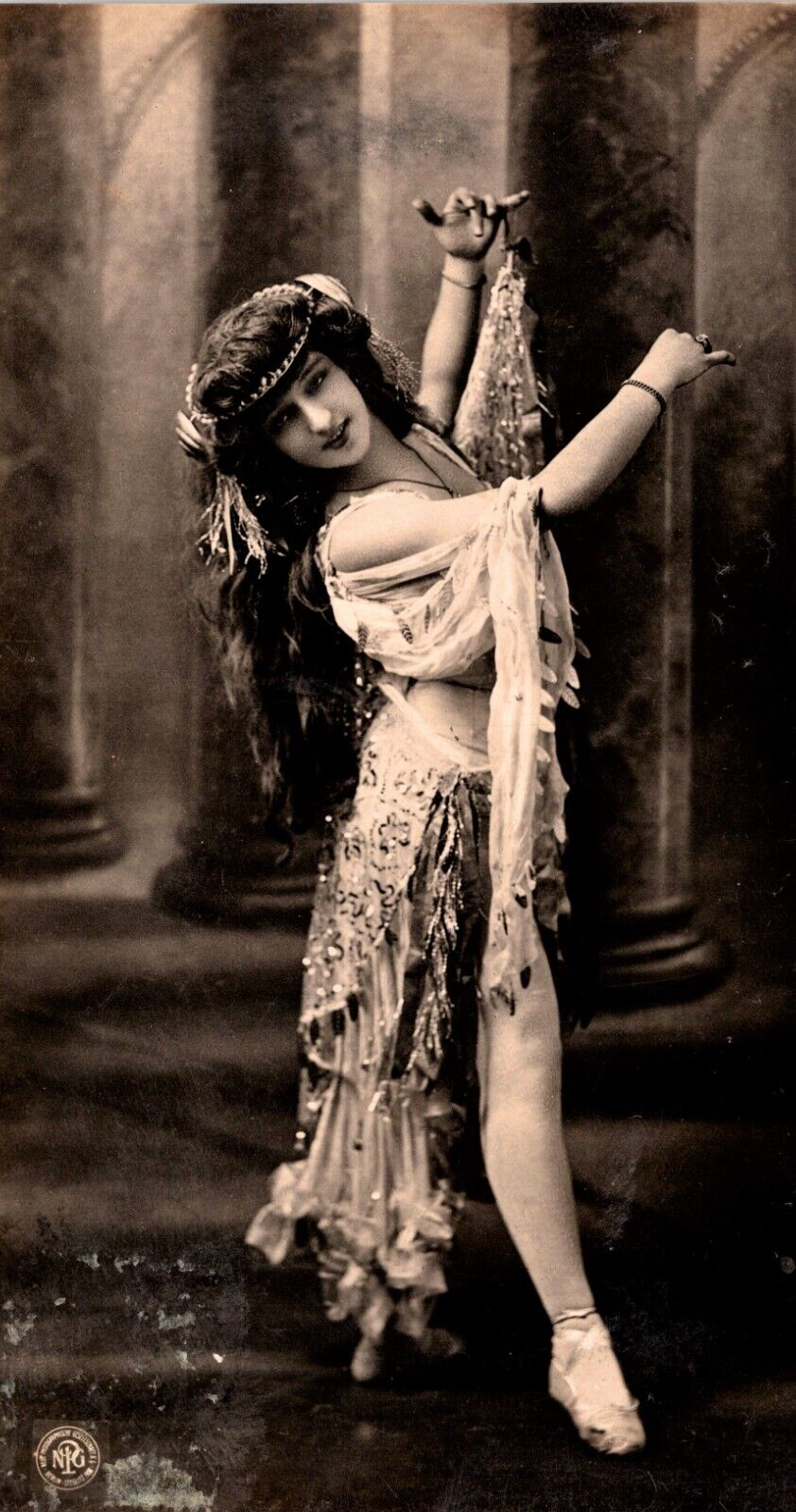
This vintage risque real photo postcard features a scantily clad pretty young dancer. Note her long hair and headress.The card was published by Neue Photographische Gesellschaft (NPG) as part of a series (No.553/2). The company was a leading bromide photo printing company for many years.at the beginning of the 20th century. (SOLD)
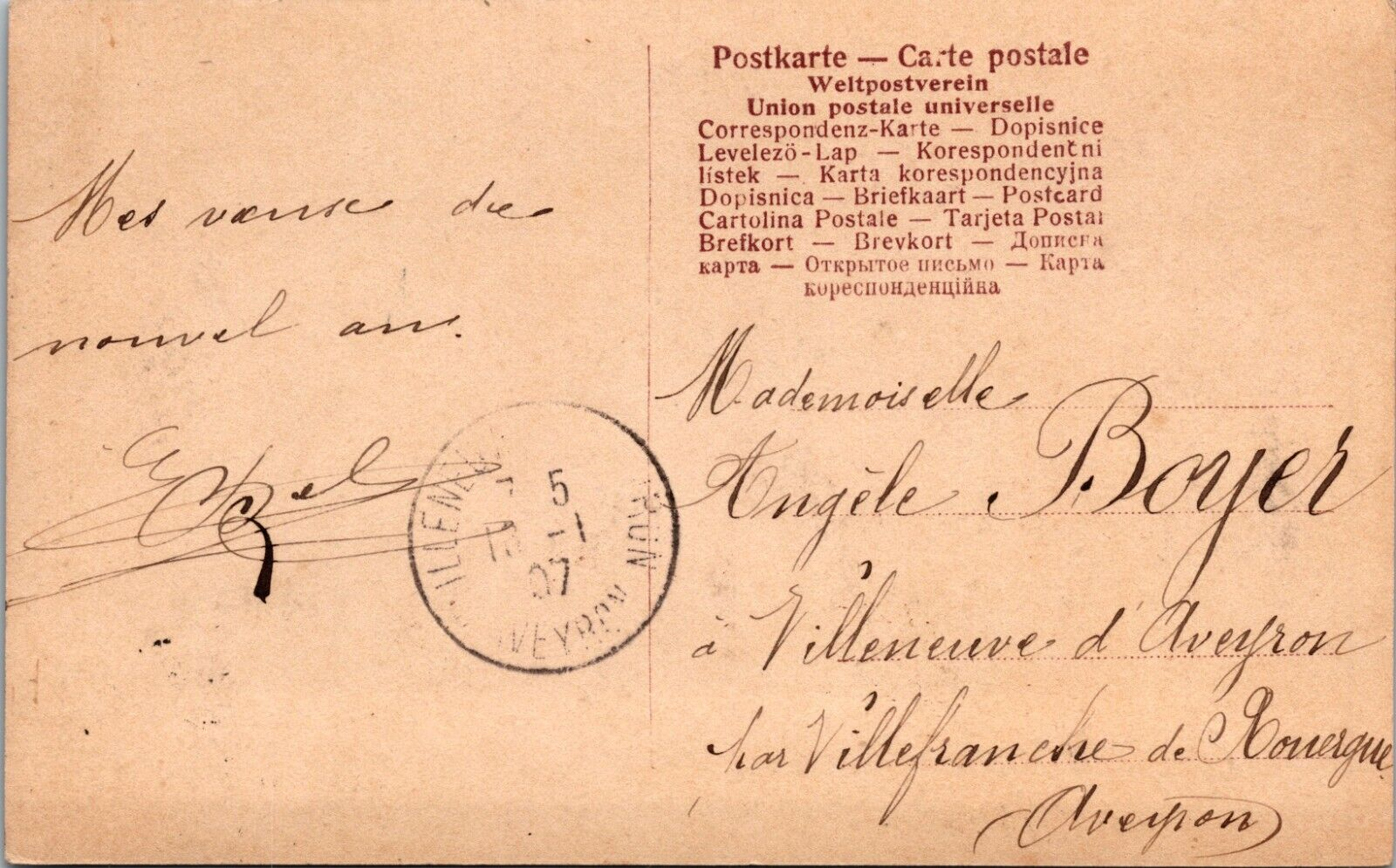
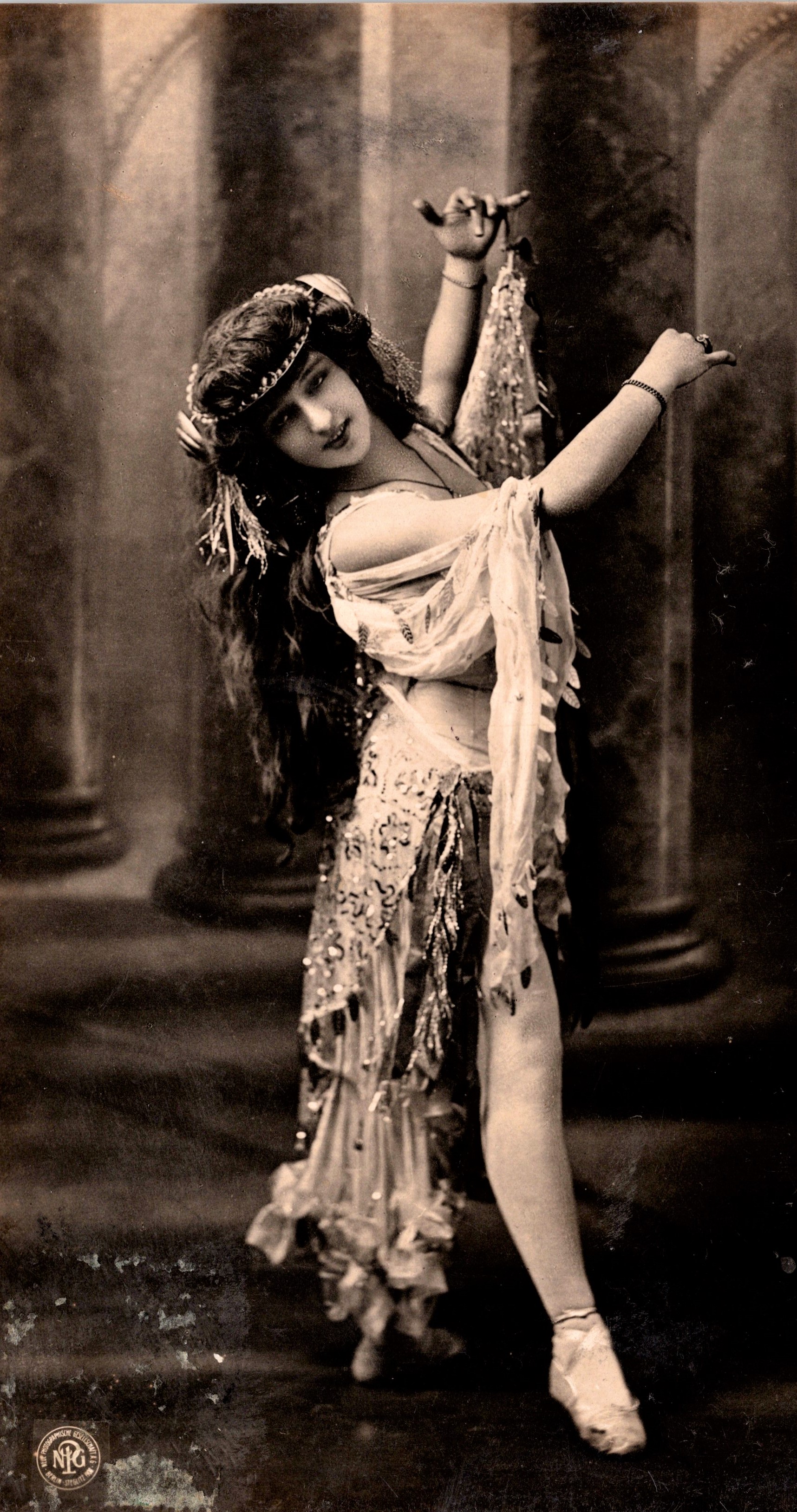
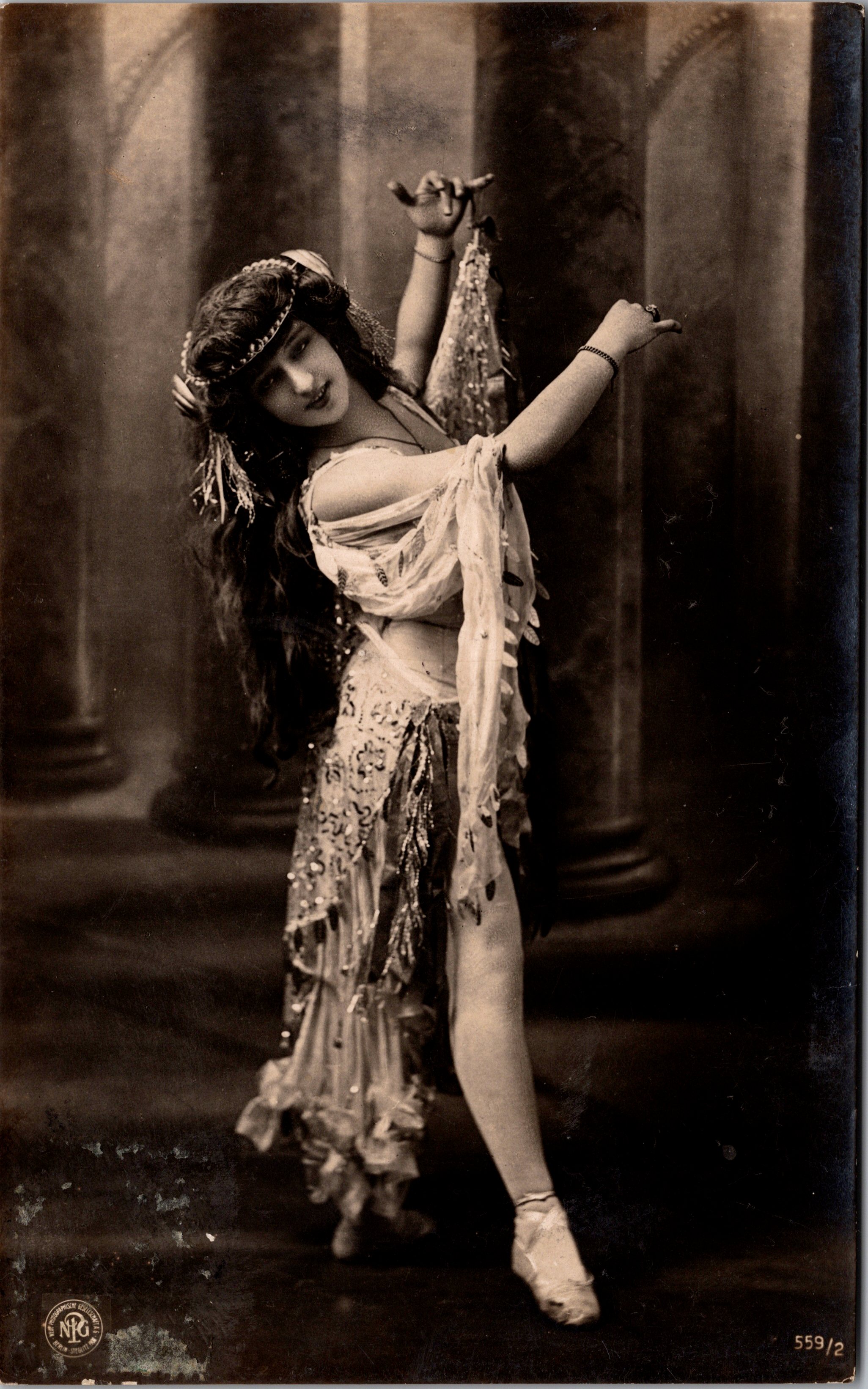
This vintage real photo postcard features a pretty young dancer dressed in a risque costume. Note her headdress. The previous owner of this postcard asserted that this image is an example of Germany’s Jugendstil period (1896-1914). The term, Jugendstil, means “young style”. The Jugendstil movement has been referred to as Germany’s Art Nouveau period. This postcard was published by NPG as part of a series (no.559/2). The card was postmarked in 1907. This postcard has stamp residue on it’s bottom left hand corner and is in overall Good Condition (See Scans).
Buy this Vintage Real Photo Postcard (includes shipping within the US) #5111
To purchase this item, click on the Pay with PayPal button below
$28.00
Buy this Vintage Real Photo Postcard (includes International shipping outside the US) #5111
To purchase this item, click on the Pay with PayPal button below







 THE CABINET CARD GALLERY