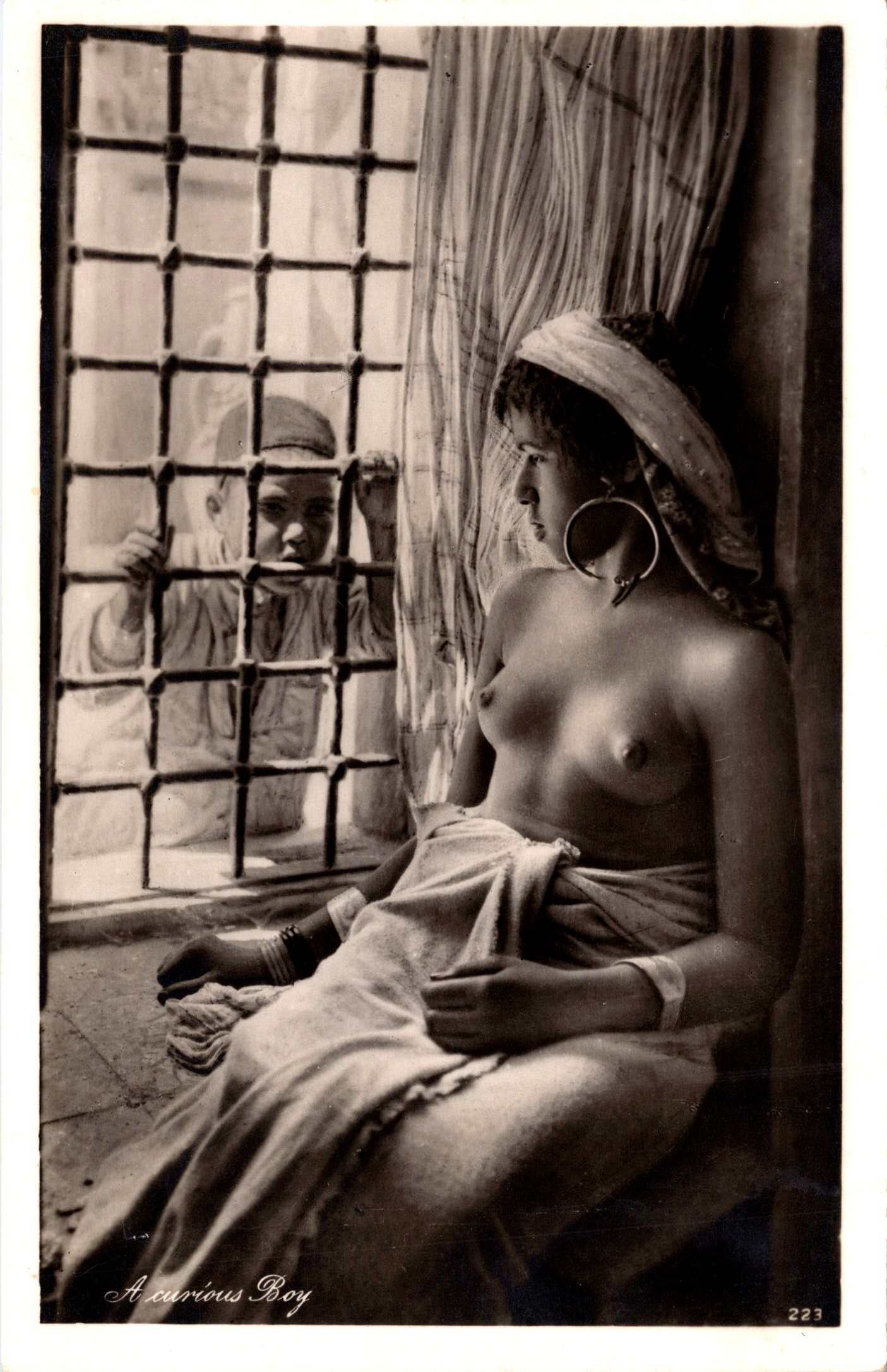
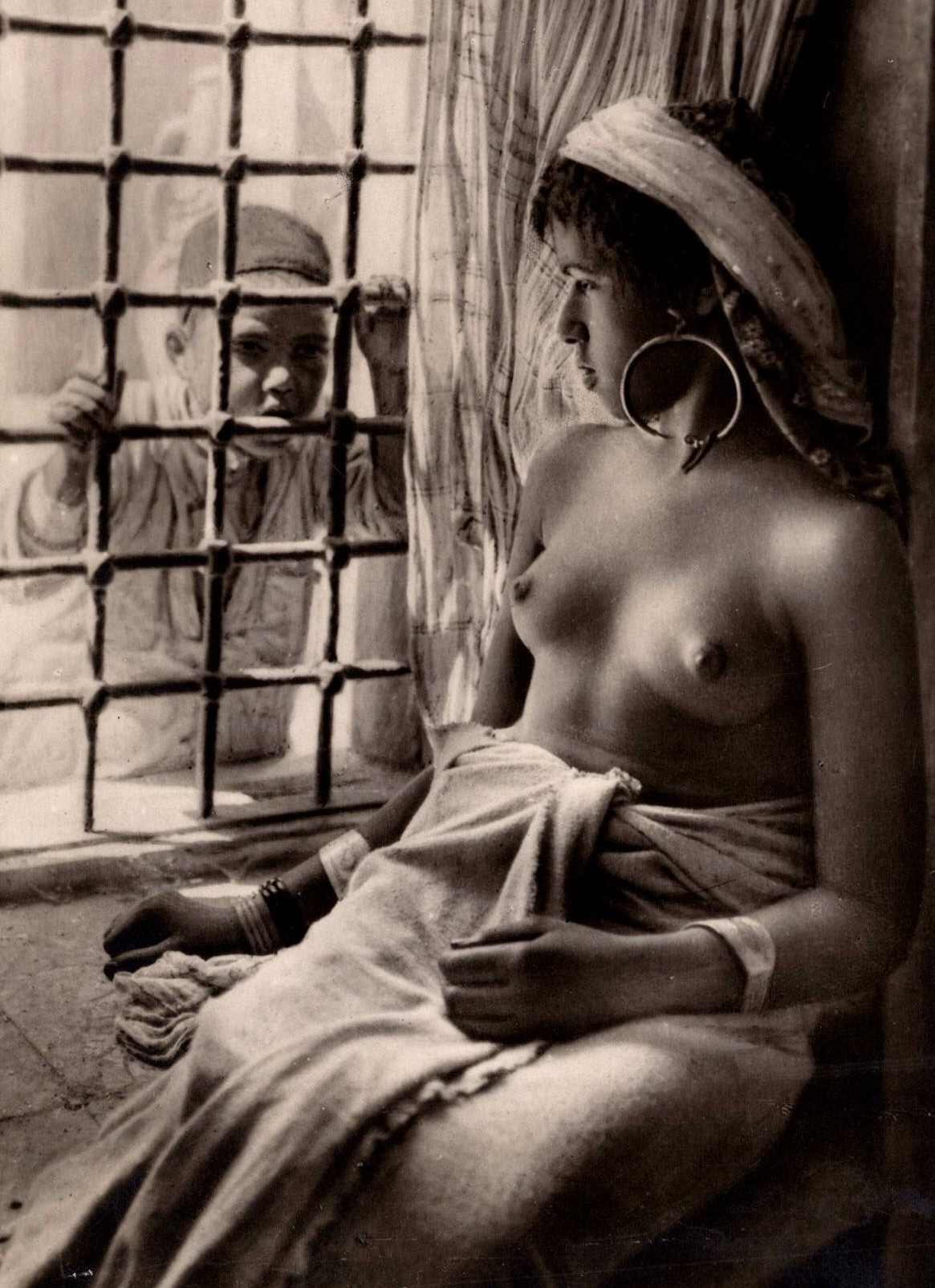
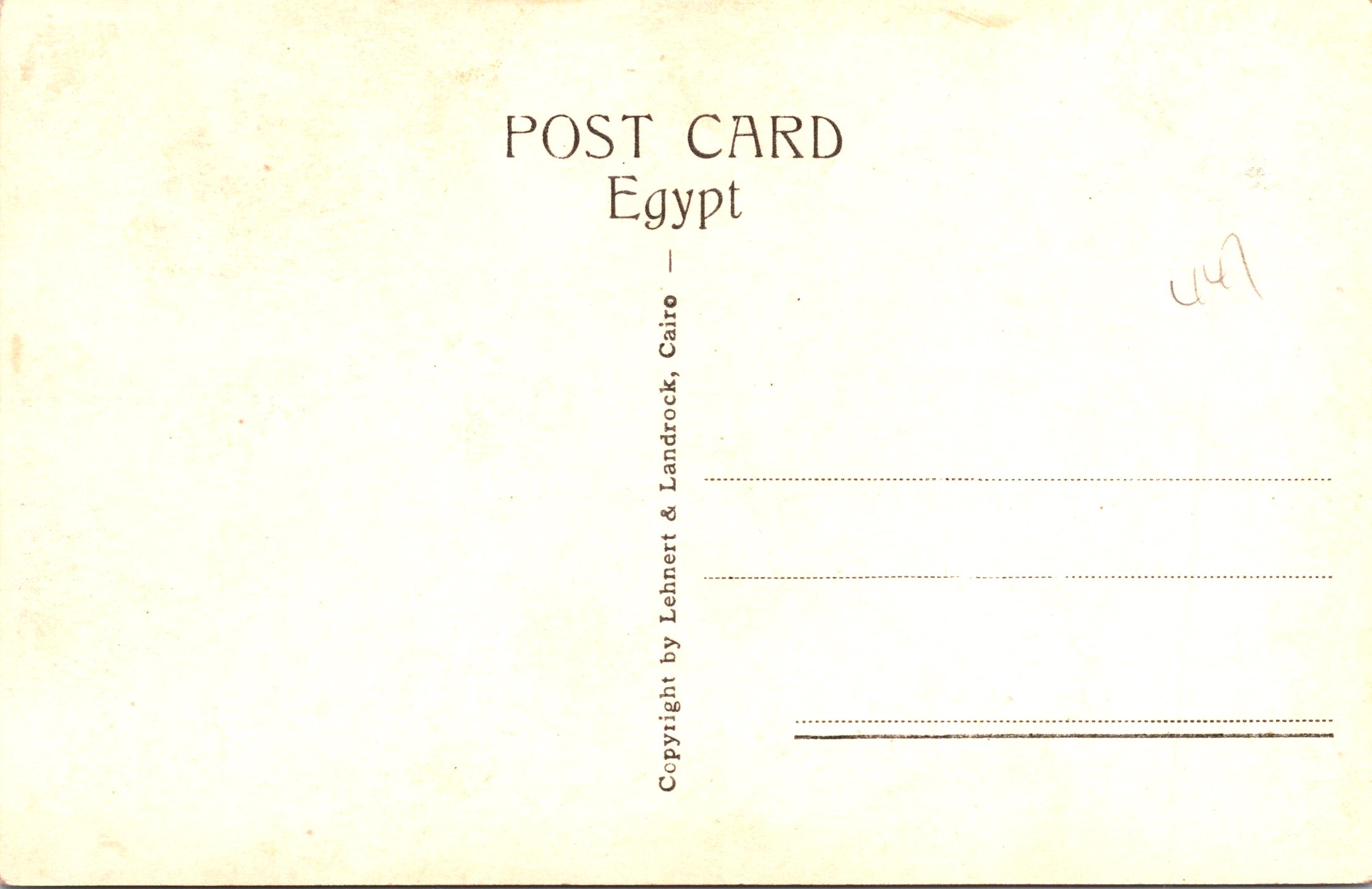
This photogravure vintage postcard features a culturally evocative scene: a woman seated indoors near a barred window, partially draped in cloth and adorned with large hoop earrings and a headscarf. She gazes toward a young boy outside the window, who peers in with curiosity. The boy wears traditional attire and a cap, adding to the ethnographic charm of the composition. The room is softly lit, with a curtain drawn to the side, enhancing the intimate and contemplative mood. This postcard, entitled “A Curious Boy” was published by the celebrated ethnographic photography firm, Lehnert & Landrock as part of a series (No.223). The company was located in Cairo Egypt. Rudolf Franz Lehnert (1878-1948) & Ernst Heinrich Landrock (1878-1966) were the principals of the firm. Lehnert was of German origin, while Landrock was from Bohemia. The pair met in Switzerland and decided to go into business together. Lehnert was the photographer and Landrock was the administrator. Landrock organized trips, managed the photo studio and photo production, and marketed the photographs and prints. They were photographers in Tunis and in Egypt, They also opened studios in Munich (Germany) and Leipzig (Germany). They produced many photographs from Egypt and Tunisia. Their first studio was in Tunis. They photographed monuments and sites in those countries, but were most known for their erotic images of Arab women, often posing in harem themes. Sometimes the photographers seemed more concerned about producing erotic photographs rather than documenting everyday life in these Middle Eastern countries. Lehnert and Landrock were well acclaimed for their work and the duo have images in a number of museums, including Philadelphia’s Penn Museum an the Musee de l’elysee in Lausanne, Switzerland. (SOLD)

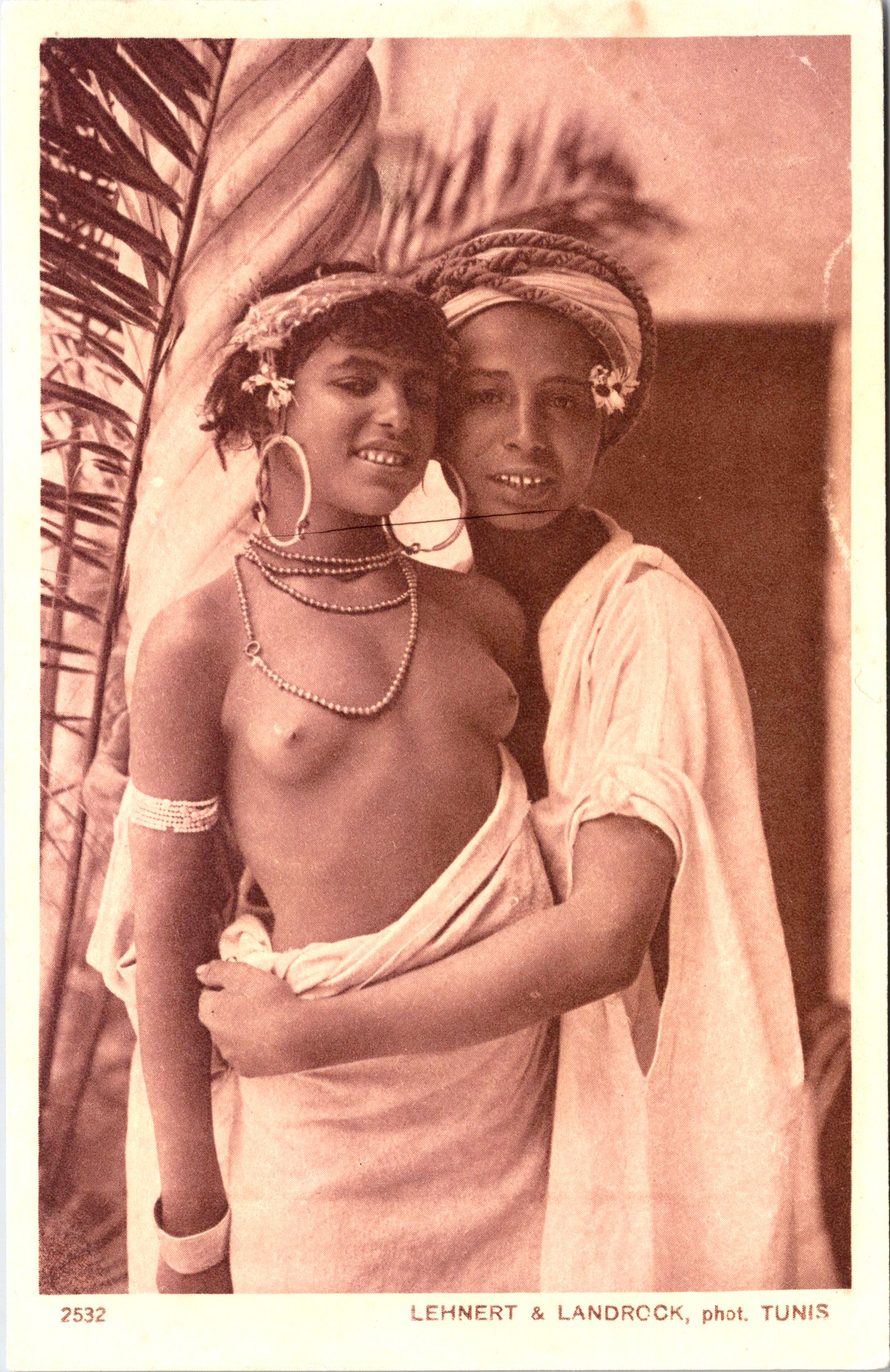




 This vintage postcard features a “Bedouin Beauty” with wonderful smile. Everything she is wearing is interesting. Her traditional dress, the flowers in her hair, and her necklace are all intriguing. This postcard offers some sexual provocativeness which was typically seen in ethnographic postcards from this era. It seems that if women from other cultures, or non white ethnicities, were photographed for postcards, than some nudity was acceptable. Western photographers, postcard publishers, and postcard consumers all appear to have been “suffering” from ethnocentrism. The woman in this photo, as stated earlier, is a Bedouin. Bedouins are a group of nomadic Arab people. Historically, they have inhabited the desert regions in the Arabian Peninsula, North Africa, Iraq, and the Levant. This image was produced by the team of Rudolf Franz Lehnert (1878-1948) & Ernst Heinrich Landrock (1878-1966).
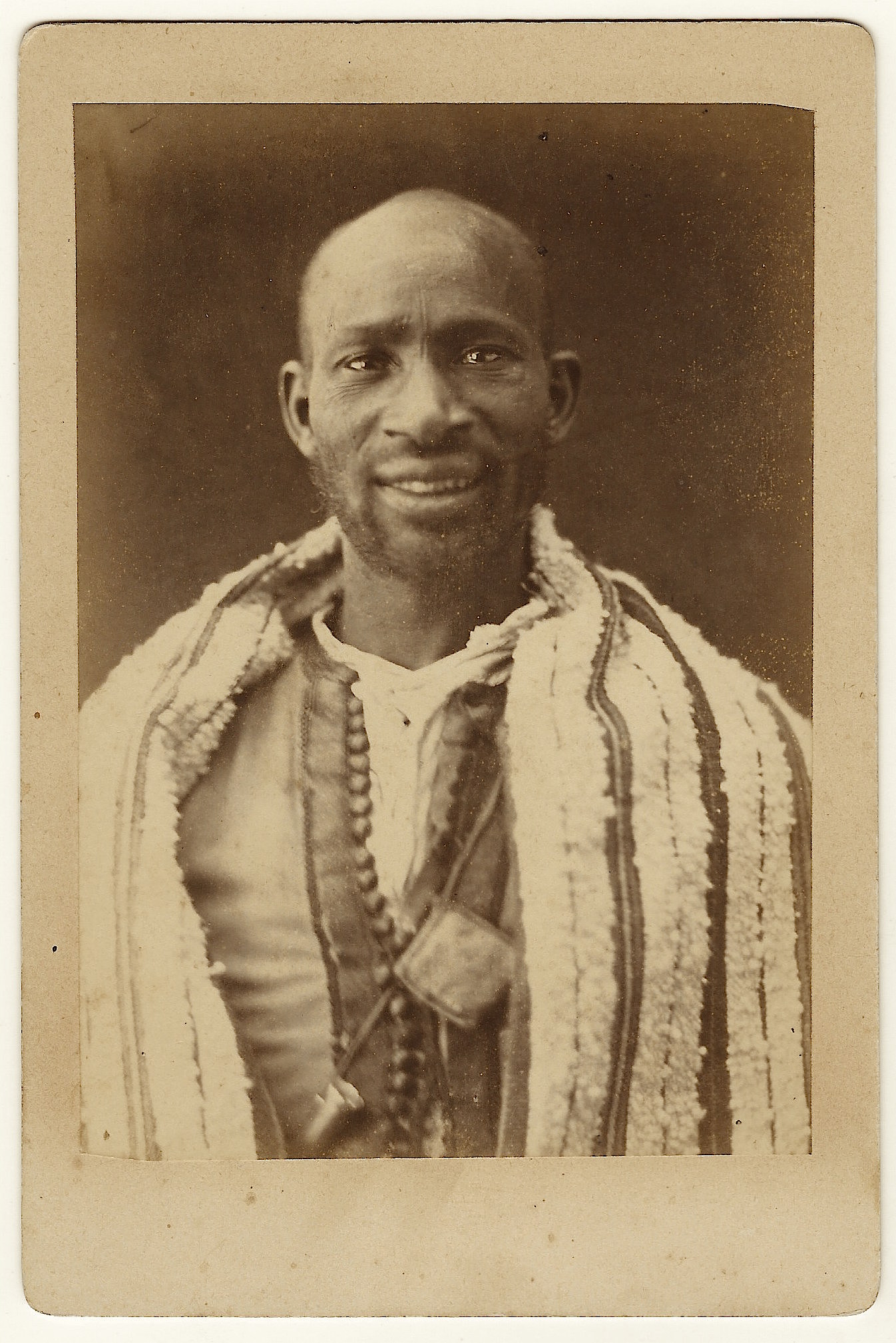
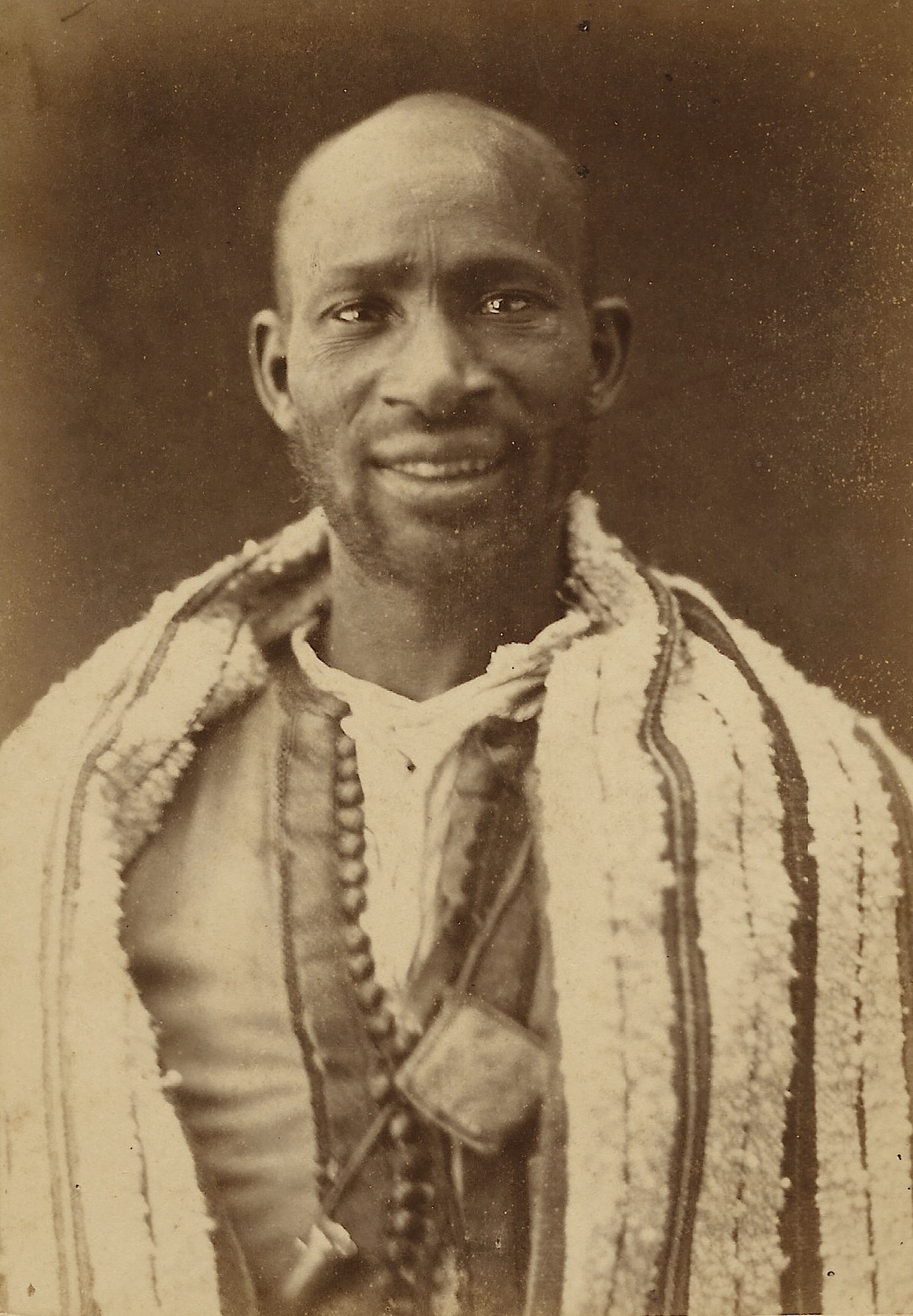 This ethnographic cabinet card features an Algerian man from Bone, Algeria. He is dressed in his culture’s traditional clothing. The preceding demographics are derived from the fact that this photograph was in a collection of images from Bone. The city of Bone is now known as Annaba. It is a port town on the Mediterranean, in northeastern Algeria. It is close to the Tunisian border. Bone was known for its mining. Iron ore was a major export. The city was named Bone while it was under French rule. Algeria received it’s independence in 1962. The man in this photograph has a wonderful smile. I wish I knew more about him. The photographer of this cabinet card is not identified. (SOLD)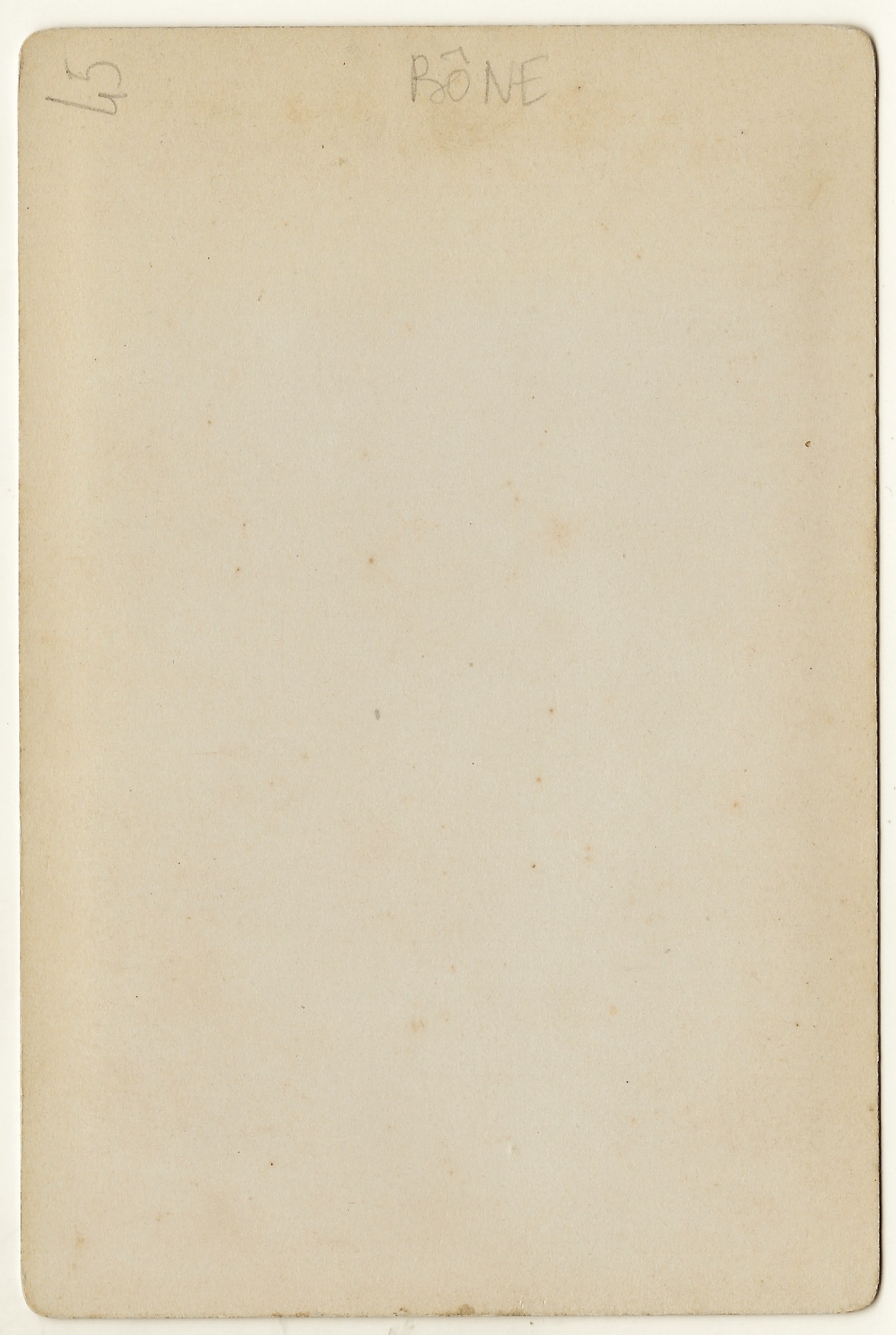
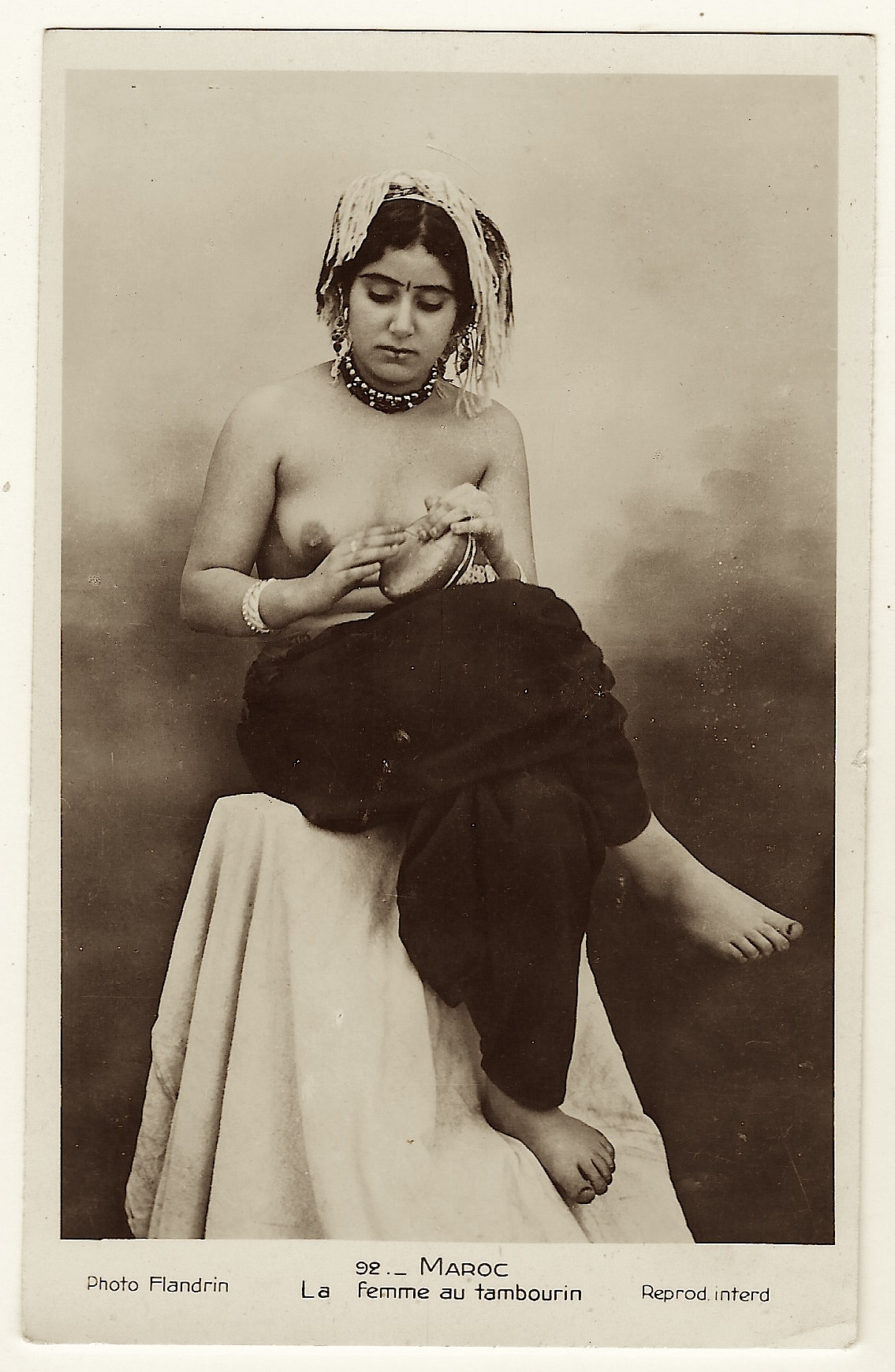
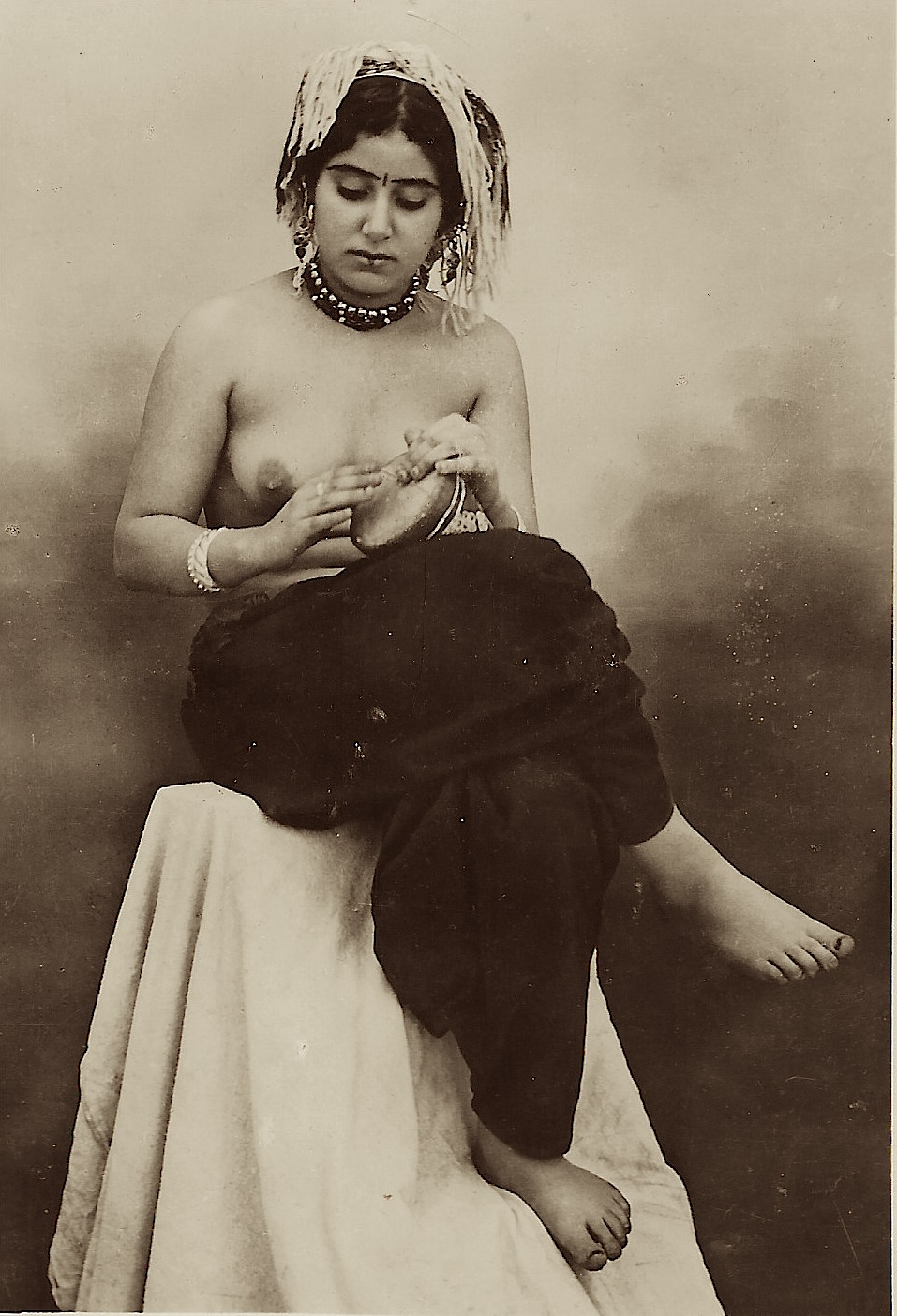 A pretty young topless woman sits in deep thought. She is holding a tambourine. Her facial tatoos, headdress and jewelry reflect her Moroccan culture. Some viewers of this postcard believe that the woman is a prostitute. It is likely that these observers are correct. Her nudity and the popularity in Europe of photo portraits of prostitutes in less developed countries, provides supporting evidence that she is indeed a sex worker. This is an ethnographic postcard. Buying or sending a risque photo postcards was more acceptable if the card provided a look at a people from different cultures. This postcard is part of a series (no. 92). The photo was taken by Marcelin Flandrin (1889-1957). Flandrin moved to Morocco in 1901 and volunteered for the military in 1912. He served as an Army photographer. Around this time, Morocco came under French rule. He corroborated with the French government and tourist boards. He was very involved with the French Protectorate government. Flandrin was criticized by some Moroccans for reinforcing “Orientalist” stereotypes . During the Rif War (Spain vs. Berber tribes), he published a number of reports. During World War I he served in the Air Force as an air observer, taking aerial photos of fighting. After the war he moved to Casablanca and went to work taking many photographs between 1921 and 1930. He published many photo books about Morocco. Flandrin was also an important postcard publisher in Morocco. The Cabinet Card Gallery blog includes another postcard by Flandrin. This photo postcard captures a group of prostitutes in Casablanca (Morocco). You can view this postcard by placing the name “Flandrin” in the search box. The postcard above, is in very good condition (see scans).


 THE CABINET CARD GALLERY