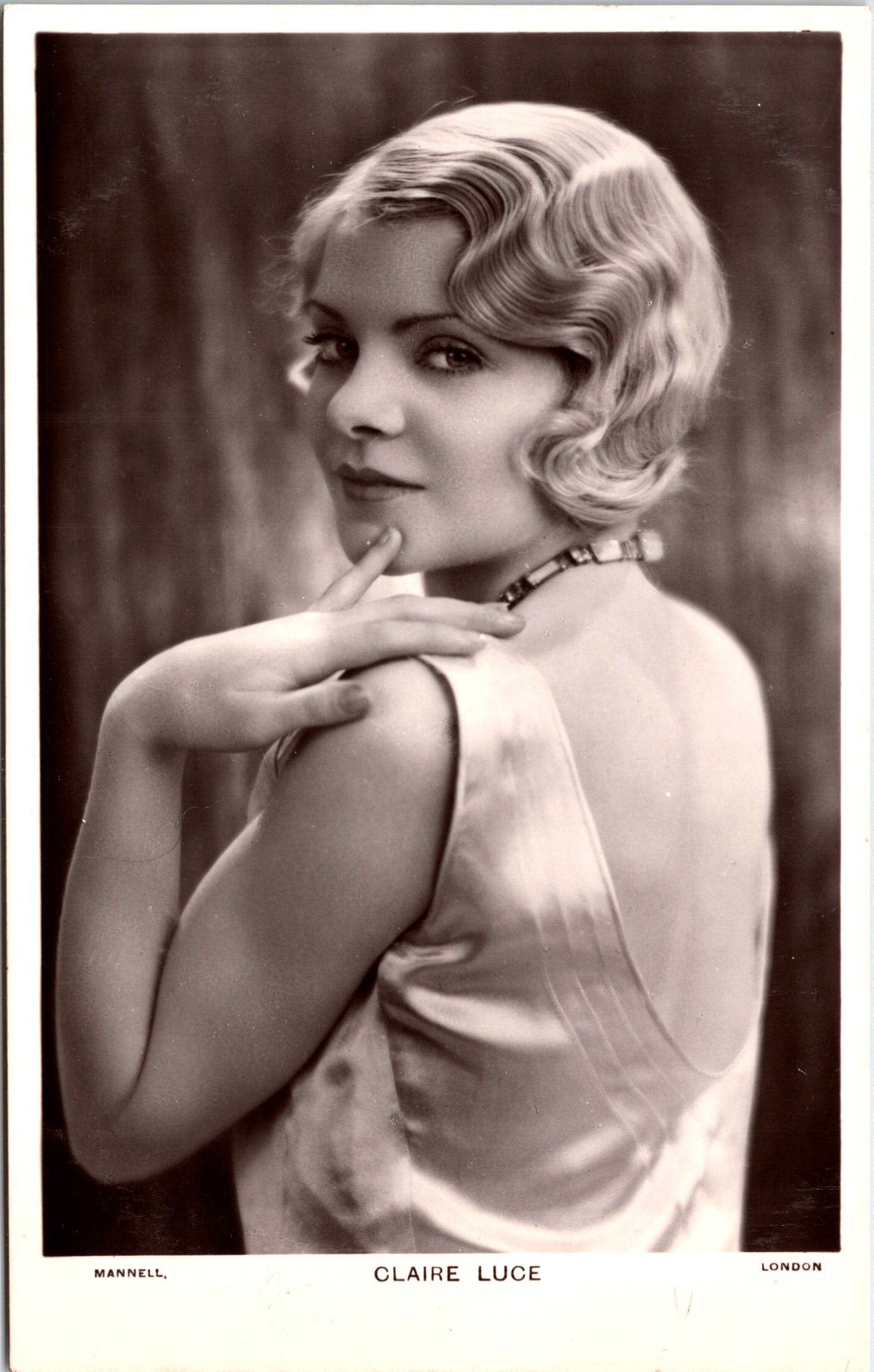
This vintage portrait postcard captures the elegance and sophistication of Claire Luce, a celebrated American stage and screen actress known for her work in theater and Hollywood during the early to mid-20th century. Photographed by Mannell Studio, London, this stunning black-and-white image exudes the classic glamour of the era, likely from the 1920s or 1930s. In this portrait, Claire Luce is seen wearing a sleek satin gown with a low-cut back, reflecting the timeless fashion of the Art Deco period. Her delicate necklace adds a touch of refinement, while her softly curled platinum blonde hair is meticulously styled in the distinctive finger waves that were highly fashionable during that time. Her expression is both confident and alluring, with a slight smile and a captivating gaze that suggests both poise and mystery. She poses gracefully, her fingers resting near her chin in an elegant yet relaxed manner, enhancing the overall sophistication of the composition. Born in 1903, in Syracuse, New York, Claire Luce became a renowned actress known for her work on both stage and screen. She rose to prominence in the 1920s and 1930s, particularly for her performances in Broadway productions. One of her most notable roles was in Gay Divorce (1932), where she starred alongside Fred Astaire. This production later inspired the classic film The Gay Divorcee (1934), though her role in the film was played by Ginger Rogers. Luce also made a mark in Hollywood, appearing in films such as Up the River (1930), The Cohens and the Kellys in Africa (1931), and Over She Goes (1937). However, her true passion remained the stage, and she continued to shine in numerous theatrical productions, both in the United States and the United Kingdom. Aside from her acting career, Luce was admired for her beauty, grace, and sophisticated sense of style. She was often photographed in elegant gowns, embodying the glamour of the Golden Age of Hollywood and theater. Claire Luce was known for her dedication to her craft, and while she had several notable relationships, she was never widely publicized for her personal life. She married Clifford Warren Smith, an English businessman, though details about their marriage remain relatively private. . Claire Luce’s contributions to theater and film continue to be remembered by classic cinema enthusiasts and theater historians. Her connection to Fred Astaire and the Broadway stage solidifies her place in entertainment history. George Mannell (London) is the photographer who took this postcard’s photo portrait. The postcard is relatively uncommon.
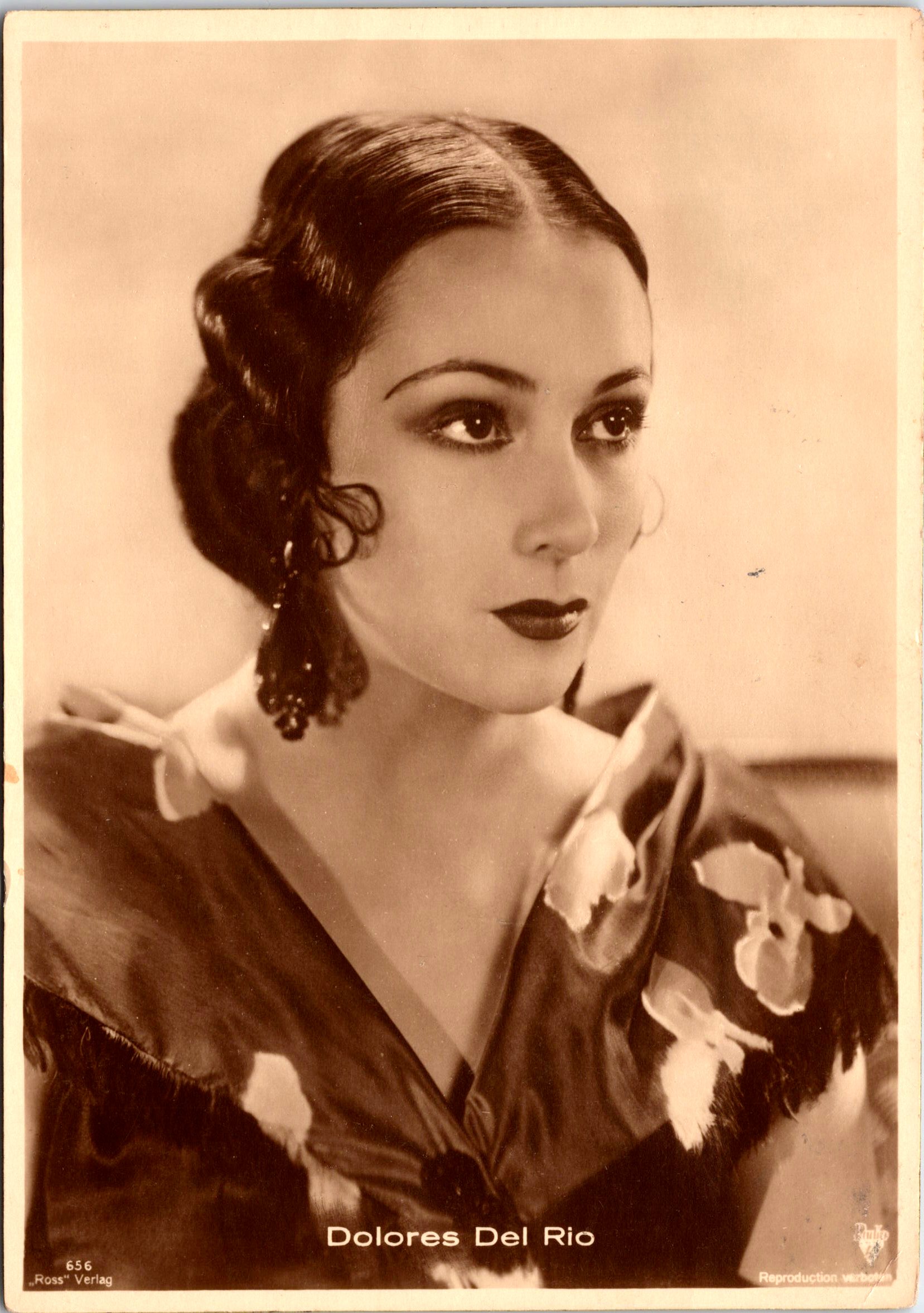
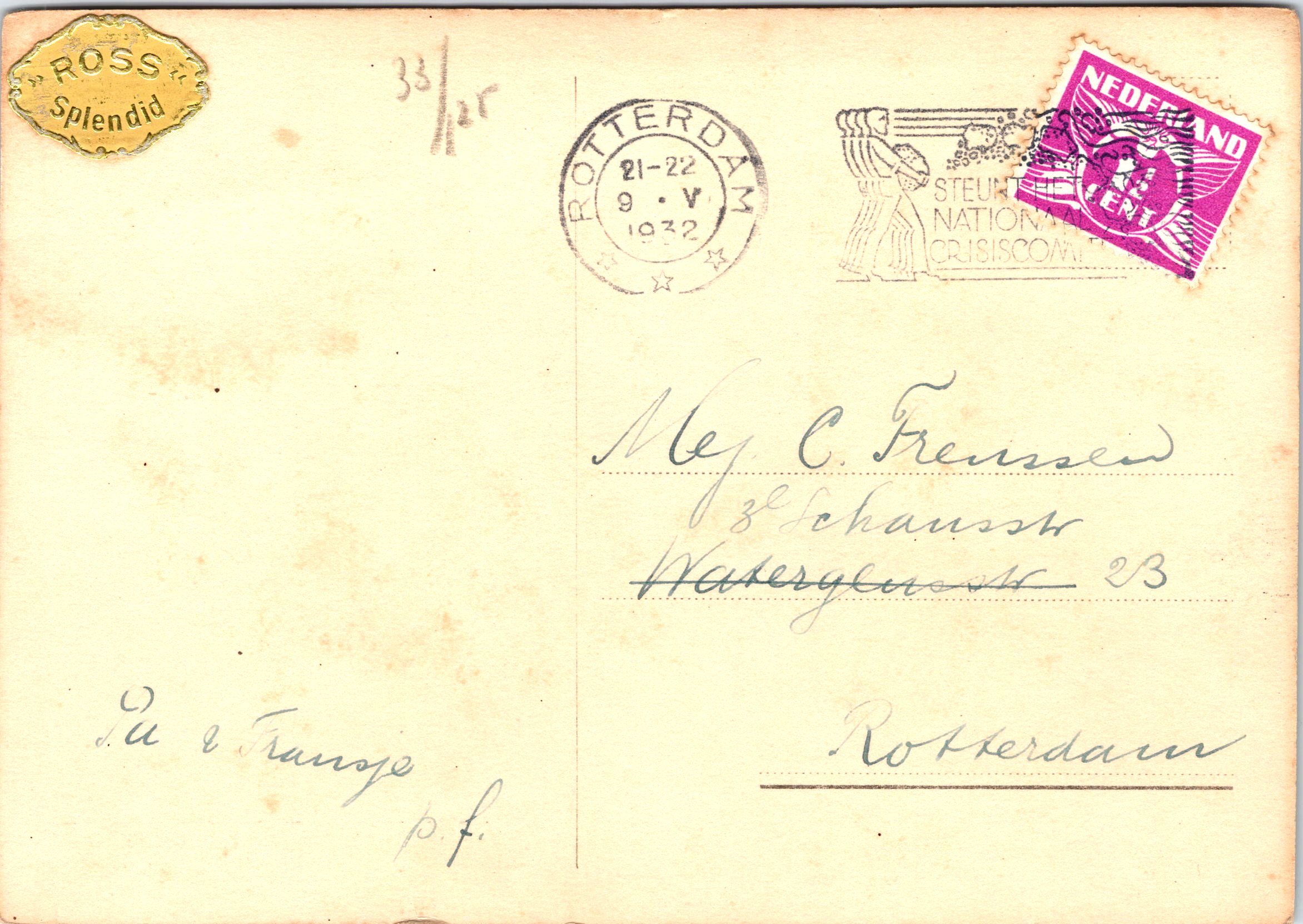
This vintage real photo postcard features pretty Mexican actress, dancer, and singer; Dolores del Rio (1904-1983). Del Rio’s performing career spanned more than half of a century. She was the first major Latin American actress to become an American film star (1920’s & 1930’s). Del Rio was also a major star in Mexican films. Dolores was known for her beauty as well as for her talent. She was discovered in Mexico and her Hollywood film career started in 1925. She began her career with a number of successful films, including “Ramona” (1928) and “Evangeline (1929). During the silent film era, she was considered the female version of “latin lover”, Rudolph Valentino. Del Rio was one of the fortunate actresses whose career was not destroyed by the advent of sound films. She acted in a wide range of film genres. “Bird of Paradise” (1932) and “Madame Du Barry” (1934) were among her successful films of the 1930’s. In the early 1940’s, her Hollywood career began to flounder sparking Del Rio to return to Mexico to become a major star of Mexican cinema. She continued acting in Mexican films through the 1950’s. Beginning 1960 she acted in both Mexican and Hollywood films. During the late 1950’s through the early 1970’s, Del Rio acted in theater and television. Dolores was born in Durango City, Mexico. Her parents were part of Mexican aristocracy whose lineage could be traced to Spain. Dolores was the cousin of actor Ramon Novarro (another silent film”latin lover”), and of Mexican cinema actress, Andrea Palma. During the Mexican Revolution (1910-1920), Dolores’s family lost its fortune. Her family felt threatened by Pancho Villa’s insurgence. It was time to “get out of town”. Her father fled to the United States while she and her mother escaped to Mexico City. Acting was an integral part of Dolores’s getaway. She and her mother felt compelled to dress as peasants to insure safe passage on the train to Mexico City. Her parents reunited there in 1912. Dolores attended a college in Mexico City operated by French nuns. After seeing Russian ballerina, Anna Pavlova perform; Dolores decided to become a dancer and took lessons from a well respected teacher. At age 17, Dolores married Jaime Martinez del Rio. He was from a wealthy family and was educated in England. The couple honeymooned in Europe for two years and Dolores formed close relationships with a number of members of European aristocracy. When the couple returned to Mexico, they settled in Mexico City. In 1925, Dolores met American filmmaker Edwin Carewe, and he was spellbound. He convinced Dolores and her husband to move to Hollywood where he promised to make Dolores a star. Her husband hoped to write screenplays there. When they arrived in Tinseltown, Carewe launched a public relations campaign to raise excitement about his beautiful find. He built up her aristocratic background by saying such gems as Dolores was “the first lady of high Mexican Society” and that she had come to Hollywood with a collection of shawls and combs valued at fifty thousand dollars. Dolores made her film debut in “Joanna” (1925), where she played a vamp of Spanish-Brazilian origin. Her first starring role was in the comedy “Pals First” (1926), directed by Carewe. That same year, Dolores appeared in the war film “What Price Glory?”. The movie was a huge financial success and helped Dolores become one of the “WAMPAS Baby Stars” of 1926. Other members of her “class” were Mary Astor, Joan Crawford, Janet Gaynor, and Fay Wray. By then, her film career was rocketing. Her role in Resurrection” (1927), a popular film based on a Tolstoy novel, further propelled her career. While her career was succeeding, her personal life was a “hot mess”. Her marriage to Del Rio ended in 1928. He had much difficulty being in the shadow of his famous and successful wife. Six months after Dolores filed for divorce, Del Rio died in Germany. While dealing with her grief, she had to deal with constant harassment from her discoverer, Edwin Carewe. He wanted to be more than her agent and her director since he had first launched her career. In 1929, Dolores announced to the press, that despite Carewe’s claims, the pair were just friends and business companions. She added that they had no plans for marriage. Soon thereafter, she cancelled her contract with him. The end result was a legal dispute that was settled out of court. Carewe’s anger did not end there. He disparaged her the press and refilmed “Resurrection” starring Lupe Velez, another popular Mexican film star. In 1930, Del Rio married MGM art director, Cedric Gibbons. They became one of Hollywood’s most followed couples of the early 1930’s. In 1932, the film, “Birds of Paradise”, was released to rave reviews. The film starred Del Rio and actor, Joel McCrea. The movie was a South Seas love story. A scandal arose from the film because of a scene featuring the pair swimming naked. Controversy continued in Del Rio’s appearance in “Flying Down to Rio” (1933). In this film, Del Rio was the first actress to wear a two piece bathing suit on screen. Fred Astaire and Ginger Rogers danced together for the first time on film, in this movie. Del Rio and Astaire also did an “intricate” dance number in the film. Del Rio found herself in political hot water when she and Ramona Novarro and Lupe Velez attended a special screening of a Mexican film which was accused of promoting Communism in California. Del Rio was accused of being a Communist for her attendance at the screening. In 1940, Del Rio began an affair with actor/filmmaker, Orson Welles. The dalliance resulted in Del Rio and Gibbons divorce. In 1954, Dolores was scheduled to co-star in a Spencer Tracy film, but the US government would not give her permission to work in the United States. The government believed she was sympathetic toward communism for attending the aforementioned film screening and for signing a petition supporting a world peace conference. After some time, she was able to remedy the problem by writing a persuasive letter to the US authorities. Later in life Del Rio did express some “political” beliefs. She stated that she wished she could play Mexican roles to show what life in Mexico was really like. She felt such an opportunity could help diminish the ugly stereotypes that existed about Mexicans in American society. She stated that it was her great wish to make fans realize the beauty, wonder, and greatness of Mexicans as a people. She asserted that the great majority of Americans view Mexicans as a “race of bandits, or laborers, dirty, unkempt, and uneducated”. Why do these false negative stereotypes sound so familiar? Del Rio wanted to show “the best that’s in my nation”. It has been pointed out by more than a few writers that Dolores del Rio was no “Latin bombshell”. Instead, she was noted for her elegance. The IMDb reports that Del Rio has 63 film credits ranging from 1925 through 1978. This vintage postcard was published by Ross Verlag as part of a series (no.656). The reverse of the card has a gold seal stating “Ross Splendid”. This postcard has a Netherlands stamp and was postmarked in Rotterdam in 1932. SOLD
This vintage photograph features American stage and film actress, Kathleen Clifford (1887-1962). The IMDb credits her with 14 film credits between 1917 and 1932. She is known for “Richard the Lion-Hearted (1923)”, When the Clouds Roll by (1919)”, and “Who is Number One? (1917)”. She often played leading roles in her films for Paramount. During her film career, she worked alongside Douglas Fairbanks Sr., Betty Compson, and Wallace Beery. She appeared on the Broadway stage six times between 1909 and 1916. Clifford was famous as a Vaudeville comedienne and male impersonator. She was billed as “The Smartest Chap in Town”. At one point in her vaudeville career, she worked as a duo with female impersonator, Bothwell Browne. Like many movie performers, she left acting with the advent of sound films. During the early years of World War I, she served as a Red Cross Nurse with the British Army in France. Upon retirement, she became a business woman and owned “Broadway Florist” in Hollywood. Clifford also wrote a novel about her time in Hollywood. She was married to Miomir Peter Illitch for over 35 years. He was a banker. This original photographic portrait of Kathleen Clifford was taken by a highly talented and esteemed American photographer, Fred Hartsook (1876-1930). He owned a California studio chain that, at that time, was considered to be the largest photographic business in the world. His celebrity clients included President Woodrow Wilson, Henry Ford, Mary Pickford, and Charles Lindbergh. He also owned a resort and two ranches in Southern California where he raised Holstein cattle. He was married to Bess Hesby, queen of the San Francisco Pan-Pacific Exposition of 1915. SOLD
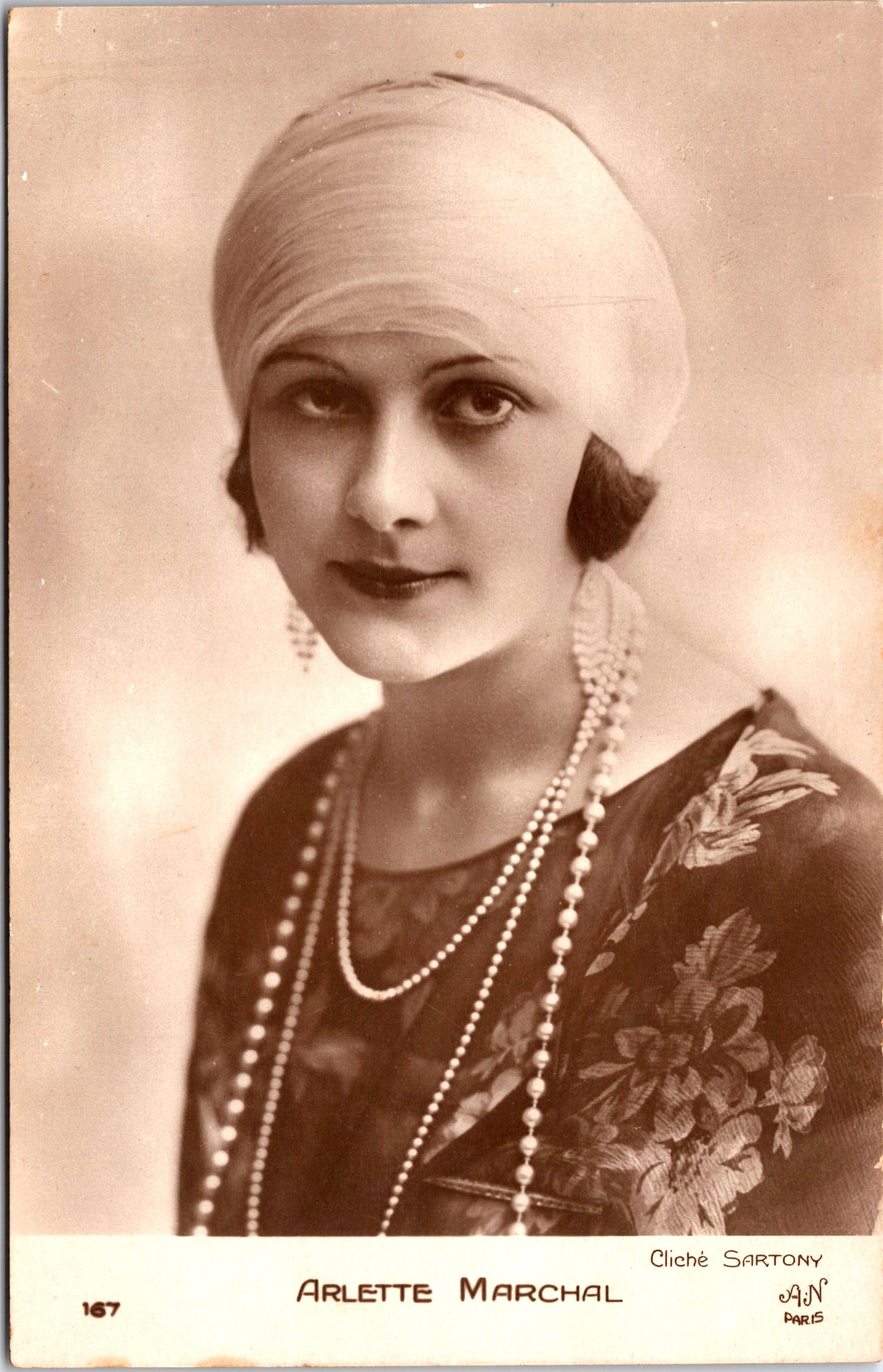
This vintage real photo postcard features French film actress, Arlette Marchal (1902-1984). The IMDb reports that she appeared in 42 films between 1922 and 1951. Marchal was brunette and exotic looking. As a young woman she was very shy and overcame her shyness by entering a beauty contest. She won the contest and one of the judges helped her get a film role. After that appearance, she was in constant demand for both leading and supporting roles in Hollywood silent films. She worked for both MGM and Paramount. She also was a major actress in French and German talkies. Her high in popularity was in the mid 1920’s. The IMDb states that she was most known for “Aux jardins de Murcie” (1923), “Figaro” (1929), “Don Quichotte” (1933), and “The Fighting Pimpernel” (1949). Marchal was noted for her beauty but she also received positive reviews for her acting from American film critics. She retired from acting in 1951 to concentrate on operating her chain of French fashion houses. This postcard was published by Alfred Noyer as part of a series (No.167). Miss Marchal’s photo was taken by the Sartony studio (Paris). SOLD
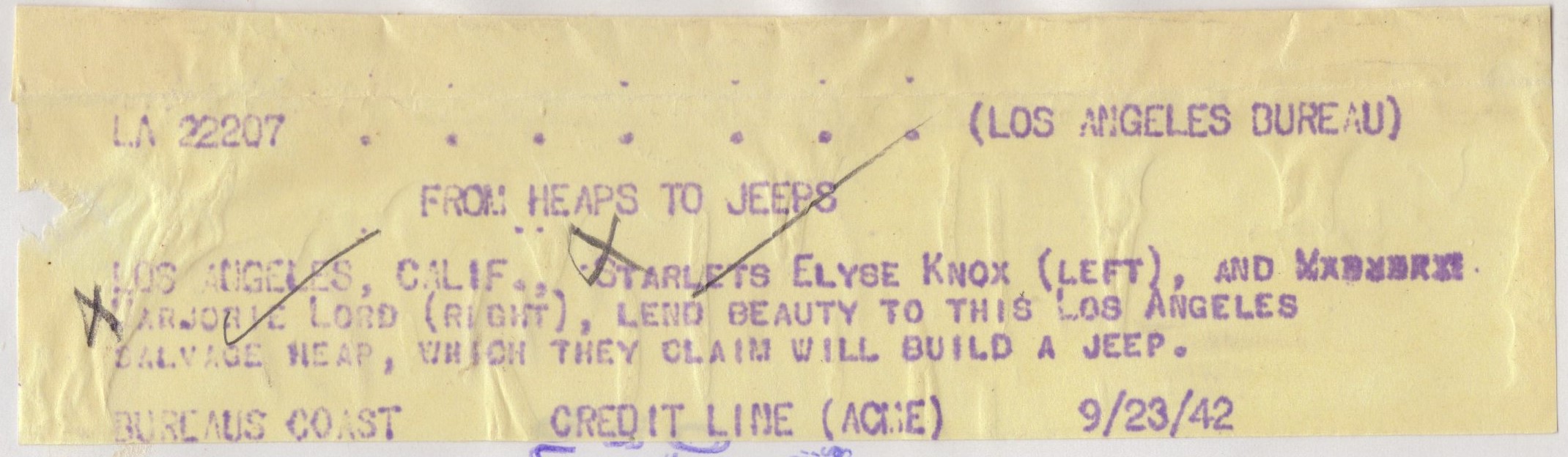
This vintage press photo features two Hollywood starlets and a cocker spaniel posing at a Los Angeles junk yard in support of the war effort (World War II). They are sitting on a junked car. A sign in front of them states “A Salvage Heap Will Build A Jeep” and is a reminder to the public that they need to recycle and not waste items and materials that could be useful in fighting the war. The actresses appearing in this photograph are Elyse Knox and Marjorie Lord. The caption on the reverse of this photograph comments that the starlets beautify the salvage heap. Elyse Knox (1917-2012) was an American actress, model and fashion designer. She is known for appearing in “The Mummy’s Tomb” (1942) and the war morale booster film, “Follow The Boys” (1944). Knox was also a popular pin-up girl during the war. She retired in 1949 after acting in 39 films. Marjorie Lord (1918-2015) was an American television and film actress. She played opposite Danny Thomas in the TV series “The Danny Thomas Show”. Her first appearance on Broadway was at age 15 and in total, she was on the Broadway stage four times. The IMDb gives her 79 acting credits. The stamp on the reverse of this photograph indicates that the photo was taken for Acme Newspictures Inc. (Los Angeles Bureau). SOLD
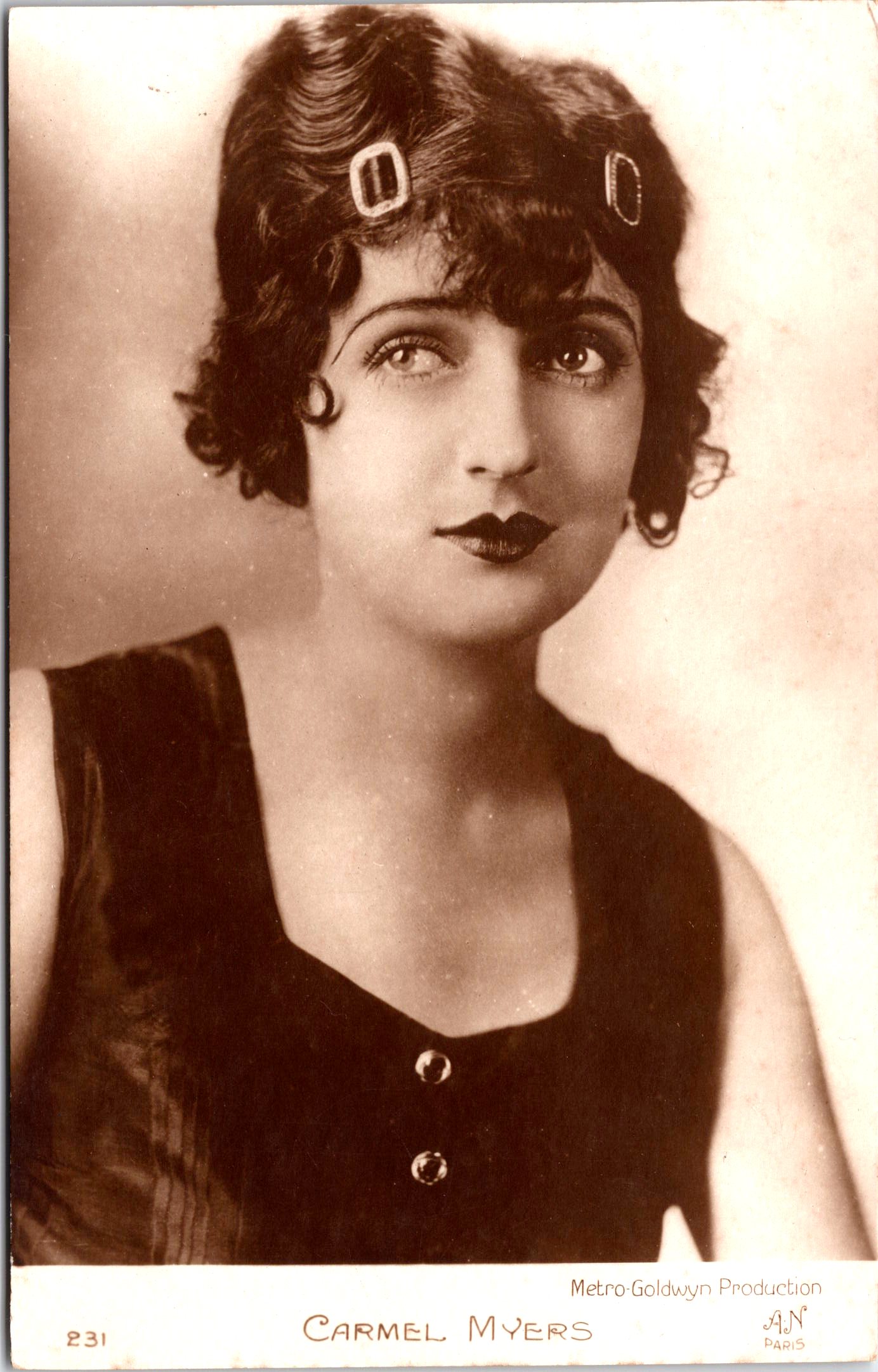
This vintage real photo postcard features American silent and sound film actress, Carmel Myers (1899-1980). Carmel Myers was an extraordinary actress who captivated audiences during the early years of Hollywood. She had striking beauty, magnetic screen presence, and versatile talent. Myers was born in San Francisco to Jewish immigrants. Her father was a Rabbi from Russian and her mother was from Austria-Hungary. She grew up in a theatrical household and was exposed to the performing arts from a young age. She participated in both school plays and local theater productions. At the age of 16, Carmel Myers made her professional debut on stage, impressing both critics and audiences with her natural talent. It wasn’t long before she gained the attention of film producers. In 1916 she made her screen debut in the silent film “The House of Mystery”. This was the start of a more than twenty year career in the film business. During the silent film era, Carmel Myers became one of the most sought-after actresses in Hollywood. Known for her expressive eyes, graceful movements, and remarkable versatility, she effortlessly transitioned between comedic and dramatic roles. Her notable films during this period include “Ben-Hur” (1925), where she portrayed the seductive courtesan Iras. Many of her early roles were playing a “vamp”. Carmel Myers was also an early advocate for actors’ rights and was instrumental in establishing the Motion Picture Artists Association. She fought for fair wages, better working conditions, and creative control for performers, contributing to the formation of movie industry unions. With the advent of sound in films, Carmel Myers smoothly made the transition from silent movies to “talkies.” Her resonant voice and impeccable timing added another dimension to her performances. She starred in a range of films throughout the 1930s, including comedies, dramas, and musicals, collaborating with renowned directors and actors of the time. her most popular sound films were “Svengali” (1931) and “The Mad Genius” (1931). Her final film appearance was in the 1945 production of “Blonde Ransom,” marking the end of her illustrious acting career. However, Myers remained involved with both radio and television. Carmel Myers lived a private life outside of the spotlight, rarely divulging details about her personal affairs. She was married three times, first to an attorney and song writer in 1919, in 1929, she married a second attorney, and thirdly, she married a Paramount Pictures executive in 1951. Her first two marriages ended in divorce, and her third marriage ended with her husband’s death. After her husband’s death, she wrote a book about handling grief effectively. After retiring from acting, Carmel Myers devoted herself to philanthropy and community work. She supported various charitable organizations and advocated for social causes.
Postcard 1 was published by A. Noyer and is of French origin. The card has the MGM logo on it’s front. (SOLD)
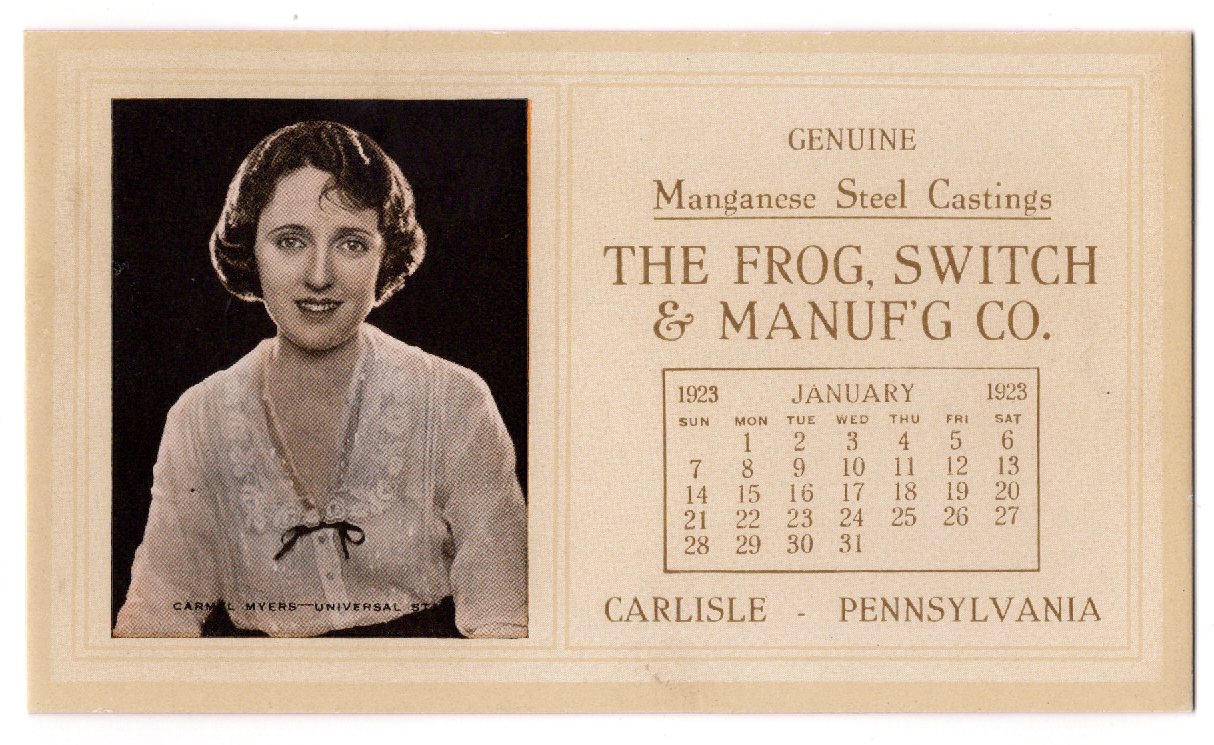
Blotter 1 is a vintage ink blotter that advertises the Frog Switch & Manufacturing Company, located in Carlisle, Pennsylvania. The blotter has a calendar for January, 1923. The blotter also features a photograph (litho) of Carmel Myers. (SOLD)
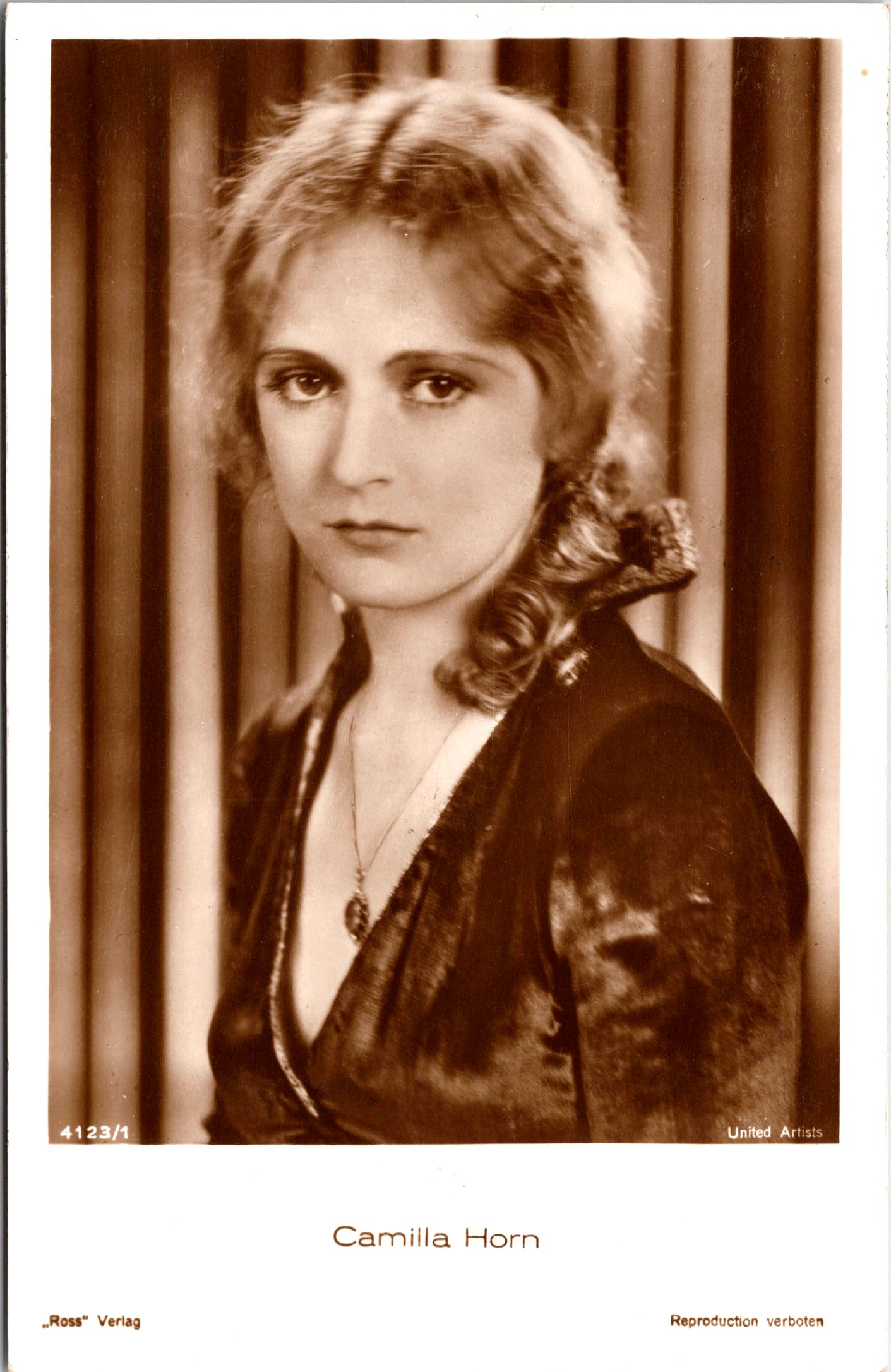
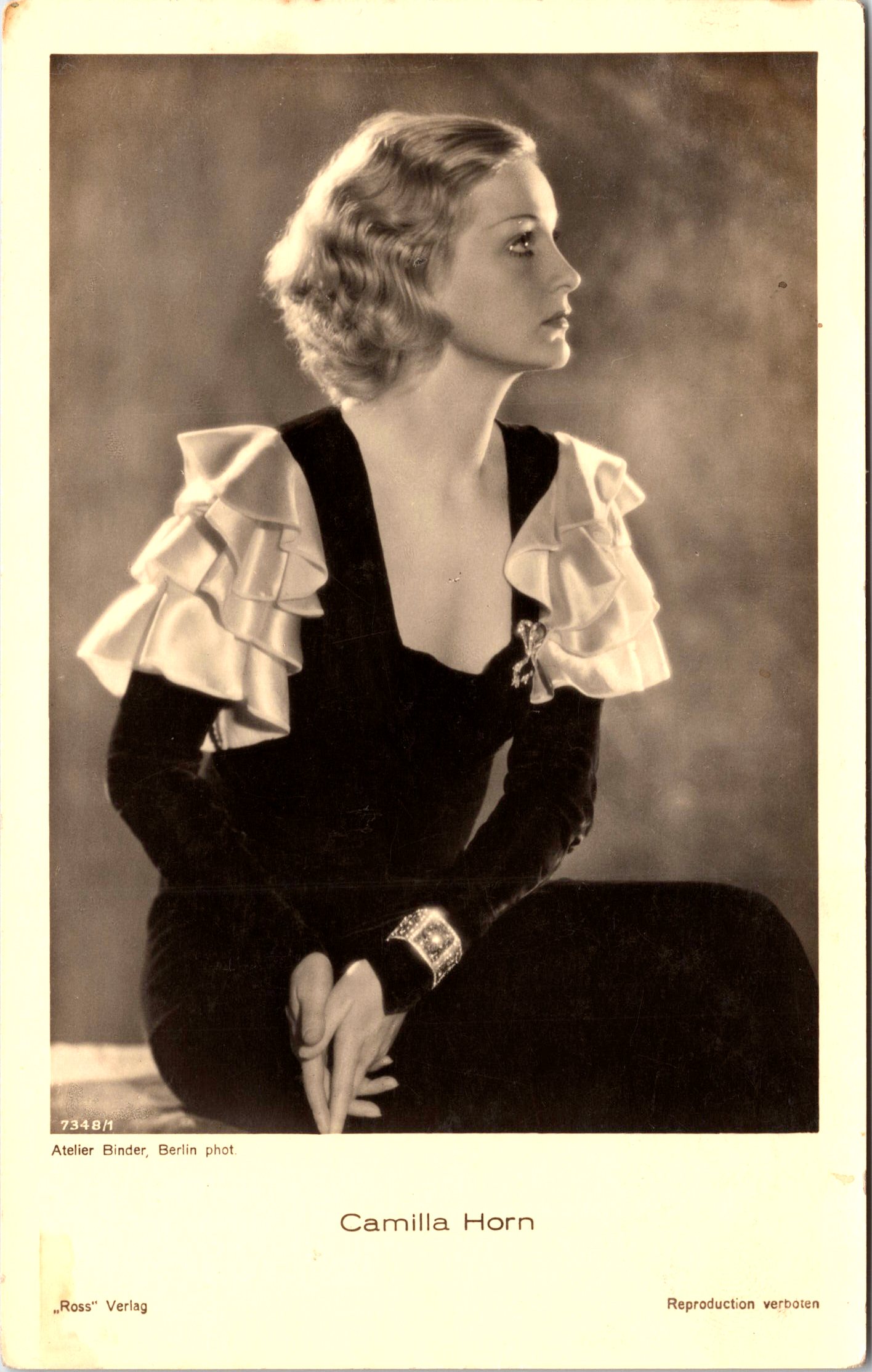
These vintage real photo postcards feature German dancer and film star of the silent and sound era, Camilla Horn (1903-1996). She also was an internationally known actress, starring in several Hollywood films of the late 1920’s as well as a few British and Italian productions. Her father was a civil servant working in the Railroad Industry. She was born in Germany and educated in Germany and Switzerland. Horn was educated to work as a dressmaker. She went to Berlin where she trained as an actress and dancer. She next became a cabaret dancer. In 1925, she worked as an extra in a German film. Her big break came in 1926 after she replaced Lillian Gist in the UFA production of “Faust”. In 1928 she left for Hollywood where she played opposite John Barrymore in “Tempest” and “Eternal Love”. She became romantically involved with film director, Joseph Schenck. She returned to Europe (upon the advent of sound film) and in the 1930’s got in trouble with the Nazis and was prosecuted for an alleged financial offense. During the war years, she was too outspoken against the Nazis. The regime investigated her. She tried to escape unsuccessfully to Switzerland. Thereafter, she kept a low profile. After the war, she was convicted by a British tribunal and sentenced for three months of jail due to some minor offenses. It was also reported that post war, she worked as an interpreter for occupying American forces. Horn was a screen star from 1930 until her retirement in 1953. Horn was married four times during her life. Interestingly, in about 1972 Bruce Springsteen wrote a song about her. Camilla Horn was quite beautiful. She had blonde hair, slanting brown eyes and classical features.
Postcard 1 was published by Ross Verlag as part of a series (No.4123/1). The logo for “United Artists” can be seen in the lower right hand corner of Horn’s image. This postcard has a 1930 postmark. (SOLD)
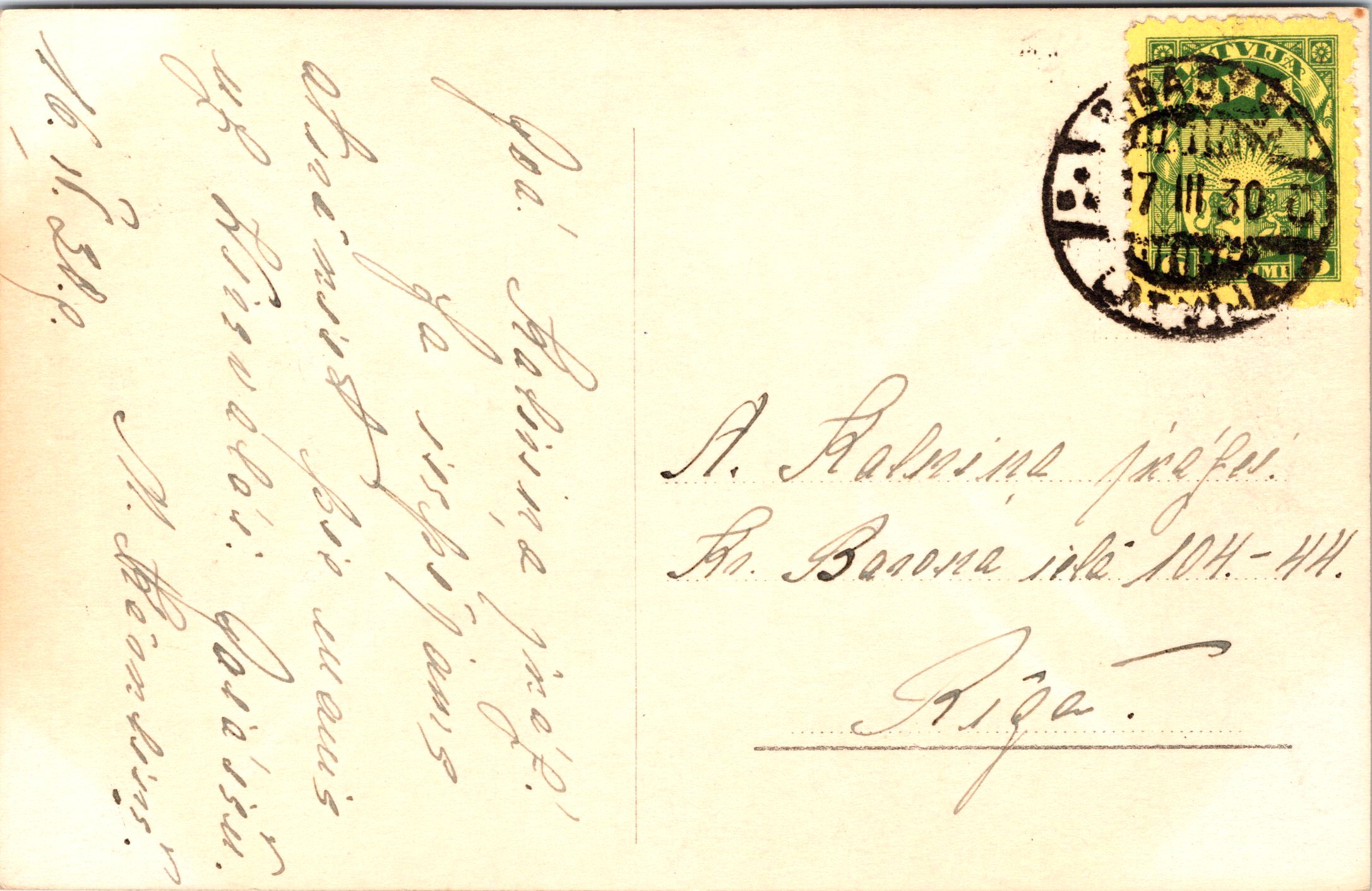
Postcard 2 was published by Ross Verlag as part of a series (No.7348/1). The card has a Latvian stamp and postmark. (SOLD)
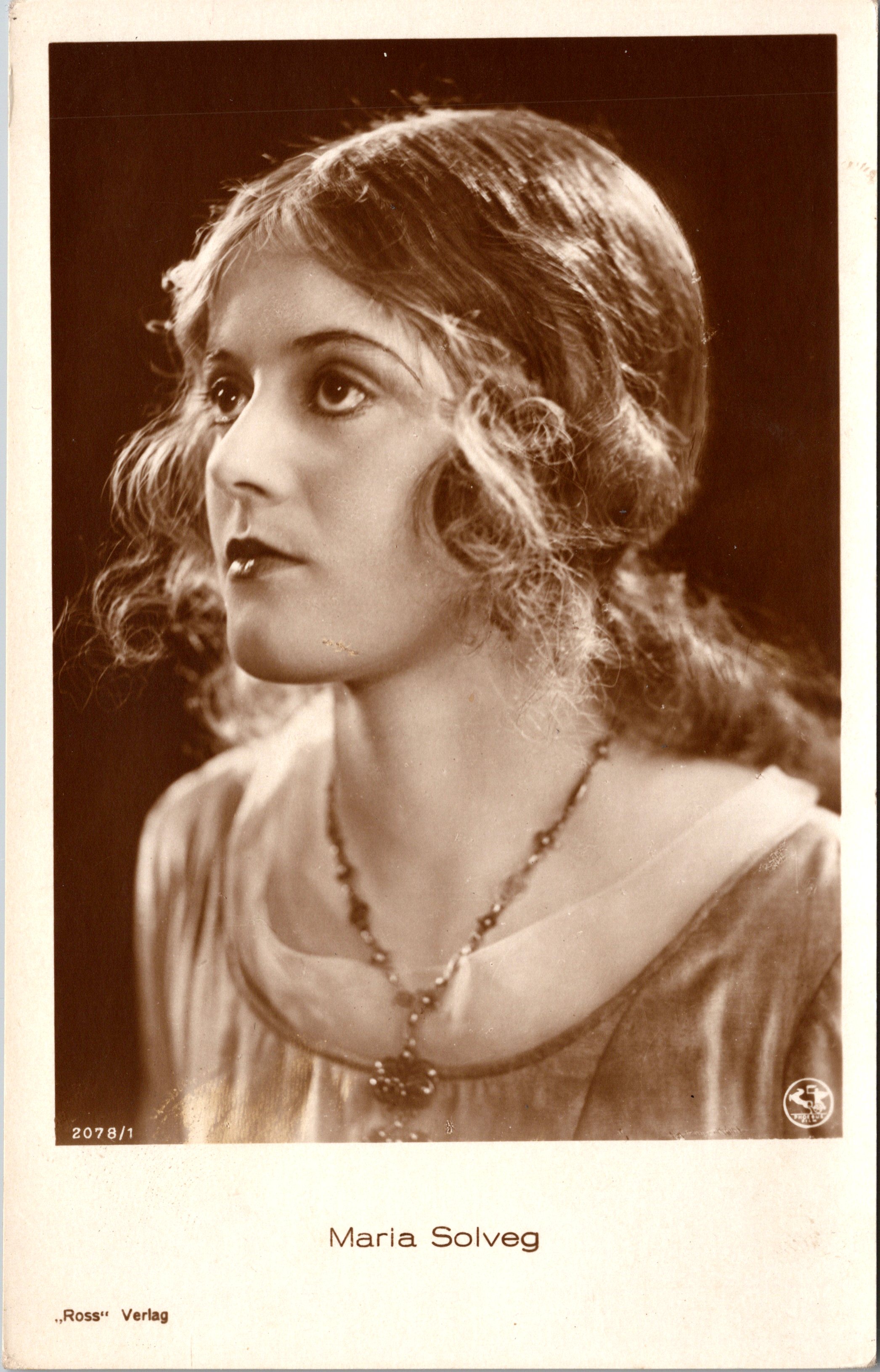
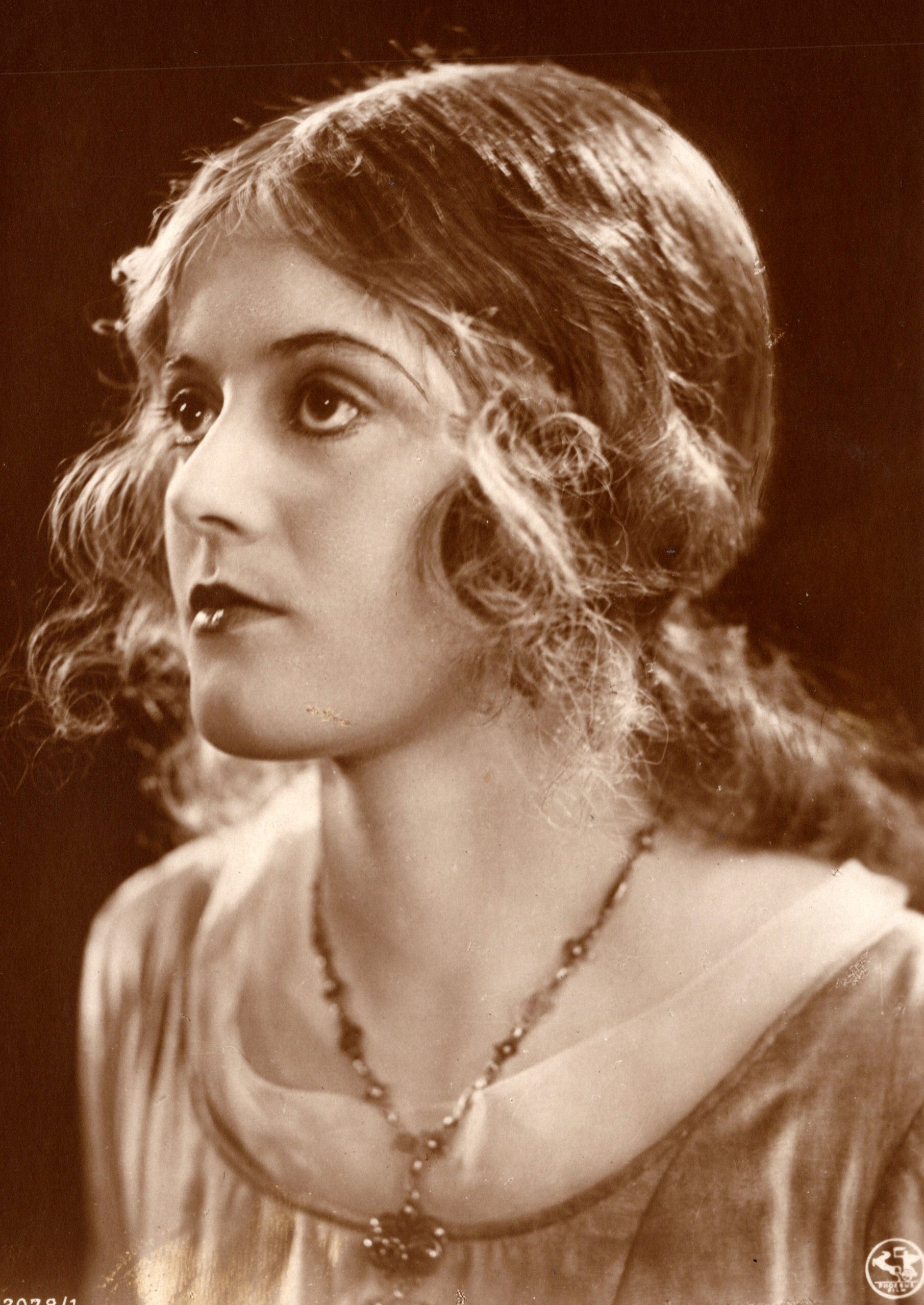
This vintage real photo postcard features German film actress, dancer, and screenwriter Maria Solveg (1907-1993). She was also known as “Maria Matray”. Solveg was a star of the late Weimar film era. She married her mentor, director and choreographer, Ernst Matray. When Hitler rose to power, Solveg, who was Jewish, fled the country. She came to the United States in 1936 and launched a career as a choreographer and writer. She worked in Hollywood as a choreographer or assistant director during the 1940’s. Her well known movies included “The Hunchback of Notre Dame” (1939), “Pride and Prejudice” (1940), and “Dr Jekyl and Mr Hyde” (1941). In the 1950’s she wrote scripts for television. She became a German citizen again in 1960. The IMDb gives Solveg 52 credits for writing and 22 acting credits. This postcard was published by Ross Verlag as part of a series (no.2078/1). (SOLD)
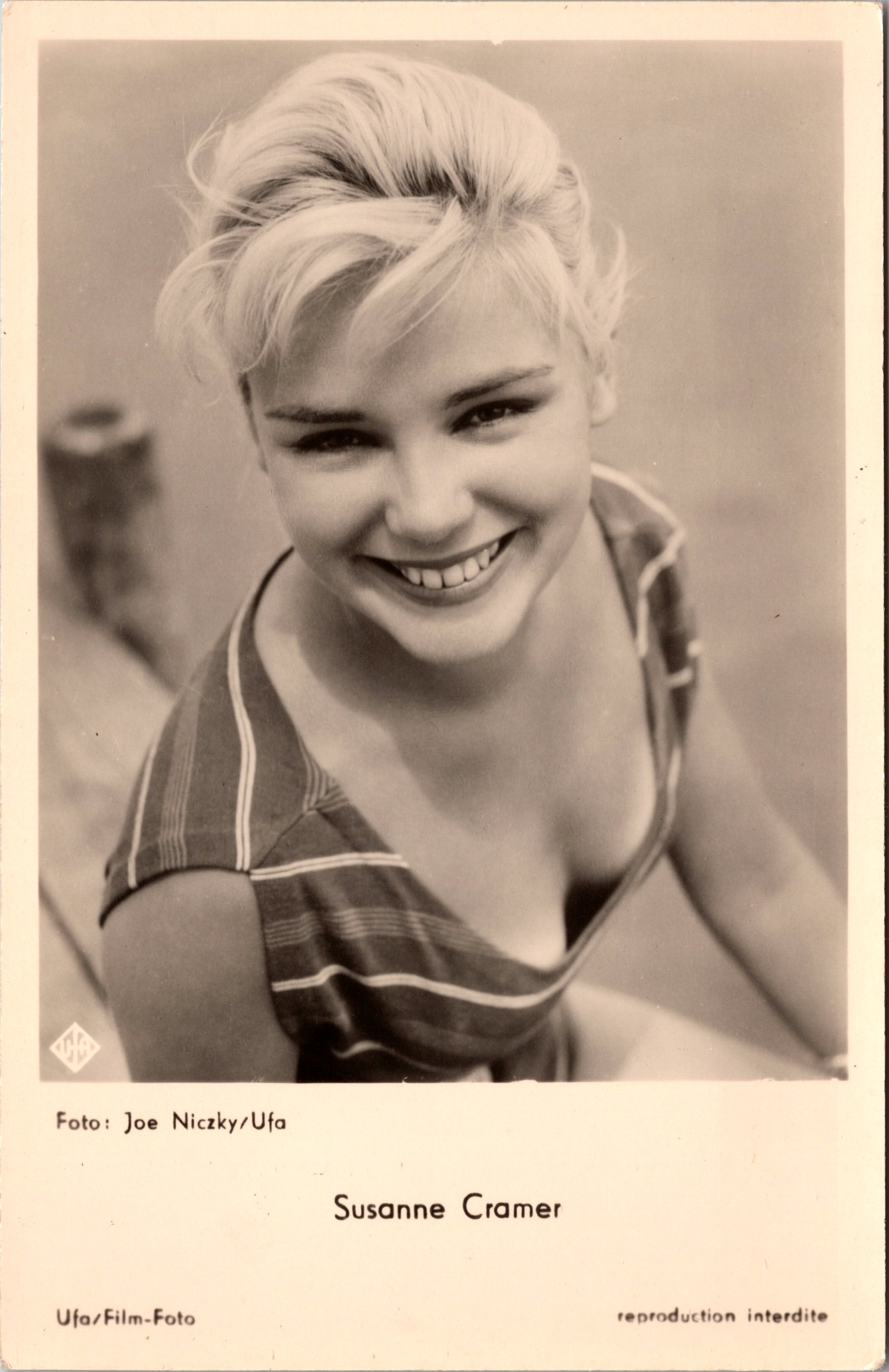
This risque vintage real photo postcard features German film and television actress, Susanne Cramer (1936-1969). She was born in Germany and died at the age of 32 in Hollywood. Her cause of death was pneumonia. During a six year career on American television (1963-1969) she appeared in popular shows, such as “The Man From Uncle”, “Perry Mason”, “Get Smart” and “Hogan’s Heroes”. The IMDb lists Cramer’s filmography as having 46 credits between 1956 and 1969. She began her career in Germany, working in theater and shifting into films. Cramer’s had an unstable private life. She was married five times. One of her husbands she married twice. Her first two marriages were to actors. The first marriage lasted a year and the second marriage ended after five months. During her first marriage, she had two suicide attempts. Her longest marriage was of two year duration. This vintage postcard is in very good condition (see scans).
Buy this Real Photo Vintage Postcard (includes shipping within the US) #5165
To purchase this item, click on the Pay with PayPal button below
$20.00
Buy this Vintage Real Photo Postcard (includes International shipping outside the US) #5165
To purchase this item, click on the Pay with PayPal button below
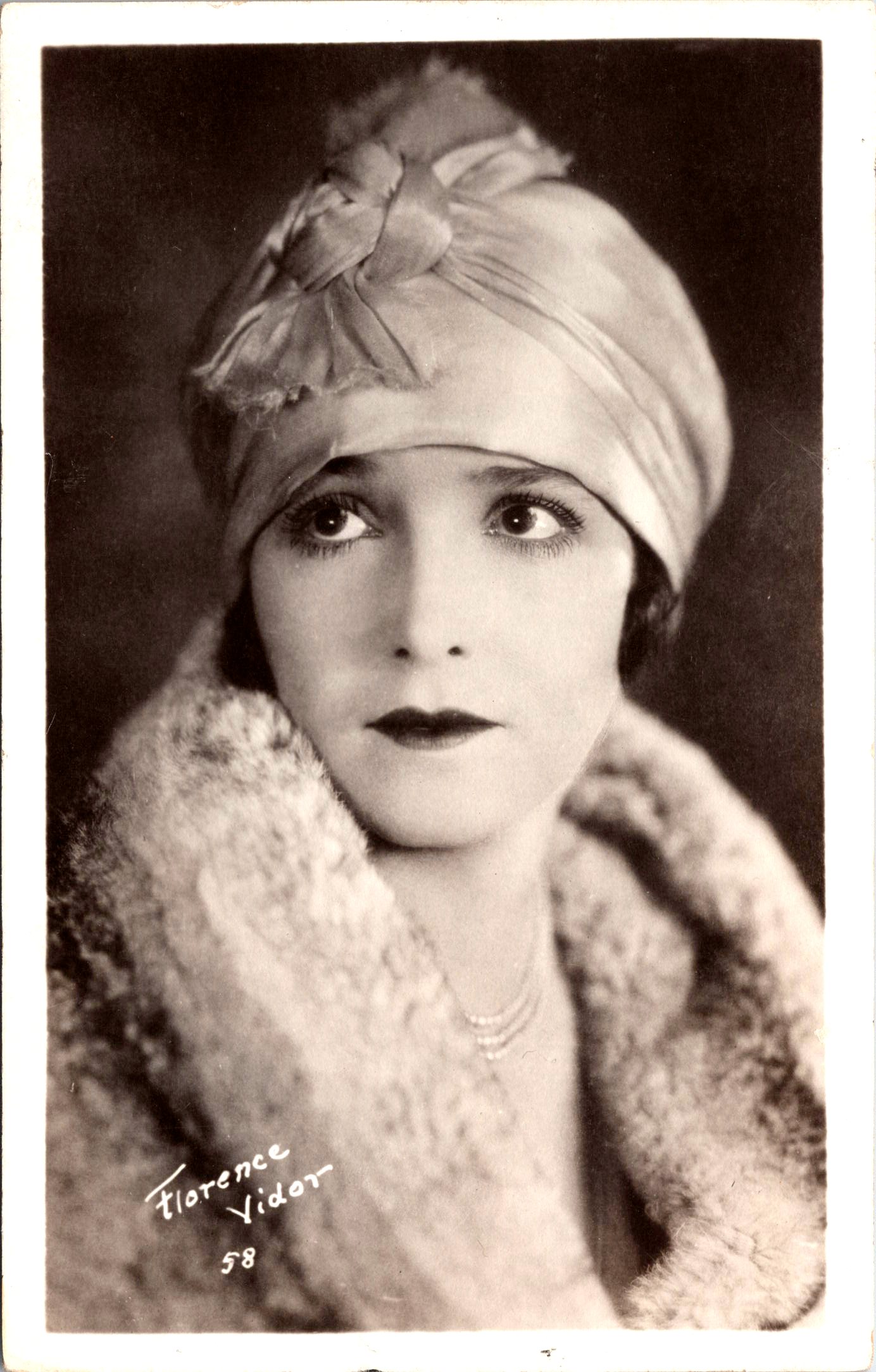
Postcard 1 is a vintage real photo postcard featuring silent film actress Florence Vidor (1895-1977). Florence was born in Houston, Texas. She began working in silent films due to the influence of her husband, King Vidor. He was a film director, film producer, and screenwriter. The pair married in 1915. Her first film contract was with Vitagraph Studios in 1916. She became a well known actress after her appearance in “Hail the Woman” (1921). Florence was noted to be one of early Hollywood’s great beauties. During the 1920’s, she was a major star for Paramount Pictures. She was the leading lady to actors Sessue Hayakawa and “drag star”, Julian Eltinge. She also acted for director Cecil B. DeMille. Sound films brought about the end of her performing career. In fact, she had so much difficulty with sound films, that she retired from acting before finishing the movie in which she was appearing. Florence divorced her husband in 1924. She married the talented and popular classical violinist, Jascha Heifetz in 1928. Their marriage ended in divorce in 1945. This photo portrait postcard can be found in the collection of the National Museum of American History (Smithsonian Institute). This vintage postcard is uncommon. SOLD
Postcard 2 was published by Alfred Noyer as part of a series (No.351). Note the logo for Paramount Films in the bottom right hand corner of the image. SOLD



















 THE CABINET CARD GALLERY