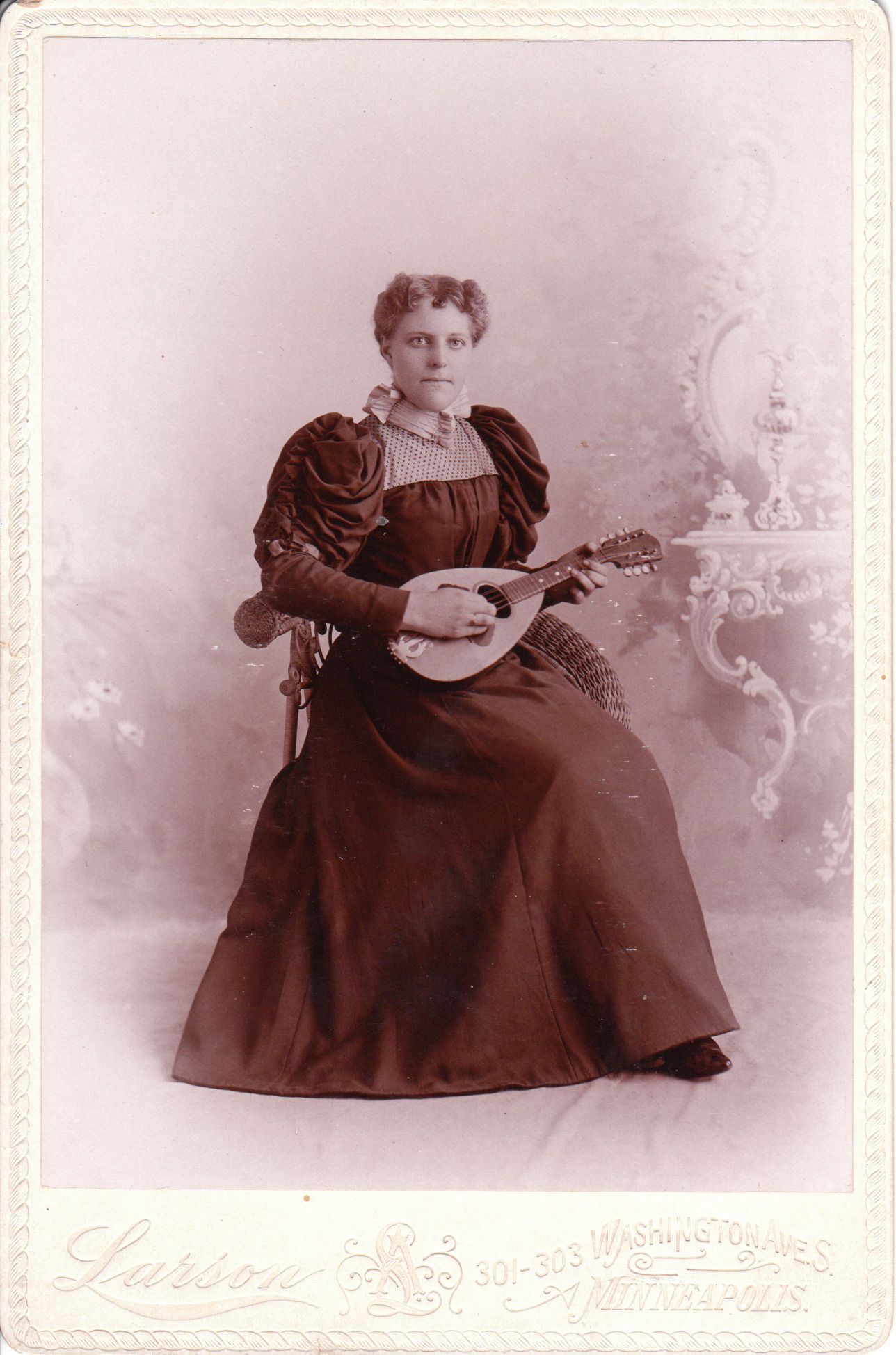
 This cabinet card portrait presents a formally posed woman seated with a mandolin cradled in her lap. The photograph is the work of Larson, a professional photographer operating out of 301–303 Washington Avenue South, Minneapolis, Minnesota, as embossed on the card mount. The woman gazes directly at the camera with a composed, self-assured expression—serious, yet approachable. Her hair is carefully curled and parted, a fashionable look for the late 19th century. She wears a high-necked dress in the style typical of the 1890s, featuring leg-of-mutton sleeves (voluminous at the shoulder and tapering to the wrist), which were highly popular during that time. The bodice of her gown is accented with a checkered or textured insert, and she wears a decorative bow or tie at the collar—adding to the refined, modest elegance of her ensemble. Her appearance suggests that she may have been of middle-class status, and possibly musically trained or involved in performance or amateur music circles. The instrument she holds is a mandolin, distinguished by its tear-drop shape and small, bowl-back body. Mandolins were popular instruments in the late Victorian era, especially among women, as they were considered both genteel and suitable for parlor entertainment. Her grip on the instrument appears practiced—though whether she was photographed in the midst of playing or simply posing with it, we cannot be sure. Still, her inclusion of the mandolin signals her musical ability or at least her cultural refinement. The photo was taken by the Larson Studio, located at 301–303 Washington Ave. S., Minneapolis. Herman Larson was a Swedish immigrant who came to America through Sweden in the early 1900’s. In Sweden, he held a degree of Master Photographer and was knighted by the King of Sweden for his excellent work there in the late 1800’s. In 1904 he established his photography studio in downtown Minneapolis. Much of Larson’s work came from the theological, church and public schools in the area. The studio remains in business today and its web site discloses that it still possesses Larson’s panoramic circuit camera. (SOLD)
WOMAN AND A MANDOLIN IN MINNEAPOLIS, MINNESOTA

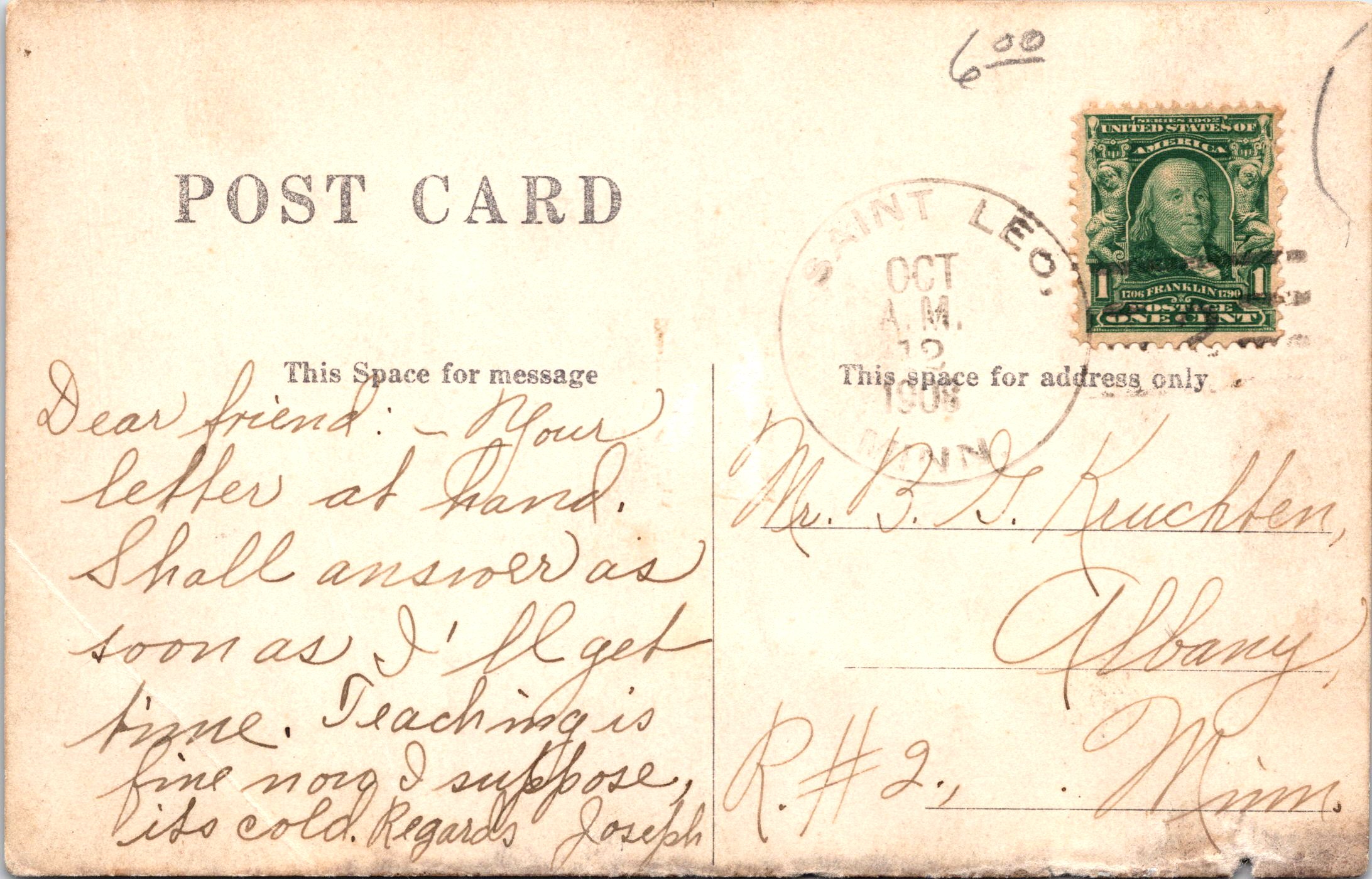
ST. LEOS SCHOOL : ST. LEO, MINNESOTA : WITH CHILDREN & TEACHER : RPPC : 1908
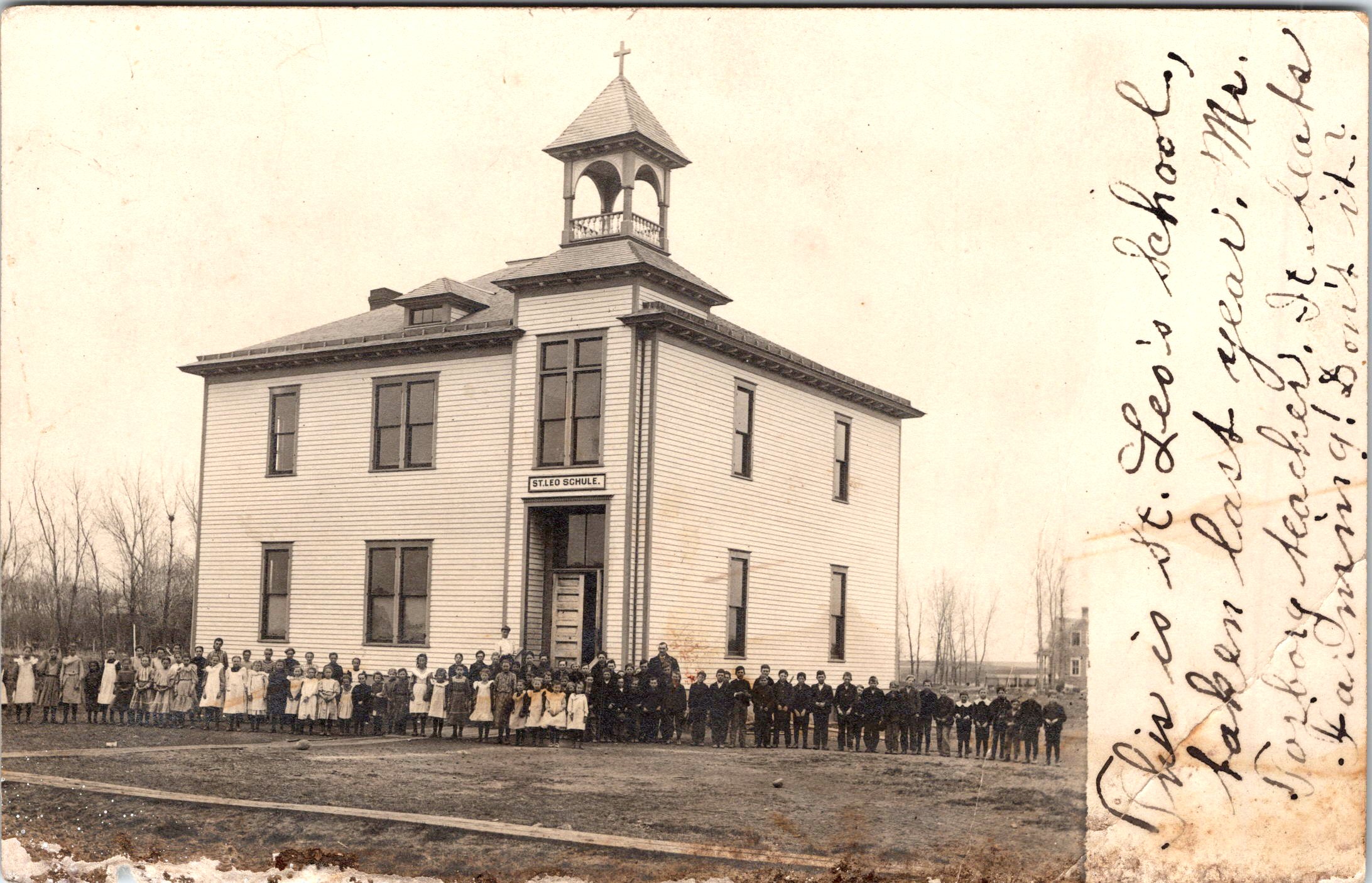
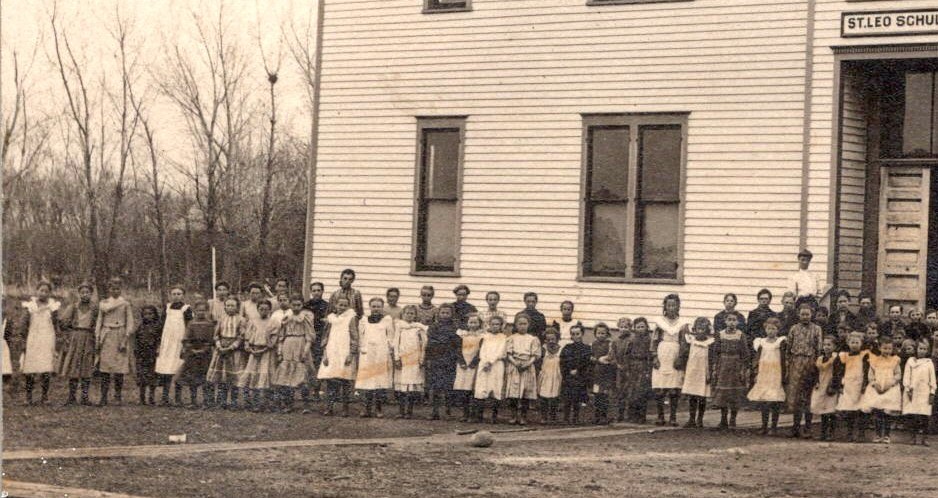
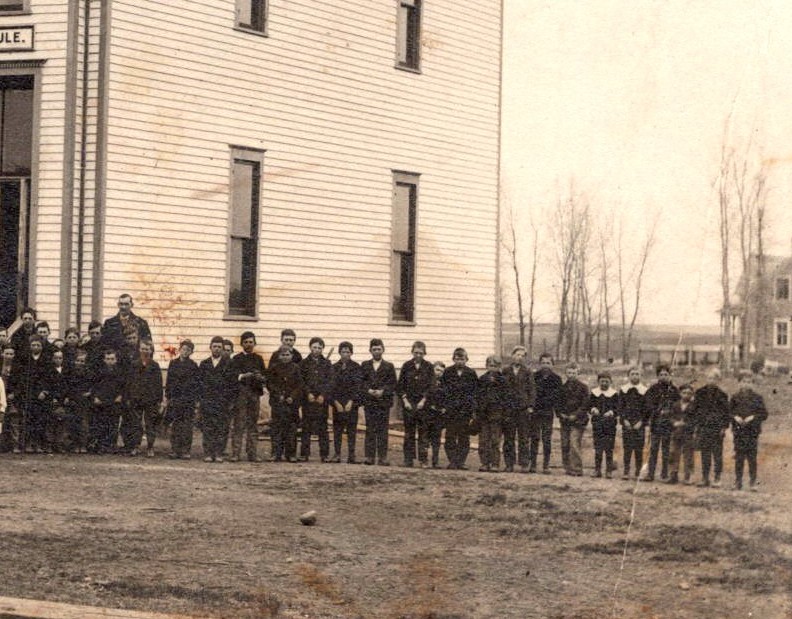
This real photo postcard captures a moment in time outside St. Leo’s School, a two-story wooden schoolhouse with a central bell tower topped by a cross. The sign above the doorway clearly reads “ST. LEO SCHULE,” suggesting a German influence in the local community. The school stands in what appears to be a rural area, with a few trees and a distant building visible in the background. In front of the school, a large group of schoolchildren—boys and girls of various ages—stand in an orderly line. The girls are dressed in long skirts or dresses, many wearing aprons over them, while the boys are attired in dark suits, jackets, and trousers, appearing more formal. A single teacher, possibly Joseph, who wrote the message on the card, stands among them, dressed in a longer coat. The handwritten inscription on the front of the postcard identifies the scene:“This is St. Leo’s School, taken last year. My school, St. Leo’s, So. Min.” On the back, a brief note is addressed to Mr. B. S. Kuchen in Albany, Minnesota, and is signed Joseph. He mentions receiving a letter and promises to respond soon, adding: “Teaching is fine now I suppose. It’s cold. Regards, Joseph.” The postmark is from Saint Leo, Minnesota, dated October 12, 1908, and features a one-cent Benjamin Franklin stamp. This postcard is a wonderful historical artifact, offering a glimpse into early 20th-century rural education in Minnesota. The presence of a German-language school sign and the formal attire of the children suggest a tight-knit immigrant community. (SOLD)
RED CROSS NURSE : FEMALE PHOTOGRAPHER : VINTAGE FOLDER PHOTO : BRAINERD, MINNESOTA
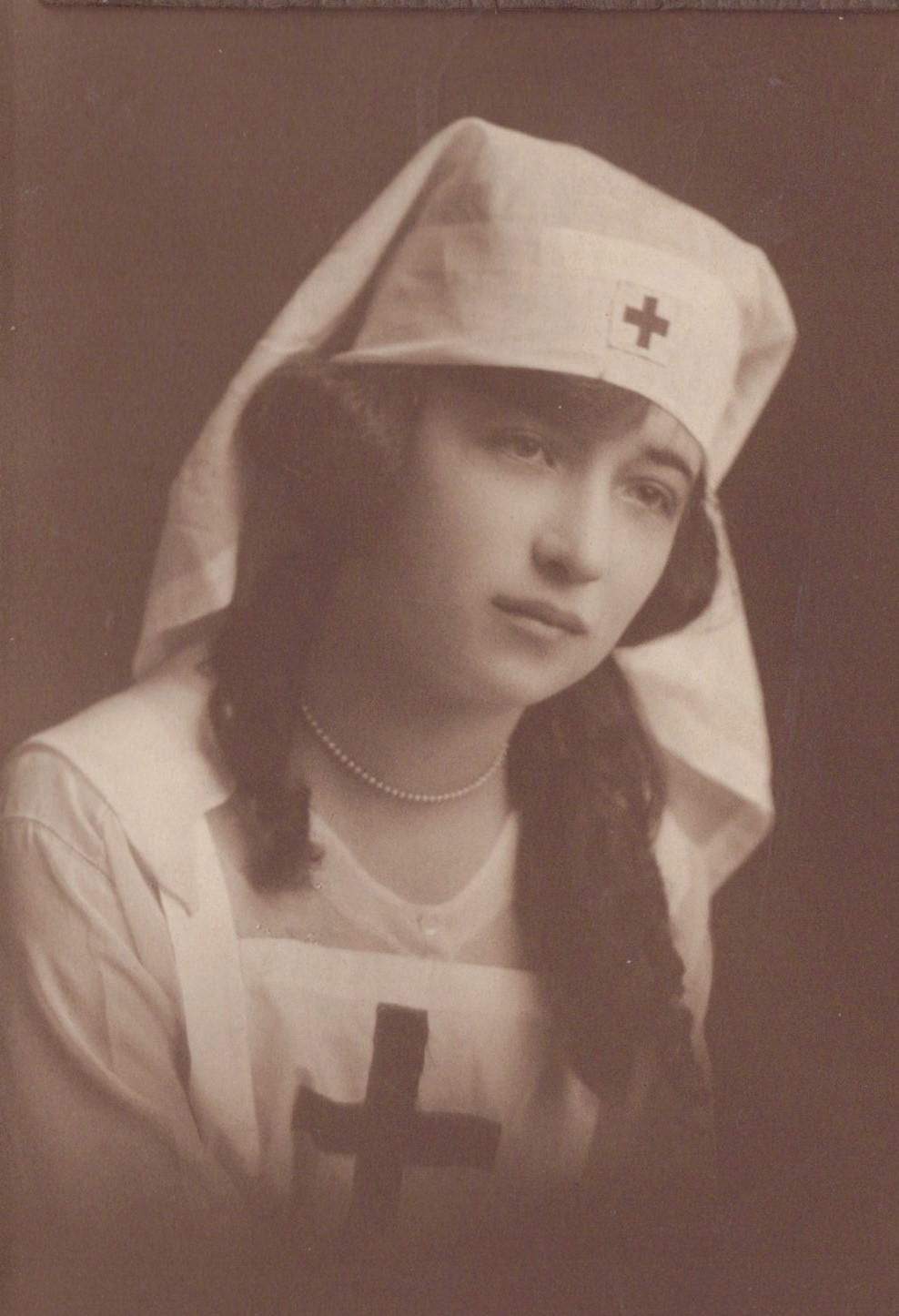
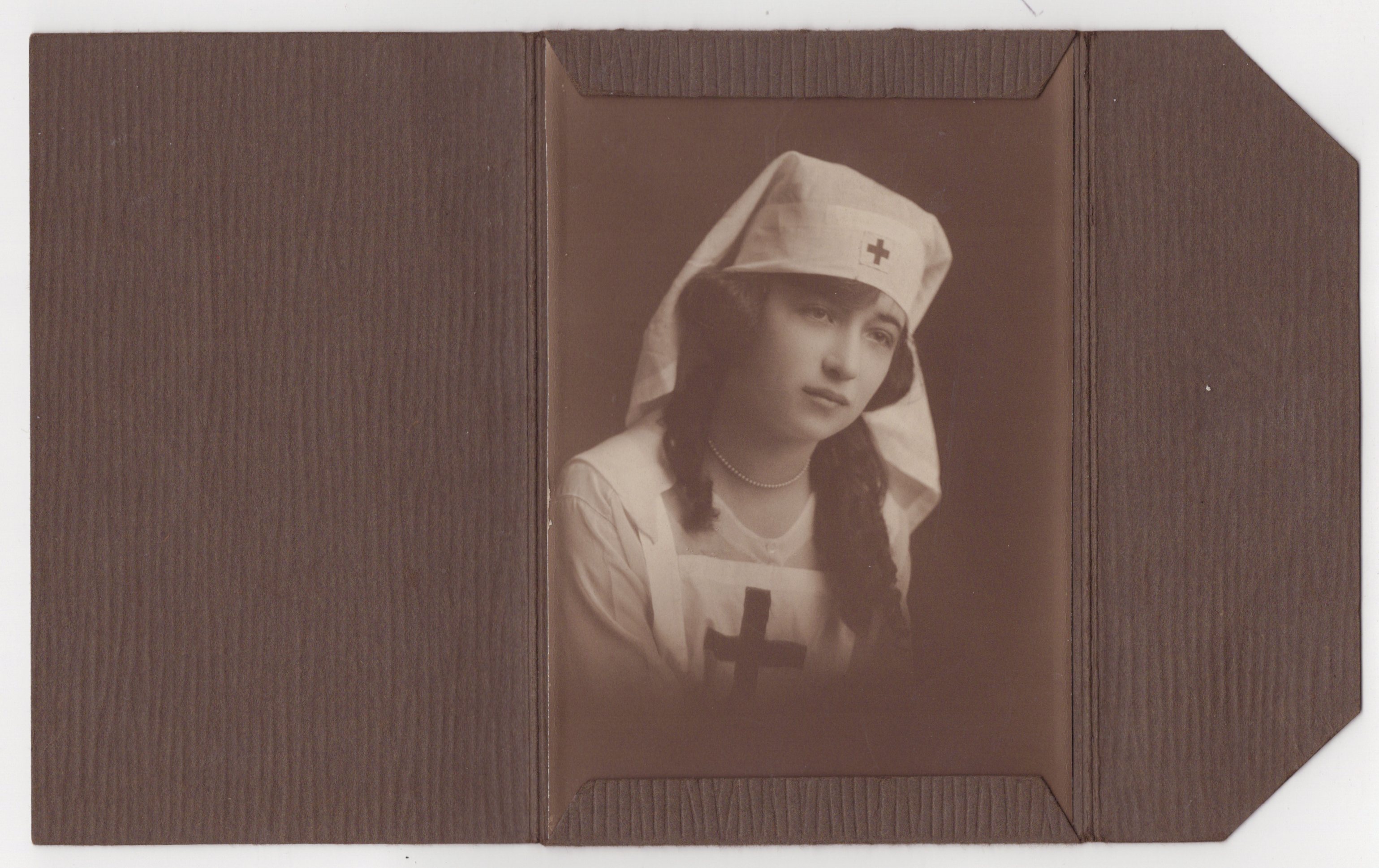
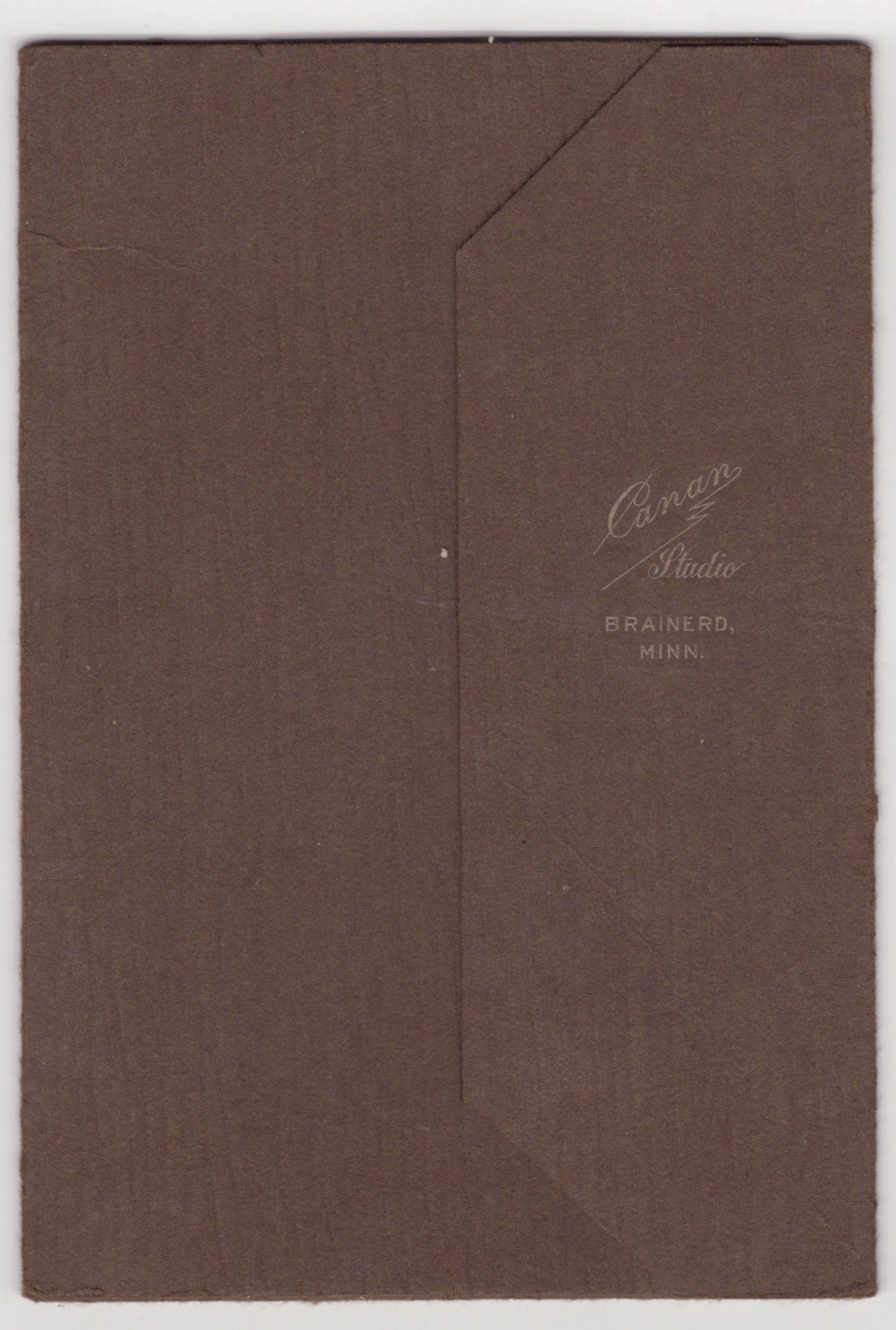
This vintage folder photograph features a portrait of a young pretty Red Cross nurse. Note her detailed uniform. She was photographed by the Canan Studio in Brainerd, Minnesota. The photographer was Marie Ann Canan (1869-1944), a female photographer in Brainerd for many years. She operated a studio at 209 1/2 South Seventh Street (1901-1902) and at 616 1/2 Front Street (1905-1925). Both of these studios were in Brainerd. Female photographers were the exception, not the rule, during the time this photograph was taken. SOLD
A GENTLEMAN WITH A TERRIFIC MUSTACHE IN ST. PAUL, MINNESOTA
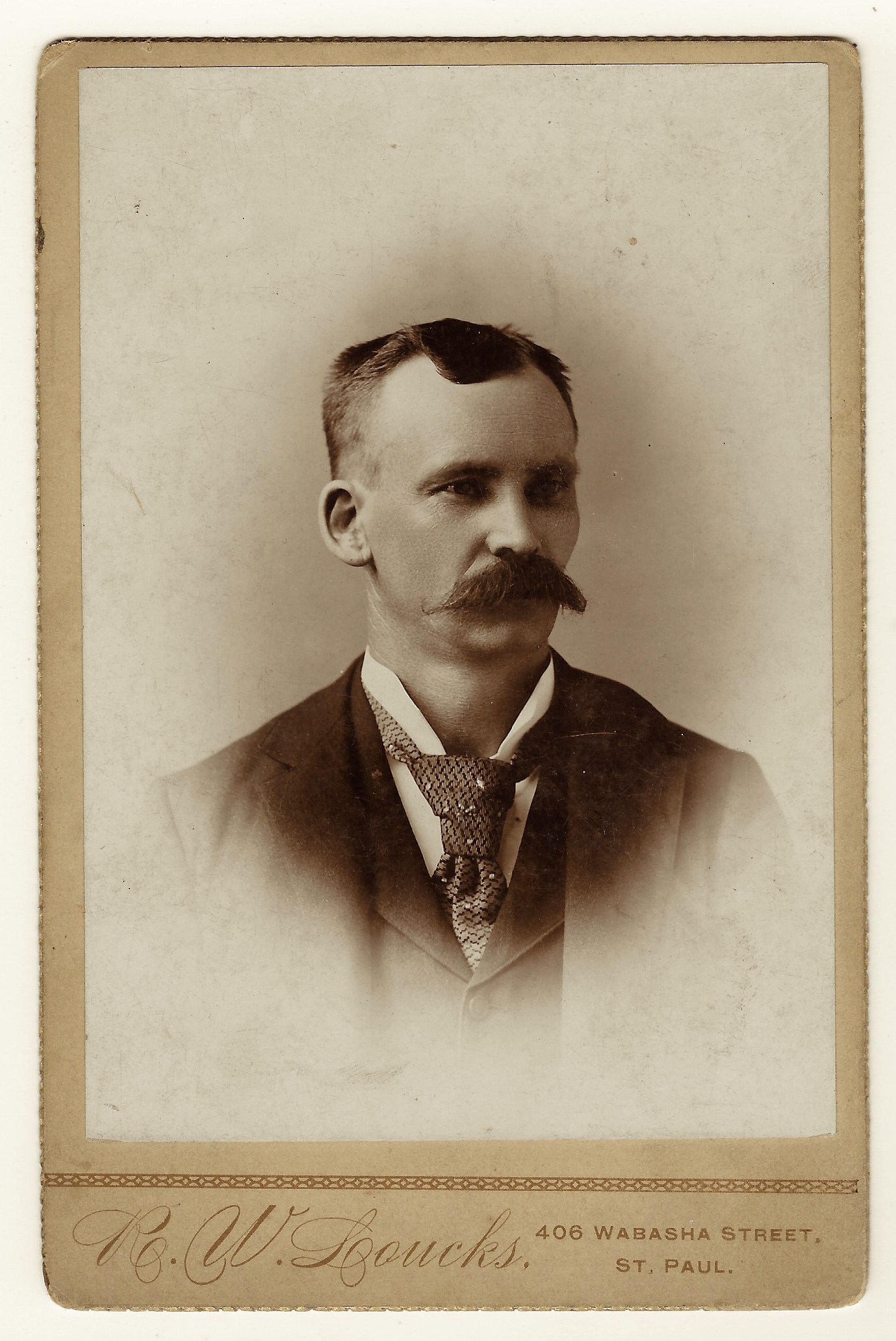
A well dressed man poses for his portrait at the studio of R. W. Loucks in St. Paul Minnesota. He is wearing a wide neck tie with an even wider knot. The gentleman has a wonderful well groomed mustache. He is displaying a serious demeanor as he poses for this cabinet card image. The Minnesota Historical Society’s directory of early Minnesota photographers reveals that R. W. Loucks worked as a photographer in Minnesota during the 1890’s and 1900’s. His St. Paul addresses included 405 Wabasha (1893-1894) and 225 East Seventh (1897). He also had studios in Minneapolis; 1221 Washington Avenue North (1898-1902) and 28 Central Avenue (1903). This information asserts that the above photograph was taken during 1893 or 1894. Mr. Loucks appears in the 1900 US census. From this document we learn that he was born in Canada in 1850 and immigrated to the US in 1887. He was married to Anna L Loucks in 1877 and at the time of the census, lived with their twelve year old daughter named Lillian. SOLD
A MAN AND HIS BABY AND HIS DOG IN HALSTAD, MINNESOTA
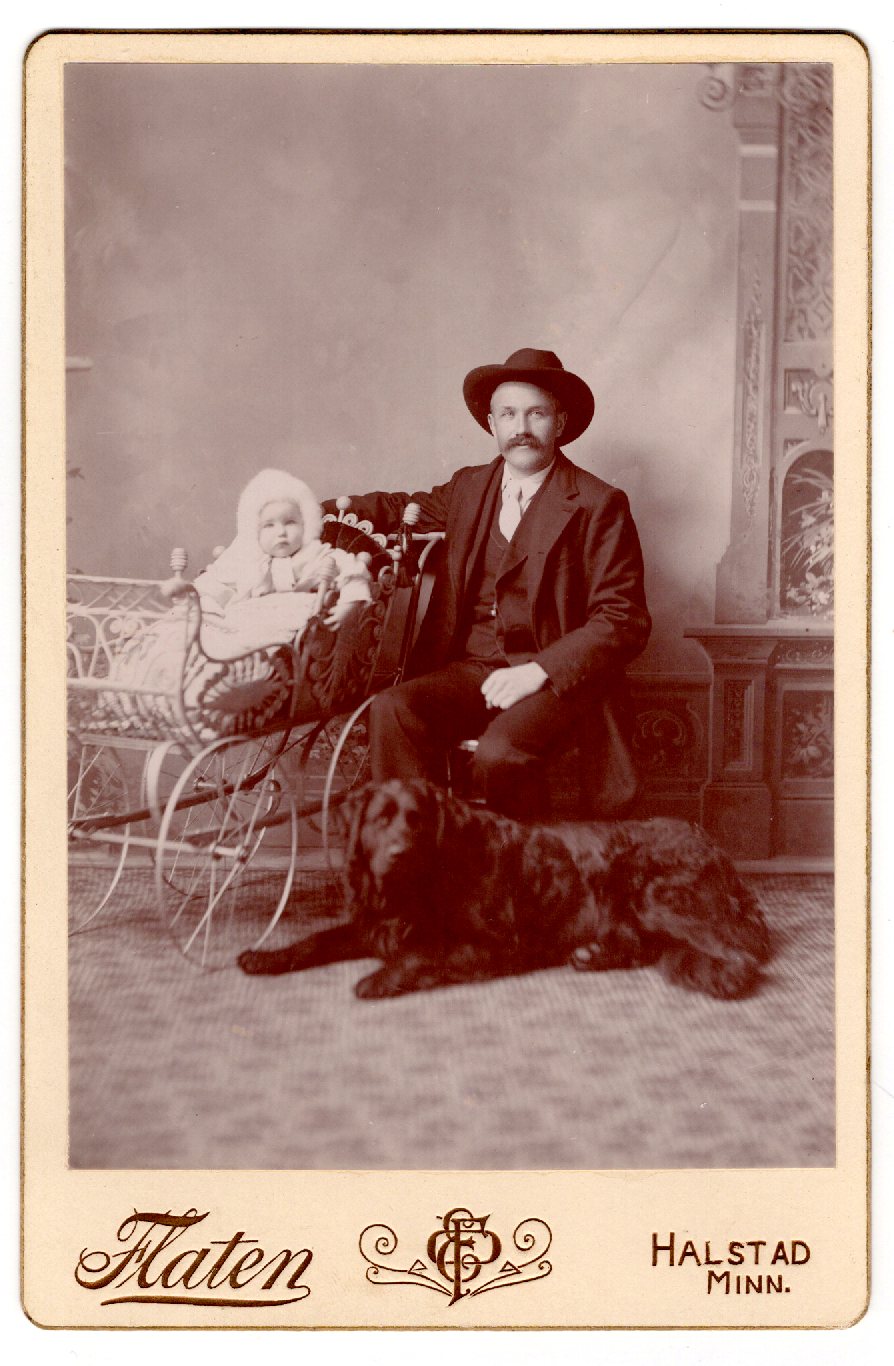
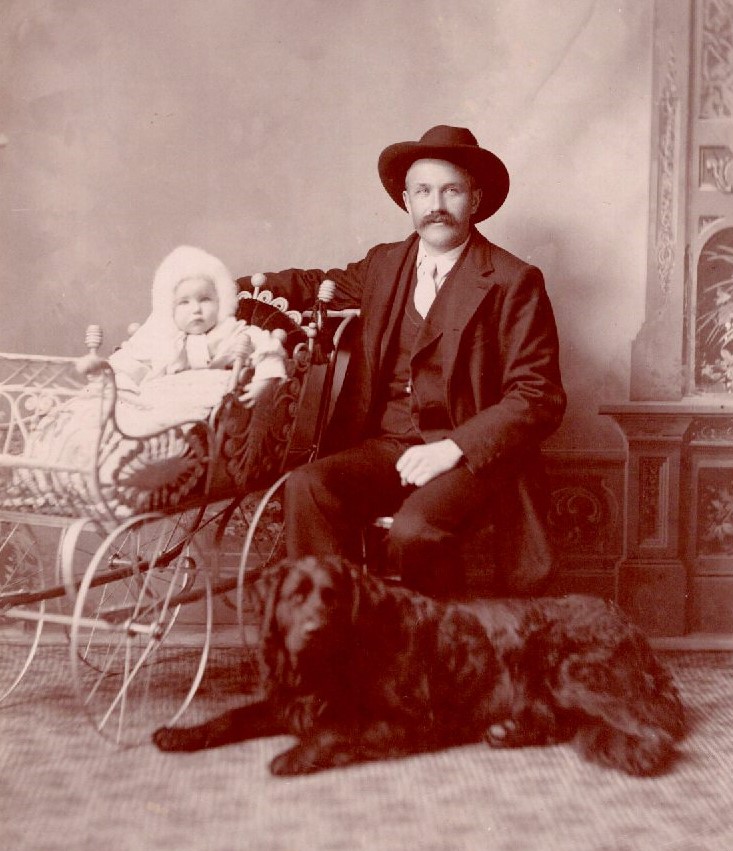
A man in western clothing, poses for his portrait along with his baby and dog. His arm is wrapped possessively around the back of the baby’s carriage. Lying in front of the man, is his loyal dog. The dog looks like a Labrador Retriever, but the previous owner of this cabinet card suggested that it resembles a New Foundland. This image is charming and warm. Where is this gentleman’s wife? Did she die in childbirth or by disease? Is she camera shy?. The answer, of course, is unknown. The photographer of this image is O. E. Flaten. Flaten’s studio was in Halstad, Minnesota. He produced a number of interesting photographic portraits of people living in the western United States. (SOLD)

SWEET BABY CHILLING IN WICKER CHAIR : ADA, MINNESOTA : CABINET CARD
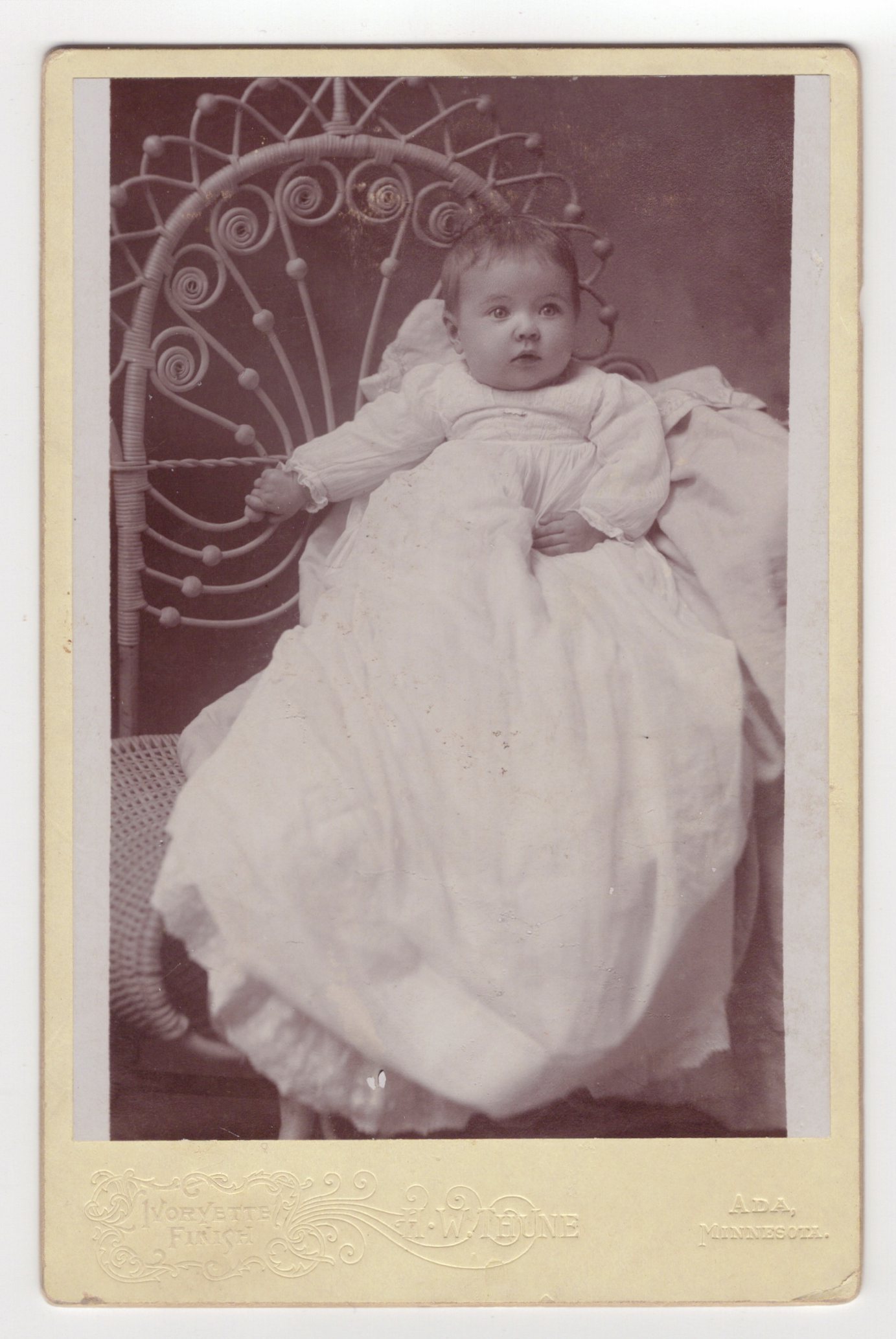
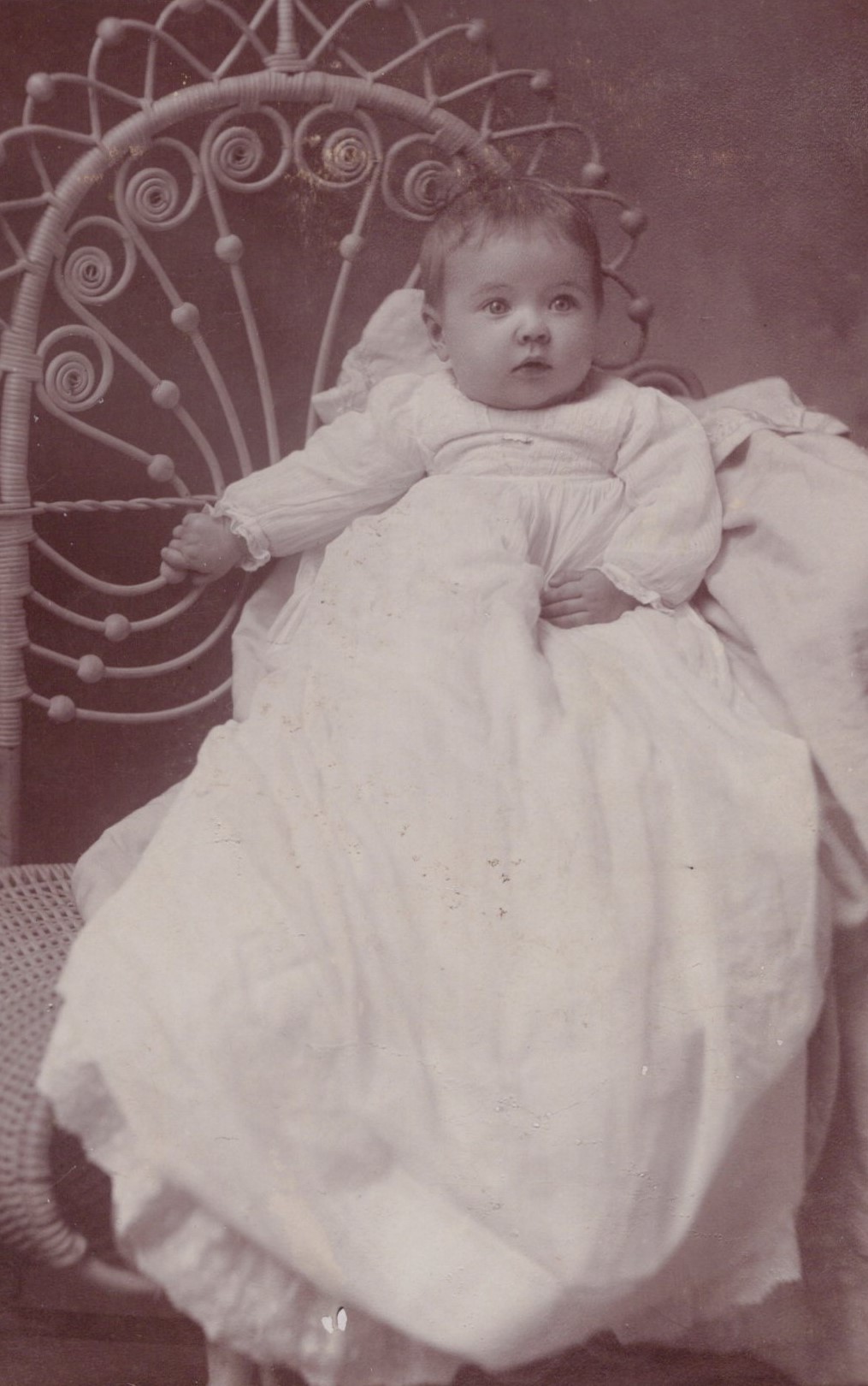
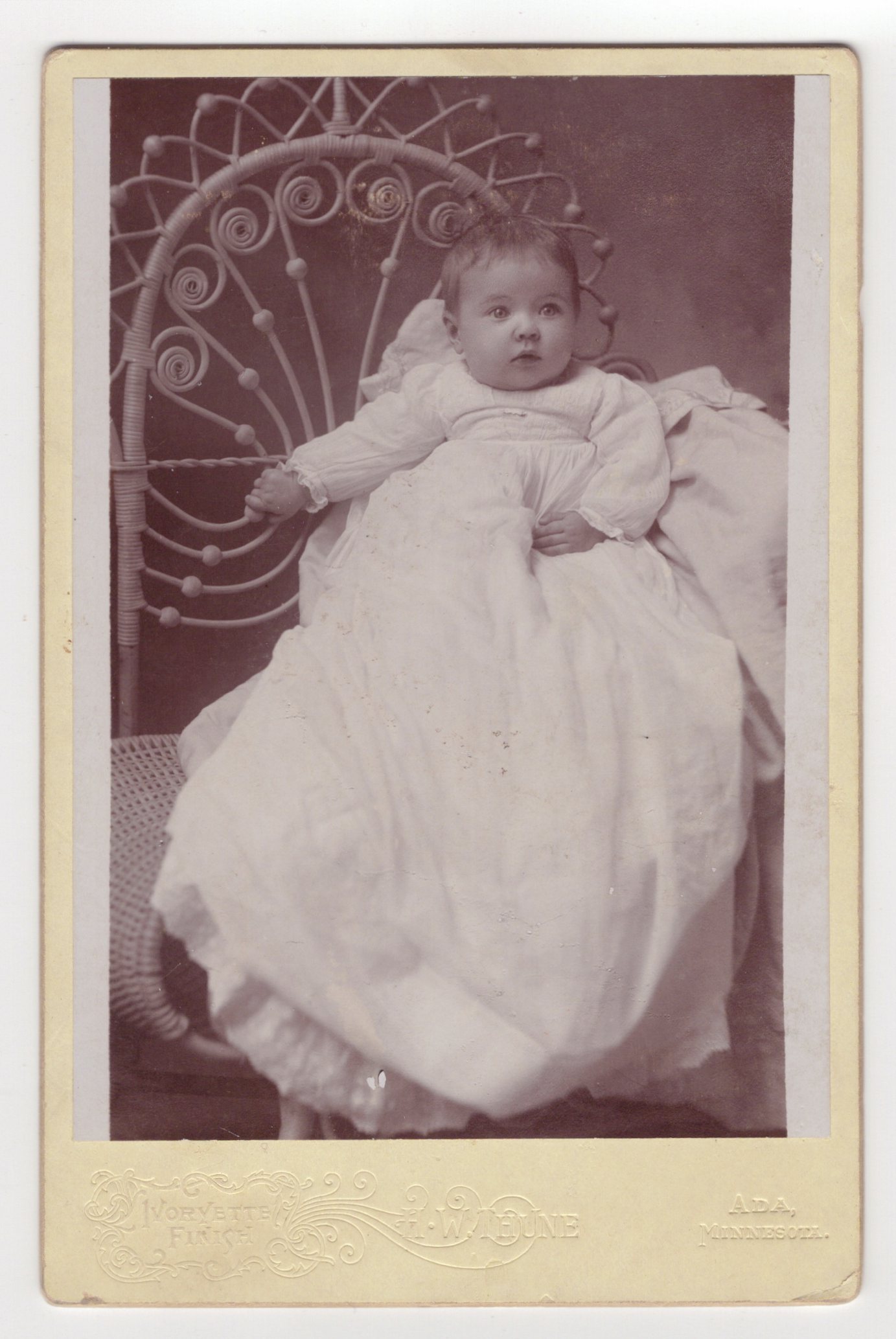
This cabinet card captures a very cute baby posing on a wicker chair. The baby is wearing a long gown and has a terrific sweet facial expression. The photographer is Halvor William Thune (1857-1932). He was born in Iowa of Norwegian native parents. He opened a gallery in Ada, Minnesota in 1883 and Thune still operated the gallery in the 1920’s. He was civically active and held a number of county and village offices including Mayor of Ada and Chief of the Fire Department. Thune also found time to operate his farm. This cabinet card has excellent clarity and is in good condition (see scans).
Buy this Cabinet Card Photograph (includes shipping within the US) #5609
To purchase this item, click on the Pay with PayPal button below
$24.00
Buy this Vintage Original Cabinet Card (includes International shipping outside the US) #5609
To purchase this item, click on the Pay with PayPal button below
$34.00

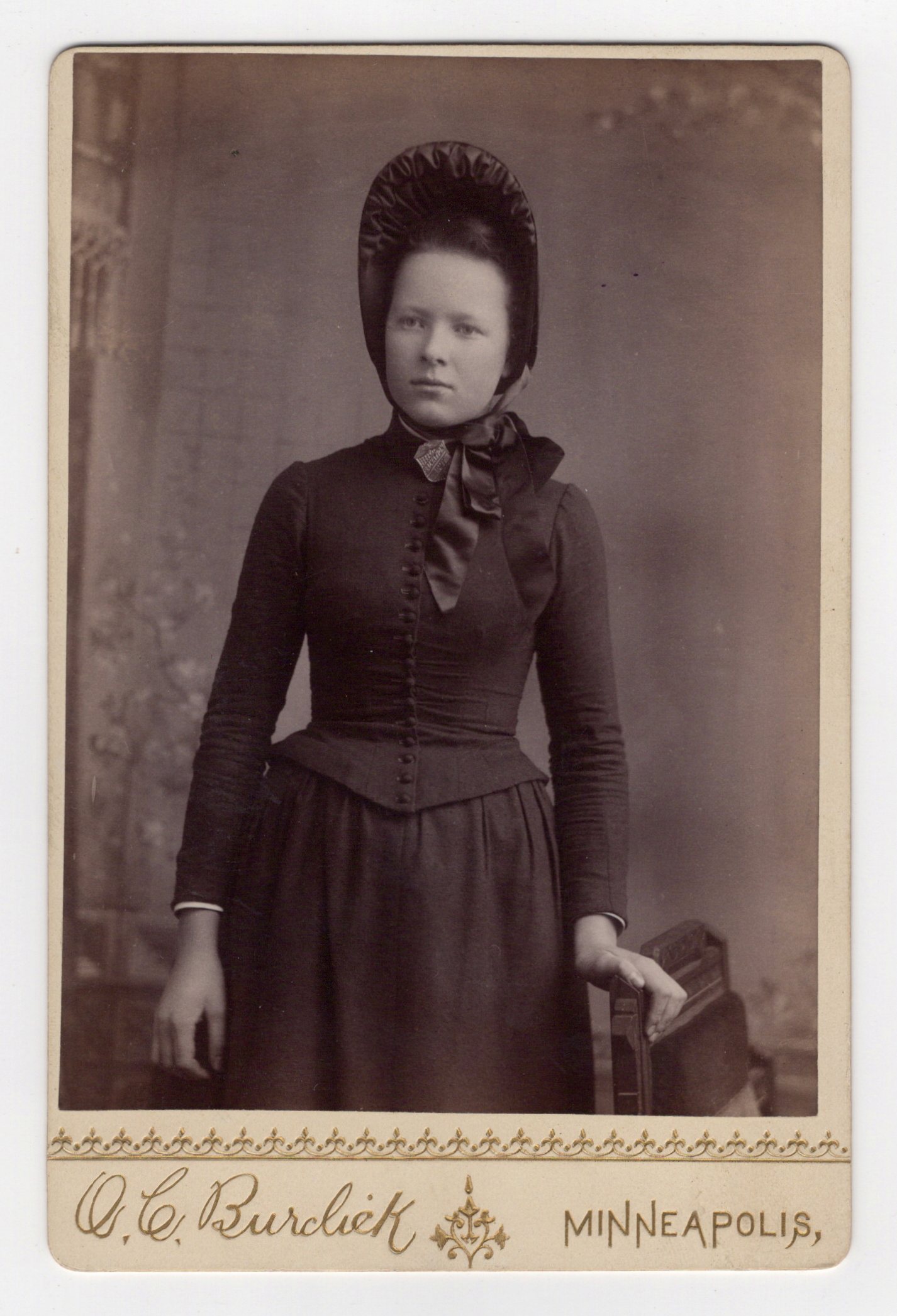
SALVATION ARMY MEMBER: WOMAN IN MINNEAPOLIS, MINNESOTA

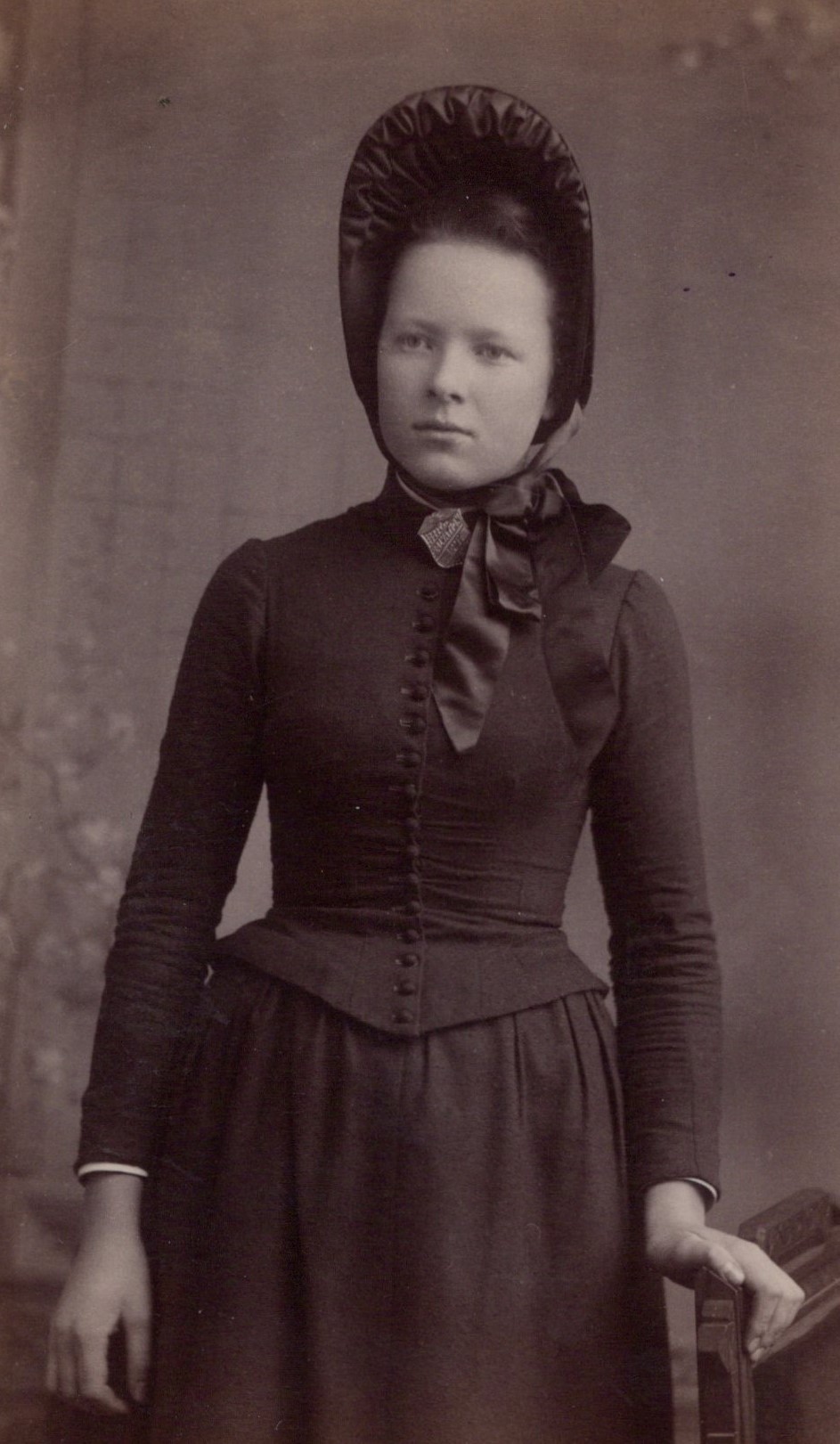
This cabinet card portrait is an image of a woman who is a member of the Salvation Army. The badge on her collar has the words “Salvation Asrmy” and she is uniformed in the traditional Salvation Army garb. The photographer is O. C. Burdick, of Minneapolis, Minnesota. This image is a wonderful addition to the growing collection of Salvation Army photographic portraits in the cabinet card gallery. Please visit the collection by clicking on the Salvation Army category of this site.

Buy this Vintage Cabinet Card (includes shipping within the US) #5493
To purchase this item, click on the Pay with PayPal button below
$38.00
Buy this Cabinet Card Photograph (includes International shipping outside the US) 5493
To purchase this item, click on the Pay with PayPal button below
$48.00

HERE COMES THE BRIDE IN STILLWATER, MINNESOTA
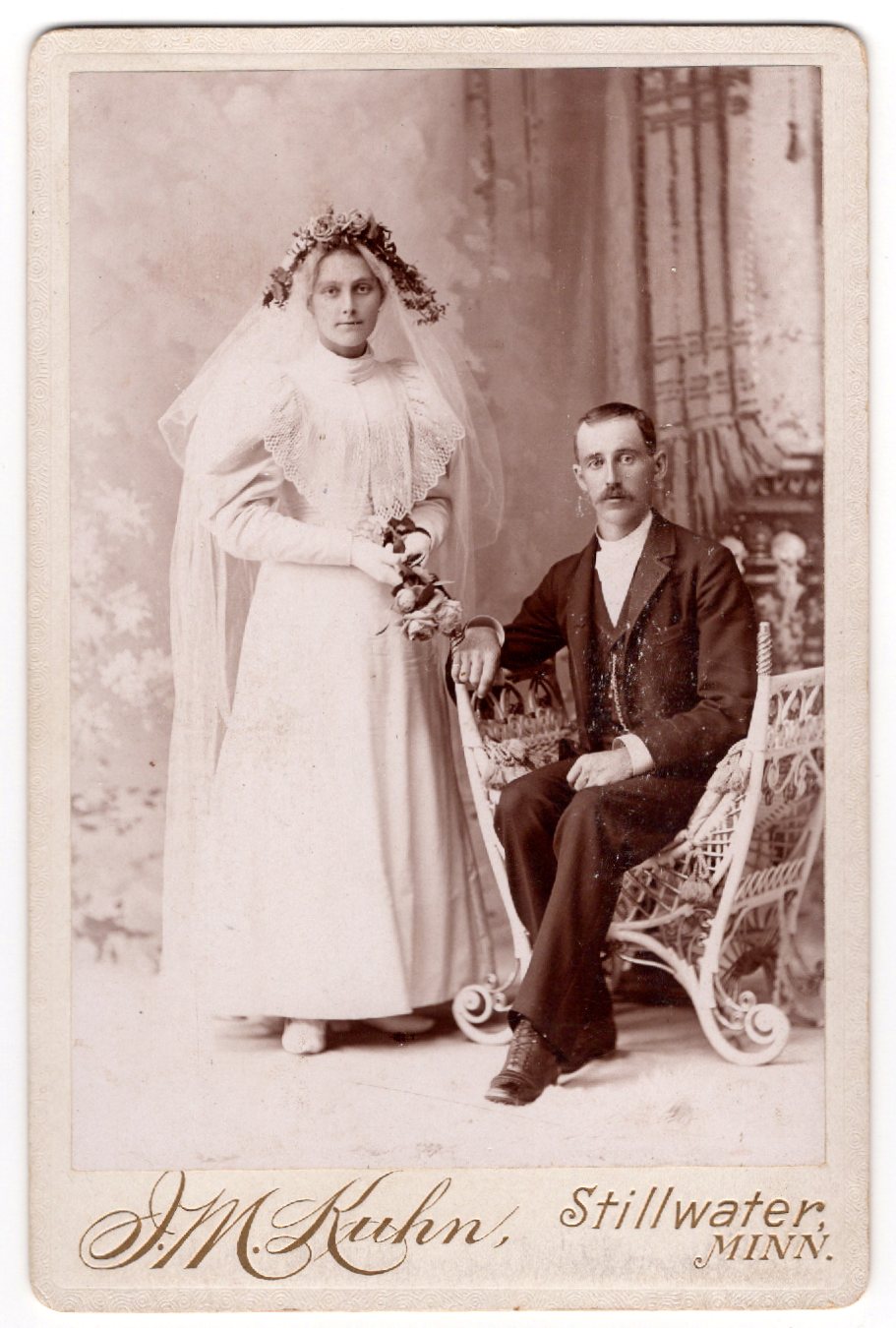
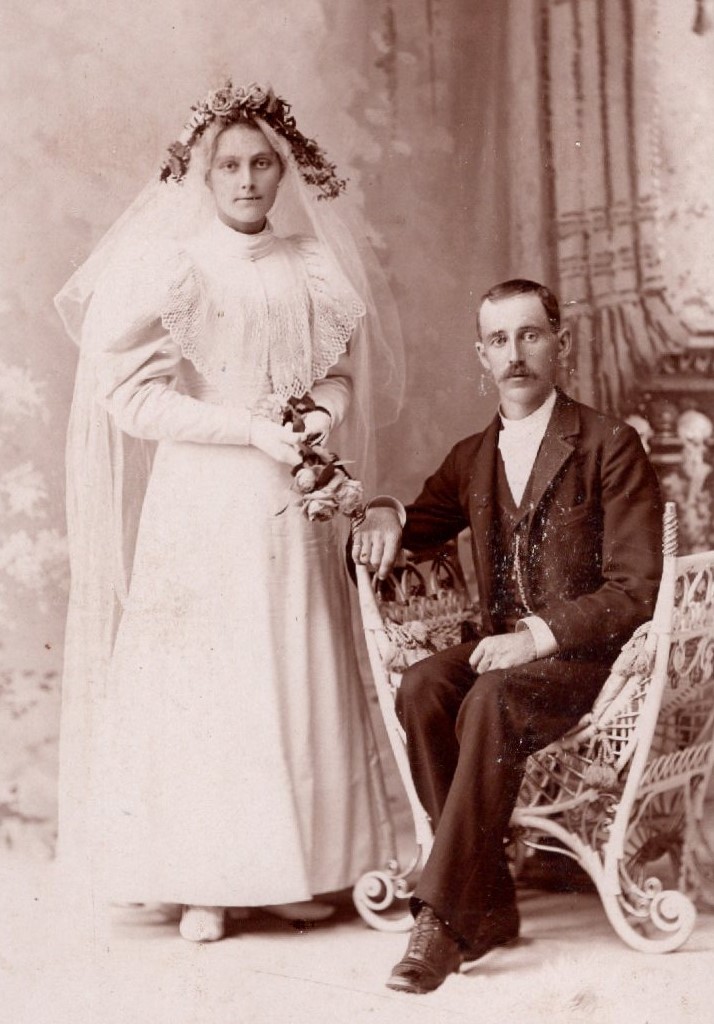
A bride and groom pose for their wedding photograph at the studio of J. M. Kuhn in Stillwater, Minnesota. The groom looks as if he is in a state of shock on this momentous day. Perhaps he’s experiencing “cold feet syndrome”. His bride seems a bit happier and is wearing a very flowery veil. John M. Kuhn (1855-1910) operated photography studios in Stillwater between 1882 and 1897. Afterwards, he owned a studio in Saint Paul, Minnesota. At times, he was partners with his brother Louis Kuhn. Research reveals that John Kuhn took official photographs of guards and wardens at the Stillwater State Prison. SOLD

BEAUTIFUL WOMAN HOLDING PAPERS IN HIBBING OR EVELETH, MINNESOTA
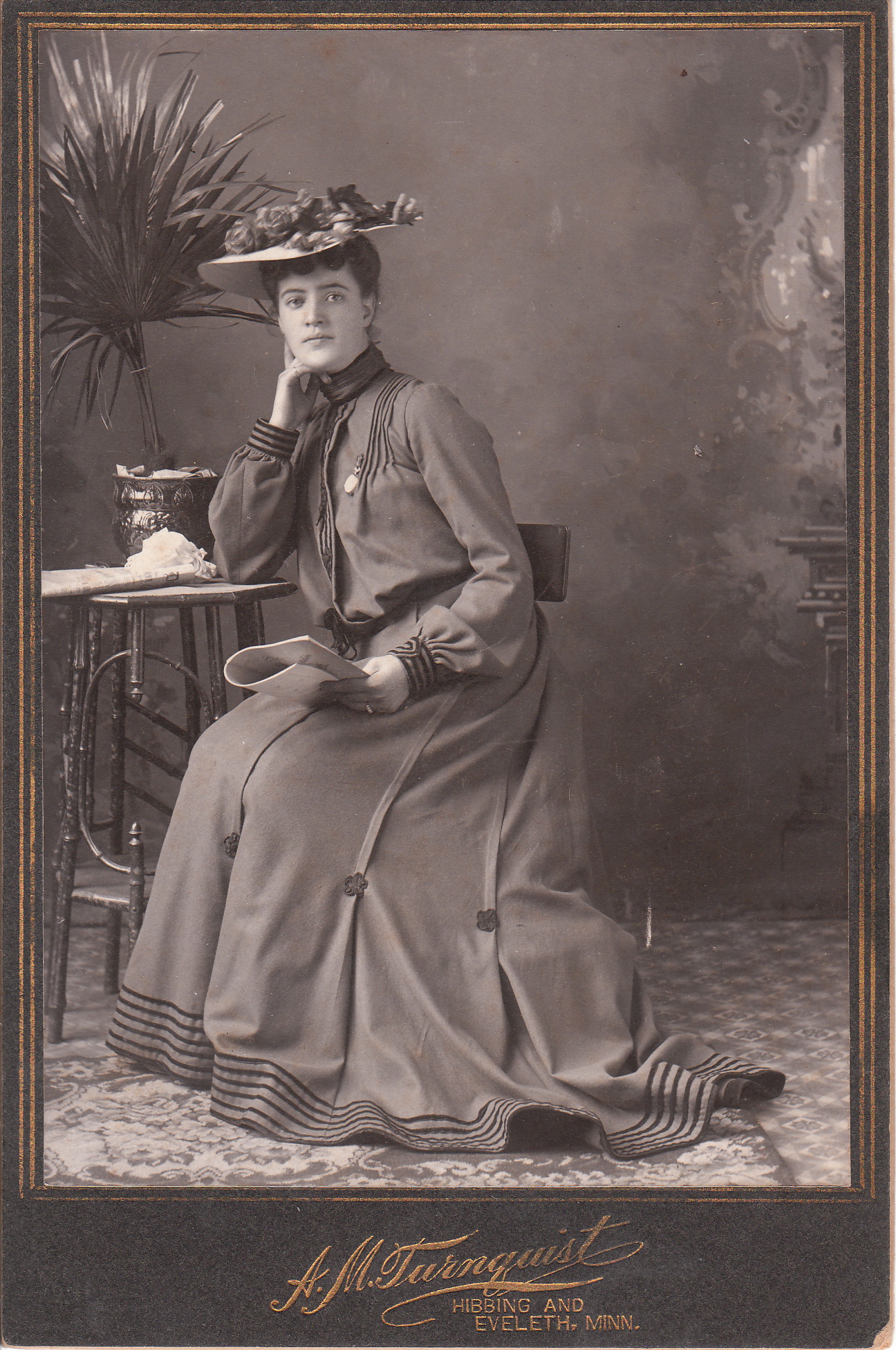 The subject of this photograph is a very pretty woman, stylishly dressed and wearing a flowered hat at the photographic studio of A. M. Turnquist, located in either Hibbing or Eveleth, Minnesota. The woman appears quite natural and relaxed as she sits at a table with a potted plant in the background. What are those papers that she is holding? Is it possibly a script for a play, a magazine, or divorce documents? The answer is lost to time. A. M. Turnquist is more specifically, Axel M. Turnquist who was born in Sweden, and trained in photography in Duluth, Minnesota. He operated photographic studios in many Minnesota towns including Tower, Virginia, Eveleth, Hibbing, and Aurora. He worked as a photographer form the 1880’s through 1923. To view other photographs by Turnquist, click on category “Photographer: Turnquist”. (SOLD)
THREE EDWARDIAN WOMEN : READING : SEWING : ARTISTIC POSE : RPPC (1913)
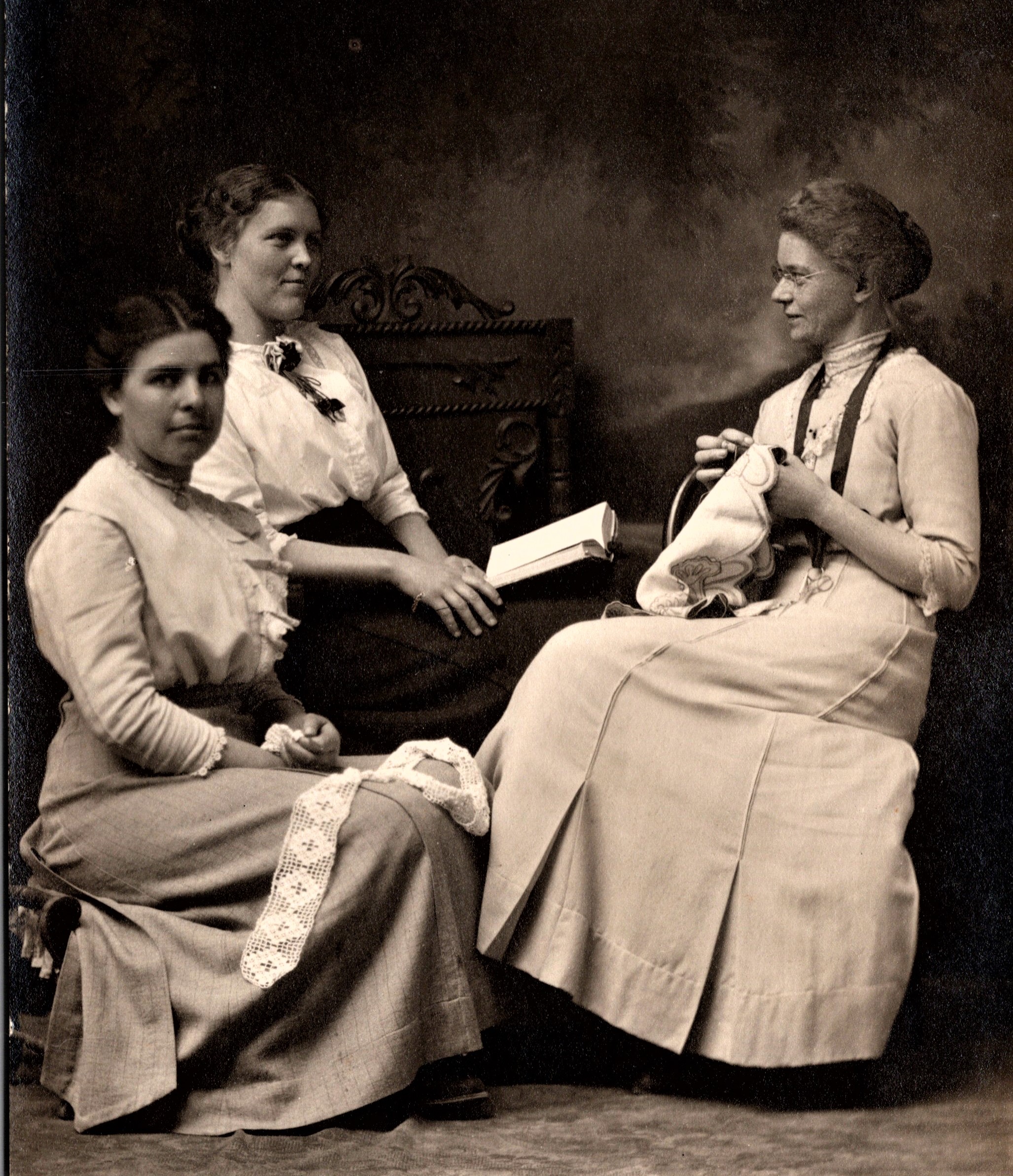
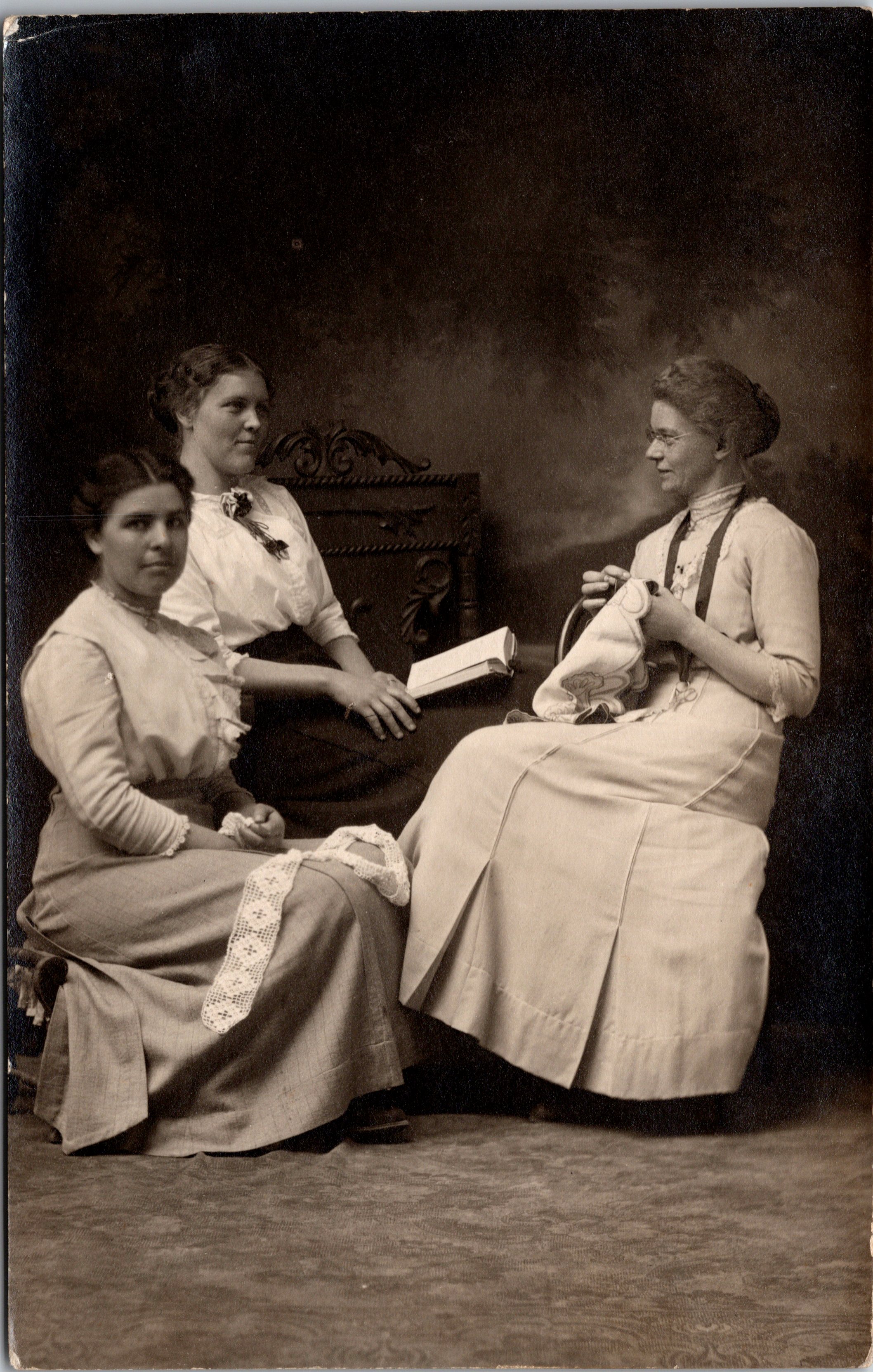
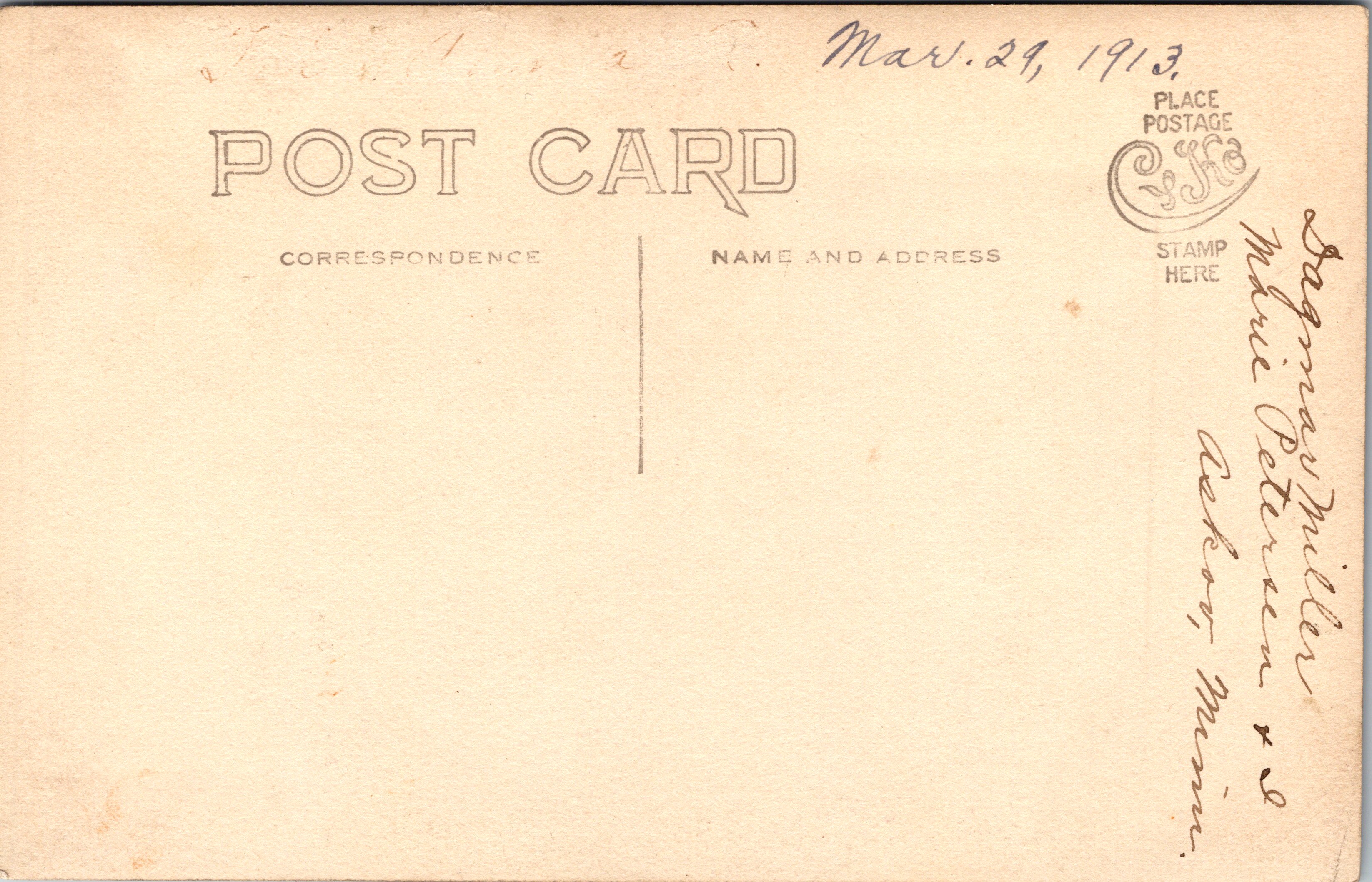
This vintage real photo postcard features a view of domestic and family life in the 1913 United States. I hypothesize that the women in this photograph are a mother and her two daughters. The mom and one of her daughters is sewing, while the second daughter is reading a book. Note the antique bench that the reading daughter is sitting on. This vintage postcard’s CYKO stamp box is consistent with the 1913 notation written on the card. The original owner of this postcard identified two women in the portrait, but not herself. The id’d women are Dagmar Miller and Marie Petersen. The location is noted as Askov, Minnesota. The town is located on the middle of the eastern border of the state. Askov was settled primarily by Danish immigrants. Interestingly, the name “Dagmar” is of Scandanavian origin. The 2010 census identified 364 residents of Askov. SOLD


 THE CABINET CARD GALLERY