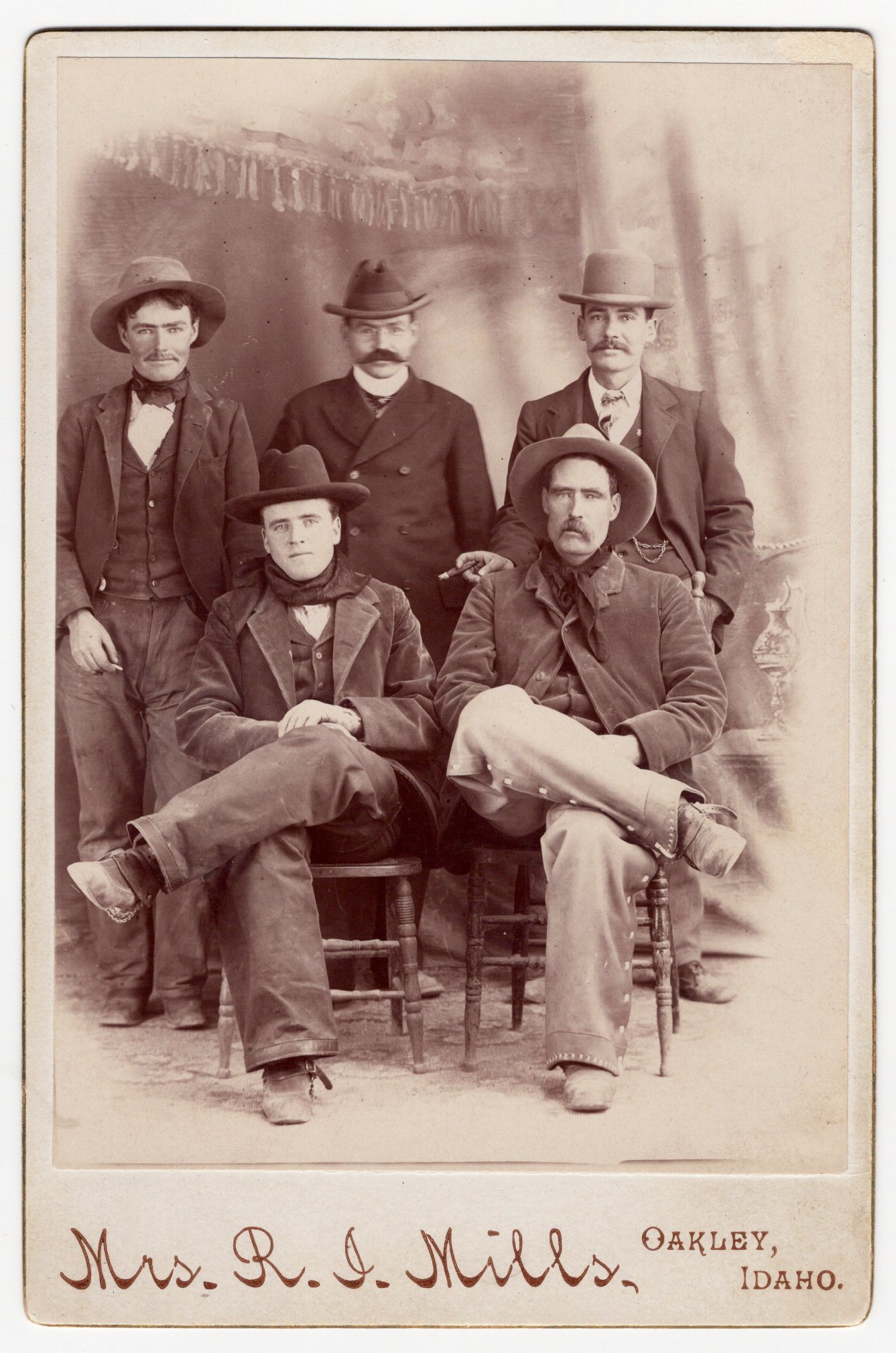
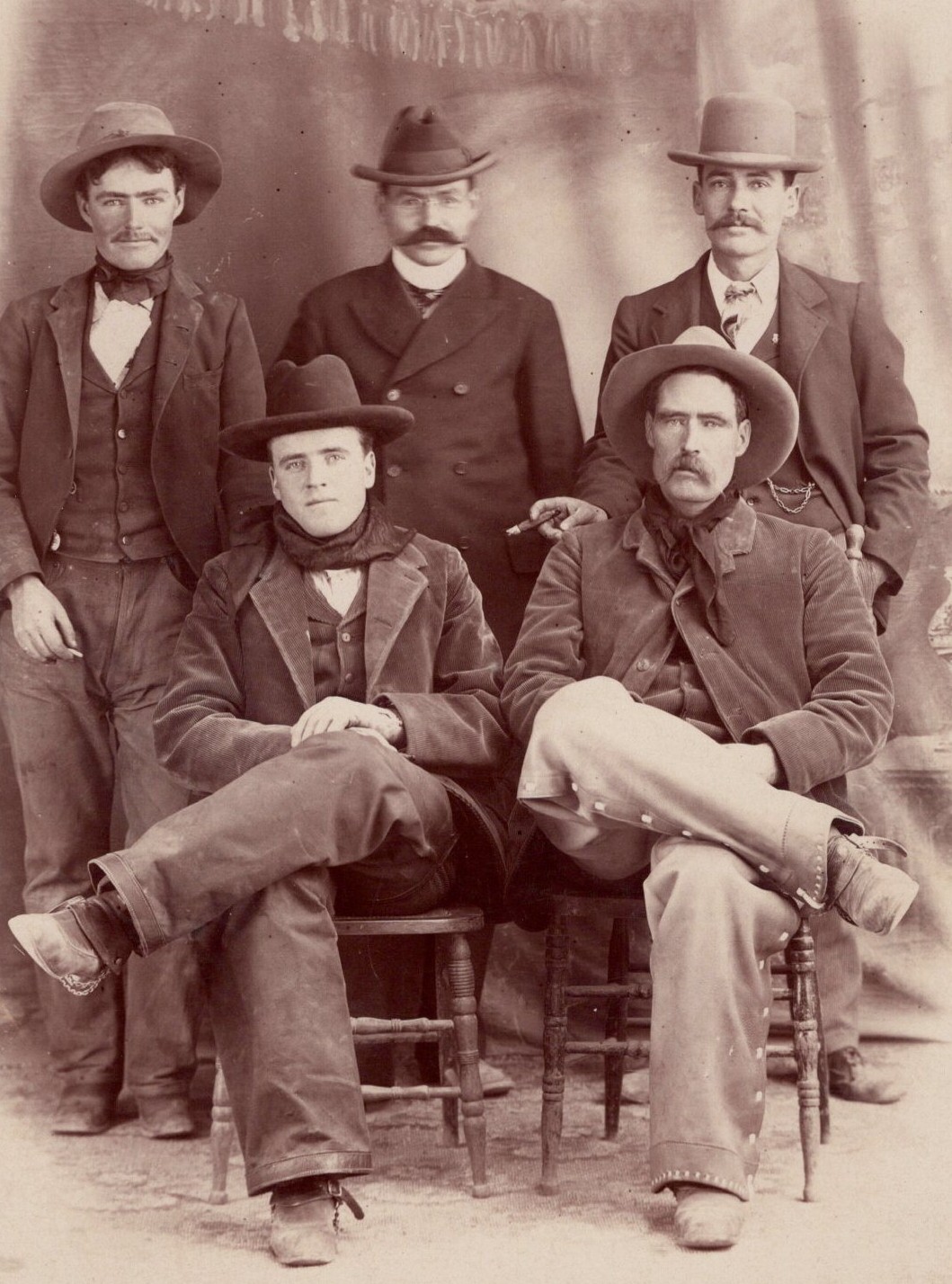
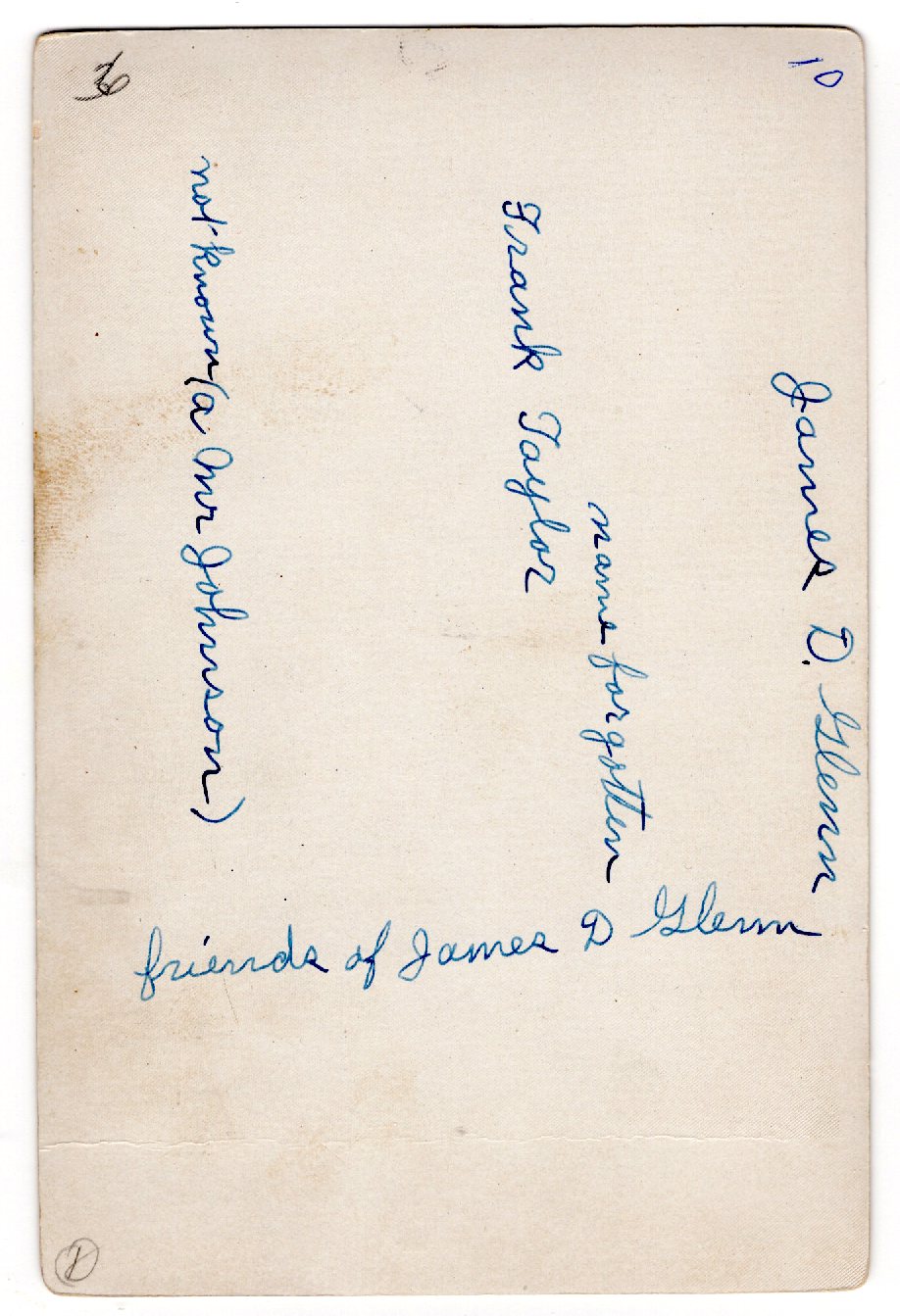
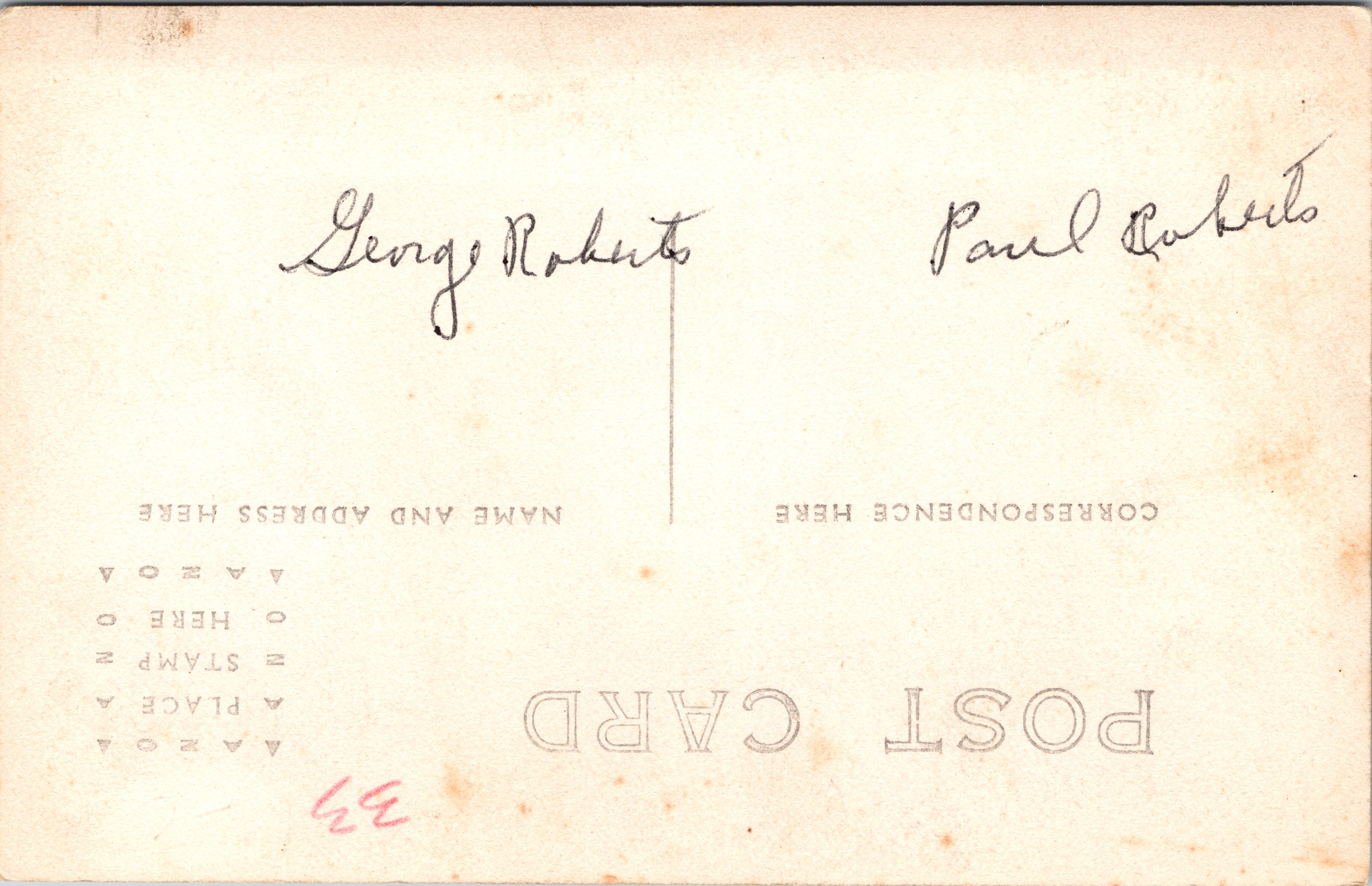
This arresting cabinet card, taken in Oakley, Idaho by the photographer Mrs. R. I. Mills, captures a vivid and timeless portrait of five rugged Western men from the late 19th or very early 20th century. The image radiates strength, camaraderie, and a quiet intensity that invites speculation about the identities and lives of its subjects. The five men are posed against a painted studio backdrop that includes drapery and a classical vase stand, subtly contrasting with the grit and rough-hewn realism of the men themselves. Two sit in the foreground, legs crossed with a relaxed authority, while three stand behind them. All are dressed in frontier attire: wide-brimmed hats, wool coats, high boots, and neckerchiefs. Their layered clothing suggests the chill of the high desert West. The expressions vary slightly—some show stoic resolve, others a more neutral bearing—but none of the men are smiling. Their faces are rugged, with prominent cheekbones, strong jaws, and thick mustaches. The man at center back smokes a cigar, and one gets the sense that these are men of action—likely cowboys, ranchers, or possibly even lawmen or miners. The man seated at the right front—wearing a wide-brimmed hat, dark scarf, and white canvas trousers with riveted side seams—commands particular attention. His intense gaze and imposing posture suggest he may have been a leader among them. The others wear expressions of cool composure, unified by the weathered look of men who knew hard labor or possibly the frontier justice of the American West. Written in blue ink on the reverse of the card is an identification key, apparently penned by someone familiar with at least some of the sitters: James D. Glenn, Frank Taylor, Mr. Johnson. An inscription reveals that the men are all friends of James Glenn. It is likely that this photograph belonged to Mr. Glenn. This photograph was taken by a female photographer. Mrs. R. I. Mills was an early female photographer working in the American West—an unusual and significant occupation for a woman at the time. Her studio was located in Oakley, Idaho, a small Mormon-founded settlement in Cassia County. Historical records show that Mrs. Rachel I. Mills operated a photography studio in Oakley in the late 19th century. She was part of a small but growing number of frontier women who ran their own commercial photography studios. Though little has been published about her biography, her studio was active around the 1880s–1890s, a time when Oakley was transitioning from a pioneer settlement into a more established town with irrigation agriculture and Mormon communal development. Founded in the early 1880s by Mormon settlers, Oakley was a rural, religiously conservative community that grew around farming and ranching. It sat on the edge of the high desert and became a local hub for commerce in southern Idaho. During the time this photograph was likely taken—circa 1890—Oakley would have been a small but lively town, with residents involved in cattle ranching, grain farming, and trade. (SOLD)



 THE CABINET CARD GALLERY