CROWN PRINCESS CECILIE RPPC : BEAUTY : GERMAN ROYALTY POSTCARD : POSTMARKED 1906

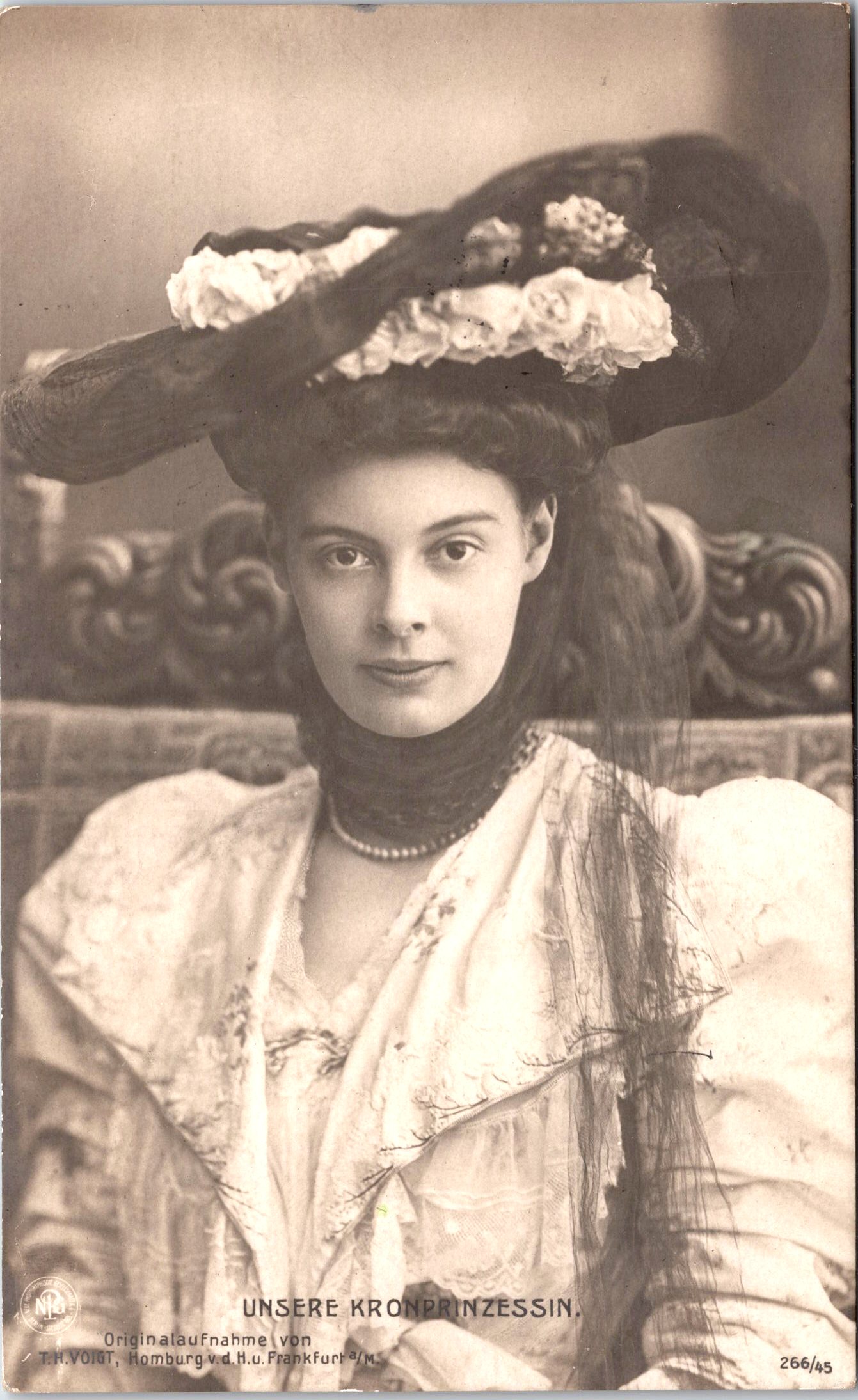
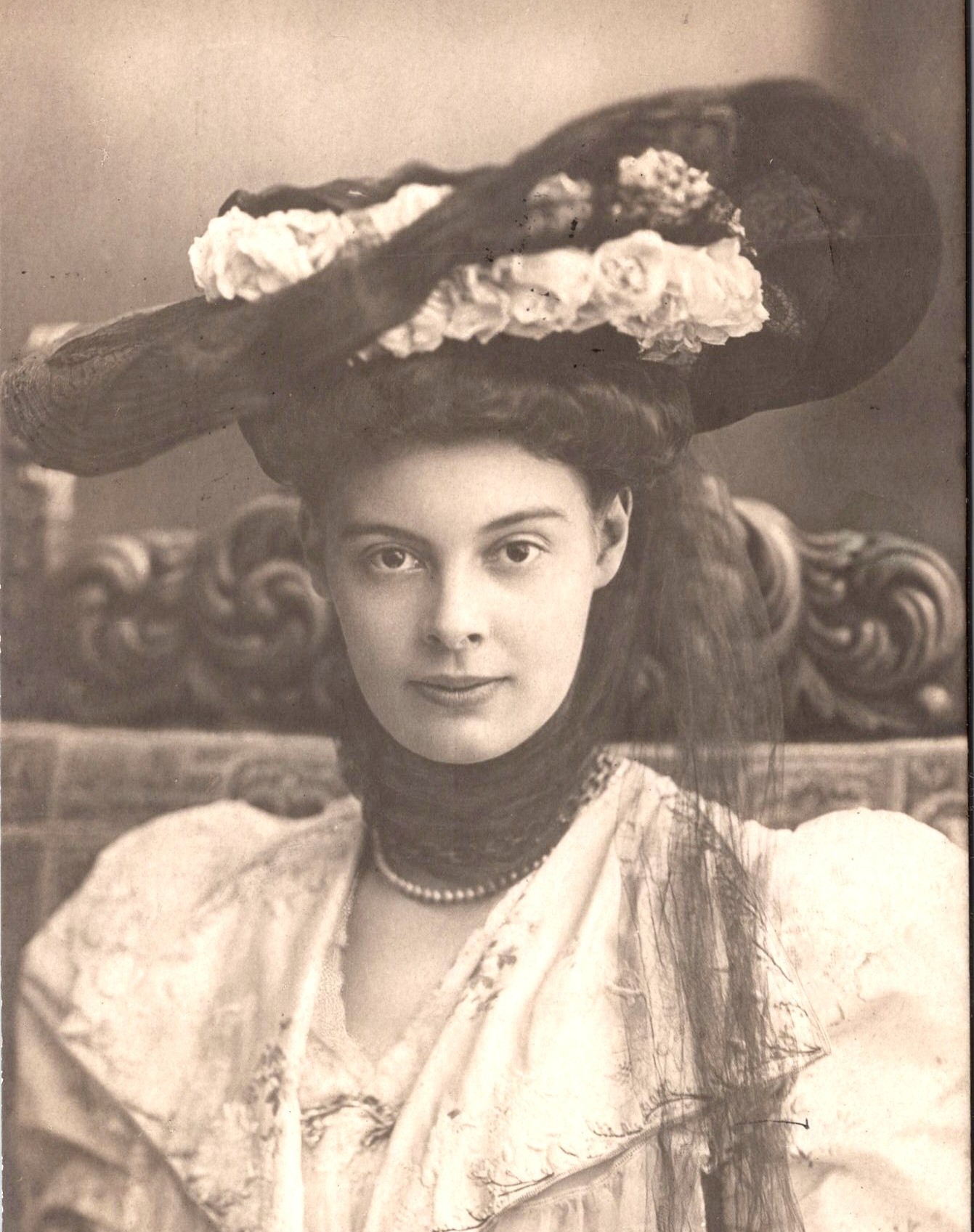
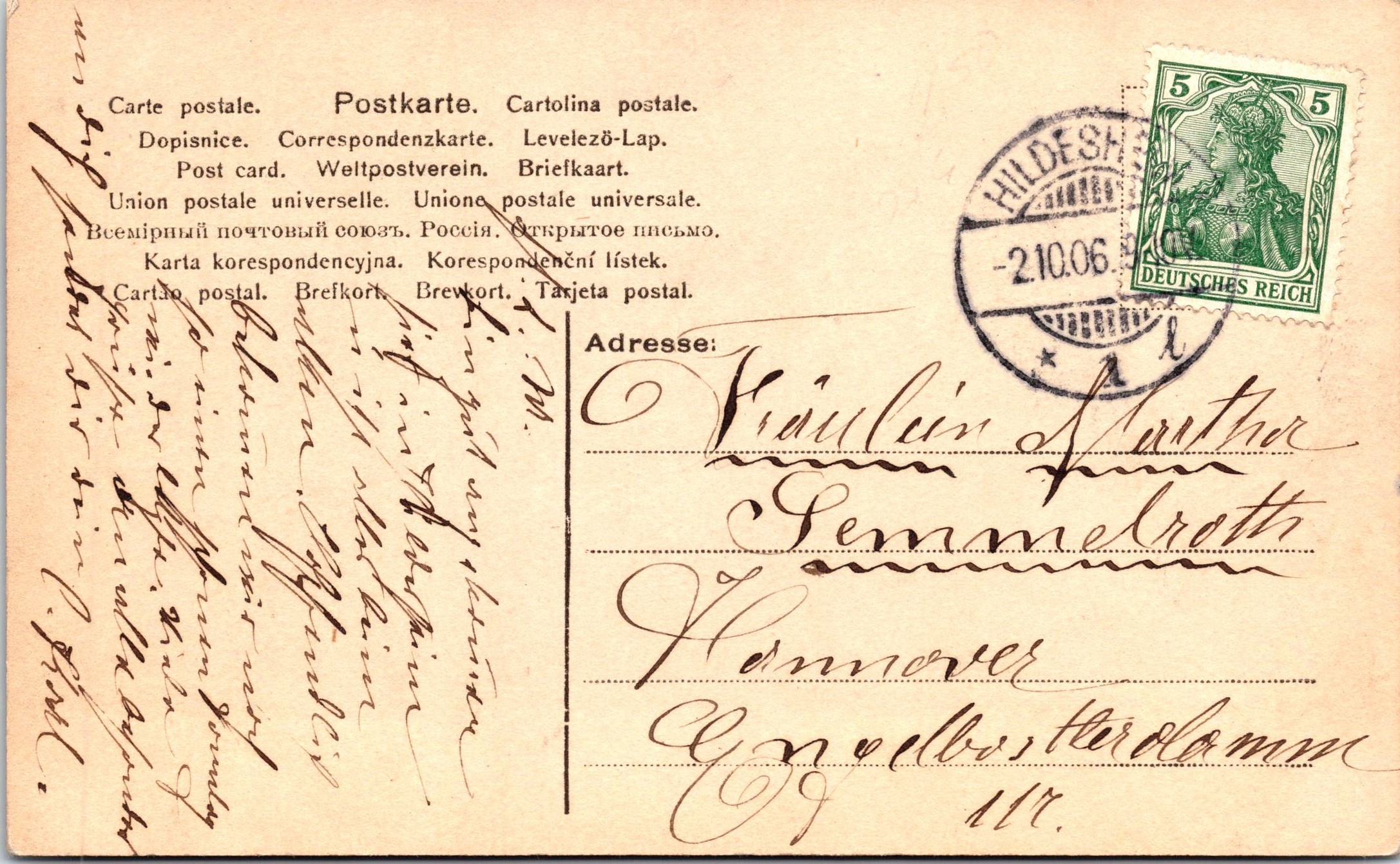
Crown Princess Cecilie of Prussia (1886–1954) was a prominent royal figure in early 20th-century Germany. She was the daughter of Frederick Francis III, Grand Duke of Mecklenburg-Schwerin, and Grand Duchess Anastasia Mikhailovna of Russia, making her a granddaughter of Emperor Nicholas I of Russia. Cecilie came from a highly prestigious lineage that united German and Russian imperial bloodlines. In 1905, she married German Crown Prince Wilhelm (Wilhelm of Prussia (1882–1951), the eldest son of Kaiser Wilhelm II, Emperor of Germany and King of Prussia. As the wife of the Crown Prince, Cecilie held the title of German Crown Princess and was seen as the future Empress of Germany. However, the German monarchy was overthrown in 1918 at the end of World War I, and the family went into exile. Wilhelm never ascended the throne, as the monarchy was abolished with the abdication of his father, Wilhelm II. Cecilie and Wilhelm had six children.Their marriage, while initially harmonious and dutiful, became strained over time due to Wilhelm’s infidelities and political turmoil. Despite no longer being royalty in power, Cecilie remained a respected figure. After the monarchy fell, she lived modestly in Germany and did not follow her husband into exile in the Netherlands. She died in Bad Kissingen, West Germany, in 1954. This real photo postcard is a studio portrait of Crown Princess Cecilie, taken by T.H. Voigt, a photographer based in Homburg v.d.H. and Frankfurt a/M. The publisher number “266/45” appears in the lower right corner, and the “NPG” logo indicates it was part of the Neue Photographische Gesellschaft series—one of the most prestigious photo publishers in Imperial Germany. In this beautifully lit and softly focused portrait, Crown Princess Cecilie sits regally, gazing directly at the camera with serene confidence. Her expression is calm and composed, projecting the quiet dignity expected of a royal consort. She wears a sumptuous white or light-colored gown, richly embroidered with floral motifs and delicate lace details. Around her neck is a strand of pearls, and an elegant dark scarf or netting is wrapped gracefully around her collar and beneath her chin. Her wide-brimmed hat, adorned with layers of flowers and lace, is spectacular—an extravagant Edwardian fashion statement in keeping with her status. Her long hair is styled in a voluminous updo beneath the hat. The combination of textures—lace, netting, silk, and pearls—exudes both softness and formality, symbolic of her royal role. The postcard is addressed to a woman residing in Hanover, Germany and the card is postmarked in 1906 in Hildesheim, Germany. Cecilie had been a princess for just a short time when this photo was taken. The stamp on the card is a 5 Pfennig green stamp bearing the image of Germania, a common stamp of the Deutsches Reich (German Empire), designed by Paul Eduard Waldraff and issued between 1900–1922. The cursive German message on the left margin is difficult to fully decipher, but it appears to be a friendly greeting.  (SOLD)
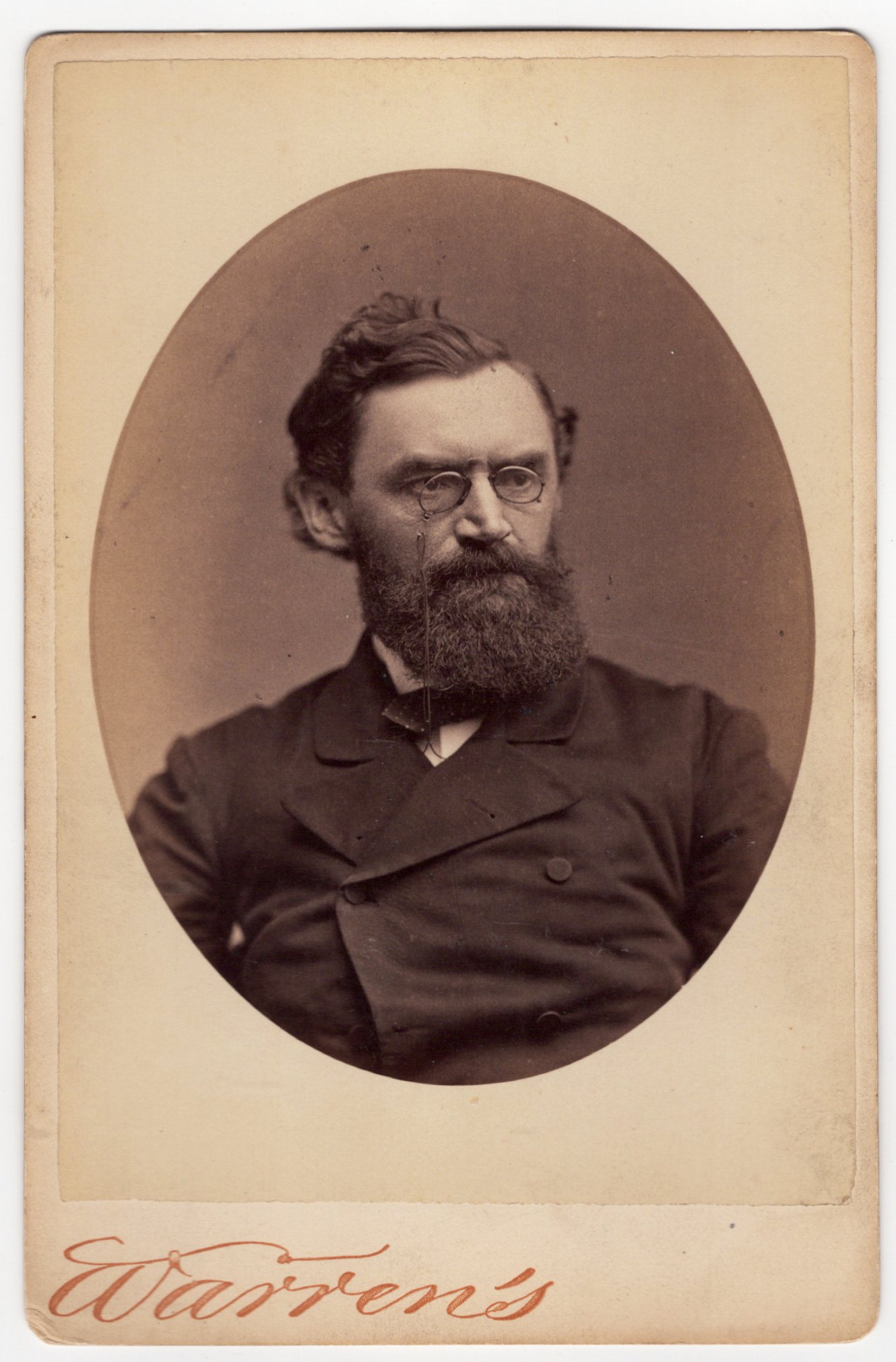
CARL SCHURZ ; CIVIL WAR GENERAL & SENATOR : WARREN’S, BOSTON : CABINET CARD

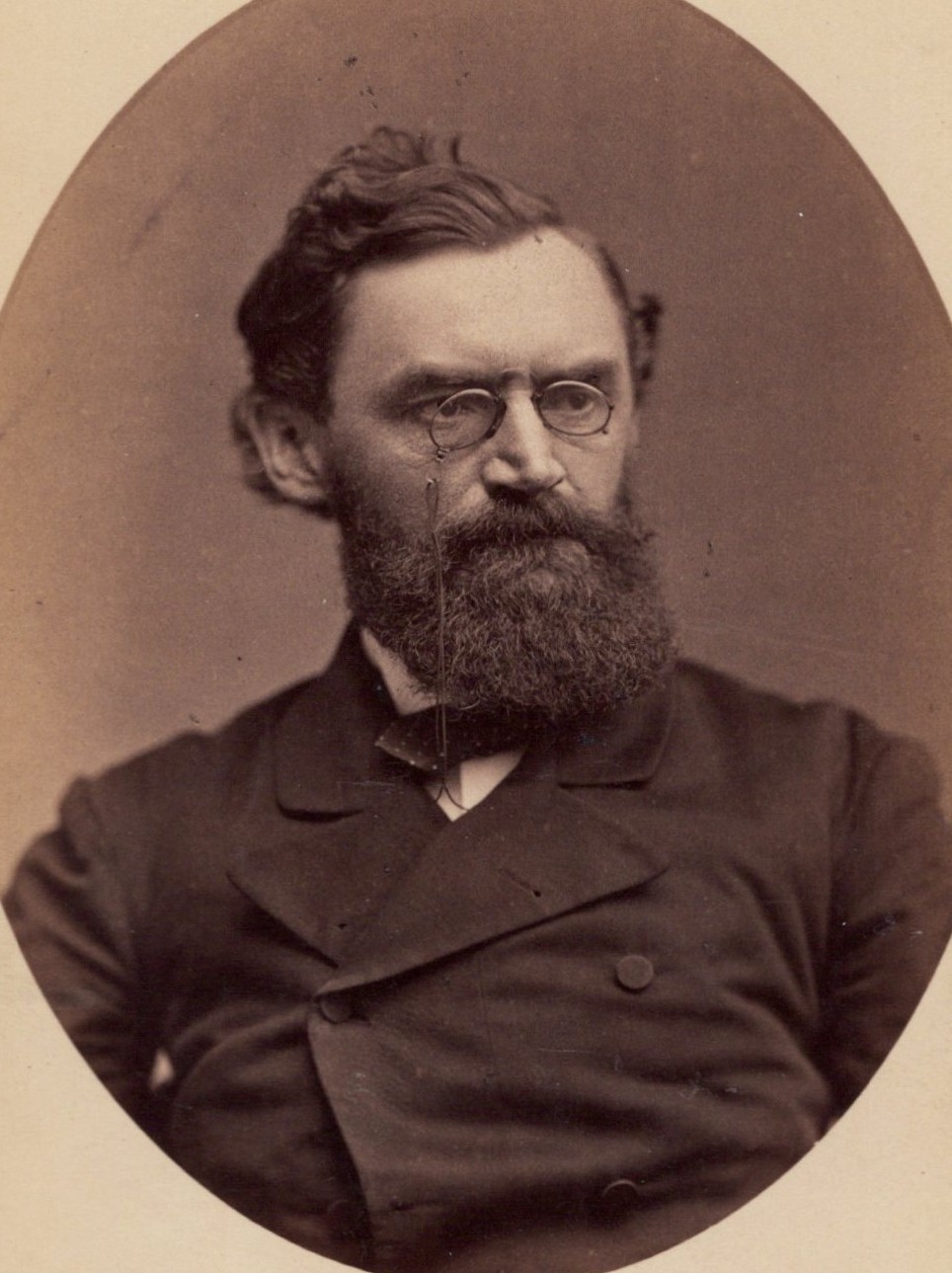
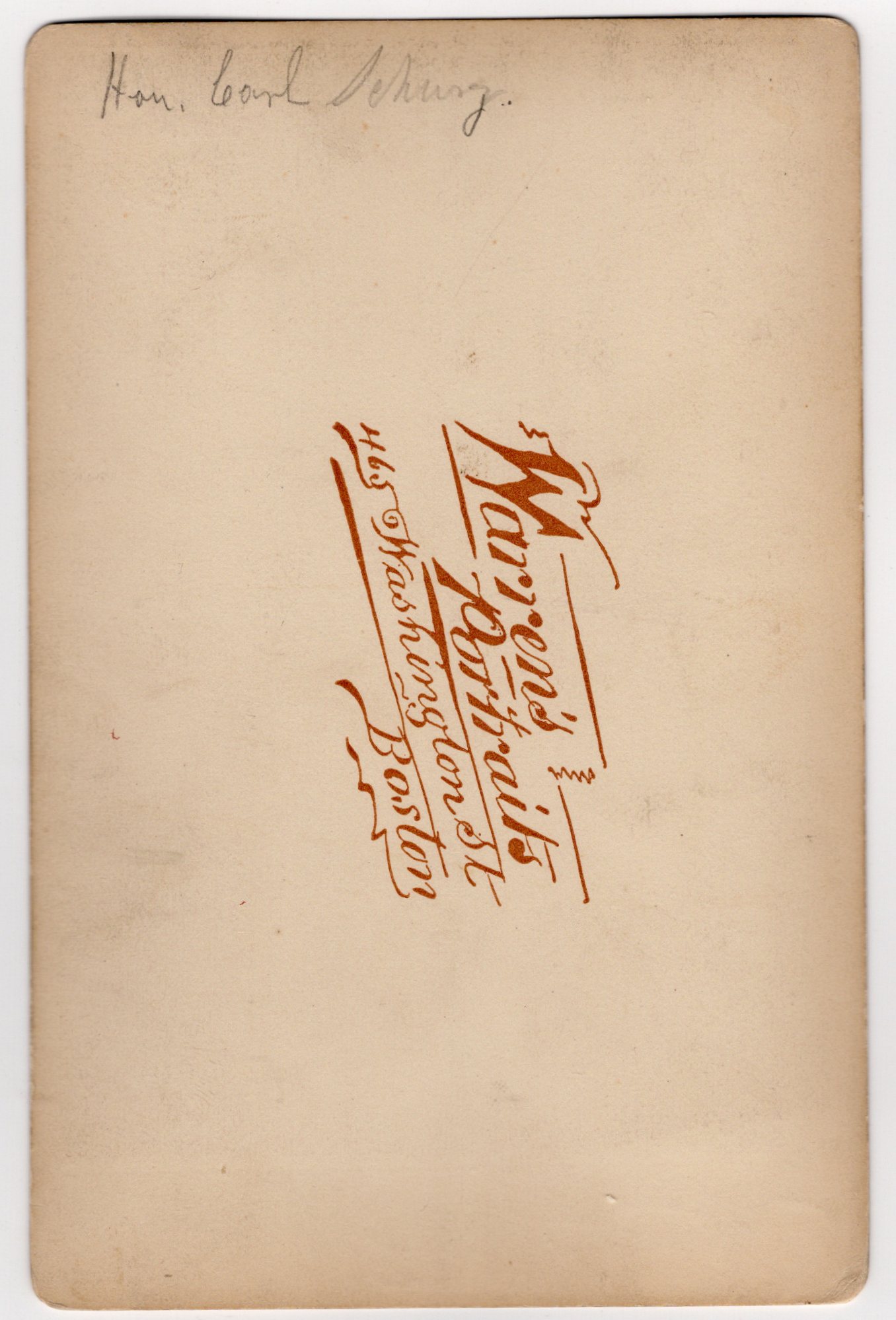
This striking 19th-century cabinet card features The Honorable Carl Schurz (1829-1906), a distinguished Civil War general, U.S. Senator, and reform-minded statesman. The photograph was taken at Warren’s Portraits, a prestigious Boston studio located at 465 Washington Street and renowned for its elegant images of notable figures during the late 1800s. In this formal portrait, Schurz is captured in a three-quarter view, seated in a dark, double-breasted coat with a subtle bow tie at his collar. His thick, well-kept beard and wavy hair give him a scholarly yet commanding presence. He gazes slightly to his left, a monocle suspended at his eye—projecting a look of intellectual rigor and seriousness. The background is a simple studio gradient, helping focus all attention on Schurz’s intense expression and refined appearance. On the reverse, the card is elegantly marked with the Warren’s Portraits logo. In pencil is written: “Hon. Carl Schurz,” affirming the identity of the sitter. Carl Schurz was born in Liblar, Prussia (modern-day Germany) in 1829. A revolutionary in his youth, he fought in the 1848 German uprisings, which ultimately failed, forcing him to flee Europe. He emigrated to the United States in 1852, where he quickly became involved in politics and the anti-slavery movement. During the American Civil War, Schurz was appointed brigadier general of Union volunteers by President Lincoln in 1862. He eventually rose to the rank of major general. Though courageous and respected, his battlefield performance received mixed reviews. He fought in key engagements including: the Second Battle of Bull Run (1862), the Battle of Chancellorsville (1863),  and the Battle of Gettysburg (1863), where his XI Corps was flanked on the first day. While he was not a professional military man, Schurz’s service was notable for his efforts to advocate for German-American troops and his commitment to the Union cause. He did not have prior military experience in Europe before serving in the U.S. Army. After the war, Schurz enjoyed a long and prominent career in politics. He served as a U.S. Senator from Missouri (1869–1875) and later as Secretary of the Interior under President Rutherford B. Hayes (1877–1881). A staunch advocate of civil service reform and anti-corruption measures, he became one of the leading voices of the Liberal Republican movement. This cabinet card was produced by Warren’s Portraits, one of Boston’s most prominent photography studios in the 19th century. Operated by William Shaw Warren, the studio specialized in elegant, high-quality portraits and was especially known for photographing celebrities, politicians, military figures, and distinguished members of Boston society. Warren’s operated primarily during the 1860s through the 1890s. Warren’s images often feature clean studio backdrops, strong lighting, and detailed retouching, emphasizing refinement and dignity—qualities clearly present in this cabinet card of Carl Schurz. (SOLD)

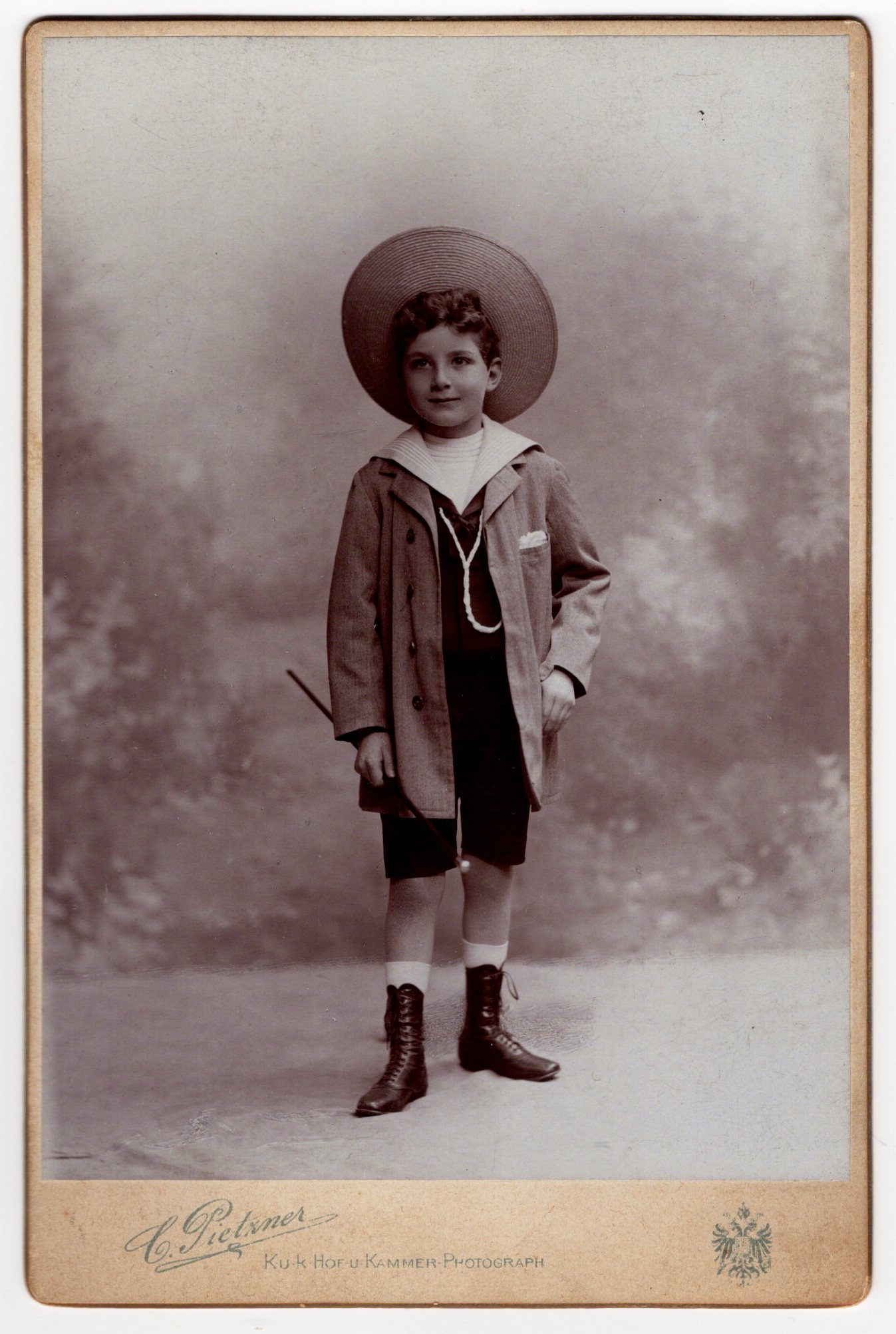
FASHIONABLE CHILD IN VIENNA, AUSTRO-HUNGARY EMPIRE (PHOTOGRAPHED BY PIETZNER)

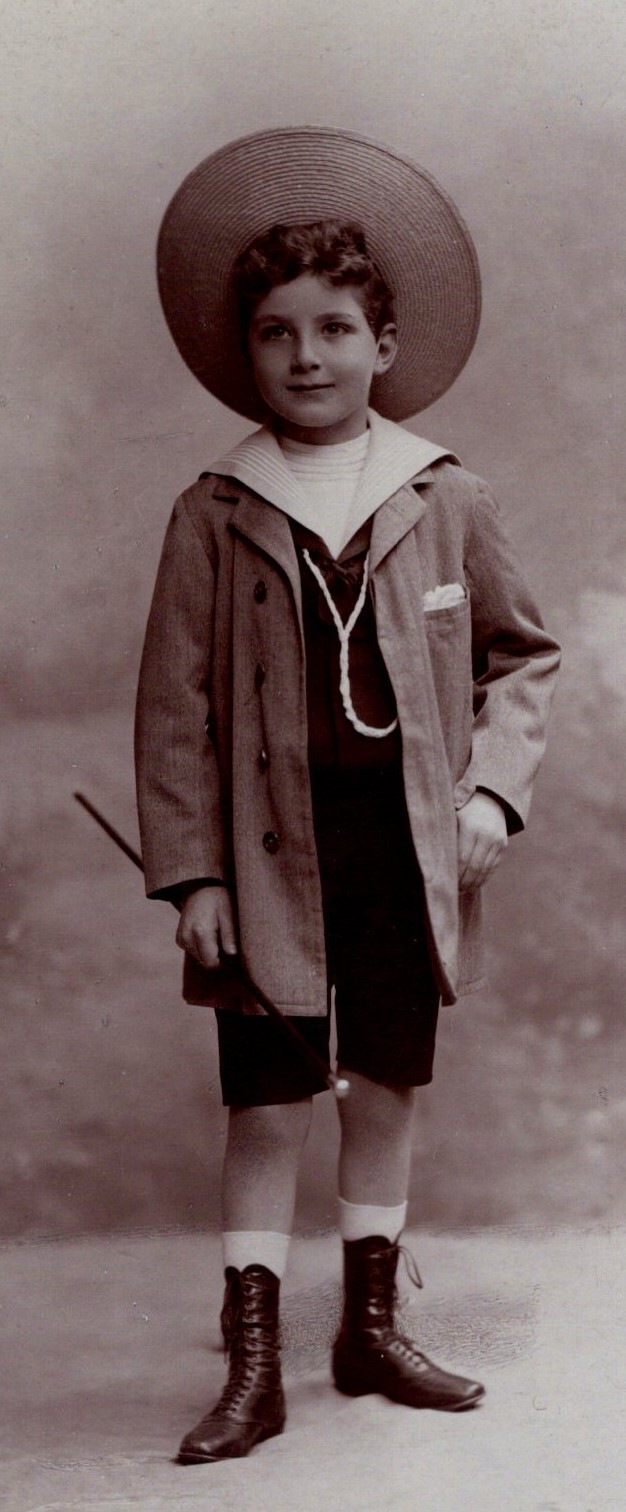
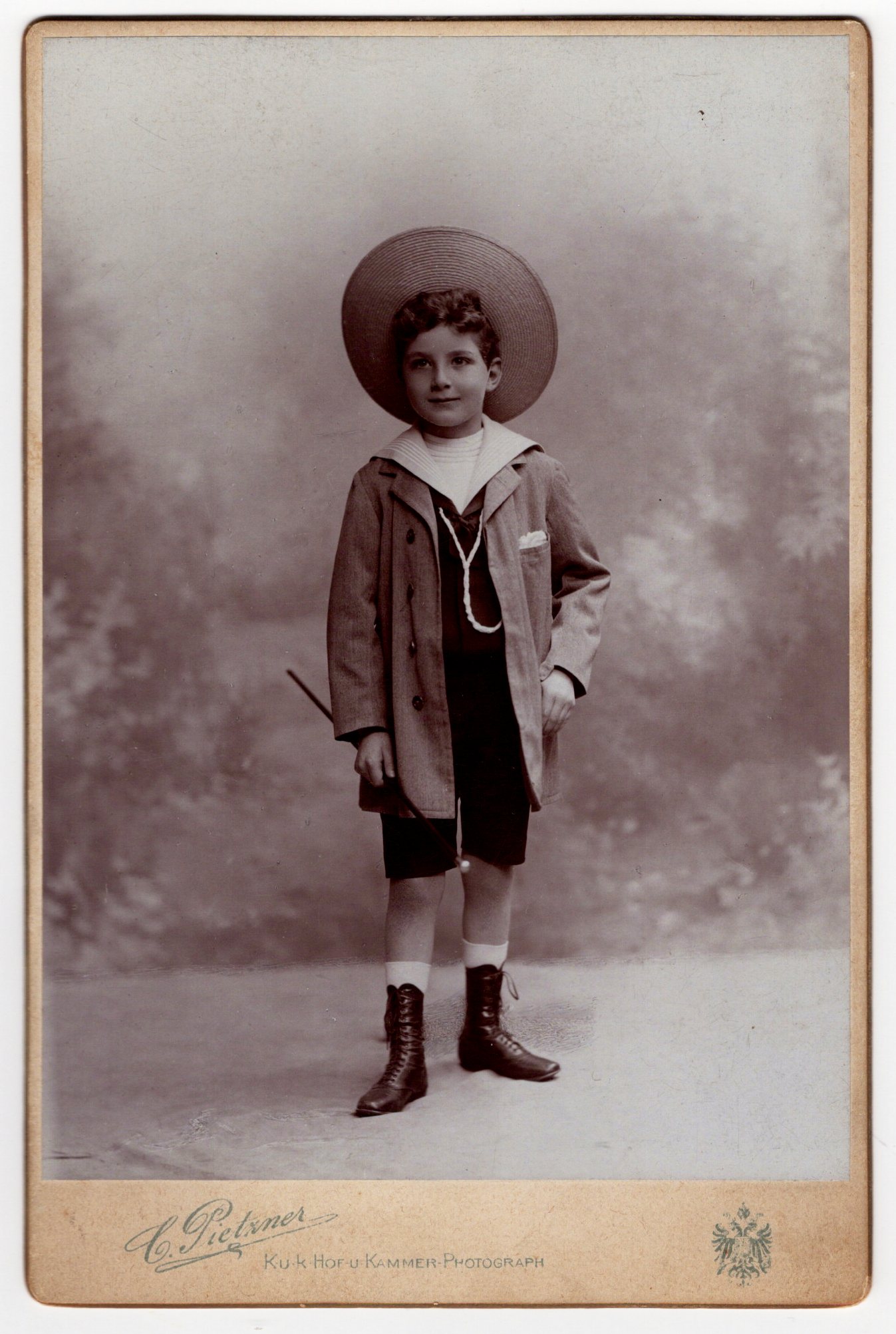
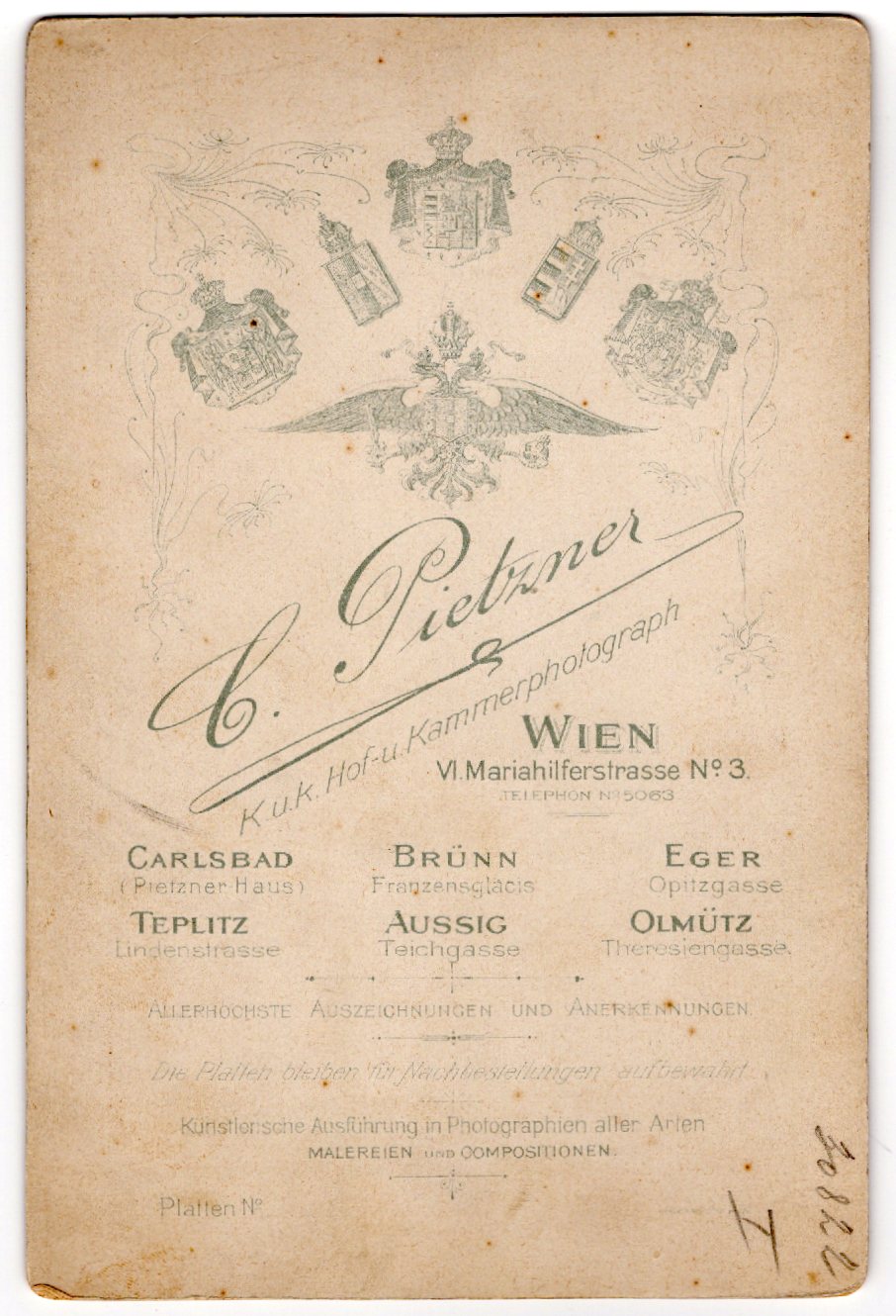
This cabinet card photograph features a very fashionable  young boy, posing at the studio of Karl Pietzner in Wien (Vienna), capitol of the Austro Hungarian Empire. The young boy is wearing a sailor type blouse, boots, a straw hat, and holding a stick. Pietzner (1853-1927) was born in Prussia and is known to have worked as a photographer from 1877 until 1924 and he worked throughout Europe. At the time that this cabinet card was photographed, he had studios in Wien, Carlsbad, Brunn, Eger, Teplitz, Aussig, and Olmutz. The New  York Times (1899) printed an article about his photographic research work in the production of reliefs. He invented a process he named “plastophotography”.  He was a photographer for the Royal family in Austria. He did portraits of Franz Joseph. Pietzner was certainly a celebrated photographer and this cabinet card is a great example of his work. This cabinet card portrait is in very good condition (see scans).

Buy this Cabinet Card (includes shipping within the US) #6206

To purchase this item, click on the Pay with PayPal button below

$42.00

Buy this Cabinet Card Photograph (includes International shipping outside the US) 6206

To purchase this item, click on the Pay with PayPal button below

$52.00

PORTRAIT OF A CUTE CURLY HAIRED LITTLE FLOWER GIRL IN MALSTATT-BURBACH, PRUSSIA (CDV)

burbach

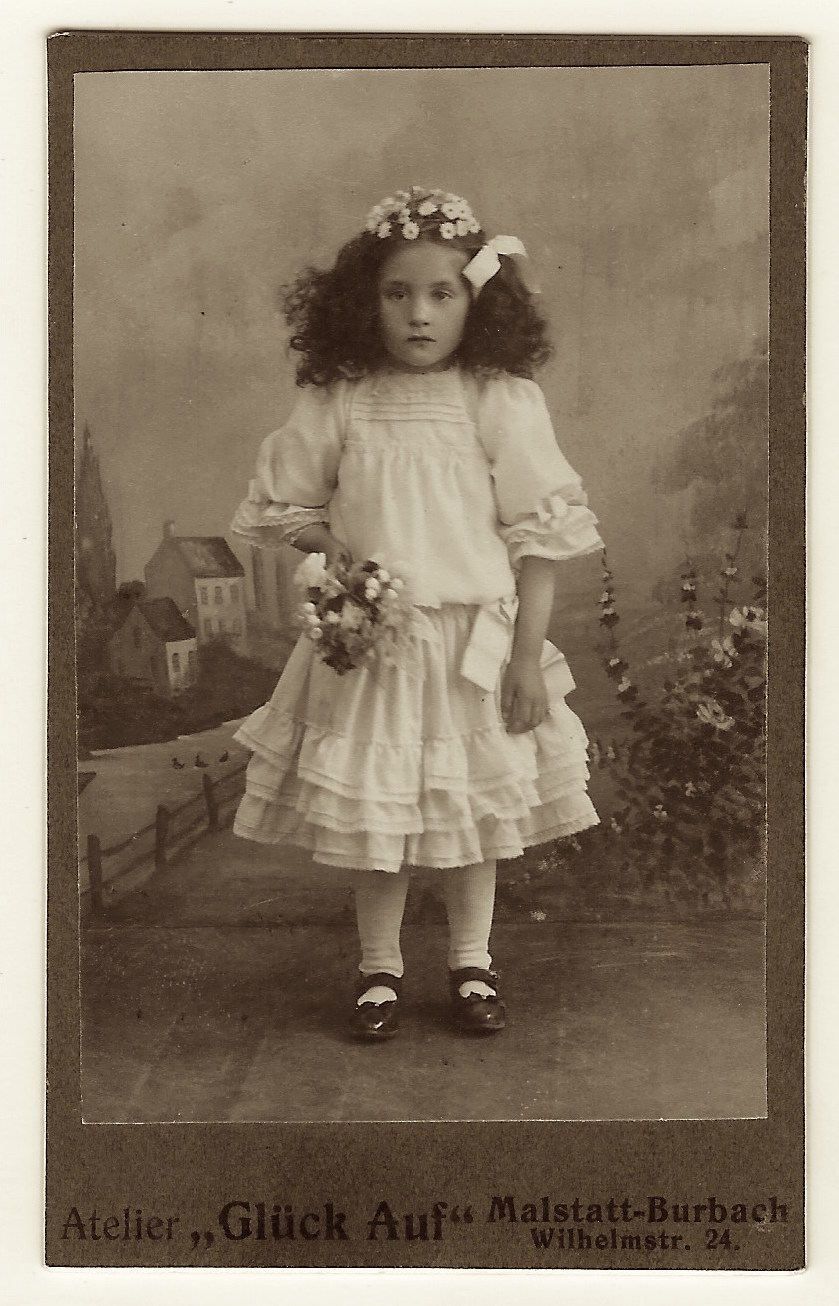
A cute little girl in a frilly white dress poses for her portrait at the Gluck Auf studio in Malstatt-Burbach, Prussia. The girl is holding a bouquet of flowers and has a ribbon in her pretty curly hair. She is also wearing flowers in her hair. This carte de visite may be a communion photograph. She is standing in front of a backdrop with a simple rural scene. The studio’s home of Malstatt-Burbach was combined with two other towns in 1909 to form the city of Sarbrucken. In 1900 the town belonged to Prussia.

burbach-1

Published in: on December 26, 2016 at 12:00 pm  Comments (1)  
Tags: , , , ,

ADORABLE LITTLE GIRL IN BUFFALO, NEW YORK

wunsch

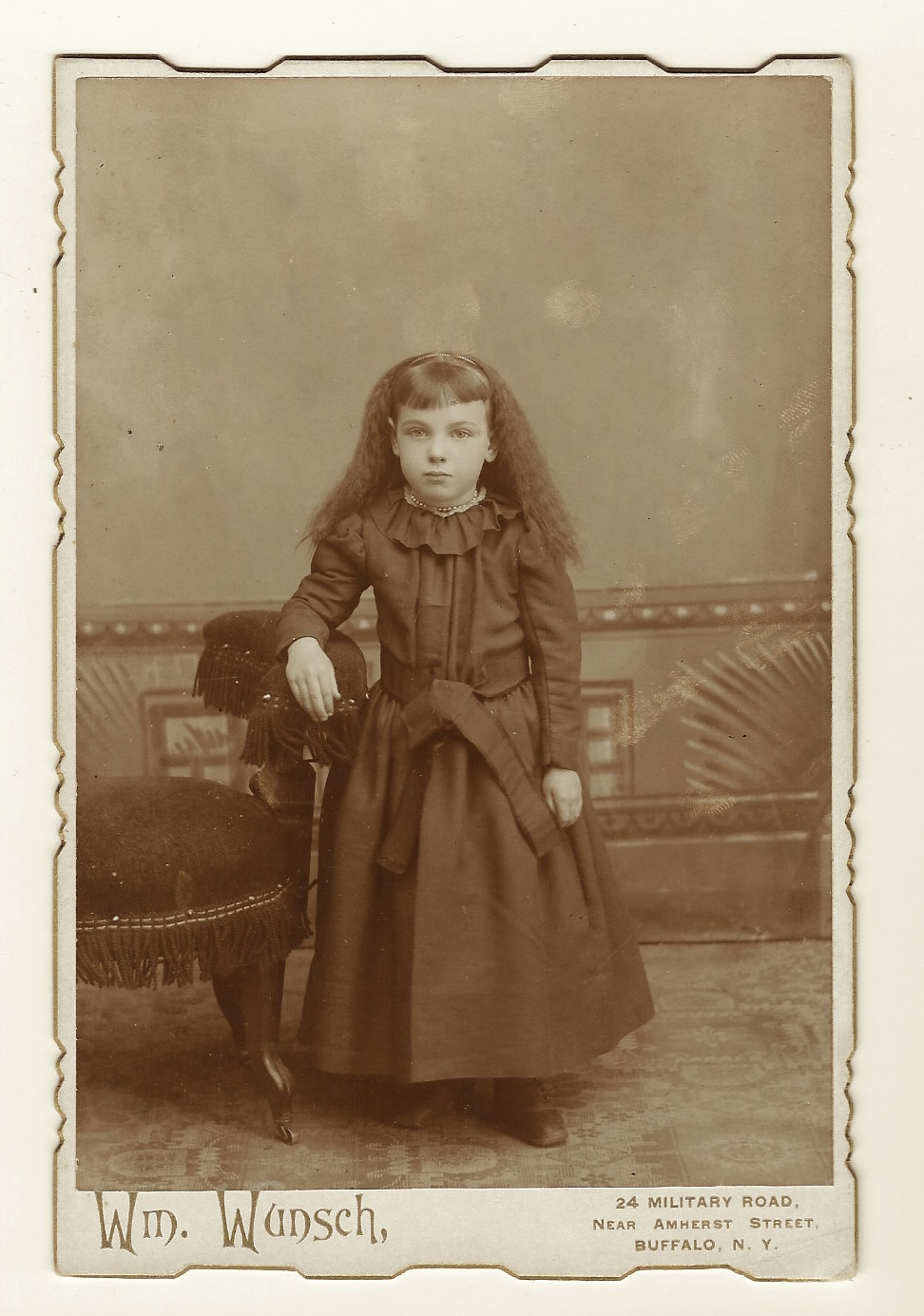
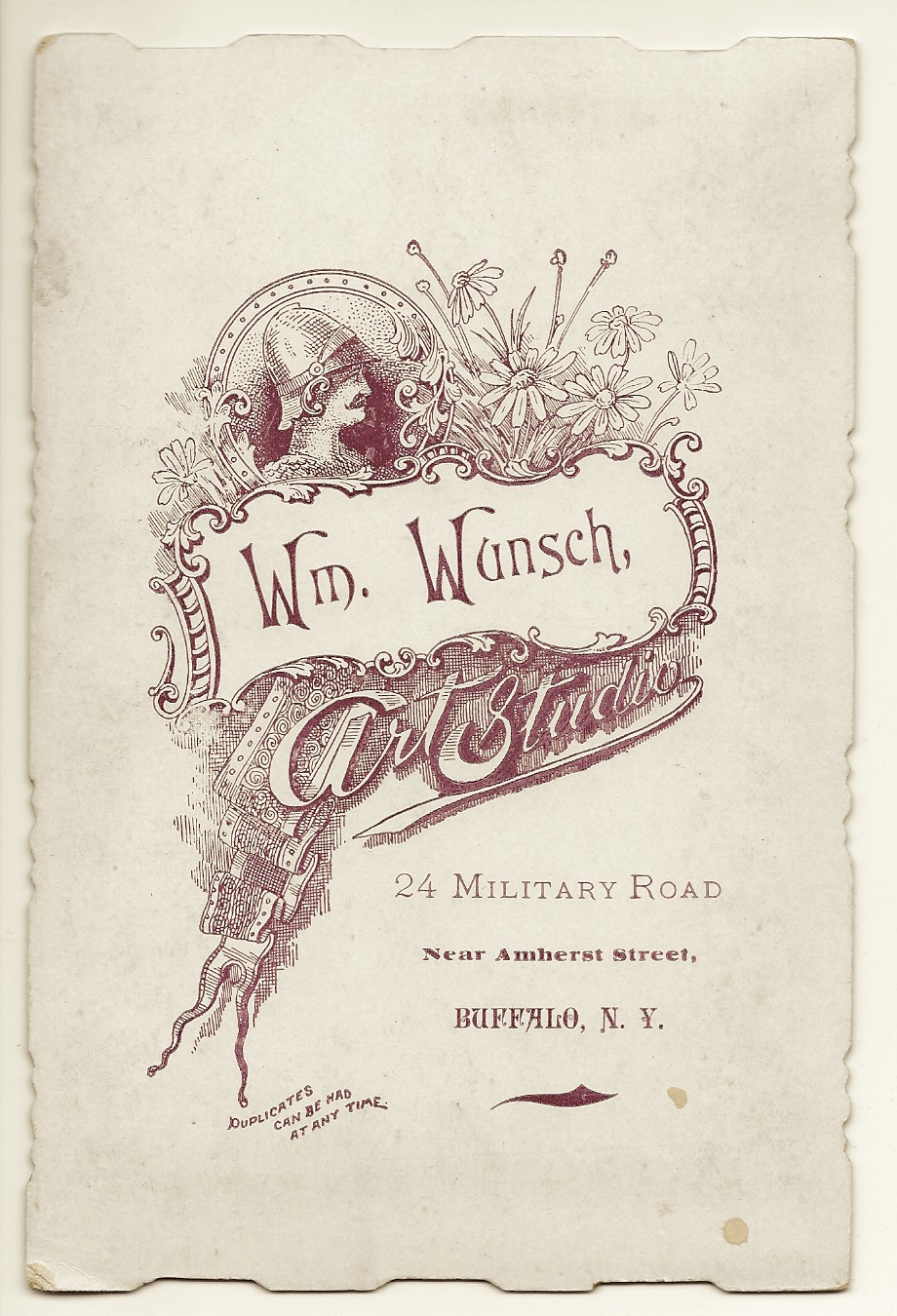
This cabinet card portrait features a charming little girl wearing a long dark dress and a serious expression. The photographer of this image is William Wunsch (1846-1929). His obituary, which appeared in the Buffalo News, indicates that he was a war hero. As Wunsch requested, he was buried with three war medals (including the Gold Cross). Wunsch was a lieutenant in the Franco Prussian Wars and he was decorated for bravery. He came to the United States in 1871 and was granted citizenship in 1876. He was married to Sophia E. Steinmetz Wunsch (1878-1949). He resumed his Prussian career as a photographer after immigrating to the United States. He was very active in the German community of Buffalo, particularly with singing societies. Wunsch was still a photographer at the time of his death even though he was 83 years old. He is buried in Buffalo’s Forest Lawn Cemetery. Judging by the scalloped edges of this photograph, the image was produced sometime after 1886. Wunsch’s studio was located on Military Road at least between 1878 and 1927. It is interesting to note that this war hero photographer located his studio on a street called “Military Road” and used a military figure in his business logo which can be seen on the reverse of the cabinet card (see image below).  (SOLD)

wunsch 1

DESK JOCKEY CONDUCTS BUSINESS IN POSEN, PRUSSIA

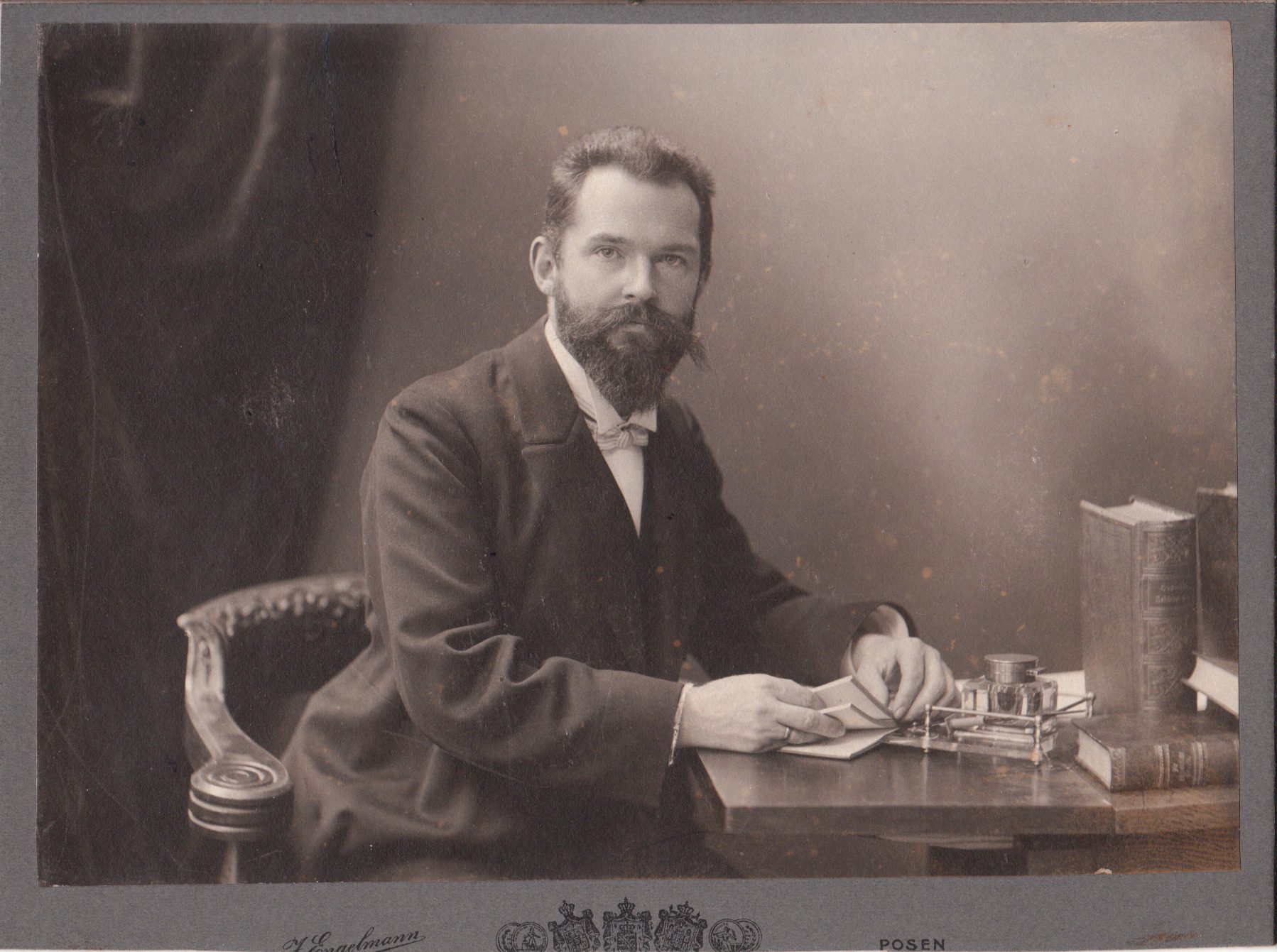
DESK JOCKEY A handsome well dressed gentleman sits at his desk and poses for this portrait by the Engelmann studio in Posen, Poland. At the time of this photograph, Posen was a province of Prussia and part of the German Empire. The man in this photograph appears to be a professional of some type. Perhaps he was an attorney or politician. He is leafing through some papers and looking at the camera. Note the large books (journals?) and the inkwell on his desk. He is wearing a wedding ring and a bow tie.  (SOLD)

Published in: on November 5, 2013 at 12:10 pm  Comments (1)  
Tags: , ,

AN OFFICER AND TWO LADIES IN FRANKFURT, PRUSSIA

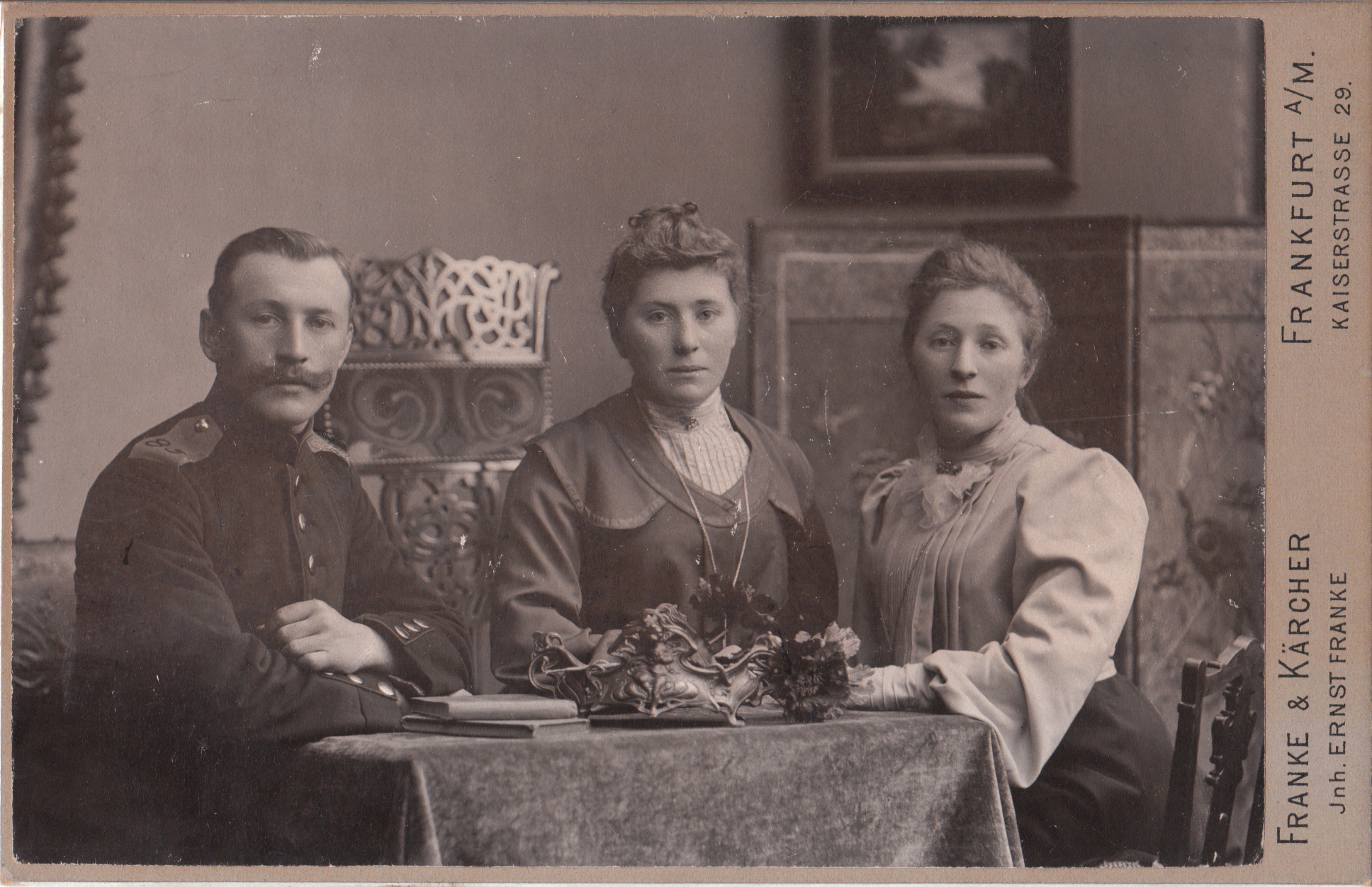
This cabinet card features a military officer and two women seated at a table. All three individuals appear quite austere. On the table are two small books and a bowl with contents that include a pair of scissors. Perhaps this is a family photograph, but there is likely an interesting story about the lives of the subjects in this photograph. The photographer of this image is Franke & Karcher of Frankfurt. At the time of this portrait, Frankfurt was ruled by Prussia.

Published in: on November 11, 2010 at 11:59 am  Comments (2)  
Tags: , , , ,

LACE ABOUNDS IN PORTRAIT OF TWO SIBLINGS IN SPRINGFIELD, MASSACHUSETTS

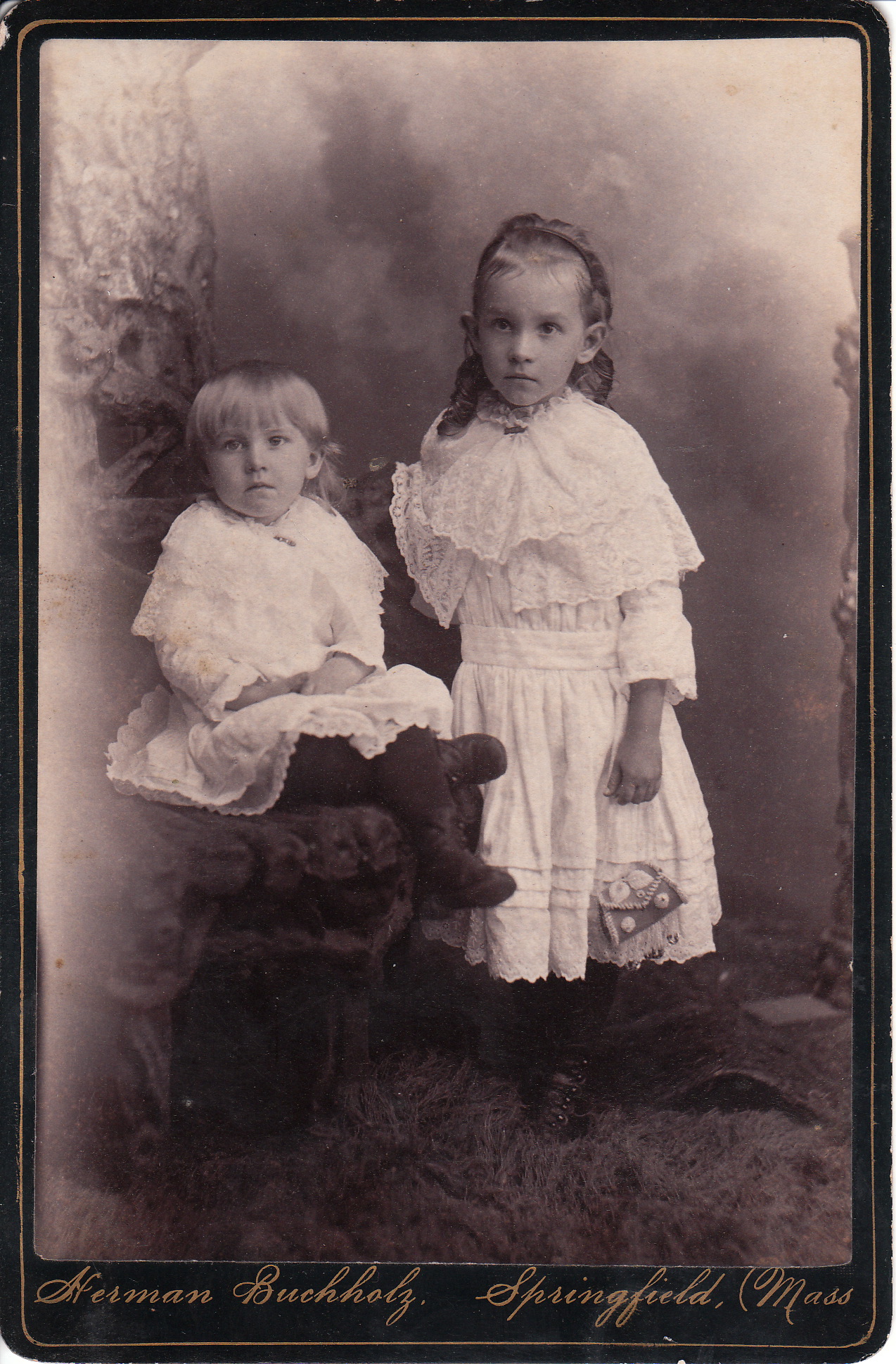
This cabinet card is an image of siblings posing for their photograph at the studio of Herman Buchholz of Springfield, Massachusetts. The children are dressed in their finest clothing and the oldest is carrying a beaded purse. The photographer, Herman Buckhholz (1839-?) was born in Berlin, Prussia.  His studio was located at 365 Main Street when he produced this cabinet card. He was an active photographer between 1869 and 1896.  He found time to serve in the Massachusetts House of Representatives in 1890-1891.

Published in: on August 26, 2010 at 12:01 am  Leave a Comment  
Tags: , , , ,

PRUSSIAN SOLDIER AND HIS FAMILY POSE IN FURSTENWALDE, GERMANY

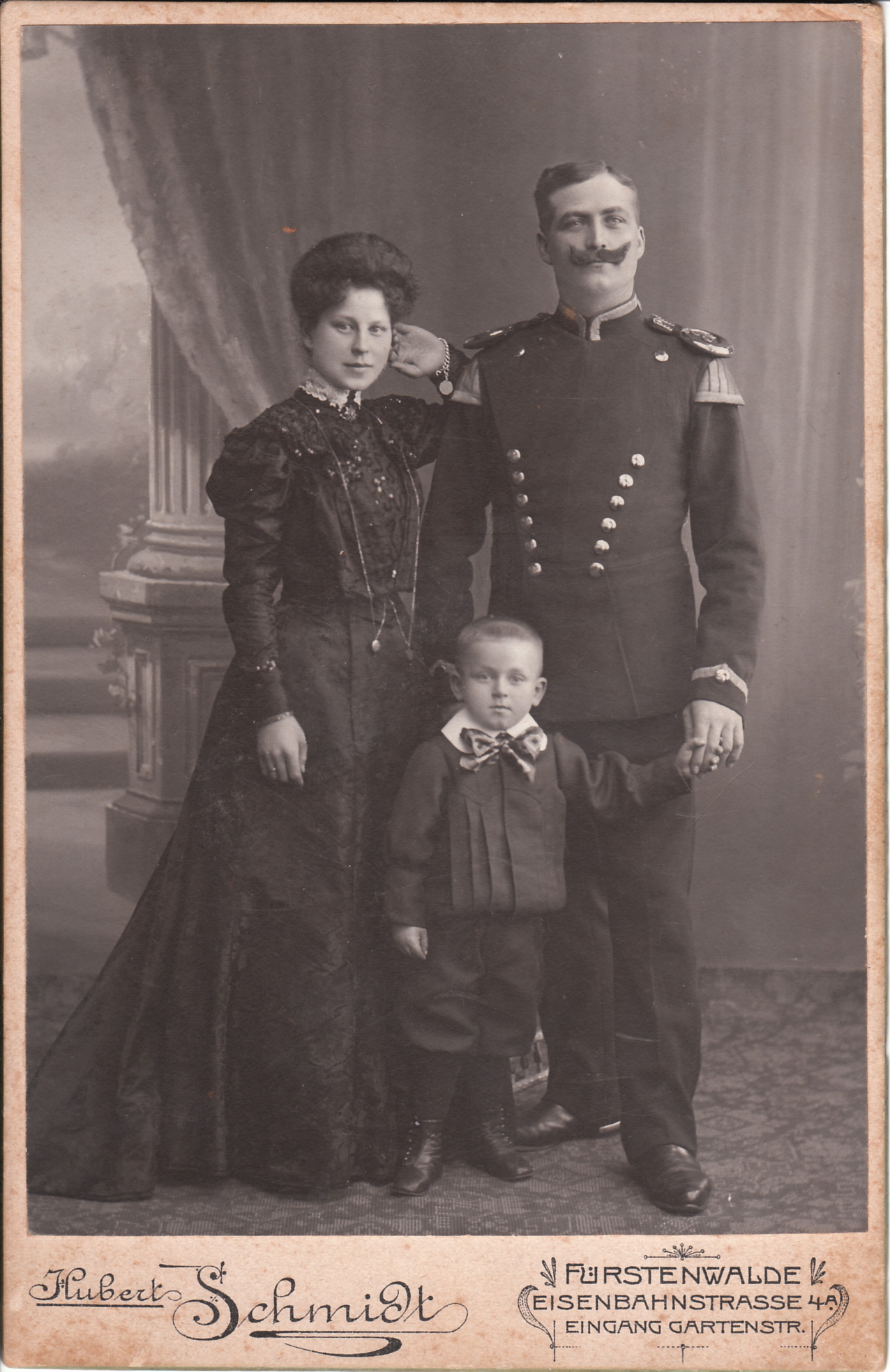
officeer and family_0006A Prussian soldier, his wife, and son pose for their portrait in the  Schmidt studio in Furstenwalde, Germany. The photograph is dated 1898. The photograph shows a bit more intimacy than most during this time period. The soldiers son is holding his fathers hand and the soldiers wife appears to have her arm against her husbands shoulder. Note the soldiers moustache; it curves upward rather than the regularly seen downward. Perhaps a visitor to this entry can ascertain the soldiers rank and branch of service.
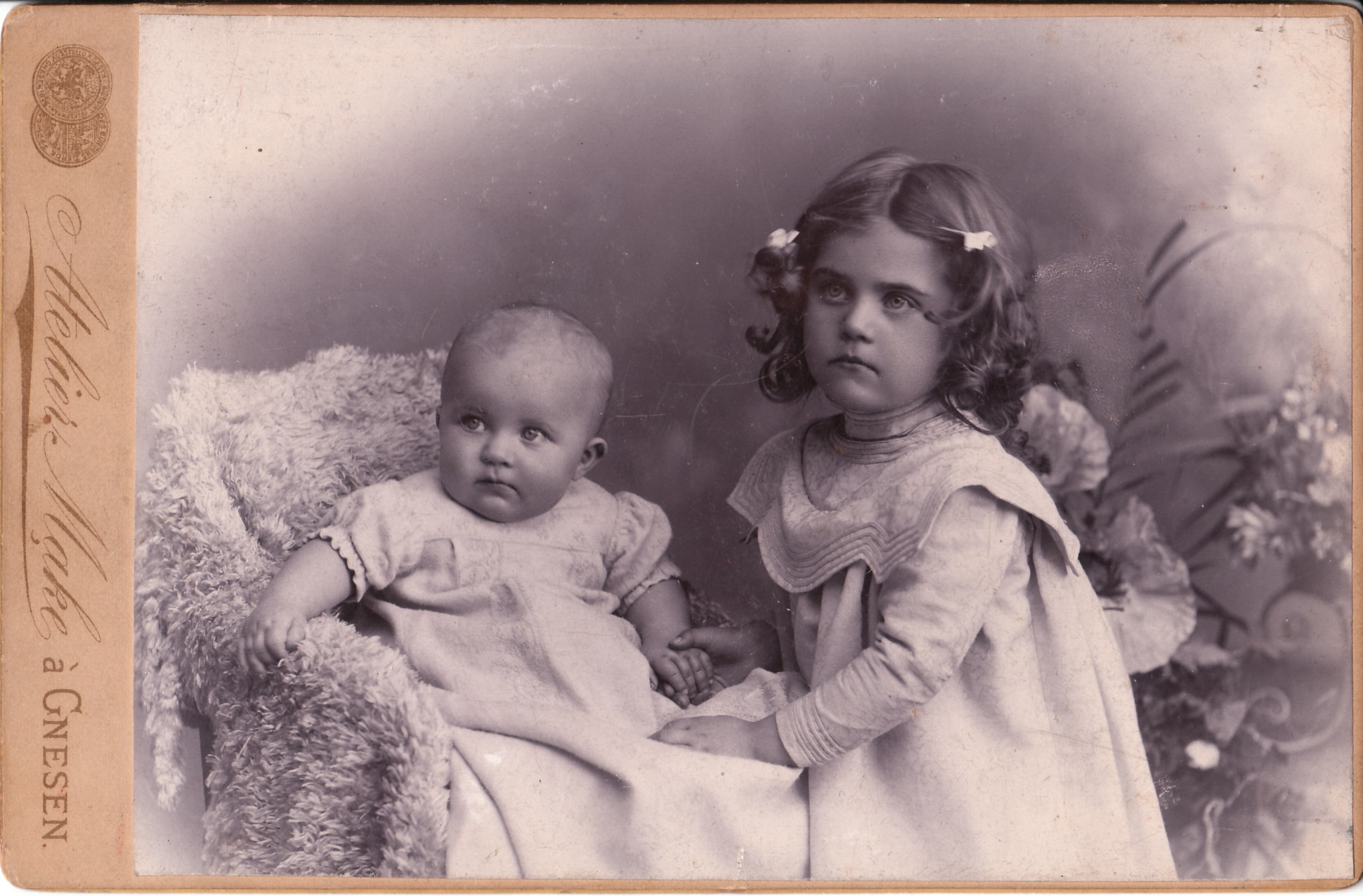
Two Cute Kids Posing in Gnesen, (Prussia?)

adorable-kidsTwo adorable kids (most likely siblings) pose in this Cabinet card photograph. The close-up of the baby is terrific and is an unusual pose for photographs of this era. Most babies I have seen in Cabinet cards are photographed from more of a distance. The photograper is Make of Gnesen. My research leaves me uncertain of whether Gnesen was part of Prussia or Germany at the time of this photograph. Please comment if you have information about what nation Gnesen was part of  in the late 1800’s.  Gnesen is currently part of Poland.

Published in: on January 29, 2009 at 12:30 am  Comments (1)  
Tags: , , ,