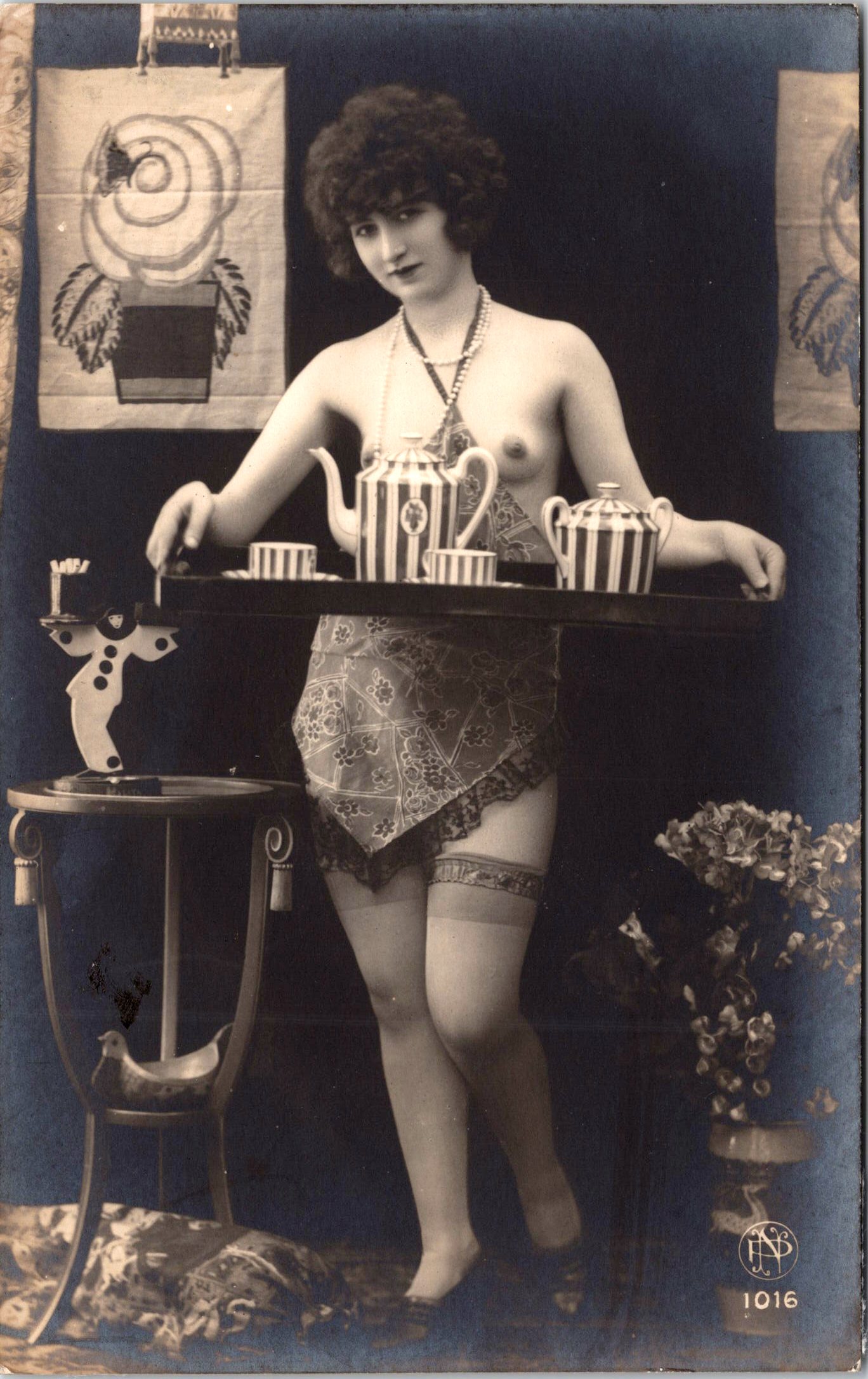
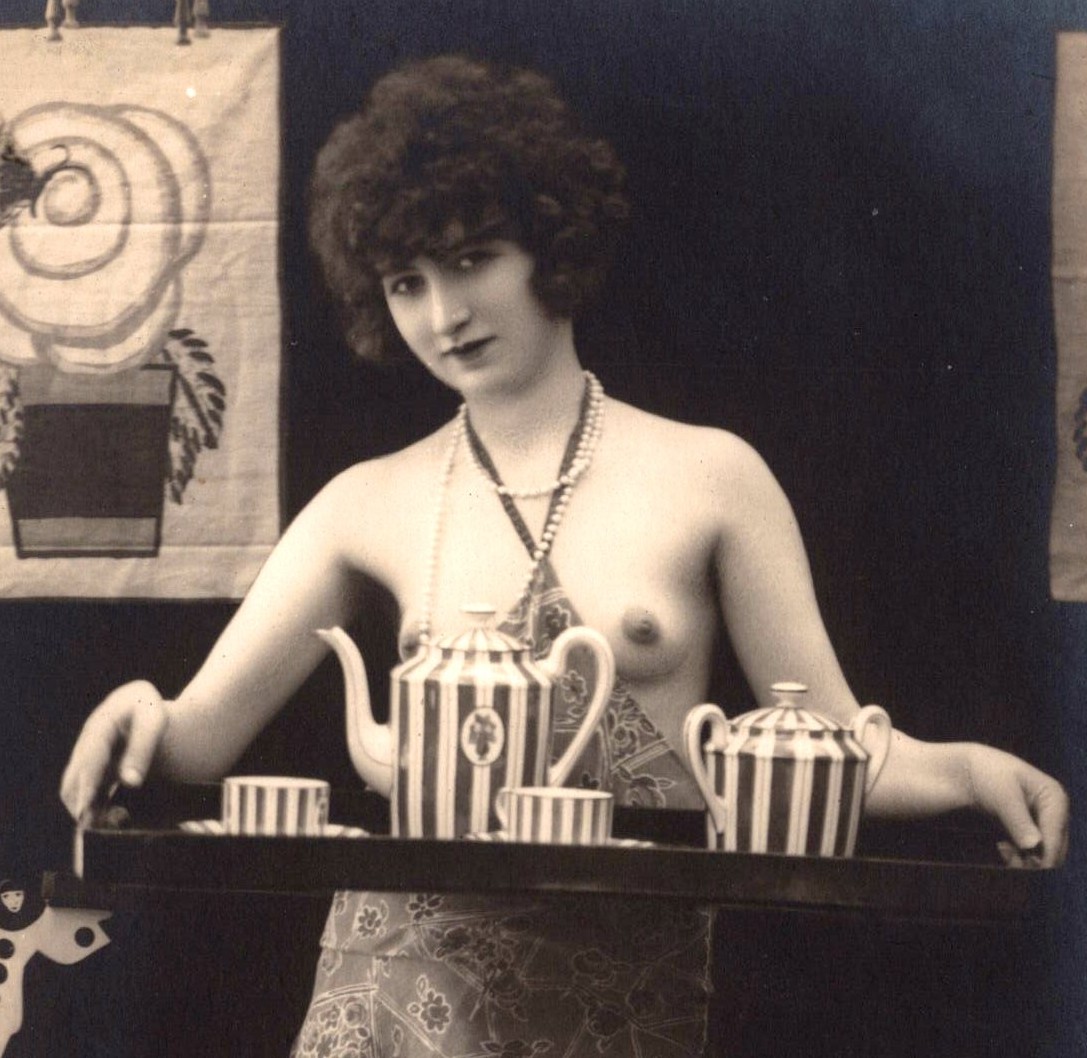
This rare risque real photo postcard captures a staged and playful tableau likely from the 1920s or 1930s. The photograph features a woman in a provocative pose, standing against a backdrop with decorative elements. Her attire is minimal—she wears a halter-style garment fashioned from a patterned scarf or similar material, leaving her torso exposed. She also dons stockings secured with garters, along with a string of pearls that adds a touch of elegance to her otherwise suggestive presentation. Her curly hairstyle is typical of the early 20th century. The woman holds a tray containing a striped tea set, consisting of a teapot, cups, and saucers, which she presents as if serving tea. On the small table to her left, there is a whimsical figurine, perhaps a pierrot or clown. This object adds a playful and slightly surreal touch to the scene. The art on the wall behind her appears to be a fabric panel with a floral design, adding a domestic and slightly bohemian atmosphere to the setting. The woman’s facial expression is subtle, with a faint smile that exudes confidence and a hint of amusement. Her pose, along with the setting, suggests that this postcard was intended as a risqué but artistic depiction, typical of many such images produced for collectors or admirers of “boudoir” photography during this era. The publisher of this postcard is unidentified, other than the initials “NP”. Preliminary research did not reveal the actual name of the publishing company. SOLD
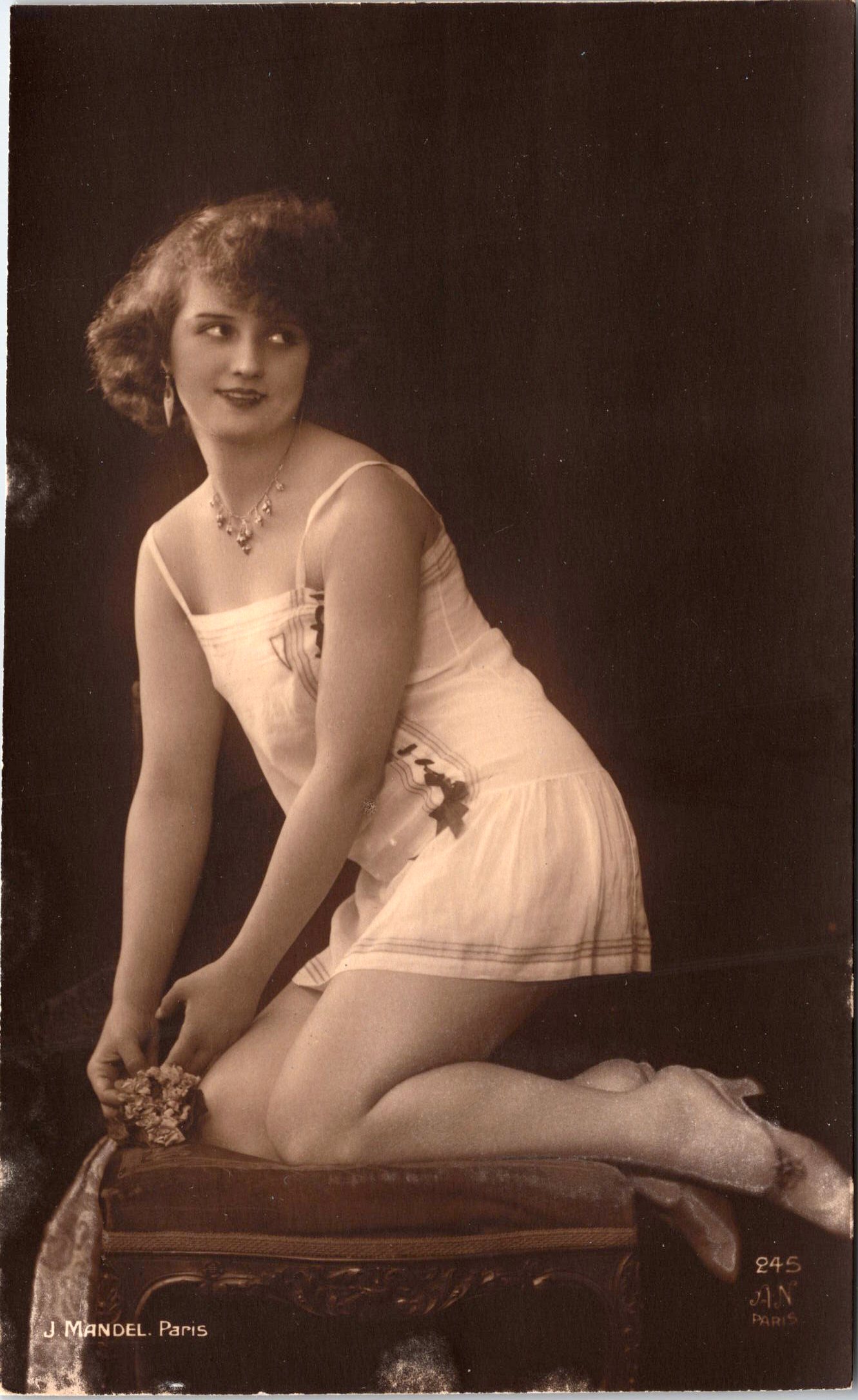
This vintage real photo features a pretty young woman wearing a negligee and holding a small bouquet of flowers. The woman is perched on an ornately carved wooden stool with upholstered fabric. She is in a graceful, slightly coy pose, looking off to her left, avoiding direct eye contact with the camera. She has short, wavy hair, characteristic of the 1920s or early 1930s style, giving her a modern and sophisticated look for the era. Her expression is flirtatious yet demure, exuding a mix of elegance and allure. She is wearing a light, sleeveless garment resembling a chemise or slip, commonly associated with boudoir or risqué photography of the time. The outfit is detailed with delicate embroidery and small ribbon accents, enhancing its feminine charm. Her night clothes are accessorized with a simple yet sparkling necklace and earrings. This postcard was published by Alfred Noyer (Paris). The model’s photograph was taken by J. Mandel. Mandel was a noted Parisian studio or publisher that specialized in photographic postcards during the early 20th century. Many of his works were part of the “boudoir” genre, featuring women posed in intimate or suggestive settings. SOLD
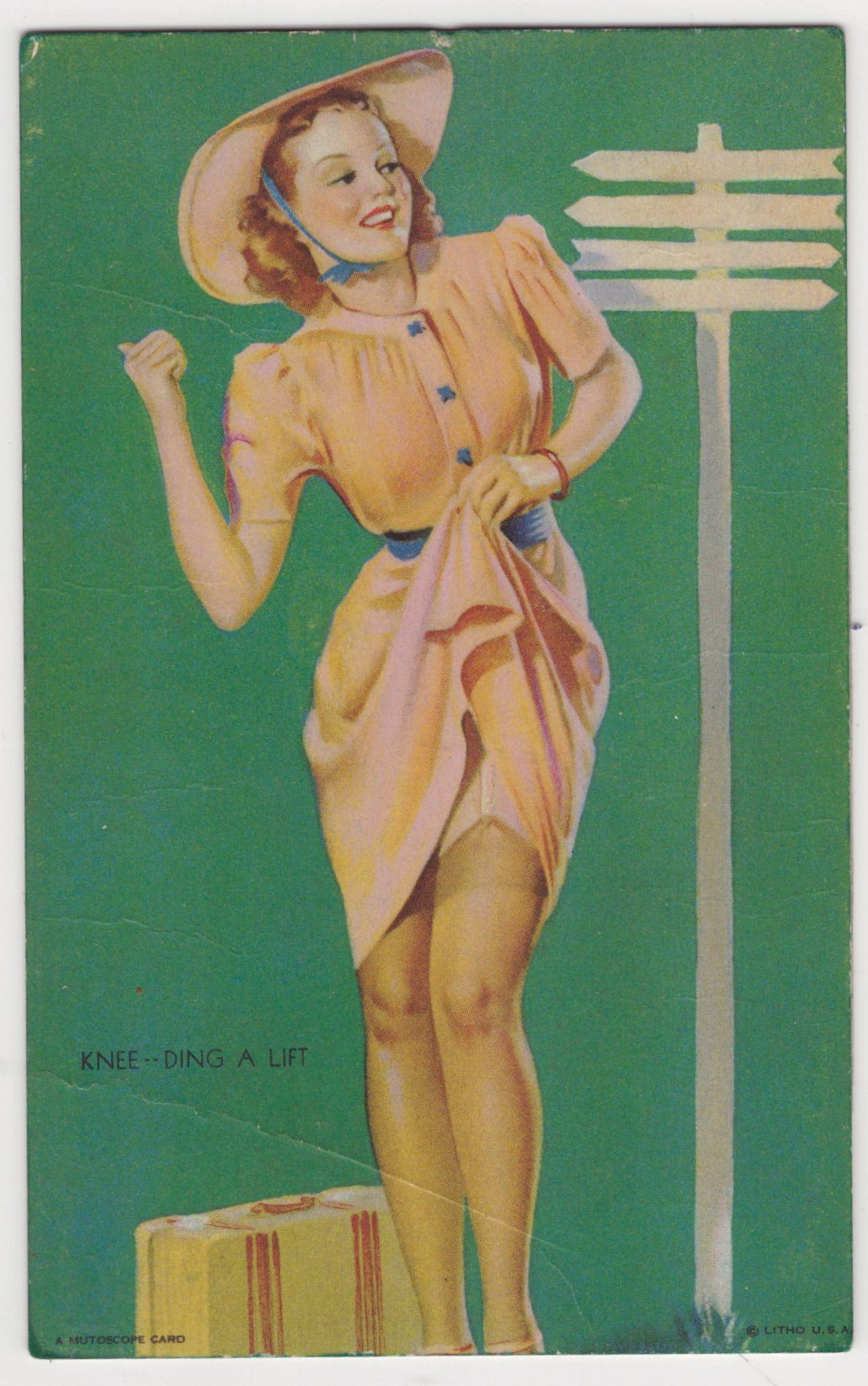
This arcade card features a pretty woman hitchiking. She has lifted her skirt and is flashing a beautiful smile in hopes of catching a ride. This card is risque. The artist of this pin-up is the celebrated Gil Elvgren. The card was published by Mutoscope. SOLD
This risque vintage real photo postcard features a nude pretty young woman smiling at the camera. Her image on this card is provocative. She covers the sexually charged areas but the postcard remains alluring. Although she is covering herself, she does not seem terribly embarrassed about her state of undress. SOLD
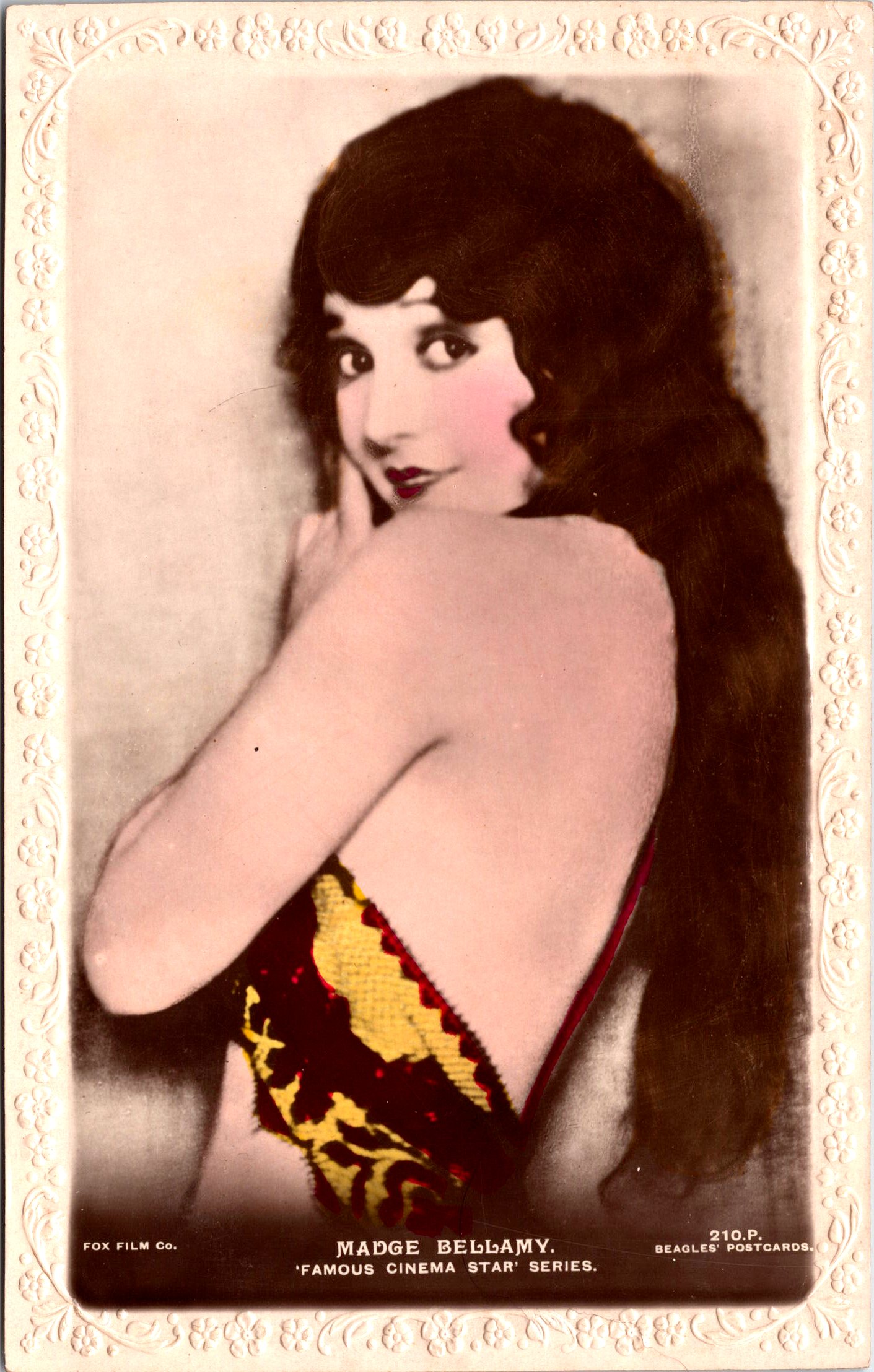
Postcard 1 is a hand tinted vintage real photo postcard that features Madge Bellamy (1899-1990), an American stage and film actress. She was a popular leading lady in films of the 1920’s and 1930’s. The sound era put the brakes on her career and a romantic scandal in the 1940’s brought it to a total stop. Madge was a Texan. She was born in Hillsboro and was raised in San Antonio and Brownwood. Her father was an English professor at Texas A&M University. As a young child she took dancing lessons but soon, she was interested in becoming an actress. At age 9, she made her stage debut in “Aida”. She and her family moved to Denver, Colorado. She met Carlos Bellamy there and the two married. When Madge decided to leave the state to pursue acting, her marriage ended. Madge went to New York City and worked on Broadway as a dancer. In 1919, she replaced Helen Hayes in Broadway’s “Dear Brutus”, opposite actor, William Gillette. Her career took off thereafter. In 1920, Madge appeared in her first film as a supporting actress to Geraldine Farrar. She then signed a contract with the Triangle Film Corporation. Her “breakout role” was as the title character in Lorna Doone (1922). In 1924 she signed a film contract with Fox Film Corporation. She stayed there five years and during that time she appeared in two films for film director, John Ford. In 1925, she began to have difficulties with fox executives. In 1928, she appeared in Fox’s first talking film, “Mother Knows Best”. In 1928, she married for a second time. The marriage lasted 3 days before she and her husband separated. By 1929, Bellamy’s career entered a tail-spin. She had made poor choices out of her unbridled anger. Fan magazines gave her the nickname of “Miss Firecracker” due to her temperament. In 1929, she also quit her contract with Fox, right after they bought the rights to make a film out of Broadway play. The vehicle was bought with a plan to have Madge be it’s star. Bellamy later admitted she quit over money and added “I got too big for my britches”. She didn’t work again until 1932. She accepted roles in “Poverty Row” (B-movies) films. One of these films was “White Zombie” (1932) in which she appeared opposite Bela Lugosi. Her performance received many poor reviews from film critics. By 1940, Madge basically had no film career. However, she wasn’t done with drama. She was arrested after firing three shots from a .32 caliber revolver at her former lover of five years. The incident was premeditated. She was angry at her intended victim because he married a model shortly after ending their affair. Fortunately, her aim was poor and she missed. The only casualty was her ex boyfriend’s car which took a couple of shots into it’s body. Bellamy pleaded guilty to a lesser charge (violating gun laws), and received a suspended six month sentence and probation. Madge Bellamy’s IMDb filmography reports 61 credits between 1920 and 1945. This vintage postcard is provocative. This postcard is risque for it’s era. She is showing a lot of bare skin. The postcard was published while Madge was under contract with Fox. Therefore, the postcard is from before 1929. The card was published by J. Beagles and is part of the “Famous Cinema Star Series” (No.210P). (SOLD)
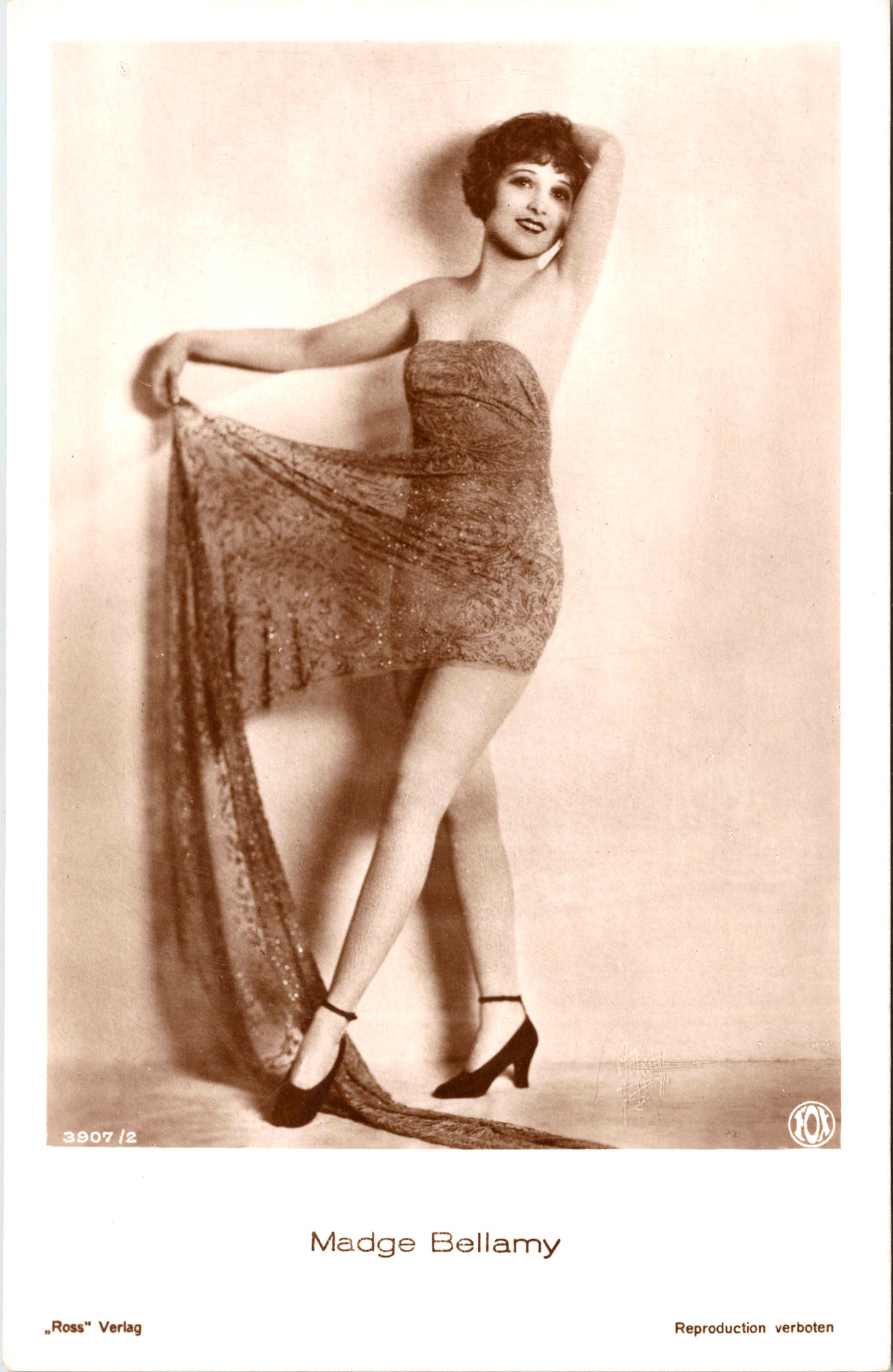
Postcard 2 offers another risque view of Madge Bellamy. Her alluring pose and short skirt qualifies this postcard to be considered provocative. This card was produced while Madge was under contract with Fox Films, sometime before 1929. This postcard was published by Ross Verlag as part of a series (No.3907/2). The postcard is in very good condition (see scans).
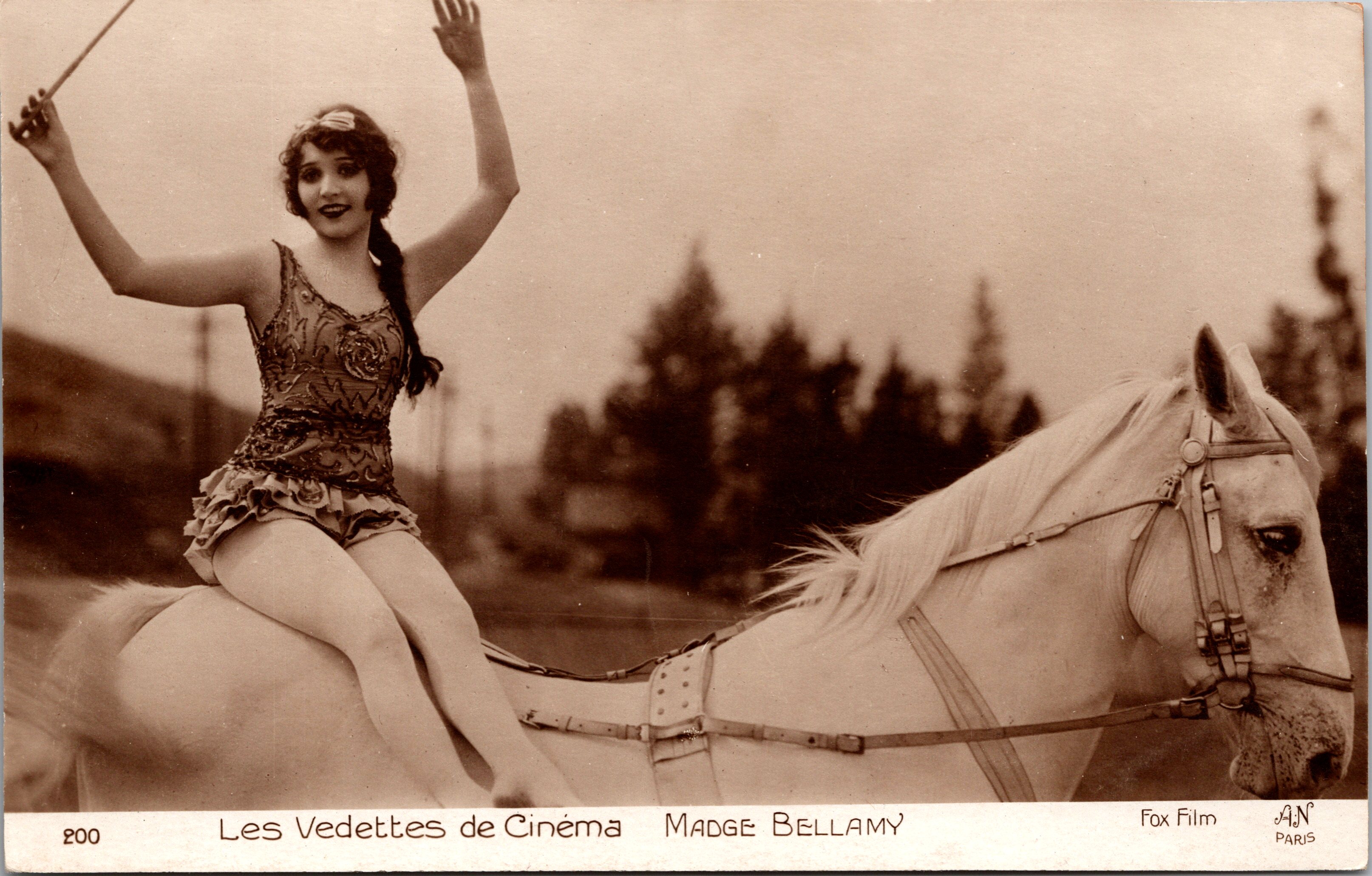
Postcard 3 is quite provocative. There are shades of Lady Godiva in this photograph. Miss Bellamy is pretty and scantily dressed. This postcard is risque for it’s era. The postcard was published while Madge was under contract with Fox. Therefore, the postcard is from before 1929. The card was published by Alfred Noyer and is part of the “Les Vedettes de Cinema” (The Stars of Film) series (No.200). This postcard is uncommon. (SOLD)
Buy this original Vintage Real Photo Postcard (includes shipping within the US) #7386
To purchase this item, click on the Pay with PayPal button below
$24.00
Buy this original Vintage Real Photo Postcard (includes International shipping outside the US) #7386
To purchase this item, click on the Pay with PayPal button below
This vintage risque postcard features a bikini clad Marisa Allasio (1936- ), a renowned Italian actress and a popular figure in 1950s cinema. Known for her beauty and charm, she became a prominent “sex symbol” of Italian film. Allasio starred in nearly 20 films between 1952 and 1958, often embodying lively, youthful roles in comedies that resonated with audiences of Italy’s post-war economic boom. Her most famous performances include roles in Poor But Beautiful (1957) and Pretty But Poor (1957), both directed by Dino Risi, as well as Seven Hills of Rome (1958) alongside Mario Lanza. Her film career ended abruptly in 1958 when she married Count Pier Francesco Calvi di Bergolo, a member of Italian nobility and the grandson of Italy’s King Victor Emmanuel III. Post-marriage, she left the film industry and focused on family life, becoming the Countess of Bergolo. Despite her brief career, Allasio remains a nostalgic icon of Italian cinema from that era, remembered for her vivacious on-screen presence and embodiment of 1950s Italian glamour. This vintage postcard is larger than the standard postcard. This card measures about 5.75 x 4.00 inches. This postcard was published by Rotalfoto. The firm was based in Milan, Italy. The postcard was published in the 1950’s and is in good condition (see scans).
Buy this Vintage Real Photo Postcard (includes shipping within the US) #7749
$12.00
Buy this Vintage Real Photo Postcard (includes International shipping outside the US) #7749
To purchase this item, click on the Pay with PayPal button below
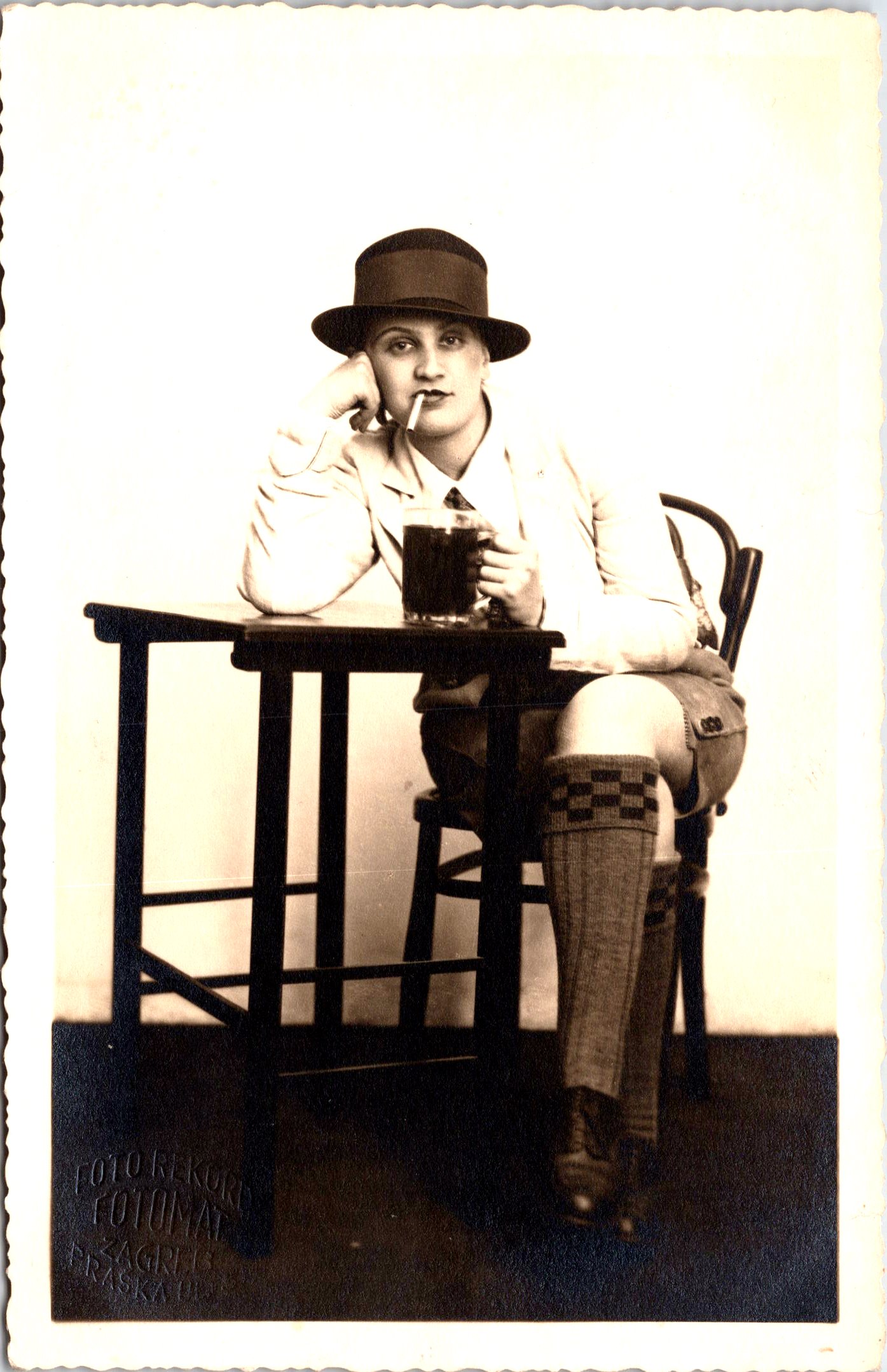
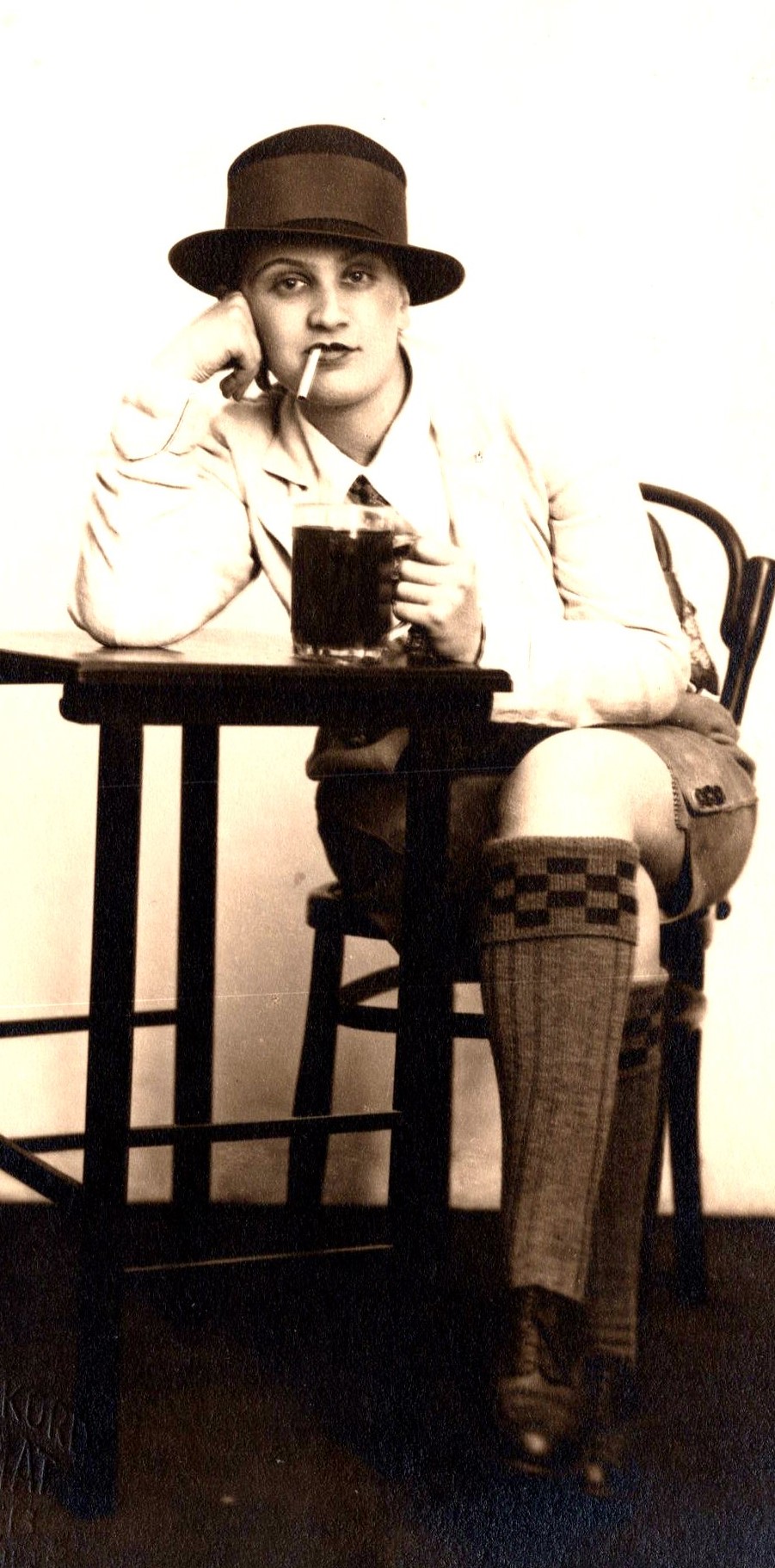
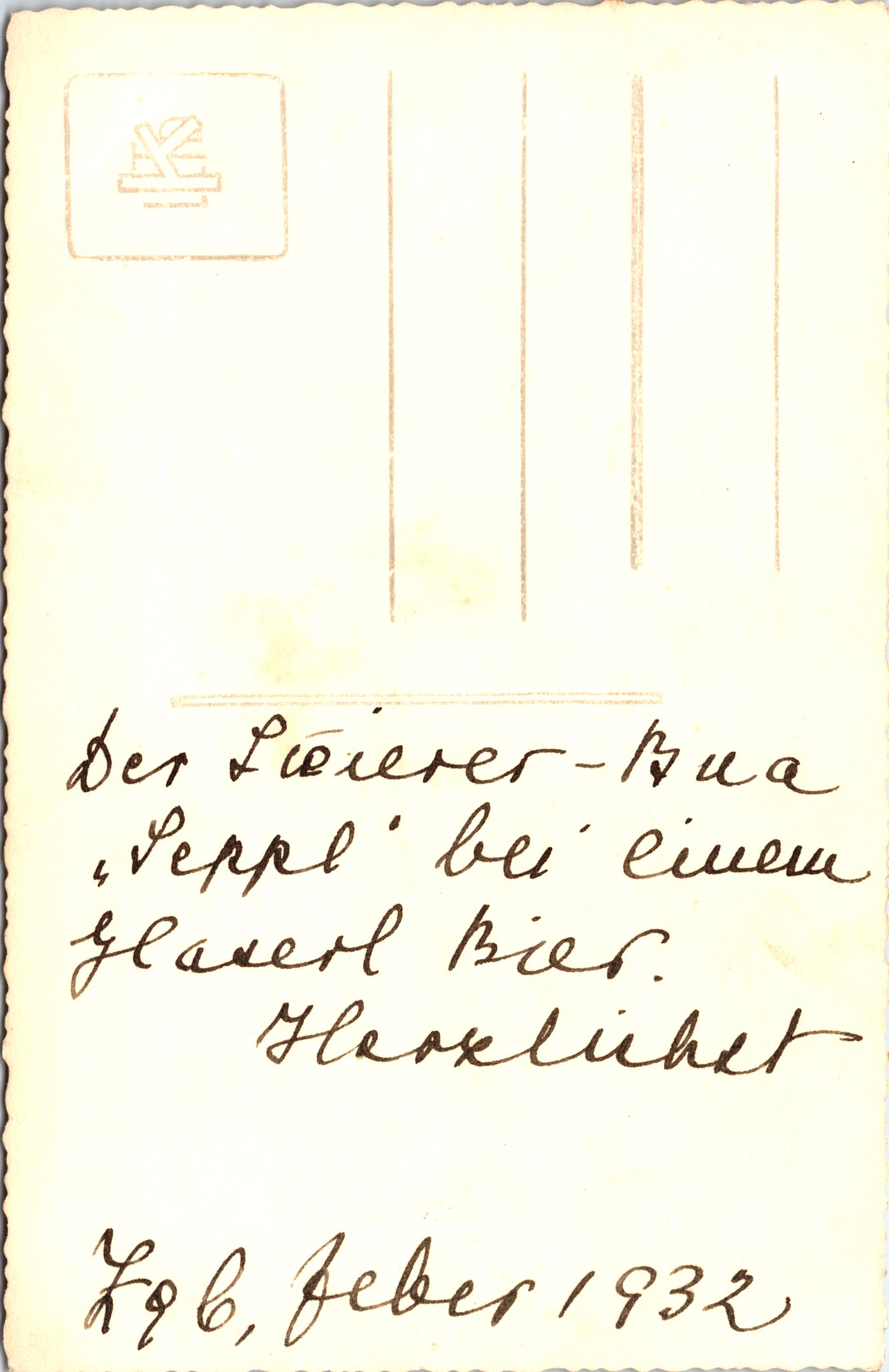
This provocative vintage real photo postcard features a pretty young woman drinking a mug of beer and smoking a cigarette. This postcard is provocative and meant to be sexually charged. This postcard may be gay themed. This postcard photo is a studio card and is likely one-of-a-kind. An inscription on the reverse of the card is dated 1932. SOLD
This risque vintage real photo postcard features a nude pretty young woman giving the camera a “come hither” look. She is reclining on a chair. This postcard was published by B. M. V. as part of a series (No.31). SOLD
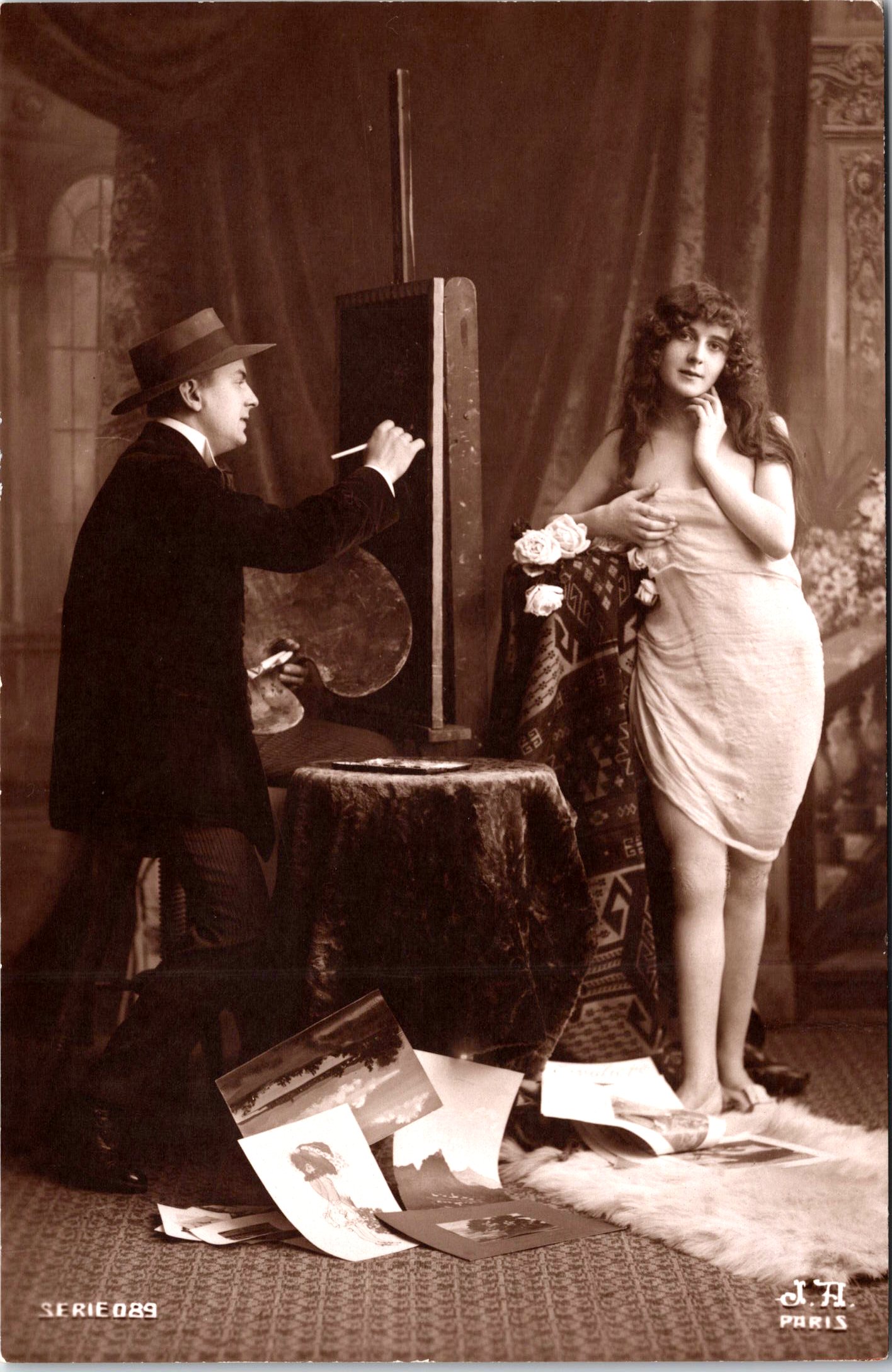
This French vintage risque real photo postcard features a pretty young woman modeling for an artist. This photograph is meant to titillate. The young woman is scantily dressed and showing much of her bare legs. One side of the hem of her undergarment is lifted. The model is displaying an alluring expression. The artist appears to be intensely concentration on his painting. He is holding a brush and palette. Some of the artist’s work is strewn on the floor. This risque photographic portrait was published by celebrated photographer, Jean Agelou (1878-1921), as part of a series (No.089). Agelou was a French photographer of the 1910’s and 1920’s who is best known for his erotic and nude photographs. He was born in Egypt and not much is known about his private life. Agelou generally used models between the age of 20 and 24 years-old. Although the 1900’s was the “golden age” of erotic photograph, photographers who took such risque photos had to use discretion. As a result, Agelou signed his work “JA”. In 1908, nudity in photographs was banned in France and photographers had to cover nude women images with strategically placed undergarments or other materials. Nude images had to circulate on the down low. They were sent in the mail inside of envelopes. Jean Agelou died in 1921; the result of a car accident. His brother George, who managed Jean’s business, also was killed in the crash. SOLD
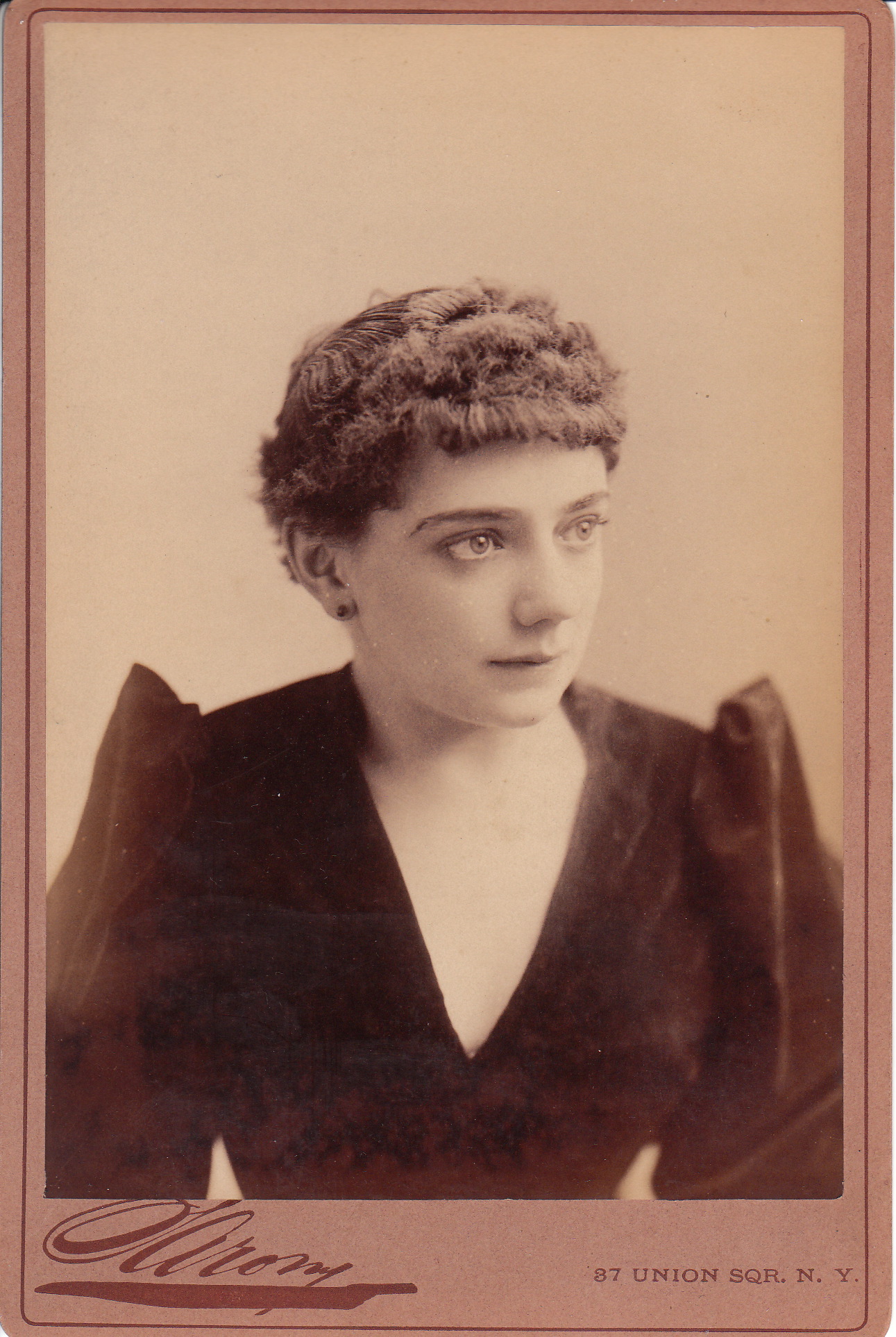
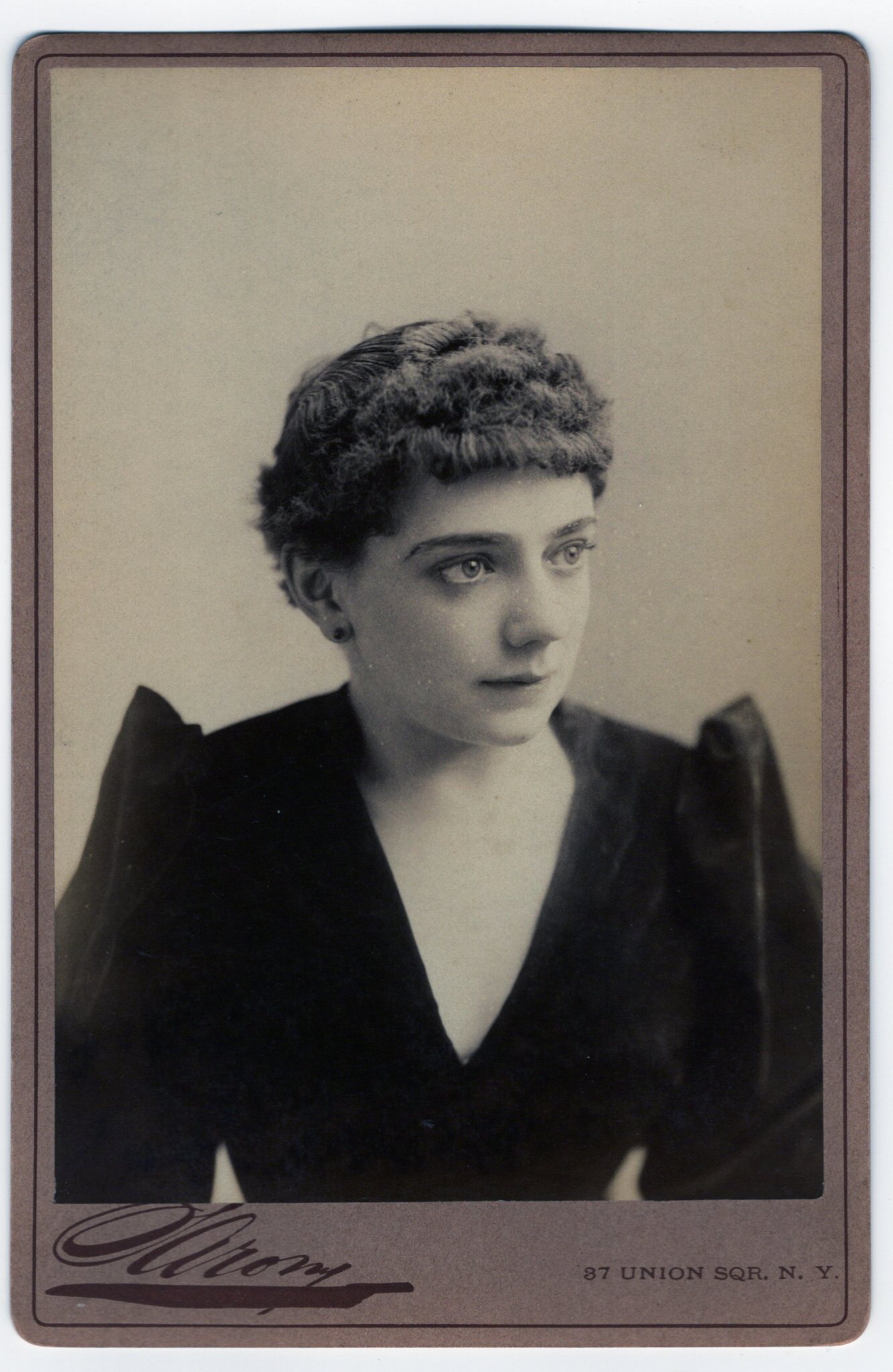
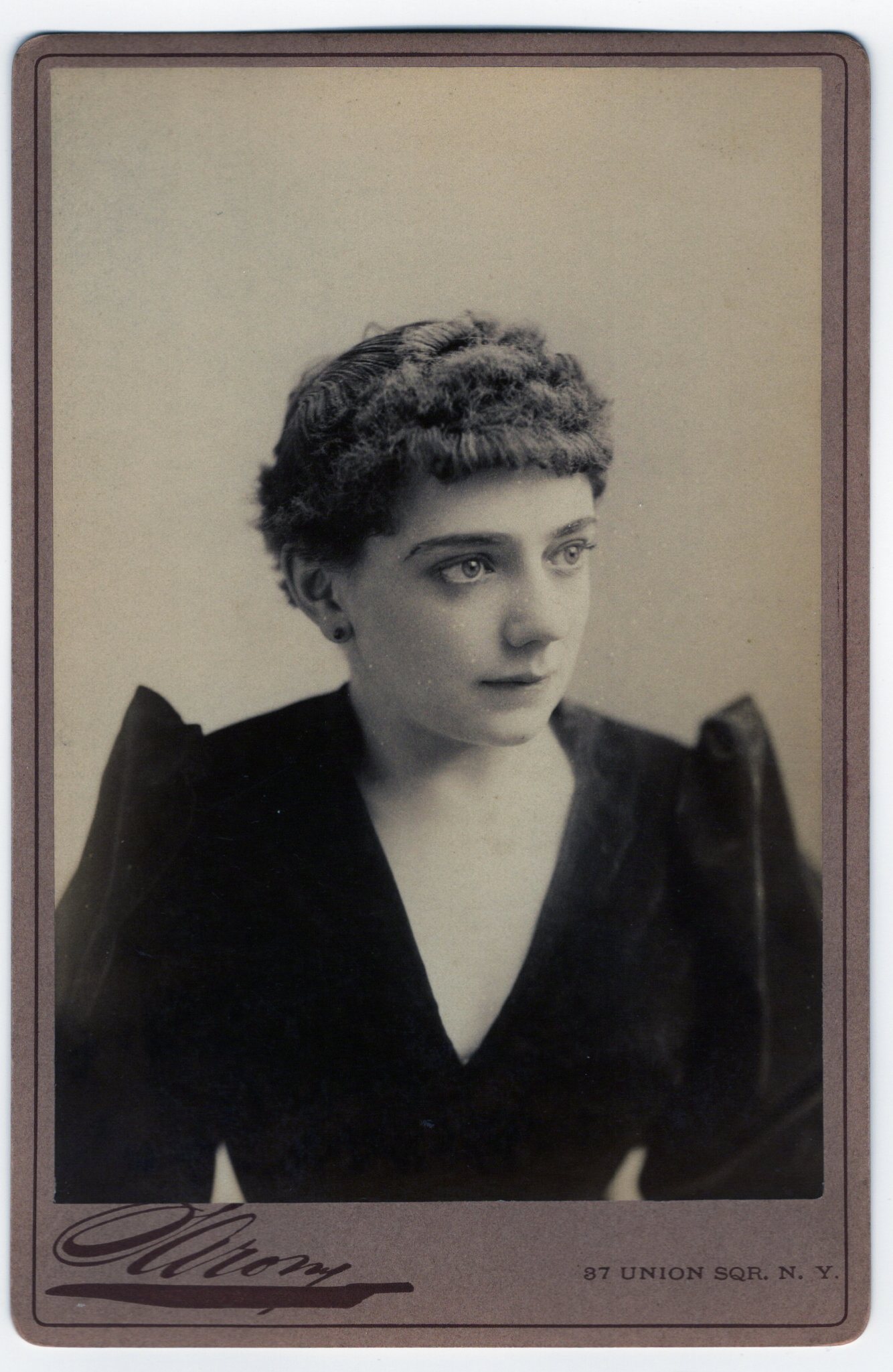
This cabinet card portrait, by celebrity New York City photographer Sarony, features an unidentified attractive young woman. She is likely an actress or a society woman. Her V-neck dress is very revealing for the era that the image was produced. In fact, this is somewhat of a risque mode of dressing. To view other photographs by Sarony, click on the category “Photographer: Sarony”. This cabinet card has an extremely mild curl and is in overall very good condition (see scans).
Buy this Cabinet Card (includes shipping within the US) #6052
To purchase this item, click on the Pay with PayPal button below
$49.95
Buy this Cabinet Card Photograph (includes International shipping outside the US) 6052
To purchase this item, click on the Pay with PayPal button below














 THE CABINET CARD GALLERY