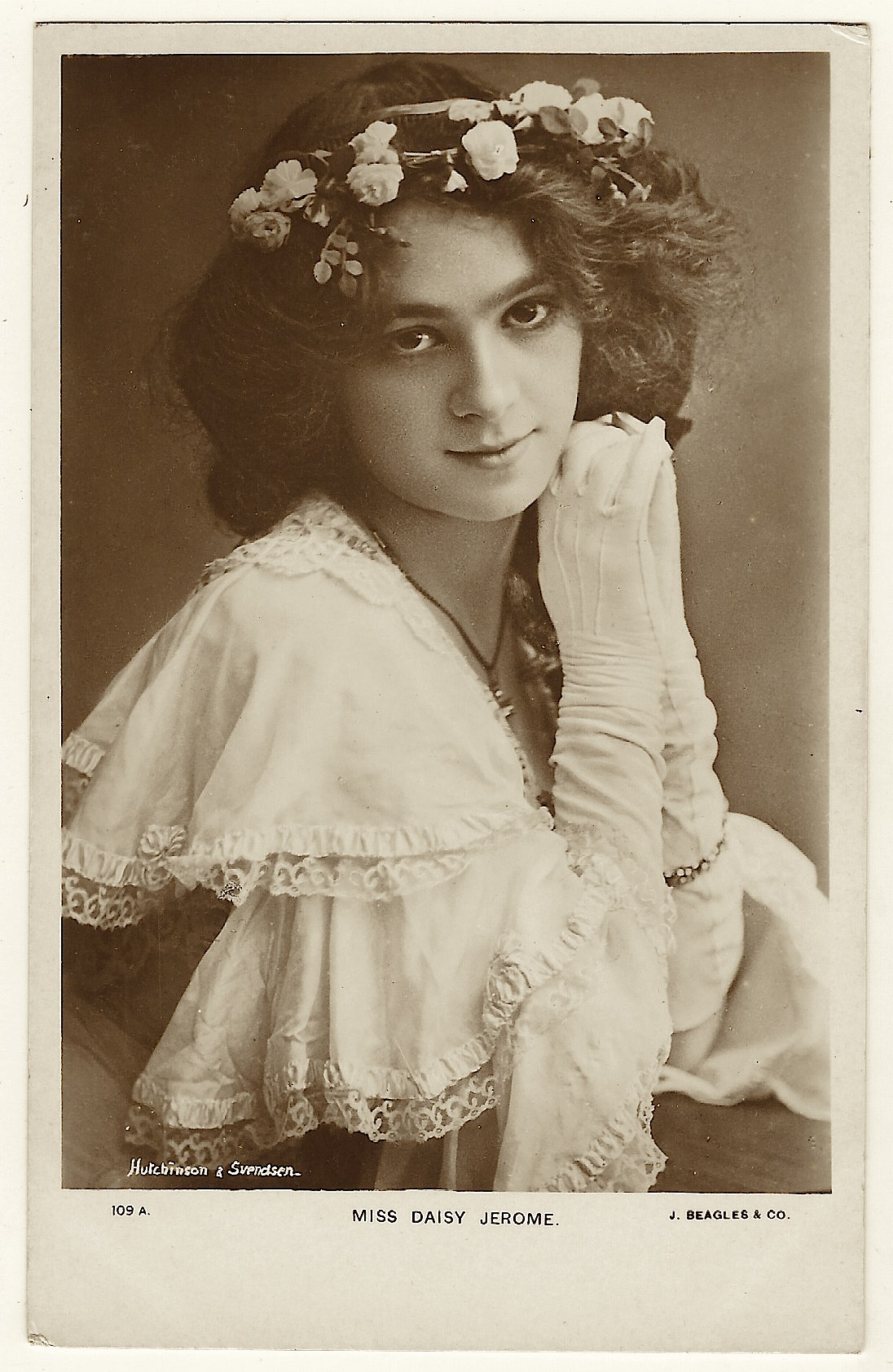
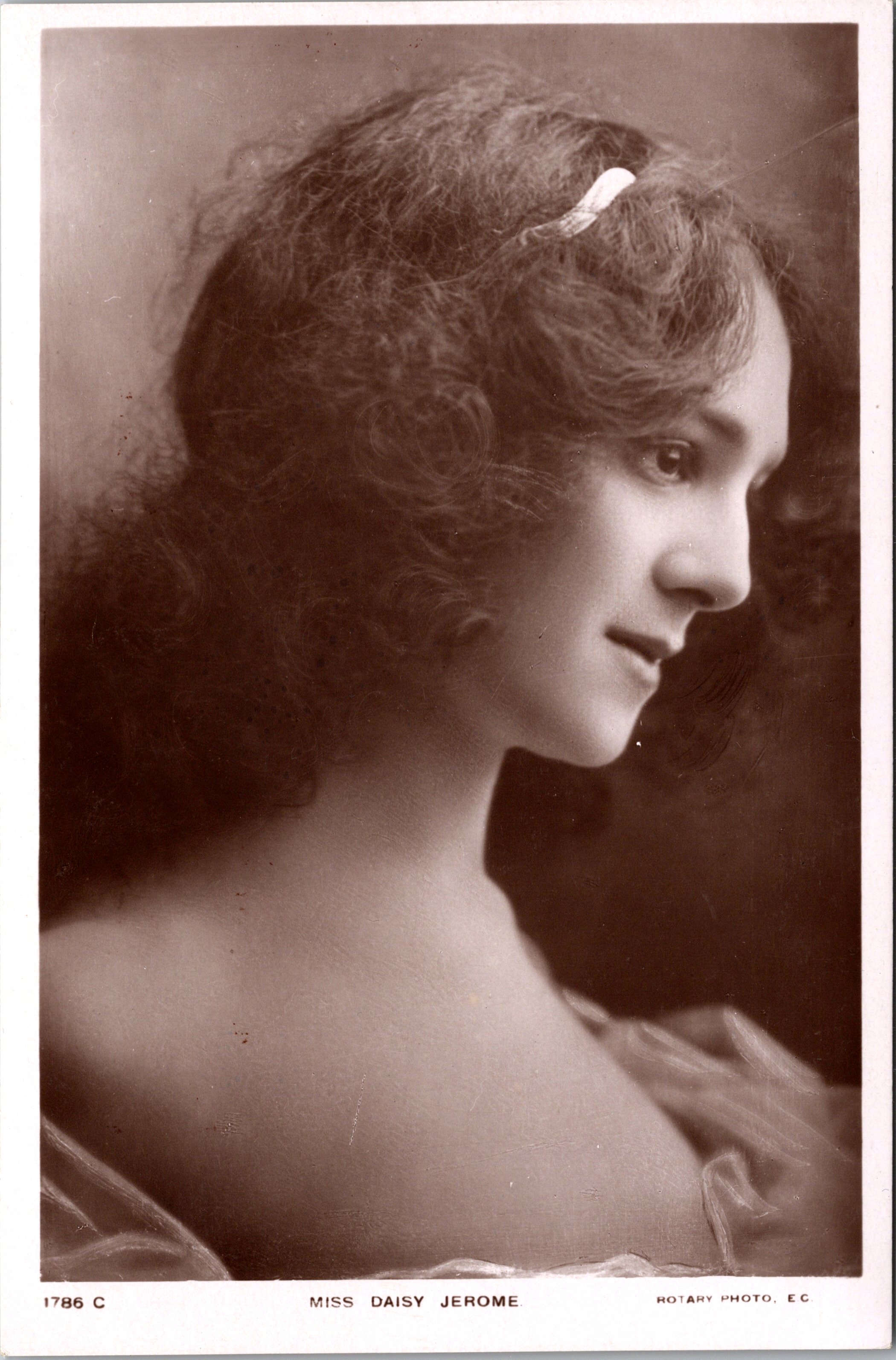
This rare vintage real photo postcard features the red headed actress that electrified the Australian stage. She was noted for her famous wicked wink. The life and times of Daisy Jerome can best be described as scandalous. She arrived in Australia in 1913 for a three year stage tour. Feminism was rising in the western world. Suffragettes were marching for the right to vote. Women were smoking, driving, wearing less conservative fashion, and even dancing the tango with it’s sexual overtones. She arrived in Adelaide adorned with an excess of jewelry. She was born in America but raised in England. Her place of birth was New York and she was born Daisy Witkowski in 1886. Daisy reported that she was raised in a multilingual household that had been visited by Presidents Lincoln, McKinley, and Roosevelt. After experiencing financial problems, her father moved the family to England. Money was needed and Daisy followed her sister onto the stage. She played the Palace and toured with companies that gave her a chance to do comedic singing and pantomime. Her performances were considered to be amusing and irreverent. She was a comedienne. Her humor has been described as “vibrant” and “wicked”. Daisy was described as “feisty”, “cunning”, and “independent”. She was small and dainty and had compelling eyes and an expressive face. Her performances had a risque tone and she had a hoarse, sensual voice. She could toe dance and wooden shoe dance, but was most known as a mimic and comnic singer. After a year of marriage, she deserted her first husband to live with another man. In 1910, she took a journalist to court for libel. The reporter had accused her of performing encores when audiences had not requested them. She claimed that her professional reputation had been damaged. The court case was a circus. The defense ridiculed one of her songs which caused her to break into tears in the witness chair. She won the case but was barely compensated. When she began her tour of Australia, she was recognized as raucous, vulgar and “an acquired taste”. She quickly charmed those that were hesitant to appreciate her and she soon received a warm welcome and a complimentary nickname, “The Electric Spark”. Her carrot red hair became the subject of much debate. She claimed it was her natural color but most people were not believers of her claim. One day, an Australian comedian told her that a gentleman had taken offence to her hair. The comedian said that the offended man would visit her that night. The comedian then informed the local fire chief that there was great risk of fire during Daisy’s time on stage. The worried fireman came to the theatre and when he saw Daisy’s red hair, he realized he had been a victim of a joke. He kept the joke going when he said that he agreed there was risk of fire and he ordered the scenery to be fireproofed immediately. During Daisy Jerome’s era, there was a bias against redheads. They were considered to be hot tempered and sexually wild and uninhibited. Her theater/music hall background only magnified some people’s negative view of Daisy. After completing her touring contract in Australia, she signed another one. This time she performed on a vaudeville stage which allowed her to showcase her bawdy songs. In 1914 she sang a feminist style song called “The Press, the Pulpit, and the Petticoat”. This song argued that women were more powerful and influential than the media and the church. Daisy was a woman who had unconventional ideas. She would not restrained by political correctness. She stated in a 1914 interview that “I refuse to regulate my acts to accepted rules of conduct”. Despite her views, she remained popular with Australian audiences. She left Australia in 1916 and returned in 1922 for another successful tour. Later, she was involved in another court case which this time involved her suing her maid over missing jewels. With the arrival and subsequent popularity of films, Daisy Jerome faded out of the public’s focus. Two photo portraits of Daisy Jerome can be found in England’s National Portrait Gallery.
Postcard 1 was published by J. Beagles & Co. of London, England as part of a series (No. 109 A). The company was started by John Beagles (1844-1909). The company produced a variety of postcards including an extensive catalog of celebrity (stage and screen) portrait postcards. After Beagle’s death, the business continued under it’s original name until it closed in 1939.Miss Jerome’s portrait was taken by the Hutchinson & Svendsen studio. The National Portrait Gallery asserts that this pair of photographers were active in London between 1905 and 1906. This vintage photo postcard is in excellent condition (see scans). This postcard portrait of Daisy Jerome is absolutely beautiful and very uncommon. (SOLD)
Postcard 2 was published by Rotary Photo (England) as part of a series (No. 1786 C). This vintage photo postcard is in good condition (see scans).
Buy this Vintage Real Photo Postcard (includes International shipping outside the US) #5172
To purchase this item, click on the Pay with PayPal button below
$22.00
Buy this Vintage Real Photo Postcard (includes International shipping outside the US) #5172
To purchase this item, click on the Pay with PayPal button below
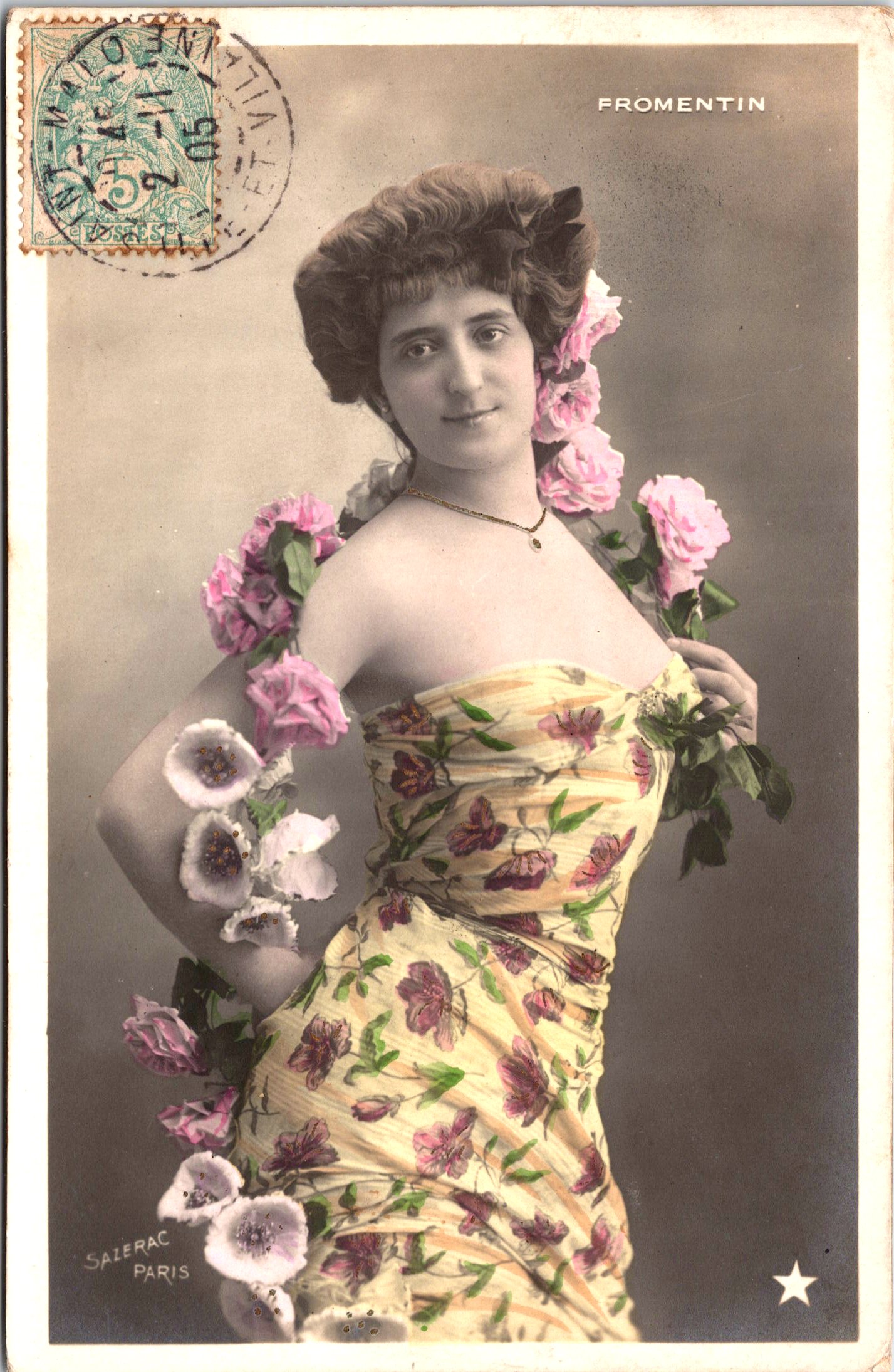
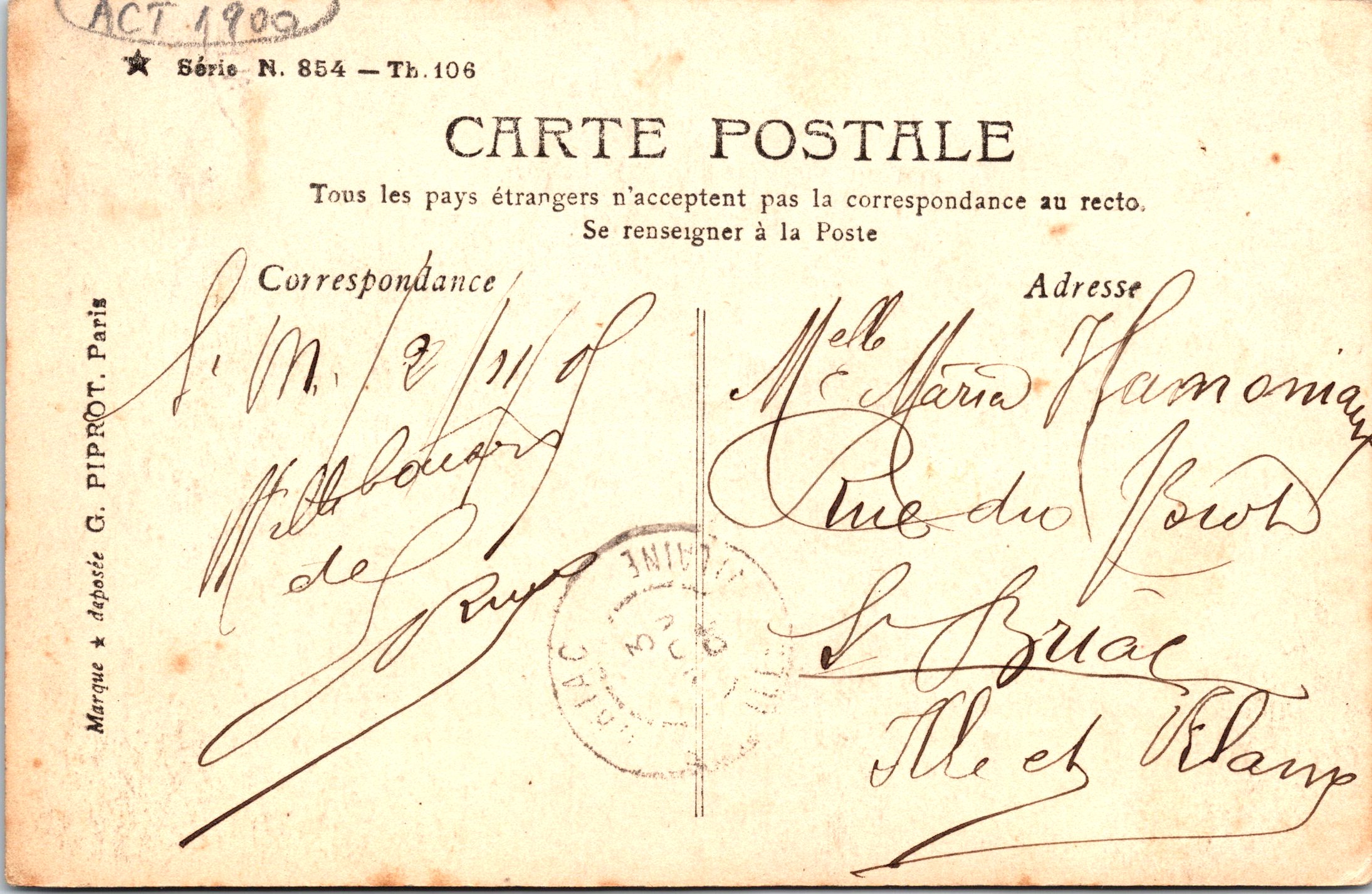
This risque vintage real photo postcard features a fashionable performer named Fromentin. The card is color tinted. She has a string of flowers wrapped around her shoulders and her dress is a flower pattern. The combination is a nice touch. “The Theatre” (1882) states that Fromentin, among others, present grace and beauty difficult to match. Fromentin was photographed by Sazerac. He was a photographer well known for his portraits of the showgirls of Paris. The publisher of this postcard, was Monsieur G. Piprot, of “Etoille” or “Star” publishing in Paris. The card is part of a series (No.854). The postcard has a postmark from 1905. SOLD
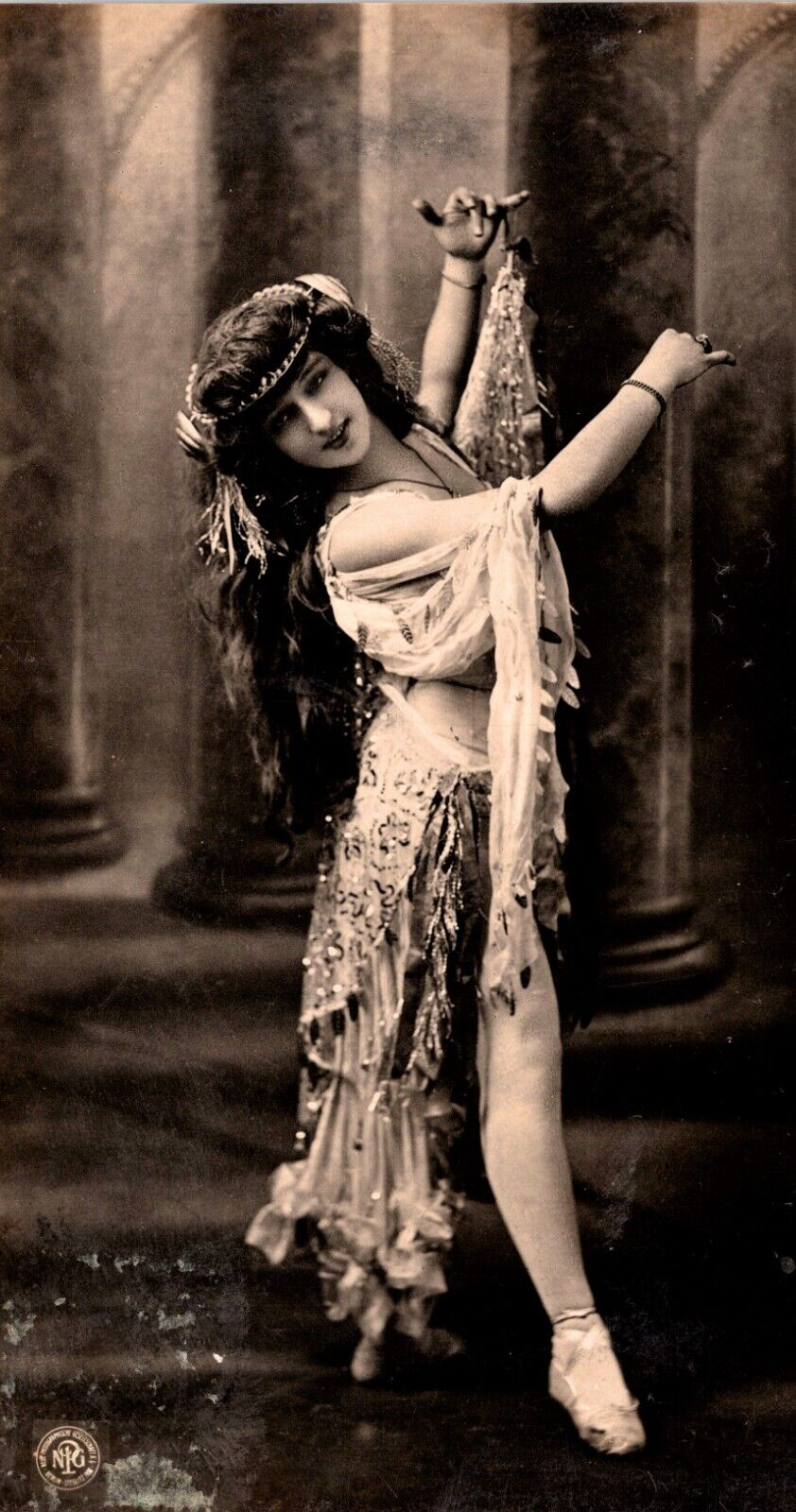
This vintage risque real photo postcard features a scantily clad pretty young dancer. Note her long hair and headress.The card was published by Neue Photographische Gesellschaft (NPG) as part of a series (No.553/2). The company was a leading bromide photo printing company for many years.at the beginning of the 20th century. (SOLD)
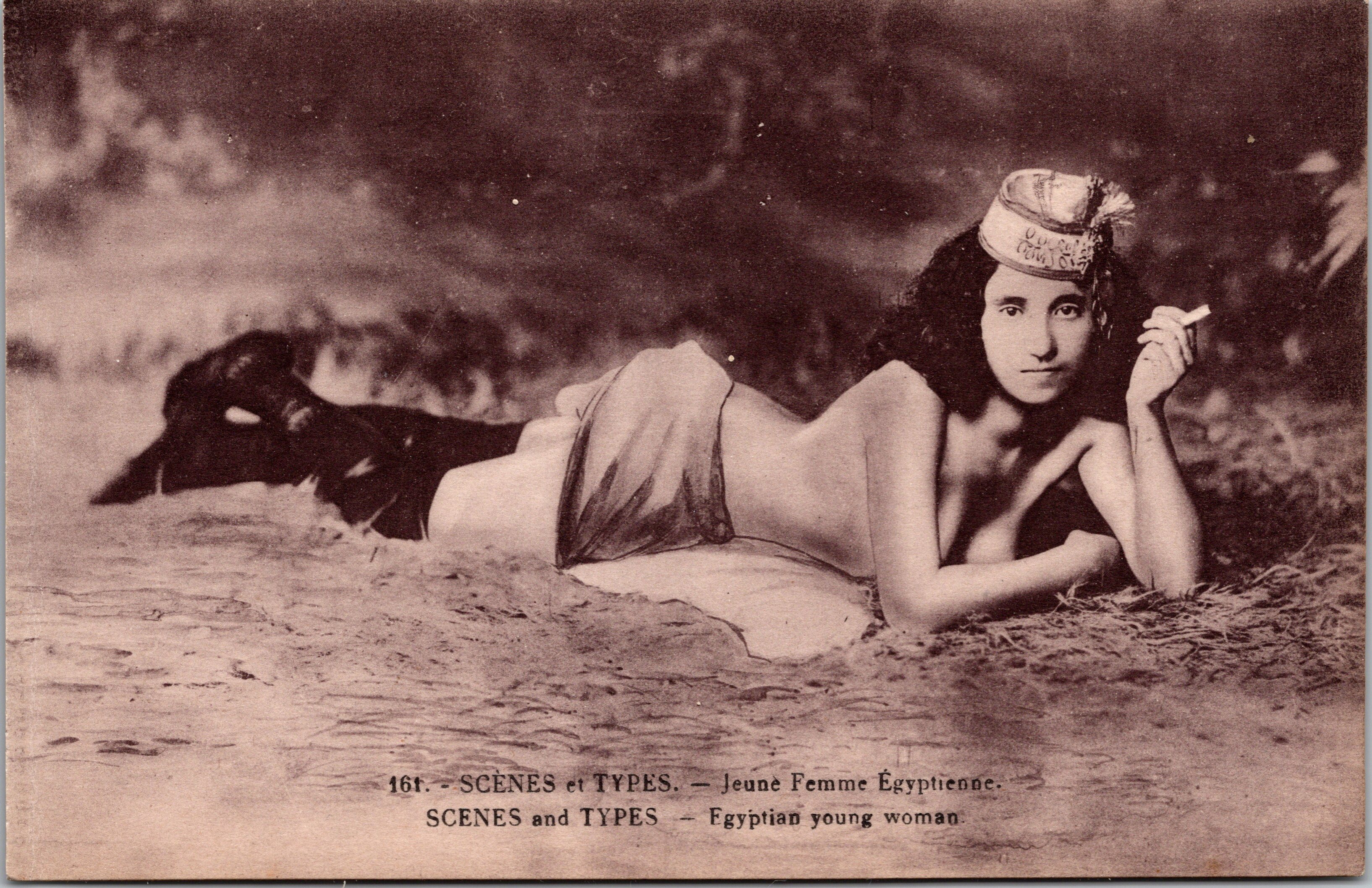
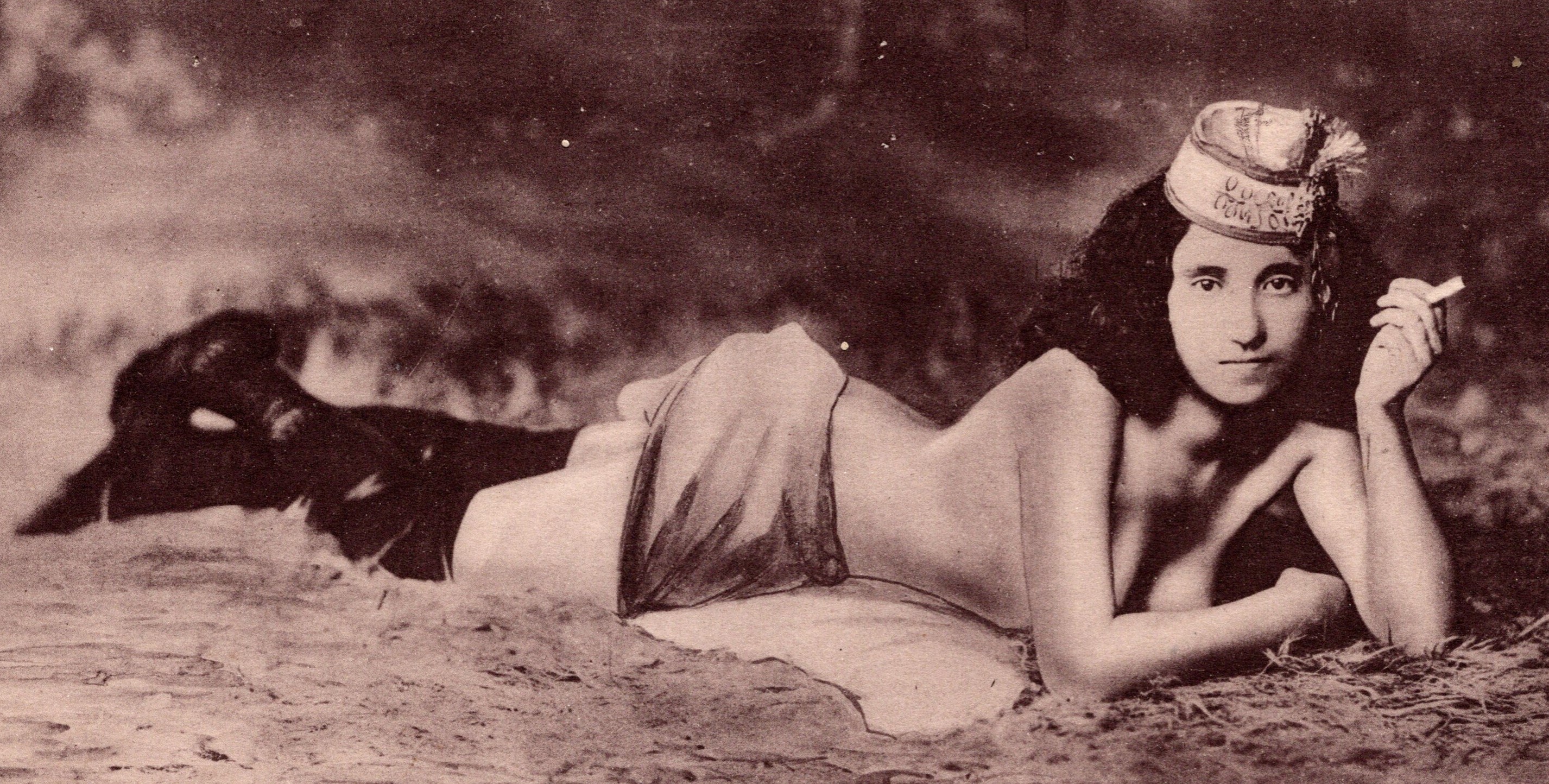
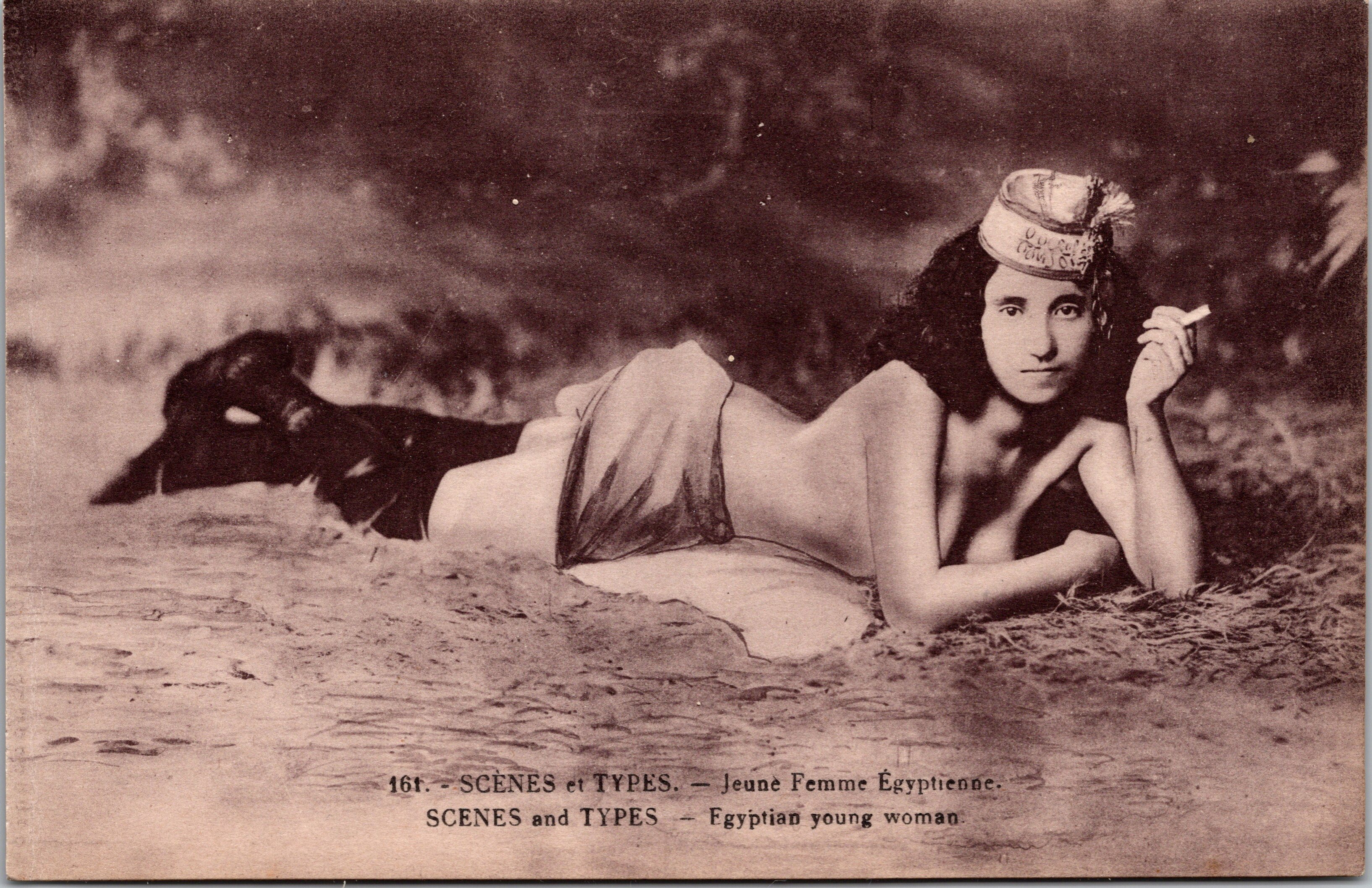
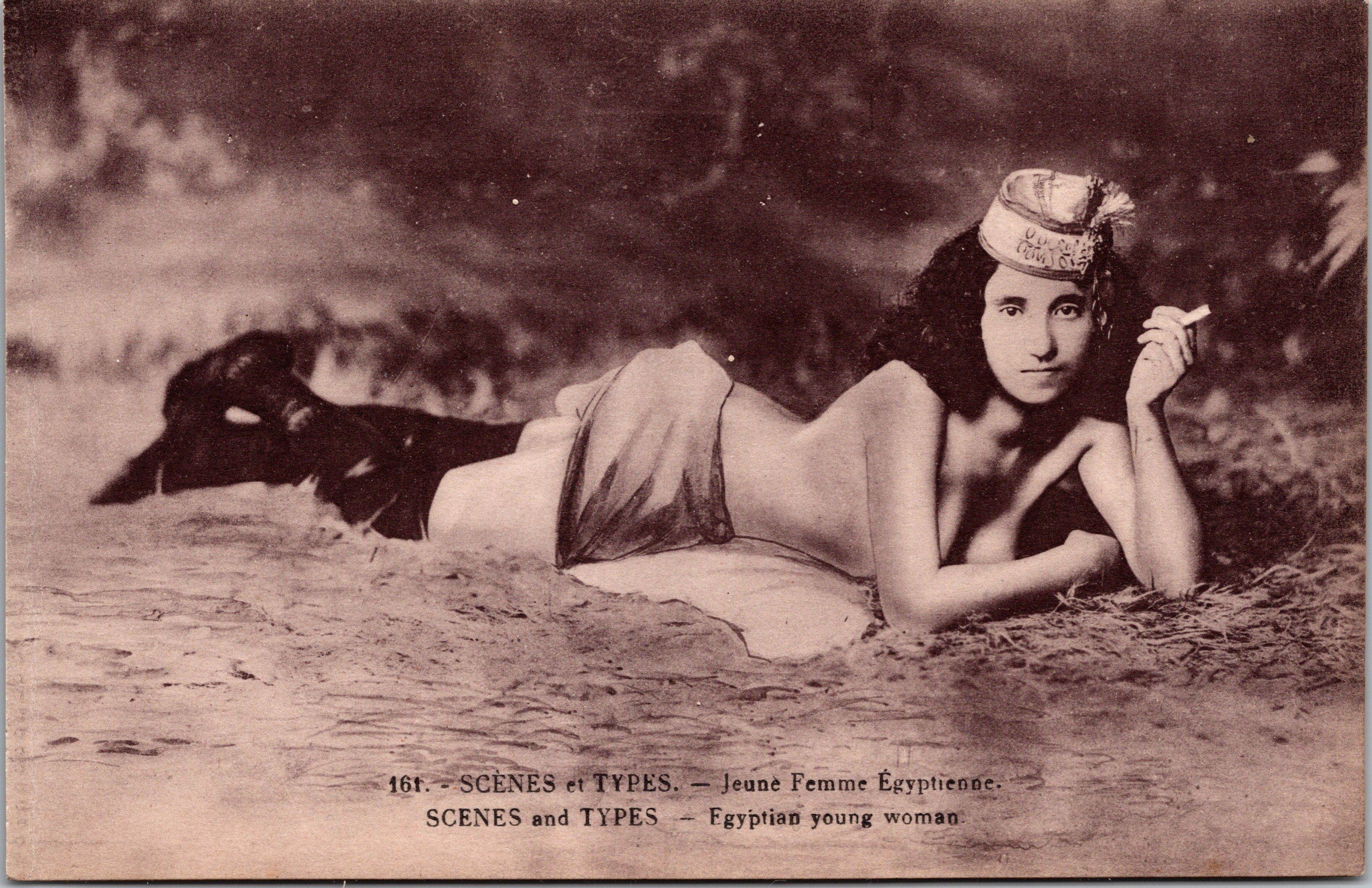
This vintage postcard features a partially clad young Egyptian woman lying on the ground and smoking a cigarette. She appears in a risque pose on this suggestive postcard. The postcard is from the “Scenes et Types Series” (no.161). This vintage postcard is in very good condition (see scans).
Buy this Real Photo Vintage Postcard (includes shipping within the US) #5157
To purchase this item, click on the Pay with PayPal button below
$25.00
Buy this Vintage Real Photo Postcard (includes International shipping outside the US) #5157
To purchase this item, click on the Pay with PayPal button below
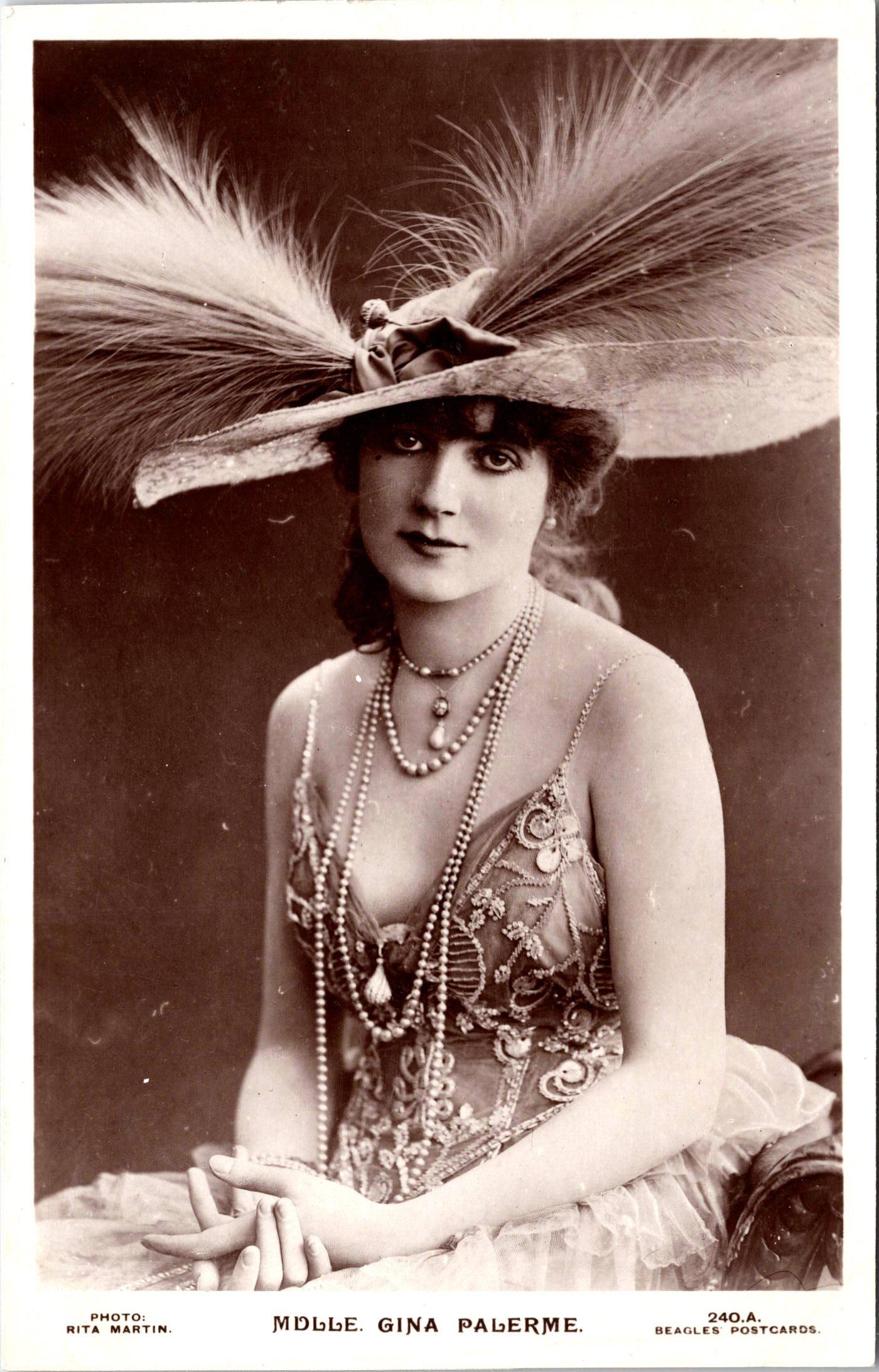
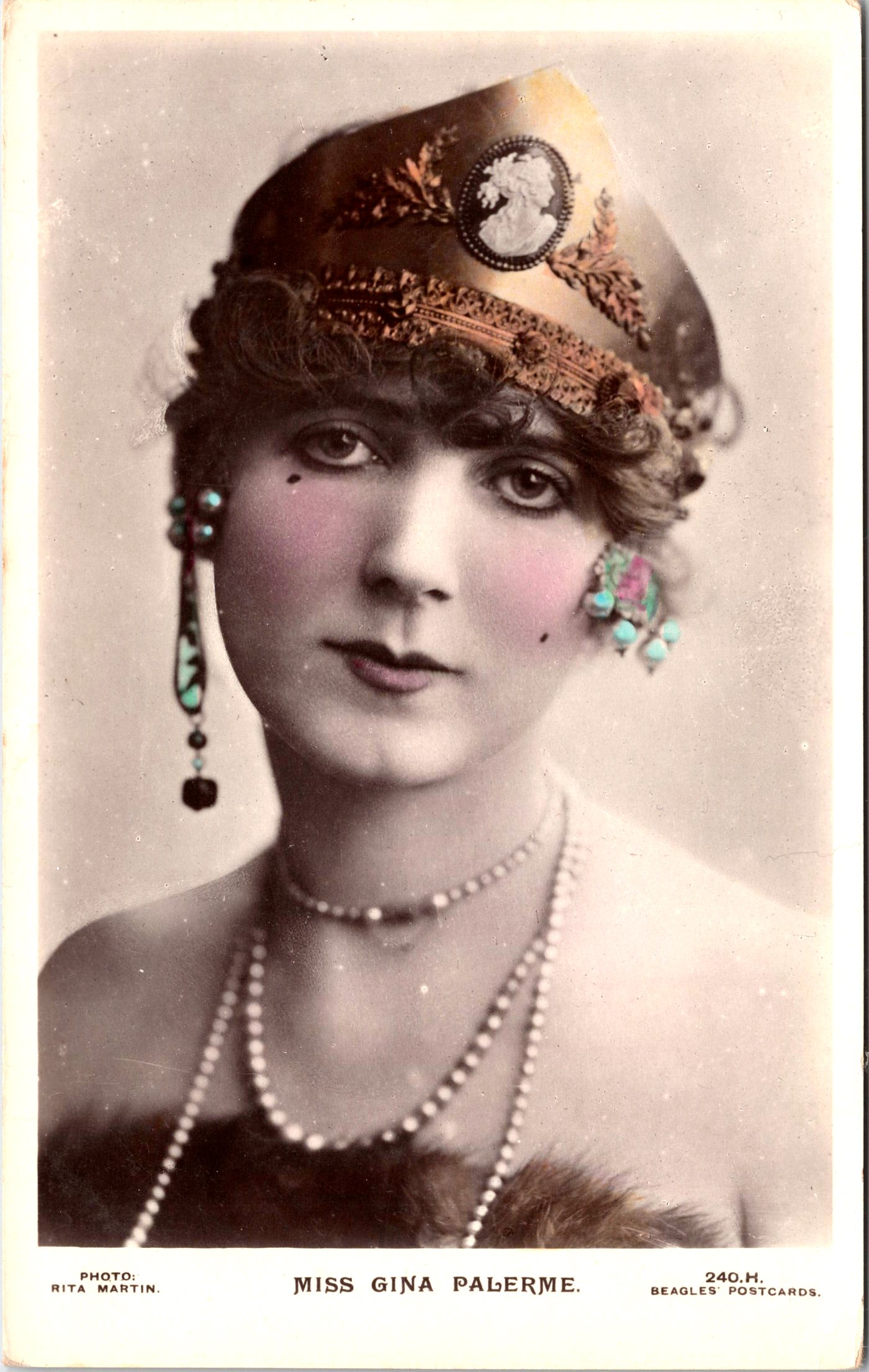
These vintage real photo postcards feature a portrait of French actress and dancer, Gina Palerme (1885-1977). She was an active performer between 1909 and 1929. She began her theater career in 1909 in France. An English impresario brought her to London in 1910. Her debut was in “The Quaker Girl” at the Adelphi Theater. This performance was followed by many more stage roles in West-end productions. Photographer, Cecil Beaton, wrote that she was glamorous and that “her off-stage appearances were as sensational as her stage escapades”. She returned to France in 1919 and starred in silent films. Her final screen appearance was in 1925. Her post film career was comprised of working in French cabarets, including Moulin Rouge. She also did revue work in the United States. The New York Times (1929) announced that French revue actress, Gina Palerme, from the Moulin Rouge in Paris, “arrived in America to appear in a new revue under the Shubert management. It was reported that Palerme spoke English well and this was her first trip to America. J. J. Shubert “discovered” her after hearing her sing at the Moulin Rouge. He offered her a six month contract to come to New York. There was also an option that offered her a three year contract upon finishing her Revue performances, to appear in “talkies”. Palerme was very pretty, as is apparent in these postcard photographs.
In Postcard 1, Palerme looks glamourous and her portrait can be seen as risque. Her ornate dress is low cut. This postcard was published by J. Beagles & Co. as part of a series (No.240A). Palerme’s photograph was taken by celebrity photographer, Rita Martin. Female photographers were uncommon during this era. (SOLD)
Postcard 2 was published by J. Beagles & Co. as part of a series (No.240H). This card is part of the same series as Postcard 1. Rita Martin is the photographer who took both this portrait and the photo in Postcard 1. Note the golden color of Palerme’s hat. The color tinter clearly was a artist. Unlike many color tinters, this one believed in subtlety. (SOLD)
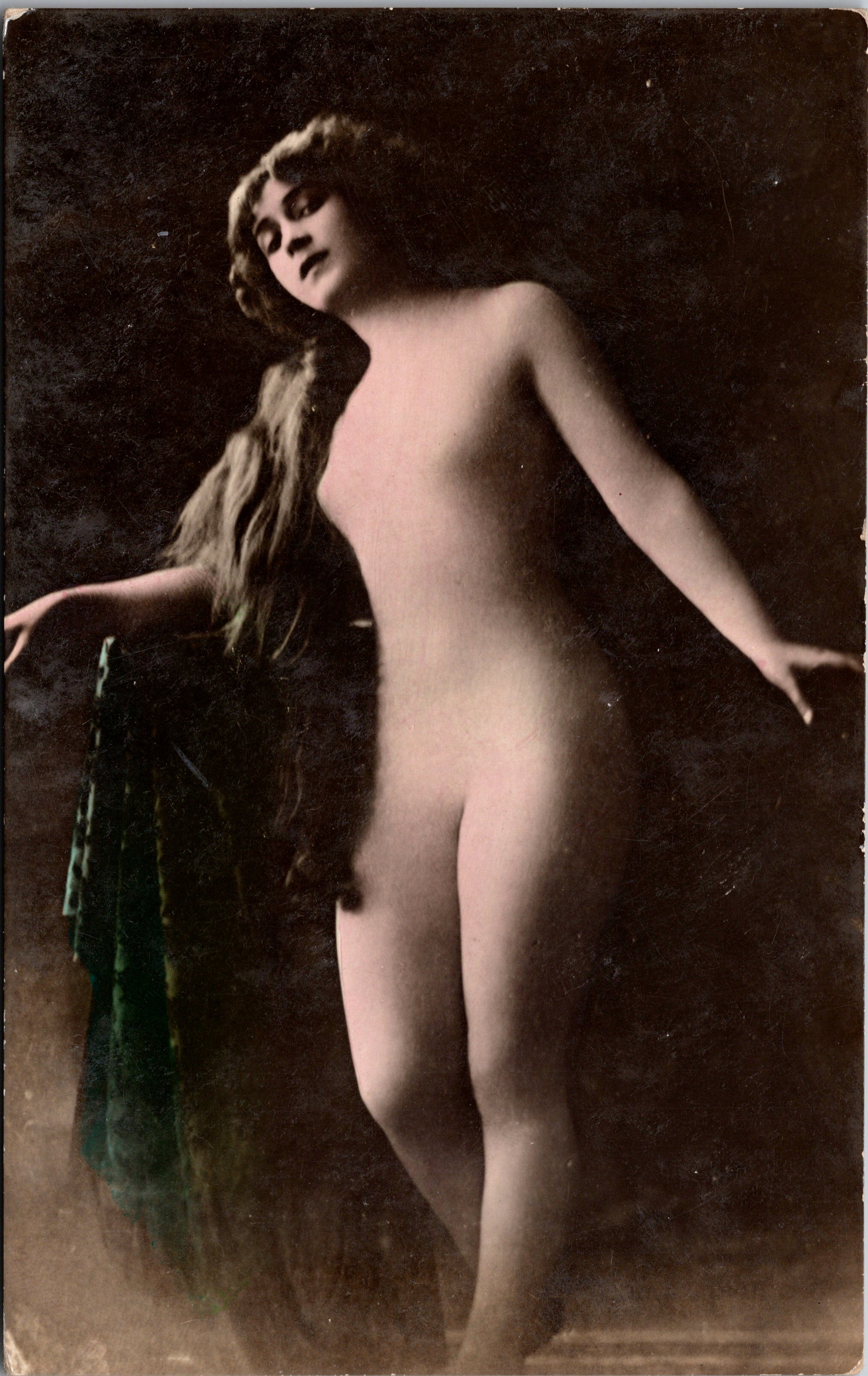
This vintage real photo features a pretty young woman in the nude. She is wearing a very long “pearl” necklace. She has beautiful eyes. This postcard is risque for its era. Tastefully done nude postcards were considered art at the time this card was issued. The card was published by the French firm, Corona as part of a series (No.155). Corona was a publisher that operated in the 1920’s. They published many postcard nudes with blank backs. It is not known if they were photographers or just a reprinting company that produced photos taken by well known photographers of the time. (SOLD)
This risque vintage real photo postcard features Swedish film actress, operetta singer, troubadour, director and composer; Naima Wifstrand. If that isn’t enough job titles, we must add that she played several supporting roles in the films of Ingmar Bergman. This photo is risque for it’s era. Note her headress and jewelry. Naima was born in Stockholm. She did not study acting until 1905, when she joined a leading Theatre company. She travelled with them for several years, playing smaller roles. She decided that she preferred singing and she became a famous and successful grand operetta star for 30 years in Sweden. She received her singing training at the Swedish Royal Academy of Music. She returned to acting in the 1940’s and became on of Sweden’s best supporting and character actresses on stage and film. The IMDb lists 63 credits in her filmography between 1927 and 1968. This card’s photographic image was taken by Ferd. Flodin in 1917. He operated a studio in Stockholm. This postcard is in very good condition (see scans).
Buy this Vintage Real Photo Postcard (includes shipping within the US) #5142
To purchase this item, click on the Pay with PayPal button below
$28.00
Buy this Vintage Real Photo Postcard (includes International shipping outside the US) #5142
To purchase this item, click on the Pay with PayPal button below
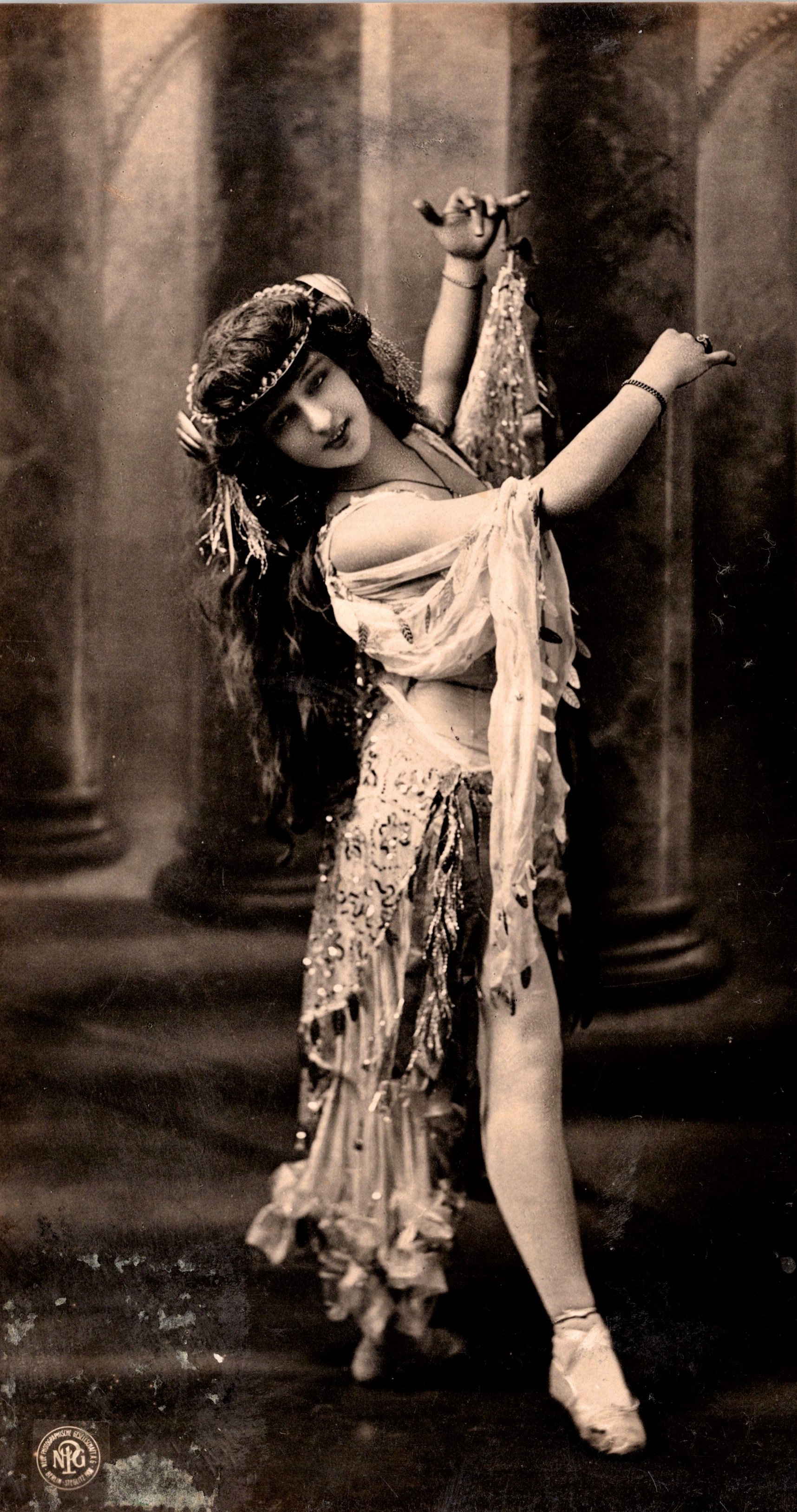
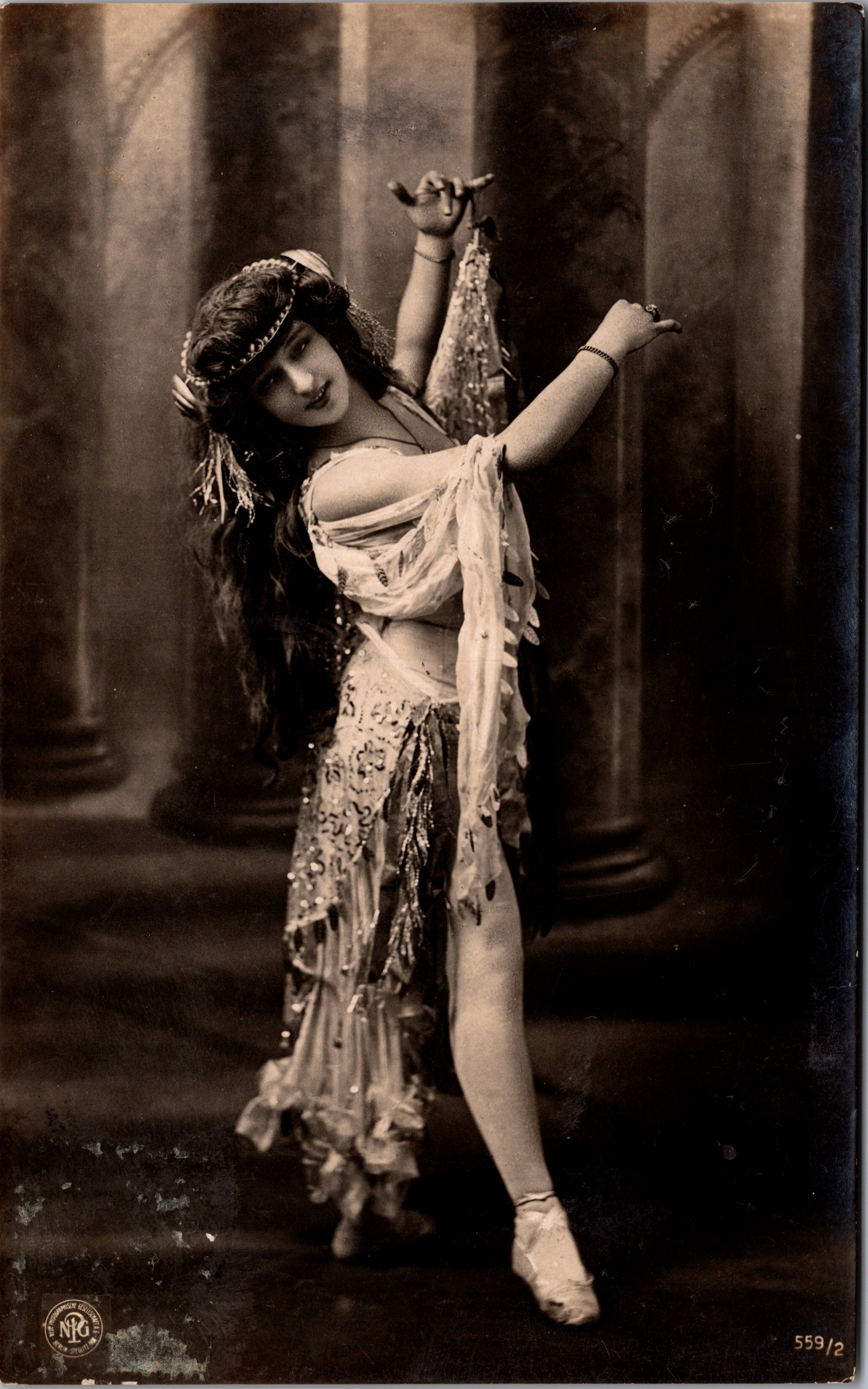
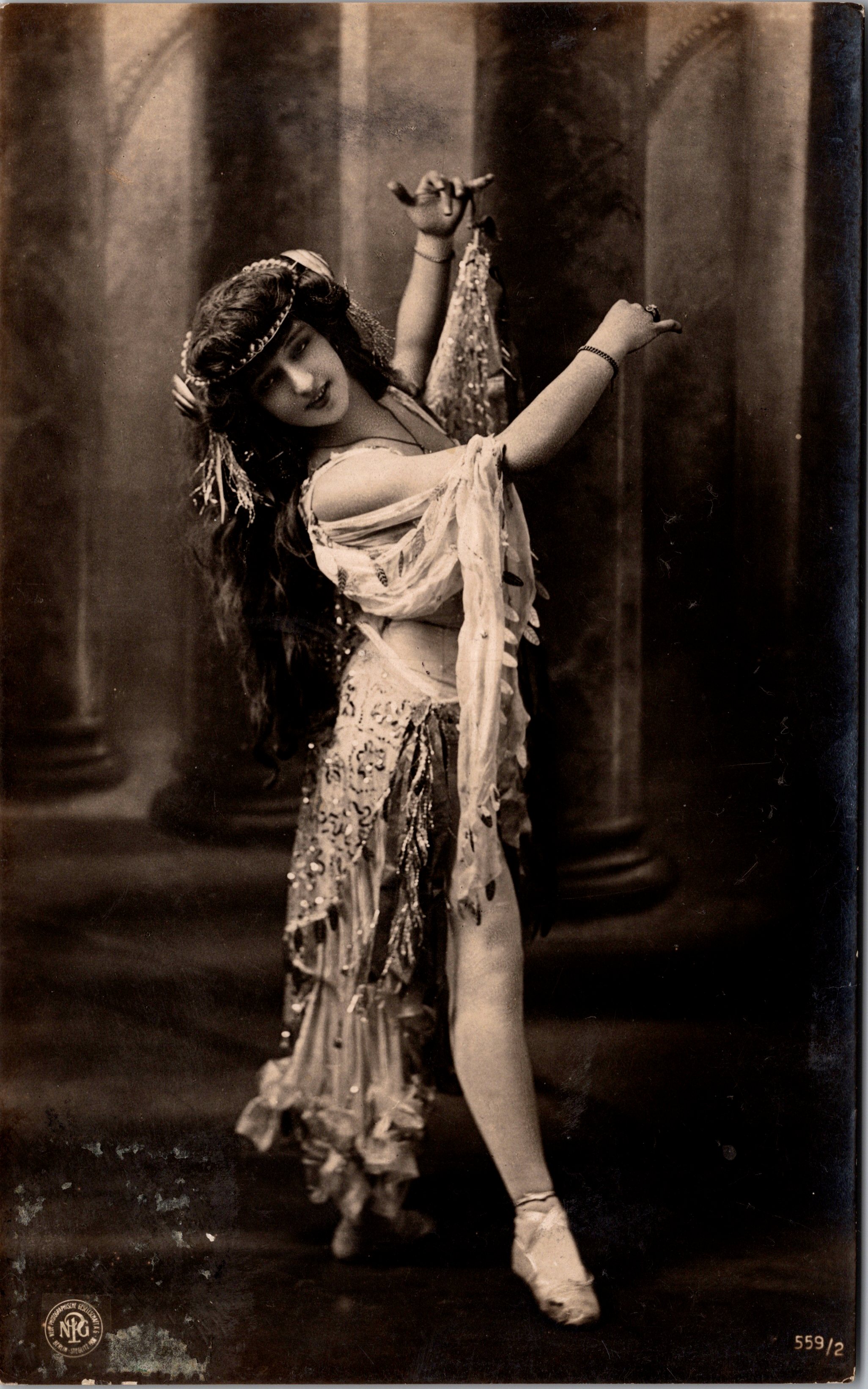
This vintage real photo postcard features a pretty young dancer dressed in a risque costume. Note her headdress. The previous owner of this postcard asserted that this image is an example of Germany’s Jugendstil period (1896-1914). The term, Jugendstil, means “young style”. The Jugendstil movement has been referred to as Germany’s Art Nouveau period. This postcard was published by NPG as part of a series (no.559/2). The card was postmarked in 1907. This postcard has stamp residue on it’s bottom left hand corner and is in overall Good Condition (See Scans).
Buy this Vintage Real Photo Postcard (includes shipping within the US) #5111
To purchase this item, click on the Pay with PayPal button below
$28.00
Buy this Vintage Real Photo Postcard (includes International shipping outside the US) #5111
To purchase this item, click on the Pay with PayPal button below
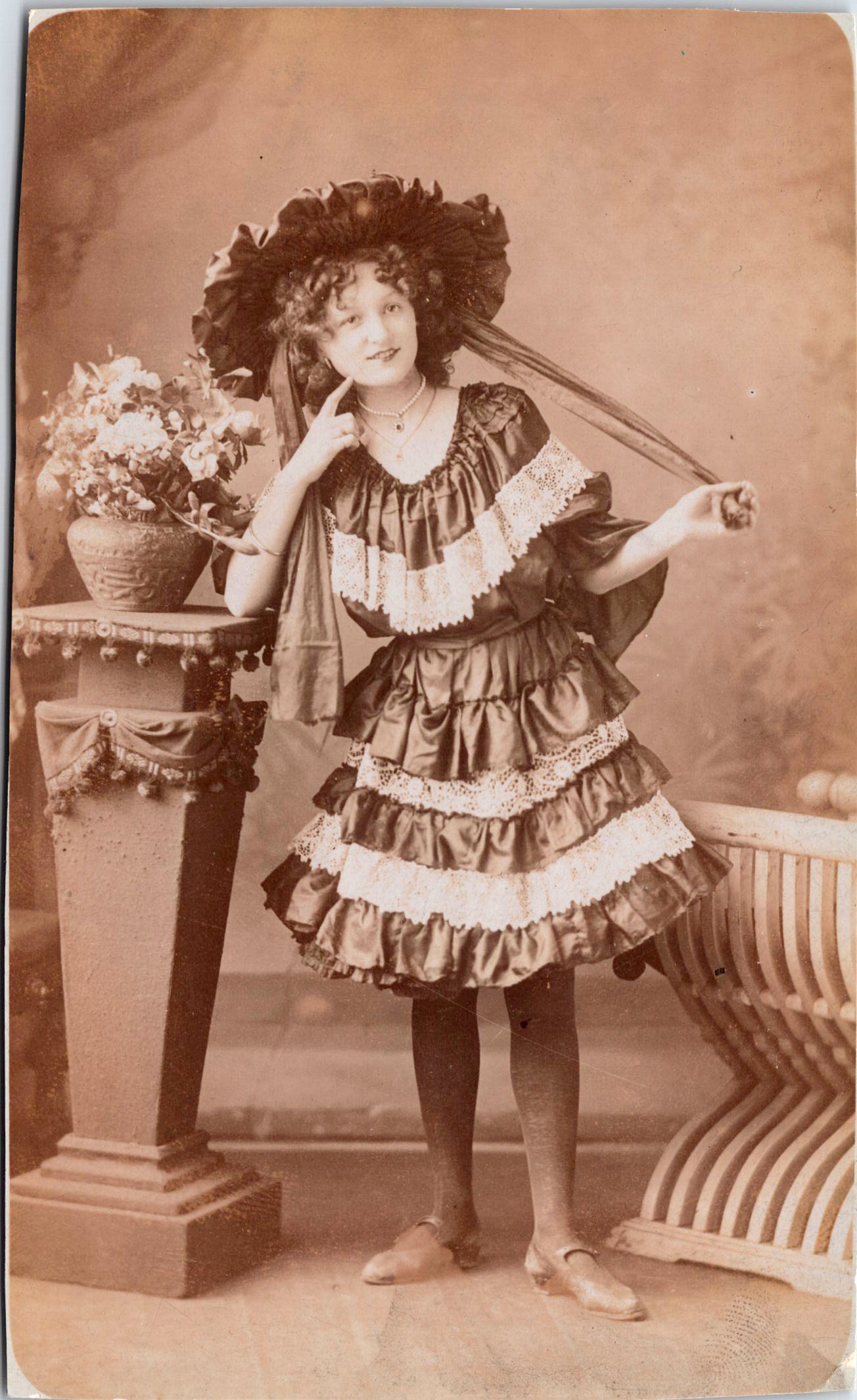
I wish I knew more about this young lady. She has an infectious smile. Her dress is frilly and has rows of lace. Judging by her attire, my guess is that she is a “dancehall girl” or actress. Perhaps a viewer of this vintage old photo postcard has another opinion as to the story behind this image. Some might consider this photo a bit risque. The woman seen in this image is wearing a very short dress for her era. An ink stamp on the reverse of the postcard reveals that this photograph was taken at the Avery studio. We only know that the studio was located on King’s Cross Road. King’s Cross is an area located in Central London. It may follow that Avery’s studio was located in London. SOLD