This vintage real photo postcard features Danish actress, Lillian Ellis (1907-1951). She made fer film debut in 1928. Many of her roles were in German films. Her stardom in Germany peaked at the end of the 1920’s. The IMDb credits Ellis with 18 acting roles between 1928 and 1959. This vintage postcard was published by Ross Verlag and was part of a series (no. 5281/1). The photographer who took this photograph was Alex Binder, a celebrity photographer located in Berlin, Germany. This portrait postcard is in very good condition.
Buy this original Vintage Real Photo Postcard (includes shipping within the US) #2687
To purchase this item, click on the Pay with PayPal button below
$20.00
Buy this original Real Photo Postcard (includes International shipping outside the US) 2687
To purchase this item, click on the Pay with PayPal button below
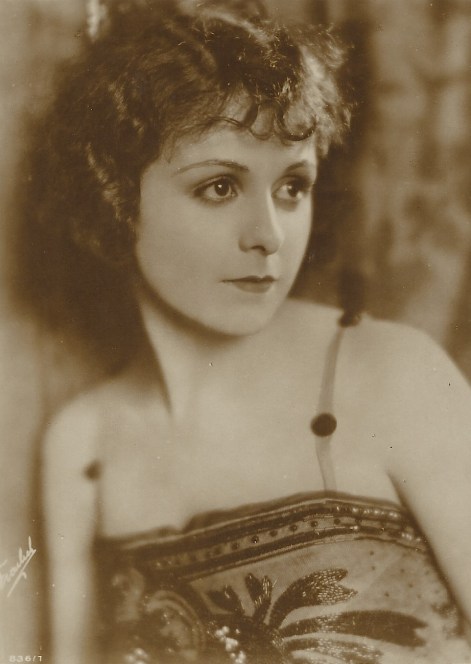
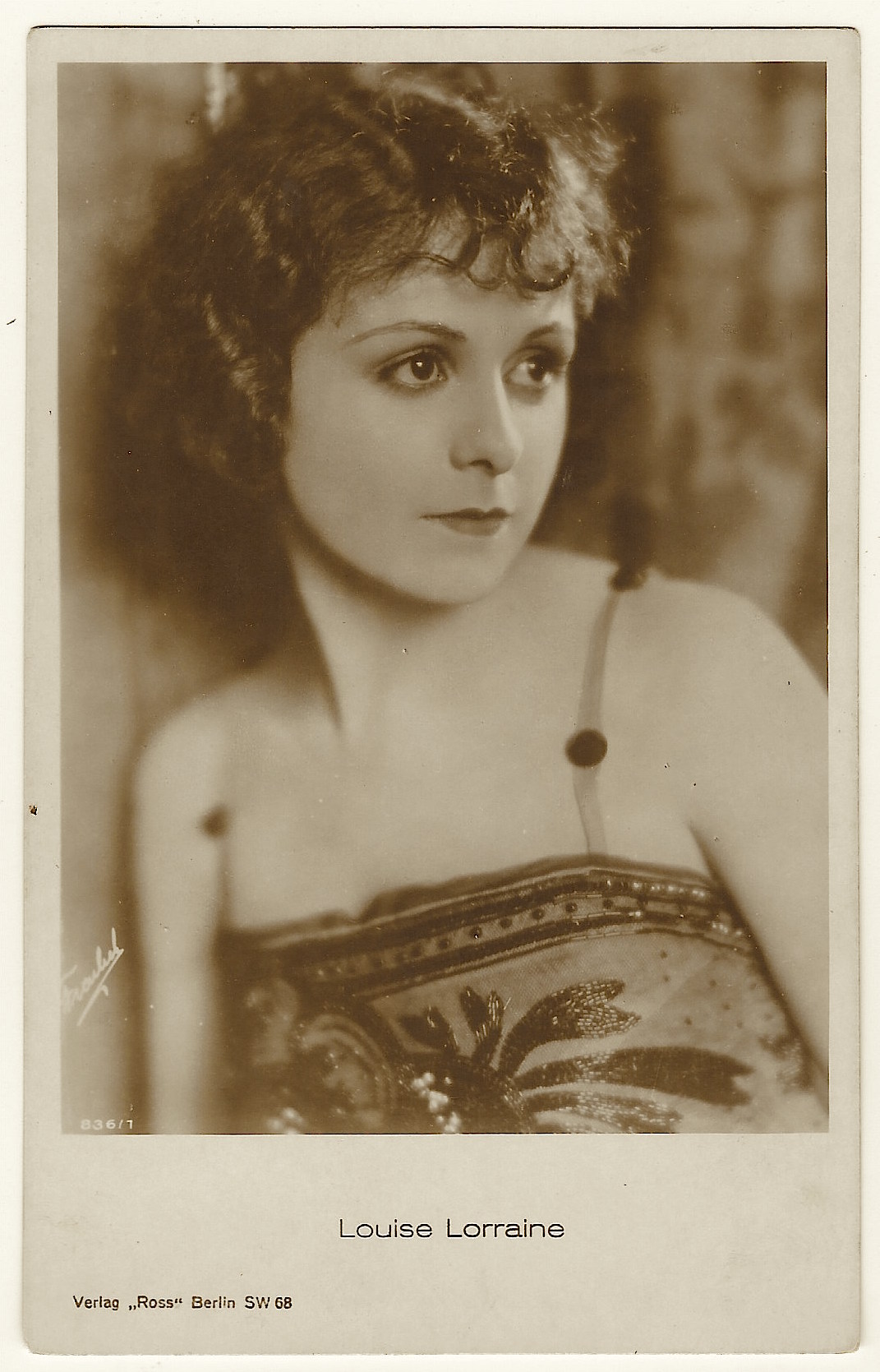
This vintage real photo postcard features beautiful American film actress, Louise Lorraine (1904-1981). She was born in San Francisco and was discovered by a photography salesman who had knocked at the door of her home and was met by Louise. The salesman was startled by her good looks and her winning personality He told Louise’s mother that her daughter should be in films. Her widowed mother had five other children and after some time, she agreed to allow Louise to investigate becoming an actress. The salesman used a contact, and before long, Louise was in independent two-reel comedies. That was followed by stints with MGM and Universal. She became very popular for her roles in action-packed serials such as “The Radio King” (1922) and “With Stanley in Africa” (1922). She starred in eleven serials and was known for her energy and charisma. Her small stature and delicate beauty were unlikely characteristics expected in a serial heroine. However, she starred these physically demanding serials. In 1921, she became the third actress to portray “Jane”. She starred in the movie serial “The Adventures of Tarzan’ (1921). She was selected as a “Wampas Baby Star” in 1922. The organization was very successful at identifying future stars. Among their “finds” was Clara Bow and Joan Crawford. She starred in only five talkies during her film career including “Near the Rainbow’s End’ (1930). After this film appearance, she retired to spend time with her husband and two children. The IMDb reports that Louise Lorraine appeared in 83 films between 1922 and 1930. Lorraine was married twice. Marriage number one was to actor Art Acord, Her second marriage was to Chester Hubbard. She had two children. This vintage postcard was published by Ross Verlag and was part of a series (no. 836/1). The photographer of this portrait was Roman Freulich (1898-1974). Freulich was born in Poland and immigrated to the United States at the age of 14. He learned his trade from New York photographer Samuel Lumiere. He moved to Hollywood in the mid 1920’s where his brother Jack was a portrait photographer at Universal Pictures. Roman became a still photographer for Universal and produced many portraits of their major stars. He stayed at Universal until 1944 when he moved to Republic Studios. After Republic stopped production, Freulich did much work for United Artists.The stamp box of this postcard has an interesting story. “NBC” (Neue Bromsilber Convention) was a price cartel established in 1909 that continued until the 1930’s. The purpose of the cartel was to ensure that the minimum price charged for postcards was kept at a sufficiently profitable level. A number of postcard publishing companies joined the cartel in an effort to stave off the effect of competition on the pricing of postcards. This postcard has excellent clarity and is in very good condition (see scans).
Buy this original Vintage Real Photo Postcard (includes shipping within the US) #2630
To purchase this item, click on the Pay with PayPal button below
$25.50
Buy this original Vintage Real Photo Postcard (includes international shipping outside the US) #2630
To purchase this item, click on the Pay with PayPal button below
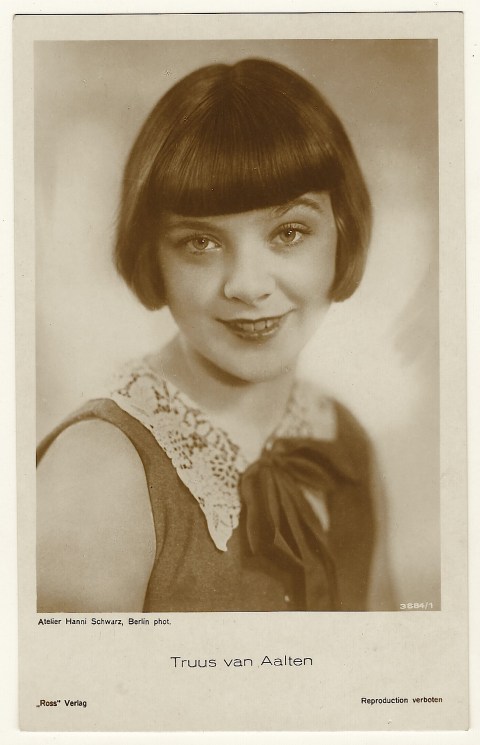
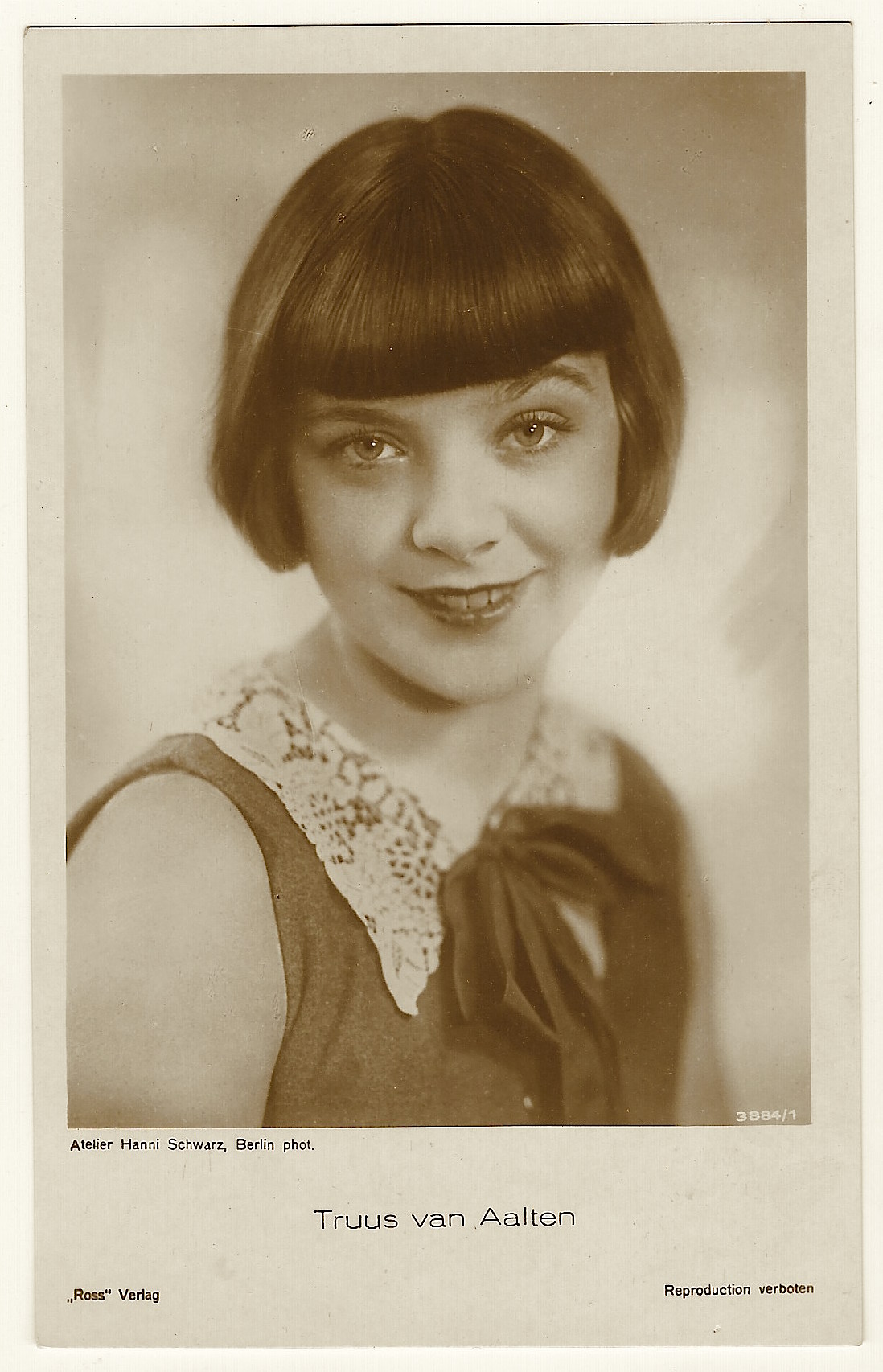
The top vintage real photo postcard features Dutch actress, Truus van Aalten (1910-1999). She appeared in many German films in the 1920’s and 1930’s. She is flashing a wonderful smile as she holds a cute little dog. Truus worked as a milliner after finishing school and then worked as a salesgirl in a clothing store in Amsterdam. What she really wanted to do, was to become a movie actress. Unfortunately, at the time, the movie industry was not producing many films in the Netherlands. In 1896, Truus entered a beauty contest sponsored by a Dutch magazine. The winner of this contest would be given the opportunity to audition for a film role. Truus was selected and joined about two hundred other women in Berlin to try out for the film part. She excelled on the screen test and won the role. The movie was being produced by Ufa, a German film company. The cast of the film included Betty Balfour and Willy Fritsch. Three photos of Miss Balfour can be found in the Cabinet Card Gallery by searching for “Balfour”. The name of Truus’s first movie was “A Sister of Six” (1926). Keep in mind, Truus had no training or experience as an actress. Even though Truu’s command of the German language was weak, Ufa offered her a contract and promised to train her and offer her opportunities in other films. The Ufa executives appreciated her sparkly and funny personality as well as her photogenic appearance. Truus’s father signed the contract and she moved to Berlin. The celebrated actress Olga Tschechowa took Truus under her wing and became her unofficial mentor and mother figure in the film industry. Olga nicknamed the young actress “Trulala”. Truus second film appearance was in “His Late Excellency” (1927). This movie included Willy Fritsch and Olga Tschechowa among it’s stars. Truus appeared in five movies that were released in 1928. She was certainly a busy actress. As Truus started to appear in more and more silent films, it became clear that she was talented; pretty, spunky, and funny. Truus’s greatest talent was seen in her comedic roles. She slowly became a fan favorite. She was the subject of interviews and photos in movie magazines. She also got work appearing in advertisements. Truus had “a look” of her own. She was described in one article as having a “mixture of boyish yet feminine energy”. Her bobbed hair and her uninhibited style was similar to actress Colleen Moore. Truus made a successful transition into “talkies”, despite her Dutch accent. By 1930, she was a very well known actress. Her photograph appeared in many postcards and tobacco cards. As Nazism rose in Germany, members of the film industry felt extremely vulnerable. Her film appearances became less frequent, partially because the parts written for females, during the Hitler era, were not particularly desirable to Truus. In 1934, she starred in her only film in Dutch and she was well received. Her next film wasn’t until 1939 and it turned out to be her final film appearance. In 1940, she returned to live in German occupied Netherlands. She was offered movie roles there, but refused them, because they were propaganda films. After the war, there was little activity in film production in Germany or Netherlands. Finding roles in English or American movies was unsuccessful. In 1954, Truus established a successful importing and exporting business in the Netherlands. The IMDb credits Truus with 28 film appearances from 1926 to 1939. The YouTube video below demonstrates just how cute and engaging Truus was as an actress. She was incredibly adorable. Postcard 1 was published by Ross Verlag. The postcard is part of a series (no. 4184/1). Miss van Aalten’s portrait was taken by photographer Alex Binder, who operated a studio in Berlin. He was one of Berlin’s premier photographers and photographed many stars of the stage and film. This postcard is in excellent condition (see scans). Postcard 2 was also published by Ross Verlag. The card is part of a series (no. 3884/1). The portrait was taken by photographer Hanni Schwarz of Berlin. Schwarz was a German female photographer and her work was praised in “American Photography” (1909). She was a well known professional photographer in Germany during the early 1900’s. Before becoming a photographer, she was a teacher at her father’s school in Basel. In 1904 , she and Anna Walter took over the photo studio of Johannes Hulsen in Berlin. In 1908, she and Wilhelm von Gloeden presented nude photographs at an exhibit in Berlin. Sometime around 1909 she ran her studio with photographer Marie Luise Schmidt. During the Brussels World’s Fair in 1910, Schwarz exhibited nudes In 1914, she began working with color photography. In 1919 the studio’s name only included Miss Schwarz, and she was reported to specialize in portrait and dance photography. The last known year of Schwarz’s work was 1930. This vintage postcard is in excellent condition (see scans).
Buy this original Vintage Real Photo Postcard (includes shipping within the US) #2610 (Postcard 1)
To purchase this item, click on the Pay with PayPal button below
$31.50
Buy this original Real Photo Postcard (includes international shipping outside the US) #2610 (Postcard 1)
To purchase this item, click on the Pay with PayPal button below
$39.50
Buy this original Vintage Real Photo Postcard (includes shipping within the US) #2611 (Postcard 2)
To purchase this item, click on the Pay with PayPal button below
$28.00
Buy this original Vintage Real Photo Postcard (includes international shipping outside the US) #2611 (Postcard 2)
To purchase this item, click on the Pay with PayPal button below
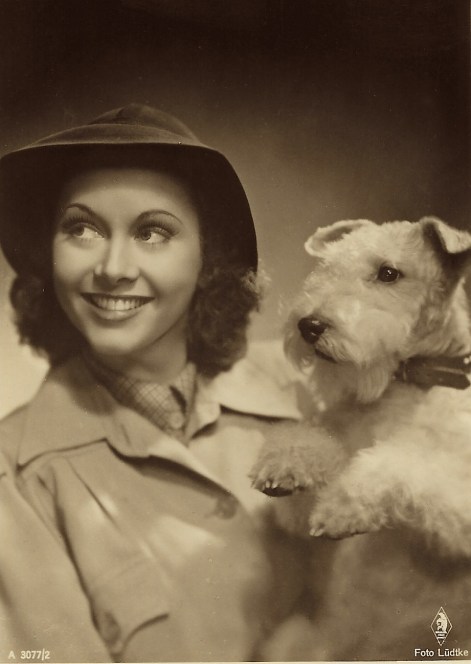
Hertha Feiler (1816-1970) was an Austrian actress. She was of Jewish descent. Feiler was married to comedian Heinz Ruhmann. The pair starred in several films together. The IMDb credits Feiler with appearing in 33 films between 1937 and 1968. Originally, Feiler wanted to be a pianist but a medical problem (inflamation in her arm) caused her to look for another artistic profession. She made her film debut at the age of 21. Over time, she became a popular actress. She often played “ladylike and cheerful roles with charm”. She fell in love with Ruhmann while he was directing her in “Louder Lies (translation)” (1938). The Nazis considered Feiler to be one fourth Jewish so there were limits placed on her acting opportunities. In the 1950’s she took on more mature roles. She tended to play women who were confident and cheerful but pragmatic. She retired from acting in 1968 due to illness (cancer). Feiler was known to be an excellent swimmer and equestrian. Miss Feiler is very pretty in this photograph. Her dog, possibly a wire haired terrier, is adorable. The postcard was published by Ross Verlag as part of a series (no. A 3077/2). The photographer was Ludke. There is a logo of a film studio in the lower right hand corner of the image. Look below to see a youtube video featuring Hertha Feiler and Heinz Ruhmann. (SOLD)
This vintage real photo postcard portrait features German silent film actress, Dita Parlo (1908-1971). She was born in present-day Szczecin, Poland. At the time of her birth, the city was part of Germany. Her father was a forest ranger. She was initially trained as a ballerina but switched to studying acting at the Babelsberg film school. Producer, Erich Pommer, discovered Parlo and signed her to a contract to Ufa. She made her film debut in “Homecoming” (1928) and in short time became a popular actress in Germany. During the 1930’s she appeared in both German and French films and achieved much acclaim. Two of her films in particular are considered among the best in cinema history: “L’Atalante” (1934) and “La Grande Illusion” (1937). During World War II she was deported to Germany but returned to France in 1949 and resumed her career. Parlo made an attempt to establish herself in American films but had limited success. She did appear in a couple of American films and in the late 1930’s and she nearly had a role in the Orson Welles production of Joseph Conrad’s “Heart of Darkness”. Unfortunately, the project did not materialize. The horror! The horror! Oh the horror of disappointment she must have experienced. According to the IMDb, Parlo appeared in 28 films between the years of 1928 and 1966. Parlo was married to a Protestant pastor, Franck Gueutal (1904-1983) and the couple remained married until she died in 1971. An interesting piece of trivia is that Madonna took Parlo’s name for a character she created for her book entitled “Sex”. The singer stated that she was fascinated by Dita Parlo. This portrait postcard was published by Ross Verlag and was part of a series (no. 3972/1). The postcard displays the logo of “Ufa”, a German film company. The video below shows Miss Parlo in the film “Au bonheur des dames” (1930). Her co-star in the film was Pierre De Guingand (1885-1964). The movie was based on the romance of French writer Emile Zola.
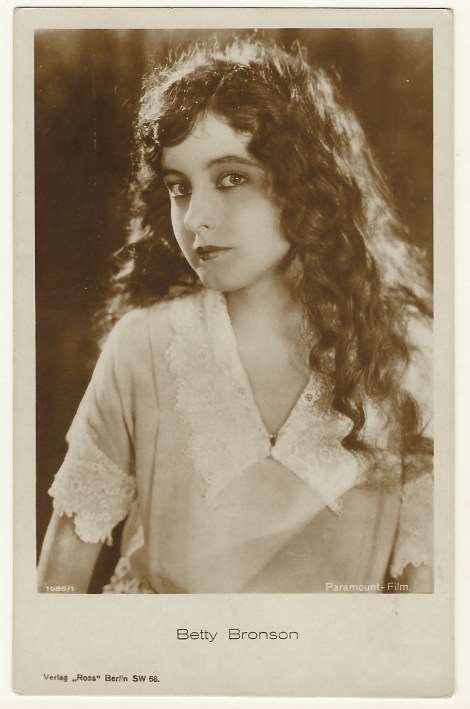
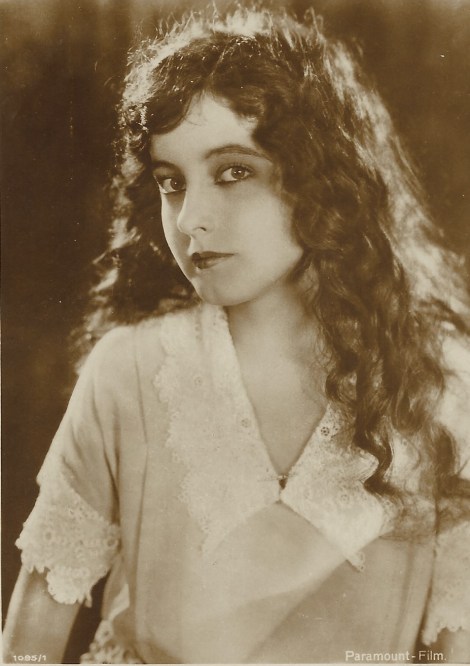
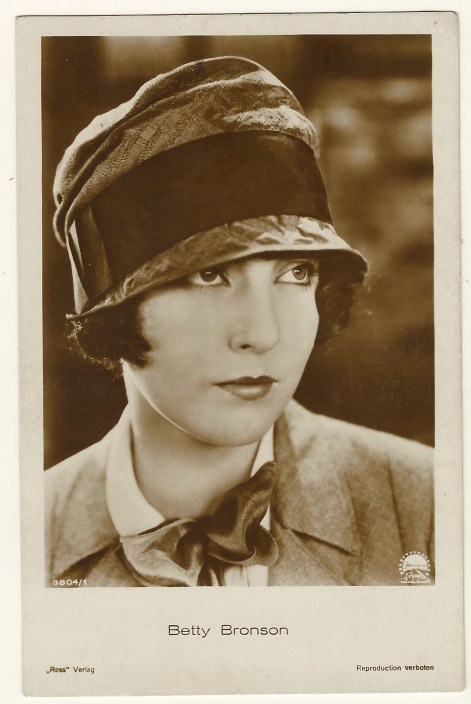
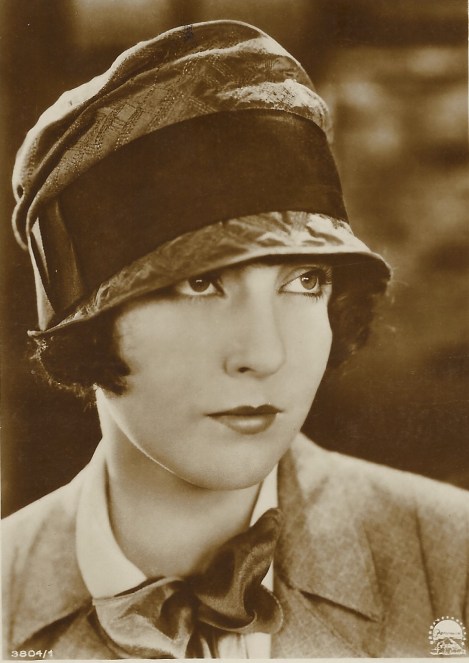
This vintage real photo postcard features American actress Betty Bronson (1906-1971).She began her career in silent films and later appeared in sound films and television. This postcard was published by Ross Verlag and is part of a series (1095/1). At the time when this postcard was released, Miss Bronson was working for Paramount Film. She appears to be quite young when she sat for this portrait. She moved to California as a teenager determined to start an film acting career. She landed a bit part at age 16 and a year later she was interviewed by the author of Peter Pan (J M Barrie) and chosen to play the lead role in the film version which was released in 1924. Gaining this part was quite an accomplishment considering more seasoned actresses including Gloria Swanson and Mary Pickford sought the role. She became became lifelong friends with two members of the Peter Pan cast (Mary Brian and Esther Ralson). Miss Bronson had major roles in the silent films Ben Hur (1925) and a Kiss for Cinderella (1925). Betty Bronson made a successful transition into talkies. She co-starred with Al Jolson in the sound film, The Singing Fool (1928). In 1933 she took about a four year break from actingto marry a wealthy North Carolinian named Ludwig Lauerhass. While she was filming Peter Pan, Douglas Fairbanks Jr. developed a crush on her. The IMDb reports that Bronson had 41 film and television appearances during her career (1922-1971). Included in her television career were roles in Run For Your Life and My Three Sons. Overall, it is reported that Betty Bronson never lived up to her original promise. She was expected to be a major competitor to Mary Pickford but it is thought that her roles after Peter Pan were not effective vehicles to showcase her talent and to help her rise to superstardom. The YouTube clip below shows Miss Bronson in her role as Peter Pan. The second postcard offers another portrait of Betty Bronson. The postcard was published by Ross Verlag and has the logo of Paramount Pictures. This postcard shows her in a movie role but the movie title is unidentified.
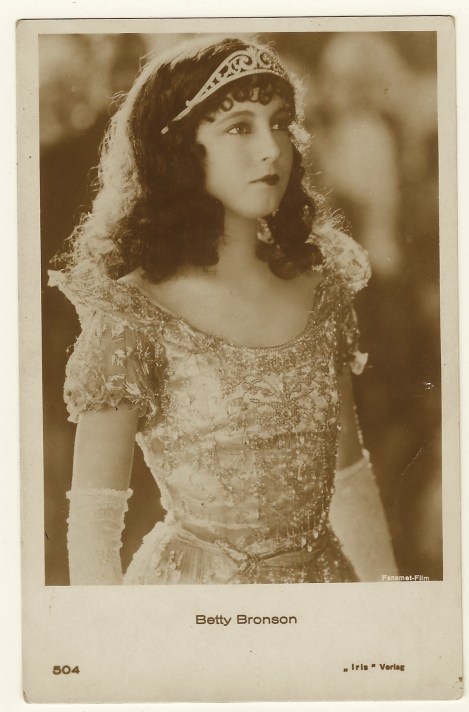
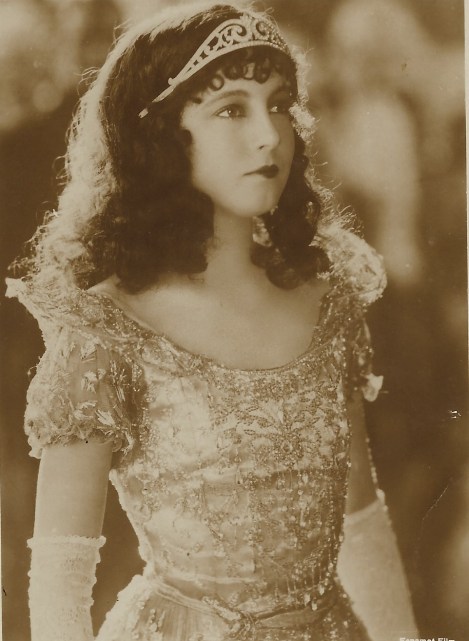
The third postcard is a portrait of Miss Bronson that was published by Iris Verlag as part of a series (#504). Iris Verlag was the most important Austrian publisher of film star postcards. It operated from Vienna during the 1920’s and 1930’s. The film star looks quite beautiful and is wearing a fancy dress, long white gloves, and a tiara. Imbedded in the photo of the actress is a logo for “Fanamet Films”. Fanamet was an Austrian film distribution company. (SOLD)
Postcard 4 features a portrait of Betty Bronson published by Picturegoer as part of Series 88 (no.207b). The company was based in London. Picturegoer was a British fan magazine focussing on contemporary films and the actors and actresses who performed in them. Picturegoer also published postcards. In fact, they produced over 6500 different real photo postcards of 2000 actors and actresses.
This vintage real photo postcard features German actress Elisabeth Pinajeff (1900-1995). In the 1920’s and 1930’s she starred in French and German films. Her first sound film was in 1929. The actress was born in Russia. Her father was an architect and her mother was a countess. In the 1910’s Pinajeff studied drama in the Ukraine. When she was 19 years old she married an engineer and his career required the couple to move to Germany. In 1929, Pinajeff met Austrian photographer, Alex Binder. Binder will be a familiar name to those that follow the cabinet card gallery. Many of his beautiful postcard portraits of theater stars can be found in the gallery (you can see his photos by placing his name, “Binder”, in the search box). Binder had the largest photo studio in Europe during the 1920’s. Pinajeff modeled for Binder and later, married him. The couple lived in Paris. There is some debate about the years that they were together.The IMDb reports that Pinajeff appeared in 35 films between 1922 and 1938. After appearing in a bit part in a 1938 film about Rasputin, she retired from acting and focused on her painting. In 1950, Pinajeff became a friend of Andre Le Troquer, a “very connected” lawyer and politician. The couple surrounded themselves with political, artistic, and intellectual leaders. In 1959, she was involved in a scandal known as the “Ballets Roses Scandal”. She was one of more than twenty people enmeshed in the scandal. She was accused of organizing erotic ballets with underaged girls for an “elite” audience. Some prospective show biz mother’s had consented to their daughters participation in this ballet with hopes that it would help launch their performance career. Although Pinajeff was not convicted. Miss Pinajeff had artistic talent. She painted a number of famous personalities including the British Queen. She successfully exhibited a number of her paintings. This postcard is somewhat risque in that the photograph shows Miss Pinajeff’s bare back. The actress was a very pretty woman and had an engaging smile. This postcard was published by Russ Verlag and is part of a series (no. 2060/1). The photographer was the aforementioned Alex Binder and the photo was taken in Berlin.
This vintage real photo postcard is one of the more risque Ross Verlag postcards in the Cabinet Card Gallery. The postcard is of German origin and is part of a series (no. 1581/1). It was published between 1927 and 1928. Preliminary research found little information about Inez Van Bree. A defunct University of Toronto website labels Miss Bree as a silent movie siren/star. The photographer of this portrait appears to be Ernst Schneider and the photograph was taken in Berlin, Germany. Research about Mr Schneider yielded a great deal of information. He was considered to be one of the most celebrated studio photographers in Berlin during three decades (1900’s, 1910’s, 1920’s. He photographed many celebrities from the world of theater, opera, circuses, and film. He was also one of the most prominent fashion photographers in Berlin. In addition, he was well known for his nude photography and he published books showcasing his work in this domain. Sometime around 1908 Schneider began working with postcard publishers “Rotophot” and “Neue Photographische Gesellschaft” (NPG). In 1919 he began working with Ross Verlag. SOLD
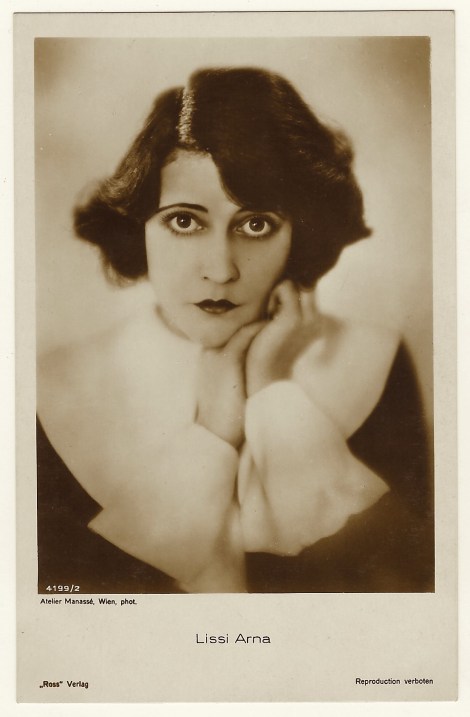
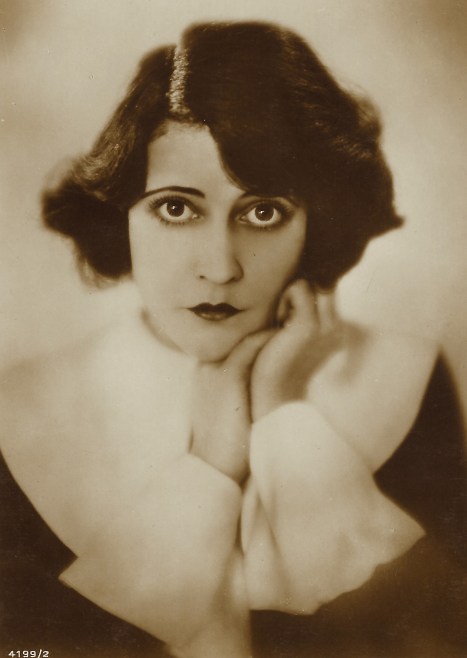
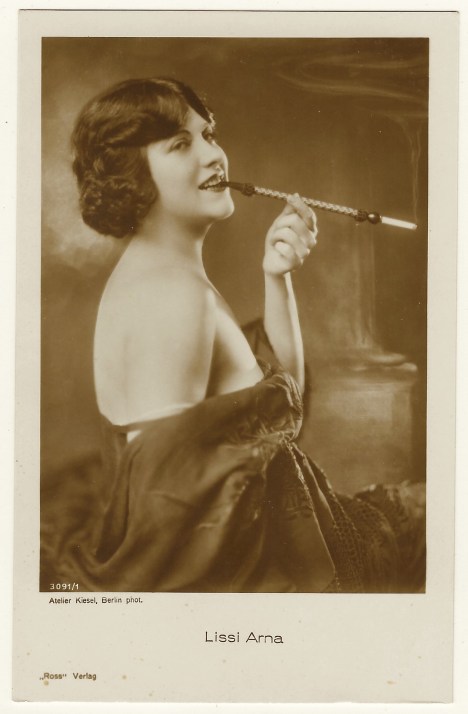
These vintage real photo postcards feature German actress Lissi Arna (1900-1964). She is known for the films “Harbor Drift” (1929, The Squeeker (1931), and Under the Lantern (1928). She appeared in German silent films and entered US films in 1930. She was an exotic femme fatale in German silents She was married to a doctor in 1939 and the couple lived in Venezuela until his death. She appeared in Hollywood in German language versions of American films. She was in the US for only one year and failed to get significant offers from any of the major studios. In the sound era she gradually lost her popularity and was confined to supporting roles through the 1930’s. The IMDb credits her with 62 films between 1915 and 1962. View the YouTube video below to see Lissi Arne appearing in “Under the Lantern” (1928).The first postcard was published by Ross Verlag as part of a series (no. 4199/2). Miss Arna’s portrait was taken by the Manasse studio which was located in Vienna, Austria. There also was a branch of the studio in Berlin. The Manasse studio was in existence between about 1922 and 1938. The studio was run by Olga Solarics (1896-1969) and her husband Adorja’n von Wlassics (1893-1946). Olga was known for her interest in photographing nudes. The studio flourished in Vienna during the 1930’s. Many of the portraits taken by the studio had an erotic flavor. The studio attracted some of the leading ladies of film and theater. The studio was also involved in producing photographs for advertising. This husband and wife team of photographers were very talented and very successful in their profession.
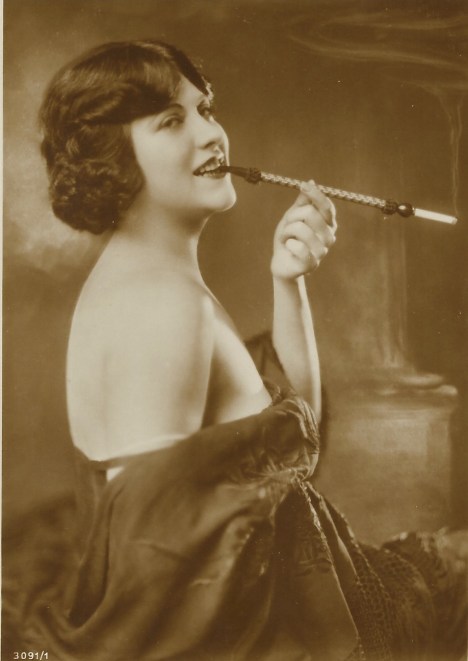
The second portrait postcard features a somewhat risque photograph of Miss Arna. The photograph reveals her bare back and shoulders as well as as a bare view above her breast. She is flashing a sly smile and smoking a cigarette at the end of a cigarette holder. The photo was taken by German photographer Kiesel in Berlin, Germany. The second postcard (no. 3091/1) is part of the same series as the first postcard. This postcard is published by Ross Verlag (Berlin, Germany).
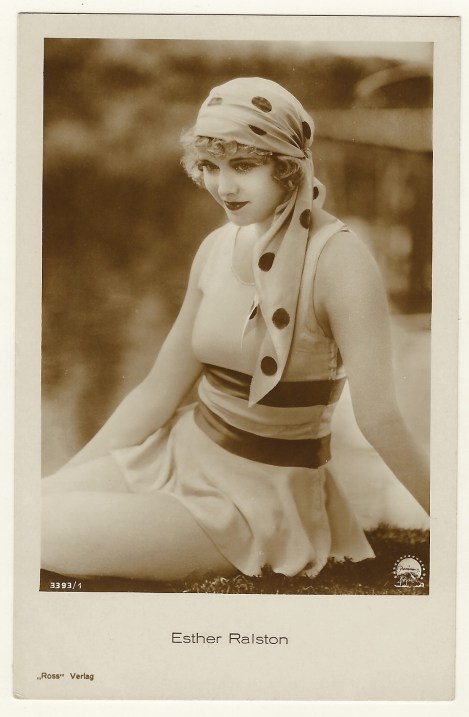
This vintage real photo postcard features beautiful actress Esther Ralston (1902-1994). She was born in Bar Harbor, Maine and was active in acting between 1915 an 1962. Her career started while she was still a child. She appeared in a family vaudeville act called “The Ralston Family with Baby Esther, America’s Youngest Juliet”. By the time she was 18, she was appearing in silent films including “Huckleberry Finn” (1920) and “Peter Pan” (1924). In the late 1920’s she appeared in many films for Paramount Pictures. She was successful enough to earn as much as eight thousand dollars per week Although she received good reviews for dramatic roles, Ralston primarily appeared in comedies, often in the role of spirited society girls. Esther’s image was initially “wholesome and fun-loving”. Florenz Ziegfeld Jr repackaged her as “The American Venus” after she appeared in the role of a beauty queen in the film, “American Venus” (1926). Miss Ralston made a successful transition to sound pictures but by the mid 1930’s she was usually appearing in supporting roles. Her final starring role was in “To the Last Man (1933) and her final film was “Tin Pan Alley (1940). That same year she retired from film and focused on stage and radio through the 1940’s. With the advent of television, Ralston spent time appearing in this new medium. Esther Ralston was married three times and divorced three times. All of her husbands worked in the entertainment industry. The imdb lists Ralston as having 108 credits as an actress. She certainly made an impact in the entertainment world and this is reflected by the fact that she has a star on the Hollywood Walk of Fame. Esther Ralston’s obituary can be found at the web site of “The Independent”. The obituary states that she was a “captivating blond beauty with an engaging sense of humor”. The article tells the story of Ralston’s reaction to co-starring with Clara Bow and Gary Cooper in “Children of Divorce” (1927) while Bow and Cooper were having an affair. In regard to Clara Bow, Ralston stated “I didn’t really dislike her, but she was pretty loose and I’d been brought up differently”. This photo postcard was pubished by Ross Verlag, a postcard publishing company based in Berlin, Germany. The postcard was produced for Paramount Pictures and is part of a series (No. 3393/1).
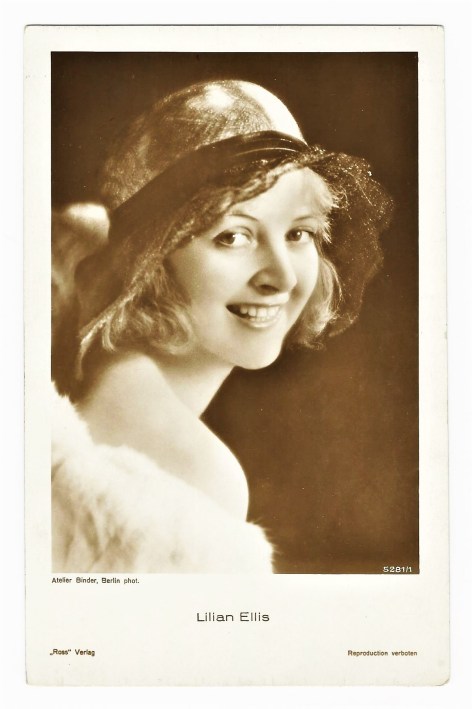
 This vintage real photo postcard features Danish actress, Lillian Ellis (1907-1951). She made fer film debut in 1928. Many of her roles were in German films. Her stardom in Germany peaked at the end of the 1920’s. The IMDb credits Ellis with 18 acting roles between 1928 and 1959. This vintage postcard was published by Ross Verlag and was part of a series (no. 5281/1). The photographer who took this photograph was Alex Binder, a celebrity photographer located in Berlin, Germany. This portrait postcard is in very good condition.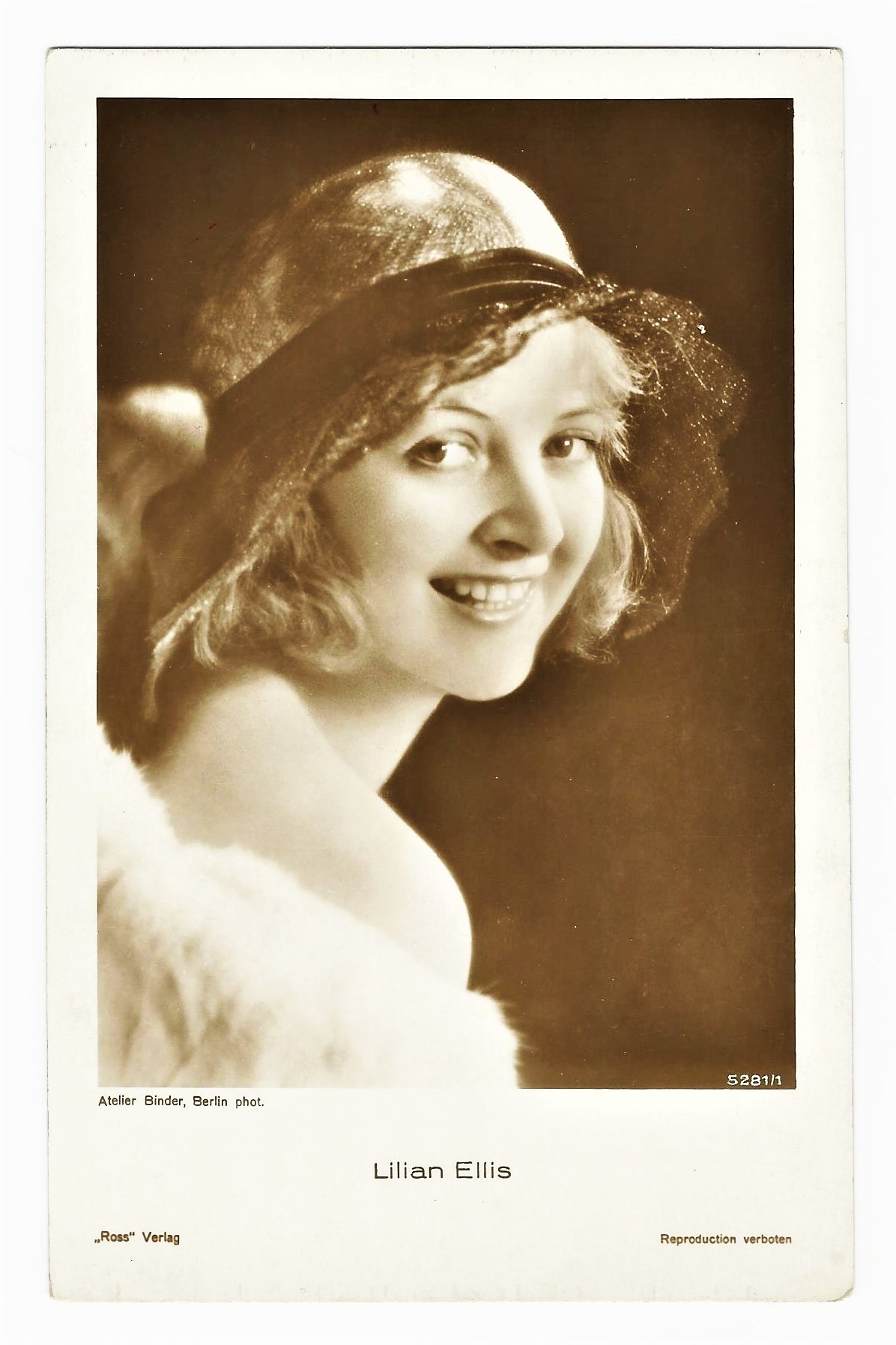



 POSTCARD 1
 POSTCARD 1 (CLOSE-UP)
 POSTCARD 2
 POSTCARD 2 (CLOSE-UP)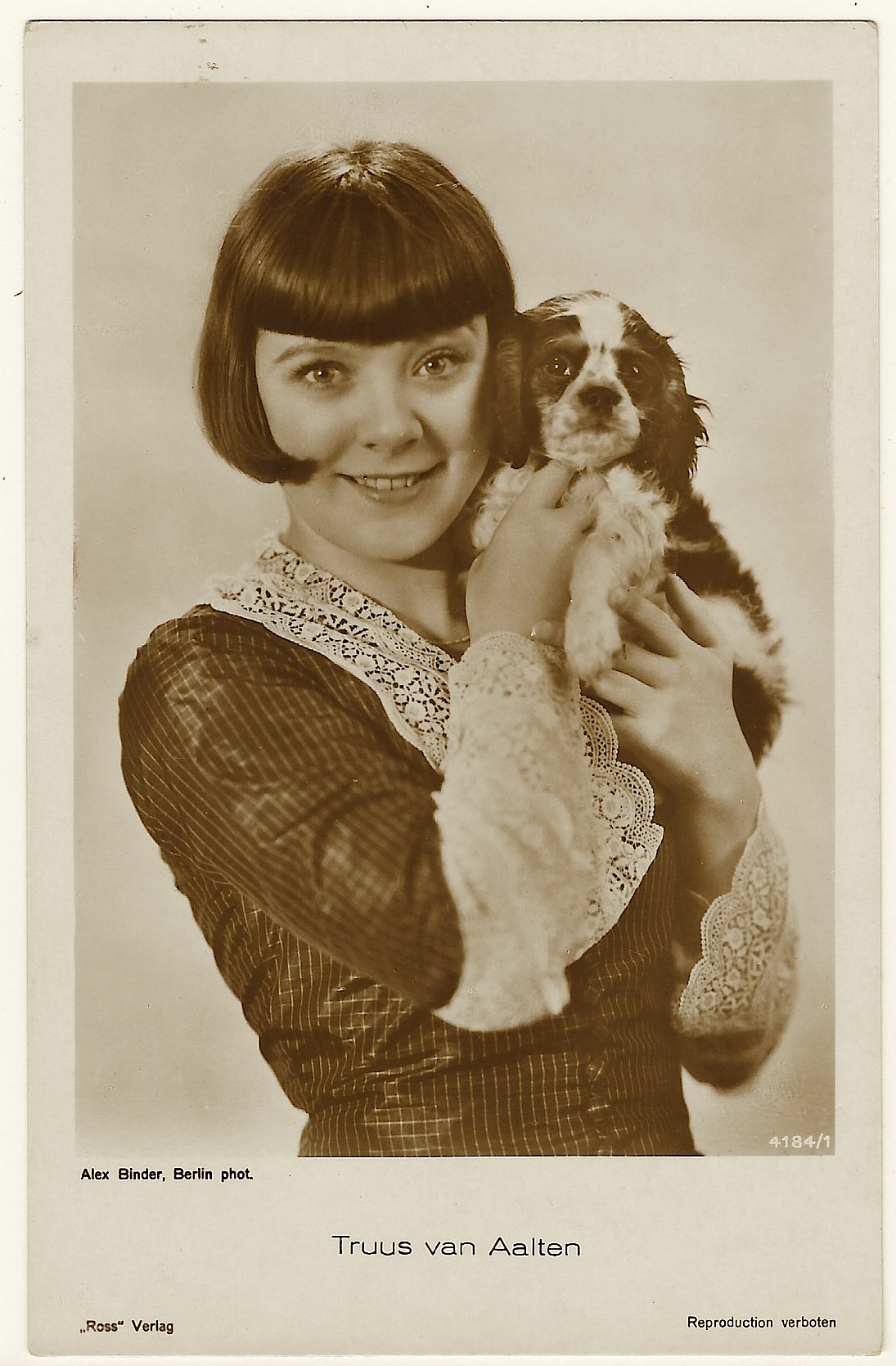
 Postcard 1
  POSTCARD 2


 Postcard 2
 POSTCARD 3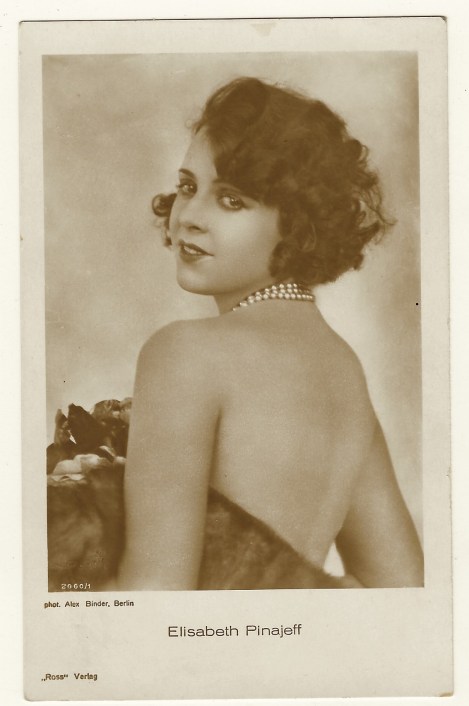




 THE CABINET CARD GALLERY