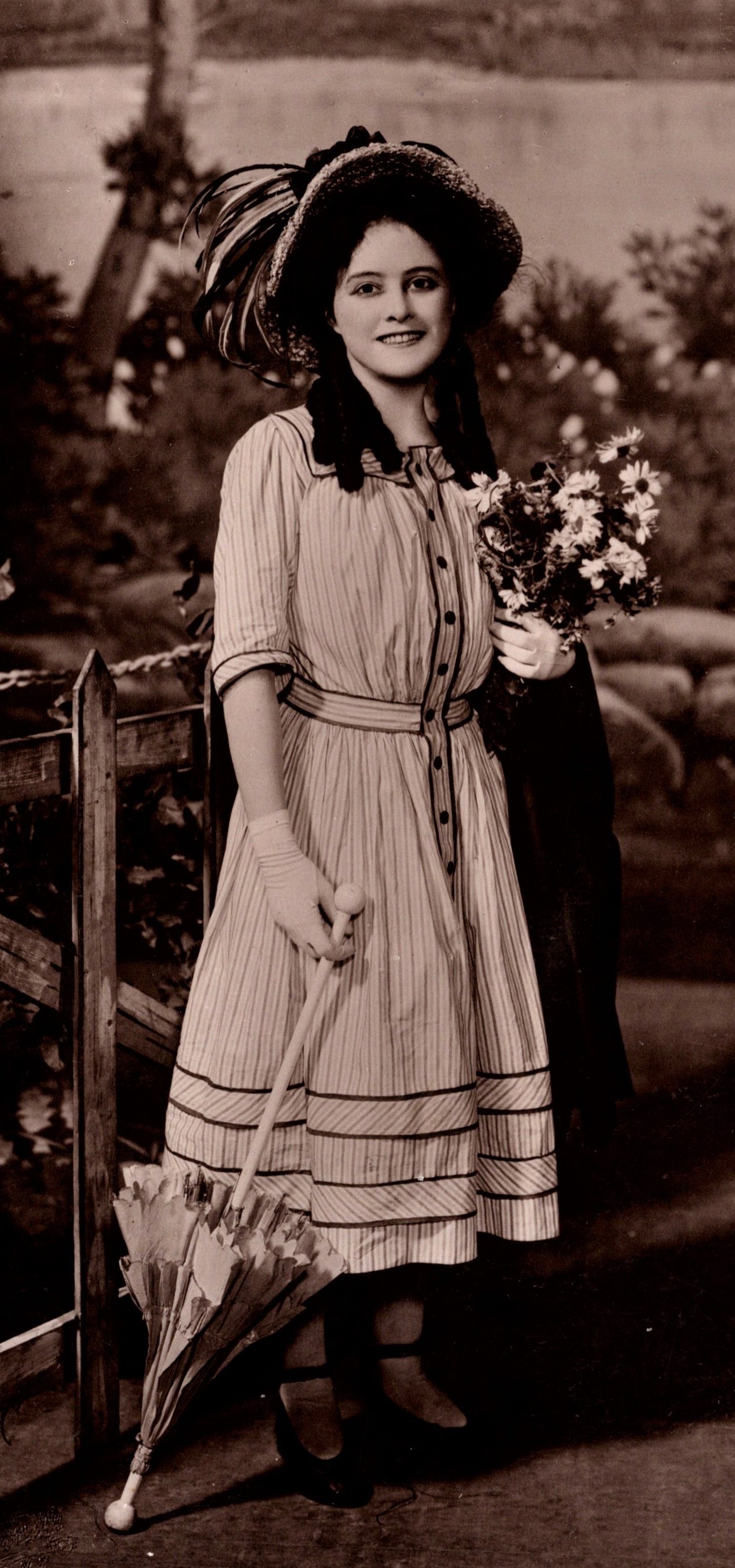
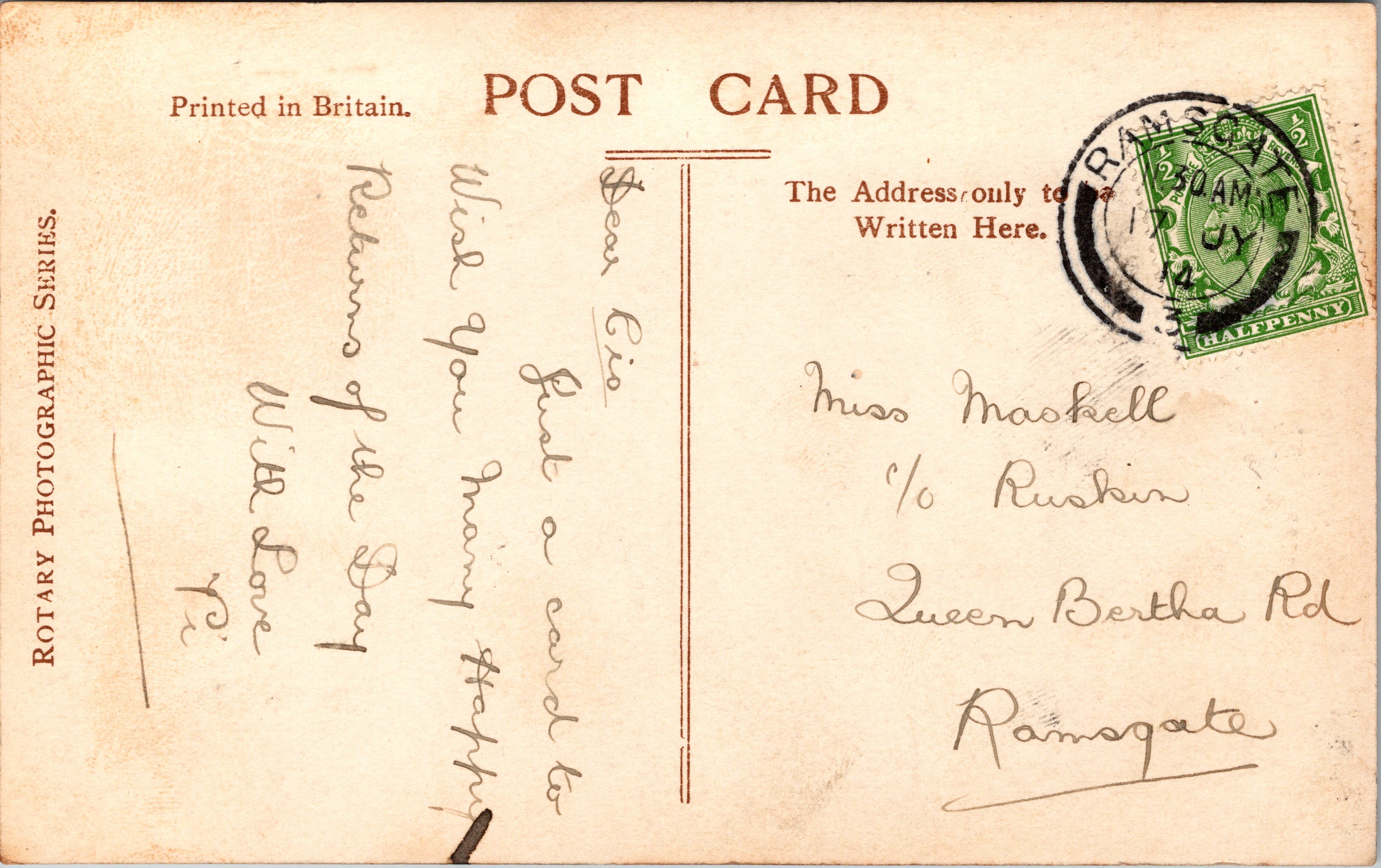
This vintage real photo postcard features actress Edith Taliaferro (1894-1958). She was an American stage and film actress in the late 19th and early 20th century. She was active on the stage until 1935. She played roles in three silent films. She is most famous for playing the role of Rebecca in the stage production of “Rebecca of Sunnybrook Farm” (1910). Edith was born in Virginia. Her parents were theatre workers and her sister, Mabel, also became a stage actress. Edith made her stage debut at age two and by the time she was ten, she was performing in productions of Shakespeare. During her career, she performed in more than thirty stage productions. She appeared in sixteen Broadway shows. (SOLD)
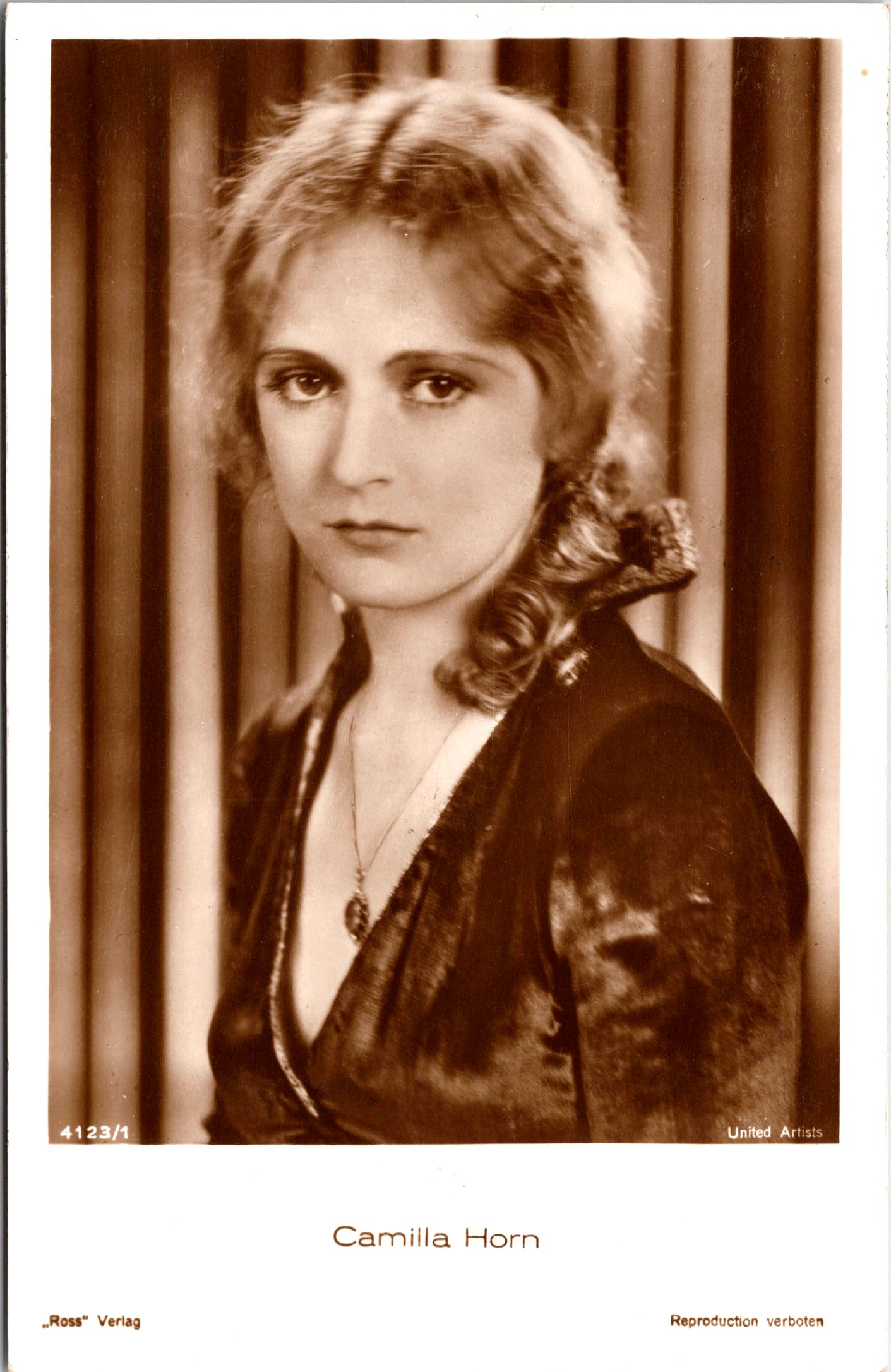
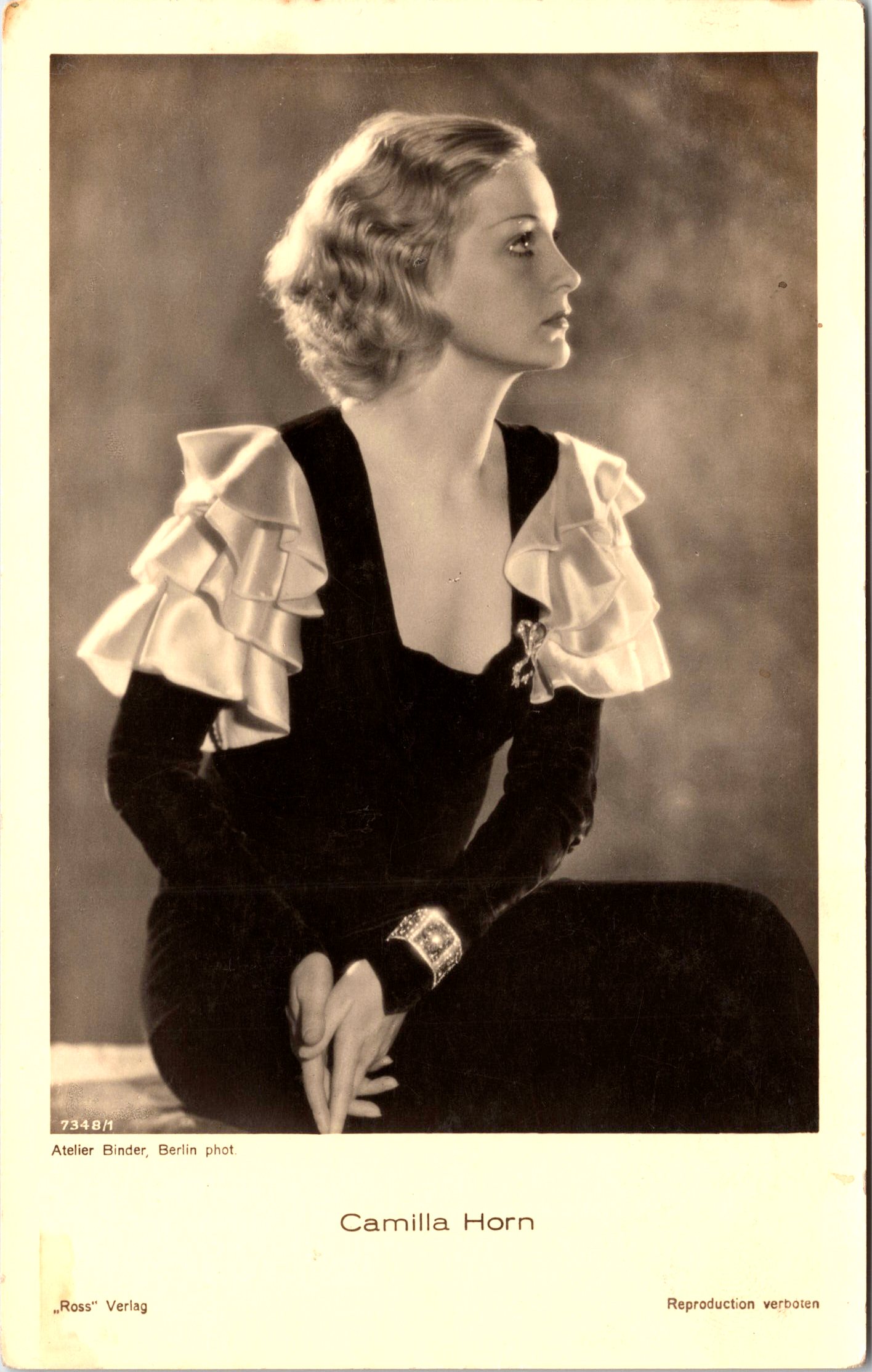
These vintage real photo postcards feature German dancer and film star of the silent and sound era, Camilla Horn (1903-1996). She also was an internationally known actress, starring in several Hollywood films of the late 1920’s as well as a few British and Italian productions. Her father was a civil servant working in the Railroad Industry. She was born in Germany and educated in Germany and Switzerland. Horn was educated to work as a dressmaker. She went to Berlin where she trained as an actress and dancer. She next became a cabaret dancer. In 1925, she worked as an extra in a German film. Her big break came in 1926 after she replaced Lillian Gist in the UFA production of “Faust”. In 1928 she left for Hollywood where she played opposite John Barrymore in “Tempest” and “Eternal Love”. She became romantically involved with film director, Joseph Schenck. She returned to Europe (upon the advent of sound film) and in the 1930’s got in trouble with the Nazis and was prosecuted for an alleged financial offense. During the war years, she was too outspoken against the Nazis. The regime investigated her. She tried to escape unsuccessfully to Switzerland. Thereafter, she kept a low profile. After the war, she was convicted by a British tribunal and sentenced for three months of jail due to some minor offenses. It was also reported that post war, she worked as an interpreter for occupying American forces. Horn was a screen star from 1930 until her retirement in 1953. Horn was married four times during her life. Interestingly, in about 1972 Bruce Springsteen wrote a song about her. Camilla Horn was quite beautiful. She had blonde hair, slanting brown eyes and classical features.
Postcard 1 was published by Ross Verlag as part of a series (No.4123/1). The logo for “United Artists” can be seen in the lower right hand corner of Horn’s image. This postcard has a 1930 postmark. (SOLD)
Postcard 2 was published by Ross Verlag as part of a series (No.7348/1). The card has a Latvian stamp and postmark. (SOLD)
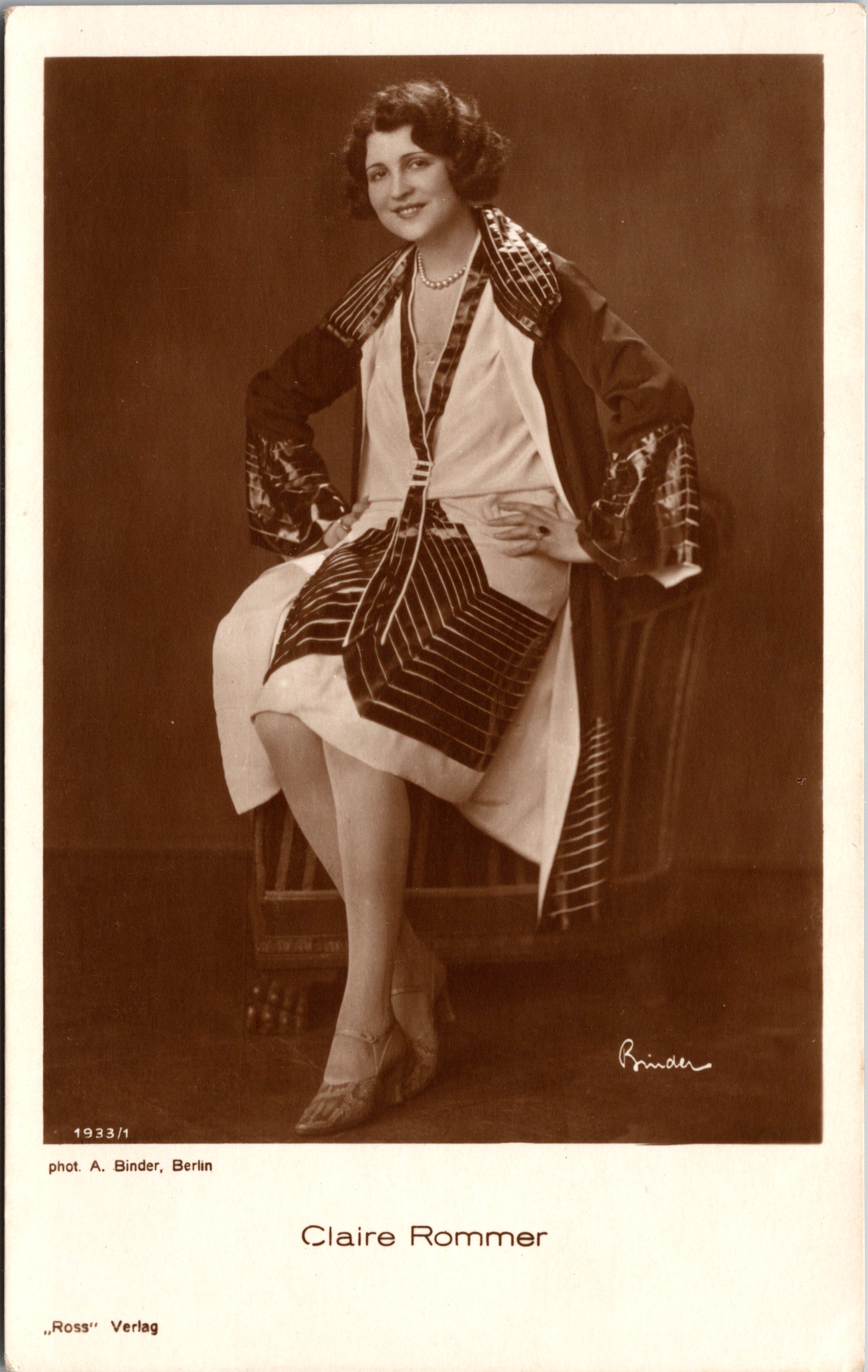
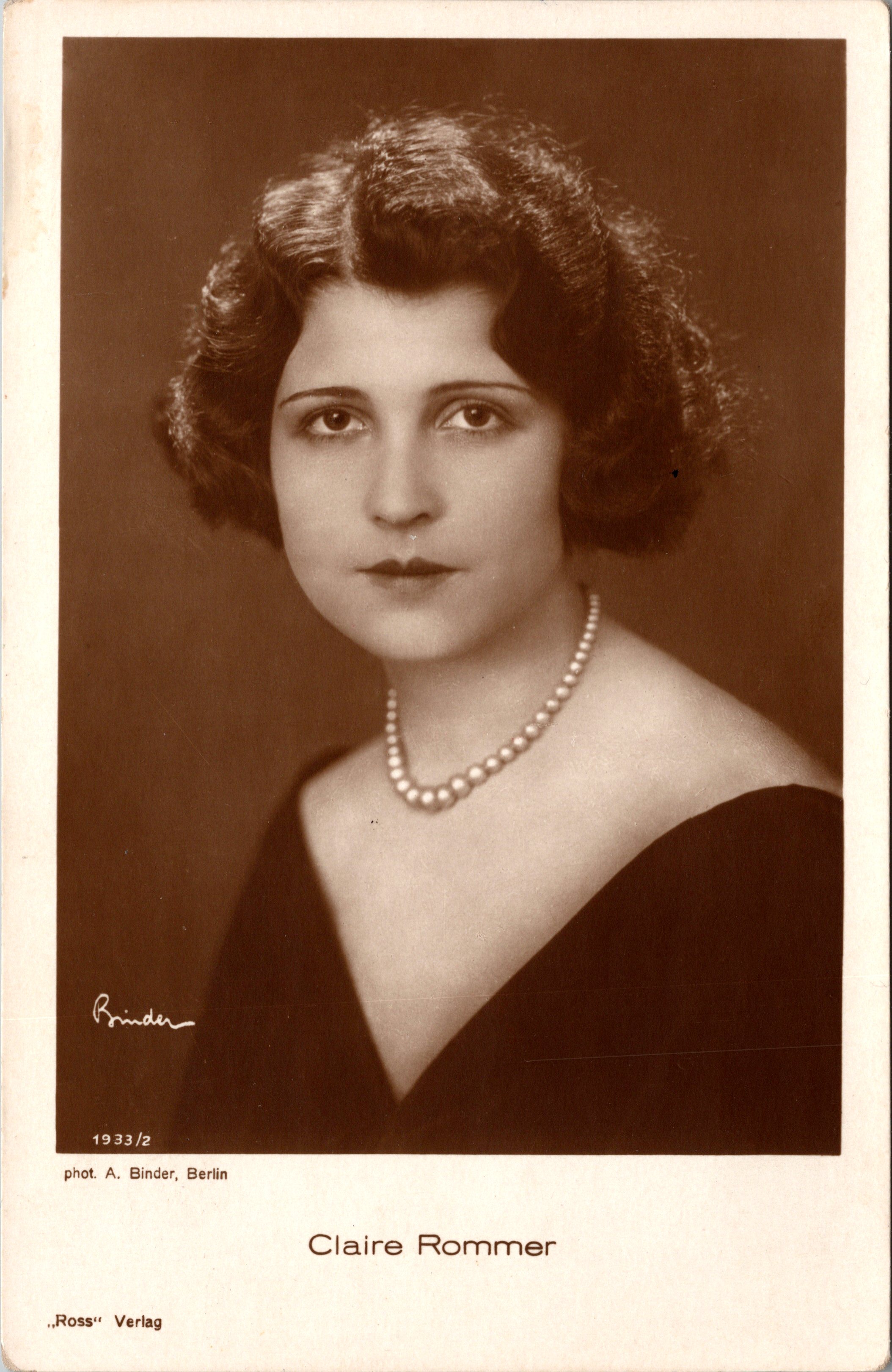
These vintage real photo postcards feature German film actress, Claire Rommer (1904-1996). Her filmography on IMDb credits her with 49 film appearances between 1922 and 1934. She made her film debut at the age of eighteen. She also began her career as a soubrette appearing in operettas and comedies on the Berlin stage. However, her fame came from her film work. She played both leading and supportive roles. She played in silent films and made a successful transition to sound films. She even sang in some of her talkies. She was married to a prosperous Jewih man, named Adolf Strenger. Because of her marriage, in 1938 she was banned from any participation in the German film industry. It was thought that she was probably not Aryan like her husband. The rise of the Nazis forced the couple to leave Germany and emigrate to the United States via Portugal.The pair left Europe with the assistance of Aristedes de Sousa Mendes. He was a Portuguese Consular stationed in France. Mendes defied orders from his government and issued thousands of visas to Jews, allowing them to escape with their families and their lives. He was a hero for his work as a Holocaust rescuer. Ultimately, Mendes was severely punished for his defiance. After leaving Germany, Rommer’s film career ended. In the US, she divorced her husband and married a meat industry multi-millionaire.
Postcard 1 was published by Ross Verlag as part of a series (No.1933/1). Claire Rommer’s photo portrait was taken by celebrity photographer, Alexander Binder. This vintage photo postcard is in excellent condition (see scans). (SOLD)
Postcard 2 was published by Ross Verlag as part of a series (No.1933/2). Claire Rommer’s photo portrait was taken by celebrity photographer, Alexander Binder. This vintage photo postcard is in very good condition (see scans). (SOLD)
Postcard 3 was published by Ross Verlag as part of a series (no.3010/1). Miss Rommer’s portrait was taken by famed celebrity photographer Alex Binder, who operated his studio in Berlin. The postcard was postmarked in 1928. (SOLD)
Evelyn Holt (3 October 1908 – 22 February 2001) was a German actress. Her father was a journalist. Her film career began with UFA, a German film company. It did not take long for her to become a film star. She was popular in the 1920’s and early 1930’s. Holt was blond and blue eyed. In 1931 she became a soubrette at the Grosses Schauspielhaus (a popular theatre) in Berlin. Her film career came to an abrupt end when the Nazis’ took power. It was alleged that Holt was half Jewish, and she was banned from films. The ban was based on her being born with a Jewish sounding last name. Holt married Jewish publisher Felix Guggenheim (1904-1976) in 1936. Two years later the couple emigrated to Switzerland, then England, then the United States. She remained in the U.S. and never returned to acting.
Postcard 1 reveals that Evelyn Holt was quite pretty. She looks very confident in this image. Her dress is shiny. Is it silk? This postcard was published by Ross Verlag, a firm located in Berlin. The card was part of a series (no.6509/2). The photographer of this portrait is Walther Jaeger and the photograph was taken in Berlin, Germany. (SOLD)
Postcard 2 was published by Iris Verlag. Iris Verlag in Vienna was the most important Austrian publisher of film star postcards. The logo for “Lux Film” can be seen in the lower left hand corner of the image. The company was an Italian Film distribution and production company. This card is part of a series (no.946). (SOLD)
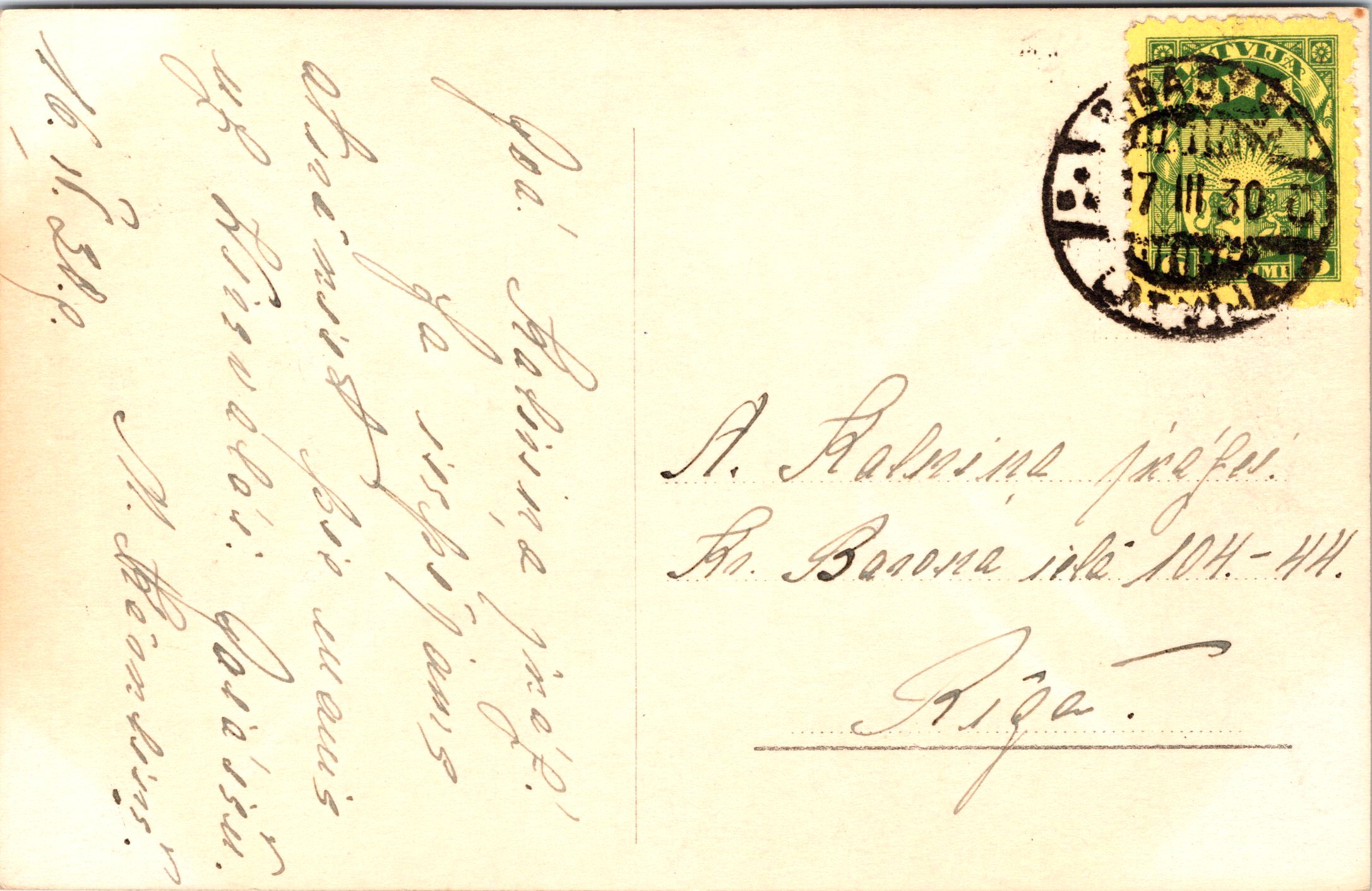
Postcard 3 was published by Ross Verlag, a firm located in Berlin. The card was part of a series (no.3553/1). The photographer of this portrait is Ernst Schneider and the photograph was taken in Berlin, Germany. He was considered to be one of the most celebrated studio photographers in Berlin during three decades (1900’s, 1910’s, 1920’s). He photographed many celebrities from the world of theater, opera, circuses, and film. He was also one of the most prominent fashion photographers in Berlin. In addition, he was well known for his nude photography, and he published books showcasing his work in this domain. Sometime around 1908 Schneider began working with postcard publishers “Rotophot” and “Neue Photographische Gesellschaft” (NPG). In 1919 he began working with Ross Verlag. The card was postmarked in 1928 in the city of Riga, Latvia. (SOLD)
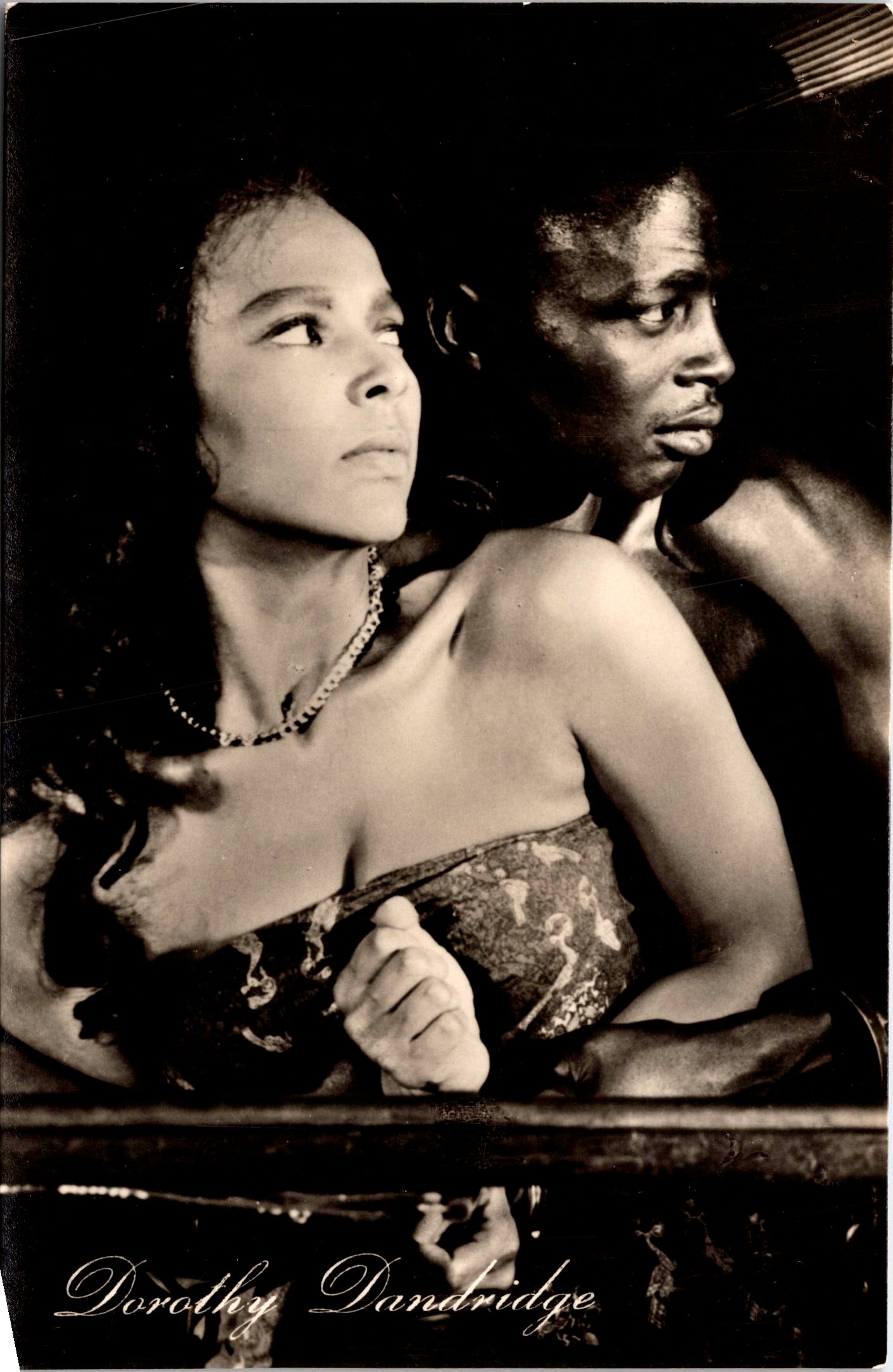
This vintage real photo postcard features African American actress and singer, Dorothy Dandridge (1922-1965). She was born in Cleveland, Ohio. Her mother was an entertainer and her father was a cabinet maker and Baptist minister. Before Dorothy was born, her parents separated. Ruby’s mom built a song and dance act for Dorothy and her sister. Her mom’s lover managed the act and it is written that the children were given abusive discipline. They toured continuously for five years and they barely attended school. When the depression hit, Ruby moved her girls to Hollywood, California. Before long, the sisters teamed up with school mate Etta Jones to do a dance act called “The Dandridge Sisters”. The act did well for several years and played in venues such as the Cotton Club and the Apollo Theater. Dorothy’s first screen appearance occurred when she was 13 in an episode of “Our Gang”. This was followed by a number of other screen roles including an appearance in “A Day at the Races” (1937) with the Marx Brothers. Her firs credited film role was in 1940. Her film roles were limited because she rejected many stereotypical black roles. In the 1940’s she appeared in both film and on the stage. She also performed as a singer in films with Count Basie and Louis Armstrong. Her first starring role was in “Bright Road” (1952) where she played opposite Harry Belafonte. In 1954, she starred in “Carmen Jones”. She received great reviews and the movie made her one of Hollywood’s first African American sex symbols and she was featured on a number of national magazine covers. In addition, she was nominated for an Academy Award for Best Actress. In 1957, she appeared in the film “Island in the Sun” in which she was involved in an interracial love affair with a white man. The script had to be revised a number of times because of the Motion Picture Production Code. The movie was controversial but received positive reviews and was successful. The IMDb credits Dandridge with 39 films between 1935 and 1962. She was politically active and was involved with the National Urban League and the NAACP. Dandridge was married and divorced twice and had a four year affair with director, Otto Preminger. Toward the end of her career, she discovered that her financial advisors had stolen much of her money and she owed over 100,00 dollars in back taxes. Her finances were in shambles and she had to move into a small apartment. In 1965, she had a phone conversation with a friend in which she made cryptic remarks intimating that her time left on earth might be short lived. The next day she was found dead in her apartment. There were two investigation into the cause of her death. One concluded she died of an accidental overdose of an anti-depressant. The other investigation determined she died of an embolism. This postcard features Dorothy Dandridge in the film “Tamango” (1959). The film tells the story of a rebellion on a Dutch slave ship. The actor standing behind Dandridge is Alex Cressan, who played the leader of the rebellion. Cressan only appeared in this one film. When he was cast in the film, he was a medical student in Martinique. Cressanreceived good reviews for his acting in this film. How he lived his life after this film is unknown. This real photo postcard was published by Progress Starfoto. (SOLD)
This photograph is a portrait of three young sisters. They are cute and well dressed. The oldest and middle sister are wearing identical, or near identical, dresses. The girls are holding flowers. In the forefront of the image is a strange sculpture. In fact, the faces on the sculpture could be frightening to a young child. The girls are holding flowers. The girl’s portrait was taken by the American Photo Studio. The studio was located at 228 Bowery in New York City. SOLD
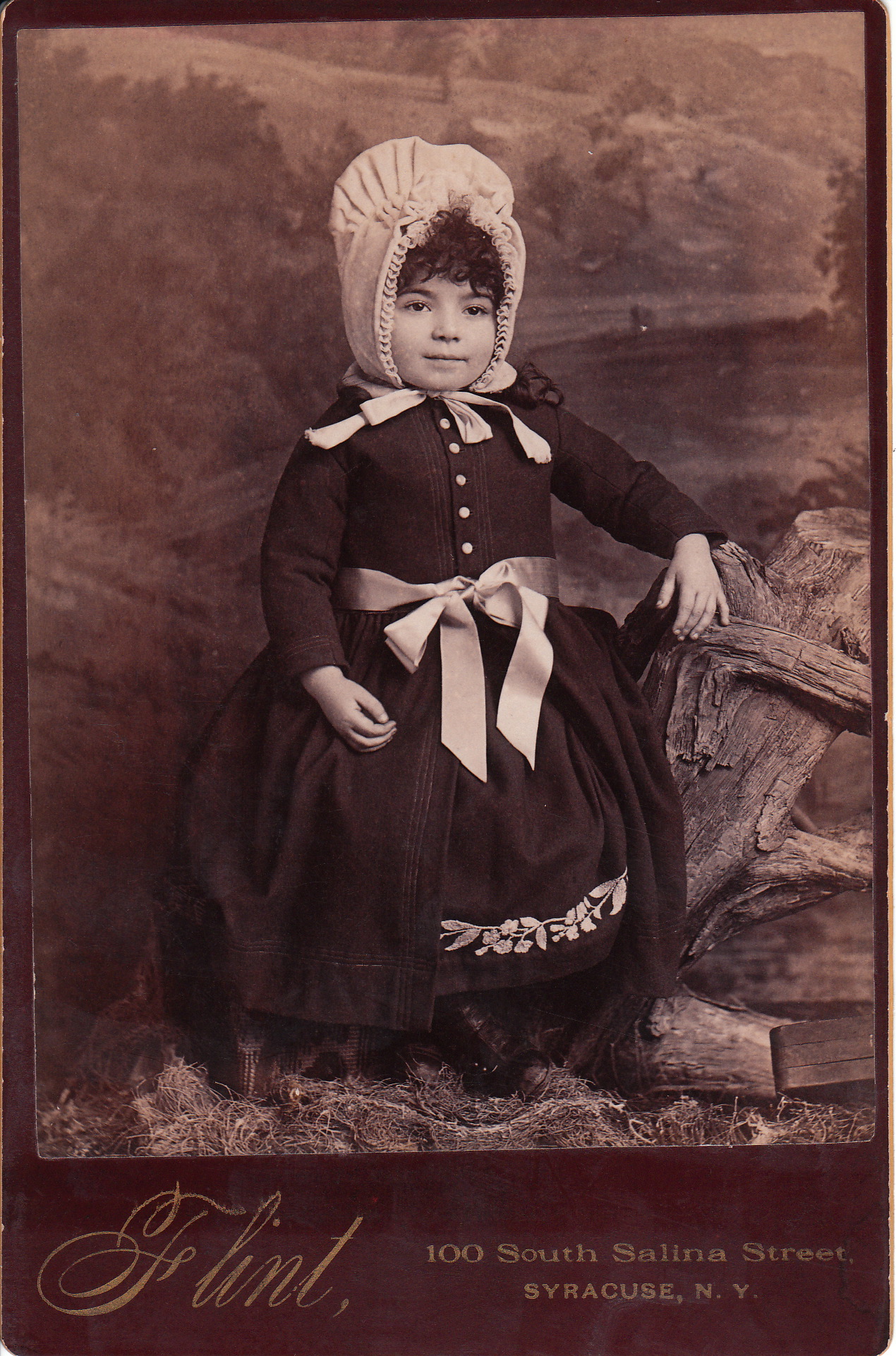
This cabinet card features an adorable little girl bundled up in a heavy dress and wearing a bonnet over her dark curly hair. The ribbons she is wearing makes her appear to be wrapped like a gift. She looks well outfitted for an upstate New York winter. The photographer is F. C. Flint of Syracuse, New York. SOLD
This vintage real photo postcard features pretty American actress, Natalie Wood (1938-1981). She had both talent and charisma. She was a successful actress and was known for being glamourous but also for her personal problems. Wood started acting in films as a child. One of her first notable roles was in the classic Christmas film “Miracle on 34th Street” (1947). As a teenager, she starred in films like “Rebel Without a Cause” (1955). She played alongside James Dean in a role that solidified her status as an actress perfect for playing wholesome and innocent young women. Through the late 1950’s and into the 1960’s she appeared in numerous successful films where she showcased her versatility in genres ranging from drama to comedy. Wood’s personal life was good fodder for sensationalized headlines. She was married three times. She had a tumultuous relationship with actor Robert Wagner. Despite her success as an actress, she struggled with insecurity and inner turmoil. She struggled with anxiety and depression throughout her adult life. In 1981, she drowned under mysterious circumstances while on a boating trip off the California coast. Speculation and controversy about the events surrounding her death continued for years after her death. SOLD
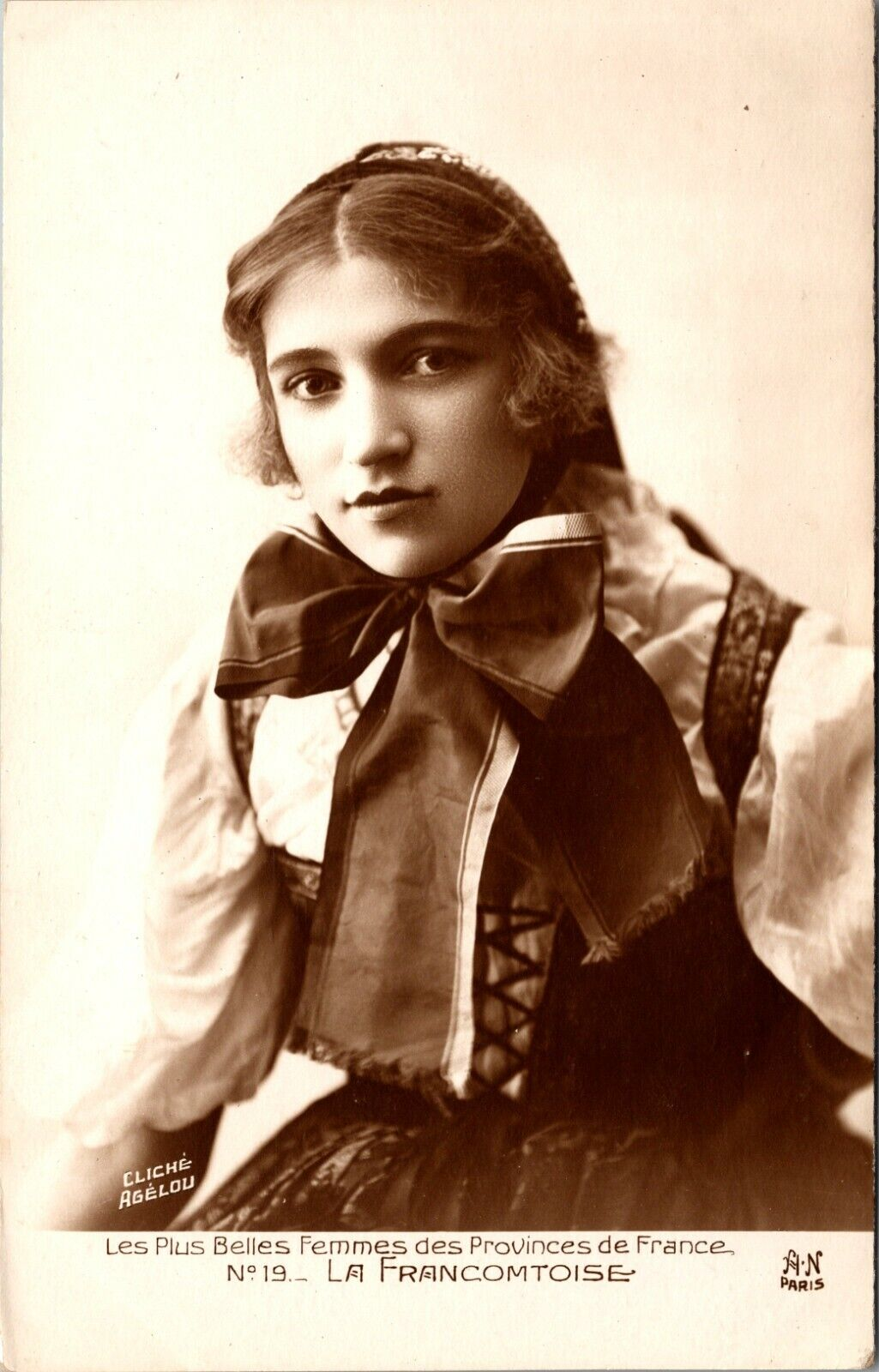
This vintage real photo postcard is part of a series named “Les Plus Belles Femmes de France” (The Most Beautiful Women of France). This series is about the Provinces of France, and the model for this image represents La Francomtoise. This postcard is number 19 in the series. There were a number of different series published. The Province series was one of the more popular series. The models in this series represent different French Provinces and wear traditional clothing from that particular area of the country.This postcard was published by well known photographer Alfred Noyer. The celebrated photographer supervised a large photo studio in Paris. The Noyer Studio operated from 1910 until the 1940’s. Many of his early postcards were reproductions of artworks. He also produced illustrated patriotic postcards during World War I. With the onset of the 1920’s he began producing postcards of children and women. Many of the postcards he produced of women were nudes or risque images. Some of his postcards list his name while others are simply marked “AN”. The photographer of this postcard portrait is Jean Agelou (1878-1921). Agelou was a French photographer of the 1910’s and 1920’s who is best known for his erotic and nude photographs. He was born in Egypt and not much is known about his private life. Agelou generally used models between the age of 20 and 24 years-old. He had a favorite model. Her name was “Fernande” and in addition to modeling, she was Agelou’s lover. Her full name was Fernande Barrey (1893-1960). She was a prostitute by trade. She also modeled for for painters (Amadeo Modigliani and Chaim Soutine). Fernande later became a painter. Although the 1900’s was the “golden age” of erotic photograph, photographers who took such risque photos had to use discretion. As a result, Agelou signed his work “JA”. In 1908, nudity in photographs was banned in France and photographers had to cover nude women images with strategically placed undergarments or other materials. Nude images had to circulate on the down low. They were sent in the mail inside of envelopes. Fernande remained popular and her erotic photographs were enjoyed by soldiers on both sides during World War I. Jean Agelou died in 1921; the result of a car accident. His brother George, who managed Jean’s business, also was killed in the crash. SOLD
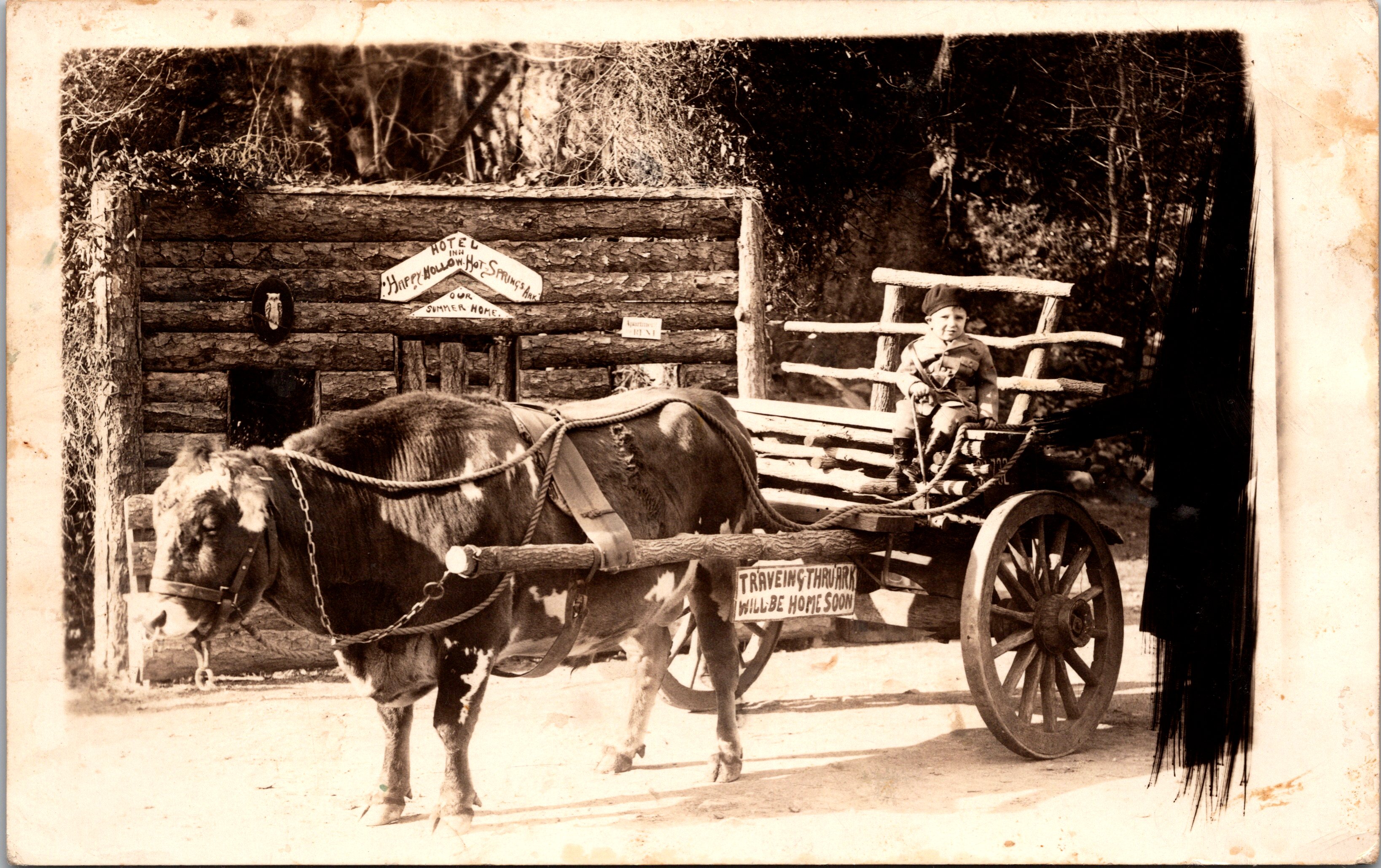
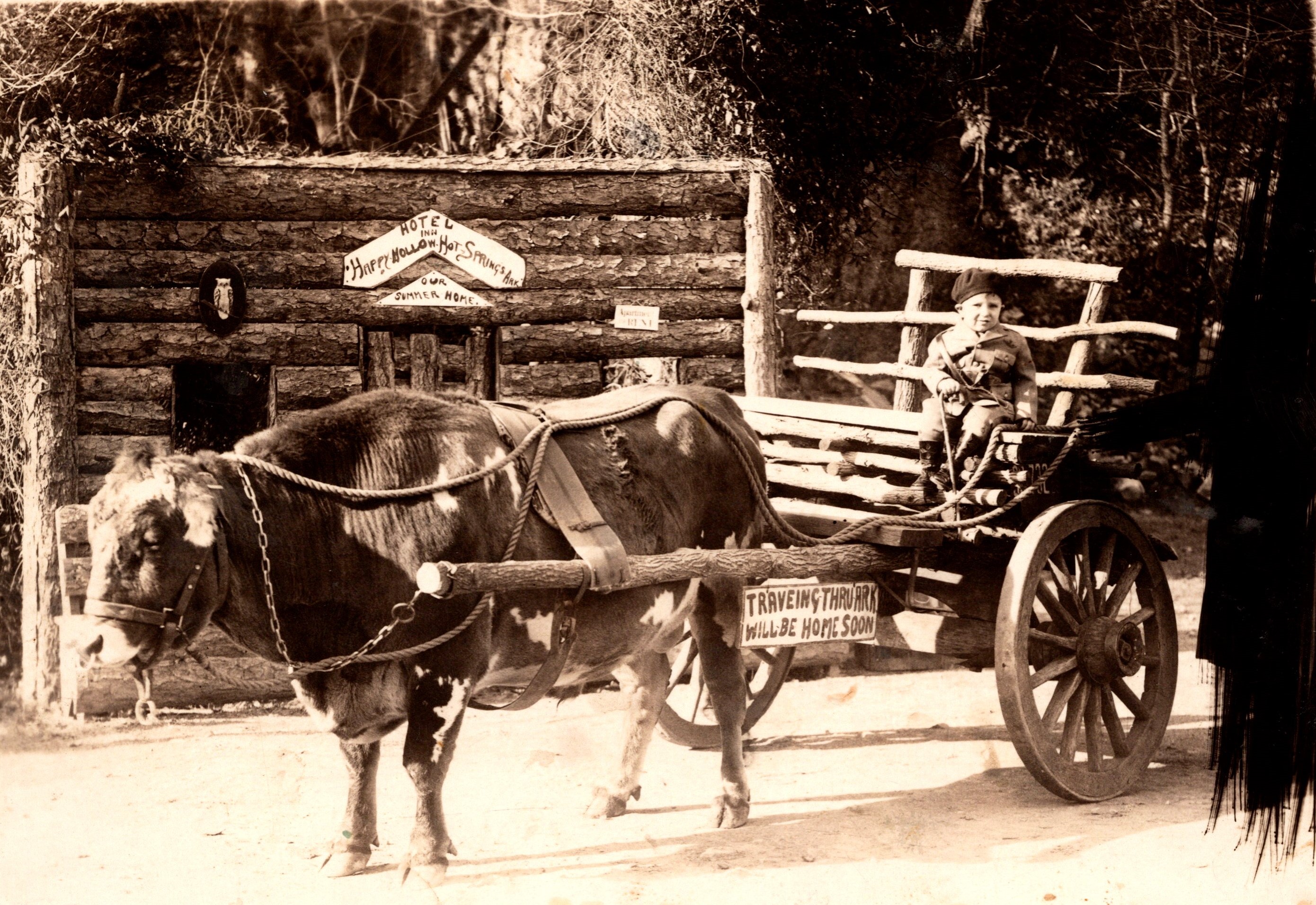
This vintage postcard features a photograph of a young child sitting on an ox pulled cart. The scene is at Happy Hollow, in Hot Springs, Arkansas. Note the signage. The sign on the cart states “Traveling Thru Ark : Will Be Home Soon). This postcard was a souvenir from Hot Springs National Park. The AZO stamp box on this postcard indicates that it was published sometime between 1924 and 1949. SOLD















 THE CABINET CARD GALLERY