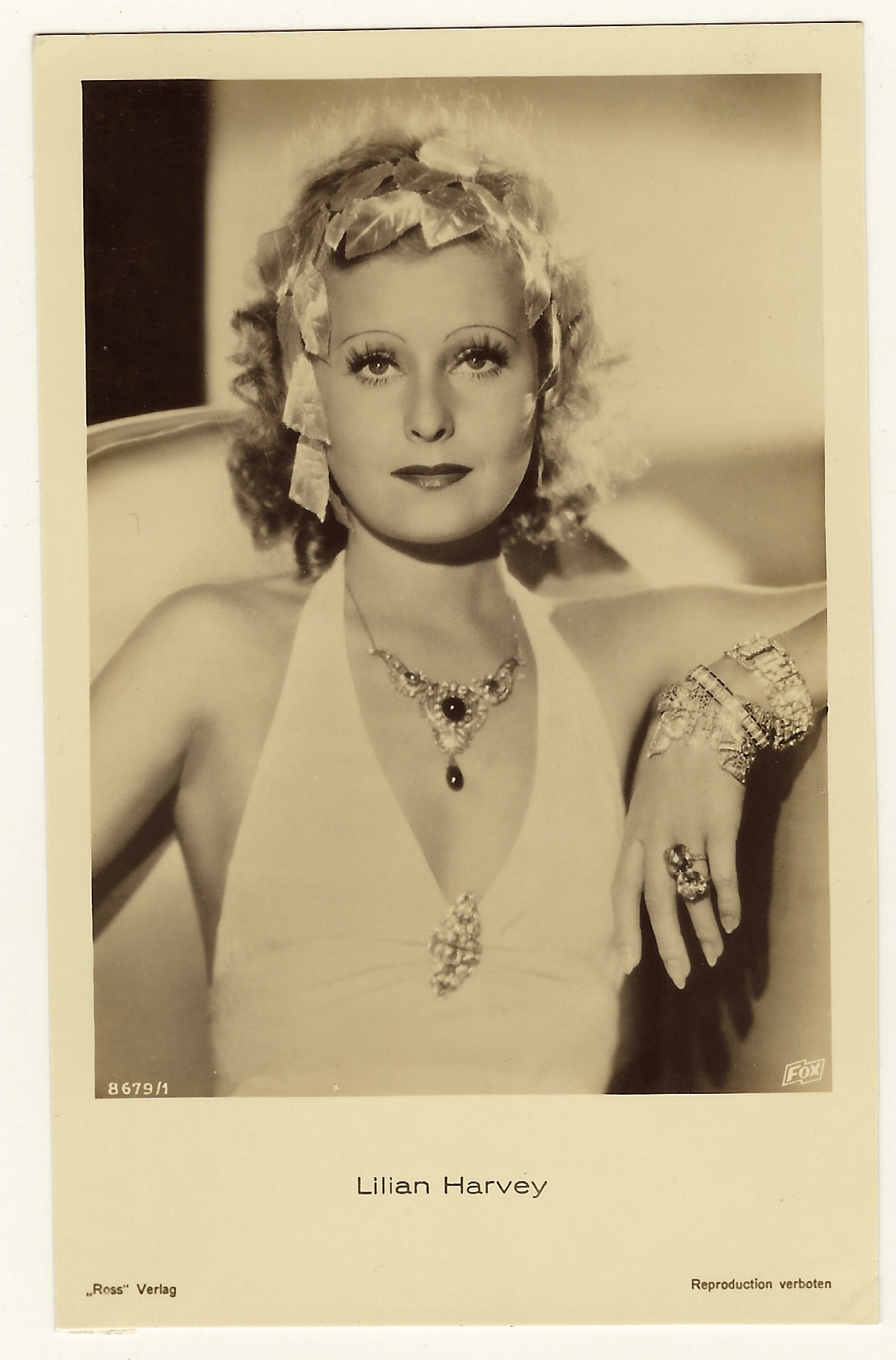
POSTCARD 1 (SOLD)
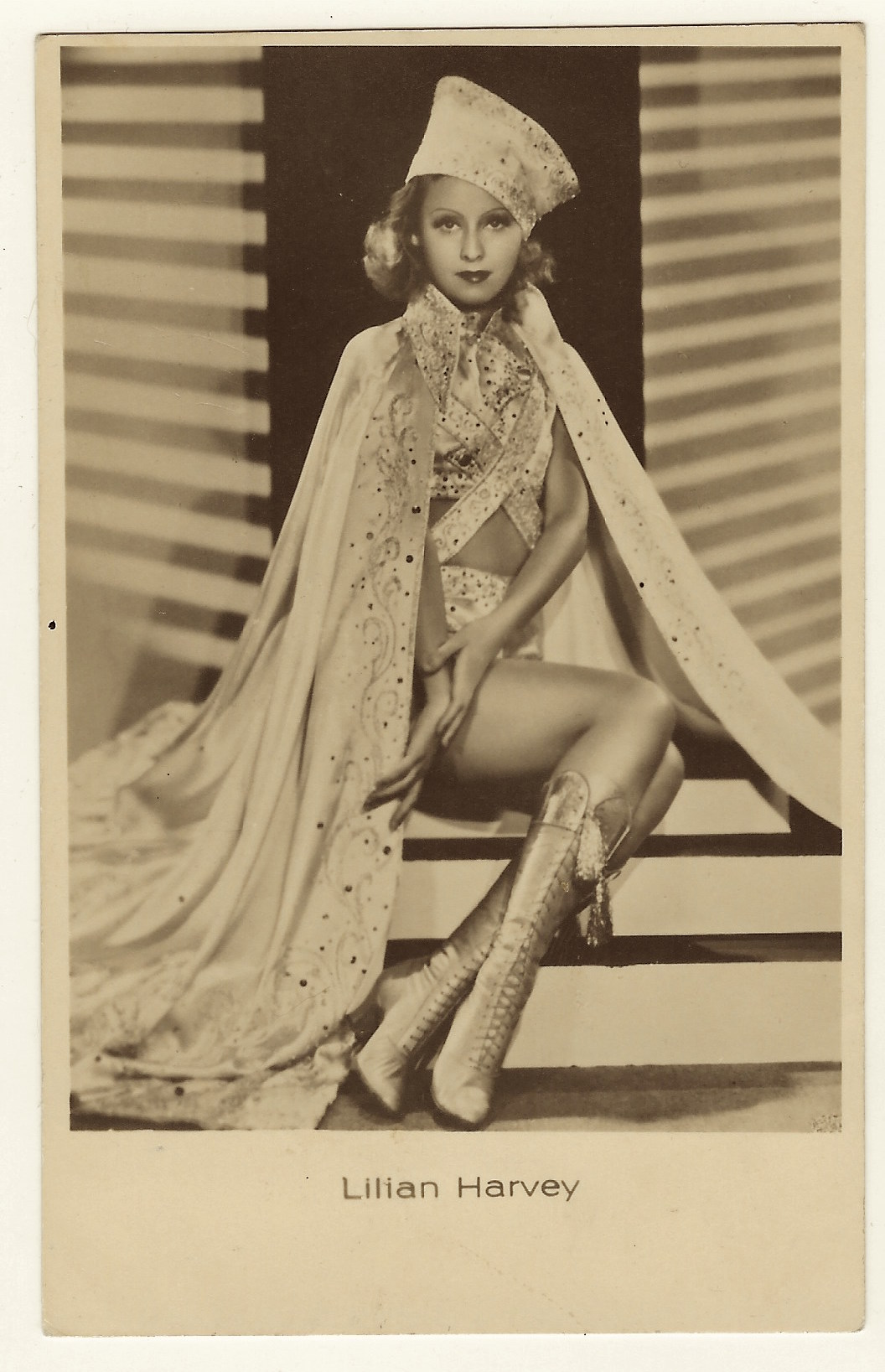
POSTCARD 2 (SOLD)
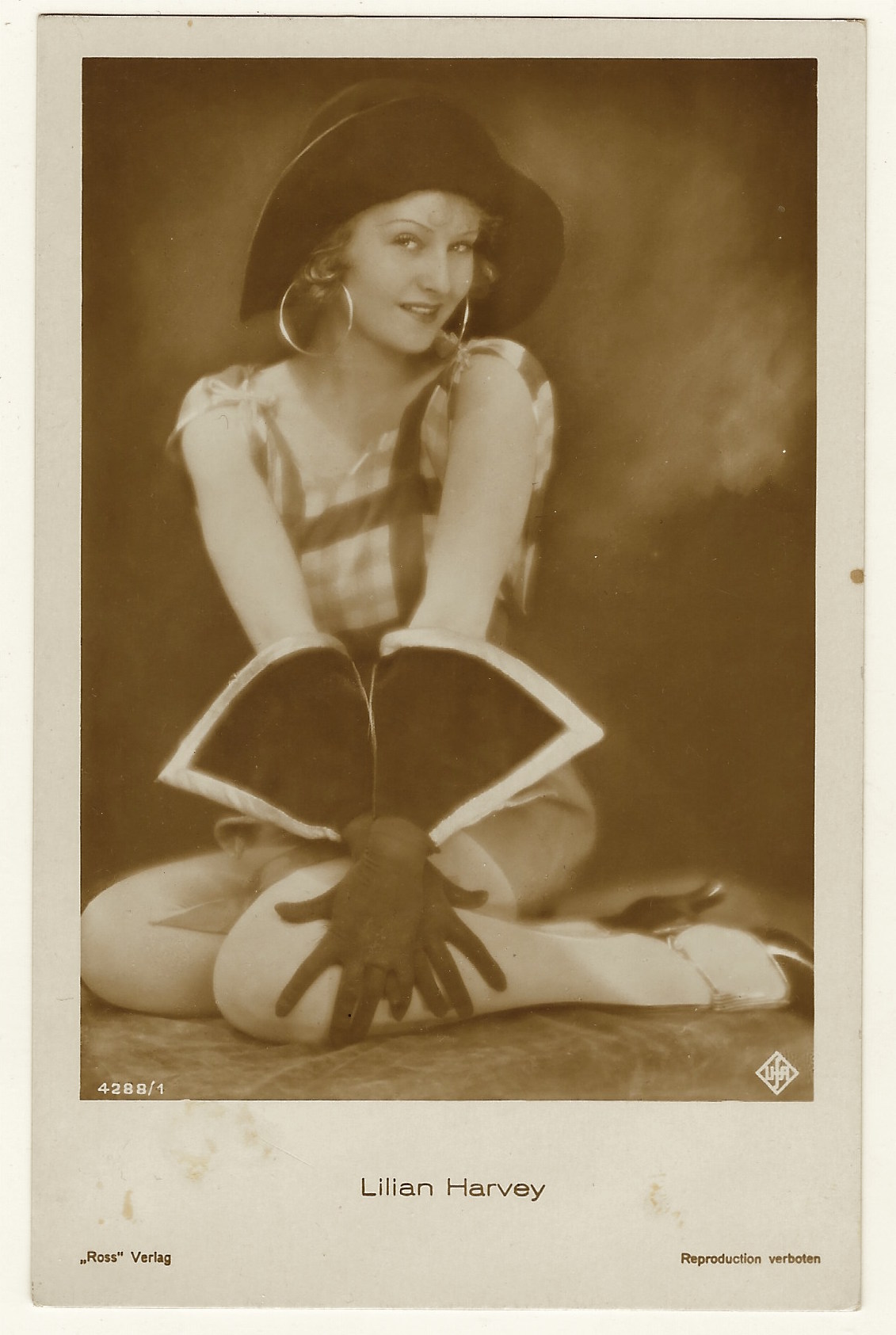
POSTCARD 3 (SOLD)
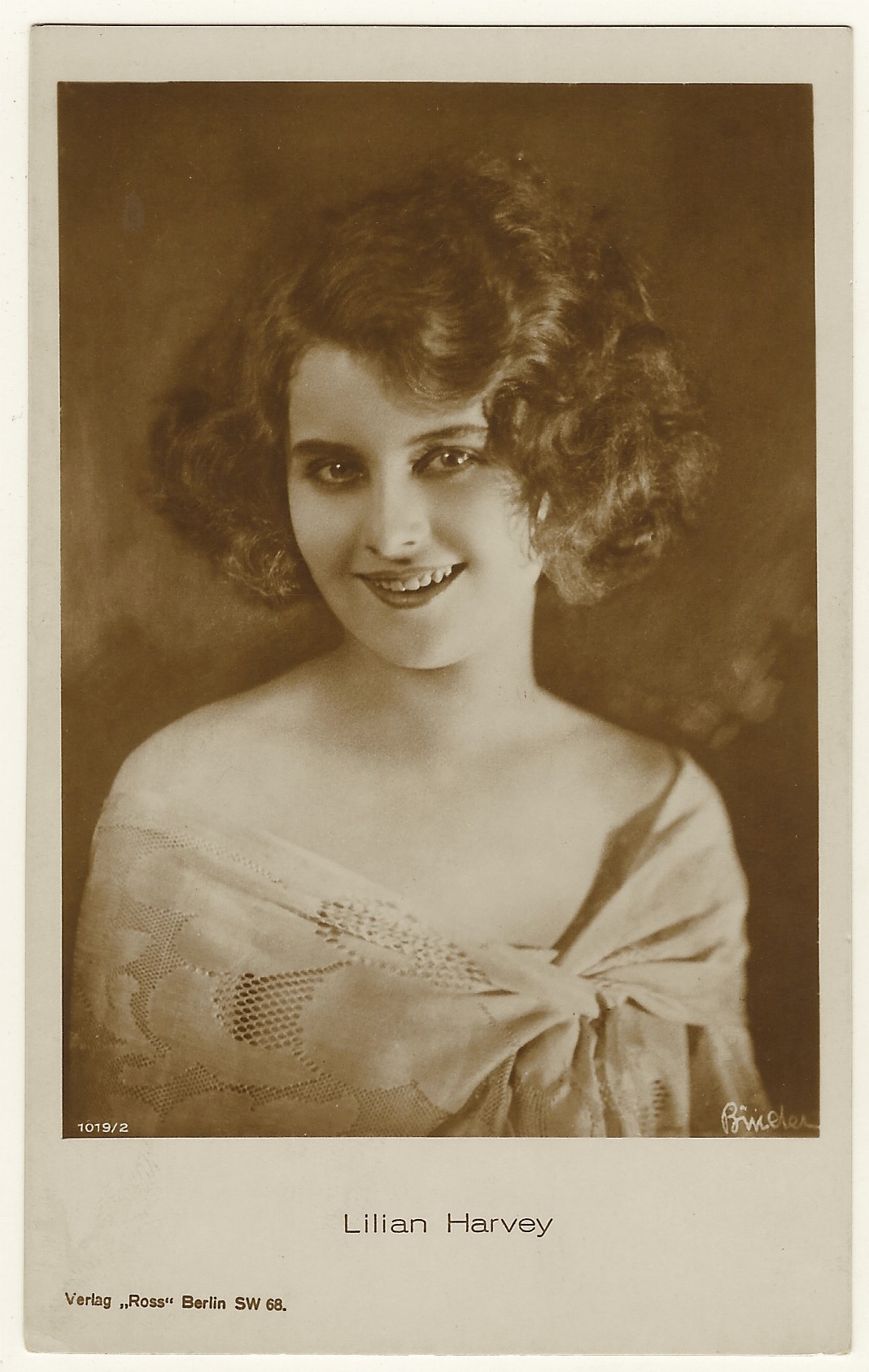
POSTCARD 4
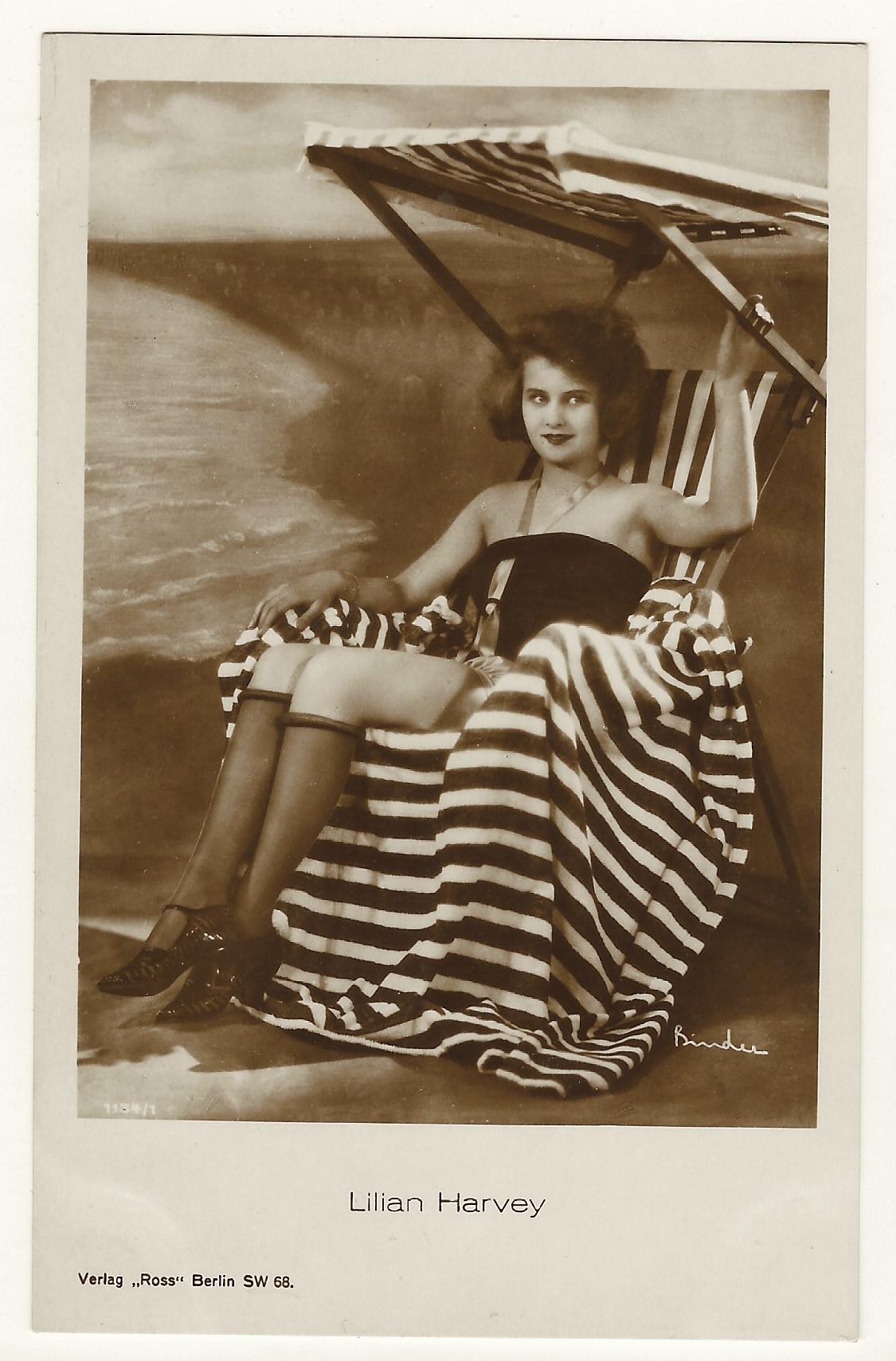
POSTCARD 5 (SOLD)
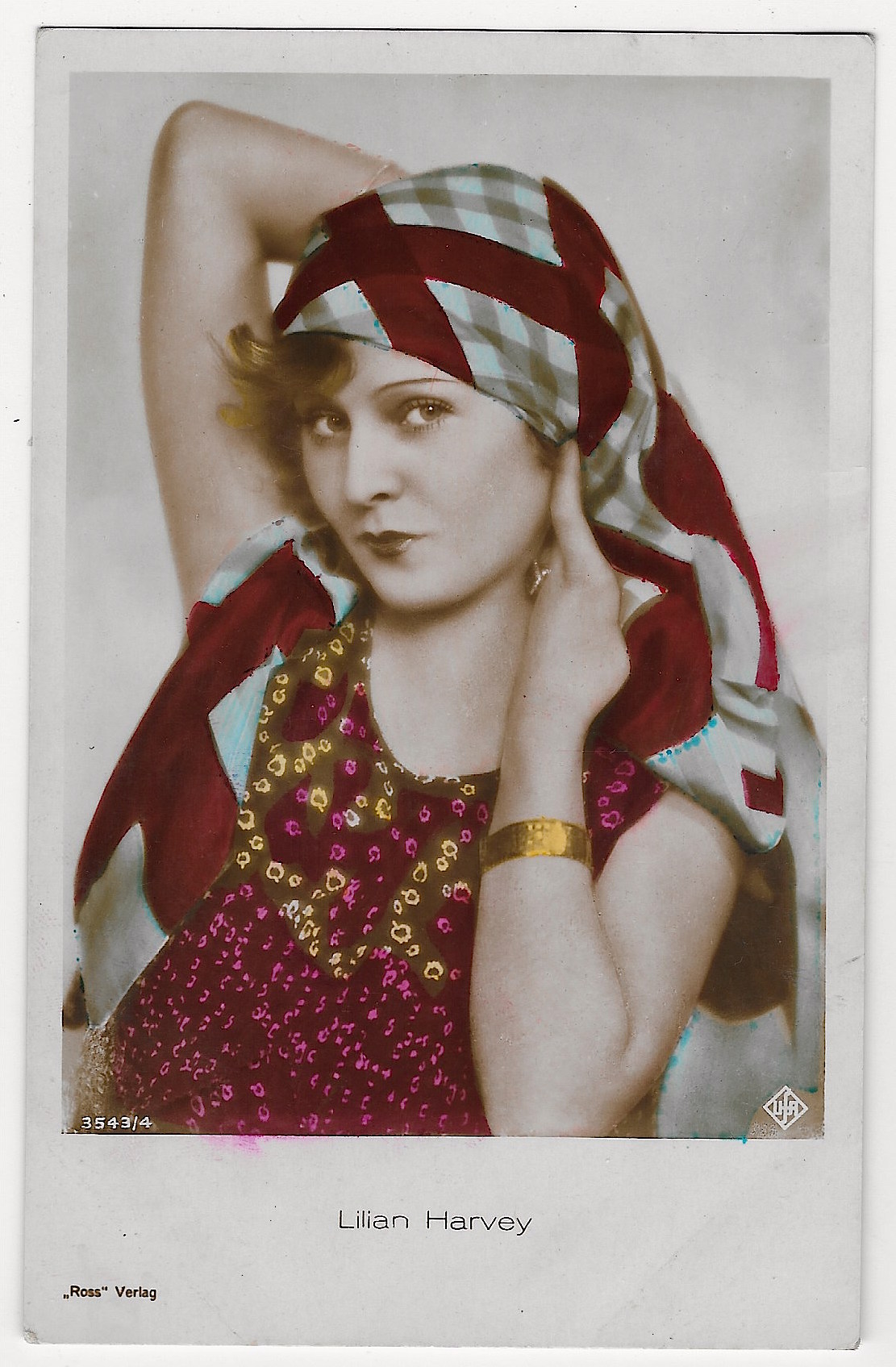
POSTCARD 6
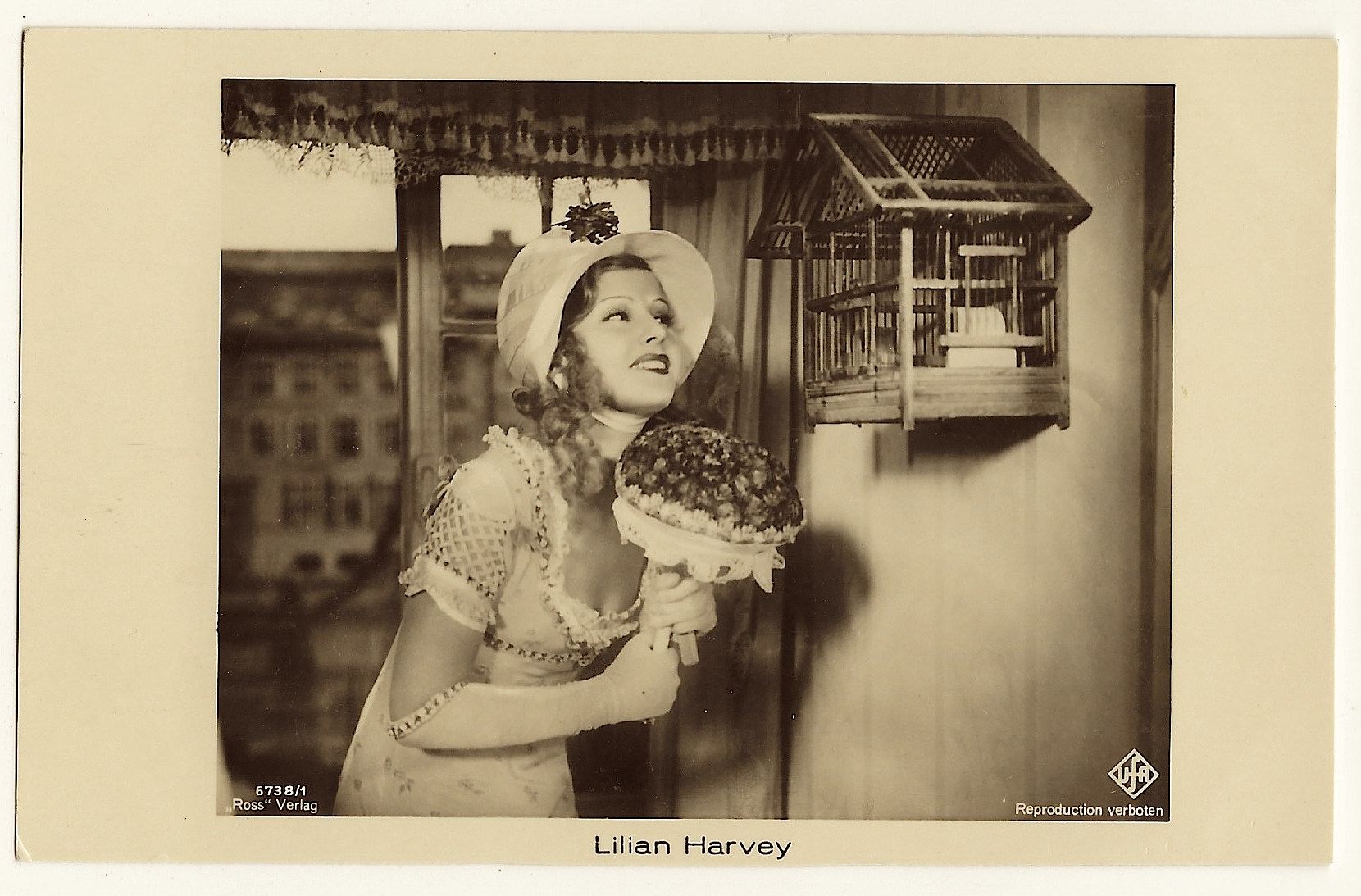
POSTCARD 7
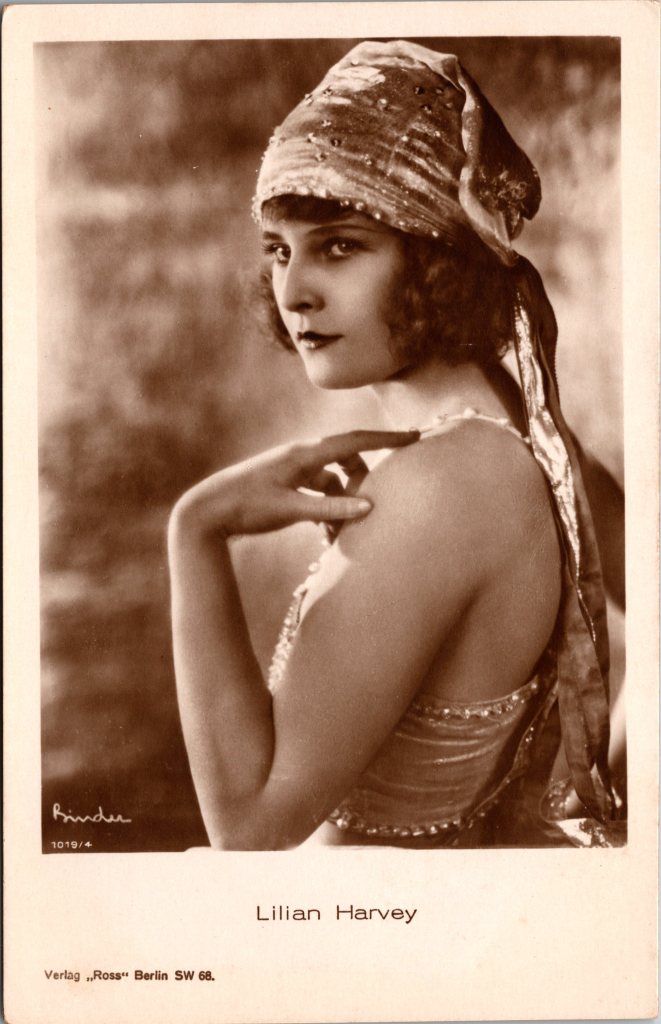 POSTCARD 8 (SOLD)
 POSTCARD 9
 POSTCARD 10
POSTCARD 11 (SOLD)

POSTCARD 12 (SOLD)
Real photo postcard #1 features Anglo-German actress and singer, Lillian Harvey (1906-1968). Her acting base was in Germany. Harvey was born in Hornsey, England to an English mother and a German father. During World War I her family was “trapped” in Magdeburg, Germany and Harvey was sent to live with her Swiss aunt. After the war she finished school in Berlin and than studied voice and dance at the Berlin State Opera. In 1924 she earned a role as a revue dancer in Vienna. This was followed by her first movie role which was in an Austrian film named “The Curse”. Thereafter, she starred in multiple silent films. Her first leading role was in “The Passion” (1925). Because of her voice training, Harvey was able to make the transition into “talkies”. She and actor Willy Fritsch became the “dream couple” of German movies. The pair acted together in eleven movies. In the 1930’s Harvey’s films appeared in both German and English and she became popular outside of Germany. She went to Hollywood and made four movies for the Fox Film Corporation (this postcard is from that period). In 1935, Harvey returned to Germany. She appeared in several more films and soon she was under the watchful eye of the Gestapo. Harvey had many Jewish friends in the film industry and she was supportive of them. By 1939, Miss Harvey was forced to leave Germany, leaving behind valuable real estate holdings. She went to France where, in 1940, she made two movies for director Jean Boyer. In 1943 she was stripped of her German citizenship because she had performed for French troops. When southern France was occupied by the Nazis in 1942, she emigrated to the United States. During the war she did some theatre acting and also worked as a homeside volunteer nurse. After the war, Harvey relocated to Paris. She went on a world tour as a singer and in 1949 made appearances in West Germany. She spent her retirement on the French Riviera (Antibes) where she had a souvenir shop and raised snails for escargot. Harvey was married one time. Her four year marriage to theater director Hartvig Valeur-Larsen ended in divorce. Eventually she settled down with her female partner Else Pitty Wirth (1907-2007). Interestingly, the two women are buried together in Antibes. The imdb gives Harvey 54 acting credits between 1925 and 1940. Interestingly, Lillian Harvey’s name is mentioned in Quentin Tarantino’s film “Inglorious Bastards” (2009). One of her songs is played on a phonograph and in addition one of the characters in the film mentions liking Harvey’s performance in a film and Joseph Goebbels becomes angry and insists her name never be mentioned in his presence. Click on the link below to hear the Lillian Harvey/Willy Fritsch duet used in the Tarantino movie. The 1936 song is titled “Ich Wollt Ich War Ein Huhn” (I Wish I Was A Chicken). Now would be a good time to discuss this postcard portrait of Miss Harvey. She is looking quite decorated in this photograph. She is wearing a garland of leaves in her hair, a very ornate necklace, a number of large bracelets, two giant rings, and a jeweled clasp on her dress near her cleavage. Note her very notable eye lashes. She is wearing a somewhat provocative dress and it is clear that the aim of the photographer is to emphasize Miss Harvey’s sexiness. The photographer and Miss Harvey succeeded in accomplishing this goal. The postcard was published by the German firm Ross Verlag and was part of a series (no. 8679/1). The postcard credits Fox films. SOLD
The second postcard (postcard 2) features Miss Harvey in a risque costume. She is showing a “lot of leg” which is quite provocative for her time. It is likely that this image captures her in one of her film roles. The postcard was published by Argenta, which was located in Munich, Bavaria. SOLD
The third postcard (postcard 3) presents Miss Harvey is a sexy pose. Note her dark gloves and large hoop earrings. The postcard was published by Ross Verlag and is part of a series (no. 4288/1). Note the advertising logo for the German film company UFA, located on the bottom right hand corner of the image. (SOLD)
The fourth postcard (postcard 4) showcases Lillian Harvey’s beautiful smile. Miss Harvey’s not quite plunging neckline was clearly aimed to add a bit of a risque element to the photograph. This postcard was published by Ross Verlag (Berlin) and is part of a series (no. 1019/2). This portrait was taken by the talented photographer, Alex Binder. The photographer of this terrific image was Alexander Binder (1888-1929). He had the largest photo studio in Europe during the late 1920’s and the 1930’s. Many of his entertainment star portraits appear on Ross Verlag postards. It is thought that Binder was of Swiss origin. He was of the Jewish faith. He studied engineering but did not complete his studies. From 1908 to 1910 he studied photography at a school in Munich, Germany. After the completion of his photography studies, he went to Berlin and in 1913 opened his first photography studio. Before long, he became one of the premier photographers in Berlin. He primarily focussed on fashion and celebrity photography. Since Berlin was the capital of the European film industry, Binder photographed all the stars of the European film industry including, Lilian Harvey, Conrad Veidt, and Lya De Putti. Many of his images were used in popular film portrait postcards. His photographs could be seen in postcards published by Ross Verlag and Photochemie. Binder died in 1929 but new photo cards bearing his signature continued to be published until 1937.
Buy this original Real Photo Postcard (includes shipping within the US) #2490
To purchase this item, click on the Pay with PayPal button below
$27.50
Buy this original Real Photo Postcard (includes International shipping outside the US) #2490
To purchase this item, click on the Pay with PayPal button below
$35.50
The fifth real photo postcard (postcard 5) features Miss Harvey wearing a bathing suit and sitting in a beach chair. Her shoes and stockings don’t seem very appropriate for the beach so it is a good thing that she is actually in a photographer’s studio and sitting in front of a beach backdrop. Obviously, the mission of the photographer was not to convince viewers that Miss Harvey was at the beach. The intent of photographer Alexander Binder was to present Lilian Harvey in a provocative and sexy pose. Mr. Binder certainly succeeded in accomplishing his goal. This photo postcard was published by Ross Verlag. (SOLD)
Postcard 6 featuring Miss Harvey, is published by Ross Verlag. The postcard is part of a series (no. 3543/4). She looks fantastic wearing her print dress and plaid long scarf. I’m not convinced the dress and scarf are matching, but her beauty overcomes any mismatch. As in Postcard #3, the logo for the German film company UFA, can be seen on the lower right hand corner of the image. This photo postcard is from the 1930’s and is in very good condition (see scans).
Buy this original Real Photo Postcard (includes shipping within the US) #2488
To purchase this item, click on the Pay with PayPal button below
$35.50
Buy this original Real Photo Postcard (includes International shipping outside the US) #2488
To purchase this item, click on the Pay with PayPal button below #2488
$43.50
Postcard #7 features Lillian Harvey leaning forward as she looks into a hanging bird cage. The photographer likely chose this pose to inject some sexuality into the image. The pose reveals a small amount of the actress’s cleavage. She is wearing a relatively low-cut dress for this time period. Print on the reverse of the postcard reveals that the photograph of Miss Harvey comes from the film “Congress Dances” (1931). Her costar in the film was Willy Fritsch. The postcard was published by Ross Verlag and is part of a series (no. 6738/1). On the right hand bottom corner of the postcard is the logo for “UFA”, a German film company. This postcard is in excellent condition.
Buy this original Real Photo Postcard (includes shipping within the US) #2520
To purchase this item, click on the Pay with PayPal button below
$28.00
Buy this original Real Photo Postcard (includes International shipping outside the US) #2520
To purchase this item, click on the Pay with PayPal button below
$36.00
Postcard 8 was photographed by Alexander Binder and published by Ross Verlag as part of a series (no.1019/4). Ballerini & Fratini (Florence, Italy) are credited on the reverse of this postcard. (SOLD)
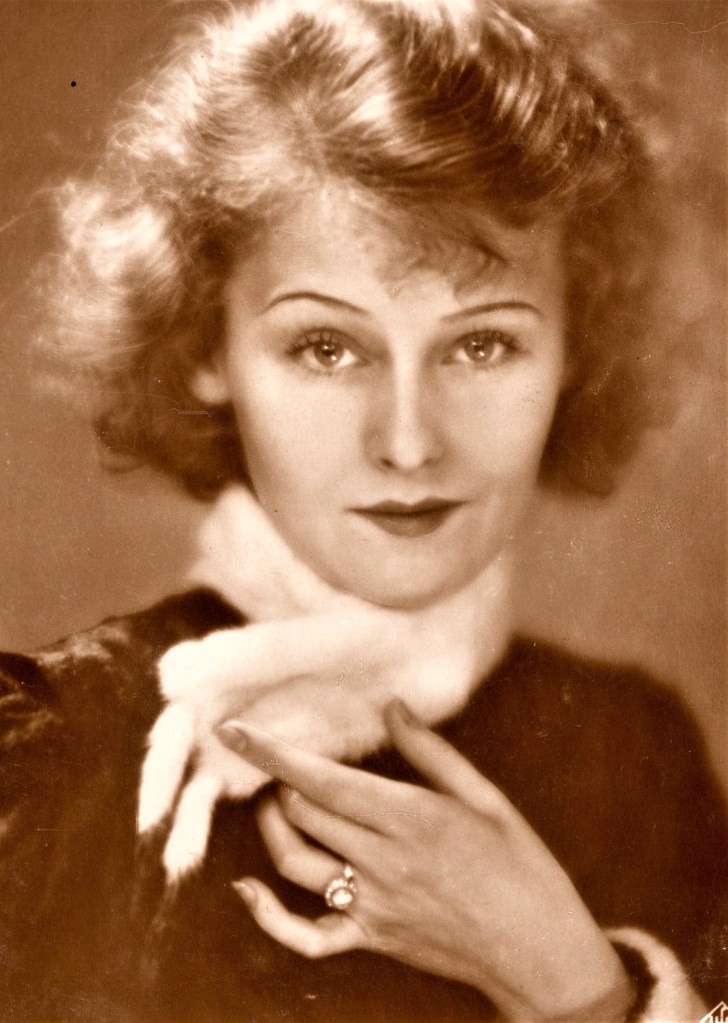
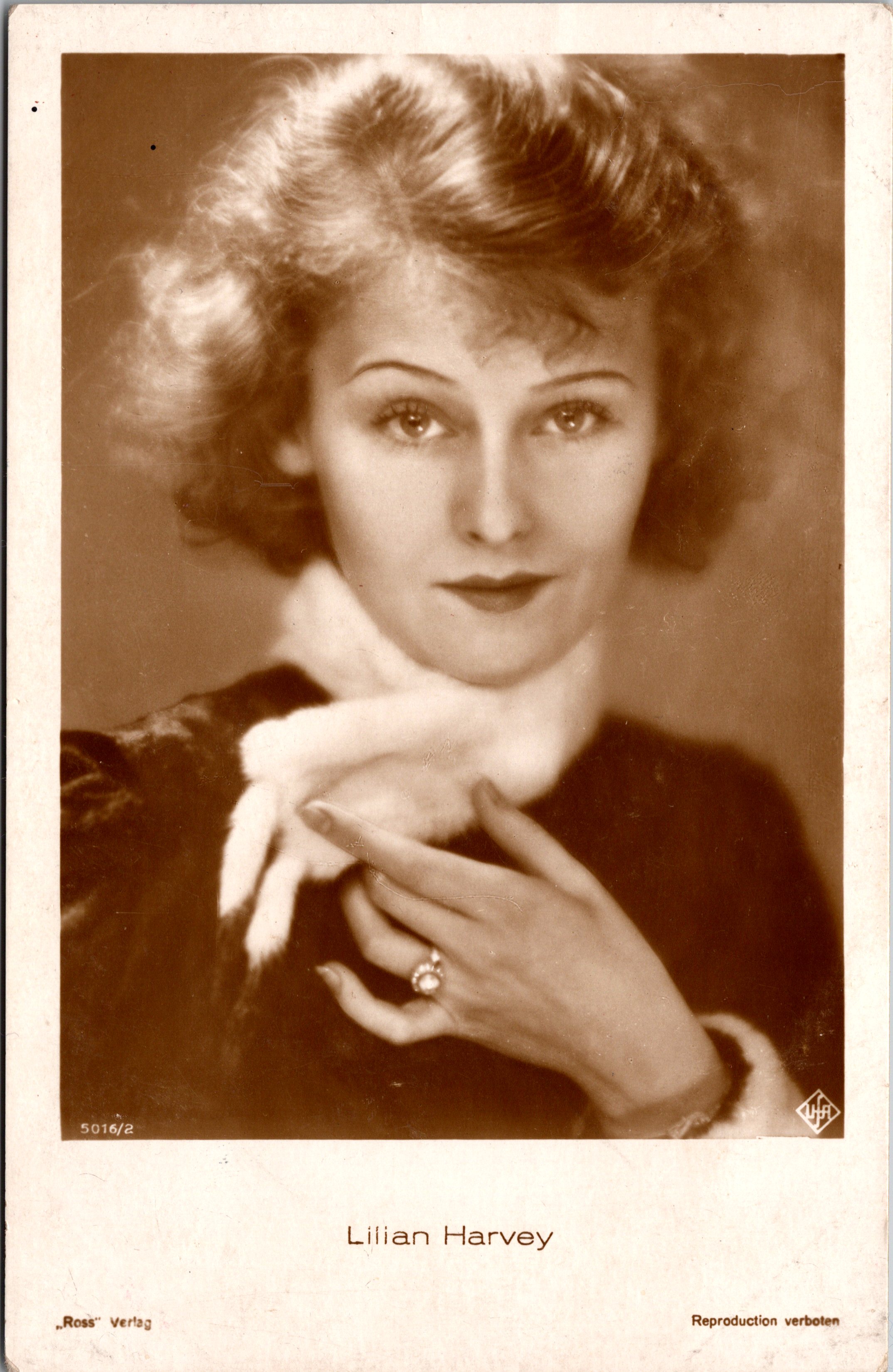
Postcard 9 offers a pretty portrait of Lilian Harvey that was published by Ross Verlag as part of a series (no.5016/2). Note the logo for UFA, the German film company, in the bottom right hand corner of the image. This vintage postcard is in very good conditon (see scans).
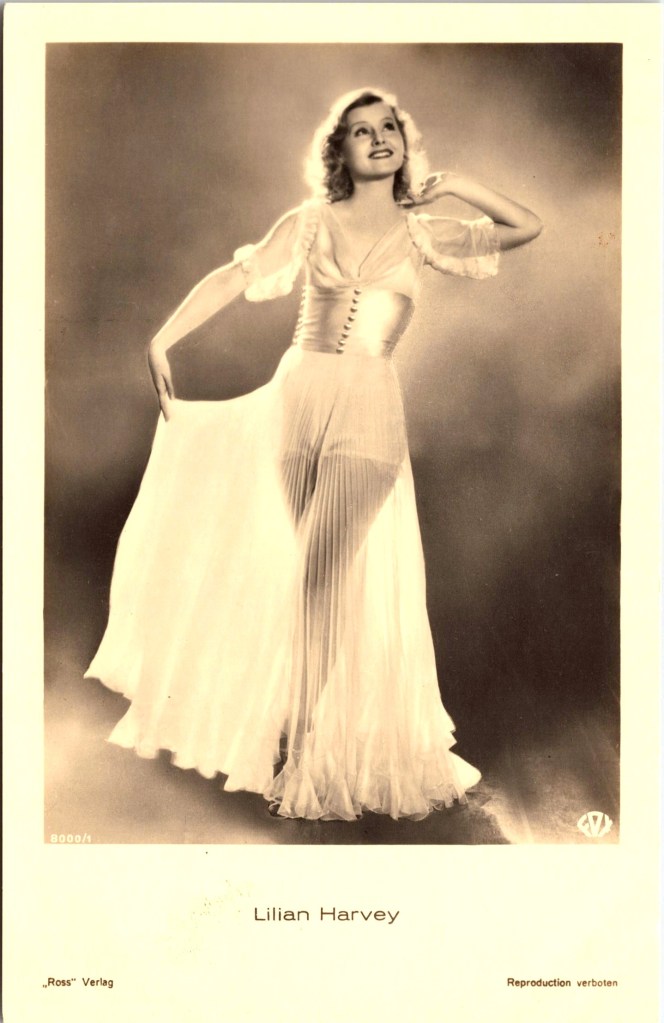
Postcard 10 is meant to be risque. Harvey is wearing a provocative dress and it is clear that the aim of the photographer is to emphasize Miss Harvey’s sexiness. The photographer and Miss Harvey succeeded in accomplishing this goal. This card has the logo of Fox Films. She made four films for the company beginning 1931. Lillian Harvey was a popular postcard model and there are many postcard images of her in existence. However, this particular card is very uncommon and one of the more suggestive photographs of Miss Harvey published on a postcard. This postcard portrait was published by Ross Verlag (Germany) as part of a series (No.8000/1). SOLD
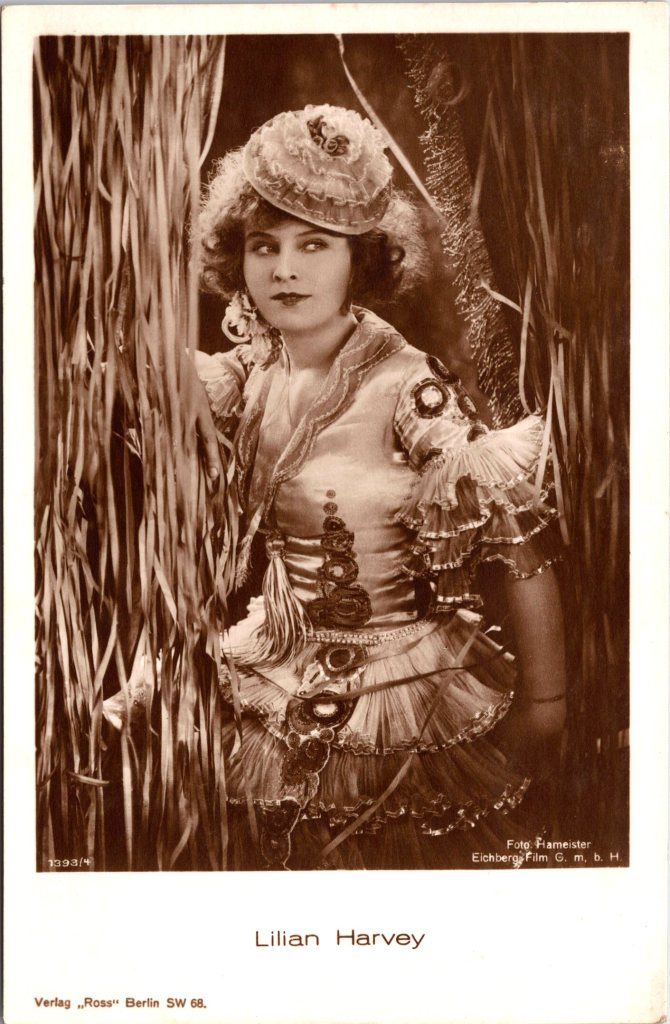
Postcard 11 was published by the German firm Ross Verlag and was part of a series (no. 1393/4). Eichberg Films is credited on the bottom right hand corner of the image. The company was located in Germany. Richard Eichberg was a moderately successful actor who became a director/producr in 1915. (SOLD)
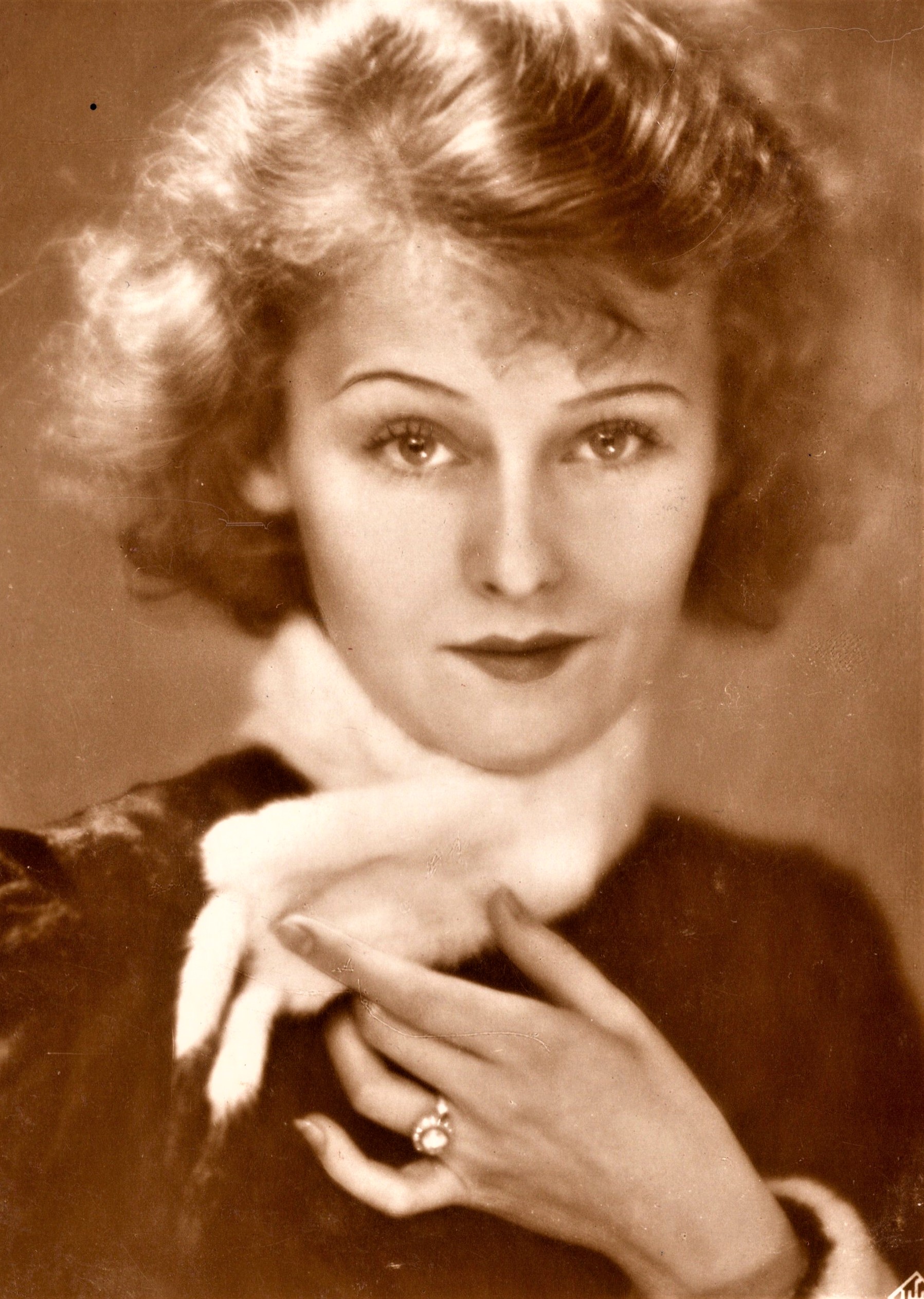
Postcard 12 was published by the German firm Ross Verlag and was part of a series (no. 8679/1). She is posed in a bit of a provocative pose and is smoking a pipe. This postcard portrait was photographed by H. Gartner and published by Ross Verlag as part of a series (no.1529/1). Eichberg Films is credited on this postcard. Richard Eichberg (1888-1952) began his career as an actor but became a succssful film director and producer in the German film industry. He directed 87 films and produced 77 films. (SOLD)
Buy this Real Photo Vintage Postcard (includes shipping within the US) #5112
To purchase this item, click on the Pay with PayPal button below
$15.79
Buy this Vintage Real Photo Postcard (includes International shipping outside the US) #5112
To purchase this item, click on the Pay with PayPal button below
$25.04
POSTCARD 13
POSTCARD 14 (SOLD)
POSTCARD 15 (SOLD)
POSTCARD 16 (SOLD)
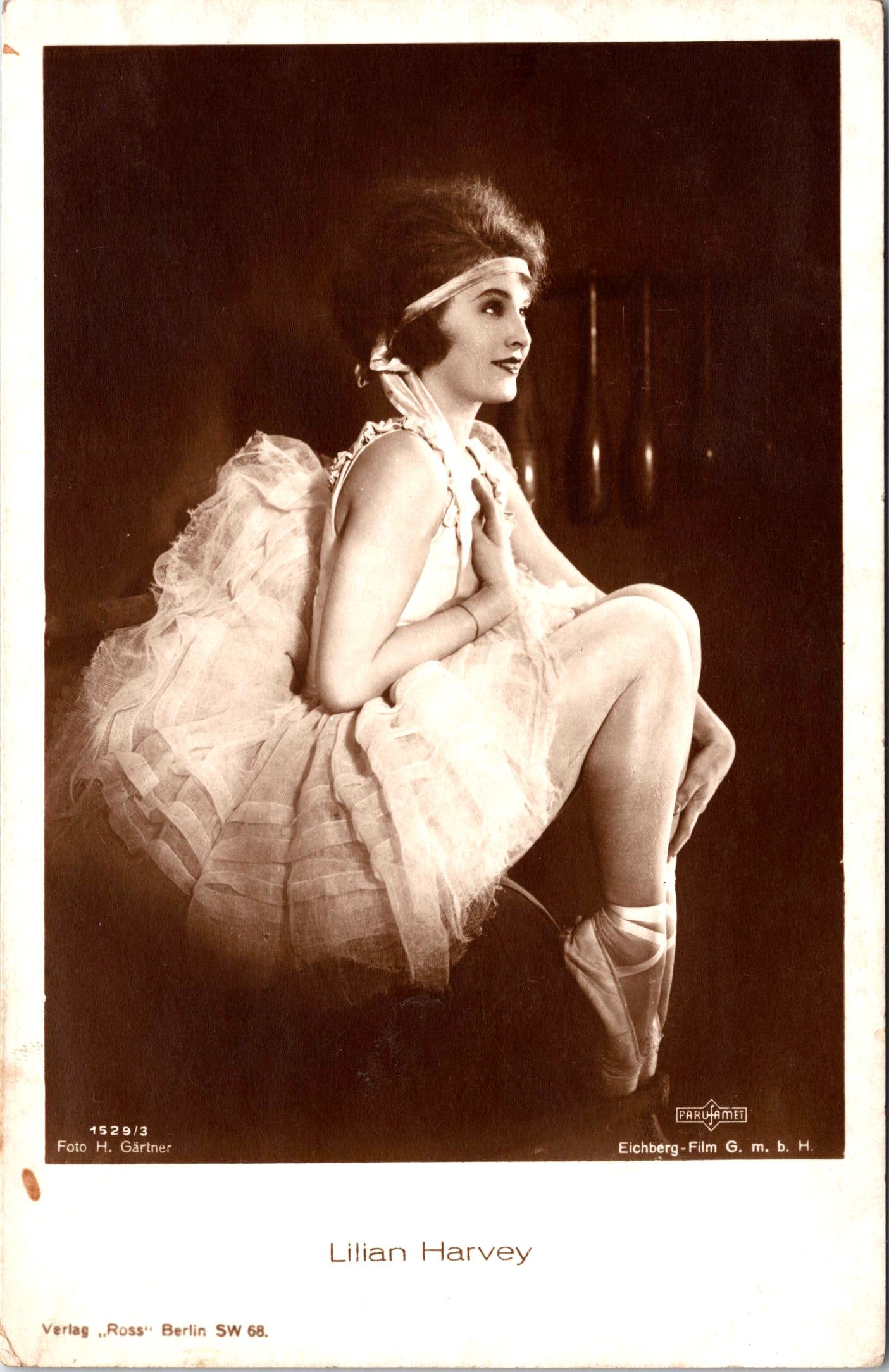
Postcard 13 was published by Ross Verlag and features Miss Harvey posed in a provocative manner. This postcard has a French stamp and was postmarked in 1929 in Paris, France. (SOLD)
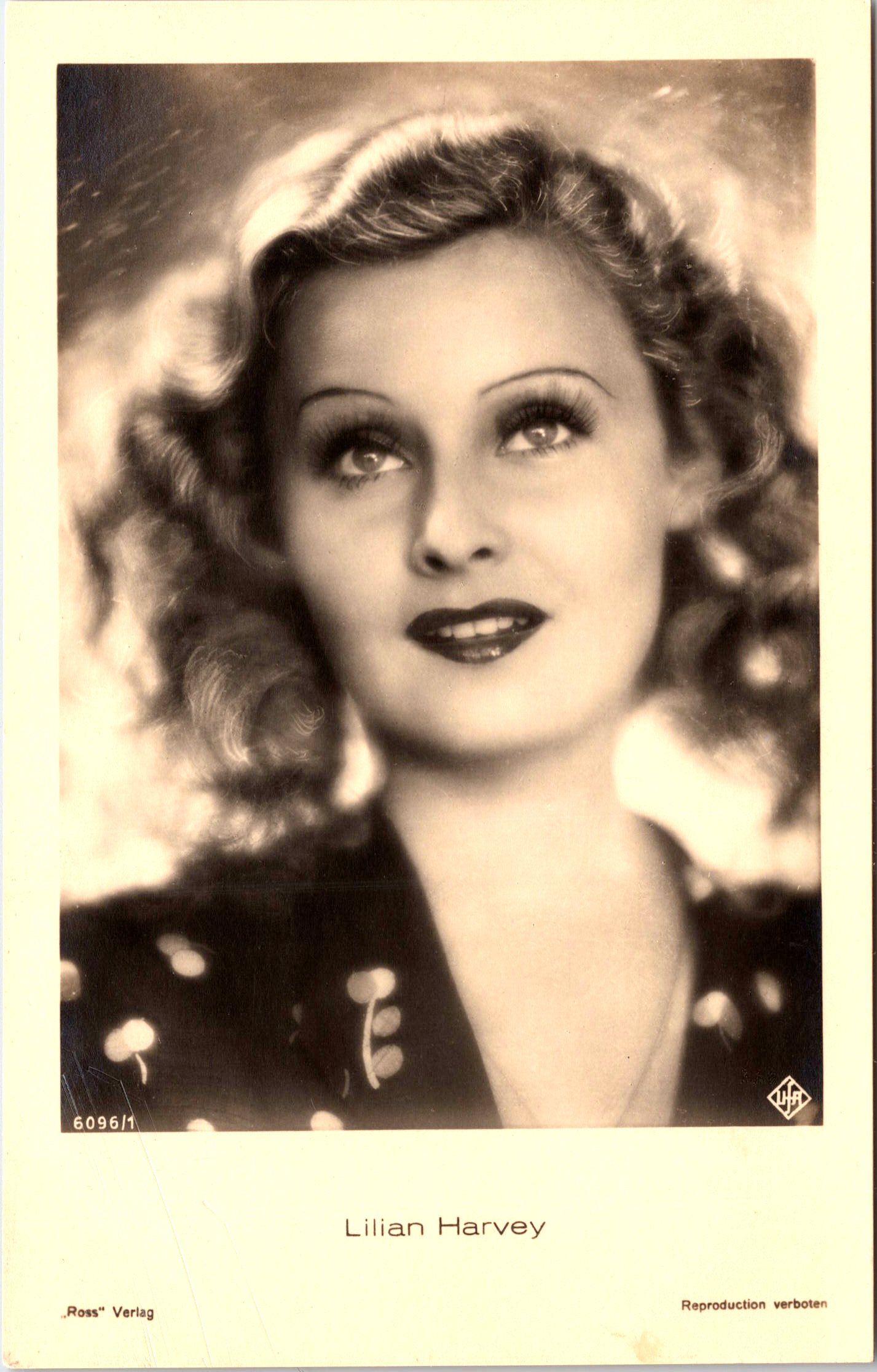
Postcard 14 was published by the German firm Ross Verlag and was part of a series (no. 6096/1). UFA Films is credited on the bottom right hand corner of the image. The company was located in Germany. SOLD
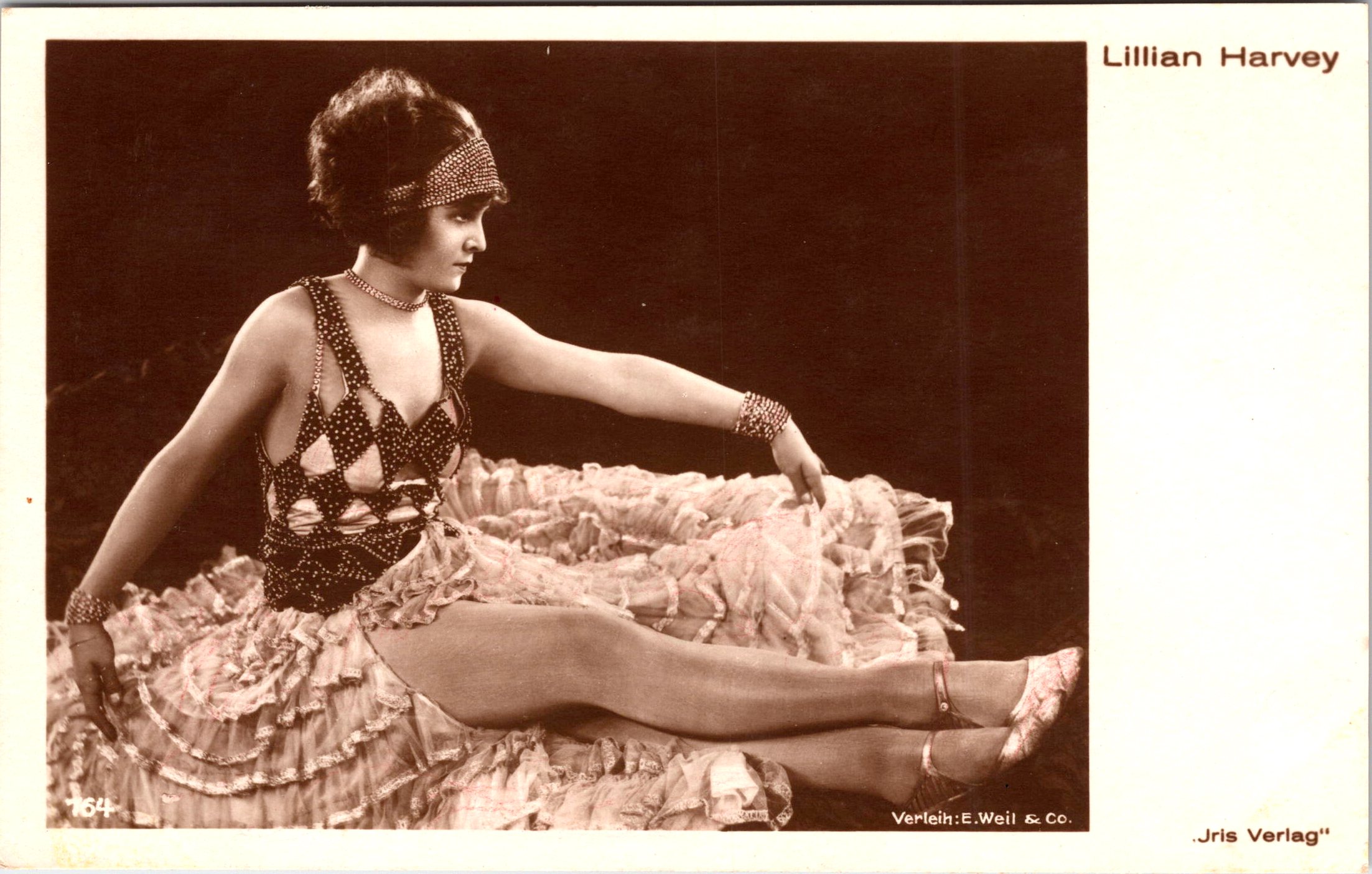
Postcard 15 shows Lillian Harvey wearing a ballerina costume and it is clear that the aim of the photographer is to emphasize Miss Harvey’s sexuality. The photographer and Miss Harvey succeeded in accomplishing this goal. The postcard was published by the Austrian firm Iris Verlag and was part of a series (no.764). Iris Verlag in Vienna was the most important Austrian publisher of film star postcards. The photographer of this portrait was E. Weil & Co. SOLD
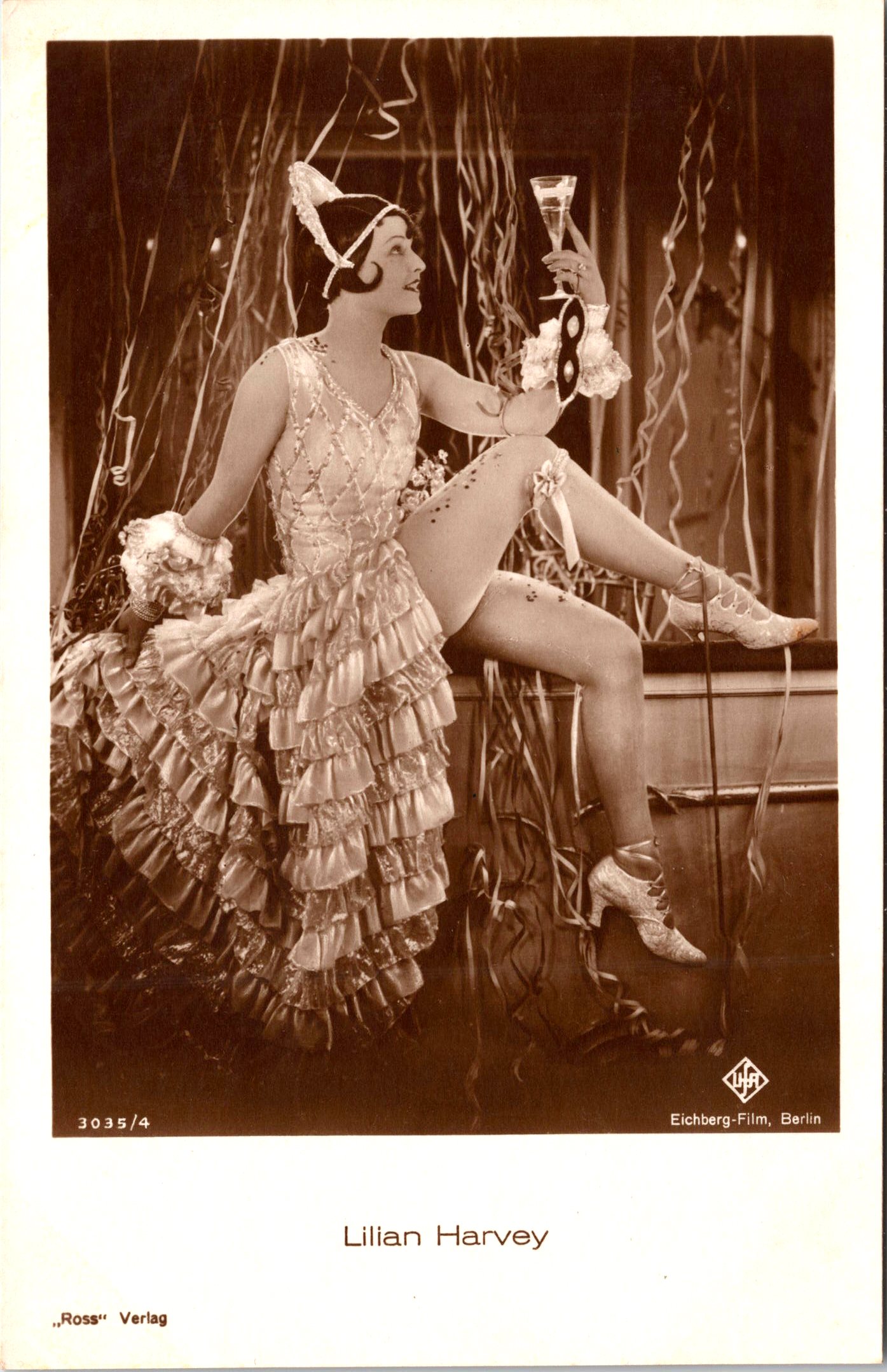
Postcard 16 was published by Ross Verlag. It was part of a series (no.2033/1). The postcard has the logo of “Fanamet” in the lower right hand corner of the image. “Fanamet Films” was an Austrian film distribution company. The logo for “First National Pictures” is located on the bottom left hand corner of the image. First National Pictures was an American motion picture production and distribution company. The company was founded in 1917 as a theater chain. It then began distributing movies and in 1924 it began producing films. In 1929 the company was absorbed by Warner Brothers. (SOLD)

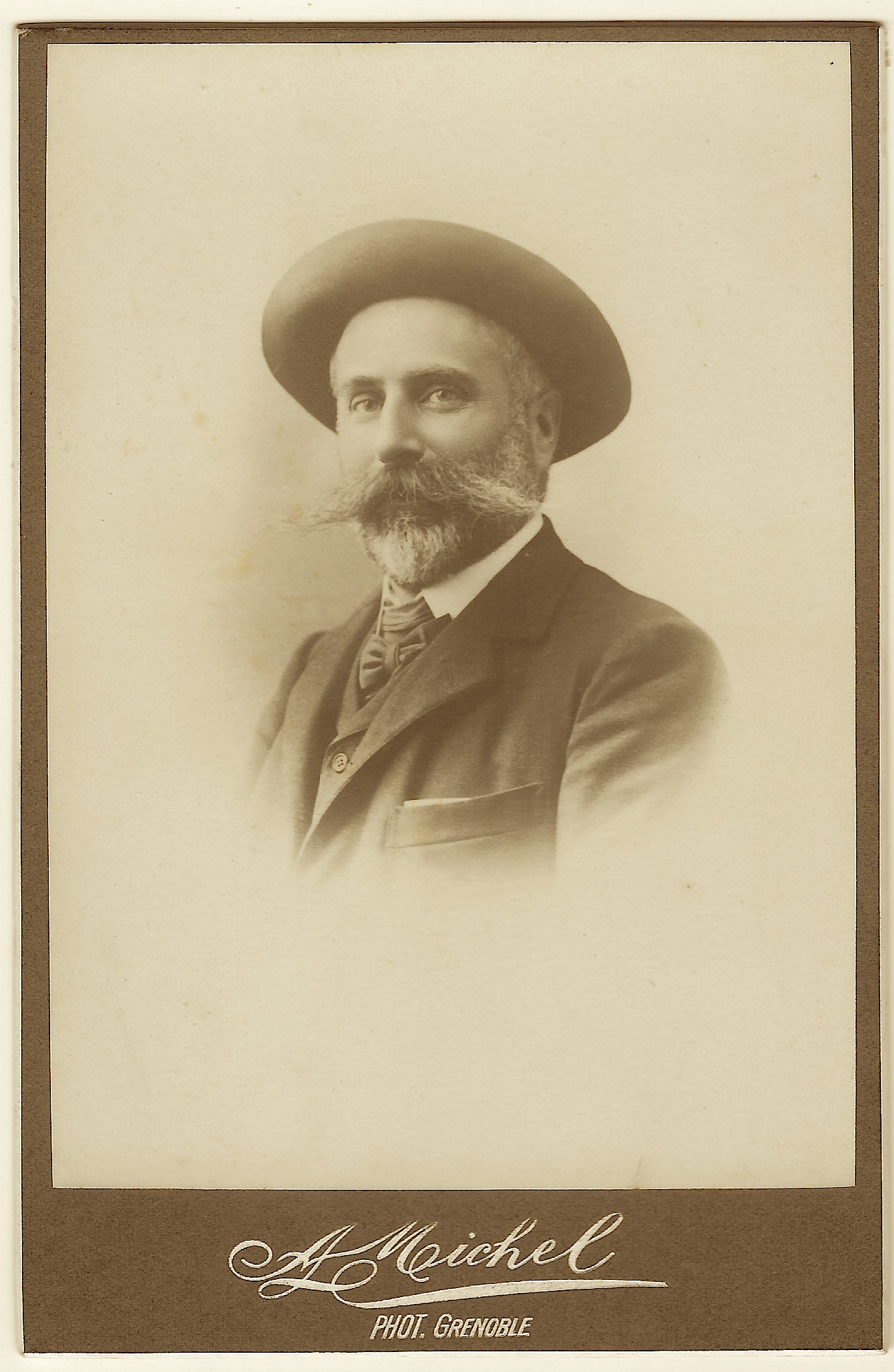
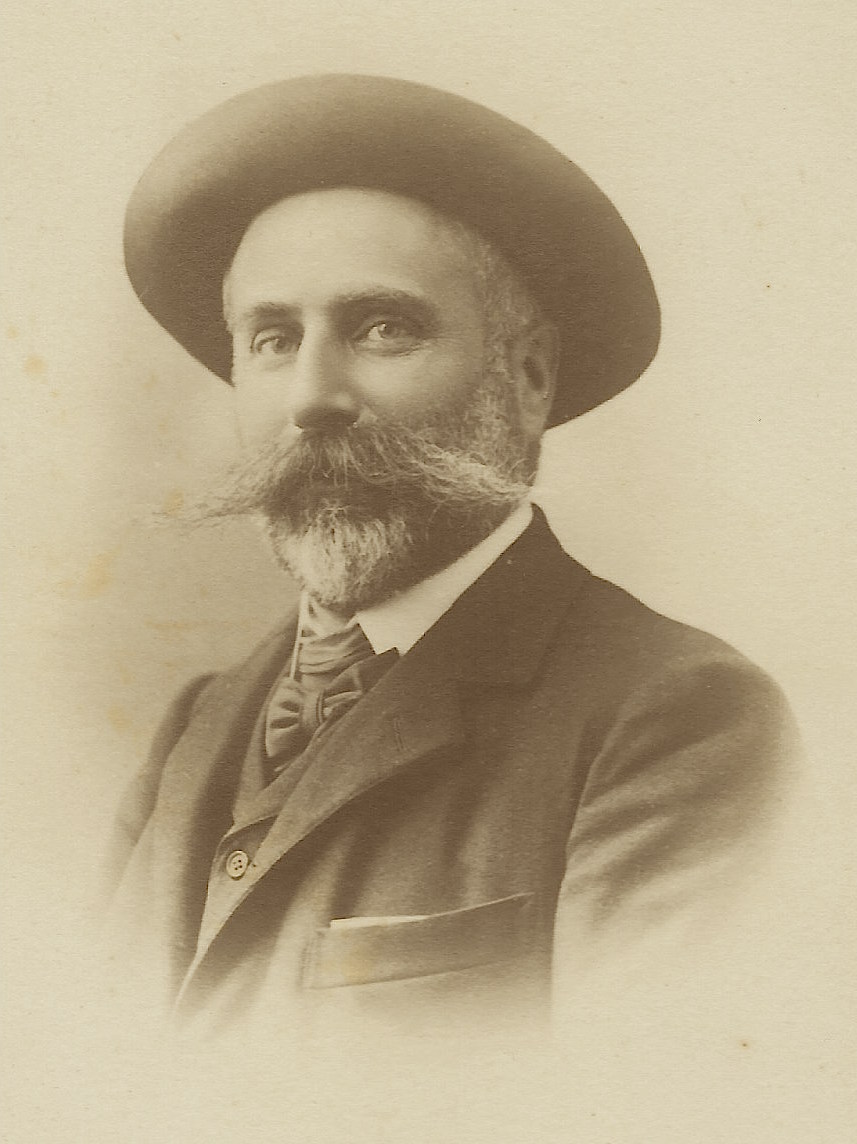 This cabinet card photograph features a dapper older man with an exquisite mustache. The gentleman’s impressive mustache may be one of the widest mustaches that I have ever seen. He has a sparkle in his eyes but it is impossible to ascertain if he is smiling because his lip sweater is blocking our view. The photographer of this cabinet card portrait is A. Michel. He operated a studio in Grenoble, France. Grenoble is in the Auvergne-Rhone-Alpes region of southeastern France. It is known as a center for winter sports. Advertising on the reverse of the cabinet card indicates that Maichel won a medal at an exhibit in Marseille in 1897. The gentleman in the photograph is identified on the verso as Gabriel Lucas. This portrait was likely taken circa 1900. SOLD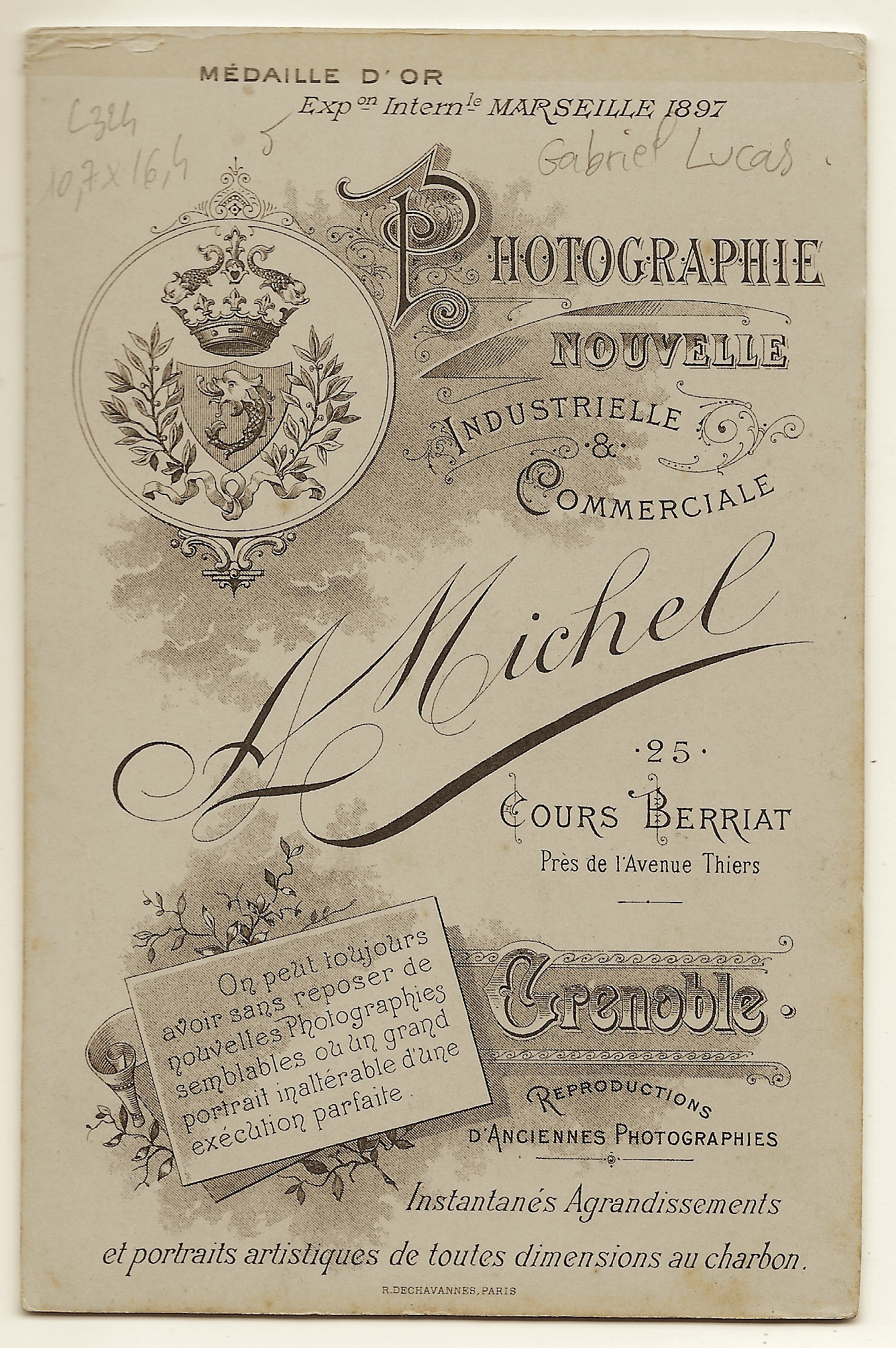
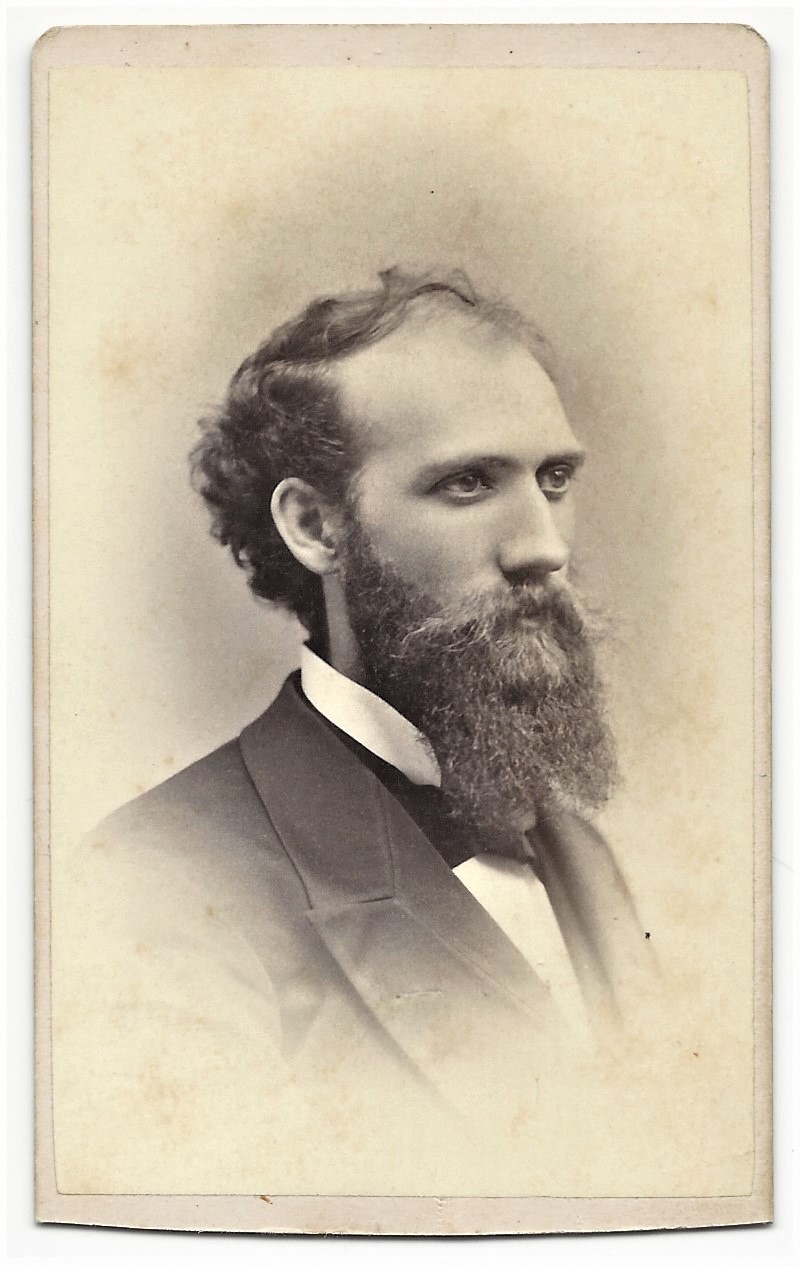 This carte de visite portrait features a well-dressed and distinguished looking gentleman posing for his portrait at the Crosby studio in Lewiston, Maine. He has piercing eyes and a wiry beard and mustache. The photographer of this image is A B Crosby (1836-1879). Crosby worked alone during his career but he was also involved in two partnerships. He had a brief partnership with George W Barnes in Topsham, Maine. He also was in business in Lewiston with C W Curtis. Both of these business relationships occurred in the 1870’s. The earliest record I could find of Crosby working as a photographer was in an 1864 Lewiston business directory. Crosby’s life was cut short when he succumbed to brain disease at the age of 43. He was married at the time of his death. I have seen a number of Crosby’s photographs and it is clear that he was a talented lensman. SOLD




 THE CABINET CARD GALLERY