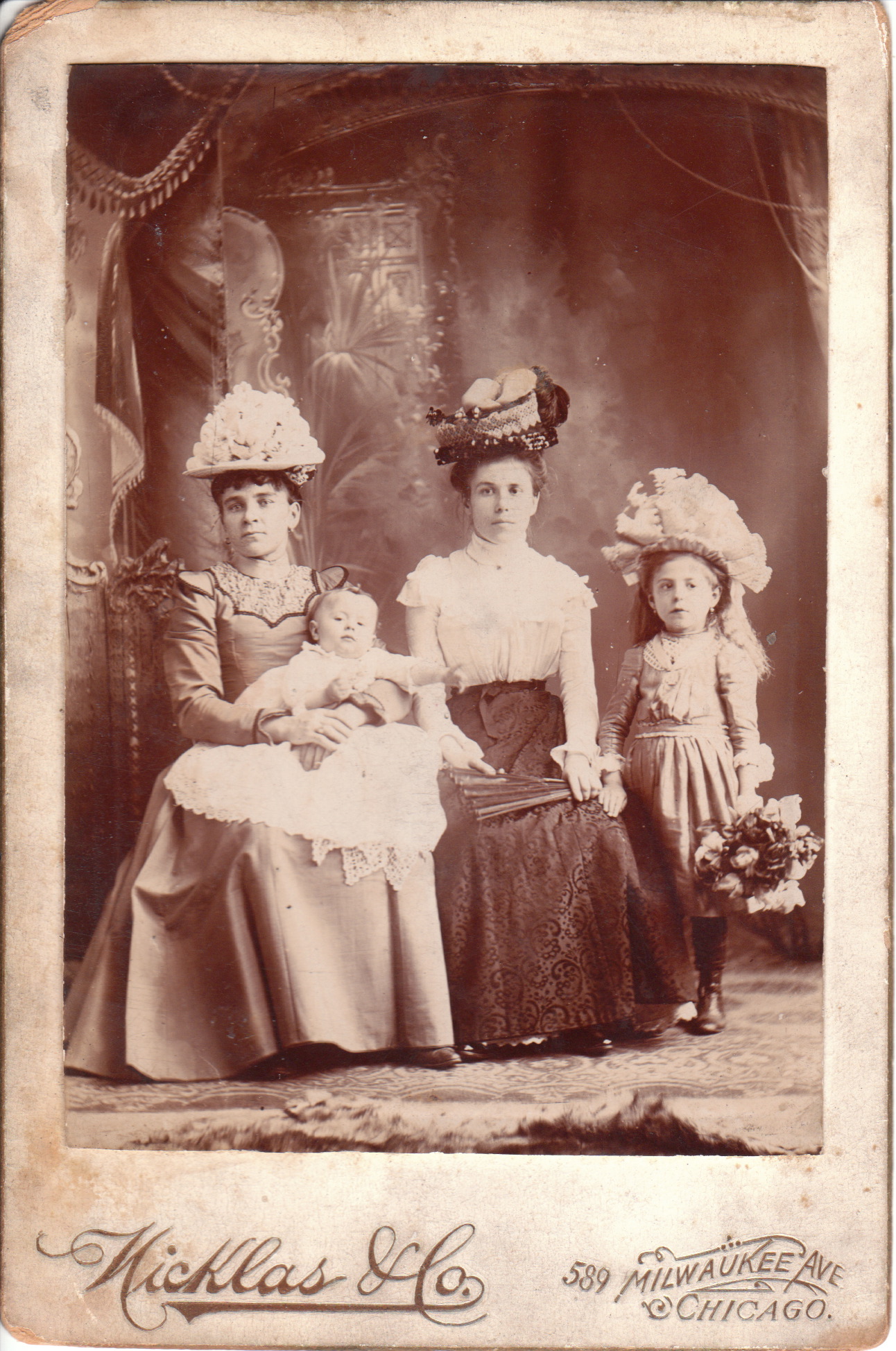
TWO WOMEN, TWO DAUGHTERS, AND THREE WILD HATS IN CHICAGO, ILLINOIS

Two young woman and two children pose for their portrait at the studio of Nicklas & Co. in Chicago, Illinois. The women and oldest child are wearing very complicated decorative hats. One woman is holding a fan on her lap and the oldest child is holding a basket of flowers. Wild hats were clearly the rage during the time of this photograph.  SOLD

Published in: on November 20, 2025 at 12:00 pm  Leave a Comment  
Tags: , ,

LILLIAN GISH : PRETTY SILENT FILM STAR : D W GRIFFITH : RPPC

POSTCARD 1 (SOLD)

POSTCARD 2 (SOLD)

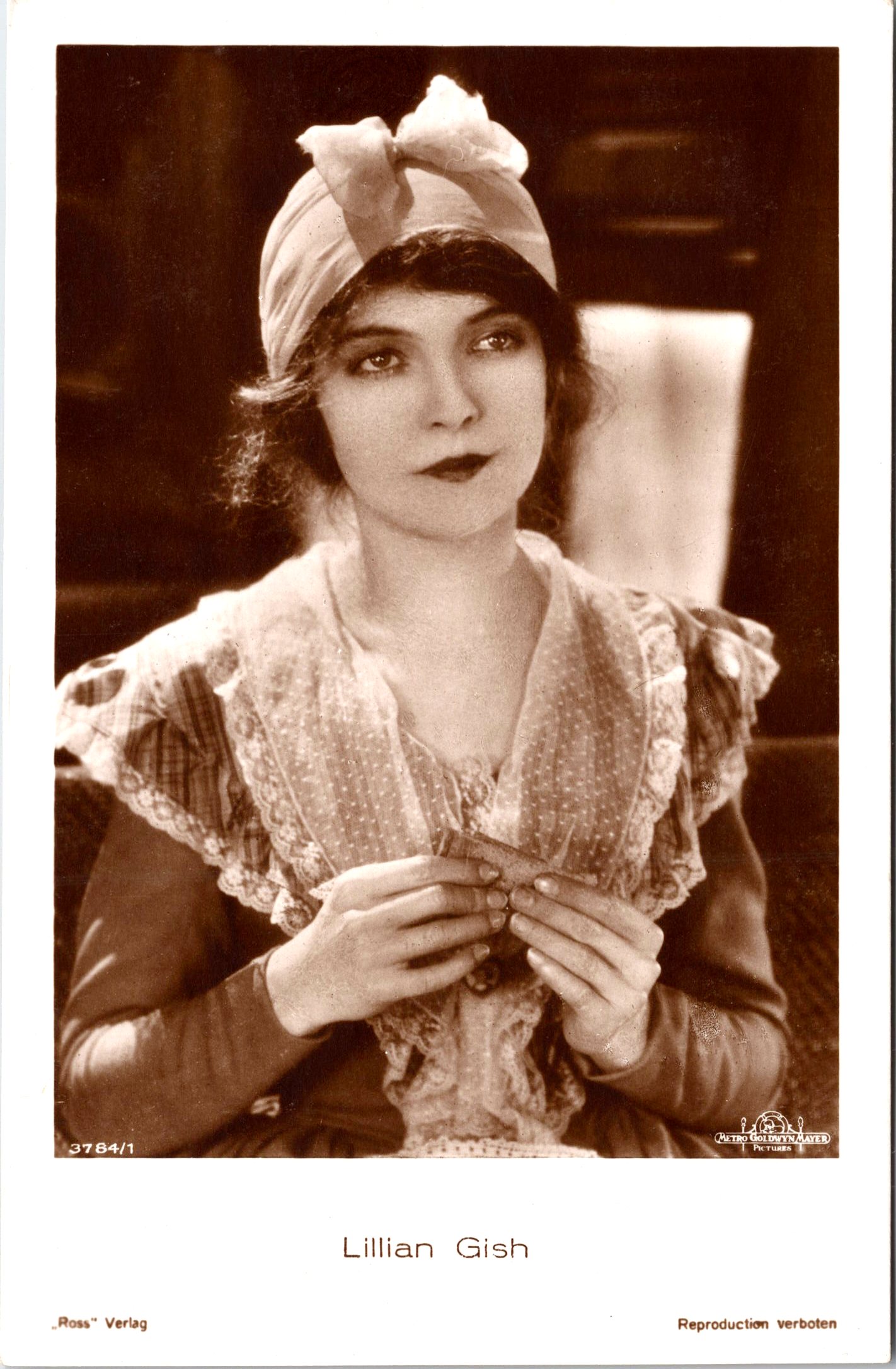
Postcard 1 features American actress, Lillian Gish (1893–1993). She is considered one of the pioneering figures in early cinema. Born in Springfield, Ohio, Gish began her career on the stage alongside her sister, Dorothy, but soon transitioned to film, where her delicate features and expressive acting made her a favorite of directors during the silent film era. In 1912, Gish joined legendary director D.W. Griffith, becoming his protégé and collaborating with him on groundbreaking films like The Birth of a Nation (1915), Broken Blossoms (1919), and Way Down East (1920). These films cemented her reputation as a leading lady, often playing roles that emphasized innocence and emotional depth. She was known for her meticulous attention to the art of acting. She helped establish the art of screen acting, emphasizing subtlety and naturalism at a time when film was still evolving away from theatrical exaggeration. She was a versatile actress, adapting well to various roles, from delicate heroines to more complex characters, and her commitment to authenticity often saw her enduring extreme conditions on set, like filming in freezing temperatures and performing her own stunts. When silent films gave way to “talkies” in the late 1920s, Gish transitioned gracefully, though her popularity declined as she aged and Hollywood’s focus shifted to younger stars. Still, she continued acting, taking on character roles and even appearing on television. One of her most memorable later performances was in The Night of the Hunter (1955), a film now regarded as a classic. In addition to her acting career, Gish became a vocal advocate for film preservation and the legacy of silent cinema. She gave lectures on the subject. Her work won her numerous accolades, including an honorary Academy Award in 1971, and she remained active in the industry well into her later years. Gish’s career spanned over 75 years, and she is remembered as an icon who bridged the silent and sound eras, leaving an indelible impact on American cinema. Lillian Gish, though a public figure, led a private and often solitary personal life. She was born on October 14, 1893, in Springfield, Ohio, to James Leigh Gish and Mary Robinson McConnell. Her early life was marked by hardship; her father abandoned the family when she was young, leaving her mother to support Lillian and her younger sister, Dorothy. Her mother opened a candy store in New York City, where the family eventually settled, and the two sisters began acting in theater to help support the family financially. Lillian and Dorothy were close throughout their lives, frequently working together in theater and film. Lillian took on the role of family protector and provider from a young age. Though she later became one of the most celebrated actresses of her time, Lillian remained deeply committed to her family, often prioritizing family relationships over romantic entanglements. She never married and had no children, believing that marriage and family life might interfere with her career. However, she did have close friendships with several prominent figures in Hollywood, including her frequent collaborator, director D.W. Griffith, with whom she shared a professional and deeply loyal relationship. There were rumors of a romance with Griffith, though Gish maintained that their relationship was strictly professional. Other rumored suitors included producer Charles Duell and critic George Jean Nathan, yet she largely avoided the spotlight when it came to romance. She valued independence and often expressed a desire to avoid the constraints she felt marriage could impose on her creative pursuits. In later life, she lived with her sister Dorothy until Dorothy’s death in 1968, a loss that deeply affected her. In her final years, Gish continued to work in the entertainment industry and to honor the legacy of silent cinema. She died in 1993, at the age of 99, leaving behind a remarkable career and a life dedicated to her art, family, and the preservation of film history.

Postcard 1 : The logo for Metro Goldwyn Mayor Films can be seen in the lower right corner of the image. This postcard was published by Ross Verlag (Berlin) as part of a series (No.3784/1). (SOLD)

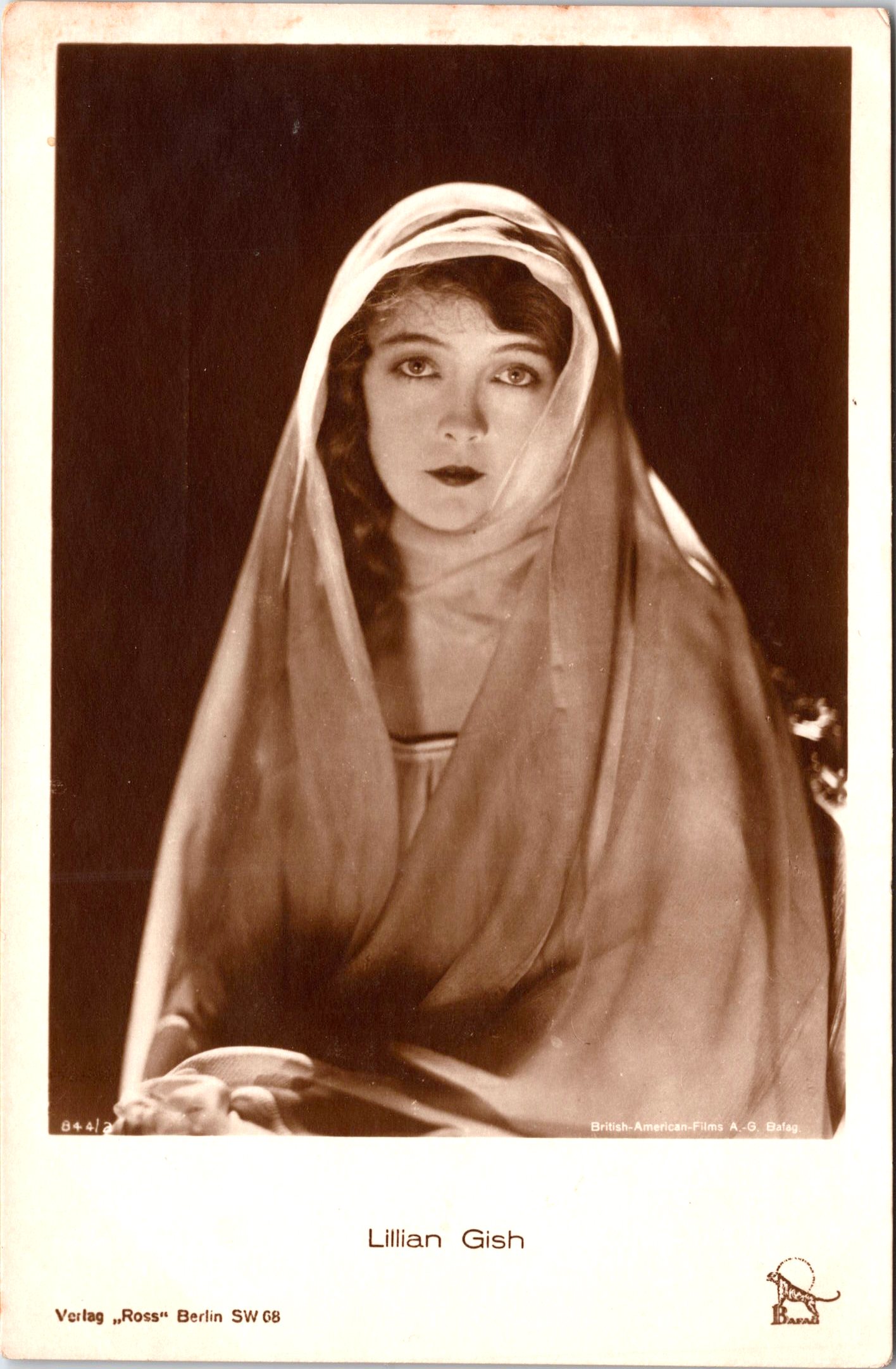
Postcard 2 : This postcard portrait was taken in 1923. LIllian was 30 years old and the photo shows her as she appeared in the film “The White Sister”. This 1923 silent drama film co-starred Ronald Coleman. The logo for British American Films can be seen in the lower right corner of the image. This postcard was published by Ross Verlag (Berlin), is (844/2) in a series. SOLD

POSTCARD 1

POSTCARD 2
LYA MARA : GERMAN SILENT FILM STAR : PRODUCER FREDERIC ZELNICK’S WIFE : RPPC

This vintage real photo postcard features German silent film star, Lya Mara (1897-1960). She was born in Latvia. Mara was trained as a ballerina. She was a stage performer before World War I. Her rise to fame was rapid and her career spanned a number of continents. Her first film in Germany was in 1918. It was produced by renowned producer, Frederic Zelnick, whom she married in 1918. Zelnick promoted her into major stardom. Her popularity in film was illustrated by the hundreds of photographs of her produced into postcards, cigarette cards, and trade cards. She had exotic looks, expressive eyes, and ability to convey complex emotions non verbally. These attributes made her perfect for appearing in silent films. In film she displayed a combination of sex appeal and naivety. A serious car accident in the 1920’s interrupted her career. At the end of the 1920’s she appeared in a number of Austrian films. She was unsuccessful in making the transition into sound films. In 1933, with Hitler in power, Zelnick and Mara hightailed it to London. She spent the last years of her life in Switzerland. Her long filmography spans from 1916 to 1931. This postcard was published by Ross Verlag as part of a series (No.1218/3). Mara’s photograph was taken by Ernst Schneider. He was considered to be one of the most celebrated studio photographers in Berlin during three decades (1900’s, 1910’s, 1920’s. He photographed many celebrities from the world of theater, opera, circuses, and film. He was also one of the most prominent fashion photographers in Berlin. In addition, he was well known for his nude photography and he published books showcasing his work in this domain. Sometime around 1908 Schneider began working with postcard publishers “Rotophot” and “Neue Photographische Gesellschaft” (NPG). In 1919 he began working with Ross Verlag. (SOLD)

PORTRAIT OF TWO PRETTY FASHIONABLE YOUNG LADIES (TINTYPE)

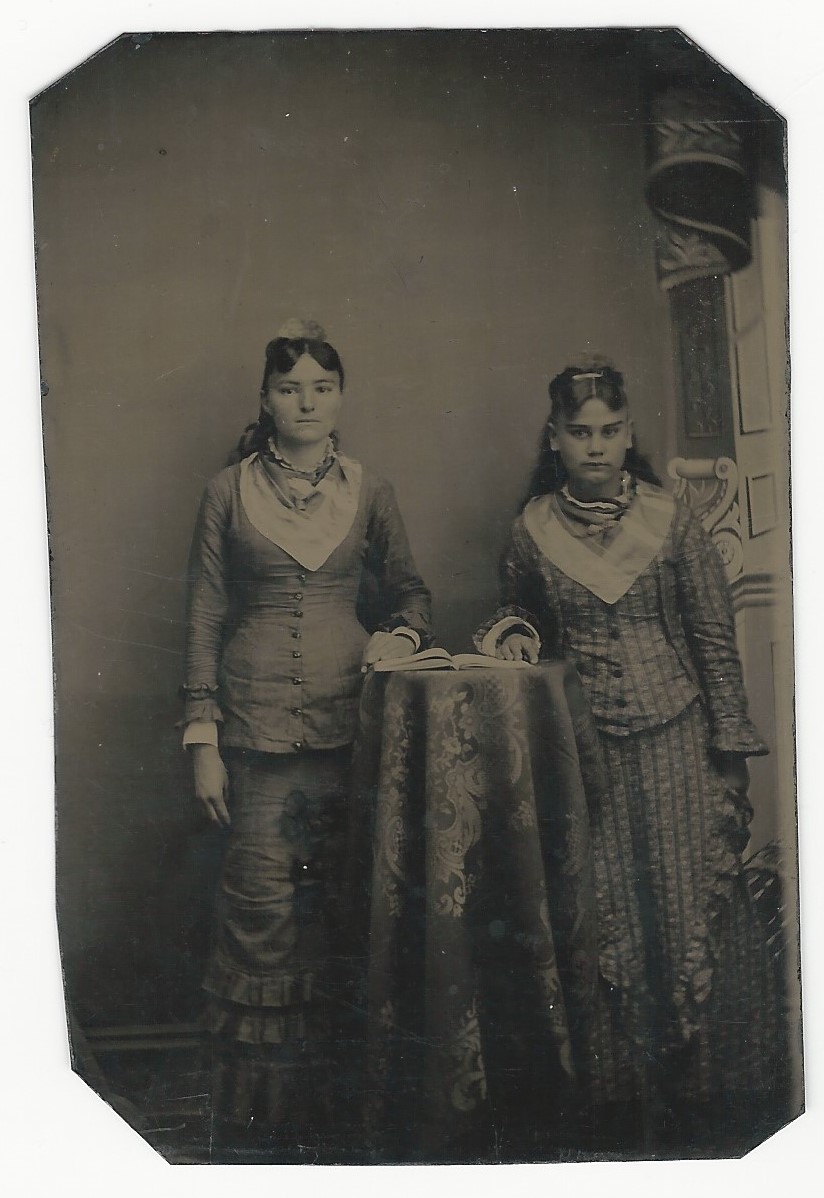
This tintype features two lovely fashionable young ladies. The photo is highly detailed. You can see the wrinkles on their beautiful dresses. The tintype also has excellent clarity, which can be noted by how easy it is to read the expressions on the young women’s faces. Tintypes were popular in the 1860’s and 1870’s. Over time, they were replaced by Carte de Visites and Cabinet Cards This tintype image measures about 2 1/2″ x 3 7/8″.

Published in: on November 17, 2025 at 12:00 pm  Leave a Comment  
Tags:

FEODORA : PRETTY PERFORMER : RISQUE : RPPC : 1907

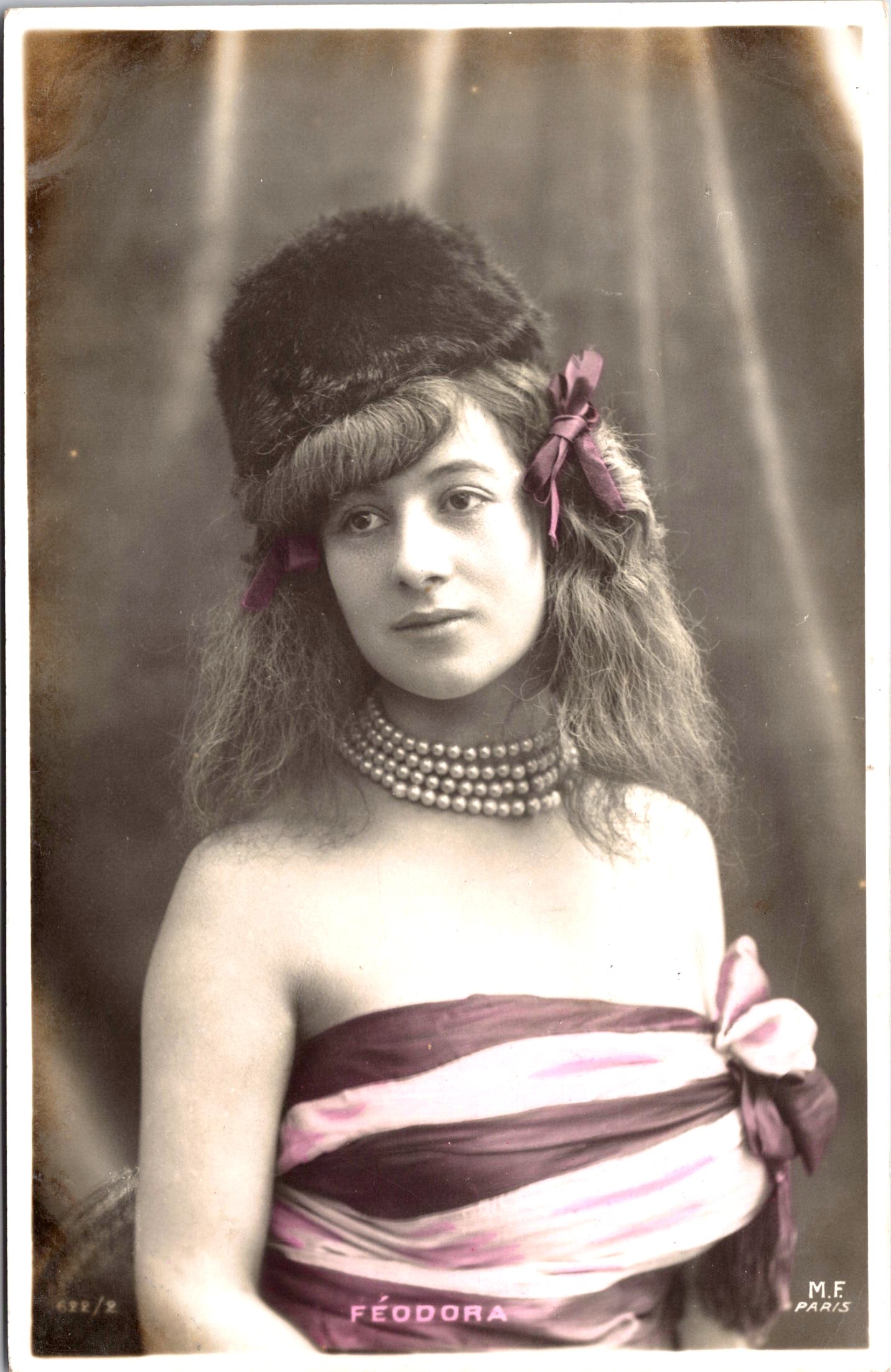
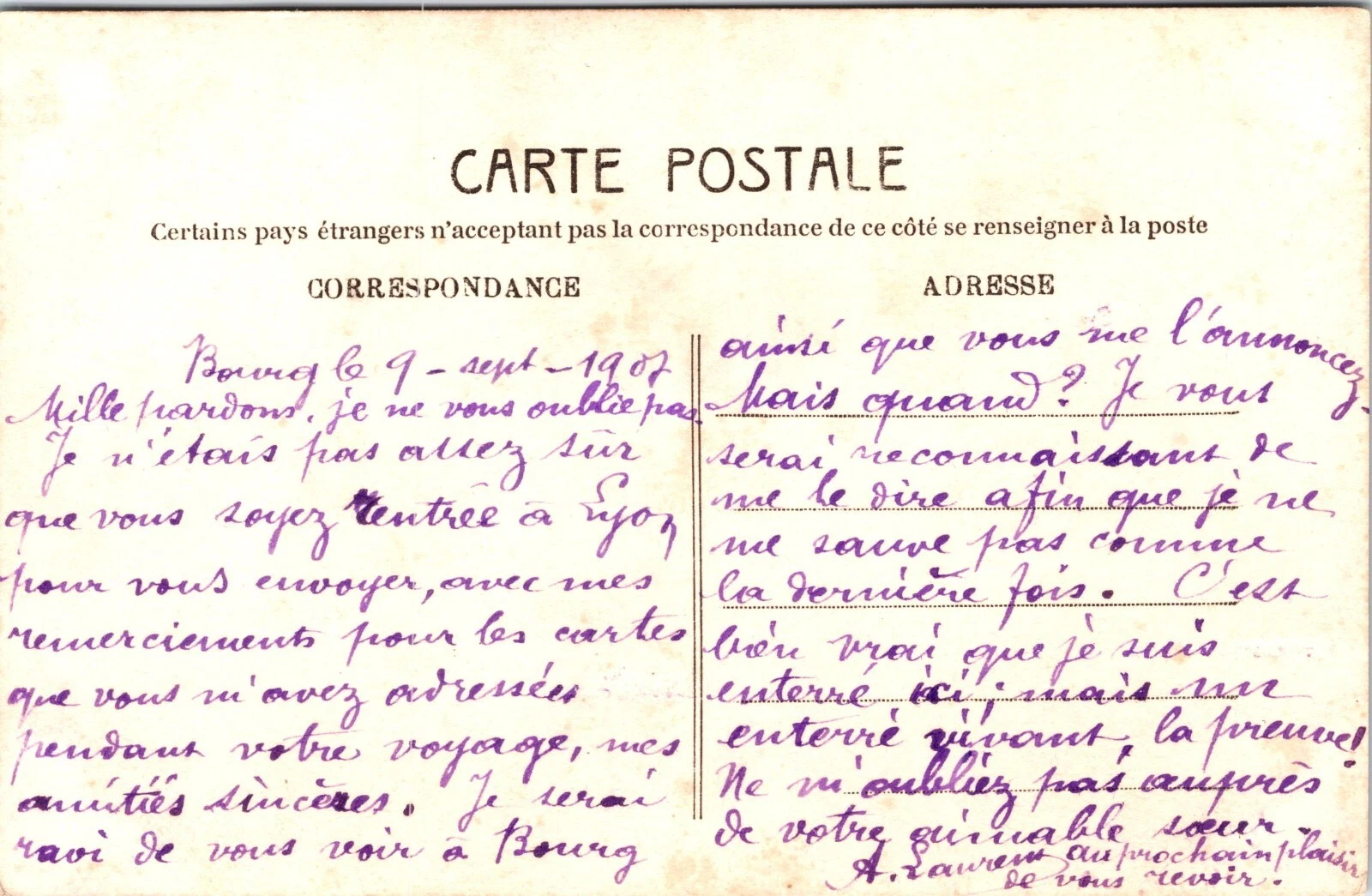
This vintage real photo postcard features pretty performer, Feodora. This postcard is a bit risque for it’s era. She is showing a lot of bare skin. Feodora is wearing pearls, a hairbow, and a fur hat. The initals of the photographer (M.F.) appear in the lower right hand corner. The photographer’s studio was in Paris. The message on the reverse of the postcard indicate that it was written in 1907. SOLD

Published in: on November 16, 2025 at 12:00 pm  Leave a Comment  
Tags: ,

WEST BEND ALUMINUM COMPANY : WEST BEND, WISCONSIN : VINTAGE POSTCARD : RPPC

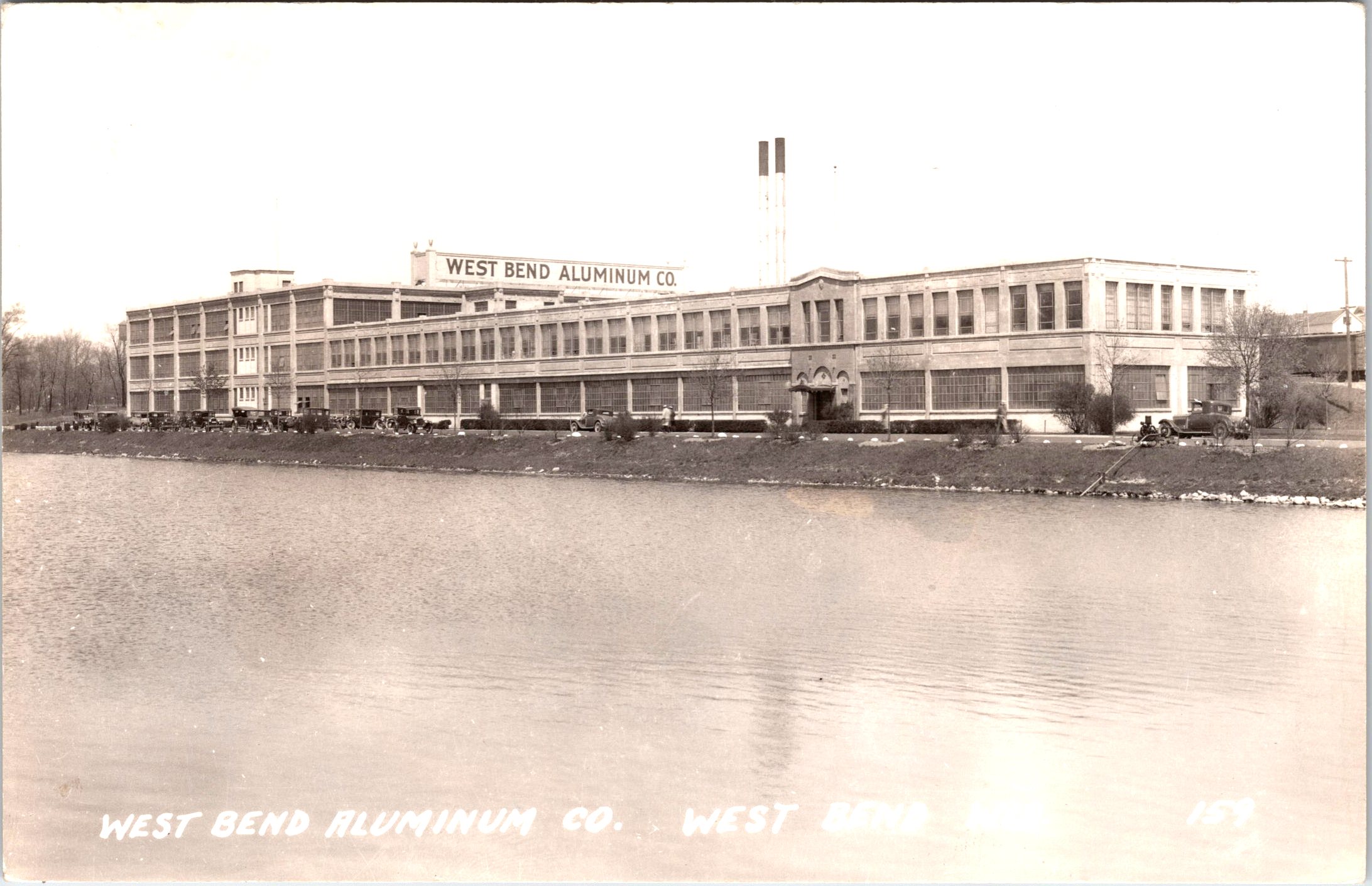
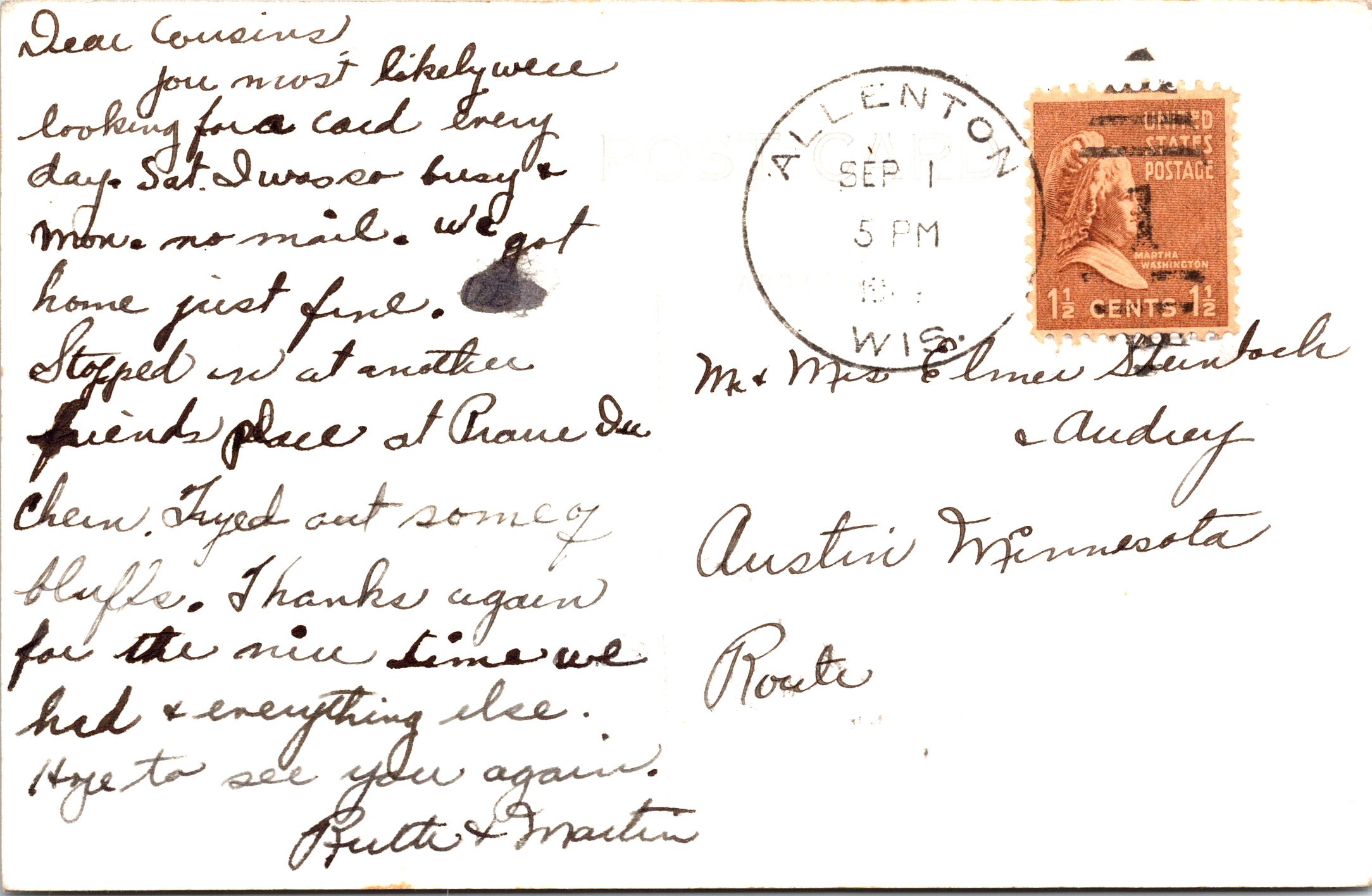
This vintage photo postcard features the West Bend Aluminum Company, located in West Bend, Wisconsin. In the closeup photo, note the old cars and the workers on property. Most of us associate Wisconsin with cheese, not aluminum cookware. However, in 1920, the state had 50% of the nation’s aluminum cookware market share. Bernhard C. Ziegler (1884-1946) started the company in 1911. The company’s first products were saucepans, a frying pan, and pie pans. Sears accounted for 90% of the company’s sales. In 1921, the company introduced a crockpot, one of their most successful products. In 1922, the company introduced a drip coffeemaker which didn’t require filter paper. During World War II the company transitioned to supplying war materials. The company was purchased by Rexall Drug and Chemical Company in 1968. The company was dissolved in 2002.  SOLD

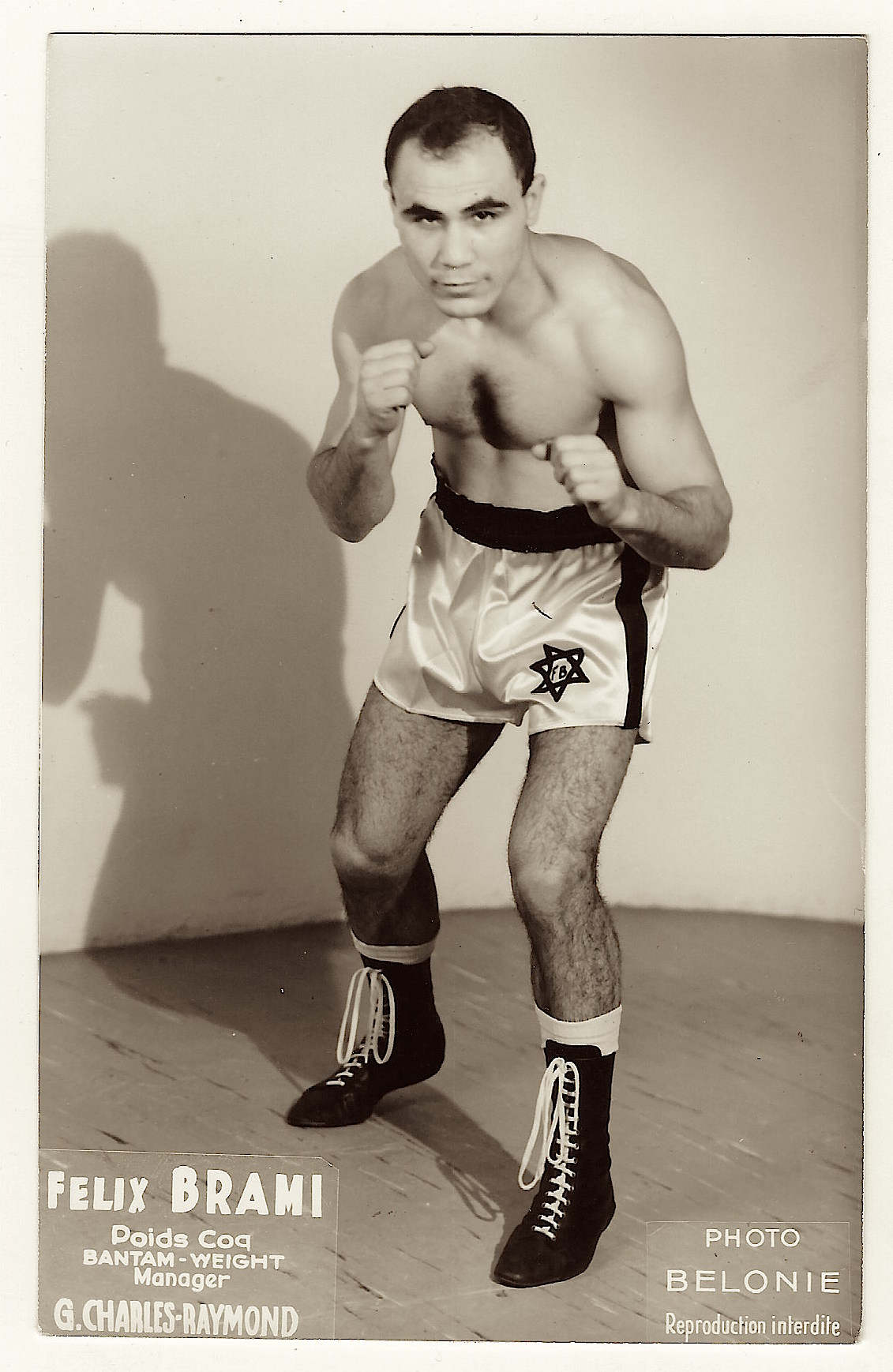
FELIX BRAMI : BANTAM WEIGHT BOXER : STAR OF DAVID ON HIS BOXING SHORTS

This vintage photograph features French bantam-weight boxer, Felix Said Brami (1940-2018). He was born in Tunis, Tunisia and was of Jewish descent. His boxing career spanned from 1961 through 1975. The website BoxRec states that he was in the super fly-weight division. Brami had an impressive record of 44 wins, 10 losses, and 3 draws. Twenty-two of his victories were by knockout. Brami won his first 20 fights. He was ranked as high as #6 bantamweight in the world by The Ring magazine in 1964, He was ranked in the top ten bantamweights in the world between 1963 and 1966. He held the French junior lightweight title from 1971 through 1975. Note the Star of David on Brami’s boxing shorts. I imagine that the star represents Brami’s heritage. Note the Star of David embroidered on his boxing trunks. Brami may have developed the idea in imitation of Max Baer. Baer was Jewish and a national hero after he won a bout against German boxer, Max Schmeling, in 1933. This photo indicates that Brami’s manager was G. Charles Raymond. The card’s portrait was photographed by the Belonie studio.  SOLD

Published in: on November 14, 2025 at 12:00 pm  Leave a Comment  
Tags: , ,

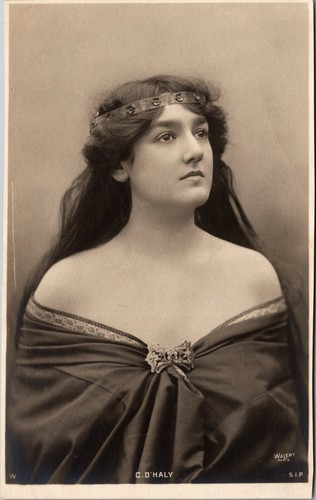
CLO D’HALY : PRETTY THEATRICAL PERFORMER : PHOTO BY LUCIEN WALERY : RISQUE RPPC

This postcard features pretty theatrical performer, Clo D’Haly. She possessed great beauty. This photograph was taken by esteemed photographer Lucien Walery. He was a celebrated Paris photographer known for his portraits of artists and cabaret dancers from the city’s music halls. He is well known for his portraits of Mata Hari and Josephine Baker. Walery did a great deal of work in the genre of nude/erotic photography. He photographed the beautiful women of Paris between the early 1900’s and the 1920’s. This photo postcard is a bit risque for it’s era. The postcard was published by SIP . SOLD

Published in: on November 13, 2025 at 12:00 pm  Leave a Comment  
Tags: , ,

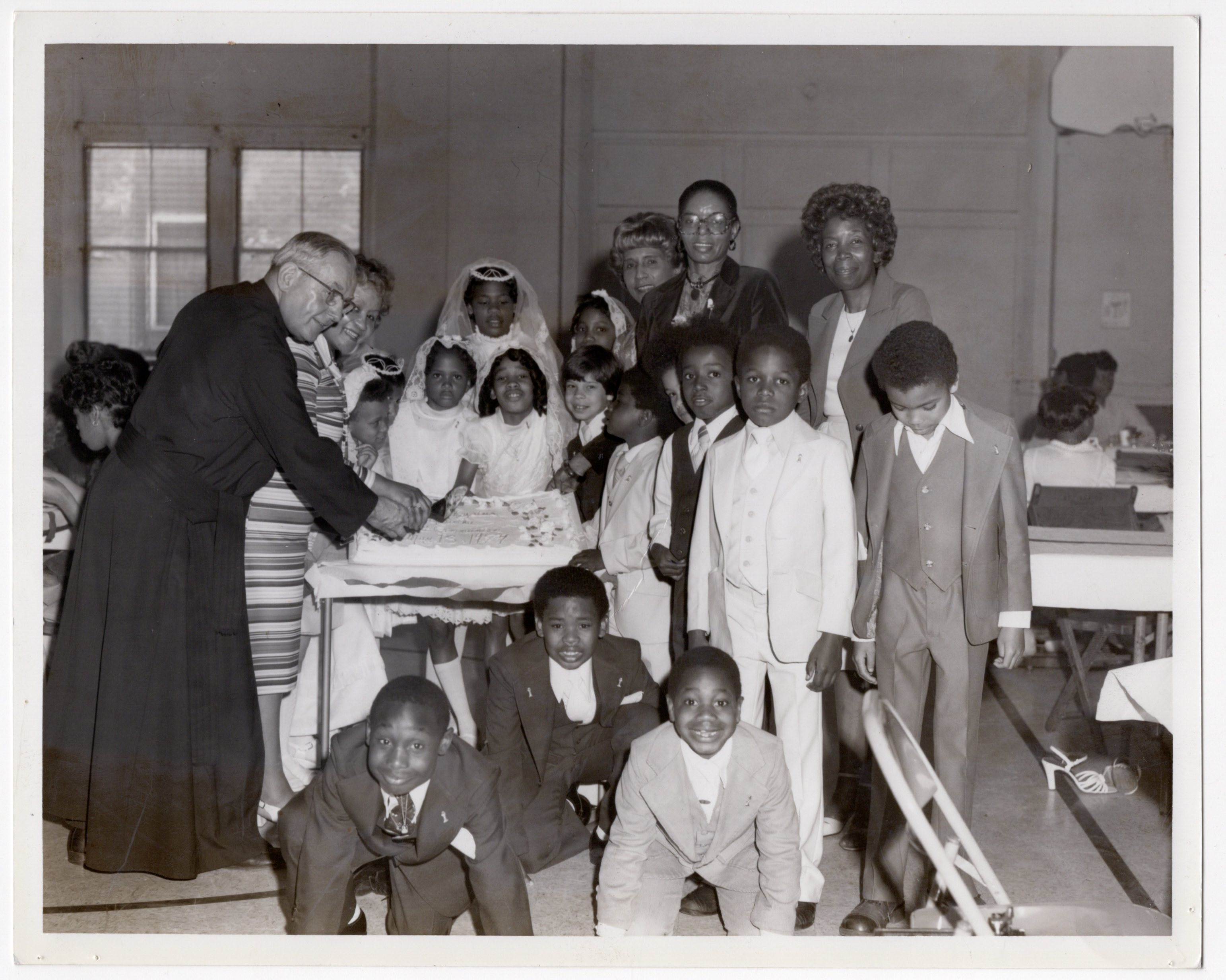
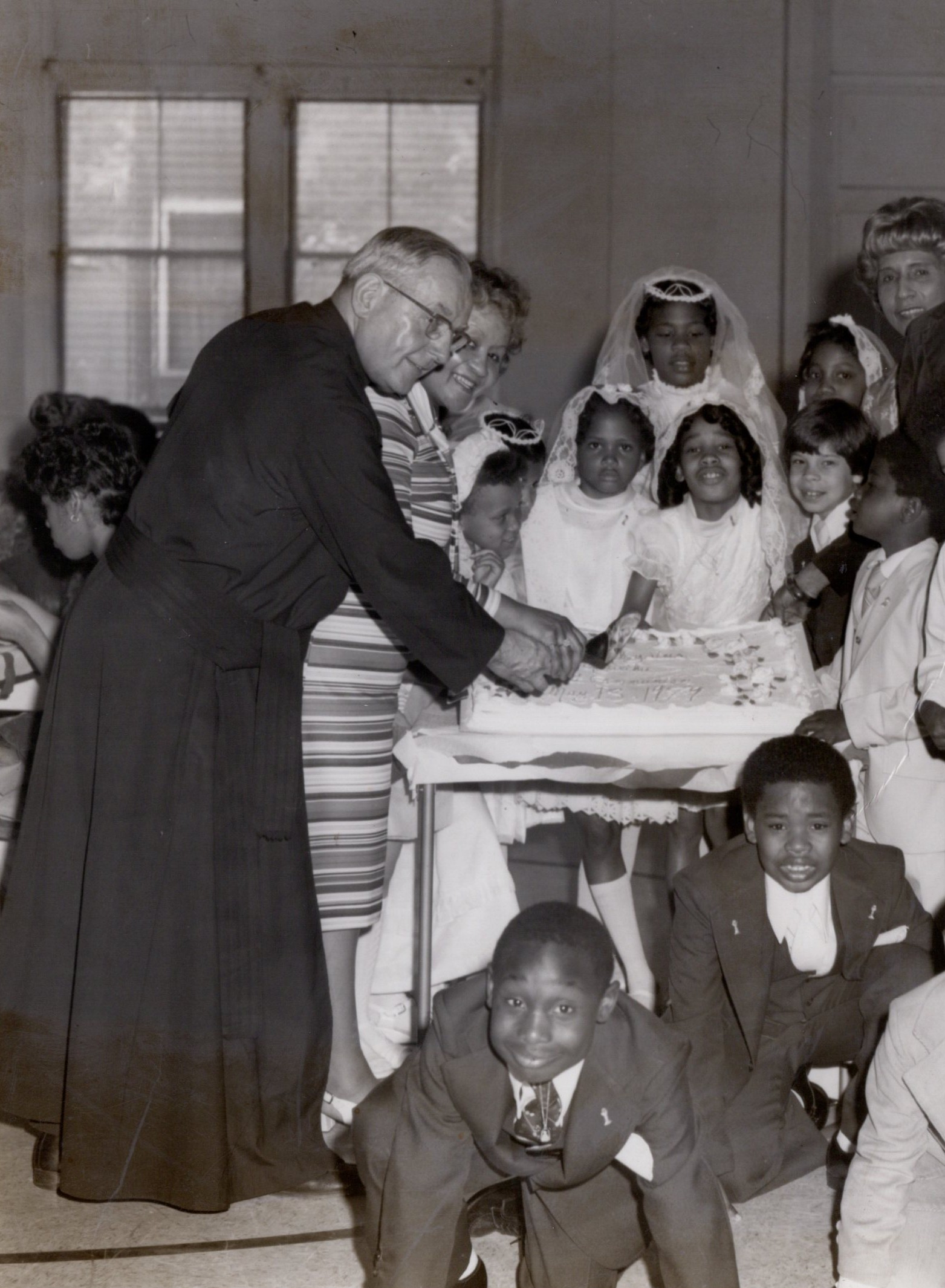
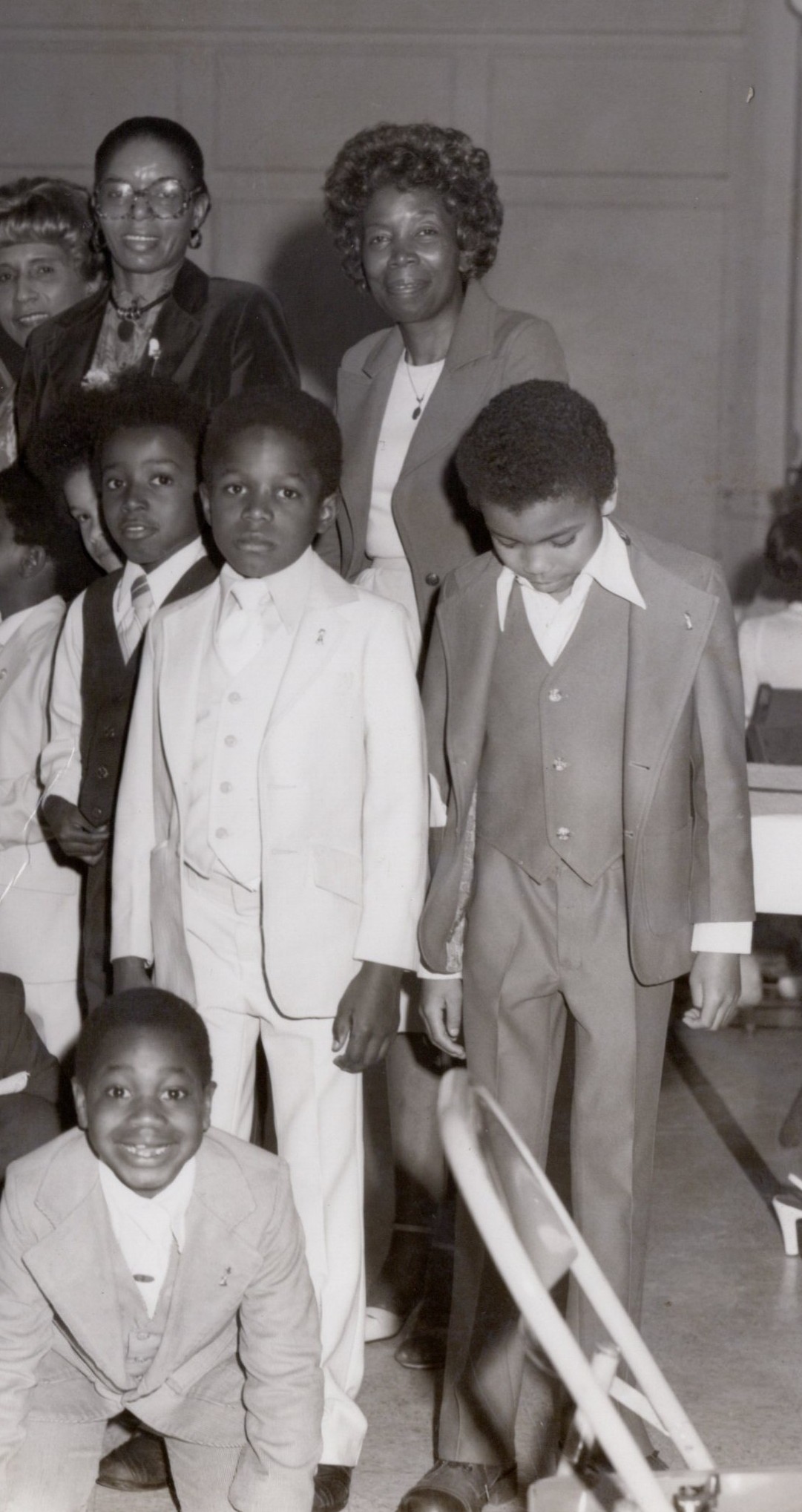
PRIEST & KIDS : 1st COMMUNION : PHOTO BY JIMMY BAYNES : CLEVELAND, OHIO c 1956

This original vintage press photograph (measuring approximately 8 by 10 inches) beautifully captures a celebratory moment in a church or parish hall, taken by noted African-American Cleveland photographer Jimmy Baynes. The scene shows a priest, dressed in his clerical robes, cutting a large frosted cake surrounded by children and adults. The children are dressed formally, with several girls wearing white communion dresses and veils, suggesting this may be a First Communion or confirmation celebration. The boys wear smart suits in both light and dark colors, complete with ties or bow ties. Their attire reflects both the solemnity of the religious occasion and the joy of the gathering. Some children smile brightly toward the camera, while others look on with curiosity and seriousness, lending authenticity and personality to the scene. Behind the children stand several women, elegantly dressed, who appear to be family members or parishioners sharing in the celebration. The priest’s presence at the cake table underscores the ceremonial importance of the event, blending sacred tradition with communal joy. The composition is lively and warm, with details like the children crouched at the front grinning toward the photographer, the ornate veils of the girls, and the cutting of the cake all contributing to a vivid record of mid-20th century African-American community life. The photographer of this photograph, Jimmy Baynes was  known for his ability to capture the essence of African American life, culture, and entertainment from the 1950s through the 1980s. Originally a postal worker, Baynes pursued photography as a passion, ultimately founding Baynes Foto Service. His work chronicled the vibrancy of mid-century African American social life, from intimate gatherings and beauty contests to the pulsating energy of live music performances and political events. Baynes photographed some of the most iconic figures in entertainment history, including Aretha Franklin, Louis Armstrong, Count Basie, Mahalia Jackson, Louis Jordan, Jerry Lee Lewis, the Platters, and the Drifters. His ability to capture both candid and staged moments gave his work a lasting impact, preserving the rich history of Cleveland’s African American community. His legacy is recognized today by institutions such as the Rock and Roll Hall of Fame and Museum Library and Archives in Cleveland, which houses a collection of his photographs, primarily focusing on music and entertainment. In 2010, shortly before his passing, his work was featured in the “Polaroid: Instant Joy” exhibition in Brooklyn, New York, reaffirming his role as a visual storyteller of African American life in the mid-20th century. This photograph was taken in the 1950’s. This is a powerful image not only for its documentary value but also for its warmth and charm, preserving a moment of community, faith, and celebration. (SOLD)

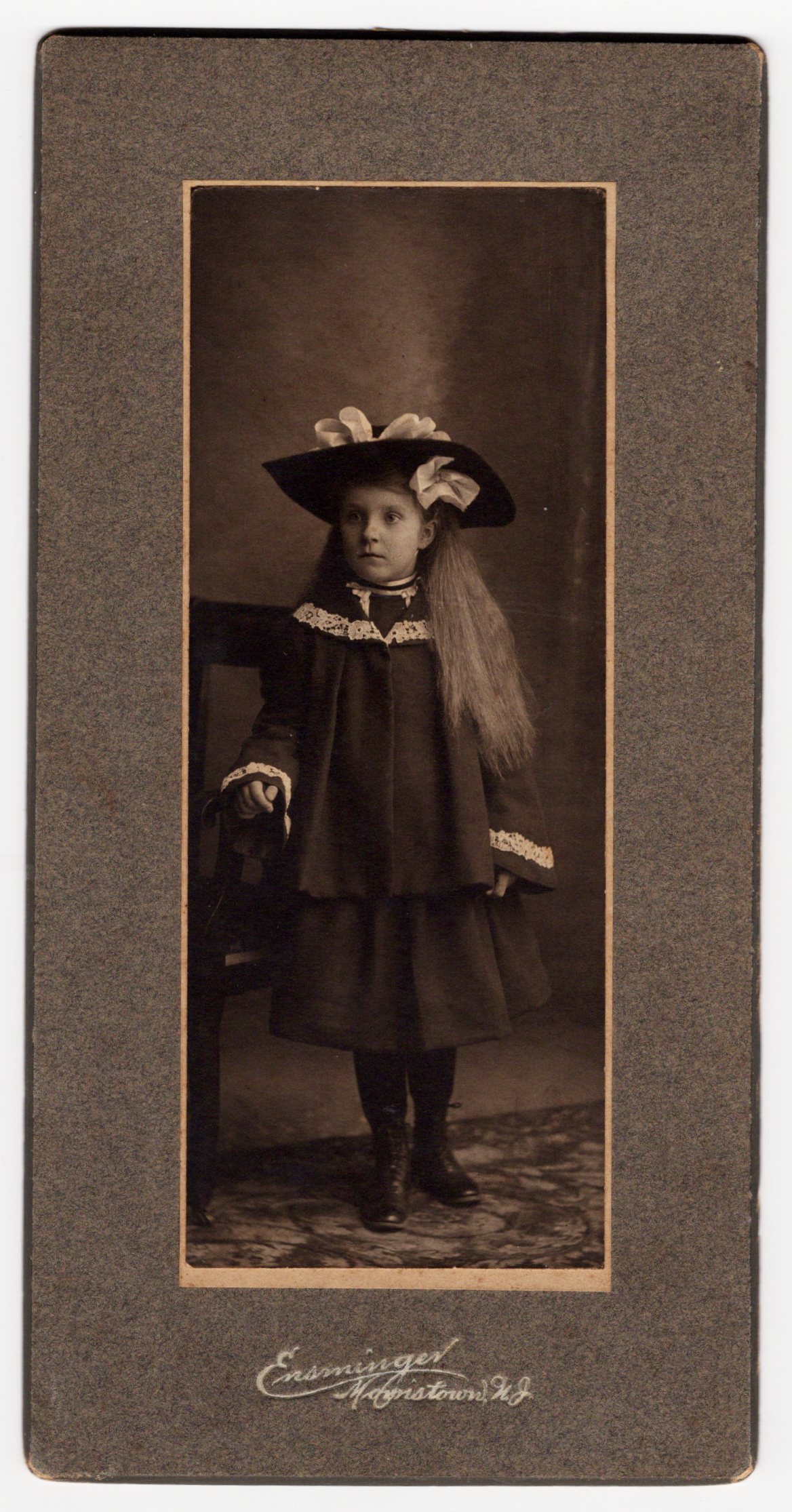
VICTORIAN GIRL W/ LARGE HAT & BOWS : MORRISTOWN NEW JERSEY : VINTAGE PHOTOGRAPH

This cabinet card features a full-length studio portrait of a young girl posed beside a chair. The photographer’s mark at the bottom reads “Ensminger, Morristown, New Jersey”. The girl appears to be around 5 to 7 years old. She is dressed in a dark, heavy dress or coat with prominent white lace trim at the collar and cuffs, characteristic of children’s fashion around the 1895–1905 period. Her long hair, possibly a wig or enhanced with hairpieces for the photo session, is styled to one side and adorned with two large ribbon bows, adding a touch of charm and formality. She wears a wide-brimmed hat tilted forward, which also features oversized decorative bows—this style was quite popular in Edwardian children’s portraiture. Her high-button black boots are visible under the hem of her dress, and she rests one hand on a wooden chair, adding a subtle compositional balance to the portrait. Her expression is solemn, yet alert—typical of long-exposure portrait photography of the era. The neutral studio backdrop and ornate rug on the floor enhance the formality and timelessness of the portrait. The reverse of the card is marked simply in ink with the handwritten notation: “Mrs. M. S.” This may be a clue to the identity of the child’s mother or the recipient of the photograph—perhaps a keepsake. Henry Ensminger was a notable photographer based in Morristown, New Jersey, during the late 19th and early 20th centuries. He operated a photography studio in Morristown from approximately 1894 to 1922, producing a variety of portrait photographs.  (SOLD)

Published in: on November 11, 2025 at 12:00 pm  Leave a Comment  
Tags: ,