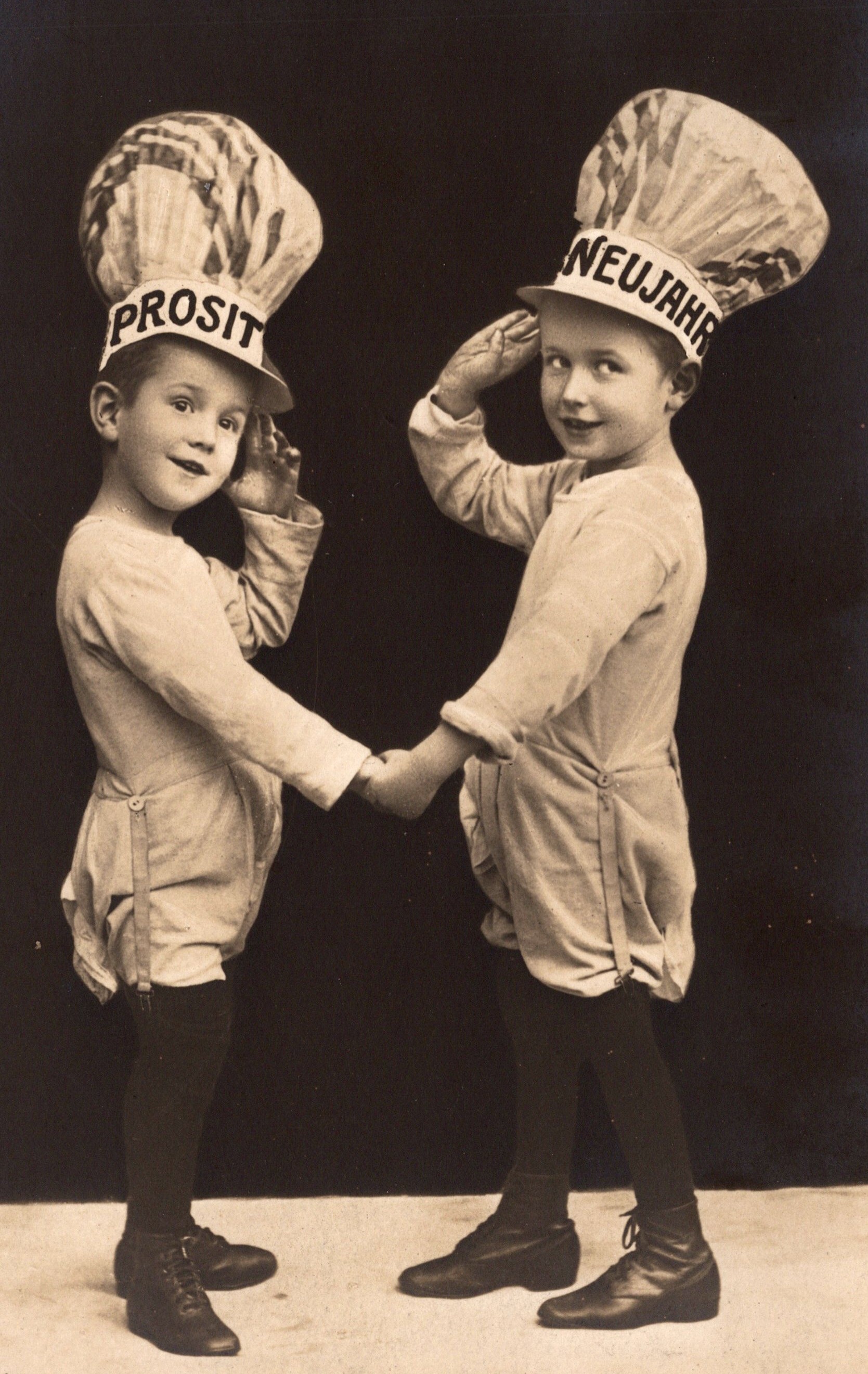
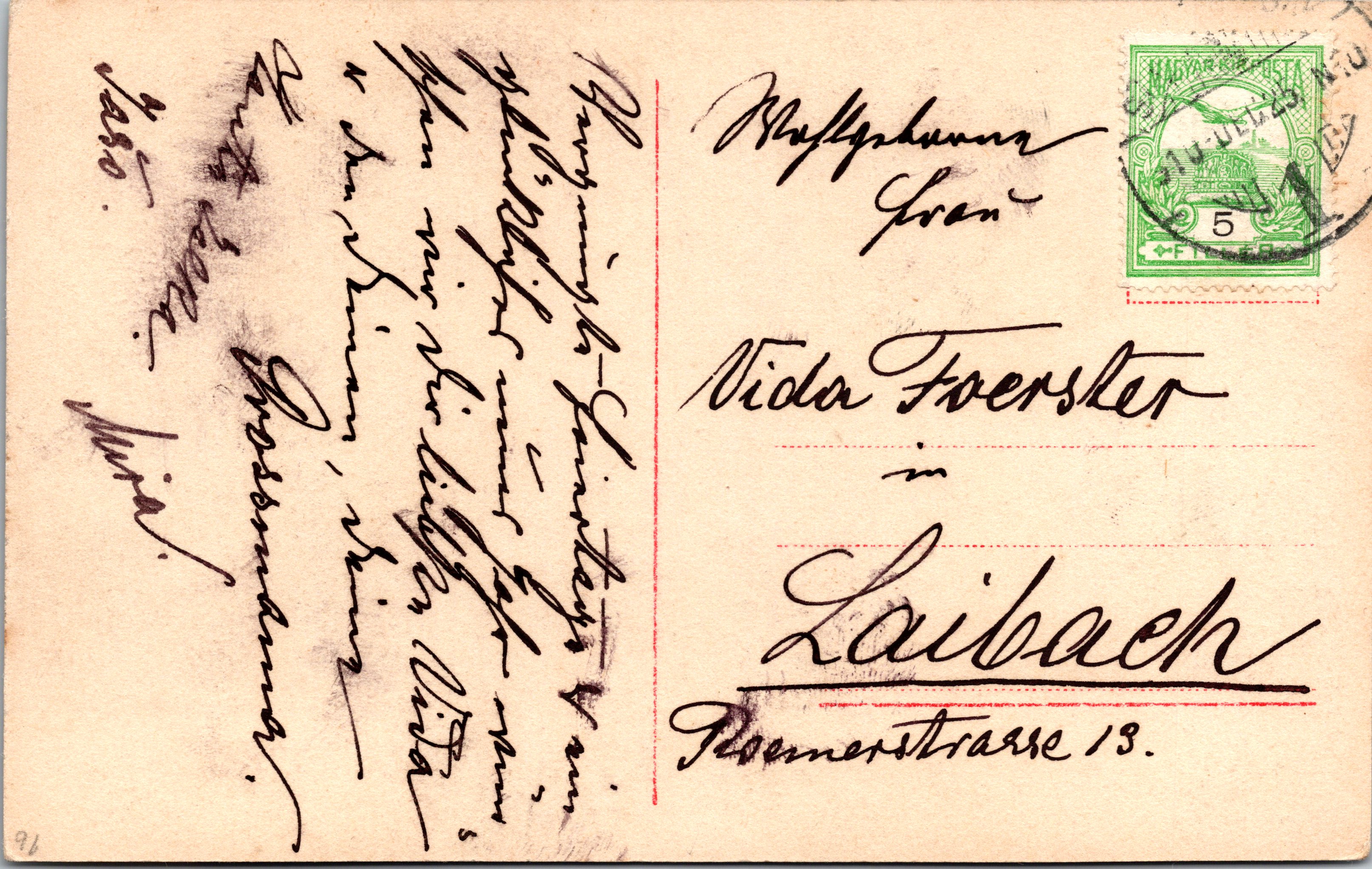
A wonderfully playful German New Year “Prosit Neujahr” real photo postcard published by RPH (Rotophot), Berlin—a major early 1900s European postcard producer best known for high-quality photographic subjects and big, numbered series. The image is pure studio charm: two children in oversized chef-style caps (party hats styled like tall cooks’ toques), posed hand-in-hand as if about to dance into the New Year. One cap reads “PROSIT” (a festive toast—“cheers!”) and the other reads “NEUJAHR” (“New Year”). Their little salute gestures and the crisp studio lighting give this card that classic pre-war holiday-photo look. At the lower left you’ll find the RPH monogram in a circle and the printed series number S.1281/3, identifying this as a Rotophot issue. Overall, this postcard presents nicely with minor edge/corner wear (see scans). The card was mailed to someone in in Laubach, Germany. The postcard has a green 5 (phennig) stamp from Germany. The message is difficult to clearly decipher but it is clear that it is a traditional New Year greeting. It appears to read “Heartfelt New Year’s greetings and a happy New Year …”. This card is likely from sometime around 1905 to 1907.
This cabinet card is available for purchase at my store, The History Peddler, for $22.00 or best offer.
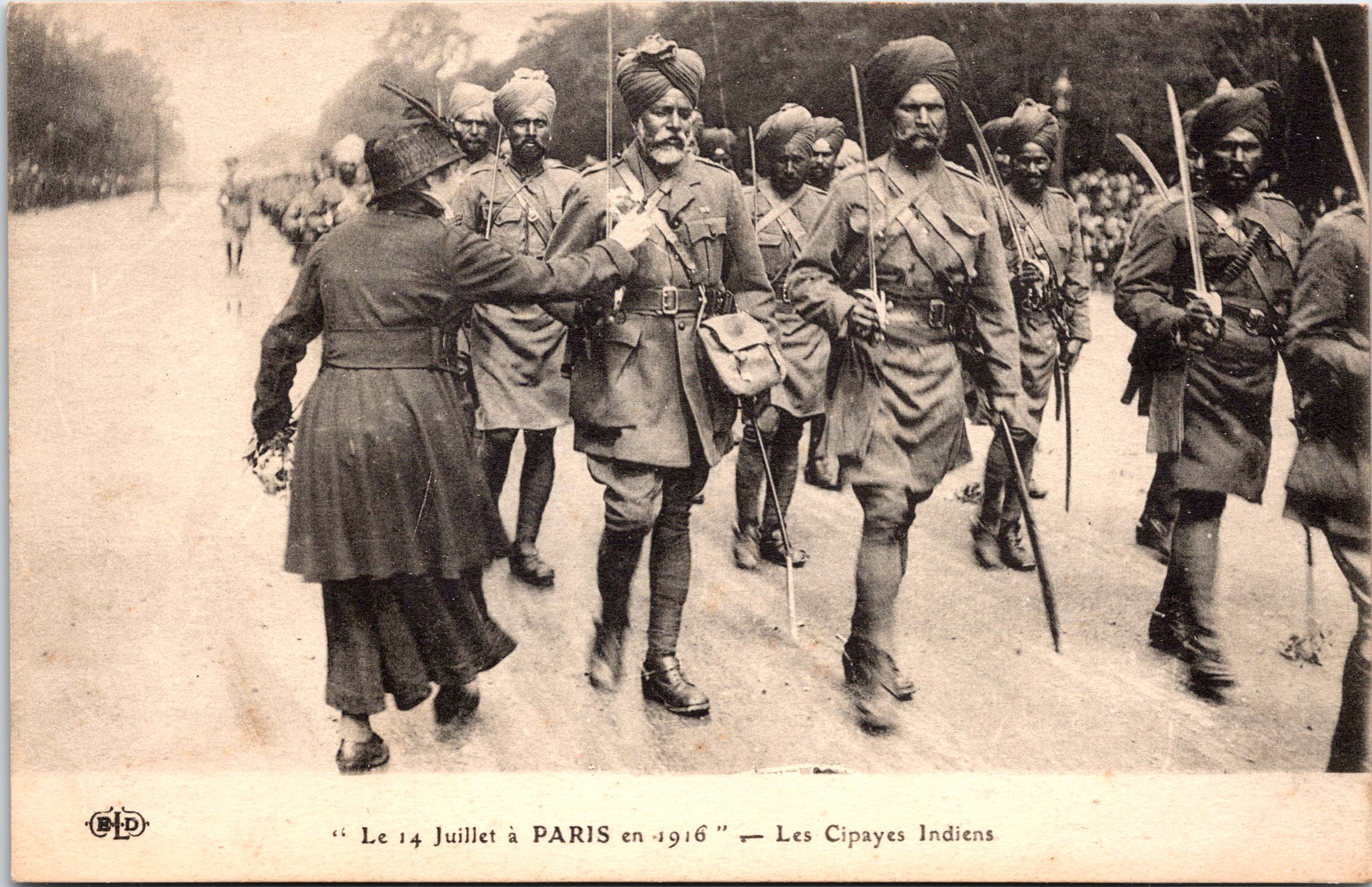
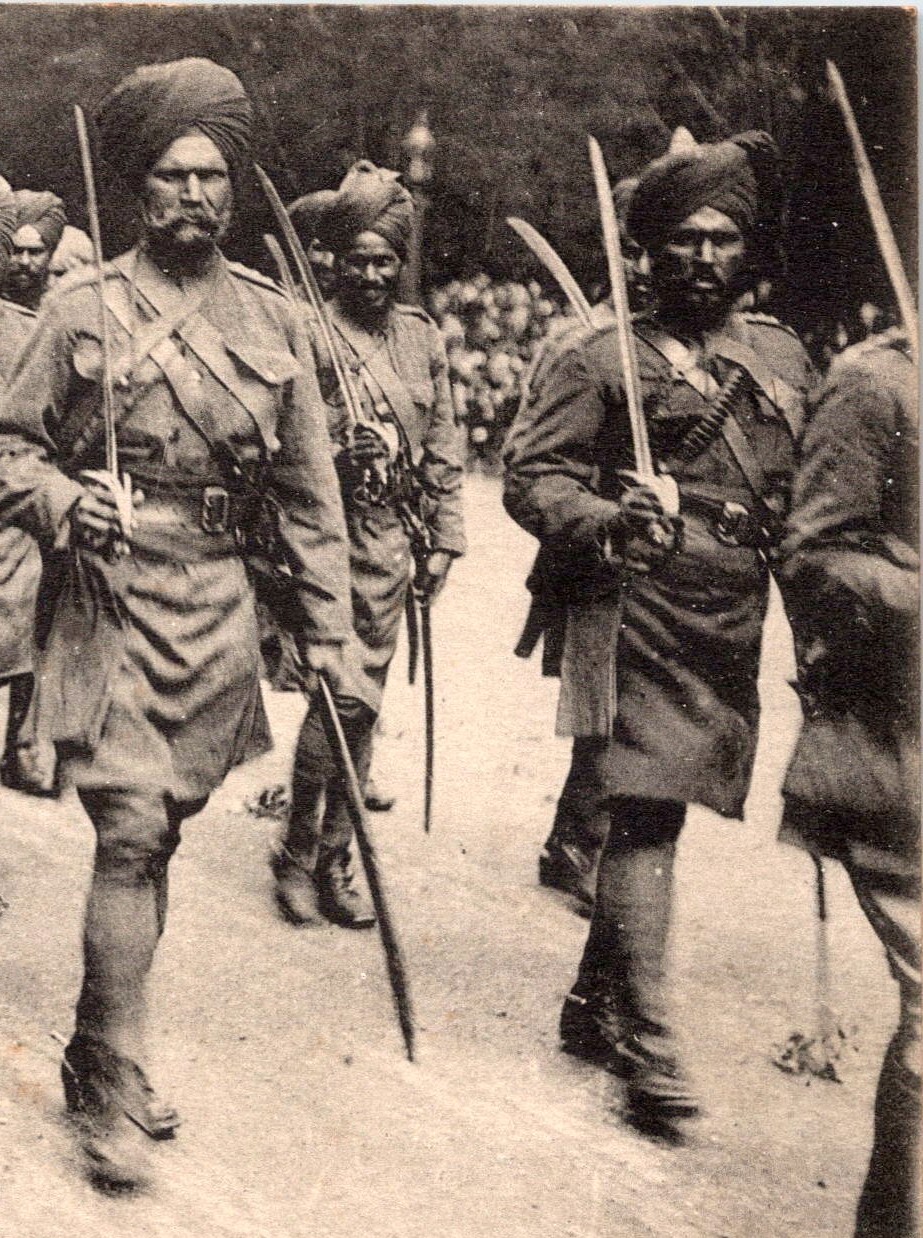
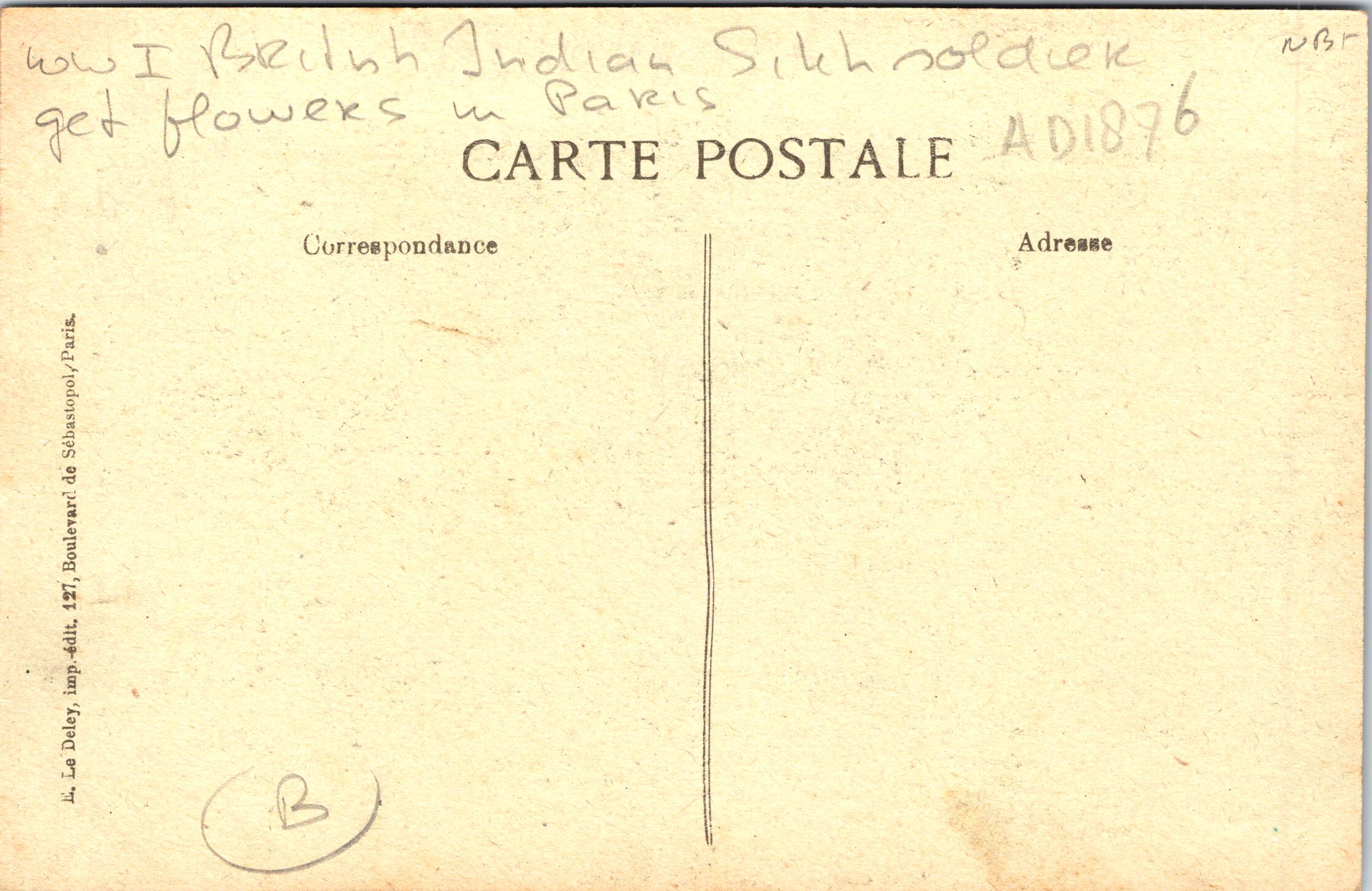
This striking World War I–era postcard captures a powerful and historically important moment: Indian Sikh soldiers marching through Paris on July 14, 1916, France’s Bastille Day. The scene shows a column of turbaned Sikh troops advancing down a Parisian boulevard, sabers drawn, while a French woman steps forward to present flowers—an evocative gesture of gratitude and solidarity from the French public toward Allied colonial troops. The men are Sikh soldiers serving in the British Indian Army, identifiable by their turbans, beards, and traditional curved sabers (talwars), worn alongside British military uniforms and equipment. Sikh regiments were highly respected for their discipline and battlefield effectiveness, and tens of thousands served on the Western Front during the First World War. Many fought in France and Belgium between 1914 and 1918, sustaining heavy casualties far from home. This particular image documents their ceremonial participation in a Paris victory parade, rather than a battlefield scene. By 1916, Sikh and other Indian troops had become a familiar—and deeply symbolic—presence in France, representing the global reach of the Allied war effort. Public parades such as this one were meant to boost morale and emphasize unity among the Allies. The interaction in the foreground—flowers being handed to a senior Sikh soldier—adds a human and emotional layer to the photograph, underscoring the respect these men received from civilians who understood the sacrifices being made on their behalf. The caption under this postcard’s image can be translated as “July 14 in Paris, 1916 – The Indian Sepoys”. The term cipayes (sepoys) was commonly used in French to describe Indian soldiers serving under British command. The small monogram “ELD” at the bottom left of this postcard, is the publisher’s photographic logo and corresponds to Éditions Le Deley, a major Parisian postcard publisher active in the early 20th century. Le Deley was especially known for producing high-quality photographic postcards documenting current events, military subjects, and international themes during World War I. The reverse confirms the publisher as Le Deley, with a Paris address printed along the left edge. Le Deley issued thousands of wartime postcards and played an important role in visually documenting France’s experience during the Great War, including its colonial and Allied forces. (SOLD)
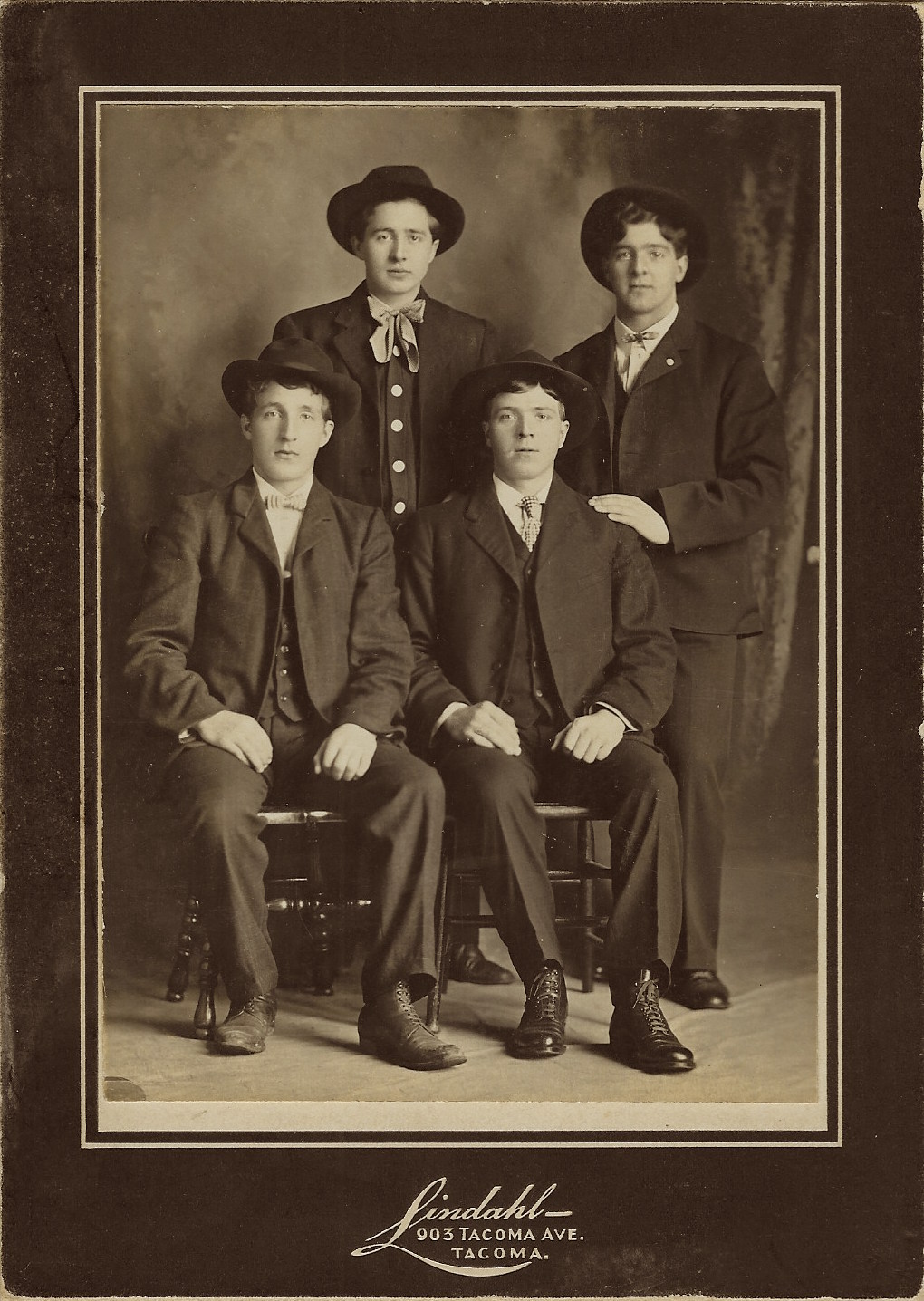
The boys were out on the town and decided to go to Mr Lindahl’s studio on Tacoma Avenue to have their portrait taken. They were very close friends and wanted to have a record of their comradery. Maybe that is exactly how these four boys ended up in the photographers studio the day that this image was taken. The young men in this picture look like they knew how to have fun. In fact, they seem to have enjoyed posing for their photograph. The boys are well dressed and exude an air of excitement and mischievousness. The photographer’s imprint, appears cleanly at the bottom of the mount. John Conrad Lindahl was active in Tacoma between 1892 and 1906. This photograph is mounted on a dark studio card with a thin decorative border framing the image. The tones remain rich, with good contrast and clarity in facial features and clothing details. The photograph has light edge and corner wear. The back of the photo shows toning and handling wear, with a small old handwritten price notation. There are no creases or cracks present. Overall, this vintage photograph is in very good antique condition (see scans). The photograph measures about 5″ x 7″.
This cabinet card is available for purchase at The History Peddler for $35.00 or best offer.
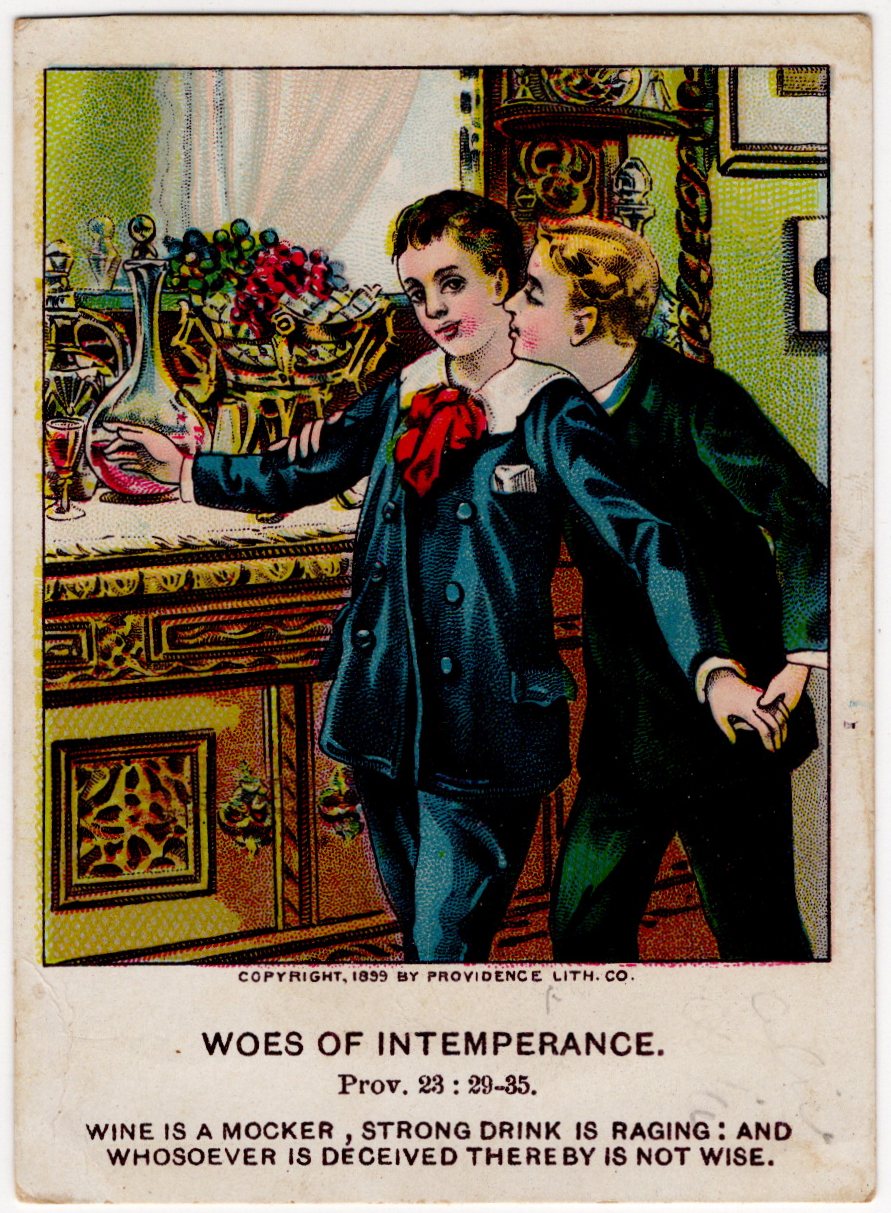
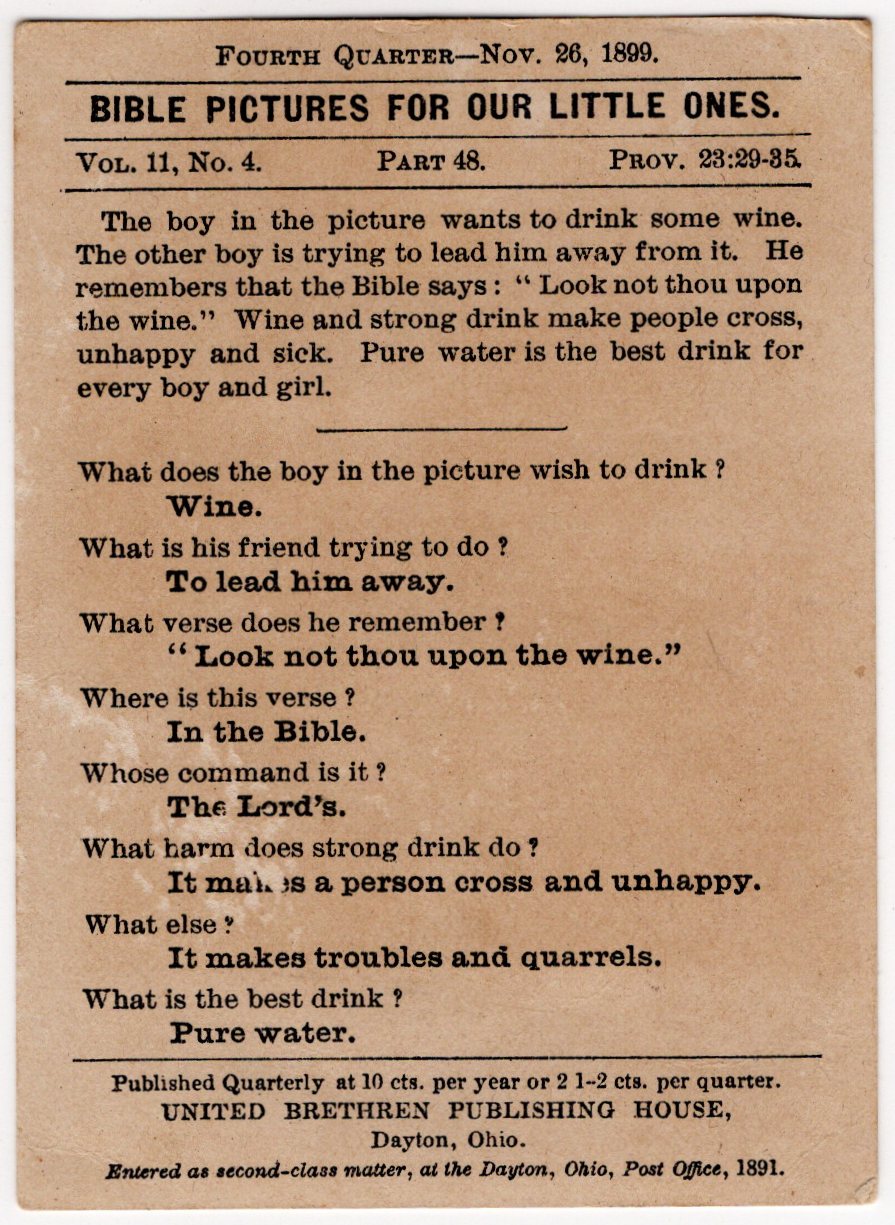
This original illustrated card dates to 1899 and was issued as part of the religious educational series “Bible Pictures for Our Little Ones,” published by the United Brethren Publishing House of Dayton, Ohio. The front features a vivid chromolithograph illustration titled “Woes of Intemperance,” copyrighted in 1899 by the Providence Lithograph Company, a major American lithographic firm known for high-quality color printing in the late 19th century. The scene depicts two well-dressed boys in a domestic interior, standing beside a sideboard laden with glassware and wine. One boy reaches toward a glass of wine, while the other gently restrains him, attempting to lead him away. The image is deliberately moralistic, visually reinforcing the biblical warning against alcohol consumption. Beneath the illustration appears the scripture citation Proverbs 23:29–35, followed by the admonition: “Wine is a mocker, strong drink is raging: and whosoever is deceived thereby is not wise.” The reverse contains a didactic lesson sheet, clearly dated Fourth Quarter—November 26, 1899, and intended for use in Sunday schools or home religious instruction. It explains the image in simple language, emphasizing temperance and obedience to scripture, and concludes with a series of question-and-answer prompts designed for children, reinforcing the moral lesson that pure water is the best drink. Items like this were meant to be both instructional and collectible, and they reflect the strong influence of the 19th-century temperance movement, which intertwined religious education with social reform. Survival rates are relatively low, as these cards were often handled by children and discarded after use. (SOLD)
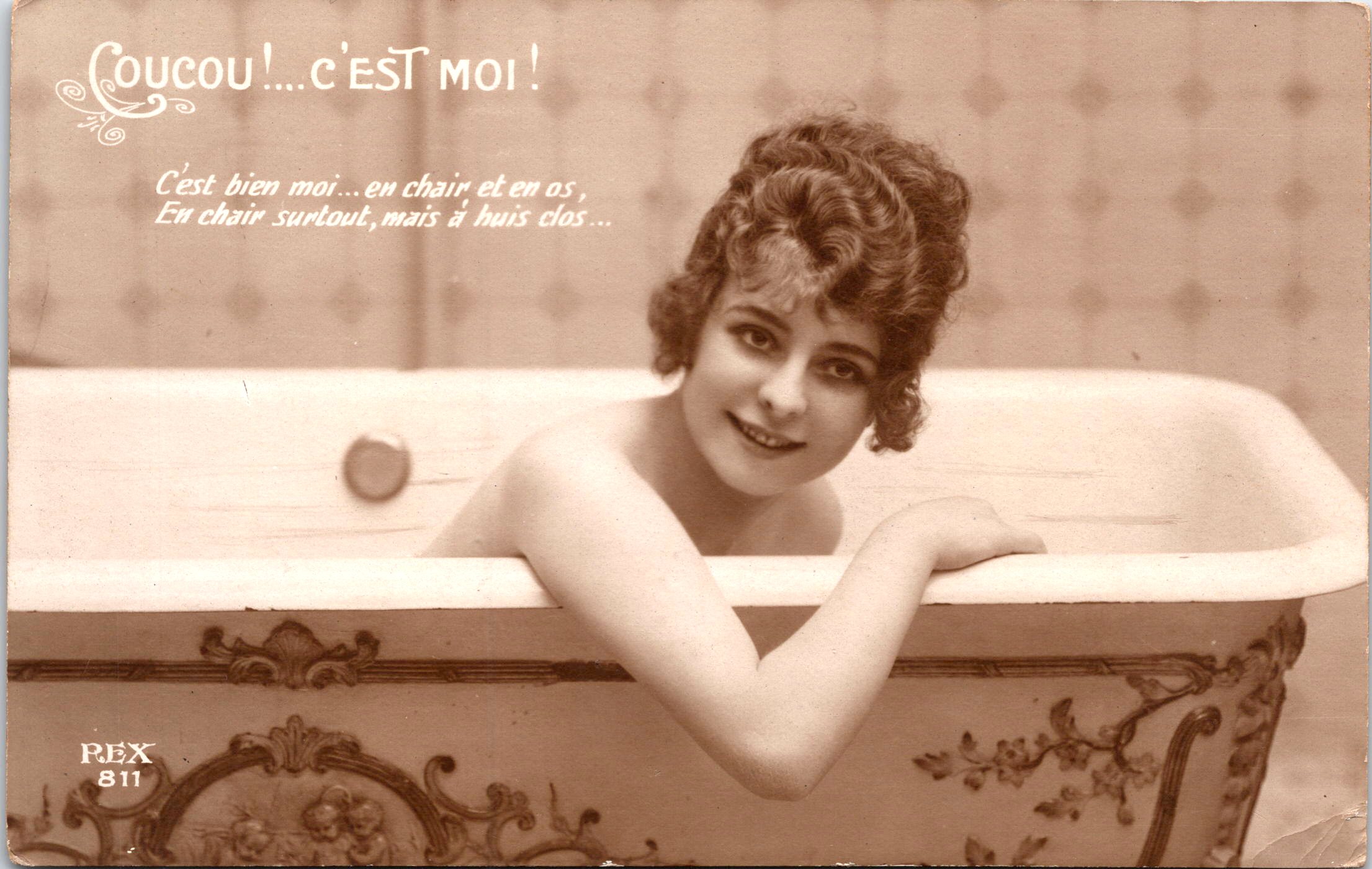
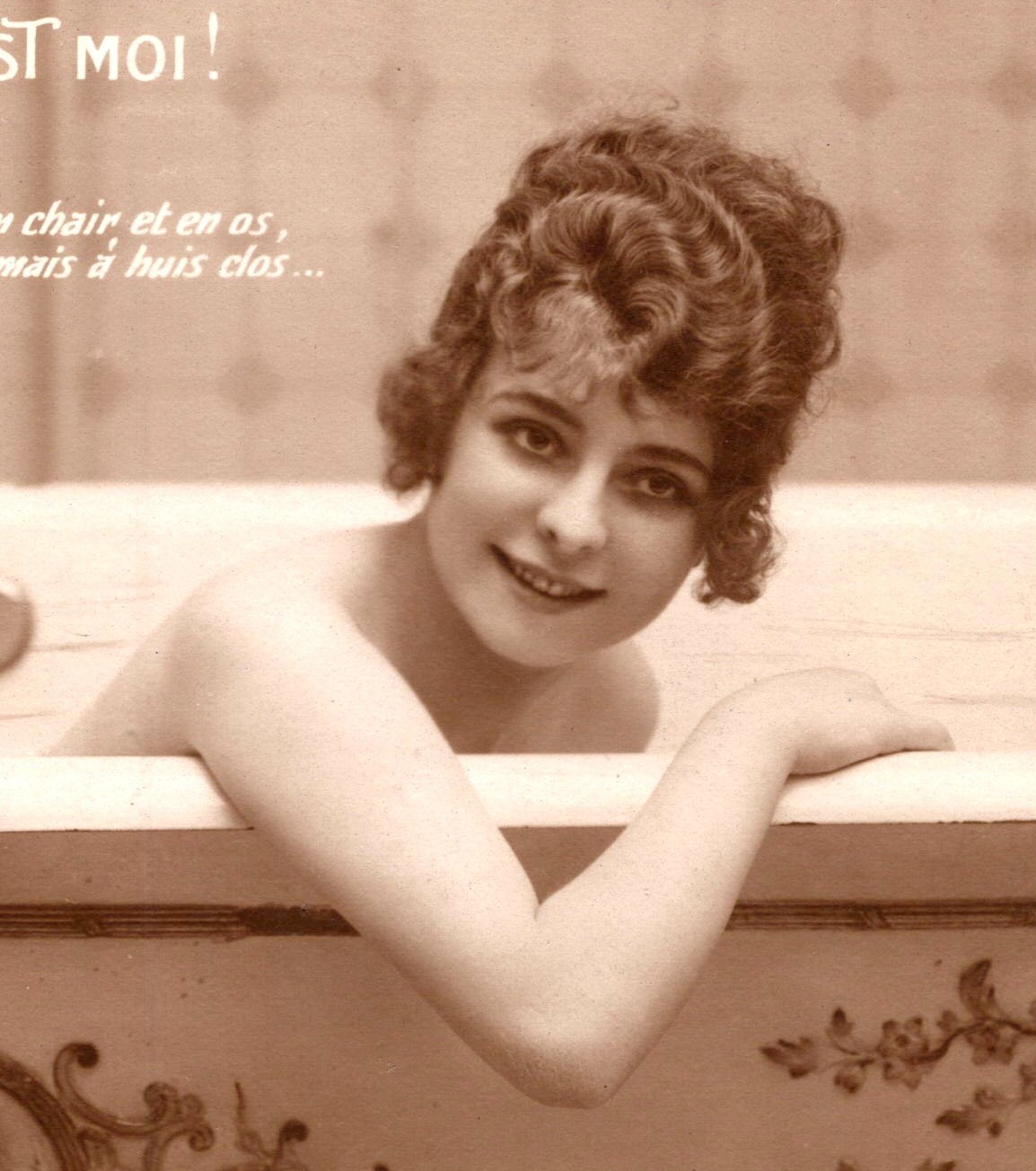
This vintage French photographic postcard presents a playful and deliberately risqué studio scene, produced in France during the early 20th century, likely circa 1905–1915. The image shows a young woman reclining nude in an ornate bathtub, leaning over the tub’s edge with her arms folded and smiling directly at the viewer. Her expression is open, flirtatious, and self-aware, clearly intended to engage the recipient in a lighthearted, teasing manner. The setting is a stylized interior, with a patterned background and a decorative porcelain bathtub, lending the scene an air of theatrical elegance rather than explicit exhibition. While the subject is unclothed, the composition remains suggestive rather than explicit, placing the postcard squarely within the tradition of French “risqué” or “galant” postcards that were popular in the Belle Époque period. The card is marked “REX 811” on the image side, identifying it as part of a commercial French postcard series, produced for novelty and adult amusement rather than private photography. Such cards were widely collected, mailed discreetly, or kept in albums, and today they are sought after for their blend of early photography, social history, and erotic ephemera. A translation of the message is as follows: “Peek-a-boo… it’s me!” “Yes, it really is me… in flesh and bone, In flesh above all — but behind closed doors…” The wording is intentionally playful and suggestive, reinforcing the private, teasing tone of the image and making the postcard unmistakably risqué by period standards. The postcard is in very good vintage condition. There is light edge and corner wear consistent with age. The image remains clear, with good contrast and no major distractions. The reverse shows light handling wear (see scans).
This vintage postcard is available for purchase at The History Peddler for $38 or best offer
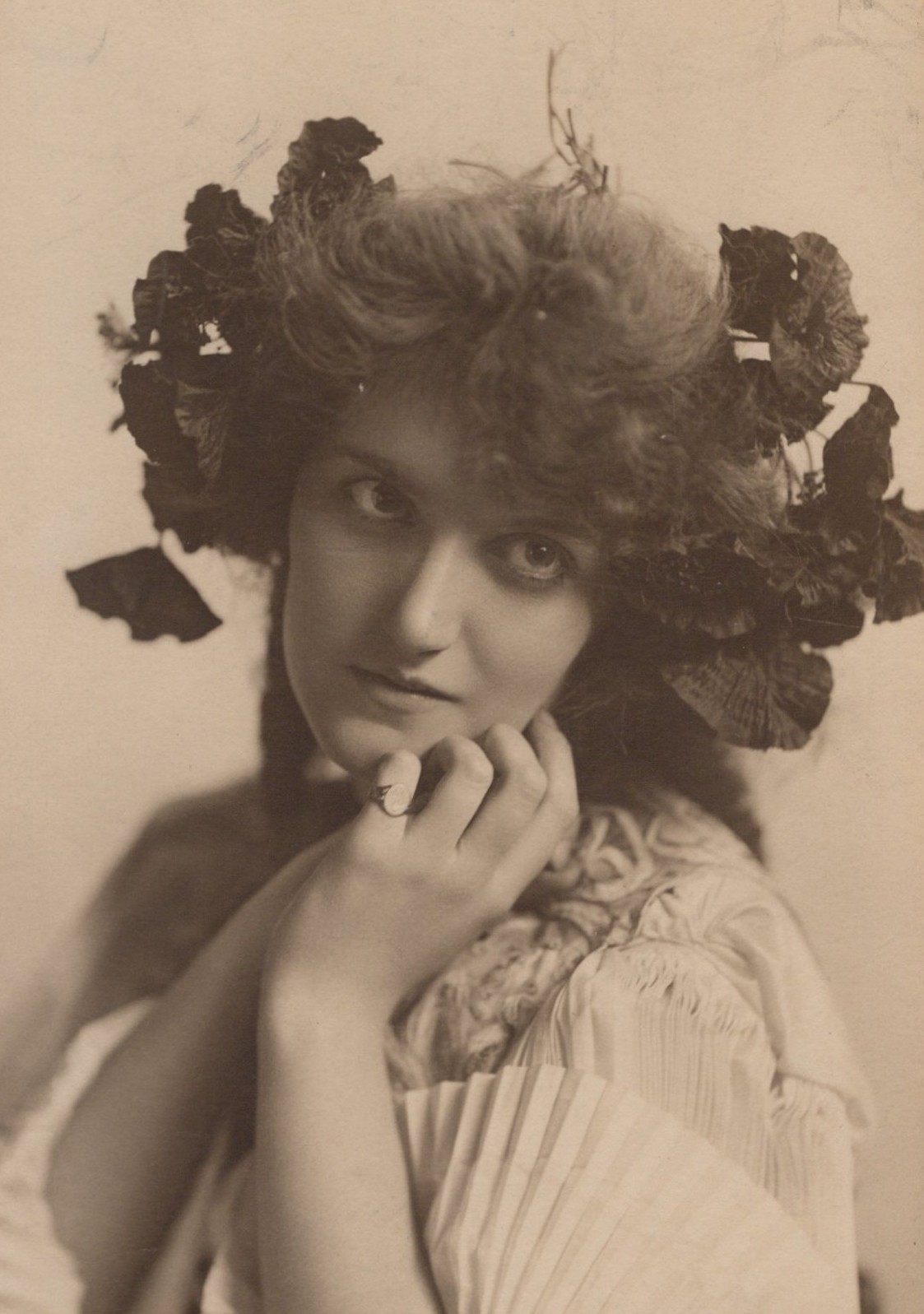
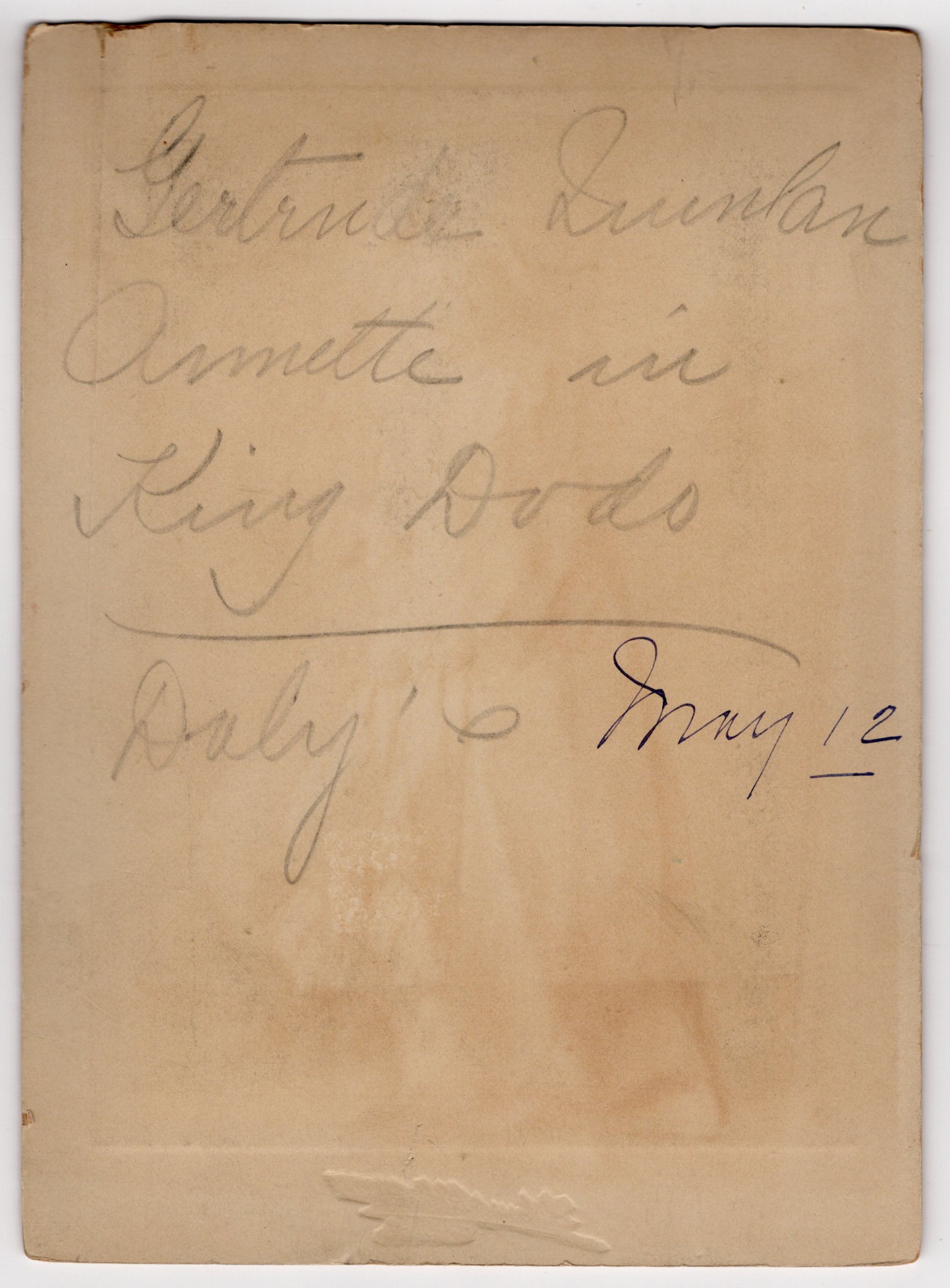
This scarce and evocative antique theatrical portrait photograph, measures 5 x 7 inches, and depicts actress Gertrude Quinlan in her role as Annette from the musical comedy King Dodo, as performed at Daly’s Theatre in Chicago, Illinois. The photograph was taken by the Gibson Art Galleries of Chicago, a prominent studio known for producing high-quality portraits of stage performers and society sitters in the late 19th and early 20th centuries. In this portrait, Quinlan is presented in a softly lit, pictorialist style, wearing a flowing costume and an elaborate floral headpiece that frames her face. Her pose—head gently inclined, hand raised thoughtfully toward her chin—reflects the refined, expressive aesthetic favored in Edwardian theatrical portraiture, designed to emphasize character, mood, and feminine grace rather than strict realism. The image would have served both as a promotional likeness and as a collectible souvenir for theatergoers. Gertrude Quinlan was an early 20th-century American stage actress active during the height of musical comedy and light operetta in the United States. She sang in over 125 operas. While not a headlining star of the era, she was part of the important working class of professional actresses who sustained touring companies and long theatrical runs in major cities such as Chicago. Performers like Quinlan frequently appeared in chorus and featured roles, and their images were commonly commissioned by studios like Gibson Art Galleries for publicity and personal distribution. Her appearance as Annette in King Dodo places her squarely within the lively theatrical culture of Chicago in the first decade of the 1900s, when the city rivaled New York as a major center for touring Broadway and London productions. King Dodo is a musical comedy that originated in London in 1906, produced by George Edwardes, with music by Walter Slaughter and a libretto by Harry B. Smith. The show was quickly brought to the United States, where it enjoyed considerable success on tour. The production appeared in Chicago at Daly’s Theatre during the 1906–1907 season, part of the American run that followed its London popularity. King Dodo is a lighthearted romantic farce centered on a fictional European kingdom where a young king—nicknamed “King Dodo” due to his naïveté—navigates court intrigue, romantic entanglements, and mistaken identities. The character Annette is typically portrayed as a charming and sympathetic young woman whose relationships and choices help drive the comedic and romantic elements of the story. Like many Edwardian musical comedies, the play emphasized humor, romance, and spectacle over realism. This vintage photograph is in good antique condition. The photo has edge and corner wear, mild surface toning, and handling marks consistent with age. Note the surface issue on the mount near the top right corner. The image itself remains strong, with pleasing tonal range and soft focus characteristic of early 20th-century theatrical portraiture (see scans). ADDENDUM: A fellow collector offers a correction to my item description. The helpful individual asserts that “King Dodo” was an American operetta by the team of Pixley and Luders, premiering in 1902.”
This cabinet card is available for purchase at my store, The History Peddler, for $45.00 or best offer.
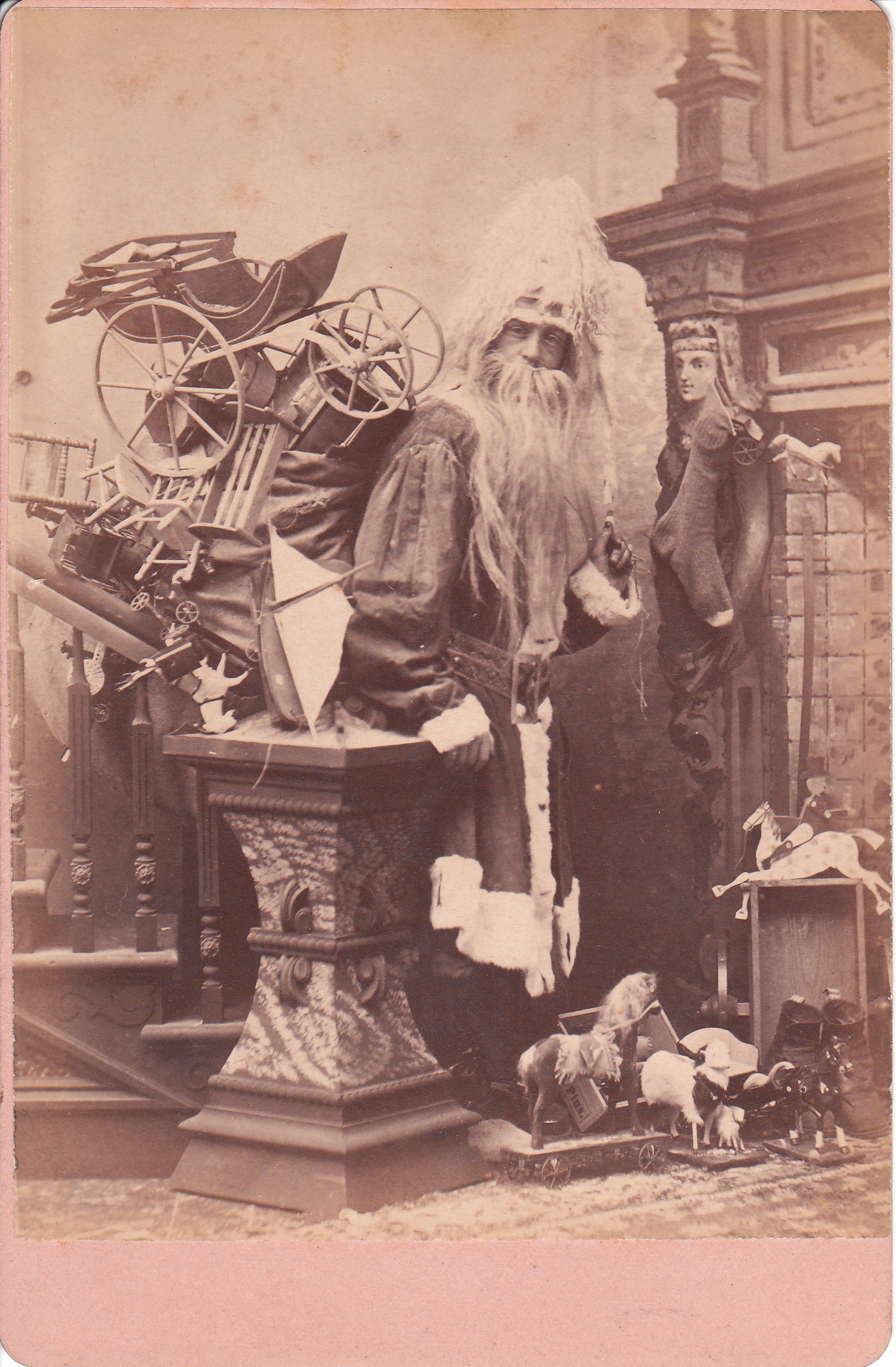
Santa Claus poses for this studio photograph by McCormick & Heald of Boston, Massachusetts. The studio was located on the appropriately named, Winter Street (#22). Santa has long whiskers, long hair and a lengthy beard. He is in the midst of a disorganized collection of toys. It appears as if Santa’s sled came in for a rough landing and spilled out much of its contents. Cabinet Card photographs of Santa are quite unusual. Information printed on the reverse of this photograph reveals that the image was produced for Christmas, 1880. To view other photographs by McCormick, click on the category “Photographer: McCormick”. SOLD
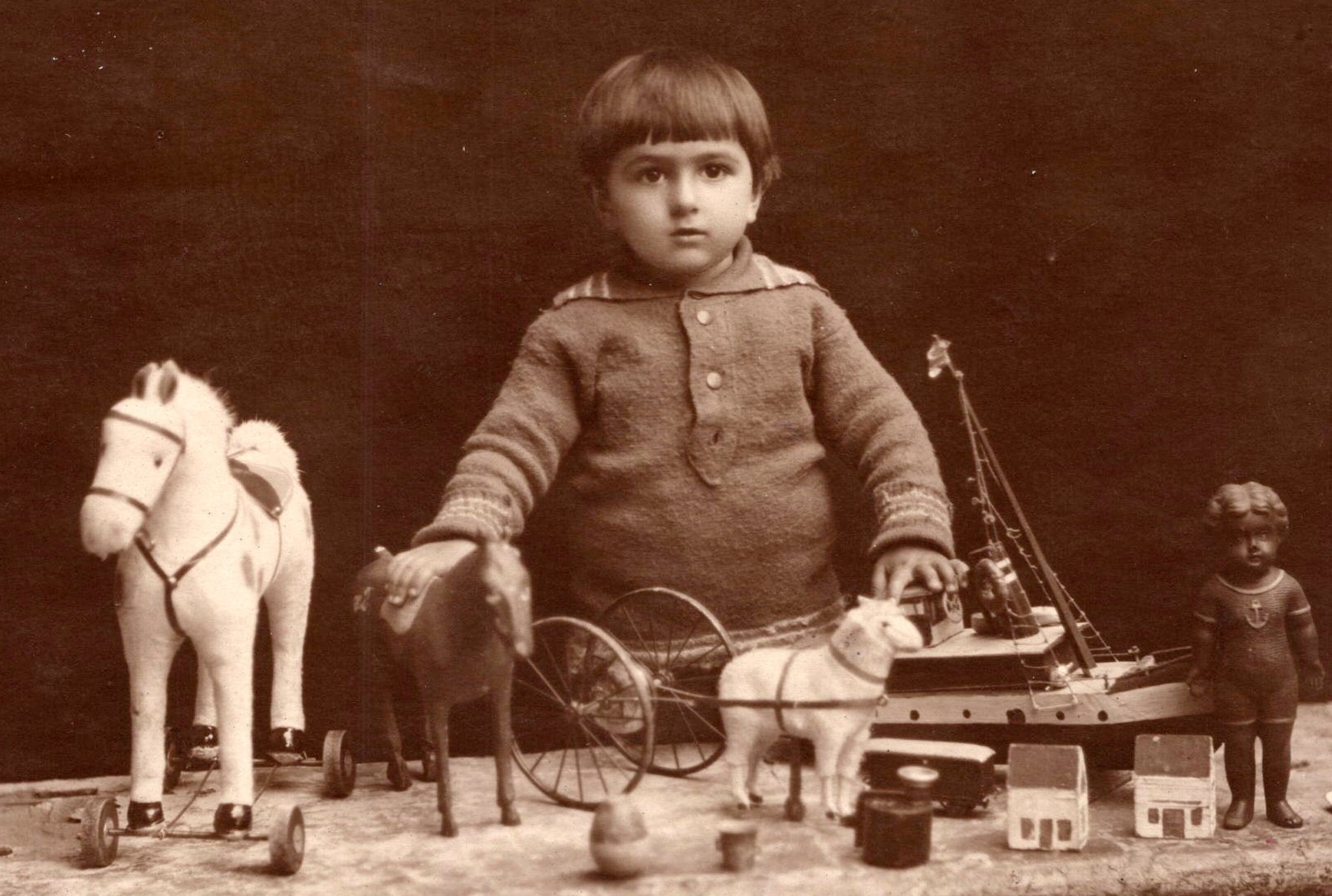
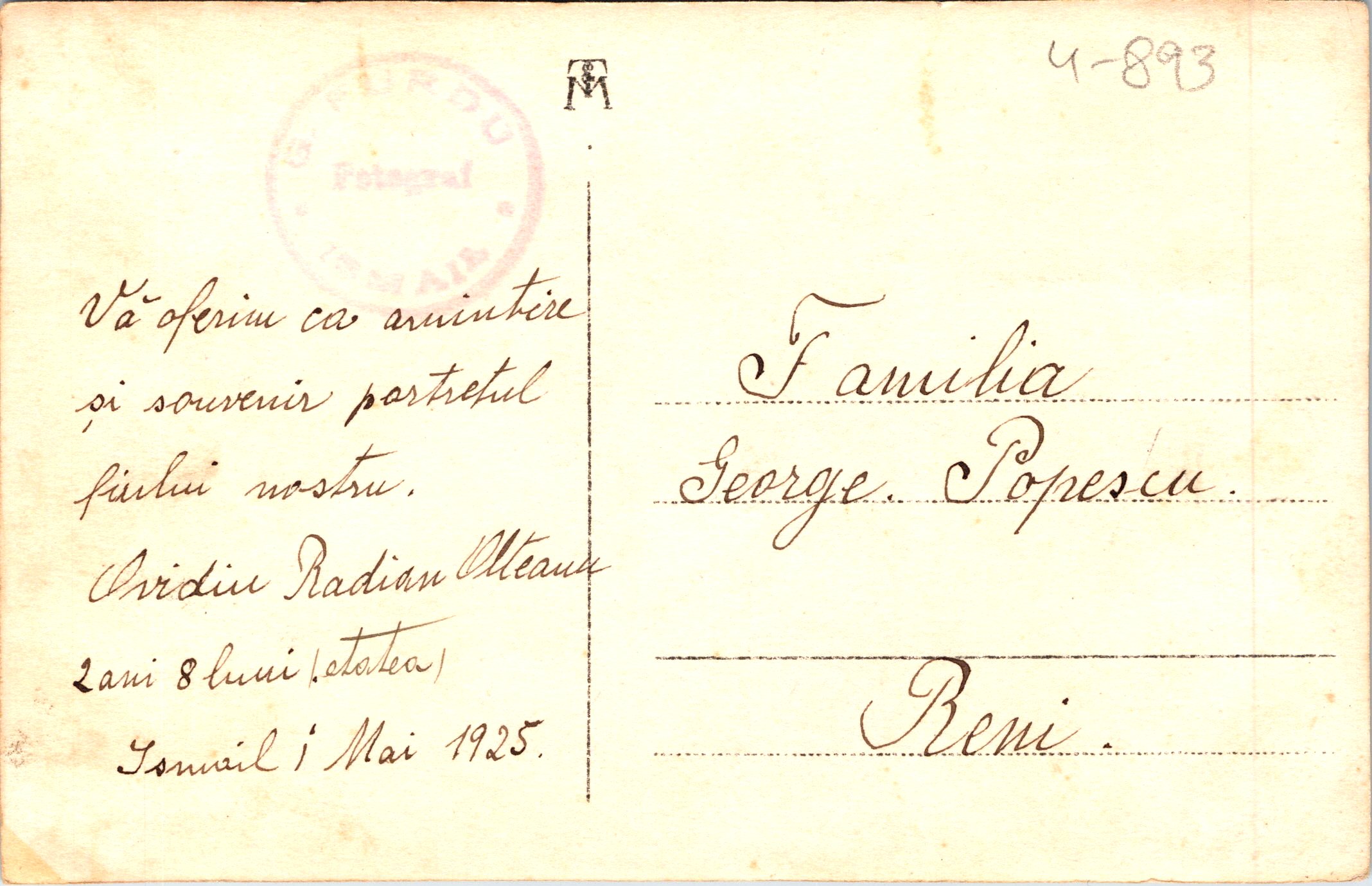
This evocative real photo postcard, written and dated 1925, presents a beautifully staged studio portrait of a very young child posed behind an elaborate miniature world of toys—an image that feels both intimate and faintly theatrical, as was common in European children’s portraiture of the interwar period. Spread carefully across the tabletop in front of the child is an impressive assortment of early 20th-century toys, each rendered with remarkable clarity. On the left stands a wooden pull horse on wheels, its form sturdy and utilitarian, likely hand-painted. Nearby is a small toy donkey or horse mounted on a simple wheeled frame. At center is a miniature cart with large spoked wheels, suggesting rural life and transport—imagery deeply familiar to Eastern European households of the era. To the right appears a toy goat or sheep, delicately harnessed, positioned near a detailed model boat complete with mast and rigging—an ambitious and unusual toy that adds narrative complexity to the scene. Also visible are tiny toy houses, a small lidded container or barrel, and a painted doll figure standing upright at the far right, dressed in what appears to be a sailor-style outfit. Collectively, these objects create a miniature village or imagined world, emphasizing themes of childhood, play, and aspiration. The child—identified in the message as two years and eight months old—stares directly at the camera with a solemn, almost uncanny composure, heightening the emotional impact of the image. The photograph is warm-toned and evenly exposed, suggesting professional studio work rather than a casual snapshot. This postcard is not only visually compelling but also richly documented, with a handwritten message on the reverse that firmly anchors it in time and place. The following is the English translation of the message on this postcard: “We offer you, as a keepsake and souvenir, the portrait of our son. Ovidiu Radian (Mleanu) 2 years and 8 months old Ismail, May 1, 1925.” The postcard is addressed to a family in Romania. The card originated from Ismail, a particularly important location historically. In 1925, Ismail was located in Basarabia, a region that at the time was part of Greater Romania (1918–1940). Today, Ismail is located in modern-day Ukraine. The postcard is in very good antique condition for a 1925 real photo postcard. The image remains strong with nice tonal depth. Light surface/handling wear consistent with age. The reverse shows expected age toning and a faint circular postal marking, along with the handwritten message. There is only minor corner/edge wear (see scans).
This cabinet card is available for purchase at The History Peddler for $68.00 or best offer
This original vintage real photo postcard presents a formal group portrait associated with the Salvation Army, photographed in Kingston, Jamaica, likely in the late 1910s to early 1920s. The image shows five individuals posed in a studio setting: three Salvation Army officers seated in the foreground, with two women standing behind them. Four of the workers are wearing uniforms. The Salvation Army uniforms are clearly identifiable by the distinctive “S” collar insignia, confirming the religious and missionary context of the photograph. Group portraits such as this were commonly made to commemorate postings, service assignments, or transfers within the organization, and were often mailed or retained as keepsakes. Of particular historical interest is the inclusion of a Black woman standing at right, very likely a native of Jamaica, reflecting the Salvation Army’s active presence among local communities during the colonial period. Her dignified posture and inclusion within the group provide an important visual record of race, religion, and social structure in early 20th-century Jamaica. My research reveals that this photograph was taken by a Kingston, Jamaica photography studio operated by J. W. Cleary and E. W. Elliott. A handwritten notation on the reverse reads identifies one of the Salvation Army officers as a Staff Captain. The captains name is illegible. (SOLD)
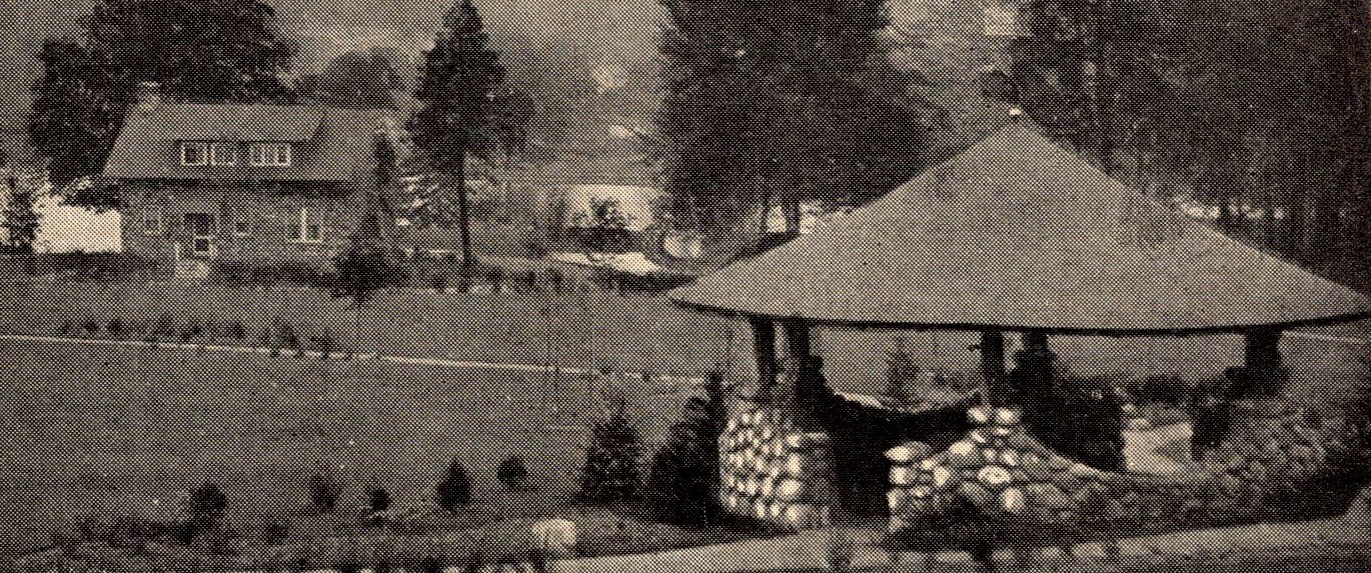
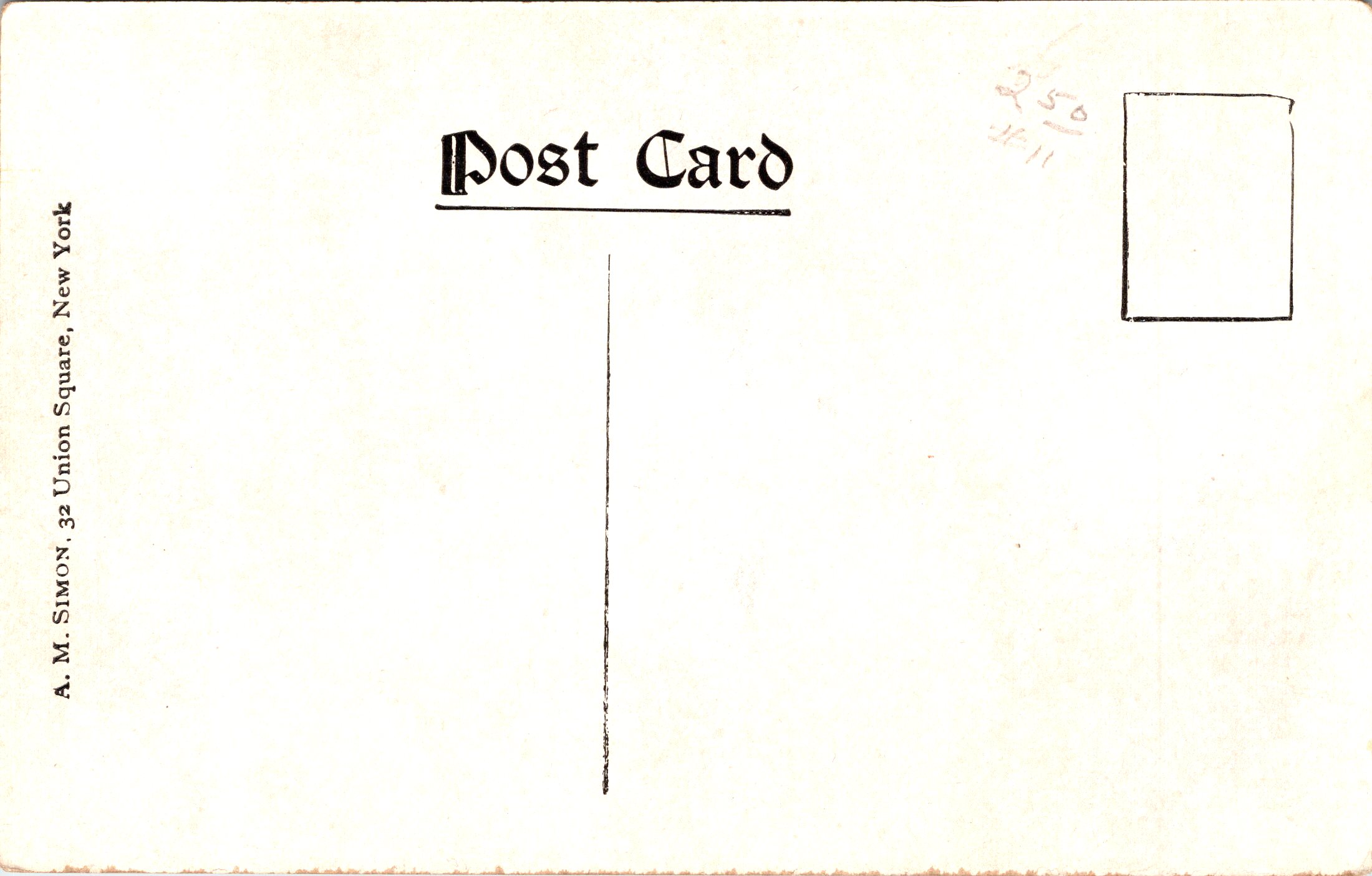
This vintage lithographic postcard offers a tranquil early view of Heckscher Park in Huntington, Long Island, capturing the park in its formative years as a carefully landscaped civic retreat. In the foreground stands the distinctive stone pavilion, its rustic construction harmonizing with the gently sloping lawns, young plantings, and wooded hills beyond. The stone house and pavilion still stand and are in use today. The scene featured on this postcard reflects the early 20th-century ideal of public park design—orderly, pastoral, and restorative—intended to provide town residents with a refined escape from daily life. Heckscher Park was a gift to the Town of Huntington from August Heckscher, a prominent industrialist and philanthropist. Heckscher, who made his fortune in zinc mining and banking, was deeply committed to public welfare and urban beautification. In 1920, he donated the land and funds necessary to establish the park, which officially opened shortly thereafter. His vision was to create a permanent green space that would enhance civic life and cultural enrichment—an ambition that continues to define the park today. Over the decades, Heckscher Park has become one of Huntington’s most beloved landmarks. It now hosts concerts, festivals, art fairs, and seasonal events, and serves as the outdoor setting for the adjacent Heckscher Museum of Art, also founded through August Heckscher’s philanthropy. The park remains a focal point of community life, blending recreation, culture, and history in a setting that has changed remarkably little in spirit since this postcard was produced. The postcard was published by A. M. Simon, located at 32 Union Square, New York City, a prolific early-20th-century postcard publisher known for high-quality photographic and halftone views of American cities, parks, and landmarks. Simon postcards are widely collected for their clear imagery and strong documentation of urban and suburban development during the Undivided Back and early Divided Back eras, generally dating this card to the circa 1915–1925 period. This unused postcard is in good condition with minor corner and edge wear (see scans).
This vintage postcard is available for purchase at The History Peddler for $17.50 or Best Offer.










 THE CABINET CARD GALLERY