AFRICAN AMERICAN BOYS : COMRADES : RAPHAEL TUCK : ANTIQUE POSTCARD : 1905

This postcard is a powerful and historically important antique illustrated postcard titled “Comrades,” copyrighted 1905 and published by Raphael Tuck & Sons (No.2181), one of the most influential postcard publishers of the late 19th and early 20th centuries. The image depicts two African American boys standing arm-in-arm on a wooden walkway beside tall marsh grasses at sunset. Their clothing—patched trousers, work shirts, and bare or worn footwear—signals rural labor and economic hardship, while their relaxed posture and direct gaze convey dignity, friendship, and resilience. The boys are presented as equals and companions, underscoring the title’s emphasis on solidarity and shared experience. The card is color-printed from an original photograph, a common Raphael Tuck practice, combining photographic realism with painterly color enhancement. The image bears the printed line “Copyright 1905 by V. G. Schreck”, identifying the photographer whose work Tuck adapted for postcard publication. Schreck supplied images that were frequently used by Tuck for genre scenes reflecting American life. V.G. Schreck (Victor G. Schreck) was a turn-of-the-century (c. 1900s) photographer known for capturing everyday life, especially early African American culture. His work documented urban life and posed subjects, leaving behind valuable historical photographic records. The reverse identifies the publisher as Raphael Tuck & Sons, with the familiar “Art Publishers to Their Majesties the King and Queen” designation, and references “The Sunny South” postcard series—an indication of the card’s intended thematic framing. The undivided back format places production squarely in the pre-1907 period. Founded in London in 1866, Raphael Tuck & Sons became the most important postcard publisher of the era, with production facilities in England, Germany, and the United States. Tuck was known for commissioning and adapting photographic images into finely printed postcards, often emphasizing sentiment, narrative, and moral framing. Cards from Tuck’s American series are especially historic due to their role in shaping visual culture and public perception. This postcard occupies a complex and significant place in American visual history. While published within a commercial framework that often romanticized Southern life for white audiences, “Comrades” departs from caricature by portraying Black children with humanity, mutual affection, and quiet strength. The absence of overt stereotyping, combined with the emphasis on companionship, makes the image notable within early 20th-century postcard production. This postcard is in good antique condition. The card has edge and corner wear, surface toning consistent with age, and minor handling marks. The image remains strong with good color retention. The postcard has no writing and is  postally unused (see scans).

This cabinet card is available for purchase at my store, The History Peddler, for $16.48 or Best Offer.   

Interested collectors may view the listing here:

https://www.ebay.com/itm/336350276660

MAN WITH AN ALLIGATOR : STUDIO NOVELTY : REAL PHOTO POSTCARD : AZO 1918-1930

This is a striking and unusual antique real photo postcard (RPPC) featuring a young man posed confidently beside a full-sized alligator, its jaws open to display its teeth. The sitter rests one hand casually on the alligator’s head while standing behind a simple railing, creating a dramatic and memorable image that blends portraiture, novelty, and spectacle. The man is well dressed in a dark suit, white shirt, and straw boater-style hat, placing the image squarely in the late 1910s to early 1920s. The backdrop is a painted tropical scene with palm trees and water, clearly a studio setting rather than an outdoor photograph. The alligator—almost certainly a taxidermy or carefully staged prop—was a popular novelty element used by certain studios during this era, particularly in Florida and other southern or tourist-oriented locations. During the early 20th century, alligators were frequently employed as studio props to convey adventure, exoticism, and regional identity. Studios catering to tourists or novelty portrait seekers often featured taxidermied alligators, faux swamps, and painted tropical backdrops. These images were meant to be eye-catching souvenirs—proof of having “visited the wild” or participated in something daring. Alligator imagery was especially common in Florida-related studio work, sideshows, and amusement venues, where such props became iconic symbols of place and bravado. The postcard is printed on AZO photographic paper, with the stamp box showing four triangles pointing up, a configuration that dates production to approximately 1918–1930. The card is unused, with no writing or postal markings, allowing the image to remain the sole focus. (SOLD)

Published in: on December 20, 2025 at 12:00 pm  Comments (1)  

ANTIQUE MERRY CHRISTMAS GEL POSTCARD : SANTA : CHILD : XMAS TREE : TOYS : 1907

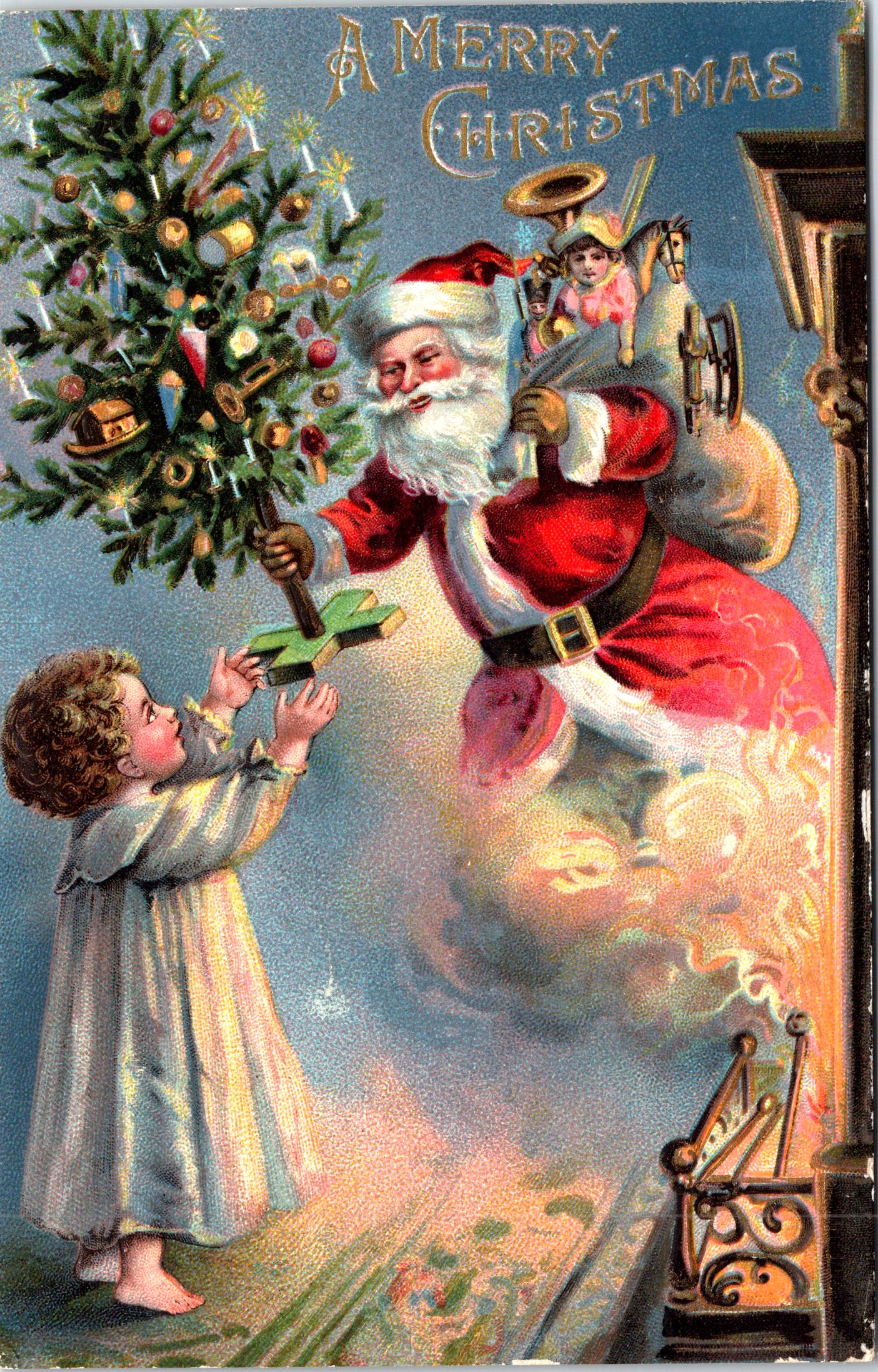
This charming and visually rich antique Christmas gel postcard, dates to 1907, and postally used during the Golden Age of postcards. The front features a beautifully illustrated holiday scene titled “A Merry Christmas.” Santa Claus, depicted in a classic early 1900s style with a red robe and flowing white beard, floats in on a cloud to present gifts to a young child reaching up in delight. A decorated Christmas tree filled with toys and ornaments dominates the left side of the composition, while architectural elements and glowing light effects add warmth and motion to the scene. The image is softly luminous, with rich color saturation characteristic of early high-quality printing. Gel postcards (also known as a gelatine postcard) are printed on a gelatin-coated paper stock that produces a smooth surface and deep, vibrant colors. Gel postcards were especially popular between approximately 1902 and 1912 and were often used for holiday imagery because of their refined appearance and visual depth. The reverse shows a divided back and is postmarked, with a 1¢ Benjamin Franklin stamp affixed. The card was mailed to York, Pennsylvania, and includes a handwritten Christmas greeting reading, in part: “Well Helen I guess you are ready for Christmas. From your friend, Rosa E. Ailes”.  Although unsigned, it is known that P. Sander is the artist that created the art on this postcard. He was a prolific postcard artist during the “Golden Age” (around 1905-1915) known for signing his vintage, often embossed, real photo or artistic cards featuring holiday and travel scenes.  (SOLD)

Published in: on December 19, 2025 at 12:00 pm  Comments (3)  
Tags: , , ,

SANTA ON THE TELEPHONE : ANTIQUE CHRISTMAS POSTCARD : ELLEN CLAPSADDLE c1907

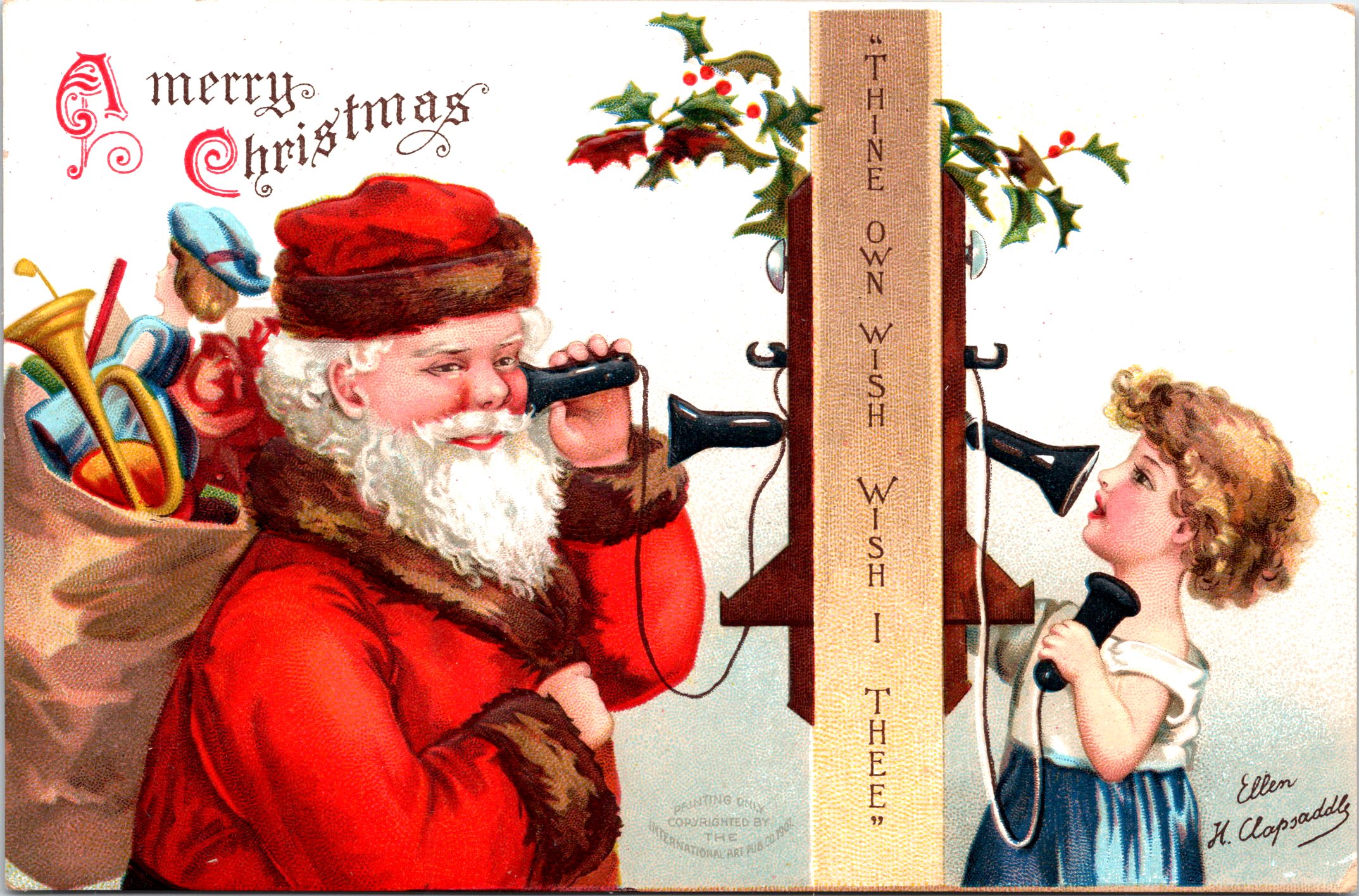
This is a delightful and highly collectible antique Christmas postcard, dating to the early 20th century, circa 1905–1910, produced during the Golden Age of postcards. The front of the card features a whimsical and charming holiday illustration titled “A Merry Christmas.” Santa Claus, dressed in a fur-trimmed red coat and cap, is shown speaking into an early candlestick telephone, while a young child listens eagerly on the other end. Between them runs a vertical banner reading “THINE OWN WISH I THEE,” lending the scene a poetic, old-fashioned charm. Santa’s sack overflows with toys—including musical instruments—while holly decorates the telephone post, reinforcing the festive theme. The image is colorful, lively, and filled with period detail. The artwork is signed Ellen H. Clapsaddle (1865-1934), one of the most celebrated and widely collected postcard illustrators of the era. The postcard was published by the International Art Publishing Co. (IAPC) and is marked on the reverse “New York – Berlin, Printed in Germany.” This international production reflects the high printing standards and rich color quality associated with German postcard manufacture of the period. The reverse is a divided back, unused, with no message or stamp. This postcard is in very good antique condition. There is light edge and corner wear, minor surface wear, and gentle age toning. There are no creases or tears observed. Overall, this is a clean, attractive example suitable for display or collection (see scans).

This vintage postcard is available for purchase at my store, The History Peddler, for $14.00 or Best Offer.   

Interested collectors may view the listing here:

https://www.ebay.com/itm/336349936546

ANTIQUE CHRISTMAS GEL POSTCARD: SANTA : GILT EMBOSSED : GERMANY

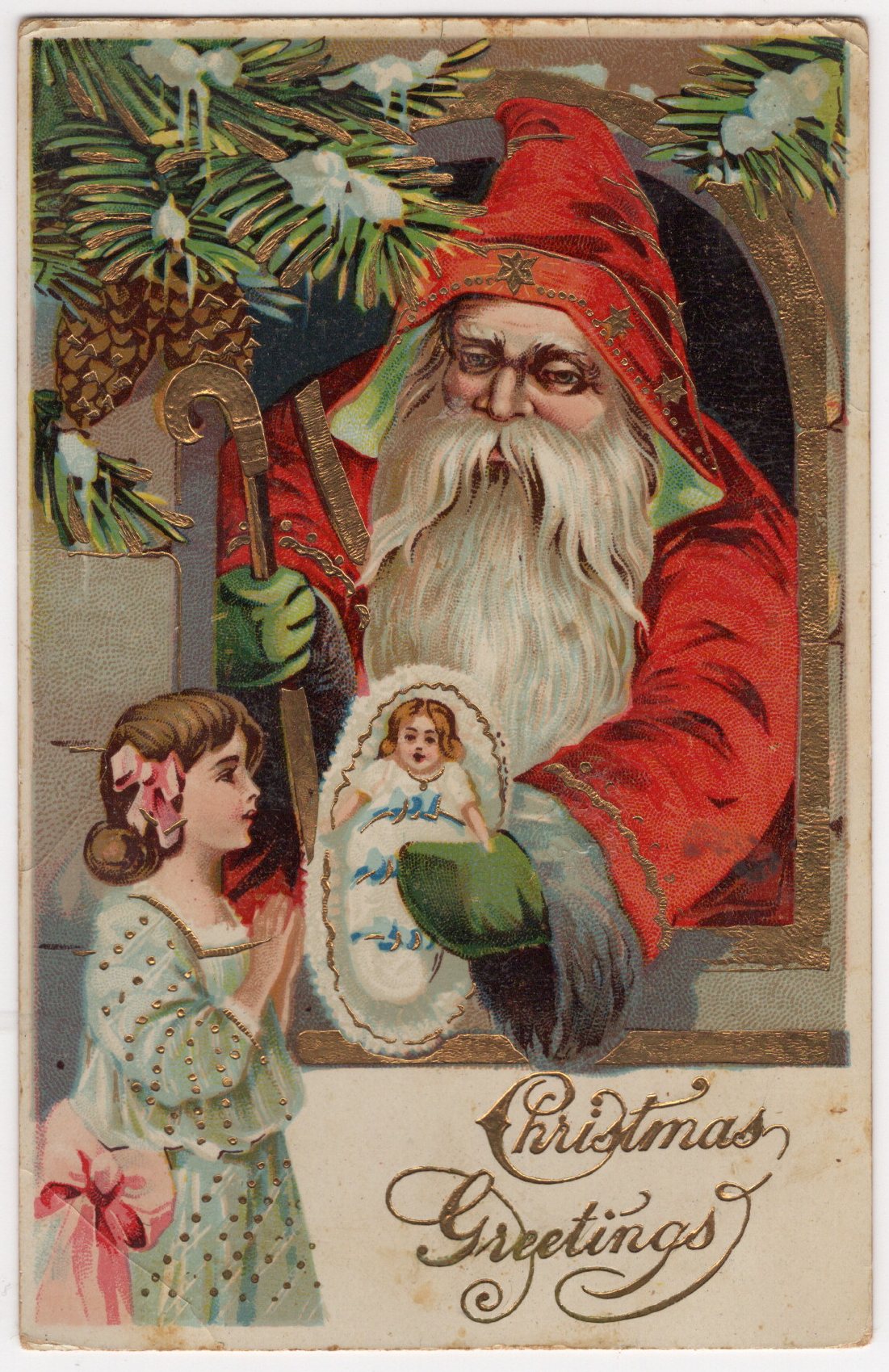
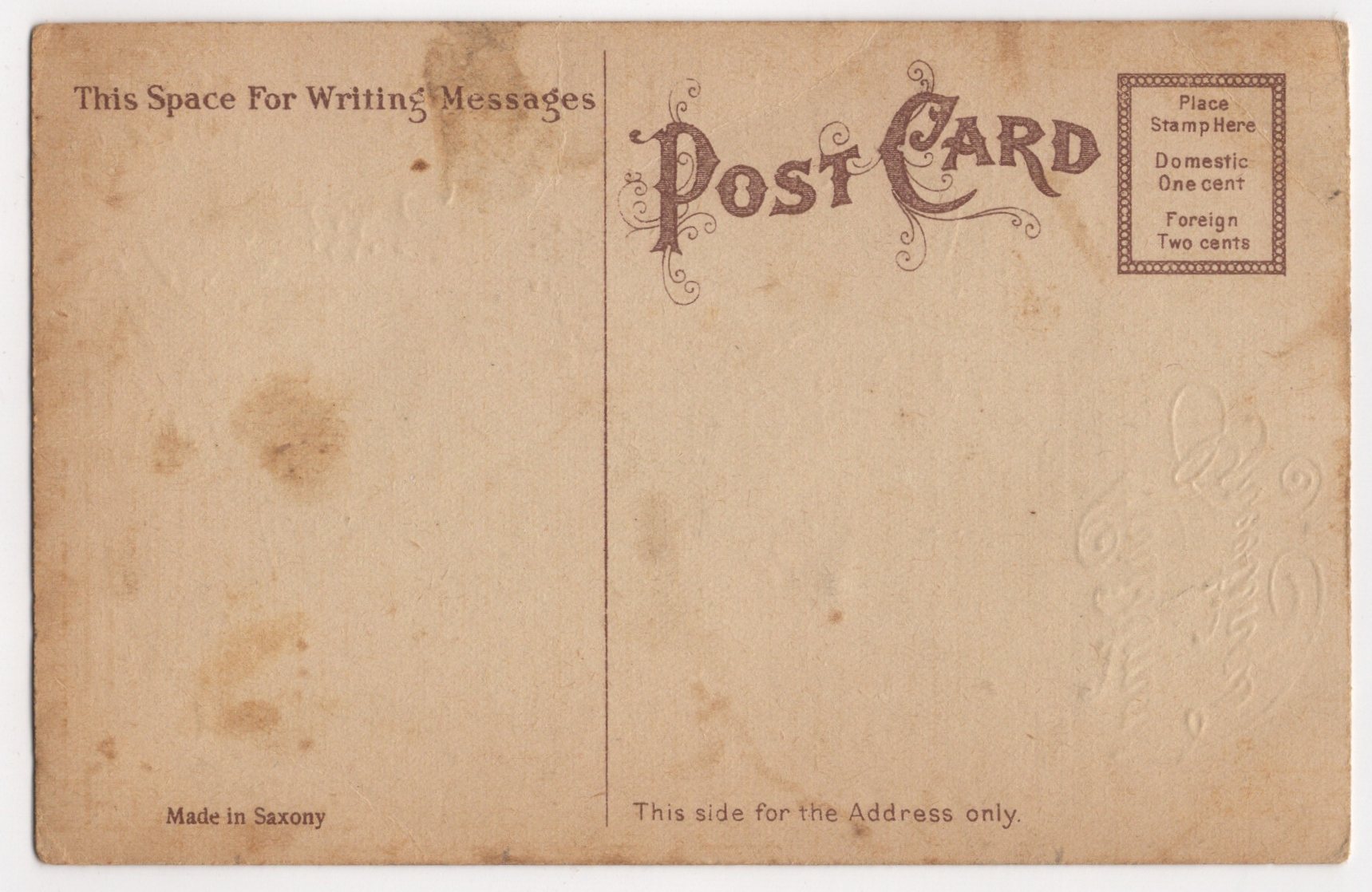
This is a striking and richly detailed antique Christmas gel postcard, dating to the early 20th century, circa 1905–1910, produced in Saxony, Germany, a major center of high-quality postcard manufacturing during the Golden Age of postcards. The front presents a beautifully rendered and sentimental holiday scene featuring a solemn, Old World Santa Claus leaning through a window to present a doll to a young girl clasping her hands in anticipation. Santa is depicted in a long red hooded robe with green gloves and a flowing white beard—an earlier, more folkloric interpretation of Father Christmas that predates the standardized modern Santa image. Evergreen boughs and pinecones frame the scene above, reinforcing the traditional Christmas theme. This card is a gel postcard (also known as a gelatine postcard), printed on a gelatin-coated paper stock that gives the image its smooth surface and richly saturated colors. Gel postcards were most commonly produced in Germany between approximately 1902 and 1912 and are especially prized by collectors for their depth of color and refined print quality. In this example, the gel printing is combined with heavy embossing and extensive gold gilt highlights, including Santa’s robe, the evergreen branches, pinecones, decorative framing, and the elegant script “Christmas Greetings” at the lower right. The gilt remains bright and reflective, adding dimension and visual appeal. The reverse is a divided back, clearly marked “Made in Saxony.” The card is unused, with no message or postal cancellation. (SOLD)

Published in: on December 18, 2025 at 8:52 am  Comments (1)  
Tags: , , ,

SAILOR BOY IN WILMINGTON, NORTH CAROLINA (FUTURE NAVAL OFFICER?)

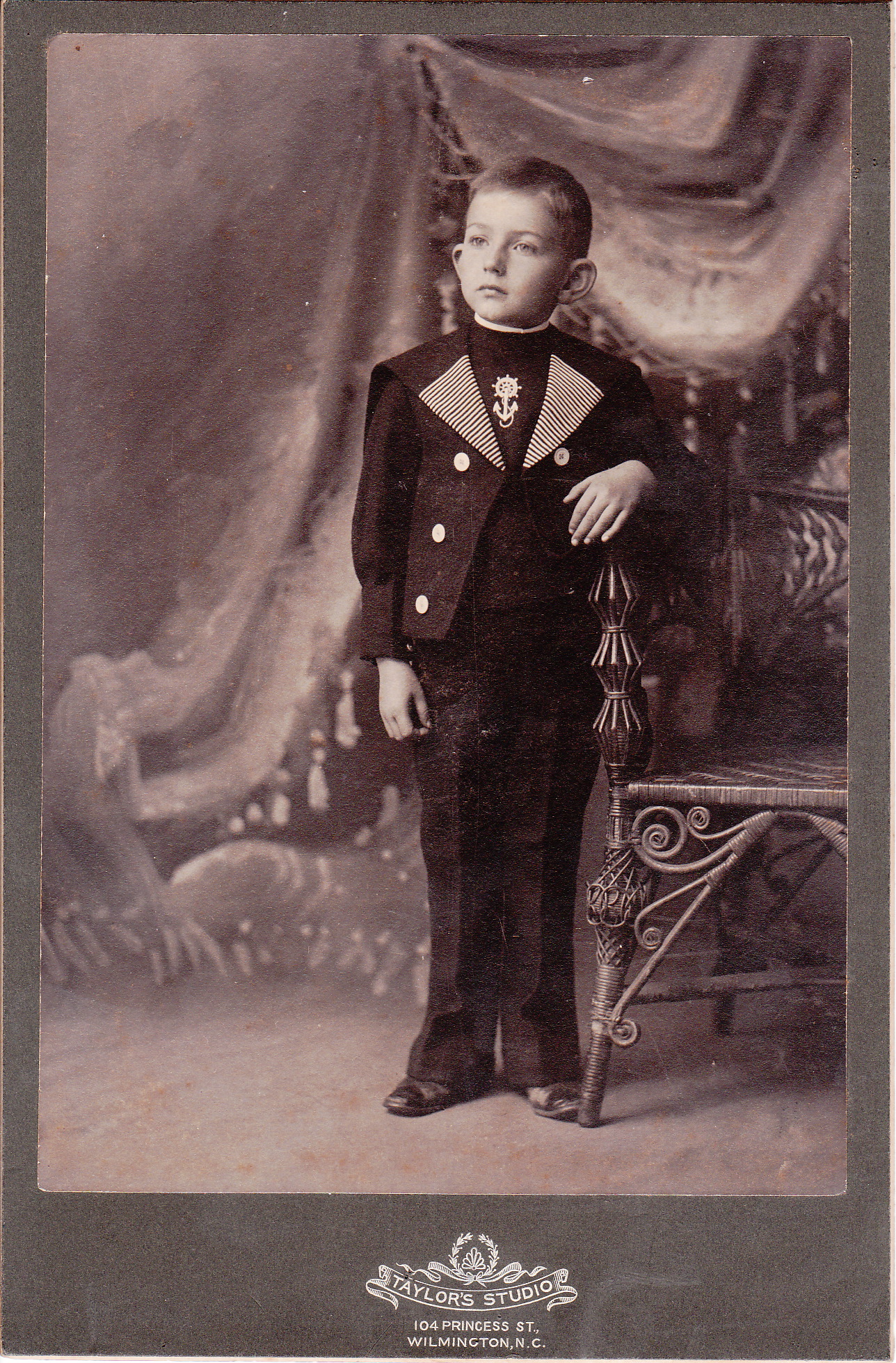
This photograph captures a young boy dressed in a formal sailor suit. The outfit is unusual, as most children wearing nautical clothing in photographs of this era are not clad in such a fine suit. The photographer is Taylor of  Wilmington, North Carolina. Wilmington is a US naval port and it is very possible that this boys father was a high ranking naval officer stationed there. One can surmise that he was an officer because a child dressed in such finery must come from a well-to-do family.  (SOLD)

Published in: on December 17, 2025 at 12:00 pm  Leave a Comment  
Tags: , , ,

CAMILLE CLIFFORD : THE GIBSON GIRL : STAGE ACTRESS : HAND TINTED : ROTARY RPPC

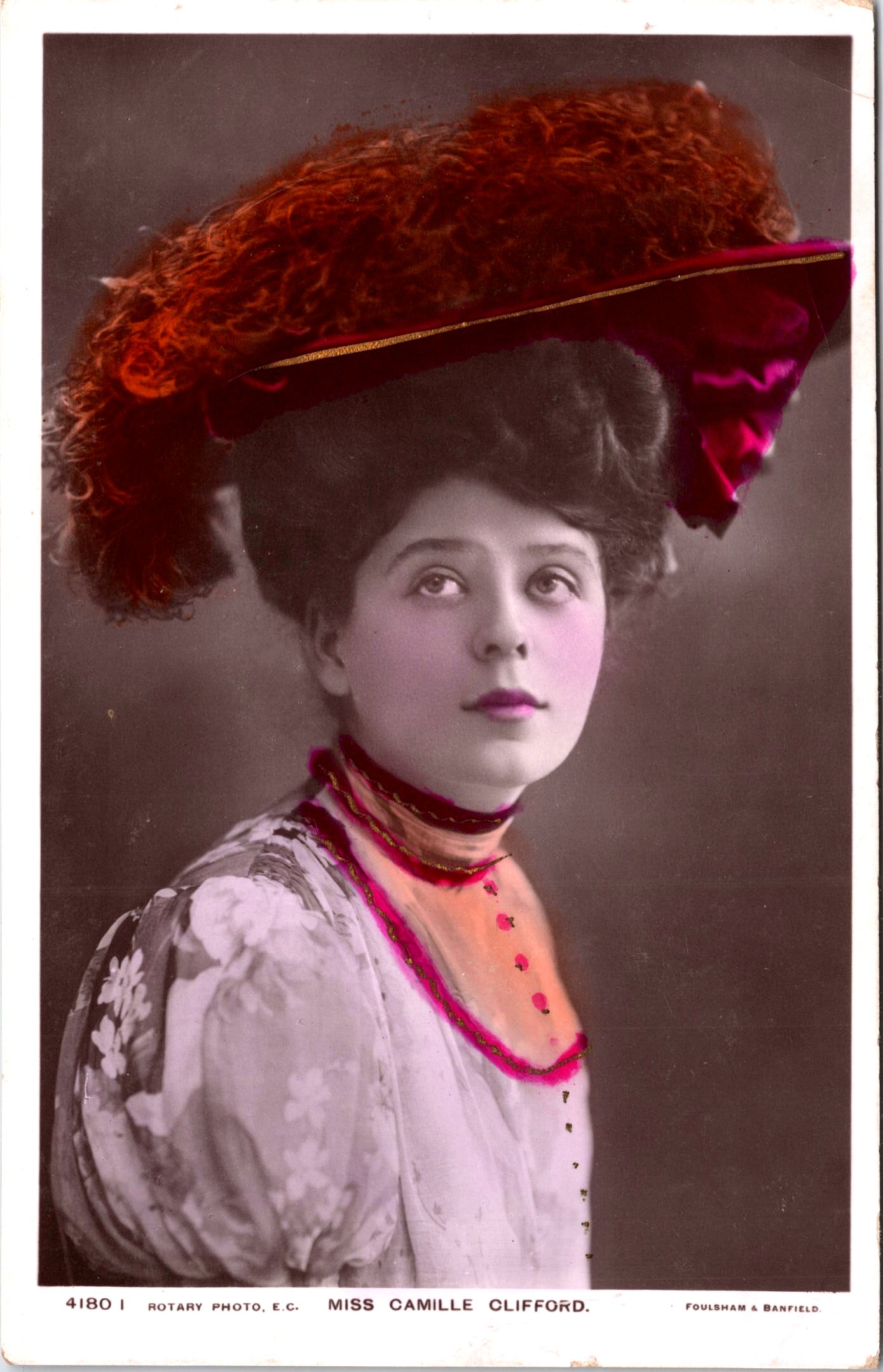
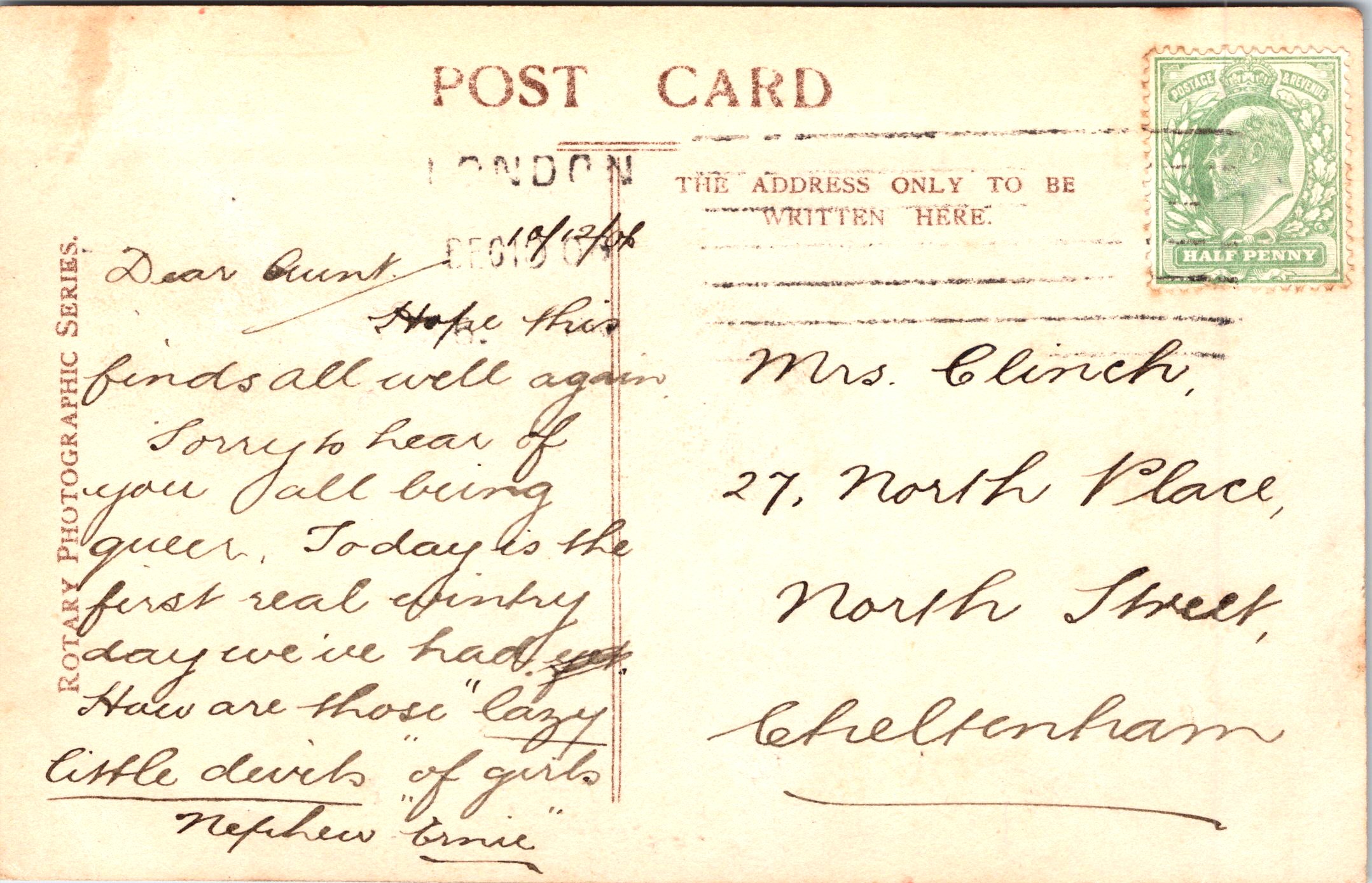
Camille Clifford (1885–1971) was a Belgian-born stage actress and fashion icon best known as the quintessential “Gibson Girl”, a feminine ideal created by American illustrator Charles Dana Gibson. Born in Antwerp, Belgium, she was raised in Sweden and later in Boston, Massachusetts. In 1902, she entered and won a contest sponsored by Gibson seeking the perfect embodiment of his Gibson Girl drawings, which rocketed her to fame. Clifford’s signature look — an hourglass figure, piled-high coiffure, and aristocratic bearing — made her an immediate sensation in Edwardian society. She soon transitioned to the London stage, where her statuesque beauty often overshadowed her acting roles. Her most famous performance was in the musical comedy The Catch of the Season (1904), where she appeared as the aristocratic Lady Crystal. In 1906, Clifford married the Hon. Henry Lyndhurst Bruce, son of the 2nd Baron Aberdare, and largely retired from the stage after marriage, though she made occasional returns in the 1910s and 1920s. After her husband’s death in World War I, she lived a quieter life but remained a symbol of Edwardian elegance. This is a striking hand tinted Rotary Photographic Series real photo postcard featuring Miss Clifford, serial number (4180 I). It was published by Rotary Photo, one of the most prolific and respected postcard publishers in early 20th-century Britain.  In this image, Camille Clifford appears wearing an immense, lavishly plumed hat in rich tones of red and deep pink, its dramatic sweep perfectly framing her elaborately coiffed dark hair. Her gown, light and sheer with a delicate floral pattern, is accented by a high ruffled collar and ribbons tinted in shades of crimson and coral. The colorist has applied subtle blush to her cheeks and a soft rose tint to her lips, heightening her serene yet alluring expression. She gazes slightly upward and away from the camera, her eyes thoughtful and composed, embodying the calm confidence and refined beauty that made her one of the most photographed women of the early twentieth century. The reverse of the postcard is written and postally used, addressed to Mrs. Clinch, in Cheltenham. The message, written in ink, reads: Dear Aunt, Hope this finds all well again. Sorry to hear of your fall being queer. Today is the first real drizzly day we’ve had yet. How are those “lazy little devils” of girls? Nephew Ernie. The postcard bears a green half-penny King George V stamp, which was first issued in 1911. The postmark is partially legible but shows London, and appears to read 1912. This dating aligns perfectly with the height of Camille Clifford’s stage fame and with the active period of Rotary Photo, E.C. and Foulsham & Banfield, the photographers credited at the right. Together these details place the postcard firmly in the early 1910s, likely around 1912, when hand-colored photographic postcards of theatrical personalities such as Clifford were immensely popular with collectors throughout Britain.  (SOLD)

EARLY 1900s FIG NEWTONS ADVERTISING TRADE CARD NATIONAL BISCUIT CO UNEEDA BAKERS

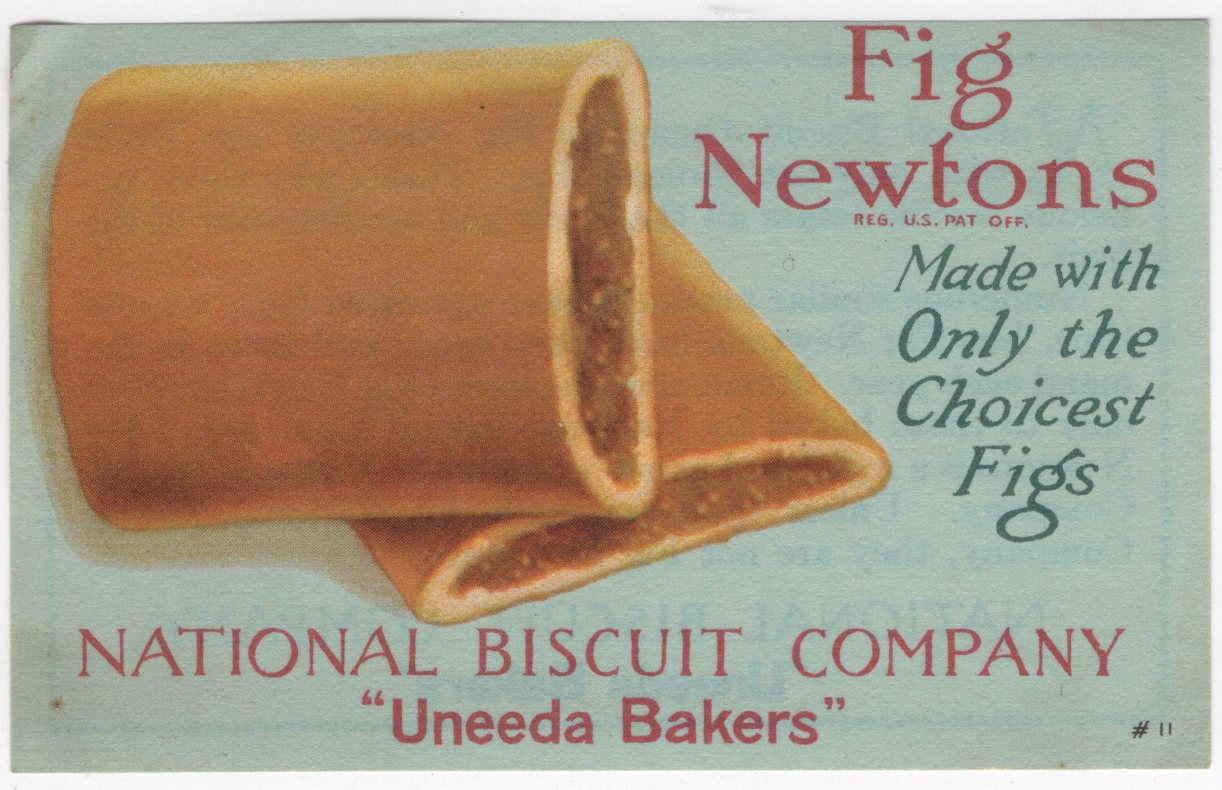
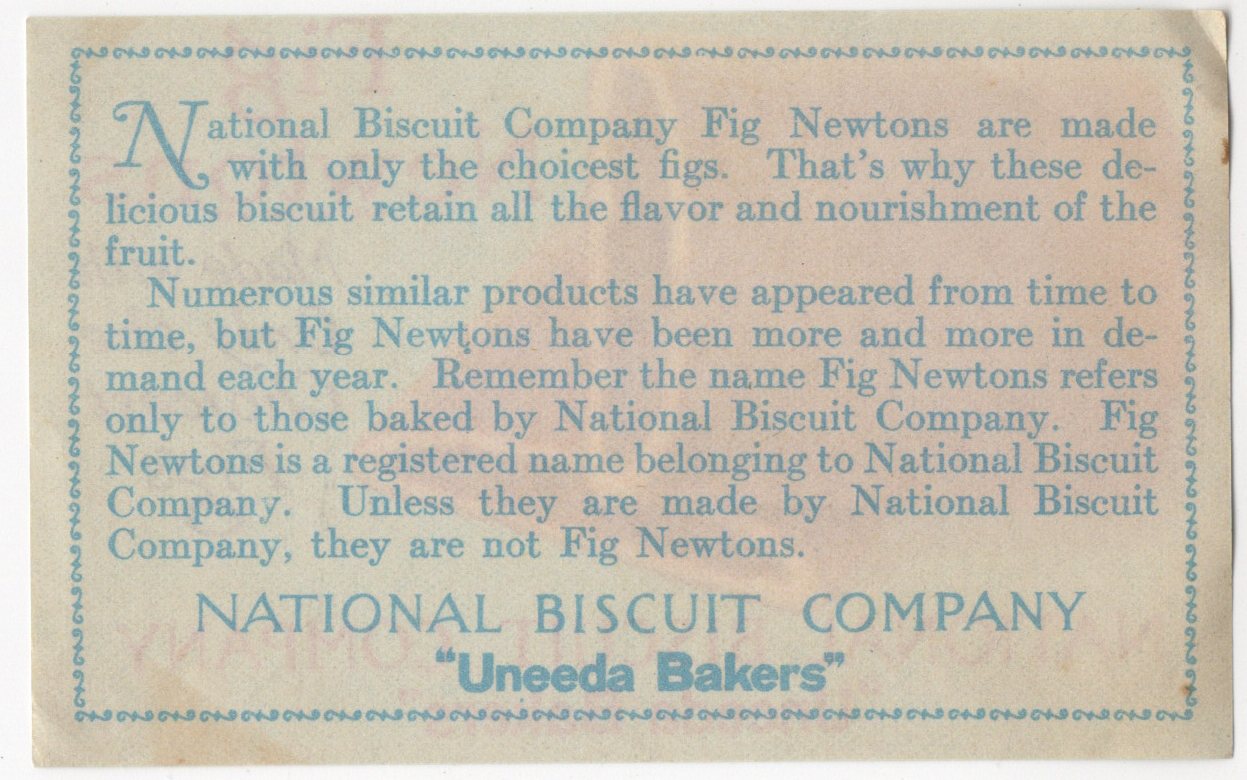
This is a charming early 20th-century advertising/trade card for the iconic Fig Newtons brand, produced by the National Biscuit Company. The card features vivid full-color printing of the Fig Newtons bar and cookies, alongside text: ‘Made with Only the Choicest Figs.’ On the reverse is the company’s advertising message noting Fig Newtons’ growing demand year after year. Printed on thin paper (rather than heavy cardstock), this piece likely was distributed as an insert or giveaway promotion around the 1905–1920 era. SOLD

Published in: on December 15, 2025 at 12:00 pm  Leave a Comment  
Tags: , , ,

ANNIE DUNSCOMBE : BURLESQUE ACTRESS : UNCOMMON CABINET CARD

This cabinet card features early theatre actress, Annie Dunscombe. She was certainly a beautiful young woman. Unfortunately, biographical information concerning Miss Dunscombe appears to be sparse, and further research is necessary. Dunscombe is mentioned in Michael Bennett Leavitt’s book, “Fifty Years of Theatrical Management” (1912). Leavitt writes of a theatrical season where many of the young actresses he worked with, were wed. Annie Dunscombe, then, a member of the chorus, married comedian, J. W. Bradbury.  This cabinet card portrait is by celebrated photographer, Marc Gambier (1838-1900). This image captures Miss Dunscombe in costume. Gambier was born and educated in Paris, France. At the age of 19, he came to America for a very short stint of time. He returned to France and became a student of the great painter, Le Creton. Subsequently, he became a student of another great painter, Camino. He then returned to America and for five years, studied and worked under esteemed photographer, Napoleon Sarony. He then launched his own photography business in New York City. He divided his time between his first love, painting, and his business of taking and selling photographs. Gambier was known as a great historical painter. He was a veteran of the French Army and while in the service, he sketched and painted several important battles. Research reveals that Gambier was listed in the 1880 US census. He was forty-one years old and living in New York City with his family. He is listed as living with his wife Emilie (age 28), daughters Louise (age 10) and Emilie (age 7), and son M. L. (age 2). Also in the residence was a young woman (age 25) who worked as a servant. Gambier was known for the many theatrical photographs he produced as well as for selling postage stamp sized portrait photographs, that people attached to their letters and postcards. This cabinet card has an extremely minor curl and is in veriy good condition (see scans). Annie Dunscombe portraits are uncommon.

This cabinet card is available for purchase at The History Peddler for $40.00 or Best Offer.   

Interested collectors may view the listing here:

https://www.ebay.com/itm/336245539368

Published in: on December 14, 2025 at 12:00 pm  Comments (2)  

A LITTLE GIRL SHORT IN STATURE, BUT LONG ON NAMES: “MISS EVA EMMA ELLA FERBER” IN CINCINNATI, OHIO

According to a notation on the reverse of this photograph, the little girl featured in this cabinet card photograph is named “Miss Eva, Emma, Ella, Ferber”. Perhaps Mr. and Mrs. Ferber were very indecisive people and couldn’t pick a single  name for their daughter. Possibly, the three names that made the final cut were Eva,Emma and Ella; and when the couple couldn’t come to an agreement; they decided to give their daughter all three of the names. The girl with many names, has curly locks and big brown eyes, and is quite adorable. She is sitting on a stone wall beside a statue of a small dog (pug). A search of the U. S. census may have uncovered some biographical information about Miss Ferber. The 1920 census lists a young woman named Eva E. Ferber, age 24,  who lived with her parents in Cincinnati. Her father’s name was Charles and he was employed as an inspector for the Chamber of Commerce. Her mother’s name was Ella (one of the name’s assigned to Eva). The census reported that Eva was employed as a bookkeeper in a clothing store. Her parents were listed as being born in Ohio, but of German heritage. Data from other census reports indicated that Eva had an older brother named Charles and that her   father had once worked as a carriage trimmer.  The photographer of this image is Herman Mueller. To view other photographs by Mueller, click on the category “Photographer: Mueller”. Mueller was born in Germany in 1833. He came to the United States with his wife, Mathilda, and his daughters Maria and Alfrieda. Both of the daughters became photographers and assisted him in the gallery he established in Cincinnati. He was active there from about 1886 until at least 1905. This cabinet card photo is in fair condition. Note a few small scratches evident on the image (see scans).

This cabinet card is available for purchase at The History Peddler for $45.65 or Best Offer.   

Interested collectors may view the listing here:

https://www.ebay.com/itm/236200681262

Published in: on December 13, 2025 at 12:00 pm  Leave a Comment  
Tags: , , , ,