This rare vintage real photo postcard features pretty stage actress, Miss Ethel Hollingshead. Note her fur stole. The animals is whole, face and all. I believe the creature is a mink. Certainly, this garment is not politically correct in today’s world. Not much information about Miss Hollingshead is readily available. The IBDb reveals that she acted in two Broadway plays; “A Message From Mars” (1901) and “Saucy Sally” (1904). She also appeared in “The Boatswain’s Mate” (1907) at London’s Wyndham’s Theatre. A deeper dive into the theater literature is required to learn more about Miss Hollingshead. This postcard was published by Rotary Photo as part of a series (No.1830A). SOLD
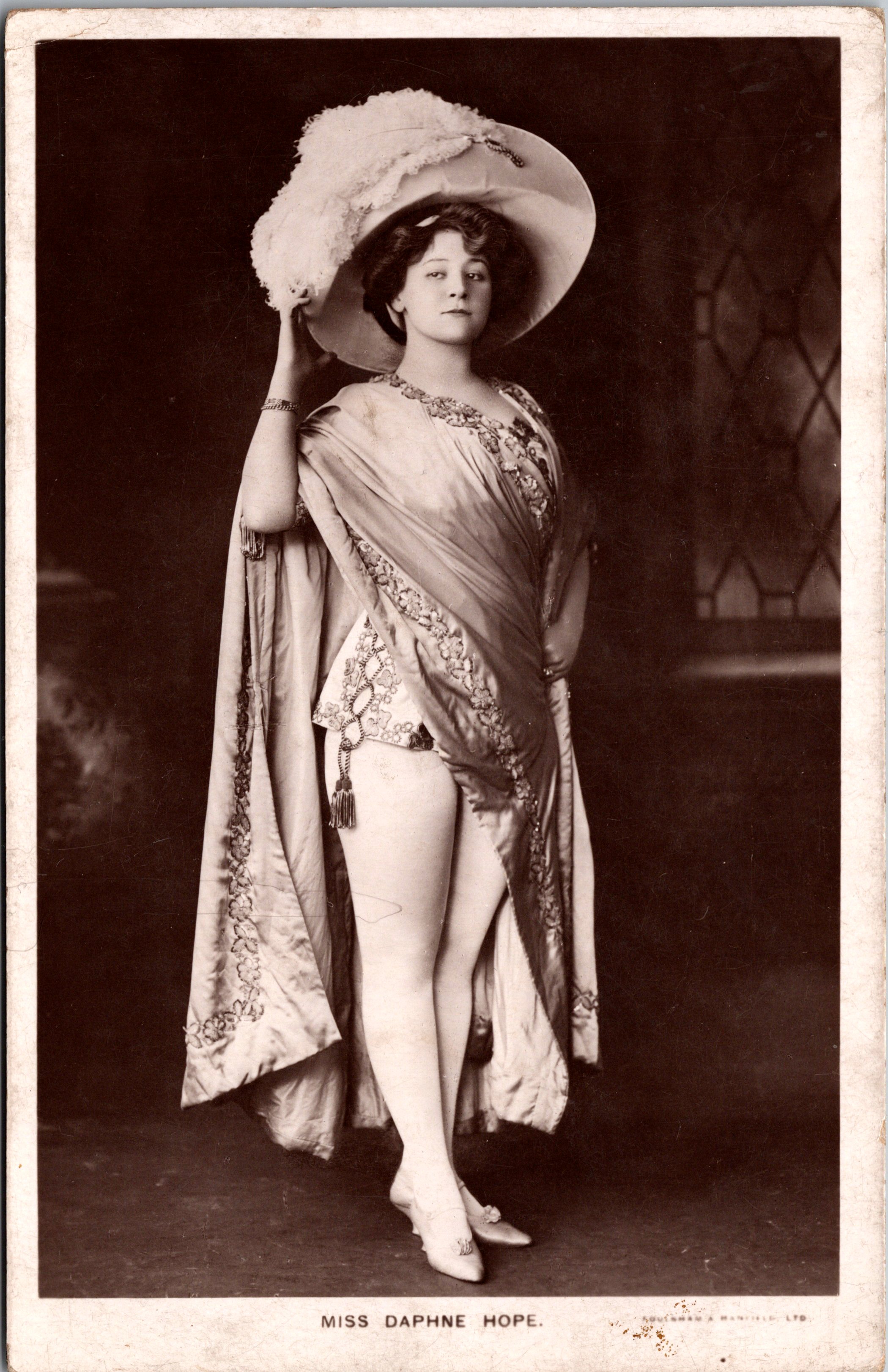
This very uncommon vintage real photo postcard features the pretty young actress and singer, Miss Daphne Hope. She is dressed and posed provocatively for this postcard portrait. Her legs are exposed and she is wearing a short top. Even though Daphne’s legs are covered with flesh colored stockings, this is a risque postcard for it’s era.. Daphne Hope postcards are rare. It is also difficult to find information about her. The website “Footlight Notes” reprinted a 1912 article about Daphne Hope and her performing partner, William Burr. The pair were English music hall entertainers that took their show on the road to New York’s Fifth Avenue Theater. The article states that their talking act and “double singing” was simply “delightful” and “unique”. Hope is described as a “comely blonde, of the robust type, with a very pleasant voice”. The reviewer enjoyed the humorous banter between Hope and Burr. The article described their act as a “sunbeam” compared to the “shadows” vaudeville has imported in the past. SOLD
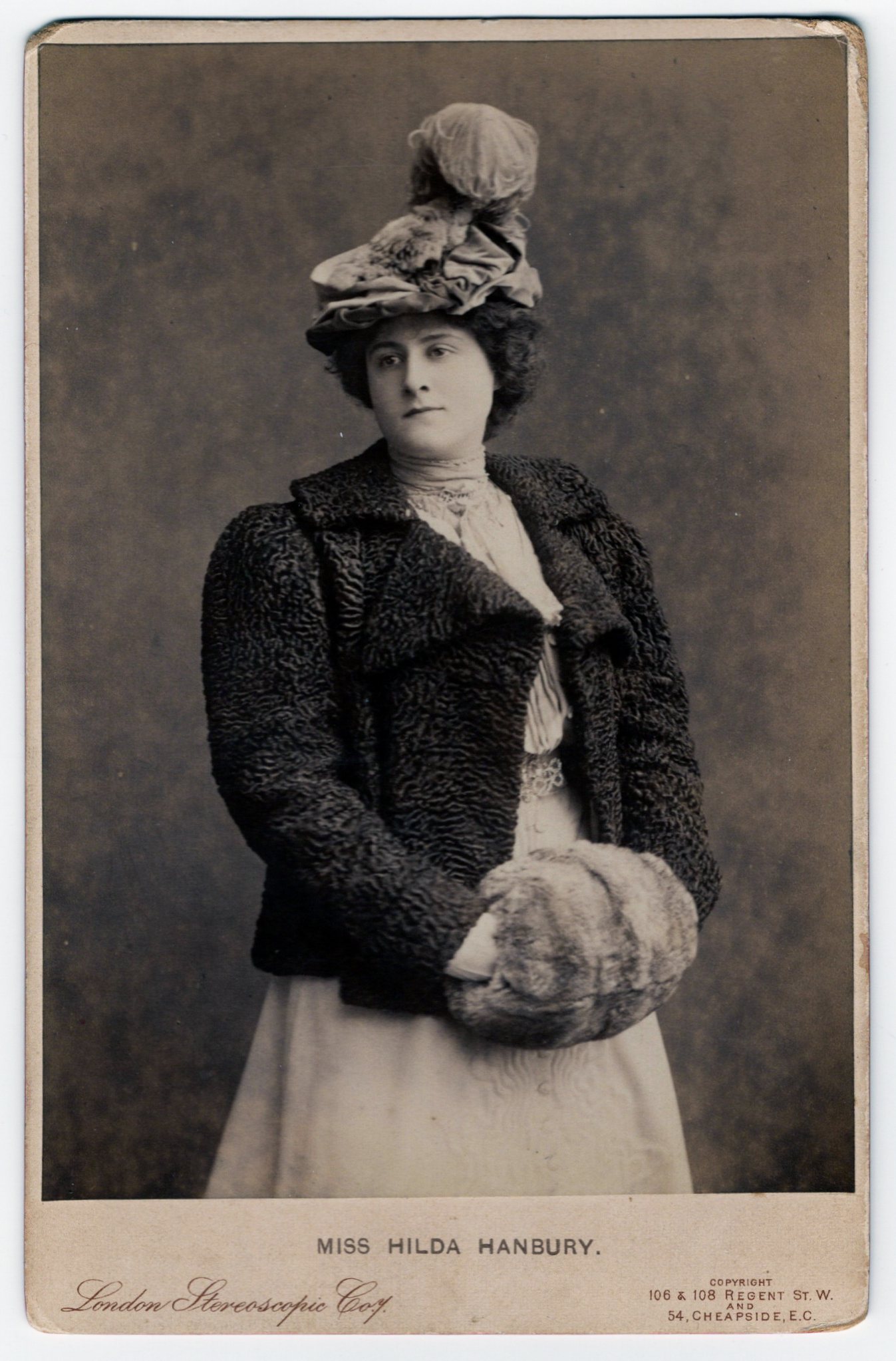
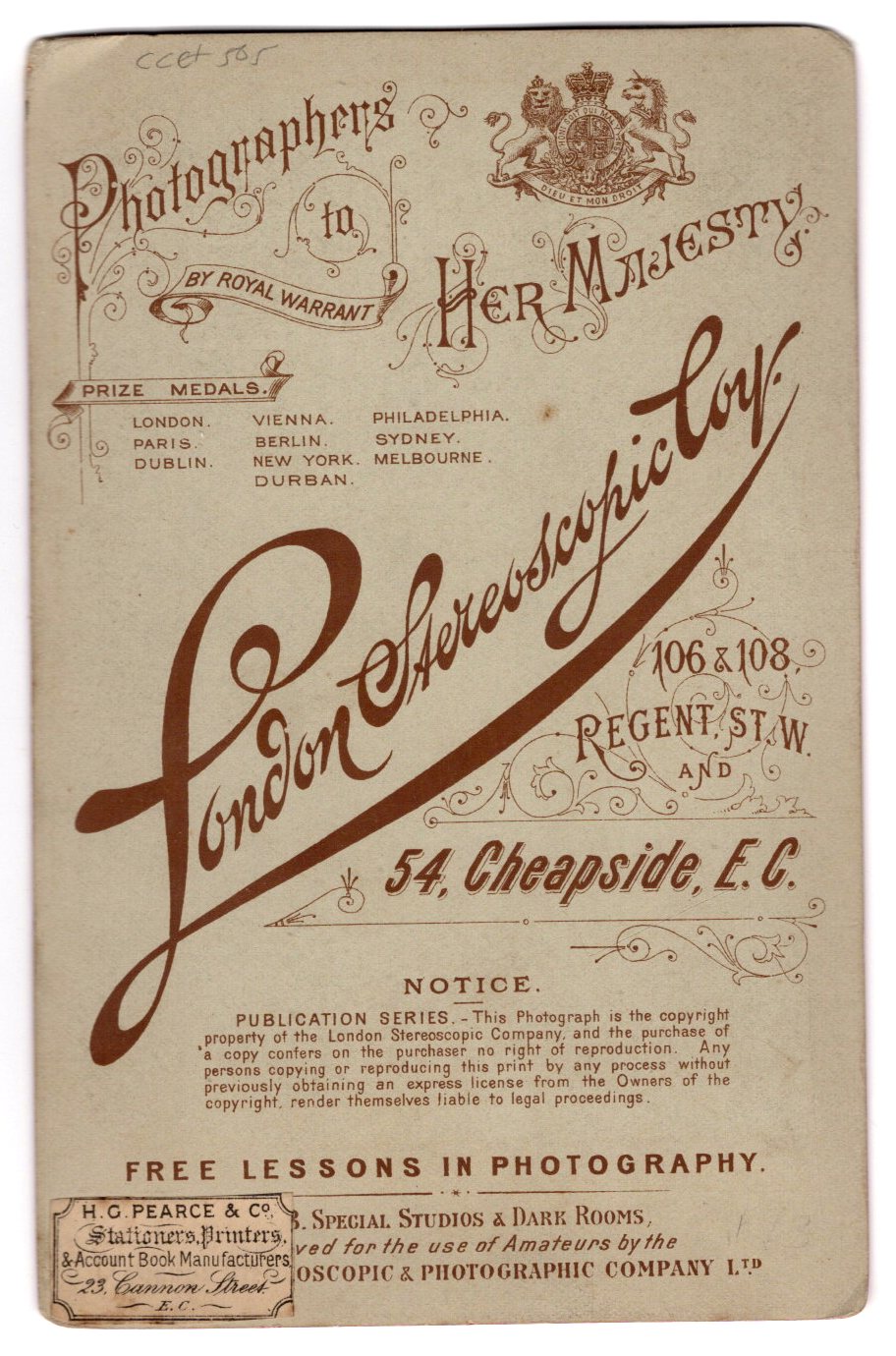
This cabinet card (Photo 1) features early British theatre actress, Hilda Hanbury (1875-1961). She is dressed for winter in this portrait. Note her warm looking coat and her hand-warming muff. Her hat is quite elaborate. Hilda’s sister, Lily Hanbury (1874-1908), was also an actress. Lily’s cabinet card photo portrait can be found elsewhere in the Cabinet Card Gallery. Hilda and Lily were cousins to actress Julia Neilson. Hilda began her acting career in the late 19th century and went on to have a successful stage and film career that spanned several decades. Hanbury made her professional stage debut in 1897 and went on to perform in a variety of plays throughout her career, including Shakespearean productions and contemporary dramas. She was particularly known for her performances in the plays of Noël Coward, and appeared in several of his works, including “The Vortex” and “Hay Fever.” Hanbury also appeared in a number of films during the 1930s and 1940s, including “The Ghoul” (1933) and “The Saint in London” (1939). Unlike her sister Lily, her film appearances were often in supportive roles. However, Hilda was considered a “stage beauty” and her image was popular on cabinet cards, cigarette cards, and postcards. Hanbury continued to act into her seventies, and her final stage appearance was in a production of Coward’s “Waiting in the Wings” in 1960. Hanbury was a close friend of playwright Noël Coward, and she appeared in several of his plays over the course of her career. Hanbury was known to be an avid bicyclist and a passionate gardener and was a member of the Royal Horticultural Society. She was a judge at flower shows and often exhibited at the Chelsea Flower Show. Hilda married Arthur William Fox (1870-1956) in 1905. After the marriage, she retired from the stage and lived in a sixteen-room house. The couple had nine servants. Hilda and her husband divorced in 1923. The divorce was precipitated by her husband’s adultery. The photograph seen on this cabinet card was taken by the London Stereoscopic Company, located in Cheapside, England. The photo was taken sometime in the 1880’s or 1890’s. Interestingly, there is warning notice on the reverse of the photograph concerning it’s copyright. In addition, there is an advertisement offering photography lessons, on the card’s reverse. There is also an advertisement from H. G. Pearce & Co., a stationer and printer. SOLD
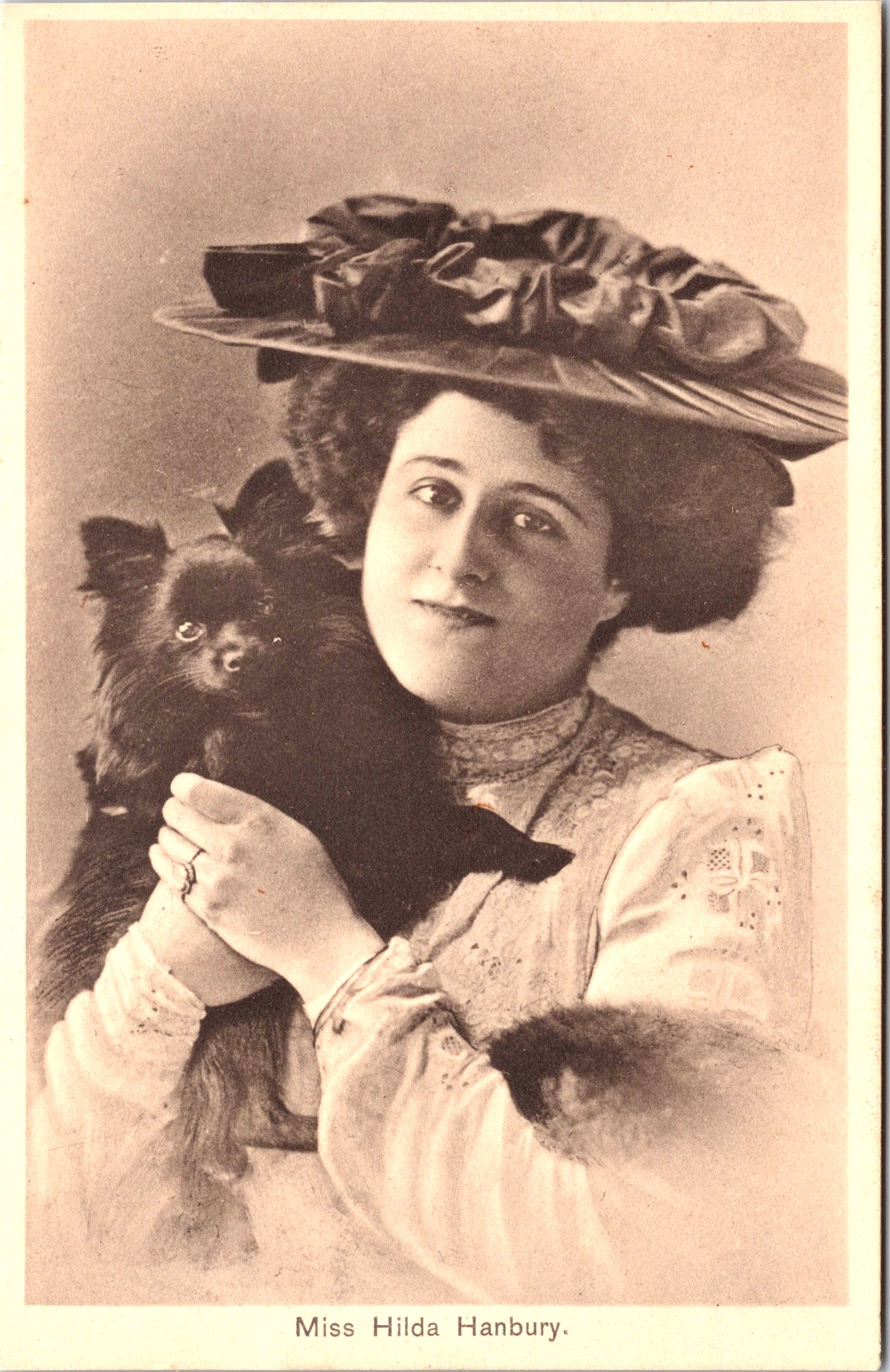
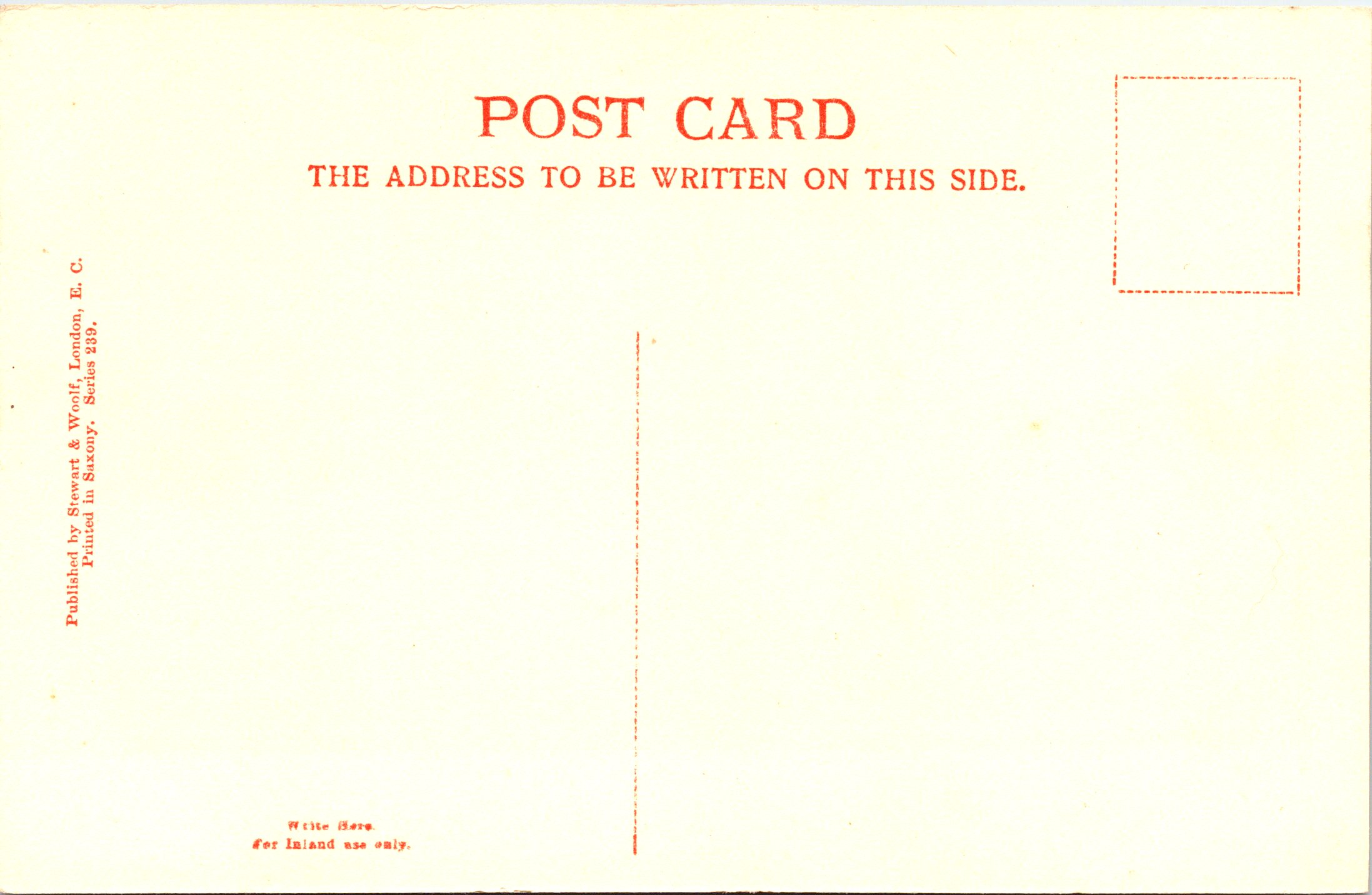
Photo 2 is a vintage real photo postcard featuring Hanbury holding her cute black dog over her shoulder. Note her flat hat. This postcard was published by Stewart & Woolf (London, England). SOLD
Mady Christians (1892-1951) was an Austrian-American actress. She appeared in many films and stage productions, both in Europe and the United States. This photograph captures Christians and two dogs in a scene from the silent film “Zoph und Schwert (Braid and Sword)” (1926). Some of her most notable performances include roles in the films “The Great Dictator” (1940) and “The Shop Around the Corner” (1940). She was also a successful stage actress and appeared in several Broadway productions. Christians was forced to flee Nazi Germany in the 1930s and emigrated to the United States where she continued her acting career. She was an active performer between 1916 and 1951. She was born in Vienna. Her father was a well known German actor. The family moved to Berlin and in 1912 they moved to New York City where her father became the general manager of the Irving Place Theater. In 1917, she returned to Europe to study acting under Max Reinhardt. Before the early 1930’s she appeared in several European films. In 1929, she starred in the first full sound film made in Germany. After touring the United States in a play, she was offered a Broadway contract. While appearing in Broadway she became part of a small and influential group of lesbian theater producers, directors, and actors. Christians became involved in political issues. She worked to help refugees, to gain rights for workers, supported Russian War relief, and was involved in other political issues. Her political work brought her to the attention of the FBI and other anti Communist groups, notably the House Committee on Un-American Activities. The FBI investigated Christians when an informant identified her as a “concealed communist”. The investigation virtually ended her performing career. She passed away in 1951 This card was published by Ross Verlag. The firm operated in Berlin, Germany. Note the mention of the German film company Aafa Film-Regie and the film’s director, Victor Janson in the lower right corner of the image. SOLD
This vintage real photo postcard features Spanish actress, singer, and dancer, Carmen Sevilla (1930-2023). She started her career in the 1940’s and succeeded in becoming one of the most popular stars of the Spanish cinema until the 1970’s. Among her film roles were appearances in “Imperial Violets” (1952), “Vengeance” (1958), and “Antony and Cleopatra” (1972). She was also a successful singer who’s discography includes fifteen studio albums. Carmen was born in Seville, Spain. Her father was a composer. After the Spanish Civil War, she and her family moved to Madred and her father and grandfather worked as lyricists for major films. As a child, Sevilla enjoyed singing and dancing and made her stage debut at the age of twelve. In the 1940’s she studied at the Conservatory of Music and took dance lessons. She made her film debut in 1946. In 1947, she competed in the Miss Spain contest. Her first leading film role occurred in 1948 and her career quickly blossomed. Her popularity led to her being sought for advertising purposed. She was in Spain’s first Coca Cola commercial. She made her last film in 1978. In 1991 she began a new career as a television presenter. Sevilla was married twice. Her first marriage was to a well known composer / conductor. In 2012, she was diagnosed with Alzheimers. The disease led to her death just seven days before this posting. Sevilla’s photo portrait, seen on this postcard, was taken by the Harcourt studio. The card was published by the Globe (Paris) and is part of a series (No.203). SOLD
This uncommon vintage real photo postcard (Postcard 1) features silent film icon, Clara Bow (1905-1965 ). She successfully made the transition to talkies in 1929. Bow appeared in 46 silent movies and 11 talkies. She was known as the “It Girl” during the golden age of Hollywood. She was known for her vivacious energy, mesmerizing on-screen presence, and her impressive talent. She was born in Brooklyn, New York and grew up in the borough’s tenements. Both of her parents had mental health issues and she grew up in an unstable and chaotic environment. She was a resilient and determined child and she took on a caretaker role for her younger siblings. She was responsible and mature beyond her years. Despite her humble background, she became a very influential figure in cinema history. Her rise from poverty to stardom, and her groundbreaking portrayals of independent and liberated women, helped her gain an enduring legend of the silver screen. Clara Bow was discovered in 1922 when she participated in a magazine contest searching for new talent. Her photographs were seen by film producer B. P. Schulberg who saw her potential and offered her a screen test. Her screen presence was impressive and she signed a contract with Paramount Pictures. In her earliest films, her versatility was was obvious as she transitioned effortlessly between dramatic and comedic roles. It was the 1927 film, “It” that made Clara Bow a superstar and earned her the nickname of “The It Girl”. She was viewed as modern, charismatic, and sexually liberated. Bow was also successful in “talkie” films, despite her Brooklyn accent. While Bow was successful professionally, her personal life was a “hot mess”. She had a long term troubled marriage to actor Rex Bell (m.1931) and she battled her own mental health issues, including anxiety and depression. In 1933, Bow retired from acting and became a rancher. This vintage real photo postcard was published by Ross Verlag (Germany) as part of a series (No.3394/1). Bow is wearing a grass skirt, a Hawaiian Lei, and holding a ukulele. She is showing her bare legs. The card is risque for it’s era. The logo for Paramount Pictures can be found in the images bottom right hand corner. SOLD
Postcard 2 was published by Ross Verlag (Germany) as part of a series (No.4480/1). Bow is wearing a short skirt. She is showing her bare legs. The card is risque for it’s era. The logo for Paramount Pictures can be found in the images bottom right hand corner. SOLD
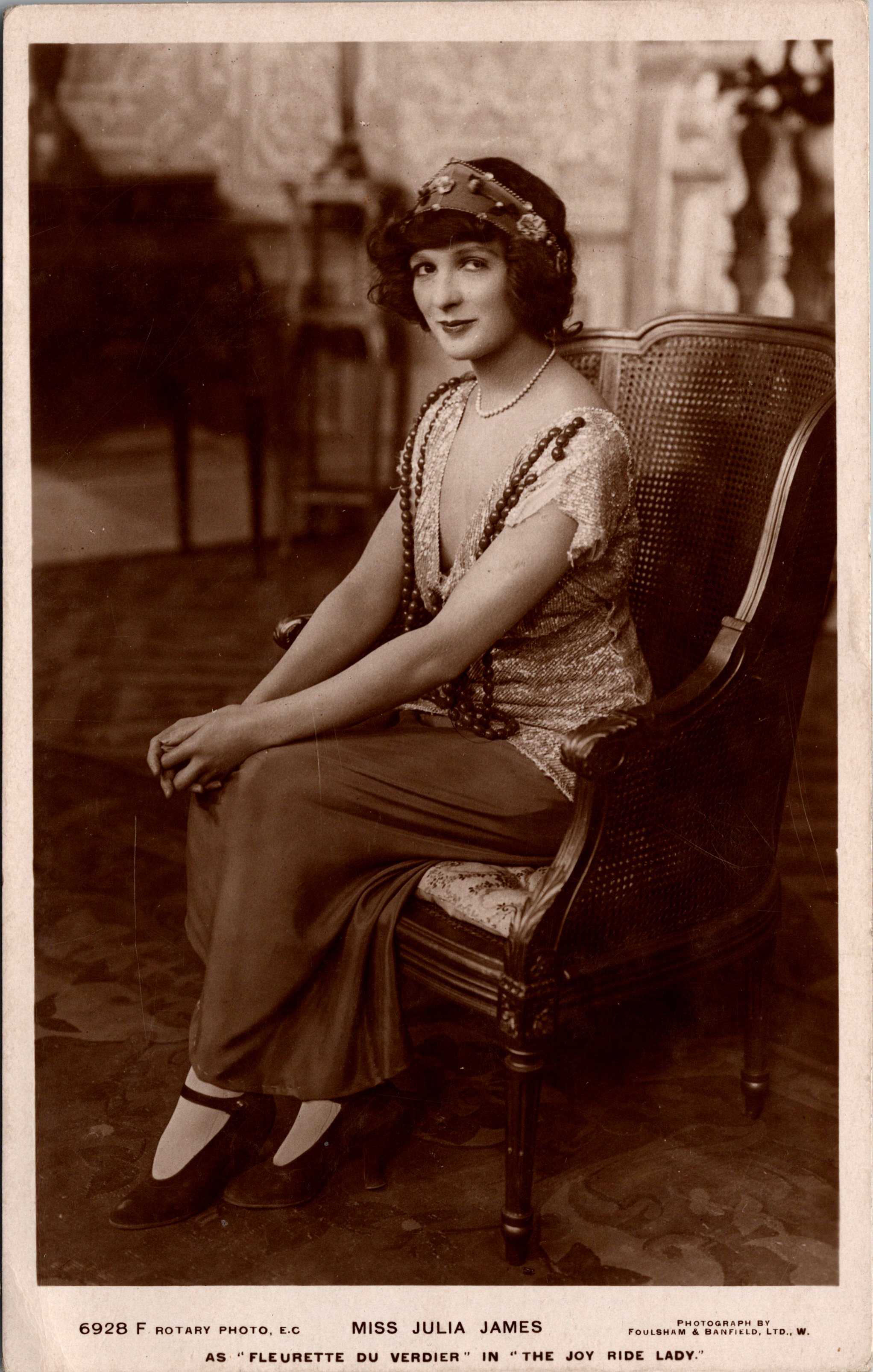
Postcard 1 features Julia James (1890-19F64), a beautiful stage actress. She appears in costume from the show “The Joy Ride Lady”. The play appeared in a London’ West End theater in about 1914. She sat in 76 portraits that are part of England’s National Portrait Gallery. She is considered by one theatrical writer to be among the top fifteen most beautiful actresses of the 1900’s Edwardian era. She was born in London, England and began her career as a chorus girl at the Aldwych Theatre under Seymour Hicks. She played in “Blue Belle” in 1905. She appeared in productions at the Gaiety Theatre. These plays included “The Girls of Gottenburg”, “Havana”, and “Our Miss Gibbs”. She performed in Paris in “The Arcadians” (1913). This Rotary Photo postcard was printed in Great Britain. The postcard is part of a series (no.6928F). The photographers of this image are from the Foulsham and Barfield studio. (SOLD)
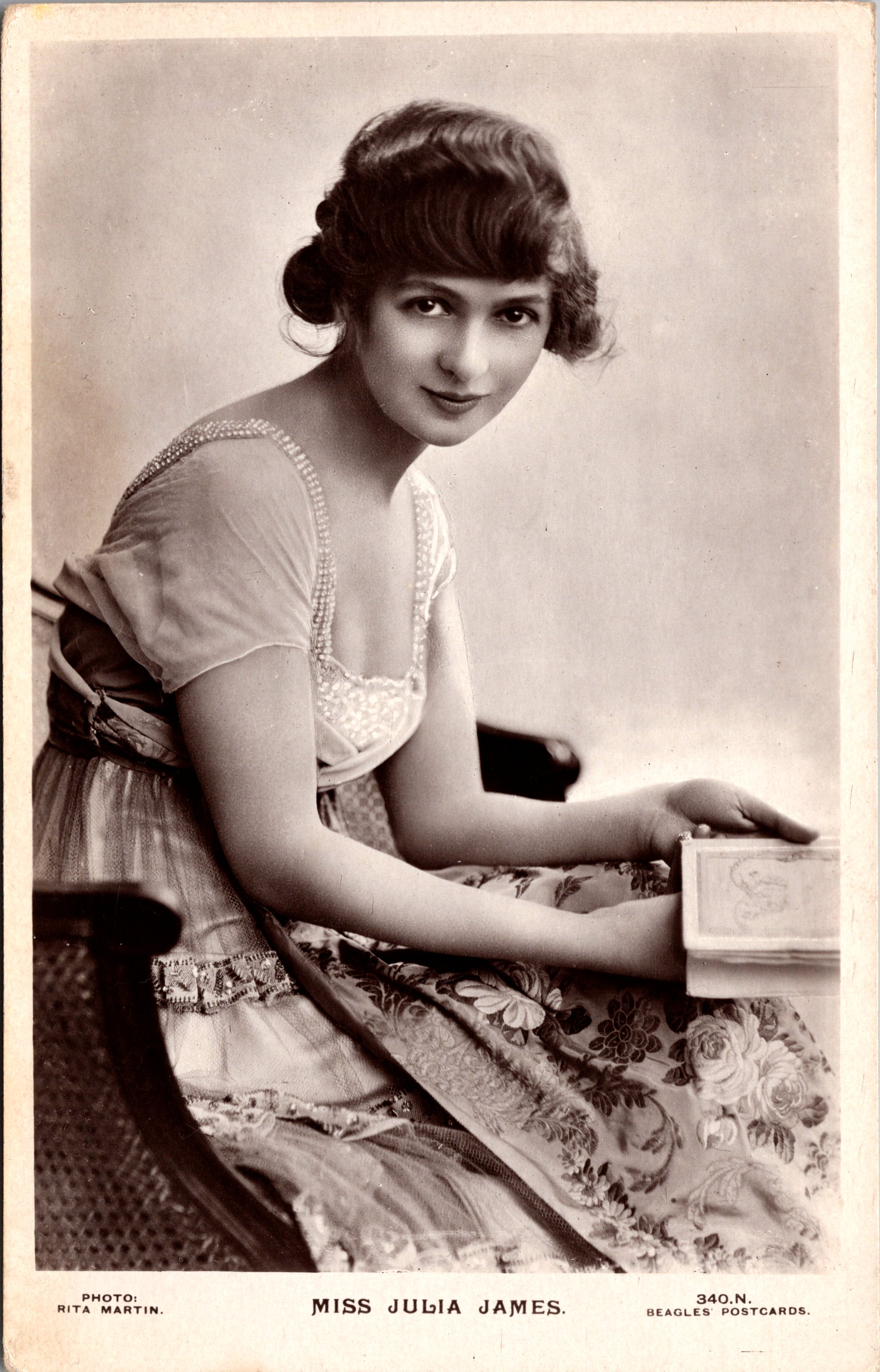
Postcard 2 was published by Beagles and was printed in Great Britain. The postcard is part of a series (no.340N). The photographer of this image is esteemed celebrity photographer, Rita Martin. (SOLD)
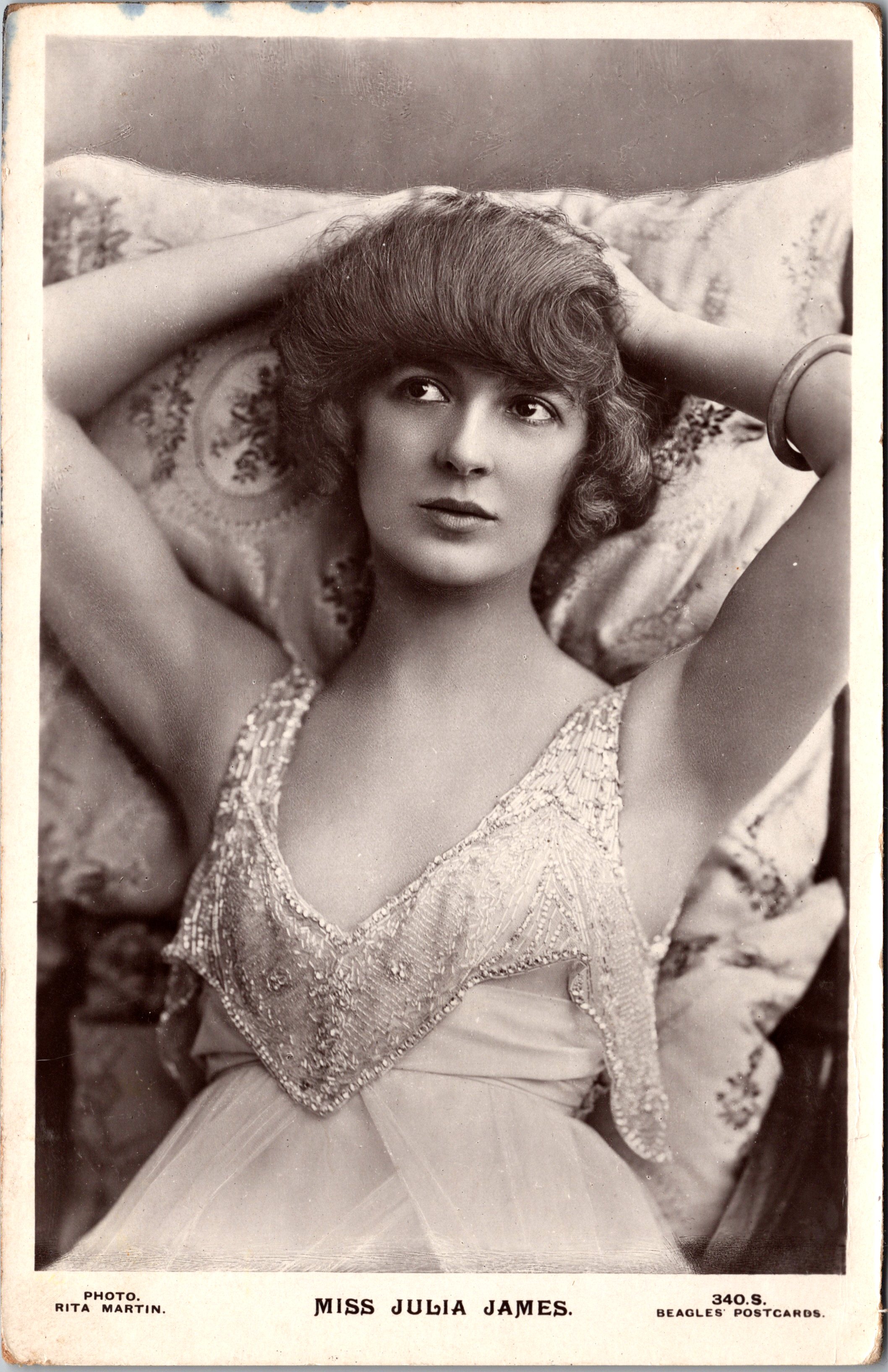
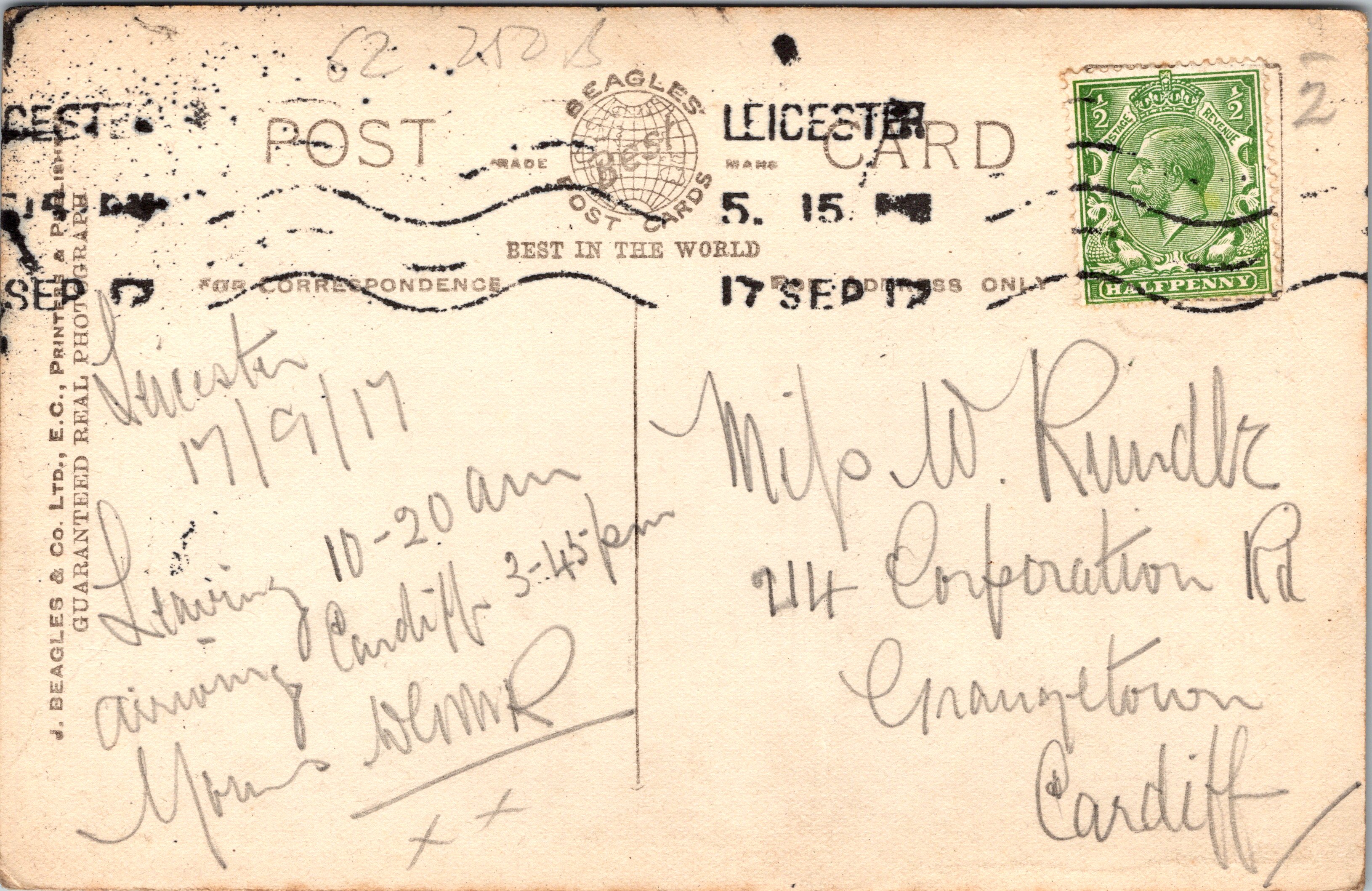
Postcard 3 was published by Beagles and printed in Great Britain. The card has a 1917 postmark. The postcard is part of a series (no.340S). The photographer of this image is esteemed celebrity photographer, Rita Martin. (SOLD)
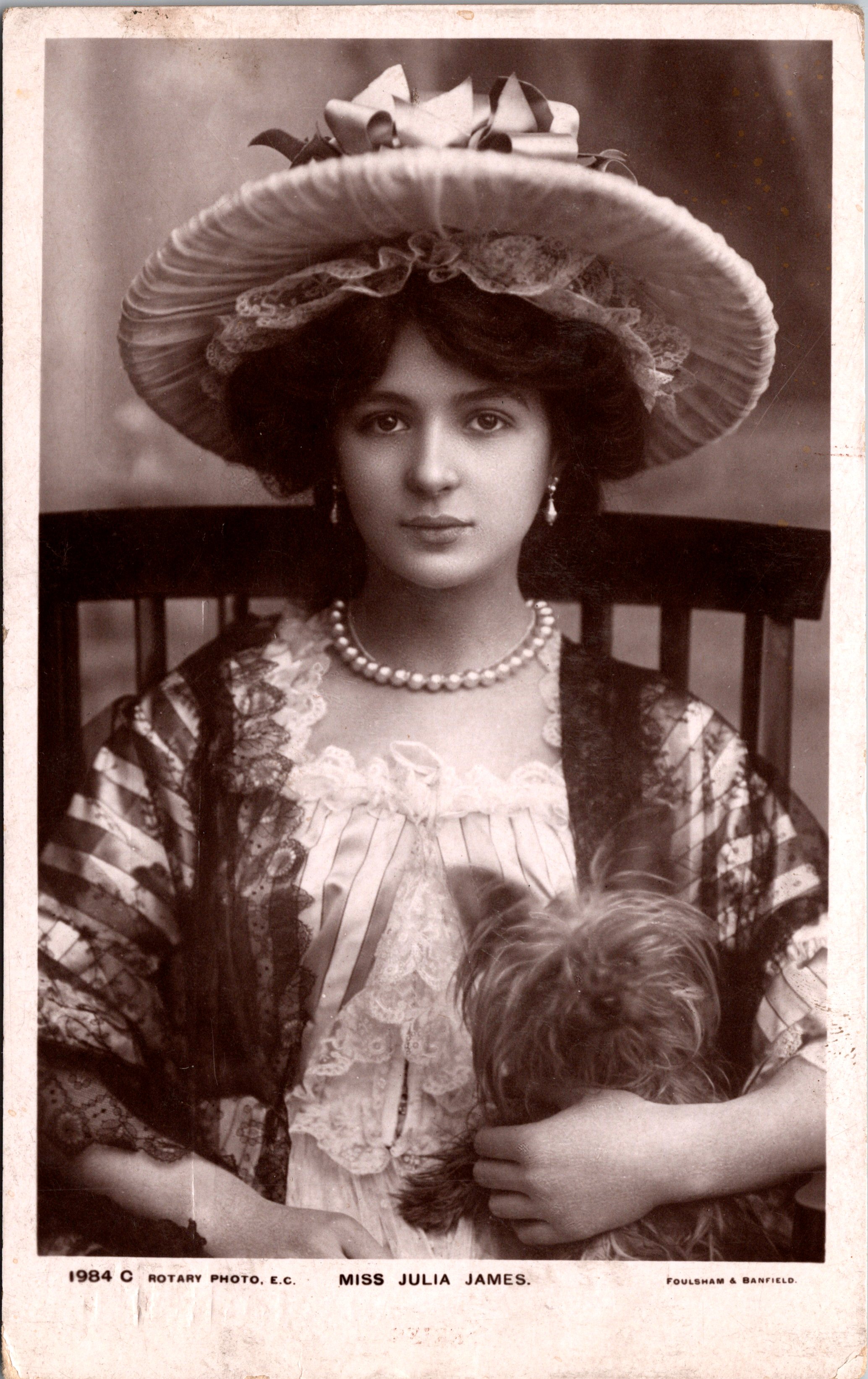
Postcard 4 was printed in Great Britain by Rotary Photo. The card has a 1909 postmark, revealing that Miss James was about 19 years of age when this photo was taken. The postcard is part of a series (no.1984C). The photographer of this image is the Foulsham & Banfield studio. (SOLD)
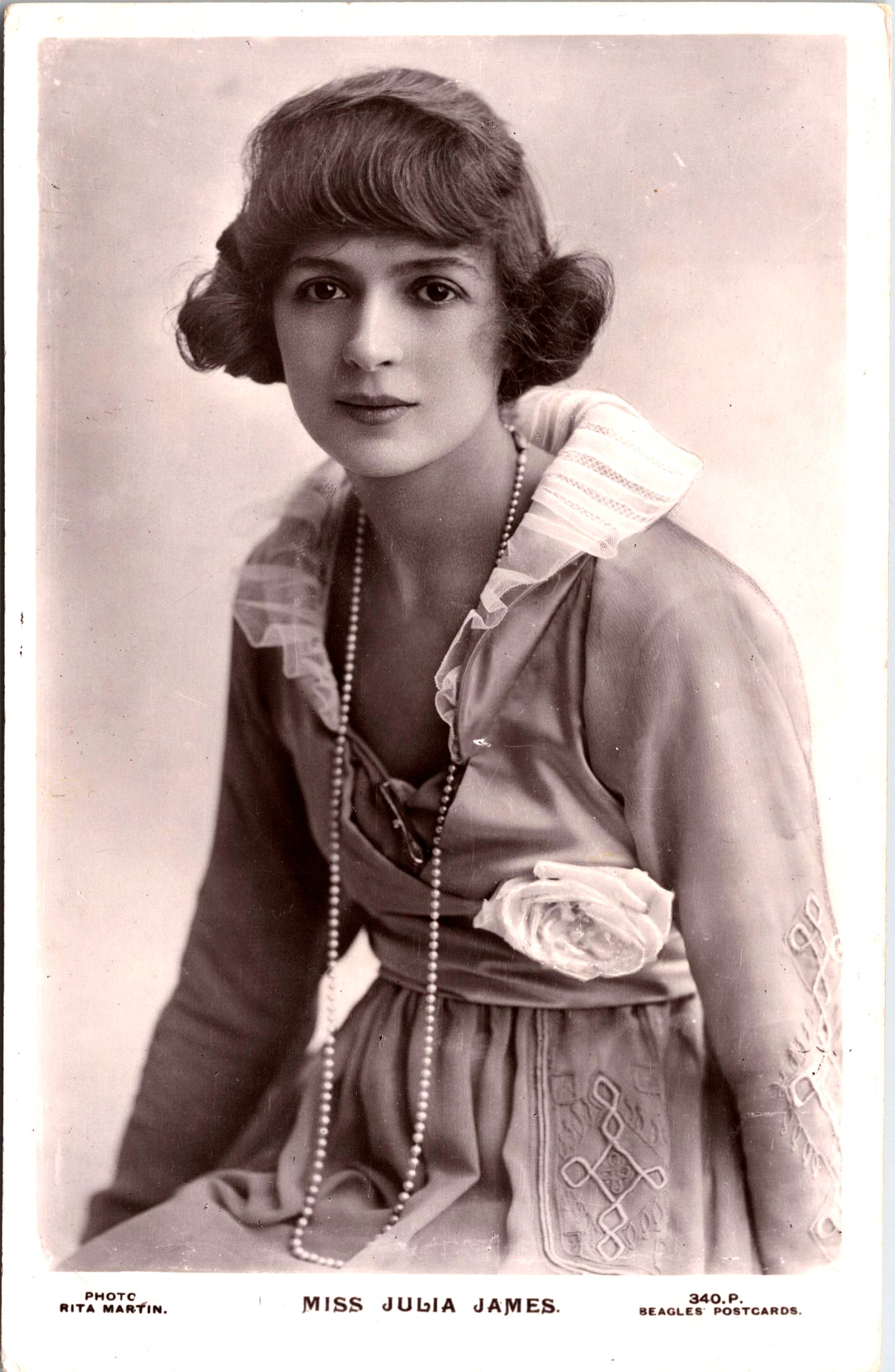
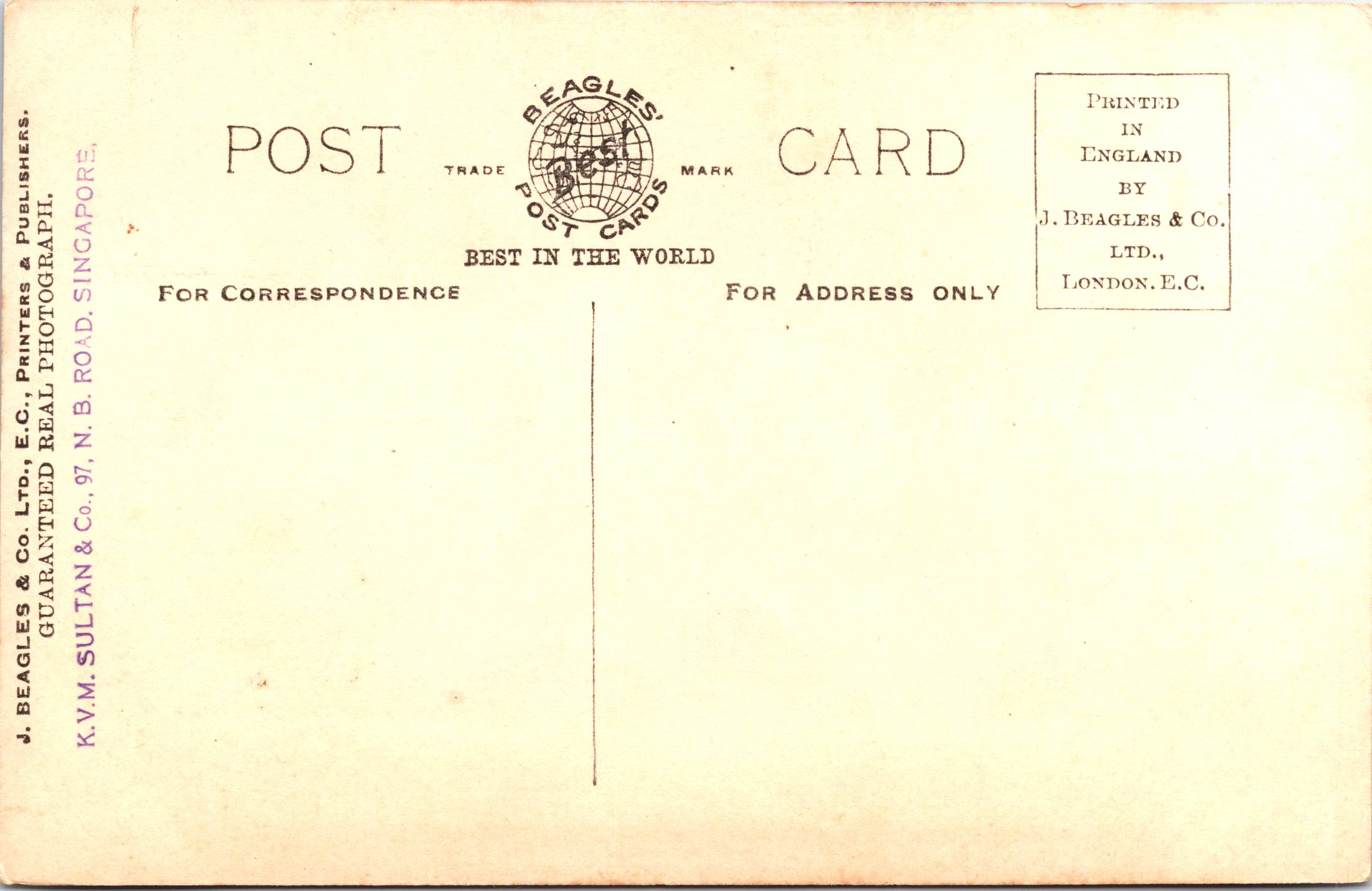
Postcard 5 This vintage real photo postcard features Julia James wearing a long strand of pearls and a pretty dress. Her dress is low cut for her era, making this postcard risque. She was likely a teenager, or in her twenties, when this photograph was taken. This postcard was published by J. Beagles & Co. and printed in Great Britain. The postcard is part of a series (no.340P). The card was distributed by K. V. M. Sultan & Co. which was located in Singapore. The photographer of this image was female. Women photographers were not very common at the time this postcard was published. The photographer of this postcard photo was Rita Martin. She was a talented and well known celebrity photographer. (SOLD)
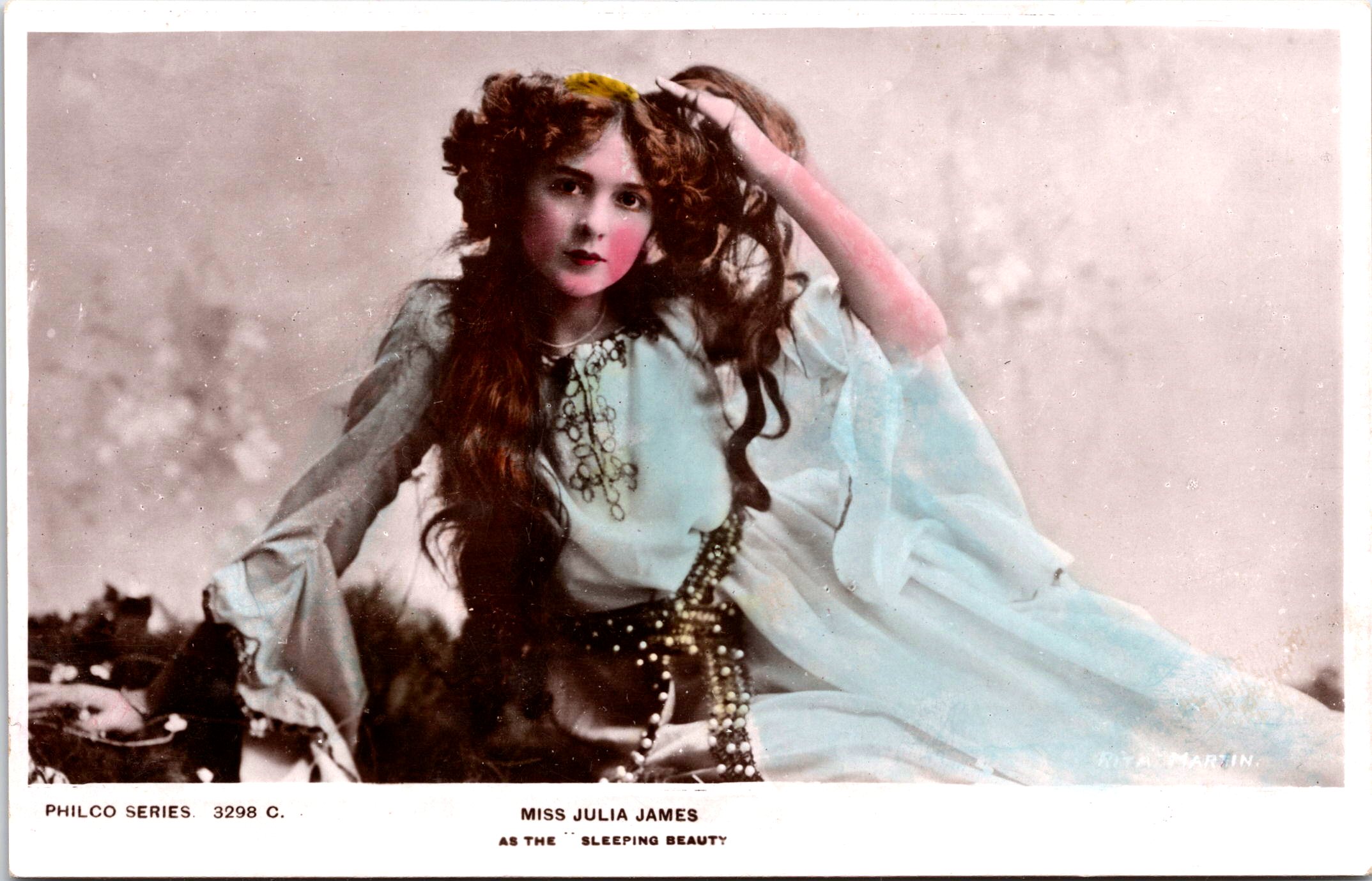
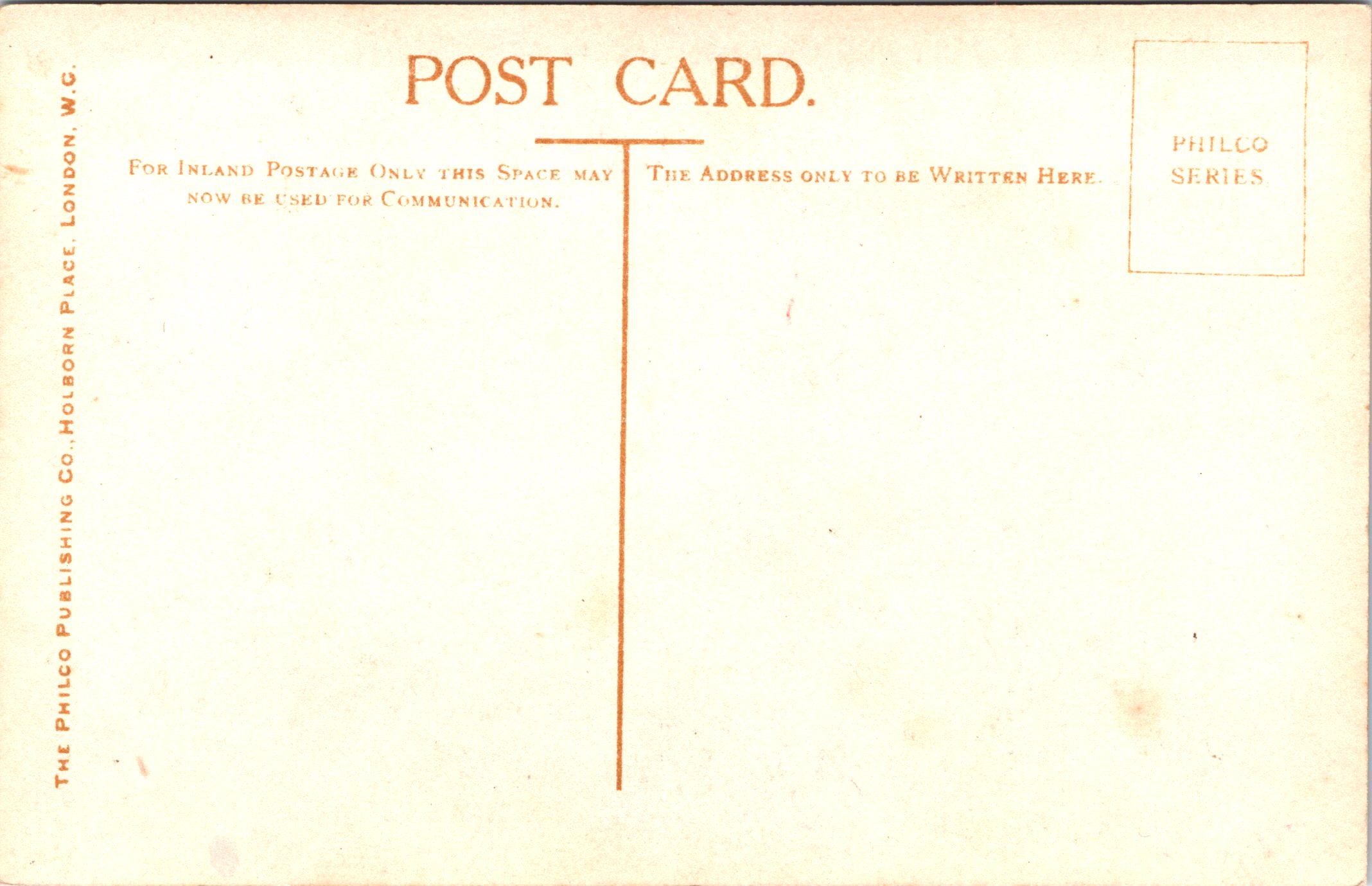
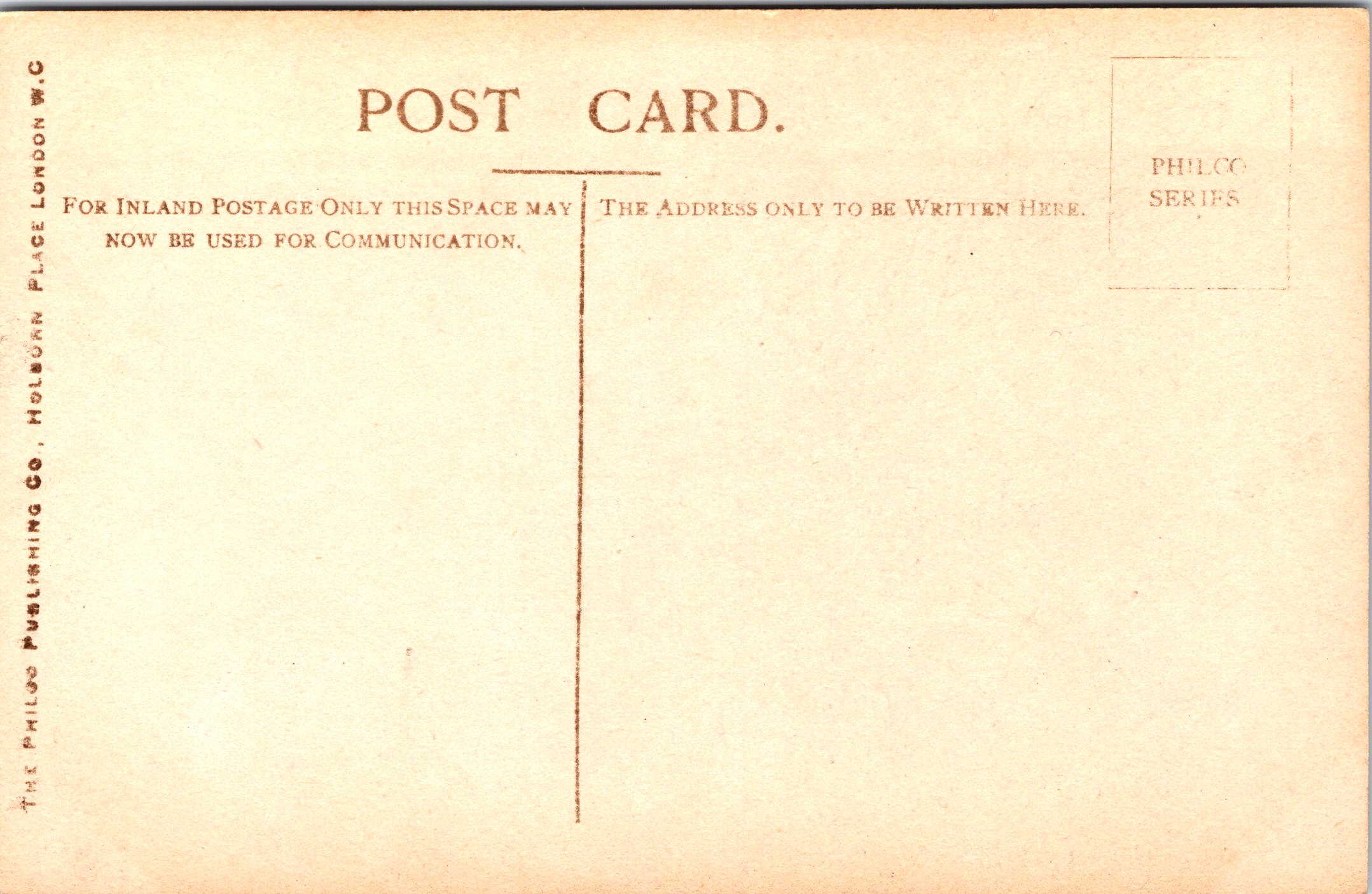
Postcard 6 features Miss James in a scene from “Sleeping Beauty”. This “Philco” postcard was printed in London, England. The postcard is part of a series (no. 3298C). The photographer of this image is the fabulous celebrity photographer, Rita Martin. She is considered one of the best British photographers of her time. Her studio was in an exclusive neighborhood She was born Margareta Weir Martin in Ireland. Margareta “Rita” Martin started her career in photography in 1897 by assisting her elder sister Lallie Charles in running her studio. In 1906 Rita opened her own studio. Rita had a specialty in photographing actresses including Lily Elsie and Lily Brayton. She was also well known for her child studies which often involved children of well known actresses. Rita’s sister, Lallie Charles was more known as an excellent society photographer. (SOLD)
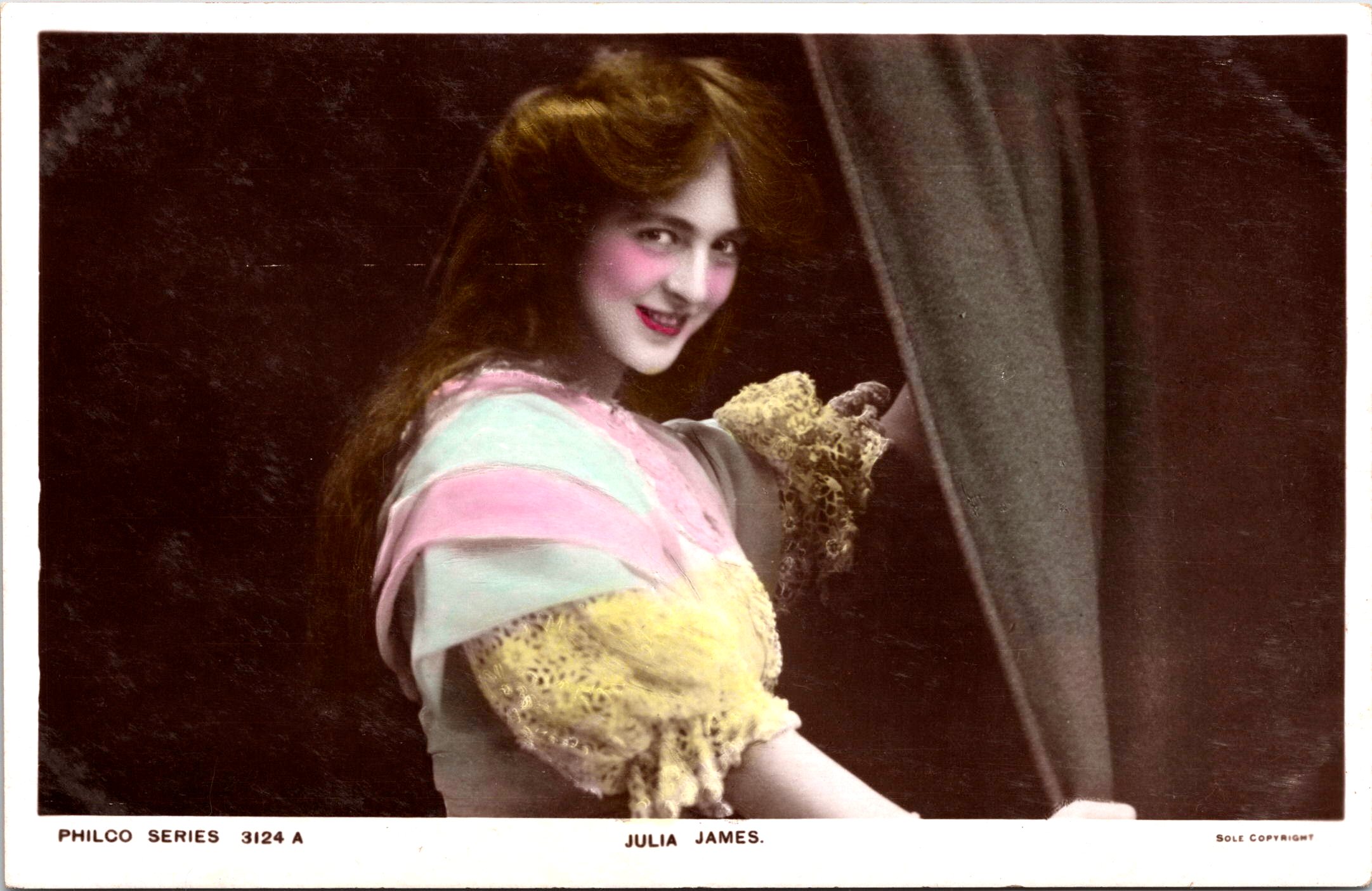
Postcard 7 is beautifully color tinted image of Julia James. Note her long strand of pearls and her pretty dress. Her dress is low cut for her era, making this postcard risque. She was likely a teenager, or in her twenties, when this photograph was taken. This postcard was published by Philco and printed in Great Britain. The postcard is part of a series (no.3124A). (SOLD)
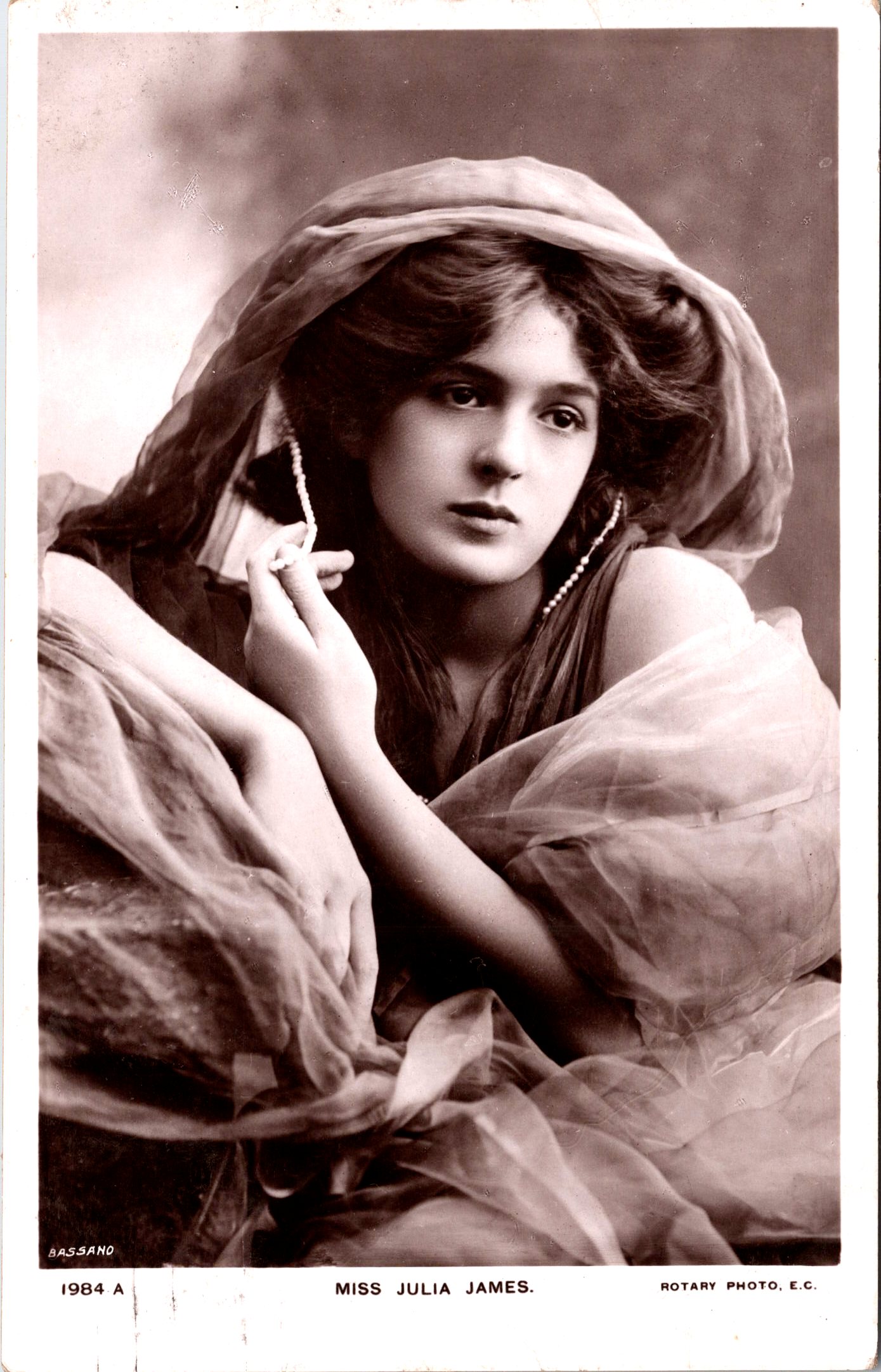
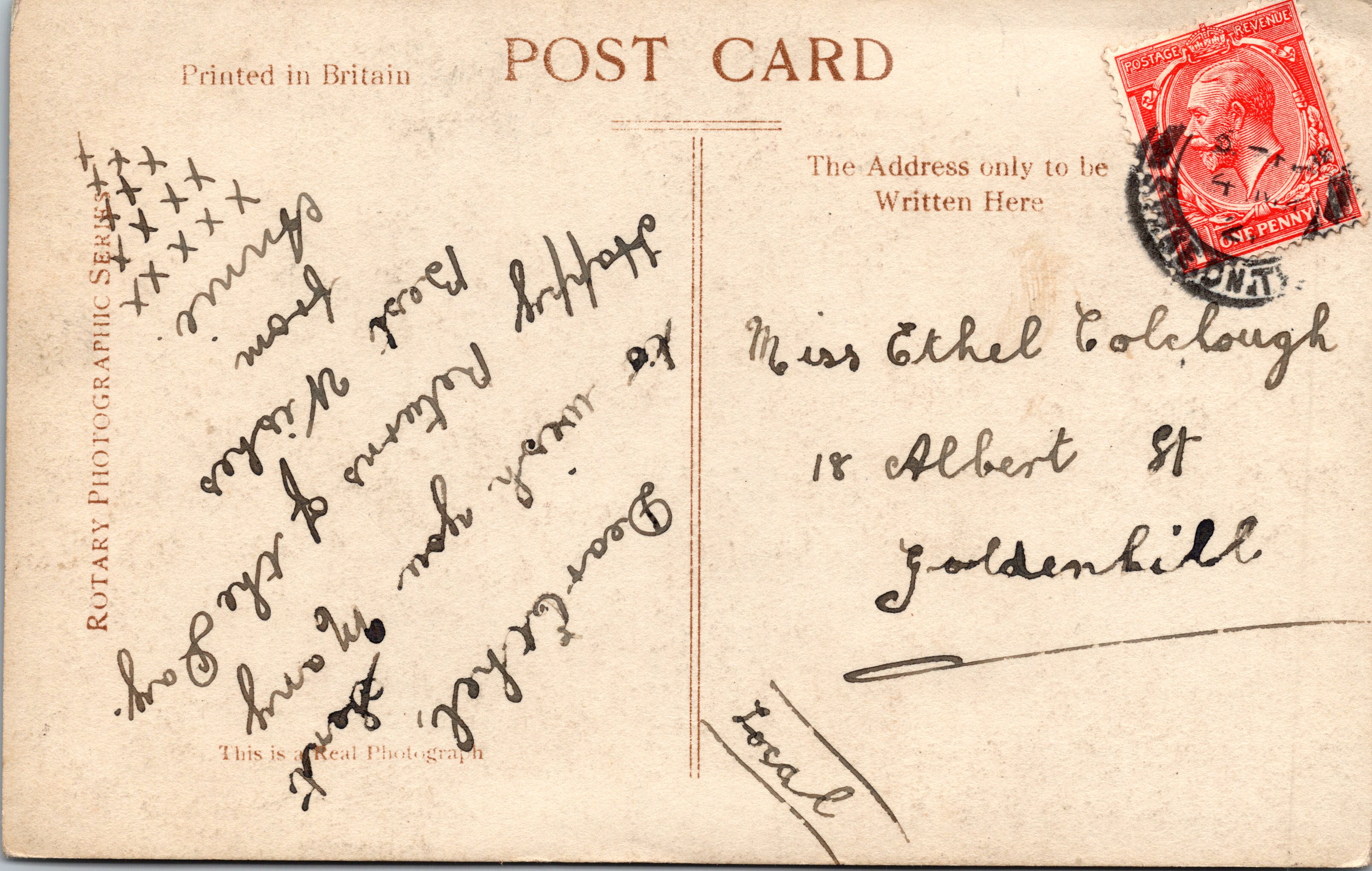
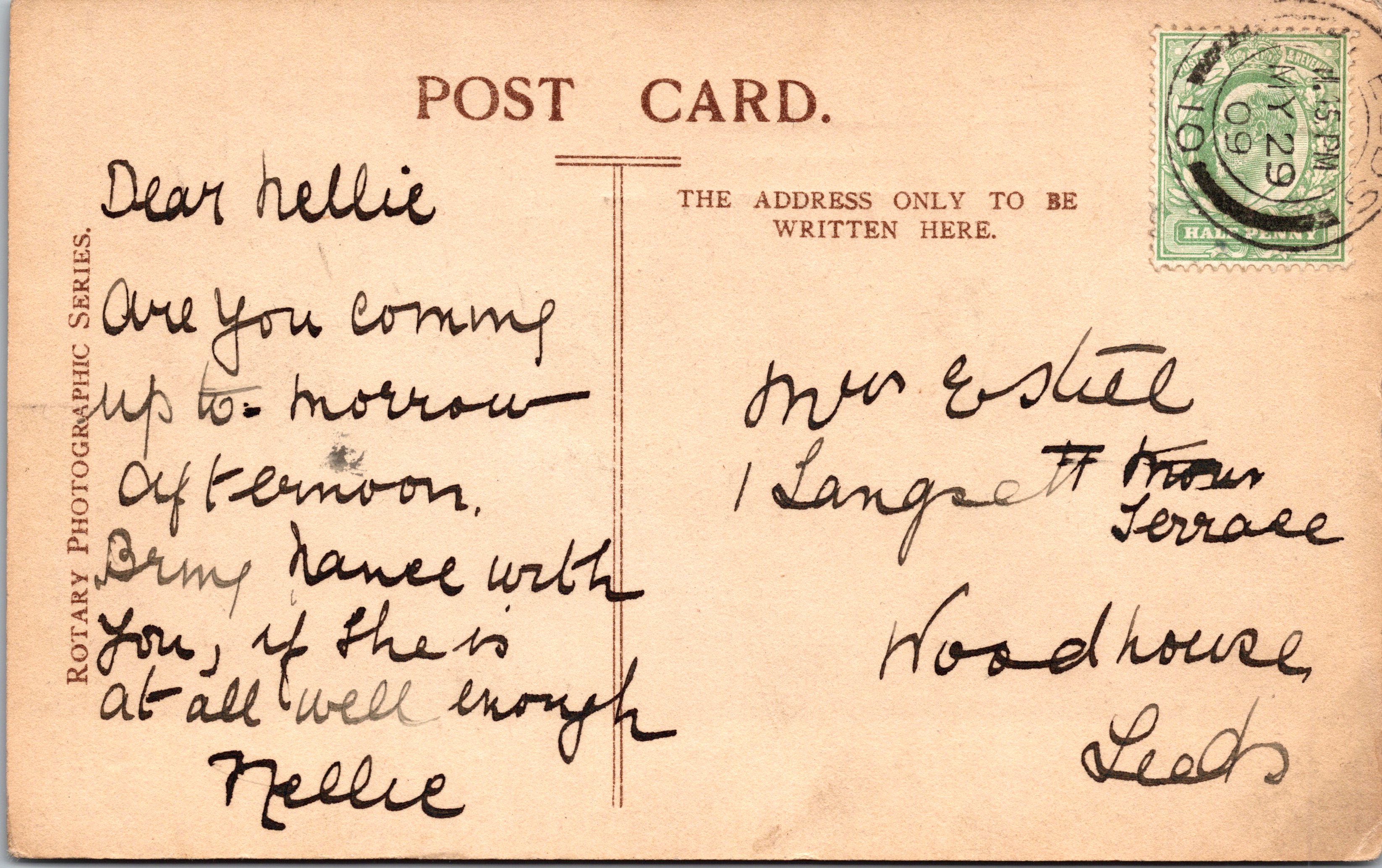
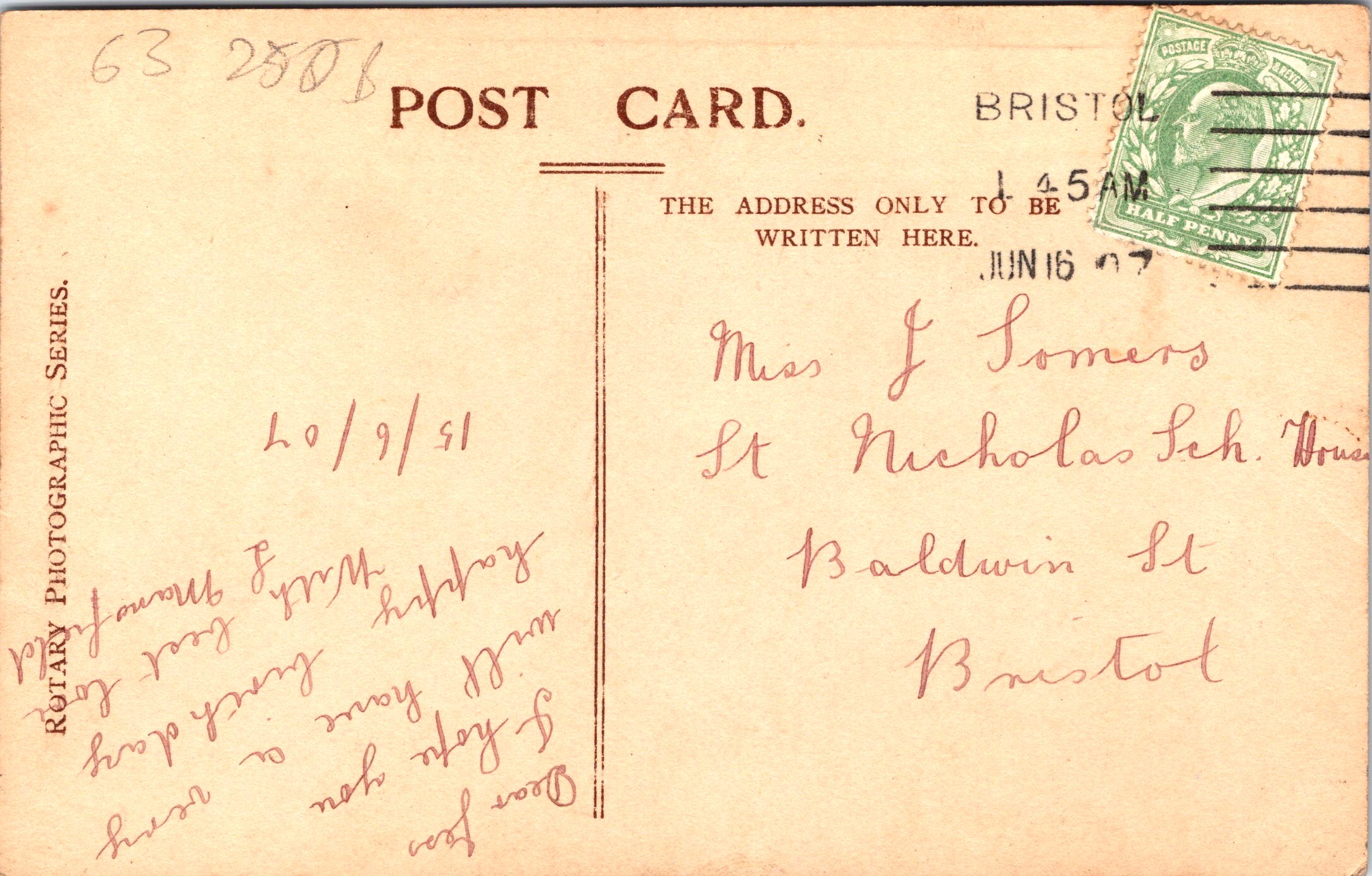
Postcard 8 has a message that provides the recipient with birthday greetings. This Rotary Photo postcard was printed in Great Britain. The card has a 1907 postmark, revealing that Miss James was about 17 years of age when this photo was taken. The postcard is part of a series (no.1984A). The photographer of this image is Alexander Bassano. Bassano (1829 –1913) was a leading royal and high society photographer in Victorian London. (SOLD)
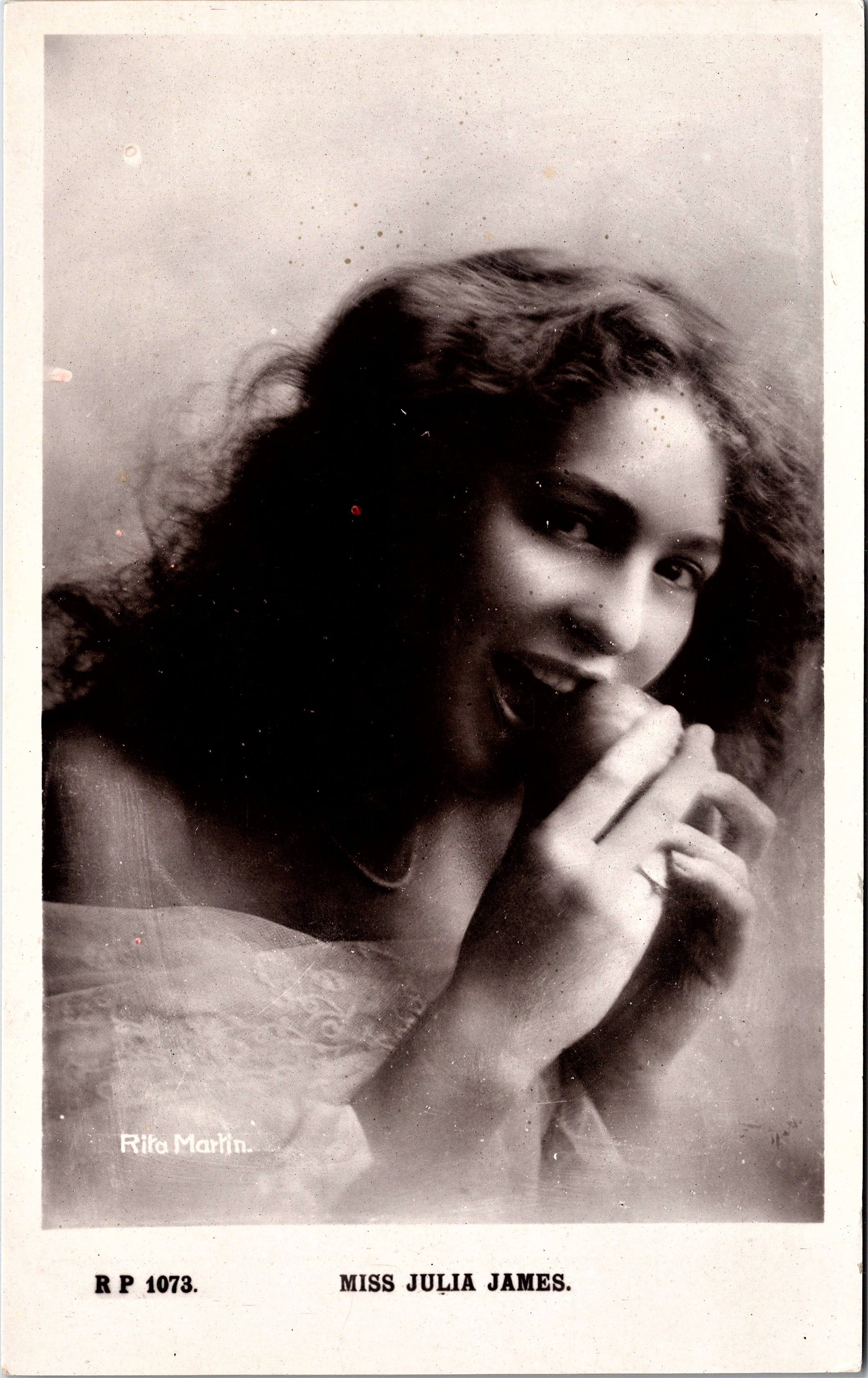
Postcard 9 captures James eating an apple. She is flashing a fine smile. This postcard was was published by the Rival Photographic Series and was printed in Great Britain. The postcard is part of a series (no.R P 1073). The photographer of this image was the talented and famous, Rita Martin. She was considered one of the best British photographers of her time. She opened her studio in 1906. (SOLD)
This vintage real photo postcard features French opera singer, Suzanne Balguerie (1888-1973). She is considered one of the best sopranos performing between the two World Wars. She studied singing at the Conservatoire de Paris. Her debut was at the Opera-Comique in 1921. She received rave reviews. She made a career at the Opera-Comique. When the Nazis occupied France during World War II, there was little opportunity for her to work and she became impoverished. She retired in 1950 and in 1953 she became a professor at the Conservatories in Grenoble and Geneva. For an unknown reason, she did not pursue an international opera career. Mlle Balquerie’s photo portrait seen on this postcard was taken by esteemed photographer, Henri Manuel. The card was published by Alfred Noyer (Paris, France). (SOLD)
This vintage real photo postcard features French actress Veronique Zuber (1936-). Her beauty was recognized when she was selected Miss Paris (1954) and Miss France (1955). She became a movie actress, but her career was short lived. She dropped her career when she married French fashion designer, Ted Lapidus. She later divorced Lapidus and married Prince Georges de Bibikoff. The IMDB lists six films in her filmography. The movies were produced between 1956 and 1959. This postcard was edited by P. I. Kores as part of a series (No. 861). Miss Zuber’s photograph was taken by the Vauclair and Bernard Studio. SOLD
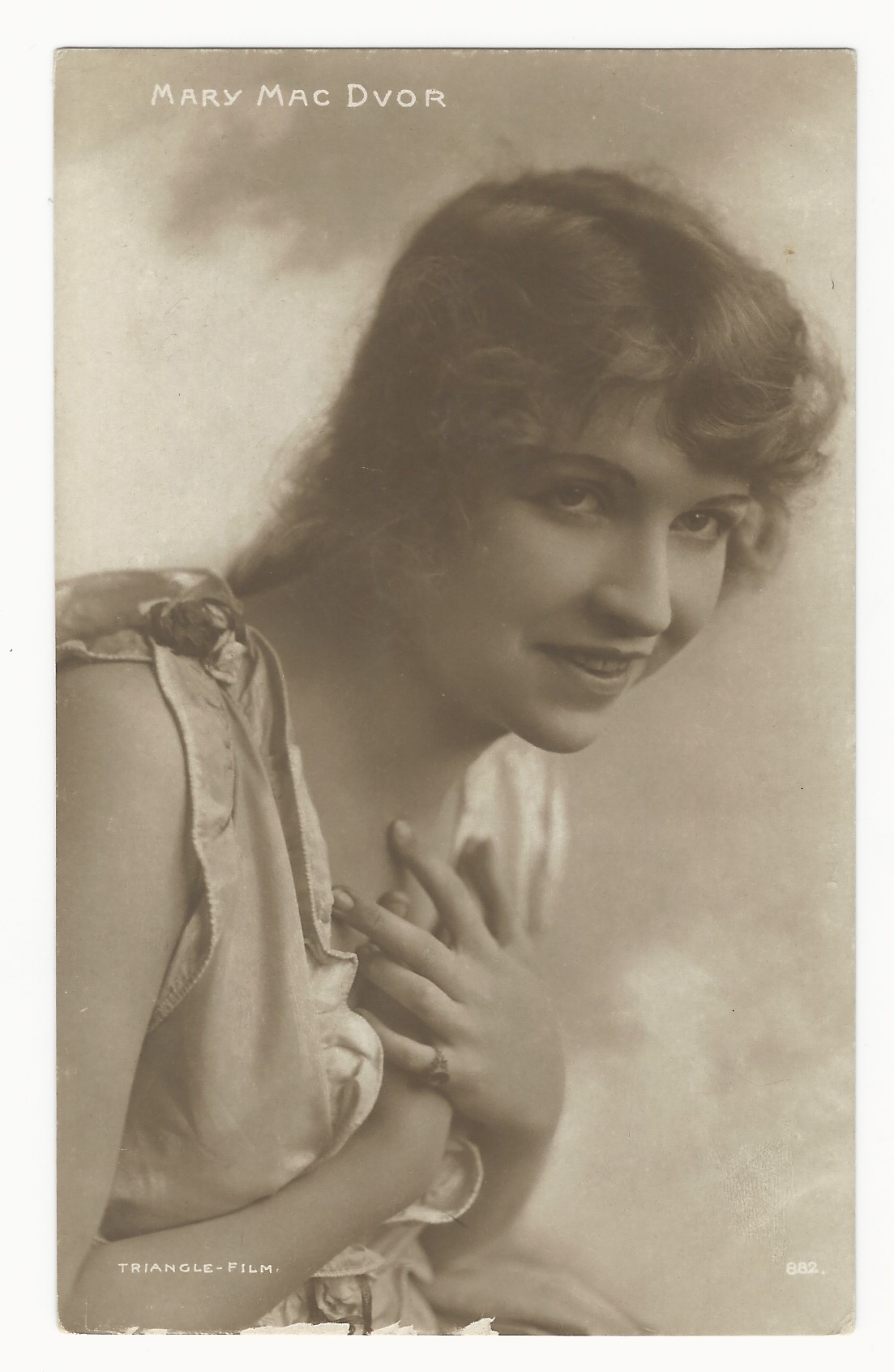
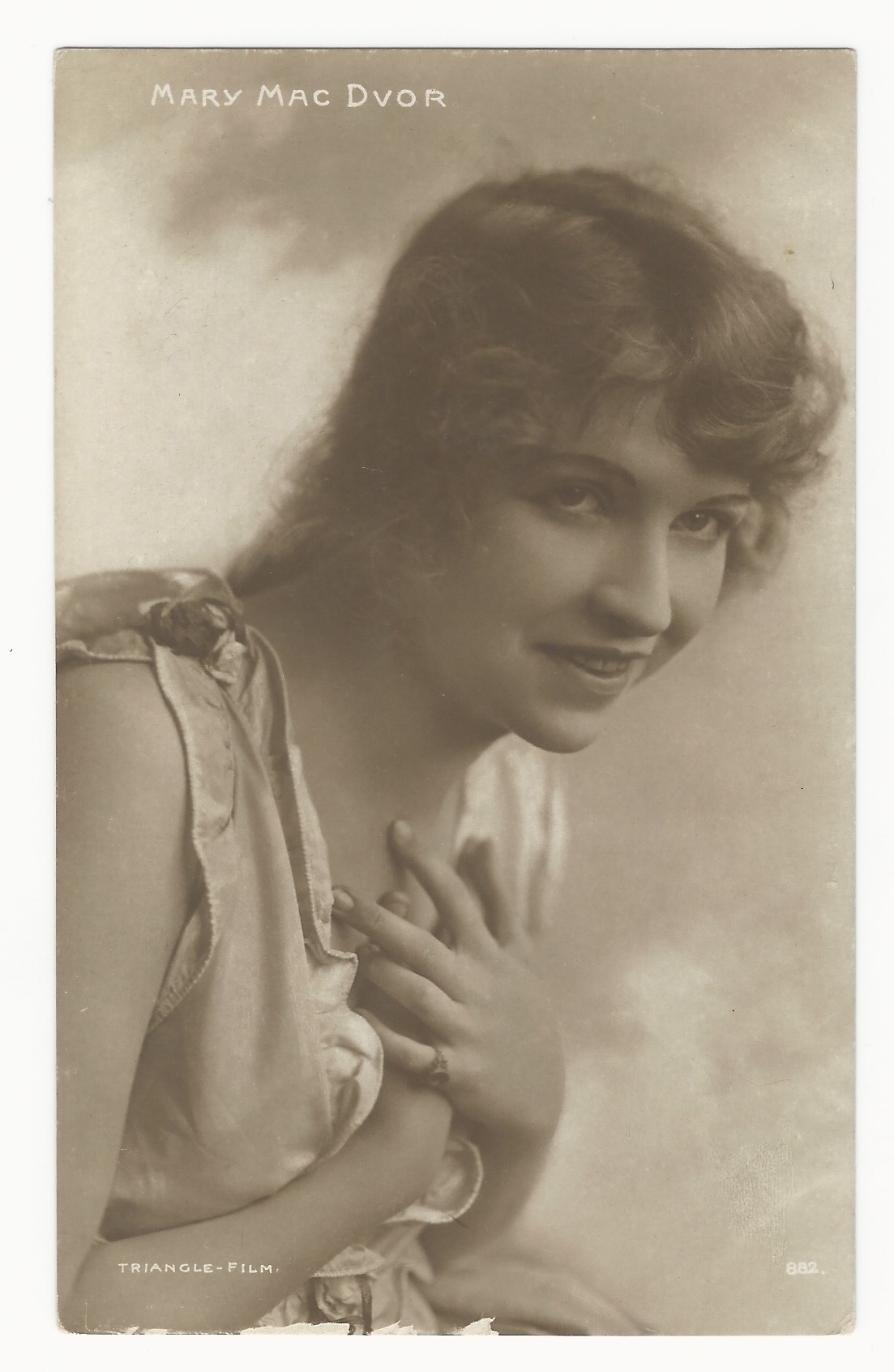
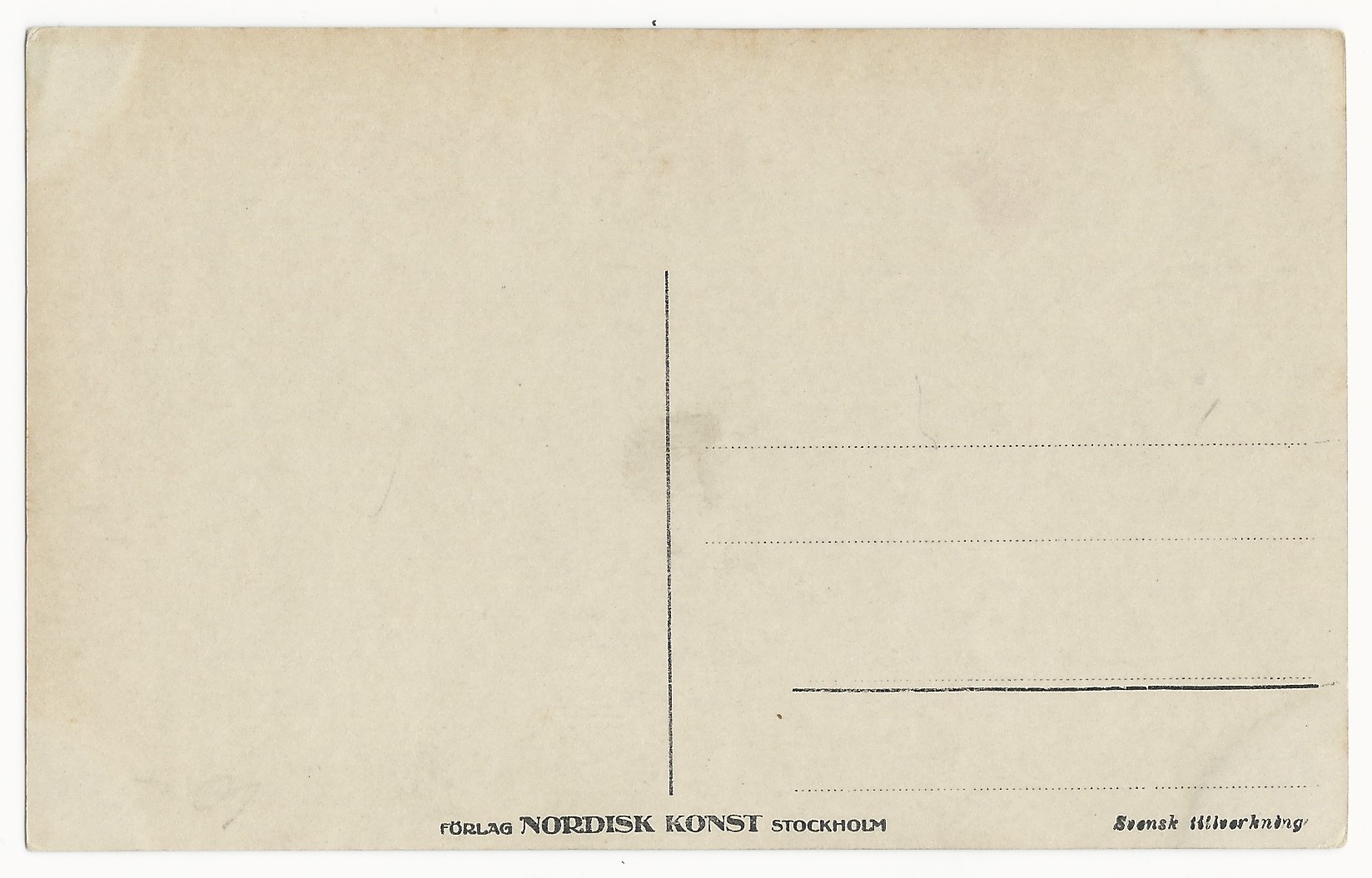
This vintage real photo postcard features a pretty young actress named Mary Mac Dvor. What can I tell you about Miss Mac Dvor? I’m afraid, not very much. Although her name appears on a few actor/actress postcard checklists, I have been unable to locate any of her biographical information. I can only tell you, judging by this image, she has a beautiful smile. This postcard was published by Nordisk Konst, a large Swedish postcard publishing company. The firm operated between 1925 and 1936. The subject of their postcards included holidays, views, and movie stars. At the bottom left of this image are the words “Triangle-Film”. Triangle Film Corporation was a major American movie studio founded in 1915. It was located in Culver City, California. The company closed in 1922. During it’s reign, Triangle produced films by the likes of D. W. Griffith and Mack Sennet. The IMDB list 289 films produced by the company. Mary Mac Dvor clearly was an actress employed by Triangle Films. She never became a star. This vintage portrait postcard is in good condition (see scans). ADDENDUM : A visitor to this site left a comment (see below) that correctly identifies the pretty actress seen on this postcard. Her name is Mary McIvor (1897-1941) and her name is misspelled on this postcard. She was an American actress who’s career occurred during the silent film era. She was married to William Desmond, a successful film series star. McIvor began her career in Hollywood Westerns for Triangle Films. She became the leading lady opposite William Hart. She married Desmond in 1919 and her acting became secondary to family life. All in all, McIvor appeared in 11 films between 1917 and 1925. McIvor experienced serious health problems beginning about 1930. In 1932 and in 1939, she was reported missing. During the later episode, she was found wandering the streets of Hollywood and experiencing amnesia. It is not clear if these problems were due to mental or physical health issues. McIvor and Desmond remained married until her death from a heart attack in 1941.
Buy this original Vintage Real Photo Postcard (includes shipping within the US) #3294
To purchase this item, click on the Pay with PayPal button below
$18.00
Buy this Vintage Real Photo Postcard (includes International shipping outside the US) 3294
To purchase this item, click on the Pay with PayPal button below













 THE CABINET CARD GALLERY